Past conversations with my cat – 49

20160922_162007

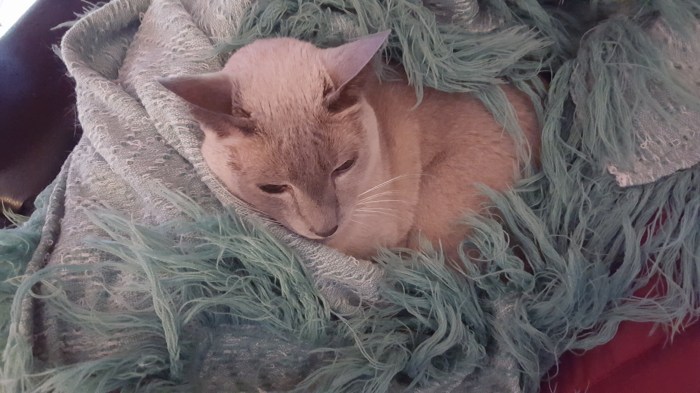
This is Chester. We are at the delicate stage of peace negotiations.

The ceasefire has been rocky, to say the least.

Blame is being thrown about like confetti at a wedding.

And to top it off, it’s Friday the thirteenth.

Im fuĺly expecting Chester to change his coat to black, and walk in front of my path with an evil grin on his face.

There’s already been signs of his mischievousness.  A long time ago we bought him some fake mice to play with since he didn’t have the inclination to chase the real rodents. Little did we know he had hidden these away, to bring them out on black Friday.

And, sitting on the floor, giving me the death stare, I wonder what his intentions are.

Not good.

So, I ignore him. I go back to the computer and get on with the day’s work. I have episodes to write, some research for a project one of my granddaughters is working on, and a novel in the throes of a third edit.

Still, I can feel those beady eyes drilling into my back.

Enough.

Do what you like, I say, turning suddenly on him, causing him to jump. Just go away and let me get on with my work. Instantly, I realise I’ve lost the battle, as he stands, gives me a final smug look, and leaves the room.

Was that a swagger?

Searching for locations: Off to Philadelphia

We are up early and I mean early because we decided to take on Philadelphia the next day, and instead of taking public transport because all the fares I could find were ridiculous, we hired a car.

Again the words ‘or similar’ foiled us.  All charged up and excited its quarter to eight in the morning we arrive at the Avis center just a five-minute walk from our hotel.

Shock number one.  We finish up with some crappy Nissan the desk lady was using as her personal car.

She lied about the car being full of petrol, it was not.

We asked for a GPS and all it was was a glorified phone.  She switched it on, the first didn’t work but the second displayed a screen and that was enough for her to say it was set up and working.

You guessed it, another barefaced lie.

We put it in the car, switched it on, and it was in French.  She hadn’t checked the language of the last user.

We took it back and she had the audacity to call us ‘stupid’, blaming us for breaking it, and then she couldn’t fix it so she gave us another one which I’m sure she checked for English.

The question, if she could set these things up, why couldn’t she instantly fix it?

Sorry, the woman was arrogant and very nasty, and not a good advertisement for Avis or the U.S.A as a place to visit.  I shall never use Avis in America again if she’s the best they can put at the front desk.

Still seething from that encounter it was a good thing I wasn’t driving.

I remember when I was writing Echoes From The Past I had a sequence of events starting in Lower Manhattan and ending up in Philadelphia.  In that narrative, I was not sure if the main character used the Lincoln tunnel, which, on this occasion, we did.

As it turned out the drive was reasonably accurate in that we also followed the i95 turnpike and a number of tolls along the way.  Unfortunately, our mode of transport was not quite as luxurious as my characters.

Once in Philadelphia, we managed to find the Swann Memorial Fountain at Logan Square…

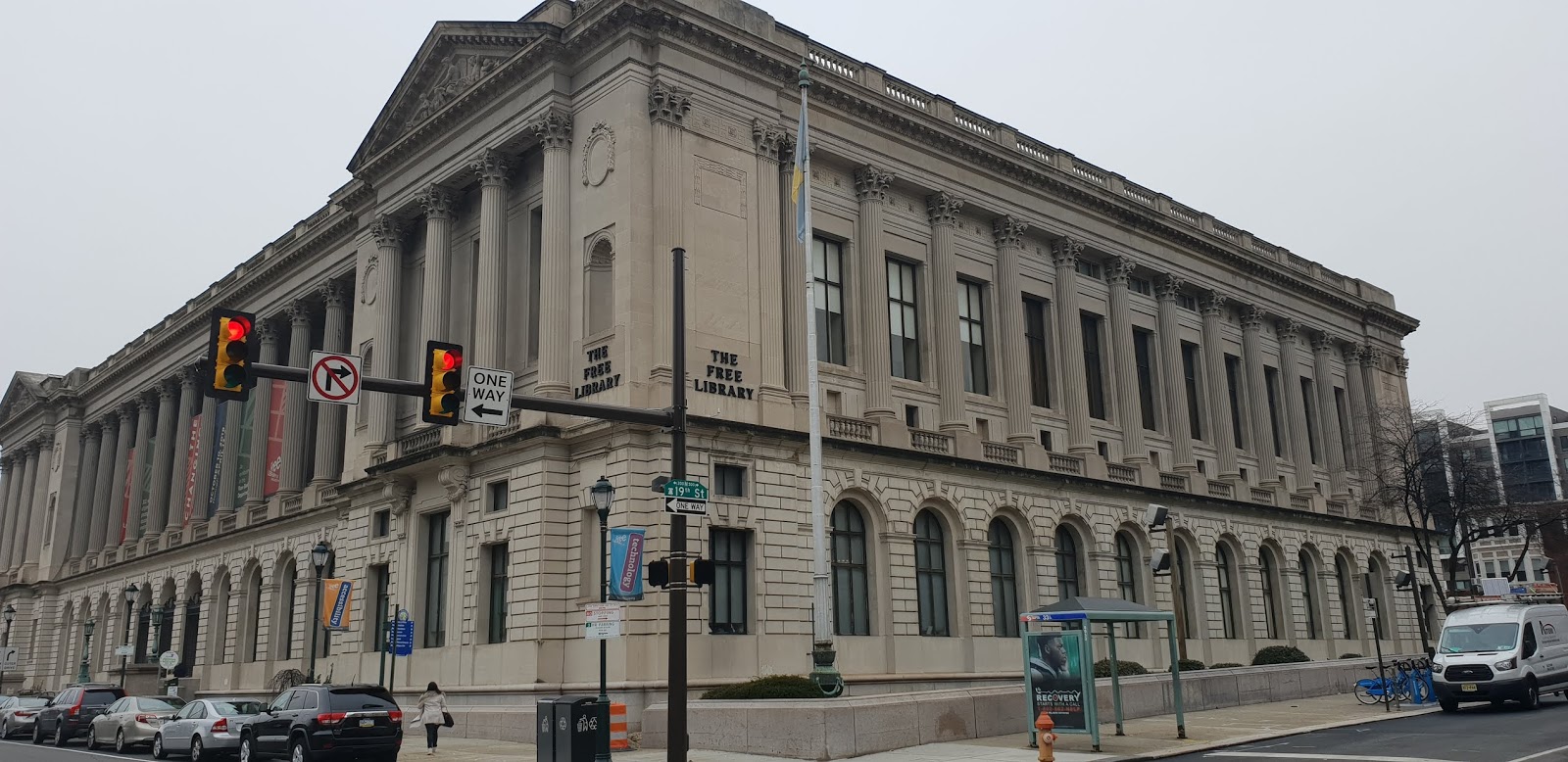
and parked the car outside the Free Library.

From there we walked to the city center, what some might call City Hall, a rather large and impressive stone structure, and then ended up at stop number six of the big bus tour.

Big bus tour

There are 27 stops of which we got on at 6 and got off at 1, managed by a miracle of fate to get back on at 1 and got off at 8 where our car was parked.  By then we were frozen solid.

But…

There’s always an intervening adventure with our outings and the quest was to find the best place to have a Philly Cheese Steak.

Between stops 1 and 6 when we were not on the bus, we hailed a cab, deciding not to wander around the city looking for a Philly Cheese Steak place ourselves.

We had a side mission to the side mission and got the cab driver to take us back to the car so we could lengthen the parking time.  This done, he took us to what he believed was the best Philly Cheese Steak place.

It was a long and convoluted ride that showed us the real Philadelphia, where the citizens live, not the showpiece tourist attractions.

It was somewhere in little Italy. A place called Geno’s steaks, a new and shiny restaurant where there was only seating outside.  Mid-afternoon, it was cold.

But were they the best Philly Cheese Steaks.  I’m not an expert so I don’t really know.  What I do know is the cheesy steak in a roll was absolutely delicious.  Freshly cooked in front of you, the steak slices were still dripping juices as they were put on the roll with a layer of cheese and onions which you have to ask for.

And at ten dollars each, it turned out to be less than the cab fare to get there.

Of course being dropped in Little Italy in America on the 20th Anniversary of the Sopranos, conjured up too many nightmares to be walking the streets in the fading afternoon lights.

Two boys on bikes who looked like thugs in hoodies scared us into a cab and back to the bus stop to do the last eight stops before going home.

All in all, a very interesting if not at times scary adventure.

Conversations with my cat – 86

20160921_071452

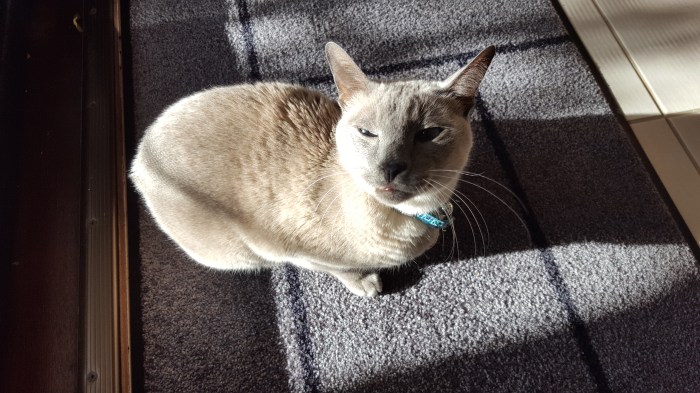
This is Chester. He’s having a hard to trying to understand the notion of a day happening only once every four years.

I try to explain to him that it’s the fault of the Romans getting the calendar wrong.

He tosses that aside and mutters, Time is irrelevant.

How so? OK, I have to bite, because I’m sure I’m about to get a catlike pearl of wisdom.

It comes and it goes, and if it wasn’t for the fact there was night and day, you’d have absolutely no idea what time it is.

About to dismiss it as crazy, I stop to think about it.

And, damn him, he’s right.

Of course, one could argue semantics, and say if I was outside, I could approximate the time by the sun, or at night by the stars, but that’s a little beyond the cat’s imagination.

So, in a sense, you might be right, but I can usually guess what the time is.

Chester shakes his head.

You’re retired, time is irrelevant for you too. You can sleep all day and work at night if you want to. Or not do anything at all.

Like you?

Another shake of the head.

What is the point in having a serious discussion with you?  But just one question before I go?

That’ll be interesting.

Was I born on the 29th of February?”

No. Not that lucky, I’m afraid. Why?

If I was I would have no reason to feel every one of those 18 human years I’ve had to put up with your nonsense. It would only be 4 and a half.

He jumps off the seat and heads out the door.

Where are you going now?

To bed. It’s been a long morning.

You’ve only been here 10 minutes.

In cat time. In your time, it feels like hours. Only call me if you see a mouse.

In a word: Murder

I started off thinking that murder was pretty straight forward, you know, someone pulls out a gun and shoots someone else: murder.  Of course, there are any other means of doing the same crime, by knife, poison, strangulation, or suffocation.

Or, by endless inane conversation.  Much less chance of going to jail with that one.

Its the stuff that keeps crime writers going, fictional detectives detecting and crime scene investigators analysing.

Still the fact someone might be getting away with murder, means they’ve successfully found a way to have their cake and eat it.

Come to think of it how many times have we used that word in vain, like when a child drives you to distraction, red-faced and you say with a great deal of conviction ‘you do that again I’ll murder you’.

Just make sure it doesn’t actually happen, or those words will come back to haunt you.

But this is only one aspect of using the word.

You could, if you want, scream blue murder, which is literally impossible.  In fact, what the does that really mean?

It can also refer to an onerous task or experience, hence the possibility that listening to that discussion about hot water bottles was absolute murder.

For one thing, it probably murdered an hour or two of my time.

It could also describe a comprehensive defeat, that we murdered the other side 86 to nothing.  Come to think of it, I never got to participate in such a game, so that might account for why I’d never heard it used before.

And, lastly…

Did you know it can refer to a flock of a particular type of bird, I think crows.

An excerpt from “What Sets Us Apart”, a mystery with a twist

See excerpt from the story below, just a taste of what’s in store…

http://amzn.to/2Eryfth

whatsetscover

McCallister was old school, a man who would most likely fit in perfectly campaigning on the battlefields of Europe during the Second World War. He’d been like a fish out of water in the army, post-Falklands, and while he retired a hero, he still felt he’d more to give.

He’d applied and was accepted as head of a SWAT team, and, watching him now as he and his men disembarked from the truck in almost military precision, a look passed between Annette, the police liaison officer, and I that said she’d seen it all before. I know I had.

There was a one in four chance his team would be selected for this operation, and she had been hoping it would be one of the other three. While waiting for them to arrive she filled me in on the various teams. His was the least co-operative, and the more likely to make ad-hoc decisions rather than adhere to the plan, or any orders that may come from the officer in charge.

This, she said quite bluntly, was going to end badly.

I still had no idea why Prendergast instructed me to attend the scene of what looked to be a normal domestic operation, but as the nominated expert in the field in these types of situations, it was fairly clear he wasn’t taking any chances. It was always a matter of opinion between us, and generally I lost.

In this case, it was an anonymous report identifying what the authorities believed were explosives in one of the dockside sheds where explosives were not supposed to be.

The only reason why the report was given any credence was the man, while not identifying himself by name, said he’d been an explosive expert once and recognized the boxes. That could mean anything, but the Chief Constable was a cautious man.

With his men settled and preparing their weapons, McCallister came over to the command post, not much more than the SUV my liaison and I arrived in, with weapons, bulletproof vests, and rolls of tape to cordon off the area afterward. We both had coffee, steaming in the cold early morning air. Dawn was slowly approaching and although rain had been forecast it had yet to arrive.

A man by the name of Benson was in charge. He too had groaned when he saw McCallister.

“A fine morning for it.” McCallister was the only enthusiastic one here.

He didn’t say what ‘it’ was, but I thought it might eventually be mayhem.

“Let’s hope the rain stays away. It’s going to be difficult enough without it,” Benson said, rubbing his hands together. We had been waiting for the SWAT team to arrive, and another team to take up their position under the wharf, and who was in the final stages of securing their position.

While we were waiting we drew up the plan. I’d go in first to check on what we were dealing with, and what type of explosives. The SWAT team, in the meantime, were to ensure all the exits to the shed were covered. When I gave the signal, they were to enter and secure the building. We were not expecting anyone inside or out, and no movement had been detected in the last hour since our arrival and deployment.

“What’s the current situation?”

“I’ve got eyes on the building, and a team coming in from the waterside, underneath. Its slow progress, but they’re nearly there. Once they’re in place, we’re sending McKenzie in.”

He looked in my direction.

“With due respect sir, shouldn’t it be one of us?” McCallister glared at me with the contempt that only a decorated military officer could.

“No. I have orders from above, much higher than I care to argue with, so, McCallister, no gung-ho heroics for the moment. Just be ready to move on my command, and make sure you have three teams at the exit points, ready to secure the building.”

McCallister opened his mouth, no doubt to question those orders, but instead closed it again. “Yes sir,” he muttered and turned away heading back to his men.

“You’re not going to have much time before he storms the battlements,” Benson quietly said to me, a hint of exasperation in his tone. “I’m dreading the paperwork.”

It was exactly what my liaison officer said when she saw McCallister arriving.

The water team sent their ‘in position’ signal, and we were ready to go.

In the hour or so we’d been on site nothing had stirred, no arrivals, no departures, and no sign anyone was inside, but that didn’t mean we were alone. Nor did it mean I was going to walk in and see immediately what was going on. If it was a cache of explosives then it was possible the building was booby-trapped in any number of ways, there could be sentries or guards, and they had eyes on us, or it might be a false alarm.

I was hoping for the latter.

I put on the bulletproof vest, thinking it was a poor substitute for full battle armor against an exploding bomb, but we were still treating this as a ‘suspected’ case. I noticed my liaison officer was pulling on her bulletproof vest too.

“You don’t have to go. This is my party, not yours,” I said.

“The Chief Constable told me to stick to you like glue, sir.”

I looked at Benson. “Talk some sense into her please, this is not a kindergarten outing.”

He shrugged. Seeing McCallister had taken all the fight out of him. “Orders are orders. If that’s what the Chief Constable requested …”

Madness. I glared at her, and she gave me a wan smile. “Stay behind me then, and don’t do anything stupid.”

“Believe me, I won’t be.” She pulled out and checked her weapon, chambering the first round. It made a reassuring sound.

Suited up, weapons readied, a last sip of the coffee in a stomach that was already churning from nerves and tension, I looked at the target, one hundred yards distant and thought it was going to be the longest hundred yards I’d ever traversed. At least for this week.

A swirling mist rolled in and caused a slight change in plans.

Because the front of the buildings was constantly illuminated by large overhead arc lamps, my intention had been to approach the building from the rear where there was less light and more cover. Despite the lack of movement, if there were explosives in that building, there’d be ‘enemy’ surveillance somewhere, and, after making that assumption, I believed it was going to be easier and less noticeable to use the darkness as a cover.

It was a result of the consultation, and studying the plans of the warehouse, plans that showed three entrances, the main front hangar type doors, a side entrance for truck entry and exit and a small door in the rear, at the end of an internal passage leading to several offices. I also assumed it was the exit used when smokers needed a break. Our entry would be by the rear door or failing that, the side entrance where a door was built into the larger sliding doors. In both cases, the locks would not present a problem.

The change in the weather made the approach shorter, and given the density of the mist now turning into a fog, we were able to approach by the front, hugging the walls, and moving quickly while there was cover. I could feel the dampness of the mist and shivered more than once.

It was nerves more than the cold.

I could also feel rather than see the presence of Annette behind me, and once felt her breath on my neck when we stopped for a quick reconnaissance.

It was the same for McCallister’s men. I could feel them following us, quickly and quietly, and expected, if I turned around, to see him breathing down my neck too.

It added to the tension.

My plan was still to enter by the back door.

We slipped up the alley between the two sheds to the rear corner and stopped. I heard a noise coming from the rear of the building, and the light tap on the shoulder told me Annette had heard it too. I put my hand up to signal her to wait, and as a swirl of mist rolled in, I slipped around the corner heading towards where I’d last seen the glow of a cigarette.

The mist cleared, and we saw each other at the same time. He was a bearded man in battle fatigues, not the average dockside security guard.

He was quick, but my slight element of surprise was his undoing, and he was down and unconscious in less than a few seconds with barely a sound beyond the body hitting the ground. Zip ties secured his hands and legs, and tape his mouth. Annette joined me a minute after securing him.

A glance at the body then me, “I can see why they, whoever they are, sent you.”

She’d asked who I worked for, and I didn’t answer. It was best she didn’t know.

“Stay behind me,” I said, more urgency in my tone. If there was one, there’d be another.

Luck was with us so far. A man outside smoking meant no booby traps on the back door, and quite possibly there’d be none inside. But it indicated there were more men inside, and if so, it appeared they were very well trained. If that were the case, they would be formidable opponents.

The fear factor increased exponentially.

I slowly opened the door and looked in. A pale light shone from within the warehouse itself, one that was not bright enough to be detected from outside. None of the offices had lights on, so it was possible they were vacant. I realized then they had blacked out the windows. Why hadn’t someone checked this?

Once inside, the door closed behind us, progress was slow and careful. She remained directly behind me, gun ready to shoot anything that moved. I had a momentary thought for McCallister and his men, securing the perimeter.

At the end of the corridor, the extent of the warehouse stretched before us. The pale lighting made it seem like a vast empty cavern, except for a long trestle table along one side, and, behind it, stacks of wooden crates, some opened. It looked like a production line.

To get to the table from where we were was a ten-yard walk in the open. There was no cover. If we stuck to the walls, there was equally no cover and a longer walk.

We needed a distraction.

As if on cue, the two main entrances disintegrated into flying shrapnel accompanied by a deafening explosion that momentarily disoriented both Annette and I. Through the smoke and dust kicked up I saw three men appear from behind the wooden crates, each with what looked like machine guns, spraying bullets in the direction of the incoming SWAT members.

They never had a chance, cut down before they made ten steps into the building.

By the time I’d recovered, my head heavy, eyes watering and ears still ringing, I took several steps towards them, managing to take down two of the gunmen but not the third.

I heard a voice, Annette’s I think, yell out, “Oh, God, he’s got a trigger,” just before another explosion, though all I remember in that split second was a bright flash, the intense heat, something very heavy smashing into my chest knocking the wind out of me, and then the sensation of flying, just before I hit the wall.

I spent four weeks in an induced coma, three months being stitched back together and another six learning to do all those basic actions everyone took for granted. It was twelve months almost to the day when I was released from the hospital, physically, except for a few alterations required after being hit by shrapnel, looking the same as I always had.

But mentally? The document I’d signed on release said it all, ‘not fit for active duty; discharged’.

It was in the name of David Cheney. For all intents and purposes, Alistair McKenzie was killed in that warehouse, and for the first time ever, an agent left the Department, the first to retire alive.

I was not sure I liked the idea of making history.


© Charles Heath 2016-2020
Writing about writing a book – Day 30

I’m having fun with chapter one.

Can you reach a point where you are never satisfied with what you’ve written?

What more can I say?


Looking at the mess constituting my room and my life, slob may have been an appropriate description.  I considered myself old, overweight though not necessarily fat, hair graying at the edges, and few wrinkles around the eyes, there were no real pluses in my description.

Some said I had a kindly face, but perhaps I had the look of a paternalistic grandfather.  There were several men in the office who were the same age and had grandchildren.  And some who had children at a time when they should be planning for retirement, not parenthood.

World-weary and perpetually tired, I’d passed the mid-life crisis, wondering what it was that affected other men my age.  Twenty-odd years later, I was still wondering.

I used to think I’d missed a lot in half a lifetime.

Now, I didn’t know what to think.

Did I deserve pity?  No.

Did I deserve sympathy?  No!

The only person who could get me out of the rut was myself.  For years I’d traded on Ellen’s good nature.  She deserved better, left me, and was now happier in the arms of a man who I wanted to believe treated her far better than I.  She had told me so herself, and judging by her manner, it had to be true.  Only recently had she got her smile back, the one that lit her face up, one that infectiously spread happiness to anyone near her.

There were reasons why I became the person I was now.  Some might say they were valid.  In the cold, hard light of dawn, I could see it was time I stopped using my past as a crutch and got on with the business of living.

Perhaps today would be the first day of the rest of my life.


I took the bus rather than drove.  At that hour of the morning, the traffic would be bad, and there would be no parking spaces left.  And I was using public transport more and more, have become accustomed to the convenience.  Time to read the paper, or a good book, or just dream about a different life.

This morning I thought about Ellen.  I hadn’t for a while, but that might have been fueled by the arrival of the divorce papers she wanted me to sign.  I’d had my time to be angry, and disappointed, she’d said, and she was right.  It was time to move on.

And she had stuck by me through thick and thin, coming back from overseas service a basket case after nine months in a POW camp, after a war that was more horrible than anyone could imagine.  Two mental breakdowns, periods of indolence and lassitude, leaving her to bring up the girls on her own.  I had not been a great father, and much less a husband.

I remembered that argument word for word.

I could see the looks of pain in the girl’s faces.

I remembered the hug, the kiss on the cheek, the tears.  It had not been out of hate, but a necessity.  For her and the children.  Until I found some lasting peace, they were better off at arm’s length.  Away from the arguing, the silences, the absences.

And disappointment.

After she left I tried to get my life in order.  Drugs, professional help, alcohol, meditation, then work.

Over ten years ago, it took a year, perhaps a little more before sanity returned.

She did not.

By then I knew she had found someone else, a mystery man, whom neither she would tell me who, and the girls honestly didn’t know.  She’d promised that much, any new man in her life would not get to meet the girls.  And she would tell me, and then when she was ready.

Then, suddenly, the children were no longer children but young adults and out in the world on their own, and I had become more a banker than a father, an observer rather than a participant, and it was as if we were more like ships passing in the night.  And overnight, the ships had sailed to the other side of the world.

My own fault, of course, and a bit late now to change history.  I could see Ellen’s influence over them, her prejudices and dislikes, and their contempt, like their mother, for me, simmering beneath the surface, but in fairness to them, I really hadn’t been much of a help as a parent should be.

And now I was getting my life back in order, perhaps I could try and make it up to them, and that first meeting, with them and Ellen, nearly a month ago, had been a step in the right direction.  They’d agreed to see me again, without her, during the holidays, which had now arrived.  All I had to do was make the call, and get on a plane.

This mess I was heading into, it would not take long.  I pulled out my phone and after searching for a travel agent near where I worked, I made an appointment to see about going overseas.

She had spoken to me about the divorce papers several days ago, alternately pleading with, and then abusing, me.  There had been some very strong language in the conversation, words I’d thought her incapable of using, but I confess, finally, I didn’t really know her all that well anymore.

Since then I had been calling her to arrange a meeting.  She had not yet replied.  With some distance to go before I reached the office, I tried calling her again.  I was almost glad when she didn’t answer.


I never realized just how hard it was to revise and re-write, and how much time it takes.

Perhaps that’s why first novels take so long to write!


© Charles Heath 2016-2020

What happens after the action-packed start – Part 37

Our hero knows he’s in serious trouble.

The problem is, there are familiar faces and a question of who is a friend and who is foe made all the more difficult because of the enemy, if it was the enemy, simply because it didn’t look or sound or act like the enemy.

Now, it appears, his problems stem from another operation he participated in, and because of it, he has now been roped into what might be called a suicide mission.


An hour later we were stopped by the side of the road, at a point where another road, or, rather, a track headed to the left into the forest.

A short distance before that I noticed a sign, battered and faded, advertising an airport, a sign I thought had been put there as a joke.

Of course, when I remembered the conversation I had with Monroe back on the plane and the fact we had a specialist pilot in our group, it all began to make sense.

Our exit strategy.

I only wished I had internet coverage so I could check the presence of an airport in what looked to be the middle of nowhere.

Only Davies seemed unperturbed.

I had to ask.  “Did you know there was an airport here?”

“Of one, used by fly-ins for the Garamba National Park.  Not much of an airstrip though, and we don’t exactly have up to the minute details on its surface, but as recently as a week ago a small plane had landed there.”

“Thanks for telling me.”

“All you had to do was ask the right question.”

It seems I didn’t know what the right questions were, what might be called an occupational hazard on a job like this.

Everyone had got out of their cars to stretch their legs and prepare for the next phase of the operation, which was to meet with the kidnappers.  I expected Jacobi would be on the sat phone talking to their leader, advising we had arrived.

I went back to Mobley, standing with the Ugandan soldier that had been assigned as his driver, smoking a cigarette.  I was surprised he hadn’t joined the others who had gathered ahead of the lead vehicle.

“Nice shooting back there,” I said.  It was for a man under pressure to make the shots, and give the rest of us a chance to take care of the others.  That no one else got shot was a miracle.

“Just another day at the office.”

“Well, it hasn’t ended yet.  I want you to go to the airstrip and get it under surveillance.  There is supposed to be an aircraft there, whether for our use or just there so we can steal it I’m not quite sure.  But if there’s a plane there, I want you to make sure it doesn’t leave, but as quietly as possible.  We should be along later with the packages.  I’m going up to tell the Colonel he’ll be joining you.  He might not want to, but he’s done enough for us.  I don’t want him to make enemies unnecessarily.”

“As you wish.  I’ll be along shortly.”

“Good.  Make sure your radio is working and on.  I need to know if anything goes sideways.”

“It won’t.”

I wish I had his confidence.

A minute later I reached the front of the convoy and saw why there seemed little animation among the group.  Monroe had Jacobi on his knees and a gun on the back of his neck.

“This is an interesting development Lieutenant.  Is there a problem I should know about?”

“I reckon the weasel sold us out back there.  Maybe even called them in to shake us down for one reason or another.  Didn’t try too hard to negotiate with the commander.”

No, he hadn’t.  And the thought had crossed my mind too.  A bit of cash on the side, split with the commander.  There didn’t seem to be any intent of the commander’s part to shoot us, so it was a pity we had to kill them all.  If they were part of the kidnapper’s operations, things might get a little dangerous.

“Before you kill him,” I said, “Did he tell you how the call to the kidnappers went?”

“Didn’t ask.”

“Perhaps you should.”

Mobley picked that moment to drive up alongside Jacobi and the Lieutenant.

“Problem?” he asked through the window.

“No.  We’re practicing our run at the kidnappers.”

He shrugged.  I looked over at the Colonel.  “Time for you to be moving on.  You don’t need to be in on the next part, for plausible deniability.  I suspect if the leader of this group sees you, and makes any connection back to the Ugandans, it could cause trouble.”

“Nothing I couldn’t handle.”

“Better if you didn’t have to.  My man needs help at the airstrip and a man of your authority might just smooth over problems if he needs it.”

“You’re having a plane sent in?”

“I’d like to think so, might even get you home in time for a late supper.”  I glared at Jacobi.  “How does he get to the airstrip?”

“Normally, through the town, but there’s a track about 200 yards up the road.  Go left, follow the road, then turn right at the first fork.”

He stood staring at the ground for a minute, hopefully considering doing as I asked.  I was not sure what I was going to do if he didn’t.  It was preferable he didn’t come with us.

“OK.  You have a point.  No need stirring up my Congo friends any more than I already have.”

He went over to Mobley’s car and got in, replacing the Ugandan soldier as a driver.

“See you when we see you,” Mobley said, and the Colonel drove off after a wave.

Back to my other problem.

“You’ve had time to think about your answer, Jacobi, so tell us.”

“An eight-mile drive along the next track, then instead of taking the fork to the airstrip, go left, and drive to you reach the checkpoint.”

“The meeting is on.”

“They’re waiting for us.”

“In more ways than one, I’d say,” Monroe muttered.  “He’s outlived his usefulness in my book.”

Ordinarily, I would agree with her, but we still needed him.  There might have been an initial negotiation, but it was far from what the end deal would be, and he had to be there to complete it.  And if he was leading us into a trap, well, we’d just have to wait and see.

“We still need him, so ease up on the aggression.  If he has double-crossed us, you can shoot him.  Until then, play nice.  But, just as a precaution, you and Stark can bring up the rear, stop about a mile short, and do some recon between there and the checkpoint.  If anyone is thinking of sneaking up behind us, I want to know about it.”

Monroe shook her head, then eased the gun away from him.  A nod to me.

“He can go with you in the lead car.  Davies can come with me and keep driving the car.  They’ll be expecting four vehicles.”

“Fair enough.”  I turned to Baines, the first time I’d addressed him since getting on the plane at the black site.  “You wouldn’t happen to know if there’s a portable rocket launcher among that film equipment, would you?”

“And half a dozen shells.  Don’t know how they managed it, but it’s there.”

“Easy to get at?”

“If need be.”

“Good.”  I looked around at the rest of the team.  “Everyone had time to calm their nerves.”

I’d watched Jacobi drag himself to his feet and try to brush the dust of his clothes.  It didn’t help restore what was once quite clean and crisp linen.  No one helped him, in fact, if I gave the order to shoot, all of them would.  Monroe’s accusation struck a chord with the others.

“We’d better get going,” she said, heading for the last vehicle after being joined by Davies.  Out of earshot, she said something to her, and I heard them laughing.

I was not sure what it was about, but as long as it eased the tension in her.  She had discovered which car was carrying the diamonds, co-incidentally the car I’d been driving, so we needed a situation so that we could remove the diamonds from the equation when we arrived at the checkpoint.  There was no way the kidnappers were going to let us retrieve the package once we got there, and I had no doubt we would be separated from the cars, and the equipment, so that, if possible, the kidnappers could gain the upper hand.

Or that was how I suspected it would go down.  It was only a matter of time before I was proved right or wrong.

Everyone else got back into the cars, and with Jacobi sitting in the front with me, I started moving forward.

I wasn’t prepared, not mentally anyway.  I never was when going into battle.


© Charles Heath 2019-2020

“Trouble in Store” – Short stories my way:  Editing becomes re-writing (3)

I have reworked the first part of the story with a few new elements about the characters and changed a few of the details of how the characters finish up in the shop before the policewoman makes her entrance.

This is part of the new first section is the one that involves the shopkeeper`:


This wasn’t the shopkeeper’s first hold up.  In fact, over the years there had been a dozen.  But only one got reported to the police, and that was only because the robber was shot and killed.

He’d taken a bullet that night, too, which, from the police point of view, made him a concerned citizen simply defending himself.

The rest had been scared off by the double-barrel shotgun he kept under the counter for just such emergencies.

The young punk who came into the shop with his girlfriend had pulled out the pistol and told him if he reached for the shotgun he’d shoot him.  The kid looked unstable and he’d backed away.

When the kid collapsed, he should have gone for the shotgun, but instead, he thought he could get to the gun before the girl realized what was happened.  She wasn’t an addict and clearly looked like she was only along for the ride.  Her expression, when the kid pulled out the gun told him she’d known nothing about her partner’s true intentions.

But, he wasn’t fast enough, and she had the gun pointing at him before he’d got past the counter.

From one pair of unpredictable hands to another.

Like the girl, he was just as surprised when the customer burst in the door, just before closing time.

The situation might have been salvageable before the customer came in the door, getting the girl to go along with the robbery being about money, but there was no denying what the kid on the floor’s problem was.

Damn.

He had to try and salvage the situation simply because there was a lot of money involved, and other people depending on him.  He looked at the boy, on the floor, then the girl.

“Listen to me, young lady, you would be well advised to let this man go as he suggests.  And, please put the gun down before someone gets hurt.  Your friend needs medical help and I can call an ambulance.”

The girl switched her attention back to him.  “No one’s going anywhere, so just shut the hell up and let me think.”

The storekeeper glanced over at the customer. 

He’d seen him come into the shop once or twice, probably lived in the neighborhood, the sort who’d make a reliable witness, either a lawyer or an accountant.  Not like most of the residents just beyond the fringe of respectability.

If only he hadn’t burst into the shop when he did.


© Charles Heath 2016-2020

In a word: Fire

I have not yet had the privilege, or otherwise of being fired yet, but that meaning of the word fire is to get removed unceremoniously from your job.

Donald Trump used to use it a lot on the Apprentice, eg, “Your fired”.  And, believe it or not, I used to like that show.

But…

Fire can be quite hot, something you can sit in front of on those cold winter nights, whether it be a gas fire, or a wood fire, my preference.

Then there’s a phrase, set fire to, which can be good or bad depending on what eventually gets burned.

I have on the odd occasion had someone fire my imagination, probably a good thing being a writer.

To feel the fire of drinking neat whiskey, or in your heart driving patriotism, is something we have asked of us.

If you have a gun, then when you pull the trigger you fire it.  Just be sure not to be pointing it the wrong way or any anyone.

A good indication is when you hear the words, ready, aim, fire.  Especially if you are in the wrong place at the wrong time.

You can,

fire off a message, hopefully, a nice one

fire questions rapidly at someone (but not a politician, they have to have time to answer anything but the question asked)

or accidentally fire someone up by saying the wrong thing.

The 29th of February

For three years this day doesn’t exist.

If fact, there are all manner of jokes that can and have been made about today.

Like, do people who are born on this day only have a birthday party once every four years, and, for a 20-year-old, you don’t look a day over 80!!

It seems to be a pivotal day, this year, for a variety of reasons.

The first, we’re sitting on the precipice of a worldwide health disaster brought on by something called the coronavirus.

And, no, I’m not talking about THAT brand of beer.

Some people are calling it a pandemic, some are saying its arrival in their country is inevitable, and others are saying it will not happen.

North Korea, of course, will be the only country that doesn’t have an outbreak.

Period.

It will be interesting to see what happens in America.

In Australia, we acknowledge its coming and are getting ready.   We’ve been rather good at keeping prests and bugs at bay for many years, but this one, this is a little trickier with its ease of transmission from carriers who don’t even know they have the virus.

But that’s probably the least of the problems.  With the financial markets in meltdown, we all sitting back and watching our retirement funds disappearing before our eyes.

This has happened before, fund managers ignoring the warnings and letting investors funds halve so that yesterday I had a million dollars and was looking comfortable in retirement, today, that’s only half a million, and not nearly enough.

And the markets are likely to sink lower as the fallout from the bug continues.

What happens when China (and Asia for that matter), where most of the world’s manufactured goods come from, completely come to a stop?

Panic buying, or panic in the streets?

I thought the Iran/America crisis was going to shut down the oil supply and cause problems.

It seems that a more simple problem, like a bug, is going to do a far better job of it.

And, what will the world be like next 29th of February in four years’ time?