Searching for locations: New York, USA

After arriving latish from Toronto, and perhaps marginally disappointed that while in Toronto, the ice hockey didn’t go our way, we slept in.

Of course, the arrival was not without its own problems. The room we were allocated was on the 22nd floor and was quite smallish. Not a surprise, but we needed space for three, and with the fold-out bed, it was tight but livable.

Except…

We needed the internet to watch the Maple Leafs ice hockey game. We’d arrive just in time to stream it to the tv.

But…

There was no internet. It was everywhere else in the hotel except our floor.

First, I went to the front desk and they directed me to call tech support.

Second, we called tech support and they told us that the 22nd-floor router had failed and would get someone to look at it.

When?

It turns out it didn’t seem to be a priority. Maybe no one else on the floor had complained

Third, I went downstairs and discussed the lack of progress with the night duty manager, expressing disappointment with the lack of progress.

I also asked if they could not provide the full service that I would like a room rate reduction or a privilege in its place as compensation.

He said he would check it himself.

Fourth, after no further progress, we called the front desk to advise there was still no internet. This time we were asked if we wanted a room on another floor, where the internet is working. We accepted the offer.

The end result, a slightly larger, less cramped room, and the ability to watch the last third of the Maple Leaf’s game. I can’t remember if we won.

We all went to bed reasonably happy.

After all, we didn’t have to get up early to go up or down to breakfast because it was not included in the room rate, a bone of contention considering the cost.

I’ll be booking with them directly next time, at a somewhat cheaper rate, a thing I find after using a travel wholesaler to book it for me.

As always every morning while Rosemary gets ready, I go out for a walk and check out where we are.

It seems we are practically in the heart of theaterland New York. Walk one way or the other you arrive at 7th Avenue or Broadway.

Walk uptown and you reach 42nd Street and Times Square, little more than a 10-minute leisurely stroll. On the way down Broadway, you pass a number of theatres, some recognizable, some not.

Times Square is still a huge collection of giant television screens advertising everything from confectionary to TV shows on the cable networks.

A short walk along 42nd street takes you to the Avenue of the Americas and tucked away, The Rockefeller center and its winter ice rink.

A few more steps take you to 5th Avenue and the shops like Saks of Fifth Avenue, shops you could one day hope to afford to buy something.

In the opposite direction, over Broadway and crossing 8th Avenue is an entrance to Central Park. The approach is not far from what is called the Upper West Side, home to the rich and powerful.

Walk one way in the park, which we did in the afternoon, takes you towards the gift shop and back along a labyrinth of laneways to 5th Avenue. It was a cold, but pleasant, stroll looking for the rich and famous, but, discovering, they were not foolish enough to venture out into the cold.

Before going back to the room, we looked for somewhere to have dinner and ended up in Cassidy’s Irish pub. There was a dining room down the back and we were one of the first to arrive for dinner service.

The first surprise, our waitress was from New Zealand.

The second, the quality of the food.

I had a dish called Steak Lyonnaise which was, in plain words, a form of mince steak in an elongated patty. It was cooked rare as I like my steak and was perfect. It came with a baked potato.

As an entree, we had shrimp, which in our part of the world are prawns, and hot chicken wings, the sauce is hot and served on the side.

The beer wasn’t bad either. Overall given atmosphere, service, and food, it’s a nine out of ten.

It was an excellent way to end the day.

Writing a book in 365 days – 256/257

Days 256 and 257

Writing exercise

“The only thing standing between them and disaster was…”

Under the harsh studio lights, and the glare of a specially selected audience who had been firing questions at me for at least half an hour, and longer than I was told to expect, I felt a runnel of sweat run down the side of my face and into the gap between my neck and the collar of the shirt.

I was told that the audience wanted to know exactly how we had pulled off a miracle. The moderator had told the story, and a story it was, because I hardly recognised it as what had actually happened. It was not the story that had been approved. I had been given twenty minutes’ notice, the story had changed, given a script to read, and then I protested that it was nothing like what had happened.

I was told the truth was too unpalatable, and the audience would not like it.

Of course not. No one did. But someone had to cut the head off the snake, and the team I was assigned to had that job. We were one of ten. Everyone had a job to do that was vital to the end result. Ours was not that important; six of the eight members died, and the other living member declined to come on the show. I now knew why.

“Should I repeat the question?” The moderator was exuding calm, but I could see that she was getting impatient.

She had survived the purge, the person who had been the previous regime’s media spokesperson, who, not three months before, was standing up at press conferences trying to explain away the various nefarious events in what had been described as ‘simple speak’, so called because us citizens were basically ‘simple’.

I was very aware of the contribution this person had made, despite the lies and grovelling, telling everyone that she was a victim, much the same as all of us. A victim married to a high-up official in the previous regime, who lived in a mansion, ate the best food, and had holidays at the finest international resorts. We knew exactly who she was.

“Before this circus began, you asked me if I thought being a murderer was the best way to achieve a change of government.”

“I beg your pardon?”

“Emmaline Wharton. That is your real name, isn’t it?”

“No. I don’t know who this Emmaline Wharton is, but it isn’t me.”

There was a screen behind us, one that displayed the name of the show, and her most recent name, “Janice Saunders.” She had reverted to one of her pre-marriage names, considering that reminding people she was married to a tyrant wasn’t good for her new public image.

During the introduction monologue, a series of photographs showed the groups, the planning, and various shots taken during the operation in which I had participated. I had no idea until now when those photographs were shown that we had an embedded media representative along; he was certainly not introduced to us, and we would have declined because of the danger.

Uppermost in my mind was how he survived when six of us didn’t.

When I mentioned her name, the screen changed, and a photograph of the moderator, much younger but easily recognisable, was flashed on the screen. When she heard several gasps from the audience, she looked around.

“That’s…”

“Not you? Since you’ve been telling lies for nearly six years now, it’s no surprise that you can’t stop. When you specifically asked for one of the two remaining survivors of our operation to come on this show, you knew the other chap wouldn’t, which left me. I refused, but you had insisted. Why?”

I gave her my curious expression. I should have been angry, but after I thought about it, I decided it would be an interesting exercise. She had not been home with her husband when the designated team had arrived to take him into custody. There was just a single suitcase at the door, and no one else in the house, leading to the conclusion that she had been tipped off and had made her getaway earlier.

Imagine our surprise when she turned up at headquarters and proclaimed she had been working for us all the time. Yes, someone had, but we had believed that person had been found and killed a few days before the takeover. She had the credentials and materials to prove it was her, and no one, having seen the spy in their midst, only her communications, had taken her at her word.

I didn’t believe it for one moment. I knew she was the one responsible for the death of six very good people and the attempt on the other person’s life. It took me three months to convince them she was a traitor, still working for her previous masters in exile, the ones who had also been tipped off and escaped.

“Your story of bravery under extreme circumstances needs to be rejoiced.”

She said it so glibly. I was astonished by how quickly her tune had changed, from a puppet for an evil regime, to the voice of the people in the new.

“Even though it was me who killed your husband?”

Yes, there was just a flicker of recognition, that look behind those hooded eyes, of pure hatred.

“Because he was evil, yes. He forced me to say all those things, you know my story.”

“Your story is just that, Emmaline. A story. Just to be clear, my government wants to take you into custody. For some crazy reason, they believe you’ll give up the location of the fifteen members of the previous government who escaped. You and I both know that will never happen.”

On both sides of the stage, several members of the police had moved into position to prevent her escape.

“You’re wrong. I am not that person. I am the one who helped you; all of you make the change happen.”

The calm facade was starting to crumble.

“OK,” I said, “If that is the case, tell me your real name, the name of the spy within their midst.”

“No one knew my real name. It was one of the requirements I insisted on before joining your organisation. No way I could be tracked, because if you did, they would find out.”

“I know your real name. It’s not Emmaline Wharton, though that was one of about twenty you used when younger. You had a criminal record that read like a James Patterson thriller. So, once again, what is the real name of our spy?”

She was now in full-blown panic. If she did know the name, then it would be proof that she had been at the poor girl’s interrogation. We had only recently found her remains outside the prison block in an unmarked grave under freshly laid concrete, along with thirty others.

“Emily McGovern. They will find me and kill me. I need protection from them.”

I shook my head. An anonymous tip had been received a week before the takeover, that the creature sitting next to me had been the one to put a bullet in the real Emily’s head when she hadn’t given them anything about the upcoming takeover.

An eye for an eye.

A shot rang out, and I watched her die. It didn’t make me feel any better, but at last my sister, Emily, had got her justice.

©  Charles Heath  2025

Writing a book in 365 days – My story 38

More about my story

At the heart of the story is the fictional Coup d’état, sometimes used by nefarious elements, but in this case, it is orchestrated by a group of people who wish to rid themselves of a corrupt and brutal regime. It is useful to look at some of the elements and weave these into the story.

This is not a blueprint for executing such a process; it is merely a guide to understanding what it is and why the people in the story felt they had to resort to it.

The Tumultuous Path of a Coup d’état: Understanding Its Mechanics, Motivations, and Risks

The phrase “coup d’état” – a sudden, often violent, seizure of power from a government – conjures images of military might and political upheaval. While usually associated with historical events, understanding its core mechanics, the reasons behind such desperate gambits, and the factors that contribute to their success or failure is crucial for comprehending political instability and the fragility of power.

What Exactly is a Coup d’état?

At its heart, a coup d’état (French for “stroke of state”) is an illegal and unconstitutional overthrow of a government, typically by a small group, most often from within the existing state apparatus. Unlike a revolution, which involves widespread popular participation and aims for fundamental societal change, a coup is generally swift, decisive, and carried out by an elite faction – often military officers, but sometimes political figures or intelligence agencies.

Key characteristics include:

  • Speed and Surprise: Coups rely on catching the existing leadership off guard.
  • Limited Scope: They usually target the top echelons of power, aiming to replace leaders rather than dismantle the entire system immediately.
  • Use of Force or Threat of Force: While not always bloody, the potential for violence is inherent.
  • Internal Actors: The plotters are typically insiders who have access to state resources and institutions.

Why Might a Coup Be Pursued?

The motivations behind attempting a coup d’état can be varied and often deeply rooted in perceived grievances and aspirations. Some common drivers include:

  • Discontent with the Current Leadership: This can stem from perceived corruption, incompetence, authoritarianism, or failure to address national crises (economic, social, or security).
  • Desire for Political Power: Ambitious individuals or factions may see a coup as the fastest and most direct route to seizing control.
  • Ideological Differences: A group may believe the current government’s policies or ideology are detrimental to the nation and seek to impose their own vision.
  • Ethnic or Regional Grievances: In diverse nations, a particular group might feel marginalized or oppressed and attempt to seize power to assert their dominance or secure their interests.
  • External Influence: Foreign powers may sometimes support or instigate coups to install friendly regimes or destabilize adversaries.

What is Needed to Make a Coup d’état Work?

A successful coup d’état is a meticulously planned and executed operation that requires a confluence of specific elements:

  • A Committed and Organized Core Group: This is the engine of the coup. They need a clear plan, leadership, and a unity of purpose.
  • Control of Key State Institutions: This is paramount. Access to and control over the military, police, intelligence agencies, and vital communication networks are essential for neutralizing opposition and projecting authority.
  • Disruption of Communications: Cutting off or controlling communication channels prevents the existing government from rallying support or issuing counter-orders.
  • Neutralization of Key Leaders: The swift arrest, detention, or elimination of the head of state, key ministers, and loyal military commanders is crucial to preventing organized resistance.
  • Public Apathy or Support (or at least acquiescence): While coups are not revolutions, the general populace’s reaction can be a significant factor. If the public is indifferent, divided, or even sympathetic to the coup plotters’ initial message, it can significantly ease their path.
  • Rapid Consolidation of Power: Once the initial seizure is complete, the plotters must quickly establish their authority, issue decrees, and begin to govern to prevent a vacuum or counter-coup.
  • Legitimizing Narrative: Even in an illegal act, plotters often try to frame their actions as necessary for the greater good, using propaganda to justify their takeover.

What Lets a Coup d’état Work or Fail?

The success or failure of a coup d’état is a delicate balance, with numerous factors tipping the scales:

Factors Contributing to Success:

  • Overwhelming Military Support: If the majority of the armed forces, especially elite units, back the coup, it’s very difficult for the existing government to resist.
  • Weakness of the Current Regime: A government that is already unpopular, fractured, and lacking in popular legitimacy is more vulnerable.
  • Effective Intelligence and Secrecy: The element of surprise is a powerful weapon. If the plot is kept secret until the last moment, the government has little time to react.
  • Swift and Decisive Action: Hesitation or botched initial moves can give the government time to regroup and retaliate.
  • Lack of Coordinated Opposition: If loyalist forces are disorganized or divided, they are less likely to mount an effective counter-attack.
  • International Non-Intervention: If major global powers remain neutral or even tacitly support the coup, it can increase its chances of survival.

Factors Leading to Failure:

  • Loyalist Resistance: If a significant portion of the military or security forces remains loyal to the government and can effectively organize resistance, the coup can be crushed.
  • Popular Uprising: While not a direct cause, widespread popular mobilization against the coup can create significant challenges and force the plotters to overextend their resources.
  • Internal Divisions Among Plotters: Disagreements within the coup leadership can lead to indecision, infighting, and ultimately, collapse.
  • Infiltration and Betrayal: If the plot is discovered prematurely or key members betray the plan, it can lead to the arrest of the plotters.
  • Ineffective Planning and Execution: Poorly organized coups, marked by confusion and disarray, are easily thwarted.
  • International Condemnation and Intervention: Strong international opposition, sanctions, or even direct intervention can undermine a coup’s legitimacy and effectiveness.
  • Failure to Consolidate Power: If the plotters fail to quickly establish control over essential services and institutions, they can find themselves in a precarious position.

In conclusion, a coup d’état is a high-stakes gamble that, while seemingly decisive in its initial moments, is fraught with uncertainty. Its success hinges on a complex interplay of internal political dynamics, military loyalty, strategic execution, and the ever-unpredictable reaction of the population and the international community. Understanding these elements provides a critical lens through which to analyze political instability and the enduring struggle for power in various nations.

Searching for locations: New York, USA

After arriving latish from Toronto, and perhaps marginally disappointed that while in Toronto, the ice hockey didn’t go our way, we slept in.

Of course, the arrival was not without its own problems. The room we were allocated was on the 22nd floor and was quite smallish. Not a surprise, but we needed space for three, and with the fold-out bed, it was tight but livable.

Except…

We needed the internet to watch the Maple Leafs ice hockey game. We’d arrive just in time to stream it to the tv.

But…

There was no internet. It was everywhere else in the hotel except our floor.

First, I went to the front desk and they directed me to call tech support.

Second, we called tech support and they told us that the 22nd-floor router had failed and would get someone to look at it.

When?

It turns out it didn’t seem to be a priority. Maybe no one else on the floor had complained

Third, I went downstairs and discussed the lack of progress with the night duty manager, expressing disappointment with the lack of progress.

I also asked if they could not provide the full service that I would like a room rate reduction or a privilege in its place as compensation.

He said he would check it himself.

Fourth, after no further progress, we called the front desk to advise there was still no internet. This time we were asked if we wanted a room on another floor, where the internet is working. We accepted the offer.

The end result, a slightly larger, less cramped room, and the ability to watch the last third of the Maple Leaf’s game. I can’t remember if we won.

We all went to bed reasonably happy.

After all, we didn’t have to get up early to go up or down to breakfast because it was not included in the room rate, a bone of contention considering the cost.

I’ll be booking with them directly next time, at a somewhat cheaper rate, a thing I find after using a travel wholesaler to book it for me.

As always every morning while Rosemary gets ready, I go out for a walk and check out where we are.

It seems we are practically in the heart of theaterland New York. Walk one way or the other you arrive at 7th Avenue or Broadway.

Walk uptown and you reach 42nd Street and Times Square, little more than a 10-minute leisurely stroll. On the way down Broadway, you pass a number of theatres, some recognizable, some not.

Times Square is still a huge collection of giant television screens advertising everything from confectionary to TV shows on the cable networks.

A short walk along 42nd street takes you to the Avenue of the Americas and tucked away, The Rockefeller center and its winter ice rink.

A few more steps take you to 5th Avenue and the shops like Saks of Fifth Avenue, shops you could one day hope to afford to buy something.

In the opposite direction, over Broadway and crossing 8th Avenue is an entrance to Central Park. The approach is not far from what is called the Upper West Side, home to the rich and powerful.

Walk one way in the park, which we did in the afternoon, takes you towards the gift shop and back along a labyrinth of laneways to 5th Avenue. It was a cold, but pleasant, stroll looking for the rich and famous, but, discovering, they were not foolish enough to venture out into the cold.

Before going back to the room, we looked for somewhere to have dinner and ended up in Cassidy’s Irish pub. There was a dining room down the back and we were one of the first to arrive for dinner service.

The first surprise, our waitress was from New Zealand.

The second, the quality of the food.

I had a dish called Steak Lyonnaise which was, in plain words, a form of mince steak in an elongated patty. It was cooked rare as I like my steak and was perfect. It came with a baked potato.

As an entree, we had shrimp, which in our part of the world are prawns, and hot chicken wings, the sauce is hot and served on the side.

The beer wasn’t bad either. Overall given atmosphere, service, and food, it’s a nine out of ten.

It was an excellent way to end the day.

First Dig Two Graves

A sequel to “The Devil You Don’t”

Revenge is a dish best served cold – or preferably so when everything goes right

Of course, it rarely does, as Alistair, Zoe’s handler, discovers to his peril. Enter a wildcard, John, and whatever Alistair’s plan for dealing with Zoe was dies with him.

It leaves Zoe in completely unfamiliar territory.

John’s idyllic romance with a woman who is utterly out of his comfort zone is on borrowed time. She is still trying to reconcile her ambivalence, after being so indifferent for so long.

They agree to take a break, during which she disappears. John, thinking she has left without saying goodbye, refuses to accept the inevitable, calls on an old friend for help in finding her.

After the mayhem and being briefly reunited, she recognises an inevitable truth: there is a price to pay for taking out Alistair; she must leave and find them first, and he would be wise to keep a low profile.

But keeping a low profile just isn’t possible, and enlisting another friend, a private detective and his sister, a deft computer hacker, they track her to the border between Austria and Hungary.

What John doesn’t realise is that another enemy is tracking him to find her too. It could have been a grand tour of Europe. Instead, it becomes a race against time before enemies old and new converge for what will be an inevitable showdown.

Searching for locations – Dorrigo to Glenreagh, New South Wales, Australia

Once a bustling railway

When you pick up a document that describes tourist attractions in Coffs Harbour, there’s one about the Orara Valley, and what caught my eye was firstly the Lowanna Railway Station.

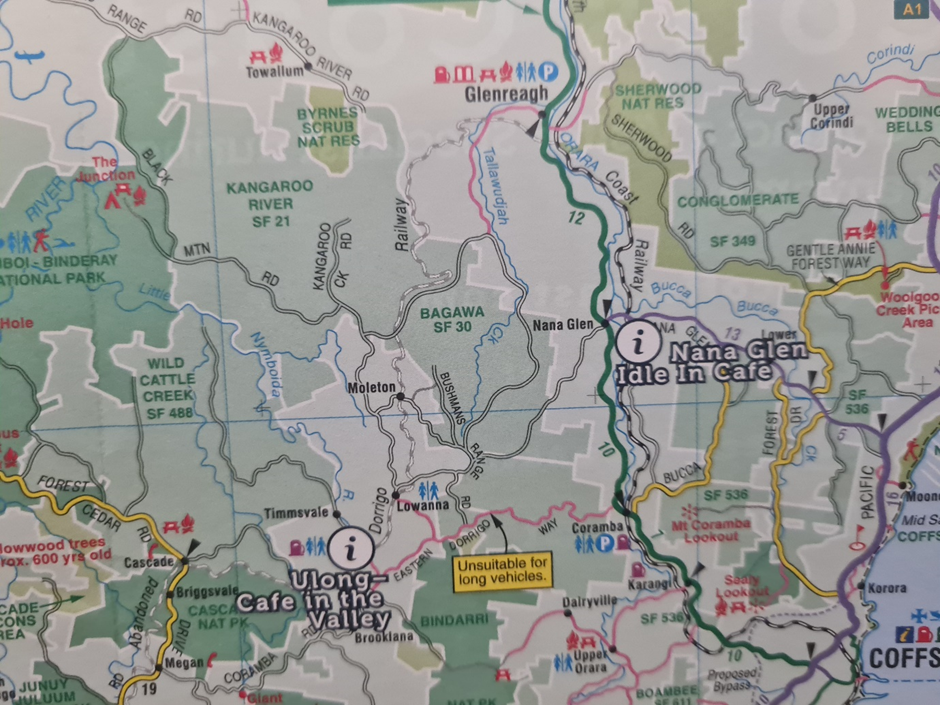
To get there, you pass through Coramba, where the current railway line runs through it, but any attempt to find the railway station will be met with disappointment.

But …

That’s not the railway story we’re trying to visualise, that is the Glenreagh to Dorrigo line, first mooted in 1906, but not getting started until 1910, then halted because of the First World War and not completed until December 1924, and ran until October 1972.

However, back to Coramba momentarily…

The North Coast railway (the primary rail route in the Mid North Coast and Northern Rivers regions of New South Wales) passes through Coramba, which had a now-closed railway station from 1922.  An attempt to find the station took us to a private residence, which obviously was once the station. It was not what we were looking for.

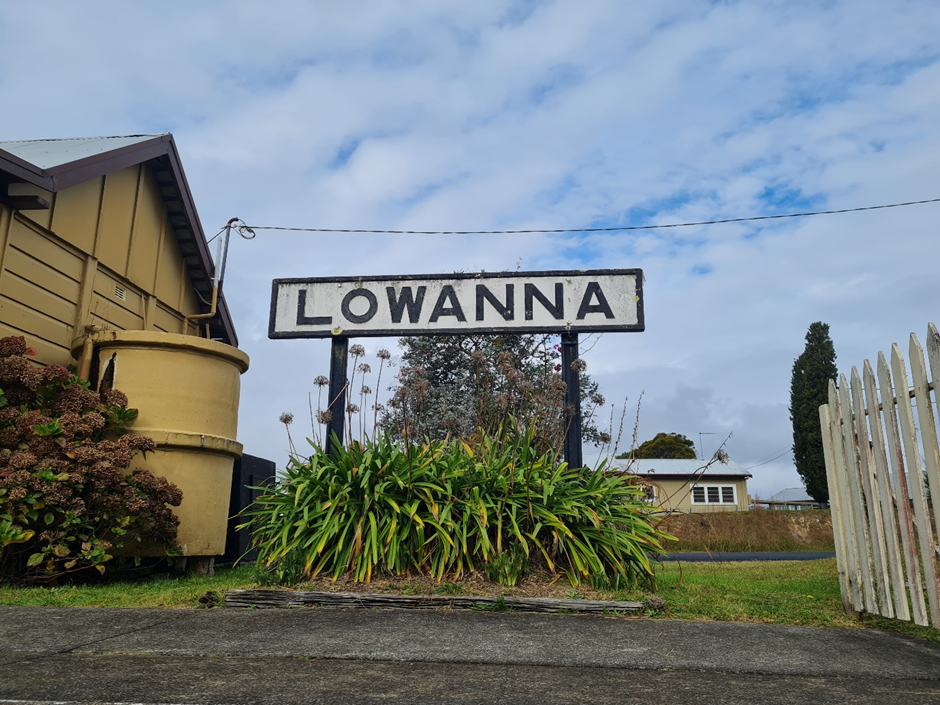
And then to the right historic station, in Lowanna, not far from Coramba…

Lowanna was the largest of the intermediate stations. It was an attended station, with a crossing loop and siding. Most of the timber was loaded at this location. 

Opened  23-Dec-1924 and Closed 20-Sep-1975

What we were really looking for was the Lowanna Railway Station, which, when we put it in the GPS, almost got us lost.  We eventually found the refurbished station, a rather run-down platform, and rail tracks.

Lowanna was on the Dorrigo branch and lies on the north coast of NSW.  It branches off the North Coast Line at Glenreagh and climbs up to the Dorrigo Plateau.

The Dorrigo area was settled in the early 1900s by pastoralists and tree fellers. Due to the steep terrain, it was decided to build a railway to allow products to be brought to nearby port towns. Several routes were surveyed, with the route from Glenreagh eventually chosen. The line climbs 664m over a length of 69km.

Apart from the endpoints of Dorrigo and Glenreagh, the stations on this line were very small, often consisting of a short platform with a small shelter. The major traffic on this line was timber.

More on the other stations, not that much still exists, on the line from Dorrigo to Glenreagh. At Dorrigo, there is a very big surprise…

Writing a book in 365 days – My story 38

More about my story

What is a Coup d’etat?

The Tumultuous Path of a Coup d’état: Understanding Its Mechanics, Motivations, and Risks

The phrase “coup d’état” – a sudden, often violent, seizure of power from a government – conjures images of military might and political upheaval. While usually associated with historical events, understanding its core mechanics, the reasons behind such desperate gambits, and the factors that contribute to their success or failure is crucial for comprehending political instability and the fragility of power.

What Exactly is a Coup d’état?

At its heart, a coup d’état (French for “stroke of state”) is an illegal and unconstitutional overthrow of a government, typically by a small group, most often from within the existing state apparatus. Unlike a revolution, which involves widespread popular participation and aims for fundamental societal change, a coup is generally swift, decisive, and carried out by an elite faction – often military officers, but sometimes political figures or intelligence agencies.

Key characteristics include:

  • Speed and Surprise: Coups rely on catching the existing leadership off guard.
  • Limited Scope: They usually target the top echelons of power, aiming to replace leaders rather than dismantle the entire system immediately.
  • Use of Force or Threat of Force: While not always bloody, the potential for violence is inherent.
  • Internal Actors: The plotters are typically insiders who have access to state resources and institutions.

Why Might a Coup Be Pursued?

The motivations behind attempting a coup d’état can be varied and often deeply rooted in perceived grievances and aspirations. Some common drivers include:

  • Discontent with the Current Leadership: This can stem from perceived corruption, incompetence, authoritarianism, or failure to address national crises (economic, social, or security).
  • Desire for Political Power: Ambitious individuals or factions may see a coup as the fastest and most direct route to seizing control.
  • Ideological Differences: A group may believe the current government’s policies or ideology are detrimental to the nation and seek to impose their own vision.
  • Ethnic or Regional Grievances: In diverse nations, a particular group might feel marginalized or oppressed and attempt to seize power to assert their dominance or secure their interests.
  • External Influence: Foreign powers may sometimes support or instigate coups to install friendly regimes or destabilize adversaries.

What is Needed to Make a Coup d’état Work?

A successful coup d’état is a meticulously planned and executed operation that requires a confluence of specific elements:

  • A Committed and Organized Core Group: This is the engine of the coup. They need a clear plan, leadership, and a unity of purpose.
  • Control of Key State Institutions: This is paramount. Access to and control over the military, police, intelligence agencies, and vital communication networks are essential for neutralizing opposition and projecting authority.
  • Disruption of Communications: Cutting off or controlling communication channels prevents the existing government from rallying support or issuing counter-orders.
  • Neutralization of Key Leaders: The swift arrest, detention, or elimination of the head of state, key ministers, and loyal military commanders is crucial to preventing organized resistance.
  • Public Apathy or Support (or at least acquiescence): While coups are not revolutions, the general populace’s reaction can be a significant factor. If the public is indifferent, divided, or even sympathetic to the coup plotters’ initial message, it can significantly ease their path.
  • Rapid Consolidation of Power: Once the initial seizure is complete, the plotters must quickly establish their authority, issue decrees, and begin to govern to prevent a vacuum or counter-coup.
  • Legitimizing Narrative: Even in an illegal act, plotters often try to frame their actions as necessary for the greater good, using propaganda to justify their takeover.

What Lets a Coup d’état Work or Fail?

The success or failure of a coup d’état is a delicate balance, with numerous factors tipping the scales:

Factors Contributing to Success:

  • Overwhelming Military Support: If the majority of the armed forces, especially elite units, back the coup, it’s very difficult for the existing government to resist.
  • Weakness of the Current Regime: A government that is already unpopular, fractured, and lacking in popular legitimacy is more vulnerable.
  • Effective Intelligence and Secrecy: The element of surprise is a powerful weapon. If the plot is kept secret until the last moment, the government has little time to react.
  • Swift and Decisive Action: Hesitation or botched initial moves can give the government time to regroup and retaliate.
  • Lack of Coordinated Opposition: If loyalist forces are disorganized or divided, they are less likely to mount an effective counter-attack.
  • International Non-Intervention: If major global powers remain neutral or even tacitly support the coup, it can increase its chances of survival.

Factors Leading to Failure:

  • Loyalist Resistance: If a significant portion of the military or security forces remains loyal to the government and can effectively organize resistance, the coup can be crushed.
  • Popular Uprising: While not a direct cause, widespread popular mobilization against the coup can create significant challenges and force the plotters to overextend their resources.
  • Internal Divisions Among Plotters: Disagreements within the coup leadership can lead to indecision, infighting, and ultimately, collapse.
  • Infiltration and Betrayal: If the plot is discovered prematurely or key members betray the plan, it can lead to the arrest of the plotters.
  • Ineffective Planning and Execution: Poorly organized coups, marked by confusion and disarray, are easily thwarted.
  • International Condemnation and Intervention: Strong international opposition, sanctions, or even direct intervention can undermine a coup’s legitimacy and effectiveness.
  • Failure to Consolidate Power: If the plotters fail to quickly establish control over essential services and institutions, they can find themselves in a precarious position.

In conclusion, a coup d’état is a high-stakes gamble that, while seemingly decisive in its initial moments, is fraught with uncertainty. Its success hinges on a complex interplay of internal political dynamics, military loyalty, strategic execution, and the ever-unpredictable reaction of the population and the international community. Understanding these elements provides a critical lens through which to analyze political instability and the enduring struggle for power in various nations.

Another excerpt from ‘Betrayal’; a work in progress

My next destination in the quest was the hotel we believed Anne Merriweather had stayed at.

I was, in a sense, flying blind because we had no concrete evidence she had been there, and the message she had left behind didn’t quite name the hotel or where Vladimir was going to take her.

Mindful of the fact that someone might have been following me, I checked to see if the person I’d assumed had followed me to Elizabeth’s apartment was still in place, but I couldn’t see him. Next, I made a mental note of seven different candidates and committed them to memory.

Then I set off to the hotel, hailing a taxi. There was the possibility the cab driver was one of them, but perhaps I was slightly more paranoid than I should be. I’d been watching the queue, and there were two others before me.

The journey took about an hour, during which time I kept an eye out the back to see if anyone had been following us. If anyone was, I couldn’t see them.

I had the cab drop me off a block from the hotel and then spent the next hour doing a complete circuit of the block the hotel was on, checking the front and rear entrances, the cameras in place, and the siting of the driveway into the underground carpark. There was a camera over the entrance, and one we hadn’t checked for footage. I sent a text message to Fritz to look into it.

The hotel lobby was large and busy, which was exactly what you’d want if you wanted to come and go without standing out. It would be different later at night, but I could see her arriving about mid-afternoon, and anonymous among the type of clientele the hotel attracted.

I spent an hour sitting in various positions in the lobby simply observing. I had already ascertained where the elevator lobby for the rooms was, and the elevator down to the car park. Fortunately, it was not ‘guarded’ but there was a steady stream of concierge staff coming and going to the lower levels, and, just from time to time, guests.

Then, when there was a commotion at the front door, what seemed to be a collision of guests and free-wheeling bags, I saw one of the seven potential taggers sitting by the front door. Waiting for me to leave? Or were they wondering why I was spending so much time there?

Taking advantage of that confusion, I picked my moment to head for the elevators that went down to the car park, pressed the down button, and waited.

The was no car on the ground level, so I had to wait, watching, like several others, the guests untangling themselves at the entrance, and an eye on my potential surveillance, still absorbed in the confusion.

The doors to the left car opened, and a concierge stepped out, gave me a quick look, then headed back to his desk. I stepped into the car, pressed the first level down, the level I expected cars to arrive on, and waited what seemed like a long time for the doors to close.

As they did, I was expecting to see a hand poke through the gap, a latecomer. Nothing happened, and I put it down to a television moment.

There were three basement levels, and for a moment, I let my imagination run wild and considered the possibility that there were more levels. Of course, there was no indication on the control panel that there were any other floors, and I’d yet to see anything like it in reality.

With a shake of my head to return to reality, the car arrived, the doors opened, and I stepped out.

A car pulled up, and the driver stepped out, went around to the rear of his car, and pulled out a case. I half expected him to throw me the keys, but the instant glance he gave me told him was not the concierge, and instead brushed past me like I wasn’t there.

He bashed the up button several times impatiently and cursed when the doors didn’t open immediately. Not a happy man.

Another car drove past on its way down to a lower level.

I looked up and saw the CCTV camera, pointing towards the entrance, visible in the distance. A gate that lifted up was just about back in position and then made a clunk when it finally closed. The footage from the camera would not prove much, even if it had been working, because it didn’t cover the life lobby, only in the direction of the car entrance.

The doors to the other elevator car opened, and a man in a suit stepped out.

“Can I help you, sir? You seem lost.”

Security, or something else. “It seems that way. I went to the elevator lobby, got in, and it went down rather than up. I must have been in the wrong place.”

“Lost it is, then, sir.” I could hear the contempt for Americans in his tone. “If you will accompany me, please.”

He put out a hand ready to guide me back into the elevator. I was only too happy to oblige him. There had been a sign near the button panel that said the basement levels were only to be accessed by the guests.

Once inside, he turned a key and pressed the lobby button. The doors closed, and we went up. He stood, facing the door, not speaking. A few seconds later, he was ushering me out to the lobby.

“Now, sir, if you are a guest…”

“Actually, I’m looking for one. She called me and said she would be staying in this hotel and to come down and visit her. I was trying to get to the sixth floor.”

“Good. Let’s go over the the desk and see what we can do for you.”

I followed him over to the reception desk, where he signalled one of the clerks, a young woman who looked and acted very efficiently, and told her of my request, but then remained to oversee the proceeding.

“Name of guest, sir?”

“Merriweather, Anne. I’m her brother, Alexander.” I reached into my coat pocket and pulled out my passport to prove that I was who I said I was. She glanced cursorily at it.

She typed the name into the computer, and then we waited a few seconds while it considered what to output. Then, she said, “That lady is not in the hotel, sir.”

Time to put on my best-confused look. “But she said she would be staying here for the week. I made a special trip to come here to see her.”

Another puzzled look from the clerk, then, “When did she call you?”

An interesting question to ask, and it set off a warning bell in my head. I couldn’t say today, it would have to be the day she was supposedly taken.

“Last Saturday, about four in the afternoon.”

Another look at the screen, then, “It appears she checked out Sunday morning. I’m afraid you have made a trip in vain.”

Indeed, I had. “Was she staying with anyone?”

I just managed to see the warning pass from the suited man to the clerk. I thought he had shown an interest when I mentioned the name, and now I had confirmation. He knew something about her disappearance. The trouble was, he wasn’t going to volunteer any information because he was more than just hotel security.

“No.”

“Odd,” I muttered. “I thought she told me she was staying with a man named Vladimir something or other. I’m not too good at pronouncing those Russian names. Are you sure?”

She didn’t look back at the screen. “Yes.”

“OK, now one thing I do know about staying in hotels is that you are required to ask guests with foreign passports their next destination, just in case they need to be found. Did she say where she was going next?” It was a long shot, but I thought I’d ask.

“Moscow. As I understand it, she lives in Moscow. That was the only address she gave us.”

I smiled. “Thank you. I know where that is. I probably should have gone there first.”

She didn’t answer; she didn’t have to, her expression did that perfectly.

The suited man spoke again, looking at the clerk. “Thank you.” He swivelled back to me. “I’m sorry we can’t help you.”

“No. You have more than you can know.”

“What was your name again, sir, just in case you still cannot find her?”

“Alexander Merriweather. Her brother. And if she is still missing, I will be posting a very large reward. At the moment, you can best contact me via the American Embassy.”

Money is always a great motivator, and that thoughtful expression on his face suggested he gave a moment’s thought to it.

I left him with that offer and left. If anything, the people who were holding her would know she had a brother, that her brother was looking for her, and equally that brother had money.

© Charles Heath – 2018-2025

Writing a book in 365 days – 255

Day 255

Editing mistakes

Sharpen Your Prose: Banishing Blunders Like Mixed Metaphors, Faulty Parallelism, and Tense Troubles

Ever read something that makes your brain do a little somersault? You know, where you start nodding along, then suddenly hit a snag, and have to backtrack to figure out what the writer actually meant? More often than not, these jarring moments stem from a few common writing errors.

Today, we’re going to tackle three of the most prevalent culprits: mixed metaphors, faulty parallelism, and incorrect tense. Mastering these will not only make your writing clearer and more impactful but will also elevate your credibility as a communicator. Let’s dive in!

The Tangled Web of Mixed Metaphors

Metaphors are beautiful things. They allow us to paint vivid pictures in our readers’ minds by likening one thing to another, creating deeper understanding and engagement. But when you try to weave too many disparate comparisons together, or let a metaphor stray too far from its original intent, you end up with a tangled, nonsensical mess.

The Goal: To use a single, consistent, and effective metaphor to illustrate a point.

The Blunder: Combining two or more unrelated metaphors, creating confusion and often unintentional humor.

Examples:

  • Wrong: “We need to get our ducks in a row before we can really hit the ground running and climb the ladder of success.
    • Why it’s wrong: “Ducks in a row” implies organization and order. “Hit the ground running” suggests immediate action and speed. “Climb the ladder of success” is about progress and achievement. These are all fine individual ideas, but crammed together, they create a jumbled image. Are we a team of organized ducks, a sprinter, or a mountaineer?
  • Right: “We need to get our ducks in a row before we can begin implementing our new strategy.”
    • Why it’s right: This focuses solely on the “ducks in a row” metaphor, meaning to organize things properly, and it works.
  • Right: “We need to be ready to hit the ground running when the project launches.”
    • Why it’s right: This uses the “hit the ground running” metaphor to convey the need for immediate and energetic action.
  • Right: “Her dedication and hard work were instrumental in her climb up the ladder of success.”
    • Why it’s right: This uses the “ladder of success” metaphor effectively to describe career progression.

The Uneven Scales of Faulty Parallelism

Parallelism, or parallel structure, is about balance and rhythm in your writing. It means using the same grammatical form for elements in a series or comparison. When this balance is disrupted, your sentences can feel clunky and awkward, like a song with a broken beat.

The Goal: To present items in a series or comparison with consistent grammatical structure for clarity and flow.

The Blunder: Using different grammatical forms for elements that should be treated equally.

Examples:

  • Wrong: “She enjoys hikingto read, and swimming.”
    • Why it’s wrong: “Hiking” is a gerund (verb acting as a noun). “To read” is an infinitive. “Swimming” is another gerund. The shift from gerund to infinitive and back breaks the parallel structure.
  • Right: “She enjoys hikingreading, and swimming.”
    • Why it’s right: All elements are gerunds, creating a smooth and consistent list.
  • Right: “She enjoys to hiketo read, and to swim.”
    • Why it’s right: All elements are infinitives, also creating parallel structure.
  • Wrong: “The new software offers speedefficiency, and it is easy to use.”
    • Why it’s wrong: “Speed” and “efficiency” are nouns. “It is easy to use” is a clause.
  • Right: “The new software offers speedefficiency, and ease of use.”
    • Why it’s right: All elements are nouns, providing consistent structure.

The Shifting Sands of Incorrect Tense

Verb tense is the anchor that grounds your narrative in time. It tells your reader when an action is happening. Inconsistent or incorrect tense can lead to confusion about the sequence of events or the overall timeframe of your writing.

The Goal: To consistently use the appropriate verb tense to accurately reflect the time of the actions being described.

The Blunder: Shifting verb tenses unnecessarily within a sentence, paragraph, or narrative.

Examples:

  • Wrong: “Yesterday, I go to the store and buy some milk.”
    • Why it’s wrong: The action happened “yesterday,” which is in the past. The verbs should reflect this past action.
  • Right: “Yesterday, I went to the store and bought some milk.”
    • Why it’s right: Both verbs are in the simple past tense, accurately describing past events.
  • Wrong: “The character wakes uprealizes he is late, and runs for the bus.”
    • Why it’s wrong: While this can be used for vivid storytelling (present tense for immediacy), if the rest of the narrative is in the past tense, this shift is jarring.
  • Right (if the narrative is in the past): “The character woke uprealized he was late, and ran for the bus.”
    • Why it’s right: Consistent use of the past tense for a narrative set in the past.
  • Wrong: “She will tell you the secret if you ask her nicely.”
    • Why it’s wrong: Mixing future and present tense for actions that are concurrent or related in time.
  • Right: “She will tell you the secret if you ask her nicely.” (This is actually correct as it describes a future conditional event).
    • Let’s try another wrong example: “She told me that she will visit tomorrow.”
    • Why it’s wrong: “Told” is past tense, but “will visit” refers to a future event.
  • Right: “She told me that she would visit tomorrow.” (Using “would” for reported future in the past).
    • Or Right: “She tells me that she will visit tomorrow.” (If the telling is happening now).

Practice Makes Perfect (and Polished Prose!)

Don’t be discouraged if you find yourself making these errors. Most writers do, especially when they’re developing their voice. The key is to be aware of them and to actively proofread with these concepts in mind.

  • Read aloud: Hearing your writing can help you catch awkward phrasing and inconsistencies.
  • Enlist a fresh pair of eyes: Ask a friend or colleague to review your work.
  • Use grammar checkers: While not foolproof, they can highlight potential issues.
  • Study examples: Keep an eye out for effective (and ineffective) uses of metaphors, parallelism, and tense in the writing you admire.

By paying attention to these fundamental aspects of grammar and style, you can transform your writing from merely understandable to truly compelling. So, go forth and banish those blunders! Your readers will thank you for it.

Searching for locations – Dorrigo to Glenreagh, New South Wales, Australia

Once a bustling railway

When you pick up a document that describes tourist attractions in Coffs Harbour, there’s one about the Orara Valley, and what caught my eye was firstly the Lowanna Railway Station.

To get there, you pass through Coramba, where the current railway line runs through it, but any attempt to find the railway station will be met with disappointment.

But …

That’s not the railway story we’re trying to visualise, that is the Glenreagh to Dorrigo line, first mooted in 1906, but not getting started until 1910, then halted because of the First World War and not completed until December 1924, and ran until October 1972.

However, back to Coramba momentarily…

The North Coast railway (the primary rail route in the Mid North Coast and Northern Rivers regions of New South Wales) passes through Coramba, which had a now-closed railway station from 1922.  An attempt to find the station took us to a private residence, which obviously was once the station. It was not what we were looking for.

And then to the right historic station, in Lowanna, not far from Coramba…

Lowanna was the largest of the intermediate stations. It was an attended station, with a crossing loop and siding. Most of the timber was loaded at this location. 

Opened  23-Dec-1924 and Closed 20-Sep-1975

What we were really looking for was the Lowanna Railway Station, which, when we put it in the GPS, almost got us lost.  We eventually found the refurbished station, a rather run-down platform, and rail tracks.

Lowanna was on the Dorrigo branch and lies on the north coast of NSW.  It branches off the North Coast Line at Glenreagh and climbs up to the Dorrigo Plateau.

The Dorrigo area was settled in the early 1900s by pastoralists and tree fellers. Due to the steep terrain, it was decided to build a railway to allow products to be brought to nearby port towns. Several routes were surveyed, with the route from Glenreagh eventually chosen. The line climbs 664m over a length of 69km.

Apart from the endpoints of Dorrigo and Glenreagh, the stations on this line were very small, often consisting of a short platform with a small shelter. The major traffic on this line was timber.

More on the other stations, not that much still exists, on the line from Dorrigo to Glenreagh. At Dorrigo, there is a very big surprise…