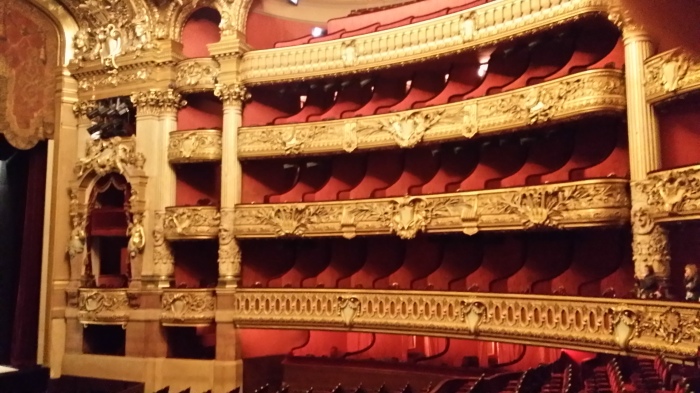
An excerpt from “If Only” – a work in progress

Investigation of crimes don’t always go according to plan, nor does the perpetrator get either found or punished.

That was particularly true in my case.  The murderer was very careful in not leaving any evidence behind, to the extent that the police could not rules out whether it was a male or a  female.

At one stage the police thought I had murdered my own wife though how I could be on a train at the time of the murder was beyond me.  I had witnesses and a cast-iron alibi.

The officer in charge was Detective Inspector Gabrielle Walters.  She came to me on the day after the murder seeking answers to the usual questions when was the last time you saw your wife, did you argue, the neighbors reckon there were heated discussions the day before.

Routine was the word she used.

Her Sargeant was a surly piece of work whose intention was to get answers or, more likely, a confession by any or all means possible.  I could sense the raging violence within him.  Fortunately, common sense prevailed.

Over the course of the next few weeks, once I’d been cleared of committing the crime, Gabrielle made a point of keeping me informed of the progress.

After three months the updates were more sporadic, and when, for lack of progress, it became a cold case, communication ceased.

But it was not the last I saw of Gabrielle.

The shock of finding Vanessa was more devastating than the fact she was now gone, and those images lived on in the same nightmare that came to visit me every night when I closed my eyes.

For months I was barely functioning, to the extent I had all but lost my job, and quite a few friends, particularly those who were more attached to Vanessa rather than me.

They didn’t understand how it could affect me so much, and since it had not happened to them, my tart replies of ‘you wouldn’t understand’ were met with equally short retorts.  Some questioned my sanity, even, for a time, so did I.

No one, it seemed, could understand what it was like, no one except Gabrielle.

She was by her own admission, damaged goods, having been the victim of a similar incident, a boyfriend who turned out to be a very bad boy.  Her story varied only in she had been made to witness his execution.  Her nightmare, in reliving that moment in time, was how she was still alive and, to this day, had no idea why she’d been spared.

It was a story she told me one night, some months after the investigation had been scaled down.  I was still looking for the bottom of a bottle and an emotional mess.  Perhaps it struck a resonance with her; she’d been there and managed to come out the other side.

What happened become our secret, a once-only night together that meant a great deal to me, and by mutual agreement, it was not spoken of again.  It was as if she knew exactly what was required to set me on the path to recovery.

And it had.

Since then we saw each about once a month in a cafe.   I had been surprised to hear from her again shortly after that eventful night when she called to set it up, ostensibly for her to provide me with any updates on the case, but perhaps we had, after that unspoken night, formed a closer bond than either of us wanted to admit.

We generally talked for hours over wine, then dinner and coffee.  It took a while for me to realize that all she had was her work, personal relationships were nigh on impossible in a job that left little or no spare time for anything else.

She’d always said that if I had any questions or problems about the case, or if there was anything that might come to me that might be relevant, even after all this time, all I had to do was call her.

I wondered if this text message was in that category.  I was certain it would interest the police and I had no doubt they could trace the message’s origin, but there was that tiny degree of doubt, whether or not I could trust her to tell me what the message meant.

I reached for the phone then put it back down again.  I’d think about it and decide tomorrow.

© Charles Heath 2018-2020

“The End of the Road”, a short story

From the days of wandering the remote country towns of New South Wales in Australia.


The End of the Road


The man who had said that we would never make the distance was right.

It had been my idea to go ‘troppo’, forsake everything, hop on a motorbike and go around Australia.  I was, at that stage fed up with everything and, catching Harry in one of his low spots, he decided there and then he would join me.

For the first few days, we believed we were stark staring mad and talked about calling it quits, but perseverance made all the difference.  After two months we were glad we had the resolve to keep going, and in that time we had managed to see more of the Australian countryside than we’d seen all our lives.

That was until this particular morning when we arrived in Berrigum, what could have been called a one-horse town.  It consisted of one hotel, one general store (that sold everything from toothpicks to petrol) and an agricultural machinery depot.  It also had a station and some wheat silos, and this appeared to be the only reason for a town in this particular spot in the middle of nowhere.

And it was the railway station that interested Harry, who was, by this time, getting a little homesick and fed up with his motorbike.

After coughing and spluttering for the last week it had finally died, and the five-mile walk to Berrigum had not helped either his temper, or his disposition, and had only served to firm his resolve to return home.

It was hot but not unbearably so, unlike a hot summer’s day in the city, and even worse still in public transport.  For miles around as we tramped those five miles all we could see was acres and acres of wheat, but no sign of life.  It was the same when we reached the town.  It appeared all the people were either hiding or had left.  Harry suspected the latter given the state of the road, and the buildings, more or less the epitome of a ghost town.

Standing at the end of what could have been called the main street with only our own dust for company, one look took in the whole town.  In a car, one wouldn’t have given it a second look, if one had time to give it a first.  I didn’t remember seeing neither any speed restriction signs nor signpost advertising a town ahead.

And since no amount of argument could sway him from his resolve, the first objective was to get a train timetable, if such a thing existed, and make arrangements for Harry’s return.

The station was as deserted as the town itself, and a quick glance in the stationmaster’s office showed no sign of life.

Leaving the bikes on the platform outside the office, we headed for the hotel for both a drink and make enquiries about rail services.  Being a hot day and the morning’s tramp somewhat hot and dusty, we were looking forward to a cold glass (or two) of beer.

The hotel looked as though it was a hundred years old though there was no doubting a few relentless summers would reduce it to the same state.  It was as bad inside as out, though the temperature was several degrees lower, and we could sit down in what appeared to be the main bar.  We were the only occupants and still to find any sign of life.  Overhead, two fans were struggling to move the hot air around.

More than once Harry reckoned it was a ghost town and I was beginning to believe him when, after five minutes, no one arrived.

After ten, we stood, ready to leave, only to stop halfway out of our chairs when a voice behind us said, “Surely you’re not going back out there without refreshment?”

“I was beginning to think the town was deserted,” I said.

“It is during the day, but when the sun goes down…”

I didn’t ask.  We followed him to the bar where he had stationed himself behind the counter.  “The name is Jack.”  He stretched out his hand towards us.  “We don’t bother with last names here.”

“Bill,” I said, shaking it, and nodding to Harry, “Harry.”

Harry nodded and shook his hand too.

“The first one’s on the house.”  He poured three glasses and put ours in front of us.  “Cheers.”

In all cases, it went down without touching the sides (as they say) and he poured a second, at the same time asking, “What brings you to our little corner of the earth?”

“Just passing through,” I said, “Or at least for me.”

“And you?”  Jack looked at Harry.

“I can’t hack the pace.  I can truthfully say I have thoroughly enjoyed the trip so far, except for a few mishaps, but for me, it’s time to get back to the big smoke.  My ‘do your own thing’ has run out of momentum.  Do you know if there is a train that goes anywhere important?”

The publican looked at him almost pityingly.  “Important, eh?”  He rubbed his chin feigning thought.  “You make it sound like you are in purgatory.”

“Aren’t we?”

I suppose one could hardly blame Harry for his attitude.  After all, at the beginning, he had numerous accidents, caught a virus that stayed with him (and a couple of torrential downpours had done little to help it), and now his motorbike had finally died.  No wonder his humour was at an all-time low.

For a moment I thought the publican was going to tell Harry what he thought of him, but then he smiled and the tension passed.  “Perhaps to a city fellow like you it might be,” he said.  “The mail train which has a passenger carriage comes through once a week, and, my good man, you’re in luck.  Today’s the day.”

“Good.  How do I get a ticket?”

“You’d have to see the Station Master.”

“And where might he be at the moment?  We were at the station a while back and there was no sign of life.”

“Nor will there be until the train comes.  Meanwhile, there’s time enough for lunch.  I’m sure you will stay?”  He looked questioningly at us.

I looked at Harry, who nodded.

“Why not.”


Over lunch, we talked.

I remember not so long ago when I had to attend a large number of lunches where the talk was of business, or, if anything, mostly about subjects that I had no interest in.  It was always some posh restaurant, time seemed important, the atmosphere never really relaxed, and to get into a relaxed state it took a large amount of alcohol to deaden the despair and distaste of that one had to fete in order to secure their business.

How different it was here.

We talked about the country, and, after seeing as much of it, and worked on it as we had to fund our odyssey, we could talk about it authoritatively.  And, most of all, it was interesting.

The atmosphere too was entirely different than it had been in the city.  Out here the people were always friendly, people always willing to stop and talk, particularly farmers; share a drink or some food.

There was none of this carefree purposefulness in the city, and more than once I’d thought of the fact one could travel in the same train with the same people for year after year and still not know any of them.  It was the same at work.  Even after five years I still hadn’t known three-quarters of the office staff, and most of them probably didn’t want to know me.  Harry was virtually the only real friend I’d had at work.

But here, in ‘the middle of nowhere’ as Harry had called it, I felt as though I’d known the publican all of my life instead of the few short hours.


Some hours later and after much argument, where Jack and I tried to talk Harry into staying (Jack said he knew someone who could fix anything including Harry’s bike), Harry remained unconvinced and resolute.  Jack, to round off the occasion (we were the first real guests from outside he had had in a week) provided another on-the-house ale and then saw us to the station.  “After all”, he had said, “I’ve nothing else to do at the moment.”

By that time the station was showing a little more life than it had before.  A station assistant, moving several parcels with a hand trolley, slowly ambled towards the end of the platform.

And whether it could be called a platform was a debatable point.  It was a gravel and grass affair that looked more like part of cutting through a hill than a station.

At the station, Jack portentously announced he was also the stationmaster and would be only too happy to take care of Harry’s requirements.  It would be, he added, “the first passenger ticket sold for several months.”  Certainly, the ticket he handed Harry bore witness to that.  It had yellowed with age.

One would have thought with the imminent arrival of the train there would be more people, but no.  The only event had been the station assistant’s stroll to the end of the platform and back.  Now both he and Jack had disappeared into the office and we were left alone on the platform.  Very little in the whole town stirred, nor had it the whole time we’d been there.

“Well,” I said to break the silence.  “I’m sorry to see you going through with it.  I thought I might have been able to talk you out of it…”  I shrugged, leaving the sentence unfinished.

“I’m sorry to be going too, but a body can take only so much bad luck, and God knows that’s all I’ve had.”

“Yes.”  I couldn’t think of much else to say.  “But it’s been good to have your company these last few months.”

“And you.  When do you think you’ll get back?”

“When I get sick of it I suppose.”

“Look us up then when you get back.”

“I will.”

Thankfully the appearance of the train in the distance broke off the conversation.  I had begun to think of what it was going to be like out on the road with no one to talk to but myself.  The thought was a little depressing and I tried not to let it show.

We said little else until the train pulled in, three flat cars, seven enclosed wagons, a passenger carriage and the guard’s van.  The train stopped with only part of the passenger carriage and the guard’s van at the station.

The guard took aboard the parcels the station assistant had left for him earlier, and then put those that were for Berrigum on the trolley.

I shook Harry’s hand and said I’d see him around.  Then he, the motorbike, and the guard were aboard and the train was off, disappearing slowly into the afternoon haze.

The station assistant then repeated his amble to the end of the platform to collect the hand trolley.

“Staying or moving on.”  Jack had come up behind me and gave me a bit of a start.

“Staying I guess, until tomorrow or maybe later.”

“I had heard one of the farm hands is leaving tomorrow heading back to Sydney.  There could be a vacancy.”

“Sounds like a plan,” I said.

“I could put in a word for you.”

“Thanks.”

Jack just grinned and we headed for the hotel.


© Charles Heath 2016-2019

Searching for locations: Aratiatia Dam, Taupo, New Zealand

Aratiatia Dam water release, Taupo

The Aratiatia Dam, rapids, and hydroelectric power station are located on the Waikato River, New Zealand’s longest river.  It is about 16km from Taupo, and 6km from Huka falls, and there is a walking track, for the fit, of course, between the two water attractions.

This happens three or four times every day, depending on the season, and lasts about 15 minutes.  Water is released at the rate of about 80,000 liters a second, so it is quite a lot of water being sent through the rapids.

There are a number of viewing points, the most popular being from the bridge, where I took these photos, and 5 minutes down the walking track to the ridgeline where you can get an overview of the river.

This is looking towards the rapids, as the catchment leading to the rapids starts to fill

The pool is almost full and the excess is starting its journey towards the rapids

Now full, the rapids are at capacity as up to 80,000 liters a second are heading down a 28-meter drop heading towards the hydroelectric power station.

And once full at the bottom, there is a jet boat ride available for a closer view of the water, and a few thrills to go with it.

In a word: Dry

We all know what this means, without moisture, in other words not wet.

It could also mean dull factually, as in reading some non-fiction books, and quite often those prescribed as mandatory reading at school.

You could also have a dry sense of humour, where you have to be on your game to understand, or get, the humour.

It could also describe boredom by saying that it’s like watching paint dry.

For those who like a bit of a tipple, the last place you want to go is a dry bar, where no alcohol is served.

Perhaps this should be mandatory for weddings and funerals, places where feelings often run very high and do not need the stimulus of half a dozen double Scotches.

And speaking of alcohol and cider in particular, you can have it sweet, dry, or draft. Many people prefer dry, sometimes the drier the better, especially wine, and oddly martinis.

Aside from whether they are shaken or stirred.

But the most fascinating version of dry is dry cleaning. Just how can you ‘dry’ clean clothes?

Would that be what they call an oxymoron?

NaNoWriMo Day 30 + 14

Yes, this project is still moving through the water, albeit very slowly, but progress is being made.

For the moment we are out of the snow storms and freezing cold, and meandering through a much more temperate part of the realm.

It’s a time to discover that people fear the unknown. My father once told me of soldiers in the second world war, their orders were to shoot first and ask questions later.

Has that changed much in any war? Or street battle between rival organisations or gangs?

These days it’s guns wreaking the damage, but back in the past, the old, old, old, old days it was swords, lances, bows and arrows, maces, and a few other interesting but painful implements.

To save the realm, these disaffected people need to be brought back into the fold, but decades, even centuries had festered the ill feelings between the others makes it nigh on impossible.

Sound like something going on right under our noses?

For those keeping an eye on the word count, this session, 3,842 words for a running total of 129,742.

“Strangers We’ve Become”, a sequel to “What Sets Us Apart”

Stranger’s We’ve Become, a sequel to What Sets Us Apart.

The blurb:

Is she or isn’t she, that is the question!

Susan has returned to David, but he is having difficulty dealing with the changes. Her time in captivity has changed her markedly, so much so that David decides to give her some time and space to re-adjust back into normal life.

But doubts about whether he chose the real Susan remain.

In the meantime, David has to deal with Susan’s new security chief, the discovery of her rebuilding a palace in Russia, evidence of an affair, and several attempts on his life. And, once again, David is drawn into another of Predergast’s games, one that could ultimately prove fatal.

From being reunited with the enigmatic Alisha, a strange visit to Susan’s country estate, to Russia and back, to a rescue mission in Nigeria, David soon discovers those whom he thought he could trust each has their own agenda, one that apparently doesn’t include him.

The Cover:

strangerscover9

Coming soon


The story behind the story – Echoes from the Past

The novel ‘Echoes from the past’ started out as a short story I wrote about 30 years ago, titled ‘The birthday’.

My idea was to take a normal person out of their comfort zone and led on a short but very frightening journey to a place where a surprise birthday party had been arranged.

Thus the very large man with a scar and a red tie was created.

So was the friend with the limousine who worked as a pilot.

So were the two women, Wendy and Angelina, who were Flight Attendants that the pilot friend asked to join the conspiracy.

I was going to rework the short story, then about ten pages long, into something a little more.

And like all re-writes, especially those I have anything to do with, it turned into a novel.

There was motivation.  I had told some colleagues at the place where I worked at the time that I liked writing, and they wanted a sample.  I was going to give them the re-worked short story.  Instead, I gave them ‘Echoes from the past’

Originally it was not set anywhere in particular.

But when considering a location, I had, at the time, recently been to New York in December, and visited Brooklyn and Queens, as well as a lot of New York itself.  We were there for New Years, and it was an experience I’ll never forget.

One evening we were out late, and finished up in Brooklyn Heights, near the waterfront, and there was rain and snow, it was cold and wet, and there were apartment buildings shimmering in the street light, and I thought, this is the place where my main character will live.

It had a very spooky atmosphere, the sort where ghosts would not be unexpected.  I felt more than one shiver go up and down my spine in the few minutes I was there.

I had taken notes, as I always do, of everywhere we went so I had a ready supply of locations I could use, changing the names in some cases.

Fifth Avenue near the Rockefeller center is amazing at first light, and late at night with the Seasonal decorations and lights.

The original main character was a shy and man of few friends, hence not expecting the surprise party.  I enhanced that shyness into purposely lonely because of an issue from his past that leaves him always looking over his shoulder and ready to move on at the slightest hint of trouble.  No friends, no relationships, just a very low profile.

Then I thought, what if he breaks the cardinal rule, and begins a relationship?

But it is also as much an exploration of a damaged soul, as it is the search for a normal life, without having any idea what normal was, and how the understanding of one person can sometimes make all the difference in what we may think or feel.

And, of course, I wanted a happy ending.

Except for the bad guys.


Get it here:  https://amzn.to/2CYKxu4

newechocover5rs


Searching for locations: Toronto, Canada

Usually, the transfer from the airport to the hotel is one of those serene moments after a long, or short, plane trip.

Usually.

Our first from Vancouver airport to the hotel was in something akin to a party bus, a stretch limousine that was very uncomfortable after 24 hours cooped up in an economy seat.  Surely they had a large enough SUV.

Apparently not.

This time around we got what the driver said was a town car, and our looks of amazement that it could take the three of us and 4 large suitcases and 3 cabin bags, was met with a shrug and a statement that the limo company had got rid of their larger cars a year ago.

This driver was determined.  He fitted the cases in, and we crammed in the back, all squishy.

But that was the best part of the journey.

We had the original kamikaze.  It was 140km or nothing, and being tossed about in the back of the car was just what we needed.

Score: 1 out of 10.

The driver just stopped long enough to toss the bags on the sidewalk and drive off, leaving us to fend for ourselves.

Of course, the hotel didn’t have a 24-hour concierge and I guess it was part of a learning curve for staying in downmarket hotels.

So, we’re staying in a Doubletree by Hilton, a downmarket hotel chain that we have stayed in before, in Melbourne, Australia.  That was a pleasant and surprisingly good experience, leading to giving the chain another go in Toronto, Canada.

Its a case of chalk and cheese.  Maybe it’s the late hour, maybe it’s my expectations, but the experience was flat, and for a chain that Hilton has put its name to, maybe it’s time they started policing the hotel’s standards.

Not that the over the counter experience was bad, I just didn’t feel like I was welcome in the usual Hilton manner.

It’s a long time since I was a Diamond HHonors guest, and I was not expecting a lot, but being a member, at whatever level you are on, should count for something.

Today, it didn’t.

But it didn’t end there…

The room on first viewing was a disappointment, but on reflection, I think my expectations were geared to what we have had in Australia where real estate is less expensive and therefore the rooms are larger.

This also means most rooms have double queen or double king beds, not twin double beds.  I have not slept in a double bed for about 40 years, anywhere.

Of course, I should have read the fine print.

My bad.

So…

I go down to the front desk and ask if there are larger rooms.  Of course, there are, if you want twin double beds, or a king bed and a fold away bed, which we do not.

I understand their dilemma, the rooms are just too small to fit larger beds.

Lesson learned for the next time if there is a next time.

On the upside…

Breakfast is included, and it’s really good, and the service is above expectations.

In a word: Bore, or is that boar

I’ve had the ubiquitous pleasure of being called one, and that is, a bore.

Probably because I spend so much time telling people about the joys and woes of being a writer.

You can be a tedious bore, cooking could be a bore, and then you could bore someone to death, and then you will bore the responsibility of, yes, doing just that.

Would it be murder or manslaughter?

But, of course, there are other meanings of the word, such as, on my farm I have a bore.

No, we’re not talking about the farmhand, but where artesian water is brought to the surface, in what would otherwise be very arid land.

Or, could be the size of a drill hole, and in a specific instance the measurement of the circular space that piston goes up and down.  And if you increase the size of the bore, the more powerful the engine.

Or it could refer to the size of a gun barrel, for all of you who are crime fiction writers.

But, let’s not after all of that, confuse it with another interpretation of the word, boar, which is basically a male pig.

It could also just as easily describe certain men.

Then there is another interpretation, boor, which is an extremely rude person, or a peasant, a country bumpkin or a yokel.

I’ve only seen the latter in old American movies.

There is one more, rather obscure interpretation, and that is boer, which is a Dutch South African, who at the turn of the last century found themselves embroiled in a war with the British.

“I was minding my own business when…”, a short story

What do you say, when everything that could be had been said, and then some.

What did marriage counselors know, other than they are right, and you are wrong?

I don’t think either of us, with the same belief, could be wrong.  The marriage was over, and there was no use prolonging the agony.

Except we had to try to at least put some of the pieces back together, if only for the sake of walking away with a sense of closure and peace.

But, peace was the last thing in the atmosphere inside the car, and it had been like that since leaving Vancouver.

There had been a momentary truce in Kamloops where we had to stay, in separate rooms, and polite conversation over breakfast, until I put my foot in my mouth.

Again.

I’m not sure if I knew what to say to her anymore.  To her, everything I said was laced with an agenda or a subliminal plot.  I got it, I’d lied to her once too often, and once she proved one right, and, from there, it didn’t take long for the whole charade to unravel.

I’d been advised against marrying her, that I would not be able to do my job and have some sort of life with Eloise, but I wanted it.

And, fifteen months down the track, my employers had been proved right.
Eloise was driving.  Her parents lived in Banff, and we had made the trip in all of the four seasons, and now winter, she was more used to the icy conditions than I.

It gave me a chance to look at her from my side of the mid-sized SUV.  We were going to take her car, a rather small sedan, but it had broken down, so I hired a Ford Flex.

If you’re going to take on the elements, I wanted a car that could handle the conditions.

In that, I think I’d managed to surprise her, and not in a bad way.

For the first time in a long time.

Then, of course, she had to look sideways, and that ruined it.  The frown followed by the pursed lips.  Something caustic was about to come my way.

Except a very loud bang took us both by surprise, and skewing the car sideways, catching the edge of the ice on the road, and we started spinning.

As good as she was, there would be no containing this calamity.

I looked behind to see what the hell had hit us.

An F350 or RAM 2500, definitely larger than us, definitely deliberate, and definitely with intent to hurt us.

Or me.

My work had finally come home.

There was a scream just on the edge of her terror as the car had spun sideways and the car behind us slammed into it us again, arresting the spin and pushing us towards the edge of the road.

I could see what the pursuer’s intent was.  Down the side, a roll if possible, then pick off the survivors as they scrambled from the wreckage.

Or not have to worry, the roll may do the job for them.
We hit the edge as the other car braked, and we continued on, that stifled scream from Eloise now erupting.

She could see what was going to happen, just as our car tipped.

Six seconds.

Seat belt or not, totally unprepared for what was about to happen, she was not going to walk away from this.

Unless I did something about it.

Seatbelt unhitched I dragged her to me and protected her as best I could.  She didn’t resist, but the look in her eyes, terror laced with something else, no time to think about it now, told me she would do whatever I wanted.

Over on the roof, upside down, I prayed it stayed there, and slide,  The ice, snow, and slush was going to help.

Seconds passed, taking what seemed forever, till we reached the bottom of the hill and hit a rock, arresting the movement with a loud bang and a crunch of bending metal.

Stopped.

Engine still running.

No movement from her.  Yet.

And relief.  No bones were broken, or none that I noticed.

Under me, she stirred.

Just as a bullet smashed the rear passenger window, and the shattered glass splattered the interior.  A moment later, the side window, above my head did the same.
I lifted myself, whispering in her ear, “Slide towards the front window.”  It was buried in the snow and dirt kicked up in the final run to the bottom.  The shooter would not be able to see it, or her.

Above me, I reached up to feel under the seat and found the package.

A gun.  Always be prepared.

Ten seconds since the last shot.  From up top, the shooter would not be able to see us, or any movement.  He was going to have to come down and finish the job.

And hope we were would not be able to fight back.

That was the purpose of running us off the road.

Pity then that he had not been given my file.  If he had he would have driven off and tried again later.

That he was halfway down the hill when I saw him told me this operation had been cobbled together quickly, with no time to find a professional.

And now I knew why Barnes had told me to be careful.

A lone wolf looking to make a name for himself.

And failing.
Ten minutes, the police arrived.

Long enough to bury the body and the weapons under a lot of snow, in a ravine that no one would discover until the thaw.

The car that rammed us had gone.  Soon as he saw his partner go down, he left.  A wise man, he had stayed at the top of the hill, having more sense than his friend.

Live to fight another day,

The policeman asked the questions, and Eloise answered.  Not one mention of being rammed, run off the road, being shot at, or that there was anyone else involved.

As cool as a cucumber.

It took her a minute after I shot our attacker to ask the questions I’d expected a week ago when she finally discovered my other life, prefaced by, “No more lies, just tell me the truth.  What the hell is it you do for a living?”

“Make the world safe for people like you, and in my case right now, for you in particular.  Sorry, I was sworn to secrecy.”

“Even from your wife?”

“Especially from you.  You now know why.”

“Bit late for that now, do you think?”

“Just a little.”

And then I saw the look, the one I had fallen in love with 15 months ago.  The one that made my heart miss a few beats.

“You do realize you are the biggest idiot on the planet, don’t you?”

“Does this mean I can stay?”

She punched me on the arm.,  OK, no broken bones, but there was going to be bruising, major bruising.

“If you promise to tell me only the truth from now on.”

What harm could it do?  She knew enough.

“Good.  We should probably do something with that man out there.  I’m assuming the police do not take too kindly to you working in their jurisdiction.”

Too many thrillers, too much TV, or an educated guess, she was right.  This would be impossible to explain, and Barnes was already angry at me.

I held out my hand and she took it as I helped her out of the wreckage.  Out in the fresh, cold air, she took in a huge breath and let out a slow sigh.

“Is it always this exciting?”

“This is the Sunday in the park stroll.  Wait till you have a hand held rocket boring down on you.”


© Charles Heath 2019-2020