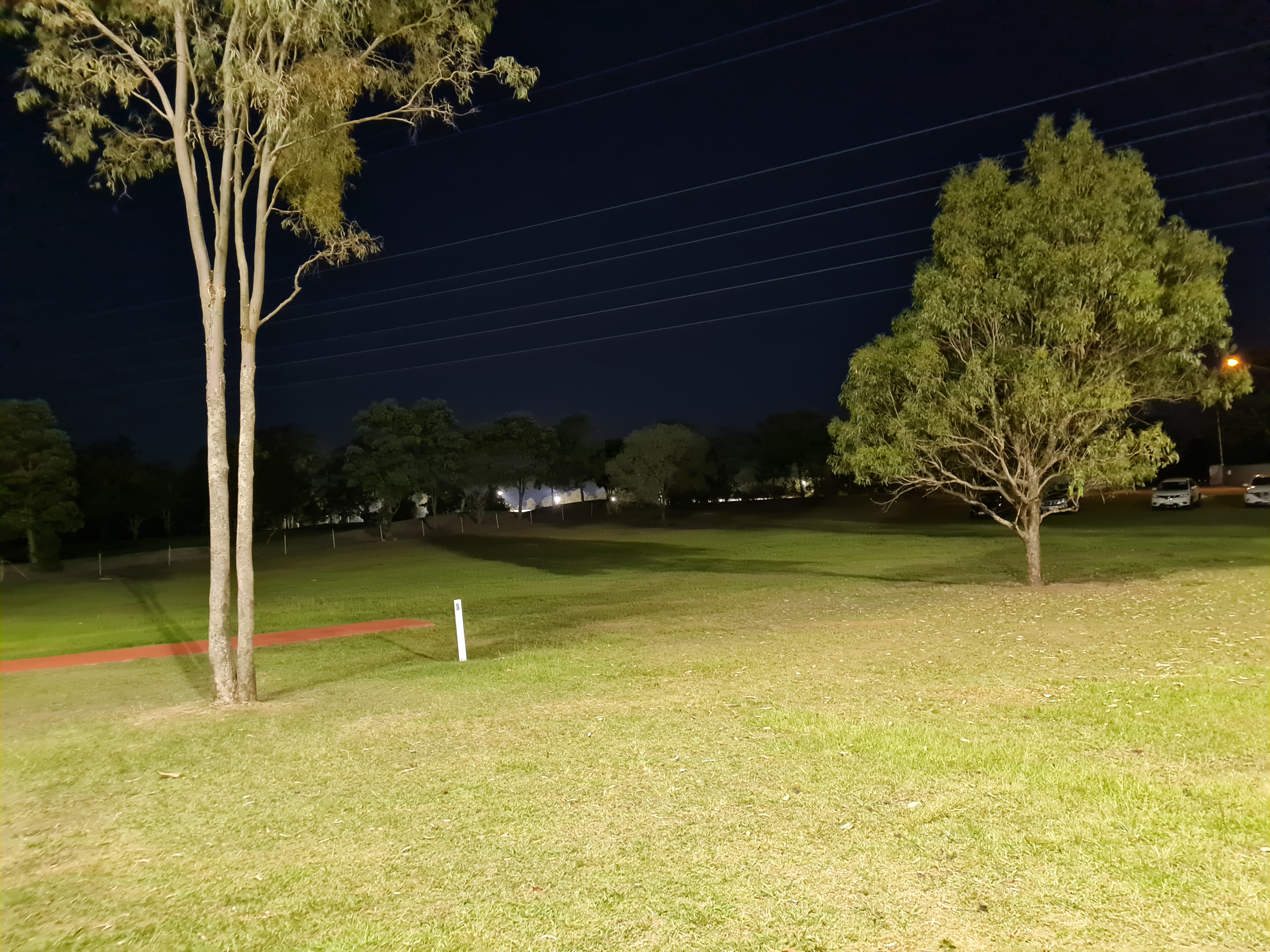
A photograph from the inspirational bin – 10

It was a relic from the past, put back together by a dedicated group of volunteers who had not wanted the last vestiges of the past to disappear.

Train enthusiasts, the called themselves.

They’d put together a steam locomotive, five carriages, a restaurant car, and the conductor’s car. The original train might have been twice to three times as long, but these days, the tourist market rarely filled the train.

I was one of a group who made it their mission to visit and rate every vintage train, not only in this country, but all over the world. It was a sad state of affairs when I first began, with locomotives and carriages dropping out of the system due to lack of funds, but more disheartening, the lack of government assistance in keeping it’s heritage alive.

It seemed money was short, and there were better things to spend it on, like two brand new 737-800 jets just to ferry the prime minister and government officials around. Just think of what that quarter of a billion dollars could have bought in heritage.

But it is what it is.

What I had before me was one of the most recent restorations to check out, and on first glance, it was remarkable just how lifelike and true to age it was.

Of course, I was of an age that could remember the old railway carriages, what were called red rattlers because of the ill fitting windows that went up and down, allow fresh air, or in days gone by, smoke from the locomotive hauling the train. I had not travelled during the last glorious years of steam, but the carriages had lived on briefly before the advent of the sterile aluminum tin cans with uncomfortably hard seats.

These carriages were built for comfort, and my first experience had been a five hour trip from Melbourne to Wangaratta, in Victoria, on my way to Mt Buffalo Chalet, a guesthouse owned by the Railways.

That too had been a remarkable old chalet style guest house with a room and all the dining included. I always left after the week having put on weight. Breakfast, morning tea, lunch, afternoon tea, and dinner, every day, and high tea on Sunday.

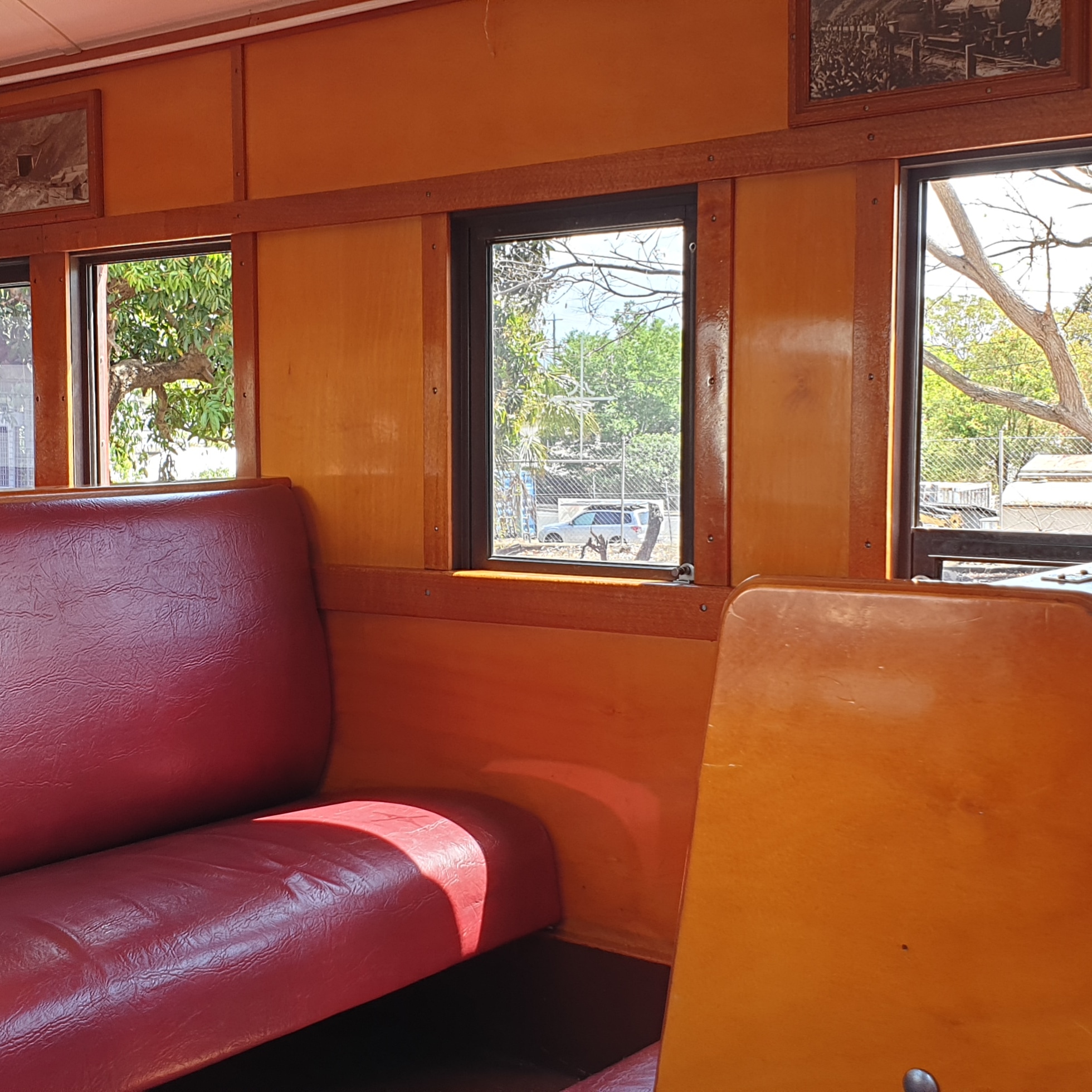
But this carriage, the polished wood that had shellac rather than varnish, highlighting the timber’s grain, the leather seats with generous padding, the curved ceilings with hanging lights, windows the could be opened and closed, allowing fresh air to circulate.

There was also a carriage with the passageway, and five or six separate compartments, each sitting six passengers. I remembered these well, having quite often ridden in one to work for some years when the country trains still ran.

It was always remarkable how a sight or a scent could trigger such memories.

For this carriage on this train, it used to ply the Gympie to Brooloo branch line from about 1915 onwards.

That was the history. It only went as far as Amamoor these days, it was still long enough to capture the sensation of riding the rails back in what is always referred to as the good old days, even if they were not.

Now for the ride….

© Charles Heath 2021

Searching for locations: Kaikoura, New Zealand, and, of course, the whales

I’m sure a lot of people have considered the prospect of whale watching.  I’m not sure how the subject came up on one of our visits to New Zealand, but I suspect it was one one of those tourist activity leaflets you find in the foyer of motels, hotels, and guesthouses.

Needless to say, it was only a short detour to go to Kaikoura and check out the prospect.

Yes, the ocean at the time seemed manageable.  My wife has a bad time with sea sickness, but she was prepared to make the trip, after some necessary preparations.  Seasickness tablets and special bands to wear on her wrist were recommended and used.

The boat was large and had two decks, and mostly enclosed.  There were a lot of people on board, and we sat inside for the beginning of the voyage.  The sea wasn’t rough, but there was about a meter and a half swell, easily managed by the boat while it was moving.

It took about a half hour or so to reach the spot where the boat stopped and a member of the crew used a listening device to see if there were any whales.

That led to the first wave of sickness.

We stopped for about ten minutes, and the boat moved up and down on the waves.  It was enough to start the queasy stomachs of a number of passengers.  Myself, it was a matter of going out on deck and taking in the sea air.  Fortunately, I don’t get seasick.

Another longish journey to the next prospective site settled a number of the queasy stomachs, but when we stopped again, the swell had increased, along with the boat’s motion.  Seasick bags were made available for the few that had succumbed.

By the time we reached the site where there was a whale, over half the passengers had been sick, and I was hoping they had enough seasick bags, and then enough bin space for them.

The whale, of course, put on a show for us, and those that could went out on deck to get their photos.

DSCN1026.JPG
DSCN1028.JPG
DSCN1029.JPG

By the end of the voyage, nearly everyone on board was sick, and I was helping to hand out seasick bags.

Despite the anti sickness preparations, my wife had also succumbed.  When we returned and she was asked if the device had worked, she said no.

But perhaps it had because within half an hour we were at a cafe eating lunch, fish and chips of course.

This activity has been crossed off the bucket list, and there’s no more whale watching in our traveling future.  Nor, it seems, will we be going of ocean liners.

Perhaps a cruise down the Rhine might be on the cards.  I don’t think that river, wide as it is in places, will ever have any sort of swell.

The cinema of my dreams – I always wanted to write a war story – Episode 15

For a story that was conceived during those long boring hours flying in a steel cocoon, striving to keep away the thoughts that the plane and everyone in it could just simply disappear as planes have in the past, it has come a long way.

Whilst I have always had a fascination in what happened during the second world war, not the battles or fighting, but in the more obscure events that took place, I decided to pen my own little sidebar to what was a long and bitter war.

And, so, it continues…


The new leader of the resistance was the woman, Martina, best if I didn’t know her last name.  Fair enough.  There had been a necessary restructure after the infiltration, and untimely deaths of over half their number.

When I asked what happened to the former leader, I learned that he, and all but five other members were captured and taken to the castle.  They were now, for all intents and purposes, double agents, working for the Thompson at the castle.

The remaining five, of which Giuseppe and Martina belonged, had been forced to hide, dodging the men sent from the castle to hunt them down and kill them.

It was both the lack of reporting from the castle, followed by a message received regarding a possible traitor inside the resistance we had received in London, that set everything in motion, including my arrival to ascertain what was happening within the resistance group, and also at the castle.  Until that information reached us, there had been no reason to suspect that anything was wrong, and that the plans set in place to facilitate the defection of useful German scientists and, in some cases, high ranking officers, or that it had been infiltrated and to put it bluntly, original members had been killed and replaced.

I hadn’t realised who was in charge until the paratroopers had arrived and I’d become a prisoner.  Part of my brief had also been to verify the layout of the castle in accordance with old plans we had found using my archaeology background as a front, and Id managed to explore certain areas before Thompson had become suspicious and basically stopped me.  I’d searched part of the lower levels of the castle, but hadn’t got as far as the dungeons, where I eventually discovered becoming one myself, they were keeping many more prisoners.

I hadn’t long enough in the dungeons to discover whether any of the prisoners were part of the original team sent, whether there were any defectors being still held there, except for two that I’d seen, and definitely one I talked to, but there had to be more.

And, now that I’d found the remaining members of the resistance, it was my intention to return to rescue then, and retake the castle.  What was going to make it difficult, if not impossible, was the fact there were only five, and they were all busy trying not to get caught.  Still, I had to try, and I asked Martina if it was possible to get everyone together for a meeting.

Martina just laughed.  Whether it was my request or my plan to retake the castle was the cause of her mirth.

“With what?”  she said incredulously, “there are only five of us left, and we spend most of our time keeping one step ahead of the turncoats.”

“How many of them are there?”

“Too many, led by that bastard Francesco.  He didn’t like taking orders from a woman, thought we’d picked the wrong side, especially when the Germans killed about fifty of the villagers when we refused to give ourselves up.  They killed his wife and mother  after he refused to send them away.”

That didn’t seem right to me, to align yourself with that sort of enemy, not after what they had done.  Except there was no telling what anyone might do in the face of such an adversary, or circumstances.  But I had to ask, “Why would they?”

“They’ve got hostages from the village up there, in the dungeons.  That’s how they turned them.”

Damn.  I was not going to be able to turn them back, not when the lives of their friends, even family, was being threatened.

“Is that the case for those who didn’t surrender?”

“No.  Our relatives left when we could see what was going to happen.”

“So, the problem we have is, freeing the hostages, freeing the soldiers if there are any of the original group, retake the castle, and get the pipeline working again.”  And, I thought to myself, pull off seven miracles in fifteen minutes.

I was putting forward what was for all intents and purposes impossible.

“There’s more,” she said.  “There is a high-value scientist coming, last advice was that he was in transit from Germany to here.  We know, and they know, courtesy of Francesco.  They want him captured; we want him safely delivered to the submarine waiting to take him to England.  He’s due in three days, and he doesn’t know the castle’s allegiances have changed.”

“Then we’ll have to intercept him.”

“Yes, but we don’t know what he looks like, but we do have a code name.  Francesco and the castle don’t have that, only his real name.”

A name I saw on a highly confidential document on Forster’s desk the day he briefed me on my current mission.  Blackfoot.  I thought it was an operation.  I think that was the code name for the defector.

“Blackfoot?”

“How did you know?”

“A lucky guess.” 

The question I had was, why didn’t he tell me about it?  Did he think I was going to get captured and tortured?

“Well, you’re right.  But it means Francesco and his men are going to be looking extra hard for us, because without that codename, as soon as they fail to confirm their identity to him, he will kill himself rather than go back, which I’m guessing will be their least preferred option.  And to make matters worse, London’s orders are quite specific, this man must be delivered alive.  He has critical information they need, and which will hasten the end of the war”

“Then I think we should tell London the nature of our situation and see what they come up with.”


© Charles Heath 2019

A photograph from the inspirational bin – 9

I remeber once being told that if you shoot for the moon, you’ll land in the clouds, if you shoot for the tree tops, you’ll finish up back where you started from.

It was a silly analogy, but I always remembered it when I looked up at the sky and saw clouds.

That was back in those hazy carefree days just after you were finished with school and you had your whole life in front of you. Your parents were there as the safety net, and were still proud of your scholastic achievements, and were not in too much of a hurry to hustle you out of the house.

But what happened when there’s a recession that came upon everyone without any warning.

Stocks plummeted, people lost their life’s savings, those with mortgages and loans suddenly finding that along with unemployment came no income, no ability to pay the bills, and therefore lost everything.

Although I never said it, I was thinking what good was an education when the whole world had gone to hell in a handbasket.

Two things I remember from back then, which in the context of disaster, wasn’t all that long ago. Firstly, my father making us children go camping from before we could walk, and with it, to survive with nothing but the clothes on our backs, and our wits.

It had happened to him, as a member of am expedition in Africa in his younger days, thinking that he might become the next great explorer, or archeologist, and finishing up getting lost, even though he asserted the other members had deliberately left him behind.

And secondly, that it was essential that we forge working relationships with any and all those who were like minded, such as those who wanted to be saved, not those who expected everyone else to so the work. It was obvious he had met a lot of those type of people too.

It served us well.

When nations began turning on each other, when essential resources like electricity and fuel stopped being distributed and rationed, when food suddenly became scarce, that’s when the real trouble started. My father said, at the outset, what would happen, and was glad our mother was not there to see it.

Then, when neighbours attacked neighbours once food became scarce, it was time to leave. The pity of it was, he died defending us, even after offering up some of the food we had stored away, but that had not appeased a hungry or angry mob.

His last words, “Go to where we said we would go, and remember everything I’ve taught you” were etched in my brain, and my brother and I did as he asked.

But, even knowing where we had to go, and how to get there, a plan of action made many years before, and trialled in recent years with success, nothing in the past could have prepared us for the journey.

It was, literally, time to shoot for the moon.

© Charles Heath 2021

A matter of life and … what’s worse than death – Episode 14

For a story that was conceived during those long boring hours flying in a steel cocoon, striving to keep away the thoughts that the plane and everyone in it could just simply disappear as planes have in the past, it has come a long way.

Whilst I have always had a fascination in what happened during the second world war, not the battles or fighting, but in the more obscure events that took place, I decided to pen my own little sidebar to what was a long and bitter war.

And, so, it continues…


When I woke it was almost dark, and cold.

Was it night?  I was in a room, on the floor, and the only light came from a light bulb.

I tried to sit up, but any sort of movement made my headache.  Then my memory returned.  In the forest, a man, then a woman, then nothing.

Then I heard a noise from the other corner and looked over.  Jack.  He’d been lying on the floor, possibly waiting for me to wake up.  He came over and lay down next to me.

Had they tranquilized him too?  It would have been interesting to see what he had done in the forest when they tried to take me away.  I was surprised he had not run away, and waiting for me to return like he had the last time.

Were we back in the castle?  Around me smelt musty, so it was possible I was back in the castle in one of the more remote dungeons’.  But, there was no iron door, or wooden door to the room, just a passage outside, equally badly lit.

So, I was not exactly a prisoner.

A let another half hour or so pass before I tried to get up again.  This time, my head hurt less, but the effects of the tranquilizer still made me a little unsteady, and it was necessary to remain near the wall for support.

After I’d taken several tentative steps, Jack joined me.

At the doorway, I stopped and looked out.  A passage, with several other rooms off it, and leading to a larger one where there was a table, chairs, and several cupboards.  A storage area, or a barn?

I walked slowly, if a little unsteady, down the passage and into the room.  At one end of the table was the woman “I’d seen in the forest, the one that had shot me.  Behind her, with a mug of coffee, or something else in his hands, was the man.

The watched me as I crossed to a chair at the end of the table, and sat.  Jack sat next to me.

The woman spoke first.  “Giuseppe tells me your name is Sam Atherton?  Your rank?”

I was hoping for an apology.  “Captain.”

“The name of the officer who sent you?”

“The one working with the men in the castle, or the man who sent me?”

“The one who sent you.”

I took a moment to consider what might happen if I did.  I guess it wouldn’t make much of a difference if the Germans found out who he was if they didn’t know already.  There was not a lot they could do.  And he already knew and had doubtless dealt with the traitor.

“Colonel Forster.”

I could see, now, the man had his hand on a gun beside him, and was ready to use it.  My answer, obviously the correct one, had eased the possibility of getting shot.

“You passed step one, Mr Atherton.  But, if you are not who you say you are, you will be summarily shot.  I suggest you don’t make any sudden movements.”

“I’m fine with that, but I have a question for you.”

“How do you know we are not working with the Germans?”  She leaned back in her chair and I could see she, also, had a gun, under her hands.

Exactly.  But, in order to make contact with the right people, the Colonel had sent their leader a phrase, one to use to prove their identity.  Since my pursuers were following me to find the remaining resistance members, I had to assume these two were part of that group.

“A phrase was sent two days ago.”  I think it was two days ago.  “Maybe three.”

“The quick brown fox jumps over the lazy dog, I believe is that phrase.”

It was.  Only the Colonel and I, as well as the resistance leader,  knew it.

“And you?”

“Around the rugged rocks, the ragged rascal ran.”  I don’t know who came up with them, but I hoped I hadn’t mixed up rugged and ragged.

She smiled.  Giuseppe looked a lot more at ease.

“Welcome to our nightmare.”


© Charles Heath 2019

Driving in suburbia

It was one of those beautiful Autumn mornings, blue sky with a smattering of clouds but a sunny day all the same.  It’s Sunday so there is not as much traffic on the road.

Anyone with any sense would be going to their favorite coffee place and settling down to your choice of coffee and perhaps a toaster or muffin to accompany the conversation.

This is what’s happening at the cafe we go for coffee.  9:00 in the morning it is packed.  But great coffee is hard to find, and this is apparently great coffee.

It’s that in-between time before it gets windy, cold and wet, with the sort of chill you can feel in your bones, rather it’s the time when you have a barbeque in the mid-afternoon and get home before the cold sets in, or take the kids to the park for some healthy exercise.

Today I have to take a drive from one side of suburbia to the other, taking a network of main roads with rather anonymous names such as North and South

We travel through the older suburbs, those with a collection of red or white bricks and timber dating back to the fifties and sixties.  They are not, for the most part, in a good state of repair, and rather than looking ramshackle, it’s more like they are slowly decaying.

Fences are rotting or falling over, extensions like they have been glued on rather than added by an architect, and paint either fading or missing.  For the most part, people are struggling to keep up with the cost of living, and too busy to worry about maintenance.

Some have been bulldozed and replaced, blocks are cleared awaiting new development, others are being renovated.  Any way you look at them they are still worth a great deal of money being relatively close to the city.  Nut it’s a double-edged sword, worth a lot, but costing more to keep.

It’s a location we could never afford.  Because we were not affluent we were pushed out to the less expensive outer suburbs.  This was of course 50 years ago, and now those outer suburbs are now the new inner suburbs and people are buying up to 50 km further out in the new estates.  When I was young these suburbs were farms and open land.

It also surprises me that people would want to live on the main road because with traffic as it is heading into the city, it would be difficult to leave or return by car.  At least for these people, public transport is better than in the outer suburbs.

Because it’s Sunday my trip takes a lot less time, except for those unpredictable traffic lights, some of which I missed and took a while to cycle through the other traffic before it was our time to move.  It’s the only disappointment of the modern era, the fact roads were never made to handle the traffic, and the fact they now have to bulldoze homes to make way for roads.

Pity they didn’t lay down the foundations of a proper transport system, much like they have in major European cities.

A photograph from the inspirational bin – 8

A picture can paint a thousand words, or more, or less, but…

The interesting thing about a place in the dark, in the distance, and behind a chain wire fence usually means something. Especially when there are mysterious lights involved.

We were at a night sports event, watching over a thousand screaming and yelling kids from five to eighteen pretending to compete in a variety of athletic events.

I was there to nominally to support my granddaughter in her endeavours, but right at that moment, on the far side of the track, what I was really there to see was what was behind the wire fence

“Are you watching, Poppy?”

Well, at that moment I wasn’t, but I did turn just in time to see her clear a meter high high jump and execute an elegent backflip, a result no doubt of the ballet training she had since the age of four. Seven years later those lessons had transformed into a high jumper with a great future.

Except, she couldn’t really care less. It was more about the parents and athletic organisers expectations, than hers. I was there, she told me in a secretive tone, to tell everyone to back off.

if you think spying was a dangerous occupation, then let me tell you trying to navigate a safe path between child and parents, and then the rest of the word, forget it.

So, with my trusty phone camera, slightly modified, I was pretending to take pictures of surrounding trees in the high density lighting for the athletics oval, whilst zooming in on the real target.

And, about to take the money shot, I could feel a tugging on the side of my jacket.

I looked down to see the petulant face of a child not happy.

“You said you were coming to see me perform.”

I had. I looked over at the woman the boss had assigned as my ‘date’, Nancy, and whom I’d introduced as a long time friend who deigned to suffer my invitation so she could meet the girl I was always talking about.

“Yes, Poppy,” she said with an evil undertone. “You said you wanted to see her high jumps. You’d better get over there, while I take some pictures of the trees for you.”

“Why do you want pictures of dumb old trees?” That was a question I would have asked myself, and I didn’t quite have an answer for it.

Nancy did. “Because he’s odd like that. It’s one of the quirks I like about him.” She took the camera out of my hand and shooed us off.

And, heading back to the high jump, she asked, “What’s a quirk?”

“Just ask your father later. He knows all about quirks.”

© Charles Heath 2021

In a word: Pause

Yes, when you are going at it like a bat out of hell, it might be an idea to take a pause and regroup.

That being a pause as an interruption to an activity.

In music, it’s a mark over a note.

Perhaps it’s a good idea to pause recording a TV show while the ads are on.  Networks don’t like it, but it makes the show make more sense without the distractions of advertisements, sometimes quite inane, or annoying.

What I just said, might give pause to my opposite number in this debate.

Have you been in a conversation, someone says something quite odd, and there’s a pregnant pause?

How did the word pregnant get into the conversation?  That, of course, usually means something significant will follow, but rarely does.  But it can also be a conversation killer where no one says anything.

Is that a wide eye in awe moment?  You did WHAT?

Then there is the word pours, sounds the same but is completely different.

In this case, the man pours water from the bucket on the plants.

Or my brother pours cold water on my plans.  Not literally, but figuratively, making me think twice about whether it would work or not.  Usually not.

Or a confession pours out of a man with a guilty conscience.  AKA sings like a bird.  Don’t you just love these quaint expressions?  It reminded me of a gangster film back in Humphrey Bogart’s day.

It never rains but it pours?  Another expression, when everything goes wrong.  A bit like home renovations really.

Really, it means to flow quickly and in large quantities, ie. rain pours down.

And if that isn’t bad enough, what about paws?

Sounds the same again, but, yes it’s what an animal has as feet, especially cats, dogs, and bears.

One use of it, out of context, of course, is ‘get your paws off me!’

And one rabbit paw might be good luck, but having two rabbit pows, I might win the lottery.

If only….


The cinema of my dreams – I always wanted to write a war story – Episode 13

For a story that was conceived during those long boring hours flying in a steel cocoon, striving to keep away the thoughts that the plane and everyone in it could just simply disappear as planes have in the past, it has come a long way.

Whilst I have always had a fascination in what happened during the second worlds war, not the battles or fighting, but in the more obscure events that took place, I decided to pen my own little sidebar to what was a long and bitter war.

And, so, it continues…


I remained on the spot, not moving, for at least five minutes before I let out a sigh of relief.  It would be relatively safe because I had heard them walk off, following the river, and Jack, as my eyes and ears, had been out and had come back,. tail wagging slightly.

I was hoping he was not in league with Jackerby.

“So,” I said quietly to him, “you think it is safe out there?”  To be honest, I was not sure why I was asking the dog, or, for that matter, if he understood a word I was saying.

I  took tail wagging as a good sign.

Until, all of a sudden he went quiet and very still again, ears up and listening.

Then, I heard what he had heard.  The cracking sound of a foot on a twig or dry branch.

From behind me.

We both turned slowly.

An Italian man, about mid 30’s with a dated rifle in his hands, aimed at my head, not twenty feet away.  I was not going to take the chance he couldn’t hit the broadside of a barn.

“Who are you?”  He started with schoolboy German, obviously not his first language.

The problem I had was deciding whether he was the traitor, or with the resistance that hadn’t been betrayed.

“Not a German for starters,” I said.

I noticed Jack was standing very still with teeth bared.  He didn’t like this man.  Perhaps he too didn’t like the odds of rushing the man with the gun.

“Englander?”

The way a German would call an Englishman.

“In a manner of speaking.”

“Are you from the castle?”

That was a trick question if I say no, he wouldn’t believe me, and if I said yes, I’d be tarred with the German brush.

“I escaped from there, so in a manner of speaking, yes I am from the castle.”

“Name?”

It couldn’t hurt to tell him.  “Sam Atherton.”

He let the gun drop, but it was still in a position to shoot me if I tried anything.

“Are you from the resistance?  I mean the group that hasn’t been compromised by a traitor?”

“I don’t know anything about the resistance if there is one.  I’m a farmer, trying to go about his business in the middle of a war.  What are you doing here?”

It might seem to anyone rather odd to be standing around in the woods.  “Hiding from two men who have come from the castle to follow me.”

He looked around.  “Where are they now?”

“Supposedly following me into the village, in that direction,” I pointed to where I thought the village was, “where I’m supposed to be leading them to the resistance, which, you said, doesn’t exist.”

“I didn’t say it didn’t exist, only that I don’t know anything about it.  What makes you think there is a resistance unit in these parts?”

Good question.  And, depending on what side he was on, still to be determined, I was not going to give them away.  “I’m acting on some sketchy intelligence we got in London, along with the possibility that the men in the castle, who are supposed to be Englanders, as you call them, but who are actually working with the Germans.  Seems they were right on one count, because they caught me and put me in a cell, and possibly wrong, according to you, on the other.”

“How did you manage to get away, if you were in a cell.”

So, here comes the part that sounds totally improbable.  “One of the two men following me broke me out.”

Yes, the look on his face said it all.

I shrugged.  “Ask the dog.  He’ll tell you.  His name is Jack by the way, but I’m not sure if he understands English.”

The dog went still again and turned his head.

Another crack, another person in the undergrowth, coming from the other side of the bushes.  My first thought, my two pursuers, realizing they’d lost me, had circled back to find me.

The man in front didn’t raise his gun, so it was someone he knew.

“Who is he?”

A woman’s voice.  I turned my head slightly.  She was older, perhaps this man’s mother.  She had a pistol in her left hand.

“Claims he escaped from the castle.”

“They all do.”

I heard a soft bang, and then something in my back, like a needle.

Seconds later my heard started spinning, and few more seconds later my legs gave out, and darkness followed.


© Charles Heath 2019

A photograph from the inspirational bin – 7

There is always something strange about certain photographs that is not evident when you take them.

For instance, the photograph above.

While this might look like some vegetation by the side of a river or stream, its that are of blackness behind what looks like steps up from the water level that adds a level of intrigue or mystery.

For instance:

We had spent two weeks slowly going upriver looking for a needle in a haystack. It was an apt description, because there had been quite a large number of likely spots, all of which after investigation, came to nothing.

I mean, the description Professor Bates had given is was as hazy as day is long in these parts.

His recollection: that it was what looked like a cave behind lush undergrowth, with steps fashioned out of stone.

It was all the more confuse. Because when we found him, he was drifting on a rough hewn and constructed raft, half dead from dehydration. We were told he’d been on the raft for nearly a week.

That meant the cave could be anywhere between where we found him at the 10 mile mark, and 200 miles further on based on river flow.

We were currently at the 150 mile mark and the river was losing depth and width, and soon there would not be enough water to continue in the boat.

It was dusk and too dark to continue. We’d been enthusiastic those first days, continuing on in the dark, on shifts, using the arc lamps.

Then after a week, having lights on made us target practise, and after sever brushes with death, and the loss of all the bulbs being shot out, we got the message.

There was the odd marauder during the day, but we had the width of the river for safety.  Now that had gone too, and we had lookouts posted, but seeing into the dense jungle was difficult.

But we got through another night with no activity, and come morning, what looked like the entrance to a cave was not fifteen feet from us.

All we had to was row over and check.

© Charles Heath 2020-2021