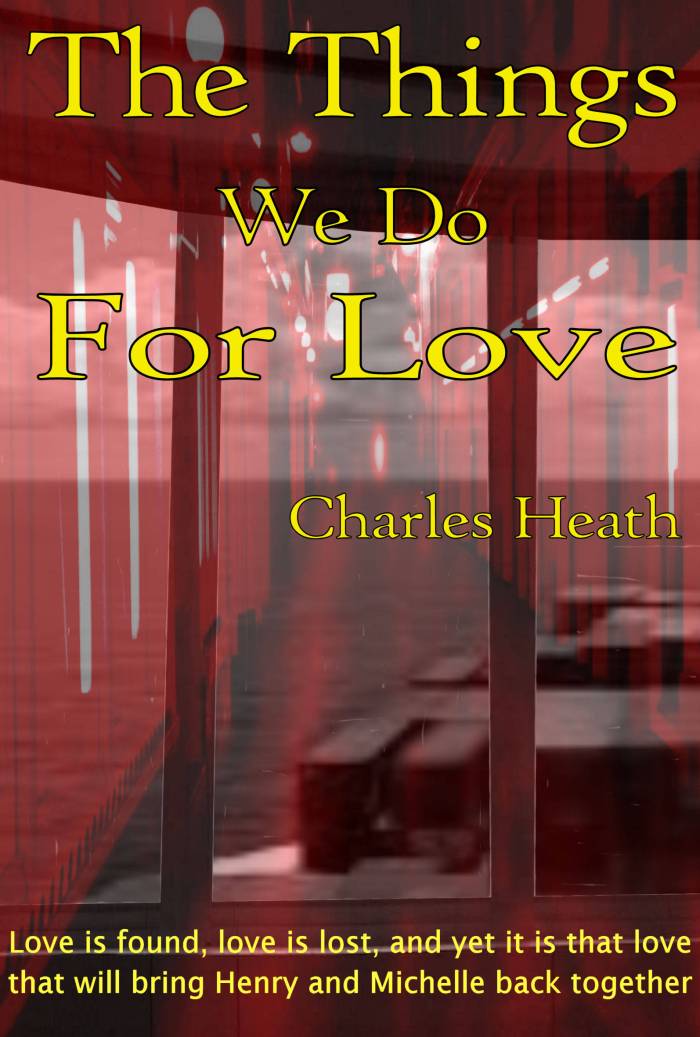
An excerpt from “The Things We Do For Love”; In love, Henry was all at sea!

In the distance he could hear the dinner bell ringing and roused himself.  Feeling the dampness of the pillow, and fearing the ravages of pent up emotion, he considered not going down but thought it best not to upset Mrs. Mac, especially after he said he would be dining.

In the event, he wished he had reneged, especially when he discovered he was not the only guest staying at the hotel.

Whilst he’d been reminiscing, another guest, a young lady, had arrived.  He’d heard her and Mrs. Mac coming up the stairs, and then shown to a room on the same floor, perhaps at the other end of the passage.

Henry caught his first glimpse of her when she appeared at the door to the dining room, waiting for Mrs. Mac to show her to a table.

She was about mid-twenties, slim, long brown hair, and the grace and elegance of a woman associated with countless fashion magazines.  She was, he thought, stunningly beautiful with not a hair out of place, and make-up flawlessly applied.  Her clothes were black, simple, elegant, and expensive, the sort an heiress or wife of a millionaire might condescend to wear to a lesser occasion than dinner.

Then there was her expression; cold, forbidding, almost frightening in its intensity.  And her eyes, piercingly blue and yet laced with pain.  Dracula’s daughter was his immediate description of her.

All in all, he considered, the only thing they had in common was, like him, she seemed totally out of place.

Mrs. Mac came out of the kitchen, wiping her hands on her apron.  She was, she informed him earlier, chef, waitress, hotelier, barmaid, and cleaner all rolled into one.  Coming up to the new arrival she said, “Ah, Miss Andrews, I’m glad you decided to have dinner.  Would you like to sit with Mr. Henshaw, or would you like to have a table of your own?”

Henry could feel her icy stare as she sized up his appeal as a dining companion, making the hair on the back on his neck stand up.  He purposely didn’t look back.  In his estimation, his appeal rating was minus six.  Out of a thousand!

“If Mr. Henshaw doesn’t mind….”  She looked at him, leaving the query in mid-air.

He didn’t mind and said so.  Perhaps he’d underestimated his rating.

“Good.”  Mrs. Mac promptly ushered her over.  Henry stood, made sure she was seated properly and sat.

“Thank you.  You are most kind.”  The way she said it suggested snobbish overtones.

“I try to be when I can.”  It was supposed to nullify her sarcastic tone but made him sound a little silly, and when she gave him another of her icy glares, he regretted it.

Mrs. Mac quickly intervened, asking, “Would you care for the soup?”

They did, and, after writing the order on her pad, she gave them each a look, imperceptibly shook her head, and returned to the kitchen.

Before Michelle spoke to him again, she had another quick look at him, trying to fathom who and what he might be.  There was something about him.

His eyes, they mirrored the same sadness she felt, and, yes, there was something else, that it looked like he had been crying?  There was a tinge of redness.

Perhaps, she thought, he was here for the same reason she was.

No.  That wasn’t possible.

Then she said, without thinking, “Do you have any particular reason for coming here?”  Seconds later she realized she’s spoken it out loud, had hadn’t meant to actually ask, it just came out.

It took him by surprise, obviously not the first question he was expecting her to ask of him.

“No, other than it is as far from civilization, and home, as I could get.”

At least we agree on that, she thought.

It was obvious he was running away from something as well.

Given the isolation of the village and lack of geographic hospitality, it was, from her point of view, ideal.  All she had to do was avoid him, and that wouldn’t be difficult.

After getting through this evening first.

“Yes,” she agreed.  “It is that.”

A few seconds passed, and she thought she could feel his eyes on her and wasn’t going to look up.

Until he asked, “What’s your reason?”

Slight abrupt in manner, perhaps as a result of her question, and the manner in which she asked it.

She looked up.  “Rest.  And have some time to myself.”

She hoped he would notice the emphasis she had placed on the word ‘herself’ and take due note.  No doubt, she thought,  she had completely different ideas of what constituted a holiday than he, not that she had actually said she was here for a holiday.

Mrs. Mac arrived at a fortuitous moment to save them from further conversation.


Over the entree, she wondered if she had made a mistake coming to the hotel.  Of course, there had been no possible way she could know than anyone else might have booked the same hotel, but realized it was foolish to think she might end up in it by herself.

Was that what she was expecting?

Not a mistake then, but an unfortunate set of circumstances, which could be overcome by being sensible.

Yet, there he was, and it made her curious, not that he was a man, by himself, in the middle of nowhere, hiding like she was, but for very different reasons.

On discreet observance whilst they ate, she gained the impression his air of light-heartedness was forced and he had no sense of humor.

This feeling was engendered by his looks, unruly dark hair, and permanent frown.  And then there was his abysmal taste in clothes on a tall, lanky frame.  They were quality but totally unsuited to the wearer.

Rebellion was written all over him.

The only other thought crossing her mind, and rather incongruously, was he could do with a decent feed.  In that respect, she knew now from the mountain of food in front of her, he had come to the right place.

“Mr. Henshaw?”

He looked up.  “Henshaw is too formal.  Henry sounds much better,” he said, with a slight hint of gruffness.

“Then my name is Michelle.”

Mrs. Mac came in to take their order for the only main course, gather up the entree dishes, then return to the kitchen.

“Staying long?” she asked.

“About three weeks.  Yourself?”

“About the same.”

The conversation dried up.

Neither looked at the other, rather at the walls, out the window, towards the kitchen, anywhere.  It was, she thought, almost unbearably awkward.


Mrs. Mac returned with a large tray with dishes on it, setting it down on the table next to theirs.

“Not as good as the usual cook,” she said, serving up the dinner expertly, “but it comes a good second, even if I do say so myself.  Care for some wine?”

Henry looked at Michelle.  “What do you think?”

“I’m used to my dining companions making the decision.”

You would, he thought.  He couldn’t help but notice the cutting edge of her tone.  Then, to Mrs. Mac, he named a particular White Burgundy he liked and she bustled off.

“I hope you like it,” he said, acknowledging her previous comment with a smile that had nothing to do with humor.

“Yes, so do I.”

Both made a start on the main course, a concoction of chicken and vegetables that were delicious, Henry thought, when compared to the bland food he received at home and sometimes aboard my ship.

It was five minutes before Mrs. Mac returned with the bottle and two glasses.  After opening it and pouring the drinks, she left them alone again.

Henry resumed the conversation.  “How did you arrive?  I came by train.”

“By car.”

“Did you drive yourself?”

And he thought, a few seconds later, that was a silly question, otherwise she would not be alone, and certainly not sitting at this table. With him.

“After a fashion.”

He could see that she was formulating a retort in her mind, then changed it, instead, smiling for the first time, and it served to lighten the atmosphere.

And in doing so, it showed him she had another more pleasant side despite the fact she was trying not to look happy.

“My father reckons I’m just another of ‘those’ women drivers,” she added.

“Whatever for?”

“The first and only time he came with me I had an accident.  I ran up the back of another car.  Of course, it didn’t matter to him the other driver was driving like a startled rabbit.”

“It doesn’t help,” he agreed.

“Do you drive?”

“Mostly people up the wall.”  His attempt at humor failed.  “Actually,” he added quickly, “I’ve got a very old Morris that manages to get me where I’m going.”

The apple pie and cream for dessert came and went and the rapport between them improved as the wine disappeared and the coffee came.  Both had found, after getting to know each other better, their first impressions were not necessarily correct.

“Enjoy the food?” Mrs. Mac asked, suddenly reappearing.

“Beautifully cooked and delicious to eat,” Michelle said, and Henry endorsed her remarks.

“Ah, it does my heart good to hear such genuine compliments,” she said, smiling.  She collected the last of the dishes and disappeared yet again.

“What do you do for a living,” Michelle asked in an off-hand manner.

He had a feeling she was not particularly interested and it was just making conversation.

“I’m a purser.”

“A what?”

“A purser.  I work on a ship doing the paperwork, that sort of thing.”

“I see.”

“And you?”

“I was a model.”

“Was?”

“Until I had an accident, a rather bad one.”

“Oh, I’m sorry.”

So that explained the odd feeling he had about her.

As the evening had worn on, he began to think there might be something wrong, seriously wrong with her because she didn’t look too well.  Even the carefully applied makeup, from close up, didn’t hide the very pale, and tired look, or the sunken, dark ringed eyes.

“I try not to think about it, but it doesn’t necessarily work.  I’ve come here for peace and quiet, away from doctors and parents.”

“Then you will not have to worry about me annoying you.  I’m one of those fall-asleep-reading-a-book types.”

Perhaps it would be like ships passing in the night and then smiled to himself about the analogy.

Dinner now over, they separated.

Henry went back to the lounge to read a few pages of his book before going to bed, and Michelle went up to her room to retire for the night.

But try as he might, he was unable to read, his mind dwelling on the unusual, yet the compellingly mysterious person he would be sharing the hotel with.

Overlaying that original blurred image of her standing in the doorway was another of her haunting expressions that had, he finally conceded, taken his breath away, and a look that had sent more than one tingle down his spine.

She may not have thought much of him, but she had certainly made an impression on him.


© Charles Heath 2015-2020
lovecoverfinal1

Character development: children in stories

It seems that there are many ways of bringing children to life in your stories.

The most obvious is your own, but those traits might seem so polarised they and others might realise who they are based on, with the distress that comes with it.

Then there are the children of your friends and relationships, definitely fodder for many stories because those children are definitely far worse than your own, or better perhaps.

It leaves you questioning where you went wrong, or why you didn’t get the manual when the hospital kicked to the kerb with this screaming bundle of joy, their words not yours.

So we start with real-life experiences.

To muddy the waters so they don’t get the impression you’re paying out on them, you can always add the traits of those you see in the shopping malls.

Shopping malls are a gold mine for behavioural traits, from the very worst tantrum thrower to the best behaved. For my money and proven time and time again, those well-dressed, very well-behaved children are purely evil.

With the tantrum thrower, what you see if what you get.

With the well-behaved, you spend all of your time watching your back and waiting for the knife to penetrate your spine between the fourth and fifth vertebrae. You just know instinctively they’re medical school prodigies.

Of course, there are one or two good children, Santa has to have a reason for existence, but they are like 1,000 ounce gold nuggets; very, very hard to find.

‘Sunday in New York’ – A beta reader’s view

I’m not a fan of romance novels but …

There was something about this one that resonated with me.

This is a novel about a world generally ruled by perception, and how people perceive what they see, what they are told, and what they want to believe.

I’ve been guilty of it myself as I’m sure we all have at one time or another.

For the main characters Harry and Alison there are other issues driving their relationship.

For Alison, it is a loss of self-worth through losing her job and from losing her mother and, in a sense, her sister.

For Harry, it is the fact he has a beautiful and desirable wife, and his belief she is the object of other men’s desires, and one in particular, his immediate superior.

Between observation, the less than honest motives of his friends, a lot of jumping to conclusions based on very little fact, and you have the basis of one very interesting story.

When it all comes to a head, Alison finds herself in a desperate situation, she realises only the truth will save their marriage.

But is it all the truth?

What would we do in similar circumstances?

Rarely does a book have me so enthralled that I could not put it down until I knew the result. They might be considered two people who should have known better, but as is often the case, they had to get past what they both thought was the truth.

And the moral of this story, if it could be said there is one, nothing is ever what it seems.

Available on Amazon here: amzn.to/2H7ALs8

A photograph from the inspirational bin – 18

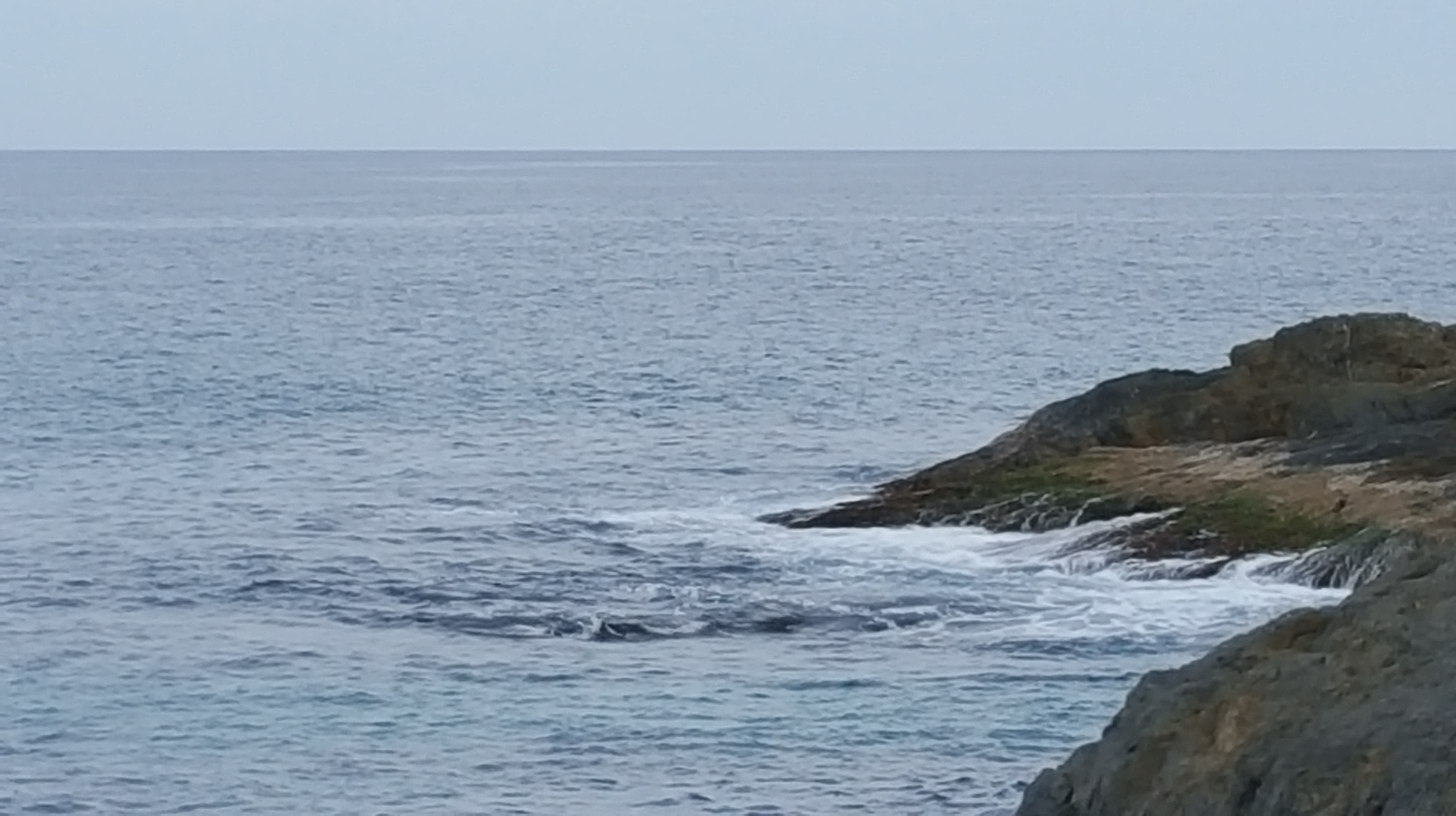
On a clear day you can see forever.

Perhaps, it just depends on what you want to see.

What I first see, looking at this view, is a horizon that is so far away, I could not reach it.

Is that like the one goal in life that I have?

Or is it time to change that goal and try to reach one that is attainable?

What sacrifice does that entail?

Does it come to pass that you must make sacrifices in order to get what you want?

It’s one if those perennial questions that has an answer, mostly, that no one wants to hear, or wants to be told.

Everything has a price. It’s whether you want to pay it.

This subject, this situation, is manna from heaven for a writer.

So, for instance…

I stood on the edge of the cliff and took in the view, which on any given day could be either magnificent or like being in hell.

Today, while being majestic, it was also like being in hell.

37 days.

I didn’t think I’d last 2.  Yet here I was, having survived the worst that could be thrown at me.

The question was, did I want to go back, did I want the life that was being offered?

Or was it time to simply walk away?

That, of course, is another story, and you’ll have to wait just a little longer to find out.

© Charles Heath 2020-2022

An excerpt from “Betrayal” – a work in progress

It could have been anywhere in the world, she thought, but it wasn’t.  It was in a city where if anything were to go wrong…

She sighed and came away from the window and looked around the room.  It was quite large and expensively furnished.  It was one of several she had been visiting in the last three months.

Quite elegant too, as the hotel had its origins dating back to before the revolution in 1917.  At least, currently, there would not be a team of KGB agents somewhere in the basement monitoring everything that happened in the room.

There was no such thing as the KGB anymore, though there was an FSB, but such organisations were of no interest to her.

She was here to meet with Vladimir.

She smiled to herself when she thought of him, such an interesting man whose command of English was as good as her command of Russian, though she had not told him of that ability.

All her knew of her was that she was American, worked in the Embassy as a clerk, nothing important, who life both at work and at home was boring.  Not that she had blurted that out the first tie she met, or even the second.

That first time, at a function in the Embassy, was a chance meeting, a catching of his eye as he looked around the room, looking, as he had told her later, for someone who might not be as boring as the function itself.

It was a celebration, honouring one of the Embassy officials on his service in Moscow, and the fact he was returning home after 10 years.  She had been there one, and still hadn’t met all the staff.

They had talked, Vladimir knew a great deal about England, having been stationed there for a year or two, and had politely asked questions about where she lived, her family, and of course what her role was, all questions she fended off with an air of disinterested interest.

It fascinated him, as she knew it would, a sort of mental sparring as one would do with swords, if this was a fencing match.

They had said they might or might not meet again when the party was over, but she suspected there would be another opportunity.  She knew the signs of a man who was interested in her, and Vladimir was interested.

The second time came in the form of an invitation to an art gallery, and a viewing of the works of a prominent Russian artist, an invitation she politely declined.  After all, invitations issued to Embassy staff held all sorts of connotations, or so she was told by the Security officer when she told him.

Then, it went quiet for a month.  There was a party at the American embassy and along with several other staff members, she was invited.  She had not expected to meet Vladimir, but it was a pleasant surprise when she saw him, on the other side of the room, talking to several military men.

A pleasant afternoon ensued.

And it was no surprise that they kept running into each other at the various events on the diplomatic schedule.

By the fifth meeting, they were like old friends.  She had broached the subject of being involved in a plutonic relationship with him with the head of security at the embassy.  Normally for a member of her rank it would not be allowed, but in this instance it was.

She did not work in any sensitive areas, and, as the security officer had said, she might just happen upon something that might be useful.  In that regard, she was to keep her eyes and ears open, and file a report each time she met him.

After that discussion she got the impression her superiors considered Vladimir more than just a casual visitor on the diplomatic circuit.  She also formed the impression the he might consider her an ‘asset’, a word that had been used at the meeting with security and the ambassador.

It was where the word ‘spy’ popped into her head and sent a tingle down her spine.  She was not a spy, but the thought of it, well, it would be fascinating to see what happened.

A Russian friend.  That’s what she would call him.

And over time, that relationship blossomed, until, after a visit to the ballet, late and snowing, he invited her to his apartment not far from the ballet venue.  It was like treading on thin ice, but after champagne and an introduction to caviar, she felt like a giddy schoolgirl.

Even so, she had made him promise that he remain on his best behaviour.  It could have been very easy to fall under the spell of a perfect evening, but he promised, showed her to a separate bedroom, and after a brief kiss, their first, she did not see him until the next morning.

So, it began.

It was an interesting report she filed after that encounter, one where she had expected to be reprimanded.

She wasn’t.

It wasn’t until six weeks had passed when he asked her if she would like to take a trip to the country.  It would involve staying in a hotel, that they would have separate rooms.  When she reported the invitation, no objection was raised, only a caution; keep her wits about her.

Perhaps, she had thought, they were looking forward to a more extensive report.  After all, her reports on the places, and the people, and the conversations she overheard, were no doubt entertaining reading for some.

But this visit was where the nature of the relationship changed, and it was one that she did not immediately report.  She had realised at some point before the weekend away, that she had feelings for him, and it was not that he was pushing her in that direction or manipulating her in any way.

It was just one of those moments where, after a grand dinner, a lot of champagne, and delightful company, things happen.  Standing at the door to her room, a lingering kiss, not intentional on her part, and it just happened.

And for not one moment did she believe she had been compromised, but for some reason she had not reported that subtle change in the relationship to the powers that be, and so far, no one had any inkling.

She took off her coat and placed it carefully of the back of one of the ornate chairs in the room.  She stopped for a moment to look at a framed photograph on the wall, one representing Red Square.

Then, after a minute or two, she went to the mini bar and took out the bottle of champagne that had been left there for them, a treat arranged by Vladimir for each encounter.

There were two champagne flutes set aside on the bar, next to a bowl of fruit.  She picked up the apple and thought how Eve must have felt in the garden of Eden, and the temptation.

Later perhaps, after…

She smiled at the thought and put the apple back.

A glance at her watch told her it was time for his arrival.  It was if anything, the one trait she didn’t like, and that was his punctuality.  A glance at the clock on the room wall was a minute slow.

The doorbell to the room rang, right on the appointed time.

She put the bottle down and walked over to the door.

A smile on her face, she opened the door.

It was not Vladimir.  It was her worst nightmare.

© Charles Heath 2020

Plots ripped from newspaper headlines

What if … (1)

I’ve been reading about an anomaly in Google maps where people are looking at maps that display weird objects in places where they shouldn’t be,

For instance, one of the recent occurrences of this places a plane, either an Airbus A320 or a Boeing 737, is on the ground, in the middle of a clearing of a dense forest with trees all around it.

No one is missing a plane so where did it come from, and how could it possibly get there?

Another occurrence was a car at the bottom of a lake, though there have been more than one occurrence of this. 

But, sometimes those objects actually are there, like, for instance, one of those cars where the body of a man who had been missing for 20 odd years was discovered.

There is a rational reason why people are seeing what are objects that cannot be explained.  It is an instance where two images have been taken, and one is a ‘ghost’, and in the case of the aeroplane, it could have been flying very low over the area in question when the photo was taken.

So.

What if …

Someone was using the map program to look at various places, places that did not get the usual public scrutiny, or perhaps not at all.

After all, what does one do with the leisure hours when there’s nothing else to do?

Mick was a tramper, one of those people who liked to trail blaze, find new paths through forests, and make odd discoveries, one of which, several years before, had uncovered a lost village of some archaeological value.

He sees what seems to be wreckage dispersed in the forest, notes the date of the photograph, nearly a year before, and checking newspapers and media sources for any news of missing small lanes, discovers none.

But just in case his mind is playing tricks, he asks a friend to come and verify the discovery, and, lo and behold, it is no longer there.

Perhaps it was his imagination, wanting to find something.

Until he checked the date of the photograph and notes it’s been updated to another, a year later.

With nothing else to do, perhaps it was time for another walking holiday, and to see what was there.

The cinema of my dreams – I always wanted to write a war story – Episode 23

For a story that was conceived during those long boring hours flying in a steel cocoon, striving to keep away the thoughts that the plane and everyone in it could just simply disappear as planes have in the past, it has come a long way.

Whilst I have always had a fascination with what happened during the second world war, not the battles or fighting, but in the more obscure events that took place, I decided to pen my own little sidebar to what was a long and bitter war.

And, so, it continues…

Wallace wasn’t the most patient of men, and after planning what seemed, to him, as the easiest of operations, was beginning to think otherwise.

First of all, he had underestimated Atherton.  It was part of the plan to have London send him out, having, himself raised suspicions about the allegiances of the men who were in the castle.  They were, of course, British, but only he knew of their allegiance to the Reich.  That’s why he’s organized for Johannsson to be sent, and then for Jackerby to ‘stage’ a battle to consolidate London’s impression that it was being held by them, for the express purpose of repatriating defectors the allies.

Nothing, of course, could be further than the truth.  Since their arrival, only a few had been processed, just to keep London’s suspicions at bay, but the truth was, about a dozen more had been repatriated back to the Reich.

Wallace had ordered Johansson to make sure Atherton never made it to the castle, and Johansson, in turn, had given the responsibility to the resistance members, to take care of the problem, telling them Atherton was suspected of being a German spy.

Getting the local resistance on side proved to be a good idea, as it was they whom the defectors were expecting to meet when they arrive in the village.  And, as far as he was aware, Leonardo and his men had no idea who they were really working with.

Not that it would matter for much longer.  All he had to do was collect the Reich Marshall, and then he and his men were to escort him back to Germany.  He had the Fuhrers signed orders in his pocket.

There was only one wrinkle in the carefully planned operation.  The man who could recognize the defector was missing.

And, then a second wrinkle, the men he sent to find the lovesick fool were taking a long time to find a single man, though he was beginning to think there was something else going on, something that Leonardo hadn’t told him.

Johansson had said he didn’t believe all of the resistance members had signed on, even though Leonardo had told him they had.  Otherwise, how could Atherton disappear?  It was not likely that any of the villagers would harbor any soldier whatever side he said he was on.  

It was time to find out what Leonardo hadn’t told them.

He had sent Jackerby to fetch the man.  That was something else he didn’t quite understand.  Why were Leonardo and his men staying at the castle?  Didn’t they have homes in the village?  And didn’t they want to keep at arms’ length from whoever was running the castle in order to display neutrality?

Johansson had also told him he thought Leonardo was not the smart sort of person it would take to run a resistance operation, and that he believed there were some others still in the village who were once members, and who could also become a problem.  One of the reasons why Leonardo was at the castle was the fact he reported the radio provided by London had become inoperable, and the only other one was now at the castle, his main reason for being there.

He heard Leonardo long before he saw him.  A large bear-shaped man with a booming voice, a man who liked his wine in vast quantities, and had no qualms about emptying the cellar of the castle at any opportunity.  This late in the day, there would be fewer bottles.

Jackerby came into the room first, followed by Leonardo.

“You want me to stay?” Jackerby asked.

“By the door.”

Leonardo stopped by the table and then leaned on it.  “What this about?”

It was hardly a conciliatory tone, but Wallace ignored it.

“You tell me that all of the resistance members are here, but that’s not quite the truth is it?”

“Are you calling me a liar?”  

Belligerent, too, Wallace thought, but that would be the wine talking. 

“I could have you shot, so I suggest you use a more respectful tone.  You heard the question, now I want an answer.”

To emphasize the point, he took out his handgun and put it on the table where Leonardo could see it.  He could see Leonardo look at it, then back at him.

“Some of them didn’t have the stomach for it.  When you arrived here, most of us realized the fight was over.  Only I could see how we could be useful to our allies.”

“How many didn’t, as you say, have the stomach for it?”

“Three or four.  Women and a gardener, nothing that would cause anyone a problem.”

Nothing that would cause anyone a problem.  Johansson was right, the man was a fool.

“Well, it seems they are a problem, and you are going to fix it for me.  We don’t need problems, Leonardo.”

“I don’t understand.  They were on our side.”

“Seems they are not any longer.  We are expecting a high-value defector, and it seems that the Germans have recruited them to foil our operation.”

“The Germans?  There are no Germans here.”

“It seems I was mistaken about Atherton’s allegiance.  It appears he’s working with the Germans and is now actively working with those women and the gardener and causing us problems.  We’ve lost a man, and the three others we sent after him are overdue coming back.  I need you to go down to the village and find out what’s going on.”

“Isn’t that your job.  You have the soldiers and the guns.”

“We have orders to stay in the castle and wait for the defector to arrive.  That leaves you and your men.  Besides, you should be able to move more freely and unsuspected among your own people, and therefore make it easier than it would be for us to find this Atherton.  And when you find him, I want you to bring him to me alive.  Am I clear?”

It was clear to Wallace but it was not clear to Leonardo, he would do as he was told.  Or perhaps he should shoot him as an example to the next man, who no doubt would do his bidding.

“Yes.”

“Now would be a good time to get going, don’t you think?”

Leonardo was going to say something to him, Wallace could almost see the cogs turning in his head, but in the end, shrugged.

“Is there a reward for this Atherton then?”

Wallace nodded.  “Just bring him to me alive, and we’ll discuss it then, but I’m sure something can be arranged.”  He should have guessed Leonardo’s measured reluctance was all in aid of putting a price on Atherton’s head.

When they finally left the castle, he would make sure Leonardo got what he deserved.


© Charles Heath 2019

You can research anywhere, even in a, er, waiting room

Watching the doors that lead to the consulting rooms is about as exciting as watching pigeons standing on a window ledge.

But…

When you have little else to do while waiting to see the doctor, it can take on new meaning, especially if you don’t want to be like 95% of the others waiting and be on their mobile phones.

What you basically have is a cross-section of people right in front of you, a virtual cornucopia of characters just waiting to stay in your next novel, of course with some minor adjustments.  It’s the actions and traits I’m looking for, and since it is a hospital, there’s bound to be some good ones.

It’s a steady drip of patients getting called, and it seems like more are arriving than being seen, and those that are being called have arrived and barely got to sit down, whilst a steady core has been waiting, and waiting, and waiting…

Everyone reacts differently to waiting.

A lady arrives, walking tentatively into the waiting area.  It’s reasonably full so the first thing she does is look for a spot where she doesn’t have to sit next to anyone else.  I’m the same, nothing worse if you sit next to a talker, and getting their life history.

Another sits, looking like they’re going to read, they brought a book with them, but it sits on her lap.  The phone comes out, a quick scan, then it remains in hand.  Is she expecting a call or text wishing her luck?  It’s not the oncology clinic so she doesn’t have cancer.  Hopefully.  The fact she brought a book tells me she’s been here before and knows a 9:00 appointment is rarely on time.

As we are discovering.

A couple arrives, maybe a mother and daughter, maybe a patient and her support person.  Both of them don’t look very well do it’s a toss-up who is there to see the doctor.

Next is a man who could easily pass as living on the street.  It’s probably an injustice to say so, but his appearance is compelling, and I’m not the only one.  He sits and the person next to him gets up, apparently looking for something, then moves subtly to another seat.  Someone else nearby wrinkles her nose.  Two others look in his direction and then whisper to each other.  No guesses what the subject is.

More arrive, fewer seats, some are called, but everyone notices, and avoids, the man.

The sign of the door where the stream of patients are going, says no entry staff only, and periodically a staff member comes striding out purposely, or sedately, clutching a piece of all-important paper, the sign of someone who knows where they’re going, on an important mission.  Names are being called from this door and various other sections of the room, requiring you to keep one ear open.

It seems all hospitals are branches of the United Nations, medical staff, and particularly doctors, are recruited from all over the world, and it seems to be able to speak understandable English is not one of the mandatory requirements, and sometimes the person calling out the name, has a little difficulty with the pronunciation.

Perhaps like the UN, we need interpreters.  No, most of the names are recognizable until there is a foreign name that’s unpronounceable, or a person with English as a second language calls an English name.  It makes what could be an interminable wait into something more interesting.

And then there are the people who have names that are completely at odds with their nationality.  They are lucky enough to have the best of a number of cultures, and perhaps a deeper level of understanding where others do not.  I’m reminded never to judge a book by it’s cover.

When there is a lull in arrivals and call-ups, there’s the doctor in consult room 2.  He’s apparently the doctor with no patients and periodically he comes out to look in his pigeonhole, or just look over the patients waiting, and more importantly checking the door handle when not delivering printouts to the consulting room next door.

He’s a doctor with no patients, get my drift.  Well, that joke fell very flat, so, fortunately, he comes out, a piece of paper in hand, and calls a name.  His quiet period is over.  Someone else will have to look at the door handle.

But we’re still waiting, waiting.

It’s been an hour and four minutes, and a little frustrating.  Surely when you check-in they should give you an estimated waiting time, or better still how many patients there are before you.

I guess its time to join the rest and pick up the mobile phone.

The good news, I only got to type one word before my name was called.  By a person who could pronounce it correctly.

The doctor, well that’s another story.

Children are all the same

They just live in different houses

It’s quite remarkable to discover that your children are not unique.

For years I thought that we had spawned monsters that had quite likely come from another planet because the other children in the family seemed so different.

I didn’t realise that the parents had issued death threats if they so much as looked sideways while out.

It was where I suddenly realised that parents of children if taken at their word, could be mass murderers, or at the very best, the worst kind of bullies.

The threats of violence that they used, in any other circumstances would elicit a rather lengthy jail sentence.

I was guilty of it myself, and such threats had come to roll off the tongue so easily that you didn’t really know you were doing it.

If you don’t do this, I’ll kill you. There’s no thought to the significance of this statement, or the consequences if you were to actually do it.

No wonder the children just look at you like you’re deranged.

Of course, there are fewer murderous ways of dealing with the problem, but the sad fact is they have probably driven you into a blind rage and just past into that zone where you really have no idea what you’re saying.

Been there too.

But the revelation that all the other parents are the same, that you see them threatening their children with death or worse.

Then, after they’ve grown up and moved on as all children do, they return on odd occasions for Sunday lunch and there you begin to learn the stuff they did when younger that you never knew about

It’s seeming a rite of passage for all children, and it’s odd to hear others discussing it, especially when you hear someone else referring to their children the same as you do.

Did they come from the same planet too?

That’s when a friend told me the truth of the matter. All children are the same, they just live in different houses.

Ain’t that the truth!

A few days without distractions – almost impossible!

I just spent a week away in one of our favourite places, in a cottage in the hills not far from the Gold Coast in Queensland.

The location is in a valley, at the bottom of which is a small creek.  There is nothing but farming land in every direction, and it’s a place where you can luxuriate in the silence, when not being interrupted by the sounds of wildlife and farm animals.

The serenity is simply amazing.

You can use it as a base because everything you could want is no more than two hours in any direction, but for us, there is no reason to leave the cottage.  We come for relaxation and to wind completely down, away from everything.

The good news is there’s no TV, and the internet and phone coverage are terrible at best, which means you need to find alternate ways of relaxing.

I can’t tell you how good it is not to be addicted to TV news, not to have the internet calling you via social media, and not have the phone ring once in four days.  After you get past that first day of withdrawal symptoms are nearly as bad as coming down off drugs.

Except…

This time I had a mission, to take the time to finish off one of my books. The Enchanted Horse, a story I’ve been promising my grandchildren I’d finish for the last five years.

There just never seems to be time at home with all the distractions, you know those trappings of modern life, the phone, the internet, TV.

And, the good news is I managed to review, collate and generally structure the 700 odd pages I’d already written, and comprehensively outline the last few remaining chapters so I can finally finish the first draft.

The other job that became apparent about one-third of the way through, was that the story is too big for one book, and now it is three, each instalment about 300 pages long, and it gave me the opportunity to write bridging chapters, a sort of the story so far, which will also serve as synopsis I can send to prospective publishers.

All in all, huge progress was made.

Pity I could stay for a month.  I have so much that needs doing without distraction