Writing about writing a book – Day 2

Hang about.  Didn’t I read somewhere you need to plan your novel, create an outline setting the plot points, and flesh out the characters?

I’m sure it didn’t say, sit down and start writing!

Time to find a writing pad, and put my thinking cap on.

I make a list, what’s the story going to be about? Who’s going to be in it, at least at the start?

Like a newspaper story, I need a who, what, when, where, and how.

Right now.


I pick up the pen.


Character number one:

Computer nerd, ok, that’s a little close to the bone, a computer manager who is trying to be everything at once, and failing.  Still me, but with a twist.  Now, add a little mystery to him, and give him a secret, one that will only be revealed after a specific set of circumstance.  Yes, I like that.

We’ll call him Bill, ex-regular army, a badly injured and repatriated soldier who was sent to fight a war in Vietnam, the result of which had made him, at times, unfit to live with.

He had a wife, which brings us to,

Character number two:

Ellen, Bill’s ex-wife, an army brat and a General’s daughter, and the result of one of those romances that met disapproval for so many reasons.  It worked until Bill came back from the war, and from there it slowly disintegrated.  There are two daughters, both by the time the novel begins, old enough to understand the ramifications of a divorce.

Character number three:

The man who is Bill’s immediate superior, the Services Department manager, a rather officious man who blindly follows orders, a man who takes pleasure in making others feel small and insignificant, and worst of all, takes the credit where none is due.

Oops, too much, that is my old boss.  He’ll know immediately I’m parodying him.  Tone it down, just a little, but more or less that’s him.  Last name Benton.  He will play a small role in the story.

Character number four:

Jennifer, the IT Department’s assistant manager, a woman who arrives in a shroud of mystery, and then, in time, to provide Bill with a shoulder to cry on when he and Ellen finally split, and perhaps something else later on.

More on her later as the story unfolds.

So far so good.

What’s the plot?

Huge corporation plotting to take over the world using computers?  No, that’s been done to death.

Huge corporation, OK, let’s stop blaming the corporate world for everything wrong in the world.  Corporations are not bad people, people are the bad people.  That’s a rip off cliché, from guns don’t kill people, people kill people!  There will be guns, and there will be dead people.

There will be people hiding behind a huge corporation, using a part of their computer network to move billions of illegally gained money around.  That’s better.

Now, having got that, our ‘hero’ has to ‘discover’ this network, and the people behind it.

All we need now is to set the ball rolling, a single event that ‘throws a cat among the pigeons’.

Yes, Bill is on holidays, a welcome relief from the problems of work.  He dreams of what he’s going to do for the next two weeks.  The phone rings.  Benton calling, the world is coming to an end, the network is down.  He’s needed.  A few terse words, but he relents.

Pen in hand I begin to write.


© Charles Heath 2016-2019

“Trouble in Store” – Short stories my way: Actions have consequences

It’s time for the policewoman to arrive.

There is such a thing as pure dumb luck.

If she did not walk through the door when she did then Jack would have walked away.

From the policewoman’s perspective:


She crossed the street from the corner instead of remaining on the same side of the street as she did every other night.  When she reached the other sidewalk, she was about 20 yards from the nearest window of the store.

As she crossed, she got a better view of the three people in the store and noticed the woman, or girl, was acting oddly as if she had something in her hand, and, from time to time looked down beside her.

A yard or two from the window she stopped, took a deep breath, and then moved slowly, getting a better view of the scene with each step.

Then she saw the gun in the girl’s hand, and the two men, the shopkeeper and a customer facing her, hands up.

It was a convenience store robbery in progress.

She reached for her radio, but it wasn’t there.  She was off duty.  Instead, she withdrew, and called the station on her mobile phone, and reported the robbery.  The officer at the end of the phone said a car would be there in five minutes.

In five minutes there could be dead bodies.

She had to do something, and reached into her bag and pulled out a gun.  Not her service weapon, but one she carried in case of personal danger.


Guns are dangerous weapons in the hands of professional and amateur alike.  You would expect a professional who has trained to use a gun to not have a problem but consider what might happen in exceptional circumstances.

People freeze under pressure.  Alternately, some shoot first and ask questions later.

We have an edgy and frightened girl with a loaded gun, one bullet or thirteen in a magazine, it doesn’t matter.  It only takes one bullet to kill someone.

Then there’s the trigger pressure, light or heavy, the recoil after the shot and whether it causes the bullet to go into or above the intended target, especially if the person has never used a gun.

The policewoman, with training, will need two hands to take the shot, but in getting into the shop she will need one to open the door, and then be briefly distracted before using that hand to steady the other.

It will take a lifetime, even if it is only a few seconds.

Actions have consequences:


The policewoman crouched below the window shelf line so the girl wouldn’t see her, and made it to the door before straightening.  She was in dark clothes so the chances were the girl would not see her against the dark street backdrop.

Her hand was on the door handle about to push it inwards when she could feel in being yanked hard from the other side, and the momentum and surprise of it caused her to lose balance and crash into the man who was trying to get out.

What the hell…

A second or two later both were on the floor in a tangled mess, her gun hand caught underneath her, and a glance in the direction of the girl with the gun told her the situation had gone from bad to worse.

The girl had swung the gun around and aimed it at her and squeezed the trigger twice.

The two bangs in the small room were almost deafening and definitely disorientating.

Behind her, the glass door disintegrated when the bullet hit it.

Neither she nor the man beside her had been hit.

Yet.

She felt a kick in the back and the tickling of glass then broke free as the man she’d run into rolled out of the way.

Quickly on her feet, she saw the girl had gone, and wasted precious seconds getting up off the floor, then out the door to find she had disappeared.

She could hear a siren in the distance.  They’d find her.


If the policewoman had not picked that precise moment to enter the shop, maybe the man would have got away.

Maybe.

If he’d been aware of the fact he was allowed to leave.

He was lucky not to be shot.

Yet there were two shots, and we know at least one of them broke the door’s glass panel.


Next – the epilog

© Charles Heath 2016-2020

“Trouble in Store” – Short stories my way: Point of view

If this story were being written in the first person, the only perspective or point of view would be that of the narrator.

Since we need to have a number of perspectives it is better done in the third person so we can change between characters and try to understand their motivation.

We might look at the first-person perspective for each of the characters later.

The second of the protagonists is the girl with the gun.  How did she get it?  How did the situation deteriorate so quickly?   What is she going to do?

This is a short story, and we need to know something about her, so we must get to the heat of the matter quickly, so let’s start with:

Her mother said she would never amount to anything, and here she was, with a broken drug addict coming apart because she had been cut off from her money, dragged into coming to this shop to leverage drugs from his dealer at the end of a gun.  It was her fault, Jerry said and made her feel responsible, much the same as her parents and everyone else in her life.

One of life’s losers or just a victim?  This theme can go in any direction.

Then a moment to reflect on why she was here:

Why had she agreed to go with Jerry?  At that moment when she picked up the gun off the floor, she realized it was not out of responsibility or fault, it was out of fear.

That gives us the why; he had obviously tried to make her feel responsible and when that failed, he threatened her.  But now there’s a bigger issue, the gun and a situation spiralling out of control.  The thing is, she has the gun and the power to walk away or make matters worse.

The problem was that she had outed the shopkeeper as a dealer in front of someone who had not known.  That now made him a victim as much as she was.

She looked at the two men facing her, a shopkeeper who was a dealer and a customer scared shitless.  As much as she was.  Her gun hand was shaking.

The scene is set, and something must give.

Time for the shopkeeper to weigh in.

“I have no idea what you are talking about.  Please, put the gun down before someone gets hurt.”

It’s a typical response from a man who realizes he’s in trouble and is trying to make time while he thinks of how to rescue himself from a potentially dangerous situation.

Time to change the perspective again and explore the shopkeeper.

If only Jack hadn’t come in when he did.  He would have the gun, call the police, and brazened his way out of trouble.  Who would the police believe a pair of addicts or a respectable shopkeeper?

Now he had to deal with the fallout, especially if the girl started talking.

Next, actions have consequences, building the tension.

This section was rewritten, moving from Jack as the narrator to the girl, and then to the shopkeeper:

Annalisa looked at the two men facing her, a shopkeeper who, despite his protestations, was a dealer and a customer scared shitless.

The poor bastard was not the only one.  This was meant to be simple, arrive at the shop just before closing, force the shopkeeper to hand over the shit, and leave.  Simple.

Except …

The shopkeeper told them to get out.  Simmo started ranting waving the gun around, then collapsed.  In a race for the gun which spilled out of his hand, she won.

He was getting the stuff when the customer burst into the shop.

Shit, shit, shit, shit, she thought.

Why had she agreed to go with Jerry?  It was her fault, Jerry had said, and he made her feel responsible for his problems, much the same as her parents and everyone else in her life.

Her mother said she would never amount to anything, and here she was, with a drug addict coming apart because she had been cut off from her money, dragged into coming to this shop to pick up his score from his dealer at the end of a gun.

She heard a strange sound come from beside her and looked down.  Simmo was getting worse, like he had a fever, and was moaning.

The shopkeeper saw an opportunity.  “Listen to me, young lady, I have no idea what you are talking about.  Please, put the gun down before someone gets hurt.  Your friend needs medical help and I can call an ambulance.”

The girl switched her attention back to him.  “Shut up, let me think.  Shit.”

The storekeeper glanced over at the customer.  He’s been in once or twice, probably lived in the neighbourhood, but looked the sort who’d prefer to be anywhere but in his shop.  More so now.  If only he hadn’t burst in when he did.  He would have the gun, call the police, and brazened his way out of trouble.  Who would the police believe a pair of addicts or a respectable shopkeeper?

Now he had to deal with the fallout, especially if the girl started talking.

© Charles Heath 2016 – 2020

A photograph from the inspirational bin – 48

What story does it inspire?

This photograph represents an idyllic scene, a pool at the bottom of a waterfall, which on a fine day would be perfect.

The fact it looks to be in the middle of nowhere is neither here nor there because…

That’s where the writer’s inventiveness kicks in.

So…

How do we get there? If it’s below the waterfall, then we came up the river, which is basically how you would go anyway, it’s just the depth of the river that determines how far you can go.

We had a situation like that where the depth of the river nearly stopped us from getting far enough up the river into the mountains to discover some amazing territory.

You could also go downriver, but since this river might start up in the mountains, it might be a long way.

Why would we be there?

The boring answer, we are on holiday.

The better answer, we’re searching for gold, and so are others who are trying to get us to move on, or we’re searching for something, just insert what you want to find. I was thinking: an intrepid brother or sister who has gone missing, and the waterfall was the last place they were seen.

And, what if there’s a secret entrance behind the waterfall, that opens into an underground complex with sophisticated, very strange and never seen before equipment, that hasn’t been used in a very long time.

Somehow I like the last one best.

And, just to add a new twist, you find a human-like body in a pod, and when someone accidentally leans on a button, it comes to life. Is it human, or is it a robot?

Or, is it….?

Searching for Locations: Venice, Italy

Venice is definitely a city to explore.  It has an incredible number of canals and walkways, and each time we would start our exploration at St Marks square when it’s not underwater

Everyone I have spoken to about exploring Venice has told me how easy it is to get lost.  It has not happened to me, but with the infinite number of ways you can go, I guess it is possible.

We started our exploration of Venice in St Marks square, where, on one side there was the Museo di Palazzo Ducale and, next door, the Basilica di San Marco.  Early morning and/or at high tide, water can be seen bubbling up from under the square, partially flooding it.  I have seen this happen several times.  Each morning as we walked from the hotel (the time we stayed in the Savoia and Jolanda) we passed the Bridge of Sighs.

Around the other three sides of the square are archways and shops.  We have bought both confectionary and souvenirs from some of these stores, albeit relatively expensive.  Prices are cheaper in stores that are away from the square and we found some of these when we walked from St Marks square to the Railway station, through many walkways, and crossing many bridges, and passing through a number of small piazzas.

That day, after the trek, we caught the waterbus back to San Marco, and then went on the tour of the Museo di Palazzo Du which included the dungeons and the Bridge of Sighs from the inside.  It took a few hours, longer than I’d anticipated because there was so much to see.

The next day, we caught the waterbus from San Marco to the Ponte di Rialto bridge.  Just upstream from the wharf there was a very large passenger ship, and I noticed there were a number of passengers from the ship on the waterbus, one of whom spoke to us about visiting Venice.  I didn’t realize we looked like professional tourists who knew where we were going.

After a pleasant conversation, and taking in the views up and down the Grand Canal, we disembarked and headed for the bridge, looking at the shops, mostly selling upmarket and expensive gifts, and eventually crossing to the other side where there was a lot of small market type stalls selling souvenirs as well as clothes, and most importantly, it being a hot day, cold Limonata.  This was my first taste of Limonata and I was hooked.

Continuing on from there was a wide street at the end and a number of restaurants where we had lunch.  We had a map of Venice and I was going to plot a course back to the hotel, taking what would be a large circular route that would come out at the Accademia Bridge, and further on to the Terminal Fusina Venezia where there was another church to explore, the Santa Maria del Rosario.

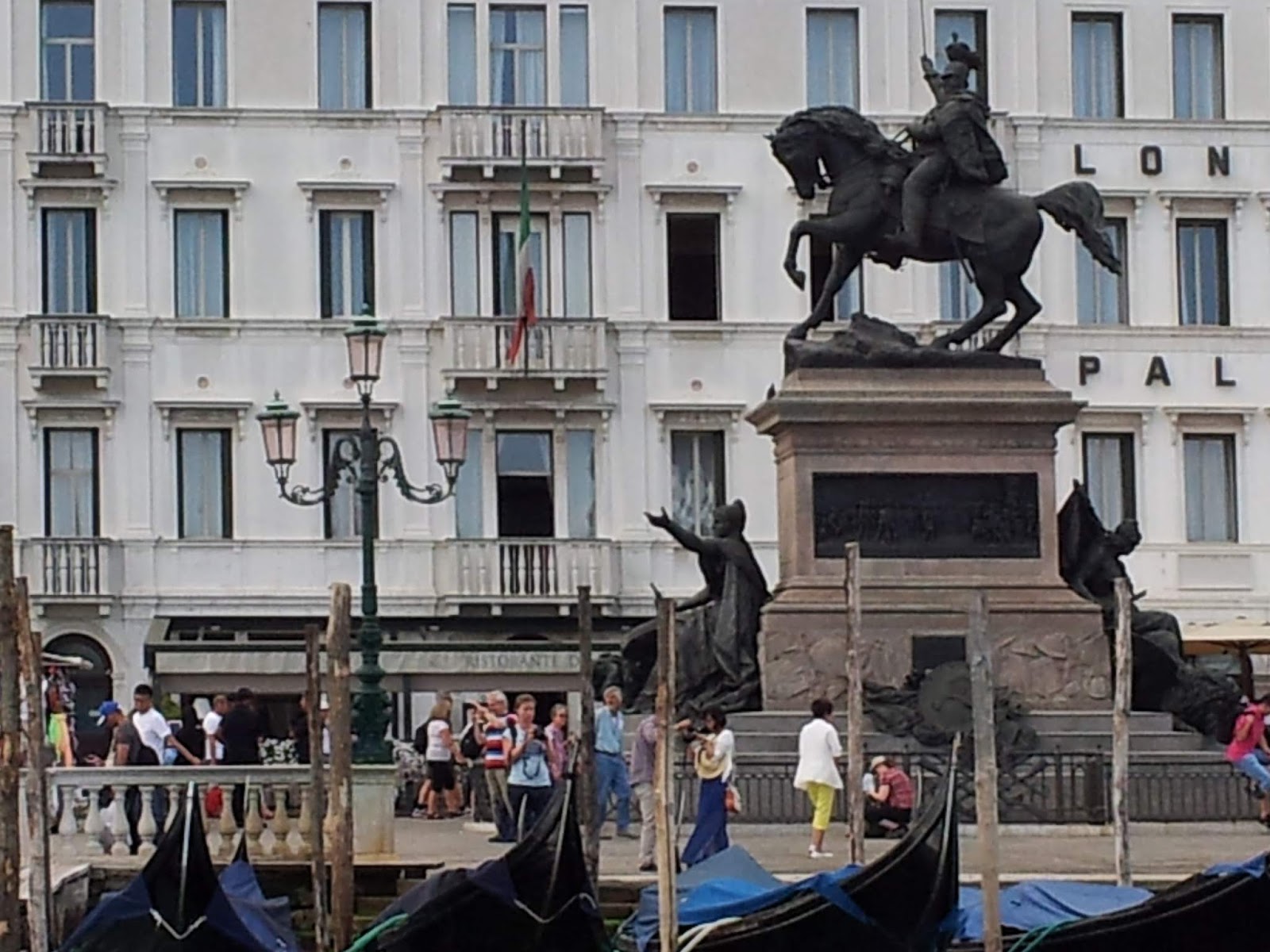
This is a photo of the Hilton Hotel from the other side of the canal.

It was useful knowledge for the second time we visited Venice because the waterbus from the Hilton hotel made its first stop, before San Marco, there.  We also discovered on that second visit a number of restaurants on the way from the terminal and church to the Accademia Bridge.

This is looking back towards San Marco from the Accademia Bridge:

And this, looking towards the docks:

Items to note:

Restaurants off the beaten track were much cheaper and the food a lot different to that in the middle of the tourist areas.

There are a lot of churches, big and small, tucked away in interesting spots where there are small piazza’s.  You can look in all of them, though some asked for a small fee.

Souvenirs, coffee, and confectionary are very expensive in St Marks square.

Searching for Locations: Venice, Italy

Venice is definitely a city to explore.  It has an incredible number of canals and walkways, and each time we would start our exploration at St Marks square when it’s not underwater

Everyone I have spoken to about exploring Venice has told me how easy it is to get lost.  It has not happened to me, but with the infinite number of ways you can go, I guess it is possible.

We started our exploration of Venice in St Marks square, where, on one side there was the Museo di Palazzo Ducale and, next door, the Basilica di San Marco.  Early morning and/or at high tide, water can be seen bubbling up from under the square, partially flooding it.  I have seen this happen several times.  Each morning as we walked from the hotel (the time we stayed in the Savoia and Jolanda) we passed the Bridge of Sighs.

Around the other three sides of the square are archways and shops.  We have bought both confectionary and souvenirs from some of these stores, albeit relatively expensive.  Prices are cheaper in stores that are away from the square and we found some of these when we walked from St Marks square to the Railway station, through many walkways, and crossing many bridges, and passing through a number of small piazzas.

That day, after the trek, we caught the waterbus back to San Marco, and then went on the tour of the Museo di Palazzo Du which included the dungeons and the Bridge of Sighs from the inside.  It took a few hours, longer than I’d anticipated because there was so much to see.

The next day, we caught the waterbus from San Marco to the Ponte di Rialto bridge.  Just upstream from the wharf there was a very large passenger ship, and I noticed there were a number of passengers from the ship on the waterbus, one of whom spoke to us about visiting Venice.  I didn’t realize we looked like professional tourists who knew where we were going.

After a pleasant conversation, and taking in the views up and down the Grand Canal, we disembarked and headed for the bridge, looking at the shops, mostly selling upmarket and expensive gifts, and eventually crossing to the other side where there was a lot of small market type stalls selling souvenirs as well as clothes, and most importantly, it being a hot day, cold Limonata.  This was my first taste of Limonata and I was hooked.

Continuing on from there was a wide street at the end and a number of restaurants where we had lunch.  We had a map of Venice and I was going to plot a course back to the hotel, taking what would be a large circular route that would come out at the Accademia Bridge, and further on to the Terminal Fusina Venezia where there was another church to explore, the Santa Maria del Rosario.

This is a photo of the Hilton Hotel from the other side of the canal.

It was useful knowledge for the second time we visited Venice because the waterbus from the Hilton hotel made its first stop, before San Marco, there.  We also discovered on that second visit a number of restaurants on the way from the terminal and church to the Accademia Bridge.

This is looking back towards San Marco from the Accademia Bridge:

And this, looking towards the docks:

Items to note:

Restaurants off the beaten track were much cheaper and the food a lot different to that in the middle of the tourist areas.

There are a lot of churches, big and small, tucked away in interesting spots where there are small piazza’s.  You can look in all of them, though some asked for a small fee.

Souvenirs, coffee, and confectionary are very expensive in St Marks square.

A photograph from the inspirational bin – 18

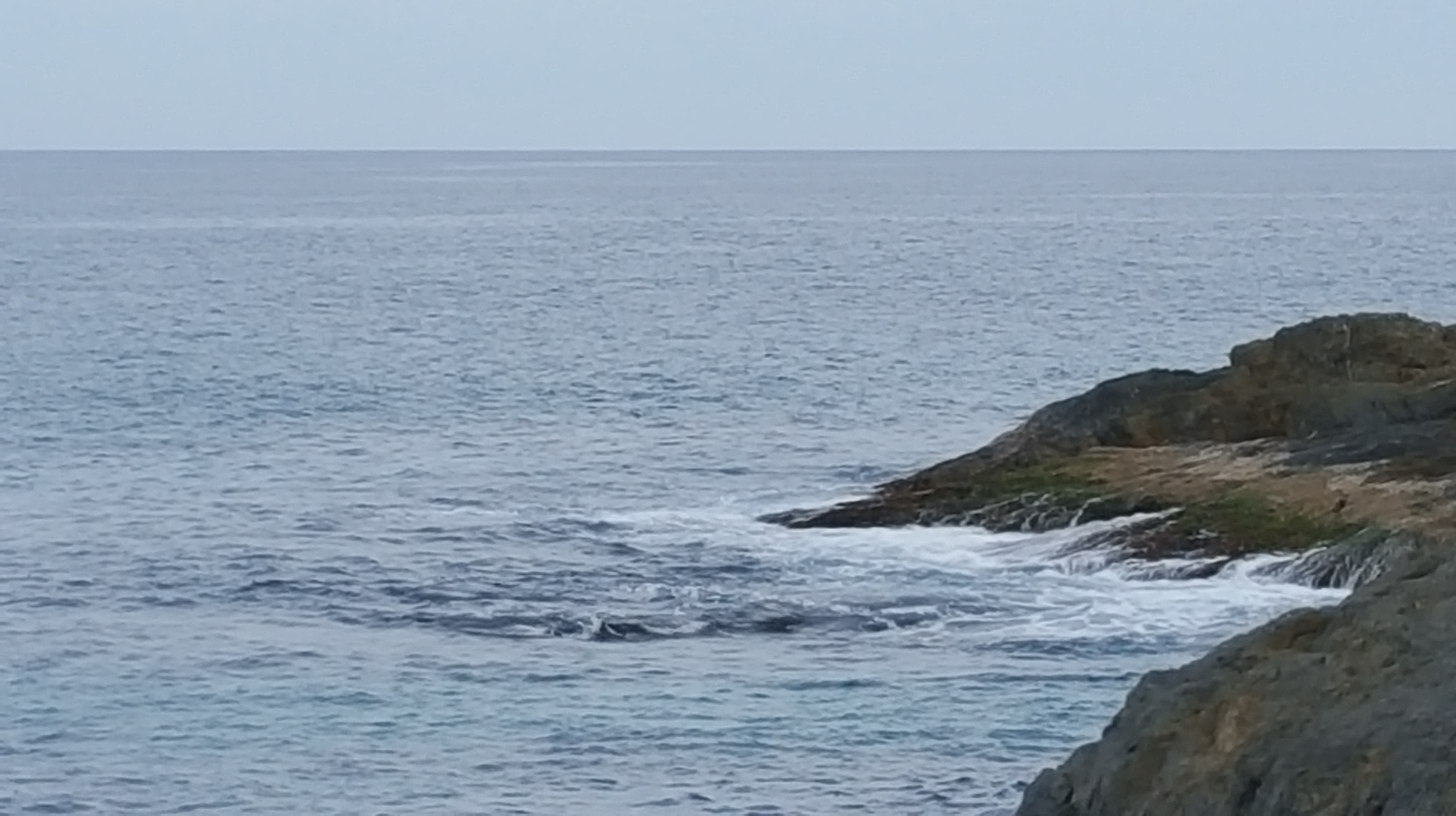
On a clear day you can see forever.

Perhaps, it just depends on what you want to see.

What I first see, looking at this view, is a horizon that is so far away, I cannot reach it.

Is that the one goal in life that I have?

Or is it time to change that goal and try to reach one that is attainable?

What sacrifice does that entail?

Does it come to pass that you must make sacrifices in order to get what you want?

It’s one of those perennial questions that has an answer, mostly, that no one wants to hear, or wants to be told.

Everything has a price. It’s whether you want to pay for it.

This subject, this situation, is manna from heaven for a writer.

So, for instance…

I stood on the edge of the cliff and took in the view, which on any given day could be either magnificent or like being in hell.

Today, while being majestic, it was also like being in hell.

37 days.

I didn’t think I’d last 2.  Yet here I was, having survived the worst that could be thrown at me.

The question was,  did I want to go back, did I want the life that was being offered?

Or was it time to simply walk away?

That, of course, is another story, and you’ll have to wait just a little longer to find out.

© Charles Heath 2023

The cinema of my dreams – It continued in London – Episode 23

What’s the Opera got to do with it?

I had hoped never to see Rodby again, and yet here I was in that oppressively warm wood polish-smelling office of his, sitting uncomfortably opposite him, a very large and clear desk between us.

In all the time I’d known him, and those visits to his office, there had never been anything on it.  Not even a phone.

The last time I was in this position, to inform him of my retirement, I’d been reluctant to put the resignation envelope on the pristine surface.

Significantly, it was a month to the day after I left Larry’s mother’s house in Sorrento.

The day after I went with Cecilia to her audition, and she smashed it, getting the role from a rather astonished casting director, and director.  He was calling it a possible break-out performance, in a whole different language that I didn’t understand.

That same night I found Juliet dining alone in the hotel restaurant and told her the good news, but her brother had already called her.  We had dinner, and it could have been more, but there was that Cecilia thing in the back of her mind so we parted as friends.

And at a loose end, Venice no longer hold any significance for me, I moved back to London.

I should have gone to Paris.  There, it would have been harder for Alfie to find me.

He had been giving me the ‘come back’ look, one that I had taken a long time to learn how to ignore.

Seeing he wasn’t making any impact, he said, “They found Larry.”

An enigmatic statement.  Who found Larry?

“The Italian police recovered the body, in a little-used area of Lake Como.  No signs of physical damage, not shot or stabbed, but apparently, he died of natural causes.  We’re still waiting for a definitive coroner’s report.  You never really elaborated on what happened at his mother’s house.”

My report was short and lacked detail, more notable for what I didn’t say rather than what I did.

“Nothing to tell.  Brenda just told him his days of running the organization were over, she and Jaime Meyers had collaboratively taken over, and things would be different.  I notice several other hard-line criminals have been taken off the streets since, so Inspector Crowley’s arrangement with her is working.  A win-win situation.  And you don’t have to deal with Larry anymore.”

“That’s the problem.  If something is too good to be true, it generally is. I have to wonder what has replaced him.”

“I’m retired sir.  No longer interested.  Why am I here?”

I could see he had more, possibly to pique my interest, but just shrugged.

“Nothing of any importance.  I thought you might want to know what happened to Larry.  And Martha wants me to go to the opera tonight and she specifically asked me to ask you, and as you know she does not take no for an answer.”

I shrugged.  He was right about his wife, a force of nature to be reckoned with.  I had met her several times, and she had been intrigued with Violetta and had been devastated when she learned of her death.

“Then I guess I’d better dust off the monkey suit.”

“Good.  I’ll text you where and when and send a driver to pick you up.”

© Charles Heath 2022

“Quickly, quickly…” – a short story


It was odd having a voice in your head, well, not really in your head as such, but in your ear, and sounding like it was in your head.

You could truthfully say you were hearing voices.

It was the next step after going through some very intensive training, having someone else as your eyes and ears when breaching a secure compound, and avoiding the enemy.

I’d signed on for this extra training thinking one day it would land me in the thick of the action. Some of the others thought I was mad, but someone had to do it, and the fact it was quite dangerous added just that extra bit to it.

But as they say, what you learn in training, and practise in a non-hostile environment, is nothing like being in that same situation in reality.

Now on was on my first assignment, part of an elite team, packed and taken to what was to everyone else, an unspecified location, but to us, it was the point of incursion.

The mission?

To rescue a government official (that was how he was described to us) who had been illegally detained in a foreign prison.

Our job?

To break him out and get out without the knowledge of the prison staff, or anyone representing that government. Yes, what we were doing was highly illegal, and yes, if we were caught it was more likely than not we would be executed as spies.

We were under cover in an abandoned farmhouse about three miles from the prison. We had been brought in under cover of darkness, and had only a few hours to set up, and then wait it out until the following night.

It was now or never, the weather people predicting that there would be sufficient cloud cover to make us invisible. Two of us were going in, and two remaining strategically placed outside to monitor the inside of the prison through a system of infrared scanners. We also had a floor plan of the building in which the prisoner was being held, and intelligence supplied, supposedly, by one of the prison guards who had been paid a lot of money for information on guard movements.

To me, it was a gigantic leap of faith to trust him, but I kept those thoughts to myself.

We had been over the plan a dozen times, and I’d gone through the passageways, rooms, and doors so many times I’d memorised where they were and would be able to traverse the building as if I had worked there for a lifetime. Having people outside, talking me through it was just an added benefit, along with alerts on how near the guards were to our position.

I was sure the other person going with me, a more seasoned professional who had a number of successful missions under his belt, was going through the same motions I was. After all, it was he who had devised and conducted the training.

There was a free period of several hours before departure, time to listen to some music, empty the head of unwanted thoughts, and get into the right mindset. It was no place to get tangled up in what-ifs, if anything went wrong, it was a simple matter of adapting.

Our training had reinforced the necessity to instantly gauge a situation and make changes on the fly. There would literally be no time to think.

I listened to the nuances of Chopin’s piano concertos, pretending to play the piano myself, having translated every note onto a piano key, and observing it in my mind’s eye.

My opposite number played games of chess in his head. We all had a different method of relaxing.

Until it was 22:00 hours, and time to go.

“Go left, no, hang on, go right.” The voice on my ear sounded confused and it was possible to get lefts and rights mixed up, if you were not careful.

It didn’t faze me, I knew from my study of the plans that once inside the perimeter fence, I had to go right, and head towards a concrete building the roof of which was barely above the ground.

It was once used as a helipad, and underneath, before the site became a prison, the space was used to make munitions. And it was an exceptionally large space that practically ran under the whole of the prison, built above ground.

All that had happened was the lower levels were sealed, covered over and the new structures built on top. Our access was going to be from under the ground.

Quite literally, they would not see, or hear, us coming.

The meteorological people had got it right, there was cloud cover, the moon hidden from view, and the whole perimeter was in inky darkness. Dressed in black from head to foot, the hope was we would be invisible.

There were two of us heading to the same spot, stairs that led down to a door that was once one of the entrances to the underground bunker. We were going separate ways in case one of the other was intercepted in an unforeseen event.

But, that part of the plan worked seamlessly, and we both arrived at the same place nearly at the same time.

Without the planning, we might easily have missed it because I didn’t think it would be discernable even in daylight.

I followed the Sergeant downstairs, keeping a watchful eye behind us. I stooped at the point where I could see down, and across the area we had just traversed.

Nothing else was stirring.

As expected, the door was seamless and without an apparent handle. It may have had one once, but not anymore, so anyone who did stumble across it, couldn’t get in.

Except us. We had special explosives that were designed to break the lock, and once set, would not make a lot of noise. Sixty seconds later we were inside, and the door closed so no one would know we’d broken in.

I was carrying a beacon so that the voice in my head could follow my progress. The sergeant had one too, and he led.

“Straight ahead, 200 yards, then another door. It shouldn’t be locked, but it might be closed.”

In other words, we had no way of knowing. Our informant had said no one had been down in the dungeons, as he called them, since the munition factory closed, and had been sealed up soon after the prison building had been handed over for use.

We were using night goggles, and there was a lot of rubbish strewn over the floor area so we had to carefully pick our way through which took time we really didn’t have. It looked as though our informant was right, no one had been down there for a long time. We were leaving boot prints in the dust.

We reached the door ten minutes later than estimated. Losing time would have a flow-on effect, and this operation was on a very tight time constraint.

“Once you are through the door, there’s a passage. Turn left and go about 50 paces. There should be another passage to your right.”

“Anyone down here?”

“No, but there is a half dozen prison officers above you. Standard patrol, from guardhouse to guardhouse. Unless they can hear you through five feet of solid concrete, you’re safe.”

My instincts told me five feet of concrete were not enough, but I’ll let it ride for the moment.

The door was slightly ajar and it took the two of us to pull it open so that we could get past. Behind it was the passage, going left and right. Trusting my invisible guide was not getting mixed up again, I motioned right, and we headed down the passage.

Despite the fact we should be alone, both of us were careful not to make any noise, and trod carefully.

At 50 or so paces, the passage came into sight. The sergeant went ahead. I stayed back and kept an eye in both directions. The passage before us was the one that would take us under the cell of the captive we were sent to retrieve.

There would be no blasting our way in. The floor to the cell had a grate, and when removed, a person could drop down into the ‘dungeon’. Currently, the grate was immovable, but we had the tools to fix that.

The sergeant would verify the grate was where it was supposed to be, then come back to get me.

Five minutes passed, then ten. It was not that far away.

I was about to go search when the voice in my head returned, but with panic. “We’ve been compromised. Get the hell out of there, now. Quickly…”

Then I heard what sounded like gunshots, then nothing.

A minute later there was a new voice. “I don’t know who you are, but I’d strongly advise you give yourself up to the guards. Failure to do so within one hour, I’ll execute the two men I now have in custody.”

Ahead of me there was a sudden explosion, followed by a cloud of dust and fine debris.

Hand grenade, or mine, it didn’t matter. The sergeant wouldn’t be coming back.

I sighed.

Plan B it was.

© Charles Heath 2021

“The Enemy Within” – a thirty-day revision – Day 30

This book has also been written for some time, like The Document, and the manuscript was also sitting in a box with half a dozen others gathering dust and not quite as complete, so this month it is going to get the makeover, a first draft for the editor.

And so it begins…

So, we have a mission, and we have the players.

We let it play out. People die, and others escape. If you escape, knowing that someone is trying to kill you, what is the first thing to happen in the spy world?

A debriefing.

Searching for the reasons why and coming to conclusions can result in accusations. Or at worst, the survivors are blamed for those that didn’t. I hesitate to say it was like in the first days of flying aeroplanes, if it crashed, it was pilot error, not the plane.

The unthinkable happens, the survivor is fired, and the researcher/briefer is sent to their own version of a debriefing to find out what went wrong. At least, that is what everyone thinks happened.

What actually did was far more sinister, and our man who was fired, with a little help, launched his own investigation. It is coincidental that he was in a relationship with the researcher right up until the briefing when she broke it off.

But what follows makes a very interesting story, and highlights the fact that in the shadowy world of intelligence gathering, everyone lies, everyone has an agenda, and not everyone has the best interests of their country at heart.