The cinema of my dreams – I always wanted to write a war story – Episode 18

For a story that was conceived during those long boring hours flying in a steel cocoon, striving to keep away the thoughts that the plane and everyone in it could just simply disappear as planes have in the past, it has come a long way.

Whilst I have always had a fascination in what happened during the second world war, not the battles or fighting, but in the more obscure events that took place, I decided to pen my own little sidebar to what was a long and bitter war.

And, so, it continues…


It was clear, however, that Marina was familiar with the man and very annoyed with the woman.

When I took a longer look at the man, I realised he was not a man at all, but a boy in his teens, blessed by the fact he looked older than he was.  My guess, about 16.  I was surprised he had not been conscripted into the war, there seemed very few young men in the area.

Marina went straight over to him and snatched the elderly rifle he was holding away from him, the glared at Chiara

“Are you stark staring mad.  Enrico is not supposed to be out in the open, hell, it’s been a battle to keep him hidden away.  What will his parents think when they discover he’s here?”

“Pleased,” Enrico said.  “My father said it’s about time I did something to rid of the Germans, of the English too for that matter.  None of you has any right to be here.”

Fervently spoken, and to the wrong person, it would earn him a bullet to the back of the head.  But I agreed with him.

“All well and good,” Marina said to him, “but now there’s no easy way of doing that.  We must be careful, and you must stay put with your parents.  What we’re doing isn’t a game, you are neither trained or equipped to take anyone on, except perhaps rabbits.”

Back at Chiara.  “Take him home, and never bring him back here.  You don’t want to be the one who has to tell his mother if he gets killed.  Now, both of you go now, before I shoot both of you myself.”

“This is not the end of the matter,” Enrico said.

“And when you’ve taken him back, come back here.  We need to talk.”

Chiara said nothing, just nodded sullenly.  I think she believed the less said the better and did as she was asked, nodding her head in his direction, and adding a few choice phrases in Italian to him that I couldn’t understand.  It also just occurred to me that she had not asked Chiara the questions about the two men from the castle.  I guess that would have to wait until the safety of Enrico was settled, and she returned.

“Make sure they’re safe,” she said to Carlo, and he disappeared, leaving us alone.

“I thought all of the young men had been taken away by the Italian Army.”

“Not all.  We managed to hide a few away, but as you can see, despite our best efforts, they don’t seem to appreciate the trouble they could get into.  We used to have about a hundred young men from 14 through to 20 at the start of the war.  Two have found their way back, casualties of war, the rest, we may never see them again.  Enrico just doesn’t see the trouble he could get into.”

“It’s called youthful enthusiasm.  In the first world war, joining up, or going to war, was a lark.  It was a little less so this time because most of the parents knew from firsthand experience what it was like and tried to shield them.  And if you didn’t join up, questions were asked, and quite often jail, except for some who landed cushy jobs away from the fighting.”

“You were not so lucky?”

“No, I was one of those mad buggers who thought joining up to fight would be an adventure.  That quickly faded when the enemy started shooting at me.”

“And now you’re here, and a spy to boot.  That’s what they’ll hang on you if you get caught.”

“Then I shall try very hard not to get caught.  Again.”


Chiara came back about an hour later.  It seemed to me it was a lot safer to move around at night with the blackout, and I doubted Thompson would spare any men from the castle to check up on the local farmers.

And while I was at the castle, I didn’t hear anything raised about the local resistance, which I thought odd at the time, but now I knew why.  Most of them had joined him.  Better that than be hunted down and killed.

Chiara still looked sullen.  A closer look showed she was not very old herself, barely out of her twenties, and surprising that the Italian army, or Thomson for that matter, had not rounded her up for ‘duties’ at the castle.

There were a number of the local women working up at the castle, but they were mostly staff, or more likely forced labour, though I had thought we, when I believed it to be a British outpost, would be fairer to the locals than either the Germans or their own Italian military.  It’s odd how you tend to look at certain situations because of who you are, and the fact you would not do similar things at home.  The Germans, however, we would always treat differently, because they were the enemy, and because we expected the worst from them.  At that moment, though, wouldn’t the Germans think the same of us if the positions were reversed?

Best not to think about that.  My view of the war and the people in it was clouded enough.

Chiara, however, clearly thought the worst of me, and of those in the castle, and certainly didn’t think I was as neutral as I appeared.  A gun always in hand, I was sure she would shoot me again with the least provocation.

We sat, both Chiara and Marina with their weapons on the table in front of them.  I wasn’t trusted enough to be given a weapon.

Marina’s first question was directed at Chiara, “I’m told there were two men from the castle following Sam, and that he told you about them.”

“He did.  We did not see them.  We didn’t take the path, because, as you know, it’s not safe.”

It was a reasonable answer.  If the men at the castle were unfamiliar with the area, as I’m sure they would be, because they hadn’t been there for very long, and I doubt Thompson would want to advertise the nationality of those at the castle unless he had to, they would stick to the clearly-marked roads and paths.

I had on my way to the castle, from a different direction.  It didn’t explain why I had not been met by the leader of the resistance as arranged, but that was now explained, both by the former leader trying to kill me in a roadside explosion, and then what I learned at the castle in the last few days.

“Even so, there’s not that much distance between the two, and it is possible to shadow them.”

“I keep well away from them.  Perhaps Leonardo saw them.  He doesn’t have to worry about what they might do because they use him to supply food.  Maybe he knows more.”

“Perhaps I shall ask him next time I see him.  We need to know who from the castle is about and when so that we don’t get caught.”

“I’ll remember next time.  Is that all?”

“Yes.”

Chiara picked up her gun, gave me an extra-long sullen stare.  “I don’t trust this one, Marina.  You 

need to be careful.”

“I will.”

We waited a few minutes until after she had departed, and then Marina said, “We should be going too.  This place is a little eerie at night.  There are far too many ghosts for my liking.”

I shuddered, then followed her out.


© Charles Heath 2019

The cinema of my dreams – I always wanted to write a war story – Episode 17

For a story that was conceived during those long boring hours flying in a steel cocoon, striving to keep away the thoughts that the plane and everyone in it could just simply disappear as planes have in the past, it has come a long way.

Whilst I have always had a fascination in what happened during the second world war, not the battles or fighting, but in the more obscure events that took place, I decided to pen my own little sidebar to what was a long and bitter war.

And, so, it continues…


Jack was the first to realise that Marina was coming back, hearing her outside long before I did.  He stood up and looked in the direction of where he expected to see her.

A minute later she appeared, looking and sounding out of breath, as if she had been in a hurry? 

Chased, or had some urgent news?

“Is everything OK?” I asked, waiting till she came in and shut the door behind her.

The building we were in used to be a factory or a repair shop.  The strange smell I’d picked up a few hours ago was that of machine oil.

“We need to have a chat with the two who picked you up.”

“Where are they now?”

“I’ve organised to meet them at another facility we have.  Not everyone comes here.  It’s why we are still here.  Francesco nor any of the resistance he took with him were aware of this location.

I considered myself lucky to be among the few.

“Is there a reason why I need to be there?”

“Yes.  But it’ll wait until we get there.  Let’s go.”

She had barely got in the door, nor caught her breath.  It was just enough time to collect a spare clip of ammunition for a gun she had on her, but I couldn’t see.

I followed her out into the darkness, not realising it was night, for the first time since I’d arrived, and once outside, realised that it was an underground bunker rather than a building on an allotment, so it couldn’t be easily seen from any direction.  It was surrounded by trees and bushes, looking as though they had not been tended properly for some time.

It was as much as I could see, close by because it was a moonless night.

We went up some stairs and came out in a clump of bushes, and walked several yards where there was a disguised walkway zig-zagging through the bushes.  It, too, would be hard to see from a distance.  When we came out the other side, I could just barely see a car parked under a tree, looking rather worse for wear, and I thought it had been abandoned there. 

When Marina told me to get in, I realised it was, like everything else, well disguised.

The surrounding area was that of forest and farms.  It was hard to imagine that this part of the world was in the grip of a world war, and not too far away, there was the castle, and further north, the Germans and what was left of the Italian military forces dug in for a last-ditch effort.  The tide was turning, but ever so slowly.

It was hard to imagine just how dangerous it was for those defectors to try and get through without being shot.

And, just for good measure, Marina said, there were quite a few soldiers, disguised as ordinary workers who had infiltrated the villages, and surrounding farms, and reporting back what they saw and heard.

We were, in going about in the vehicle, attracting unwanted attention, but it was why we were doing this at night, she said, perhaps gleaning from my expression the fact I was worried about getting caught.

“The people at the castle tend not to go out at night for fear of being picked off.  I’m surprised you didn’t learn this when you were there.”

“I suspect the suspended any activities from the moment I arrived.  One of the prisoners told me that all movements of people had stopped, and they were waiting to be shipped out.  Obviously, they thought I might discover what was going on.  They definitely stopped me from going below the main floor.”

“I was told you have some knowledge of the castle layout?”

“Some.  We have old plans back in London, but I suspect those would be out of date now and since the German occupation.  The only time I got to look downstairs was when I tried to escape and found an old below ground exit, then when they locked me in a cell, and then when I was set free.  It matched much of what I remember seeing on the plans.  But, I suspect there’s more because I didn’t get to see the holding cells with the other prisoners.”

“Perhaps Carlo can help you with that.”

“We spoke about it.  I think he’s going to pay them a visit and exact revenge.”

“I told him we have to wait for some reinforcements.”

“No word from London?”

“Not yet.”

We stopped and parked the car between a church and what was left of what might have been a rectory, set aside from some other buildings that looked like part of a village.  It was not that dark that I couldn’t see that several of the buildings had been bombed, minus roofs, and one had the front section reduced to rubble.  No attempt had been made to clean it up.

“German tanks,” Marina said.  “An early landing party of your army parachuted in about a kilometre behind the church.  The local commander mobilised his forces and chased them into those buildings, which, at the time, housed four families.  They were given the option to surrender.  They didn’t, so the commander gave the order to raze the buildings to the ground, with them in there.  Along with the four innocent families.  No one survived.”

“The church?”

“The commander thought it would be bad luck to destroy the house of God.  The soldiers should have hidden in there.  They shot the priest anyway.”

It seemed odd to me that any sort of group would parachute into this part of Italy for any reason, castle withstanding.  There was, as far as I knew, nothing of interest or importance here.  Perhaps I’d ask when I made it back to London.  If I made it back.

I followed her through the rubble and in through a side entrance to the church.  Inside it was dark, and Marina was using her torchlight sparingly in case someone was watching.  From what I could see, the inside of the church was untouched, but everything was covered in dust from disuse.

“No one thought to send another priest?” I asked.

“No.  When they heard what happened to the last one, they decided to wait until the war was over.  Besides, with everything that’s happened, the people around here believe God has abandoned them.”

Perhaps he had.  I know that I wasn’t all that religious to begin with, but a lot of people I knew had lost their faith in a God that allowed such tragedies to happen.

We passed through a door at the back of the church, behind the nave, and into what looked like the vestment room.  To one side was another door, and then steps down.  The church had a cellar.

At the bottom of the stairs, there was a large storage area lit by a portable lantern.

Carlo was standing to one side, his weapon ready to use.

Opposite him were a man and a woman, the woman I’d seen before, she was the one who shot me with the tranquilizer.  The man, I’d not seen him before.


© Charles Heath 2019

The cinema of my dreams – I always wanted to write a war story – Episode 16

For a story that was conceived during those long boring hours flying in a steel cocoon, striving to keep away the thoughts that the plane and everyone in it could just simply disappear as planes have in the past, it has come a long way.

Whilst I have always had a fascination in what happened during the second world war, not the battles or fighting, but in the more obscure events that took place, I decided to pen my own little sidebar to what was a long and bitter war.

And, so, it continues…


The message I sent to Forster, in London, was short and to the point,

‘Castle in hands of Germans led by Thompson, others, and a further 12 soldiers parachuted in.  Defectors, our original soldiers? and villagers held captive in dungeons.  Resistance limited to five plus self.  Available resources cannot retake castle and will have difficulty in intercepting incoming package.  Suggestions?’

Marina read it and added her name before it was sent.  Now, all we could do was wait for a reply, though I was not sure what Forster would make of my request for suggestions.  I was supposed to make decisions in the field, but that was when we had a full complement of resistance fighters.  What I’d discovered was the worst-case scenario, and everyone in London was hoping that would not be the case.

I wondered what happened to the two men who had been following me, hoping I would lead them to what were now the remaining resistance members.

“Did you see the two men from the castle that had been following me?  I told the two who had captured me, a man and a woman, though the man emphatically denied he worked for the resistance, about them before the woman shot me with a tranquilizer gun.”

Martina looked puzzled.  It was obvious the two hadn’t mentioned anything about my situation to her.

“That did not come up in the debriefing.  The man is, in fact, a farmer, Leonardo, who doesn’t advertise his involvement, and only works with us if we need him.  Chiara tends to shoot first and ask questions later.  You were lucky her gun wasn’t loaded with bullets.  What is this story of yours, then?”

“One of the guards released me from my cell, and then set me free with the intention of following, not too close, to see if I led them to you.  I was hiding from them when they passed by, shortly before you people turned up.  They would have had to see them if they came from the village.”

The implications of what I just said only dawned on me after I said it.

“That might mean…” I said.

She put her hand up, not wanting me to continue.

“It doesn’t necessarily mean anything, but I will have to talk to them.  If anything, they would have avoided them or ignored them.  We don’t use that track from the village to the castle for the simple reason we might run into any of them.  Whether they were originally our allies, or not, we never trusted them.”

“Did they bring me here?”

“No.  We have a separate meeting point for intercepts like yourself and the defectors.  Then, if we think it’s safe to do so, we bring them here.  Only three of us know about this place, and two of us are here now.”

“The third?”

“You’ll meet him later when he brings some food and wine.  His name is Carlo.  He used to be a gardener at the castle, and his mother was the cook.  The Germans killed her the first time they were here, and now he hates Germans.”

Good for us, very bad for anyone at the castle, particularly if they are German.

“Pity we didn’t know about that earlier so we could organise a trap for them  We could do with two fewer adversaries, and quite possibly we might get some information out of them.  They might be still in the village.”

She stood, and put on her coat, and put a gun in the coat pocket where she could easily reach it.  “I’m going to have a word with Chiara, and warn Carlo that you’re here.  He’s a little trigger happy too.  Nothing much is going to happen until we hear back from the Colonel.  I suggest you get some rest, we have a few long days ahead.”

Carlo was a surprise.  Six foot ten, over 250 pounds, and carrying a sten gun over his shoulder, not a man to become an enemy of.  He came into the room without warning, and it was clear he was expecting to see me, and equally that I might be the enemy.

It was clear that he knew how to use the weapon, and had it ready in case he had to use it.

“You this Anderson character?”

He was more English than Italian, but could certainly pass for an Italian.

“I am.”

“From up yon castle?”

“Escaped?”

“How?”

“The lower level, where there are a few storerooms turned into cells.  The passage ran alongside the outer wall to a room that had a door to the outside.  Not one you’d easily pick.”

“Neat the communications room?”

“Probably above there.”

“You know the castle?”

“A little.  I used to be an archaeologist before this war came along, and had been to the castle before the war.  I’m familiar with the above-ground parts, but not so much below.  You were, I was told, a gardener?”

“Once.”

“Then you’d know your way around?”

“Possibly.  Why?”

“Because at some point we’re going to have to retake the place, and it would be good to have someone who knows their way around.  At least, better than I do.”

“Taking prisoners?”

“No.    We will be assuming anyone there whose not a prisoner is hostile.”

“Good.  Count me in.”

He dropped a basket he’d brought with him on the table in the corner.  “Dinner.”  Marina will be back shortly.

“You’re not staying?”

“Guard duty.  So you can eat in peace.”

With that, he was gone.  A large man, but a very quiet one.  I didn’t hear him arrive, and it was very nearly the same when he left.  A useful man in a fight indeed.


© Charles Heath 2019

You learn something new every day (1)

And it’s not necessarily something that might be good. To be honest, I didn’t know what to think, but in a strange sort of way it put a few things into perspective.

My brother and I have been delving into the family history, or at least my brother is throwing everything at it, and I’m along for the ride.

I did have a trove of stuff that we found when cleaning out my parent’s house when they moved into aged care, and at the time I didn’t think much of it. It was more about getting them settled than figuring out what was kept.

Now, four or so years later, and having finally received an interim output of the family tree, it’s not so much the forebears that interested me, as it was my parents.

It seems that our looking at our immediate family’s potted lives is like walking through a minefield, riddled with contradictions, rumors, and anecdotal evidence that doesn’t, for the moment, have any hard evidence to back it up. Or at least some have, but that’s not the interesting part.

So, picture this. The extent of my knowledge of my immediate family was that my father is Australian, his mother English, and I’m a second-generation Australian with an English grandparent. It doesn’t sound much, but not so long ago I could have applied for and got an English passport and had dual nationality. Unfortunately, that cannot happen anymore, you have to be one or the other.

My mother’s mother was of English descent and her husband of German descent. It was understood that my grandfather on this side died not long after I was born, though for a long time we were never told how. Only recently it came to light that he had committed suicide, and my brother has a copy of the suicide note he wrote. Morbid, eh? It turns out he thought he had cancer, but didn’t and mistakenly ended his life thinking he might have been a burden on my grandmother.

But now we started digging, getting dates of birth, easy, dates of death, easy, marriage certificates, and parents’ names for this limited dip into history, relatively simple.

But the story, the real aspects of genealogy, is where they went to school, their first job, what the did in the war, that fascinating the story of their lives at different times, that’s where I’m more interested. My brother has the facts, I want to give them a story entwining those facts.

Something that adds some flesh to the story is letters.

Another recent addition to the pile of family documents are the letters between my mother and father before they were married, and the fact my mother had another boyfriend, something we never knew until the great clean up. I have those letters, or some of them too.

Those letters, from him, unfortunately, we don’t have hers, are fascinating, as are those from my father. There is no indication of why there was a breakup with the first boyfriend, but I did learn that my father had gone to an introduction agent by the name of Mrs. J Phillips who gave him her name. What factors had led him down this path?

It was, to me, very Dolly Levi-ish.

I discovered my father worked as a projectionist at the Snowy River hydro-electric project after the war., around 1948. He had spoken of showing pictures at the Athenaeum Theatre in Flinders Street, and the King’s Theatre in Melbourne, but not exactly when, which accounted for his amazing knowledge of Hollywood movie stars. It was, however, as much as he had shared for a long time.

I also discovered that he was in Perth, Western Australia immediately after the war, and then went overseas to England by ship 13th August 1947, arriving in London on 12th September, and stayed at Middlesex with relatives.

Ok, now it gets a little weird because when in Bedfordshire he became engaged to an English girl that he had (apparently) known for 10 years. How this came to pass is still a mystery awaiting an answer. The wedding was supposed to be on 21st December 1947 but never happened, because the marriage was forbidden by her parents because they did not want their daughter to move to Australia, and equally forbidden by his parents because she was Catholic.

Yes. Religion was a breaking point in those days because he was a protestant. He returned, perhaps heartbroken, a year after he left, in April 1948.

I found that for a period of two years there would be enough speculative material to fuel a very lively account of their lives, and particularly his.

My mother, by the way, spent the war years attending Dandenong High School, a steam train ride down from Pakenham to Dandenong. After that, she gained employment in Melbourne, and spend the weekdays at a Ladies Boarding House called Chalmers Hall, in Parliament Place, and going home to Pakenham on the weekends. From a note or two, it seems she was something of a ‘wild’ child who craved doing something with her evenings other than ‘staying in’, with references to her going out with her friends.

My father confessed that he was the family’s black sheep, that he didn’t get along with any of the family, and which was why he was never home and always traveling. He wrote, in one letter of October 1948, that when he got into an argument he got mad and walked out on them, and came back when calm had returned. I assume that meant it might take days, weeks, or even months for the dist to settle.

There were disputes with my father with both his brothers and his parents over marrying my mother, and there were problems between my mother and her parents, to the extent they might not attend the wedding. For a few months of tense silence, there might not have been a wedding at all, but eventually, this happened at Trinity Church, Camberwell, on the 28th of June, 1949.

Wow! It shows that illusions of what might have been their happy day turning out to be moments of high dudgeon. Oh, to have been a fly on the wall.

I still have no idea what split her and the original boyfriend, a man she’d known since she was 14, and was from her hometown area, Pakenham. It might have been something she said because there are indications on one of two draft letters that she was prone to speaking her mind, and had a temper which would not have helped in using discretion. I’m guessing a few years of war would make a man lose interest in a high minded, and perhaps a sharp-tongued woman. I suspect we’ll never know.

She is now 93 and has Alzheimer’s and dementia, and unlikely to remember back then.

Similarly, my father is 97 and I doubt sitting down with him would elicit much on the way of a sensible discussion. He was always irascible at best and oddly suffers from PTSD from his war service if that’s still possible. Over the years he was never prone to sharing his past life, except in snippets, and that, some of it was about the war. I guess war did terrible things to the participants back them

And, as for his war service, we have the physical documentation of where and when, but only a potted history of his own account of his service. But even that is a story and a half in itself.

More on that later.

The cinema of my dreams – I always wanted to write a war story – Episode 15

For a story that was conceived during those long boring hours flying in a steel cocoon, striving to keep away the thoughts that the plane and everyone in it could just simply disappear as planes have in the past, it has come a long way.

Whilst I have always had a fascination in what happened during the second world war, not the battles or fighting, but in the more obscure events that took place, I decided to pen my own little sidebar to what was a long and bitter war.

And, so, it continues…


The new leader of the resistance was the woman, Martina, best if I didn’t know her last name.  Fair enough.  There had been a necessary restructure after the infiltration, and untimely deaths of over half their number.

When I asked what happened to the former leader, I learned that he, and all but five other members were captured and taken to the castle.  They were now, for all intents and purposes, double agents, working for the Thompson at the castle.

The remaining five, of which Giuseppe and Martina belonged, had been forced to hide, dodging the men sent from the castle to hunt them down and kill them.

It was both the lack of reporting from the castle, followed by a message received regarding a possible traitor inside the resistance we had received in London, that set everything in motion, including my arrival to ascertain what was happening within the resistance group, and also at the castle.  Until that information reached us, there had been no reason to suspect that anything was wrong, and that the plans set in place to facilitate the defection of useful German scientists and, in some cases, high ranking officers, or that it had been infiltrated and to put it bluntly, original members had been killed and replaced.

I hadn’t realised who was in charge until the paratroopers had arrived and I’d become a prisoner.  Part of my brief had also been to verify the layout of the castle in accordance with old plans we had found using my archaeology background as a front, and Id managed to explore certain areas before Thompson had become suspicious and basically stopped me.  I’d searched part of the lower levels of the castle, but hadn’t got as far as the dungeons, where I eventually discovered becoming one myself, they were keeping many more prisoners.

I hadn’t long enough in the dungeons to discover whether any of the prisoners were part of the original team sent, whether there were any defectors being still held there, except for two that I’d seen, and definitely one I talked to, but there had to be more.

And, now that I’d found the remaining members of the resistance, it was my intention to return to rescue then, and retake the castle.  What was going to make it difficult, if not impossible, was the fact there were only five, and they were all busy trying not to get caught.  Still, I had to try, and I asked Martina if it was possible to get everyone together for a meeting.

Martina just laughed.  Whether it was my request or my plan to retake the castle was the cause of her mirth.

“With what?”  she said incredulously, “there are only five of us left, and we spend most of our time keeping one step ahead of the turncoats.”

“How many of them are there?”

“Too many, led by that bastard Francesco.  He didn’t like taking orders from a woman, thought we’d picked the wrong side, especially when the Germans killed about fifty of the villagers when we refused to give ourselves up.  They killed his wife and mother  after he refused to send them away.”

That didn’t seem right to me, to align yourself with that sort of enemy, not after what they had done.  Except there was no telling what anyone might do in the face of such an adversary, or circumstances.  But I had to ask, “Why would they?”

“They’ve got hostages from the village up there, in the dungeons.  That’s how they turned them.”

Damn.  I was not going to be able to turn them back, not when the lives of their friends, even family, was being threatened.

“Is that the case for those who didn’t surrender?”

“No.  Our relatives left when we could see what was going to happen.”

“So, the problem we have is, freeing the hostages, freeing the soldiers if there are any of the original group, retake the castle, and get the pipeline working again.”  And, I thought to myself, pull off seven miracles in fifteen minutes.

I was putting forward what was for all intents and purposes impossible.

“There’s more,” she said.  “There is a high-value scientist coming, last advice was that he was in transit from Germany to here.  We know, and they know, courtesy of Francesco.  They want him captured; we want him safely delivered to the submarine waiting to take him to England.  He’s due in three days, and he doesn’t know the castle’s allegiances have changed.”

“Then we’ll have to intercept him.”

“Yes, but we don’t know what he looks like, but we do have a code name.  Francesco and the castle don’t have that, only his real name.”

A name I saw on a highly confidential document on Forster’s desk the day he briefed me on my current mission.  Blackfoot.  I thought it was an operation.  I think that was the code name for the defector.

“Blackfoot?”

“How did you know?”

“A lucky guess.” 

The question I had was, why didn’t he tell me about it?  Did he think I was going to get captured and tortured?

“Well, you’re right.  But it means Francesco and his men are going to be looking extra hard for us, because without that codename, as soon as they fail to confirm their identity to him, he will kill himself rather than go back, which I’m guessing will be their least preferred option.  And to make matters worse, London’s orders are quite specific, this man must be delivered alive.  He has critical information they need, and which will hasten the end of the war”

“Then I think we should tell London the nature of our situation and see what they come up with.”


© Charles Heath 2019

A matter of life and … what’s worse than death – Episode 14

For a story that was conceived during those long boring hours flying in a steel cocoon, striving to keep away the thoughts that the plane and everyone in it could just simply disappear as planes have in the past, it has come a long way.

Whilst I have always had a fascination in what happened during the second world war, not the battles or fighting, but in the more obscure events that took place, I decided to pen my own little sidebar to what was a long and bitter war.

And, so, it continues…


When I woke it was almost dark, and cold.

Was it night?  I was in a room, on the floor, and the only light came from a light bulb.

I tried to sit up, but any sort of movement made my headache.  Then my memory returned.  In the forest, a man, then a woman, then nothing.

Then I heard a noise from the other corner and looked over.  Jack.  He’d been lying on the floor, possibly waiting for me to wake up.  He came over and lay down next to me.

Had they tranquilized him too?  It would have been interesting to see what he had done in the forest when they tried to take me away.  I was surprised he had not run away, and waiting for me to return like he had the last time.

Were we back in the castle?  Around me smelt musty, so it was possible I was back in the castle in one of the more remote dungeons’.  But, there was no iron door, or wooden door to the room, just a passage outside, equally badly lit.

So, I was not exactly a prisoner.

A let another half hour or so pass before I tried to get up again.  This time, my head hurt less, but the effects of the tranquilizer still made me a little unsteady, and it was necessary to remain near the wall for support.

After I’d taken several tentative steps, Jack joined me.

At the doorway, I stopped and looked out.  A passage, with several other rooms off it, and leading to a larger one where there was a table, chairs, and several cupboards.  A storage area, or a barn?

I walked slowly, if a little unsteady, down the passage and into the room.  At one end of the table was the woman “I’d seen in the forest, the one that had shot me.  Behind her, with a mug of coffee, or something else in his hands, was the man.

The watched me as I crossed to a chair at the end of the table, and sat.  Jack sat next to me.

The woman spoke first.  “Giuseppe tells me your name is Sam Atherton?  Your rank?”

I was hoping for an apology.  “Captain.”

“The name of the officer who sent you?”

“The one working with the men in the castle, or the man who sent me?”

“The one who sent you.”

I took a moment to consider what might happen if I did.  I guess it wouldn’t make much of a difference if the Germans found out who he was if they didn’t know already.  There was not a lot they could do.  And he already knew and had doubtless dealt with the traitor.

“Colonel Forster.”

I could see, now, the man had his hand on a gun beside him, and was ready to use it.  My answer, obviously the correct one, had eased the possibility of getting shot.

“You passed step one, Mr Atherton.  But, if you are not who you say you are, you will be summarily shot.  I suggest you don’t make any sudden movements.”

“I’m fine with that, but I have a question for you.”

“How do you know we are not working with the Germans?”  She leaned back in her chair and I could see she, also, had a gun, under her hands.

Exactly.  But, in order to make contact with the right people, the Colonel had sent their leader a phrase, one to use to prove their identity.  Since my pursuers were following me to find the remaining resistance members, I had to assume these two were part of that group.

“A phrase was sent two days ago.”  I think it was two days ago.  “Maybe three.”

“The quick brown fox jumps over the lazy dog, I believe is that phrase.”

It was.  Only the Colonel and I, as well as the resistance leader,  knew it.

“And you?”

“Around the rugged rocks, the ragged rascal ran.”  I don’t know who came up with them, but I hoped I hadn’t mixed up rugged and ragged.

She smiled.  Giuseppe looked a lot more at ease.

“Welcome to our nightmare.”


© Charles Heath 2019

Driving in suburbia

It was one of those beautiful Autumn mornings, blue sky with a smattering of clouds but a sunny day all the same.  It’s Sunday so there is not as much traffic on the road.

Anyone with any sense would be going to their favorite coffee place and settling down to your choice of coffee and perhaps a toaster or muffin to accompany the conversation.

This is what’s happening at the cafe we go for coffee.  9:00 in the morning it is packed.  But great coffee is hard to find, and this is apparently great coffee.

It’s that in-between time before it gets windy, cold and wet, with the sort of chill you can feel in your bones, rather it’s the time when you have a barbeque in the mid-afternoon and get home before the cold sets in, or take the kids to the park for some healthy exercise.

Today I have to take a drive from one side of suburbia to the other, taking a network of main roads with rather anonymous names such as North and South

We travel through the older suburbs, those with a collection of red or white bricks and timber dating back to the fifties and sixties.  They are not, for the most part, in a good state of repair, and rather than looking ramshackle, it’s more like they are slowly decaying.

Fences are rotting or falling over, extensions like they have been glued on rather than added by an architect, and paint either fading or missing.  For the most part, people are struggling to keep up with the cost of living, and too busy to worry about maintenance.

Some have been bulldozed and replaced, blocks are cleared awaiting new development, others are being renovated.  Any way you look at them they are still worth a great deal of money being relatively close to the city.  Nut it’s a double-edged sword, worth a lot, but costing more to keep.

It’s a location we could never afford.  Because we were not affluent we were pushed out to the less expensive outer suburbs.  This was of course 50 years ago, and now those outer suburbs are now the new inner suburbs and people are buying up to 50 km further out in the new estates.  When I was young these suburbs were farms and open land.

It also surprises me that people would want to live on the main road because with traffic as it is heading into the city, it would be difficult to leave or return by car.  At least for these people, public transport is better than in the outer suburbs.

Because it’s Sunday my trip takes a lot less time, except for those unpredictable traffic lights, some of which I missed and took a while to cycle through the other traffic before it was our time to move.  It’s the only disappointment of the modern era, the fact roads were never made to handle the traffic, and the fact they now have to bulldoze homes to make way for roads.

Pity they didn’t lay down the foundations of a proper transport system, much like they have in major European cities.

The cinema of my dreams – I always wanted to write a war story – Episode 13

For a story that was conceived during those long boring hours flying in a steel cocoon, striving to keep away the thoughts that the plane and everyone in it could just simply disappear as planes have in the past, it has come a long way.

Whilst I have always had a fascination in what happened during the second worlds war, not the battles or fighting, but in the more obscure events that took place, I decided to pen my own little sidebar to what was a long and bitter war.

And, so, it continues…


I remained on the spot, not moving, for at least five minutes before I let out a sigh of relief.  It would be relatively safe because I had heard them walk off, following the river, and Jack, as my eyes and ears, had been out and had come back,. tail wagging slightly.

I was hoping he was not in league with Jackerby.

“So,” I said quietly to him, “you think it is safe out there?”  To be honest, I was not sure why I was asking the dog, or, for that matter, if he understood a word I was saying.

I  took tail wagging as a good sign.

Until, all of a sudden he went quiet and very still again, ears up and listening.

Then, I heard what he had heard.  The cracking sound of a foot on a twig or dry branch.

From behind me.

We both turned slowly.

An Italian man, about mid 30’s with a dated rifle in his hands, aimed at my head, not twenty feet away.  I was not going to take the chance he couldn’t hit the broadside of a barn.

“Who are you?”  He started with schoolboy German, obviously not his first language.

The problem I had was deciding whether he was the traitor, or with the resistance that hadn’t been betrayed.

“Not a German for starters,” I said.

I noticed Jack was standing very still with teeth bared.  He didn’t like this man.  Perhaps he too didn’t like the odds of rushing the man with the gun.

“Englander?”

The way a German would call an Englishman.

“In a manner of speaking.”

“Are you from the castle?”

That was a trick question if I say no, he wouldn’t believe me, and if I said yes, I’d be tarred with the German brush.

“I escaped from there, so in a manner of speaking, yes I am from the castle.”

“Name?”

It couldn’t hurt to tell him.  “Sam Atherton.”

He let the gun drop, but it was still in a position to shoot me if I tried anything.

“Are you from the resistance?  I mean the group that hasn’t been compromised by a traitor?”

“I don’t know anything about the resistance if there is one.  I’m a farmer, trying to go about his business in the middle of a war.  What are you doing here?”

It might seem to anyone rather odd to be standing around in the woods.  “Hiding from two men who have come from the castle to follow me.”

He looked around.  “Where are they now?”

“Supposedly following me into the village, in that direction,” I pointed to where I thought the village was, “where I’m supposed to be leading them to the resistance, which, you said, doesn’t exist.”

“I didn’t say it didn’t exist, only that I don’t know anything about it.  What makes you think there is a resistance unit in these parts?”

Good question.  And, depending on what side he was on, still to be determined, I was not going to give them away.  “I’m acting on some sketchy intelligence we got in London, along with the possibility that the men in the castle, who are supposed to be Englanders, as you call them, but who are actually working with the Germans.  Seems they were right on one count, because they caught me and put me in a cell, and possibly wrong, according to you, on the other.”

“How did you manage to get away, if you were in a cell.”

So, here comes the part that sounds totally improbable.  “One of the two men following me broke me out.”

Yes, the look on his face said it all.

I shrugged.  “Ask the dog.  He’ll tell you.  His name is Jack by the way, but I’m not sure if he understands English.”

The dog went still again and turned his head.

Another crack, another person in the undergrowth, coming from the other side of the bushes.  My first thought, my two pursuers, realizing they’d lost me, had circled back to find me.

The man in front didn’t raise his gun, so it was someone he knew.

“Who is he?”

A woman’s voice.  I turned my head slightly.  She was older, perhaps this man’s mother.  She had a pistol in her left hand.

“Claims he escaped from the castle.”

“They all do.”

I heard a soft bang, and then something in my back, like a needle.

Seconds later my heard started spinning, and few more seconds later my legs gave out, and darkness followed.


© Charles Heath 2019

The cinema of my dreams – I always wanted to write a war story – Episode 12

For a story that was conceived during those long boring hours flying in a steel cocoon, striving to keep away the thoughts that the plane and everyone in it could just simply disappear as planes have in the past, it has come a long way.

Whilst I have always had a fascination in what happened during the second worlds war, not the battles or fighting, but in the more obscure events that took place, I decided to pen my own little sidebar to what was a long and bitter war.

And, so, it continues…


I had walked quite fast in my attempt to distance myself from our pursuers if they were, in fact, chasing me.  In doing so I had tried to make my escape as quiet as possible.

Now, between Jack and I, hiding in the undergrowth, the only noise I could hear was our laboured breathing, and mine in particular.  I hadn’t been expecting to be doing this sort of exercise when I signed on for the job.

Now, I think, exercise was going to become a priority.

If I made it back alive.

A crack and I saw Jack go very still, ears cocked, and looking in what was the direction of the sound.  He’d know, better than me, where the noise came from.

Another minute before I could hear muffled voices, then as if they had stepped into a room, I could hear them.

“So, you’re telling me you let him hit you?”

“I had to, for the sake of making it look good.  I was told he was no fool.” 

The voice of the man who had orchestrated my departure.  I shook my head, very disappointed in myself for not seeing through what could have been a very cunning plan.  It also explained why they hadn’t summarily shot me.  I could see Jackerby gloating over the cleverness of his plan.

So perhaps for a few moments there, I was a fool.  Not anymore.

“What do we do if we find him?”

“We’re not supposed to find him, remember.  You were at the same meeting, or was that your ghost I saw with me?”

“Observe and report back.”

“Exactly.”

The voices were very close, and I could hear their boots of the rocky path until they stopped.

“Which way?”

The voice sounded very close, in fact, I thought they were just on the other side of the undergrowth, but that couldn’t be right, I could see through it in places, and no one was standing on the other side.

Sound must travel very good in this part of the forest.

“Follow the main river.  He won’t be looking to deviate from his objective, which by now would be to find the other members of the resistance and organise his departure.”

“And leave alone what he saw?”

“There isn’t much he could do about it.  By the time he’s reported back to London, we will have found the underground members and eliminated any threat.”

“Aha, so he’s leading us to the resistance?”

“That’s the plan.”

“And it was your idea?”

“I do have my moments, thank you.  Now, let’s get on, or he’ll get too much of a start on us, and I don’t want to be the one to explain how we lost him to Jackerby in particular.”

A minute passed, then two before I heard the sound of boots receding.  Johansson, or maybe Jackerby, had correctly guessed I might know where the other resistance members were, and, after escaping, go straight to them.

Pity, I was going to disappoint them.


© Charles Heath 2019

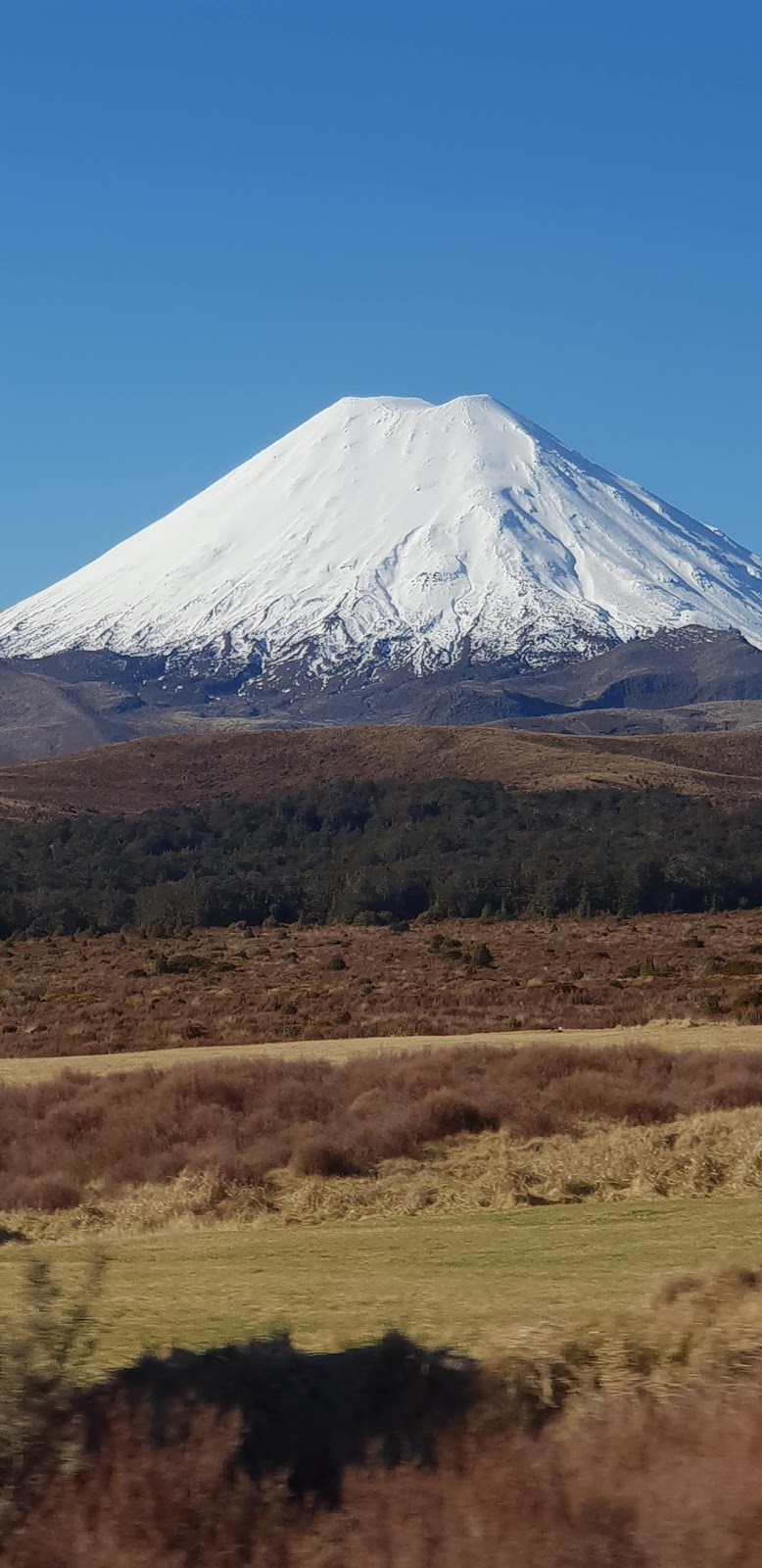
Searching for locations: Mount Ngauruhoe, New Zealand

Mount Ngauruhoe is apparently still an active volcano, has been for 2,500 years or so, and last erupted on 19th February 1975, and reportedly has erupted around 70 times since 1839.

The mountain is usually climbed from the western side, from the Mangatepopo track.

This photo was taken in summer from the Chateau Tongariro carpark.

In late autumn, on one of our many visits to the area, the mountain was covered with a light sprinkling of snow and ice.

On our most recent visit, this year, in winter, it was fully covered in snow.

It can be a breathtaking sight from the distance.