China is renowned for its exquisite silk, so naturally, a visit to the Silk Spinning Factory is part of today’s tour.
After that, we will be heading downtown to an unspecified location where we’re getting a boat ride, walk through a typical Chinese shopping experience, and coffee at a coffee shop that is doubling as the meeting place, after we soak up the local atmosphere.
The problem with that is that if the entire collective trip a deal tourists take this route then the savvy shopkeepers will jack up their prices tenfold because we’re tourists with money. It’ll be interesting to see how expensive everything is.
So…
Before we reach the silk factory, we are told that Suzhou is the main silk area of China, and we will be visiting a nearly 100 years old, Suzhou No 1 Silk Mill, established in 1926. Suzhou has a 4,700-year history of making silk products. It is located at No. 94, Nanmen Road, Suzhou, Jiangsu, China.
Then we arrive at the Silk Factory, another government-owned establishment with a castiron guarantee of quality and satisfaction.
The look and feel of the doona cover certainly backs up that claim
And the colors and variety is amazing (as is the cost of those exquisite sets)
We get to see the silk cocoon stretched beyond imagination, and see how the silk thread is extracted, then off to the showroom for the sales pitch.
It isn’t a hard sell, and the sheets, doonas, pillows, and pillowcases, are reasonably priced, and come with their own suitcase (for free) so you can take them with you, or free shipping, by slow boat, if you prefer not to take the goods with you.
We opt for the second choice, as there’s no room left in our baggage after packing the Chinese Medicine.
It’s still a battle of wits, but our hero knows he’s in serious trouble.
The problem is, there are familiar faces and a question of who is a friend and who is foe made all the more difficult because the enemy if it is the enemy, doesn’t look or sound or act like the enemy.
Old friends, new tricks.
Genial tone, trying to win my confidence. I wasn’t going to ask, but wait for an explanation. Asking would be like leaving the door ajar.
He sat after pulling the chair closer to the table and put his clasped hands on the table.
“This is a secret military operation known only to very few, apart from the team that is in situ. Commander Breeman has been, against very specific direct orders, trying to find out what we are doing here.” He stopped.
I think this was the moment I was supposed to ask, what was going on here.
If it was secret, then I didn’t want to know, and he was not going to tell me anyway.
I just looked attentive.
“You have been caught up in a jurisdictional issue. It’s not hard to assume that you were sent here, with the pilot of that helicopter, to do an off the book search for this camp. That, in itself, would be impossible, but the flyover coincided with a provedore run. Just plain bad luck.”
For Joe, the pilot, it was. Or not, if he had been given specific verbal orders, making it out to be a training run. And the odds of me being on board at the same time, given my association with Breeman?
One coincidence too many.
And if it was as the man before had said, they knew everything, then Bamfield would know of my connection to her.
“You said you had no idea where you were when you were shot down?”
Time, I guess, to speak. “No, I didn’t. The desert looks all the same to me.”
“You will forgive me if I say I find that hard to believe. I know you are better than that, Alan. Who sent you out here?”
“I was along for the ride. Standard operating procedure. A helo goes up, someone like me has to be on board in case of trouble. More conventional trouble than rockets.”
“But you specifically?”
“I don’t make the rosters, I just go where they tell me.”
Bamfield frowned. I think he’d finally noticed I was not addressing him as ‘sir’. Until I knew what side he was on, I considered myself a prisoner of war.
For the first time on this trip, we encounter problems with Chinese officialdom at the railway station, though we were warned that this might occur.
We had a major problem with the security staff when they pulled everyone over with aerosols and confiscated them. We lost styling mousse, others lost hair spray, and the men, their shaving cream. But, to her credit, the tour guide did warn us they were stricter here, but her suggestion to be angry they were taking our stuff was probably not the right thing to do.
As with previous train bookings, the Chinese method of placing people in seats didn’t quite manage to keep couples traveling together, together on the train. It was an odd peculiarity which few of the passengers understood, nor did they conform, swapping seat allocations.
This train ride did not seem the same as the last two and I don’t think we had the same type of high-speed train type that we had for the last two. The carriages were different, there was only one toilet per carriage, and I don’t think we were going as fast.
But aside from that, we had 753 kilometers to travel with six stops before ours, two of which were very large cities, and then our stop, about four and a half hours later. With two minutes this time, to get the baggage off the team managed it in 40 seconds, a new record.
After slight disorientation getting off the train, we locate our guide, easily ground by looking for the Trip-A-Deal flag. From there it’s a matter of getting into our respective groups and finding the bus.
As usual, the trip to the hotel was a long one, but we were traveling through a much brighter, and well lit, city.
As for our guide, we have him from now until the end of the tour. There are no more train rides, we will be taking the bus from city to city until we reach Shanghai. Good thing then that the bus is brand new, with that new car smell. Only issue, no USB charging point.
The Snowy Sea hotel.
It is finally a joy to get a room that is nothing short of great. It has a bathroom and thus privacy.
Everyone had to go find a supermarket to purchase replacements for the confiscated items. Luckily there was a huge supermarket just up from the hotel that had everything but the kitchen sink.
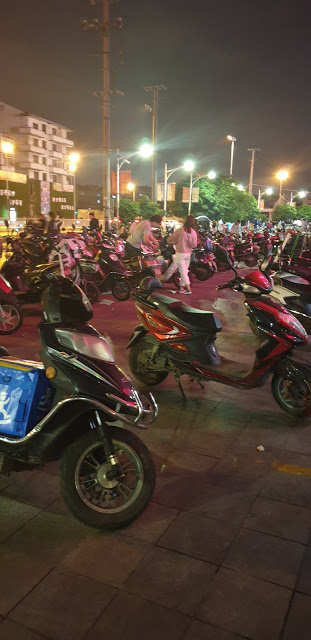
But, unlike where we live, the carpark is more of a scooter park!
It is also a small microcosm of Chinese life for the new more capitalistic oriented Chinese.
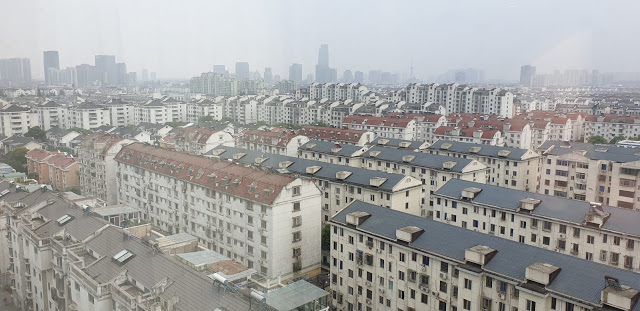
The next morning we get some idea of the scope of high-density living, though here, the buildings are not 30 stories tall, but still just as impressive.
These look like the medium density houses, but to the right of these are much larger buildings
The remarkable thing about this is those buildings stretch as far as the eye can see.
It’s still a battle of wits, but our hero knows he’s in serious trouble.
The problem is, there are familiar faces and a question of who is a friend and who is foe made all the more difficult because the enemy if it is the enemy, doesn’t look or sound or act like the enemy.
Nor does it help when his old mentor walks through the door.
I don’t like surprises. This dislike had started with a surprise birthday party about 10 years ago and since then I’ve assiduously tried to avoid them.
Of course, there are also surprises you have no control over, and I liked them even less.
Bluff and bravado would only carry me so far. These people whoever they were would not accept that I knew nothing about what had just happened.
Which I didn’t.
It was not the A interrogation team with a chest full of torture tools and dressed in hazmat suits, but when the harbinger of my fate walked into the room, it was something a lot scarier.
A man I knew well or thought I did until he walked in the door, I had the utmost respected for.
Colonel Bamfield. My first Commanding Officer, the man who cut me some slack, and made me into a soldier.
Now, all I had was questions, but I was on the wrong side of the table.
The first, what the hell was going on here?
My first inclination was to stand and salute a superior officer, but he was not wearing the uniform, not the proper uniform I was used to seeing him in. My second inclination was to ask him what he was doing in that room with me, but I didn’t.
Speak when spoken to, and don’t volunteer information.
He too tried the silent treatment, or maybe it was that he was as surprised to see me as I was to see him.
Then, still standing behind the table, looking down on me, he said, “That was some jump you made from a moving helicopter.” Was there a touch of admiration in his tone?
“Life or death. Anyone one else is that situation would do the same.”
“Less than you’d think.”
Establishing camaraderie. Or trying to. I waited for the next question.
It wasn’t a question but a statement, “We have a problem Alan, and it’s not just with you.”
A convoluted explanation on the reasons for this memorial came down to it being about the deaths of those involved in the 1923 Erqi strike, though we’re not really sure what the strike was about.
So, after a little research, this is what I found:
The current Erqi Tower was built in 1971 and was, historically, the tallest building in the city. It is a memorial to the Erqi strike and in memory of Lin Xiangqian and other railway workers who went on strike for their rights, which happened on February 7, 1923.
It has 14 floors and is 63 meters high. One of the features of this building is the view from the top, accessed by a spiral staircase, or an elevator, when it’s working (it was not at the time of our visit).
There seems to be an affinity with the number 27 with this building, in that
It’s the 27th memorial to be built
to commemorate the 27th workers’ strike
located in the 27th plaza of Zhengzhou City.
We drive to the middle of the city where we once again find traveling in kamikaze traffic more entertaining than the tourist points
When we get to the drop-off spot, it’s a 10-minute walk to the center square where the tower is located on one side. Getting there we had to pass a choke point of blaring music and people hawking goods, each echoing off the opposite wall to the point where it was deafening. Too much of it would be torture.
But, back to the tower…
It has 14 levels, but no one seemed interested in climbing the 14 or 16 levels to get to the top. The elevator was broken, and after the great wall episode, most of us are heartily sick of stairs.
The center square was quite large but paved in places with white tiles that oddly reflected the heat rather than absorb it. In the sun it was very warm.
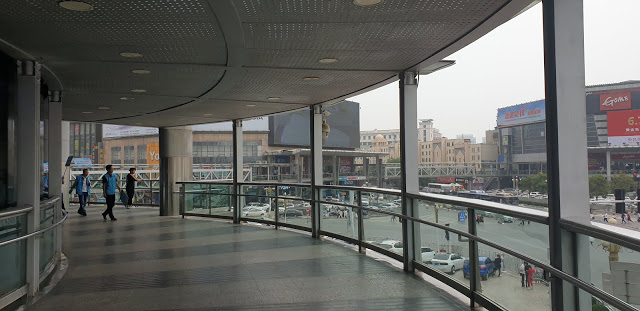
Around the outside of two-thirds of the square, and crossing the roads, was an elevated walkway, which if you go from the first shops and around to the other end, you finish up, on the ground level, at Starbucks.
This is the Chinese version and once you get past the language barrier, the mixology range of cold fruity drinks are to die for, especially after all that walking. Mine was a predominantly peach flavor, with some jelly and apricot at the bottom. I was expecting sliced peaches but I prefer and liked the apricot half.
A drink and fruit together was a surprise.
Then it was the walk back to the meeting point and then into the hotel to use the happy house before rejoining the kamikaze traffic.
We are taken then to the train station for the 2:29 to our next destination, Suzhou, the Venice of the East.
It’s the story that was inspired by the Castello di Briolio, which had small aspirations when first conceived, but now it’s reached a point where we need to fill in a few blanks at the start.
…
“You have got the guards set up on the back wall,” I asked Jackerby, the officer in charge of the rearguards.
“Can you see them?” he said in a tone that dripped sarcasm.
I didn’t like Jackerby, he seemed far too sure of himself and his men, and so far, we hadn’t had to rely on them.
But I expected that time was coming, and sooner than both of us wanted to believe.
“No.”
“Then no one else will either. Trust me; no one will be coming over the back wall.”
That was a matter of opinion, and, in my assessment of the fortifications, and the security precautions, the only way the enemy could attack us, was from the sky.
And that was, given the current situation the enemy was in, practically impossible. But, as my old commander used to say, ‘This is war, anything is possible, and when you least expect it.’
I’d survived four years of it, and didn’t want to be one of those who didn’t make it to the end. For that reason, I trusted no one, particularly people who said ‘trust me’.
I glanced along the back wall again, just to make sure, but it didn’t make me feel any safer.
“I’ll be in the command post if you need me, and it has a clear view of anything coming.”
“Excellent,” I said, trying to sound more confident than I felt.
We were in an old castle, though not strictly speaking a real castle, built only a few hundred years ago. It was an enemy stronghold up until a month ago when, acting on advice from the local resistance that the enemy strength had dropped as they had begun to retreat, a strike force came and liberated it.
And, given its strategic position between the front line and the sea, it became a gateway for anyone who wanted to escape the Germans and what was left of the Italians.
That also included departing boffins from the Reich, looking to bargain their way to a new home in England or the US.
To oversee that operation was a Colonel called Johansson, along with a dozen or so specialist soldiers, and the operation had been running smoothly.
Then came an attempted incursion, where a group of enemy soldiers who were fighting to the end, made a brave attempt to take the castle back., They failed, because of a twelfth-hour arrival of a Major called Jackerby, and a small motley crew of men.
When I read the report after the battle, it seemed odd.
As a result of his help, Jackerby was recruited by Johansson, in circumstances that seemed a little too coincidental for my liking. Johansson was too easygoing for me, and although he had not made a mistake, yet, I felt sure one was going to happen on my watch.
I came later, sent by Command to ‘lend assistance where possible’ to the operation, assistance the good Colonel took no pains to tell command he didn’t need. But they didn’t give him a choice.
Except…
On my way there, my driver and I had almost reached the castle when we were caught in a roadside bomb. The driver was killed, and I’d been saved by a dog, one we had found on the side of the road, badly in need of water, and food.
I had brought him with me. The thought of doing so, at the time, had been on the end of a single idea, a dog could not betray me, men and women could. And the fact its name was Jack seemed to me to be rather poetic, if not somewhat ironic in the circumstances.
There was a communication in my pocket, one I’d received earlier in the afternoon, sent in a one-time code no one but I could decode.
A warning of a second attempt on the castle by the enemy, but for reasons unknown.
Tonight.
Jack and I were in the guard tower at the southwestern corner of the castle. It overlooked the valley and gave a clear view of anyone or anything coming from that quadrant. If I was going to retake the castle, that’s where I’d launch an attack from.
Of course, if it came by air, you’d expect to hear it.
I didn’t, but Jack did. He suddenly stood and made a small moaning noise, as if he knew quiet communication was needed. The stiffness in his body told me there was danger lurking.
Then I saw it, just as I came out of the guardhouse onto the gravel path, the moonlight shining of very large wings, and for a moment it didn’t make sense until I realized it was a glider.
Silent. It passed, and behind I could see parachutes, then the sound of boots on the gravel walkways just down from the tower. A precision flight and precision landing of a dozen stormtroopers.
The Henan Museum is one of the oldest museums in China. In June 1927, General Feng Yuxiang proposed that a museum be built, and it was completed the next year. n 1961, along with the move of the provincial capital, Henan Museum moved from Kaifeng to Zhengzhou.
It currently holds about 130,000 individual pieces, more of which are mostly cultural relics, bronze vessels of the Shang and Zhou Dynasties, and pottery and porcelain wares of the various dynasties.
Eventually, we arrive at the museum and get off the bus adjacent to a scooter track and despite the efforts of the guide, there’s no stopping them from nearly running us over.
We arrive to find the museum has been moved to a different and somewhat smaller building nearby as the existing, and rather distinctively designed, building is being renovated.
While we are waiting for the tickets to enter, we are given another view of industrial life in that there is nothing that resembles proper health and safety on worksites in this country, and the workers are basically standing on what looks to be a flimsy bamboo ladder with nothing to stop them from falling off.
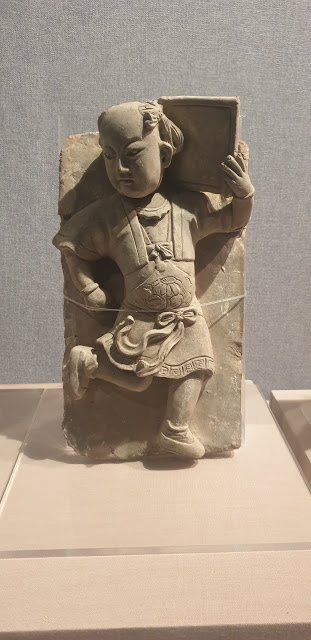
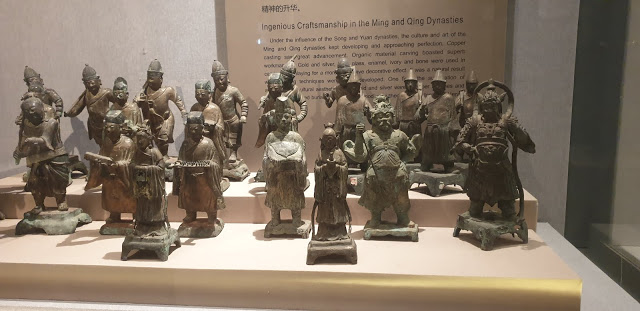
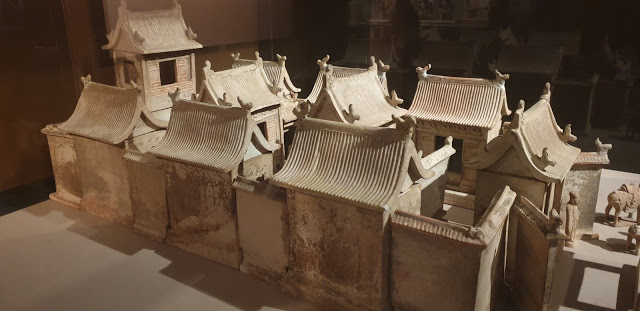
The museum itself has exhibits dating back a few thousand years and consist of bronze and ceramic items. One of the highlights was a tortoiseshell with reportedly the oldest know writing ever found.
Other than that it was a series of cooking utensils, a table, and ceramic pots, some in very good condition considering their age.
After another exhausting walk, by now the heat was beginning to take its toll on everyone, we arrived at the pagoda forest.
A little history first:
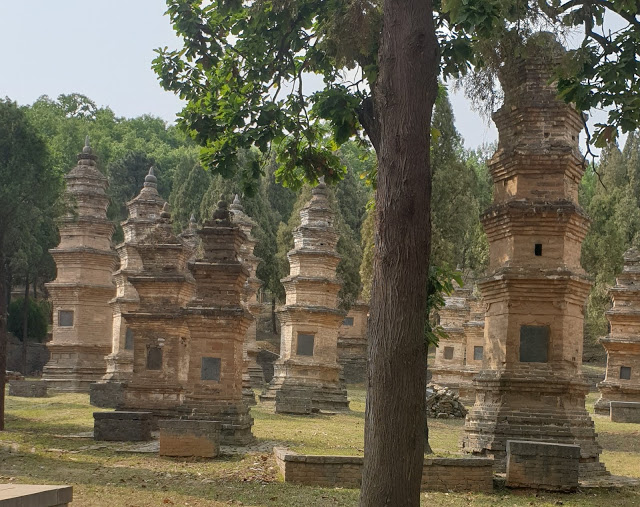
The pagoda forest is located west of the Shaolin Temple and the foot of a hill. As the largest pagoda forest in China, it covers approximately 20,000 square meters and has about 230 pagodas build from the Tang Dynasty (618-907) to the Qing Dynasty (1644-1911).
Each pagoda is the tomb of an eminent monk from the Shaolin Temple. Graceful and exquisite, they belong to different eras and constructed in different styles. The first pagoda was thought to be built in 791.
It is now a world heritage site.
No, it’s not a forest with trees it’s a collection of over 200 pagodas, each a tribute to a head monk at the temple and it goes back a long time. The tribute can have one, three, five, or a maximum of seven layers. The ashes of the individual are buried under the base of the pagoda.
The size, height, and story of the pagoda indicate its accomplishments, prestige, merits, and virtues. Each pagoda was carved with the exact date of construction and brief inscriptions and has its own style with various shapes such as a polygonal, cylindrical, vase, conical and monolithic.
This is one of the more recently constructed pagodas
There are pagodas for eminent foreign monks also in the forest.
From there we get a ride back on the back of a large electric wagon
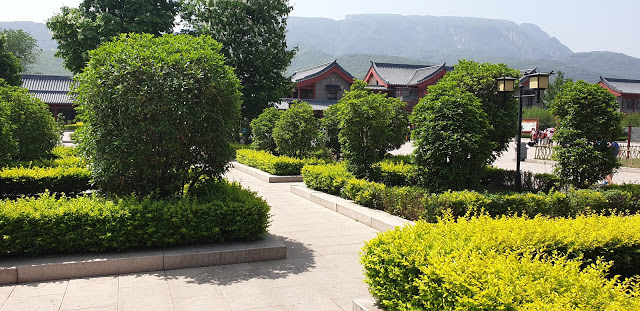
to the front entrance courtyard where drinks and ice creams can be bought, and a visit to the all-important happy place.
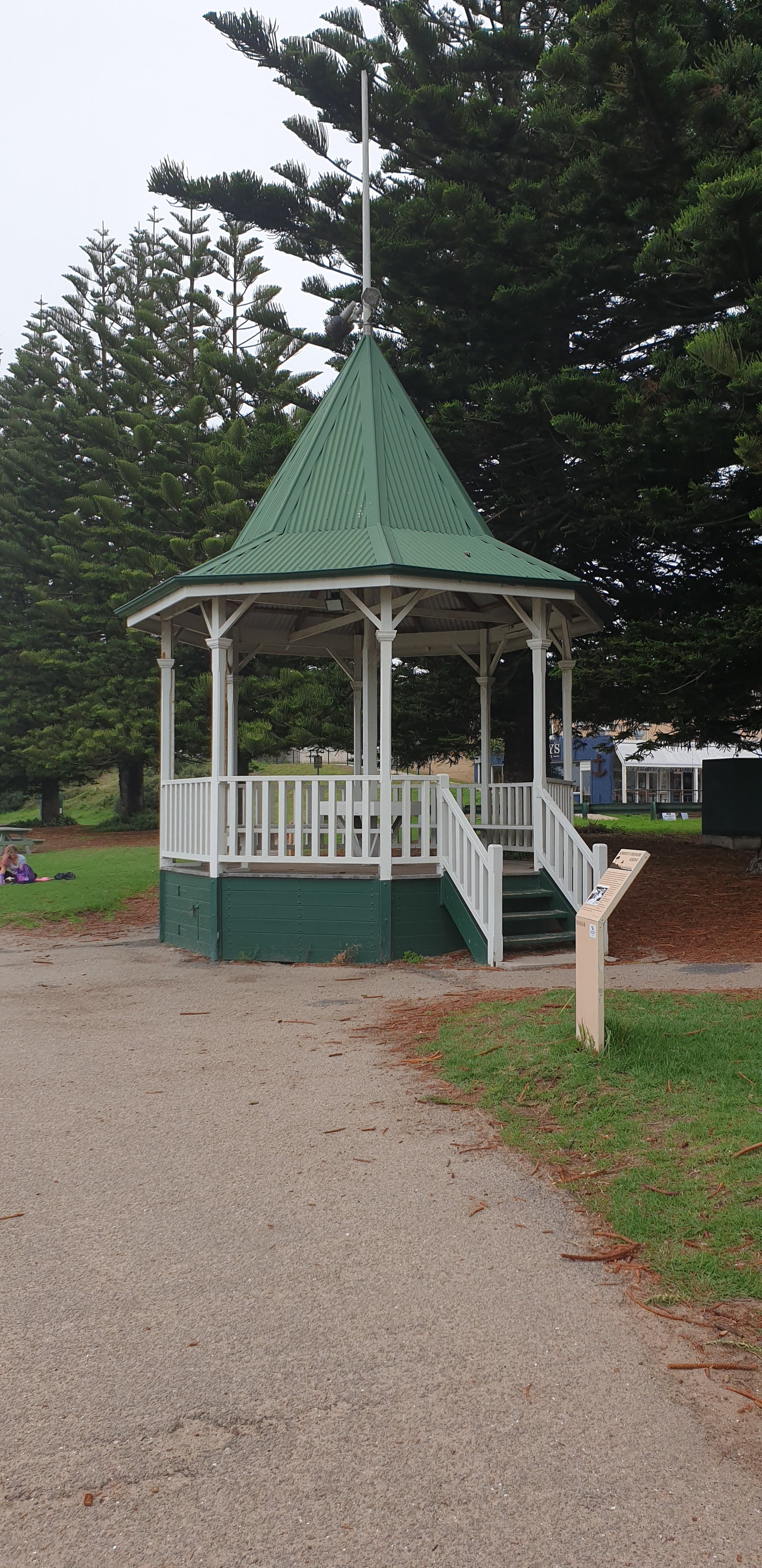
Just what everyone needs in their backyard: A Gazebo, or a small bandstand!
Often when we go to different places, it gives us ideas, sometimes ideas beyond what is possible.
I have always wanted a gazebo, perhaps not on the same grand scale as the one above, but one where we can put a BBQ and a few seats, and relax on a sunny afternoon.
Shade, a cool breeze, a cold glass of wine or beer, and the aroma of meat cooking on an open flame.
But…
Reality sets in. The backyard isn’t big enough, so my dream will stay just that.
But as an idea for a story, I suspect this might be the place where you first met the love of your life in circumstances that become the stuff of legends.
It can definitely be a meeting place, whether to carry on illegal activities, whether it’s after sneaking away to be with someone whom others will not approve, or whether it is many, many years later to reminisce, or to reconnect.
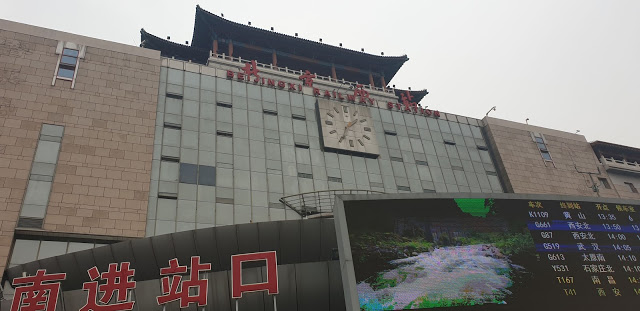
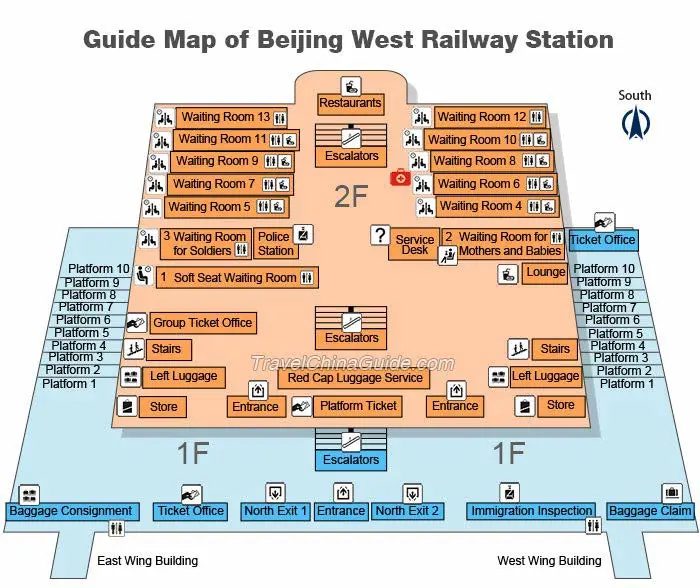
Beijing west railway station is about eight kilometers from the Forbidden City, located at East Lianhuachi Road, Fengtai District. Most trains traveling between south central, southwest, northwest, and south China are boarded here.
This place is huge and there are so many people here, perhaps the other half of Beijing’s population that wasn’t in the forbidden city.
Getting into the station looked like it was going to be fraught with danger but the tour guide got us into the right queue and then arranged for a separate scanner for the group to help keep us all together
Then we decided to take the VIP service and got to waiting room no 13, the VIP service waiting room which was full to overflowing. Everyone today was a VIP. We got the red hat guy to lead us to a special area away from the crowd.
Actually, it was on the other side of the gate, away from the hoards sitting or standing patiently in the waiting room. It gave us a chance to get something to eat before the long train ride.
The departure is at 4 pm, the train number was G655, and we were told the trains leave on time. As it is a high-speed train, stops are far and few between, but we’re lucky, this time, in that we don’t have to count stations to know where to get off.
We’re going to the end of the line.
However, it was interesting to note the stops which, in each case, were brief, and you had to be ready to get off in a hurry.
These stops were Shijiazhuang, Zhengzhou East, Luoyang Longmen, Huashan North, and Weinan North. At night, you could see the lights of these cities from a distance and were like oases in the middle of a desert. During the day, the most prominent features were high rise apartment blocks and power stations.
A train ride with a difference
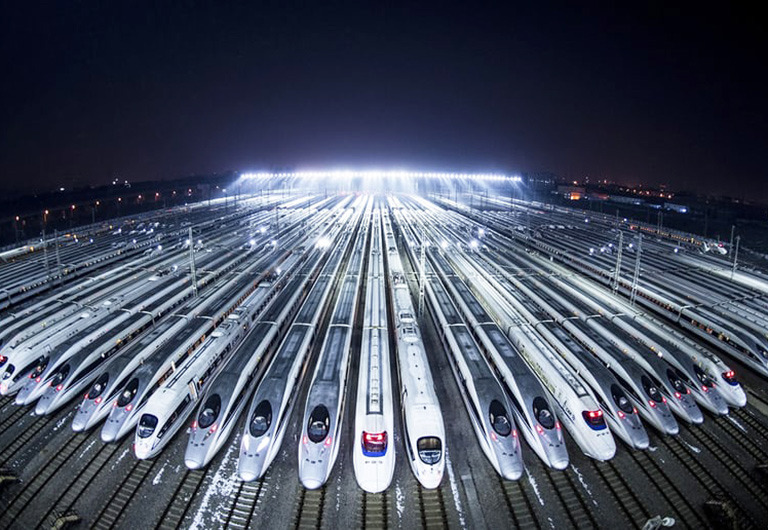
China’s high-speed trains, also known as bullet or fast trains, can reach a top speed of 350 km/h (217 mph).
Over 2,800 pairs of bullet trains numbered by G, D or C run daily connecting over 550 cities in China and covering 33 of the country’s 34 provinces. Beijing-Shanghai high-speed train link the two megacities 1,318 km (819 mi) away in just 4.5 hours.
By 2019, China keeps the world’s largest high-speed rail (HSR) network with a length totaling over 35,000 km (21,750 mi).
To make the five and a half hours go quicker we keep an eye on the speed which hovers between 290 and 305 kph, and sitting there with our camera waiting for the speed to hit 305 which is a rare occurrence, and then, for 306 and then for 307, which happened when we all took a stroll up to the restaurant car to find there had nothing to eat.
I got a strange flavored drink for 20 yuan.
There was a lady manning a trolley that had some food, and fresh, maybe, fruit on it, and she had a sense of humor if not much English.
We didn’t but anything but the barrel of caramel popcorn looked good.
The good thing was, after hovering around 298, and 299 kph, it finally hit 300.
We get to the end of the line, and there is an announcement in Chinese that we don’t understand and attempts to find out if it is the last station fall on deaf ears, probably more to do with the language barrier than anything else.
Then, suddenly the train conductor, the lady with the red hat, comes and tells us it is, and we have fifteen minutes, so we’re now hurrying to get off.
As the group was are scattered up and down the platform, we all come together and we go down the escalator, and, at the bottom, we see the trip-a-deal flags.
X’ian,and the Xi’an North Railway Station
Xi’an North Railway Station is one of the most important transportation hubs of the Chinese high-speed rail network. It is about 8.7 miles (14 km) from Bell Tower (city center) and is located at the intersection of the Weiyang Road and Wenjing Road in Weiyang District.
This time we have a male guide, Sam, who meets us at the end of the platform after we have disembarked. We have a few hiccups before we head to the bus. Some of our travelers are not on his list, but with the other group. Apparently a trip-a-deal mix-up or miscommunication perhaps.
Then it’s another long walk with bags to the bus. Good thing its a nicely air-conditioned newish bus, and there’s water, and beer for 10 yuan. How could you pass up a tsing tao for that price?
Xi’an is a very brightly lit up city at night with wide roads. It is very welcoming, and a surprise for a city of 10 million out in the middle of China.
As with all hotels, it’s about a 50-minute drive from the railway station and we are all tired by the time we get there.
Tomorrow’s program will be up at 6, on the bus 8.40 and off to the soldiers, 2.00 late lunch, then train station to catch the 4.00 train, that will arrive 2 hours later at the next stop. A not so late night this time.
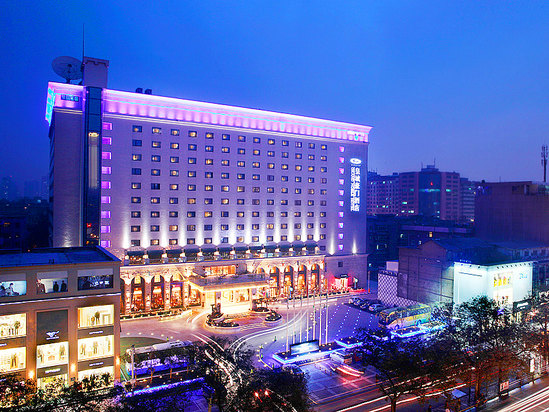
The Grand Noble Hotel
Grand Noble Hotel Xi’an is located in the most prosperous business district within the ancient city wall in the center of Xi’an.
The Grand Noble Hotel, like the Friendship Hotel, had a very flash foyer with tons of polished marble. It sent out warning signals, but when we got to our room, we found it to be absolutely stunning. More room, a large bathroom, air conditioning the works.
Only one small problem, as in Beijing the lighting is inadequate. Other than that it’s what I would call a five-star hotel. This one is definitely better than the Friendship Hotel.
In the center of the city, very close to the bell tower, one of the few ancient buildings left in Xi’an. It is also in the middle of a larger roundabout and had a guard with a machine gun.
Sadly there was no time for city center sightseeing.