“The Things We Do For Love” – Coming soon

Is love the metaphorical equivalent to ‘walking the plank’; a dive into uncharted waters?

For Henry the only romance he was interested in was a life at sea, and when away from it, he strived to find sanctuary from his family and perhaps life itself.  It takes him to a small village by the sea, s place he never expected to find another just like him, Michelle, whom he soon discovers is as mysterious as she is beautiful.

Henry had long since given up the notion of finding romance, and Michelle couldn’t get involved for reasons she could never explain, but in the end both acknowledge that something happened the moment they first met.  

Plans were made, plans were revised, and hopes were shattered.

A chance encounter causes Michelle’s past to catch up with her, and whatever hope she had of having a normal life with Henry, or anyone else, is gone.  To keep him alive she has to destroy her blossoming relationship, an act that breaks her heart and shatters his.

But can love conquer all?

It takes a few words of encouragement from an unlikely source to send Henry and his friend Radly on an odyssey into the darkest corners of the red light district in a race against time to find and rescue the woman he finally realizes is the love of his life.

The cover, at the moment, looks like this:

lovecoverfinal1

“At The End of the Road”, A short story

The man who had said that we would never make the distance was right.

It had been my idea to go ‘troppo’, forsake everything, hop on a motorbike and go around Australia.  I was, at that stage fed up with everything and, catching Harry in one of his low spots, he decided there and then he would join me.

For the first few days we believed we were stark staring mad and talked about calling it quits, but perseverance made all the difference.  After two months we were glad we had the resolve to keep going, and in that time we had managed to see more of the Australian countryside than we’d seen all our lives.

That was until this particular morning when we arrived in Berrigum, what could have been called a one-horse town.  It consisted of one hotel, one general store (that sold everything from toothpicks to petrol) and an agricultural machinery depot.  It also had a station and some wheat silos, and this appeared to be the only reason for a town in this particular spot in the middle of nowhere.

And it was the railway station that interested Harry, who was, by this time, getting a little homesick and fed up with his motorbike.

After coughing and spluttering for the last week it had finally died, and the five-mile walk to Berrigum had not helped either his temper, or his disposition, and had only served to firm his resolve to return home.

It was hot but not unbearably so, unlike a hot summer’s day in the city, and even worse still in public transport.  For miles around as we tramped those five miles all we could see was acres and acres of wheat, but no sign of life.  It was the same when we reached the town.  It appeared all the people were either hiding or had left.  Harry suspected the latter given the state of the road, and the buildings, more or less the epitome of a ghost town.

Standing at the end of what could have been called the main street with only our own dust for company, one look took in the whole town.  In a car, one wouldn’t have given it a second look, if one had time to give it a first.  I didn’t remember seeing neither any speed restriction signs nor signpost advertising a town ahead.

And since no amount of argument could sway him from his resolve, the first objective was to get a train timetable, if such a thing existed, and make arrangements for Harry’s return.

The station was as deserted as the town itself, and a quick glance in the stationmaster’s office showed no sign of life.

Leaving the bikes on the platform outside the office, we headed for the hotel for both a drink and make enquiries about rail services.  Being a hot day and the morning’s tramp somewhat hot and dusty, we were looking forward to a cold glass (or two) of beer.

The hotel looked as though it was a hundred years old though there was no doubting a few relentless summers would reduce it to the same state.  It was as bad inside as out, though the temperature was several degrees lower, and we could sit down in what appeared to be the main bar.  We were the only occupants and still to find any sign of life.  Overhead, two fans were struggling to move the hot air around.

More than once Harry reckoned it was a ghost town and I was beginning to believe him when, after five minutes, no one arrived.

After ten, we stood, ready to leave, only to stop halfway out of our chairs when a voice behind us said, “Surely you’re not going back out there without refreshment?”

“I was beginning to think the town was deserted,” I said.

“It is during the day, but when the sun goes down…”

I didn’t ask.  We followed him to the bar where he had stationed himself behind the counter.  “The name is Jack.”  He stretched out his hand towards us.  “We don’t bother with last names here.”

“Bill,” I said, shaking it, and nodding to Harry, “Harry.”

Harry nodded and shook his hand too.

“The first one’s on the house.”  He poured three glasses and put ours in front of us.  “Cheers.”

In all cases, it went down without touching the sides (as they say) and he poured a second, at the same time asking, “What brings you to our little corner of the earth?”

“Just passing through,” I said, “Or at least for me.”

“And you?”  Jack looked at Harry.

“I can’t hack the pace.  I can truthfully say I have thoroughly enjoyed the trip so far, except for a few mishaps, but for me, it’s time to get back to the big smoke.  My ‘do your own thing’ has run out of momentum.  Do you know if there is a train that goes anywhere important?”

The publican looked at him almost pityingly.  “Important, eh?”  He rubbed his chin feigning thought.  “You make it sound like you are in purgatory.”

“Aren’t we?”

I suppose one could hardly blame Harry for his attitude.  After all, in the beginning, he had numerous accidents, caught a virus that stayed with him (and a couple of torrential downpours had done little to help it), and now his motorbike had finally died.  No wonder his humour was at an all-time low.

For a moment I thought the publican was going to tell Harry what he thought of him, but then he smiled and the tension passed.  “Perhaps to a city fellow like you it might be,” he said.  “The mail train which has a passenger carriage comes through once a week, and, my good man, you’re in luck.  Today’s the day.”

“Good.  How do I get a ticket?”

“You’d have to see the Station Master.”

“And where might he be at the moment?  We were at the station a while back and there was no sign of life.”

“Nor will there be until the train comes.  Meanwhile, there’s time enough for lunch.  I’m sure you will stay?”  He looked questioningly at us.

I looked at Harry, who nodded.

“Why not.”


Over lunch, we talked.

I remember not so long ago when I had to attend a large number of lunches where the talk was of business, or, if anything, mostly about subjects that I had no interest in.  It was always some posh restaurant, time seemed important, the atmosphere never really relaxed, and to get into a relaxed state it took a large amount of alcohol to deaden the despair and distaste of those one had to fete in order to secure their business.

How different it was here.

We talked about the country, and, after seeing as much of it, and worked on it as we had to fund our odyssey, we could talk about it authoritatively.  And, most of all, it was interesting.

The atmosphere too was entirely different than it had been in the city.  Out here the people were always friendly, people always willing to stop and talk, particularly farmers; share a drink or some food.

There was none of this carefree purposefulness in the city, and more than once I’d thought of the fact one could travel in the same train with the same people for year after year and still not know any of them.  It was the same at work.  Even after five years I still hadn’t known three-quarters of the office staff, and most of them probably didn’t want to know me.  Harry was virtually the only real friend I’d had at work.

But here, in ‘the middle of nowhere’ as Harry had called it, I felt as though I’d known the publican all of my life instead of the few short hours.


Some hours later and after much argument, where Jack and I tried to talk Harry into staying (Jack said he knew someone who could fix anything including Harry’s bike), Harry remained unconvinced and resolute.  Jack, to round off the occasion (we were the first real guests from outside he had had in a week) provided another on-the-house ale and then saw us to the station.  “After all”, he had said, “I’ve nothing else to do at the moment.”

By that time the station was showing a little more life than it had before.  A station assistant, moving several parcels with a hand trolley, slowly ambled towards the end of the platform.

And whether it could be called a platform was a debatable point.  It was a gravel and grass affair that looked more like part of a cutting through a hill than a station.

At the station, Jack portentously announced he was also the stationmaster and would be only too happy to take care of Harry’s requirements.  It would be, he added, “the first passenger ticket sold for several months.”  Certainly, the ticket he handed Harry bore witness to that.  It had yellowed with age.

One would have thought with the imminent arrival of the train there would be more people, but no.  The only event had been the station assistant’s stroll to the end of the platform and back.  Now both he and Jack had disappeared into the office and we were left alone on the platform.  Very little in the whole town stirred, nor had it the whole time we’d been there.

“Well,” I said to break the silence.  “I’m sorry to see you going through with it.  I thought I might have been able to talk you out of it…”  I shrugged, leaving the sentence unfinished.

“I’m sorry to be going too, but a body can take only so much bad luck, and God knows that’s all I’ve had.”

“Yes.”  I couldn’t think of much else to say.  “But it’s been good to have your company these last few months.”

“And you.  When do you think you’ll get back?”

“When I get sick of it I suppose.”

“Look us up then when you get back.”

“I will.”

Thankfully the appearance of the train in the distance broke off the conversation.  I had begun to think of what it was going to be like out on the road with no one to talk to but myself.  The thought was a little depressing and I tried not to let it show.

We said little else until the train pulled in, three flat cars, seven enclosed wagons, a passenger carriage and the guard’s van.  The train stopped with only part of the passenger carriage and the guard’s van at the station.

The guard took aboard the parcels the station assistant had left for him earlier, and then put those that were for Berrigum on the trolley.

I shook Harry’s hand and said I’d see him around.  Then he, the motorbike, and the guard were aboard and the train was off, disappearing slowly into the afternoon haze.

The station assistant then repeated his amble to the end of the platform to collect the hand trolley.

“Staying or moving on.”  Jack had come up behind me and gave me a bit of a start.

“Staying I guess, until tomorrow or maybe later.”

“I had heard one of the farmhands is leaving tomorrow heading back to Sydney.  There could be a vacancy.”

“Sounds like a plan,” I said.

“I could put in a word for you.”

“Thanks.”

Jack just grinned and we headed for the hotel.


© Charles Heath 2016-2019

I think I’m in an alternate reality…

You know how it is, you’re sitting in a chair working on the computer, much like reading a boring book, and you nod off.

And, then, suddenly you wake up…

There’s that moment when you wake up when you’re suddenly disorientated, and it takes a few seconds for the blurriness in both mind and eyes to go away.

That was me, right then.

It worried me, in a sense that in that moment of disorientation, I was not sure what I was doing before I found myself in that chair.

As the fuzziness diminished, I remembered I’d been working on the next chapter of my second novel but ideas wouldn’t come.  Staring at a blank sheet of paper had basically put me to sleep.  In front of me was the computer screen, but it was black.  It had switched off.

Moving in the chair slightly I accidentally moved the mouse, and the screen comes to life.

There was a document on the screen, that same blank sheet of paper, blank except for four words typed in the middle of the page:

You are not alone

Ok, did I typed that, and if I did, why?  I had an idea which had come to me in one of those flashes out of left field.  The one where the protagonist is alone at home, sitting in front of a computer, when…

Reality meets fiction …

A bright light comes on and stayed at the window behind me for a few seconds, the moved on, heading towards the rear of the house.

And then it happened, outside my window.  I saw the bright light come on, move slightly in both directions, before moving further away.

How could that be?  If anyone had come in the back gate the alarm would have gone off.

I got up and went over to the control panel for the alarm system, just inside the doorway to the room, and checked.

Yes, the alarm was still set.

I went into the dining room further towards the rear of the house, one that had a sliding door that led onto the patio.  The light was still there, oddly moving from side to side.

As I opened the sliding door, the light suddenly went out.  Was it the sound of the door opening with a slight screech warning whoever was out there.

I stepped out onto the deck and looked around.  There was an inky like darkness, and with overcast conditions and no moon, it was darker than usual.

I took another two steps towards the edge and stopped.  It was deathly quiet.

A minute, two, passed.  Nothing.  I shook my head thinking I was seeing things again and headed back to the doorway.

A sound.

I stopped and turned.  In that same second, I felt a hand on my shoulder and jumped in fright.

“You fell asleep again.”  A familiar voice.

Still sitting in my chair in front of the computer, dreaming.

Until light suddenly flooded the window.

Past conversations with my cat – 20

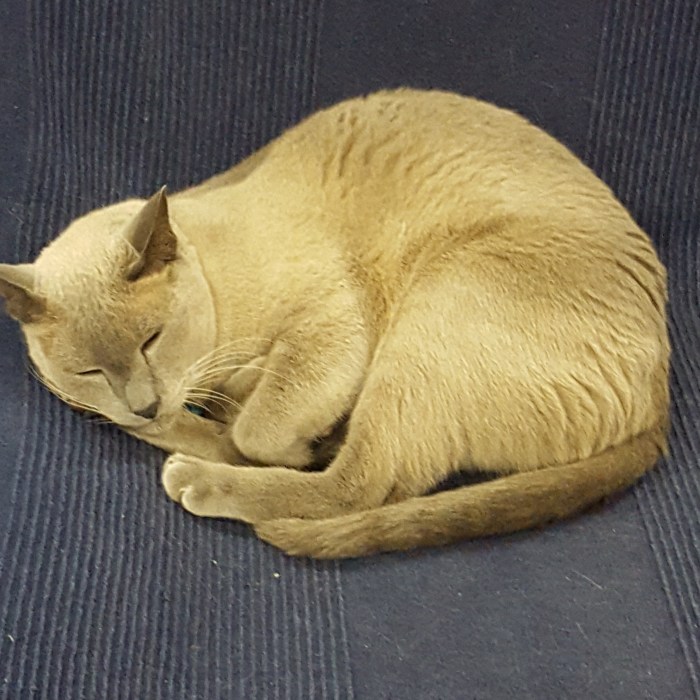
IMG_20160823_164129

This is Chester.  He’s about as bored a cat can get.

Why?

I’m reading a section of one of my stories that I know is terrible, and I’m using him as a measure of how boring.

I think both you and I would agree.

This story needs re-writing.

In fact, just as I reached the end, I saw some movement.

Is it a mouse, or is it relief?

Reading time over, it’s time for some classical music.

At least I know he likes that!


Is there ever enough time for reading?

It’s a good question.

Between everything else I have to do around the house, the time set aside for writing, the time set aside for maintaining social media, the time set aside for family, is there any time left?

About an hour before I go to sleep, though that time is considerably shortened if the book is boring.

Fortunately, quite often they are not.

The other problem is the intervals between new books from my favourite authors is getting less as they take on co-writers, such as James Patterson and Clive Cussler.   And even more authors are now getting co-authors which means my to be read list is getting longer and longer.

It seems the only time I can steal more than an hour away is when I go away on holidays.  This we try to do several times a year, and this year I’m hoping that we’ll be able to spend a week in New Zealand.

Damn.  It’s a never-ending cycle.

But, at the moment, the list reads like this,

James Patterson, The Inn, Killer Instinct

Clive Cussler, The Rising Sea, Mirage

Steve Berry, The Lincoln Myth, The Lost Order

David Baldacci, Redemption

And, of course, about a hundred others.

As odd as it sounds I’m looking forward to the time in the plane.  Aside from eating, or avoiding eating, there’s little else to do other than read.

The where part of the story

A lot of locations for stories are based on places that I’ve visited.  So, any time I’m on holiday, I’m also discreetly observing, and noting, the places with an ulterior motive.

At some point in time, they’ll finish up in a story.

Places like Florence, London, Paris, and Venice have all been used in recent stories.

Of course, places change, and there are some that I can’t get to, so it’s useful having Google Maps and Street View.  These can either make up for lack of memory and a refresher.

Especially if you need to visit Africa.  Parts of my stories are set in Nigeria, not exactly a place I would go, no matter how much I wanted to get the lie of the land, nor would I go to the Democratic Republic of Congo.

Rwanda, maybe, but in investigating locations, it is interesting to discover that places like Kenya and Rwanda are reasonably safe.  Uganda is more or less the same, but whether I’d visit, as inviting as it might be to see the wildlife (animals that is) I’m thinking Google Maps will do for now.

And as a matter of curiosity when I was a child in school most of those countries were British colonies and held a deep fascination for any child.

How much has changed since?

Do you ever think about…

And probably it is a matter of being better off not thinking

But…

I’m sitting here and writing a piece for a novel about one of my characters, and all of a sudden I stop, right in the middle of where he’s about to get violently murdered if he lets his guard down.

Why have I stopped right there?

A strange through goes through my mind.

Did he remember to have breakfast, did he make the bed and tidy up after he got up?  Did he have to arrange to have his clothes cleaned, or were they cleaned for him?

Does he have a maid and a butler and a cook to do all those things?

The problem is, we don’t know what happened before he finished up in that precarious position.

We may know that he was taught to fight by a zen master, a swordsman, though I’m not sure if there is a requirement for fencing, to drive defensively, to kill people in more ways than you’ve had hot dinners.

We may know that he was in a similar fight the day before, and his energy has been depleted and may be running on painkilling drugs.  Of course, if that’s the case, and knowing the side effect of some of those drugs, he may be impaired, and slower in reaction time, which might mean premature death.

But we don’t know if he ate anything, whether he slept well, or not at all (though sometimes it rates a mention more often than not as an afterthought or an excuse), whether he has any distracting thoughts, like what the hell am I doing here?

Everyday things which all of us, and I’m sure even the most successful of spies, have to deal with.

Just a thought.

Back to the fight, yes he wins, got a couple of slashes and there’s a copious amount of blood on his shirt.

Let’s not worry about whose going to clean up the mess, or do the washing.

A few running repairs with needle and thread, including the requisite grimaces in pain, someone else will clean the shirt, and yes, there’s always a cupboard full of clean clothes to change into.

Moving on…

From a writer’s perspective

What do you make of this lot:

What happened at a Russian missile site?  This is also tinged with nuclear fallout.

The US is consulting with allies in Asia about missile sites.  Nothing more inflammatory to a country like China, with whom relations are deteriorating at a rapid rate of knots.

Investors rush to buy bonds.  OK, that’s short term bonds not long term bonds, and that, of course, caused an inverted curve, or a preclusion to a recession.

Gold and silver investment is booming, and in times past, this could be a precursor to war.

China has survey vessels in the South China Sea.  Why no one knows.

China is also planning naval exercises in the same area.  Are they flexing muscles or sending a warning?

They’ve also got problems in Hong Kong, and, so far, there have been some violent scuffles, but nothing like what could be done, like at Tiananmen Square.  They have a large military force just outside Hong Kong, conducting exercises, perhaps waiting for the order to quell the challenges to business, travellers, and it’s sovereignty.

And, of course, there’s another flashpoint in Kashmir, which everyone seems to have an opinion, but that had been simmering for a long, long time.

And as for the former world power, the UK, they cannot get past internecine fighting over Brexit.

So, from a thriller writer’s perspective, it means that Russia is rearming, the US is trying to pre-empt missile strikes from China, or is it North Korea, it seems the savvier investors have a notion the world might be on the brink of war, and the US is right in the middle of it all.

The US appears:

  • to be in a trade war with China, or perhaps a war of words
  • are selling billions worth of arms to Taiwan, a red rag to a bull if there was ever one
  • are offering to help out in Kashmir
  • are sending ships to the South China sea to show the ‘flag’
  • are standing back and watching North Korea launch missiles
  • are emphatically denying there will be a recession, at least at home

Can we get a plot line out of all this?

Title:  Flashpoint

Synopsis:

A leaked report on a Russian missile base suggests a recent ‘mishap’ with disarming ‘old nuclear missiles’, was more than just routine issue, and a flyover by satellite shows there are more sinister and unexplainable operations in play.

Meanwhile, the arrival of a Russian nuclear specialist and a group of Chinese scientists in North Korea is quickly followed by several missile tests a week later.  Are the North Koreans, with the help of the Chinese, looking to arm their missiles with Russian nuclear warheads?

The CIA has sent two of their best operatives to find out what is really going on, one, Sam Stockton, borne of Russian parents, and who has yet to exorcise his demons from the last failed mission, and the other, Elizabeth Chen, a North Korean expert who is coming out of retirement for this particular delicate assignment.

Will they discover the truth before the world descends into a nuclear holocaust?

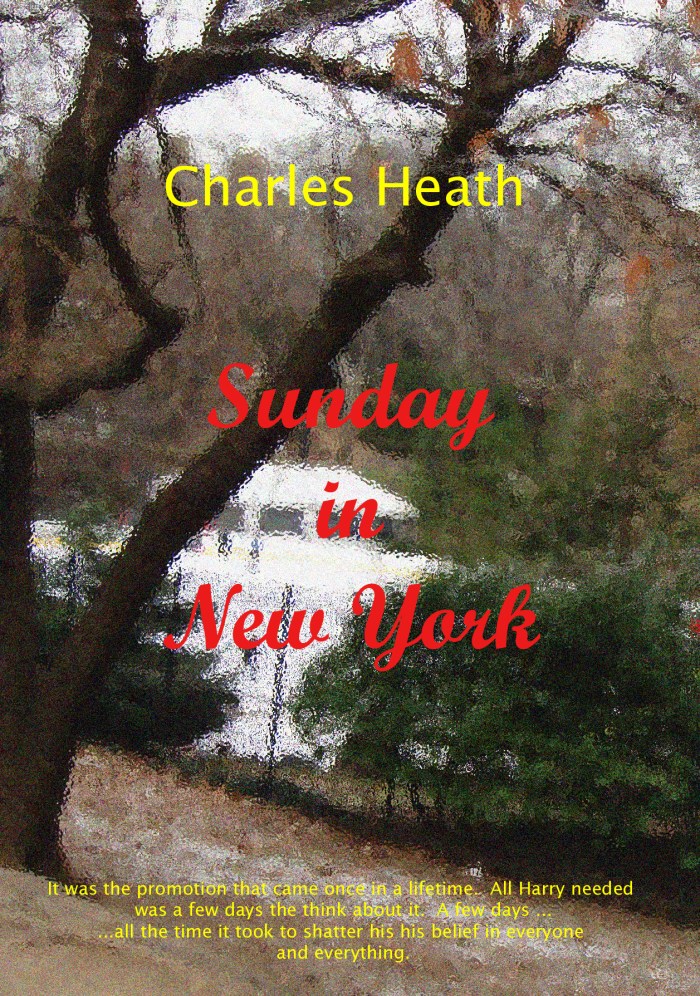
“Sunday in New York”, it’s a bumpy road to love

“Sunday in New York” is ultimately a story about trust, and what happens when a marriage is stretched to its limits.

When Harry Steele attends a lunch with his manager, Barclay, to discuss a promotion that any junior executive would accept in a heartbeat, it is the fact his wife, Alison, who previously professed her reservations about Barclay, also agreed to attend, that casts a small element of doubt in his mind.

From that moment, his life, in the company, in deciding what to do, his marriage, his very life, spirals out of control.

There is no one big factor that can prove Harry’s worst fears, that his marriage is over, just a number of small, interconnecting events, when piled on top of each other, points to a cataclysmic end to everything he had believed in.

Trust is lost firstly in his best friend and mentor, Andy, who only hints of impending disaster, Sasha, a woman whom he saved, and who appears to have motives of her own, and then in his wife, Alison, as he discovered piece by piece damning evidence she is about to leave him for another man.

Can we trust what we see with our eyes or trust what we hear?

Haven’t we all jumped to conclusions at least once in our lives?

Can Alison, a woman whose self-belief and confidence is about to be put to the ultimate test, find a way of proving their relationship is as strong as it has ever been?

As they say in the classics, read on!

Purchase:

http://tinyurl.com/Amazon-SundayInNewYork

Sunday In New York

Searching for locations: Rome, Italy

We visited Rome in August

It was hot.

It was verrrry hot.

We flew into Rome’s Leonardo da Vinci-Fiumicino airport after a rather bumpy flight from London.  Unlike most other airports the plane parked at a satellite terminal and after we disembarked we had to catch a train to the main terminal.

The most notable memory of this airport was my daughter’s discovery of a salami shop.

We had booked a transfer to take us to the hotel the Roma Corso Trieste Mercure in Via Gradisca from the airport.  It was a white air-conditioned van and so far we had avoided the heat.

One of the rooms had a faulty air conditioning an absolute must as the rooms were very hot without it and necessitated a room change which was done quickly and efficiently.

The hotel was in the suburbs and without a car we were dependent on public transport.  According to the reception staff, there was a bus stop nearby, and a longer walk to the tram or light railway.  The bus seemed to be the best option as it would take us to the central terminal near the railway station, where all tour buses also operated from, and particularly the open-top buses that went to all the major tourist attractions.

That first day basically was given over to travelling, arriving by plane and settling into the hotel, thus we didn’t get to feel the force of the heat.  That came the next day.

After a walk around the hotel precinct to get our bearings and see what shops and restaurants were available, on returning to the hotel we were faced with the limited choices of room service or to go out for dinner.

My daughter and l go for a long walk up Via Nomentana to find several shops and a restaurant.  We went into the restaurant and sat down.   We waited for 10 minutes and got no service nor did anyone come and ask us if we wanted to order food so instead we left somewhat disappointed and go next door to what seems to be the Italian version of a delicatessen and order sandwiches and beer.   I bought a half dozen cans of Moretti beer two of which I drank on the way home.

It was still very hot even at eight at night and the sandwiches are delicious.  It just might be by that time we were starving and anything would have tasted great.

The next morning we are up and ready to chance the weather and some history.  Breakfast at the hotel is limited but very good.

We were going to use public transport and I’d studied up on the Internet.

Travelling on the bus required pre-purchase of tickets which could be bought in certain shops and locally when exploring the area near the hotel, l found a tobacconist.

Next, we needed to understand how to use the tickets. There was no one on the bus who could help so when l tried to scan the tickets and it failed, l gave up.  We had the same issue each day and in the end, the tickets never got used.

The trip to central Rome by bus took about 15 minutes.  In the morning it was reasonably cool and showed us a little of suburban Rome.  We also saw the trams but we would not be able to use them because our hotel not on a direct route.

That first full day we decided to go and see the Vatican.

Not understanding buses and which one we needed to get to the Vatican, we took a taxi.

Wow.  It was the metaphorical equivalent of driving over the edge of a cliff with a daredevil.  It was quite literally terrifying.

Or maybe we just didn’t know that this was probably the way people drove in Rome.

Shaken but delivered in one piece we found ourselves in the square opposite St Peters Basilica.

The square is impressive, with the statues atop a circular colonnaded walkway.  The church is incredible and took a few hours to take in and to top off the day, we did a tour of the Vatican museum which took the rest of the afternoon.

Then it was back to the delicatessen for more sandwiches and beer, and an interesting discussion with several elderly Italian ladies, of which I did not understand one word.

The second full day we decided to use one of the open-top bus tours and eventually decided on the hop on hop off tour simply because the bus was at the central transport terminal for trains and buses and it was getting hotter.

Our first stop was the Colosseum.  There were other monuments nearby, such as the Arch of Constantine, but as the heat factor increased we joined the queue to go into the Colosseum and gladly welcomed the shade once we got inside.

The queue was long and the wait equally so, but it was worth the wait.  It would be more interesting if they could restore part of it to its former glory so we could get a sense of the place as it once was.  But alas that may never happen, but even so, it is still magnificent as a ruin.

Outside in the heat, it was off to the ruins which were a longish walk from the Colosseum, taking Via Sacra, not far from the Arch of Constantine.  This day in the walkway there were a number of illegal vendors, selling knockoff goods such as handbags and watches, and who, at the first sight of the police, packed up their wares in a blanket and ran.

Included in these ruins were The Roman Forum, or just a few columns remaining, the Palatine Hill, Imperial Fori, including the Forum of Augustus, the Forum of Caesar, and more specifically the Forum of Trajan.  It was, unfortunately very hot and dusty in the ruins the day we visited.

We walked all the way to the Foro Romano and the Septimus Severo Arch at the other end of the ruins, past the Temple of Caesar.

I found it very difficult to picture what it was like when the buildings were intact, so I bought a guide to the ruins which showed the buildings as ruins and an overlay of how they would have looked.  The buildings, then, would be as amazing as the Colosseum, and it would have been interesting to have lived back then, though perhaps not as a Christian.

I lost count of the number of bottles of water we bought, but the word ‘frizzante’ was ringing in my ears by the end of the day.  Fortunately, the water did not cost a lot to buy.

At the end of the day, we caught the hop on hop off bus at the Colosseum and decided not to get off and see any more monuments but observe them from the bus.  The only one I remember seeing was Circo Massimo.  Perhaps if we’d know it was going to be twice as hot on the bus, yes, there was no air-conditioning; we may have chosen another form of transport to get back to the hotel.

The third and last day in Rome we decided to go to the Trevi Fountain, see the pantheon and walk up the Spanish Steps.  We spent most of the morning in the cool of a café watching the tourists at the fountain.  By the time we reached the top of the Spanish Steps, we were finished.