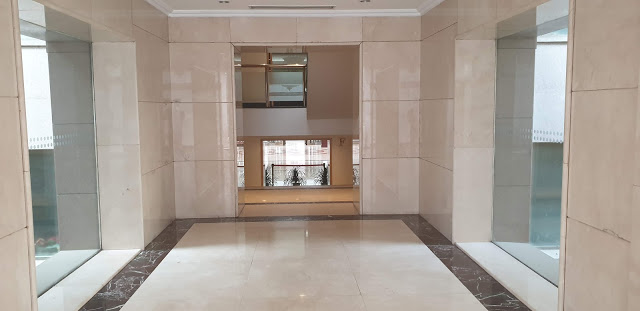
Searching for locations: Hutongs, Beijing, China

What are Hutongs?

In Beijing, Hutongs are formed by lines of traditional courtyard residences, called siheyuan.  Neighbourhoods were formed by joining many hutongs together. These siheyuans are the traditional residences, usually occupied by a single or extended family, signifying wealth, and prosperity. 

Over 500 of these still exist. Many of these hutongs have been demolished, but recently they have become protected places as a means of preserving some Chinese cultural history.  They were first established in the Yuan Dynasty (1279-1368) Many of these Hutongs had their main buildings and gates built facing south, and lanes connecting them to other hutongs also ran north to south.

Many hutongs, some several hundred years old, in the vicinity of the Bell Tower and Drum Tower and Shichahai Lake are preserved and abound with tourists, many of which tour the quarter in pedicabs.

The optional tour also includes a visit to Shichahai, a historic scenic area consisting of three lakes (Qianhai, meaning Front Sea; Houhai, meaning Back Sea and Xihai, meaning West Sea), surrounding places of historic interest and scenic beauty and remnants of old-style local residences, Hutong and Courtyard.  

First, we had a short walk through the more modern part of the Hutong area and were given some free time for shopping, but we prefer just to meander by the canal.  
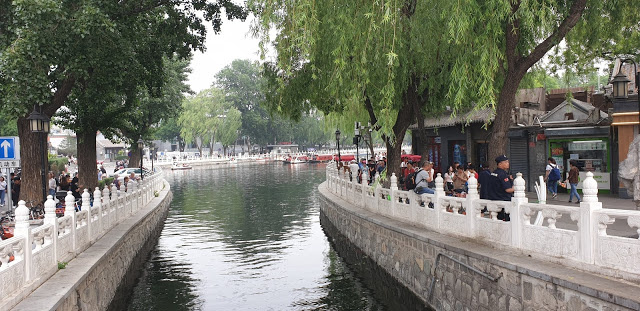
There is a lake, and if we had the time, there were boats you could take.
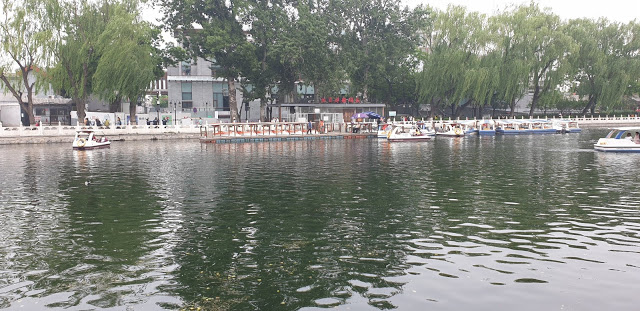
With some time to spare, we take a quick walk down one of the alleyways where on the ground level are small shops, and above, living quarters.

Then we go to the bell and drum towers before walking through some more alleys was to where the rickshaws were waiting.
The Bell tower

And the Drum tower. Both still working today.

The rickshaw ride took us through some more back streets where it was clear renovations were being made so that the area could apply for a world heritage listing.  Seeing inside some of the houses shows that they may look dumpy outside but that’s not the case inside.

The rickshaw ride ends outside the house where dinner will be served, and is a not-so-typical house but does have all the elements of how the Chinese live, the boy’s room, the girl’s room, the parent’s room, the living area, and the North-south feng shui.

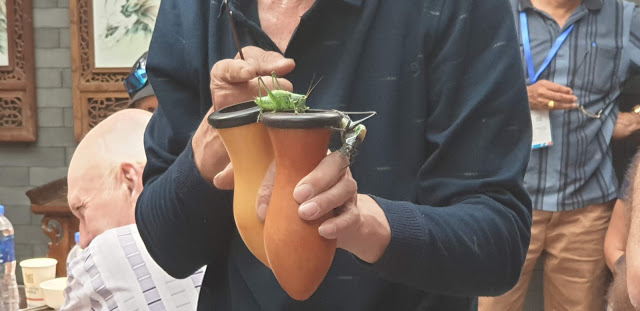
Shortly after we arrive, the cricket man, apparently someone quite famous in Beijing arrives and tells us all about crickets and then grasshoppers, then about cricket racing.  He is animated and clearly enjoys entertaining us, westerners.

I’m sorry but the cricket stuff just didn’t interest me.  Or the grasshoppers.
As for dinner, it was finally a treat to eat what the typical Chinese family eats, and everything was delicious, and the endless beer was a nice touch.

And the last surprise, the food was cooked by a man.

“Trouble in Store” – Short stories my way: Actions have consequences

It’s time for the policewoman to arrive.

There is such a thing as pure dumb luck.

If she did not walk through the door when she did then Jack would have walked away.

From the policewoman’s perspective:


She crossed the street from the corner instead of remaining on the same side of the street as she did every other night.  When she reached the other sidewalk, she was about 20 yards from the nearest window of the store.

As she crossed, she got a better view of the three people in the store and noticed the woman, or girl, was acting oddly as if she had something in her hand, and, from time to time looked down beside her.

A yard or two from the window she stopped, took a deep breath, and then moved slowly, getting a better view of the scene with each step.

Then she saw the gun in the girl’s hand, and the two men, the shopkeeper and a customer facing her, hands up.

It was a convenience store robbery in progress.

She reached for her radio, but it wasn’t there.  She was off duty.  Instead, she withdrew, and called the station on her mobile phone, and reported the robbery.  The officer at the end of the phone said a car would be there in five minutes.

In five minutes there could be dead bodies.

She had to do something, and reached into her bag and pulled out a gun.  Not her service weapon, but one she carried in case of personal danger.


Guns are dangerous weapons in the hands of professional and amateur alike.  You would expect a professional who has trained to use a gun to not have a problem but consider what might happen in exceptional circumstances.

People freeze under pressure.  Alternately, some shoot first and ask questions later.

We have an edgy and frightened girl with a loaded gun, one bullet or thirteen in a magazine, it doesn’t matter.  It only takes one bullet to kill someone.

Then there’s the trigger pressure, light or heavy, the recoil after the shot and whether it causes the bullet to go into or above the intended target, especially if the person has never used a gun.

The policewoman, with training, will need two hands to take the shot, but in getting into the shop she will need one to open the door, and then be briefly distracted before using that hand to steady the other.

It will take a lifetime, even if it is only a few seconds.

Actions have consequences:


The policewoman crouched below the window shelf line so the girl wouldn’t see her, and made it to the door before straightening.  She was in dark clothes so the chances were the girl would not see her against the dark street backdrop.

Her hand was on the door handle about to push it inwards when she could feel in being yanked hard from the other side, and the momentum and surprise of it caused her to lose balance and crash into the man who was trying to get out.

What the hell…

A second or two later both were on the floor in a tangled mess, her gun hand caught underneath her, and a glance in the direction of the girl with the gun told her the situation had gone from bad to worse.

The girl had swung the gun around and aimed it at her and squeezed the trigger twice.

The two bangs in the small room were almost deafening and definitely disorientating.

Behind her, the glass door disintegrated when the bullet hit it.

Neither she nor the man beside her had been hit.

Yet.

She felt a kick in the back and the tickling of glass then broke free as the man she’d run into rolled out of the way.

Quickly on her feet, she saw the girl had gone, and wasted precious seconds getting up off the floor, then out the door to find she had disappeared.

She could hear a siren in the distance.  They’d find her.


If the policewoman had not picked that precise moment to enter the shop, maybe the man would have got away.

Maybe.

If he’d been aware of the fact he was allowed to leave.

He was lucky not to be shot.

Yet there were two shots, and we know at least one of them broke the door’s glass panel.


Next – the epilog

© Charles Heath 2016-2020

“Trouble in Store” – Short stories my way: Point of view

If this story was being written the first person the only perspective or point of view would be that of the narrator.

Since we need to have a number of perspectives it is better done in the third person so we can change between characters and try to understand their motivation.

We might look at the first-person perspective for each of the characters later.

The second of the protagonists is the girl with the gun.  How did she get it?  How did the situation deteriorate so quickly?   What is she going to do?

This is a short story and we need to know something about her, so we have to get to the heat of the matter quickly, so let’s start with:

Her mother said she would never amount to anything, and here she was, with a broken drug addict coming apart because she had been cut off from her money, dragged into coming to this shop to leverage drugs from his dealer at the end of a gun.  It was her fault, Jerry said and made her feel responsible, much the same as her parents and everyone else in her life.

One of life’s losers or just a victim?  This theme can go in any direction.

Then a moment to reflect on why she was here:

Why had she agreed to go with Jerry?  At that moment when she picked up the gun off the floor, she realized it was not out of responsibility or fault, it was out of fear.

That gives us the why; he had obviously tried to make her feel responsible and when that failed, he threatened her.  But now there’s a bigger issue, the gun and a situation spiraling out of control.  The thing is, she has the gun and the power to walk away or make matters worse.

The problem was, she has outed the shopkeeper as a dealer in front of someone who had not known.  That now made him a victim as much as she was.

She looked at the two men facing her, a shopkeeper who was a dealer and a customer scared shitless.  As much as she was.  Her gun hand was shaking.

The scene is set, something has to give.

Time for the shopkeeper to weigh in.

“I have no idea what you are talking about.  Please, put the gun down before someone gets hurt.”

It’s a typical response from a man who realizes he’s in trouble and is trying to make time while he thinks of how to rescue himself from a potentially dangerous situation.

Time to change the perspective again and explore the shopkeeper.

If only Jack hadn’t come in when he did.  He would have the gun, called the police, and brazened his way out of trouble.  Who would the police believe a pair of addicts or a respectable shopkeeper?

Now he had to deal with the fallout, especially if the girl started talking.


Next, actions have consequences, building the tension.


This section rewritten, moving from Jack as the narrator to the girl, and then to the shopkeeper:


Annalisa looked at the two men facing her, a shopkeeper who, despite his protestations, was a dealer and a customer scared shitless.

The poor bastard was not the only one.  This was meant to be simple, arrive at the shop just before closing, force the shopkeeper to hand over the shit, and leave.  Simple.

Except …

The shopkeeper told them to get out.  Simmo started ranting waving the gun around, then collapsed.  A race for the gun which spilled out of his hand, she won.

He was getting the stuff when the customer burst into the shop.

Shit, shit, shit, shit, she thought.

Why had she agreed to go with Jerry?  It was her fault, Jerry had said, and he made her feel responsible for his problems, much the same as her parents and everyone else in her life.

Her mother said she would never amount to anything, and here she was, with a drug addict coming apart because she had been cut off from her money, dragged into coming to this shop to pick up his score from his dealer at the end of a gun.

She heard a strange sound come from beside her and looked down.  Simmo was getting worse, like he had a fever, and was moaning.

The shopkeeper saw an opportunity.  “Listen to me, young lady, I have no idea what you are talking about.  Please, put the gun down before someone gets hurt.  Your friend needs medical help and I can call an ambulance.”

The girl switched her attention back to him.  “Shut up, let me think.  Shit.”

The storekeeper glanced over at the customer.  He’s been in once or twice, probably lived in the neighborhood, but looked the sort who’d prefer to be anywhere but in his shop.  More so now.  If only he hadn’t burst in when he did.  He would have the gun, called the police, and brazened his way out of trouble.  Who would the police believe a pair of addicts or a respectable shopkeeper?

Now he had to deal with the fallout, especially if the girl started talking.


© Charles Heath 2016 – 2020


“Trouble in Store” – Short stories my way: Setting the scene

I used to like writing short stories, somewhere between two and five thousand words, but, in the end, it was too much hard work.

No chance of getting into stride with a location description, no real chance of giving a background to a character, it was simply a case of diving straight in.

But …

I’ve been thinking about writing a short story, starting it with a short succinct sentence that will set the tone.

Something like:  “Jack was staring down the barrel of a gun”

What then?

Should he start analyzing what sort of gun it was, did it have a light trigger, was the person holding it shaking, a man or a woman, or a child?

Location, in a house, a disused factory, a shop, a petrol station, the side of the road.

So, where was Jack?

Something like:  “He had gone down to the corner shop to get a pack of cigarettes.”

For himself or someone else?  Is it day, is it night, or somewhere in between?

Something like:  “He had to hustle because he knew the shopkeeper, Alphonse, liked to close at 11:00 pm sharp, and came through the door, the sound of the bell ringing loudly and the door bashed into it.”

So, Jack’s state of mind, he is in a hurry, careless coming through the door, not expecting anything out of the ordinary.

How would you react when you saw a gun, pointed at Alphonse until the sound of the door warning bell attracted the gunman’s attention?

Is it a gunman?

Something like:  “It took a second, perhaps three, to sum up the situation.  Young girl, about 16 or 17, scared, looking sideways at a man on the ground, Alphonse, and then Jack.  A Luger, German, a relic of WW2, perhaps her father’s souvenir, now pointing at him.”

The punch line:  Cigarettes can kill in more ways than one.

The revelation:  The corner store also supplied the local drug addicts.

The revised start is now:

Jack was staring down the barrel of a gun.

He had gone down to the corner shop to get a pack of cigarettes.

He had to hustle because he knew the shopkeeper, Alphonse, liked to close at 11:00 pm sharp.  His momentum propelled him through the door, causing the customer warning bell to ring loudly as the door bashed into it, and before the sound had died away, he knew he was in trouble.

It took a second, perhaps three, to sum up the situation. 

Young girl, about 16 or 17, scared, looking sideways at a man on the ground, then Alphonse, and then Jack.  He recognized the gun, a Luger, German, relic of WW2, perhaps her father’s souvenir, now pointing at him then Alphonse, then back to him.

Jack to another second or two to consider if he could disarm her.  No, the distance was too great.  He put his hands out where she could see them.  No sudden movements, try to remain calm, his heart rate up to the point of cardiac arrest.

Pointing with the gun, she said, “Come in, close the door, and move towards the counter.”

Everything but her hand steady as a rock.  The only telltale sign of stress, the bead of perspiration on her brow.  It was 40 degrees Fahrenheit in the shop.

Jack shivered and then did as he was told.  She was in an unpredictable category.

“What’s wrong with your friend?”  Jack tried the friendly approach, as he took several slow steps sideways towards the counter.

The shopkeeper, Alphonse, seemed calmer than usual, or the exact opposite spoke instead, “I suspect he’s an addict, looking for a score.  At the end of his tether, my guess, and came to the wrong place.” 

Wrong time, wrong place, in more ways than one Jack thought, now realizing he had walked into a very dangerous situation.  She didn’t look like a user.  The boy on the ground, he did, and he looked like he was going through the beginnings of withdrawal.

 “Simmo said you sell shit.  You wanna live, ante up.”  She was glaring at Alphonse. 

The language was not her own, she had been to a better class of school, a good girl going through a bad boy phase.

Nest time, point of view.

© Charles Heath 2016-2021

Searching for locations: We’ve just arrived in Beijing International Airport, China

Instead of making a grand entrance, arriving in style and being greeted by important dignitaries, we are slinking in via an airplane, late at night. It’s hardly the entrance I’d envisaged. At 9:56 the plane touches down on the runway.  Outside the plane, it is dark and gloomy and from what I could see, it had been raining.  That could, of course, simply be condensation.

Once on the ground, everyone was frantically gathering together everything from seat pockets and sending pillows and blankets to the floor.  A few were turning their mobile phones back on, and checking for a signal, and, perhaps, looking for messages sent to them during the last 12 hours. Or perhaps they were just suffering from mobile phone deprivation.

It took 10 minutes for the plane to arrive at the gate. That’s when everyone moves into overdrive, unbuckling belts, some before the seatbelt sign goes off, and are first out of their seats and into the overhead lockers.  Most are not taking care that their luggage may have moved, but fortunately, no bags fall out onto someone’s head. The flight had been relatively turbulent free.

When as many people and bags have squeezed into that impossibly small aisle space, we wait for the door to open, and then the privileged few business and first-class passengers to depart before we can begin to leave. As we are somewhere near the middle of the plane, our wait will not be as long as it usually is.  This time we avoided being at the back of the plane.  Perhaps that privilege awaits us on the return trip.

Once off the plane, it is a matter of following the signs, some of which are not as clear as they could be.  It’s why it took another 30 odd minutes to get through immigration, but that was not necessarily without a few hiccups along the way. We got sidetracked at the fingerprint machines, which seemed to have a problem if your fingers were not straight, not in the center of the glass, and then if it was generally cranky, which ours were, continue to tell you to try again, and again, and again, and again…That took 10 to 15 minutes before we joined an incredibly long queue of other arrivals,

A glance at the time, and suddenly it’s nearly an hour from the moment we left the plane.

And…

That’s when we got to the immigration officer, and it became apparent we were going to have to do the fingerprints yet again.  Fortunately this time, it didn’t take as long.  Once that done, we collected our bags, cleared customs by putting our bags through a huge x-ray machine, and it was off to find our tour guide.


We found several tour guides with their trip-a-deal flags waiting for us to come out of the arrivals hall.  It wasn’t a difficult process in the end.  We were in the blue group.  Other people we had met on the plane were in the red group or the yellow group.  The tour guide found, or as it turned out she found us, it was simply a matter of waiting for the rest of the group, of which there were eventually 28.Gathered together we were told we would be taking the bags to one place and then ourselves to the bus in another.  A glance in the direction of the bus park, there were a lot of busses.

Here’s a thought, imagine being told your bus is the white one with blue writing on the side.

Yes, yours is, and 25 others because all of the tourist coaches are the same.  An early reminder, so that you do not get lost, or, God forbid, get on the wrong bus, for the three days in Beijing, is to get the last five numbers of the bus registration plate and commit them to memory.  It’s important.  Failing that, the guide’s name is in the front passenger window.

Also, don’t be alarmed if your baggage goes in one direction, and you go in another. In a rather peculiar set up the bags are taken to the hotel by what the guide called the baggage porter.  It is an opportunity to see how baggage handlers treat your luggage; much better than the airlines it appears.


That said, if you’re staying at the Beijing Friendship Hotel, be prepared for a long drive from the airport.  It took us nearly an hour, and bear in mind that it was very late on a Sunday night.

Climbing out of the bus after what seemed a convoluted drive through a park with buildings, we arrive at the building that will be our hotel for the next three days.  From the outside, it looks quite good, and once inside the foyer, that first impression is good.  Lots of space, marble, and glass.  If you are not already exhausted by the time you arrive, the next task is to get your room key, find your bags, get to your room, and try to get to be ready the next morning at a reasonable hour.

Sorry, that boat has sailed.

We were lucky, we were told, that our plane arrived on time, and we still arrived at the hotel at 12:52.  Imagine if the incoming plane is late.

This was taken the following morning.  It didn’t look half as bland late at night.

This is the back entrance to Building No 4 but is quite representative of the whole foyer, made completely of marble and glass.  It all looked very impressive under the artificial lights, but not so much in the cold hard light of early morning.

This the foyer of the floor our room was on.  Marble with interesting carpet designs.  Those first impressions of it being a plush hotel were slowly dissipating as we got nearer and nearer to the room.  From the elevator, it was a long, long walk.

So…Did I tell you about the bathroom in our room?

The shower and the toilet both share the same space with no divide and the shower curtain doesn’t reach to the floor.  Water pressure is phenomenal.  Having a shower floods the whole shower plus toilet area so when you go to the toilet you’re basically underwater.

Don’t leave your book or magazine on the floor or it will end up a watery mess.

And the water pressure is so hard that it could cut you in half.  Only a small turn of the tap is required to get that tingling sensation going.

It’s after 1:30 before we finally get to sleep.

As for the bed, well, that’s a whole other story.

It’s cold out there

But…

It is, but it isn’t.  Oddly enough after two weeks in temperatures ranging from -21 to 7 degrees Fahrenheit, I think I’m finally used to it.

My early morning walk after leaving the hotel is both for exercise and exploring.

Looking for locations, observing people, watching and learning what it’s like to live, work, and hang out in a city like New York.

It’s so much more interesting than where I come from.  There it would be impossible to spin a story in such a small city.  You need to be able to hide in plain sight among millions of people over a very large area that encompasses Manhattan, Brooklyn, Queens, and everything else in-between and beyond.

I was looking at going to a Walmart in Secaucus, about three and a half miles from my hotel in Manhattan.  Three and a half miles.  In my city that’s way beyond the limits of the city and in the outer suburbs.

Here I can spin a tale that could live within the confines of 35th street, 85th street, 2nd Avenue and 10th Avenue, and have so much material, I could probably write a trilogy.

Pity is, I won’t be here long enough to gather enough background.

Still, it’s like being in literary seventh heaven.

I’ve written one book based in New York, I’m sure another is currently writing itself in my head and will be on paper over the next year.

Then, maybe I’ll be back.

Sometimes it’s better to say that an expressed opinion is your own

It’s always a good thing to get that across especially if you work for an organization that could misinterpret what that opinion is, or generally have an opposing opinion.  Of course, by saying your opinions are your own, you’re covering yourself from becoming unemployed, but is this a futile act?

Perhaps its better to not say anything because everything you say and do eventually find its way to those you want most not to hear about it, perhaps one of the big negatives of the internet and social media.

And…

It seems odd to me that you can’t have an opinion of your own, even if it is contrary to that of the organization you work for, and especially if their opinion has changed over time.  An opposing opinion, not delivered in a derogatory manner, would have the expectation of sparking healthy debate, but it doesn’t always end up like that.

I’m sure there are others out there that will disagree, and use the overused word, loyalty’.   Perhaps their mantra will be ‘keep your opinions to yourself’.

This, too, often crops up in personal relationships, and adds weight to the statement, ‘you can pick your friends but not your relatives’.

I’m told I have an opinion on everything, a statement delivered in a manner that suggests sarcasm.  Whether it’s true or not, isn’t the essence of free speech, working within the parameters of not inciting hate, bigotry, racism, or sexism, a fundamental right of anyone in a democracy?

Seems not.

There’s always someone out there, higher up the food chain, with an opinion of their own, obviously the right one, and who will not hesitate to silence yours.  But, isn’t it strange that in order to silence you, they have to use leverage, like your job, to get theirs across.

Well, my opinions are in my writing, and whether or not you agree with them or not, I’m sure you will let me know.  In a robust but respectful manner.

Unlike some, my door is always open.

The cinema of my dreams – I always wanted to see the planets – Episode 13

Our first contact didn’t go so well

As soon as I stepped off the shuttle in the cargo bay, the third officer was waiting for me.

“The captain asked me to escort you up to his day room.”

Unusual. The captain could have just called me on the private communicator if there was a need for secrecy, if that was what this was.

“Any reason why he would send you?”

“Didn’t want you getting lost, sir.”

I knew I should not have admitted to him that I had got a little confused finding my way around, but that was because the dockyard people had blocked off several passageways.

“No. I guess not.”

The Third was a man of little humour, and particularly didn’t think any of my jokes were funny. On station, he was all serious and unamused.

Now, he had his serious face on, and I thought it best not to ask what to expect.

He took a different route to the bridge than what I would have taken, a much shorter and more direct route. It was obvious he had studied the plans of the ship and knew it backwards. I on the other hand, was not that prepared, but it meant I would have to.

He went as far as the door to the day room, and left me there. I didn’t need to announce myself, the doors just opened, whisper quiet, showing me the room I could expect one day when I got my own ship.

Or at the very least, I could dream.

The doors closed behind me, and I walked forward into the room proper, and first saw the captain sitting at his desk, and then a figure standing beside and back a step, behind him.

There was a weapon in his hand, but it was by his side.

And something else I noticed, the figure looked just like the three I’d seen on the other ship.

The captain saw me looking at him.

“This is the captain from the vessel that just arrived as those assailants on the cargo ship were ‘rescued’.

He, or she, looked human under the clothes and helmet, but could be almost anything.

“Does he…”

“Speak our language, yes, and a lot of others. And he would like our help.”

© Charles Heath 2021

The cinema of my dreams – I always wanted to see the planets – Episode 10

Now, that was unexpected…

Like everyone who was in that artificially silent environment that was the flight deck of a shuttle, unexpected sounds caused unexpected results.

The Engineer cursed.

The Pilot, Myrtle, hesitated for a moment, as if not quite sure what to do, highlighting the fact she had not been in such a situation before, but quickly recovered, and brought up the incoming object on screen.

Note to self: amend the training program to allow for random objects to come out of nowhere.

We all looked at the object. Myrtle should have been taking us into the freighter, but had got overawed by the not easily identifiable ship approaching.

“Our ship will take care of the problem,” I said. “Take us into the freighter.”

As if surprised that she should be asked to do so, she realised it was not her job to be staring at the screen, and muttered, “Oh, yes,” before resuming our passage.

Another note to self: Proper command structures and language should be used at all times.

A minute or so later we were in the cargo bay and the cargo doors were closing. Once closed and the atmosphere adjusted, the deck would become a hive of activity.

There was still a static picture of the craft on the screen, and it was one I’d seen before, an old vessel that dated back over a hundred years. I’d seen it in a space museum on the moon.

I was tempted to ask the Captain what was happening, but knew that to interrupt would not be worth the reprimand.

The engineer had seen one before too. “You don’t see those craft very often, if at all. Or this far out in space. They only had a limited trave distance, didn’t they?”

“Unless someone had been tinkering.” Several had been built as exploration ships, but the majority were freighters, used to build the outer colonies on the nearest planets.

A new drive would enable it to travel to the outer rim of our galaxy, but not much further if there were no readily available fuel supplies. Those that were available were tightly regulated by space command.

Cargo doors closed, deck pressurised, suddenly the whole deck was alive with people and machinery, our people meeting with the freighter crew and arranging for the cargo for Venus to be loaded. Myrtle was to stay with the shuttle, monitoring the loading.

I went down the ramp and was greeted by the first officer of the freighter, a chap I’d once served with, Jacko Miles. Jacko loved being in space, but no longer interested in the machinations of Space Command. The simple life of a freighter first officer was all he desired.

Except his face, right now, had the visual lines of worry.

“What happened?” We were past the usual introductions, and general bonhomie.

“Stopped, boarded, and a crate removed.”

“What was in the crate?”

“No one is saying, but whatever it was, it must have been important to attack us for it.”

My private communicator vibrated in my pocket. The captain was calling, and didn’t want anyone else listening in.

“Just give me a moment,” I said taking the communicator out of my pocket and answering the call. “Yes sir?”

“We have a problem.”

And in that moment, I had to agree with him. Jacko now had his hands in the air, and behind him were two people with handheld weapons trained on him, and me.

© Charles Heath 2021-2022

Meanwhile at the railway station…

This was going to be about my usual taxi run, picking up one or other of the grandchildren from either school, or the railway station, to take them home, a benefit their parents have with grandparents with nothing better to do.

I say that tongue in cheek because I usually have something else to do, but it is a pleasurable experience for both of us because it means we get to spend some time with our grandchildren while they are young, and before they discover that world out there that we ‘oldies’ would know nothing about.

I have no doubt there are times when they think we have passed our use-by date. It’s the bane of all old people sooner or later unless they forge a close relationship with them in those early years.

I like to think we have, but you can never tell.

We’d like to be able to give them an independent ear, people who will listen to them and not judge, not in the way parents would. I remember myself saying that my parents would never understand the problems we had, that it was nothing like that when they were our age.

It’s the same now. The mantra never changes, but the generation has shifted, and I guess to a certain extent they are right. We didn’t have computers, mobile phones, or the endless supply of cash to go out with our friends to the mall, to the movies, to parties, sleepovers. We just didn’t have the money period, even if those activities existed in our time.

There wasn’t television, computer games, we had to find our own amusement, in the street, with other kids, using our imagination. We had to socially mix, talk to other kids, and there wasn’t the level of marriage breakups, broken homes, and distressed kids, not in our day. Divorce was a dirty word, spoken in hushed tones.

Now it seems homes with a mother and a father living together, or still talking to each other civilly, is a miracle rather than the norm. What the hell went wrong in 50 years? It seems to me that in the last 25 years we have presided over a world that has fallen to pieces, and, failing to recognize the looming disaster, we just sat by and watched it unfold.

And just how I managed to get so melancholy while waiting for a child at the railway station, I’ll never know. Perhaps it was the observance of several kids bullying another, perhaps it was because I sat in a locked car partially fearful about that trouble spilling over.

I know when I was a child my parents instilled in me a respect for others, even if I didn’t agree with them, or, god forbid, I didn’t like them. Like now, I get along with anyone and everyone because it was how we were taught.

Then.

What happened since then?

Did we forget slowly over time the virtue of tolerance and respect?

Fortunately, the train and my granddaughter have arrived, so I can cease with the rant. The children hassling each other had to run to the train and what might have been an unpleasant scene dissipated without violence.

She gets in the car after I unlock the doors and it’s the start of a fifteen-minute discussion about her day at school. It, too, is very different from my day, but, in its way, still the same battlefield between students and teachers.

At least some things never change.