I always wanted to see the planets – Episode 29

Sometimes the easiest solution…

If I was to assume the recent visit by one of the so-called pirate ships as a benchmark for transporting a person between ships, then we’d have to get closer to the larger transport vessel where our crew member, logically, was being held.

The fact I was contemplating it was after the discussion with O’Mara, which, quite frankly, was like something out of a science fiction novel.

He’d started it with, “We have been working on a plan “

The same plan, I presumed, that the Lt Colonel had been referring to, only this time with more detail.

“You might not be aware that every member of this crew has a specific marker in their system that both enables us to track where they are, within a reasonable distance, and monitor their well-being.”

I was going to ask exactly what he meant by that, but amongst the reading material I’d been given before boarding, was a paper on the advances in medical science and how this related to space travel.

We all had a series of vaccinations, and I assumed one was to give us that specific marker. I suspect another was to give us nanites that would aid in our recovery as well as maintain our health in somewhat trying circumstances.

And, no, we’re were not meant to become super-soldiers, though work was being progressed on that too.

“It gives us the ability to track our people, and, yes, the two crew members’ life signs came back when we arrived here, and we are currently monitoring the scientist. That’s to say we know where she is, and that she had not been harmed.”

There was only one point about the plan that held any concern, we just didn’t transport people, not because we couldn’t, but because of the risk. Cargo was fine, but people were a little different. There had been testing, and it had worked, but then problems occurred, and it took only the slightest of issues during the transfer, for it to go wrong. After three accidental deaths, it was decided to ban it until the process could be more refined.

Of course, in line with everything else of this ship, the transporters were the latest versions with considerably upgraded hardware. The distance was still a problem, but getting a lock onto an individual was easier with the new markers provided to this crew.

We were, for all intents and purposes, guinea pigs for the new system, something else I didn’t know until now.

The question was, would she want to be transported? The fact the pirate ships were able to transport people with success was interesting given they would only have the old equipment, but they had an incentive to use it, it was a primary means for them to escape.

And that, too, had raised another issue, they had to have a marker, not necessarily the result of a vaccination, it could be a small device, and that could only be given to them by the guards, which meant it was likely the off-world prison authority was corrupt, not unheard of since it had been contracted out. It was just another paragraph in a report that was growing exponentially in size.

The Admiral was surprised to hear from me. I thought it best, in one of those cover your rear moments, to give him a heads up on what we were planning to do.

But to a more important matter I was sure he would be interested in hearing, “The trial for running at a much faster speed was a success, and that we are closer to travelling at the speed of light. But it seems we are not the first people to do so. It seems the people who stole the plutonium have the same capability.”

“The aliens?”

“No. Our scans of their ships and personnel show they are not. We believe the ships are older vessels discarded on the edge of space, refitted, and manned by escaped convicts from the Mars mining prison.” Saying it out loud didn’t quite sound the same as it had in my head.

“Or it is the result of a country that is not exactly playing by the rules that everyone agreed to for the exploration and exploitation of space.”

“So it was known we might run into some people who have another agenda?”

“Not in that direction, no.”

“Well, it seems they have a base on or under the surface of one of Uranus’s moons called Oberon. I suspect the plutonium is to fuel their base, which is far enough out of the mainstream that we might not have discovered it for years.”

“You then have to wonder why they told you about it?”

That answer was provided in a sudden and alarming manner.

“Bridge to Captain, we have three incoming vessels, and I think they are not here for a social visit.”

To the Admiral, “I have to go. Let’s hope the weapons we have are adequate.” I cut the call, saying, “Be there ASAP. Is the gunnery sergeant at her post?”

“Yes.”

“Then tell her she has permission to return fire if they attack.”

“Very good.”

I had considered why they hadn’t attacked when they had the chance earlier, but perhaps that visit was just to return the Captain’s body. If they were privy to information about our vessel, they might know of its capabilities, and not wish to engage. Of course, there was another reason, perhaps they were waiting until all three ships were free, and assume there was safety in numbers.

Whatever the reasons, we’d soon find out.

© Charles Heath 2021

I always wanted to see the planets – Episode 28

Space is not the high seas, is it?

I’m guessing no one ever wanted to think about criminals in space.

With the Chief Engineer working on the status and availability of our propulsion unit, and the status of the ship’s systems after the jump to a speed that was probably never considered at design time. All the heads of departments had reported back little or no damage other than crew blackouts. And, a systematic check of all crew by the medical staff showed no one had suffered any side effects. Well, none that were showing in the last hour or so.

That gave me some time to consider just how it might be possible for pirates to exist.

The cost was astronomical, to the point where many governments had pooled their resources to get where we were now, scraping at the edges of our so-called known galaxy. There were just too many zeros at the end of the numbers that simply represented the investment in the ship I was on.

But the thought of criminal activity, that wasn’t on the radar, well, not mine anyway.

As we progressed with new ships replacing the old, it was not hard to assume that someone with a lot of money and will could get their hands on an old ship or two, and find people who were willing to commit crimes, particularly if they were already at a penal colony under limited supervision.

Perhaps they had hoped to stay off the radar, but unfortunately ran into us, a ship that could move as fast as they could, and chase them down. Of course, that led to another thought, right at that moment, one that told me that it was not in their best interests to have us reporting their existence.

if what I thought to be true, was, then it would simply be a matter of destroying their ships and sending them back to Mars, but they still had a bargaining chip, our nuclear scientist. We had to rescue her first.

And I thought meeting aliens was going to be difficult.

It was time to have a chat with Lt Colonel Baxter about this ship’s capabilities, defense-wise, and rather than summon him to the bridge, I thought a low-key approach might be better.

He was expecting me.

“You’ve spoken to O’Mara?” O’Mara was the scanning specialist.

“I assume the previous captain had been briefed on the possibility we might run into pirates?”

It felt weird calling them pirates because most of history portrayed them as being on the high seas.

“It was mentioned in passing. We were never expected to run into any, but aside from that, there’s very little intelligence on them. We’re only just hearing about the breakout at the Mars mining outpost.”

“Sounds like bad luck. Of all the places in space we can go, we had to end up in the same sector. Have you spoken to your superiors back home?”

From what I had read on the trip to join ship, the military were on board for defense purposes, if we needed to be defended, otherwise our own security people would take care of any problems we encountered. We were not on a mission to seek out trouble, but explore, particularly galaxies beyond our own.

Our mission was not to get involved problems like pirates, labour disputes, or matters that were the providence of the so-called space police. The need for such an authority had only just been recognised, and being new, were still in the throes of getting ships and personnel, and a workable frame of reference.

“I have. Their preference is for us to stay on mission, and not engage, unless of course, we’re attacked.”

“At which point we can retaliate.”

“With full force and effect, yes, but only as a last resort. I recognize the need to rescue our crew member, but if it means compromise, perhaps it’s best not to engage. That being said, I believe O’Mara has a plan to rescue her without causing any problems.”

He could have mentioned that, but I suspect he didn’t want to come to me with something that might not work.

“Just the same, I would like you on the bridge while we’re within hailing distance of what O’Mara informs me, are pirate ships.”

“As you wish, sir.”

© Charles Heath 2021

I always wanted to see the planets – Episode 27

Now, about those aliens…

Of course the first action I took was to call on security to disperse people across all decks and departments to make sure no one boarded our ship unnoticed.

We needed to find a way of detecting such boardings without having to deploy people, a matter I’d bring up at the first departmental heads meeting.

If there was ever going to be a time for it.

“Mallory to the Captain, can we meet urgently?”

Mallory was one of the three men in the shuttle that brought me to the ship, and he was, if I remember rightly, one of the scientists, his field being scanners. Just the man to ask about detecting alien presences.

“Come up the the bridge. We’ll talk in the day room.”

I handed over the bridge to number one, and met Mallory at the elevator. He took a few moments to take in the bridge, the screen, now showing both Uranus, and several of its moons.

“Great view “

“Sometimes it’s better not knowing what’s out there,” I said.

His expression told me that comment might have been a little too flippant in the circumstances.

“Come this way.” I led him to the day room, opened the door and followed him in.

“I assume,” I said after waiting till the door was closed, “that it’s not a matter you wanted to share with the rest of the bridge.”

“That’s for you to determine. But it’s about the ship that was just here.”

“We believe it’s alien.”

“It’s not.”

OK. That was a revelation, but how could he tell the difference? My immediate guess, they had no previous alien profile to run it against.

“How so?”

“We have scanners, and we have scanners.”

Confusing to say the least, but I think I knew what he was trying to say. We had a military presence, but until I became captain, I didn’t realise we also had military hardware.

What else did we have?

“We have the ability to scan other vessels, and in certain circumstances, check for lifesigns inside. But we only had earth created ships to use as a subject for testing, simply because we know the compounds used in our vessel’s structure, including this one.”

“So anything made by us can be scanned?”

“Yes, and that ship just standing off us, we could scan it and what and who was inside, which means it’s not an alien vessel.”

That was perfectly good reasoning, except as far as I was aware, this ship was not completely earth technology.

“There might be only one way to create the outer skins and superstructure, in any ship.”

“That’s possible, yes. But we anticipated that we might eventually run into something we couldn’t penetrate until we could work out what the ship was made of and then work out how to penetrate it. That so called alien ship, we could see inside.”

“It could still be an alien ship. After all, I assume you adjusted the scanners to work through the material this ship is made of, and I doubt you’re going to argue the metal used was the result of an accidental discovery.”

He looked uncomfortable, and for a moment I thought he was going to try, but just sighed. “It’s possible, but unlikely.”

“OK then, does it fit the profile of any earth vessels?”

I knew of about 200 different types of ship out here in space, not all as well as some, and the computer recognition system had hundreds more variations, so if we ran into another ship, we could identify it.

“One or two, but it’s been modified. Also, there’s only six people on board, and from our scan, it seems all were recently in custody at a Mars penitentiary outpost. They were given a so called vaccination which put nanites in their system so they could be recognised if or when they decided to rebel.”

“Are they escaped prisoners?”

“Given the discussion I just had with security, that seems to be the case. But to verify those assumptions I got onto the Mars station, and it seems they are unaware of any missing prisoners or ships, but have sent someone over to check “

“Don’t they guard prisoners anymore?”

“They do, but with robots, and due to the remoteness, infrequent fly bys. They were coming up for one.”

“How infrequent?”

“I was told a few months, but I suspect it’s been longer. As for getting a ship, a well organised gang could have rescued some space junk and brought it back to life. It’s possible. And space still is a bit like the wild west.”

A recent problem, now that there was an ever increasing demand for travel and freight across our particular galaxy. Venus, Mars had galactic hotels, Saturn a space station and fly bys, and mining on various of the planets.

It was disappointing to realise our first contact wasn’t a first contact with a new world, just criminals expanding their horizons.

“Do they have weapons?”

“If we do, they do. We think the two smaller ships are modified troop carriers, the larger vessel, a freighter, but they have tinkered with the exterior to make people think they’re something or someone else.”

“They move pretty fast, much faster that anything we’ve got.”

“Except for this ship which may have surprised them, as well as some of us.”

“Anything else I need to know about?”

“About the other ships no. The military boys will want to join in the discussion of our next move. Something else you might want to know is that we were checking the logs and indemnified where those so called aliens came aboard, and to safely transport from one point to another, you need markers at each end.”

“And you found them?”

“In two places, and immediately removed so there will be no more unwanted boardings.”

“It raises the question…”

“A traitor on board? I don’t believe so, because they looked like they’d been installed as part of the decking. The traitors are back at the space station where the vessel was built.”

“OK. We’d better get everyone in the conference room and work out what we’re going to do next. Don’t go too far.”

© Charles Heath 2021

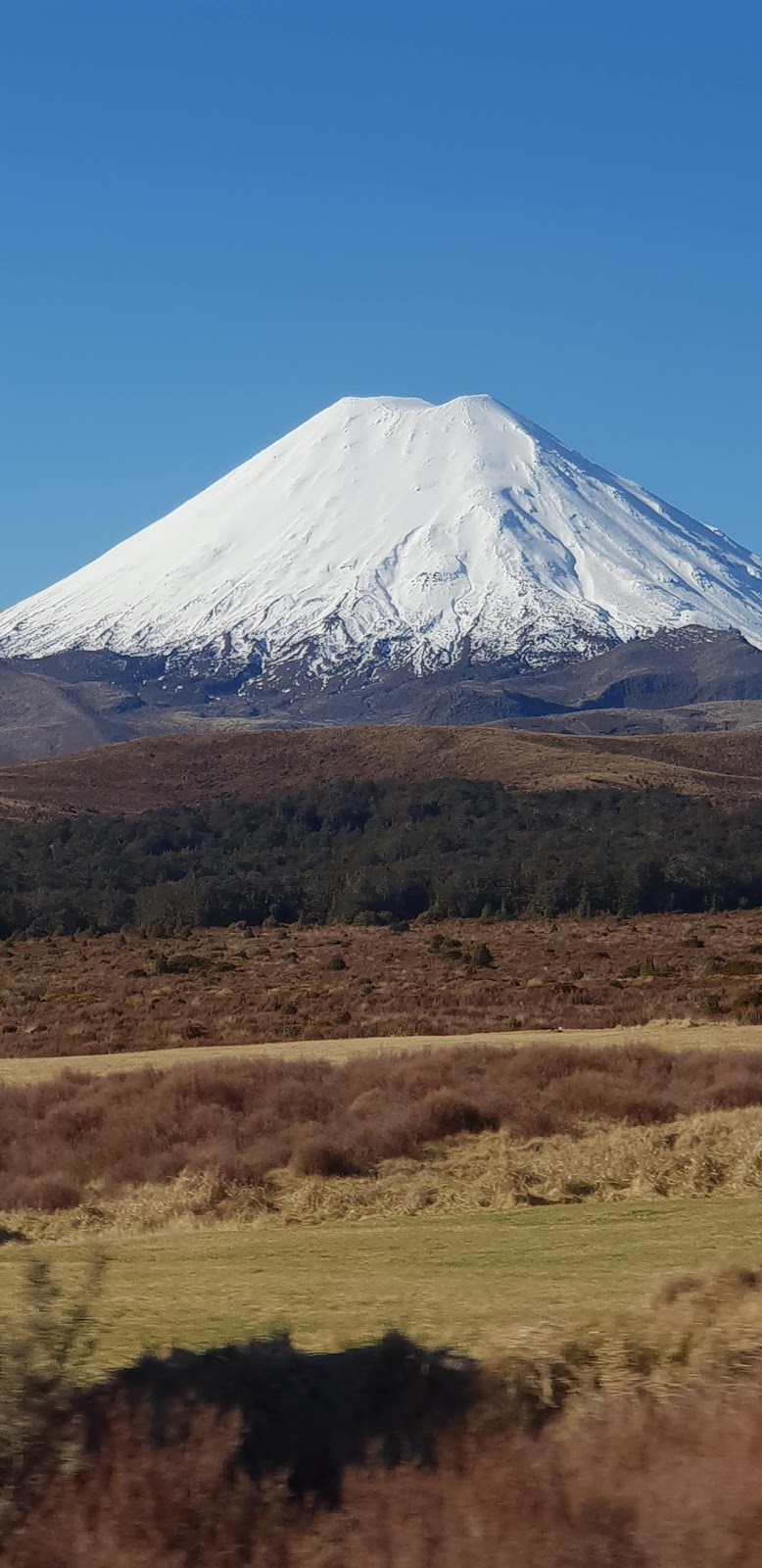
Searching for locations: Mount Ngauruhoe, New Zealand

Mount Ngauruhoe is apparently still an active volcano, has been for 2,500 years or so, and last erupted on 19th February 1975, and reportedly has erupted around 70 times since 1839.

The mountain is usually climbed from the western side, from the Mangatepopo track.

This photo was taken in summer from the Chateau Tongariro carpark.

In late autumn, on one of our many visits to the area, the mountain was covered with a light sprinkling of snow and ice.

On our most recent visit, this year, in winter, it was fully covered in snow.

It can be a breathtaking sight from the distance.

I always wanted to see the planets – Episode 26

Where the hell are we?

When I opened my eyes, there was a moment where I felt I was rising up from the bottom of the ocean, holding my breath, and heading towards the light.

I was in the captain’s seat, and as my vision focussed, I sucked in a huge breath and sat up. There were others in front of me still slumped over their consoles, barely visible in the emergency lighting.

I tried standing intending to go over to the navigation console and felt my legs buckling under me, and had to sit down again.

I heard a groan from behind me, followed by, “What happened?”

It was the Chief Engineer.

I turned just as he attempted to stand and collapsed to the floor.

I tried again, with more success, and walked slowly over to him. That was when a different sort of light illuminated the bridge and, when I turned to see what it was, just saw the edge of a planet come into view.

We were very close, and it seemed the ship had adopted a circumnavigation path. The ship also seemed to be slowly rotating, hence the changing view of the planet.

Others were stirring. I helped the Chief Engineer up.

“Whatever happened,” I said, “we seemed to have traveled to an as-yet-unnamed planet.”

“Mars perhaps?” He sat back at his console.

A voice yelled out, “not Mars sir, Uranus. And in the distance, that reddish-colored moon is Oberon I think.”

Exactly where the alien ship had said there was a colony, under the ice surface.

I turned to the Engineer, “Chief, what’s the state of the ship?”

“It apparently is on standby, awaiting our command. It is as the Navigator says, we are at Uranus, in a geosynchronous orbit.”

The moon that we believed to be Oberon came up on the screen, and standing off it was three ships, the two that we had encountered, and a larger ship, no doubt belonging to the kidnappers.

“Do you have the elapsed time since we started the test?” I was curious how long we had been unconscious.

I would also like to know why were ended up unconscious, but that was a matter for later. The other problem; the three ships would soon discover our arrival and would be curious themselves, and I didn’t like the odds if we had to go into battle.

“Sixty-five earth minutes, sir.”

I’m sure he would tell me just how fast we had traveled soon enough. “I’ve got to get back down to engineering. I’ll have a report as soon as possible, but, if required, we’re on standby for any operation you deem necessary.”

“Very good.” Then, “Any chance we arrived un-noticed?” I asked the navigator.

“No sir. We were just scanned, so they know something is out there.”

I found it surprising that the kidnappers had told me precisely where they were going. Perhaps they had not expected our ship could follow them, and that, until just over an hour ago, was exactly our thoughts too.

“Is it possible to scan the moon, and the planet?”

“In the process of doing so, sir.”

I went over to the military console where the officer was quickly checking all the systems. “Everything online and available?”

“As far as I can tell. We should be able to retaliate if we have to.”

“It may be sooner than we think. One of the ships, a smaller one, is heading in this direction.”

I yelled out, “Anyone needing medical assistance?”

No one replied. It seems they had all suffered the same malaise I had, a period of unconsciousness. Then a series of reports filled the bridge as each officer reported their systems were online and ready.

I then asked the ship’s department heads to report in, and each came back, not asking the obvious question, but to say everything, and everyone, was ok.

Five minutes later, the ship could be seen approaching us, stopping in indeterminable distance from us, but it was quite close, close enough to make out the detail of the outer hull, and, I noticed, for one of the scientists to scan the vessel and take photographs for reference if we needed to know about it later. The first alien ship in our database.

Then a voice came over the communications system, not one of ours. “Hailing earth ship’s captain. We are sending one of your crew back to you, we do not know what is wrong with him.”

The next instant the captain, in a prone poisition, appeared on the deck in front of the chair. “Medical team to the bridge,” I said.

I went over to him, and he appeared asleep. I checked for a pulse, and there wasn’t one. He was cold, and not a good sign.”

“We have him,” I said. “What happened?”

“He collapsed. Our medical people tell me from what they know of your physiology, that he has stopped breathing, and possibly had what you call a heart attack. I assure you we did not harm him, or your other crew member in any way.”

One of the ship’s doctors came out of the elevator and ran over to us, and immediately did a scan. We were the first ship, the first people, in fact, to use the new technology which was supposed to diagnose most of the problems humans could suffer in a matter of minutes.

“He’s dead, sir,” the doctor pronounced. He had brought several others on the medical team, along with the means to transport him back to the hospital.

They carefully lifted the captain onto the mobile stretcher. “Permission to leave, sir?”

I nodded.

The alien captain, if it was him, came back, “We would like to know how your ship managed to get here so quickly. Our knowledge of your technology makes it impossible for you to travel such distances as you have, and especially in that ship.”

“We’re trying to work that out ourselves. Would you like to tell us how you can move so quickly yourself?”

“We have nothing to hide. Perhaps we could meet and discuss it.”

© Charles Heath 2021

Searching for locations: Mount Ngauruhoe, New Zealand

Mount Ngauruhoe is apparently still an active volcano, has been for 2,500 years or so, and last erupted on 19th February 1975, and reportedly has erupted around 70 times since 1839.

The mountain is usually climbed from the western side, from the Mangatepopo track.

This photo was taken in summer from the Chateau Tongariro carpark.

In late autumn, on one of our many visits to the area, the mountain was covered with a light sprinkling of snow and ice.

On our most recent visit, this year, in winter, it was fully covered in snow.

It can be a breathtaking sight from the distance.

I always wanted to see the planets – Episode 25

Are we there yet?

Even being in the fastest ship we had in the fleet, it still felt like it would take a lifetime to catch up to the alien ship, and I had to wonder at the pioneers of space travel who had to hibernate for the better part of a year, and sometimes a lot longer, to get to the other planets.

For us, time versus distance was measured a lot less that it used to be, but it would still take a long time, and we were prepared for it. What the real problem was, how long it would take us to be in a position to rescue our crew members.

Or how they felt being prisoners on an alien space craft, and how they were being treated, or even whether the aliens were either willing or capable of looking after them.

It was going to be a very interesting conversation I would have with the captain if or when we finally found them.

But knowing we might be in a fruitless chase to rescue our crew members just added to the frustration. I divided my time between the day room and pacing the bridge, looking out into the inky blackness, at times wishing something, anything, would appear to break the monotony

The science department on the other hand had a plethora of data, and no shortage of theories, but little concrete evidence of what they were calling space corridors, which were much like elevators only horizontal.

Chalmers still stuck to his belief in what he called worm hole, but was unable to advance a theory of whether the pre existed, or whether the alien ships created them as a means if getting quickly from one part if the universe to the other.

My report to the Admiral was scant on facts, except for one, that we were not alone in the universe. It Waldo precipitated a meeting of the brightest scientific minds back on the planet on the subject of alien life, and the universe itself.

At least some people were happy.

Meanwhile, the question of the ship’s speed became another topic, and it was being suggested that with a little tinkering, we could push more out of the propulsion unit, ‘tinkering’ being the operative word.

The subject was quite technical and although I had some knowledge of the mechanics, it was not enough, and I felt a little out of my depth when included in the discussions, relying heavily on the expertise of the Chief Engineer and his staff.

It was quite daunting that they were mentioning speeds up to the speed of light, now that they knew the structural integrity of the ship was not affected by the higher speed. I was not aware that it could have been a factor, but then I hadn’t known the ship was made out of an alloy that some said came from alien technology found on our planet.

Like most I believed the story that the compound that enabled us to get onto space was a freak discovery, even despite the rumours. Now, within the confines of a select group on board the ship and back at space command, those rumours had become a reality.

It was a lot to take in and I had to wonder how much the previous captain knew, and whether he was ever going to tell me. Sometimes ignorance was bliss, or so the saying went.

We’d been hurtling through space for three days when the Chief Engineer called me. I was in the day room reading up on the protocols we were supposed to adopt if or when we met new entities, and at a point where I couldn’t believe some of what I was reading.

“Sir, we think we might be able the squeeze a little more out of the engines.”

I wondered how much that little more was.

“How so?”

“The technical explanation would probably take a week, but with a few adjustments we might get a hundred percent improvement.”

“Risk factor?”

“Nothing comes without a risk, sir, but more or less as it was explained at the last conference “

In other words, any risk was worth it.

“The downside being we could be stuck in space until someone could come and rescue us.”

“Provided life support remains up and running, yes. But I believe the risk is minimal. We all signed up knowing that in all likelihood it might be a one way trip.”

Stating the obvious didn’t make the decision Amy easier. That responsibility for over 2,000 others on board weighed heavily.

“OK. I’ll make an announcement to the crew. Be on the bridge in fifteen minutes.”

“Aye, sir.”

Fifteen minutes precisely, we were looking out into the inky blackness, everyone battened down. For the first time, I sat in the captains chair with the feeling that I should be there rather than just keeping the seat warm for when the real captain returned.

A strange phrase came into my head, just seconds before I gave the order, death or glory.

“Helmsman?”

He turned. “Sir?”

“Let’s go.”

© Charles Heath 2021

“The End of the Road”, a short story

The End of the Road

The man who had said that we would never make the distance was right.

It had been my idea to go ‘troppo’, forsake everything, hop on a motorbike and go around Australia.  I was, at that stage fed up with everything and, catching Harry in one of his low spots, he decided there and then he would join me.

For the first few days, we believed we were stark staring mad and talked about calling it quits, but perseverance made all the difference.  After two months we were glad we had the resolve to keep going, and in that time we had managed to see more of the Australian countryside than we’d seen all our lives.

That was until this particular morning when we arrived in Berrigum, what could have been called a one-horse town.  It consisted of one hotel, one general store (that sold everything from toothpicks to petrol) and an agricultural machinery depot.  It also had a station and some wheat silos, and this appeared to be the only reason for a town in this particular spot in the middle of nowhere.

And it was the railway station that interested Harry, who was, by this time, getting a little homesick and fed up with his motorbike.

After coughing and spluttering for the last week it had finally died, and the five-mile walk to Berrigum had not helped either his temper, or his disposition, and had only served to firm his resolve to return home.

It was hot but not unbearably so, unlike a hot summer’s day in the city, and even worse still in public transport.  For miles around as we tramped those five miles all we could see was acres and acres of wheat, but no sign of life.  It was the same when we reached the town.  It appeared all the people were either hiding or had left.  Harry suspected the latter given the state of the road, and the buildings, more or less the epitome of a ghost town.

Standing at the end of what could have been called the main street with only our own dust for company, one look took in the whole town.  In a car, one wouldn’t have given it a second look, if one had time to give it a first.  I didn’t remember seeing neither any speed restriction signs nor signpost advertising a town ahead.

And since no amount of argument could sway him from his resolve, the first objective was to get a train timetable, if such a thing existed, and make arrangements for Harry’s return.

The station was as deserted as the town itself, and a quick glance in the stationmaster’s office showed no sign of life.

Leaving the bikes on the platform outside the office, we headed for the hotel for both a drink and make enquiries about rail services.  Being a hot day and the morning’s tramp somewhat hot and dusty, we were looking forward to a cold glass (or two) of beer.

The hotel looked as though it was a hundred years old though there was no doubting a few relentless summers would reduce it to the same state.  It was as bad inside as out, though the temperature was several degrees lower, and we could sit down in what appeared to be the main bar.  We were the only occupants and still to find any sign of life.  Overhead, two fans were struggling to move the hot air around.

More than once Harry reckoned it was a ghost town and I was beginning to believe him when, after five minutes, no one arrived.

After ten, we stood, ready to leave, only to stop halfway out of our chairs when a voice behind us said, “Surely you’re not going back out there without refreshment?”

“I was beginning to think the town was deserted,” I said.

“It is during the day, but when the sun goes down…”

I didn’t ask.  We followed him to the bar where he had stationed himself behind the counter.  “The name is Jack.”  He stretched out his hand towards us.  “We don’t bother with last names here.”

“Bill,” I said, shaking it, and nodding to Harry, “Harry.”

Harry nodded and shook his hand too.

“The first one’s on the house.”  He poured three glasses and put ours in front of us.  “Cheers.”

In all cases, it went down without touching the sides (as they say) and he poured a second, at the same time asking, “What brings you to our little corner of the earth?”

“Just passing through,” I said, “Or at least for me.”

“And you?”  Jack looked at Harry.

“I can’t hack the pace.  I can truthfully say I have thoroughly enjoyed the trip so far, except for a few mishaps, but for me, it’s time to get back to the big smoke.  My ‘do your own thing’ has run out of momentum.  Do you know if there is a train that goes anywhere important?”

The publican looked at him almost pityingly.  “Important, eh?”  He rubbed his chin feigning thought.  “You make it sound like you are in purgatory.”

“Aren’t we?”

I suppose one could hardly blame Harry for his attitude.  After all, at the beginning, he had numerous accidents, caught a virus that stayed with him (and a couple of torrential downpours had done little to help it), and now his motorbike had finally died.  No wonder his humour was at an all-time low.

For a moment I thought the publican was going to tell Harry what he thought of him, but then he smiled and the tension passed.  “Perhaps to a city fellow like you it might be,” he said.  “The mail train which has a passenger carriage comes through once a week, and, my good man, you’re in luck.  Today’s the day.”

“Good.  How do I get a ticket?”

“You’d have to see the Station Master.”

“And where might he be at the moment?  We were at the station a while back and there was no sign of life.”

“Nor will there be until the train comes.  Meanwhile, there’s time enough for lunch.  I’m sure you will stay?”  He looked questioningly at us.

I looked at Harry, who nodded.

“Why not.”

Over lunch, we talked.

I remember not so long ago when I had to attend a large number of lunches where the talk was of business, or, if anything, mostly about subjects that I had no interest in.  It was always some posh restaurant, time seemed important, the atmosphere never really relaxed, and to get into a relaxed state it took a large amount of alcohol to deaden the despair and distaste of that one had to fete in order to secure their business.

How different it was here.

We talked about the country, and, after seeing as much of it, and worked on it as we had to fund our odyssey, we could talk about it authoritatively.  And, most of all, it was interesting.

The atmosphere too was entirely different than it had been in the city.  Out here the people were always friendly, people always willing to stop and talk, particularly farmers; share a drink or some food.

There was none of this carefree purposefulness in the city, and more than once I’d thought of the fact one could travel in the same train with the same people for year after year and still not know any of them.  It was the same at work.  Even after five years I still hadn’t known three-quarters of the office staff, and most of them probably didn’t want to know me.  Harry was virtually the only real friend I’d had at work.

But here, in ‘the middle of nowhere’ as Harry had called it, I felt as though I’d known the publican all of my life instead of the few short hours.

Some hours later and after much argument, where Jack and I tried to talk Harry into staying (Jack said he knew someone who could fix anything including Harry’s bike), Harry remained unconvinced and resolute.  Jack, to round off the occasion (we were the first real guests from outside he had had in a week) provided another on-the-house ale and then saw us to the station.  “After all”, he had said, “I’ve nothing else to do at the moment.”

By that time the station was showing a little more life than it had before.  A station assistant, moving several parcels with a hand trolley, slowly ambled towards the end of the platform.

And whether it could be called a platform was a debatable point.  It was a gravel and grass affair that looked more like part of cutting through a hill than a station.

At the station, Jack portentously announced he was also the stationmaster and would be only too happy to take care of Harry’s requirements.  It would be, he added, “the first passenger ticket sold for several months.”  Certainly, the ticket he handed Harry bore witness to that.  It had yellowed with age.

One would have thought with the imminent arrival of the train there would be more people, but no.  The only event had been the station assistant’s stroll to the end of the platform and back.  Now both he and Jack had disappeared into the office and we were left alone on the platform.  Very little in the whole town stirred, nor had it the whole time we’d been there.

“Well,” I said to break the silence.  “I’m sorry to see you going through with it.  I thought I might have been able to talk you out of it…”  I shrugged, leaving the sentence unfinished.

“I’m sorry to be going too, but a body can take only so much bad luck, and God knows that’s all I’ve had.”

“Yes.”  I couldn’t think of much else to say.  “But it’s been good to have your company these last few months.”

“And you.  When do you think you’ll get back?”

“When I get sick of it I suppose.”

“Look us up then when you get back.”

“I will.”

Thankfully the appearance of the train in the distance broke off the conversation.  I had begun to think of what it was going to be like out on the road with no one to talk to but myself.  The thought was a little depressing and I tried not to let it show.

We said little else until the train pulled in, three flat cars, seven enclosed wagons, a passenger carriage and the guard’s van.  The train stopped with only part of the passenger carriage and the guard’s van at the station.

The guard took aboard the parcels the station assistant had left for him earlier, and then put those that were for Berrigum on the trolley.

I shook Harry’s hand and said I’d see him around.  Then he, the motorbike, and the guard were aboard and the train was off, disappearing slowly into the afternoon haze.

The station assistant then repeated his amble to the end of the platform to collect the hand trolley.

“Staying or moving on.”  Jack had come up behind me and gave me a bit of a start.

“Staying I guess, until tomorrow or maybe later.”

“I had heard one of the farm hands is leaving tomorrow heading back to Sydney.  There could be a vacancy.”

“Sounds like a plan,” I said.

“I could put in a word for you.”

“Thanks.”

Jack just grinned and we headed for the hotel.

© Charles Heath 2016-2019

I fell asleep in front of the computer screen

And when I woke up, I realised that I had just had a very bad dream. Or don’t they call bad dreams nightmares?

Can you diagnose yourself as having depression?

Of course, if you were to tell someone else, in one of this very serious tones, “I think I have depression” they will ask you what you’ve got to be depressed about.

It’s a good question. My first answer would be, “why did the doctor put my on anti depressants?” You know the stuff they give you, some derivative of serapax,

Then, if you tell anyone you’re on that stuff, they turn around and tell you just how bad it is and get off it right now.

That’s all very well, but you tell them you still have depression, and so the argument goes on.

But…

These days, they use low doses of anti depressants to manage pain, and in my case back pain. The first pill they gave me was lyrica, which slowly took my memory away so that I couldn’t remember what anyone had said earlier in the day.

I thought I had early onset Alzheimer’s, or worse, dementia.

So I got off that, got the pain back, and moved to anti depressants. Now I’m seeing things.

That might help with the imagination for writing stories sometimes, but telling people you see the patterns on tiles moving is not a good start to any conversation.

Back to depression, though. It might be caused by being locked down and not being able to go anywhere, but that has never bothered me because I hate going out.

It might be a result of my childhood coming back to haunt me, and, believe me, you would not want the childhood I had, but it’s a maybe. A lot of old people find their past creeping up on them, and what happened 60 years ago seems more relevant than what happened 60 minutes ago.

You might think you’re badly done by, that everyone else is responsible for the mess you made of your life, if it is indeed a mess, but no, that isn’t true. My life is exactly what it’s meant to be, though how I got here remains the biggest of mysteries.

It’s why I’m writing the autobiography of a very ordinary nobody.

OK, that might be a hint, thinking I’m a nobody. After all, when I go out I always feel like I’m invisible.

A friend of mine tells me he always cries when there’s a sad part of a film on, and that’s his determination of depression.

I do too, but I don’t think it’s that.

After all, I did psychology and should understand the nuances of the human psyche, what makes us happy, what makes us sad, what makes us us.

So, rightly or wrongly I’ve stopped taking the anti depressants.

If suddenly my blog suddenly stops, you’ll know I’ve made the wrong decision.

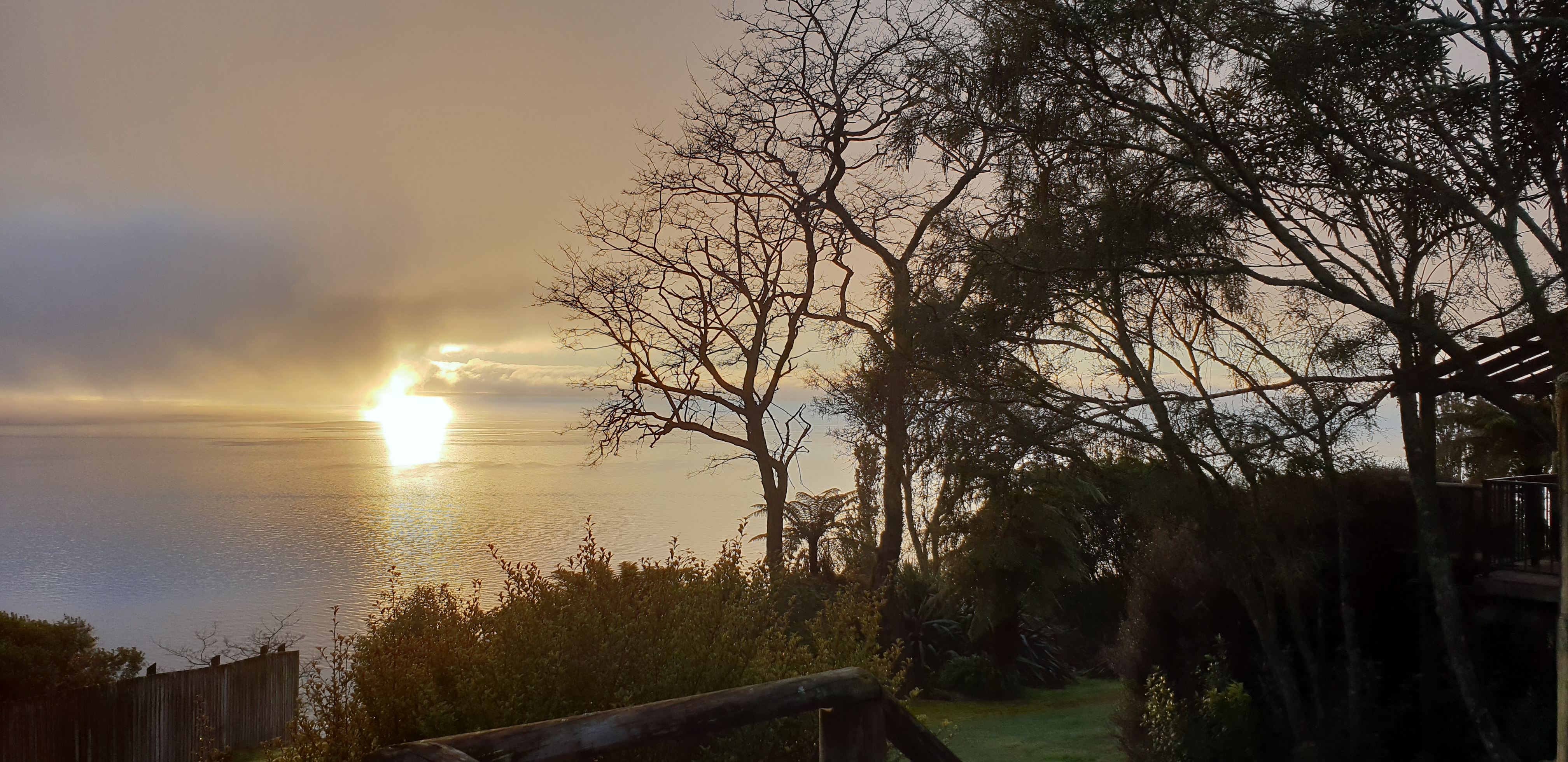
Searching for locations: Oreti Village – No two sunrises are the same – 1

Oreti village, Pukawa Bay, North Island, New Zealand

On the southern tip of Lake Taupo

Our first morning there, a Saturday.  Winter.  Cold.  And a beautiful sunrise.

20180812_073230

This was taken from the balcony, overlooking the lake.

The sun is just creeping up over the horizon

20180812_073241

It gradually gets lighter, and then the sun breaks free of the low cloud

It lights up the balcony

20180811_074651

And the trees just beyond, a cascade of colorful ferns.

20180811_074622

It looks like its going to be a fine day, our first for this trip, and we will be heading to the mountains to see snow, for the first time for two of our granddaughters.