Searching For Locations: Disneyland, Paris, France

Whilst I found this tree house to be interesting, it seems to be far from practical because there was little to keep the wind and rain out, though I suppose, in the book, that might not be such a problem.

Be that as it may, and if it was relatively waterproof, then the furnishings would probably survive, and one had to also assume that much of the furnishings, such as the writing desk below, would have washed up as debris from the shipwreck.

20140104_141622 (1)

The stove and oven would have to be built by hand, and it is ‘remarkable’ such well-fitting stones were available.  It doesn’t look like it’s been used for a while judging by the amount of gree on it.  Perhaps it is not in a waterproof area.

20140104_141556 (2)

The dining table and the shelf in the background have that rough-hewn look about them

20140104_141553

A bit of man-made equipment here for drawing water from the stream

20140104_141703 (1)

And though not made in the era of electricity, there is an opportunity to use the water wheel to do more than it appears to be doing

20140104_141539 (2)

And tucked away in a corner the all-important study where one can read, or play a little music on the organ.  One could say, for the period, one had all the comforts of home.

20140104_141800 (2)

An excerpt from “Echoes from the Past”

Available on Amazon Kindle here:  https://amzn.to/2CYKxu4


With my attention elsewhere, I walked into a man who was hurrying in the opposite direction.  He was a big man with a scar running down the left side of his face from eye socket to mouth, and who was also wearing a black shirt with a red tie.

That was all I remembered as my heart almost stopped.

He apologized as he stepped to one side, the same way I stepped, as I also muttered an apology.

I kept my eyes down.  He was not the sort of man I wanted to recognize later in a lineup.  I stepped to the other side and so did he.  It was one of those situations.  Finally getting out of sync, he kept going in his direction, and I towards the bus, which was now pulling away from the curb.

Getting my breath back, I just stood riveted to the spot watching it join the traffic.  I looked back over my shoulder, but the man I’d run into had gone.  I shrugged and looked at my watch.  It would be a few minutes before the next bus arrived.

Wait, or walk?  I could also go by subway, but it was a long walk to the station.  What the hell, I needed the exercise.

At the first intersection, the ‘Walk’ sign had just flashed to ‘Don’t Walk’.  I thought I’d save a few minutes by not waiting for the next green light.  As I stepped onto the road, I heard the screeching of tires.

A yellow car stopped inches from me.

It was a high powered sports car, perhaps a Lamborghini.  I knew what they looked like because Marcus Bartleby owned one, as did every other junior executive in the city with a rich father.

Everyone stopped to look at me, then the car.  It was that sort of car.  I could see the driver through the windscreen shaking his fist, and I could see he was yelling too, but I couldn’t hear him.  I stepped back onto the sidewalk, and he drove on.  The moment had passed and everyone went back to their business.

My heart rate hadn’t come down from the last encounter.   Now it was approaching cardiac arrest, so I took a few minutes and several sets of lights to regain composure.

At the next intersection, I waited for the green light, and then a few seconds more, just to be sure.  I was no longer in a hurry.

At the next, I heard what sounded like a gunshot.  A few people looked around, worried expressions on their faces, but when it happened again, I saw it was an old car backfiring.  I also saw another yellow car, much the same as the one before, stopped on the side of the road.  I thought nothing of it, other than it was the second yellow car I’d seen.

At the next intersection, I realized I was subconsciously heading towards Harry’s new bar.   It was somewhere on 6th Avenue, so I continued walking in what I thought was the right direction.

I don’t know why I looked behind me at the next intersection, but I did.  There was another yellow car on the side of the road, not far from me.  It, too, looked the same as the original Lamborghini, and I was starting to think it was not a coincidence.

Moments after crossing the road, I heard the roar of a sports car engine and saw the yellow car accelerate past me.  As it passed by, I saw there were two people in it, and the blurry image of the passenger; a large man with a red tie.

Now my imagination was playing tricks.

It could not be the same man.  He was going in a different direction.

In the few minutes I’d been standing on the pavement, it had started to snow; early for this time of year, and marking the start of what could be a long cold winter.  I shuddered, and it was not necessarily because of the temperature.

I looked up and saw a neon light advertising a bar, coincidentally the one Harry had ‘found’ and, looking once in the direction of the departing yellow car, I decided to go in.  I would have a few drinks and then leave by the back door if it had one.

Just in case.


© Charles Heath 2015-2020

newechocover5rs

My disdain for some reporters, and reporting these days

It is sometimes quite trashy and that’s saying something!

Having been a journalist in a previous lifetime, and one that always believed that the truth mattered, it didn’t take long to realise that journalists should never let the truth get in the way of a good story.

Newspapers, and all other forms of media, will only write what they believe will sell, or what they think the public wants to read. The truth, sadly, is not the first thing on the readers mind, only that someone is to blame for something they have no control over, and it doesn’t matter who.

And the more outlandish the situation, the more the public will buy into it.

This, I guess, is why we like reading about celebrities and royalty, not for the good they might do, but the fact they stumble and make mistakes, and that somehow makes us feel better about ourselves.

Similarly, if the media can beat up a subject, like the corona-virus, and make it worse that it is, then people will lap up the continuing saga, as it relates to them, and will take one of two stances, that they believe the horror of it, and do as they’re asked, or disbelieve it because nothing can be that bad, and ignore it and the consequences of disobedience. knowing the government will not press too hard against the non compliers simply because of domocracy issues it will stir up.

That is, then the media will get a hold of this angle and push it, and people will start to think disobedience is a good thing not a bad.

So, our problems of trying to get a fair and balanced look at what the coronavirus is all about is nigh on impossible. We are continuously bombarded with both right and wrong information, and the trouble is, both sides are very plausibly supported by facts.

And that’s the next problem we have in reporting. We can get facts to prove anything we want. It;s called the use and abuse of statistics, and was an interest part of the journalism degree I studied for. We were told all about statistics, good and bad, and using them to prove the veracity of our piece.

I remember writing a piece for the tutor extolling the virtues of a particular person who was probably the worst human since Vlad the Impaler, using only the facts that suited my narrative. I also remember the bollocking he gave me for doing so, but had to acknowledge that sometimes that would happen.

Integrity of reporting only went as far as the editor, and if the editor hated something, you had to hate it too. This is infamously covered in various texts where newspaper publishers pick sides, and can influence elections, and governments. It still happens.

So, the bottom line is, when I;m reading an article in the media, I always take it with a grain of salt, and do my own fact checking, remembering, of course, not just to fact check to prove the bias one way of the other, but the get a sense of balance.

We have state elections coming up where I live, but it does not sink to the personal sniping level as it does in the US, we haven’t sunk that low yet, but we haven;t got past the sniping about all the wrongs and failed promises of the govern,ment of the day, or the endless tirade against the opposition and how bad a job they did whenb they were previously in government.

You can see, no one is talking about what they’re going to do for us, no one is telling us what their policies are. It’s simply schoolyard tit for tat garbage speak. What happened to the town hall meeting, a long and winding speech encompassing the policies, what the government plans to do for its people in the next three years, and then genuinely answer questions?

Perhaps we should ban campaigning, and just get each party to write a book about what they intend to do, and keep them away from the papers, the TV, and any other form of media, in other words, don’t let them speak!

And don’t get me started about the drivel they speak in the parliament. Five year olds could do a better job.

OK, rant over.

“Strangers We’ve Become”, a sequel to “What Sets Us Apart”

Stranger’s We’ve Become, a sequel to What Sets Us Apart.

The blurb:

Is she or isn’t she, that is the question!

Susan has returned to David, but he is having difficulty dealing with the changes. Her time in captivity has changed her markedly, so much so that David decides to give her some time and space to re-adjust back into normal life.

But doubts about whether he chose the real Susan remain.

In the meantime, David has to deal with Susan’s new security chief, the discovery of her rebuilding a palace in Russia, evidence of an affair, and several attempts on his life. And, once again, David is drawn into another of Predergast’s games, one that could ultimately prove fatal.

From being reunited with the enigmatic Alisha, a strange visit to Susan’s country estate, to Russia and back, to a rescue mission in Nigeria, David soon discovers those whom he thought he could trust each has their own agenda, one that apparently doesn’t include him.

The Cover:

strangerscover9

Coming soon


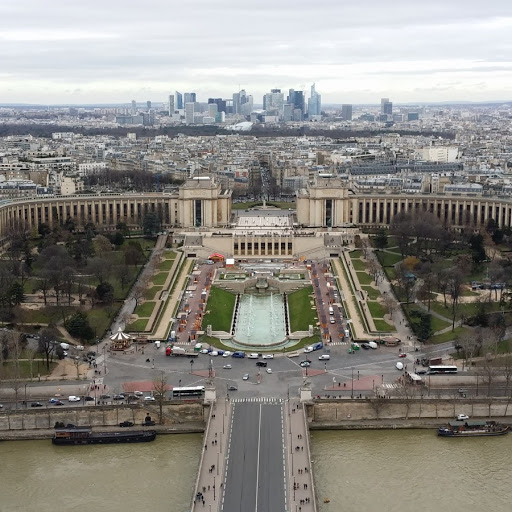
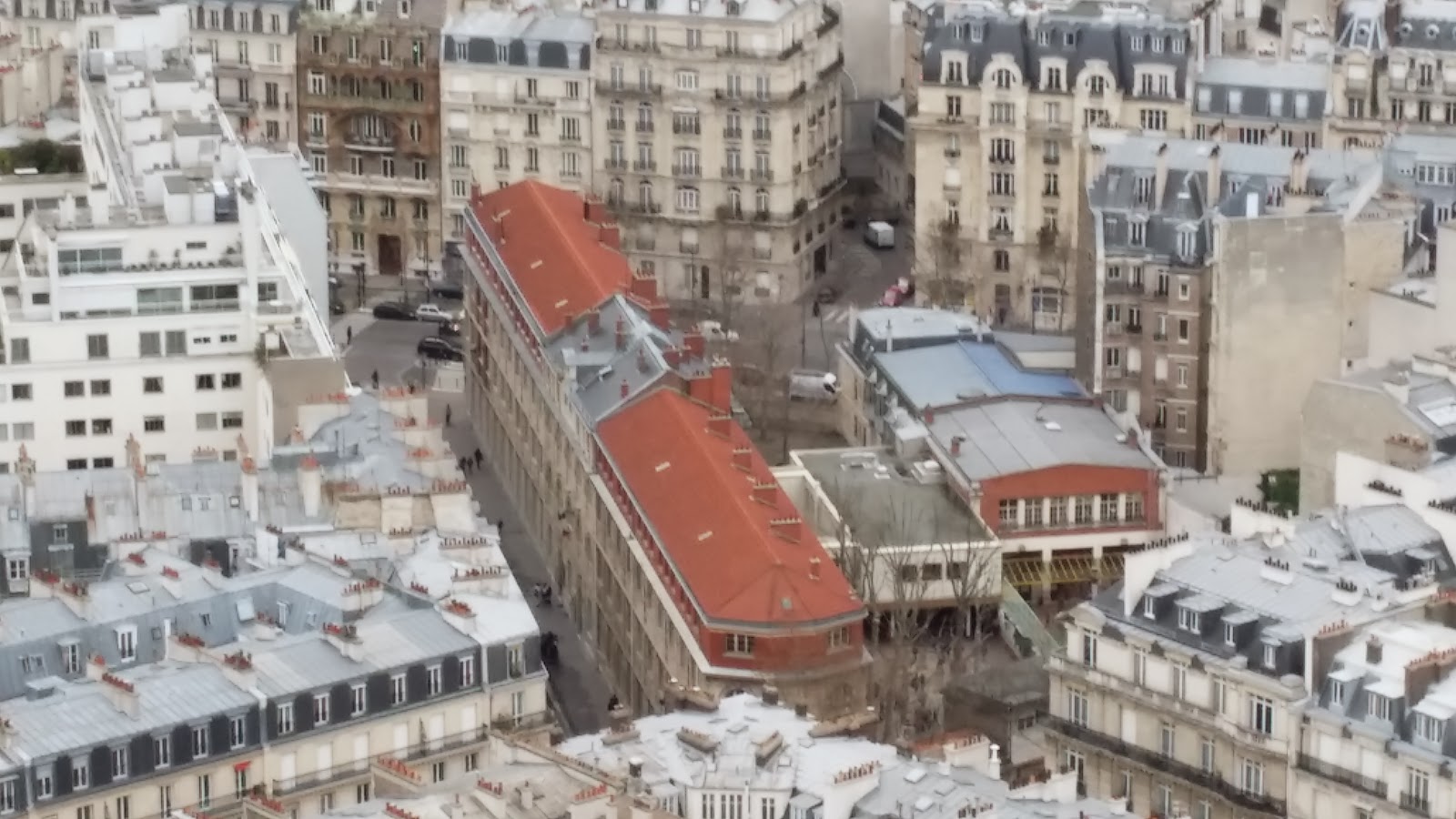
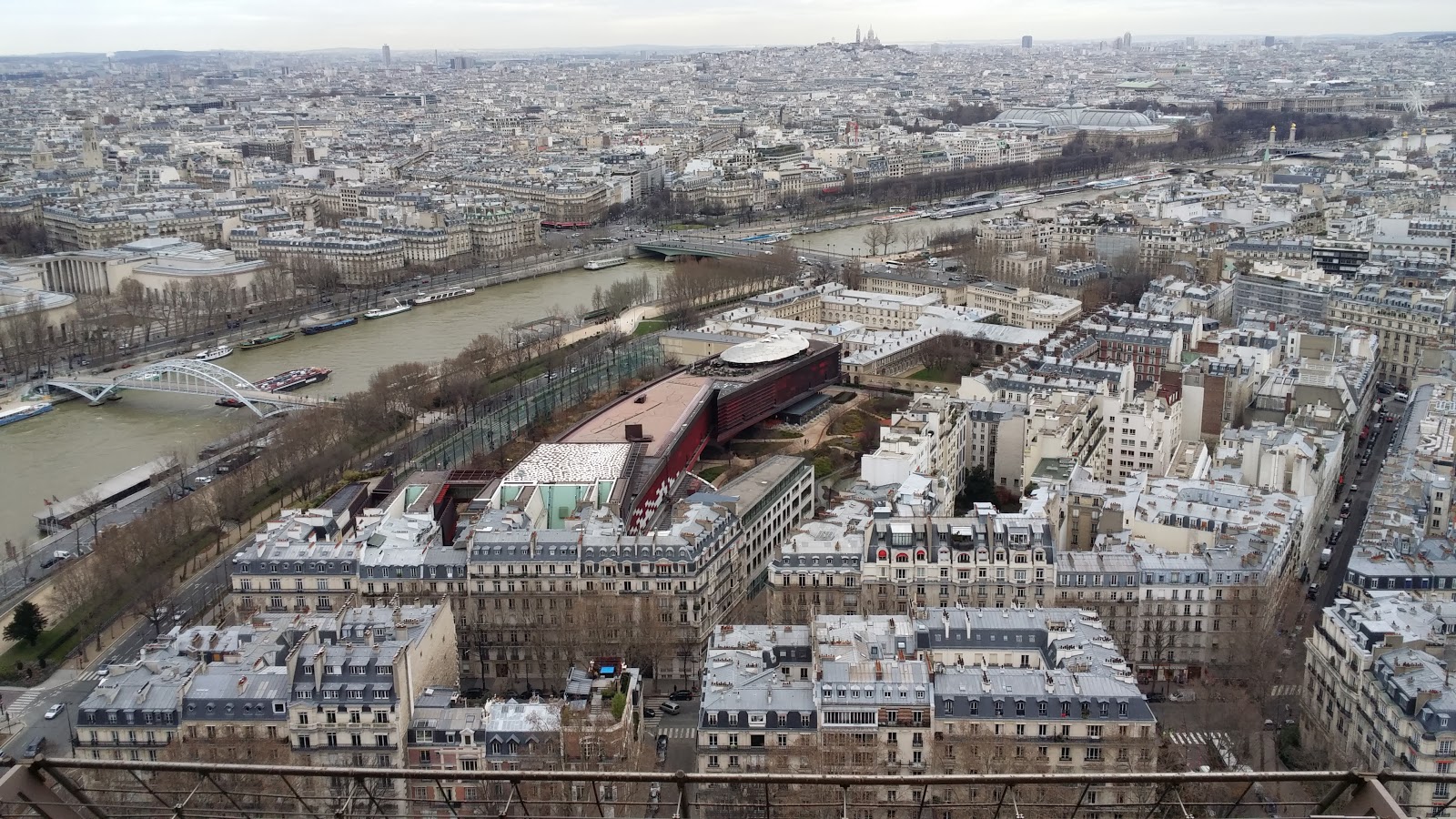
Searching for locations: At large in Paris, France

We have been to Paris a number of times over the years.

The last time we visited Paris we brought the two eldest grandchildren.   We took the Eurostar train from St Pancras station direct to Disneyland, then took the free bus from the station to the hotel.  The train station was directly outside Disneyland.

We stayed at the Dream Castle Hotel, rather than Disneyland itself as it was a cheaper option and we had a family room that was quite large and breakfast was included every morning.  Then it was a matter of getting the free bus to Disneyland.

We spent three days, time which seem to pass far too quickly, and we didn’t get to see everything.  They did, however, find the time to buy two princess dresses, and then spent the rest of the time playing dress-ups whenever they could.

In Paris, we stayed at the Crown Plaza at Republique Square.

We took the children to the Eiffel Tower where the fries, and the carousel at the bottom of the tower, seemed to be more memorable than the tower itself.  The day we visited, the third level was closed.  The day was cold and windy so that probably accounted for the less than memorable visit.  To give you some idea of conditions, it was the shortest queue to get in I’ve ever seen.

We traveled on the Metro where it was pointed out to me that the trains actually ran on rubber tires, something I had not noticed before.  It was a first for both children to travel on a double-decker train.

The same day, we went to the Louvre.

Here, it was cold, wet and windy while we waited,  Once inside we took the girls to the Mona Lisa, and after a walk up and down a considerable numkber of stairs, one said, “and we walked all this way to see this small painting”.

It quickly became obvious their idea of paintings were the much larger ones hanging in other galleries.

We also took them to the Arc de Triomphe.

We passed, and for some reason had to go into, the Disney shop, which I’m still wondering why after spending a small fortune at Disneyland itself.

Next on the tour list was the Opera House.

 where one of the children thought she saw the ghost and refused to travel in one of the elevators.  At least it was quite amazing inside with the marble, staircases, and paintings on the roof.

Sadly, I don’t think they were all that interested in architecture, but at the Opera House, they did actually get to see some ballet stars from the Russian Bolshoi ballet company practicing.  As we were leaving the next day we could not go and see a performance.

Last but not least was Notre Dame with its gargoyles and imp[osing architecture.

All in all, traveling with children and experiencing Paris through their eyes made it a more memorable experience.

The first we visited Paris was at the end of a whirlwind bus tour, seven countries in seven days or something like that.  It was a relief to get to Paris and stay two nights if only to catch our breath.

I remember three events from that tour, the visit to the Eiffel Tower, the tour of the night lights, not that we were able to take much in from the inside of the bus, and the farewell dinner in one of the tour guides specially selected restaurants.  The food and atmosphere were incredible.  It was also notable for introducing us to a crepe restaurant in Montmartre, another of the tour guide’s favorite places.

On that trip to Paris, we also spent an afternoon exploring the Palace of Versailles.

The next time we visited Paris we flew in from London.  OK, it was a short flight, but it took all day.  From the hotel to the airport, the wait at the airport, departure, flying through time zones, arrival at Charles De Gaulle airport, now there’s an experience, and waiting for a transfer that never arrived, but that’s another story.

I can’t remember where we stayed the first time, it was somewhere out in the suburbs, but the second time we stayed at the Hilton near both the Eiffel Tower and the Australian Embassy, notable only because the concierge was dating an Australian girl working in the Embassy.  That was our ticket for special treatment, which at times you need to get around in Paris.

It was the year before 2000 and the Eiffel Tower was covered in lights, and every hour or so it looked like a bubbling bottle of champagne.  It was the first time we went to Level 3 of the Tower, and it was well worth it.  The previous tour only included Level 2.  This time we were acquainted with the fries available on the second level, and down below under the tower.

This time we acquainted ourselves with the Metro, the underground railway system, to navigate our way around to the various tourist spots, such as Notre Dame de Paris, The Louvre, Sacre-Coeur Basilica, and Les Invalides, and, of course, the trip to the crepe restaurant.

We also went to the Louvre for the express purpose of seeing the Mona Lisa, and I came away slightly disappointed.  I had thought it to be a much larger painting.  We then went to see the statue of Venus de Milo and spent some time trying to get a photo of it without stray visitors walking in front of us.  Aside from that, we spent the rest of the day looking at the vast number of paintings, and Egyptian artifacts in the Museum.

We also visited the Opera House which was architecturally magnificent.

The third time we visited Paris we took our daughter, who was on her first international holiday.  This time we stayed in a quaint Parisian hotel called Hotel Claude Bernard Saint Germain, (43 Rue Des Ecoles, Paris, 75005, France),  recommended to us by a relation who’d stayed there the year before.  It was small, and the elevator could only fit two people or one person and a suitcase.  Our rooms were on the 4th floor, so climbing the stairs with luggage was out of the question.

It included breakfast and wifi, and it was quite reasonable for the four days we stayed there.

It was close to everything you could want, down the hill to the railway station, and a square where on some days there was a market, and for those days when we were hungry after a day’s exploring, a baguette shop where rolls and salad were very inexpensive and very delicious.

To our daughter we appeared to be experienced travelers, going on the Metro, visiting the Louvre, going, yes once again, to the crepe restaurant and the Basilica at Montmartre, Notre Dame, and this time by boat to the Eiffel Tower.  We were going to do a boat rode on the Seine the last time but ran out of time.

We have some magnificent photos of the Tower from the boat.

Lunch on one of the days was at a restaurant not far from the Arc de Triomphe, where our daughter had a bucket of mussels.  I was not as daring and had a hamburger and fries.  Then we went to the center of the Arch and watched the traffic.

Our first time in Paris the bus driver got into the roundabout just to show us the dangers of driving in an unpredictable situation where drivers seem to take huge risks to get out at their exit.  Needless to say, we survived that experience, though we did make a number of circuits.

It’s one of those days…

You know, the sort of day where you have the best of intentions, you get up ready to start attacking the agenda you’ve told yourself you’re finsally going to sit down and get on with.

The same set of words you’ve been using to fire up the enthusiam you really don’t feel much of the time, but this time, having worked yourself into a high degree of positivity just before going to bed.

Everything is set up. All you have to do is’ bound out of bed, bright eyed and bushy tailed, ready to go.

That was the first mistake. You went to be very late, around 2 am, and when you wake up, it’s feels like death warmed up. No bright eyes, and definitely no bushy tail.

But, there’s work to be done.

Before that, there’s other stuff, and as each succeeding chore is down, the less the enthusiasm feels. I have to clean up the dining room, which, at the moment, is the go to for all the tools, paint, tile glue, tiles, everything that’s being used in the latest round of renovations.

Frankly, the room is a mess. I can move a lot of the tools out to the shed now that I’ve finished with them, and the rest, a few pain brushes and the tiling equipment, we be used over the next week.

An hour and a half later, the room is now clean.

I go out to the writing room and look at the list. Good thing I’d didn’t put a time against anything, because if I have, I was now looking at being at least four hours behind.

A phone call made that timeline worse. People always call when you don;t need any calls to dstract you. It’s one of the reasons why I have seriously considered getting the land line cut off. And if it wasn’t for the grandchildren, who know they can call on that line, with a number that’s easier to remember than a mobile, I would.

But that of course leaves me open to the half dozen scam calls a day, trying to sell cladding, solar panels, defend myself form a car crash that I never had, fend off illicit charges from Telcos, and now Amazon. Not forgetting my friend from the NBN who rings once, sometimes twice a day telling me my internet is about to be cut off.

To be honest I wish they would, but as much as I tell them to cut it off they never do, perhaps knowing that if they do, they can’t scam call me anymore.

By the time I get back to my office, it’s time for a cup of tea.

Or something stronger.

The morning has gone, and the afternoon is half over, and all I’ve done is look at the list.

And since blog posts are on the list, this is why I’m writing this whinge.

How is your day going? I hope it’s better than mine.

Let’s talk history

What happened yesterday is history, but that’s not necessarily how we view what is history and what isn’t.

Similarly what is and what isn’t history is usually decided on by academics, because history texts that are used in schools are not written by ‘the man in the street’ authors. They’re usually university types who specialise in a particular field, or specialise section of history.

Even then one doubts that what is written is not a consensus of a panel.

So, when we talk about re-writing history, that takes a very brave bunch of people who want to buck the norm.

Our history, that which was taught when I went to school,. about our own country, Australia, started in 1770. Some brave soul tried to say it began earlier than that, before Captain Cook and the British arrived, out up a flag pole, and declared it belonged to Britain, like in 1606 when the Dutch explorer Willem Janszoon landed on the Cape York peninsula, only it wasn’t called that then.

And he might have been as surprised as Captain Cook that there were people here to observe their arrival. Yes, people had been living in this country for tens of thousands of years before the Europeans arrived.

But that was not what we were taught. No, Captain Cook, 1770, the a fleet of ships in 1788, and off we run as a new country, and a dumping ground for Britain’s convicts. Our history starts there, and then meanders through time, dividing the country up into states, having famous explorers like Burke and Wills, and Blaxland, Wentworth, and Lawson, Hume and Hovell.

And we commemorate all these people and those who were in charge over the years, with names of states, cities, rivers, mountains, everything under the sun. You’ve only got to glance at the list of hundreds of these forefathers and explorers to see just how many places in this country were named after them.

No heed was taken of what they may have been called before because no one really understood the languages of the first people who lived here. And they never seem to rate as a matter of study for us children back then.

Now, as people have begun to realise our history goes way, way back, and that there should be a nod to those inhabitants, they are considering re-writing some of our history to incorporate these people. And change the names of places to their original. A famous instance of recent renaming is of Ayers Rock, now called Uluru.

Even then, Australian History didn’t rate very highly, and I have to say, as a child at school 50 odd years ago, I learned more about the British Empire/Commonwealth, and about the English kings and queens, than we did about our own Governor Generals, Prime Ministers and State Premiers.

Could I tell you the name of our first Prime Minister? No. I can say when Australia became Australia, yes. 1901. Can I tell you the first King of England? Yes, William the Conqueror in 1066. There were kings before that but they only ruled of parts of England.

But over the years since I have read the odd book of Australian History but for some reason it never quite seems as colourful or as interesting as that of England or Scotland, or even some of the European countries.

Now, since I’ve been reading about what’s happening in the United States I have begin to take an interest in American history, and it, too, seems to suffer the same problems we have with ours, a bunch of academics decided what it was, and what it would not include, and then there is this thing called the 1619 project.

Wow, that seems to have stirred up a hornet’s nest.

Can’t wait to see what happens next.

An excerpt from “One Last Look”

This is currently available at Amazon herehttp://amzn.to/2CqUBcz


I’d read about out of body experiences, and like everyone else, thought it was nonsense.  Some people claimed to see themselves in the operating theatre, medical staff frantically trying to revive them, and being surrounded by white light.

I was definitely looking down, but it wasn’t me I was looking at.

It was two children, a boy and a girl, with their parents, in a park.

The boy was Alan.  He was about six or seven.  The girl was Louise, and she was five years old.  She had long red hair and looked the image of her mother.

I remember it now, it was Louise’s birthday and we went down to Bournemouth to visit our Grandmother, and it was the last time we were all together as a family.

We were flying homemade kites our father had made for us, and after we lay there looking up at the sky, making animals out of the clouds.  I saw an elephant, Louise saw a giraffe.

We were so happy then.

Before the tragedy.


When I looked again ten years had passed and we were living in hell.  Louise and I had become very adept at survival in a world we really didn’t understand, surrounded by people who wanted to crush our souls.

It was not a life a normal child had, our foster parents never quite the sort of people who were adequately equipped for two broken-hearted children.  They tried their best, but their best was not good enough.

Every day it was a battle, to avoid the Bannister’s and Archie in particular, every day he made advances towards Louise and every day she fended him off.

Until one day she couldn’t.

Now I was sitting in the hospital, holding Louise’s hand.  She was in a coma, and the doctors didn’t think she would wake from it.  The damage done to her was too severe.

The doctors were wrong.

She woke, briefly, to name her five assailants.  It was enough to have them arrested.  It was not enough to have them convicted.

Justice would have to be served by other means.


I was outside the Bannister’s home.

I’d made my way there without really thinking, after watching Louise die.  It was like being on autopilot, and I had no control over what I was doing.  I had murder in mind.  It was why I was holding an iron bar.

Skulking in the shadows.  It was not very different from the way the Bannister’s operated.

I waited till Archie came out.  I knew he eventually would.  The police had taken him to the station for questioning, and then let him go.  I didn’t understand why, nor did I care.

I followed him up the towpath, waiting till he stopped to light a cigarette, then came out of the shadows.

“Wotcha got there Alan?” he asked when he saw me.  He knew what it was, and what it was for.

It was the first time I’d seen the fear in his eyes.  He was alone.

“Justice.”

“For that slut of a sister of yours.  I had nuffing to do with it.”

“She said otherwise, Archie.”

“She never said nuffing, you just made it up.”  An attempt at bluster, but there was no confidence in his voice.

I held up the pipe.  It had blood on it.  Willy’s blood.  “She may or may not have Archie, but Willy didn’t make it up.  He sang like a bird.  That’s his blood, probably brains on the pipe too, Archie, and yours will be there soon enough.”

“He dunnit, not me.  Lyin’ bastard would say anything to save his own skin.”  Definitely scared now, he was looking to run away.

“No, Archie.  He didn’t.  I’m coming for you.  All of you Bannisters.  And everyone who touched my sister.”


It was the recurring nightmare I had for years afterwards.

I closed my eyes and tried to shut out the thoughts, the images of Louise, the phone call, the visit to the hospital and being there when she succumbed to her injuries.  Those were the very worst few hours of my life.

She had asked me to come to the railway station and walk home with her, and I was running late.  If I had left when I was supposed to, it would never have happened and for years afterwards, I blamed myself for her death.

If only I’d not been late…

When the police finally caught the rapists, I’d known all along who they’d be; antagonists from school, the ring leader, Archie Bannister, a spurned boyfriend, a boy whose parents, ubiquitously known to all as ‘the Bannister’s, dealt in violence and crime and who owned the neighbourhood.  The sins of the father had been very definitely passed onto the son.

At school, I used to be the whipping boy, Archie, a few grades ahead of me, made a point of belting me and a few of the other boys, to make sure the rest did as they were told.  He liked Louise, but she had no time for a bully like him, even when he promised he would ‘protect’ me.

I knew the gang members, the boys who tow-kowed to save getting beaten up, and after the police couldn’t get enough information to prosecute them because everyone was too afraid to speak out, I went after Willy.  There was always a weak link in a group, and he was it.

He worked in a factory, did long hours on a Wednesday and came home after dark alone.  It was a half mile walk, through a park.  The night I approached him, I smashed the lights and left it in darkness.  He nearly changed his mind and went the long way home.

He didn’t.

It took an hour and a half to get the names.  At first, when he saw me, he laughed.  He said I would be next, and that was four words more than he knew he should have said.

When I found him alone the next morning I showed him the iron bar and told him he was on the list.  I didn’t kill him then, he could wait his turn, and worry about what was going to happen to him.

When the police came to visit me shortly after that encounter, no doubt at the behest of the Bannister’s, the neighbourhood closed ranks and gave me an ironclad alibi.  The Bannister’s then came to visit me and threatened me.  I told them their days were numbered and showed them the door.

At the trial, he and his friends got off on a technicality.  The police had failed to do their job properly, but it was not the police, but a single policeman, corrupted by the Bannisters.

Archie could help but rub it in my face.  He was invincible.

Joe Collins took 12 bullets and six hours to bleed out.  He apologized, he pleaded, he cried, he begged.  I didn’t care.

Barry Mills, a strong lad with a mind to hurting people, Archie’s enforcer, almost got the better of me.  I had to hit him more times than I wanted to, and in the end, I had to be satisfied that he died a short but agonizing death.

I revisited Willy in the hospital.  He’d recovered enough to recognize me, and why I’d come.  Suffocation was too good for him.

David Williams, second in command of the gang, was as tough and nasty as the Bannisters.  His family were forging a partnership with the Bannister’s to make them even more powerful.  Outwardly David was a pleasant sort of chap, affable, polite, and well mannered.  A lot of people didn’t believe he could be like, or working with, the Bannisters.

He and I met in the pub.  We got along like old friends.  He said Willy had just named anyone he could think of, and that he was innocent of any charges.  We shook hands and parted as friends.

Three hours later he was sitting in a chair in the middle of a disused factory, blindfolded and scared.  I sat and watched him, listened to him, first threatening me, and then finally pleading with me.  He’d guessed who it was that had kidnapped him.

When it was dark, I took the blindfold off and shone a very bright light in his eyes.  I asked him if the violence he had visited upon my sister was worth it.  He told me he was just a spectator.

I’d read the coroner’s report.  They all had a turn.  He was a liar.

He took nineteen bullets to die.

Then came Archie.

The same factory only this time there were four seats.  Anna Bannister, brothel owner, Spike Bannister, head of the family, Emily Bannister, sister, and who had nothing to do with their criminal activities.  She just had the misfortune of sharing their name.

Archie’s father told me how he was going to destroy me, and everyone I knew.

A well-placed bullet between the eyes shut him up.

Archie’s mother cursed me.  I let her suffer for an hour before I put her out of her misery.

Archie remained stony-faced until I came to Emily.  The death of his parents meant he would become head of the family.  I guess their deaths meant as little to him as they did me.

He was a little more worried about his sister.

I told him it was confession time.

He told her it was little more than a forced confession and he had done nothing to deserve my retribution.

I shrugged and shot her, and we both watched her fall to the ground screaming in agony.  I told him if he wanted her to live, he had to genuinely confess to his crimes.  This time he did, it all poured out of him.

I went over to Emily.  He watched in horror as I untied her bindings and pulled her up off the floor, suffering only from a small wound in her arm.  Without saying a word she took the gun and walked over to stand behind him.

“Louise was my friend, Archie.  My friend.”

Then she shot him.  Six times.

To me, after saying what looked like a prayer, she said, “Killing them all will not bring her back, Alan, and I doubt she would approve of any of this.  May God have mercy on your soul.”


Now I was in jail.  I’d spent three hours detailing the deaths of the five boys, everything I’d done; a full confession.  Without my sister, my life was nothing.  I didn’t want to go back to the foster parents; I doubt they’d take back a murderer.

They were not allowed to.

For a month I lived in a small cell, in solitary, no visitors.  I believed I was in the queue to be executed, and I had mentally prepared myself for the end.

Then I was told I had a visitor, and I was expecting a priest.

Instead, it was a man called McTavish. Short, wiry, and with an accent that I could barely understand.

“You’ve been a bad boy, Alan.”

When I saw it was not the priest I told the jailers not to let him in, I didn’t want to speak to anyone.  They ignored me.  I’d expected he was a psychiatrist, come to see whether I should be shipped off to the asylum.

I was beginning to think I was going mad.

I ignored him.

“I am the difference between you living or dying Alan, it’s as simple as that.  You’d be a wise man to listen to what I have to offer.”

Death sounded good.  I told him to go away.

He didn’t.  Persistent bugger.

I was handcuffed to the table.  The prison officers thought I was dangerous.  Five, plus two, murders, I guess they had a right to think that.  McTavish sat opposite me, ignoring my request to leave.

“Why’d you do it?”

“You know why.”  Maybe if I spoke he’d go away.

“Your sister.  By all accounts, the scum that did for her deserved what they got.”

“It was murder just the same.  No difference between scum and proper people.”

“You like killing?”

“No-one does.”

“No, I dare say you’re right.  But you’re different, Alan.  As clean and merciless killing I’ve ever seen.  We can use a man like you.”

“We?”

“A group of individuals who clean up the scum.”

I looked up to see his expression, one of benevolence, totally out of character for a man like him.  It looked like I didn’t have a choice.


Trained, cleared, and ready to go.

I hadn’t realized there were so many people who were, for all intents and purposes, invisible.  People that came and went, in malls, in hotels, trains, buses, airports, everywhere, people no one gave a second glance.

People like me.

In a mall, I became a shopper.

In a hotel, I was just another guest heading to his room.

On a bus or a train, I was just another commuter.

At the airport, I became a pilot.  I didn’t need to know how to fly; everyone just accepted a pilot in a pilot suit was just what he looked like.

I had a passkey.

I had the correct documents to get me onto the plane.

That walk down the air bridge was the longest of my life.  Waiting for the call from the gate, waiting for one of the air bridge staff to challenge me, stepping onto the plane.

Two pilots and a steward.  A team.  On the plane early before the rest of the crew.  A group that was committing a crime, had committed a number of crimes and thought they’d got away with it.

Until the judge, the jury and their executioner arrived.

Me.

Quick, clean, merciless.  Done.

I was now an operational field agent.


I was older now, and I could see in the mirror I was starting to go grey at the sides.  It was far too early in my life for this, but I expect it had something to do with my employment.

I didn’t recognize the man who looked back at me.

It was certainly not Alan McKenzie, nor was there any part of that fifteen-year-old who had made the decision to exact revenge.

Given a choice; I would not have gone down this path.

Or so I kept telling myself each time a little more of my soul was sold to the devil.

I was Barry Gamble.

I was Lenny Buckman.

I was Jimmy Hosen.

I was anyone but the person I wanted to be.

That’s what I told Louise, standing in front of her grave, and trying to apologize for all the harm, all the people I’d killed for that one rash decision.  If she was still alive she would be horrified, and ashamed.

Head bowed, tears streamed down my face.

God had gone on holiday and wasn’t there to hand out any forgiveness.  Not that day.  Not any day.


New York, New Years Eve.

I was at the end of a long tour, dragged out of a holiday and back into the fray, chasing down another scumbag.  They were scumbags, and I’d become an automaton hunting them down and dispatching them to what McTavish called a better place.

This time I failed.

A few drinks to blot out the failure, a blonde woman who pushed my buttons, a room in a hotel, any hotel, it was like being on the merry-go-round, round and round and round…

Her name was Silvia or Sandra, or someone I’d met before, but couldn’t quite place her.  It could be an enemy agent for all I knew or all I cared right then.

I was done.

I’d had enough.

I gave her the gun.

I begged her to kill me.

She didn’t.

Instead, I simply cried, letting the pent up emotion loose after being suppressed for so long, and she stayed with me, holding me close, and saying I was safe, that she knew exactly how I felt.

How could she?  No one could know what I’d been through.

I remembered her name after she had gone.

Amanda.

I remembered she had an imperfection in her right eye.

Someone else had the same imperfection.

I couldn’t remember who that was.

Not then.


I had a dingy flat in Kensington, a place that I rarely stayed in if I could help it.  After five-star hotel rooms, it made me feel shabby.

The end of another mission, I was on my way home, the underground, a bus, and then a walk.

It was late.

People were spilling out of the pub after the last drinks.  Most in good spirits, others slightly more boisterous.

A loud-mouthed chap bumped into me, the sort who had one too many, and was ready to take on all comers.

He turned on me, “Watch where you’re going, you fool.”

Two of his friends dragged him away.  He shrugged them off, squared up.

I punched him hard, in the stomach, and he fell backwards onto the ground.  I looked at his two friends.  “Take him home before someone makes mincemeat out of him.”

They grabbed his arms, lifted him off the ground and took him away.

Out of the corner of my eye, I could see a woman, early thirties, quite attractive, but very, very drunk.  She staggered from the bar, bumped into me, and finished up sitting on the side of the road.

I looked around to see where her friends were.  The exodus from the pub was over and the few nearby were leaving to go home.

She was alone, drunk, and by the look of her, unable to move.

I sat beside her.  “Where are your friends?”

“Dunno.”

“You need help?”

She looked up, and sideways at me.  She didn’t look the sort who would get in this state.  Or maybe she was, I was a terrible judge of women.

“Who are you?” she asked.

“Nobody.”  I was exactly how I felt.

“Well Mr Nobody, I’m drunk, and I don’t care.  Just leave me here to rot.”

She put her head back between her knees, and it looked to me she was trying to stop the spinning sensation in her head.

Been there before, and it’s not a good feeling.

“Where are your friends?” I asked again.

“Got none.”

“Perhaps I should take you home.”

“I have no home.”

“You don’t look like a homeless person.  If I’m not mistaken, those shoes are worth more than my weekly salary.”  I’d seen them advertised, in the airline magazine, don’t ask me why the ad caught my attention.

She lifted her head and looked at me again.  “You a smart fucking arse are you?”

“I have my moments.”

“Have them somewhere else.”

She rested her head against my shoulder.  We were the only two left in the street, and suddenly in darkness when the proprietor turned off the outside lights.

“Take me home,” she said suddenly.

“Where is your place?”

“Don’t have one.  Take me to your place.”

“You won’t like it.”

“I’m drunk.  What’s not to like until tomorrow.”

I helped her to her feet.  “You have a name?”

“Charlotte.”


The wedding was in a small church.  We had been away for a weekend in the country, somewhere in the Cotswolds, and found this idyllic spot.  Graves going back to the dawn of time, a beautiful garden tended by the vicar and his wife, an astonishing vista over hills and down dales.

On a spring afternoon with the sun, the flowers, and the peacefulness of the country.

I had two people at the wedding, the best man, Bradley, and my boss, Watkins.

Charlotte had her sisters Melissa and Isobel, and Isobel’s husband Giovanni, and their daughter Felicity.

And one more person who was as mysterious as she was attractive, a rather interesting combination as she was well over retirement age.  She arrived late and left early.

Aunt Agatha.

She looked me up and down with what I’d call a withering look.  “There’s more to you than meets the eye,” she said enigmatically.

“Likewise I’m sure,” I said.  It earned me an elbow in the ribs from Charlotte.  It was clear she feared this woman.

“Why did you come,” Charlotte asked.

“You know why.”

Agatha looked at me.  “I like you.  Take care of my granddaughter.  You do not want me for an enemy.”

OK, now she officially scared me.

She thrust a cheque into my hand, smiled, and left.

“Who is she,” I asked after we watched her depart.

“Certainly not my fairy godmother.”

Charlotte never mentioned her again.


Zurich in summer, not exactly my favourite place.

Instead of going to visit her sister Isobel, we stayed at a hotel in Beethovenstrasse and Isobel and Felicity came to us.  Her husband was not with her this time.

Felicity was three or four and looked very much like her mother.  She also looked very much like Charlotte, and I’d remarked on it once before and it received a sharp rebuke.

We’d been twice before, and rather than talk to her sister, Charlotte spent her time with Felicity, and they were, together, like old friends.  For so few visits they had a remarkable rapport.

I had not broached the subject of children with Charlotte, not after one such discussion where she had said she had no desire to be a mother.  It had not been a subject before and wasn’t once since.

Perhaps like all Aunts, she liked the idea of playing with a child for a while and then give it back.

Felicity was curious as to who I was, but never ventured too close.  I believed a child could sense the evil in adults and had seen through my facade of friendliness.  We were never close.

But…

This time, when observing the two together, something quite out of left field popped into my head.  It was not possible, not by any stretch of the imagination, but I thought she looked like my mother.

And Charlotte had seen me looking in their direction.  “You seem distracted,” she said.

“I was just remembering my mother.  Odd moment, haven’t done so for a very long time.”

“Why now?”  I think she had a look of concern on her face.

“Her birthday, I guess,” I said, the first excuse I could think of.

Another look and I was wrong.  She looked like Isobel or Charlotte, or if I wanted to believe it possible, Melissa too.


I was crying, tears streaming down my face.

I was in pain, searing pain from my lower back stretching down into my legs, and I was barely able to breathe.

It was like coming up for air.

It was like Snow White bringing Prince Charming back to life.  I could feel what I thought was a gentle kiss and tears dropping on my cheeks, and when I opened my eyes, I saw Charlotte slowly lifting her head, a hand gently stroking the hair off my forehead.

And in a very soft voice, she said, “Hi.”

I could not speak, but I think I smiled.  It was the girl with the imperfection in her right eye.  Everything fell into place, and I knew, in that instant that we were irrevocably meant to be together.

“Welcome back.”


© Charles Heath 2016-2019

onelastlookcoverfinal2

In a word: Ghost

Have you seen one?  I haven’t.  Yet.

I’ve stayed in a few places where ghosts were purported to be roaming the passages at night, but apparently not the night I was staying.

And that’s something else that I have a problem with, why is it ghosts only come out at night, or is that just the perception I have hot from reading up on the subject.

Maybe my view of ghosts is somewhat stilted, after all, I think my first introduction to ghosts was watching The Centerville Ghost, a movie I saw on t.v. when I was very young.

You have to admit Hollywood’s perception of ghosts is quite interesting.


But…

Do you think they are real?  Do I think they are real?

I think I would have to be presented with some fairly solid evidence they exist, but perhaps not to the point of meeting one.

There are, it seems countless examples of ethereal forces, you know, wind blowing where there’s no wind or draught outside, room temperatures dropping for no apparent reason, knocking, rattling of chains, strange noises like low moaning.


And yet…

There are hotels you can stay in such as the Chelsea Hotel in New York, where it’s possible to run into Sid Vicious.

Sorry, not staying there any time soon.

Then there’s the Hollywood Roosevelt Hotel in Los Angeles where it’s possible to run into Marylin Monroe, who lived in room 229.

That could be an interesting encounter.

Another is the Westin St Francis in San Francisco where the actress Virginia Rappe died while attending a party held in Fatty Arbuckle’s room, Arbuckle’s room, who was later accused of assaulting and murdering her, and whose career tanked after the incident.

Her ghost is seen moving about the hotel tearing her hair out.  It seems all of the spectral activity occurs on the 12th floor.


Good to know if I decide to stay there.  I wonder if they have a 13th floor?

Perhaps in too old to be running the gamut of paranormal experiences, the old heart is not as strong as it used to be.

Inspiration, maybe – Volume 1

50 photographs, 50 stories, of which there is one of the 50 below.

They all start with –

A picture paints … well, as many words as you like.  For instance:

lookingdownfromcoronetpeak

And the story:

It was once said that a desperate man has everything to lose.

The man I was chasing was desperate, but I, on the other hand, was more desperate to catch him.

He’d left a trail of dead people from one end of the island to the other.

The team had put in a lot of effort to locate him, and now his capture was imminent.  We were following the car he was in, from a discrete distance, and, at the appropriate time, we would catch up, pull him over, and make the arrest.

There was nowhere for him to go.

The road led to a dead-end, and the only way off the mountain was back down the road were now on.  Which was why I was somewhat surprised when we discovered where he was.

Where was he going?

“Damn,” I heard Alan mutter.  He was driving, being careful not to get too close, but not far enough away to lose sight of him.

“What?”

“I think he’s made us.”

“How?”

“Dumb bad luck, I’m guessing.  Or he expected we’d follow him up the mountain.  He’s just sped up.”

“How far away?”

“A half-mile.  We should see him higher up when we turn the next corner.”

It took an eternity to get there, and when we did, Alan was right, only he was further on than we thought.”

“Step on it.  Let’s catch him up before he gets to the top.”

Easy to say, not so easy to do.  The road was treacherous, and in places just gravel, and there were no guard rails to stop a three thousand footfall down the mountainside.

Good thing then I had the foresight to have three agents on the hill for just such a scenario.

Ten minutes later, we were in sight of the car, still moving quickly, but we were going slightly faster.  We’d catch up just short of the summit car park.

Or so we thought.

Coming quickly around another corner we almost slammed into the car we’d been chasing.

“What the hell…” Aland muttered.

I was out of the car, and over to see if he was in it, but I knew that it was only a slender possibility.  The car was empty, and no indication where he went.

Certainly not up the road.  It was relatively straightforward for the next mile, at which we would have reached the summit.  Up the mountainside from here, or down.

I looked up.  Nothing.

Alan yelled out, “He’s not going down, not that I can see, but if he did, there’s hardly a foothold and that’s a long fall.”

Then where did he go?

Then a man looking very much like our quarry came out from behind a rock embedded just a short distance up the hill.

“Sorry,” he said quite calmly.  “Had to go if you know what I mean.”

I’d lost him.

It was as simple as that.

I had been led a merry chase up the hill, and all the time he was getting away in a different direction.

I’d fallen for the oldest trick in the book, letting my desperation blind me to the disguise that anyone else would see through in an instant.

It was a lonely sight, looking down that road, knowing that I had to go all that way down again, only this time, without having to throw caution to the wind.

“Maybe next time,” Alan said.

“We’ll get him.  It’s just a matter of time.”

© Charles Heath 2019-2021

Find this and other stories in “Inspiration, maybe”  available soon.

InspirationMaybe1v1