The cinema of my dreams – I never wanted to go to Africa – Episode 23

Our hero knows he’s in serious trouble.

The problem is, there are familiar faces and a question of who is a friend and who is foe made all the more difficult because of the enemy, if it was the enemy, simply because it didn’t look or sound or act like the enemy.

Now, it appears, his problems stem from another operation he participated in.


“As I understand it, you were to fly to the drop off point about two miles from the abandoned farm where the operatives were hiding, and not far from the farm, where a group of enemy soldiers had set up camp.  The plan was one team was to create a diversion, while the other rescued the operatives.”

It sounded quite simple and equally workable when said out loud, now.

But, at the time and on the ground, nothing could be further from the truth.  It had sounded equally simple when we discussed the final plan before we moved out.  My team would provide the diversion; Treen’s would affect the rescue.

“In your post operational debriefing, you said you encountered the enemy not far from the drop zone.”  He looked down at his notebook, and then up again, after checking what the question was, “but you didn’t exactly say how that affected moving forward, or whether you thought they had been informed prior to your arrival.”

“It was basically unexpected and both Treen and I had to adjust the plan on the fly so to speak.  It was a setback, but it wasn’t what might be called a show stopper.  Not initially, anyway.”

Except Treen had lost it because I soon discovered he didn’t like changes.  The plan was the plan, come what may.

“And, now, after you’ve had time to think about it?”

“I did say, at the briefing, that if the source of the ground had gone silent, it might mean he’d been caught, and if so, may have told the enemy of our intentions.”

“And this suggestion was given no credence?”

“It was left to Treen to factor that into his decision as the officer in charge.  I’m sure that decision was based on more than just my input. but, on the other hand, no one else asked seemed to consider that a possibility.  So, if it was you, would it not seem strange the enemy would let the choppers land, drop us off, and take off again, then give us time to set up before attacking.  If I’d been told anyone was coming, I’d use rockets to take out the choppers in the air, kill the raid before it started.”

Lallo had his best poker face on, so I had no idea what he thought, but he did make a note.

“Where was Treen after you landed?”

“With his group.  We’d re-worked the plan while in the air, and to minimise the choppers exposure, we were to hit the ground running.  We had different destinations, so I didn’t see him or his team.  It was dark, and not possible to see where anyone other than your immediate team members were.”

But as it turned out, their chopper had landed closer to the pickup zone, and we had enemy soldiers between us and them.  We were as soon as we landed effectively cut off from Tree, and he would not get any support from us.

“The choppers didn’t land together?”

“No.  We were a hundred yards, maybe more, apart.”

“But you knew they were close.  You said you heard shots fired not long after your chopper took off.  Was the gunfire theirs or ours?”

“All guns sound the same at night.  It was impossible to say.  It was the first indication that there was a group of enemy soldiers near the drop zone, coincidentally or otherwise, and Treen’s team had been seen.   I sent Sycamore to find out what had happened, and the rest of the team waited.  No point walking into a firefight.  I trusted Treen to get the job done whatever the circumstances.”

“Your man didn’t come back?”

“No.”

“What happened then?”

My team members disobeyed orders to stay on mission, and not wanting to remain alone in the field, I followed them on what I thought was suicide.  If the other members of their team had been killed, or, worse, captured, and it was certainly looking like it, then the odds were they were going to join them.

It’s a perfect situation where being the odd man out works in your favour.

I saw Andrews and Ledgeman go over the hill and disappear, and seconds later the sound of automatic fire.  It was exactly as I thought it would be.  I broke for cover and made it just in time to see a dozen enemy soldiers come over the hill, heading towards our drop zone.  I assumed they’d done a head count and found one was missing.

“It was over before it started.”


© Charles Heath 2019

Writing about writing a book – Day 22

More of Bill’s backstory, and, if it’s possible, I’m beginning to like this guy.

I suspect, for him as well as many others, it wasn’t easy, but in war zones, it’s either hot or cold, but never any pleasant in any weather conditions, and perhaps if there was a possibility of a fine, balmy, day, there would be no time to enjoy it.

Sleep was difficult. 

Sleep was always difficult, if not impossible. 

Whilst I had lived in barracks, in the tropics as part of my training and acclimatization, it was nothing like this.  Nothing could have prepared me for the endless, oppressive heat.

It started from the day the plane had landed on the tarmac at Saigon airport, the crew opened the door to the cabin, and we walked down the stairs.  The heat came from above, and from the tarmac below.  We were soaked in sweat by the time we reached the buildings.

And it was difficult not to be exhausted, even if you were lucky enough to get a few hours sleep.  That constant feeling of exhaustion was the biggest enemy, and what caused many of the unnecessary deaths.  In the end, for many, it was just too much.  For me, it was training that kept me alive, because of that little voice in my head that kept me vigilant.

That and a keen sense of self-preservation.

Our platoon was still recovering from the shock of seeing the death of two of our mates the previous day.  Although in the camp only a week, already it felt like a year.  We’d been sent out on a patrol, trying to find a group of the enemy who was responsible for cutting one of the supply lines, and it hadn’t taken long for us to realize we didn’t really know if it was the Viet Cong or the people we were supposed to be protecting.  They all looked the same to me, and we had to rely on our South Vietnamese Army liaison to ensure we didn’t shoot the wrong people.

After an eventless day, if you discounted the rain, the heat, and the scares, the Lieutenant ordered us to make camp, just before darkness set in.  We had not seen the enemy, and, as I was finally getting to understand, we probably wouldn’t until they were prepared to show themselves.

At that moment of maximum unpreparedness, when our attention was diverted, and after a long and debilitating day, they chose to attack.

I had no doubt they had been tracking us, and for quite some distance.  I had that effect of hair standing up on the back of my neck.  It actually saved me from getting shot.

The attack killed three of our men and shattered our confidence.

No one slept that night, either from fear the attackers would return, or because we were just plain terrified.  I volunteered for guard duty.  It was easier to be up and about instead of on a camp stretcher staring at the roof of the tent waiting for the inevitable.

Seeing our mates killed so horrifically, before our eyes, had the desired effect.  In the beginning, we expected it to be a walk in the park, with some hoping that we would just stumble around in the jungle for a week or so, then go back to the camp for a well-earned rest.  None had counted on the reality of war, or the fact some of us might die.  Some were even hoping they would not have to shoot their gun.

All of those illusions had now gone after three months had passed, and as reality set in.

Some had sobbed openly, such was their preparedness.  I had to say, I was a little more prepared, but had hoped for a little more time before the battle.  And it surprised me how calm I was when all around me it was chaos.

“Bastards,” Killer muttered.

We called him ‘Killer’ because it was the nickname the Army had given him.  We were sharing the guard duty and had spoken briefly over the watch, but up till then, the silence had stretched over an hour or so.  It didn’t take long for anyone to realize he was a man of few words.

He’d been in the regular army for years and asked for the posting.  He’d made Sergeant several times, only to lose those same stripes for fighting, usually after R&R and a bout of heavy drinking.  Now assigned to our platoon to lend his experience, the conscripts were expecting him to ‘look after’ them.  Other than myself and the Lieutenant, he was the only other regular soldier.  Unfortunately for them, he hated both conscripts and the Viet Cong in varying degrees, and depending on his mood there was little tolerance left for the rest of us.

“The people who sent us here or the people trying to kill us?” I asked before I realized I’d spoken.

I didn’t hear the reply, the skies opening up with another torrential downpour that lasted for about five minutes, and going as fast as it came.  When the sun finally came up, it would make the atmosphere steamy, hot, and unbearable.  It was quite warm now, and I was feeling both uncomfortable, and fatigued.

Killer looked just as stoic as he had before the rain.  He looked at me.  “Damn weather.  Worse than home.”

“Scotland?”

“Scapa Flow, Kirkwall.  I should have been an engineer on ships like my father, but I was too stupid.  Joined the Army, finished up here.  What’s your excuse?”

“Square peg in a round hole.  The army seems to handle us in its stride.”  It was more or less the truth.  I joined the Army to get away from my parents.

“That it does.  That it does.”

The rain came and went, during which the rest of the camp roused and went about its business.  It had been a long night for some, still getting over the shock of the attack, and the ever-pervading thought the enemy was still out there, biding their time.  It would be, for them, a waiting game, waiting for the conditions to wear us down, and lose concentration as inevitably we would.

Certainly, by the time we were relieved from sentry duty, I felt I was in no condition to match wits with a donkey, let alone the enemy on his own home ground.  When I stumbled over to the mess area and looked at the tired and haggard looks on the faces of the platoon, I realized that went for all of us.

Killer and I managed to get about an hour’s rest before the call came to move out, rain or no rain, and after a breakfast to make anyone ill, we left.  For hours it rained.  No one spoke as we strained to listen over the rain spattering on the undergrowth, all the time expecting the unexpected.  That was the benefit of the surprise attack; we no longer took for granted we would be safe.

Water gathered in pools along the trail, hiding any chance of seeing landmines.  Rainwater and sweat ran into our eyes, making it difficult to see.  Water leaked everywhere, making it very uncomfortable.  This was not a war; this was utter stupidity.

I was about to remark on the futility of it all to the Lieutenant, who had taken the lead, when one second he was talking to me and the next he crashed to the ground, a sniper’s bullet killing him instantly.   Someone yelled “Contact” and we hit the ground, bullets flying all around us. 

Too late, I thought, as I felt the hit of what seemed to be a large rock, then the searing pain in my leg, just as I hit the ground…


© Charles Heath 2016-2021

Memories of the conversations with my cat – 92

As some may be aware, but many not, Chester, my faithful writing assistant, mice catcher, and general pain in the neck, passed away some months ago.

Recently I was running a series based on his adventures, under the title of Past Conversations with my cat.

For those who have not had the chance to read about all of his exploits I will run the series again from Episode 1

These are the memories of our time together…

20160922_162007

This is Chester.  He’s been missing a lot.

It’s the confined to quarters thing he doesn’t understand.  We had the discussion about the coronavirus, and the need to stay at home and only go out when there is a reason to go out, like to get food.

Which brought up another concern that he didn’t let go of,  that he didn’t think we had enough cat food or cat litter, or treats, though he didn’t define what he meant by treats.

I assumed it was real fish.

I didn’t tell him that it was a treat for us too, the cost of Barramundi and Salmon just a little expensive for pensioners.

Not that he remembered that we have been pensioners since April last year.

I swear that cat is getting more forgetful.  And, yes, that was another heated debate, whether he was getting dementia.

So, now he’s been taking to his hiding places, and keeping away from me, coming out only to get a pat or two from my other half, and give me the daggers look.  And eat, though some nights he turns his nose up at it.

You can tell his displeased because some of it ends up in his water bowl, and then sits by the water bowl and moans and groans till the water’s replaced.

I swear I’m going to go bonkers if we are forced to stay in the same place much longer.

His annual visit to the vet is coming up, and maybe I can get something for his grumpiness.


The cinema of my dreams – I never wanted to go to Africa – Episode 22

Our hero knows he’s in serious trouble.

The problem is, there are familiar faces and a question of who is a friend and who is foe made all the more difficult because of the enemy, if it was the enemy, simply because it didn’t look or sound or act like the enemy.

Now, it appears, his problems stem from another operation he participated in.

Lallo was gone ten minutes, perhaps a specific amount of time that was supposed to make me sweat.  It was warm in the ward so it wasn’t his presence or the questions that made me feel uncomfortable.

It was fear of the unknown.

If anything, it was more likely I’d be going to a black site rather than rest and recuperation in Germany.  And apparently over an operation, I had little or no knowledge of its inception or execution beyond being used for target practice.

Unless the army in its infinite wisdom was looking for a scapegoat, they’d tried pinning it on Treen, but he didn’t play ball, so now it was my turn.  However, just to complicate that thought, why didn’t they just kill me on the ground when they had the chance?

Because they needed me alive.

My mind went back to that fateful operation.

I went over as many of the crew as I could remember.  Ledgeman, Sergeant, explosives expert, he was with me until he was shot, caught in the crossfire, which now made me consider my first assessment of what has happened to him, that it might have been one of us who shot him, was the likely outcome.

Willies, Corporal, also explosives expert, sent with Mason, Gunnery Sergeant like me, who was providing cover for Willies.

Breen, Lieutenant, Leader, although it didn’t exactly appear to be the case, the more I thought about it, there seemed an undertone of indifference from the team towards its leader, one I should have picked up on.  Informal command never worked when push came to shove.

Andrews, Cathcar, Edwards and Sycamore, regular soldiers with combat experience along for protection, Andrews and Sycamore were with us and had worked together before, their camaraderie didn’t extend to me, but they were professional soldiers.

Of all the people in that entire group, why did Treen survive?  In putting the pieces together now in my mind, and if what I remembered was right, he should have been the first to die.

I mean, drugs and paranoia aside, that was the one single damning conclusion I could draw from events.  If he had, then a lot of the others might have survived.

But time was up; Lallo was back, squirming in his seat, and armed with a different coloured notebook.

First question, “What was your opinion of Treen?”

Relevance?  “Competent, but perhaps not truly in charge of his men.”

“How so?”

“I got the impression it was a case of familiarity breeds contempt.”

“You question his ability to command?”

“Just his style.”

Groups who worked together in close combat as a unit, from the top to the bottom, acquired a level of camaraderie that transcended rank.  It was not supposed to, but it did.  It was built on mutual respect and got to a point where everyone knew what they were doing without being asked, or ordered.  I got the impression that had been the case for Treen and his team up till that operation.  Perhaps the loss of one of the team had changed the dynamic.

“He’s there to lead, not be liked.”

“Then why ask me what I thought?  You’d know what I meant by that if you were out on the front line and your life depended on your team.  Something was not right.”

“How did you fit in,” he asked, with an emphasis on the word ‘fit’.

I didn’t, but I was not going to tell him that.  In the end, I just didn’t trust them.  You can get a measure of a man in that first meeting with or speaking with them, and they closed me out from the start.

“I had a job to do and I did it.”

And, it was probably the reason why I walked away.

© Charles Heath 2019-2021

Writing about writing a book – Day 21 continues

I’m still working on Bill’s backstory, and how he got mixed up in the war, and as a general background to his situation, and life before Davenport.

This is still in his own words:


But whether we were stupid or naive, or completely mad, we were all eager to get into battle, filled with the sort of hate only Army propaganda films could fill you with.  They were our enemy, and they deserved to concede or die.

A fresh face in a hardened platoon, I was eager to get on with it.  They looked knowingly, having seen it all before.  No idea of the reality, and no time to tell us.  Have a few beers to celebrate, and then, the next morning, go out on patrol.  No problem.

There was camaraderie, but it was subdued.  We walked single file, the seasoned campaigners in front and at the rear, treading carefully, demanding quiet, and a general cautiousness.  In the middle of nowhere, where only the sound of rain, or the animals and birds for company, we were naive enough to think this was going to be a doddle.

Then it happened, six hours out, and just before we reached a small clearing.  I thought to myself it was odd there should be such a clear space with jungle all around it.  There must be a reason.

There was.

We had walked into an ambush, and everyone hit the ground.  I was bringing up the rear with another soldier, a veteran not much older than myself whose name was Scotty, a little farther back from the main group.  Bullets sprayed the undergrowth, pinging off trees and leaves.  I buried my face in the dirt, praying I would not die on my first patrol.

We became separated from the others, lying in a hollow, with no idea how far away help was.  He was muttering to himself.  “God, I hate this.  You can never see the bastards.  They’re out there, but you can never bloody well see them.”  Then he crawled up the embankment, gun first.

He let off a few rounds, causing a return of machine-gun fire, spattering the dirt at the top.  Next thing I knew he was sliding down the hill with half his face shot away.  Dead.  I threw up there and then.  What an initiation.

Then one of the enemy soldiers came over the hill to check on his ‘kill’.  I saw him at the same time he saw me and aimed my gun and shot.  It was instinct more than anything else, and I hadn’t stopped to think of the consequences.  He fell down, finishing up next to me, staring at me from black, lifeless eyes. 

Dead. 

I’ll never forget those lifeless eyes.  I just got up and ran, making it back to the rest of the group without getting hit.  No one could explain how I made it safely through the hail of gunfire, from our side and theirs.

Back in the camp later, the veterans remarked on how unlucky Scotty was and how lucky I was to shoot one of the enemies, and not be killed myself.  They all thought it was worth a celebration.

Before we went out the next day to do it all again.

I spent the night vomiting, unable to sleep, haunted look on his face, one I finally realized that reflected complete astonishment.


There will be more, as the story develops.


© Charles Heath 2016-2020

Searching for locations: Driving in ice and snow, Canada

This morning started with a visit to the car rental place in Vancouver.  It reinforced the notion that you can be given the address and still not find the place.  It happened in Washington where it was hiding in the back of the main railway station, and it happened again in Vancouver when it was hidden inside a hotel.

We simply walked straight past it.  Pity there wasn’t a sign to let people know.

However…

We went in expecting a Grand Jeep Cherokee and walked out with a Ford Flex, suitable for three people and four large suitcases.  It actually seats 7, but forget the baggage, you’d be lucky to get two large suitcases in that configuration.

It is more than adequate for our requirements.

Things to note, it was delivered with just over a quarter of a tank of gas, and it had only done about 11,000 km, so it’s relatively new.  It’s reasonably spacious, and when the extra seats are folded down, there is plenty of baggage space.

So far, so good.

We finally leave the hotel at about half-past ten, and it is raining.  It is a simple task to get on Highway 1, the TransCanada Highway, initially, and then onto Highway 5, the Coquihalla Highway for the trip to Kamloops.

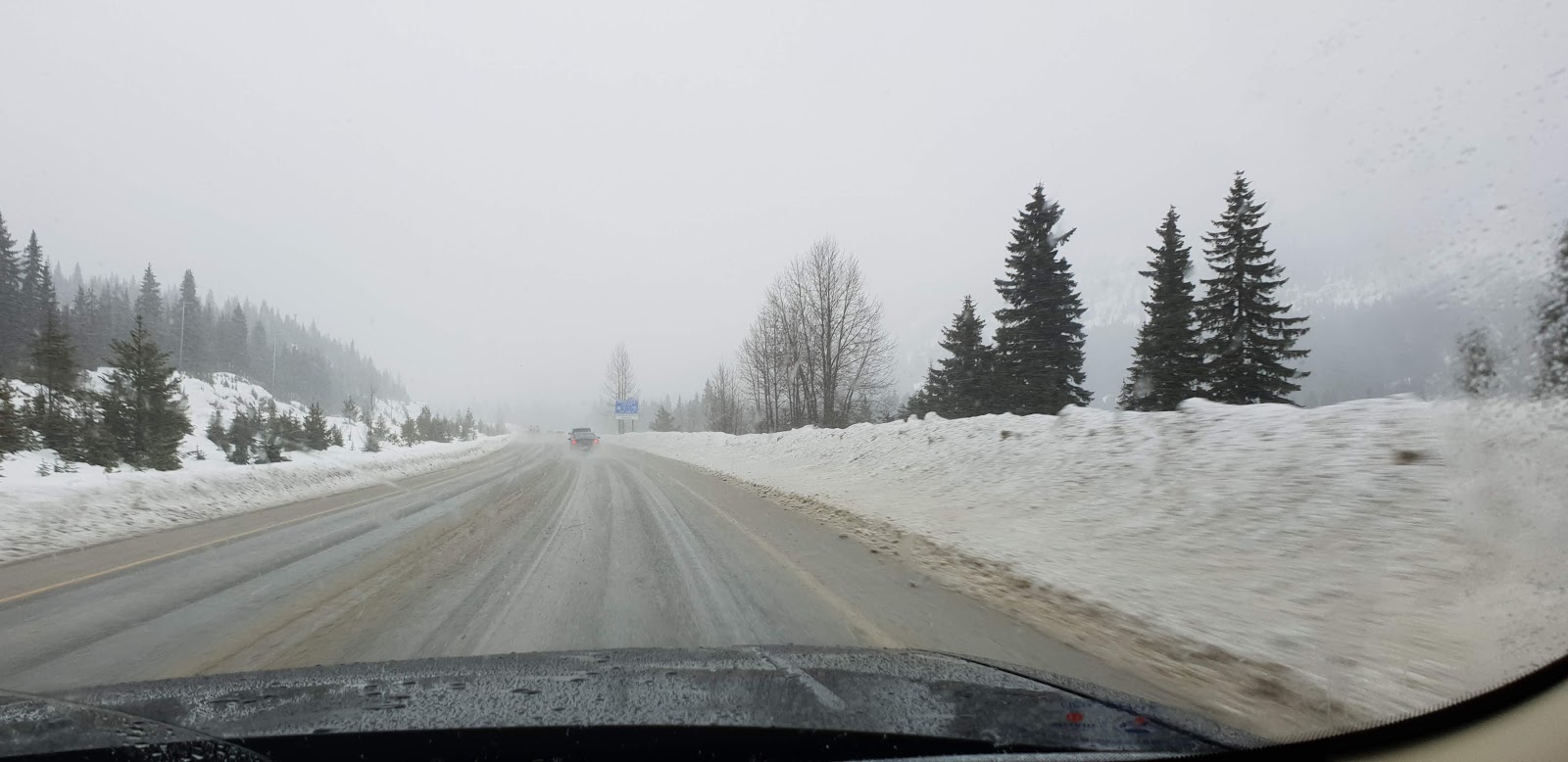
It rains all the way to the top of the mountain, progress hampered from time to time by water sprays from both vehicles and trucks.  The rain is relentless.  At the top of the mountain, the rain turns into snow and the road surface to slush.  It’s 0 degrees, but being the afternoon, I was not expecting it to turn to ice very quickly.

On the other side of the mountain, closer to Kamloops, there was sleet, then rain, then nothing, the last 100kms or so, in reasonably dry conditions.

Outside Kamloops, and in the town itself, there was evidence of snow recently cleared, and slushy roads.  Cars in various places were covered in snow, indicating the most recent falls had been the night before.

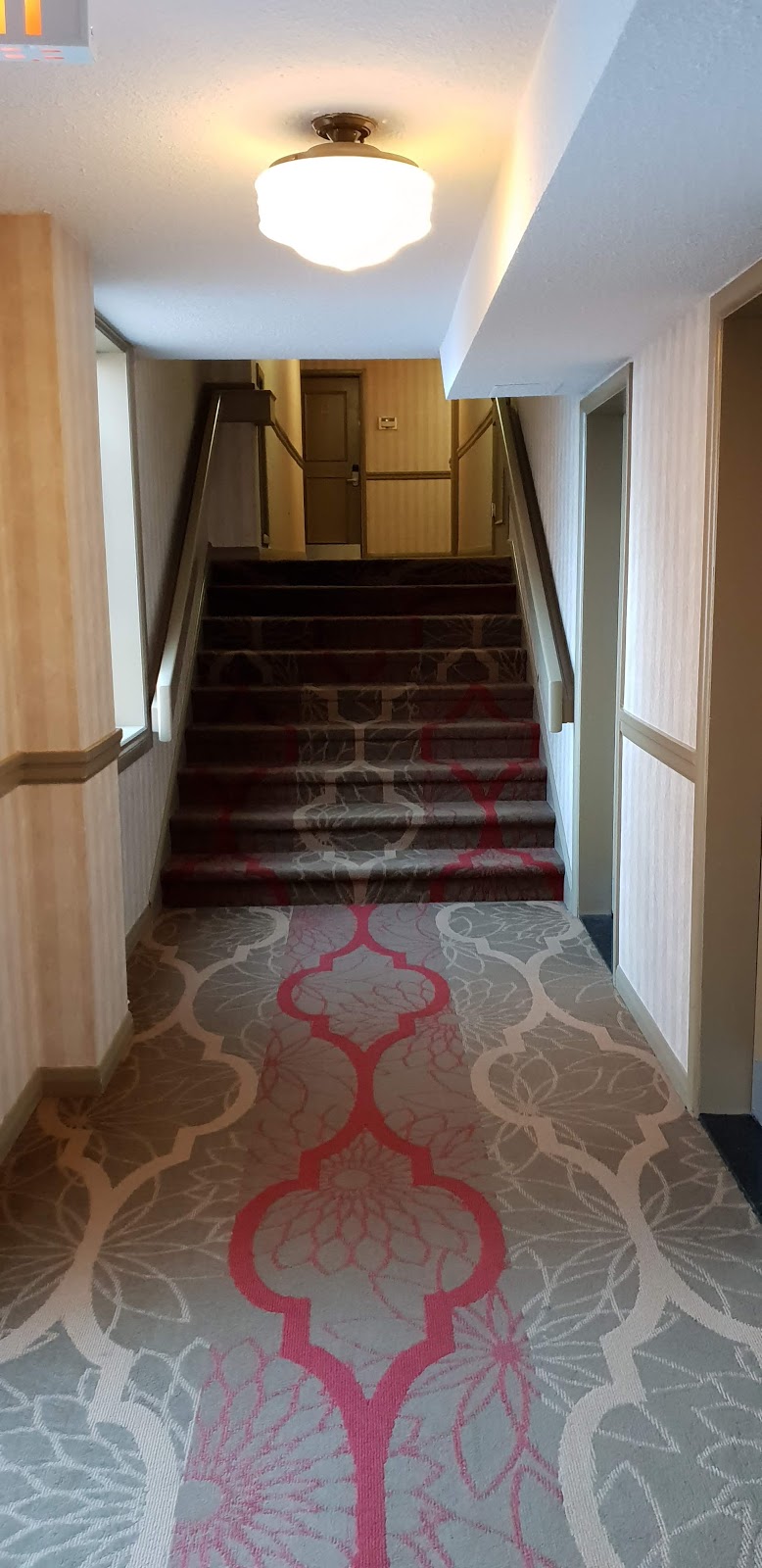
We’re staying at the Park Hotel, a heritage building, apparently built in the later 1920s.  In the style of the time, it is a little like a rabbit warren with passages turning off in a number of directions, and showing it is spread across a number of different buildings.

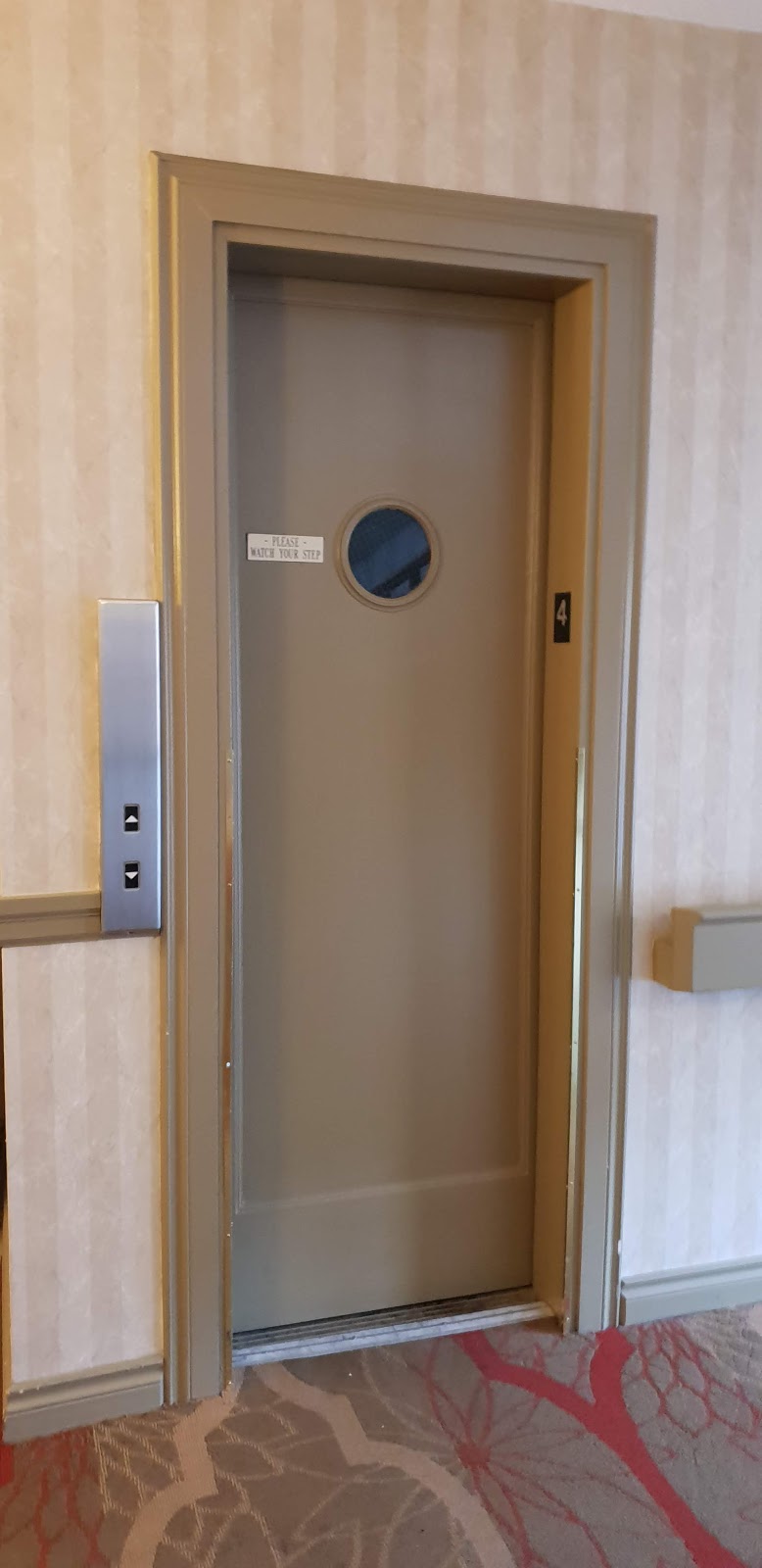
It has the original Otis elevator that can take a maximum of four passengers, and a sign on the wall that says “no horseplay inside the elevator” which is a rather interesting expression that only someone of my vintage would understand.  And, for those without a sense of humor, you definitely couldn’t fit a horse in it to play with.

The thing is, how do you find a balance between keeping the old world charm with modern-day expectations.  You can’t.  Some hotels try valiantly to get that balance.  Here, it is simply old world charm, which I guess we should be grateful for because sooner rather than later it’s going to disappear forever.

In my writer’s mind, given the importance of the railways, this was probably a thriving place for travelers, and once upon a time, there were a lot more hotels like this one.

The cinema of my dreams – I never wanted to go to Africa – Episode 22

Our hero knows he’s in serious trouble.

The problem is, there are familiar faces and a question of who is a friend and who is foe made all the more difficult because of the enemy, if it was the enemy, simply because it didn’t look or sound or act like the enemy.

Now, it appears, his problems stem from another operation he participated in.

Lallo was gone ten minutes, perhaps a specific amount of time that was supposed to make me sweat.  It was warm in the ward so it wasn’t his presence or the questions that made me feel uncomfortable.

It was fear of the unknown.

If anything, it was more likely I’d be going to a black site rather than rest and recuperation in Germany.  And apparently over an operation, I had little or no knowledge of its inception or execution beyond being used for target practice.

Unless the army in its infinite wisdom was looking for a scapegoat, they’d tried pinning it on Treen, but he didn’t play ball, so now it was my turn.  However, just to complicate that thought, why didn’t they just kill me on the ground when they had the chance?

Because they needed me alive.

My mind went back to that fateful operation.

I went over as many of the crew as I could remember.  Ledgeman, Sergeant, explosives expert, he was with me until he was shot, caught in the crossfire, which now made me consider my first assessment of what has happened to him, that it might have been one of us who shot him, was the likely outcome.

Willies, Corporal, also explosives expert, sent with Mason, Gunnery Sergeant like me, who was providing cover for Willies.

Breen, Lieutenant, Leader, although it didn’t exactly appear to be the case, the more I thought about it, there seemed an undertone of indifference from the team towards its leader, one I should have picked up on.  Informal command never worked when push came to shove.

Andrews, Cathcar, Edwards and Sycamore, regular soldiers with combat experience along for protection, Andrews and Sycamore were with us and had worked together before, their camaraderie didn’t extend to me, but they were professional soldiers.

Of all the people in that entire group, why did Treen survive?  In putting the pieces together now in my mind, and if what I remembered was right, he should have been the first to die.

I mean, drugs and paranoia aside, that was the one single damning conclusion I could draw from events.  If he had, then a lot of the others might have survived.

But time was up; Lallo was back, squirming in his seat, and armed with a different coloured notebook.

First question, “What was your opinion of Treen?”

Relevance?  “Competent, but perhaps not truly in charge of his men.”

“How so?”

“I got the impression it was a case of familiarity breeds contempt.”

“You question his ability to command?”

“Just his style.”

Groups who worked together in close combat as a unit, from the top to the bottom, acquired a level of camaraderie that transcended rank.  It was not supposed to, but it did.  It was built on mutual respect and got to a point where everyone knew what they were doing without being asked, or ordered.  I got the impression that had been the case for Treen and his team up till that operation.  Perhaps the loss of one of the team had changed the dynamic.

“He’s there to lead, not be liked.”

“Then why ask me what I thought?  You’d know what I meant by that if you were out on the front line and your life depended on your team.  Something was not right.”

“How did you fit in,” he asked, with an emphasis on the word ‘fit’.

I didn’t, but I was not going to tell him that.  In the end, I just didn’t trust them.  You can get a measure of a man in that first meeting with or speaking with them, and they closed me out from the start.

“I had a job to do and I did it.”

And, it was probably the reason why I walked away.

© Charles Heath 2019-2021

Writing about writing a book – Day 21 continues

I’m still working on Bill’s backstory, and how he got mixed up in the war, and as a general background to his situation, and life before Davenport.

This is still in his own words:


But whether we were stupid or naive, or completely mad, we were all eager to get into battle, filled with the sort of hate only Army propaganda films could fill you with.  They were our enemy, and they deserved to concede or die.

A fresh face in a hardened platoon, I was eager to get on with it.  They looked knowingly, having seen it all before.  No idea of the reality, and no time to tell us.  Have a few beers to celebrate, and then, the next morning, go out on patrol.  No problem.

There was camaraderie, but it was subdued.  We walked single file, the seasoned campaigners in front and at the rear, treading carefully, demanding quiet, and a general cautiousness.  In the middle of nowhere, where only the sound of rain, or the animals and birds for company, we were naive enough to think this was going to be a doddle.

Then it happened, six hours out, and just before we reached a small clearing.  I thought to myself it was odd there should be such a clear space with jungle all around it.  There must be a reason.

There was.

We had walked into an ambush, and everyone hit the ground.  I was bringing up the rear with another soldier, a veteran not much older than myself whose name was Scotty, a little farther back from the main group.  Bullets sprayed the undergrowth, pinging off trees and leaves.  I buried my face in the dirt, praying I would not die on my first patrol.

We became separated from the others, lying in a hollow, with no idea how far away help was.  He was muttering to himself.  “God, I hate this.  You can never see the bastards.  They’re out there, but you can never bloody well see them.”  Then he crawled up the embankment, gun first.

He let off a few rounds, causing a return of machine-gun fire, spattering the dirt at the top.  Next thing I knew he was sliding down the hill with half his face shot away.  Dead.  I threw up there and then.  What an initiation.

Then one of the enemy soldiers came over the hill to check on his ‘kill’.  I saw him at the same time he saw me and aimed my gun and shot.  It was instinct more than anything else, and I hadn’t stopped to think of the consequences.  He fell down, finishing up next to me, staring at me from black, lifeless eyes. 

Dead. 

I’ll never forget those lifeless eyes.  I just got up and ran, making it back to the rest of the group without getting hit.  No one could explain how I made it safely through the hail of gunfire, from our side and theirs.

Back in the camp later, the veterans remarked on how unlucky Scotty was and how lucky I was to shoot one of the enemies, and not be killed myself.  They all thought it was worth a celebration.

Before we went out the next day to do it all again.

I spent the night vomiting, unable to sleep, haunted look on his face, one I finally realized that reflected complete astonishment.


There will be more, as the story develops.


© Charles Heath 2016-2020

Searching for locations: Driving in ice and snow, Canada

This morning started with a visit to the car rental place in Vancouver.  It reinforced the notion that you can be given the address and still not find the place.  It happened in Washington where it was hiding in the back of the main railway station, and it happened again in Vancouver when it was hidden inside a hotel.

We simply walked straight past it.  Pity there wasn’t a sign to let people know.

However…

We went in expecting a Grand Jeep Cherokee and walked out with a Ford Flex, suitable for three people and four large suitcases.  It actually seats 7, but forget the baggage, you’d be lucky to get two large suitcases in that configuration.

It is more than adequate for our requirements.

Things to note, it was delivered with just over a quarter of a tank of gas, and it had only done about 11,000 km, so it’s relatively new.  It’s reasonably spacious, and when the extra seats are folded down, there is plenty of baggage space.

So far, so good.

We finally leave the hotel at about half-past ten, and it is raining.  It is a simple task to get on Highway 1, the TransCanada Highway, initially, and then onto Highway 5, the Coquihalla Highway for the trip to Kamloops.

It rains all the way to the top of the mountain, progress hampered from time to time by water sprays from both vehicles and trucks.  The rain is relentless.  At the top of the mountain, the rain turns into snow and the road surface to slush.  It’s 0 degrees, but being the afternoon, I was not expecting it to turn to ice very quickly.

On the other side of the mountain, closer to Kamloops, there was sleet, then rain, then nothing, the last 100kms or so, in reasonably dry conditions.

Outside Kamloops, and in the town itself, there was evidence of snow recently cleared, and slushy roads.  Cars in various places were covered in snow, indicating the most recent falls had been the night before.

We’re staying at the Park Hotel, a heritage building, apparently built in the later 1920s.  In the style of the time, it is a little like a rabbit warren with passages turning off in a number of directions, and showing it is spread across a number of different buildings.

It has the original Otis elevator that can take a maximum of four passengers, and a sign on the wall that says “no horseplay inside the elevator” which is a rather interesting expression that only someone of my vintage would understand.  And, for those without a sense of humor, you definitely couldn’t fit a horse in it to play with.

The thing is, how do you find a balance between keeping the old world charm with modern-day expectations.  You can’t.  Some hotels try valiantly to get that balance.  Here, it is simply old world charm, which I guess we should be grateful for because sooner rather than later it’s going to disappear forever.

In my writer’s mind, given the importance of the railways, this was probably a thriving place for travelers, and once upon a time, there were a lot more hotels like this one.

The cinema of my dreams – I never wanted to go to Africa – Episode 21

Our hero knows he’s in serious trouble.

The problem is, there are familiar faces and a question of who is a friend and who is foe made all the more difficult because of the enemy, if it was the enemy, simply because it didn’t look or sound or act like the enemy.

Now, it appears, his problems stem from another operation he participated in.

Lallo delivered that statement with deceptive calm, and I didn’t miss the inference.  That is if he was trying to say that anyone associated with that operation was likely to end up dead sooner rather than later.

Food for thought indeed, and suddenly it explained the reason for this interrogation.  And though I didn’t want to believe it, or even think it possible, Breeman might be in some way connected with that operation.  Or someone involved in it.

Suddenly I found my mid connecting dots, real or imaginary, that led back to Breeman requesting my transfer, knowing who I was, and then becoming closer in a way that was not expected, or could be explained, which had consequences if it came to light.

That was what Bamfield was alluding to in the desert camp.

But even Lallo had to admit it would be stretch at best to tie what was a random event being selected for what was basically an off-book training flight to being shot down, and link to a failed operation, and a suspicious suicide by Treen. 

Especially when it was Bamfield’s own men who shot the helicopter out of the sky because we had so-called encroached the no-fly zone.  Yet, by extension, if those people knew the proximity of the helicopter to the ground, and how thorough my survival training had been, that posed a whole new raft of questions, which, right then, I didn’t want to think about.

No, it was utterly ridiculous.  My thoughts were simply the manna which drove conspiracy theories.  Lallo was jumping to conclusions, and even I was guilty of the same offence.

Time to put it out of my mind, and answer the question, even if it sounded rhetorical.  “It was the Colonel who tried to kill me, not the person who sent me on that operation.  Are you trying to tell me Bamfield is involved in more than one conspiracy?”

Lallo simply shook his head, made a note in his notebook, and turned the page.

“Let’s go back to the day you were assigned to the ill-fated exercise.  How many of your number at that particular base, are available for helicopter duty?”

“Four.”

“Who assigns the missions?”

“Operations.”

“Not the commanding officer?”

“No.”

“And in this particular case, when you were sent on the fatal mission?”

“I had to countersign the order.  I didn’t see her name on the form.”

“But she would know, or be able to make suggestions.”

There was a group who made those decisions, not any one person, and it was possible anyone of that group could make a suggestion.  But, as for Breeman, I doubt she was interested in that level of micromanagement.

Yet there was a suggestion I’d been moved off the active roster, and that it was possibly on her orders.  Perhaps it would be best not to say anything about that.  It also begged the question of why.  Had she known something might happen to me?  Or did she have an idea what might happen for another reason?

“Anything is possible, but I’m not privy to the machinations of command.  I just do as I’m ordered.”

He smiled thinly.  “I’m sure you’d say that even if it wasn’t true.”

Lallo was becoming an annoying little gnat, so I decided to treat him like one.  “Is there an actual point to these questions, other than to dredge up past history, make erroneous accusations, and base all your conclusions on conjecture?”

“I simply deal with the facts before me.”  It was almost a childish response.

A face hovered outside the ward door, and he noticed it.

“Excuse me.”  He put down the notebook and headed out the door.  Monroe remained, looking menacing.

Was someone else listening, and didn’t like the turn of events?

© Charles Heath 2019-2021