“The End of the Road”, a short story

From the days of wandering the remote country towns of New South Wales in Australia.


The End of the Road


The man who had said that we would never make the distance was right.

It had been my idea to go ‘troppo’, forsake everything, hop on a motorbike and go around Australia.  I was, at that stage fed up with everything and, catching Harry in one of his low spots, he decided there and then he would join me.

For the first few days, we believed we were stark staring mad and talked about calling it quits, but perseverance made all the difference.  After two months we were glad we had the resolve to keep going, and in that time we had managed to see more of the Australian countryside than we’d seen all our lives.

That was until this particular morning when we arrived in Berrigum, what could have been called a one-horse town.  It consisted of one hotel, one general store (that sold everything from toothpicks to petrol) and an agricultural machinery depot.  It also had a station and some wheat silos, and this appeared to be the only reason for a town in this particular spot in the middle of nowhere.

And it was the railway station that interested Harry, who was, by this time, getting a little homesick and fed up with his motorbike.

After coughing and spluttering for the last week it had finally died, and the five-mile walk to Berrigum had not helped either his temper, or his disposition, and had only served to firm his resolve to return home.

It was hot but not unbearably so, unlike a hot summer’s day in the city, and even worse still in public transport.  For miles around as we tramped those five miles all we could see was acres and acres of wheat, but no sign of life.  It was the same when we reached the town.  It appeared all the people were either hiding or had left.  Harry suspected the latter given the state of the road, and the buildings, more or less the epitome of a ghost town.

Standing at the end of what could have been called the main street with only our own dust for company, one look took in the whole town.  In a car, one wouldn’t have given it a second look, if one had time to give it a first.  I didn’t remember seeing neither any speed restriction signs nor signpost advertising a town ahead.

And since no amount of argument could sway him from his resolve, the first objective was to get a train timetable, if such a thing existed, and make arrangements for Harry’s return.

The station was as deserted as the town itself, and a quick glance in the stationmaster’s office showed no sign of life.

Leaving the bikes on the platform outside the office, we headed for the hotel for both a drink and make enquiries about rail services.  Being a hot day and the morning’s tramp somewhat hot and dusty, we were looking forward to a cold glass (or two) of beer.

The hotel looked as though it was a hundred years old though there was no doubting a few relentless summers would reduce it to the same state.  It was as bad inside as out, though the temperature was several degrees lower, and we could sit down in what appeared to be the main bar.  We were the only occupants and still to find any sign of life.  Overhead, two fans were struggling to move the hot air around.

More than once Harry reckoned it was a ghost town and I was beginning to believe him when, after five minutes, no one arrived.

After ten, we stood, ready to leave, only to stop halfway out of our chairs when a voice behind us said, “Surely you’re not going back out there without refreshment?”

“I was beginning to think the town was deserted,” I said.

“It is during the day, but when the sun goes down…”

I didn’t ask.  We followed him to the bar where he had stationed himself behind the counter.  “The name is Jack.”  He stretched out his hand towards us.  “We don’t bother with last names here.”

“Bill,” I said, shaking it, and nodding to Harry, “Harry.”

Harry nodded and shook his hand too.

“The first one’s on the house.”  He poured three glasses and put ours in front of us.  “Cheers.”

In all cases, it went down without touching the sides (as they say) and he poured a second, at the same time asking, “What brings you to our little corner of the earth?”

“Just passing through,” I said, “Or at least for me.”

“And you?”  Jack looked at Harry.

“I can’t hack the pace.  I can truthfully say I have thoroughly enjoyed the trip so far, except for a few mishaps, but for me, it’s time to get back to the big smoke.  My ‘do your own thing’ has run out of momentum.  Do you know if there is a train that goes anywhere important?”

The publican looked at him almost pityingly.  “Important, eh?”  He rubbed his chin feigning thought.  “You make it sound like you are in purgatory.”

“Aren’t we?”

I suppose one could hardly blame Harry for his attitude.  After all, at the beginning, he had numerous accidents, caught a virus that stayed with him (and a couple of torrential downpours had done little to help it), and now his motorbike had finally died.  No wonder his humour was at an all-time low.

For a moment I thought the publican was going to tell Harry what he thought of him, but then he smiled and the tension passed.  “Perhaps to a city fellow like you it might be,” he said.  “The mail train which has a passenger carriage comes through once a week, and, my good man, you’re in luck.  Today’s the day.”

“Good.  How do I get a ticket?”

“You’d have to see the Station Master.”

“And where might he be at the moment?  We were at the station a while back and there was no sign of life.”

“Nor will there be until the train comes.  Meanwhile, there’s time enough for lunch.  I’m sure you will stay?”  He looked questioningly at us.

I looked at Harry, who nodded.

“Why not.”


Over lunch, we talked.

I remember not so long ago when I had to attend a large number of lunches where the talk was of business, or, if anything, mostly about subjects that I had no interest in.  It was always some posh restaurant, time seemed important, the atmosphere never really relaxed, and to get into a relaxed state it took a large amount of alcohol to deaden the despair and distaste of that one had to fete in order to secure their business.

How different it was here.

We talked about the country, and, after seeing as much of it, and worked on it as we had to fund our odyssey, we could talk about it authoritatively.  And, most of all, it was interesting.

The atmosphere too was entirely different than it had been in the city.  Out here the people were always friendly, people always willing to stop and talk, particularly farmers; share a drink or some food.

There was none of this carefree purposefulness in the city, and more than once I’d thought of the fact one could travel in the same train with the same people for year after year and still not know any of them.  It was the same at work.  Even after five years I still hadn’t known three-quarters of the office staff, and most of them probably didn’t want to know me.  Harry was virtually the only real friend I’d had at work.

But here, in ‘the middle of nowhere’ as Harry had called it, I felt as though I’d known the publican all of my life instead of the few short hours.


Some hours later and after much argument, where Jack and I tried to talk Harry into staying (Jack said he knew someone who could fix anything including Harry’s bike), Harry remained unconvinced and resolute.  Jack, to round off the occasion (we were the first real guests from outside he had had in a week) provided another on-the-house ale and then saw us to the station.  “After all”, he had said, “I’ve nothing else to do at the moment.”

By that time the station was showing a little more life than it had before.  A station assistant, moving several parcels with a hand trolley, slowly ambled towards the end of the platform.

And whether it could be called a platform was a debatable point.  It was a gravel and grass affair that looked more like part of cutting through a hill than a station.

At the station, Jack portentously announced he was also the stationmaster and would be only too happy to take care of Harry’s requirements.  It would be, he added, “the first passenger ticket sold for several months.”  Certainly, the ticket he handed Harry bore witness to that.  It had yellowed with age.

One would have thought with the imminent arrival of the train there would be more people, but no.  The only event had been the station assistant’s stroll to the end of the platform and back.  Now both he and Jack had disappeared into the office and we were left alone on the platform.  Very little in the whole town stirred, nor had it the whole time we’d been there.

“Well,” I said to break the silence.  “I’m sorry to see you going through with it.  I thought I might have been able to talk you out of it…”  I shrugged, leaving the sentence unfinished.

“I’m sorry to be going too, but a body can take only so much bad luck, and God knows that’s all I’ve had.”

“Yes.”  I couldn’t think of much else to say.  “But it’s been good to have your company these last few months.”

“And you.  When do you think you’ll get back?”

“When I get sick of it I suppose.”

“Look us up then when you get back.”

“I will.”

Thankfully the appearance of the train in the distance broke off the conversation.  I had begun to think of what it was going to be like out on the road with no one to talk to but myself.  The thought was a little depressing and I tried not to let it show.

We said little else until the train pulled in, three flat cars, seven enclosed wagons, a passenger carriage and the guard’s van.  The train stopped with only part of the passenger carriage and the guard’s van at the station.

The guard took aboard the parcels the station assistant had left for him earlier, and then put those that were for Berrigum on the trolley.

I shook Harry’s hand and said I’d see him around.  Then he, the motorbike, and the guard were aboard and the train was off, disappearing slowly into the afternoon haze.

The station assistant then repeated his amble to the end of the platform to collect the hand trolley.

“Staying or moving on.”  Jack had come up behind me and gave me a bit of a start.

“Staying I guess, until tomorrow or maybe later.”

“I had heard one of the farm hands is leaving tomorrow heading back to Sydney.  There could be a vacancy.”

“Sounds like a plan,” I said.

“I could put in a word for you.”

“Thanks.”

Jack just grinned and we headed for the hotel.


© Charles Heath 2016-2019
Motive, means, and opportunity – Motive

I’m working on a novella which may boringly be called “Motive, Means and Opportunity” where I will present a chunk of information from which you if you want to, can become the armchair detective.

Here’s the first part, the so-called Motive


So, here’s the thing…

I said it.  Not once, in the heat of the moment, but more than once, to several different people.  I wanted James Burgman dead.

Why?

Because I knew he was the man sleeping with my wife, Wendy.

I’d long suspected she was having an affair, you know the signs, not where you expect her to be, making excuses where none were necessary if she was doing what she said she was, and disappearing for hours without an explanation.

And I knew James Burgman was an old boyfriend, a discovery that was made quite by accident.  In fact, I followed her one night, not because I was suspicious, but worried for her safety.

That was where I saw her meet him with more than just a friendly handshake.

I had to say it made me feel gutted.

But would I kill him?

It was not worth the problems it would cause me to do so, and, when push came to shove, neither of them were worth it.  I knew, even if he was out of the way, she would not stay with me. 

That train had left the station about a year ago when our only son had been killed in a senseless road accident.


© Charles Heath 2019

Inspiration, maybe

A picture paints … well, as many words as you like.  For instance:

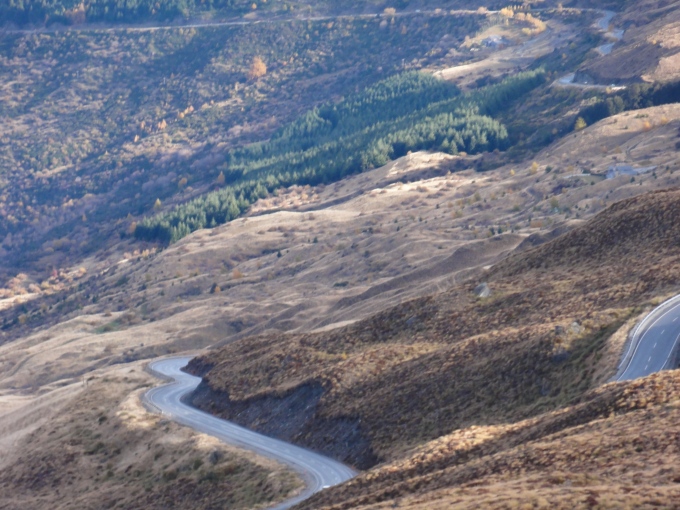
lookingdownfromcoronetpeak

And the story:


It was once said that a desperate man has everything to lose.

The man I was chasing was desperate, but I, on the other hand, was more desperate to catch him.

He’d left a trail of dead people from one end of the island to the other.

The team had put in a lot of effort to locate him, and now his capture was imminent.  We were following the car he was in, from a discrete distance, and, at the appropriate time, we would catch up, pull him over, and make the arrest.

There was nowhere for him to go.

The road led to a dead-end, and the only way off the mountain was back down the road were now on.  Which was why I was somewhat surprised when we discovered where he was.

Where was he going?


“Damn,” I heard Alan mutter.  He was driving, being careful not to get too close, but not far enough away to lose sight of him.

“What?”

“I think he’s made us.”

“How?”

“Dumb bad luck, I’m guessing.  Or he expected we’d follow him up the mountain.  He’s just sped up.”

“How far away?”

“A half-mile.  We should see him higher up when we turn the next corner.”

It took an eternity to get there, and when we did, Alan was right, only he was further on than we thought.”

“Step on it.  Let’s catch him up before he gets to the top.”

Easy to say, not so easy to do.  The road was treacherous, and in places just gravel, and there were no guard rails to stop a three thousand footfall down the mountainside.

Good thing then I had the foresight to have three agents on the hill for just such a scenario.


Ten minutes later, we were in sight of the car, still moving quickly, but we were going slightly faster.  We’d catch up just short of the summit car park.

Or so we thought.

Coming quickly around another corner we almost slammed into the car we’d been chasing.

“What the hell…” Aland muttered.

I was out of the car, and over to see if he was in it, but I knew that it was only a slender possibility.  The car was empty, and no indication where he went.

Certainly not up the road.  It was relatively straightforward for the next mile, at which we would have reached the summit.  Up the mountainside from here, or down.

I looked up.  Nothing.

Alan yelled out, “He’s not going down, not that I can see, but if he did, there’s hardly a foothold and that’s a long fall.”

Then where did he go?

Then a man looking very much like our quarry came out from behind a rock embedded just a short distance up the hill.

“Sorry,” he said quite calmly.  “Had to go if you know what I mean.”


I’d lost him.

It was as simple as that.

I had been led a merry chase up the hill, and all the time he was getting away in a different direction.

I’d fallen for the oldest trick in the book, letting my desperation blind me to the disguise that anyone else would see through in an instant.

It was a lonely sight, looking down that road, knowing that I had to go all that way down again, only this time, without having to throw caution to the wind.

“Maybe next time,” Alan said.

“We’ll get him.  It’s just a matter of time.”


© Charles Heath 2019

Find this and other stories in “Inspiration, maybe”  available soon.

InspirationMaybe1v1


Betwixt metaphorical houses

It’s like working in two offices, one uptown, and one downtown.

I have two blogs, this one, and another which is purely for writing, and generally, a lot of starts and not a lot of finishes.  I get ideas, and it’s a place to store them, and give a few people some amusement at my, sometimes, improbable situations and far-fetched stories.

Here I try to be more serious.

I have the ceiling, the cinema of my dreams.  Here anything is possible, like jumping from a helicopter about to explode, and survive, and get out of a sinking ship, like Houdini.  Of course, there is always one time when it doesn’t work, and Houdini knows that all too well.

Over there, I have a series which I started here, long ago, where I take a photograph and write a story inspired by it.  The interesting thing about that is I could probably use the same photograph over and over, and it would inspire a different tale.

I know, if I was running a writing class, everyone would see that photograph differently.

But what amazes me sometimes is the fact the story is not directly related to the theme.  It got me thinking about how we view our experiences, and what triggers memories.  I’ve discovered that it doesn’t necessarily happen by correlation, say, for instance, a memory of being in New York might be triggered by a visit to a cafe in Cloncurry.

I try to do one of these every day, but sometimes it’s hard work.  Writing itself can be some days, particularly when the words are lurking there, behind that invisible, impenetrable, rock wall.

OK, so I’m stuck in the middle of writing a piece over there, and I’ve come over here to whinge.

But, enough.  I’ll let you know what the cinema of my dreams is showing, later.

Was it just another surveillance job – Episode 21

I’m back home and this story has been sitting on a back burner for a few months, waiting for some more to be written.

The trouble is, there are also other stories to write, and I’m not very good at prioritising.

But, here we are, a few minutes opened up and it didn’t take long to get back into the groove.

An unlikely ally?


“Wait.”

It seemed that I had managed to scare her.  Either that, or she had decided to be a little more forthcoming.  I stopped and waited until she caught up.  I was nearly at the top of the stairs.

“Look, I have to go back to my people, and I’ll get them to look into those two people you don’t seem to trust, who were they, Nobbin and Severin?”

“I don’t think you want to do that.  You start making waves, your people will send out feelers and they’ll get to hear about it, and they will know exactly where it came from, and it’ll come back and bite you.  For your own peace of mind, I’d let the sleeping dogs lie.”

She seemed over-eager to get ahead using this as a steppingstone.  I’d seen the type, in the training ranks, and in former jobs.  She was clearly assigned this job because of her looks, and she might be a good agent too, but she hadn’t thought this through.

“Are you telling me to back off?”

“I’m trying to save your life.  If I have no idea who to trust, then I have to assume both of them are theoretically the enemy.  I’m still counting the blessings I’m still alive, but I suspect that will only last until the USB is found.  The rest of my team are dead.”

Now that put the right amount of fear into her.

“If they’re willing to kill everybody that’s come in contact with this information, I doubt they’d stop at killing the both of us if we got in their way.”

“Then you have a plan?”

“At the moment that plan consists of one line.  Stay alive and find the USB before they do.  After that, I’ll see what happens.”

I caught sight of an incident, two people almost colliding, and one, I noticed, was more intent on his phone which is what caused the clash.  And, a second later, I thought I recognised one of the two.

Maury.  Severin’s offsider, and more likely cleanup man.  My guess, he was the one searching O’Connell’s flat, and Jan’.”

I think it was safe to say she was compromised.

“Ok,” I said quietly, “we have a problem, well two problems.”  And if I was wrong about her, and she was one of Severin’s people, which, seeing Maury just turned a probable into a likely, I had three.

If she was, I hadn’t seen that coming. 

“What now?”

Time to test the water.

“One of Severin’s men is downstairs, mingling, which means he knows I’m here, and maybe you two.”

I did a quick check of my scan of O’Connell’s, thinking I might have picked up a bug.  It was the only explanation why Maury was here.  And, it was likely he was not alone.

Not me.  Jan?

“Did you take anything from O’Connell’s?”

“No.  Why?”

“Are you sure.  Think”

While scanning the lower floor of the station looking, no doubt, for Maury, and anyone that might present a problem, she looked like she was recounting her steps.

“Damn.  A pen.  I left it there the last time I saw him.”  She pulled it out of her bag and went to toss it in the bin.

I snatched it, and as someone brushed past me, I dropped it into their pocket.

A flash of annoyance, then, “Hey, that cost a lot of money.”

“Then be grateful it didn’t cost you your life.  Yet.”

We waited, keeping far enough back from the stairs, but with still a good view of the station.  I kept an eye on the man whom I gave the pen as he made his way across the floor towards one of the platforms.  Luckily it was at the furthest end, and as he approached it, I saw three figures, and Maury slowly make their way towards him forming a blockade so he couldn’t escape.

“Time to go.”

She had noticed the movement too.

We went down the stairs and headed towards the first available exit.  As we were going out the door, we heard a commotion, the team obviously apprehending the wrong man, who would be wondering why four burly men were accosting him on his way home.

We didn’t wait to find out what happened to him.


© Charles Heath 2019

Inspiration, maybe

A picture paints … well, as many words as you like.  For instance:

lookingdownfromcoronetpeak

And the story:


It was once said that a desperate man has everything to lose.

The man I was chasing was desperate, but I, on the other hand, was more desperate to catch him.

He’d left a trail of dead people from one end of the island to the other.

The team had put in a lot of effort to locate him, and now his capture was imminent.  We were following the car he was in, from a discrete distance, and, at the appropriate time, we would catch up, pull him over, and make the arrest.

There was nowhere for him to go.

The road led to a dead-end, and the only way off the mountain was back down the road were now on.  Which was why I was somewhat surprised when we discovered where he was.

Where was he going?


“Damn,” I heard Alan mutter.  He was driving, being careful not to get too close, but not far enough away to lose sight of him.

“What?”

“I think he’s made us.”

“How?”

“Dumb bad luck, I’m guessing.  Or he expected we’d follow him up the mountain.  He’s just sped up.”

“How far away?”

“A half-mile.  We should see him higher up when we turn the next corner.”

It took an eternity to get there, and when we did, Alan was right, only he was further on than we thought.”

“Step on it.  Let’s catch him up before he gets to the top.”

Easy to say, not so easy to do.  The road was treacherous, and in places just gravel, and there were no guard rails to stop a three thousand footfall down the mountainside.

Good thing then I had the foresight to have three agents on the hill for just such a scenario.


Ten minutes later, we were in sight of the car, still moving quickly, but we were going slightly faster.  We’d catch up just short of the summit car park.

Or so we thought.

Coming quickly around another corner we almost slammed into the car we’d been chasing.

“What the hell…” Aland muttered.

I was out of the car, and over to see if he was in it, but I knew that it was only a slender possibility.  The car was empty, and no indication where he went.

Certainly not up the road.  It was relatively straightforward for the next mile, at which we would have reached the summit.  Up the mountainside from here, or down.

I looked up.  Nothing.

Alan yelled out, “He’s not going down, not that I can see, but if he did, there’s hardly a foothold and that’s a long fall.”

Then where did he go?

Then a man looking very much like our quarry came out from behind a rock embedded just a short distance up the hill.

“Sorry,” he said quite calmly.  “Had to go if you know what I mean.”


I’d lost him.

It was as simple as that.

I had been led a merry chase up the hill, and all the time he was getting away in a different direction.

I’d fallen for the oldest trick in the book, letting my desperation blind me to the disguise that anyone else would see through in an instant.

It was a lonely sight, looking down that road, knowing that I had to go all that way down again, only this time, without having to throw caution to the wind.

“Maybe next time,” Alan said.

“We’ll get him.  It’s just a matter of time.”


© Charles Heath 2019

Find this and other stories in “Inspiration, maybe”  available soon.

InspirationMaybe1v1


Inspiration, maybe

A picture paints … well, as many words as you like.  For instance:

lookingdownfromcoronetpeak

And the story:


It was once said that a desperate man has everything to lose.

The man I was chasing was desperate, but I, on the other hand, was more desperate to catch him.

He’d left a trail of dead people from one end of the island to the other.

The team had put in a lot of effort to locate him, and now his capture was imminent.  We were following the car he was in, from a discrete distance, and, at the appropriate time, we would catch up, pull him over, and make the arrest.

There was nowhere for him to go.

The road led to a dead-end, and the only way off the mountain was back down the road were now on.  Which was why I was somewhat surprised when we discovered where he was.

Where was he going?


“Damn,” I heard Alan mutter.  He was driving, being careful not to get too close, but not far enough away to lose sight of him.

“What?”

“I think he’s made us.”

“How?”

“Dumb bad luck, I’m guessing.  Or he expected we’d follow him up the mountain.  He’s just sped up.”

“How far away?”

“A half-mile.  We should see him higher up when we turn the next corner.”

It took an eternity to get there, and when we did, Alan was right, only he was further on than we thought.”

“Step on it.  Let’s catch him up before he gets to the top.”

Easy to say, not so easy to do.  The road was treacherous, and in places just gravel, and there were no guard rails to stop a three thousand footfall down the mountainside.

Good thing then I had the foresight to have three agents on the hill for just such a scenario.


Ten minutes later, we were in sight of the car, still moving quickly, but we were going slightly faster.  We’d catch up just short of the summit car park.

Or so we thought.

Coming quickly around another corner we almost slammed into the car we’d been chasing.

“What the hell…” Aland muttered.

I was out of the car, and over to see if he was in it, but I knew that it was only a slender possibility.  The car was empty, and no indication where he went.

Certainly not up the road.  It was relatively straightforward for the next mile, at which we would have reached the summit.  Up the mountainside from here, or down.

I looked up.  Nothing.

Alan yelled out, “He’s not going down, not that I can see, but if he did, there’s hardly a foothold and that’s a long fall.”

Then where did he go?

Then a man looking very much like our quarry came out from behind a rock embedded just a short distance up the hill.

“Sorry,” he said quite calmly.  “Had to go if you know what I mean.”


I’d lost him.

It was as simple as that.

I had been led a merry chase up the hill, and all the time he was getting away in a different direction.

I’d fallen for the oldest trick in the book, letting my desperation blind me to the disguise that anyone else would see through in an instant.

It was a lonely sight, looking down that road, knowing that I had to go all that way down again, only this time, without having to throw caution to the wind.

“Maybe next time,” Alan said.

“We’ll get him.  It’s just a matter of time.”


© Charles Heath 2019

Find this and other stories in “Inspiration, maybe”  available soon.

InspirationMaybe1v1


Inspiration, maybe

A picture paints … well, as many words as you like.  For instance:

lookingdownfromcoronetpeak

And the story:


It was once said that a desperate man has everything to lose.

The man I was chasing was desperate, but I, on the other hand, was more desperate to catch him.

He’d left a trail of dead people from one end of the island to the other.

The team had put in a lot of effort to locate him, and now his capture was imminent.  We were following the car he was in, from a discrete distance, and, at the appropriate time, we would catch up, pull him over, and make the arrest.

There was nowhere for him to go.

The road led to a dead-end, and the only way off the mountain was back down the road were now on.  Which was why I was somewhat surprised when we discovered where he was.

Where was he going?


“Damn,” I heard Alan mutter.  He was driving, being careful not to get too close, but not far enough away to lose sight of him.

“What?”

“I think he’s made us.”

“How?”

“Dumb bad luck, I’m guessing.  Or he expected we’d follow him up the mountain.  He’s just sped up.”

“How far away?”

“A half-mile.  We should see him higher up when we turn the next corner.”

It took an eternity to get there, and when we did, Alan was right, only he was further on than we thought.”

“Step on it.  Let’s catch him up before he gets to the top.”

Easy to say, not so easy to do.  The road was treacherous, and in places just gravel, and there were no guard rails to stop a three thousand footfall down the mountainside.

Good thing then I had the foresight to have three agents on the hill for just such a scenario.


Ten minutes later, we were in sight of the car, still moving quickly, but we were going slightly faster.  We’d catch up just short of the summit car park.

Or so we thought.

Coming quickly around another corner we almost slammed into the car we’d been chasing.

“What the hell…” Aland muttered.

I was out of the car, and over to see if he was in it, but I knew that it was only a slender possibility.  The car was empty, and no indication where he went.

Certainly not up the road.  It was relatively straightforward for the next mile, at which we would have reached the summit.  Up the mountainside from here, or down.

I looked up.  Nothing.

Alan yelled out, “He’s not going down, not that I can see, but if he did, there’s hardly a foothold and that’s a long fall.”

Then where did he go?

Then a man looking very much like our quarry came out from behind a rock embedded just a short distance up the hill.

“Sorry,” he said quite calmly.  “Had to go if you know what I mean.”


I’d lost him.

It was as simple as that.

I had been led a merry chase up the hill, and all the time he was getting away in a different direction.

I’d fallen for the oldest trick in the book, letting my desperation blind me to the disguise that anyone else would see through in an instant.

It was a lonely sight, looking down that road, knowing that I had to go all that way down again, only this time, without having to throw caution to the wind.

“Maybe next time,” Alan said.

“We’ll get him.  It’s just a matter of time.”


© Charles Heath 2019

Find this and other stories in “Inspiration, maybe”  available soon.

InspirationMaybe1v1


“Second Thoughts”, a short story

Get me to the church on time.

It was a tune out of My Fair Lady, and it was in my head the moment I woke up that morning.  And this day was, to quote some immortal’s line, was supposed to be the happiest day of my life.

But, somehow, it didn’t feel like that and lying under the warm covers of my bed, perhaps for the last time at my parent’s home, the last place I thought I’d find myself, I began to consider how it was I had ended up in this situation.

It was not a question of who the bride was, we had been friends from an early age and used to joke about getting married, but at the age of six or seven, that was a concept rather than something we might act on in the future.

Except that was how it panned out, and, not for the reasons one might think would lead to such an eventuality.

Yes, we were close friends till the early teens, then my family went in one direction, New York, and her family went in another, San Francisco, and in each place both families built successful businesses.

Josephine, the intended bride, and I met off and on over the next fifteen years, some of that mutually when we were at university together, and, I might add, living together.  Even then, there had been no suggestion of permanency because we each had to go home to eventually work in the family business.

In those few years, it had been easy because there had been no expectations by either of us.  We simply came together, stayed together, and parted at the end both happy to have enjoyed the experience.

Then, several events changed the course of our lives.

My father died unexpectedly at a crucial point in the company’s expansion, and without his direction, it began to flounder.  Then, Josephine arrived in New York to open a branch of her family’s business, and just happened to arrive on the day of my father’s funeral.

I thought it a coincidence and was grateful for her support at a time when I needed it.

A month after that, one of the lead investors in the new expansion plan pulled out, as was his right because the loan had been contingent on my father overseeing the project.  It was the end of a very bad week, and instead of being the last to leave the office, I left early, called up an old friend, Rollo, who had followed us to New York, and we went to his favourite bar.

He suggested a night on the town was called for and I agreed with him.  I think by that time I’d had enough of the problems for a few days.  But with Rollo, I learned no invitation was without its twists and turns, so when he said his sister was bringing a friend, I had to act happy even if I didn’t feel like it.  Her friends could be a little strange.

Another coincidence, the friend was Josephine.  Hearing from her once maybe, but twice in the same week, I didn’t think so, so I let it pass.  Yet despite my reservations, in the end, I had to admit I was glad to see her because the last thing I wanted to do was entertain a quirky woman I didn’t know.

Long story short, Josephine’s family business came aboard as the replacement investor, but not without some rather stringent requirements, and though no one on either side would admit it, it was suggested that perhaps Josephine and I would make an excellent match.  After all, we were childhood friends, had lived together without the problems that sometimes came with it, and we would be working very closely together.

I proposed, she accepted, and everyone was happy.

Well, not everyone.


I was down in the dining room getting breakfast, before the wedding, when Rollo arrived.  It went without saying Rollo was going to be the best man.

Curiously, he was neither surprised nor shocked to learn of my proposal, but it was a surprise to learn, in a roundabout way, he wasn’t exactly happy for me.  It was not anything I could put my finger on, but more of a feeling I had.  And, to be honest, before I had proposed to her, I was sure that Rollo had feelings for her, and at times I thought how much more sense it would make if they were together.

I’d even asked him once or twice if he liked her, and he just said they were friends.

The other side of that equation was his sister, Adrienne, who was, I thought, charming, funny, and sometimes a little offbeat, which is why I was drawn to her.  Over time, I think I may have developed feelings for her, but by the time those feelings were rising to the surface, I was advised that a woman of Josephine’s standing was more my type.

My mother could be very annoying at times, and whilst she might be looking after her son’s best interests, she was also looking after the company’s interests as best she could.  I suspect Josephine’s parents were the same, hoping their daughter would marry advantageously.

Rollo, being on the outside, had summed it up perfectly, ‘if this had been the eighteenth century there’s no doubt you two would be the perfect match’.

“You look as happy as I feel,” I said when I saw him.

“It’s going to be a big day, church wedding, in Latin of all languages, then the society event of the year.  What’s not to be happy about?”

Put like that, I shrugged.  “A registry office, burger and chips at the local diner, then a few days in the Catskills would have sufficed.”

“And on what planet do you think you are right now?”

I didn’t answer.  I simply poured another cup of black coffee and sat down.  It was a large room, with seats for a dozen, and I was the only one up.  I had expected a room full of family members, of which at least twenty were upstairs right now recovering from last night’s festivities.

Rollo poured some tea into a cup and sat opposite.  “OK.  What’s wrong?  Wedding day jitters?”

Could he read my mind?

“It just doesn’t seem right.  I mean, it seems we have been on this track forever, but you know, there’s something missing.”

“Love?”

Exactly.  It was another of those thoughts I had just before I got out of bed.  I liked her, maybe I loved her once, when I didn’t really know what love was, but now?  I don’t know what it was I felt about her.  I had been expecting those mythical thunderbolts to strike, but as the days, weeks, and months wore on, it just didn’t happen.

It was almost if we were going through the motions.

“It feels like it’s going to be a marriage of convenience.”  There, I said it.

And I expected Rollo to start having a fit.  Instead, he concentrated on putting three spoonful’s of sugar into his tea and stirring.  And stirring.  And stirring.

“Say something,” I said.  “Anything.  Tell me I’m being stupid, tell me to get out of my funk and screw my courage to the sticking place, or whatever it is you say in times like this.”

“It’s not like you to drop a bomb like this at a time like this…”

I felt he had more to say, the good part where he’d call me an ass, and then tell me to get my shit together.  It wouldn’t be the first time.

“But…”

“But I rather get the impression this wedding might not be going ahead.”

“It has to.  God knows how many people have put themselves out to be here.  It was, my mother said, a logistical nightmare.”

“It wouldn’t be the first time this has happened.”

“You’re supposed to be arguing for the wedding, not against it.”

“I would if I knew your heart was in it.  But it isn’t, is it?  I think you’ve spent so much time trying to please everyone else, that you have forgotten about yourself.  I know you’re not happy.  I also happen to know that Jo isn’t either.”

“You’ve spoken to her?”

“Just before I got here.  Call her.  You two need to talk.  In the meantime, you’re going to have to repay a huge debt after I somehow manage to sort this mess out.  My car’s outside.  Leave now, and I’ll let you know when it’s safe to return.”

“Where will I go?”

He smiled.  “I’m sure you’ll know by the time you get in the car.”

It was reckless and would cause a lot of pain and anguish for my mother, but I considered how much more pain it would cause to Josephine if I didn’t call it off.

I made the call on the way upstairs to finish dressing.

“I’m assuming you’ve spoken to Rollo?”  She didn’t wait for me to speak.

“You feel the same way?”

“It started out with the best of intentions, but I can’t help thinking if we were right for each other we would have married after university.  We are best friends, Alan, and I don’t think it’s ever going to progress from there.  I know you feel that too, it’s just the pressure from our families has managed to mask our true feelings.”

“Do you have any idea what sort of storm is about to erupt?”

“Everyone will get over it.  There’s too much at stake on both sides for there to be any real or lasting consequences.  I guess Rollo is going to have his work cut out for him.  I’ll see you one the other side.”

She didn’t say what other side, but I suspect it meant when the dust had settled.

I literally ran downstairs, mainly because I heard movement and didn’t want to run into anyone, and out the door towards Rollo’s car.

Once again I had to admire the fact he had exquisite taste in cars, and the one he’d brought was no exception, a Lamborghini, yellow, fast, and he knew I wanted to drive it.

What I didn’t expect. His sister, Phoebe, sitting in the passenger seat.


© Charles Heath 2019

Curious children find a curiosity

I am constantly reminded of how curious grandchildren can be when they are not asking you what it was like to live with dinosaurs!

The second eldest who is a rather clever 13-year-old considers it interesting that I’m a writer, and having just met a ‘real’ author who came to visit them at school, asked me a few questions, some of which sounded like those that had been asked of my ‘real’ counterpart.

Like, “how old were you when you first wrote a story, and what was that story about?”

I didn’t think it was when I was at school, but sometime after that, and after a lot of reading.  Perhaps it had been one of those moments when a light bulb goes on in your head, and I said to myself, I can write these stories too.

Of course, that wasn’t an answer, so she asked again, when did I start writing?

That required a little thought, and there were several triggers that gave me a date, where I lived at the time, the fact I used my mother’s old portable typewriter, and the fact I had not been long out of school.  I was, in fact, about 17.  It was 45 years ago; I’ll let you do the math!

What was it about; that I couldn’t tell her, but I said I had rescued a lot of old scribbling of mine and put them in a box to look at later when I had the time.

I guess that time had arrived.

And, yes, there was the book, the individually typed pages, some with corrections, unfinished.

The pages were brown with age.

The story, well, I read the first few pages, and it seems I’d started down the thriller path then, the story so far, an agent comes ashore from a trawler to a bleak and isolated village, perhaps on the Scottish coast.

Then there was the inevitable next question; “What was the first story you read that put you on the path to wanting to become a writer”.

That was easy, Alistair Maclean’s HMS Ulysses.  I showed her a copy of the book.

That led to, “but this is about the British Royal Navy in World War 2…”

Perhaps I didn’t answer that correctly, it was after reading about a dozen of his novels, most of which were precursors to the modern-day thriller, perhaps more along the lines of action adventures.

The next question, understandably; “What was the first book you ever finished?”

That was The Starburst Conspiracy, the manuscript of which was in the box along with another completed novel, and quite a few short stories.

Back in those days, I remembered that I had sent some of my stories off to various publishers, and had entered a number of short story competitions, all to no avail.  And for a number of years, until I because to old, used to write and enter a novel in the Vogel novel competition but never made it to the shortlist.

It’s probably why I gave up writing for a number of years, until I worked for an interesting company who had a rich history of phosphate mining in the Pacific and being given permission to look into the archives, began writing what could only be described a saga, and by the time I’d left, it was over 1200 closely typed pages long.

I showed the bulky manuscript to her, but by this time her interest had moved to something else.

For me, however, it seemed there was a lot of unfinished business.