The refinement of an old idea

I write about spies, washed out, worn out, or thrown out.

It’s always in the back of my mind, sometimes fuelled by a piece in the paper that has a sense of conspiracy about it, and from there, an idea starts turning into words that need to find their way to paper.

Then, if that’s the extent of the first draft, sometimes it goes into the ‘I will come back to this later’ folder and, sometimes, it’s gone and forgotten.

Until I wake up suddenly in the middle of the night, an old story with a new idea fills my head, and I have to get it down.

Then, it will bother me over the next few days, until I give it the attention it’s calling out for.  This will often lead to more writing, but planning leading to a synopsis.

The first sentence of a novel is always the hardest. Like I guess many others, I sit and ponder what I’m going to write, whether it will be relevant, whether it will pull the reader into my world, and cause them to read on.

And that’s the objective, to capture the reader’s imagination and want to see what’s going to happen next.

The problem is, we have to set the scene.

Or do we?

Do we need to cover the who, what, where, and when criteria in that first sentence? Can we just start with the edge of the seat suspense, like,


The first bullet hit the concrete wall about six inches above my head with a resounding thwack that scared the living daylights out of me. The second, sent on its way within a fraction of a second of the first found its mark, the edge of my shoulder, slicing through the material, and creasing skin and flesh. There was blood and then panic.

Milliseconds later my brain registered the near-miss and sent the instruction: get down you idiot.

I hit the ground just as another bullet slammed into the concrete where my head had just been.


It can use some more work, less commas, perhaps shorter, sharper sentences to convey the urgency and danger.

Perhaps we could paint a picture of the main character.

He tentatively has the name of Jackson Galworthy. He has always aspired to be a ‘secret agent’ or ‘spy’ and but through luck more than anything else, he was given his opportunity. The problem is he failed his first test and failure means washing out of the program.

What had ‘they’ said? When the shit hits the fan, you need to be calm, cool, and collected. He’d been anything but.

Maybe we’ll flesh the character out as we go along.

OK, I just had another thought for an opening,


Light snow was still falling, past the stage where each flake dissolved as it hit the ground, and now starting to gather in white patches.

It was cold, very cold, and even with the three layers I still shivered.

What surprised me was the silence, but, of course, it was a graveyard beside an ancient church, and everyone who had attended the funeral service had left.

It was a short service for the few that came, and a shorter burial. No one seemed keen to hang around, not with the evening darkness and the snow setting in.

I stood, not far from the filled grave looking at it, but not looking at it. Was I expecting it’s occupant to rise again? Was I expecting forgiveness? I certainly didn’t deserve it.

The truth is, I was responsible for this person’s death, making a mistake a more seasoned professional might not, and the reason why I was shown the door. I had been given very simple instructions; protect this man at all costs.

It was going to be a simple extraction, go in, get the target, and get out before anyone noticed.

A pity then I was the only one who got that memo.


It’s a start, but with the TV going on in the background, Chester complaining about something, and the weeds in the yard are getting higher, there’s too much else going to consider this even a start.

It’s an idea.  Perhaps I can expand on it later.


© Charles Heath 2020
 

What happens after the action packed start – Part 45

Our hero knows he’s in serious trouble.

The problem is, there are familiar faces and a question of who is a friend and who is foe made all the more difficult because of the enemy, if it was the enemy, simply because it didn’t look or sound or act like the enemy.

Now, it appears, his problems stem from another operation he participated in, and because of it, he has now been roped into what might be called a suicide mission.


We flew north at low altitude, crossing the border into the Sudan, then ran along the border, heading back to the landing field we’d arrived on in Uganda.

It was basically a two-hour flight that in the end was eventless.  After everything that had happened over the past 24 hours, it wasn’t hard to doze off, leaving Davies to get us back.

I was woken suddenly by a thump on my arm.

“Need your help landing this crate,” a squeaky voice in my ear said.

I could feel the plane losing altitude, and the engines not making the same noise as they had just before I’d dropped off to sleep.  It seemed like it was only a few minutes ago we were taking off.

She leveled the plane at 1000 feet, and flew over the airfield, the landing lights on, and I could see the strip from start to end.  It looked a lot longer than the one we’d taken off from.

Turning sharply, I could hear the landing gear being activated and saw green lights come on one the dashboard.  Down and locked I assumed.

She then went through a series of landing checks and told me what she wanted me to do to assists, and then everything seemingly OK, we came in to land.

This landing was a lot bumpier than that in the C130 earlier, but she got us there, throttled back, and slowed the speed before heading for the terminal buildings.

Once there, she let the engines run for about a minute or so before switching them off.

Once the propellers stopped turning, the silence in the cockpit was strange.  At the rear, the door was opened, and everyone was getting off, the Colonel first to make sure none of his men shot anyone by mistake, and then the rest of the team.

Davies and I were the last to leave.  I got the impression she would have stayed, just a little longer, and it was telling that she patted the dashboard in what I would call a loving manner, thanking the aircraft for its service.

“I can see you like flying these old planes,” I said, still seated and taking in the moment.

“There’s something about them.  You have to fly them, they don’t fly you, not like the F15’s or any of those other jets that have autopilots.  No, this comes from the days of real flying.”

“You said your Dad has one?”

“Yep.”

“Then the art of flying is not lost on you.  Perhaps one day when I get lost, somewhere where this plane lives, you can take me up.”

“Any time.”

She dragged herself out of the left seat and headed towards the rear of the plane.  I took a moment longer, then followed her.

Maybe she could teach me how to fly.

Or maybe not.

I keep forgetting I hate flying in planes.

As I stepped off the plane onto terra firma again, I could see just inside the range of my peripheral vision, some activity by the terminal building.

Suddenly, a man was running towards us.  He was also yelling out, words to the effect, ‘they’re coming’.

Who?

The Colonel looked up just as the man, almost hunched over out of breath, reached him.

“They’re coming.  A helicopter, heading towards us.”  Several more huge breaths, then, “An hour at best.”  He looked at me.  “You have to go.”

Then he handed the Colonel a sheet of paper, and he quickly scanned it.

Then he said, “Your friendly militia decided the ransom wasn’t enough and they’re coming to take them back.”

“How is that possible?  Can they just cross borders like that?”

“This is Africa.  Anything can happen.  By the time their mission is done, it’ll be too late for us to scramble anything to attack them.  You need to go.”

Davies had come back, assuming it had something to do with the plane, and after taking in what the Colonel had to say, said, “We need more fuel.  Not much, but it’ll take time.”

The fuel truck had already come out and begun the refueling.

“Go tell the driver how much you need.  You’ve probably got a half-hour, a little more before you take off and go before, they get here.”

She headed towards the fuel truck, muttering under her breath.

I yelled out to Monroe, “Round up everyone and get them back on the plane.  Wheels up in half an hour.”

I could see her mouth the word why.

“Seems we’re about to get a visit from some very unfriendly people.”

Enough said.


© Charles Heath 2020

Inspiration, maybe

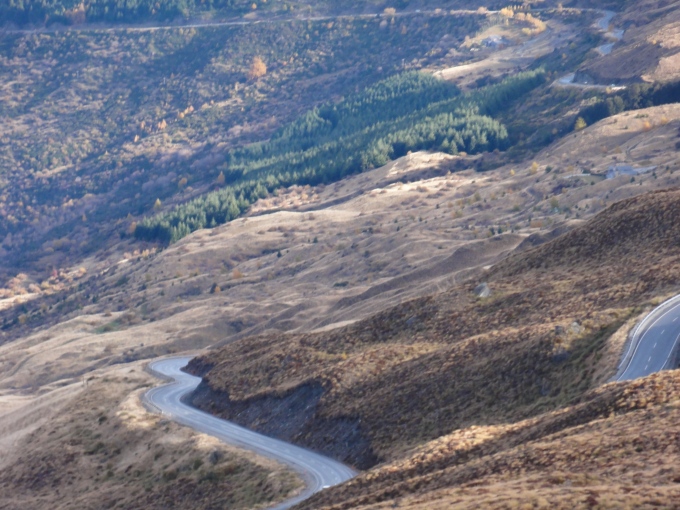
A picture paints … well, as many words as you like.  For instance:

lookingdownfromcoronetpeak

And the story:


It was once said that a desperate man has everything to lose.

The man I was chasing was desperate, but I, on the other hand, was more desperate to catch him.

He’d left a trail of dead people from one end of the island to the other.

The team had put in a lot of effort to locate him, and now his capture was imminent.  We were following the car he was in, from a discrete distance, and, at the appropriate time, we would catch up, pull him over, and make the arrest.

There was nowhere for him to go.

The road led to a dead-end, and the only way off the mountain was back down the road were now on.  Which was why I was somewhat surprised when we discovered where he was.

Where was he going?


“Damn,” I heard Alan mutter.  He was driving, being careful not to get too close, but not far enough away to lose sight of him.

“What?”

“I think he’s made us.”

“How?”

“Dumb bad luck, I’m guessing.  Or he expected we’d follow him up the mountain.  He’s just sped up.”

“How far away?”

“A half-mile.  We should see him higher up when we turn the next corner.”

It took an eternity to get there, and when we did, Alan was right, only he was further on than we thought.”

“Step on it.  Let’s catch him up before he gets to the top.”

Easy to say, not so easy to do.  The road was treacherous, and in places just gravel, and there were no guard rails to stop a three thousand footfall down the mountainside.

Good thing then I had the foresight to have three agents on the hill for just such a scenario.


Ten minutes later, we were in sight of the car, still moving quickly, but we were going slightly faster.  We’d catch up just short of the summit car park.

Or so we thought.

Coming quickly around another corner we almost slammed into the car we’d been chasing.

“What the hell…” Aland muttered.

I was out of the car, and over to see if he was in it, but I knew that it was only a slender possibility.  The car was empty, and no indication where he went.

Certainly not up the road.  It was relatively straightforward for the next mile, at which we would have reached the summit.  Up the mountainside from here, or down.

I looked up.  Nothing.

Alan yelled out, “He’s not going down, not that I can see, but if he did, there’s hardly a foothold and that’s a long fall.”

Then where did he go?

Then a man looking very much like our quarry came out from behind a rock embedded just a short distance up the hill.

“Sorry,” he said quite calmly.  “Had to go if you know what I mean.”


I’d lost him.

It was as simple as that.

I had been led a merry chase up the hill, and all the time he was getting away in a different direction.

I’d fallen for the oldest trick in the book, letting my desperation blind me to the disguise that anyone else would see through in an instant.

It was a lonely sight, looking down that road, knowing that I had to go all that way down again, only this time, without having to throw caution to the wind.

“Maybe next time,” Alan said.

“We’ll get him.  It’s just a matter of time.”


© Charles Heath 2019

Find this and other stories in “Inspiration, maybe”  available soon.

InspirationMaybe1v1


Curious children find a curiosity

I am constantly reminded of how curious grandchildren can be when they are not asking you what it was like to live with dinosaurs!

The second eldest who is a rather clever 13-year-old considers it interesting that I’m a writer, and having just met a ‘real’ author who came to visit them at school, asked me a few questions, some of which sounded like those that had been asked of my ‘real’ counterpart.

Like, “how old were you when you first wrote a story, and what was that story about?”

I didn’t think it was when I was at school, but sometime after that, and after a lot of reading.  Perhaps it had been one of those moments when a light bulb goes on in your head, and I said to myself, I can write these stories too.

Of course, that wasn’t an answer, so she asked again, when did I start writing?

That required a little thought, and there were several triggers that gave me a date, where I lived at the time, the fact I used my mother’s old portable typewriter, and the fact I had not been long out of school.  I was, in fact, about 17.  It was 45 years ago; I’ll let you do the math!

What was it about; that I couldn’t tell her, but I said I had rescued a lot of old scribbling of mine and put them in a box to look at later when I had the time.

I guess that time had arrived.

And, yes, there was the book, the individually typed pages, some with corrections, unfinished.

The pages were brown with age.

The story, well, I read the first few pages, and it seems I’d started down the thriller path then, the story so far, an agent comes ashore from a trawler to a bleak and isolated village, perhaps on the Scottish coast.

Then there was the inevitable next question; “What was the first story you read that put you on the path to wanting to become a writer”.

That was easy, Alistair Maclean’s HMS Ulysses.  I showed her a copy of the book.

That led to, “but this is about the British Royal Navy in World War 2…”

Perhaps I didn’t answer that correctly, it was after reading about a dozen of his novels, most of which were precursors to the modern-day thriller, perhaps more along the lines of action adventures.

The next question, understandably; “What was the first book you ever finished?”

That was The Starburst Conspiracy, the manuscript of which was in the box along with another completed novel, and quite a few short stories.

Back in those days, I remembered that I had sent some of my stories off to various publishers, and had entered a number of short story competitions, all to no avail.  And for a number of years, until I because to old, used to write and enter a novel in the Vogel novel competition but never made it to the shortlist.

It’s probably why I gave up writing for a number of years, until I worked for an interesting company who had a rich history of phosphate mining in the Pacific and being given permission to look into the archives, began writing what could only be described a saga, and by the time I’d left, it was over 1200 closely typed pages long.

I showed the bulky manuscript to her, but by this time her interest had moved to something else.

For me, however, it seemed there was a lot of unfinished business.

Inspiration, maybe

A picture paints … well, as many words as you like.  For instance:

lookingdownfromcoronetpeak

And the story:


It was once said that a desperate man has everything to lose.

The man I was chasing was desperate, but I, on the other hand, was more desperate to catch him.

He’d left a trail of dead people from one end of the island to the other.

The team had put in a lot of effort to locate him, and now his capture was imminent.  We were following the car he was in, from a discrete distance, and, at the appropriate time, we would catch up, pull him over, and make the arrest.

There was nowhere for him to go.

The road led to a dead-end, and the only way off the mountain was back down the road were now on.  Which was why I was somewhat surprised when we discovered where he was.

Where was he going?


“Damn,” I heard Alan mutter.  He was driving, being careful not to get too close, but not far enough away to lose sight of him.

“What?”

“I think he’s made us.”

“How?”

“Dumb bad luck, I’m guessing.  Or he expected we’d follow him up the mountain.  He’s just sped up.”

“How far away?”

“A half-mile.  We should see him higher up when we turn the next corner.”

It took an eternity to get there, and when we did, Alan was right, only he was further on than we thought.”

“Step on it.  Let’s catch him up before he gets to the top.”

Easy to say, not so easy to do.  The road was treacherous, and in places just gravel, and there were no guard rails to stop a three thousand footfall down the mountainside.

Good thing then I had the foresight to have three agents on the hill for just such a scenario.


Ten minutes later, we were in sight of the car, still moving quickly, but we were going slightly faster.  We’d catch up just short of the summit car park.

Or so we thought.

Coming quickly around another corner we almost slammed into the car we’d been chasing.

“What the hell…” Aland muttered.

I was out of the car, and over to see if he was in it, but I knew that it was only a slender possibility.  The car was empty, and no indication where he went.

Certainly not up the road.  It was relatively straightforward for the next mile, at which we would have reached the summit.  Up the mountainside from here, or down.

I looked up.  Nothing.

Alan yelled out, “He’s not going down, not that I can see, but if he did, there’s hardly a foothold and that’s a long fall.”

Then where did he go?

Then a man looking very much like our quarry came out from behind a rock embedded just a short distance up the hill.

“Sorry,” he said quite calmly.  “Had to go if you know what I mean.”


I’d lost him.

It was as simple as that.

I had been led a merry chase up the hill, and all the time he was getting away in a different direction.

I’d fallen for the oldest trick in the book, letting my desperation blind me to the disguise that anyone else would see through in an instant.

It was a lonely sight, looking down that road, knowing that I had to go all that way down again, only this time, without having to throw caution to the wind.

“Maybe next time,” Alan said.

“We’ll get him.  It’s just a matter of time.”


© Charles Heath 2019

Find this and other stories in “Inspiration, maybe”  available soon.

InspirationMaybe1v1


So, here’s what could happen…

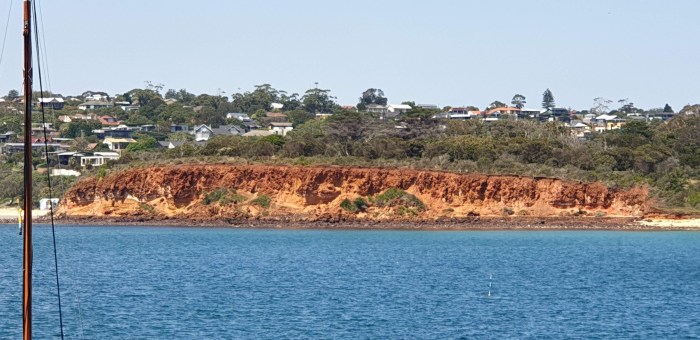
You wake up to a perfect summer’s day.  There’s not a cloud in the sky, the water is a virtual millpond, and the motor takes you slowly along.

You’re not far offshore, and there’s a gentle tide going out, so you turn off the engine consider putting down the anchor, but there doesn’t;t seem any need, break out the deck chairs, and you’ve decided to take an afternoon snooze.

Now read on…

20200217_131648

When you wake up the shoreline is no longer in sight.

The water is a little more choppy, but nothing to be concerned about.

Towards shore the sky is clear and the sun is just about gone.

You look in the other direction, out to sea, and…

It’s black and forbidding, bolts of lightning on display like a fireworks show, the sort of display best seen from shore, not at sea.

The first gentle nudge of a breeze rocks the boat slightly.

A few minutes later, a rush of air hits you like a ton of bricks, almost touching the boat over to the point of no return.

You try to start the motor, but, given the situation, fate is always on the other side.

It won’t start.

You race to put up a sail, but it has to be tightly reefed in, and as it goes up it flaps violently in the ever-increasing wind gusts.

The weather changed in ten minutes. eleven if you were to not split hairs.

What happens next?

Inspiration, maybe

A picture paints … well, as many words as you like.  For instance:

lookingdownfromcoronetpeak

And the story:


It was once said that a desperate man has everything to lose.

The man I was chasing was desperate, but I, on the other hand, was more desperate to catch him.

He’d left a trail of dead people from one end of the island to the other.

The team had put in a lot of effort to locate him, and now his capture was imminent.  We were following the car he was in, from a discrete distance, and, at the appropriate time, we would catch up, pull him over, and make the arrest.

There was nowhere for him to go.

The road led to a dead-end, and the only way off the mountain was back down the road were now on.  Which was why I was somewhat surprised when we discovered where he was.

Where was he going?


“Damn,” I heard Alan mutter.  He was driving, being careful not to get too close, but not far enough away to lose sight of him.

“What?”

“I think he’s made us.”

“How?”

“Dumb bad luck, I’m guessing.  Or he expected we’d follow him up the mountain.  He’s just sped up.”

“How far away?”

“A half-mile.  We should see him higher up when we turn the next corner.”

It took an eternity to get there, and when we did, Alan was right, only he was further on than we thought.”

“Step on it.  Let’s catch him up before he gets to the top.”

Easy to say, not so easy to do.  The road was treacherous, and in places just gravel, and there were no guard rails to stop a three thousand footfall down the mountainside.

Good thing then I had the foresight to have three agents on the hill for just such a scenario.


Ten minutes later, we were in sight of the car, still moving quickly, but we were going slightly faster.  We’d catch up just short of the summit car park.

Or so we thought.

Coming quickly around another corner we almost slammed into the car we’d been chasing.

“What the hell…” Aland muttered.

I was out of the car, and over to see if he was in it, but I knew that it was only a slender possibility.  The car was empty, and no indication where he went.

Certainly not up the road.  It was relatively straightforward for the next mile, at which we would have reached the summit.  Up the mountainside from here, or down.

I looked up.  Nothing.

Alan yelled out, “He’s not going down, not that I can see, but if he did, there’s hardly a foothold and that’s a long fall.”

Then where did he go?

Then a man looking very much like our quarry came out from behind a rock embedded just a short distance up the hill.

“Sorry,” he said quite calmly.  “Had to go if you know what I mean.”


I’d lost him.

It was as simple as that.

I had been led a merry chase up the hill, and all the time he was getting away in a different direction.

I’d fallen for the oldest trick in the book, letting my desperation blind me to the disguise that anyone else would see through in an instant.

It was a lonely sight, looking down that road, knowing that I had to go all that way down again, only this time, without having to throw caution to the wind.

“Maybe next time,” Alan said.

“We’ll get him.  It’s just a matter of time.”


© Charles Heath 2019

Find this and other stories in “Inspiration, maybe”  available soon.

InspirationMaybe1v1


So now I’m off the soapbox, back to the end of June report

Sorry, I just went off my head, just before…

It’s the problem with having the news channel on all day, listening to constant bad news.

That’s why, I suppose, it’s up to us writers to create something good, and with a happy ending.

I’ll be honest, I like happy endings.  You know, where the good guys win and the bad guys lose, emphatically.

My latest book, nearly through the 6th editing, and closer to publication than it was a month ago, has a happy ending, but not before a great deal of angst.

A bit like real life these days.

But there are other stories, with twists and turns, some predictable, others out of left field, but, still remembering that you can’t just pull a twist out of nowhere, it has to have hooks set up previously, but not necessarily discernable by the reader.

Until that moment when they realize, ok, so that’s why that piece of unrelated information was dropped back there in Chapter Three.  Of course, they don’t realize the author went back to Chapter Three much later and added it when he or she decided on this new twist.

A recommendation perhaps not to write by the seat of your pants, just the flying.

So…

I’ve finished one story, with 47 episodes.

Another is sitting at 33.

One that I’m particularly enjoying writing is at Episode 55, but I have 6 already planned, which is unusual for me, but it’s how excited I am about it.  I even know basically how it’s going to finish.

Another, my foray into WWII is going along, not quite as quickly as I hoped, but there’s a lot of research required, and thankfully there seems to be enough information about what I need to know about that period about on the internet and in books.

IT’s a part of writing that makes it difficult sometimes because you want to write, but it has to be plausible, and sometimes I’m ferreting about for a week, sometimes two, just to get the facts straight.

I’m also cognizant of the fact NANOWRIMO is coming, and it will sneak up on me.  To do it requires a plan of sorts because 50,000+ words don’t just write themselves, especially over a period of 30 consecutive days.  It requires discipline to write about 2,000 words a day.

Other than that, I have two other books to finish editing and two others that need finishing.

Ugh!

Maybe I should give up social media for a few months……….

What happens after the action packed start – Part 44

Our hero knows he’s in serious trouble.

The problem is, there are familiar faces and a question of who is a friend and who is foe made all the more difficult because of the enemy, if it was the enemy, simply because it didn’t look or sound or act like the enemy.

Now, it appears, his problems stem from another operation he participated in, and because of it, he has now been roped into what might be called a suicide mission.


I spent another hour trading stories of Army life, none of mine bearing any resemblance to the truth, before the party started.

I said to him, several times, that in my estimation, a part would start at a particular time. He seemed intrigued by how that could be possible when all my men were locked up and guarded.

The Captain, it seemed, was a man of limited intellect.

Or just plain overconfident that he had quelled the incursion and attempt to take the prisoners home.

I was under house arrest, just not in the house with the rest of the men. The Captain decided, being the ranking officer of our group, that I should be accorded facilities befitting my rank. It didn’t change my opinion of the Captain, but it did raise the respect level slightly.

As an officer and a gentleman, as he described himself, he was also a student of Army procedures and practices, not only of his own army but that of others. I admired his hobby out of working hours.

We were just discussing aspects of the first World War, and the part Africa played in it, when both of us suddenly heard gunshots. So did the guard and picked his gun and carefully went out the front door.

The Captain pulled his pistol from out of the top drawer and made sure the magazine had bullets in it. Just in case he needed to use it. All the men, suddenly increased to six, armed and dangerous, in that room had a gun, similar to the Captain. They were commanded by another soldier dressed in fatigues, perhaps a Colonel or higher.

I’d notice some Africa countries had a higher proportion of Generals, to say Lieutenants, and deduced from that, field promotions were a regular thing. That was not my experience here. So far.

I heard another gunshot, this time closer to the hut. Was it my people, mounting their attack? Or was it the Commander, back to retake what was his.

There would be no love lost between the Captain and the commander, and if was a betting man, in a fight, my money would be on the commander.

The sounds of gunfire continued for about ten minutes, then it became sporadic, then none at all. There were footsteps on the boards at the front of the hut, and then a cautious entry, gun barrel first, then, “if you have a gun pointed at the door, I suggest you put it down.” Monroe.

Having caught the Captain’s attention from the front, the Colonel came in the rear, and had his gun barrel pointing to the small of the Captain’s back. “Drop it now.”

The Captain did as he was told.

“You had more men on the perimeter?” he said with a sigh.

“Yes. I thought it prudent to have more than one sniper, a fact that the Militia commander hadn’t given a thought to.” I looked over at Monroe. “Have we secured the airfield?”

“Yes. 10 surviving soldiers, some of them in a bad way, are in the second barracks. They won’t be mounting a counterattack.”

I heard an engine; a large plane engine being started.

“That will be Davies playing with her new toy. Someone is on the runway lights; the rest are heading for the plane. Where are the hostages?” She glared at the Captain.

He shrugged.

Shurl burst in the door. “Out, back through that door,” I said. “Be careful there isn’t a guard waiting for you.”

Monroe looked at me. “Can I shoot the insubordinate bastard?”

A look of surprise, not terror, crossed the Captain’s face.

“Just take him back to the cells and lock him up.”

Shurl came out with the two hostages, just as the second plane engine fired. Monroe took the Captain back to the cells and returned a minute or so later. Shurl had taken the hostages to the plane. Baines would be waiting to switch on the lights at the last minute, and hopefully, the rest were on board.

They would be waiting for Monroe and me.

The both engines were running smoothly, and Davies was testing the rudder and flaps. Suddenly the runway lights came on, and Baines came running towards the plane. Monroe and I jumped aboard, then Baines followed, pulling the door shut behind him.

I heard the engine noise increase, and then we were moving.

I headed up to the cockpit and joined Davies. She was now in her element, her fact a picture of concentration. We were slowly moving to the end of the runway, and I could see her working her way through the preflight checklist.

I tried to speak to her, but she couldn’t hear. She had headphones on. There was a pair near the co-pilot’s seat. I sat down and put them on.

“Everything OK?”

“Nearly. Be quiet for a minute.”

We were at the end of the strip and she turned the plane. She would have checked the wind, not that I’d felt any, and adjusted the take-off direction accordingly.

Then, after what looked like a deep breath and slow exhale, she pushed the engine controls to maximum, and we started moving, slowly gathering speed. The runway surface wasn’t exactly flat, but it was enough not to impede forward motion. Not long after the rear of the plane rose, then in what seemed effortless, we were in the air.

Odd then, when we passed through 2,000 feet, I wondered who this plane belonged to.


© Charles Heath 2020

Inspiration, maybe

A picture paints … well, as many words as you like.  For instance:

lookingdownfromcoronetpeak

And the story:


It was once said that a desperate man has everything to lose.

The man I was chasing was desperate, but I, on the other hand, was more desperate to catch him.

He’d left a trail of dead people from one end of the island to the other.

The team had put in a lot of effort to locate him, and now his capture was imminent.  We were following the car he was in, from a discrete distance, and, at the appropriate time, we would catch up, pull him over, and make the arrest.

There was nowhere for him to go.

The road led to a dead-end, and the only way off the mountain was back down the road were now on.  Which was why I was somewhat surprised when we discovered where he was.

Where was he going?


“Damn,” I heard Alan mutter.  He was driving, being careful not to get too close, but not far enough away to lose sight of him.

“What?”

“I think he’s made us.”

“How?”

“Dumb bad luck, I’m guessing.  Or he expected we’d follow him up the mountain.  He’s just sped up.”

“How far away?”

“A half-mile.  We should see him higher up when we turn the next corner.”

It took an eternity to get there, and when we did, Alan was right, only he was further on than we thought.”

“Step on it.  Let’s catch him up before he gets to the top.”

Easy to say, not so easy to do.  The road was treacherous, and in places just gravel, and there were no guard rails to stop a three thousand footfall down the mountainside.

Good thing then I had the foresight to have three agents on the hill for just such a scenario.


Ten minutes later, we were in sight of the car, still moving quickly, but we were going slightly faster.  We’d catch up just short of the summit car park.

Or so we thought.

Coming quickly around another corner we almost slammed into the car we’d been chasing.

“What the hell…” Aland muttered.

I was out of the car, and over to see if he was in it, but I knew that it was only a slender possibility.  The car was empty, and no indication where he went.

Certainly not up the road.  It was relatively straightforward for the next mile, at which we would have reached the summit.  Up the mountainside from here, or down.

I looked up.  Nothing.

Alan yelled out, “He’s not going down, not that I can see, but if he did, there’s hardly a foothold and that’s a long fall.”

Then where did he go?

Then a man looking very much like our quarry came out from behind a rock embedded just a short distance up the hill.

“Sorry,” he said quite calmly.  “Had to go if you know what I mean.”


I’d lost him.

It was as simple as that.

I had been led a merry chase up the hill, and all the time he was getting away in a different direction.

I’d fallen for the oldest trick in the book, letting my desperation blind me to the disguise that anyone else would see through in an instant.

It was a lonely sight, looking down that road, knowing that I had to go all that way down again, only this time, without having to throw caution to the wind.

“Maybe next time,” Alan said.

“We’ll get him.  It’s just a matter of time.”


© Charles Heath 2019

Find this and other stories in “Inspiration, maybe”  available soon.

InspirationMaybe1v1