Surely there’s a better way… – a short story

Surely there’s a better way…

When you have secrets, sometimes it’s very hard to hide them from others.

It was something Henry had to do since the day he could speak. The fact that his parents had been murdered because of their profession, something his grandfather told him was akin to ‘working for the government’. The fact that he was from a very wealthy and influential family. The fact he was heir to a fortune. The fact he was anything other than just another boy, who grew up to be just another man.

His whole life, to this point, had been ‘managed’ so that no one, other than a selected few chosen by his grandfather, knew who he was, or what he represented. And more to the point, he had been told to just live his life like any other of his age.

Yes, he went to a private school, but it wasn’t an exclusive one, yes he went to university, but he had got into Oxford on his own merit, and, yes, he was smart, smart enough to create his own business, and make a handsome income from it. And no, he never drew upon the stipend he had been granted by his parents will, so it just gathered dust in the bank.

Henry was an only child, and to a certain extent, introverted. It was a shyness that his grandfather knew existed in his son, Henry’s father. It could be an asset or it could be a liability. With Henry’s father, it had been an asset, a means by which many had misunderstood him. It might even serve him well for the next phase of his life.

Today, Henry was meeting his grandfather at Speaker’s Corner at Hyde Park, and an unusual meeting place because in the past it had always been at his grandfather’s club. At his grandfather’s request, he had undertaken a three-year program, one that his father had, and his father before him, and a pre-requisite for a profession that would be explained to him.

And it was all because Henry said he was bored. The business he’d built could run without him, his attempts at relationships with various girls and women hadn’t quite achieved what he was looking for, even though he had no idea what he was looking for, and, quite frankly, he told his grandfather, he needed something more exciting.

It was, he’d been told, the way of the MacCallisters. Ever since the British tried to put down the Scots.

Henry was listening to a rather animated man preaching the word of the Lord, but he was not sure what Lord that was. Anything he quoted from the bible resembled nothing he had read and remembered. Perhaps the man was on drugs.

Two or three people stopped, listened for a minute or two, shook their heads, some even laughed, and moved on.

“It’s the last bastion of freedom of speech, though I can say this man is not about to gather an army of insurrectionists any time soon. Let’s walk.”

His grandfather was getting old, and walking was getting more and more difficult. More scotch was needed, he had told Henry, to ward of the evils of arthritis. And, he added, ‘I should have had a less devil may care attitude when he was younger.’

It was a slow amble to the serpentine, which, being a bright sunny day, if not a little chilly, was alive with people.

He waited until his grandfather spoke. One lesson he had learned, speak when you’re spoken to, and if you’ve got nothing to say, best to remain silent.

“I have found a job you might like to have a go at. Nothing difficult, mind you, but a perhaps, at times, hard work. I think you’d be good at it.”

“Is that meant to be a hint, and I have to guess?”

“I think you’re smart enough to know what it might be yourself, young Henry.”

I think I did too. Everything I’d been doing over the last three years led me to believe I’d been training to walk in my father’s footsteps. It was with the Army, and I had imagined my father had been a soldier, though I’d never seen him in a uniform. But my Grandfather had said he worked for the government, so I wondered if that might be some sort of policeman, or some sort of internal agent, like MI6. It had not been boring, and the exercises had been ‘interesting’, but no one had said what the end result of this training might be; in fact no one had said who they were.

“Something hush, hush as the saying goes.”

We had gone about fifty yards and reached a cross path. As we did, a youngish woman dressed in leather appeared and walked towards us.

“I’d like you to meet a friend of mine, Henry. Her name is Marion, though I suggest you don’t call her that.”

She smiled. “Call me Mary. There’s only one person in the whole world that would dare call me that, and he’s standing here. Your grandfather has spoken a lot about you.”

Henry’s first impression; she had been to the training school he had. He could see it in her manner, and in the way she scanned the area, even though it didn’t look like she was. He’d been doing it himself, and he had seen her earlier. What made her stand out, she didn’t have a bag like all the other women.

“I hope it was good, not bad.”

“You have no bad traits?”

“Everyone had bad traits. You’ll just have to get to know me if you want to know what they are.”

“Well,” my grandfather said, “enough chit chat. Mary has a task, and she needs a little help. I thought you might want to join her.”

“Doing what?”

“She’ll explain it on the way. When it’s done, come and see me.” With that, a hug from Mary, and a handshake from his grandson, he turned and walked back the way they had come earlier.
“So,” Henry asked, “What’s the job?”

“I have to pick up a computer.”

“That doesn’t sound like something you would need help with.” In fact, if he was right in his assessment of her, he was the last person she needed, if at all. She looked to him as if she could handle anything.

“It’s one of those just in case situations.”

They walked a circuitous route back to Park Lane and crossed both roads, up Deanery Street, left where Tilney Street veered off, and then a short distance to Deanery Mews. Henry noted this was an area with a lot of expensive real estate, and scattered Embassies. If he was not mistaken, the Dorchester Hotel wasn’t far away.

Walking down the mews seemed to Henry to be walking into a trap. When he looked back towards Deanery Street he thought he saw two men position themselves, not quick enough to prevent him from getting a glimpse of them.

“You do realize that getting back out of here could be a problem.”

“It’s why I asked for help. Just in case.”

No visible sign of fear, or of what the consequences might be if this went south. Perhaps his grandfather had considered this a test. But what sort of test?

They reached the end, and, just around the corner, a van was parked with what Henry assumed was the driver, standing by the open driver’s door, smoking a cigarette.

Mary stopped about ten feet away from him. “Have you got the package?”

He reached inside the car and lifted up a computer case. There didn’t necessarily have to be a computer in it. I looked up and around. It was a good place for a meeting. No witnesses. But there were CCTV cameras. I wondered if they were working.

The man tossed the bag back in the car. “Have you got the money?”

She held up her phone. “Just need the bank account details.”

“OK. Just step over here and let’s get this done.”

She moved closer, and in a flash, he had grabbed her, holding her by the neck with a gun to her head. The two men Henry thought he’d seen at the top of the mews were now within sight, and both had guns trained on him. A trap, indeed.

“What do you want?” Henry asked.

“Tell your boss the price just doubled. Two million. You’ve got five minutes.”

I shook my head, not to clear the cobwebs, but to calm down and think rationally.

Talk first. “Surely there’s a better way to do this. You don’t need to hold a gun to her head.”

I held my hands out just to show I wasn’t a threat.

“No, probably not.” He released his grip and lowered the gun.

A very, very bad mistake.

—-

© Charles Heath 2020-2021
People have a way of surprising you… – A short story

Last days were supposed to be joyous, the end of your working life and the start of the rest of your life.

I’d spent the last 35 years working for the company, navigating through three buyouts, five name changes, and three restructures. I was surprised I was still employed after the last, only two years before.

But, here I was, sitting in the divisional manager’s office, my office for one more day, with my successor, Jerry, and best friend, sitting on the other side.

“Last day, what are you thinking?” He asked casually.

It might have been early, but we both had a glass of scotch, a sin l e malt I’d kept aside for an important occasion and this seemed like one.

I picked up the glass and surveyed the contents, giving myself a few moments to consider an answer to what could be a difficult question. To be honest, the thinking had started on the subway on the way in, when I should have been working on the crossword, but instead, I was lamenting the fact that the next chapter of my life would be without Ellen.

We would have been married, coincidently, 43 years ago today, had she been alive. Unfortunately, she had died suddenly about four months ago, after a long battle with cancer.

And I still hadn’t had time to process it. Truth is, it had been work that kept me together, and I was worried about what was going to happen when it would no longer there.

To a certain extent, I was still on autopilot, her death coming in the middle of a major disaster concerning the company, one that had finally, and successfully, been brought to a conclusion with favorable results for everyone.

But what was I thinking right then, at that precise moment in time? Not something he would want to hear, so I made the necessary adjustment. “That I’m basically leaving you a clean slate, so don’t screw it up.”

I could see that was not what he wanted to hear.

He decided to take a different tack. “What have you got planned for the first day of retirement.”

He knew about Ellen and had been there for me, above and beyond what could have been expected from anyone. I owed him more than a platitude.

“Sleep in, probably, but I’m going to be fighting that body clock. It’s going to be difficult after so many years getting up the same time, rail hail or shine. But we had plans to go away for a few months, you know, the trip of a lifetime, then move. Ellen wanted to go back home for a while, now, I’m not sure what I’m going to do.”

“Then perhaps you should, or at the very least, go home for a while. You said you both come from there; who knows, being back among family might just be what you need.”

It was something I had been thinking about and had been issued an open-ended invitation from her parents to come and stay for as long as I wanted, one that I was seriously considering.

But, before I could tell him that, the phone rang.

Never a dull day…
The day went quickly, and as much as it was expected I’d hand over anything that happened to my successor, I couldn’t quite let go. There was the proverbial storm in a teacup, but it was a good opportunity to watch the man who was taking over in action. He had a great teacher, even if I said so myself.

But it was the end of the day and the moment I had been dreading. I’d asked the personnel manager not to make a big deal out of my departure, and that I didn’t want the usual sendoff, where everyone in the office came and I would find myself at a loss of words and feel like I had to speak to a lot of people I didn’t really know.

There were only about a dozen that I really knew, a dozen that had survived the layoffs and restructuring, and although there were others, I didn’t have anything to do with them. My last job took me out of the office more than being there, and so many of the other people were from offices scattered all up and down the east coast.

I’d mostly said my goodbyes to them on the last quarterly visit. Sixteen offices, fifty-odd employees who were as much friends as they were staff who worked for me. There had been small dinners and heartfelt moments.

This I was hoping would be the same.

Jerry had been charged with the responsibility of getting me to the presentation; they called it a presentation because I had no doubt there would be a presentation of some sort. I had told the CEO a handshake and a couple of drinks would suffice, and he just congenially nodded.

Jerry had taken the manager’s chair and I was sitting on the other side of the table. We’d finished off the last of the single malt, and dirt was time to go. I closed the door to the office for the last time, and we walked along the passage towards the dining room. It was a perk I’d fought hard to keep during the last restructure when the money men were trying to cut costs.

It was one of the few battles I won.

He opened the door and stood to one side, and ushered me through.

It was a very large space, usually filled with tables, chairs, and diners. Now it was filled with people, leaving a passageway from the door to a podium that had been set up in front of the servery, where a large curtain stretched across the width of the building with the company logo displayed on it.

There were 2,300 people who worked in this office and another 700 from the regional offices. By the look of the crowd, every single one of them was there.

It took fifteen minutes to get from the door to the podium. Faces of people I’d seen every day, faces I’d seen a few times a year, and faces I’d never seen before. On the podium there was a dozen more, faces I’d only seen in the Annual Accounts document, except for the General Manager and the CEO.

“You will be pleased to know everyone here wanted to come and bid you farewell,” the General Manager said.

“Everyone? Why?”

“Well, I’ve learned a lot about this company and its people over the last week, and frankly, people have a way of surprising you. And given the impact you have had on each and every one of them, I’m not surprised. So much so, they wanted to give you something to remember them by.”

A nod of the head and the curtains were pulled back, and behind them was an original 1968 XJ6 Jaguar, fully restored, a very familiar XJ6. The car had belonged to Helen and I had to sell it to help pay the medical bills. It had been a gut-wrenching experience, coming at a time when everything that was happened to her almost overwhelmed me.

“Jerry told us about this particular car, so all of your friends thought, as a fitting memory to you and of her, that we should find it and restore it. Everyone here contributed. It is our gift to you for everything you have done for us.”

So much for the usual sendoff…

—-

© Charles Heath 2020-2021

Inspiration, maybe – Volume 1

50 photographs, 50 stories, of which there is one of the 50 below.

They all start with –

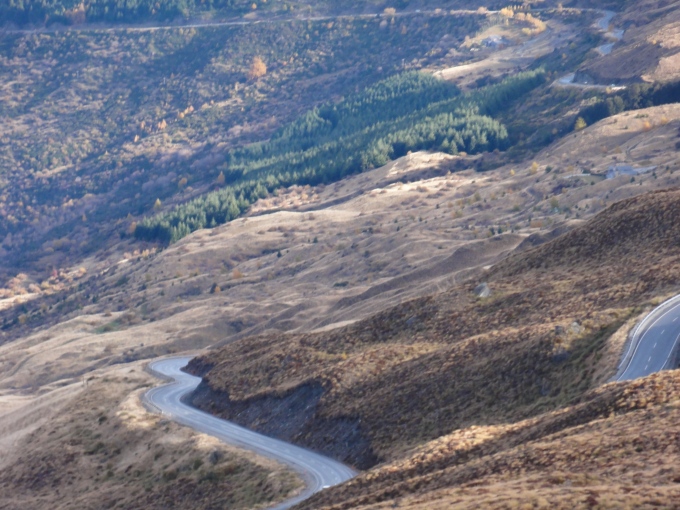
A picture paints … well, as many words as you like.  For instance:

lookingdownfromcoronetpeak

And the story:

It was once said that a desperate man has everything to lose.

The man I was chasing was desperate, but I, on the other hand, was more desperate to catch him.

He’d left a trail of dead people from one end of the island to the other.

The team had put in a lot of effort to locate him, and now his capture was imminent.  We were following the car he was in, from a discrete distance, and, at the appropriate time, we would catch up, pull him over, and make the arrest.

There was nowhere for him to go.

The road led to a dead-end, and the only way off the mountain was back down the road were now on.  Which was why I was somewhat surprised when we discovered where he was.

Where was he going?

“Damn,” I heard Alan mutter.  He was driving, being careful not to get too close, but not far enough away to lose sight of him.

“What?”

“I think he’s made us.”

“How?”

“Dumb bad luck, I’m guessing.  Or he expected we’d follow him up the mountain.  He’s just sped up.”

“How far away?”

“A half-mile.  We should see him higher up when we turn the next corner.”

It took an eternity to get there, and when we did, Alan was right, only he was further on than we thought.”

“Step on it.  Let’s catch him up before he gets to the top.”

Easy to say, not so easy to do.  The road was treacherous, and in places just gravel, and there were no guard rails to stop a three thousand footfall down the mountainside.

Good thing then I had the foresight to have three agents on the hill for just such a scenario.

Ten minutes later, we were in sight of the car, still moving quickly, but we were going slightly faster.  We’d catch up just short of the summit car park.

Or so we thought.

Coming quickly around another corner we almost slammed into the car we’d been chasing.

“What the hell…” Aland muttered.

I was out of the car, and over to see if he was in it, but I knew that it was only a slender possibility.  The car was empty, and no indication where he went.

Certainly not up the road.  It was relatively straightforward for the next mile, at which we would have reached the summit.  Up the mountainside from here, or down.

I looked up.  Nothing.

Alan yelled out, “He’s not going down, not that I can see, but if he did, there’s hardly a foothold and that’s a long fall.”

Then where did he go?

Then a man looking very much like our quarry came out from behind a rock embedded just a short distance up the hill.

“Sorry,” he said quite calmly.  “Had to go if you know what I mean.”

I’d lost him.

It was as simple as that.

I had been led a merry chase up the hill, and all the time he was getting away in a different direction.

I’d fallen for the oldest trick in the book, letting my desperation blind me to the disguise that anyone else would see through in an instant.

It was a lonely sight, looking down that road, knowing that I had to go all that way down again, only this time, without having to throw caution to the wind.

“Maybe next time,” Alan said.

“We’ll get him.  It’s just a matter of time.”

© Charles Heath 2019-2021

Find this and other stories in “Inspiration, maybe”  available soon.

InspirationMaybe1v1

People have a way of surprising you… – A short story

Last days were supposed to be joyous, the end of your working life and the start of the rest of your life.

I’d spent the last 35 years working for the company, navigating through three buyouts, five name changes, and three restructures. I was surprised I was still employed after the last, only two years before.

But, here I was, sitting in the divisional manager’s office, my office for one more day, with my successor, Jerry, and best friend, sitting on the other side.

“Last day, what are you thinking?” He asked casually.

It might have been early, but we both had a glass of scotch, a sin l e malt I’d kept aside for an important occasion and this seemed like one.

I picked up the glass and surveyed the contents, giving myself a few moments to consider an answer to what could be a difficult question. To be honest, the thinking had started on the subway on the way in, when I should have been working on the crossword, but instead, I was lamenting the fact that the next chapter of my life would be without Ellen.

We would have been married, coincidently, 43 years ago today, had she been alive. Unfortunately, she had died suddenly about four months ago, after a long battle with cancer.

And I still hadn’t had time to process it. Truth is, it had been work that kept me together, and I was worried about what was going to happen when it would no longer there.

To a certain extent, I was still on autopilot, her death coming in the middle of a major disaster concerning the company, one that had finally, and successfully, been brought to a conclusion with favorable results for everyone.

But what was I thinking right then, at that precise moment in time? Not something he would want to hear, so I made the necessary adjustment. “That I’m basically leaving you a clean slate, so don’t screw it up.”

I could see that was not what he wanted to hear.

He decided to take a different tack. “What have you got planned for the first day of retirement.”

He knew about Ellen and had been there for me, above and beyond what could have been expected from anyone. I owed him more than a platitude.

“Sleep in, probably, but I’m going to be fighting that body clock. It’s going to be difficult after so many years getting up the same time, rail hail or shine. But we had plans to go away for a few months, you know, the trip of a lifetime, then move. Ellen wanted to go back home for a while, now, I’m not sure what I’m going to do.”

“Then perhaps you should, or at the very least, go home for a while. You said you both come from there; who knows, being back among family might just be what you need.”

It was something I had been thinking about and had been issued an open-ended invitation from her parents to come and stay for as long as I wanted, one that I was seriously considering.

But, before I could tell him that, the phone rang.

Never a dull day…
The day went quickly, and as much as it was expected I’d hand over anything that happened to my successor, I couldn’t quite let go. There was the proverbial storm in a teacup, but it was a good opportunity to watch the man who was taking over in action. He had a great teacher, even if I said so myself.

But it was the end of the day and the moment I had been dreading. I’d asked the personnel manager not to make a big deal out of my departure, and that I didn’t want the usual sendoff, where everyone in the office came and I would find myself at a loss of words and feel like I had to speak to a lot of people I didn’t really know.

There were only about a dozen that I really knew, a dozen that had survived the layoffs and restructuring, and although there were others, I didn’t have anything to do with them. My last job took me out of the office more than being there, and so many of the other people were from offices scattered all up and down the east coast.

I’d mostly said my goodbyes to them on the last quarterly visit. Sixteen offices, fifty-odd employees who were as much friends as they were staff who worked for me. There had been small dinners and heartfelt moments.

This I was hoping would be the same.

Jerry had been charged with the responsibility of getting me to the presentation; they called it a presentation because I had no doubt there would be a presentation of some sort. I had told the CEO a handshake and a couple of drinks would suffice, and he just congenially nodded.

Jerry had taken the manager’s chair and I was sitting on the other side of the table. We’d finished off the last of the single malt, and dirt was time to go. I closed the door to the office for the last time, and we walked along the passage towards the dining room. It was a perk I’d fought hard to keep during the last restructure when the money men were trying to cut costs.

It was one of the few battles I won.

He opened the door and stood to one side, and ushered me through.

It was a very large space, usually filled with tables, chairs, and diners. Now it was filled with people, leaving a passageway from the door to a podium that had been set up in front of the servery, where a large curtain stretched across the width of the building with the company logo displayed on it.

There were 2,300 people who worked in this office and another 700 from the regional offices. By the look of the crowd, every single one of them was there.

It took fifteen minutes to get from the door to the podium. Faces of people I’d seen every day, faces I’d seen a few times a year, and faces I’d never seen before. On the podium there was a dozen more, faces I’d only seen in the Annual Accounts document, except for the General Manager and the CEO.

“You will be pleased to know everyone here wanted to come and bid you farewell,” the General Manager said.

“Everyone? Why?”

“Well, I’ve learned a lot about this company and its people over the last week, and frankly, people have a way of surprising you. And given the impact you have had on each and every one of them, I’m not surprised. So much so, they wanted to give you something to remember them by.”

A nod of the head and the curtains were pulled back, and behind them was an original 1968 XJ6 Jaguar, fully restored, a very familiar XJ6. The car had belonged to Helen and I had to sell it to help pay the medical bills. It had been a gut-wrenching experience, coming at a time when everything that was happened to her almost overwhelmed me.

“Jerry told us about this particular car, so all of your friends thought, as a fitting memory to you and of her, that we should find it and restore it. Everyone here contributed. It is our gift to you for everything you have done for us.”

So much for the usual sendoff…

—-

© Charles Heath 2020-2021

More or less… – A short story

It was meant to be time to reacquaint as brothers.

Louis and I had not seen each other for decades, and when he returned, about a week before, I got the impression there was more than just ‘missing his brother’ going on.

But that was Louis. He was never one to say what or how he felt about anything, preferring to be the strong silent type, and it had not fared well for him transitioning from teenager to adult.

As for me, when our parents split up, Louis went with our father, and I stayed with our mother, and, given the amount of acrimony there was attached to the split, it was no surprise to anyone that Louis and I had effectively become estranged.

In fact, when I had tried to find them, about two years after the split and our mother had died suddenly, all I found were loose ends. They had effectively vanished.

With that part of my life effectively over, I had married, had children and watched 30 years disappear before Louis suddenly popped up. He simply knocked on the front door one afternoon, Helen answered it, and within minutes they were the best of friends. I’d had that rapport, once, many years before, but life and circumstances had all but ruined that.

Or perhaps that was just me, worn down by that same life and circumstances we were all supposed to take on the chin.

His arrival was a welcome distraction, and when, after a week, he suggested that he and I go on a hike, the sort our father used to take us on when we were a family, I agreed. Helen was happy to be rid of me, and I guess a week without our arguing would suit everyone.

It was probably fortuitous timing. Helen and I had finally got to the point where divorce lawyers were about to be called in. The children had all moved on and had children and problems of their own, and we, as parents just didn’t gel anymore.

Besides, I said, just before I joined Louis in the truck, ready to embark for the wilderness, it would be time to clear my head.

And by day two, my head was clear, and Louis, taking the lead, led us along the ridgeline, a trek he said, that would take us about seven hours. We’d stopped the previous night in a base camp and then headed out the next morning. We were the only two, it being early in the season with snow still on the ground.

Above was the clear cloudless blue sky and in front of us, trees and mountains. There was snow on the ground but it was not solid and showed no signs of human footsteps, only animals. The air was fresh, and it was good to be away from the city and its pressures.

Approaching noon, I’d asked him if we were about halfway. I knew he was holding back, being the fitter of us.

“More or less.”

“More or less what, more closer or less close than we should be.”

I watched him do a 360-degree turn, scoping out our position. It was a maneuver I was familiar with from my time with the National Guard. I’d used my backcountry experience that I’d learned from my father, as a skill I thought they might be able to, and eventually did, use. I got the feeling Louis was looking for something.

“You get the impression we’re not alone?” I asked. I had that nagging feeling something was not right, not from about two miles back in the forest. It was like my sixth sense being switched on.

“Doesn’t seem so, though there have been a few animals lurking behind us, probably surprised anyone’s about this time of the year. It’s been a while, so I’m just getting a feel for the trail. This is, for now, our mountain.”

There was a time, from a time when we were kids, that I could tell when he was lying. He was better at covering it, but it was still there.

Where we’d stopped was a small clearing, a staging point that would be used by other trekkers, still overgrown because of lack of trekkers. Ahead there were the signs of a trail, and after six months, it would become clear again. In places, as we had made our way from the base camp, sections of the distinctive trail had all but disappeared, but Louis seemed to know where he was going, and it was not long before we had picked up the trail again. This spot was a lookout, giving a spectacular view of the valley below, and a fast running river through it.

I walked to the edge and looked up and down the valley, and at the trail that ran along the cliff for a short distance. I looked down, not the wisest of things to do, but it was long enough to catch sight of several charred pieces of wood. On top of the snow. The thing is, someone had been along this trail before us, and recently, something I thought wise to keep to myself.

Back at the log, I sat for a moment and drank some water, while Louis stood patiently, but impatiently, for me to join him.

“You look like you’ve got somewhere to be.” Probably not the wisest thing to say but it was out before I could stop it.

A flicker of annoyance crossed his face, then it was gone. “If we stop too long, joints will freeze up, especially when it gets colder.”

“Sorry.” I put the container back in the pack and joined him. “Let’s go. The cold and I don’t get along very well, and it’s been a long time since the last time I ventured into the great unknown.”

“Helen said you gave up trekking when you married her.”

“She wasn’t a trekker, Robbie. We all have to give up something, sooner or later.”

Another hour, feeling rather weary, we’d come to another small clearing and a place where I could sit down.

“You always were the weak link, Robbie. Admittedly you were younger, but you never seemed to grasp the concept of exercise and fitness.”

I looked up at him and could see my father, the exact stance, the exact words, the exact same sneer in his voice. It all came rushing back as if it was yesterday, the reasons why I chose to go with our mother, that another day with his bullying would be one too many. And he was a bully. And, in an instant, I could see the apple hadn’t fallen far from the tree.

“Out of shape after languishing in an office, perhaps,” I said, “but I was never the disappointment our father always considered me.”

“You didn’t join the army, follow in his footsteps, as he wanted us to do. I did. Proudly served, too.”

I could see it. Like father, like son. No surprise Robbie had followed in his father’s footsteps. And it was a clue as to what Robbie had been doing since I saw him last.

“So, tell me about it.”

“You wouldn’t understand.”

“No, I probably wouldn’t. Let’s push on.”

I’d also thought, along the way, he might ask questions, delve further into the problems that Helen and I were having, but I knew she had told him all he needed to know. I’d been held up at the office, and had rung to ask her to take him to dinner, get to know him, she might get to learn something of my life before I met her, details of which I hadn’t told her other than that my mother was dead, my father had left and taken Robbie with him. My past, I’d told her from the outset, was not something I would talk about.

I didn’t ask what they talked about, but I could see a change in both of them. Perhaps she had succumbed to Robbie’s charm, back in school all the girls did, but they all soon learned he was not a nice person, not once you got to know him. I didn’t warn her, and perhaps that was regrettable on my part, but it reflected the state in which our relationship had reached.

I’d also tried, once or twice, to find out if our father was still alive, but he deflected it, changing the subject. That meant he was still alive, somewhere, perhaps annoyed at Robbie for coming to see me. If I was a betting man, I’d bet our father would have denied permission for
Robbie to do so, even if he was a grown man and capable of making his own decisions.

Odd, but not surprising. Even now I could remember my father had secrets, and those secrets had fed into the breakup of our parents.

“So, you’ve been dodging it for days now, but you still haven’t told me if dad is alive or dead. He’d be about seventy-odd now.”

He stopped and turned to face me. “Would it matter if he was alive? I doubt you’d want to see him after what mother must have said about him.”

Interesting that he would think so. “She never had a bad word for him, and wouldn’t hear of one spoken, by me or anyone. And I have wondered what became of him, and you. At least now I know you spent time in the Army. If I was to guess what happened, that would be high on my list.”

“No surprise then you became an office wanker.”

Blunt, but, to him, it was a fact. I’d used that expression when telling Helen one time after a very bad day.

“We can’t all be heroes, Robbie.”

I put my hand up. Alarm bells were going off in my head. “You can come out now,” I yelled.

Robbie looked puzzled.

“I know you’re there. You’ve been behind us for about a half-mile now.”

A few seconds passed before the cracking of a twig, and then a person in a camouflage kit came towards us.

He’d aged, hair and beard grey in places but almost white now, but the face was familiar.

“What brings you to this part of the woods, Dad. Or is it just an unlucky coincidence?”

—–

© Charles Heath 2020-2021

More or less… – A short story

It was meant to be time to reacquaint as brothers.

Louis and I had not seen each other for decades, and when he returned, about a week before, I got the impression there was more than just ‘missing his brother’ going on.

But that was Louis. He was never one to say what or how he felt about anything, preferring to be the strong silent type, and it had not fared well for him transitioning from teenager to adult.

As for me, when our parents split up, Louis went with our father, and I stayed with our mother, and, given the amount of acrimony there was attached to the split, it was no surprise to anyone that Louis and I had effectively become estranged.

In fact, when I had tried to find them, about two years after the split and our mother had died suddenly, all I found were loose ends. They had effectively vanished.

With that part of my life effectively over, I had married, had children and watched 30 years disappear before Louis suddenly popped up. He simply knocked on the front door one afternoon, Helen answered it, and within minutes they were the best of friends. I’d had that rapport, once, many years before, but life and circumstances had all but ruined that.

Or perhaps that was just me, worn down by that same life and circumstances we were all supposed to take on the chin.

His arrival was a welcome distraction, and when, after a week, he suggested that he and I go on a hike, the sort our father used to take us on when we were a family, I agreed. Helen was happy to be rid of me, and I guess a week without our arguing would suit everyone.

It was probably fortuitous timing. Helen and I had finally got to the point where divorce lawyers were about to be called in. The children had all moved on and had children and problems of their own, and we, as parents just didn’t gel anymore.

Besides, I said, just before I joined Louis in the truck, ready to embark for the wilderness, it would be time to clear my head.

And by day two, my head was clear, and Louis, taking the lead, led us along the ridgeline, a trek he said, that would take us about seven hours. We’d stopped the previous night in a base camp and then headed out the next morning. We were the only two, it being early in the season with snow still on the ground.

Above was the clear cloudless blue sky and in front of us, trees and mountains. There was snow on the ground but it was not solid and showed no signs of human footsteps, only animals. The air was fresh, and it was good to be away from the city and its pressures.

Approaching noon, I’d asked him if we were about halfway. I knew he was holding back, being the fitter of us.

“More or less.”

“More or less what, more closer or less close than we should be.”

I watched him do a 360-degree turn, scoping out our position. It was a maneuver I was familiar with from my time with the National Guard. I’d used my backcountry experience that I’d learned from my father, as a skill I thought they might be able to, and eventually did, use. I got the feeling Louis was looking for something.

“You get the impression we’re not alone?” I asked. I had that nagging feeling something was not right, not from about two miles back in the forest. It was like my sixth sense being switched on.

“Doesn’t seem so, though there have been a few animals lurking behind us, probably surprised anyone’s about this time of the year. It’s been a while, so I’m just getting a feel for the trail. This is, for now, our mountain.”

There was a time, from a time when we were kids, that I could tell when he was lying. He was better at covering it, but it was still there.

Where we’d stopped was a small clearing, a staging point that would be used by other trekkers, still overgrown because of lack of trekkers. Ahead there were the signs of a trail, and after six months, it would become clear again. In places, as we had made our way from the base camp, sections of the distinctive trail had all but disappeared, but Louis seemed to know where he was going, and it was not long before we had picked up the trail again. This spot was a lookout, giving a spectacular view of the valley below, and a fast running river through it.

I walked to the edge and looked up and down the valley, and at the trail that ran along the cliff for a short distance. I looked down, not the wisest of things to do, but it was long enough to catch sight of several charred pieces of wood. On top of the snow. The thing is, someone had been along this trail before us, and recently, something I thought wise to keep to myself.

Back at the log, I sat for a moment and drank some water, while Louis stood patiently, but impatiently, for me to join him.

“You look like you’ve got somewhere to be.” Probably not the wisest thing to say but it was out before I could stop it.

A flicker of annoyance crossed his face, then it was gone. “If we stop too long, joints will freeze up, especially when it gets colder.”

“Sorry.” I put the container back in the pack and joined him. “Let’s go. The cold and I don’t get along very well, and it’s been a long time since the last time I ventured into the great unknown.”

“Helen said you gave up trekking when you married her.”

“She wasn’t a trekker, Robbie. We all have to give up something, sooner or later.”

Another hour, feeling rather weary, we’d come to another small clearing and a place where I could sit down.

“You always were the weak link, Robbie. Admittedly you were younger, but you never seemed to grasp the concept of exercise and fitness.”

I looked up at him and could see my father, the exact stance, the exact words, the exact same sneer in his voice. It all came rushing back as if it was yesterday, the reasons why I chose to go with our mother, that another day with his bullying would be one too many. And he was a bully. And, in an instant, I could see the apple hadn’t fallen far from the tree.

“Out of shape after languishing in an office, perhaps,” I said, “but I was never the disappointment our father always considered me.”

“You didn’t join the army, follow in his footsteps, as he wanted us to do. I did. Proudly served, too.”

I could see it. Like father, like son. No surprise Robbie had followed in his father’s footsteps. And it was a clue as to what Robbie had been doing since I saw him last.

“So, tell me about it.”

“You wouldn’t understand.”

“No, I probably wouldn’t. Let’s push on.”

I’d also thought, along the way, he might ask questions, delve further into the problems that Helen and I were having, but I knew she had told him all he needed to know. I’d been held up at the office, and had rung to ask her to take him to dinner, get to know him, she might get to learn something of my life before I met her, details of which I hadn’t told her other than that my mother was dead, my father had left and taken Robbie with him. My past, I’d told her from the outset, was not something I would talk about.

I didn’t ask what they talked about, but I could see a change in both of them. Perhaps she had succumbed to Robbie’s charm, back in school all the girls did, but they all soon learned he was not a nice person, not once you got to know him. I didn’t warn her, and perhaps that was regrettable on my part, but it reflected the state in which our relationship had reached.

I’d also tried, once or twice, to find out if our father was still alive, but he deflected it, changing the subject. That meant he was still alive, somewhere, perhaps annoyed at Robbie for coming to see me. If I was a betting man, I’d bet our father would have denied permission for
Robbie to do so, even if he was a grown man and capable of making his own decisions.

Odd, but not surprising. Even now I could remember my father had secrets, and those secrets had fed into the breakup of our parents.

“So, you’ve been dodging it for days now, but you still haven’t told me if dad is alive or dead. He’d be about seventy-odd now.”

He stopped and turned to face me. “Would it matter if he was alive? I doubt you’d want to see him after what mother must have said about him.”

Interesting that he would think so. “She never had a bad word for him, and wouldn’t hear of one spoken, by me or anyone. And I have wondered what became of him, and you. At least now I know you spent time in the Army. If I was to guess what happened, that would be high on my list.”

“No surprise then you became an office wanker.”

Blunt, but, to him, it was a fact. I’d used that expression when telling Helen one time after a very bad day.

“We can’t all be heroes, Robbie.”

I put my hand up. Alarm bells were going off in my head. “You can come out now,” I yelled.

Robbie looked puzzled.

“I know you’re there. You’ve been behind us for about a half-mile now.”

A few seconds passed before the cracking of a twig, and then a person in a camouflage kit came towards us.

He’d aged, hair and beard grey in places but almost white now, but the face was familiar.

“What brings you to this part of the woods, Dad. Or is it just an unlucky coincidence?”

—–

© Charles Heath 2020-2021

Inspiration, maybe – Volume 1

50 photographs, 50 stories, of which there is one of the 50 below.

They all start with –

A picture paints … well, as many words as you like.  For instance:

lookingdownfromcoronetpeak

And the story:

It was once said that a desperate man has everything to lose.

The man I was chasing was desperate, but I, on the other hand, was more desperate to catch him.

He’d left a trail of dead people from one end of the island to the other.

The team had put in a lot of effort to locate him, and now his capture was imminent.  We were following the car he was in, from a discrete distance, and, at the appropriate time, we would catch up, pull him over, and make the arrest.

There was nowhere for him to go.

The road led to a dead-end, and the only way off the mountain was back down the road were now on.  Which was why I was somewhat surprised when we discovered where he was.

Where was he going?

“Damn,” I heard Alan mutter.  He was driving, being careful not to get too close, but not far enough away to lose sight of him.

“What?”

“I think he’s made us.”

“How?”

“Dumb bad luck, I’m guessing.  Or he expected we’d follow him up the mountain.  He’s just sped up.”

“How far away?”

“A half-mile.  We should see him higher up when we turn the next corner.”

It took an eternity to get there, and when we did, Alan was right, only he was further on than we thought.”

“Step on it.  Let’s catch him up before he gets to the top.”

Easy to say, not so easy to do.  The road was treacherous, and in places just gravel, and there were no guard rails to stop a three thousand footfall down the mountainside.

Good thing then I had the foresight to have three agents on the hill for just such a scenario.

Ten minutes later, we were in sight of the car, still moving quickly, but we were going slightly faster.  We’d catch up just short of the summit car park.

Or so we thought.

Coming quickly around another corner we almost slammed into the car we’d been chasing.

“What the hell…” Aland muttered.

I was out of the car, and over to see if he was in it, but I knew that it was only a slender possibility.  The car was empty, and no indication where he went.

Certainly not up the road.  It was relatively straightforward for the next mile, at which we would have reached the summit.  Up the mountainside from here, or down.

I looked up.  Nothing.

Alan yelled out, “He’s not going down, not that I can see, but if he did, there’s hardly a foothold and that’s a long fall.”

Then where did he go?

Then a man looking very much like our quarry came out from behind a rock embedded just a short distance up the hill.

“Sorry,” he said quite calmly.  “Had to go if you know what I mean.”

I’d lost him.

It was as simple as that.

I had been led a merry chase up the hill, and all the time he was getting away in a different direction.

I’d fallen for the oldest trick in the book, letting my desperation blind me to the disguise that anyone else would see through in an instant.

It was a lonely sight, looking down that road, knowing that I had to go all that way down again, only this time, without having to throw caution to the wind.

“Maybe next time,” Alan said.

“We’ll get him.  It’s just a matter of time.”

© Charles Heath 2019-2021

Find this and other stories in “Inspiration, maybe”  available soon.

InspirationMaybe1v1

Curious children find a curiosity

I am constantly reminded of how curious grandchildren can be when they are not asking you what it was like to live with dinosaurs!

The second eldest who is a rather clever 13-year-old considers it interesting that I’m a writer, and having just met a ‘real’ author who came to visit them at school, asked me a few questions, some of which sounded like those that had been asked of my ‘real’ counterpart.

Like, “how old were you when you first wrote a story, and what was that story about?”

I didn’t think it was when I was at school, but sometime after that, and after a lot of reading.  Perhaps it had been one of those moments when a light bulb goes on in your head, and I said to myself, I can write these stories too.

Of course, that wasn’t an answer, so she asked again, when did I start writing?

That required a little thought, and there were several triggers that gave me a date, where I lived at the time, the fact I used my mother’s old portable typewriter, and the fact I had not been long out of school.  I was, in fact, about 17.  It was 45 years ago; I’ll let you do the math!

What was it about; that I couldn’t tell her, but I said I had rescued a lot of old scribbling of mine and put them in a box to look at later when I had the time.

I guess that time had arrived.

And, yes, there was the book, the individually typed pages, some with corrections, unfinished.

The pages were brown with age.

The story, well, I read the first few pages, and it seems I’d started down the thriller path then, the story so far, an agent comes ashore from a trawler to a bleak and isolated village, perhaps on the Scottish coast.

Then there was the inevitable next question; “What was the first story you read that put you on the path to wanting to become a writer”.

That was easy, Alistair Maclean’s HMS Ulysses.  I showed her a copy of the book.

That led to, “but this is about the British Royal Navy in World War 2…”

Perhaps I didn’t answer that correctly, it was after reading about a dozen of his novels, most of which were precursors to the modern-day thriller, perhaps more along the lines of action adventures.

The next question, understandably; “What was the first book you ever finished?”

That was The Starburst Conspiracy, the manuscript of which was in the box along with another completed novel, and quite a few short stories.

Back in those days, I remembered that I had sent some of my stories off to various publishers, and had entered a number of short story competitions, all to no avail.  And for a number of years, until I because to old, used to write and enter a novel in the Vogel novel competition but never made it to the shortlist.

It’s probably why I gave up writing for a number of years, until I worked for an interesting company who had a rich history of phosphate mining in the Pacific and being given permission to look into the archives, began writing what could only be described a saga, and by the time I’d left, it was over 1200 closely typed pages long.

I showed the bulky manuscript to her, but by this time her interest had moved to something else.

For me, however, it seemed there was a lot of unfinished business.

Curious children find a curiosity

I am constantly reminded of how curious grandchildren can be when they are not asking you what it was like to live with dinosaurs!

The second eldest who is a rather clever 13-year-old considers it interesting that I’m a writer, and having just met a ‘real’ author who came to visit them at school, asked me a few questions, some of which sounded like those that had been asked of my ‘real’ counterpart.

Like, “how old were you when you first wrote a story, and what was that story about?”

I didn’t think it was when I was at school, but sometime after that, and after a lot of reading.  Perhaps it had been one of those moments when a light bulb goes on in your head, and I said to myself, I can write these stories too.

Of course, that wasn’t an answer, so she asked again, when did I start writing?

That required a little thought, and there were several triggers that gave me a date, where I lived at the time, the fact I used my mother’s old portable typewriter, and the fact I had not been long out of school.  I was, in fact, about 17.  It was 45 years ago; I’ll let you do the math!

What was it about; that I couldn’t tell her, but I said I had rescued a lot of old scribbling of mine and put them in a box to look at later when I had the time.

I guess that time had arrived.

And, yes, there was the book, the individually typed pages, some with corrections, unfinished.

The pages were brown with age.

The story, well, I read the first few pages, and it seems I’d started down the thriller path then, the story so far, an agent comes ashore from a trawler to a bleak and isolated village, perhaps on the Scottish coast.

Then there was the inevitable next question; “What was the first story you read that put you on the path to wanting to become a writer”.

That was easy, Alistair Maclean’s HMS Ulysses.  I showed her a copy of the book.

That led to, “but this is about the British Royal Navy in World War 2…”

Perhaps I didn’t answer that correctly, it was after reading about a dozen of his novels, most of which were precursors to the modern-day thriller, perhaps more along the lines of action adventures.

The next question, understandably; “What was the first book you ever finished?”

That was The Starburst Conspiracy, the manuscript of which was in the box along with another completed novel, and quite a few short stories.

Back in those days, I remembered that I had sent some of my stories off to various publishers, and had entered a number of short story competitions, all to no avail.  And for a number of years, until I because to old, used to write and enter a novel in the Vogel novel competition but never made it to the shortlist.

It’s probably why I gave up writing for a number of years, until I worked for an interesting company who had a rich history of phosphate mining in the Pacific and being given permission to look into the archives, began writing what could only be described a saga, and by the time I’d left, it was over 1200 closely typed pages long.

I showed the bulky manuscript to her, but by this time her interest had moved to something else.

For me, however, it seemed there was a lot of unfinished business.

The refinement of an old idea

I write about spies, washed out, worn out, or thrown out.

It’s always in the back of my mind, sometimes fuelled by a piece in the paper that has a sense of conspiracy about it, and from there, an idea starts turning into words that need to find their way to paper.

Then, if that’s the extent of the first draft, sometimes it goes into the ‘I will come back to this later’ folder and, sometimes, it’s gone and forgotten.

Until I wake up suddenly in the middle of the night, an old story with a new idea fills my head, and I have to get it down.

Then, it will bother me over the next few days, until I give it the attention it’s calling out for.  This will often lead to more writing, but planning leading to a synopsis.

The first sentence of a novel is always the hardest. Like I guess many others, I sit and ponder what I’m going to write, whether it will be relevant, whether it will pull the reader into my world, and cause them to read on.

And that’s the objective, to capture the reader’s imagination and want to see what’s going to happen next.

The problem is, we have to set the scene.

Or do we?

Do we need to cover the who, what, where, and when criteria in that first sentence? Can we just start with the edge of the seat suspense, like,


The first bullet hit the concrete wall about six inches above my head with a resounding thwack that scared the living daylights out of me. The second, sent on its way within a fraction of a second of the first found its mark, the edge of my shoulder, slicing through the material, and creasing skin and flesh. There was blood and then panic.

Milliseconds later my brain registered the near-miss and sent the instruction: get down you idiot.

I hit the ground just as another bullet slammed into the concrete where my head had just been.


It can use some more work, less commas, perhaps shorter, sharper sentences to convey the urgency and danger.

Perhaps we could paint a picture of the main character.

He tentatively has the name of Jackson Galworthy. He has always aspired to be a ‘secret agent’ or ‘spy’ and but through luck more than anything else, he was given his opportunity. The problem is he failed his first test and failure means washing out of the program.

What had ‘they’ said? When the shit hits the fan, you need to be calm, cool, and collected. He’d been anything but.

Maybe we’ll flesh the character out as we go along.

OK, I just had another thought for an opening,


Light snow was still falling, past the stage where each flake dissolved as it hit the ground, and now starting to gather in white patches.

It was cold, very cold, and even with the three layers I still shivered.

What surprised me was the silence, but, of course, it was a graveyard beside an ancient church, and everyone who had attended the funeral service had left.

It was a short service for the few that came, and a shorter burial. No one seemed keen to hang around, not with the evening darkness and the snow setting in.

I stood, not far from the filled grave looking at it, but not looking at it. Was I expecting it’s occupant to rise again? Was I expecting forgiveness? I certainly didn’t deserve it.

The truth is, I was responsible for this person’s death, making a mistake a more seasoned professional might not, and the reason why I was shown the door. I had been given very simple instructions; protect this man at all costs.

It was going to be a simple extraction, go in, get the target, and get out before anyone noticed.

A pity then I was the only one who got that memo.


It’s a start, but with the TV going on in the background, Chester complaining about something, and the weeds in the yard are getting higher, there’s too much else going to consider this even a start.

It’s an idea.  Perhaps I can expand on it later.


© Charles Heath 2020