The refinement of an old idea

I write about spies, washed out, worn out, or thrown out.

It’s always in the back of my mind, sometimes fuelled by a piece in the paper that has a sense of conspiracy about it, and from there, an idea starts turning into words that need to find their way to paper.

Then, if that’s the extent of the first draft, sometimes it goes into the ‘I will come back to this later’ folder and, sometimes, it’s gone and forgotten.

Until I wake up suddenly in the middle of the night, an old story with a new idea fills my head, and I have to get it down.

Then, it will bother me over the next few days, until I give it the attention it’s calling out for.  This will often lead to more writing, but planning leading to a synopsis.

The first sentence of a novel is always the hardest. Like I guess many others, I sit and ponder what I’m going to write, whether it will be relevant, whether it will pull the reader into my world, and cause them to read on.

And that’s the objective, to capture the reader’s imagination and want to see what’s going to happen next.

The problem is, we have to set the scene.

Or do we?

Do we need to cover the who, what, where, and when criteria in that first sentence? Can we just start with the edge of the seat suspense, like,


The first bullet hit the concrete wall about six inches above my head with a resounding thwack that scared the living daylights out of me. The second, sent on its way within a fraction of a second of the first found its mark, the edge of my shoulder, slicing through the material, and creasing skin and flesh. There was blood and then panic.

Milliseconds later my brain registered the near-miss and sent the instruction: get down you idiot.

I hit the ground just as another bullet slammed into the concrete where my head had just been.


It can use some more work, less commas, perhaps shorter, sharper sentences to convey the urgency and danger.

Perhaps we could paint a picture of the main character.

He tentatively has the name of Jackson Galworthy. He has always aspired to be a ‘secret agent’ or ‘spy’ and but through luck more than anything else, he was given his opportunity. The problem is he failed his first test and failure means washing out of the program.

What had ‘they’ said? When the shit hits the fan, you need to be calm, cool, and collected. He’d been anything but.

Maybe we’ll flesh the character out as we go along.

OK, I just had another thought for an opening,


Light snow was still falling, past the stage where each flake dissolved as it hit the ground, and now starting to gather in white patches.

It was cold, very cold, and even with the three layers I still shivered.

What surprised me was the silence, but, of course, it was a graveyard beside an ancient church, and everyone who had attended the funeral service had left.

It was a short service for the few that came, and a shorter burial. No one seemed keen to hang around, not with the evening darkness and the snow setting in.

I stood, not far from the filled grave looking at it, but not looking at it. Was I expecting it’s occupant to rise again? Was I expecting forgiveness? I certainly didn’t deserve it.

The truth is, I was responsible for this person’s death, making a mistake a more seasoned professional might not, and the reason why I was shown the door. I had been given very simple instructions; protect this man at all costs.

It was going to be a simple extraction, go in, get the target, and get out before anyone noticed.

A pity then I was the only one who got that memo.


It’s a start, but with the TV going on in the background, Chester complaining about something, and the weeds in the yard are getting higher, there’s too much else going to consider this even a start.

It’s an idea.  Perhaps I can expand on it later.


© Charles Heath 2020


Curious children find a curiosity

I am constantly reminded of how curious grandchildren can be when they are not asking you what it was like to live with dinosaurs!

The second eldest who is a rather clever 13-year-old considers it interesting that I’m a writer, and having just met a ‘real’ author who came to visit them at school, asked me a few questions, some of which sounded like those that had been asked of my ‘real’ counterpart.

Like, “how old were you when you first wrote a story, and what was that story about?”

I didn’t think it was when I was at school, but sometime after that, and after a lot of reading.  Perhaps it had been one of those moments when a light bulb goes on in your head, and I said to myself, I can write these stories too.

Of course, that wasn’t an answer, so she asked again, when did I start writing?

That required a little thought, and there were several triggers that gave me a date, where I lived at the time, the fact I used my mother’s old portable typewriter, and the fact I had not been long out of school.  I was, in fact, about 17.  It was 45 years ago; I’ll let you do the math!

What was it about; that I couldn’t tell her, but I said I had rescued a lot of old scribbling of mine and put them in a box to look at later when I had the time.

I guess that time had arrived.

And, yes, there was the book, the individually typed pages, some with corrections, unfinished.

The pages were brown with age.

The story, well, I read the first few pages, and it seems I’d started down the thriller path then, the story so far, an agent comes ashore from a trawler to a bleak and isolated village, perhaps on the Scottish coast.

Then there was the inevitable next question; “What was the first story you read that put you on the path to wanting to become a writer”.

That was easy, Alistair Maclean’s HMS Ulysses.  I showed her a copy of the book.

That led to, “but this is about the British Royal Navy in World War 2…”

Perhaps I didn’t answer that correctly, it was after reading about a dozen of his novels, most of which were precursors to the modern-day thriller, perhaps more along the lines of action adventures.

The next question, understandably; “What was the first book you ever finished?”

That was The Starburst Conspiracy, the manuscript of which was in the box along with another completed novel, and quite a few short stories.

Back in those days, I remembered that I had sent some of my stories off to various publishers, and had entered a number of short story competitions, all to no avail.  And for a number of years, until I because to old, used to write and enter a novel in the Vogel novel competition but never made it to the shortlist.

It’s probably why I gave up writing for a number of years, until I worked for an interesting company who had a rich history of phosphate mining in the Pacific and being given permission to look into the archives, began writing what could only be described a saga, and by the time I’d left, it was over 1200 closely typed pages long.

I showed the bulky manuscript to her, but by this time her interest had moved to something else.

For me, however, it seemed there was a lot of unfinished business.

Inspiration, maybe – Volume 1

50 photographs, 50 stories, of which there is one of the 50 below.

They all start with –

A picture paints … well, as many words as you like.  For instance:
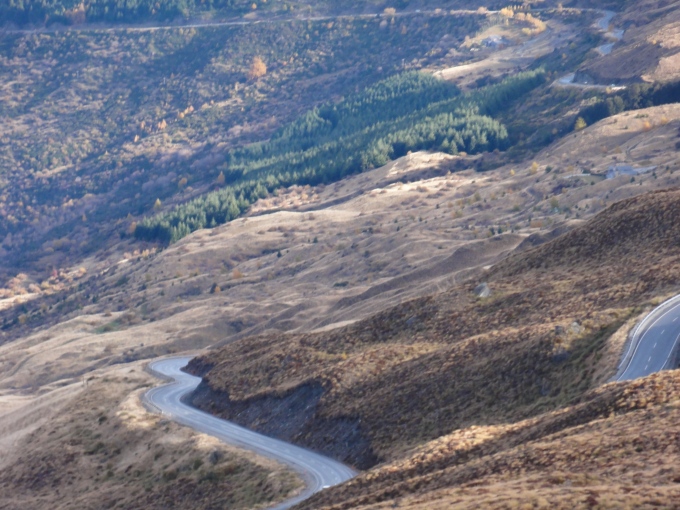
lookingdownfromcoronetpeak

And the story:

It was once said that a desperate man has everything to lose.

The man I was chasing was desperate, but I, on the other hand, was more desperate to catch him.

He’d left a trail of dead people from one end of the island to the other.

The team had put in a lot of effort to locate him, and now his capture was imminent.  We were following the car he was in, from a discrete distance, and, at the appropriate time, we would catch up, pull him over, and make the arrest.

There was nowhere for him to go.

The road led to a dead-end, and the only way off the mountain was back down the road were now on.  Which was why I was somewhat surprised when we discovered where he was.

Where was he going?

“Damn,” I heard Alan mutter.  He was driving, being careful not to get too close, but not far enough away to lose sight of him.

“What?”

“I think he’s made us.”

“How?”

“Dumb bad luck, I’m guessing.  Or he expected we’d follow him up the mountain.  He’s just sped up.”

“How far away?”

“A half-mile.  We should see him higher up when we turn the next corner.”

It took an eternity to get there, and when we did, Alan was right, only he was further on than we thought.”

“Step on it.  Let’s catch him up before he gets to the top.”

Easy to say, not so easy to do.  The road was treacherous, and in places just gravel, and there were no guard rails to stop a three thousand footfall down the mountainside.

Good thing then I had the foresight to have three agents on the hill for just such a scenario.

Ten minutes later, we were in sight of the car, still moving quickly, but we were going slightly faster.  We’d catch up just short of the summit car park.

Or so we thought.

Coming quickly around another corner we almost slammed into the car we’d been chasing.

“What the hell…” Aland muttered.

I was out of the car, and over to see if he was in it, but I knew that it was only a slender possibility.  The car was empty, and no indication where he went.

Certainly not up the road.  It was relatively straightforward for the next mile, at which we would have reached the summit.  Up the mountainside from here, or down.

I looked up.  Nothing.

Alan yelled out, “He’s not going down, not that I can see, but if he did, there’s hardly a foothold and that’s a long fall.”

Then where did he go?

Then a man looking very much like our quarry came out from behind a rock embedded just a short distance up the hill.

“Sorry,” he said quite calmly.  “Had to go if you know what I mean.”

I’d lost him.

It was as simple as that.

I had been led a merry chase up the hill, and all the time he was getting away in a different direction.

I’d fallen for the oldest trick in the book, letting my desperation blind me to the disguise that anyone else would see through in an instant.

It was a lonely sight, looking down that road, knowing that I had to go all that way down again, only this time, without having to throw caution to the wind.

“Maybe next time,” Alan said.

“We’ll get him.  It’s just a matter of time.”

© Charles Heath 2019-2021

Find this and other stories in “Inspiration, maybe”  available soon.

InspirationMaybe1v1

After the third attempt, still needs work

I have a stab at improving this starting piece every now and then, a project that started about a year or so ago, and I find myself rewriting the start over and over because I’m not satisfied with the characterization.

It’s not so much the storyline, as it is in trying to create sympathy for the character, and not find him as dull as ditchwater.  He’s improving with age.  As writers, we tend to create colourful characters and shy away from those who are dull and boring, because after all, as a reader, you want to become something or someone who is far from ordinary.  Well, Graham is starting out ordinary, but he will be anything but by the time I write those words ‘The End’.

I promise.


I am the master of my own destiny.

My father had drummed that into me, as well as my older brother and younger sister, over and over, until it became a mantra.

For them.

I could not say I didn’t have the same advantages afforded to them, afforded to me.  I did.

But somewhere lost in the translation, someone forgot to tell me that it was only advice, not an order, and mistaking it for the latter, I struck out on my own path.

And for the next ten years, it was a long and winding path that led me to this point in time, in a small room that held nothing to tell me where I came from, or who I really was.

My parents were very wealthy with an Upper Westside Apartment in Manhattan and a holiday house in Martha’s Vineyard, my sister had a successful medical career and married a most eligible bachelor, as expected, and my brother, he was a politician.

I’d not seen any of them in at least five years, and they hadn’t called me.

You see, I was the black sheep of the family.  I dropped out of college when it all became too much, and drifted.  Seasonal labourer, farmhand, factory worker, add job man, and night watchman. 

At least now I had a uniform, and a gun, and looked like I’d made something of myself.

It was hard to say why, just before I was about to head out of the factory to end my shift, that those thoughts about them came into my mind.   They might be gone, but I guess I would never forget about them.  I wondered briefly if any of them thought about me.


It was 3 a.m. and it was like standing on the exact epicentre of the South Pole.  I’d just stepped from the factory warehouse into the car park.

The car was covered in snow.  The weather was clear now, but I could feel more snow was coming.  A white Christmas?  That’s all I needed.  I hoped I remembered to put the antifreeze in my radiator this time.

As I approached my car, the light went on inside an SUV parked next to my car.  The door opened and what looked to be a woman was getting out of the car.

“Graham?”

It was a voice I was familiar with, though I hadn’t heard it for a long time.

I looked again and was shocked to see my ultra-successful sister, Penelope.  She was leaning against the front fender, and from what I could see, didn’t look too well.

How on earth did she find me, after all the years that had passed?  Perhaps that sparked my un-conciliatory question, “What do you want?”

I could see the surprise and then hurt in her expression.  Perhaps I had been a little harsh.  Whatever she felt, it passed, and she said, “Help.”

My help?  Help with what? I was the last person who could help her, or anyone for that matter, with anything.   But curiosity got the better of me.  “Why?”

“I think my husband is trying to kill me.”

Then, with that said, she slid down the side of the car, and I could see, in the arc lamps lighting the car park, a trail of blood.

My first thought, she needed the help of a doctor, not a stupid brother, then a second thought, call 911, which I did, and hoped like hell they got here in time.

And, yes, there was a third thought that crossed my mind.  Whether or not I would be blamed for this event.


© Charles Heath 2020

The second attempt looks a little better, but not much

The process of writing is rewriting editing and more rewriting.

The other day l wrote some words.  I didn’t like them.  But it had laid the groundwork for a second draft.

Here it is:


Growing up I did not believe l had one of those lovable faces.

My brother, known in school as the best looking boy of his graduating class, said it was a face only a mother could love.

He was mean.

Simone, a girl who was a friend, not a girlfriend, said my face had character.

She was charming and polite.

Looking now, in the mirror, l decided I’d aged gracefully.

I could truthfully say my brother had not, but that was as far as the comparison went.

My overachieving brother was the epitome of success in business, a veritable god zillionaire.  Everything he touched turned to gold.

My ultra successful sister, Penelope, had married into the right family perhaps by chance, but she was also a very learned scholar whose life was divided between her chair and the university and her social life with the rich and famous.

Then there was me.

I gave up on my chance at university because l was not the scholarly sort and didn’t last long.  Sadly l was the first of my family to be sent down from Oxford.

Instead, l took on a series of professions such as seasonal laborer, farmhand, factory worker, and lastly, night watchman.  At least now I had a uniform and looked like I’d made something of myself.

It would not be enough for my parents who every year didn’t say it out loud but the disappointment was always there in their expressions.

My brother in his usual blunt manner said l was a loser and would never change.

My sister was not quite so blunt.  She simply said it was disappointing so much potential was going to waste.  I only asked her once what she meant and lost me after the first four-syllable word.

Finally, I’d taken their comments to heart and decided l would not be going home to the family Christmas holiday reunion.

I told my boss l was available to work the night shift over the holidays, the shift no one else wanted.

It was he said the time for reflection.  He hated his family as much as I did so we would be able to lament our bad luck though the long cold hours from dusk till dawn.

It was 3 a.m. and it was like standing on the exact epicenter of the North Pole.  I’d just stepped from the warehouse into the car park.

The car was covered in snow.  The weather was clear now, but more snow was coming.

It was going to be a white Christmas, all I needed.  I hoped I remembered to put the antifreeze in my radiator this time.

As I approached my car, the light went on in an SUV parked next to my car.  The door opened and what looked to be a woman was climbing down from the driver’s seat.

She closed the door and leaned against the side of the car.  “Graham?”

It was a voice I was familiar with, though I hadn’t heard it for a long time, my ultra-successful sister, Penelope.  From what I could see, she didn’t look too well.

“What do you want?”

“Help.”

My help, I was the last person to help her or anyone for that matter.  But curiosity got the better of me.  “Why?”

“Because my husband is trying to kill me.”

The instant the last word left her lips I saw her jerk back into the car, and then start sliding down to the ground.  There was no mistaking the red streak following her as she fell.

She’d been shot from what could be a sniper rifle, which meant …


It still needs work but I’ve got the gist of where I want to go.

The idea is not to make a character so loathsome no one would want to read about him.

This will evolve and you can if you like come along for the ride!


© Charles Heath 2020

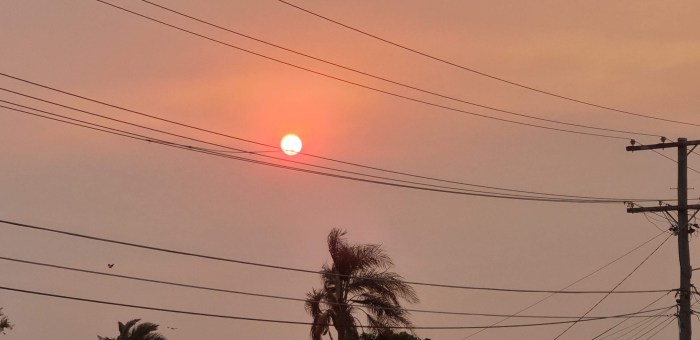
Inspiration, maybe – Volume 1

50 photographs, 50 stories, of which there is one of the 50 below.

They all start with –

A picture paints … well, as many words as you like.  For instance:

lookingdownfromcoronetpeak

And the story:

It was once said that a desperate man has everything to lose.

The man I was chasing was desperate, but I, on the other hand, was more desperate to catch him.

He’d left a trail of dead people from one end of the island to the other.

The team had put in a lot of effort to locate him, and now his capture was imminent.  We were following the car he was in, from a discrete distance, and, at the appropriate time, we would catch up, pull him over, and make the arrest.

There was nowhere for him to go.

The road led to a dead-end, and the only way off the mountain was back down the road were now on.  Which was why I was somewhat surprised when we discovered where he was.

Where was he going?

“Damn,” I heard Alan mutter.  He was driving, being careful not to get too close, but not far enough away to lose sight of him.

“What?”

“I think he’s made us.”

“How?”

“Dumb bad luck, I’m guessing.  Or he expected we’d follow him up the mountain.  He’s just sped up.”

“How far away?”

“A half-mile.  We should see him higher up when we turn the next corner.”

It took an eternity to get there, and when we did, Alan was right, only he was further on than we thought.”

“Step on it.  Let’s catch him up before he gets to the top.”

Easy to say, not so easy to do.  The road was treacherous, and in places just gravel, and there were no guard rails to stop a three thousand footfall down the mountainside.

Good thing then I had the foresight to have three agents on the hill for just such a scenario.

Ten minutes later, we were in sight of the car, still moving quickly, but we were going slightly faster.  We’d catch up just short of the summit car park.

Or so we thought.

Coming quickly around another corner we almost slammed into the car we’d been chasing.

“What the hell…” Aland muttered.

I was out of the car, and over to see if he was in it, but I knew that it was only a slender possibility.  The car was empty, and no indication where he went.

Certainly not up the road.  It was relatively straightforward for the next mile, at which we would have reached the summit.  Up the mountainside from here, or down.

I looked up.  Nothing.

Alan yelled out, “He’s not going down, not that I can see, but if he did, there’s hardly a foothold and that’s a long fall.”

Then where did he go?

Then a man looking very much like our quarry came out from behind a rock embedded just a short distance up the hill.

“Sorry,” he said quite calmly.  “Had to go if you know what I mean.”

I’d lost him.

It was as simple as that.

I had been led a merry chase up the hill, and all the time he was getting away in a different direction.

I’d fallen for the oldest trick in the book, letting my desperation blind me to the disguise that anyone else would see through in an instant.

It was a lonely sight, looking down that road, knowing that I had to go all that way down again, only this time, without having to throw caution to the wind.

“Maybe next time,” Alan said.

“We’ll get him.  It’s just a matter of time.”

© Charles Heath 2019-2021

Find this and other stories in “Inspiration, maybe”  available soon.
InspirationMaybe1v1

“Trouble in Store” – Short stories my way: Editing becomes re-writing (8)

It’s now time to look at the shopkeeper’s involvement, and there’s more to him and his activities than meets the eye.

With this event, it appears his luck is about to run out.


This wasn’t the shopkeeper’s first hold up.  In fact, over the years there had been a dozen.  But only one got reported to the police, and that was only because the robber was shot and killed.

He’d taken a bullet that night, too, which, from the police point of view, made him a concerned citizen simply defending himself.

The rest had been scared off by the double-barrel shotgun he kept under the counter for just such emergencies.

The young punk who came into the shop with his girlfriend had pulled out the pistol and told him if he reached for the shotgun he’d shoot him.  The kid looked unstable and he’d backed away.

When the kid collapsed, he should have gone for the shotgun, but instead, he thought he could get to the gun before the girl realized what was happened.  She wasn’t an addict and clearly looked like she was only along for the ride.  Her look when the kid pulled out the gun told him she’d known nothing about her partner’s true intentions.

But, he wasn’t fast enough, and she had the gun pointing at him before he’d got past the counter.

From one pair of unpredictable hands to another.

Like the girl, he was just as surprised when the customer burst in the door, just before closing time.

The situation might have been salvageable before the customer came in the door, getting the girl to go along with the robbery being about money, but there was no denying what the kid on the floor’s problem was.

Damn.

He had to try and salvage the situation simply because there was a lot of money involved, and other people depending on him.  He looked at the boy, on the floor, then the girl.

“Listen to me, young lady, you would be well advised to let this man go as he suggests.  And, please put the gun down before someone gets hurt.  Your friend needs medical help and I can call an ambulance.”

The girl switched her attention back to him.  “No one’s going anywhere, so just shut the hell up and let me think.”

The storekeeper glanced over at the customer. 

He’d seen him come into the shop once or twice, probably lived in the neighborhood, the sort who’d make a reliable witness, either a lawyer or an accountant.  Not like most of the residents just beyond the fringe of respectability.

If only he hadn’t burst into the shop when he did.


© Charles Heath 2018-2020

“Trouble in Store” – Short Stories my way: Editing becomes re-writing (7)

 It’s time to look at what’s been written for the unfortunate Annalisa, who had been caught up in a situation that is rapidly getting out of her control, not that she had it under control in the first place.  Perhaps it’s time to start reassessing her bad boy phase and think about a new lifestyle. 

Drugs, for her, were fun to begin with, but she can now see the effect they have on long term users, and the question will be, can she learn from this and move on?


Annalisa looked at the two men facing her.

Simmo, the boy on the floor, had told her that the shopkeeper would be a pushover, he was an old man who’d just hand over the drugs, rather than cause trouble for himself.

Where Simmo had discovered what the shopkeeper’s true vocation, dispensing drugs to the neighborhood addicts, she didn’t know, but it was not the first place like this they had visited.

She had always known Simmo had a problem, but he had assured her he had it under control.  Until a month ago, when he had tried something new.

It had changed him.

The breaking point came earlier that day when, seeing how sick he was, she threatened to leave.  It brought out the monster within him, and he threatened to kill her.  Not long after he had changed into a whimpering child pleading with her to stay, that he hadn’t meant anything he’d said before.

All he needed was one more ‘score’ to get his ‘shit’ together, and he would do as she asked, and find help.

She believed him.

He said he knew a place not far from the apartment, a small shop where what he needed was available, and said he had the money.

That should have been the first sign he was not telling the truth because she had been funding his habit until her parents cut off the money supply.  She suspected her father had put a private detective on to find her, had, and reported back, and rather than make a scene, just cut her off so she would have to come home or starve.  Her father was no better than Simmo.

And, as soon as they stepped into the shop, Simmo pulled out the gun,

Instead of the shopkeeper cowered like Simmo said he would, he had laughed at them and told them to get out.  Simmo started ranting and waving the gun around, then all of a sudden collapsed. 

There was a race for the gun which spilled out of Simmo’s hand, and she won. 

That was just before the customer burst into the shop.

It had been shortly before closing time.  Simmo had said there would be no one else around.

Wrong again.

Now she had another problem to deal with, a man who was clearly as scared shitless as she was.

This was worse than any bad hair day, or getting out of the wrong side of bed day, this was, she was convinced, the last day of her life.

She heard a strange sound come from beside her and looked down.  There was a trickle of blood coming out of his mouth and Simmo was making strange sounds like he was choking.

Any other time she might have been concerned, but the hard reality of it was, Simmo was never going to change.  She was only surprised at the fact it took so long for her to realize it.

As for the man standing in front of her, she was safe from the shopkeeper with him around, so he would have to stay.

“No.  Stay.”

Another glance at the shopkeeper told her she had made the right decision, his expression said it all.  Gun or no gun, the moment she was alone with him, he would kill her.


© Charles Heath 2018-2020

“Trouble in Store” – Short stories my way:  Editing becomes re-writing (6)

I’ve been looking at the start again, and something about it is nagging at me.

The main character needs a little work, and the start doesn’t exactly grab by the lapels of your coat.

Not yet.


The fact that smoking might kill him yet was, at that moment, an understatement.   If he was honest, when he told Maisie he had given them up, it should have been the truth.

And if it had been, he would not be in the situation he was.  A lame excuse to go down to the corner shop, had him panicking about getting there before the shop closed at 11 p.m.

His momentum propelled him through the door, causing the customer warning bell to ring loudly as the door bashed into it, and before the sound had died away, he knew he was in trouble.

It took a second, perhaps three, to sum up the situation. 

A young girl, about 16 or 17, scared, looking sideways at a man on the ground, then Alphonse, and then Jack.  He recognized the gun, a Luger, German, relic of WW2, perhaps the boy or her father’s souvenir, or more likely a stolen weapon, now pointing at him then Alphonse, then back to him.

Jack took another second or two to consider if he could disarm her.  No, the distance was too great.  He put his hands out where she could see them.  No sudden movements, try to remain calm, but his heart rate up to the point of cardiac arrest.  No point making a bad situation worse.

Pointing with the gun, she said, “Move closer to the counter where I can see you better.”

Everything but her hand was steady as a rock.  The only telltale signs of stress, the beads of perspiration on her brow and the slight tremor of her gun hand. 

It was 40 degrees Fahrenheit in the shop; almost mind-numbing.

Jack shivered and then did as he was told. 

A few seconds more for him to decide she was going to be unpredictable.

“What’s wrong with your friend?”  Jack tried the friendly approach after he’d taken the three steps sideways necessary to reach the counter.

The shopkeeper, Alphonse, who, Jack noted seemed to have aged another ten years in the last few months, spoke instead; “I suspect he’s an addict, looking for a score.  At the end of his tether, my guess, and here to get some money for a fix.”

A simple hold up that had gone very wrong. 

Wrong time, wrong place, in more ways than one Jack thought, now realizing he had walked into a very dangerous situation.  She didn’t look like a user.  The boy on the ground; he did, and he looked like he was going through the beginnings of withdrawal.

Oddly, though, when he first came in Jack had noticed a look pass between the shopkeeper and the girl.

 Then, as the tense silence reached an almost unbearable level, she said, “All you had to do was give us the stuff, and we wouldn’t be here, now.”  She was glaring back at Alphonse.  “You can still make this right.”

She used the word ‘stuff’ not money.  A flicker of memory jumped out of the depths on Jack’s mind, something discussed at the dinner table with their neighbors, something about the shop as a pick-up point for drugs.

The boy on the floor, he was not here for the money.

Jack thought he’d try another approach.  “Look, I don’t want trouble, and you don’t want trouble.  I’ll go, forget this ever happened.  You might want to do the same.  There’s nothing you can do for him now.”

The boy was intermittently writhing and moaning.  It looked to Jack like it might be more than just withdrawal.

The girl looked at the man on the ground, at the door, and back again, like she was thinking.  The gun, though, still moved between him and the shopkeeper.

Another assessment of the girl; she was completely out of place here, now.  It was evident she was from a better class of people, a different part of town.  Caught up in a downward spiral because of her acquaintance on the floor.

Caught in a situation she was not equipped to deal with.


© Charles Heath 2018-2020

“Trouble in Store” – Short stories my way:  Editing becomes re-writing (4)

I’ve been looking at the role of the [policewoman, and her interaction with the shop’s participants.

I’m still working on whether she needs more or less of an introduction, but, for the time being, this is what I’m going with:


It had been another long day at the office for Officer Margaret O’Donnell, or, out in the streets, coping with people who either didn’t know or didn’t care about the law.

People who couldn’t cross the road where there were crossings and lights to protect them, silly girls shoplifting on a dare, and boys who thought they were men and could walk on water.

The one they scraped of the road would never get to grow up, and his mother, well, she was not doing another call on a family to give them the bad news.

That was her day.

So far.

At the end of the day, she was glad to be getting home, putting her feet up, and forgetting about everything until the next morning when it would start all over again.

Coming around that last corner, the home stretch she called it, she was directly opposite the corner shop, usually closed at this hour of the night.  It was not.  The lights were still on.

She looked at her watch and saw it was ten minutes to midnight, and long past closing time.  She looked through the window, but from the other side of the road, she could only see three heads and little else.

Damn, she thought, I’m going to have to check it out. 

She was aware of the rumors, from her co-residents and also her colleagues down at the station, rumors she hoped were not true.


© Charles Heath 2016-2020