Searching for locations: Old Shanghai, China

The old Shanghai refers to a small area of Shanghai that used to be walled in and remained that way until about 1912 when all but a small section of the wall was demolished.  With the advent of the concessions, Old Shanghai became the administrative center until later when it became a shopping complex.

Now it has many restored historical buildings as well as new buildings in a somewhat traditional style that has become one of Shanghai’s main tourist attractions, housing many shops and restaurants.

The “Old Town” is not exclusively old, as you still have a chance to take in the atmosphere if you wander into the quaint side streets.

But, on first viewing walking down the street towards the complex, I’m not sure I’d go as far as to say this is in reality old Shanghai, except for what appears to be a true representation of it architecturally. 

The buildings, which are shops and restaurants, are set out symmetrically, with streets, alleyways, and squares which may prove that it was specially built for the tourists, and no mechanized traffic.

Anyway…

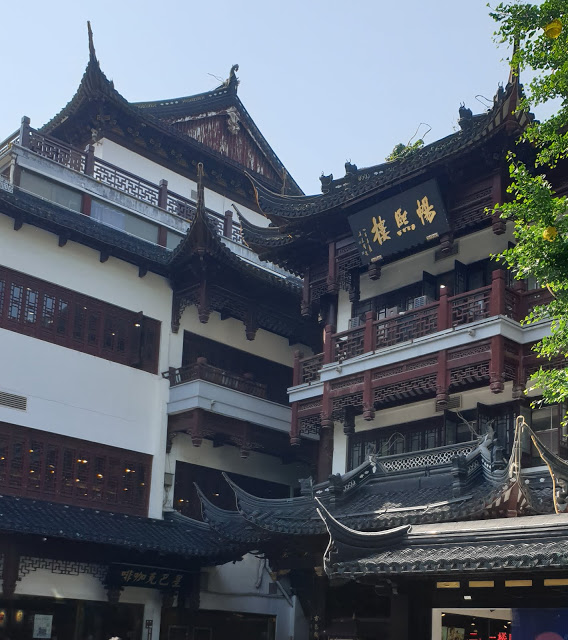
The buildings are magnificent, and a photographer’s delight, and you’d finish up having hundreds of photos by the time you leave.  All the buildings are exquisite representations of traditional Chinese architecture. 
As for buying stuff, remember if you’re not Chinese you have the sucker tourist stamp on your forehead, so be prepared to walk away if the vendors will not bargain.  

Nothing here is worth the price tag and in our group discounts like from 130 RMB to 50 RMB and from 1 for 1,200 to 2 for 950 RMB are common.

Here common t-shirts that we can get for 3 dollars back home start at 150 RMB which is roughly 35 dollars.  It’s that kind of market.

We end up is a tea room, on the third floor of the meeting point below, and discover all the tour guides sitting around a table counting money, and I have to say it’s the most $50 notes I’ve ever seen in one place.  
It is, we were told, where they discussed ‘strategy’.

Searching for locations: Old Shanghai, China

The old Shanghai refers to a small area of Shanghai that used to be walled in and remained that way until about 1912 when all but a small section of the wall was demolished.  With the advent of the concessions, Old Shanghai became the administrative center until later when it became a shopping complex.

Now it has many restored historical buildings as well as new buildings in a somewhat traditional style that has become one of Shanghai’s main tourist attractions, housing many shops and restaurants.

The “Old Town” is not exclusively old, as you still have a chance to take in the atmosphere if you wander into the quaint side streets.

But, on first viewing walking down the street towards the complex, I’m not sure I’d go as far as to say this is in reality old Shanghai, except for what appears to be a true representation of it architecturally. 

The buildings, which are shops and restaurants, are set out symmetrically, with streets, alleyways, and squares which may prove that it was specially built for the tourists, and no mechanized traffic.

Anyway…

The buildings are magnificent, and a photographer’s delight, and you’d finish up having hundreds of photos by the time you leave.  All the buildings are exquisite representations of traditional Chinese architecture. 

As for buying stuff, remember if you’re not Chinese you have the sucker tourist stamp on your forehead, so be prepared to walk away if the vendors will not bargain.  

Nothing here is worth the price tag and in our group discounts like from 130 RMB to 50 RMB and from 1 for 1,200 to 2 for 950 RMB are common.

Here common t-shirts that we can get for 3 dollars back home start at 150 RMB which is roughly 35 dollars.  It’s that kind of market.

We end up is a tea room, on the third floor of the meeting point below, and discover all the tour guides sitting around a table counting money, and I have to say it’s the most $50 notes I’ve ever seen in one place.  
It is, we were told, where they discussed ‘strategy’.
Searching for locations: Old Shanghai, China

The old Shanghai refers to a small area of Shanghai that used to be walled in and remained that way until about 1912 when all but a small section of the wall was demolished.  With the advent of the concessions, Old Shanghai became the administrative center until later when it became a shopping complex.

Now it has many restored historical buildings as well as new buildings in a somewhat traditional style that has become one of Shanghai’s main tourist attractions, housing many shops and restaurants.

The “Old Town” is not exclusively old, as you still have a chance to take in the atmosphere if you wander into the quaint side streets.

But, on first viewing walking down the street towards the complex, I’m not sure I’d go as far as to say this is in reality old Shanghai, except for what appears to be a true representation of it architecturally. 

The buildings, which are shops and restaurants, are set out symmetrically, with streets, alleyways, and squares which may prove that it was specially built for the tourists, and no mechanized traffic.

Anyway…

The buildings are magnificent, and a photographer’s delight, and you’d finish up having hundreds of photos by the time you leave.  All the buildings are exquisite representations of traditional Chinese architecture. 

As for buying stuff, remember if you’re not Chinese you have the sucker tourist stamp on your forehead, so be prepared to walk away if the vendors will not bargain.  

Nothing here is worth the price tag and in our group discounts like from 130 RMB to 50 RMB and from 1 for 1,200 to 2 for 950 RMB are common.

Here common t-shirts that we can get for 3 dollars back home start at 150 RMB which is roughly 35 dollars.  It’s that kind of market.

We end up is a tea room, on the third floor of the meeting point below, and discover all the tour guides sitting around a table counting money, and I have to say it’s the most $50 notes I’ve ever seen in one place.  
It is, we were told, where they discussed ‘strategy’.

Searching for locations: Old Shanghai, China

The old Shanghai refers to a small area of Shanghai that used to be walled in and remained that way until about 1912 when all but a small section of the wall was demolished.  With the advent of the concessions, Old Shanghai became the administrative center until later when it became a shopping complex.

Now it has many restored historical buildings as well as new buildings in a somewhat traditional style that has become one of Shanghai’s main tourist attractions, housing many shops and restaurants.

The “Old Town” is not exclusively old, as you still have a chance to take in the atmosphere if you wander into the quaint side streets.

But, on first viewing walking down the street towards the complex, I’m not sure I’d go as far as to say this is in reality old Shanghai, except for what appears to be a true representation of it architecturally. 

The buildings, which are shops and restaurants, are set out symmetrically, with streets, alleyways, and squares which may prove that it was specially built for the tourists, and no mechanized traffic.

Anyway…

The buildings are magnificent, and a photographer’s delight, and you’d finish up having hundreds of photos by the time you leave.  All the buildings are exquisite representations of traditional Chinese architecture. 

As for buying stuff, remember if you’re not Chinese you have the sucker tourist stamp on your forehead, so be prepared to walk away if the vendors will not bargain.  

Nothing here is worth the price tag and in our group discounts like from 130 RMB to 50 RMB and from 1 for 1,200 to 2 for 950 RMB are common.

Here common t-shirts that we can get for 3 dollars back home start at 150 RMB which is roughly 35 dollars.  It’s that kind of market.

We end up is a tea room, on the third floor of the meeting point below, and discover all the tour guides sitting around a table counting money, and I have to say it’s the most $50 notes I’ve ever seen in one place.  
It is, we were told, where they discussed ‘strategy’.

Searching for locations: Old Shanghai, China

The old Shanghai refers to a small area of Shanghai that used to be walled in and remained that way until about 1912 when all but a small section of the wall was demolished.  With the advent of the concessions, Old Shanghai became the administrative center until later when it became a shopping complex.

Now it has many restored historical buildings as well as new buildings in a somewhat traditional style that has become one of Shanghai’s main tourist attractions, housing many shops and restaurants.

The “Old Town” is not exclusively old, as you still have a chance to take in the atmosphere if you wander into the quaint side streets.

But, on first viewing walking down the street towards the complex, I’m not sure I’d go as far as to say this is in reality old Shanghai, except for what appears to be a true representation of it architecturally. 

The buildings, which are shops and restaurants, are set out symmetrically, with streets, alleyways, and squares which may prove that it was specially built for the tourists, and no mechanized traffic.

Anyway…

The buildings are magnificent, and a photographer’s delight, and you’d finish up having hundreds of photos by the time you leave.  All the buildings are exquisite representations of traditional Chinese architecture. 

As for buying stuff, remember if you’re not Chinese you have the sucker tourist stamp on your forehead, so be prepared to walk away if the vendors will not bargain.  

Nothing here is worth the price tag and in our group discounts like from 130 RMB to 50 RMB and from 1 for 1,200 to 2 for 950 RMB are common.

Here common t-shirts that we can get for 3 dollars back home start at 150 RMB which is roughly 35 dollars.  It’s that kind of market.

We end up is a tea room, on the third floor of the meeting point below, and discover all the tour guides sitting around a table counting money, and I have to say it’s the most $50 notes I’ve ever seen in one place.  
It is, we were told, where they discussed ‘strategy’.
Searching for locations: The Bund, Shanghai, China

The Bund

The architecture along the Bund or Waitan is a living museum of the colonial history of the 1800s.  The area centers on a section of Zhongshan Road within the former Shanghai International Settlement.

The word bund means an embankment or an embanked quay.   It was initially a British settlement; later the British and American settlements were combined in the International Settlement.

The Bund is a mile-long stretch of waterfront promenade along the Huangpu River. There are 52 buildings of various architectural styles, including Gothic, baroque, and neoclassical styles. The area is often referred to as “the museum of buildings”.

Building styles include Romanesque Revival, Gothic Revival, Renaissance Revival, Baroque Revival, Neo-Classical or Beaux-Arts, as well as a number in Art Deco style.

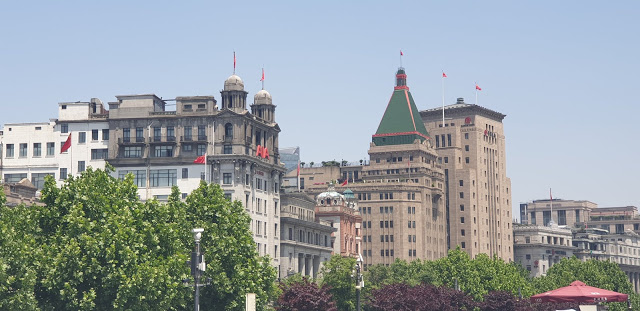
Having seen these buildings initially the night before, mostly lit up, our viewing this morning was from the land side, and particularly interesting in that the colonial architecture was really fascinating considering their location, but not surprising given Shanghai’s history.  A lot of these buildings would be more at home in London, that out in the far east.

The Bund waterfront is about two kilometers long and impossible to cover in the time allowed for this part of the tour.

There was just enough time to get photos of the waterfront and the old buildings.

Some of these buildings had odd shapes, like one on the far right that looks like a bottle opener.

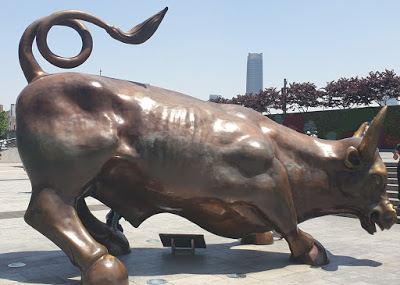
And, for some odd reason, a bull.

On the other side of the water, the sights that had been quite colorful the night before, were equally impressive though somewhat diminished by the haze.

Searching for locations: Old Shanghai, China

The old Shanghai refers to a small area of Shanghai that used to be walled in and remained that way until about 1912 when all but a small section of the wall was demolished.  With the advent of the concessions, Old Shanghai became the administrative center until later when it became a shopping complex.

Now it has many restored historical buildings as well as new buildings in a somewhat traditional style that has become one of Shanghai’s main tourist attractions, housing many shops and restaurants.

The “Old Town” is not exclusively old, as you still have a chance to take in the atmosphere if you wander into the quaint side streets.

But, on first viewing walking down the street towards the complex, I’m not sure I’d go as far as to say this is in reality old Shanghai, except for what appears to be a true representation of it architecturally. 

The buildings, which are shops and restaurants, are set out symmetrically, with streets, alleyways, and squares which may prove that it was specially built for the tourists, and no mechanized traffic.

Anyway…

The buildings are magnificent, and a photographer’s delight, and you’d finish up having hundreds of photos by the time you leave.  All the buildings are exquisite representations of traditional Chinese architecture. 

As for buying stuff, remember if you’re not Chinese you have the sucker tourist stamp on your forehead, so be prepared to walk away if the vendors will not bargain.  

Nothing here is worth the price tag and in our group discounts like from 130 RMB to 50 RMB and from 1 for 1,200 to 2 for 950 RMB are common.

Here common t-shirts that we can get for 3 dollars back home start at 150 RMB which is roughly 35 dollars.  It’s that kind of market.

We end up is a tea room, on the third floor of the meeting point below, and discover all the tour guides sitting around a table counting money, and I have to say it’s the most $50 notes I’ve ever seen in one place.  
It is, we were told, where they discussed ‘strategy’.

The Bund, Shanghai, China

The Bund
The architecture along the Bund or Waitan is a living museum of the colonial history of the 1800s.  The area centers on a section of Zhongshan Road within the former Shanghai International Settlement.
The word bund means an embankment or an embanked quay.   It was initially a British settlement; later the British and American settlements were combined in the International Settlement.
The Bund is a mile-long stretch of waterfront promenade along the Huangpu River. There are 52 buildings of various architectural styles, including Gothic, baroque, and neoclassical styles. The area is often referred to as “the museum of buildings”. 
Building styles include Romanesque Revival, Gothic Revival, Renaissance Revival, Baroque Revival, Neo-Classical or Beaux-Arts, as well as a number in Art Deco style.
Having seen these buildings initially the night before, mostly lit up, our viewing this morning was from the land side, and particularly interesting in that the colonial architecture was really fascinating considering their location, but not surprising given Shanghai’s history.  A lot of these buildings would be more at home in London, that out in the far east.

The Bund waterfront is about two kilometers long and impossible to cover in the time allowed for this part of the tour.

There was just enough time to get photos of the waterfront and the old buildings.

Some of these buildings had odd shapes, like one on the far right that looks like a bottle opener.

And, for some odd reason, a bull.

On the other side of the water, the sights that had been quite colorful the night before, were equally impressive though somewhat diminished by the haze.