It all started in Venice – Episode 13

Cecilia changes the subject

Being an up-and-coming movie start was not all beer and skittles, as the saying goes.

Juliet gave her a look that I thought was her death stare, annoyed by her arrival at what might have been a critical point in the conversation.

Cecilia saw her and shook her head.  “Oops, I’m intruding.  Sorry.”  She stood

“You’re not,” I said, which earned me a harsh look too, “We’re just having coffee, but you might want something stronger.”

“No, I’d better go.”  She was looking directly at Juliet, putting the onus directly on her.

“Stay.  We’re just having coffee.”

Cecilia waved to a waitress and sat down again.  “Great, I wasn’t looking forward to going back to an empty room.”

For effect, she touched me on my arm, her seat being closer, and I could see what she was doing. 

We opted for more coffee, Cecilia ordered a bottle of champagne, and three glasses, an attempt to smooth the rocky waters.

Juliet was definitely annoyed.  Another death stare in Cecilia’s direction, then, “would I have seen anything you’ve starred in?”

“Me?  I’m not a star, not a big name, just bit parts in series like Midsommer Murders, and Silent Witness.  I get to play dead bodies and murder victims.  My last role was a little better, I got a half dozen lines.  But I’m just one of the hundreds of hopefuls out there.”

“Do you have a day job, then, if parts are so few and far apart?”

Interesting question, Juliet was thinking on her feet.

If she was trying to catch Cecilia out, but she was ahead of Juliet.  “I do.  I’d like to say that it’s being a high-class escort, but they make more money than I’d know what to do with, so I toil away as a supermarket checkout girl.  Gives me the most flexibility regarding time off, and I get to meet so many different people, who become part of my repertoire of characters.  What do you do?”

“Pathology.”

“A doctor.”

“A disgraced doctor that can’t practice medicine.  Perhaps that might be material enough for another of your characters.”

Cecilia had one glass of champagne the moment it came, and then refilled for a second.  She offered it to us, and I nodded, taking half a glass.  Juliet declined.

“Played a hospital patient, a bomb victim, swathed in bloody bandages, been a doctor in the background once, got to spill coffee over another doctor.”

“What is the best part you’ve had?”

 “A fallen nun.”

The best said about that the better, but not before my mind went to places it shouldn’t.  I changed the subject.  “What will you be doing after the festival is over?”

“Going home.  I have an audition for a part in a film about mercenaries, they want me to be a mercenary would you believe?”

Apparently Juliet didn’t think so.

“But I have a spare few days if you want to show me more of Italy.  I’d like to see a little of Tuscany, try some wine.”

Another touch and a smile.

“I thought you were going to Sorrento.”  Not unexpected from Juliet.

“It can wait.  I’ve been thinking of going home, and can take Cecilia to Tuscany, send her on her way, and go visit Larry’s mother at Sorrento “

“And if I take up your tour offer to come with you?”

Cecilia gave me a Juliet look.

“Then I’ll send you a text saying where and when I’ll meet you.”

Change bottle empty, Cecilia gave me one last look, one that would no doubt get a reaction from Juliet, and sauntered away.

Juliet watched her leave, and after she disappeared out of sight, said, “it seems to me she’s more than just a friend.”

“That’s just her, no doubt playing a role.  She asked me if you were a girlfriend, and I said, once maybe, but not now.  Seems she didn’t quite believe me.”

“I think we both know where that ship is headed.”

The rocks, perhaps.  “It’s too soon after Violetta to contemplate anything like that.  But, that doesn’t mean I can’t be friends for now, and see what the future brings.”

“Not much if what you say about this Larry character is true.”

“That said, you might also want to be careful.  Larry’s not averse to using or killing close contacts of only to send a message.  So, if feel unsafe, or he makes an overture, tell me and I’ll pass it on to my minders.”

“If he does, I’ll definitely let you know.”

“Good.  It’s getting later.  We should get back to the hotel.”

© Charles Heath 2022

The cinema of my dreams – Was it just another surveillance job – Episode 19

I’m back home and this story has been sitting on a back burner for a few months, waiting for some more to be written.

The trouble is, there are also other stories to write, and I’m not very good at prioritising.

But, here we are, a few minutes opened up and it didn’t take long to get back into the groove.

Nothing good ever comes of snooping


I jumped down from the first level of the fire escape, halfway down an alley which was empty.  Keeping close to the wall so I couldn’t be seen, I headed back towards the main street, and then to a café not far from the front of the building.

Would Fred call in the police?  Surely at the very least, he would have to call an ambulance, finding an unconscious woman on the floor of a trashed flat.  He would also have to report the break-in, so I waited.

And waited.

No ambulance came.  If she had been unconscious and he’d reported it, there would be an almost instant response.  Unconscious bodies were given high priority.

After an hour passed, and no sign of a police car, or any police on foot, I thought there might be a crime wave going on, and it was taking time for the police to get there.

The fact no ambulance had turned up told me she must have regained consciousness, obviating the need for medical help.

Two hours, still nothing.

Three hours, I was left with the assumption, Jan didn’t want Fred to call the police.  It would be interesting to know what those reasons were.

My plan was to wait until she came out and follow her.  Beyond that, I would be making it up as I went.  After three hours, I had to switch cafes because of the looks the girl who made the coffee was giving me.

Apparently, people didn’t spend three hours drinking four cups of coffee unless they were working on their computer or reading a book, or paper, none of which I had.

It forced a move to another café further away and with an indistinct view of the front door, so I had to be extra vigilant.

As dusk was falling, a man nearer the doorway accidentally dropped his cup, and, when I looked up to see what the commotion was about, I saw what looked like Jan leaving, and, lucky for me, heading my way on the opposite side of the street.

Time to go back into surveillance mode.

She had changed into different clothes, and something else, though I wasn’t quite sure what it was that made her look different.  It almost made me think I’d got it wrong, and it was someone else.

Then, when she walked past me, not 20 feet away, I knew it was her.

What was different, she had suddenly become a brunette with long hair than the original shoulder-length blonde hair.  A change in persona.  Not the sort of thing a normal person did.  Unless, of course, she had a night job, one which she didn’t want anyone to recognise her.

I followed from the other side of the street.

Around a corner, past an underground station entrance, which was a huge bonus because she wasn’t going anywhere by train, not that it would matter to me.  It would if she caught a taxi.

Once or twice she looked behind her, on the same side of the street.  She looked over the other side too, in a careless sort of manner, but I was well hidden in plain sight because she wouldn’t recognise me as her assailant.

Around the corner, down another street, then stopped at a bus stop.  Still not a problem because there was no bus in sight.  On the way, I’d bought a copy of the evening paper and strolled up to the stop and sat down.  She gave me a once over and then ignored me.

The bus came and we got on.  She went upstairs I stayed downstairs, easier to get off at the same stop without raising her suspicions.

It was heading into the city, via Putney.  I had time to read the news, nothing of which was interesting, and keep one eye out for her.  She got off the bus without glancing in my direction at Putney and walked to the railway station.

After she headed for the platform, I checked where she might be going, and the service ended at Waterloo station if she went that far.  I waited a few minutes, then went down to the platform just as a train arrived.

She got on about halfway along, and I remained at the end.  I resisted the urge to move closer to her carriage where I could maintain visual contact, but since there was only one in this surveillance team, I had to be careful she didn’t see me.

The train terminated at Waterloo, and everyone had to get off.  For a few minutes, I thought I’d lost her among the other passengers.  Then I just managed to catch a glimpse of her going through the platform exit gate out into the station.

By the time I had got there, she was gone.

When you lost sight of the target, don’t panic.  And don’t act like someone who just lost a target because that will bring attention to yourself.  Take a long careful look in every direction, then move in the last direction you saw the target heading.

I did everything in accordance with my training.

The problem with Waterloo station?  There are several exits, and an entrance to the underground in the direction she had been heading.

Anyone could lead me in the wrong direction.

I went upstairs to a café, and looked down on the station floor, taking advantage of the height.

Until I felt something prodding me in the back, and a voice behind me saying, “Who are you, and why are you following me?”

Jan.


© Charles Heath 2019

A photograph from the inspirational bin – 25

This is an old chateau at the foot of a skiing area on the north island of New Zealand. It was once predominately advertised as a guest house for hikers in the summer months.

chateautongoriro

However, with fertile imaginations, we can come up with a whole different scenario.

Like, for instance, a haunted house, owned by an old and some might say creepy family, a place where few are invited, and those that are, approach the front door with trepidation.

It could be the family estate, the sort of place grandparents live, and their children consider themselves lucky to have escaped and their children, in turn, hate going there.

Of course, the opposite to that is that everyone loves going there for the holidays when the whole family gets together.

Then, a murder occurs…

It might also be a hotel in an unusual backdrop, where fugitives come to hide, or just one person from the city, trying to get away from a bad partner, or someone working there seeking a fresh start.

The truth is, there are any number of possibilities.

An excerpt from “What Sets Us Apart”, a mystery with a twist

See excerpt from the story below, just a taste of what’s in store…

http://amzn.to/2Eryfth

whatsetscover

McCallister was old school, a man who would most likely fit in perfectly campaigning on the battlefields of Europe during the Second World War. He’d been like a fish out of water in the army, post-Falklands, and while he retired a hero, he still felt he’d more to give.

He’d applied and was accepted as head of a SWAT team, and, watching him now as he and his men disembarked from the truck in almost military precision, a look passed between Annette, the police liaison officer, and I that said she’d seen it all before. I know I had.

There was a one in four chance his team would be selected for this operation, and she had been hoping it would be one of the other three. While waiting for them to arrive she filled me in on the various teams. His was the least co-operative, and the more likely to make ad-hoc decisions rather than adhere to the plan, or any orders that may come from the officer in charge.

This, she said quite bluntly, was going to end badly.

I still had no idea why Prendergast instructed me to attend the scene of what looked to be a normal domestic operation, but as the nominated expert in the field in these types of situations, it was fairly clear he wasn’t taking any chances. It was always a matter of opinion between us, and generally I lost.

In this case, it was an anonymous report identifying what the authorities believed were explosives in one of the dockside sheds where explosives were not supposed to be.

The only reason why the report was given any credence was the man, while not identifying himself by name, said he’d been an explosive expert once and recognized the boxes. That could mean anything, but the Chief Constable was a cautious man.

With his men settled and preparing their weapons, McCallister came over to the command post, not much more than the SUV my liaison and I arrived in, with weapons, bulletproof vests, and rolls of tape to cordon off the area afterward. We both had coffee, steaming in the cold early morning air. Dawn was slowly approaching and although rain had been forecast it had yet to arrive.

A man by the name of Benson was in charge. He too had groaned when he saw McCallister.

“A fine morning for it.” McCallister was the only enthusiastic one here.

He didn’t say what ‘it’ was, but I thought it might eventually be mayhem.

“Let’s hope the rain stays away. It’s going to be difficult enough without it,” Benson said, rubbing his hands together. We had been waiting for the SWAT team to arrive, and another team to take up their position under the wharf, and who was in the final stages of securing their position.

While we were waiting we drew up the plan. I’d go in first to check on what we were dealing with, and what type of explosives. The SWAT team, in the meantime, were to ensure all the exits to the shed were covered. When I gave the signal, they were to enter and secure the building. We were not expecting anyone inside or out, and no movement had been detected in the last hour since our arrival and deployment.

“What’s the current situation?”

“I’ve got eyes on the building, and a team coming in from the waterside, underneath. Its slow progress, but they’re nearly there. Once they’re in place, we’re sending McKenzie in.”

He looked in my direction.

“With due respect sir, shouldn’t it be one of us?” McCallister glared at me with the contempt that only a decorated military officer could.

“No. I have orders from above, much higher than I care to argue with, so, McCallister, no gung-ho heroics for the moment. Just be ready to move on my command, and make sure you have three teams at the exit points, ready to secure the building.”

McCallister opened his mouth, no doubt to question those orders, but instead closed it again. “Yes sir,” he muttered and turned away heading back to his men.

“You’re not going to have much time before he storms the battlements,” Benson quietly said to me, a hint of exasperation in his tone. “I’m dreading the paperwork.”

It was exactly what my liaison officer said when she saw McCallister arriving.

The water team sent their ‘in position’ signal, and we were ready to go.

In the hour or so we’d been on site nothing had stirred, no arrivals, no departures, and no sign anyone was inside, but that didn’t mean we were alone. Nor did it mean I was going to walk in and see immediately what was going on. If it was a cache of explosives then it was possible the building was booby-trapped in any number of ways, there could be sentries or guards, and they had eyes on us, or it might be a false alarm.

I was hoping for the latter.

I put on the bulletproof vest, thinking it was a poor substitute for full battle armor against an exploding bomb, but we were still treating this as a ‘suspected’ case. I noticed my liaison officer was pulling on her bulletproof vest too.

“You don’t have to go. This is my party, not yours,” I said.

“The Chief Constable told me to stick to you like glue, sir.”

I looked at Benson. “Talk some sense into her please, this is not a kindergarten outing.”

He shrugged. Seeing McCallister had taken all the fight out of him. “Orders are orders. If that’s what the Chief Constable requested …”

Madness. I glared at her, and she gave me a wan smile. “Stay behind me then, and don’t do anything stupid.”

“Believe me, I won’t be.” She pulled out and checked her weapon, chambering the first round. It made a reassuring sound.

Suited up, weapons readied, a last sip of the coffee in a stomach that was already churning from nerves and tension, I looked at the target, one hundred yards distant and thought it was going to be the longest hundred yards I’d ever traversed. At least for this week.

A swirling mist rolled in and caused a slight change in plans.

Because the front of the buildings was constantly illuminated by large overhead arc lamps, my intention had been to approach the building from the rear where there was less light and more cover. Despite the lack of movement, if there were explosives in that building, there’d be ‘enemy’ surveillance somewhere, and, after making that assumption, I believed it was going to be easier and less noticeable to use the darkness as a cover.

It was a result of the consultation, and studying the plans of the warehouse, plans that showed three entrances, the main front hangar type doors, a side entrance for truck entry and exit and a small door in the rear, at the end of an internal passage leading to several offices. I also assumed it was the exit used when smokers needed a break. Our entry would be by the rear door or failing that, the side entrance where a door was built into the larger sliding doors. In both cases, the locks would not present a problem.

The change in the weather made the approach shorter, and given the density of the mist now turning into a fog, we were able to approach by the front, hugging the walls, and moving quickly while there was cover. I could feel the dampness of the mist and shivered more than once.

It was nerves more than the cold.

I could also feel rather than see the presence of Annette behind me, and once felt her breath on my neck when we stopped for a quick reconnaissance.

It was the same for McCallister’s men. I could feel them following us, quickly and quietly, and expected, if I turned around, to see him breathing down my neck too.

It added to the tension.

My plan was still to enter by the back door.

We slipped up the alley between the two sheds to the rear corner and stopped. I heard a noise coming from the rear of the building, and the light tap on the shoulder told me Annette had heard it too. I put my hand up to signal her to wait, and as a swirl of mist rolled in, I slipped around the corner heading towards where I’d last seen the glow of a cigarette.

The mist cleared, and we saw each other at the same time. He was a bearded man in battle fatigues, not the average dockside security guard.

He was quick, but my slight element of surprise was his undoing, and he was down and unconscious in less than a few seconds with barely a sound beyond the body hitting the ground. Zip ties secured his hands and legs, and tape his mouth. Annette joined me a minute after securing him.

A glance at the body then me, “I can see why they, whoever they are, sent you.”

She’d asked who I worked for, and I didn’t answer. It was best she didn’t know.

“Stay behind me,” I said, more urgency in my tone. If there was one, there’d be another.

Luck was with us so far. A man outside smoking meant no booby traps on the back door, and quite possibly there’d be none inside. But it indicated there were more men inside, and if so, it appeared they were very well trained. If that were the case, they would be formidable opponents.

The fear factor increased exponentially.

I slowly opened the door and looked in. A pale light shone from within the warehouse itself, one that was not bright enough to be detected from outside. None of the offices had lights on, so it was possible they were vacant. I realized then they had blacked out the windows. Why hadn’t someone checked this?

Once inside, the door closed behind us, progress was slow and careful. She remained directly behind me, gun ready to shoot anything that moved. I had a momentary thought for McCallister and his men, securing the perimeter.

At the end of the corridor, the extent of the warehouse stretched before us. The pale lighting made it seem like a vast empty cavern, except for a long trestle table along one side, and, behind it, stacks of wooden crates, some opened. It looked like a production line.

To get to the table from where we were was a ten-yard walk in the open. There was no cover. If we stuck to the walls, there was equally no cover and a longer walk.

We needed a distraction.

As if on cue, the two main entrances disintegrated into flying shrapnel accompanied by a deafening explosion that momentarily disoriented both Annette and I. Through the smoke and dust kicked up I saw three men appear from behind the wooden crates, each with what looked like machine guns, spraying bullets in the direction of the incoming SWAT members.

They never had a chance, cut down before they made ten steps into the building.

By the time I’d recovered, my head heavy, eyes watering and ears still ringing, I took several steps towards them, managing to take down two of the gunmen but not the third.

I heard a voice, Annette’s I think, yell out, “Oh, God, he’s got a trigger,” just before another explosion, though all I remember in that split second was a bright flash, the intense heat, something very heavy smashing into my chest knocking the wind out of me, and then the sensation of flying, just before I hit the wall.

I spent four weeks in an induced coma, three months being stitched back together and another six learning to do all those basic actions everyone took for granted. It was twelve months almost to the day when I was released from the hospital, physically, except for a few alterations required after being hit by shrapnel, looking the same as I always had.

But mentally? The document I’d signed on release said it all, ‘not fit for active duty; discharged’.

It was in the name of David Cheney. For all intents and purposes, Alistair McKenzie was killed in that warehouse, and for the first time ever, an agent left the Department, the first to retire alive.

I was not sure I liked the idea of making history.


© Charles Heath 2016-2020

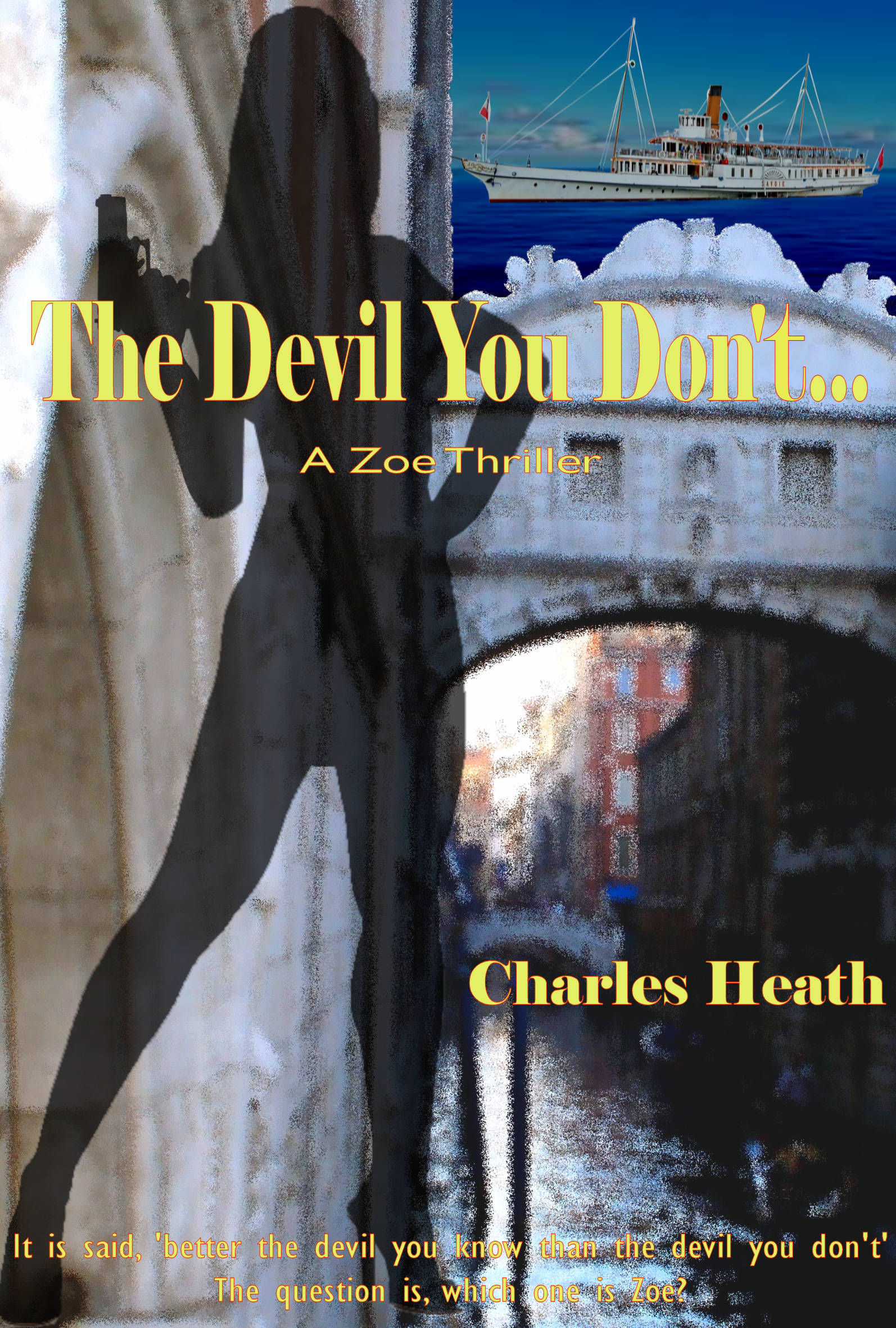
“The Devil You Don’t” – A beta readers view

It could be said that of all the women one could meet, whether contrived or by sheer luck, what are the odds it would turn out to be the woman who was being paid a very large sum to kill you.

John Pennington is a man who may be lucky in business, but not so lucky in love. He has just broken up with Phillipa Sternhaven, the woman he thought was the one, but relatives and circumstances, and perhaps because she was a ‘princess’, may also have contributed to the end result.

So, what do you do when you are heartbroken?

That is a story that slowly unfolds, from the first meeting with his nemesis on Lake Geneva, all the way to a hotel room in Sorrento, where he learns the shattering truth.

What should have been a high turns out to be something else entirely, and from that point every thing goes to hell in a handbasket.

He suddenly realises his so-called friend Sebastian has not exactly told him the truth about a small job he asked him to do, the woman he is falling in love with is not quite who she says she is, and he is caught in the middle of a war between two men who consider people becoming collateral damage as part of their business.

The story paints the characters cleverly displaying all their flaws and weaknesses. The locations add to the story at times taking me back down memory lane, especially to Venice where in those back streets I confess it’s not all that hard to get lost.

All in all a thoroughly entertaining story with, for once, a satisfying end.

Available on Amazon here: https://amzn.to/2Xyh1ow

It all started in Venice – Episode 12

Let’s talk about Larry.

Over the main, and desert, I told her about Siena and the Palio, painting a vivid picture of horsemanship and rivalry over the course of several hundred years, making it sound so much better than it was.

It the heat, the tight confines of the square, and the large number of people crammed in, it could be quite oppressive.

It wasn’t until after coffee arrived I decided to take a different tack and surprise her.

“You know, back in the old days, when I was working a desk, I used to do research on criminals for task forces.  I longed to get out in the field, but back then you had to be a particular sort of bastard to get those jobs.  I just didn’t have that mean streak.”

“Any I might know of?”

“One that springs to mind, Larry Pomisor, head of the so-called Waterville gang, though as an organization, is went downhill quickly after Larry’s father died and he took over.”

I’d been watching her carefully, and, yes, no matter how hard people tried to mask their surprise, it never works.  I got the hit I was looking for.

“You’re saying he’s not a crime boss?”

“Exactly.  He’s little better than a complete moron.  Blames me for the death of his brother, failing to understand that he is ultimately responsible.  If he hadn’t dragged him into the business, he’d still be alive today.”

“Why would he blame you?”

“He thinks I was at the scene of his brother’s death but whoever told him got their dates mixed up.  But Larry is nothing if not pathological in his beliefs no matter how wrong they are.”

I could see she was processing how to deal with this turn of events.  Being handed to her on a plate, exactly what Larry wanted me to talk about, I could see she was mid-way between confused and surprised.  In other words, off guard.

She now had to come up with questions that were not obvious.

“Not exactly the sort of enemy you want, then.”

“No more than any of the others I’m sure are waiting in line.  I was there, yes, but not when his brother was killed, he was alive when I left.  It was a meeting his brother called, and we believe he was going to inform on Larry, and Larry had him killed, then pinning the blame on us, and me in particular.  His brother never wanted anything to do with Waterville, but Larry never gave him the option.”

“I can’t believe that he would do that, not to his brother.  No one would do that to family.”

“Like I said, everything I learned about Larry pointed to the fact he was a moron.  His father hated him, and his mother moved to be as far from him as possible.  She lives in Sorrento you know.  His father was a piece of work, and I first met him on a domestic call-out when their neighbors reported gunshots.  She had taken a beating, not the first, and not the last, and I had to say, I’d never seen anyone more relieved when the old man died.”

I wondered what Larry was making of this if he was listening in.  He had once told me, in passing, in one of many visits to the parent’s house to intervene, that he would kill his father if he didn’t stop.

But, Larry was all talk and no action and did nothing to stop it.  In the end, it was his wife Gabrielle, who finally ended the violence. 

When it happened she called me, the most familiar face, and told me what happened.  I then told her what to do, and it eventually kept her out of jail.  Over the years since our paths rarely crossed, but significantly I was on her Christmas card list.

She had, when she learned I was living in Venice incited Violetta and I over for tea, and we went a few times, but the last was a long time ago.

“He doesn’t blame you for that too foes he?”

“Probably, but Gabrielle can put him straight on that.  I should go and see her, it’s been a while.”

 “What do you mean?  Go see Larry’s mother?”

“Why not?  The chances of Larry being there are remote.  It’ll have to be after Cecilia goes back home.  You want to come, see a bit more of Italy?”

“What?”

The shock of the conversation direction had finally caught up with her.  I’d seen her glancing more than one at her phone, and equally wondering what Larry was making of it.

“Go see Larry’s mother.  We’re old friends.  I’m sure she’d give him a stern talking-to if she knew he wanted me dead, don’t you?”

“I don’t know.  I’ll have to see.”

“Of course.  Too short notice.”

I gave her one of my winning smiles, just as Cecilia loomed out of the darkness and came over, dropping heavily into the seat next to me, and complaining, “Well, that was a spectacular waste of time and effort.”

© Charles Heath 2022

Travelling after a pandemic: Destination Hobart

Hobart in June – Winter – Day 2 – Sunday

It is not raining when we woke, but it had been most of the night.  After a cold start, the weather, seems to have improved, if only for the time being.

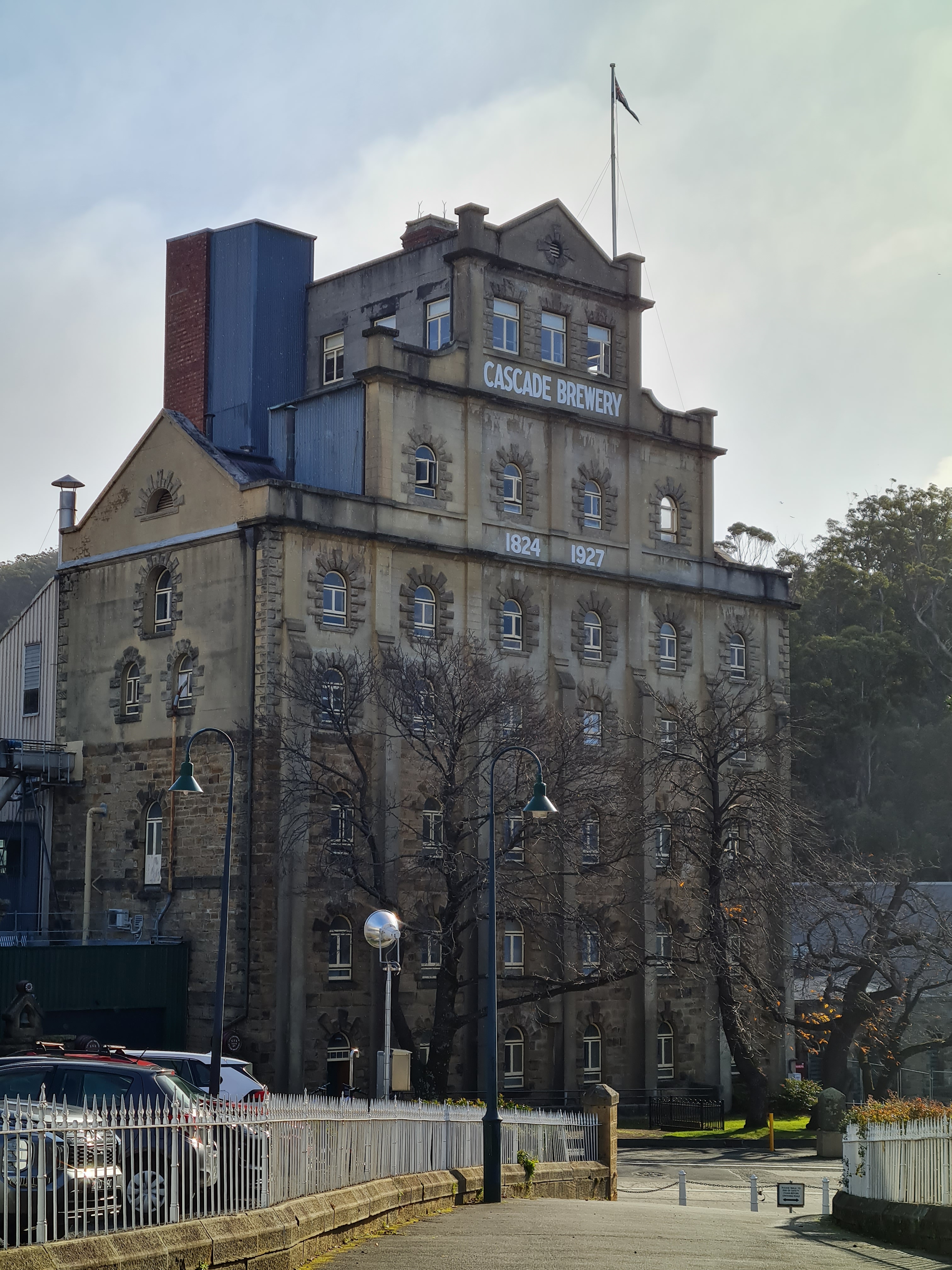
Today’s expedition is the Cascade Brewery, which doesn’t have tours at the moment because of staff issues with Covid, but does have a bar and restaurant.  There is also a historic site, an old women’s prison, and botanical gardens.  I’m not sure how far we’ll get in the gardens, but the bar and restaurant is looking good.

We get there and decide on lunch first then a visit to the women’s prison.

Fail.  The bar and restaurant are packed and there are no tables left.  Time for a photograph of the old brewery, and move on.

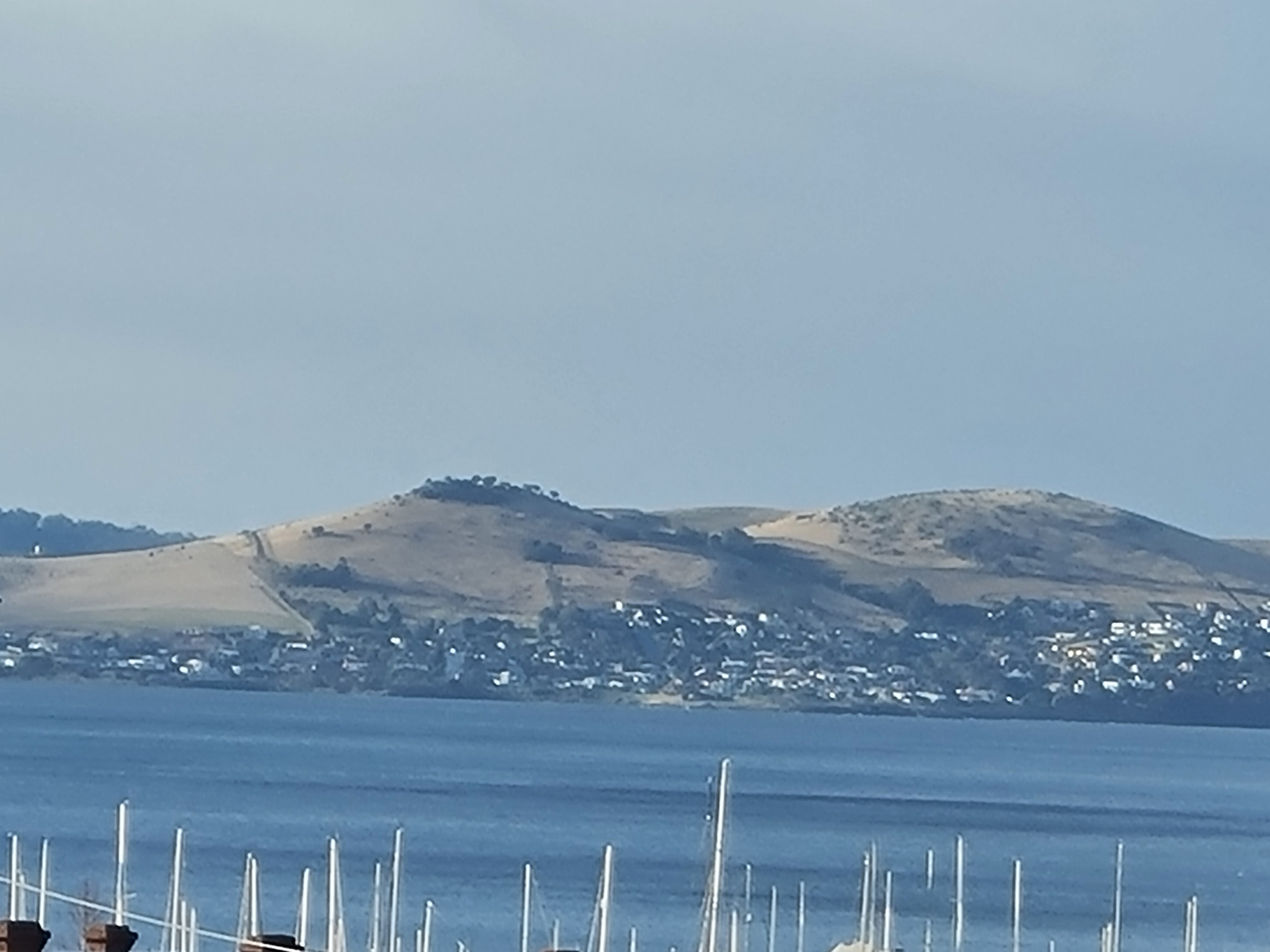
Instead of going to the prison, just down the road, we go off in a different direction, to Mt Wellington, thinking it might give excellent views of Hobart.

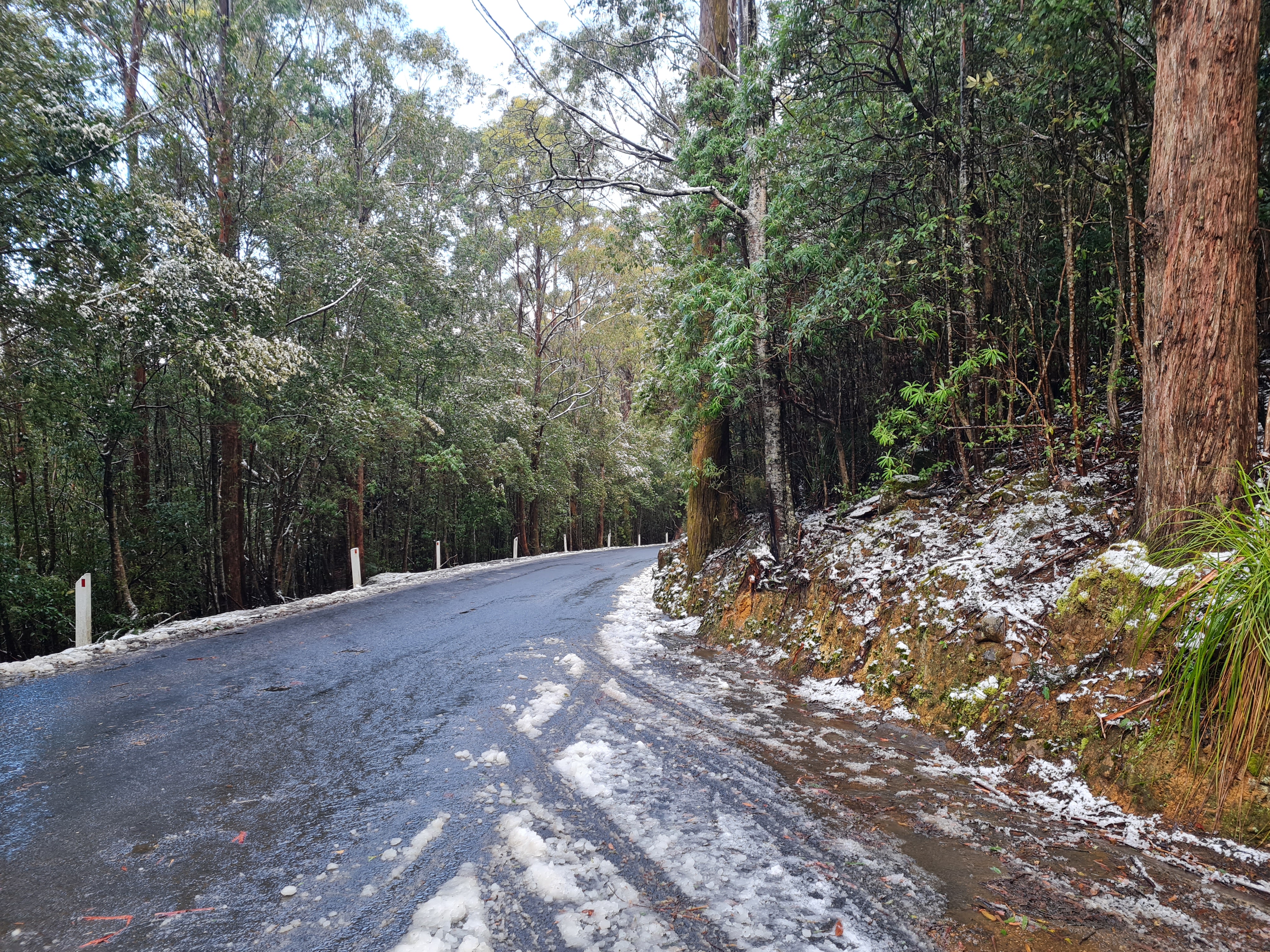
Only a sign says the road is supposed to be closed, but it is not, so we and a dozen others are venturing up the road towards the summit.

The road was probably opened temporarily, but it is getting more treacherous as the snow appears and the road is wet.  We make it about 2km before deciding it’s unsafe.

The adventure continues because at the bottom of the hill we decided to go to Huonville, hoping to chance upon the apple orchards and all things apple.

It was an immense letdown.  There was nothing, except for one innocuous building with a sign out front saying it was open, but for all intents and purposes looked like it was completely empty.

Until you drove around the back to the carpark where there were hundreds of cars, and inside, totally packed.

It’s where everyone in Huonville had gone.

And not where we were going to get a distinctly Tasmanian meal.

We had to settle for another pie from Banjo’s in Sandy Bay.

It all started in Venice – Episode 11

Verbal sparring with Juliet

I had expected Juliet would try and maneuver the conversation in the direction Larry wanted, and I thought about whether I would be obtuse in simply ignoring her and talking about anything else, or just have fun with Larry who, no doubt, would be listening in.

Her first question was hardly surprising, an effort to see if I would tell her what my work was.  I couldn’t even if I wanted to, but I could intimate certain things.  But not straight away, Juliet was going to give to ask the right questions.

“Since retirement, I spent most of my time looking after Violetta.”

“Was she unwell?”

A natural assumption that everyone made, but nothing could be further from the truth.   She had given me purpose after so long in a trade that traded in endless lies and deception.

And it had been on one of those missions she had been caught in the crossfire, as I pretended to be, and got her out.  We found each other again, by accident, literally, and it developed from there.

I was done with that job and wandering aimlessly around Europe at the time.  She knew something was wrong with me, but never pushed, just accepted that everything would be better in time.

And it was.

It was a while before I answered, several vivid memories of her rising to the surface as they did, unexpectedly at times.

“No.  I often think she was exactly what she thought I needed to be for her.  She had come from a family that had servants all their lives, and there were certain expectations.”

I could see it in her expression, that Violetta treated me like a servant.   Good, let her.

“I had always wondered what it was you did, that you could end up I’m my hospital in such bad shape.  I never bought that car accident excuse we were given, because the injuries were inconsistent.”

“You were an expert on car injuries?”

“As a matter of fact, yes, I had made it a hobby if you like, to treat as many as possible, cataloging the injuries so that other doctors might treat patients with such injuries more efficiently.”

“So, having said that, what in your humble opinion was the cause of my injuries?”

“Being tossed out of a moving car, but more likely the result of a bar fight, the sort they had in the old wild west.”

And she’d be right.  It was six against two, and at a disadvantage, and, yes, I had been thrown a short distance, but not by the enemy.  It was a gesture to save me from a worse beating.  I had been lucky that night, my partner had not.

“Well, always an interesting topic for doctors sitting around a campfire talking shop.  But I will say this, I was a policeman once, with a blue uniform too.  I did spend time on the streets, but mostly doing paperwork, as I keep telling everyone.”

“And what caused your injuries?”

She was persistent, I’ll give her that.

“Getting involved in a domestic argument.  It’s not the sort of work anyone wants to get in the middle of, and my partner at the time was killed.  You saw what happened to me.  We were just in the wrong place at the wrong time.”

She gave me a measured look, one that seemed to say she didn’t believe a word of it, and I was fine with that.  In any other circumstance, we would not be talking about it, and I had tried to put the real events of that day behind me.

It wasn’t easy.  Not when you lose someone.  It becomes that situation where at first you blame yourself for the death, and then after enough people tell you it wasn’t your fault, you begin to wonder what you could have done better to prevent it.

A lot, perhaps, but I’d been younger then, and not as wise.  That came layer with experience.

“Tell me about you,” I said, changing the focus.

“Nothing to tell.”

“I read newspapers Juliet, and I know what happened.  It might have been on page 16, but it leaped off the page.  I wanted to believe it wasn’t true.”

If she thought she was going to escape the inquisition, she was wrong.

I had been surprised to see her name, more surprised at the circumstances, a dalliance with drugs, a bad call, an avoidable death, and the downward spiral from there.

The photo of her in the paper after her arrest was not pretty.  She went to jail for a short period, lost her license to practice medicine, and lost a whole lot more.

“If you read the news, then there’s nothing left to tell.  I’m clean now, have been for a few years.”

The admission came almost reluctantly, for someone in her situation, it was like an evening ender when the truth was out.

“You were a good doctor.  What happened?”

“Too many hours, not enough sleep.  A husband who was too consumed in his own career, I took the easy way out.  Life is a series of choices, and I made a few bad ones.  Shit happens.”

“So, what do you do now?”

“Forensic medicine, assisting coroners.  I work with the dead.  I figure I can’t hurt them anymore.  I try to see the people who don’t survive car crashes, and continue my work in the hope some of the death and mayhem can be prevented.”

As well as doing Larry’s dirty work.  Had she done this before?

Sparring suspended, the main courses arrived.

© Charles Heath 2022

The cinema of my dreams – I always wanted to go on a treasure hunt – Episode 73

Here’s the thing…

Every time I close my eyes, I see something different.

I’d like to think the cinema of my dreams is playing a double feature but it’s a bit like a comedy cartoon night on Fox.

But these dreams are nothing to laugh about.

Once again there’s a new installment of an old feature, and we’re back on the treasure hunt.

Charlene, and speaking to Boggs

She had been one of the few nice girls at school and we had got along better than most.  Boggs had once told me she liked me but was disappointed I hadn’t noticed her.  I suppose, back then, I didn’t recognize the signs, and even now, I was still all at sea with girls.

Was she Boggs’s girlfriend?  If she was, it was the best-kept secret.

“Hello Charlene,” I said when she also looked up to see who had entered the room.

“Sam.”

“Are you…”

Before I could finish she interrupted, “I’m working in the sheriff’s office, and dad asked me to keep a watch over Boggs.”

“You don’t have to be in the room,” Boggs growled.  “It’s not as if I’m going anywhere.”

It was hardly a conciliatory tone.  And a mental note, Boggs was uncharacteristically angry. With her, or with me?

“My father asked me to do a job, so here I stay.  It’s for your protection as much as anything else.”  Then, to me, “how are you, Sam?”

“Good.”

“I understand you found him on the beach belonging to the Cossatino’s.  Odd place to be, Sam, for you at least?”

“Nadia and I were searching the coastline for coins with metal detectors when we stumbled over a body.  Thought at first it was a beached shark.”

Boggs turned his head back.  “Whose idea was it?”

Curious response and I thought about telling him it was mine, but something told me to tell the truth. “Nadia.  And before you ask, no, I don’t think she had any other idea in mind because as you and I both know, there’s no access from the ocean to the shore through the reef.  That much I ascertained for myself, and that goes for the whole coastline of The Grove.”

If he had looked down from the top of the cliff face, at any point along the coastline he would have seen that for himself.  But, that might not always have been the case because there were almost two centuries and a lot of seismic activity in between.  I’d seen the big A, but no other evidence it might be the spot, but Boggs had been there, and it was likely he knew it a likely spot too.

He nodded, which meant he had checked himself, which gave him a reason for being at The Grove, but not finishing up where he’d landed.  There was something else in his expression and had I not had the knowledge I had, I would have ignored it.

“Why look for coins then?”

“Something to do, I guess, since you’ve stopped asking me to help you.  That and doing a little investigation on the side.  I’m amazed at just how much information there is out there, and it’s a battle to sort fact from fiction.  And I didn’t have the head start you have.”

“You do realize Nadia is a Cossatino.  You can’t be consorting with the enemy.”

“I thought she was just someone to hang out with since we hadn’t hit it off at school.  In case you didn’t notice, she hasn’t been around these parts for several years, going to Italy to get away from the family.  But, I get it, she’s still a Cossatino, or so everyone keeps telling me, and not someone I should be associating with.  You’re not the only one issuing dire warnings.”

“That’s your problem, Sam, you see the good in everyone, even if they’re bad.”

“Should I apply that theory to you.  You don’t finish up unconscious on a beach where you’re not supposed to be.  What happened?”

I could practically see the wheels turning while he formulated an excuse he thought I would buy, then said, “I slipped and fell, something that shouldn’t have happened?”

“Not unless you’d been seen and the Cossatino’s were either coming to get you or were chasing you?”

He didn’t answer perhaps knowing Charlene was there to get answers, but his expression told me it was close to the truth.

“No.  Slipped, a fundamental error setting up.  I was simply sloppy.”

“You were trespassing.”

“I was practicing my skills, and it’s the best rockface along the coast for exactly that.  It’s not the first time I’ve tried.”

OK, we weren’t going to get past the ‘I was practicing mantra’, so I moved on to the next question, “Where have you been lately?”

“The caves in the hills, and trying a bit of climbing there, too.”

“You shouldn’t be doing it alone.”

“I wouldn’t have to if my so-called friend wasn’t cavorting with a snake.”

© Charles Heath 2020-2022

The first case of PI Walthenson – “A Case of Working With the Jones Brothers”

This case has everything, red herrings, jealous brothers, femme fatales, and at the heart of it all, greed.

See below for an excerpt from the book…

Coming soon!

PIWalthJones1

An excerpt from the book:

When Harry took the time to consider his position, a rather uncomfortable position at that, he concluded that he was somehow involved in another case that meant very little to him.

Not that it wasn’t important in some way he was yet to determine, it was just that his curiosity had got the better of him, and it had led to this: sitting in a chair, securely bound, waiting for someone one of his captors had called Doug.

It was not the name that worried him so much, it was the evil laugh that had come after the name was spoken.

Doug what? Doug the ‘destroyer’, Doug the ‘dangerous’, Doug the ‘deadly’; there was any number of sinister connotations, and perhaps that was the point of the laugh, to make it more frightening than it was.

But there was no doubt about one thing in his mind right then: he’d made a mistake. A very big. and costly, mistake. Just how big the cost, no doubt he would soon find out.

His mother, and his grandmother, the wisest person he had ever known, had once told him never to eavesdrop.

At the time he couldn’t help himself and instead of minding his own business, listening to a one-sided conversation which ended with a time and a place. The very nature of the person receiving the call was, at the very least, sinister, and, because of the cryptic conversation, there appeared to be, or at least to Harry, criminal activity involved.

For several days he had wrestled with the thought of whether he should go. Stay on the fringe, keep out of sight, observe and report to the police if it was a crime. Instead, he had willingly gone down the rabbit hole.

Now, sitting in an uncomfortable chair, several heat lamps hanging over his head, he was perspiring, and if perspiration could be used as a measure of fear, then Harry’s fear was at the highest level.

Another runnel of sweat rolled into his left eye, and, having his hands tied, literally, it made it impossible to clear it. The burning sensation momentarily took his mind off his predicament. He cursed and then shook his head trying to prevent a re-occurrence. It was to no avail.

Let the stinging sensation be a reminder of what was right and what was wrong.

It was obvious that it was the right place and the right time, but in considering his current perilous situation, it definitely was the wrong place to be, at the worst possible time.

It was meant to be his escape, an escape from the generations of lawyers, what were to Harry, dry, dusty men who had been in business since George Washington said to the first Walthenson to step foot on American soil, ‘Why don’t you become a lawyer?” when asked what he could do for the great man.

Or so it was handed down as lore, though Harry didn’t think Washington meant it literally, the Walthenson’s, then as now, were not shy of taking advice.

Except, of course, when it came to Harry.

He was, Harry’s father was prone to saying, the exception to every rule. Harry guessed his father was referring to the fact his son wanted to be a Private Detective rather than a dry, dusty lawyer. Just the clothes were enough to turn Harry off the profession.

So, with a little of the money Harry inherited from one of his aunts, he leased an office in Gramercy Park and had it renovated to look like the Sam Spade detective agency, you know the one, Spade and Archer, and The Maltese Falcon.

There’s a movie and a book by Dashiell Hammett if you’re interested.

So, there it was, painted on the opaque glass inset of the front door, ‘Harold Walthenson, Private Detective’.

There was enough money to hire an assistant, and it took a week before the right person came along, or, more to the point, didn’t just see his business plan as something sinister. Ellen, a tall cool woman in a long black dress, or so the words of a song in his head told him, fitted in perfectly.

She’d seen the movie, but she said with a grin, Harry was no Humphrey Bogart.

Of course not, he said, he didn’t smoke.

Three months on the job, and it had been a few calls, no ‘real’ cases, nothing but missing animals, and other miscellaneous items. What he really wanted was a missing person. Or perhaps a beguiling, sophisticated woman who was as deadly as she was charming, looking for an errant husband, perhaps one that she had already ‘dispatched’.

Or for a tall, dark and handsome foreigner who spoke in riddles and in heavily accented English, a spy, or perhaps an assassin, in town to take out the mayor. The man was such an imbecile Harry had considered doing it himself.

Now, in a back room of a disused warehouse, that wishful thinking might be just about to come to a very abrupt end, with none of the romanticized trappings of the business befalling him. No beguiling women, no sinister criminals, no stupid policemen.

Just a nasty little man whose only concern was how quickly or how slowly Harry’s end was going to be.

© Charles Heath 2019