“Trouble in Store” – Short stories my way: Editing becomes re-writing (1)

I have reworked the first part of the story with a few new elements about the characters and changed a few of the details of how the characters finish up in the shop before the policewoman makes her entrance.

This is part of the new first section that involves Jack:


Jack was staring down the barrel of a gun.

He had gone down to the corner shop to get a pack of cigarettes.

He had to hustle because he knew the shopkeeper, Alphonse, liked to close at 11:00 pm sharp.  His momentum propelled him through the door, causing the customer warning bell to ring loudly as the door bashed into it, and before the sound had died away, he knew he was in trouble.

It took a second, perhaps three, to sum up the situation. 

A young girl, about 16 or 17, scared, looking sideways at a man on the ground, then Alphonse, and then Jack.  He recognized the gun, a Luger, German, relic of WW2, perhaps her father’s souvenir, or more likely a stolen weapon, now pointing at him then Alphonse, then back to him.

Jack took another second or two to consider if he could disarm her.  No, the distance was too great.  He put his hands out where she could see them.  No sudden movements, try to remain calm, his heart rate up to the point of cardiac arrest.  No point making a bad situation worse.

Pointing with the gun, she said, “Move closer to the counter where I can see you better.”

Everything but her hand steady as a rock.  Only telltale sign of stress, the bead of perspiration on her brow.  It was 40 degrees Fahrenheit in the shop.

Jack shivered and then did as he was told. 

A few seconds more for him to decide she was in an unpredictable category.

“What’s wrong with your friend?”  Jack tried the friendly approach after he’d taken the three steps sideways necessary to reach the counter.

The shopkeeper, Alphonse, who, Jack noted seemed to have aged another ten years in the last few months, spoke instead; “I suspect he’s an addict, looking for a score.  At the end of his tether, my guess, and her to get some money.”

A simple hold up that had gone wrong.  Wrong time, wrong place, in more ways than one Jack thought, now realizing he had walked into a very dangerous situation.  She didn’t look like a user.  The boy on the ground, he did, and he looked like he was going through the beginnings of withdrawal.

Oddly, though, Jack had noticed a look pass between the shopkeeper and the girl.

 “All you had to go was give us the money, and we wouldn’t be here, now.”  She was glaring back at Alphonse.  “You can still make this right.”

A flicker of memory jumped out of the depths on Jack’s mind, something discussed at the dinner table with their neighbors, something about the shop as a pick-up point for drugs.

The boy on the floor, he was not here for the money.

Jack thought he’d try another approach.  “Look, I don’t want trouble, and you don’t want trouble.  I’ll go, forget this ever happened.  You might want to do the same.”

The girl looked like she was thinking.  The gun, though, still moved between him and the shopkeeper.

Another assessment of the girl; this was not her real home.  She was from a better class of people, a different part of town.  Caught up in a downward spiral because of her friend on the floor.

Caught in a situation she was not equipped to deal with.

That didn’t bode well for his, or anyone else in that shop right then, health.


© Charles Heath 2016-2020

A matter of life and … what’s worse than death? – Episode 27

For a story that was conceived during those long boring hours flying in a steel cocoon, striving to keep away the thoughts that the plane and everyone in it could just simply disappear as planes have in the past, it has come a long way.

Whilst I have always had a fascination with what happened during the second world war, not the battles or fighting, but in the more obscure events that took place, I decided to pen my own little sidebar to what was a long and bitter war.

And, so, it continues…

Rolf Mayer had only ever wanted to design and build rockets for exploration of space.

Somewhere between the germination of that desire, and where he was right now, in the back of a black Mercedes SS staff car heading south towards Nuremberg something had gone horribly wrong.

Back at Nordhausen, he may have been terrified most of the time from the demands of the Reich, and the horrors of how the Reich was achieving its goals, he was, at least, safe.

Now he was a traitor, with stolen plans, with two Britisher spies, heading for Italy and from there to, well it hadn’t quite been specified where he might end up, but he assumed it would be England.

As yet they had not asked him whether he had the answer to stop this new weapon, and, if he really thought about it, there wasn’t an answer.  Perhaps, with a sense of irony, he could say that in kidnapping him, they might not fix the gyro guidance system which caused a lot of the rockets to go off course and miss their intended targets, but still, a large number would still reach their destination with devasting effect.

As for stopping it, he doubted it could be done.  They were fired from mobile positions, there were no static launching sites so the enemy couldn’t bomb those sites, not could they stop the production of them because it was underground.  A lot of lessons had been learned since Pennemunde.

And that brought another thought to mind.  Who was the enemy now, if he was willing to go with these spies?  He was German, and he loved his country, but seeing what he had seen, it was hard to balance that patriotism with the means to achieve their goals.  Perhaps the blame lay with the Fuhrer, but no one ever spoke of what they really thought, only of their undying allegiance to the mother country and its heroic leader.

No doubt, when he reached his final destination he was going to hear a lot of things that may or may not be true about Reich and its leadership.

Mayer noticed the Standartenfuhrer had a map and at various times they would stop the car and consult the map, an older touring map that predated the war.

Listening to their conversations he had learned that the car had a 50-liter tank that was full at the start of their journey.  From Nordhausen to Weimar had been 120 kilometers and had used about 18 liters of petrol.  From that, he deduced that the car would go about 300 kilometers per tankful.  This means they would need more petrol before they reached Nurnberg.

It was one thing to say they were going to take care of the details but getting one of the most heavily rationed commodities in Germany, or anywhere within the sphere of the Reich was nigh on impossible.  He knew this simply because his superiors at the Nordhausen site couldn’t get any petrol for their vehicles.

At this stage of the war, a war they were continually told they were winning, there seemed precious little of anything still available or not rationed, especially food.  Because they were SS they fared reasonably well, but the others not so much, making him feel guilty that he was not going hungry like everyone else.

In fact, he was feeling hungry now, and he didn’t remember seeing any food in the car.

Some distances from Bayreuth, after passing through another checkpoint, they stopped a further 10 kilometers up the rood, in a layby that sheltered them from any other traffic, not that there had been anything other than army convoys.  Several ties there had been airplanes overhead, either coming or going in small groups, perhaps training runs, so perhaps there was a Luftwaffe station nearby

Outside there was another consultation of the map and then the driver headed towards the rear of the car and opened the trunk.  The Standartenfuhrer opened the door.  “You can get out and stretch your legs.”

Mayer climbed out and found just how stiff and sore he was, and it hadn’t been a very long drive, but the roads were not as good as they once were, before the war.

Then he noticed the driver lugging a large can to the petrol cap, opened it, put a funnel in and with some assistance, started refilling the tank.  When he walked towards the rear of the car he saw six such cans in the trunk.  They had come prepared, and given the nature of how they had collected him, he realized that he had been targeted, which meant someone inside the Nordhausen complex was an agent working for British Intelligence.

They emptied two of the tanks into the car, replaced the cans back in the trunk.

The Standartenfuhrer called him over to show him the map.

It had a line roughly drawn from Nordhausen down to Florence, and notes on the side in red, the most pertinent being the distance by road, if they could take the direct route, which now he knew the circumstances, they could not, was about 1,150 kilometers.

Even in the best of circumstances that would take about three days, maybe more.  And there was certainly not enough fuel in the rear truck to go the whole distance.

The Standartenfuhrer ran his finger down the line, “This is the intended route we decided on, though not exactly sticking to the main roads.  WE do not anticipate problems in Germany, but once we cross into Austria and onto Innsbruck there might be a few problems.  We’re not quite sure what to expect at the border.”

“There is no border, not as far as the Reich and the Fuehrer is concerned.”

“Let’s hope you’re right.  But I think it’s about time we had a talk about what happened if anything happens to the two of us.  We’re not planning to get captured, or killed if it’s possible but there’s a lot of risks involved in an operation like this.”

“You expect me to go on alone?”

“Yes.  With the plans and drawings.  You have to get to a town called Gaiole in Chianti which is about 70 kilometers south of Florence.  There you will need to find a man named Luigi Fosini, who will take care of the rest of your journey.  There is a code you will need to give him, but we’ll talk about that later.  All you need, for now, is the destination.”

Discussion over, the got back in the car and continued on their way.

Then he realized he’d forgotten to ask about food, but judging by the dark expressions they wore, he decided to wait a little longer.

© Charles Heath 2020

In a word: Nobody

This is sometimes how we must feel when overlooked or ignored, like a nobody.

And some people will treat you like a nobody, i.e someone who is just not important.

That’s just one use of the word.

Another might be…

Who did that to your room?

‘Nobody’ is the plaintiff reply.  The infamous Mr. Nobody.  We’ve never met him, but he’s always there.  And, what’s more, he seems to be able to be in more than one place at a time.

Then there’s that time when there’s nobody in the room, nobody agreed with me, hell, that happens all the time, and when I rang your phone nobody answered.

Nobody?  Was I expecting Mr. Nobody to answer?  Surely the response should have been, ‘and you didn’t answer’.

Of course, let’s not delve too deep here, lest we might find out something we didn’t want to know.

I went to your house last night, but nobody was home.

How is it we refer to the people whom we know live in that house as ‘nobody’.  Shouldn’t we be saying, ‘none of you was at home’?

It seems nobody is one of those words we often use in vain.

“Trouble in Store” – Short stories my way: More editing

The story fleshed out for the second section, discussed in Point of View


Annalisa looked at the two men facing her, a shopkeeper who, despite his protestations, was a dealer, and the other man, a customer scared shitless.

The poor bastard was not the only one scared. 

It was meant to be simple, arrive at the shop just before closing, force the shopkeeper to hand over the shit, and leave.

What had happened?

The shopkeeper laughed at them and  told them to get out.  Simmo started ranting and waving the gun around, then all of a sudden collapsed. 

There was a race for the gun which spilled out of Simmo’s hand, and she won.  No more arguments, the shopkeeper was getting the stuff when the customer burst into the shop.

This was worse than any bad hair day, or getting out of the wrong side of bed day, this was, she was convinced, the last day of her life.

Her mother said she would never amount to anything, and here she was with a drug addict coming apart because she had been cut off from her money and could no longer pay for his supply, which had led them to this inevitable ending.

She heard a strange sound come from beside her and looked down.  Simmo was getting worse, like he had a fever, and was moaning.


If Alphonse had thought his day was going to get any better after the delivery disaster earlier that day, he was wrong.

If he thought he could maintain his real business and his under the counter business with no one finding out, in that he was wrong too.  He’s know, inevitably, some useless punk would come and do exactly what Simmo was doing.

It might have been salvageable before the customer came in the door, but now it was not.  The customer had heard the words, and given him ‘the look’.  A drug addict telling the cops he was a dealer, it was his word against an  unreliable addict, but this local chap, he had that air of respectability the cops would listen too.

Damn.

But he had to try and salvage the situation, there was a lot of money involved, and other people depending on him.  He looked at the boy, on the floor, then  the girl.

“Listen to me, young lady, I have no idea what you are talking about.  Please, put the gun down before someone gets hurt.  Your friend needs medical help and I can call an ambulance.”

The girl switched her attention back to him.  “Shut up, let me think.  Shit.”

The storekeeper glanced over at the customer.  He’s been in once or twice, probably lived in the neighborhood, but looked the sort who’d  prefer to be anywhere but in his shop.  More so now.  If only he hadn’t burst in when he did.  He would have the gun, called the police, and brazened his way out of trouble.  Now, that remedy was off the table.

Now he had to deal with the fallout, especially if the girl started talking.


© Charles Heath 2016-2020

Writing about writing a book – Day 28

Of course, holiday or not, there’s always something that can go wrong.

Or the fact an enforced holiday can always backfire.

Like now.


I’d almost managed to doze off again when the phone rang.

I jumped to its equally shrill sound cutting through the silence.  It had to be a wrong number because no one at work would call me, and I didn’t have many friends, so I let it ring out.  As far as I could remember, it was only the third time it had rung since I’d moved in, four years ago.

Blissful silence.  I looked at the bedside clock.  7 am.  Who called anyone at that hour?

It rang again.

Ignore it, I thought.  If it was anyone, it would be someone from the office.  I’d told them all not to call me, not unless the building was burning down and they were all trapped in it.

And even then, I’d have to think about it.

Burying my head under the pillow didn’t shut out the insistent ringing, compelling me to answer.  Almost reluctantly I rolled back, pulled the telephone out from under the bed, and lifted the receiver to my ear.

“Bill?”

It was Carl Benton, my immediate superior; an insipid, loathsome, irritating little man, the last person I would want to speak to.  He’d insisted I take this leave, that the office could survive without me, adding in his most condescending manner that I needed the break.

I slammed the receiver down in anger.  It was a forlorn gesture.  Seconds later, it rang again.

“I seem to remember you were the one to tell me to go on holiday, that I needed a holiday.  I’m off the roster.  It can’t be that important.  Call someone else.”  I wasn’t going to give him the opportunity to speak.  Not this morning.  I was not in the mood to listen to that squeaky, falsetto voice of his, one that always turned into a whine when he didn’t get his way.

And hung up again.

Not that it would do any good.  I knew that even if I was in Tibet, he would still call.  Then I realized it was too early for him to be in the office, and if he was, he would have been dragged out of bed and put in a position where if he didn’t produce results, they might realize just how incompetent he was.

At last, my holiday had some meaning and smiled to myself.  I’d make the bastard sweat.

He left it a few minutes before he rang again.  And I let it ring out.  I could see the expression on his face, bewilderment, changing slowly into suffused anger.  How dare I ignore him!

Another five minutes, then the phone began its shrill insistence again.  Before it rang again, I’d moved it from the floor to the bed.  I counted the rings, to ten, and then picked up the receiver.

“Bill?  Don’t hang up.”  Almost pleading.

“Why?  You said I should go, away from work, away from the phones, away to recharge my batteries, I believe you said.”

“That was Friday.  This is Monday. You’re needed.  Richardson has been found shot dead by his desk.  All hell has broken loose!”  Benton rarely used adjectives, so I assumed when he said all hell had broken loose, it meant something had happened he couldn’t fix.  His flowery language and telegram style had momentarily distracted my attention from Richardson’s fate.

Harold Richardson was an accountant, rather stuffy, but good at his job.  I’d spoken to him probably twice in as many years, and he didn’t strike me as the sort who would kill himself.  So why did I think that?  Benton had only said he was shot.

Benton’s voice went up an octave, a sure sign he was going into meltdown.  “It’s a circus down here.  Jennifer is missing, Giles is not in yet, the network is down, and that bunch of nincompoops you call support staff are running around the office like headless chooks.”

It all came out in a nonstop sentence, followed by a gasp for air.  It gave me time to sift the facts.  Jennifer, my sometime assistant, and responsible for data entry and accounts maintenance, was not there, which in itself was unusual, because she kept longer hours than me, Peter Giles, my youthful assistant, just out of university and still being beaten into shape was not in, and that was usual, so it could only mean one thing.

The network was down.


© Charles Heath 2016-2020


Past conversations with my cat – 47

20160907_135509

This is Chester.  He’s unimpressed with the fact it’s father’s day.

Why?

Because, it seems, we have never given him the opportunity to become a father.

It’s an interesting point, but one that requires an explanation.  In fact, the serious expression, bordering on smoke coming out of his ears, demands one.

Firstly, if I let you out the chances are you will become roadkill.  We’ve had this argument before, a number of times, and that it is not safe outside the confines of this house.

And if I promise not to stray…

I laugh.  A cat cannot promise anything, because, well, you’re a cat.  That’s what cats do, stray, wander, play chicken with cars, fight with other male cats for practically no reason at all, and worse, chase after any female cat that’s on heat.

I’m not like those other cats, he says.  Also, he seems amused by that expression, on heat.

It’s hard to explain, but you’ll hear it before you see it, I say.

And then there’s that look of recognition.  We’ve had a few female cats wandering the streets lately that have caused him to become very restless, and make strange guttural sounds.

So, he says, I’m not likely to become a father?

Maybe, I say, if he behaves himself, eats what is put in front of him, and use the litter properly instead of a general target, and stop using plastic bags as an alternate litter.

Yes, finally, a guilty look crosses his face.

I think I just found some leverage.


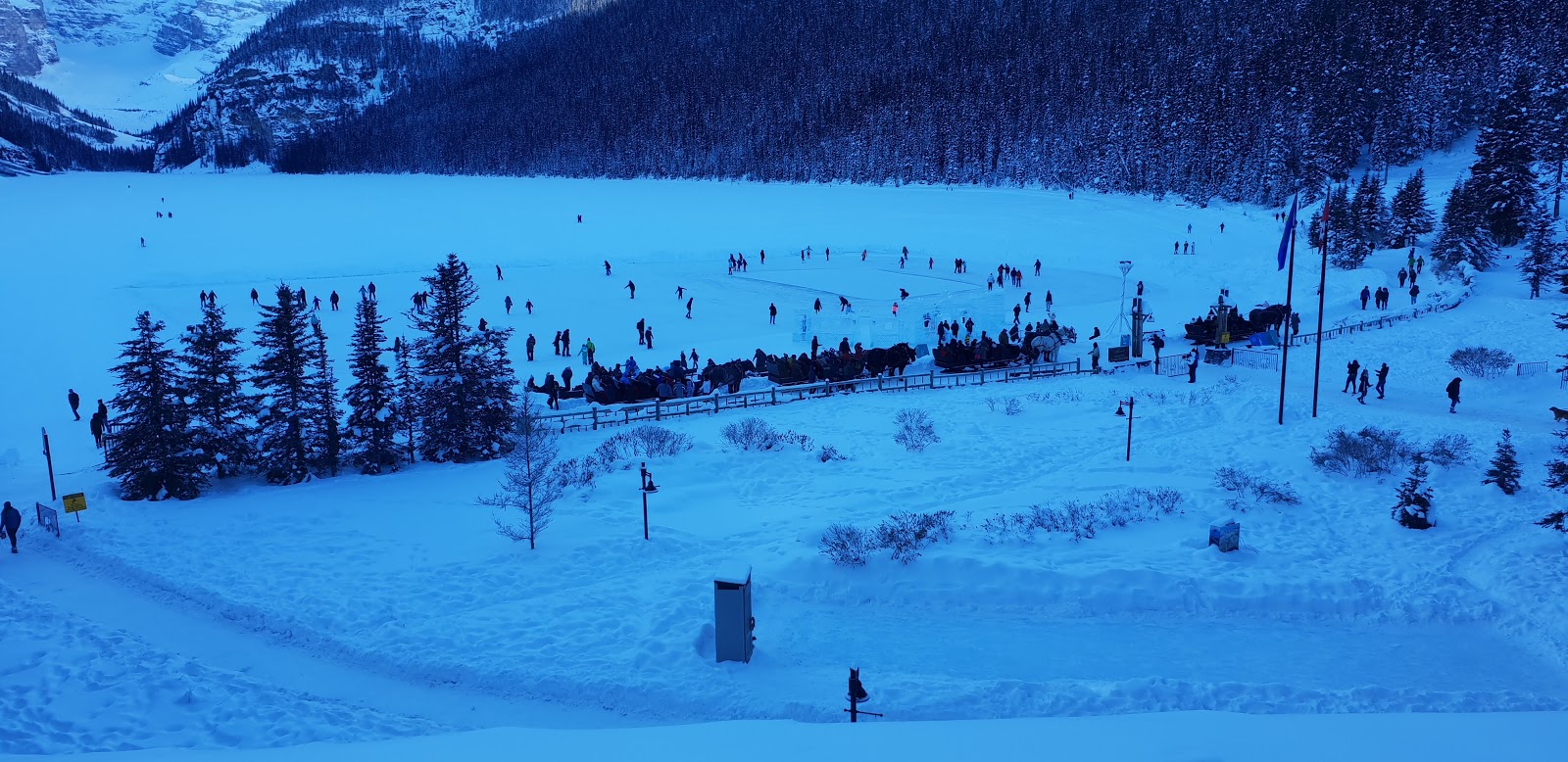
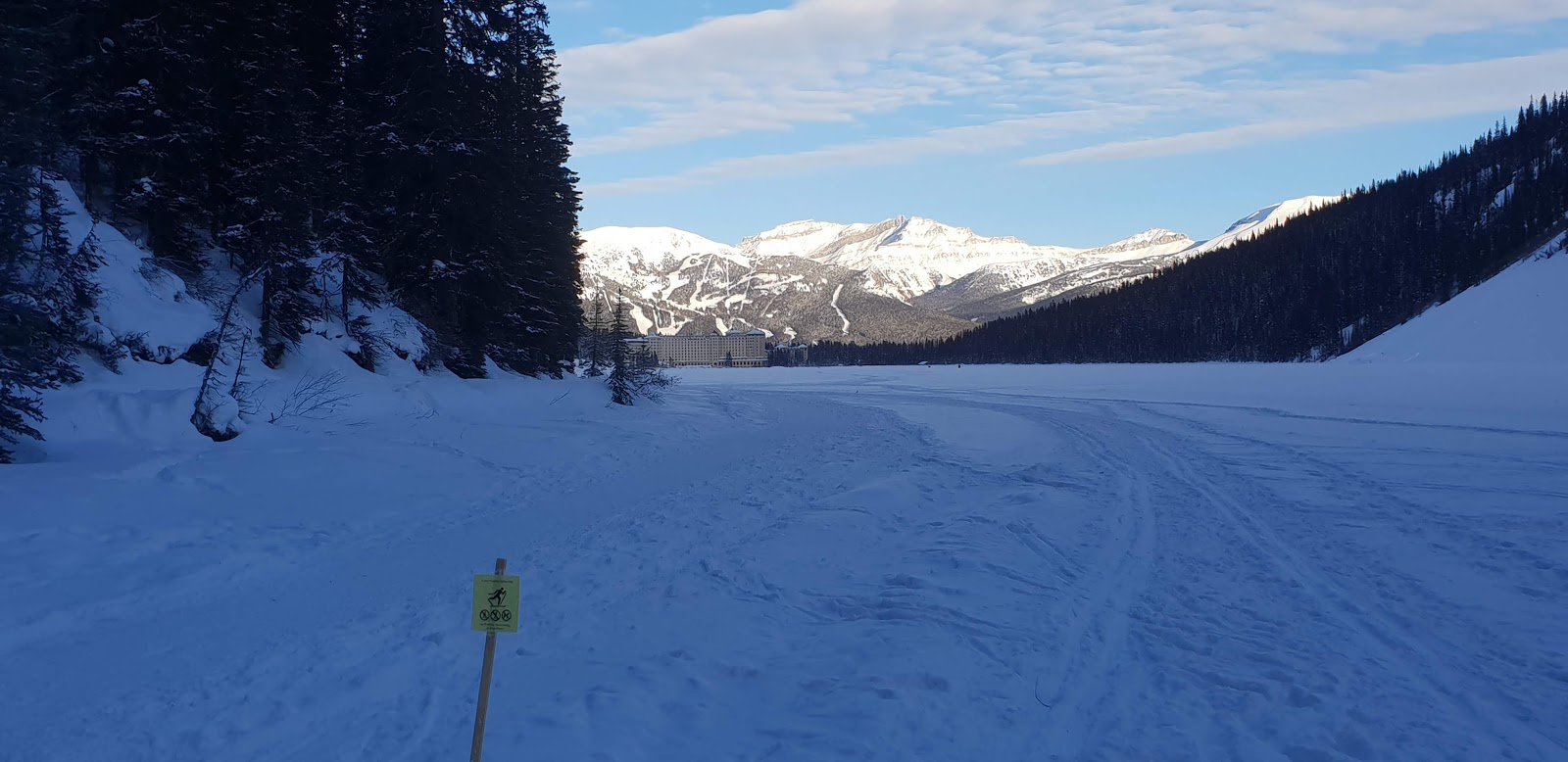
Searching for locations: Lake Louise, Canada

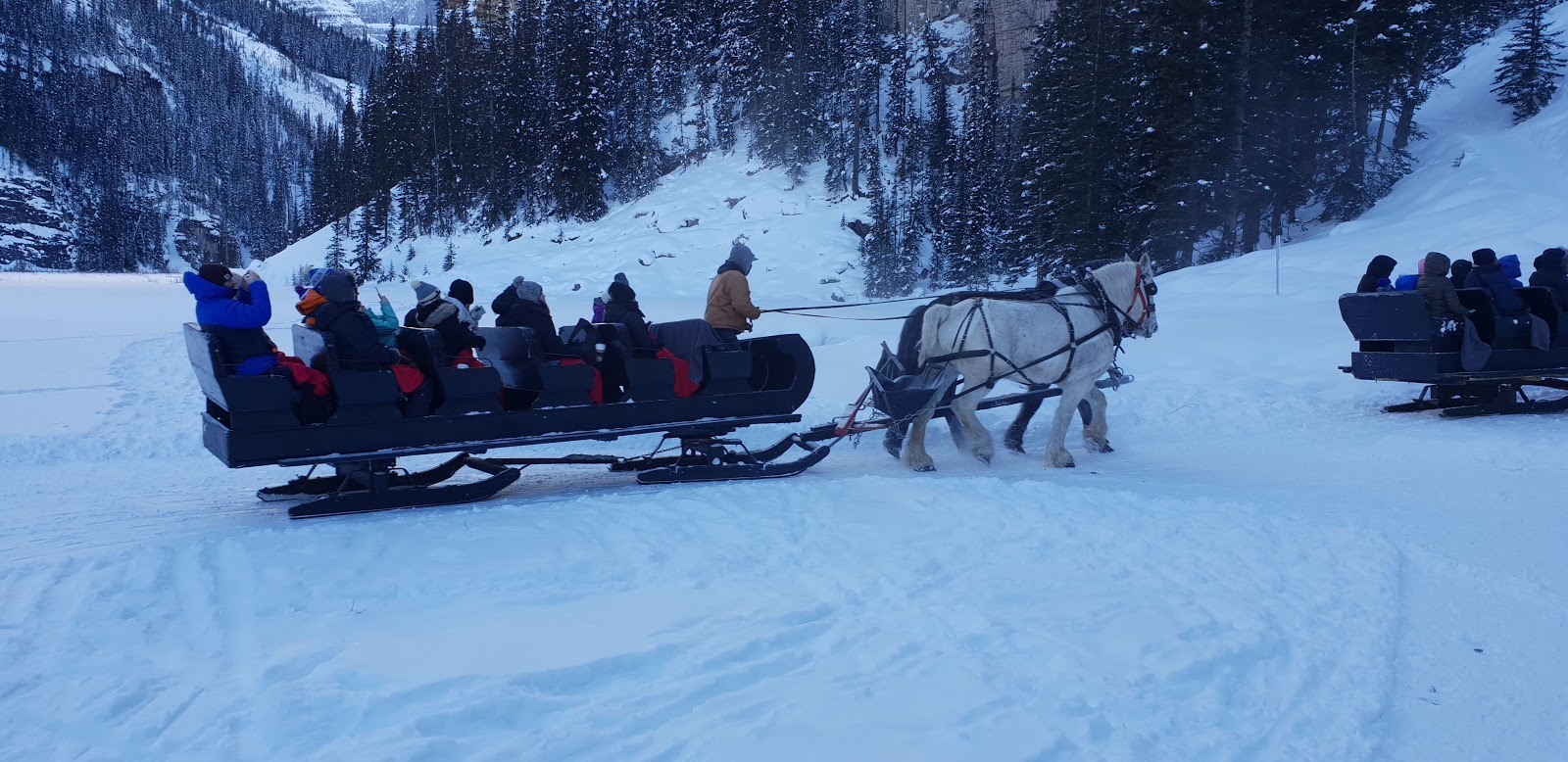
A sleigh ride wasn’t the first activity that came to mind, but that first day we saw the sleighs lining up and thought it might be a bit of a lark.

It was New Year’s Eve and we booked a 2pm sleigh ride.  I figured any later we’d probably freeze to death.  The ride was for about 45 minutes, out around the edge of the lake and back.

Rides were on the hour and sometimes run at night.

We arrived at the departure point about 15 minutes before the ride and watched those who had been on the ride before come back looking somewhat frozen.  The only covering you had provided was a red blanket.

Wisely we put on many layers of clothing, hats, and gloves.

We managed to get a seat for ourselves where the maximum per seat was three.  The blanket wasn’t the thickest.

It was cold, and according to my phone, about minus 15 degrees Fahrenheit.  You could feel it, and it was lucky we were not moving fast.

 At the halfway point, we went out onto the lake to turn around.  It gave us a chance to take a photo of the sleigh, and the horses pulling it.  I felt sorry for the horses out in the cold.

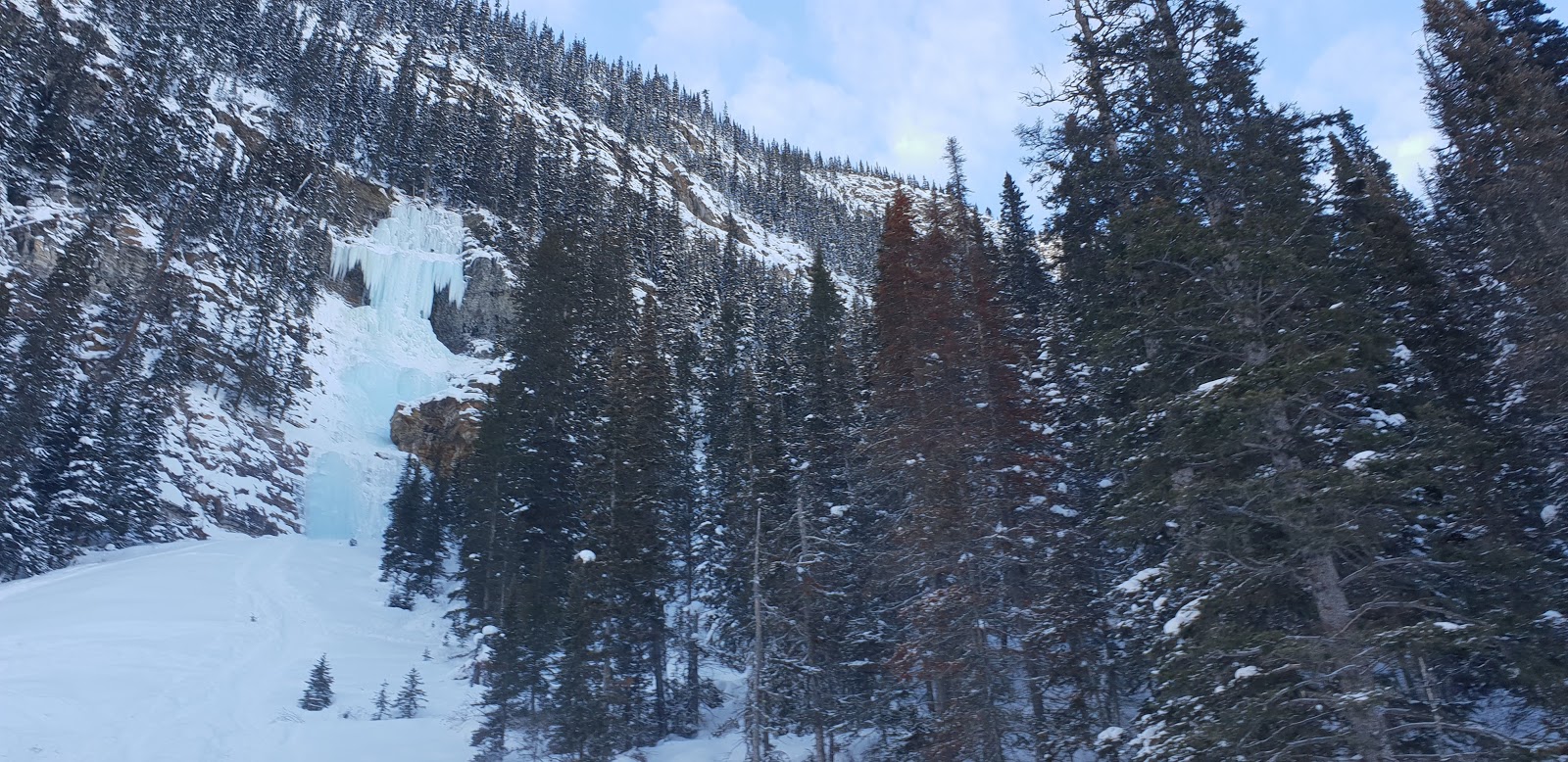
As we turned around, we got to see a frozen waterfall.

A simple question can cause panic

These are what can dumfound the strongest man, and terrify the most resolute woman.

Simple sentences of words placed in a particular order that designed to elicit a response.

Of course, no one tells you that your life may depend upon the answer you give.

So, when a man is asked a simple question like, ‘do I look good in this dress’, there are so many wrong answers that no matter what he says, the marriage, relationship, romance is over.

Similarly, that simple question, ‘how do you feel’, can be like opening the floodgates, or met with stony silence, or, more than likely, met with a dismissive ‘I feel good’.

There are questions asked in examination papers, the sort that is based on the year’s work, or what was supposedly covered in study groups.  As children, these questions hold varying amounts of terror, if you have failed to study.

There are questions asked at job interviews, and sometimes these don’t quite make any sense. For instance, ‘If you were in a store serving a customer and a man came in brandishing a gun, what would you do.’  I’m not sure what answer they are looking for.

Then there is that terrifying question you hoped would never be asked, ‘what do think your weaknesses are?’  I was fine with strengths, that’s easy, but weaknesses, that’s where the job application ended.

There is one other that has a simple answer but it often met with silence, a witticism, but rarely the truth.  Asking a woman, ‘what is your age?’

That’s a romance killer right there.  Right up there with, ‘where were you on the night of the 14th between the hours of 6pm and 12 pm.  You can hardly say you were in bed with your best friends wife, can you?

Can you see the bare bones of a mystery coming on?

20 questions for each suspect and witness, if any, then plot the crime from these testimonies.

I need a few days away from my current book and it seems a good idea for a short story.

Writing about writing a book – Day 27

Perhaps it’s about time I started writing what may or may not be the first chapter.

Bill’s past life can go on hold.  For now.


A cool breeze blew briskly across meadows of tall grass, giving the impression of the ocean in a storm.  High above, clouds scudded across the sky, occasionally allowing the sun to shine through to bathe the ground in the sunshine, intensifying the richness of the greens and browns.

It was spring.  Trees were displaying new growth, and flowers were starting to show the promise of summery delight.  An occasional light shower of rain added to the delightful aromas, particularly where the grass had recently been mowed.

I was there, too, with my grandmother, the woman who had, for the most part, brought me up at her country residence.  But, as I got older, the dream changed and sometimes there were storm clouds on the horizon, or I was caught in the rain, alone and frightened, or lost in the woods in the dark.

There were other visions like these from my childhood, now a million years away somewhere in a distant past that was hard to remember or say where and when they belonged.  It was a pity some were now based on images stolen from the start of a movie seen on TV late at night as I was trying to get to sleep.  Or that the psychiatrist had said there was some trauma from my early childhood, trying to work its way out.

Like every other morning, these images came to me as I was hovering somewhere between conscious and unconscious, just before the alarm went off.  Then it did, filling the room with a shrill noise that would have woken the dead.

I cursed, and then dragged myself over to the other side of the bed where I’d put the alarm clock, and hit it, killing the shrill sound.  I’d put it there so I would have to wake up to turn it off.  And, worse, I’d forgotten to turn it off the night before because it was, technically, the first day of my holiday.

Not that I really wanted one because since Ellen left, my life consisted of work, work, and more work.  It kept my mind off being alone, and in an empty apartment except for the books, a bed, a table, and two chairs, a desk, and a well-worn lounge chair.  I’d been there for years and still hadn’t bought any new furniture or anything else for that matter.

And the last holiday I’d gone on had been organized by Ellen fifteen years ago in Italy after our two daughters had finished school and graduated almost top of their class.  We’d been happier then, but happiness was fleeting for me, and soon after the rot had set in, and it was the beginning of the end.

I remembered it only too clearly, coming home, opening a letter addressed to her, and finding proof of what I think I’d known all along.  She was having an affair, had been for quite some time.

It should not have been a surprise given what I had put her through over the years, since my discharge from the Army, and the nightmares active service had fueled, but it was and sent me spiraling to a new low.

But that was five years ago.  I came out of the fog a year after that.  Ellen was gone, the girls came to see me from time to time, and all I had left were memories.

I rolled over and tried to go back to sleep.  I was on holiday.  No work, no pressure, nothing.  I could go back to my grandmother’s house and visit.  I had been promising myself I’d do that soon, even if it was now a country hotel.  From the advertising it had not changed one bit, the house and grounds intact.

Or I could throw a dart at a map and get on the next plane there, though knowing my ability with a dart, it would be in the middle of the ocean.

I could do almost anything I wanted.


© Charles Heath 2016-2020

In a word: Rain

Well, isn’t it just like you to rain on my parade?

Yes, and don’t we need a lot of rain because of the bushfires that are burning out of control?

Rain is that stuff that falls from the sky, sometimes at the awkwardest of times, like when you leave your umbrella in the car.

And rain can be a problem in sub-zero temperatures and high winds when it almost takes on the form of multiple miniature knives.  Rain and snow together, sleep, but that’s something else.

Of course, it could always rain cats and dogs, a rather interesting occurrence if it ever happened.

This should not be confused with the word rein.

As any horseperson would know this is what helps control a horse

But, it doesn’t have to be a horse, it might be that you are told to rein in your attack dog

Or rein in your excesses

Or alternatively, give a person free rein to go about their business.

Then there is reign, that period of time when a monarch rules, and it seems in England women hold the record for the longest reign, Queen Victoria, and Queen Elizabeth II

That’s distinct from the office oligarchs who seem to think they reign over the plebs