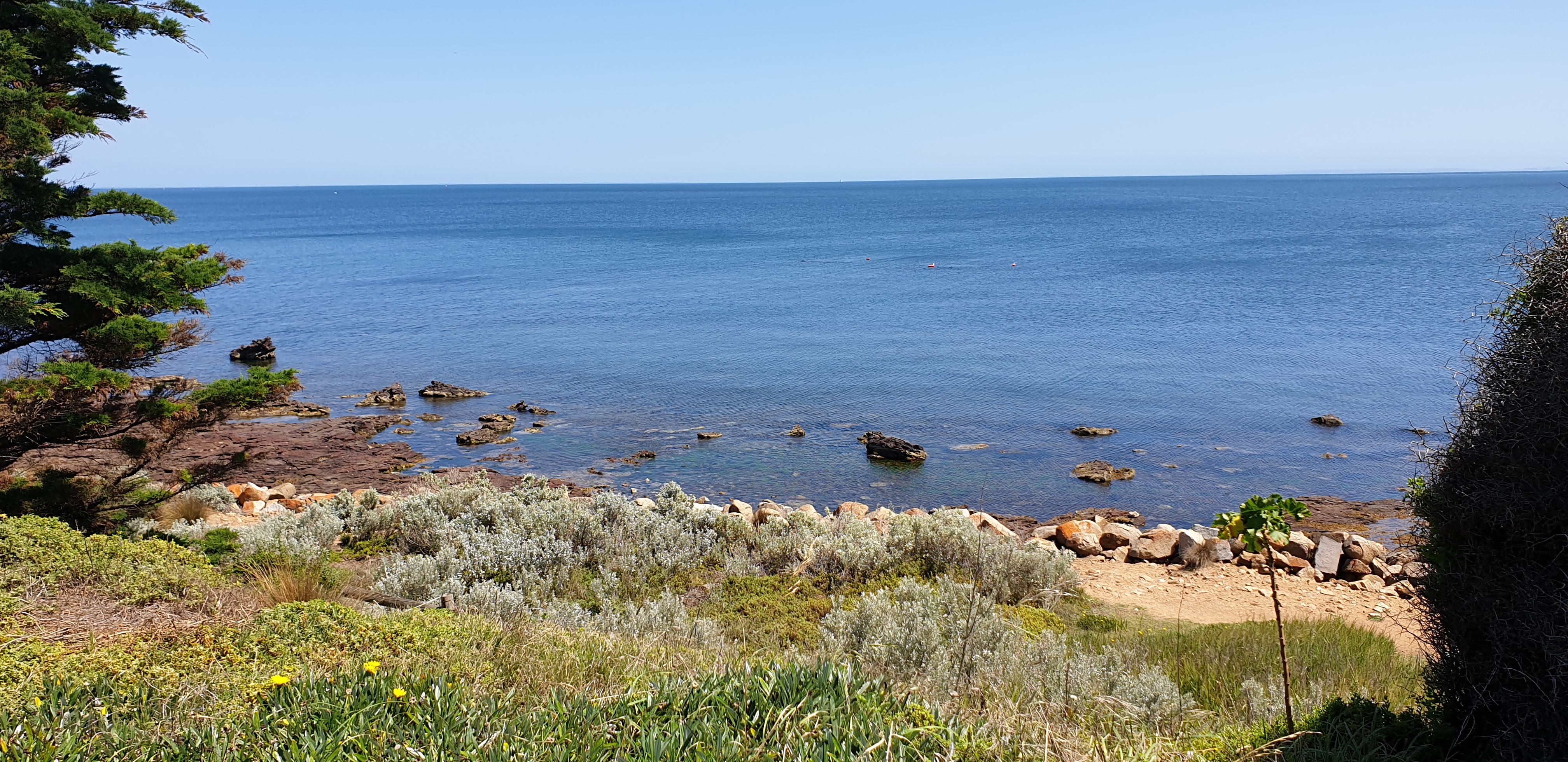
A photograph from the inspiration file – 6

For those who are wondering what this is a photograph of, it is a tree bordered stream that runs along a long valley that runs from outside Canungra, in Queensland, to the Lamington National Park.

It’s near a place we like to stay for a few days when we want to get away from everything, and I mean everything. There is no television, and cell phone reception is awful if not non existent.

So, you can see the benefits.

Sitting at the table on the veranda overlooking the fields, and this stream, you have time to just think, or not, about what it might have been like before the settlers came.

What is was like when the explorers we seeking new places to live, and they chanced upon this valley. It it was me back then, I would have followed the stream.

But, as for a story…

I have read a great many stories for the explorers of this country, and the hazardous nature of their treks.

What seemed to be the most common theme was crossing from south to north, that is from Melbourne to the Northern most tip of Queensland, or from Adelaide to the Northern Territory. In both cases they would have to traverse a very dry, very hot outback where the sight of a stream, or river, like above, would have been very welcome.

For some, it became an impossible quest, and stuck in the desert, they eventually perished. That in itself, the trials and tribulations of an early explorer would make a great story.

Australia is a very fertile country around the coastal regions, but one you start venturing inland, it is dry, dusty and almost uninhabitable. Unless there’s water from rivers, streams, or underground, or mining settlements, there is very little else to see.

The exceptions to this are Uluru and Kakadu National Park, in the Northern Territory, Shark Bay and The Pinnacles in Western Australia, MacKenzie Falls in Victoria, The Simpson Desert, the Boodjamulla (Lawn Hill) National Park, and the Carnarvon Gorge in Queensland, to name a few.

One day I might get to see them.

Writing about writing a book – Day 33

So, it seems there’s going to be a few problems at work.  People are dying and no one really knows why.

Perhaps it has something to do with the computer systems and the network.  In the time this novel is set, networking personal computers was in its infancy and a veritable rabbit hole to go down.

We need to throw in a bit more background and involve others, but to what extent should these other people have influence over the storyline?

This is why there are puzzling aspects of Richardson’s death, and why is Aitchison so interested?

Says Aitchison…

“I knew the man better than most.  But even if he was going through a bad patch, and he was a little down, he would not have killed himself, not the way it was presented in his office.  The gun was in the wrong hand, his left hand.  He was ambidextrous to a certain point, left-handed in some cases, right-handed in others.  I knew for a fact he could only shoot with his right hand.  Same as golf.  But most people here would have seen him use only his left hand.”

I let his words sink in for a moment.  How could he possibly know what hand Richardson used for what purpose?  Perhaps golf because it was open to Company employees of any level, but shooting?

It came out of my mouth before I could stop it.  “How …”

“..do I know about his shooting hand?  I ran into him once at the range.  I used to shoot a few skeets back in the day.  Eyesight has gone to pot these days, so it’s been a while.”  The last part was related more for his own benefit.

Good enough answer.  I didn’t know Aitchison was a shooter.  The office grapevine wasn’t as extensively knowledgeable as it purported to be.

“Then is it possible someone here killed him?”

“Like the woman he was supposedly having an affair or her jealous husband?”  He laughed, and it wasn’t a particularly nice one.  “The mystery woman he was spending time with was his daughter.  He asked me to get her a job, but not to let on that he knew her.  Didn’t want her to think he was meddling in her affairs, and that anyone else would see it as favors from the executive to certain employees.”

Aitchison’s voice shook, and he poured another drink to try and steady his nerves.  He was agitated, I could see that.  And he had evidence that the police would need to help solve this crime.  Yet, by the way, he was talking; I don’t think he believed any of what he had just told me would be deemed as relevant.

And I was yet to see a reason why this would affect him so.

“Have you told the police this?

“Yes, but the detective they sent this morning wasn’t interested.”

Perhaps he was writing more into it than there was.  I didn’t know what to say and tried to look noncommittal.  Then he looked at me with a piercing stare, like the thought had just occurred to him.  “You two clashed, heatedly at times.  Did you do this?

Perhaps not quite the question I was expecting from him or anyone.

I was innocent, but I had one of those faces when someone puts a question to you rather abruptly, that reddened, either with embarrassment or guilt.  I had very little control over it.

But to be accused of murder?

I had an alibi; I was home alone in bed trying to sleep.  OK.  It was shaky but the truth.

“No.  Why would I?”

If I was going to kill anyone in this place, it would be Benton, or even Kowalski, another thorn in my side.  Richardson was not on the list, and never would be.  He was just old and pedantic, set in his ways.  He clashed with everyone at one time or another.  In my case, he was just cranky because I replaced his pen and paper accounting with a new application on that computer he refused to use.

He nodded to himself.  “I thought not, but I had to ask.”

He stood and went over to the window and looked out.  Taking time, I guessed, to collect his thoughts.  He remained there with his back to me for a few minutes.  It didn’t seem to be a long time.

Then he said, quietly, “It appears there’s something else going on, something that none of us in the Executive know anything about.”

I was not sure I liked the sound of that or the fact he was telling me.  This was not something I should be privy to.  But that still didn’t stop me from asking, “Like what for instance?”

“The existence of another network.”

“What do you mean?”  Another network?  There was only one.  I had seen it installed, and went through the teething process of getting it up and running, as every bit as hard as bringing a new baby into the world.

I would know if there was another network.  Wouldn’t I?

“Apparently there is supposedly another network of computers running in this office.  I have only the word of a policeman by the name of Chief Inspector Gator, a computer expert, and a consultant from Interpol.  How the hell did this information get to Interpol, of all people?”

I couldn’t tell him.  This was news to me.

“What evidence have they got that this ‘other network’ exists?”

“Intercepted telephone calls reporting a connection error to a network system by the name of Starburst.  There was a log entry on Richardson’s computer referring to it, about the time of a power failure last night.  The computer expert is down in the server room now looking for this other network.”

He swiveled around and looked down at me with a thunderous expression.  “You didn’t set anything up for Halligan, did you?”

“No.”

I was surprised he asked.  We had a discussion some months ago about the fact most of the AGM’s came directly to me to sort out their computer issues.  Halligan was the worst of all of them, using his position to browbeat me into doing work that could only be described as off-book.  Whilst strictly speaking, as AGM – Information Technology, Halligan was quite within his purview to make such requests; it was the security aspects that had to be signed off on before executing such requests.  It added a new level of pain to the approvals process and had made Halligan an enemy of both Aitchison and myself, even though I had nothing to do with it.

The problem was, like all members of the Executive, Halligan was his own worst enemy.  Each of their areas of responsibility was like fiefdoms, and none of them like the others to encroach on their territory.  Halligan’s was the only area that had a shared responsibility with security.  Soon after the new arrangements were put in place, and the fact I had been left off the list of people to be informed, Halligan had asked me to do some work, and not aware of any change in procedure, did it.

Then, playing the usual game of one-upmanship, Halligan told the Executive of the new initiative and left a smoldering Aitchison in his wake.  In the end, all it did was cause me trouble, a severe reprimand, and no apology for being left off the distribution list informing of the new arrangements.

It was still a raw nerve and he had touched it.

© Charles Heath 2015-2021

The cinema of my dreams – It’s a treasure hunt – Episode 4

Here’s the thing.

Every time I close my eyes, I see something different.

I’d like to think the cinema of my dreams is playing a double feature but it’s a bit like a comedy cartoon night on Fox.

But these dreams are nothing to laugh about.

Once again there’s a new installment of an old feature, and back on the treasure hunt.

“Who the hell is that horrible man?” I asked, still staring after the car, long after it had gone.

I knew trouble when I saw it, and that man was serious trouble.

And the fact he believed there was a treasure map…

“My uncle Rico, he was the one my mother always credited leading my father astray.  Whatever they had been doing back then, it was never anything legal.”

So, he knows about the treasure map?”

“He knows nothing.  He thinks he knows something, he thinks I know something, but he’s not going to get it out of me.”

“What if he comes after me next?”

It was a daunting prospect, and just looking at Rico was enough to scare me.  If he had a machete to back up his insistence I tell the truth?  I shuddered.

“You tell him the truth.  We have a map, we bought it at the bar like everyone else.”

He was right.

“Boggs?”

His aunt yelled out his name in a manner that meant he was in trouble.

He motioned to keep quiet and follow him.

He took one step before she added, “You take one more step away from this house, and you’ll have more than Rico to worry about.”

A shrug, a wan smile, and then he turned back.  “Nothing more today.  See you at the Bar tomorrow, and we’ll start the search.

“Surely you don’t think that map is real?”

“Real enough, with missing pieces, we have to track down.  Tomorrow.”He turned and went back into the house, the wooden screen door slamming shut behind him.

Followed by the raised voice of an angry Aunt.  “What is all this malarkey about a treasure map, and what the hell were you doing in a bar?  I bet it was that Johnson kid leading you astray again.”

Never, according to her, Boggs’ fault, and always mine.

I guess it was time to take one for the team!

© Charles Heath 2019-2021

Writing about writing a book – Day 32

I used to have these strange ideas about upper management, and in some cases, how they lived in offices up in the clouds.

The perks, I guess, of making it to the top, a combination, sometimes, of good luck and in others hard work.

Perhaps I make too much of it, but it is only an observation from someone who never quite made it to the top of the pile.  Alas, I didn’t have that killer instinct, nor the desire to use others on my way to the top.

But, those notions stuck with me and had found their way into this story.

It also introduces a new character, one that has an idea he might be in trouble though not quite why.

I stopped for a moment to take in the vista   It was like stepping into a different world.  Everything was new, clean and fresh.  Strategically placed flowers, carpets deep piled and clean, expensive landscape paintings adorned the walls, and the support staff tucked away on various nooks and crannies, usually smiling and happy.  And why not?  They were far, far away from the problematic day to day running of the company.  Here the tea, coffee, and sugar didn’t come from tiny paper packets and taste like floor sweepings.

Merrilyn, Aitchison’s personal assistant, had the gift of being able to dress to suit the weather or mood.  This particular day, the bright colors were in deference to the coming of spring.  Added to this was her impeccable manner and attitude.  It was hard to believe she was still in her early twenties.

She smiled as I turned the corner and headed towards Aitchison’s office, in a manner that infused all who came near her with equal joy and enthusiasm.  It brightened my morning.

“How do you di it?” I asked.  It was a standard question.

“Do what?”  It was the standard reply.

“Manage to look so good on a Monday morning.”

“It’s called grooming, Bill.  “What can we do for you?”

“Mr. Aitchison wishes to see me.  Perhaps it will finally be a promotion to these lofty heights.”

“There’s a long queue before you.”

“Sad, but true.”  I shrugged.  “But you never know. I live in hope if only to be near you.”

She smiled again.  “Perhaps one day.”  Then, in an instant, she switched to somber, efficient, business mode, “Go on in.  I’m sure he’s expecting you.”

I knocked on his door, waited for the muffled “Enter”, and went in.

Thick carpet, velvet wallpaper, mahogany furniture, the best examples of comfortable easy chairs arranged around a coffee table, the office was one of the perks of the job.  There was a carefully hidden private bar somewhere in the room, and the subject of much lower floor speculation.  Everyone who lived on the lower floors aspired to this level of luxury and recognition of personal achievement.

He pointed to the chair in front of his desk without looking up from the file he was reading.  On his desk were two glasses and a bottle of Scotch.  He leaned forward, took a sip out of one, and then returned his original position, leaning back as far as the large, leather-covered and padded seat would let him.  He looked agitated, far from his usual self-assured and calm demeanor.

He was one of the very few in the executive who frequently came down to visit us, and always had an amicable manner, whether the news was good or bad.  That amiable manner was missing this morning, replaced by something I’d not seen in him before.

Or in anyone else for a long, long time.  Fear.

He looked up, took his reading glasses off and placed them carefully on the desk.  “Did Benton tell you what happened?”  His tone was constricted, tinged with worry.  Yes.  The eyes gave it away.  I’d seen the look before, in a momentary flash, a detail in memory rising to the surface.

“Yes.  Briefly.  He said it was something to do with Richardson.  Rather melodramatic to be suiciding in his office, or words to that effect.”

“Well, the police might be calling it a suicide, and that fool Benton would like it to be suicide, but in my opinion, it’s a case of murder.”  He emptied the glass and poured another.  The rim of the bottle rattled on the rim of the glass.  He was shaking and trying to keep it under control.  “He’s dead.  Very dead.”

It took a few moments before I realized the importance of his statement.  Dead was serious, very dead was very serious.

“How?”  My voice moved up one octave.  I wondered where this was heading.  Why he was telling me?

“One shot to the head.  He was supposedly holding the gun when they found him, making it look a perfectly normal suicide.”

I quickly reviewed the rest of what I knew about Richardson, albeit second hand.

His wife had walked out on him.  He spent a few months trying to climb into the bottle, came out of it fairly well, and had recently struck up a friendship with one of the many middle-aged women who worked in the office.  Speculation had it she was already married.  It was not a course I would take in similar circumstances, but he was closer to a number of them than most.  Suicide seemed a bit out of character.

Was Aitchison also was suggesting that might be the case?

Or did he know something about Richardson the rest of us didn’t?

“He didn’t seem the type,” I said, expecting a rebuke.  I was not sure if Aitchison was asking for an opinion.

“No he was not, and I agree you.  Everyone seems to have thrown caution to the wind, and want this case settled, and the police out of here.  But, not at the expense of a good man’s name.”

“So, I take it you think otherwise?”

© Charles Heath 2015-2021

Writing about writing a book – Day 32

I used to have these strange ideas about upper management, and in some cases, how they lived in offices up in the clouds.

The perks, I guess, of making it to the top, a combination, sometimes, of good luck and in others hard work.

Perhaps I make too much of it, but it is only an observation from someone who never quite made it to the top of the pile.  Alas, I didn’t have that killer instinct, nor the desire to use others on my way to the top.

But, those notions stuck with me and had found their way into this story.

It also introduces a new character, one that has an idea he might be in trouble though not quite why.

I stopped for a moment to take in the vista   It was like stepping into a different world.  Everything was new, clean and fresh.  Strategically placed flowers, carpets deep piled and clean, expensive landscape paintings adorned the walls, and the support staff tucked away on various nooks and crannies, usually smiling and happy.  And why not?  They were far, far away from the problematic day to day running of the company.  Here the tea, coffee, and sugar didn’t come from tiny paper packets and taste like floor sweepings.

Merrilyn, Aitchison’s personal assistant, had the gift of being able to dress to suit the weather or mood.  This particular day, the bright colors were in deference to the coming of spring.  Added to this was her impeccable manner and attitude.  It was hard to believe she was still in her early twenties.

She smiled as I turned the corner and headed towards Aitchison’s office, in a manner that infused all who came near her with equal joy and enthusiasm.  It brightened my morning.

“How do you di it?” I asked.  It was a standard question.

“Do what?”  It was the standard reply.

“Manage to look so good on a Monday morning.”

“It’s called grooming, Bill.  “What can we do for you?”

“Mr. Aitchison wishes to see me.  Perhaps it will finally be a promotion to these lofty heights.”

“There’s a long queue before you.”

“Sad, but true.”  I shrugged.  “But you never know. I live in hope if only to be near you.”

She smiled again.  “Perhaps one day.”  Then, in an instant, she switched to somber, efficient, business mode, “Go on in.  I’m sure he’s expecting you.”

I knocked on his door, waited for the muffled “Enter”, and went in.

Thick carpet, velvet wallpaper, mahogany furniture, the best examples of comfortable easy chairs arranged around a coffee table, the office was one of the perks of the job.  There was a carefully hidden private bar somewhere in the room, and the subject of much lower floor speculation.  Everyone who lived on the lower floors aspired to this level of luxury and recognition of personal achievement.

He pointed to the chair in front of his desk without looking up from the file he was reading.  On his desk were two glasses and a bottle of Scotch.  He leaned forward, took a sip out of one, and then returned his original position, leaning back as far as the large, leather-covered and padded seat would let him.  He looked agitated, far from his usual self-assured and calm demeanor.

He was one of the very few in the executive who frequently came down to visit us, and always had an amicable manner, whether the news was good or bad.  That amiable manner was missing this morning, replaced by something I’d not seen in him before.

Or in anyone else for a long, long time.  Fear.

He looked up, took his reading glasses off and placed them carefully on the desk.  “Did Benton tell you what happened?”  His tone was constricted, tinged with worry.  Yes.  The eyes gave it away.  I’d seen the look before, in a momentary flash, a detail in memory rising to the surface.

“Yes.  Briefly.  He said it was something to do with Richardson.  Rather melodramatic to be suiciding in his office, or words to that effect.”

“Well, the police might be calling it a suicide, and that fool Benton would like it to be suicide, but in my opinion, it’s a case of murder.”  He emptied the glass and poured another.  The rim of the bottle rattled on the rim of the glass.  He was shaking and trying to keep it under control.  “He’s dead.  Very dead.”

It took a few moments before I realized the importance of his statement.  Dead was serious, very dead was very serious.

“How?”  My voice moved up one octave.  I wondered where this was heading.  Why he was telling me?

“One shot to the head.  He was supposedly holding the gun when they found him, making it look a perfectly normal suicide.”

I quickly reviewed the rest of what I knew about Richardson, albeit second hand.

His wife had walked out on him.  He spent a few months trying to climb into the bottle, came out of it fairly well, and had recently struck up a friendship with one of the many middle-aged women who worked in the office.  Speculation had it she was already married.  It was not a course I would take in similar circumstances, but he was closer to a number of them than most.  Suicide seemed a bit out of character.

Was Aitchison also was suggesting that might be the case?

Or did he know something about Richardson the rest of us didn’t?

“He didn’t seem the type,” I said, expecting a rebuke.  I was not sure if Aitchison was asking for an opinion.

“No he was not, and I agree you.  Everyone seems to have thrown caution to the wind, and want this case settled, and the police out of here.  But, not at the expense of a good man’s name.”

“So, I take it you think otherwise?”

© Charles Heath 2015-2021

A photograph from the inspiration file – 6

For those who are wondering what this is a photograph of, it is a tree bordered stream that runs along a long valley that runs from outside Canungra, in Queensland, to the Lamington National Park.

It’s near a place we like to stay for a few days when we want to get away from everything, and I mean everything. There is no television, and cell phone reception is awful if not non existent.

So, you can see the benefits.

Sitting at the table on the veranda overlooking the fields, and this stream, you have time to just think, or not, about what it might have been like before the settlers came.

What is was like when the explorers we seeking new places to live, and they chanced upon this valley. It it was me back then, I would have followed the stream.

But, as for a story…

I have read a great many stories for the explorers of this country, and the hazardous nature of their treks.

What seemed to be the most common theme was crossing from south to north, that is from Melbourne to the Northern most tip of Queensland, or from Adelaide to the Northern Territory. In both cases they would have to traverse a very dry, very hot outback where the sight of a stream, or river, like above, would have been very welcome.

For some, it became an impossible quest, and stuck in the desert, they eventually perished. That in itself, the trials and tribulations of an early explorer would make a great story.

Australia is a very fertile country around the coastal regions, but one you start venturing inland, it is dry, dusty and almost uninhabitable. Unless there’s water from rivers, streams, or underground, or mining settlements, there is very little else to see.

The exceptions to this are Uluru and Kakadu National Park, in the Northern Territory, Shark Bay and The Pinnacles in Western Australia, MacKenzie Falls in Victoria, The Simpson Desert, the Boodjamulla (Lawn Hill) National Park, and the Carnarvon Gorge in Queensland, to name a few.

One day I might get to see them.

Writing about writing a book – Day 31

I’ve been toiling away in the attic putting the pieces together, and continuing to get the story written.

This means I’ve almost got Chapter 2 somewhere near the first draft, or maybe second. I didn’t expect it would take this long, but most authors, I suppose, take a year, or more, to write a book.

It’s been hot in the attic and making it hard to think let alone write, but it is a good background for the steamy jungles of Southeast Asia, and it has given me a few more ideas for the background sequences.

I’ll share one or two of those next.

In the meantime, so far so good.

The following is the first musings of what Chapter 2 might read like:

The first sign of anything amiss was the three police cars outside the building, parked awkwardly on the plaza in front of the building. Their lights were still flashing, and several policemen were standing near them, talking.

As I went through the front revolving door I could see several uniformed and plainclothes police in the lobby. Two were by the door, perhaps to prevent someone from leaving, one on the desk with two of the building security guards, and another near the elevator lobby.

Temporary barriers had been erected, funneling everyone through a narrow gap, where building security was checking ID cards and building passes, both of which I handed to one of the guards. These men were new, I hadn’t seen them before, and, when I took a closer look, saw they were from a different security company.

I guess with the shooting of Richardson, our management had decided the existing building security was not good enough. These new men looked a lot tougher if the number of visible tattoos on each were anything to go by, the sort of men I’d call mercenaries or ex-soldiers.

One of them gave me a good look, at my face to see if it was the same as that looking back at him on the ID card. It was not a good photo of me, and it was no surprise he was having difficulty. I’d cut my hear, I was wearing glasses, and I have the makings of a three-day beard.

I had not intended to shave while I was on holiday, and, given the urgent nature of the recall, had no time to do so before coming into the office. Benton could have warned me of the new security arrangements, but it did not surprise me he didn’t.

He called over a friend, not by turning and motioning to him, but talking into his collar communication device. It was rather pointless, the man he spoke to was no more than 20 feet away. He checked me versus the ID photo and let me pass. Perhaps his eyesight was better.

In the elevator heading up to my floor, 18, I had a few moments to consider the implications. New security meant trouble. It had happened once before, and it caused all manner of trouble for me and my staff. We had been locked out of the server room then.

The elevator jerked to a stop, and the doors opened. Everything looked quiet. I could not see any police or security personnel. But waiting for me in the lobby was Benton’s personal assistant, waiting to tell me that Benton had been dragged off to an emergency meeting, one, she said, that involved share prices or stock exchange announcements. I could not make sense of what she was saying, because his hysteria had become hers. The events of the morning so far had traumatized both of them.

I smiled, trying to be my usual charming self, and then wrote a message on a scrap of paper, and gave it to her to give to him when he returned from wherever he had gone. I was quite sure it was not a meeting. She reminded me Aitchison was still waiting to see me, and then walked off.

I turned and pressed the ‘up’ button, and the doors to the elevator car I’d stepped out of opened. I stepped in, pressed the button for 59, and the doors closed. Once again I was alone with my thoughts in an elevator. I had just enough time to realize that the investigation into Richardson must be more serious than first thought if the police were still here in numbers.

I thought I might visit the 17th floor after seeing Aitchison, and see what was happening. A decision was still pending when the doors opened, and I stepped out into ‘Fantasyland’.
It was the unofficial nickname we mortals from the lower floors called the Executive levels. They were the top three in the 60 story building. The mortals lived on levels 17 through 22.

This level housed all the Assistant General Managers. We had six. Aitchison was the AGM – Security. Goldstein, who was waiting in the lobby for an elevator, was the AGM – Administration. He was a surly chap near the age of retirement and spent more time on holiday than in the office. Preparing for retirement some said. Others were less charitable.

He nodded in my direction as we passed, I came out of the elevator car, he went in. The doors closed behind me and I let the silence envelop me.

© Charles Heath 2016-2021

Writing about writing a book – Day 30

I’m having fun with chapter one.

Can you reach a point where you are never satisfied with what you’ve written?

What more can I say?

Looking at the mess constituting my room and my life, slob may have been an appropriate description.  I considered myself old, overweight though not necessarily fat, hair graying at the edges, and few wrinkles around the eyes, there were no real pluses in my description.

Some said I had a kindly face, but perhaps I had the look of a paternalistic grandfather.  There were several men in the office who were the same age and had grandchildren.  And some who had children at a time when they should be planning for retirement, not parenthood.

World-weary and perpetually tired, I’d passed the mid-life crisis, wondering what it was that affected other men my age.  Twenty-odd years later, I was still wondering.

I used to think I’d missed a lot in half a lifetime.

Now, I didn’t know what to think.

Did I deserve pity?  No.

Did I deserve sympathy?  No!

The only person who could get me out of the rut was myself.  For years I’d traded on Ellen’s good nature.  She deserved better, left me, and was now happier in the arms of a man who I wanted to believe treated her far better than I.  She had told me so herself, and judging by her manner, it had to be true.  Only recently had she got her smile back, the one that lit her face up, one that infectiously spread happiness to anyone near her.

There were reasons why I became the person I was now.  Some might say they were valid.  In the cold, hard light of dawn, I could see it was time I stopped using my past as a crutch and got on with the business of living.

Perhaps today would be the first day of the rest of my life.

I took the bus rather than drove.  At that hour of the morning, the traffic would be bad, and there would be no parking spaces left.  And I was using public transport more and more, have become accustomed to the convenience.  Time to read the paper, or a good book, or just dream about a different life.

This morning I thought about Ellen.  I hadn’t for a while, but that might have been fueled by the arrival of the divorce papers she wanted me to sign.  I’d had my time to be angry, and disappointed, she’d said, and she was right.  It was time to move on.

And she had stuck by me through thick and thin, coming back from overseas service a basket case after nine months in a POW camp, after a war that was more horrible than anyone could imagine.  Two mental breakdowns, periods of indolence and lassitude, leaving her to bring up the girls on her own.  I had not been a great father, and much less a husband.

I remembered that argument word for word.

I could see the looks of pain in the girl’s faces.

I remembered the hug, the kiss on the cheek, the tears.  It had not been out of hate, but a necessity.  For her and the children.  Until I found some lasting peace, they were better off at arm’s length.  Away from the arguing, the silences, the absences.

And disappointment.

After she left I tried to get my life in order.  Drugs, professional help, alcohol, meditation, then work.

Over ten years ago, it took a year, perhaps a little more before sanity returned.

She did not.

By then I knew she had found someone else, a mystery man, whom neither she would tell me who, and the girls honestly didn’t know.  She’d promised that much, any new man in her life would not get to meet the girls.  And she would tell me, and then when she was ready.

Then, suddenly, the children were no longer children but young adults and out in the world on their own, and I had become more a banker than a father, an observer rather than a participant, and it was as if we were more like ships passing in the night.  And overnight, the ships had sailed to the other side of the world.

My own fault, of course, and a bit late now to change history.  I could see Ellen’s influence over them, her prejudices and dislikes, and their contempt, like their mother, for me, simmering beneath the surface, but in fairness to them, I really hadn’t been much of a help as a parent should be.

And now I was getting my life back in order, perhaps I could try and make it up to them, and that first meeting, with them and Ellen, nearly a month ago, had been a step in the right direction.  They’d agreed to see me again, without her, during the holidays, which had now arrived.  All I had to do was make the call, and get on a plane.

This mess I was heading into, it would not take long.  I pulled out my phone and after searching for a travel agent near where I worked, I made an appointment to see about going overseas.

She had spoken to me about the divorce papers several days ago, alternately pleading with, and then abusing, me.  There had been some very strong language in the conversation, words I’d thought her incapable of using, but I confess, finally, I didn’t really know her all that well anymore.

Since then I had been calling her to arrange a meeting.  She had not yet replied.  With some distance to go before I reached the office, I tried calling her again.  I was almost glad when she didn’t answer.

I never realized just how hard it was to revise and re-write, and how much time it takes.

Perhaps that’s why first novels take so long to write!

© Charles Heath 2016-2021

A photograph from the inspirational bin – 3

This is a rocky piece of coastline, adjacent to the city by the sea.

It’s highly urbanized, and just behind where I was standing to take this photo, there’s a large carpark, a restaurant, and several shops, as well as a long pier to walk on.

On this side, about 100 yards put is a reef, popular with divers, and the day I took this there we several divers out.

But, if you discounted all of that knowledge and just let your imagination run free, there are so many other possibilities

Like, scoping out a landing spot to bring ashore contraband on what might be a very desolate spot, access gained only by walking along and hazardous path.

Like there might be an imminent landing of foreign soldiers about to set up the start of a clandestine incursion, before a more formal invasion.  Or just one person, a foreign spy.

Or a couple of friends having a picnic away from the madding crowd.

It needs a little more thought.

That helicopter story that kept me awake – Episode 47

Our hero knows he’s in serious trouble.

The problem is, there are familiar faces and a question of who is a friend and who is foe made all the more difficult because of the enemy, if it was the enemy, simply because it didn’t look or sound or act like the enemy.

Now, it appears, his problems stem from another operation he participated in, and because of it, he has now been roped into what might be called a suicide mission.

At least the helicopter pilot hadn’t hit the fuel tanks or any of the control wires.

Because of the holes in the fuselage, we couldn’t fly any higher than between two and five thousand feet or go as fast as Davies would like, but the plane settled into a routine and got us where we wanted to go.

Just a few miles from the base, fuel almost exhausted, we got a fighter escort.

At first, I thought the base commander thought we were an unidentified flying object, mainly because something else had been hit, our communications. We couldn’t tell the base we were coming, and they only had the Colonel’s transmission of an approximate arrival time, much earlier than the actual time we were supposed to arrive.

On the ground, we were met with fire trucks, and a military escort, with weapons that could take out a mouse at one thousand yards. Just in case we were terrorists, I suppose.

We were parked in a bay away from the main terminal area and had to wait for a half-hour before we were met by Lallo. Monroe’s comment, that he was probably finishing his lunch which would be more important than meeting us, had kept us waiting.

The two abductees were the first to leave the aircraft, then Shurl’s body was removed after the doctor certified he was dead.

Then the rest of us were allowed to leave the aircraft. A bus was waiting, and everyone bar Monroe and I had boarded and been taken away. Under guard. Perhaps their service had not mitigated their prison sentences. I didn’t ask Lallo why; I’d probably not get the truth anyway.

“Good job,” he said, after watching the bus depart. “Pity, it wasn’t done right the first time.”

A compliment followed by disparagement.

“Next time you can do the job yourself,” Monroe said. “And until you’ve been in the field and actually got shot at, you’d do well to keep that trap of yours shut.”

“May I …”

“…remind me you’re my superior officer? No. I’m sure that status won’t last much longer. I’m applying for a transfer.”

He looked at me. “What about you?”

“Nothing to say, except I don’t blame her. Now, since all you’ve done is prove to me you’re an idiot, I’ll take my leave.”

In the distance I could see a large American car, the sort that proliferated in the 1950s and 1960s before petrol prices were a problem, cutting across the runway at speed. Was it the owner of the DC3 coming to see the damage?

No. When it got closer I could see Bamfield, cigar in mouth, beaming. I suppose no one felt they had the authority to tell him not to.

The car stopped behind Lallo’s jeep and Bamfield got out, then leaned against the driver’s side door and looked at us over the roof.

“James, Monroe. Still alive I see. Pity about the plane; I know the chap who owns it. He’s going to be pissed when he sees the cannon holes. What happened?”

“Bad guys,” Monroe said.

“Of course. Get in, I’ll give you a ride back to the terminal. We can talk on the way.”

Neither of us moved. If Monroe wasn’t going to suffer fools gladly, neither was I.

“Well…”

“I’d rather walk,” I said.

“We’d rather walk, sir.” With a heavy emphasis on the ‘sir’.

“Look, you did a great job, minimal losses, and we got two assets back. Everyone is happy. But, we have a small problem down in South America…”

© Charles Heath 2020-2021