An excerpt from “Strangers We’ve Become” – Coming Soon

I wandered back to my villa.

It was in darkness.  I was sure I had left several lights on, especially over the door so I could see to unlock it.

I looked up and saw the globe was broken.

Instant alert.

I went to the first hiding spot for the gun, and it wasn’t there.  I went to the backup and it wasn’t there either.  Someone had found my carefully hidden stash of weapons and removed them.

Who?

There were four hiding spots and all were empty.  Someone had removed the weapons.  That could only mean one possibility.

I had a visitor, not necessarily here for a social call.

But, of course, being the well-trained agent I’d once been and not one to be caught unawares, I crossed over to my neighbor and relieved him of a weapon that, if found, would require a lot of explaining.

Suitably armed, it was time to return the surprise.

There were three entrances to the villa, the front door, the back door, and a rather strange escape hatch.  One of the more interesting attractions of the villa I’d rented was its heritage.  It was built in the late 1700s, by a man who was, by all accounts, a thief.  It had a hidden underground room which had been in the past a vault but was now a wine cellar, and it had an escape hatch by which the man could come and go undetected, particularly if there was a mob outside the door baying for his blood.

It now gave me the means to enter the villa without my visitors being alerted, unless, of course, they were near the vicinity of the doorway inside the villa, but that possibility was unlikely.  It was not where anyone could anticipate or expect a doorway to be.

The secret entrance was at the rear of the villa behind a large copse, two camouflaged wooden doors built into the ground.  I move aside some of the branches that covered them and lifted one side.  After I’d discovered the doors and rusty hinges, I’d oiled and cleaned them, and cleared the passageway of cobwebs and fallen rocks.  It had a mildew smell, but nothing would get rid of that.  I’d left torches at either end so I could see.

I closed the door after me, and went quietly down the steps, enveloped in darkness till I switched on the torch.  I traversed the short passage which turned ninety degrees about halfway to the door at the other end.  I carried the key to this door on the keyring, found it and opened the door.  It too had been oiled and swung open soundlessly.

I stepped in the darkness and closed the door.

I was on the lower level under the kitchen, now the wine cellar, the ‘door’ doubling as a set of shelves which had very little on them, less to fall and alert anyone in the villa.

Silence, an eerie silence.

I took the steps up to the kitchen, stopping when my head was level with the floor, checking to see if anyone was waiting.  There wasn’t.  It seemed to me to be an unlikely spot for an ambush.

I’d already considered the possibility of someone coming after me, especially because it had been Bespalov I’d killed, and I was sure he had friends, all equally as mad as he was.  Equally, I’d also considered it nigh on impossible for anyone to find out it was me who killed him because the only people who knew that were Prendergast, Alisha, a few others in the Department, and Susan.

That raised the question of who told them where I was.

If I was the man I used to be, my first suspect would be Susan.  The departure this morning, and now this was too coincidental.  But I was not that man.

Or was I?

I reached the start of the passageway that led from the kitchen to the front door and peered into the semi-darkness.  My eyes had got used to the dark, and it was no longer an inky void.  Fragments of light leaked in around the door from outside and through the edge of the window curtains where they didn’t fit properly.  A bone of contention upstairs in the morning, when first light shone and invariably woke me up hours before I wanted to.

Still nothing.

I took a moment to consider how I would approach the visitor’s job.  I would get a plan of the villa in my head, all entrances, where a target could be led to or attacked where there would be no escape.

Coming in the front door.  If I was not expecting anything, I’d just open the door and walk-in.  One shot would be all that was required.

Contract complete.

I sidled quietly up the passage staying close to the wall, edging closer to the front door.  There was an alcove where the shooter could be waiting.  It was an ideal spot to wait.

Crunch.

I stepped on some nutshells.

Not my nutshells.

I felt it before I heard it.  The bullet with my name on it.

And how the shooter missed, from point-blank range, and hit me in the arm, I had no idea.  I fired off two shots before a second shot from the shooter went wide and hit the door with a loud thwack.

I saw a red dot wavering as it honed in on me and I fell to the floor, stretching out, looking up where the origin of the light was coming and pulled the trigger three times, evenly spaced, and a second later I heard the sound of a body falling down the stairs and stopping at the bottom, not very far from me.

Two assassins.

I’d not expected that.

The assassin by the door was dead, a lucky shot on my part.  The second was still breathing.

I checked the body for any weapons and found a second gun and two knives.  Armed to the teeth!

I pulled off the balaclava; a man, early thirties, definitely Italian.  I was expecting a Russian.

I slapped his face, waking him up.  Blood was leaking from several slashes on his face when his head had hit the stairs on the way down.  The awkward angle of his arms and legs told me there were broken bones, probably a lot worse internally.  He was not long for this earth.

“Who employed you?”

He looked at me with dead eyes, a pursed mouth, perhaps a smile.  “Not today my friend.  You have made a very bad enemy.”  He coughed and blood poured out of his mouth.  “There will be more …”

Friends of Bespalov, no doubt.

I would have to leave.  Two unexplainable bodies, I’d have a hard time explaining my way out of this mess.  I dragged the two bodies into the lounge, clearing the passageway just in case someone had heard anything.

Just in case anyone was outside at the time, I sat in the dark, at the foot of the stairs, and tried to breathe normally.  I was trying not to connect dots that led back to Susan, but the coincidence was worrying me.


A half-hour passed and I hadn’t moved.  Deep in thought, I’d forgotten about being shot, unaware that blood was running down my arm and dripping onto the floor.

Until I heard a knock on my front door.

Two thoughts, it was either the police, alerted by the neighbors, or it was the second wave, though why would they be knocking on the door?

I stood, and immediately felt a stabbing pain in my arm.  I took out a handkerchief and turned it into a makeshift tourniquet, then wrapped a kitchen towel around the wound.

If it was the police, this was going to be a difficult situation.  Holding the gun behind my back, I opened the door a fraction and looked out.

No police, just Maria.  I hoped she was not part of the next ‘wave’.

“You left your phone behind on the table.  I thought you might be looking for it.”  She held it out in front of her.

When I didn’t open the door any further, she looked at me quizzically, and then asked, “Is anything wrong?”

I was going to thank her for returning the phone, but I heard her breathe in sharply, and add, breathlessly, “You’re bleeding.”

I looked at my arm and realized it was visible through the door, and not only that, the towel was soaked in blood.

“You need to go away now.”

Should I tell her the truth?  It was probably too late, and if she was any sort of law-abiding citizen she would go straight to the police.

She showed no signs of leaving, just an unnerving curiosity.  “What happened?”

I ran through several explanations, but none seemed plausible.  I went with the truth.  “My past caught up with me.”

“You need someone to fix that before you pass out from blood loss.  It doesn’t look good.”

“I can fix it.  You need to leave.  It is not safe to be here with me.”

The pain in my arm was not getting any better, and the blood was starting to run down my arm again as the tourniquet loosened.  She was right, I needed it fixed sooner rather than later.

I opened the door and let her in.  It was a mistake, a huge mistake, and I would have to deal with the consequences.  Once inside, she turned on the light and saw the pool of blood just inside the door and the trail leading to the lounge.  She followed the trail and turned into the lounge, turned on the light, and no doubt saw the two dead men.

I expected her to scream.  She didn’t.

She gave me a good hard look, perhaps trying to see if I was dangerous.  Killing people wasn’t something you looked the other way about.  She would have to go to the police.

“What happened here?”

“I came home from the cafe and two men were waiting for me.  I used to work for the Government, but no longer.  I suspect these men were here to repay a debt.  I was lucky.”

“Not so much, looking at your arm.”

She came closer and inspected it.

“Sit down.”

She found another towel and wrapped it around the wound, retightening the tourniquet to stem the bleeding.

“Do you have medical supplies?”

I nodded.  “Upstairs.”  I had a medical kit, and on the road, I usually made my own running repairs.  Another old habit I hadn’t quite shaken off yet.

She went upstairs, rummaged, and then came back.  I wondered briefly what she would think of the unmade bed though I was not sure why it might interest her.

She helped me remove my shirt, and then cleaned the wound.  Fortunately, she didn’t have to remove a bullet.  It was a clean wound but it would require stitches.

When she’d finished she said, “Your friend said one day this might happen.”

No prizes for guessing who that friend was, and it didn’t please me that she had involved Maria.

“Alisha?”

“She didn’t tell me her name, but I think she cares a lot about you.  She said trouble has a way of finding you, gave me a phone and said to call her if something like this happened.”

“That was wrong of her to do that.”

“Perhaps, perhaps not.  Will you call her?”

“Yes.  I can’t stay here now.  You should go now.  Hopefully, by the time I leave in the morning, no one will ever know what happened here, especially you.”

She smiled.  “As you say, I was never here.”


© Charles Heath 2018-2020
The cinema of my dreams – It’s a treasure hunt – Episode 75

Here’s the thing…

Every time I close my eyes, I see something different.

I’d like to think the cinema of my dreams is playing a double feature but it’s a bit like a comedy cartoon night on Fox.

But these dreams are nothing to laugh about.

Once again there’s a new installment of an old feature, and we’re back on the treasure hunt.

Charlene after talking to Boggs

Charlene was standing in the elevator lobby, with the look of a person who was waiting.

Perhaps she was expecting Boggs to make a run for it, but that was hardly likely since there was a deputy outside the door to his room, a new addition after Charlene had been asked to leave.

“Have you got a few minutes?”  It was a question where the only answer was yes, or else.

I was not going to push the ‘or else’ button.

“Of course.”

She led the way to a room that looked to me like a consulting room for doctors, ushered me through then closed the door.  She sat behind the desk and left me to sit in an uncomfortable patient’s chair.

While she consulted her notebook, I took the time to think back to school days and the motley group that had been in my graduation year, of which Charlene was one.  She too had chosen to stay, despite the lack of post-graduation opportunities, and it was no surprise she ended up in the police, having once had the ambition of becoming an investigative journalist.  It was no surprise then she was now a detective in training.

She left the notebook open on a blank page and gave me her attention.  “So, what have you been doing with yourself since school?”

An odd question to ask, but in her mind, I suspect it was an opening gambit to set the interviewee’s mind at rest, a veritable calm before the storm. 

Odd also because she knew what happened as well as anyone, her father, the Sherriff, Being an occasional visitor at my mother’s house, an obligation he felt after my father passed.

Other than that, we had run into each other from time to time since leaving school but she had never shown any interest on any of those occasions. 

“Relevance?”

“Just curious.”

“I’m sure your father may have mentioned our family circumstances, so if you’re looking for information on Boggs, come out and say so, don’t try to feign interest in my welfare.”

Perhaps that was a little harsh, and certainly not how I wanted it to sound, but she had written an op-ed in the town newspaper reviling her contemporary’s lack of enthusiasm to get a job, and rather become the problem, not the solution to the counties economic woes.

She looked taken aback, not expecting such a response.  Her expression changed, more resolute.  “Boggs is looking at an array of charges.  What was he doing there?  You’re his friend, I’m sure he confides in you.”

“Hoe little you know what bring a friend means, but for the record, we were once, but like he said, my cavorting with Nadia put an end to that.”

“Before that, then.”

“You know as well as I do what the Boggs’s are about, father and son alike.”

“He was looking for fabled treasure.”

“Scaling a rock face?  I hardly think so.  He does rock climbing, caving, and a variety of things I have no interest in.  The Grove shoreline has some of the best rock climbing in the state.  The question you should be asking is how did such an experienced climber finish up half-dead on the beach.”

I wasn’t going to make it easy for her.

“What were you doing on the beach when you discovered him?”

“Cavorting with Nadia.”

It sounded salacious, and I wished on that moment it had been.  It provided the distraction I needed and made me consider her next gambit because I think I knew why we were in that room.

After a moment or two of silence, I added, “No chance of pinning a trespass charge on me then.”

She took a deep breath, a sigh from a person who knew she was not making any headway, or however she thought this conversation was going to go, it had been blown off course.

“Look, I’m not the enemy here.  I’m just trying to do my job and find out what happened.  We have no problem with Boggs’s conducting a treasure hunt, so long as he doesn’t break the law.  Old man Cossatino said Boggs was trespassing, which technically, he was.  Do you know why Boggs would think the treasure is located on The Grove?”

“It’s not.”

Time to diffuse this line of questioning.

“You know this or you’re just guessing?”

“There is no treasure, just the Cossatino’s promoting a myth.  Pirates may have sailed by, but I’m sure this wasn’t the place to leave their booty.  There’s plenty of once uninhabited islands in the Caribbean they could have used.”

“In other words, you really have no idea?”

“I’m a realist, and I’ve told Boggs he should be one too.”

“I hope that will include telling him that trespass is a crime, and if he keeps doing it, we will be forced to arrest and charge him.”

“I’ll tell him anything you want me to.”

“Just that.”

A thought popped into my head, one I probably should have thought of earlier, or perhaps it was because an opportunity presented itself.

The mall, and Alex.

“I have a tip for you, one that might help the case of the dead professor on Rico’s boat.  First of all, Rico didn’t do it.”

“He has form and he’s done something similar before.”

“Kill a professor?”

“Shakedown a mark with violence.  Only this time he went too far.”

I shook my head.  “He didn’t do it.  No, that more in Alex Benderby’s department.”

“Alex.  You must be kidding.  He just acts tough.”

I shrugged.  “Being naive about Alex will get you into trouble.  Alex is anything but harmless, and I can attest to that, school days and beyond. But, here’s some advice you might want to act on before the evidence is destroyed.  There’s a room in the mall on the second level where the mall cops hung out.  Back of the second one along there’s a safe.  At the back of the top desk drawers, there is a post-it note with the combination.  I think that’s where you will find a diary that the professor had before it was taken off him.”

“How do you know about this.”

“I overhead a conversation, remember I work for the Benderby’s and in Alex’s domain, the warehouse.”

“You know what they say about eavesdroppers…”

I shook my head again.  “Did the professor’s autopsy and the analysis of the boat show he was killed there?”

That question was met with a furrowed brow, but there was enough expression change to tell me he wasn’t killed on the boat. 

“You know I can’t comment on an ongoing investigation.”

“Don’t have to.  You’re going to need to work on your poker face.  I think that Alex lured the professor down here with the pirate’s diary perhaps offering a large sum of money as an incentive to share, and when he wouldn’t play nice, they encouraged him to change his mind.  I suspect they tried too hard, and the old professor had a heart attack.  Alex never was the patient type.”

“It makes a good story.” 

“Well, you can’t say I didn’t try.  I’ll have a go at trying to dissuade Boggs from anything illegal, but you know what the lure of fabulous riches can do.  Is the case of Boggs’s father still open?”

“If you mean, is it a cold case, yes, but there’s very little to go on.  The evening before he disappeared, he proclaimed he’d found the final resting place of the treasure trove, though he didn’t exactly say where.  At the time he was working for Cossatino, making treasure maps for the gullible.  Later, outside the hotel in the car park, he was confronted by one of those gullible people, who demanded his money back, a scuffle then fight broke out.  By the time the fight was broken up by a passing patrol, we believe that Boggs had sustained severe injuries, serious enough that it’s possible he died of them after blacking out or falling to his death.   They dredged the river from the hotel to the sea, but it may have been too late, and he’d been swept of to sea on the tide.  The other guy was charged, held in connection with Boggs’s disappearance, but ultimately released through lack of evidence or a body.  There may never be a resolution, nor Boggs ever being found, a sad state of affairs for the family.”

It was a sad tale, but one with some information I’d not heard before, and I didn’t think Boggs knew, or I’d he did, had failed to tell me.  The fight in the car park, and the fact it could have led to his death.  I guess that didn’t fit well with the treasure hunter myth that Boggs junior had built up about his father.

Being killed by a disgruntled punter was not exactly fit the Boggs ethos.

“Not exactly a fitting end, was it?”

“Defrauding people is not exactly going to make you friends, especially when the maps are fake, and they’re all different, purportedly made by the same pirate.  He knew what he was doing, and ultimately paid for it.”

Cold, but true.

“Then let’s hope Boggs doesn’t follow in his father’s footsteps.  I hope you consider investigating the mall room because I think you’re going to find something there, even if it doesn’t directly point the finger at Alex.”

“I’ll tell the sheriff, it’s ultimately his decision, not mine.”

“Good.  Now, if you have finished, I have a job to go to.”

© Charles Heath 2020-2022

Skeletons in the closet, and doppelgangers

A story called “Mistaken Identity”

How many of us have skeletons in the closet that we know nothing about? The skeletons we know about generally stay there, but those we do not, well, they have a habit of coming out of left field when we least expect it.

In this case, when you see your photo on a TV screen with the accompanying text that says you are wanted by every law enforcement agency in Europe, you’re in a state of shock, only to be compounded by those same police, armed and menacing, kicking the door down.

I’d been thinking about this premise for a while after I discovered my mother had a boyfriend before she married my father, a boyfriend who was, by all accounts, the man who was the love of her life.

Then, in terms of coming up with an idea for a story, what if she had a child by him that we didn’t know about, which might mean I had a half brother or sister I knew nothing about. It’s not an uncommon occurrence from what I’ve been researching.

There are many ways of putting a spin on this story.

Then, in the back of my mind, I remembered a story an acquaintance at work was once telling us over morning tea, that a friend of a friend had a mother who had a twin sister and that each of the sisters had a son by the same father, without each knowing of the father’s actions, both growing up without the other having any knowledge of their half brother, only to meet by accident on the other side of the world.

It was an encounter that in the scheme of things might never have happened, and each would have remained oblivious of the other.

For one sister, the relationship was over before she discovered she was pregnant, and therefore had not told the man he was a father. It was no surprise the relationship foundered when she discovered he was also having a relationship with her sister, a discovery that caused her to cut all ties with both of them and never speak to either from that day.

It’s a story with more twists and turns than a country lane!

And a great idea for a story.

That story is called ‘Mistaken Identity’.

Read an extract tomorrow.

The cinema of my dreams – I always wanted to write a war story – Episode 44

For a story that was conceived during those long boring hours flying in a steel cocoon, striving to keep away the thoughts that the plane and everyone in it could just simply disappear as planes have in the past, it has come a long way.

Whilst I have always had a fascination with what happened during the second world war, not the battles or fighting, but in the more obscure events that took place, I decided to pen my own little sidebar to what was a long and bitter war.

And, so, it continues…

——

Mayer was woken by the abrupt jolting of the guard van, and for a few moments was disorientated.  It was no longer dark, and the light was coming in through the cracks of the windows, and he could see now the van was quite old and battered.

And that odd smell was the residue of many fires in the potbelly stove, that presumably kept the guard warm in winter.  There were a few scattered coals on the floor.

Then he remembered he was in the van and it felt like it was being connected to a shunting loco.

That, and the sound of voices outside the van.

“How long has this lot been sitting here?”

“Three weeks, the shunting crew seem to have just forgotten about these wagons.  They were supposed to be sent back south months ago.”

Suddenly there was the sound of footsteps on the stones outside.

Mayer slipped down off the bunk, taking the blanket with him, and looked for somewhere to hide.  There was a door in the panel under the bed; he opened it and saw an empty space.

It was not very big, and in places, daylight could be seen through cracks in the outside wall.  It was smelly but manageable, and he wriggled into the space and jammed the door closed so if they tried to open it, it would not, and they would assume it had not been used in a long time.  Or he was hoping that’s what they’d think.

Just in time, steps on the ladder, and the door bang open.

“Ghastly, it’s ready for the scrap heap.”

“It’s for the war effort, even scrap is good.  You staying?”

“Until they hook it up, but outside.  This place feels like someone died in it.”

Mayer squirmed until he was in a more comfortable position, thankful that the space was large enough to stretch out, though cold.

He could see through the cracks, back up the track where another train was waiting.

His watch said it was near seven in the morning, and that mean he had slept for about four hours.  He had intended to get off before anyone would notice, but it was too late for that now.

At least he would be going in the right direction, it was just a matter of where the wagons would end up.  Maybe he would get lucky, and that would be Florence.

But, the chances were he would be discovered before then because if the man who had boarded before was going to stay with the train, the chances were he’d come back to the van, it would very likely he’d explore out of sheer boredom, and that would include that space behind the door.

For now, though, the two men were still outside beside the van, waiting for the signal to get aboard.

Another hour passed before there was more clanking and jolting as another engine connected to the wagons.  It was only a matter of time before the men came back.

A minute passed, two, five, ten, then the shrill sound of the whistle of a steam engine, followed by the stretching of wagon joiners and the slow movement forward.  The men had not returned, but, Mayer knew, they were aboard the train somewhere.

For the moment, it didn’t matter.  With each passing minute, he was closer to his objective, Florence.

It was slow progress, with a stop nearly once an hour, shunted aside while a more important train raced by.  People going about their business as if there was no war.  Mayer had time to lament his foolishness of being swept up in the fervor of restoring the Reich to its rightful place in the world.

It had also sounded legitimate, but, as it wore on, the news that they were winning the war and it would all be over soon, turned to disenchantment.  They could not have so many victories and not have won already.

Several of his friends had private said they believed the war was going badly, hence the pressure on his group to create better weapons so they could turn the tide.  Of course, no one would openly say things were going bad, that would invite the Gestapo on your doorstep, but people were beginning to suspect.

Mayer was not the first to consider turning himself over to the other side before it was too late.

The sporadic stop-start motion of the train went on all day, and into the night, after passing through several large rail yards, and cities.  He couldn’t be sure, but he believed they had passed through Verona, and then hours later, Bologna.

At Bologna, the stay was protracted, and once again the men came to the wagon, and this time, as he feared, they had a look around, rattled the door that he had barricaded, and at least they didn’t stay, one of them saying it had probably rusted with age.

Still, he didn’t breathe again until they left.

Nighttime, and very cold, he tried to get comfortable, and finally fell into a fitful sleep.

——-

© Charles Heath 2020-2022

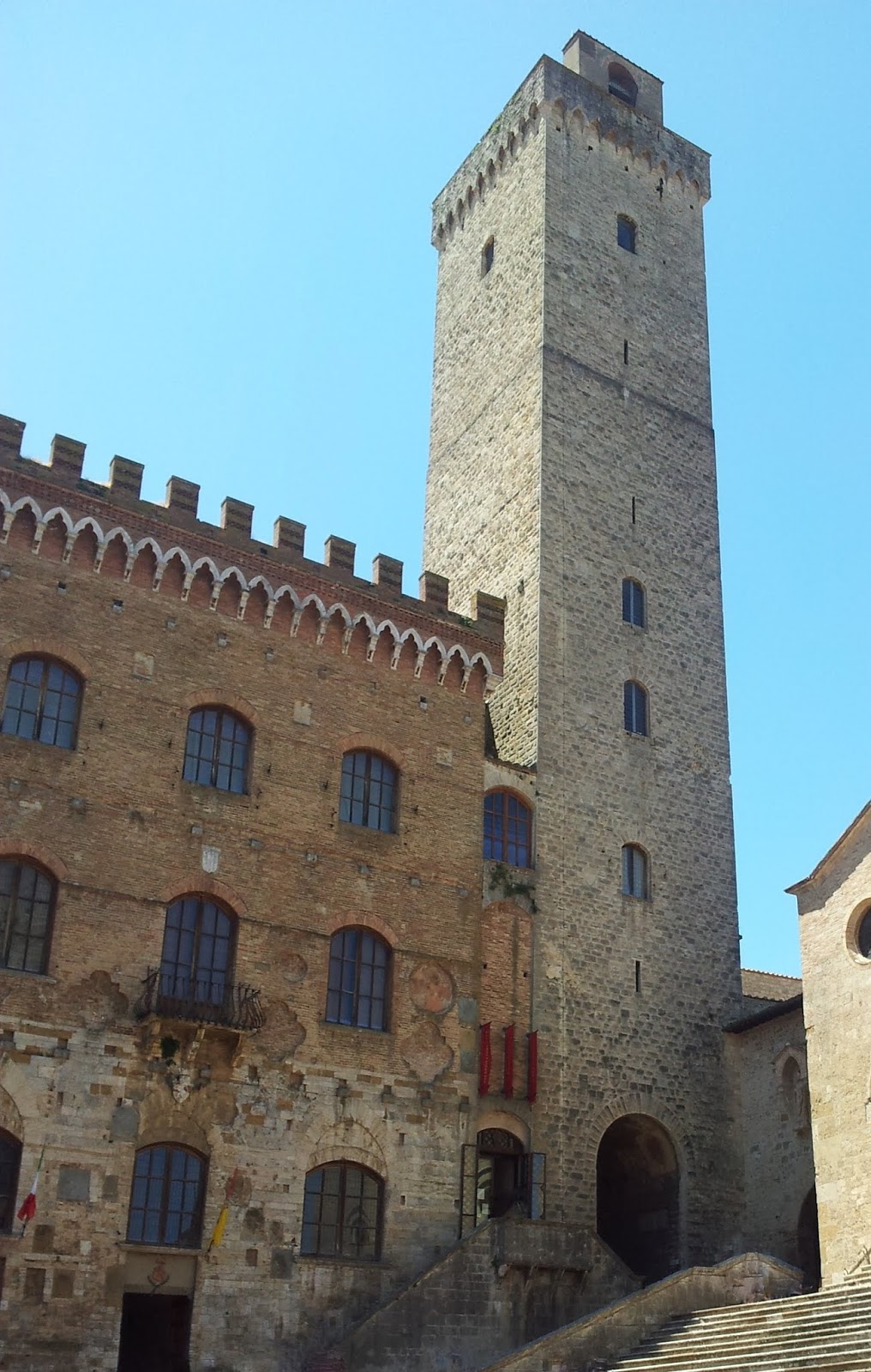
Searching for locations: San Gimignano, Italy

We have visited this town on a hill, famous for its fourteen towers, twice.  The first time we stayed in a hotel overlooking the main piazza, and the second time, for a day visit, and return to a little restaurant tucked away off the main piazza for its home cooking.

No cars are allowed inside the town and parking is provided outside the town walls.  You can drive up to the hotel to deliver your baggage, but the car must return to the carpark overnight.

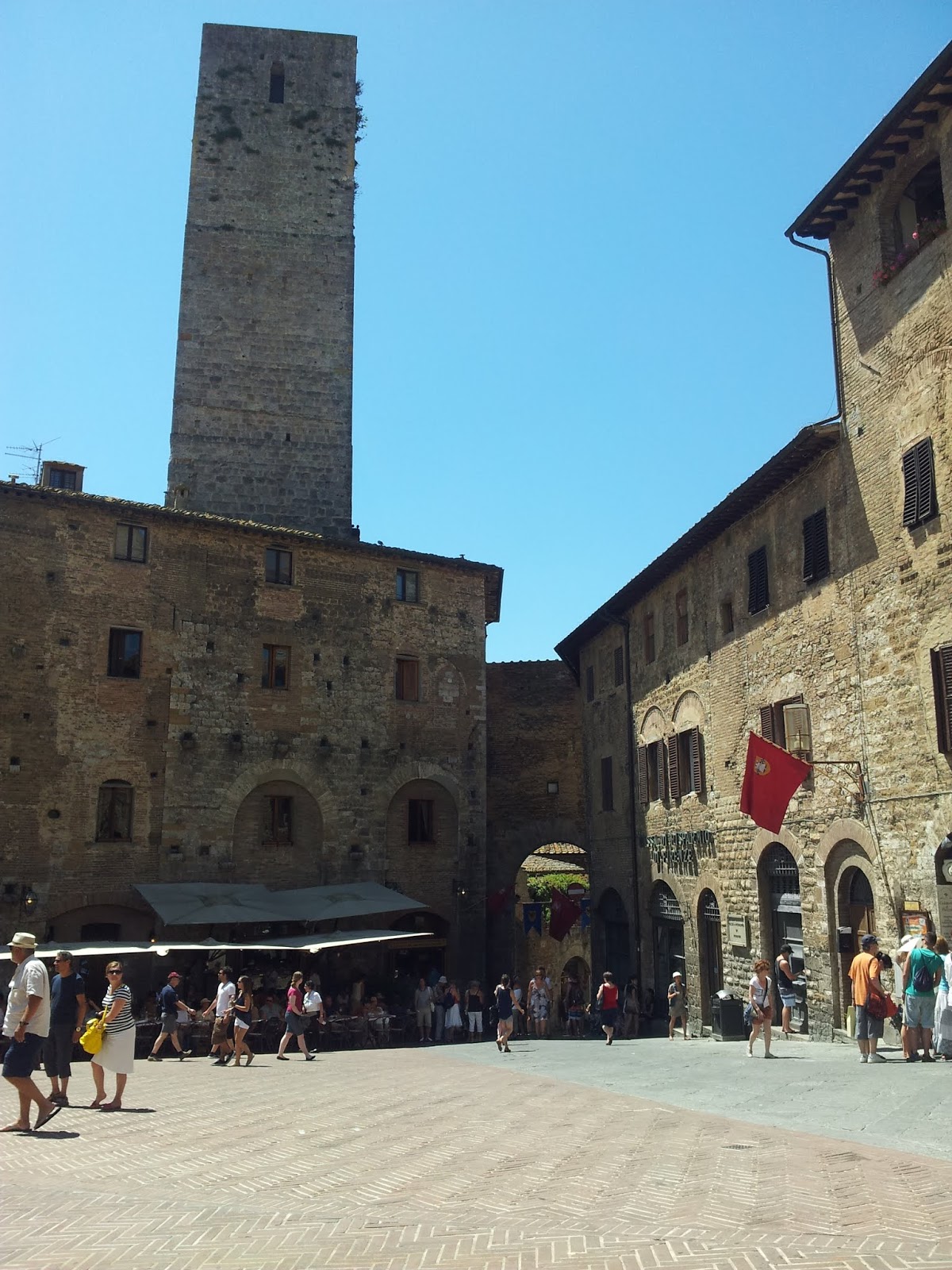
This is one of the fourteen towers

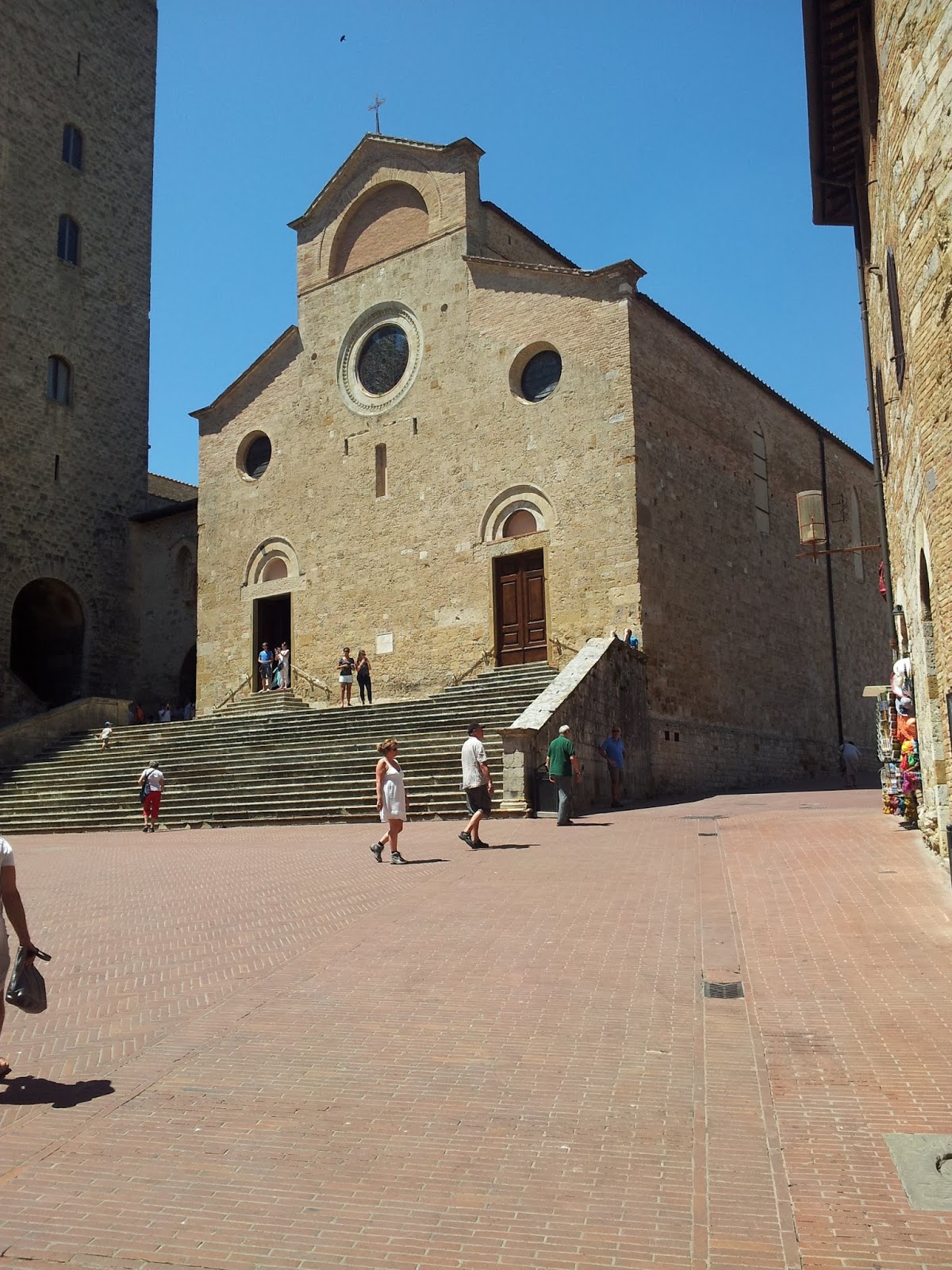
I didn’t attempt to climb to the tower, which you can do in some of them, just getting up the church steps was enough for me.  Inside the building was, if I remember correctly, a museum.

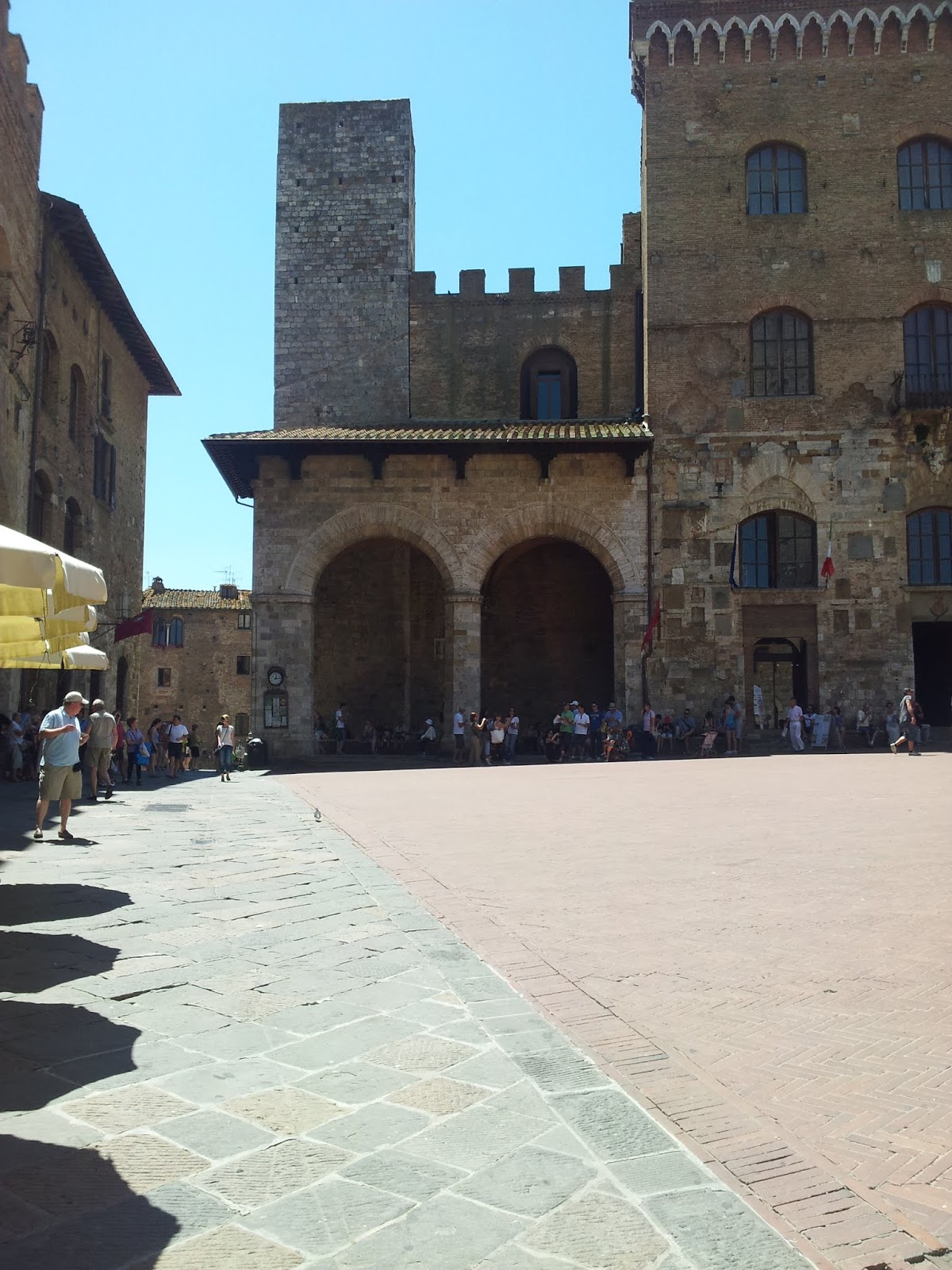
Looking up the piazza towards some battlements, and when you reach the top and turn left, there is a small restaurant on the right-hand side of the laneway that had the best wild boar pasta.

Another of the fourteen towers, and through the arch, down a lane to the gated fence that surrounds the town.  The fortifications are quite formidable and there are several places along the fence where you can stand and look down the hill at the oncoming enemy (if there was one).

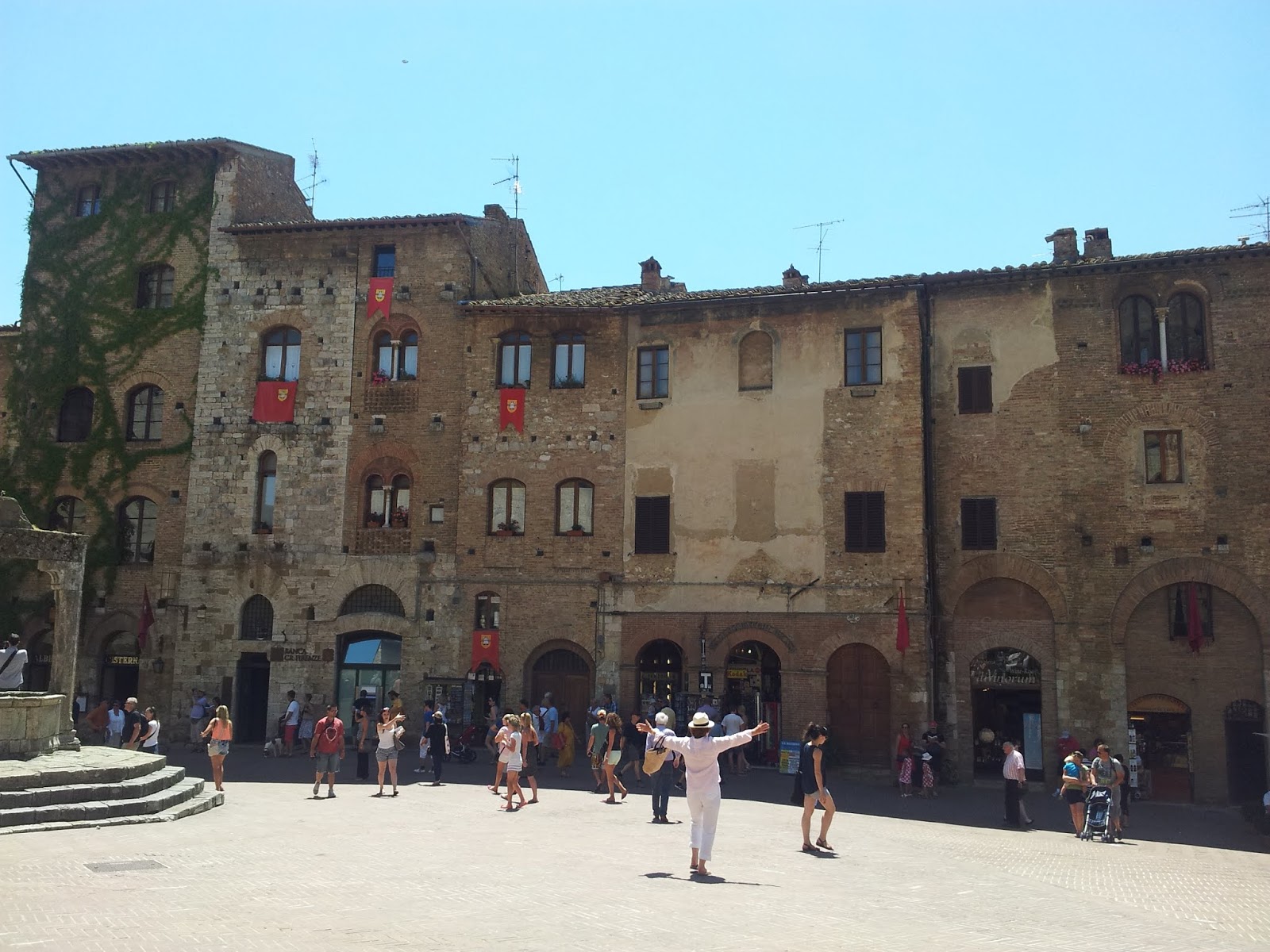
Part of the main piazza which is quite large, and on the right, the wishing well where my wish for a cooler day was not granted.

Officially, the Piazza della Cisterna is the most beautiful square of the town, San Gimignano.  The well was built in 1273 and enlarged in 1346 by Podestà Guccio dei Malavolti.

And not to be outdone by any other the other old towns, there is an old church, one of several.  It is the Collegiate Church or the Duomo di San Gimignano, a monument of Romanesque architecture built around 1000 and enlarged over time.

Next door is the Museum of Sacred Art.

And I guess it’s rather odd to see television aerials on top of houses that are quite literally about a thousand years old.  I wonder what they did back then for entertainment?

A photograph from the inspirational bin – 2

It’s the obvious items in the photograph that you see first, or that your eyes go to first.

The ocean, the beach, the buildings. You can see a shopping mall with MacDonald’s sign above it.

Yes, it’s late afternoon, and you can see long shadows of the buildings.

So, if I asked you what did you see in this photo, what would your reply be?

From a thriller writer or murder mystery writer’s point of view, it’s what you don’t necessarily see.

So, for the purposes of the story, the opening line for the world-weary detective, handing the photo to his partner, “What’s is it you can’t see in this photo?”

A partner that hadn’t been on the job very long, in from the suburbs, and had seen little more than break and enters car theft, and school kids hi-jinks.

“What am I supposed to be looking for?”

“You want to be a detective, or be looking for old ladies cats?”

His partner takes the photo in hand and looks at it again.  There has to be a reason why the old man had given it to him, or perhaps there wasn’t and he was just playing with him again.

No, he thought, there has to be something…

And then he saw it, quite by accident.  A hand, a gun, and following the line of fire, at the end, what looked like someone in the bushes.

In a photo taken from a higher floor of the building over the road, looking down on what was supposed to be a rooftop recreational area.

Only there had been no report of a missing person or a gunshot wound in the last seven days.

“When was it taken?”

“Two days ago?”

“And no reports of a shooting, or a body?”

“No.  And yet the person who took this swears he saw a body, but by the time he came back, there was nothing.”

The detective handed his partner a second photo.  Time-stamped five minutes later.  With no gun and no body.

What will happen next?

I always wanted to see the planets – Episode 2

Back on the bridge of that rickety starship

The only things moving on this upcoming voyage out into the unknown, is the planets on our screen.

When we were last on the bridge, the chief engineer, yes, we still have them in the 24th century, was telling us it was a no go.

When you’re standing on a ship that cost more money than you can imagine, then double that unimaginable amount, and realise it would normally build two other smaller ships, then you can be assured that someone very high up in the chain of command, sitting in an office somewhere safe back on the planet, who may or may not be wishing they were in your place, would be anything but happy.

I was lucky that I didn’t meet that someone during the recruitment process, only later on an inspection of the ship just before the handover from the builder to Space Command.

This was not the first, but the first of a new class. Bigger, better, faster, more suitable to space travel than those that came before.

And, having several junior officers with a passion for history, one of them came up with a simile for our predicament. When new cars were created, way back in the 20th century, the first of the series always had teething problems. That’s why you wouldn’t buy the first of a series.

We didn’t have that luxury, but here’s the thing, it was based on an earlier model with a few new enhancements. It was one of those enhancements that was the problem.

A few minutes after the captain went to his quarters, his voice came over the speaker system. “Number One?”

Ok, I have a name, but trying to get the captain to use it might be difficult, what with regulations, and his rather stiff manner, each of which might get in the way.

“Sir?”

“Go down to engineering and get a report on progress.”

I could do that over the internal comms. What was going on? Belay that thought, I was not going to question an order.

“Yes sir.”

I glanced in the direction of the second officer, and he nodded, getting out of his seat. He would take charge of the bridge, even though we were going nowhere.

He walked over to my position, and I headed for the lift.

Automatic doors. It was not an innovation, but when I came aboard a week ago, they were not working properly, so using the lift to me was a leap of faith.

A few seconds later and what might have been from the top to the bottom in a skyscraper, the lift slowed, then stopped. The doors didn’t open.

Don’t panic. Just wait and breathe. There you go. The doors opened…

…onto utter chaos!

© Charles Heath 2021

The cinema of my dreams – I always wanted to go on a treasure hunt – Episode 52

Here’s the thing…

Every time I close my eyes, I see something different.

I’d like to think the cinema of my dreams is playing a double feature but it’s a bit like a comedy cartoon night on Fox.

But these dreams are nothing to laugh about.

Once again there’s a new installment of an old feature, and we’re back on the treasure hunt.


“So, how do you know your way around this place?”

We walked slowly and carefully because there was a lot of rubbish in the alleyway, mostly from cracks in the walls where the concrete lining had broken away. At times there were mounds of rubble, and we had to carefully walk over these.

The ground was dusty and signs of footprints from past visitors, but it had been a long time, they had almost disappeared. There was also a dank, musty aroma, just short of being nauseating.

“The result of a misspent youth. Not many people know there’s a passageway around the whole perimeter of the mall, with only four entry points from outside, and two inside. This was how we escaped when we came along for some shoplifting.”

“Did you ever think of going straight?”

“Wasn’t much chance of that. There were expectations, and when I did try to give it up, I got ostracised, and ended up having to commit bigger follies to regain acceptance.”

We reached the end of the passage, where it turned right. At a guess, I would say we were in one of the corners of the mall, near the front entrance.

She turned left and then stopped. I could see the bottom of the steps leading up.

A stopped next to her and we shone both torches up the stairs. The light only went as far as a landing.

“What’s up there,” I asked.

“Offices. A holding cell. It’s where the security team used to be. It was separate from everything else. The security guys used to shake down the teenage girls up there, and not in a nice way.”

“You?”

“Once, but I told Vince and he sorted the bastard out. Didn’t happen again.”

A small sidebar to life in a mall.

She started up the steps. “If anything is going to be anywhere, this will be the place. The front of the mall was the safest part, built properly on solid foundations. As work continued, heading sideways and back, corners were cut. It’s not the only shoddy building there is in this area.”

The Benderby’s construction company had built most of the buildings in the county, always coming in at the lowest price. The only place not cracking or falling to pieces was the town hall.

At the top of the stairs, there was another wide passage with rooms branching off it.

It was a little less dusty and musty up here, but the rooms were quite messy, with papers scattered everywhere. It looked like someone had been looking for something. The first room didn’t look like it had been used since everyone left, nor the second.

The third was a different story. It was reasonably clean, a large desk in the middle of the room, and several boxes on the side with rolled-up papers, probably blueprints or plans.

I went in. Nadia kept going up the passage to check the other rooms.

I pulled out one of the rolls and laid it on the table.

It was a map, one that stretched a hundred miles in each direction and giving a very clear view of all the river systems, lakes, mountains, and coastline. Our town was almost in the middle of the chart.

I pulled out another and it was almost the same.

I looked at the writing at the bottom. One was dated 1972, the other dated 1956.

I kept rummaging through the rolls until I found one that was dated 1935. Our town wasn’t a town back then, nor did Patterson’s Reach exist.

And carefully examining the inlets, bays, and coves, given the parameters of what remembered from Boggs’s map, it could be any one of a dozen locations. I didn’t take that much notice when I’d been looking at Boggs’ collection.

“Hey, Smidge,” Nadia yelled out.

I wished she wouldn’t call me that.

I went out of the room and down the passage, past about four other offices, until the second to last. She was standing outside an office with a shut door. I tried it, and it was locked.

“A locked door in an abandoned Mall. What are the odds?”

“That there’s something in there that someone wants to keep secret. This has to be Alex’s lair. What was in that other room?”

“Maps.”

“Any use?”

“Perhaps. Boggs probably had the same, but I never took much notice of his. Trouble is, I was having difficulty believing there is a treasure buried out there somewhere.”

“A lot of people seem to be looking for this non-existent treasure, so there must be something in it.”

“Any of your keys fit?”

She tried the first, no, the second, the same one she had used to get in, and it worked. A skeleton key perhaps, that oped every lock in the place.

The door swung open and we shone the torch lights inside.

“What the hell happened in here?” she muttered.


© Charles Heath 2020-2021

An excerpt from “Amnesia”, a work in progress

I remembered a bang.
I remembered the car slewing sideways.
I remember another bang, and then it was lights out.
When I opened my eyes again, I saw the sky.
Or I could be under water.
Everything was blurred.
I tried to focus but I couldn’t. My eyes were full of water.
What happened?
Why was I lying down?
Where was I?
I cast my mind back, trying to remember.
It was a blank.
What, when, who, why and where, questions I should easily be able to answer. Questions any normal person could answer.
I tried to move. Bad, bad mistake.
I did not realise the scream I heard was my own. Just before my body shut down.

“My God! What happened?”
I could hear, not see. I was moving, lying down, looking up.
I was blind. Everything was black.
“Car accident, hit a tree, sent the passenger flying through the windscreen. Pity to poor bastard didn’t get the message that seat belts save lives.”
Was I that poor bastard?
“Report?” A new voice, male, authoritative.
“Multiple lacerations, broken collar bone, broken arm in three places, both legs broken below the knees, one badly. We are not sure of internal injuries, but ruptured spleen, cracked ribs and pierced right lung are fairly evident, x-rays will confirm that and anything else.”
“What isn’t broken?”
“His neck.”
“Then I would have to say we are looking at the luckiest man on the planet.”
I heard shuffling of pages.
“OR1 ready?”
“Yes. On standby since we were first advised.”
“Good. Let’s see if we can weave some magic.”

Magic.
It was the first word that popped into my head when I surfaced from the bottom of the lake. That first breath, after holding it for so long, was sublime, and, in reality, agonising.

Magic, because it seemed like I’d spent a long time under water.
Or somewhere.
I tried to speak, but couldn’t. The words were just in my head.
Was it night or was it day?
Was it hot, or was it cold?
Where was I?
Around me it felt cool.
It was very quiet. No noise except for the hissing of air through an air-conditioning vent. Or perhaps that was the sound of pure silence. And with it the revelation that silence was not silent. It was noisy.
I didn’t try to move.
Instinctively, somehow I knew not to.
A previous bad experience?
I heard what sounded like a door opening, and very quiet footsteps slowly come into the room. They stopped. I could hear breathing, slightly laboured, a sound I’d heard before.
My grandfather.
He had smoked all his life, until he was diagnosed with lung cancer. But for years before that he had emphysema. The person in the room was on their way, down the same path. I could smell the smoke.
I wanted to tell whoever it was the hazards of smoking.
I couldn’t.
I heard a metallic clanging sound from the end of the bed. A moment later the clicking of a pen, then writing.
“You are in a hospital.” A female voice suddenly said. “You’ve been in a very bad accident. You cannot talk, or move, all you can do, for the moment, is listen to me. I am a nurse. You have been here for 45 days, and just come out of a medically induced coma. There is nothing to be afraid of.”
She had a very soothing voice.
I felt her fingers stroke the back of my hand.
“Everything is fine.”
Define fine, I thought. I wanted to ask her what ‘fine’ meant.
“Just count backwards from 10.”
Why?
I didn’t reach seven.

Over the next ten days, that voice became my lifeline to sanity. Every morning I longed to hear it, if only for the few moments she was in the room, those few waking moments when I believed she, and someone else who never spoke, were doing tests. I knew it had to be someone else because I could smell the essence of lavender. My grandmother had worn a similar scent.
It rose above the disinfectant.
I also believed she was another doctor, not the one who had been there the day I arrived. Not the one who had used some ‘magic’ and kept me alive.
It was then, in those moments before she put me under again, that I thought, what if I was paralysed? It would explain a lot. A chill went through me.

The next morning she was back.
“My name is Winifred. We don’t know what your name is, not yet. In a few days, you will be better, and you will be able to ask us questions. You were in an accident, and you were very badly injured, but I can assure you there will be no lasting damage.”
More tests, and then, when I expected the lights to go out, they didn’t. Not for a few minutes more. Perhaps this was how I would be integrated back into the world. A little bit at a time.
The next morning, she came later than usual, and I’d been awake for a few minutes. “You have bandages over your eyes and face. You had bad lacerations to your face, and glass in your eyes. We will know more when the bandages come off in a few days. Your face will take longer to heal. It was necessary to do some plastic surgery.”
Lacerations, glass in my eyes, car accident, plastic surgery. By logical deduction, I knew I was the poor bastard thrown through the windscreen. It was a fleeting memory from the day I was admitted.
How could that happen?
That was the first of many startling revelations. The second was the fact I could not remember the crash. Equally shocking, in that same moment was the fact I could not remember before the crash either, and only vague memories after.
But the most shattering of all these revelations was the one where I realised I could not remember my name.
I tried to calm down, sensing a rising panic.
I was just disoriented, I told myself. After 45 days in an induced coma, it had messed with my mind, and it was only a temporary lapse. Yes, that’s what it was, a temporary lapse. I would remember tomorrow. Or the next day.
Sleep was a blessed relief.

The next day I didn’t wake feeling nauseous. Perhaps they’d lowered the pain medication. I’d heard that morphine could have that effect. Then, how could I know that, but not who I am?
I knew now Winifred the nurse was preparing me for something very bad. She was upbeat, and soothing, giving me a new piece of information each morning. This morning, “You do not need to be afraid. Everything is going to be fine. The doctor tells me you are going to recover with very little scarring. You will need some physiotherapy to recover from your physical injuries, but that’s in the future. We need to let you mend a little bit more before then.”
So, I was not going to be able to leap out of bed, and walk out of the hospital any time soon. I don’t suppose I’d ever leapt out of bed, except as a young boy. I suspect I’d sustained a few broken bones. I guess learning to walk again was the least of my problems.
But, there was something else. I picked it up in the timbre of her voice, a hesitation, or reluctance. It sent another chill through me.
This time I was left awake for an hour before she returned.
This time sleep was restless.
There were scenes playing in my mind, nothing I recognised, and nothing lasting longer than a glimpse. Me. Others, people I didn’t know. Or perhaps I knew them and couldn’t remember them.
Until they disappeared, slowly like the glowing dot in the centre of the computer screen, before finally fading to black.

The morning the bandages were to come off she came in bright and early and woken me. I had another restless night, the images becoming clearer, but nothing recognisable.
“This morning the doctor will be removing the bandages over your eyes. Don’t expect an immediate effect. Your sight may come back quickly or it may come back slowly, but we believe it will come back.”
I wanted to believe I was not expecting anything, but I was. It was probably human nature. I did not want to be blind as well as paralysed. I had to have at least one reason to live.
I dozed again until I felt a gentle hand on my shoulder. I could smell the lavender, the other doctor was back. And I knew the hand on my shoulder was Winifred’s. She told me not to be frightened.
I was amazed to realise in that moment, I wasn’t.
I heard the scissors cutting the bandages.
I felt the bandage being removed, and the pressure coming off my eyes. I could feel the pads covering both eyes.
Then a moment where nothing happened.
Then the pads being gently lift and removed.
Nothing.
I blinked my eyes, once, twice. Nothing.
“Just hold on a moment,” Winifred said. A few seconds later I could feel a cool towel wiping my face, and then gently wiping my eyes. Perhaps there was ointment, or something else in them.
Then a flash. Well, not a flash, but like when a light is turned on and off. A moment later, it was brighter, not the inky blackness of before, but a shade of grey.
She wiped my eyes again.
I blinked a few more times, and then the light returned, and it was like looking through water, at distorted and blurry objects in the distance.
I blinked again, and she wiped my eyes again.
Blurry objects took shape. A face looking down on me, an elderly lady with a kindly face, surely Winifred, who was smiling. And on the opposite side of the bed, the doctor, a Chinese woman of indescribable beauty.
I nodded.
“You can see?”
I nodded again.
“Clearly?”
I nodded.
“Very good. We will just draw the curtains now. We don’t want to overdo it. Tomorrow we will be taking off the bandages on your face. Then, it will be the next milestone. Talking.”
I couldn’t wait.

When morning came, I found myself afraid. Winifred had mentioned scarring, there were bandages on my face. I knew, but wasn’t quite sure how I knew, I wasn’t the handsomest of men before the accident, so this might be an improvement.
I was not sure why I didn’t think it would be the case.
They came at mid morning, the nurse, Winifred, and the doctor, the exquisite Chinese. Perhaps she was the distraction, taking my mind of the reality of what I was about to see.
Another doctor came into the room, before the bandages were removed, and he was introduced as the plastic surgeon that had ‘repaired’ the ravages of the accident. It had been no easy job, but, with a degree of egotism, he did say he was one of the best in the world.
I found it hard to believe, if he was, that he would be at a small country hospital.
“Now just remember, what you might see now is not how you will look in a few months time.”
Warning enough.
The Chinese doctor started removing the bandages. She did it slowly, and made sure it did not hurt. My skin was very tender, and I suspect still bruised, either from the accident or the surgery, I didn’t know.
Then it was done.
The plastic surgeon gave his work a thorough examination and seemed pleased with his work. “Coming along nicely,” he said to the other doctor. He issued some instructions on how to manage the skin, nodded to me, and I thanked him before he left.
I noticed Winifred had a mirror in her hand, and was somewhat reticent in using it. “As I said,” she said noticing me looking at the mirror, “what you see now will not be the final result. The doctor said it was going to heal with very little scarring. You have been very fortunate he was available. Are you ready?”
I nodded.
She showed me.
I tried not to be reviled at the red and purple mess that used to be my face. At a guess I would have to say he had to put it all back together again, but, not knowing what I looked like before, I had no benchmark. All I had was a snippet of memory that told me I was not the tall, dark, and handsome type.
And I still could not talk. There was a reason, he had worked on that area too. Just breathing hurt. I think I would save up anything I had to say for another day. I could not even smile. Or frown. Or grimace.
“We’ll leave you for a while. Everyone needs a little time to get used to the change. I suspect you are not sure if there has been an improvement on last year’s model. Well, time will tell.”
A new face?
I could not remember the old one.
My memory still hadn’t returned.

“Trouble in Store” – Short stories my way: Actions have consequences

It’s time for the policewoman to arrive.

There is such a thing as pure dumb luck.

If she did not walk through the door when she did then Jack would have walked away.

From the policewoman’s perspective:


She crossed the street from the corner instead of remaining on the same side of the street as she did every other night.  When she reached the other sidewalk, she was about 20 yards from the nearest window of the store.

As she crossed, she got a better view of the three people in the store and noticed the woman, or girl, was acting oddly as if she had something in her hand, and, from time to time looked down beside her.

A yard or two from the window she stopped, took a deep breath, and then moved slowly, getting a better view of the scene with each step.

Then she saw the gun in the girl’s hand, and the two men, the shopkeeper and a customer facing her, hands up.

It was a convenience store robbery in progress.

She reached for her radio, but it wasn’t there.  She was off duty.  Instead, she withdrew, and called the station on her mobile phone, and reported the robbery.  The officer at the end of the phone said a car would be there in five minutes.

In five minutes there could be dead bodies.

She had to do something, and reached into her bag and pulled out a gun.  Not her service weapon, but one she carried in case of personal danger.


Guns are dangerous weapons in the hands of professional and amateur alike.  You would expect a professional who has trained to use a gun to not have a problem but consider what might happen in exceptional circumstances.

People freeze under pressure.  Alternately, some shoot first and ask questions later.

We have an edgy and frightened girl with a loaded gun, one bullet or thirteen in a magazine, it doesn’t matter.  It only takes one bullet to kill someone.

Then there’s the trigger pressure, light or heavy, the recoil after the shot and whether it causes the bullet to go into or above the intended target, especially if the person has never used a gun.

The policewoman, with training, will need two hands to take the shot, but in getting into the shop she will need one to open the door, and then be briefly distracted before using that hand to steady the other.

It will take a lifetime, even if it is only a few seconds.

Actions have consequences:


The policewoman crouched below the window shelf line so the girl wouldn’t see her, and made it to the door before straightening.  She was in dark clothes so the chances were the girl would not see her against the dark street backdrop.

Her hand was on the door handle about to push it inwards when she could feel in being yanked hard from the other side, and the momentum and surprise of it caused her to lose balance and crash into the man who was trying to get out.

What the hell…

A second or two later both were on the floor in a tangled mess, her gun hand caught underneath her, and a glance in the direction of the girl with the gun told her the situation had gone from bad to worse.

The girl had swung the gun around and aimed it at her and squeezed the trigger twice.

The two bangs in the small room were almost deafening and definitely disorientating.

Behind her, the glass door disintegrated when the bullet hit it.

Neither she nor the man beside her had been hit.

Yet.

She felt a kick in the back and the tickling of glass then broke free as the man she’d run into rolled out of the way.

Quickly on her feet, she saw the girl had gone, and wasted precious seconds getting up off the floor, then out the door to find she had disappeared.

She could hear a siren in the distance.  They’d find her.


If the policewoman had not picked that precise moment to enter the shop, maybe the man would have got away.

Maybe.

If he’d been aware of the fact he was allowed to leave.

He was lucky not to be shot.

Yet there were two shots, and we know at least one of them broke the door’s glass panel.


Next – the epilog

© Charles Heath 2016-2020