Searching for locations: Niagara Falls, Canada

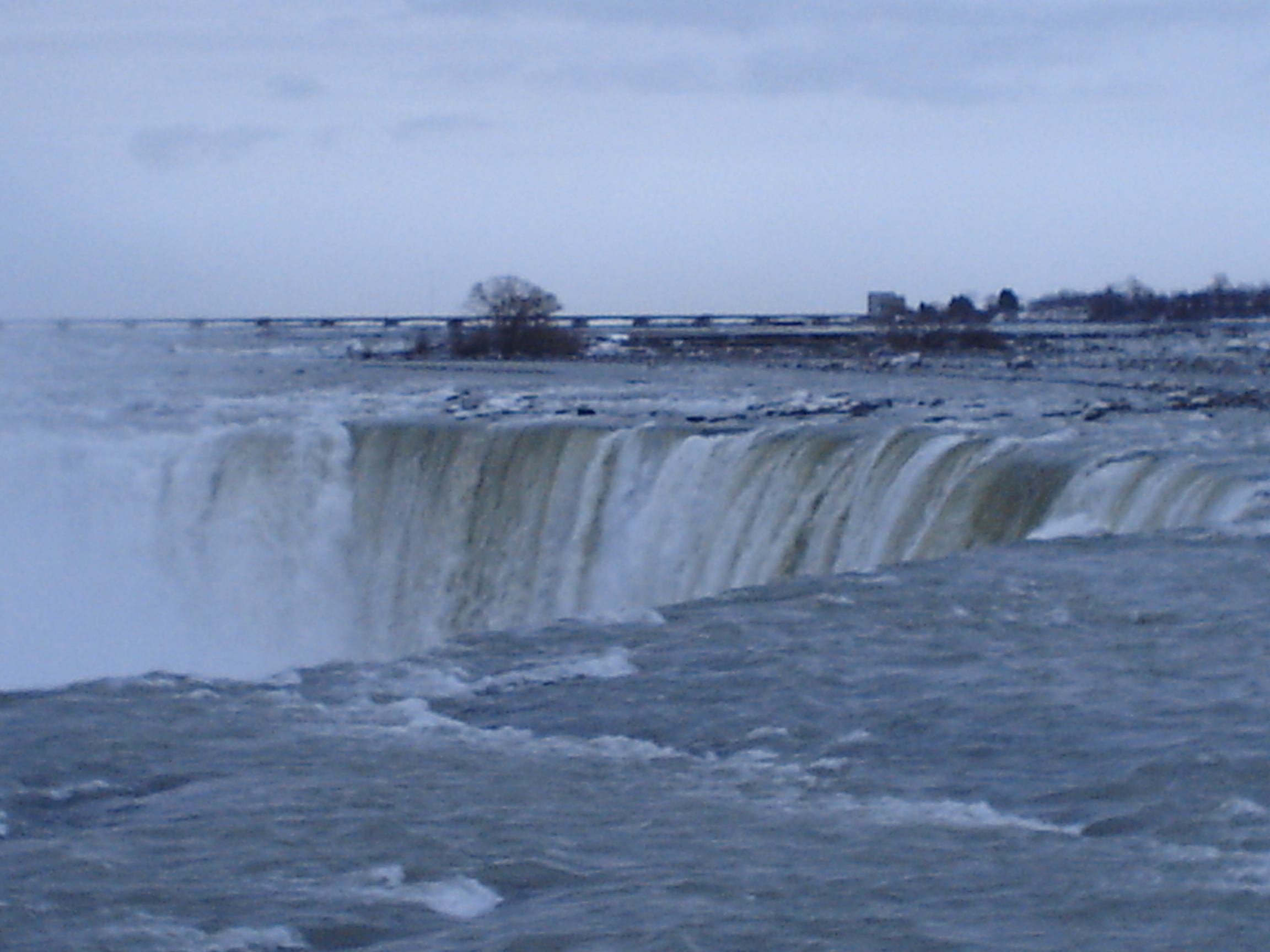
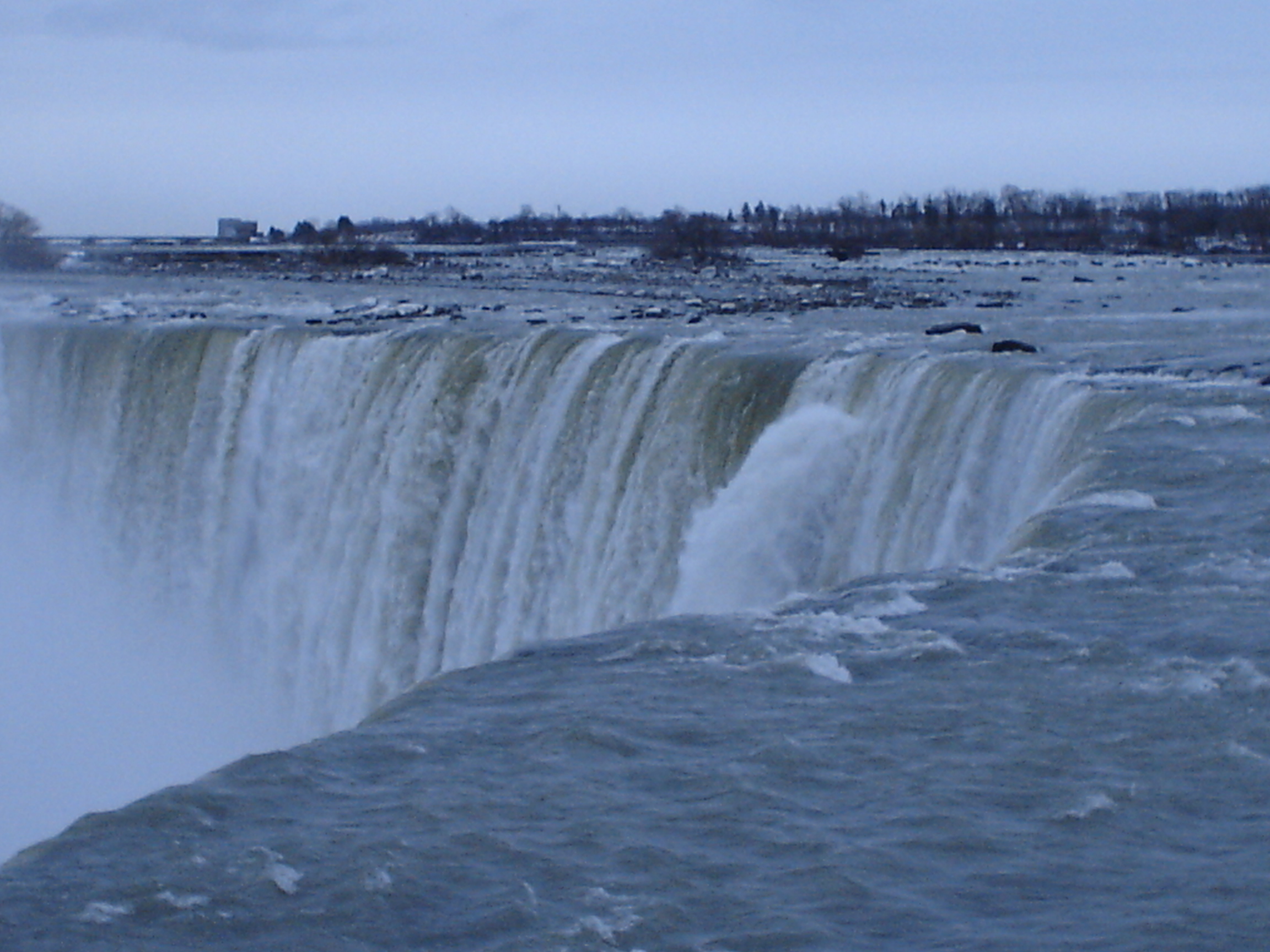
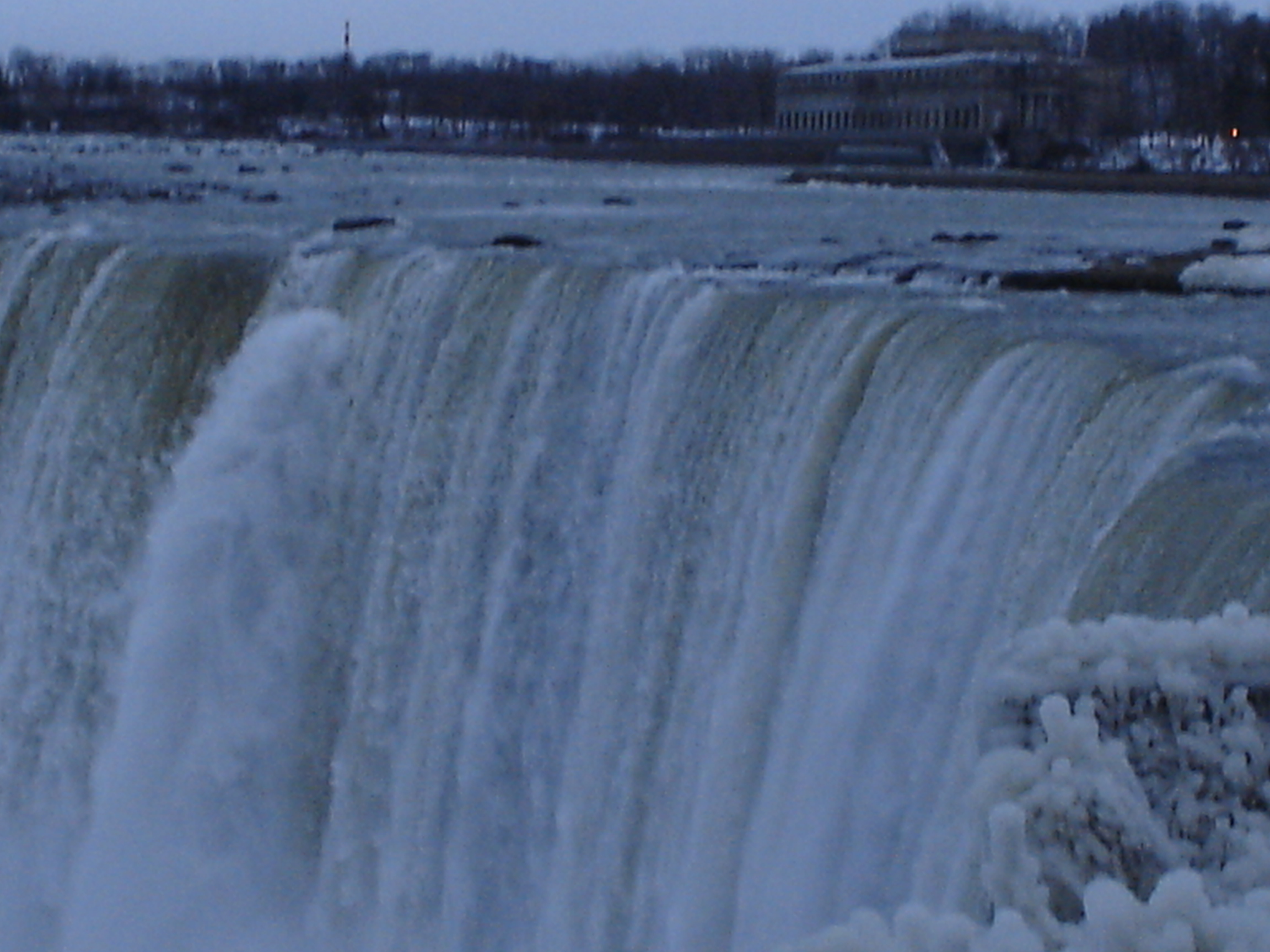
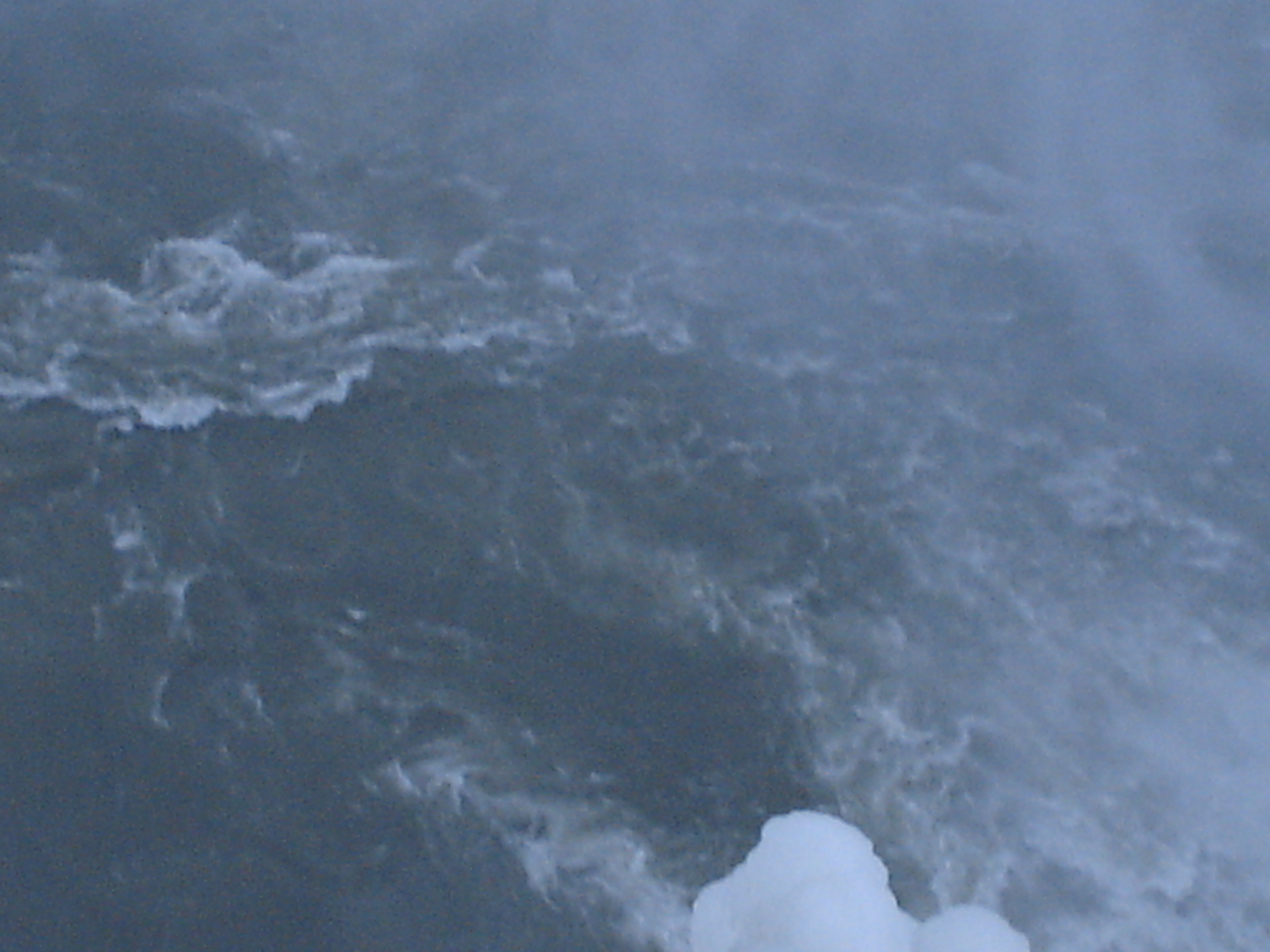
We visited the falls in winter, just after Christmas when it was all but frozen.

The weather was freezing, it was snowing, and very icy to walk anywhere near the falls

DSC00755

Getting photos is a matter of how much you want to risk your safety.

I know I slipped and fell a number of times on the ice just below the snowy surface in pursuit of the perfect photograph.  Alas, I don’t think I succeeded.

DSC00754

DSC00758

DSC00767

DSC00768

DSC00761

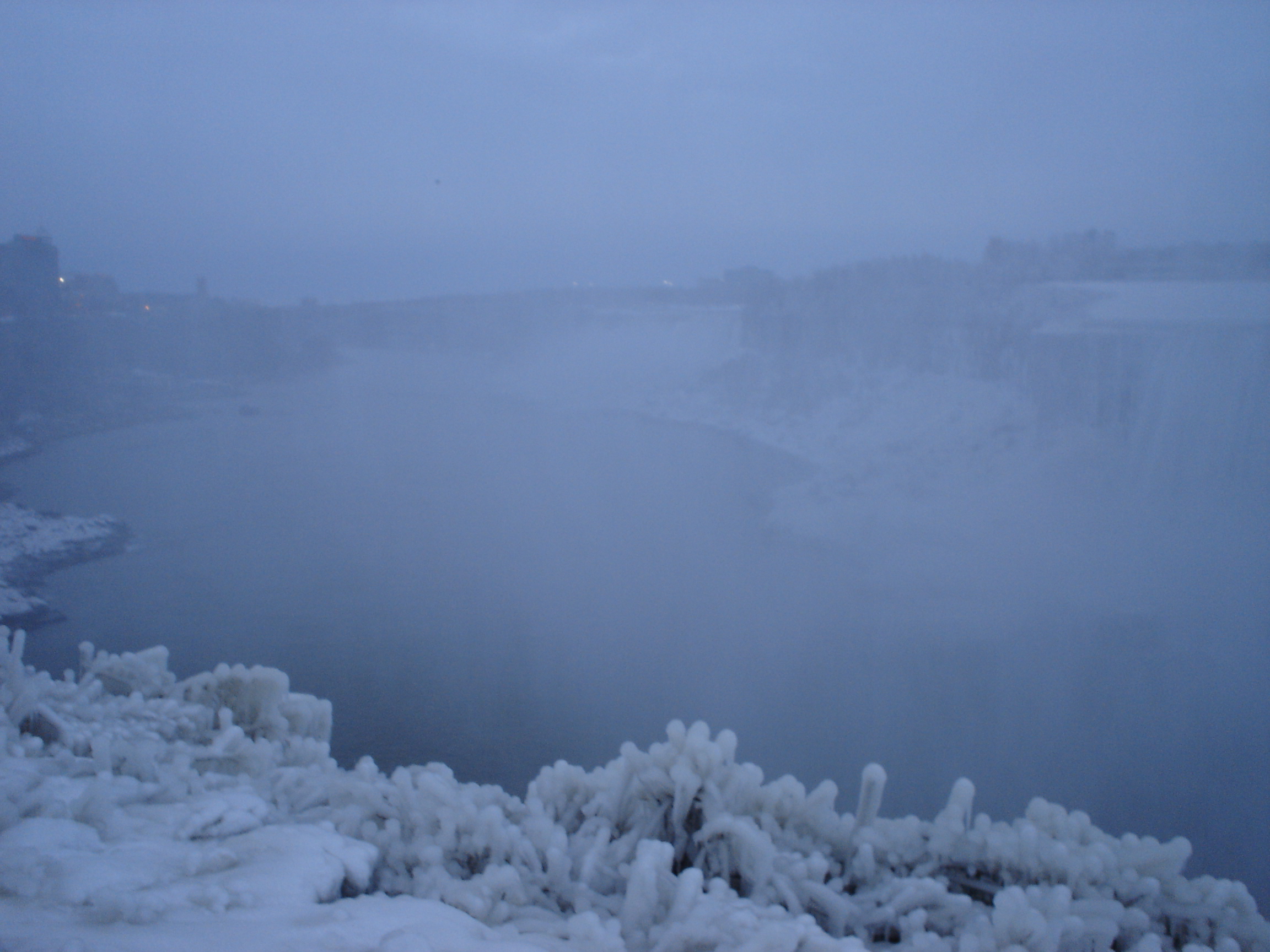
The mist was generated from both the waterfall and the low cloud.  It was impossible not to get wet just watching the falls.

DSC00771

Of course, unlike the braver people, you could not get me into one of the boats that headed towards the falls.  I suspect there might be icebergs and wasn’t going to tempt the fate of another Titanic, even on a lesser scale.  The water would be freezing.

The cinema of my dreams – I never wanted to go to Africa – Episode 27

Our hero knows he’s in serious trouble.

The problem is, there are familiar faces and a question of who is a friend and who is foe made all the more difficult because of the enemy, if it was the enemy, simply because it didn’t look or sound or act like the enemy.

Now, it appears, his problems stem from another operation he participated in.


It took almost an hour to recover.  Monroe didn’t come looking for me, so I think they knew it would take some time for me to get my legs back.

And it felt good to stand under the hot shower for twenty-odd minutes, letting the warmth of the water sink into my bones and clear my head.

And think.

How long had Bamfield have an eye on me?  It was a question that sprung to mind the moment I saw him in the desert camp.  I’d heard if you were transferred to one of his commands, at some point, it was not because it was another posting, it was because he wanted you there.

I’d been specially selected by Bamfield personally, out of the preliminary training camp, to further my military career under his oversight.  I’d made it very clear from the outset that I was not interested in a commission, that I preferred the lower ranks.  Officers were a different breed, and I’d not been cut from that cloth.  Bamfield had admitted as much when I was first interviewed by him, and several other’s on what I soon discovered was his selection panel.

They were charged by him to find the best of the best.

And at that first interview, I’d disagreed with his assessment.  I’d been in trouble before, and the military was the only place I could go if I didn’t want to serve a stretch in jail.  Perhaps it was that innate ability of mine to seek out and become embroiled in trouble that caught his attention.

Certainly over time he and his instructors had honed those skills to a more refined set that, in civilian life, would set me up for a long stay in prison.  It begged the question of what I was going to do with myself after the military had finished with me, a question I hadn’t really thought about until I’d been shunted to my last post in a training school of sorts.

I realised now that it had been Bamfield sidelining me until an operation crying out for my particular talents came along.

That disastrous operation with Treen.

Was it his?  Or was it someone else who pulled it together, and he just provided the manpower.  It had been the first major active offshore operation I’d been on.  There’d been a few skirmishes along the way, but that was the first, and in a zone where I don’t think we were meant to be operating.

That had, I thought, been the sole purview of the CIA, and if I looked back on what had happened, there was no doubt the two agents we were supposed to pull out were CIA operatives, it had got too hot for them to stay, and they had clandestinely called for help.

It begged another question, was Bamfield CIA or working with the CIA, with or without the military hierarchy knowing?

The thing is, if it had been pulled off, as expected, no one would be any the wiser in that country, but once they found out, by whatever means it happened, the proverbial had hit the fan.  It goes hand in hand with trusting people on the ground who were purportedly working against their country’s regime, for better or worse.

That country had a ‘friendly’ government, that had been ‘supported’ and then been deposed in the usual coup by the military, and, afterwards, the new hardliners got the benefit of those times when the country was a friendly and had military hardware and knowledge to wage war clandestinely or otherwise with its neighbours, given willingly.

Lessons hadn’t been learned after a particular middle east debacle.  Maybe lessons would never be learned.  Just look at the number of times had relations turned sour after a coup and agents had to hastily withdraw.  It seems that my visit had been at the end of another of those ‘diplomatic’ missions that had gone wrong.

If this was such a case, I was about to find out.

© Charles Heath 2019

In a word: Line (and there’s more)

There’s more to that word ‘line’, a lot more, making it more confusing, especially for those learning English as a second language.

I keep thinking how I could explain some of the sayings, but the fact is, it’s only my interpretation, which could possibly have nothing to do with its real meaning if it has one.

Such as,

Hook, line, and sinker

We would like to think that this is only used in a fishing depot, but while it is generally, there are other meanings, one of which is, a con artist has taken in a victim completely, or as the saying goes, hook, line, and sinker.

At the end of the line

Exactly what it t says though the connotations of this expression vary.

For me, the most common use is when you’re waiting, like for a table in a restaurant with a time-specific reservation, and you see people who arrive after you, getting a table before you, it’s like being continually sent to the end of the line.

Line ball decision

This is a little more obscure, but for me, it means the result could go either way, and it’s a matter of making a call. The problem is both decisions are right, and unfortunately, you’re the poor sod who has to decide.

It of course partners very well with you can’t please everyone all of the time.

These are the most difficult because one side is going to be aggrieved at the decision especially when it is supposed to be impartial and sometimes isn’t.

Get it over the line

This, of course, has many connotations in sport, particularly rugby when the aim is to get the ball over the try line.

But another more vicarious meaning might be from a senior salesman to a junior, get [the sale] over the line, i.e. get it signed sealed and delivered by any means possible by close of business.

Line of credit

A more straight forward use of the word, meaning the bank will extend credit up to a certain limit, but it’s generally quite large and can feel like its neverending.

Until you have to pay it back.

There’s more, but it can wait till another day.

Searching for locations: Driving in ice and snow, Canada

This morning started with a visit to the car rental place in Vancouver.  It reinforced the notion that you can be given the address and still not find the place.  It happened in Washington where it was hiding in the back of the main railway station, and it happened again in Vancouver when it was hidden inside a hotel.

We simply walked straight past it.  Pity there wasn’t a sign to let people know.

However…

We went in expecting a Grand Jeep Cherokee and walked out with a Ford Flex, suitable for three people and four large suitcases.  It actually seats 7, but forget the baggage, you’d be lucky to get two large suitcases in that configuration.

It is more than adequate for our requirements.

Things to note, it was delivered with just over a quarter of a tank of gas, and it had only done about 11,000 km, so it’s relatively new.  It’s reasonably spacious, and when the extra seats are folded down, there is plenty of baggage space.

So far, so good.

We finally leave the hotel at about half-past ten, and it is raining.  It is a simple task to get on Highway 1, the TransCanada Highway, initially, and then onto Highway 5, the Coquihalla Highway for the trip to Kamloops.

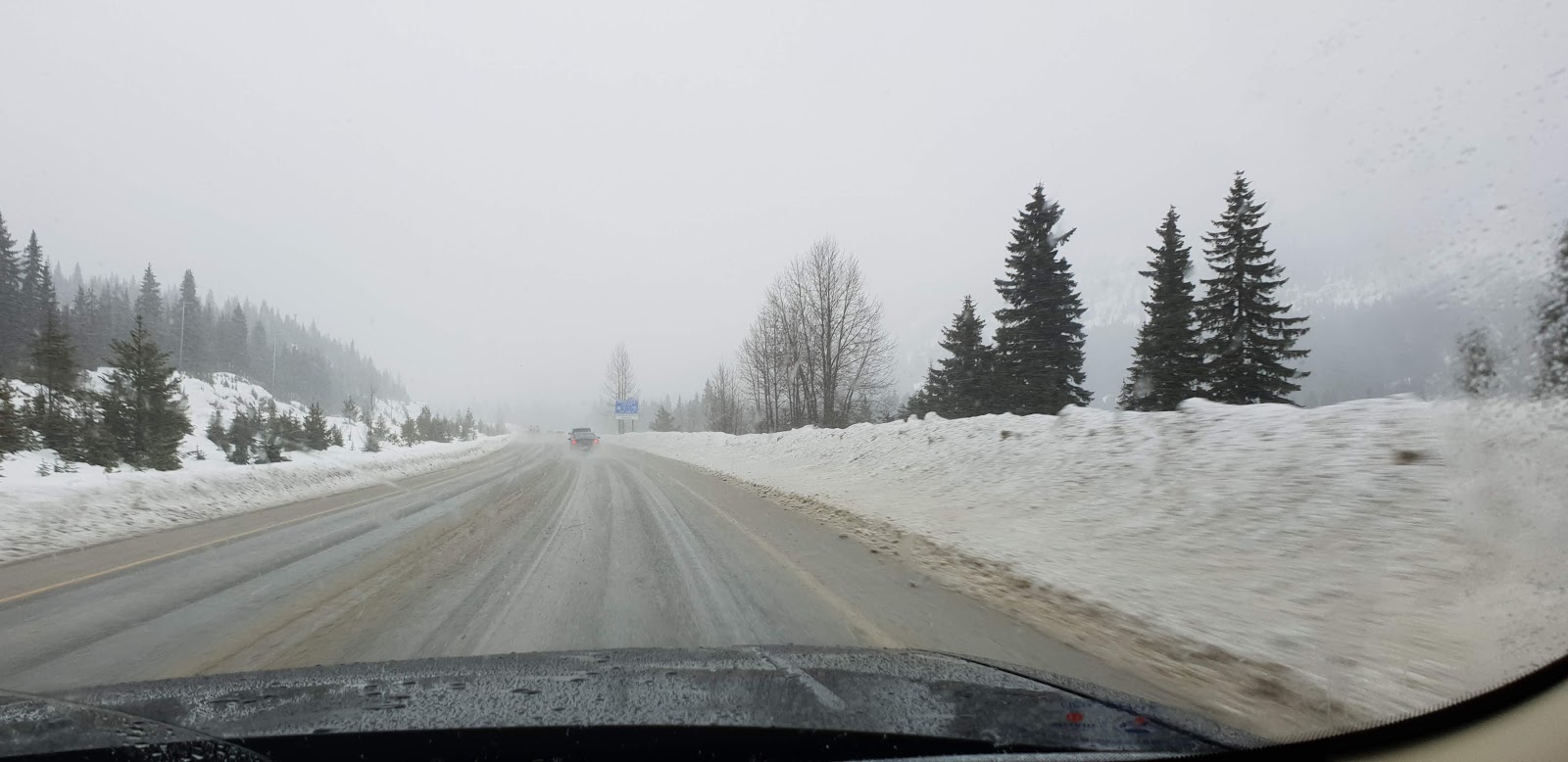
It rains all the way to the top of the mountain, progress hampered from time to time by water sprays from both vehicles and trucks.  The rain is relentless.  At the top of the mountain, the rain turns into snow and the road surface to slush.  It’s 0 degrees, but being the afternoon, I was not expecting it to turn to ice very quickly.

On the other side of the mountain, closer to Kamloops, there was sleet, then rain, then nothing, the last 100kms or so, in reasonably dry conditions.

Outside Kamloops, and in the town itself, there was evidence of snow recently cleared, and slushy roads.  Cars in various places were covered in snow, indicating the most recent falls had been the night before.

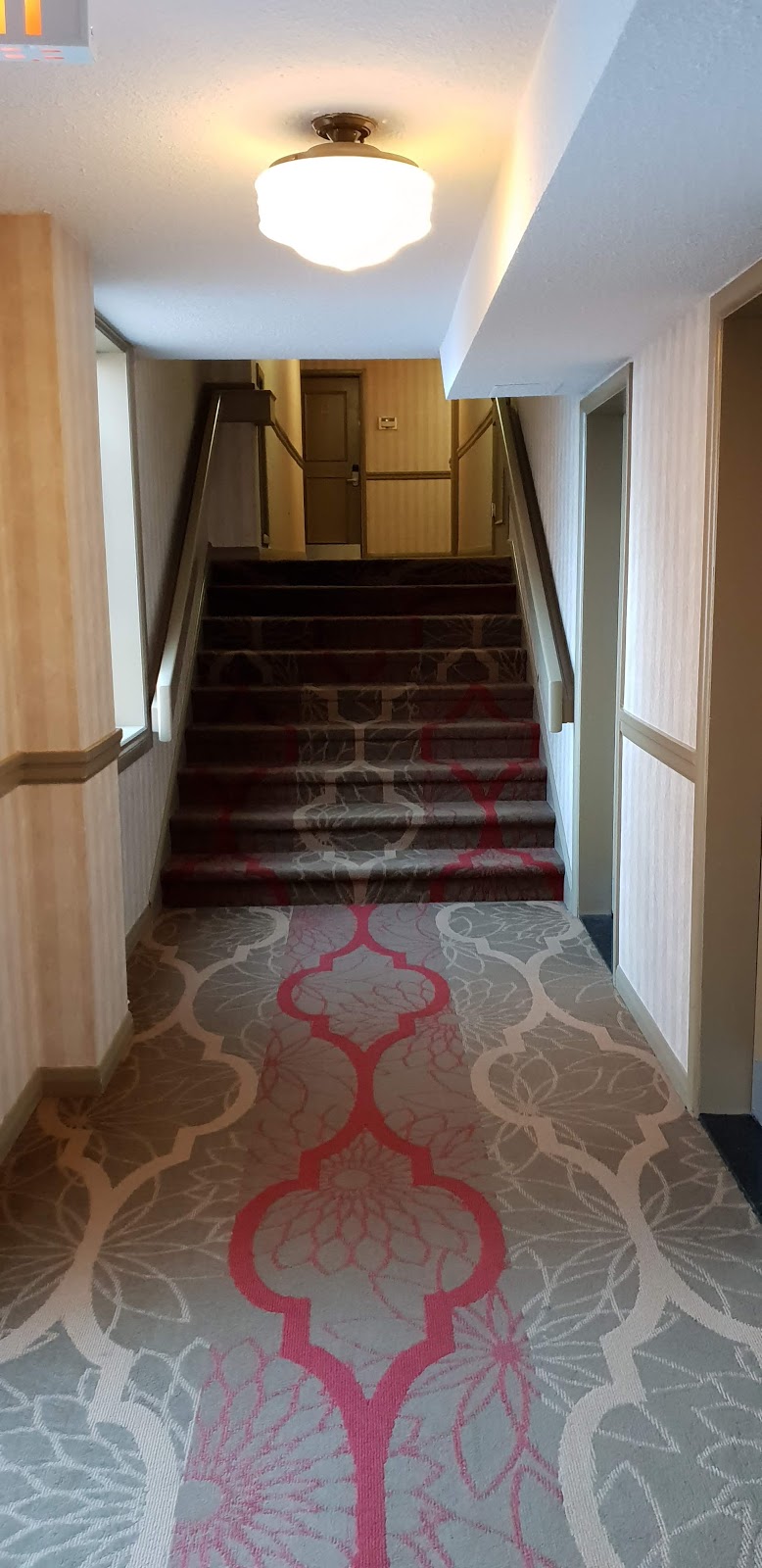
We’re staying at the Park Hotel, a heritage building, apparently built in the later 1920s.  In the style of the time, it is a little like a rabbit warren with passages turning off in a number of directions, and showing it is spread across a number of different buildings.

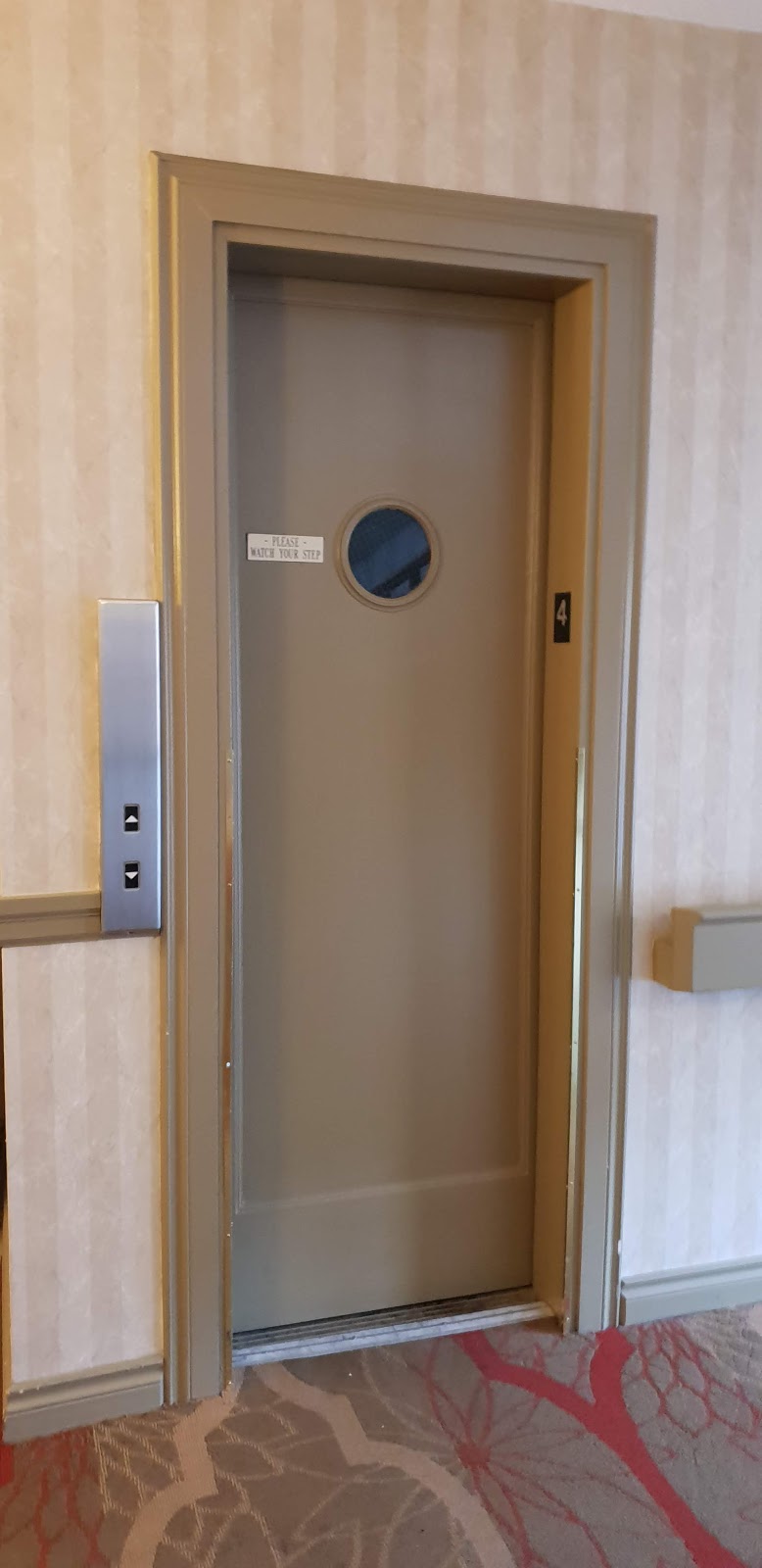
It has the original Otis elevator that can take a maximum of four passengers, and a sign on the wall that says “no horseplay inside the elevator” which is a rather interesting expression that only someone of my vintage would understand.  And, for those without a sense of humor, you definitely couldn’t fit a horse in it to play with.

The thing is, how do you find a balance between keeping the old world charm with modern-day expectations.  You can’t.  Some hotels try valiantly to get that balance.  Here, it is simply old world charm, which I guess we should be grateful for because sooner rather than later it’s going to disappear forever.

In my writer’s mind, given the importance of the railways, this was probably a thriving place for travelers, and once upon a time, there were a lot more hotels like this one.

Searching for locations: Driving in ice and snow, Canada

This morning started with a visit to the car rental place in Vancouver.  It reinforced the notion that you can be given the address and still not find the place.  It happened in Washington where it was hiding in the back of the main railway station, and it happened again in Vancouver when it was hidden inside a hotel.

We simply walked straight past it.  Pity there wasn’t a sign to let people know.

However…

We went in expecting a Grand Jeep Cherokee and walked out with a Ford Flex, suitable for three people and four large suitcases.  It actually seats 7, but forget the baggage, you’d be lucky to get two large suitcases in that configuration.

It is more than adequate for our requirements.

Things to note, it was delivered with just over a quarter of a tank of gas, and it had only done about 11,000 km, so it’s relatively new.  It’s reasonably spacious, and when the extra seats are folded down, there is plenty of baggage space.

So far, so good.

We finally leave the hotel at about half-past ten, and it is raining.  It is a simple task to get on Highway 1, the TransCanada Highway, initially, and then onto Highway 5, the Coquihalla Highway for the trip to Kamloops.

It rains all the way to the top of the mountain, progress hampered from time to time by water sprays from both vehicles and trucks.  The rain is relentless.  At the top of the mountain, the rain turns into snow and the road surface to slush.  It’s 0 degrees, but being the afternoon, I was not expecting it to turn to ice very quickly.

On the other side of the mountain, closer to Kamloops, there was sleet, then rain, then nothing, the last 100kms or so, in reasonably dry conditions.

Outside Kamloops, and in the town itself, there was evidence of snow recently cleared, and slushy roads.  Cars in various places were covered in snow, indicating the most recent falls had been the night before.

We’re staying at the Park Hotel, a heritage building, apparently built in the later 1920s.  In the style of the time, it is a little like a rabbit warren with passages turning off in a number of directions, and showing it is spread across a number of different buildings.

It has the original Otis elevator that can take a maximum of four passengers, and a sign on the wall that says “no horseplay inside the elevator” which is a rather interesting expression that only someone of my vintage would understand.  And, for those without a sense of humor, you definitely couldn’t fit a horse in it to play with.

The thing is, how do you find a balance between keeping the old world charm with modern-day expectations.  You can’t.  Some hotels try valiantly to get that balance.  Here, it is simply old world charm, which I guess we should be grateful for because sooner rather than later it’s going to disappear forever.

In my writer’s mind, given the importance of the railways, this was probably a thriving place for travelers, and once upon a time, there were a lot more hotels like this one.

It’s not a writing room unless…

You have this incredible fully working to scale model of an Airbus A380 coming into land…

20200123_202225

This plane is over a meter long and has actually flown as a model aircraft, complete with remote control.

The thrust from the four engines was enough to almost blow the lounge room curtains off their hooks from 40 feet away … and it was a struggle to hold the plane down.

Now I can simulate tornados.

And, I have to say it’s rather awe-inspiring to look at it.

20200123_203706

For those who like the technical details:

The A380 is the largest EPO model you will ever see and with a wingspan of 1520mm and 4 x 56mm ducted fans it is sure to make an impression at any airfield!

Despite it’s size, the A380 is very light and economical to fly, only requiring a 3000mAh 3S battery.

This huge A380 (EPO) model aircraft comes 95% pre-built and includes a powerful 4 x 25A brushless EDF system and steerable nose wheel, just include your own Tx/Rx and battery.

Specs:

Length: 1410mm (55.51in)
Wing span: 1520mm (59.84in)
Flying weight: 1800g
Motor: 2826 Brushless outrunner (3200KV)
ESC: 4 x 25A
Servo: 9g * 5pcs
Battery: 3000~5000mAh 3S1P 45C~65C Lipoly Pack (Required)
EDF Diameter: 4 x 56mm

In a word: Story

All of us writers know what this is, the sort of combination of words that all come together as a story.  A tale about anything whether it is true or just plain fiction.

A story can be long, or it can be short.  It could be a magazine or newspaper article, it could be what a child tells his or her mother or father when they get into trouble.

Come to think of it, I think that’s where I got an interest in writing stories because as a child I was always in trouble.

Of course, if you are telling certain types of stories,, then it’s bound to be a lie.  And made even worse if it is gossip!

That story might even be my interpretation of events, and as it happens, it’s possible no two stories are the same, especially if I and others had witnessed the same event.

This is not to be confused with the other version, storey, which is a single level in a building, one that might have thirty or more stories.

And, just to add to the confusion, living in Brisbane in Australia we have the Storey Bridge.

I have to stop thinking…

Have you ever wondered what you might have been back in the 1700s, or the 1800s in England, or whatever country you reside.

I live in Australia, so I suspect I would be a convict or the descendant of a convict. Certainly in those past years, there is nothing to suggest that I would have been much else, based on the fact I used to be a tradesman, and later a computer programmer, only one of which existed back then.

In England I have often imagined what it would be like for the underclasses, and very definitely where I;pd finish up. A servant maybe, like a stable boy or footman, or an agricultural worker before the industrial resolution, or a coal miner after it. Poor people it seemed had no prospects.

In the 1900s, my time on earth, and before the computer era, I trained in a trade school, doing woodwork, machine shop practise, and sheet metal. There was also farming. For the select few there was Accounting and business studies, but to be a clerk you had to go to a different school.

My family couldn’t afford it.

When I left school, as soon as I could, and therefore without the benefit of a good education, my prospects for work didn’t amount to much, and among my first jobs was mail sorter, telegram delivery boy, a packer for a book wholesaler, an odd job boy in an abattoir, and later a clerk.

Perhaps then I formed an idea that one day I might be a writer. I certainly had a go, but never did anything with it. I guess, even then, I knew my limitations borne from what I perceived was my station in life.

What did I want to do though? It didn’t matter. People from our social strata couldn’t afford university fees so I was never going to get a tertiary education. That just about ruled out everything.

So what happpened to change all that?

Reading.

From as young as I could, I read. Not only stories about people who lived so very different lives to me, but reference books about everything. It gave me an understanding of what it might be like to be something else, then gave me the impetus to actually apply for what I would call ‘a real job’.

Whether I could do it or not was irrelevant. I just wanted the chance.

It took a wile but then someone gave me that chance. That door was prised open just a little, enugh for me to get a foot in.

I had several tenets to abide by, don’t speak unless your spoken to, respect your elders, and don’t say anything unless it’s relevant.

First job was mail boy under a very crotchety old man who thought I was a waste of space. I learned everything he knew, listened to everything he said, and did everything I was told, better than everyone else.

I moved up to shipping clerk, creating manifests for ships cargo. It was the golden age just before computers, the days of the mainframes that had the computing power of an IBM XT.

They fascinated me.

My next job was for a new company, working for a mining and shipping company, as a distribution clerk maintaining a shipping timetable. That led to a role in communications, the days of telexes and internal couriers and memos, and memorandums for board meetings.

It wasn’t heady stuff, but I was in management, learned communications, and understood accounting.

When I left there, I became a computer programmers. It was dumb luck, my brother in law was an insurance salesman, created listings of investment outcomes using insurance products, and his individualised reports used to take in a week or so, restricting the number of clients he had.

This was the days of the first Apples, and IBM’s. I had a small personal computer, and told him I could create a program to work out his calculations in seconds not days, and he gave me the opportunity.

The rest is history.

So, it makes me wonder had I been back in those 1700s and 1800s, whether or not I may have started small, and made something of myself. A lord of the manor I would not be, but perhaps something more comfortable than a coal miner maybe.

I guess I’ll never know.

In a word: Story

All of us writers know what this is, the sort of combination of words that all come together as a story.  A tale about anything whether it is true or just plain fiction.

A story can be long, or it can be short.  It could be a magazine or newspaper article, it could be what a child tells his or her mother or father when they get into trouble.

Come to think of it, I think that’s where I got an interest in writing stories because as a child I was always in trouble.

Of course, if you are telling certain types of stories,, then it’s bound to be a lie.  And made even worse if it is gossip!

That story might even be my interpretation of events, and as it happens, it’s possible no two stories are the same, especially if I and others had witnessed the same event.

This is not to be confused with the other version, storey, which is a single level in a building, one that might have thirty or more stories.

And, just to add to the confusion, living in Brisbane in Australia we have the Storey Bridge.

Wishful thinking will not get us there any faster!

My phone, being smart and all, has been creating a notification that tells me I have some memories stored on it for this day a year ago, or two years, or many years.

The pictures it is showing are of our trip to China a few years ago.

Not much chance of going back, and, back then, neither of us could imagine that everything that has happened in the last two years could happen.

But, it did.

And one of the effects of those events is no more overseas travel whilst COVIS is still alive and kicking.

No travel of any sort can be contrmplated at the moment with the Omicron variant is running almost rampant.  We can’t even fly to another state because such close proximity to someone with it, fully vaccinated or not, would be dangerous for my state of health which is compromised.

Travel, of course, is the main escape, where we can get away from our daily lives, and go somewhere quite different from where we live and experience a different world.  The people, the food, the sights.

What is probably more significant is that we might not be able to go away again, now it’s been assumed there is no cure for the virus, just the varying degrees of seriousness.  I for one, would not want to risk catching it in another country, simply because of the medical expenses, and the chances are that travel insurance will not cover me for the Coronavirus because of my compromised immune system.  We all know insurance companies love to find loopholes to not pay.

And no cover means no travel, even if you are able to.

So, it means that any travel we will be doing, when we can, will be in our own country when it is safe to do so.  So too for New Zealand, and we may be able to travel there.

One day.

Until then, my smartphone is going to keep sending me gentle reminders of what it was like in another lifetime.