When you realize you are the fourth child, you are really hoping that the split is two boys and two girls. Woe betide you if you are a boy and you have three sisters. It could also be as interesting, notice I didn’t say intolerable) if you are a girl with three brothers.
Hang on, I know someone who was in that exact same situation. Fortunately, being a girl and the youngest, she could do no wrong in the eyes of her father.
But I digress (as usual)
The meaning of fourth is self-evident, just count to four and it’s the fourth number, perhaps better explained by the fact it is one after the third in a series
Then we use it with other words like,
Fourth-gear, usually reserved for the highway where one expects to geta clear run. Of course, with more and more cars on the road, sometimes it’s difficult to get out of second.
The fourth estate, no, not what a rich person owns, along with a lot more one guesses, but another name for the press.
One fourth, your share of an estate, if of course, you have three other siblings. And, in murder mysteries, usually those fourths seem to die mysteriously, and your fourth becomes a third, a half, and then you go to jail.
in fourth place, where it seems all the horse I back run
And,
This is not to be confused with the word forth, which sounds the same but means something entirely different, like
I’m sure we’ve all been told to go forth and be something or other, which means to go forward or come out of hiding
It is also a Scottish river, one notably called the Firth of Forth, and if it sounds odd, so do a lot things in Scotland
You could also place back and forth, much the same as you would in a hospital waiting for the birth of your first child.
This was one of the more interesting experiences for the grandchildren as they were, as all young girls are, interested in ballet.
We thoroughly enjoyed our visit which included some time watching ballet practice.
I could not convince anyone to take the elevator back down to the ground floor as it was suspected we might be ‘attacked’ by the ‘phantom’. Certainly, the elevator was very old and I think at the time it was being repaired.
Part of the Grand Staircase in Palais Garnier Opera de Paris
The ceiling above the main staircase. The ceiling above the staircase was painted by Isidore Pils to depict The Triumph of Apollo, The Enchantment of Music Deploying its Charms, Minerva Fighting Brutality Watched by the Gods of Olympus, and The City of Paris Receiving the Plan of the New Opéra.
The ceiling of Chagall at the Palais Garnier
On 23 September 1964, the new ceiling of the Opéra Garnier was inaugurated with great pomp. It was painted by Marc Chagall at the request of André Malraux
Amphitheatre and Orchestra Pit entrance
Interior, and doorways to boxes
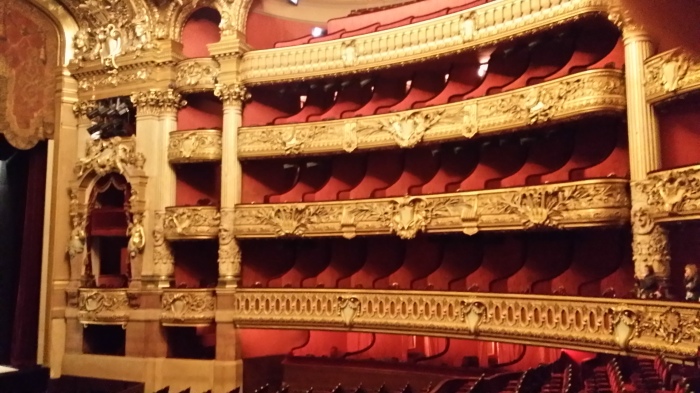
Box seats in the auditorium
Ornate ceilings and columns
Seating inside the auditorium
The day we were leaving Paris, was the first night of the Bolshoi Ballet. My two granddaughters were greatly disappointed at missing out on the opportunity of a lifetime, to see the Bolshoi Ballet at the Paris Opera House.
I don’t like Mondays – a song lingering on the periphery of my memory, and I’m not sure who sung it.
But it’s official, I don’t like Mondays.
I’ve been procrastinating since last Thursday, telling myself I have to get the next part of one of my stories written, but I keep putting it off. I’m not sure why but it always seems like this, and I have to force myself to sit in front of the computer screen, and come up with the goods.
I didn’t do anything on Sunday, and, as a writer, I guess that’s not very good. I’m supposed to be writing a page, or a hundred or thousand words a day, just to keep the juices flowing.
I’m not in the mood. I sit and stare at the computer screen, and nothing is coming. Is this the first sign of writer’s block?
I dig out several articles on how to overcome it and start putting their suggestions into action. No. No. Maybe. No. I don’t think it’s writer’s block.
Perhaps I need some inspiration so I go to my tablet playlist, spend 10 minutes trying to find the headphones that were carelessly discarded on a seat that had a lot of other stuff on it, by one of my grandchildren the last time they were here.
And, yes, the tablet was left in the middle of playing a Minecraft video which has drained the battery. Now I can’t find the charger!
Back at the computer, holding a dead tablet, and a pair of headphones, inspiration is as far away as the mythical light at the end of the tunnel. Today perhaps it will be an oncoming express train.
Perhaps a pen and paper will work.
An idea pops into my head…
Is it possible the passing of a weekend could change the course of your life?
An interesting question, one to ponder as I sat on the floor of a concrete cell, with only the sound of my breathing, and the incessant screams coming from a room at the end of the corridor.
It was my turn next. That was what the grinning ape of a guard said in broken English. He looked like a man who relished his job.
What goes through your mind at a time like this, waiting, waiting for the inevitable? Will I survive, what will they do to me, will it hurt?
The screaming stops abruptly, and a terrible silence falls over the facility.
Then, looking in the direction of where the screams had come from, I hear the clunk of the door latch being opened, and then the slow nerve tingling screech of rusty metal as the door opens slowly.
Oh God, Oh God, Oh God, no.
No writer’s block. But I have to stop watching late night television.
I thought since it is Winter here, we could do with a breath of fresh air and colour that comes with the change if season
Living in Queensland, Winter never quite seems to be as cold as it is in the southern states, which are closer to Antarctica.
We have had a relatively mild winter this year and I didn’t have to light the fire once, though we did use the reverse cycle sir conditioning.
But, from now the temperature will be rising as well as the humidity and will hang around until April next year.
Normally this would mean that a large proportion of the population would be planning their summer holidays, but with Covid restrictions, we may not be allowed to leave our state, or only visit states that have no or few cases like us, and definitely no overseas travel.
For people who like to travel, this is a bitter pill to swallow, and especially so for all those retirees who have worked all their lives, and decided to wait until retirement to see their own country and the world at large.
To me, the adage ‘don’t put off until tomorrow what you can do today’ seemed appropriate and we decided once the kids were old enough, we would travel far and wide while we could. It was a wise decision because neither of us are as agile as we used to be.
Seems we were the lucky ones.
Now we are content to see our own country which no doubt will be able to manage Covid to the extent that life might return to a form if normal sooner rather that later.
And if it doesn’t, then I have enough to amuse myself at home. I’m sure we are all familiar with the expression ‘spring cleaning’. We have decided to clean house, and do some renovating.
And it’s a surprise when cleaning out those cupboards, drawers, and boxes, the stuff you’ve accumulated over many, many years. Last I heard, we were taking about getting a large skip, so I suspect this culling is going to be savage.
But, just to be clear, no books will be thrown out!
Whilst I found this tree house to be interesting, it seems to be far from practical because there was little to keep the wind and rain out, though I suppose, in the book, that might not be such a problem.
Be that as it may, and if it was relatively waterproof, then the furnishings would probably survive, and one had to also assume that much of the furnishings, such as the writing desk below, would have washed up as debris from the shipwreck.
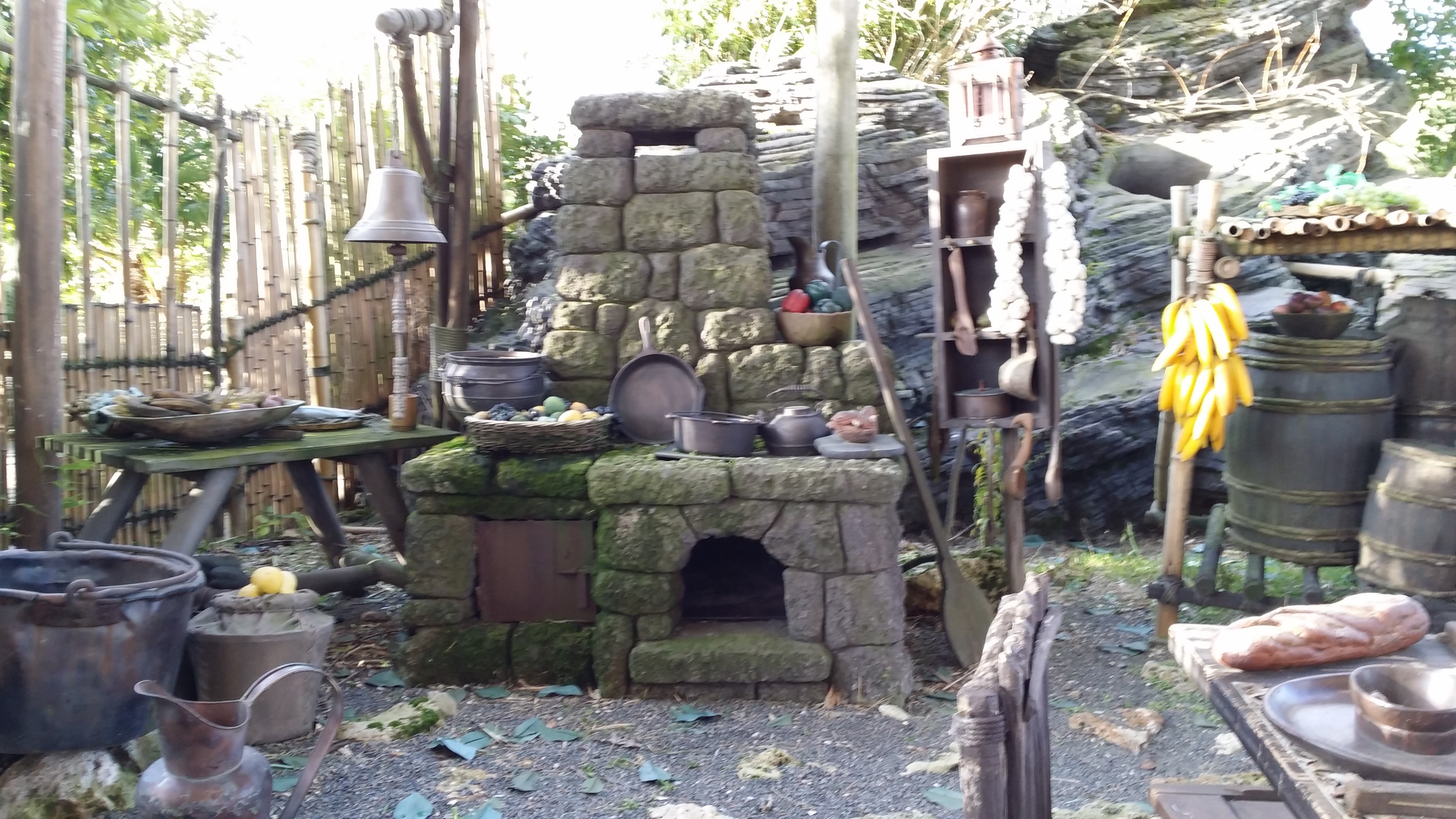
The stove and oven would have to be built by hand, and it is ‘remarkable’ such well-fitting stones were available. It doesn’t look like it’s been used for a while judging by the amount of gree on it. Perhaps it is not in a waterproof area.
The dining table and the shelf in the background have that rough-hewn look about them
A bit of man-made equipment here for drawing water from the stream
And though not made in the era of electricity, there is an opportunity to use the water wheel to do more than it appears to be doing
And tucked away in a corner the all-important study where one can read, or play a little music on the organ. One could say, for the period, one had all the comforts of home.
Overnight the rain began and hasn’t stopped. It is cold, and the heater in the room is not quite adequate for the space it has to heat up. Fortunately, the bed has electric blankets, and it was warm, lying wake listening to the raindrops. That warmth makes it difficult to get out of bed, but this is a holiday, and we have to get motivated.
We have a balcony, and from there the bleakness of the early morning is stark, but at least the rain is light if not a fine mist.
Worse, it alternates between this fine mist and a short downpour, which means the umbrella goes up and down until you give up. Later, the rain is not heavy, and just tolerable.
We head off to the Salamanca markets, happening only on Saturday morning. Unable to walk long distances, we drive, about four minutes from our apartment, but miss a turn, it takes 10, then and 5 to assess the parking situation which, in the end, was the easiest part of this expedition.
The hardest part, walking among the very large crowd of people defying the rain and cold. I can tolerate large crowds but today, they seem to want to stop suddenly, and just stand and talk in the middle of the walkways making it difficult to impossible to maintain any sort of continuity.
There were hundreds of stalls, the most predominant, micro distillers for some odd reason, selling expensive spirits for about $90 a 700ml bottle, which I regard as overly expensive. My son has made Bourbon some years ago and it cost him about $10 for 4.5 liters, so it must be a lucrative sideline, even after you’ve added the excise.
There were a great many food stands, and choices, one of which was a curly potato skewer, which was interesting to say the least. On a meat pie quest, we found a stand that sold pies, but they were warming a new batch, and the waiting line was about 50 or 60 people long.
I went back a half-hour later and they had sold out. They must be one of the highlights of the market to be so in demand, and that people would stand in the cold and rain just to get one.
Having been defeated by aches and pains, the cold and rain, as well as the large crowd, and the absence of anything we wanted, it was fortunate that time had expired on our parking space.
We had contemplated finding a restaurant to have lunch, deciding it was time to have a proper meal rather than a snack, there didn’t seem to be any places open, and the cafes were packed.
This sparked off an odyssey to find a decent restaurant.
After leaving the markets, we find a road that follows the coastline. Aside from houses either side, and at one point a marina and the Wrest Point casino, which was not a place we intended to visit, the further we went, the less chance it seemed of finding what we were looking for.
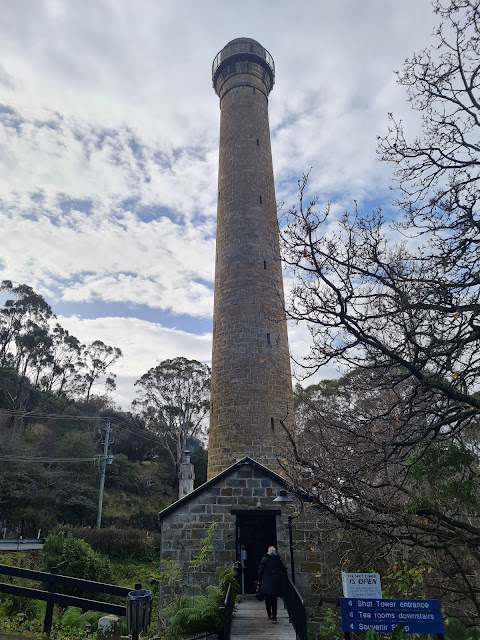
But we did find a tourist attraction, a shot tower, and a museum.
And a tea room that had afternoon tea. Not exactly what we were looking for. That said, and feeling like going any further would not fix the search parameters, I go to Google maps and search for restaurants near us.
There’s a Vietnamese restaurant, 6.1 km back the way we came, and being the best choice out of five or six others, we go.
And here’s the thing, it’s just around the corner from where we’re staying. Go figure.
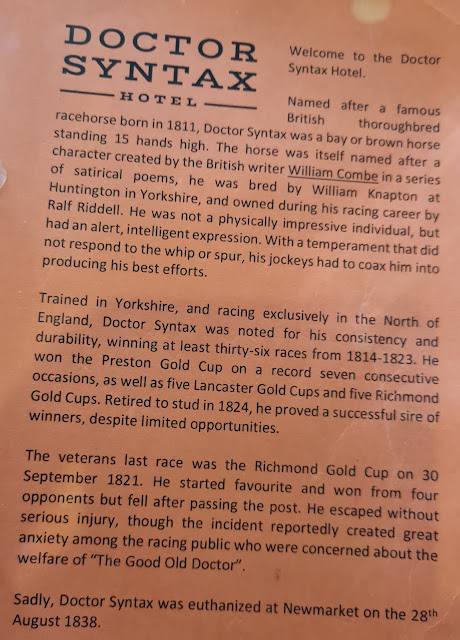
But, there is a twist, we drive past one of the hotels that were recommended to us back at the apartments, so we go there, the Hotel Doctor Syntax. We figure we’re more likely to get the vegetable component there than the other place.
It turns out to be a master stroke, getting steak, pork belly, roast potatoes, gravy, asparagus, and seafood on the side. All having generous servings as one would expect from a hotel bistro.
The food must be great because they were full and had to turn people away. We were very lucky to get the last table but one, and that one didn’t last very long.
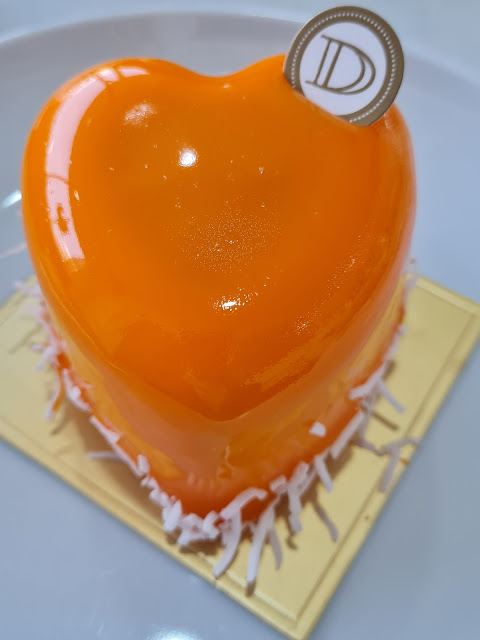
After a long, leisurely lunch surrounded by warmth and atmosphere, we had one more stop. Coffee and cake at Daci and Daci, a café recommended to us.
It was worth the experience, although it took some fortitude to fit it in after such a large lunch. I suspect before we go back for a second visit, yes, it was that good, we will make sure we are less full of lunch first. The cake I had was delicious but very filling. The coffee? Excellent.
Yes, it’s that little or big furry thing that’s also known as man’s best friend, a dog.
But the word has a number of other meanings, like a lot of three-letter words.
It can also mean to follow someone closely.
If you are going to the greyhound racing, you could say you’re going to the dogs, or it could mean something entirely different, like deteriorating in manner and ethics.
Then there are those employers who make their workers work very hard, and therefore could be described as making them work like a dog.
Some might even say that it is a dog of a thing, i.e. of poor quality.
There’s a dogleg, which could aptly name some of those monstrous golf course holes that sometimes present the challenge of going through the wood rather than around it.
Tried that and failed many times!
A dog man used to ride the crane load from the ground to the top, an occupation that would not stand the test of occupational health and safety anymore.
And of course, in a battle to the death, it’s really dog eat dog, isn’t it?
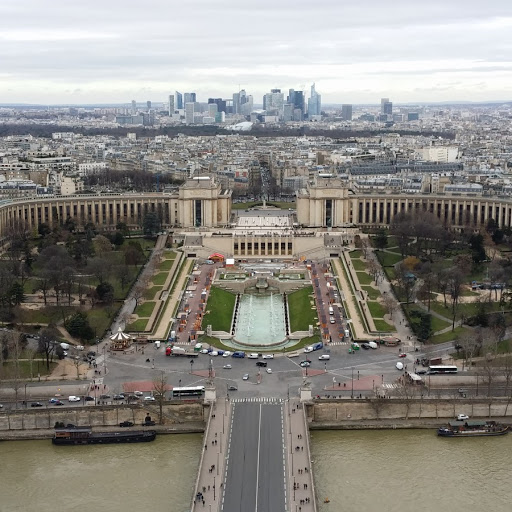
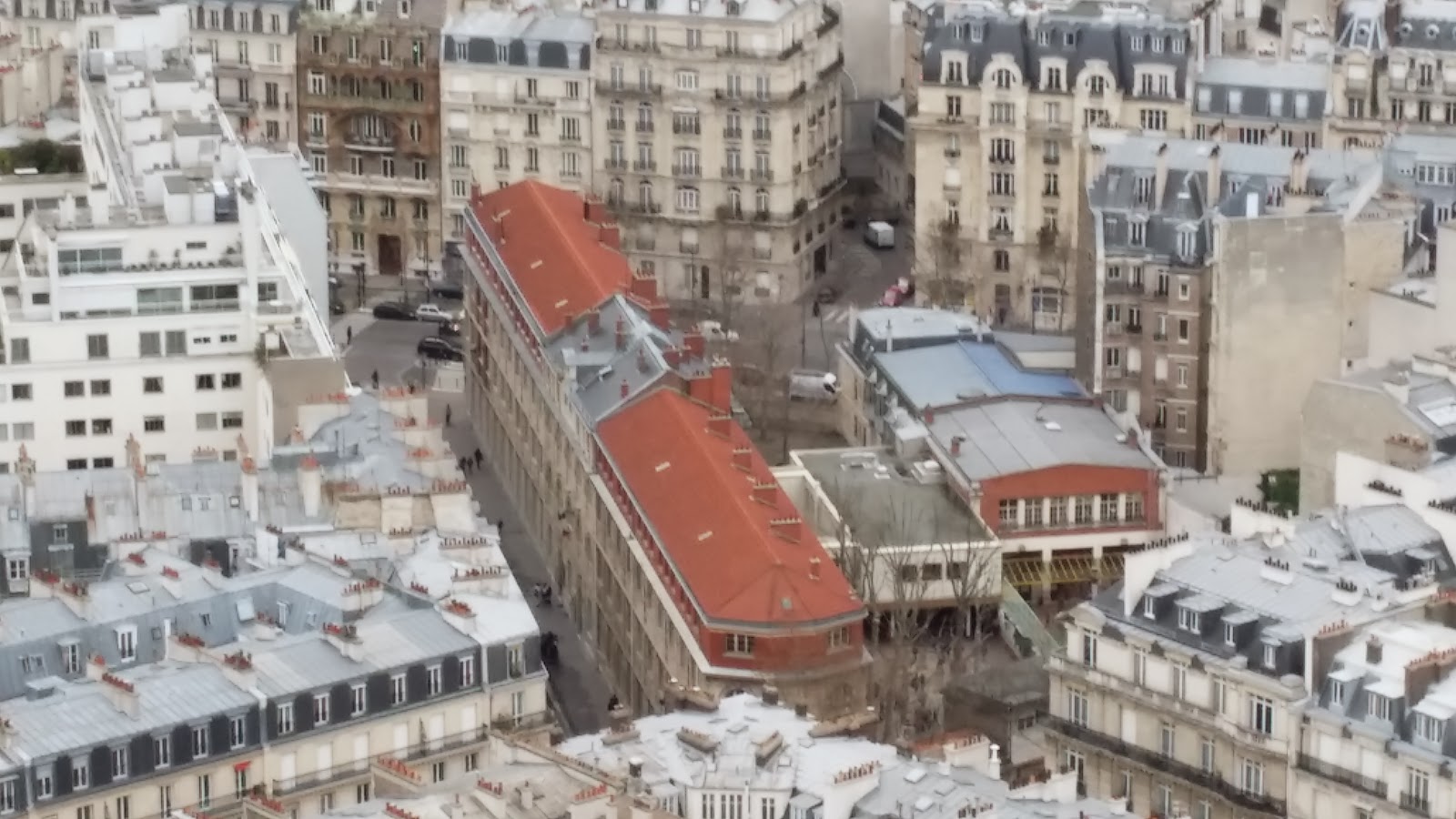
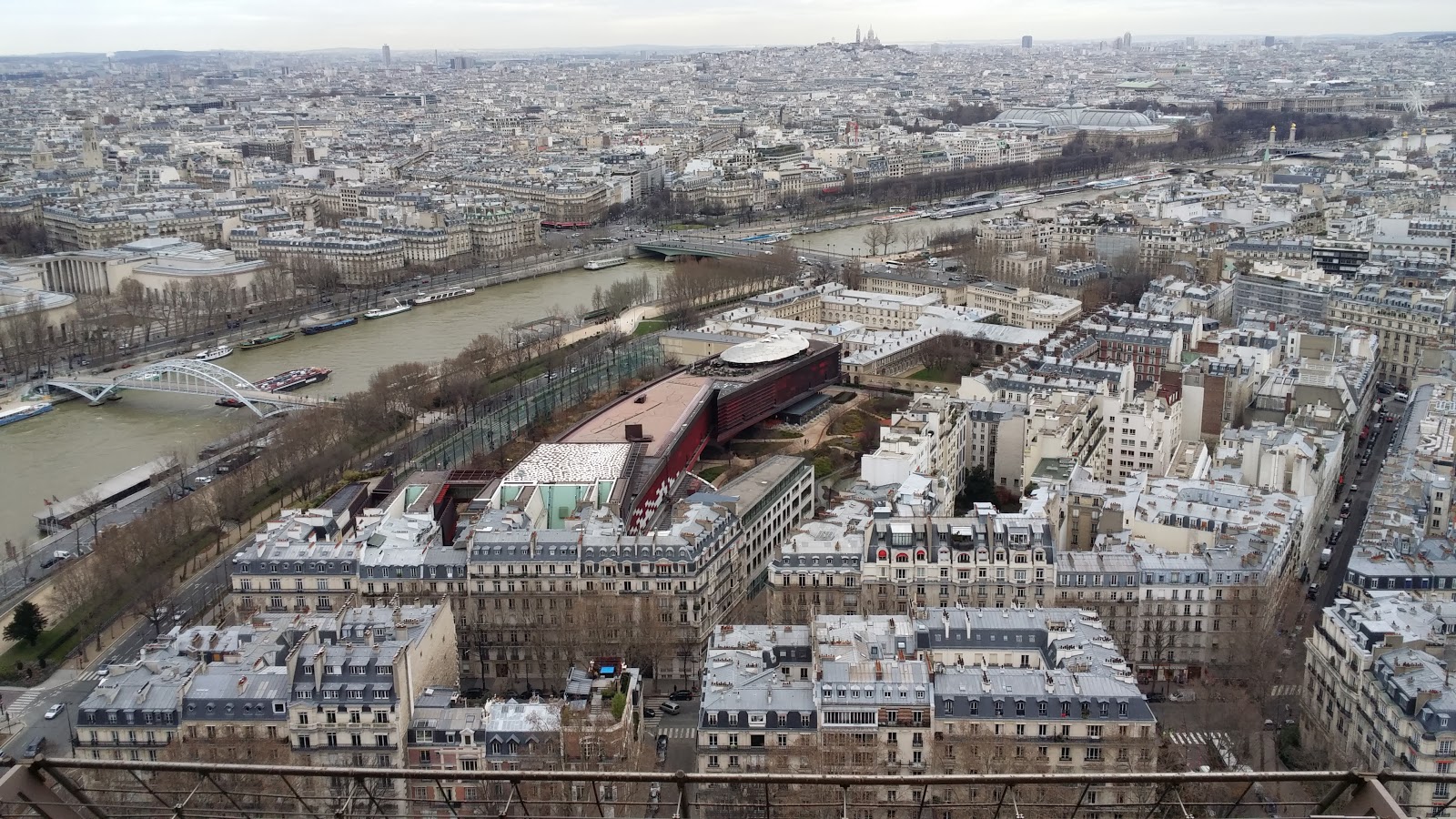
It was a cold but far from a miserable day. We were taking our grandchildren on a tour of the most interesting sites in Paris, the first of which was the Eifel Tower.
We took the overground train, which had double-decker carriages, a first for the girls, to get to the tower.
We took the underground, or Metro, back, and they were fascinated with the fact the train carriages ran on road tires.
Because it was so cold, and windy, the tower was only open to the second level. It was a disappointment to us, but the girls were content to stay on the second level.
There they had the French version of chips.
It was a dull day, but the views were magnificent.
Aside from the fact it is one of those necessary items to walk with, and the fact we can have two or four for most humans and animals, there are a few other uses for the word ‘leg’.
Like…
‘You haven’t got a leg to stand on’, doesn’t necessarily mean you have no legs, but that you are in a precarious position.
“the table had ornate legs’, yes, even non-living objects can have legs, like tables and chairs.
“It was the fifth leg of the race’, meaning it can be a stage of a race.
“He was legless’, meaning that he was too drunk to stand up. Some might think being legless is a badge of honour, but I suspect those people have been drinking a long time and the alcohol has destroyed most of their brain cells.
“leg it!’, meaning get the hell out of here before you’re caught.
Then, finally, ‘he’s on his last legs’, meaning that he’s exhausted, or about to die.
I’m sure there’s more but that’ll do for now.
I have to use my legs to get some exercise, of which the first leg is to the tripod to check if its legs are stable, and the second leg is to come back to the table and replace one of the legs which is broken. Then I’ll leg it to the pub where hopefully I won’t become legless.
I got a call this morning from my brother who has been delving into the places we have lived over the years, including those before we were born.
My recollection, hazy at best, is that my father’s parents lived in Camberwell, a suburb of Melbourne, and the boys, those that survived the war, lived there too. He had three brothers, I think, and a sister. From what I’ve read, his older brother was a sensible chap and the peacemaker between him and his parents.
Later one of his brothers went to Sydney, his sister lived among orchards out Ringwood way, and another, much later, moved to Queensland. We very rarely, if ever, saw them, and the last time I did with most in one place, was after my Grandmother died. I do remember Dora, the site, visiting us once, and being young at the time, she seemed a very forbidding woman.
But, this is about where they lived.
My father, presumably before and immediately after the war, was at home, and my mother at her home in Pakenham. There her father ran a service station and motor mechanic shop and was well known. Their house, at the time, was built over the road, just a short walk from home to work. The place, the first time I saw it, was a mechanic’s dream, with old cars and car parts outside and inside garages, and a woodworking shop with every tool imaginable.
Once the place had very elegant gardens, but by the time I got to stay there, in the 1960s, it was all overgrown, and the house was in disrepair. My mother’s brother lived there with my grandmother, and he was a fearsome, huge man who said little. All I knew about him was that a) he was the one who found his father after he had killed himself, b) he liked fishing and went to a place called Corinella, and c) he was a mechanic like his father.
So, at some point in 1948, my father must have up and left, perhaps after an argument with his parents, and moved to Keiwa House, Bogong, where the Snowy River Hydro-Electric Scheme was being built, as a projectionist, bringing films to the workers in Town Halls.
As I’ve said, my mother stayed in a boarding house for ladies during the week and went home on weekends. I have the first letter that my father wrote to her which references the fact he went calling on her, and she was not there. We’ll never know what she thought, but there’s a second letter, after she wrote back, so a friendship was struck. He told her, almost in minute detail, what he was doing, and presumably, she told him about hers.
A year later, they married.
Now it gets interesting. We both thought that their first house, after getting married was in Carrum. It wasn’t. In the pile of letters were references to the family staying in a rented flat in Camberwell.
Sometime after that, there is a contract for a war service loan in relation to a property in Carrum, which turns out to be the first house they lived in, where my brother, born in 1950) lived, and where I lived after I was born in 1953. I have interesting if vague memories of this house, and of the people who lived behind us because we could climb through the fence into their property. We knew them during, and after living in Carrum.
Now, today, some interesting new facts came to light about the Carrum house. We always assumed we owned it, but it seems that we didn’t. A copy of the title for that property never had the name Heath on it, so did we rent it? More information is required, and we need to dig deeper. Let’s hope there are no skeletons there.
And something else came out of a discussion with the daughter of my mother’s sister, that it was believed my mother’s parents bought them a house in Chelsea, but my father, apparently, refused to live in it and sold it.
OK, I never claimed that my father was the sort that might have accepted charity, so perhaps in a moment of madness, he lost the plot. The question is, what happened to the money?






.jpg)