Writing a book in 365 days – 79

Day 79

What drives your writing

This is not a thing that pushes you every day, but there are times when something or someone will prey on your mind, and it will not be settled until you have ‘vented’.

I have to say that from time to time, the concept of venting has come over me when writing a blog piece, particularly when the folly of politicians and/or corporations is just too much. There has been a moment when a particular person has enraged me, but these people generally find themselves in a caricature.

Then there is that long-term project of the history of my family, and my brother, being the fountain of all knowledge of them, sometimes has a sit down and relates all these stories about them and after which I sit down and write as much about them as I can remember.

This I feel, is distinct from those times when I am writing a novel, apart from the incentive provided by NaNoWriMo where the race is on to get it done in 30 days. Other times, like for instance at the moment I am working on a story that is very fresh and very accessible in my mind, and therefore available to write.

I started about four days ago for a new section and have written nine new chapters in 4 days, and there is still more. While this story wants to be written, I will get it down, albeit in raw form, because it has changed a few times plot-wise since I started.

But that is me, and it is not for everyone. I often find myself writing about five or six stories at once, and yes, sometimes it can be confusing.

Writing a book in 365 days – 79

Day 79

What drives your writing

This is not a thing that pushes you every day, but there are times when something or someone will prey on your mind, and it will not be settled until you have ‘vented’.

I have to say that from time to time, the concept of venting has come over me when writing a blog piece, particularly when the folly of politicians and/or corporations is just too much. There has been a moment when a particular person has enraged me, but these people generally find themselves in a caricature.

Then there is that long-term project of the history of my family, and my brother, being the fountain of all knowledge of them, sometimes has a sit down and relates all these stories about them and after which I sit down and write as much about them as I can remember.

This I feel, is distinct from those times when I am writing a novel, apart from the incentive provided by NaNoWriMo where the race is on to get it done in 30 days. Other times, like for instance at the moment I am working on a story that is very fresh and very accessible in my mind, and therefore available to write.

I started about four days ago for a new section and have written nine new chapters in 4 days, and there is still more. While this story wants to be written, I will get it down, albeit in raw form, because it has changed a few times plot-wise since I started.

But that is me, and it is not for everyone. I often find myself writing about five or six stories at once, and yes, sometimes it can be confusing.

Writing a book in 365 days – 78

Day 78

Do you use a style manual

A “manual of style and usage” is a reference guide that provides rules and guidelines for writing and editing, covering aspects like grammar, punctuation, capitalization, spelling, and formatting, aiming for consistency and clarity.

Style guides, also known as manuals of style and usage, are essential tools for ensuring consistency and clarity in writing and design, particularly across various industries and disciplines. They provide standardized rules for grammar, punctuation, formatting, citation, and other aspects of writing, helping writers and editors maintain a consistent style and tone.

I can think of two: The Elements of Style and Style Manual for Authors, Editors, and Printers (Australia).

I have recently stumbled upon The Chicago Manual of Style, 16th Edition, which is a style guide for American English published since 1906 by the University of Chicago Press

Why are style guides important?

  • Consistency: Style guides ensure that all documents within a specific organization, industry, or publication adhere to a consistent style, making them easier to read and understand.
  • Clarity: By following established rules, style guides help writers avoid ambiguity and ensure that their message is clear and concise.
  • Professionalism: Adhering to a style guide demonstrates professionalism and attention to detail, enhancing the credibility of the written work.
  • Standardization: Style guides provide a framework for writing and design, making it easier for different people to work together on the same project.
  • Facilitating Communication: They help ensure that all content produced by an organization or industry is consistent in its style, tone, and format, making it easier for the audience to understand the message. 

Most of the above has been derived from the internet.

Searching for locations: Hutongs, Beijing, China

What are Hutongs?

In Beijing Hutongs are formed by lines of traditional courtyard residences, called siheyuan.  Neighborhoods were formed by joining many hutongs together. These siheyuan are the traditional residences, usually occupied by a single or extended family, signifying wealth, and prosperity. 

Over 500 of these still exist.Many of these hutongs have been demolished, but recently they have become protected places as a means of preserving some Chinese cultural history.  They were first established in the Yuan Dynasty (1279-1368)Many of these Hutongs had their main buildings and gates built facing south, and lanes connecting them to other hutongs also ran north to south.

Many hutongs, some several hundred years old, in the vicinity of the Bell Tower and Drum Tower and Shichahai Lake are preserved and abound with tourists, many of which tour the quarter in pedicabs.

The optional tour also includes a visit to Shichahai, a historic scenic area consisting of three lakes (Qianhai, meaning Front Sea; Houhai, meaning Back Sea and Xihai, meaning West Sea), surrounding places of historic interest and scenic beauty and remnants of old-style local residences, Hutong and Courtyard.  

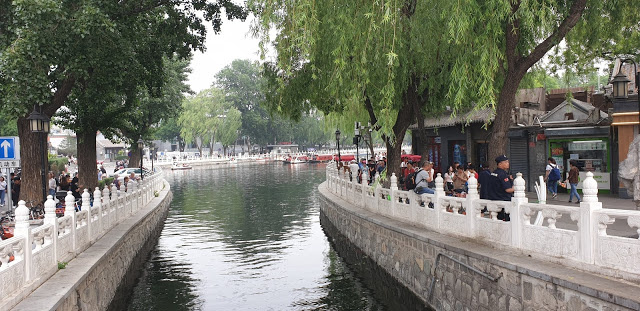
First, we had a short walk through the more modern part of the Hutong area and given some free time for shopping, but we prefer just to meander by the canal.  

There is a lake, and if we had the time, there were boats you could take.

With some time to spare, we take a quick walk down one of the alleyways where on the ground level are small shops, and above, living quarters.

Then we go to the bell and drum towers before walking through some more alleys was to where the rickshaws were waiting.
The Bell tower

And the Drum tower. Both still working today.

The rickshaw ride took us through some more back streets where it was clear renovations were being made so that the area could apply for world heritage listing.  Seeing inside some of the houses shows that they may look dumpy outside but that’s not the case inside.

The rickshaw ride ends outside the house where dinner will be served, and is a not so typical hose but does have all the elements of how the Chinese live, the boy’s room, the girl’s room, the parent’s room, the living area, and the North-south feng shui.

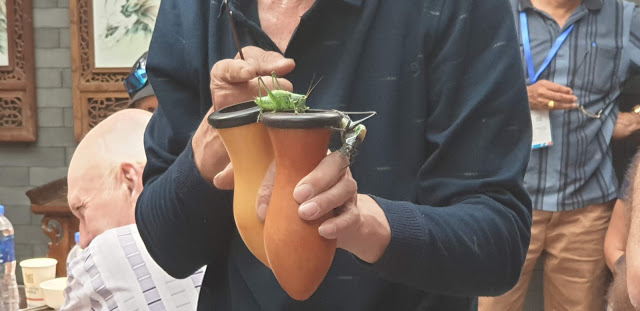
Shortly after we arrive, the cricket man, apparently someone quite famous in Beijing arrives and tells us all about crickets and then grasshoppers, then about cricket racing.  He is animated and clearly enjoys entertaining us westerners.

I’m sorry but the cricket stuff just didn’t interest me.  Or the grasshoppers.

As for dinner, it was finally a treat to eat what the typical Chinese family eats, and everything was delicious, and the endless beer was a nice touch.

And the last surprise, the food was cooked by a man.

Writing a book in 365 days – 78

Day 78

Do you use a style manual

A “manual of style and usage” is a reference guide that provides rules and guidelines for writing and editing, covering aspects like grammar, punctuation, capitalization, spelling, and formatting, aiming for consistency and clarity.

Style guides, also known as manuals of style and usage, are essential tools for ensuring consistency and clarity in writing and design, particularly across various industries and disciplines. They provide standardized rules for grammar, punctuation, formatting, citation, and other aspects of writing, helping writers and editors maintain a consistent style and tone.

I can think of two: The Elements of Style and Style Manual for Authors, Editors, and Printers (Australia).

I have recently stumbled upon The Chicago Manual of Style, 16th Edition, which is a style guide for American English published since 1906 by the University of Chicago Press

Why are style guides important?

  • Consistency: Style guides ensure that all documents within a specific organization, industry, or publication adhere to a consistent style, making them easier to read and understand.
  • Clarity: By following established rules, style guides help writers avoid ambiguity and ensure that their message is clear and concise.
  • Professionalism: Adhering to a style guide demonstrates professionalism and attention to detail, enhancing the credibility of the written work.
  • Standardization: Style guides provide a framework for writing and design, making it easier for different people to work together on the same project.
  • Facilitating Communication: They help ensure that all content produced by an organization or industry is consistent in its style, tone, and format, making it easier for the audience to understand the message. 

Most of the above has been derived from the internet.

Writing a book in 365 days – 77

Day 77

Writing exercise

He had dropped off the kids. filled up the tank and finished his coffee before deciding where he was headed.

Ever wondered what it would be like to just do something out of the ordinary?

At what point did you realise just how much of a rut your life had fallen into?

These questions were foremost in Geoff’s mind as he sat at the bar of the diner on the edge of town, a place where he came every morning after dropping the children off at school.

Every morning except school and gazetted holidays. Without fail. Rain, hail or shine. In sickness and in health.

He sighed. When did it all go kaput? Life, marriage, work, everything.

Sybil refilled the cup with fresh coffee. “Another day, another million dollars?” Geoff had sat in that same chair every school day for the last three years, ordered the same coffee and cake, and said the same opening line and second response.

It was like talking to a robot.

“Yep. As if.”

And sipped the coffee, then said, “Excellent brew, Sybil.”

To which she replied, with the same amond of disdain, “It’s made by a machine, Geoff, it’s always going to be the same.” And moved on to the next customer, Dave, the truck driver. He needed three cups of coffee before the delivery run.

Geoff sipped the coffee, looked over the rim of the cup, and watched Hank, the short order chef throwing a burger, bacon, two eggs and tomato on the grill and watching it sizzle. Someone had ordered an overload of cholesterol.

He looked around the diner and saw the man sitting in a booth in the corner. Driving all night, he’d stopped off to refresh before continuing on his way to somewhere else, anywhere but here. Sybil was refilling his cup with the freshly brewed coffee.

Always keeping busy.

Another car pulled into the car park. A man and a woman. Smiling, happy. Of course, they were not staying here. They were moving on, going to somewhere else. Not in a rut.

Geoff knew life was a matter of choices. He made a bad choice. He thought it was the right choice, but in the end, it destroyed everything. He thought he was doing the right thing and allowed himself to be convinced it was.

In the end, the prosecutor’s case failed on a technicality, and the man he testified against was acquitted and vowed he would kill him. it was how he finished up in Grey’s Well, Montana, in the middle of nowhere, in a dead-end boring job, with a continually complaining wife and two very unhappy children.

All he had to do was get in the car and drive. North, south, east, or west, it didn’t matter. Anywhere but here. Away from the nagging and whinging. Away from the boredom of a job he hated. Even death would be better than this.

All it would take was to get off the stool, turn around, walk out the door, get in the car, and drive.

It was the same thought, every morning, after finishing that second refill.

He slid off the stool.

He turned around.

He started walking towards the door.

One step, two steps.

He stopped. To the left, there was the smiling man. To the right, there was the smiling woman. He had not seen them enter the diner and move towards where he was sitting. how could he, he had his back to the door.

He went to say hello but instead felt the knife penetrate the skin on his right side and suddenly feel very tired, and the two visitors helped him back onto his stool.

By the time he was sitting, they were leaving, and Sybil was coming back.

“Are you alright, Geoff?” She was shaking his shoulder.

He couldn’t hear her, or the sound of the car that had recently arrived speed off.

Geoff slid off the stool and was dead before he hit the floor. That was different.

Sybil screamed.

©  Charles Heath  2025

Searching for locations: Hutongs, Beijing, China

What are Hutongs?

In Beijing Hutongs are formed by lines of traditional courtyard residences, called siheyuan.  Neighborhoods were formed by joining many hutongs together. These siheyuan are the traditional residences, usually occupied by a single or extended family, signifying wealth, and prosperity. 

Over 500 of these still exist.Many of these hutongs have been demolished, but recently they have become protected places as a means of preserving some Chinese cultural history.  They were first established in the Yuan Dynasty (1279-1368)Many of these Hutongs had their main buildings and gates built facing south, and lanes connecting them to other hutongs also ran north to south.

Many hutongs, some several hundred years old, in the vicinity of the Bell Tower and Drum Tower and Shichahai Lake are preserved and abound with tourists, many of which tour the quarter in pedicabs.

The optional tour also includes a visit to Shichahai, a historic scenic area consisting of three lakes (Qianhai, meaning Front Sea; Houhai, meaning Back Sea and Xihai, meaning West Sea), surrounding places of historic interest and scenic beauty and remnants of old-style local residences, Hutong and Courtyard.  

First, we had a short walk through the more modern part of the Hutong area and given some free time for shopping, but we prefer just to meander by the canal.  

There is a lake, and if we had the time, there were boats you could take.

With some time to spare, we take a quick walk down one of the alleyways where on the ground level are small shops, and above, living quarters.

Then we go to the bell and drum towers before walking through some more alleys was to where the rickshaws were waiting.
The Bell tower

And the Drum tower. Both still working today.

The rickshaw ride took us through some more back streets where it was clear renovations were being made so that the area could apply for world heritage listing.  Seeing inside some of the houses shows that they may look dumpy outside but that’s not the case inside.

The rickshaw ride ends outside the house where dinner will be served, and is a not so typical hose but does have all the elements of how the Chinese live, the boy’s room, the girl’s room, the parent’s room, the living area, and the North-south feng shui.

Shortly after we arrive, the cricket man, apparently someone quite famous in Beijing arrives and tells us all about crickets and then grasshoppers, then about cricket racing.  He is animated and clearly enjoys entertaining us westerners.

I’m sorry but the cricket stuff just didn’t interest me.  Or the grasshoppers.

As for dinner, it was finally a treat to eat what the typical Chinese family eats, and everything was delicious, and the endless beer was a nice touch.

And the last surprise, the food was cooked by a man.

Writing a book in 365 days – 77

Day 77

Writing exercise

He had dropped off the kids. filled up the tank and finished his coffee before deciding where he was headed.

Ever wondered what it would be like to just do something out of the ordinary?

At what point did you realise just how much of a rut your life had fallen into?

These questions were foremost in Geoff’s mind as he sat at the bar of the diner on the edge of town, a place where he came every morning after dropping the children off at school.

Every morning except school and gazetted holidays. Without fail. Rain, hail or shine. In sickness and in health.

He sighed. When did it all go kaput? Life, marriage, work, everything.

Sybil refilled the cup with fresh coffee. “Another day, another million dollars?” Geoff had sat in that same chair every school day for the last three years, ordered the same coffee and cake, and said the same opening line and second response.

It was like talking to a robot.

“Yep. As if.”

And sipped the coffee, then said, “Excellent brew, Sybil.”

To which she replied, with the same amond of disdain, “It’s made by a machine, Geoff, it’s always going to be the same.” And moved on to the next customer, Dave, the truck driver. He needed three cups of coffee before the delivery run.

Geoff sipped the coffee, looked over the rim of the cup, and watched Hank, the short order chef throwing a burger, bacon, two eggs and tomato on the grill and watching it sizzle. Someone had ordered an overload of cholesterol.

He looked around the diner and saw the man sitting in a booth in the corner. Driving all night, he’d stopped off to refresh before continuing on his way to somewhere else, anywhere but here. Sybil was refilling his cup with the freshly brewed coffee.

Always keeping busy.

Another car pulled into the car park. A man and a woman. Smiling, happy. Of course, they were not staying here. They were moving on, going to somewhere else. Not in a rut.

Geoff knew life was a matter of choices. He made a bad choice. He thought it was the right choice, but in the end, it destroyed everything. He thought he was doing the right thing and allowed himself to be convinced it was.

In the end, the prosecutor’s case failed on a technicality, and the man he testified against was acquitted and vowed he would kill him. it was how he finished up in Grey’s Well, Montana, in the middle of nowhere, in a dead-end boring job, with a continually complaining wife and two very unhappy children.

All he had to do was get in the car and drive. North, south, east, or west, it didn’t matter. Anywhere but here. Away from the nagging and whinging. Away from the boredom of a job he hated. Even death would be better than this.

All it would take was to get off the stool, turn around, walk out the door, get in the car, and drive.

It was the same thought, every morning, after finishing that second refill.

He slid off the stool.

He turned around.

He started walking towards the door.

One step, two steps.

He stopped. To the left, there was the smiling man. To the right, there was the smiling woman. He had not seen them enter the diner and move towards where he was sitting. how could he, he had his back to the door.

He went to say hello but instead felt the knife penetrate the skin on his right side and suddenly feel very tired, and the two visitors helped him back onto his stool.

By the time he was sitting, they were leaving, and Sybil was coming back.

“Are you alright, Geoff?” She was shaking his shoulder.

He couldn’t hear her, or the sound of the car that had recently arrived speed off.

Geoff slid off the stool and was dead before he hit the floor. That was different.

Sybil screamed.

©  Charles Heath  2025

Writing a book in 365 days – 76

Day 76

Write as you speak

If I did, it would be a jumble of words that might not make any sense. But, for the purposes of this exercise, I shall try…

I’m guessing that the point of this is that conversations have to sound natural, and often the words running around in my head sound fine but it’s when you read them out aloud that’s when it sounds wrong.

More than once, I’ve read out a sentence I’ve written and cringed. “Who talks like that?”

More than once, someone has said to me, “Did you just hear what you said?” and of course, we don’t listen to what we say, especially when we are angry and just spitting out words.

Kids make you see red, and once I did actually hear what I said, and if the neighbours had they would no doubt call the police. My eldest son had made me so angry I think I threatened to kill him in several different ways.

Not long after I read an article that said parents frequently threatened their kids with death or worse, and it was the reason why the just laughed at them. As if we were going to kill them.

But it did strike a chord about the sort of conversations my characters would have, and when I read over some of the stuff that I’d written, how much it sounded like me. In fact, one of my relatives was beta-reading a story I’d written, and she said how much it was like me to the point where she could see me as the character.

IT made me think twice every time I write conversations, and now I deliberately listen to other people and pick up on their speech patterns, words used, and manner of speaking to get a better feel for what is needed.

Of course, I’m not perfect, but it’s fun trying to assume different identities and imagine how they would react in any given situation, and particularly what they might say.

Writing a book in 365 days – 76

Day 76

Write as you speak

If I did, it would be a jumble of words that might not make any sense. But, for the purposes of this exercise, I shall try…

I’m guessing that the point of this is that conversations have to sound natural, and often the words running around in my head sound fine but it’s when you read them out aloud that’s when it sounds wrong.

More than once, I’ve read out a sentence I’ve written and cringed. “Who talks like that?”

More than once, someone has said to me, “Did you just hear what you said?” and of course, we don’t listen to what we say, especially when we are angry and just spitting out words.

Kids make you see red, and once I did actually hear what I said, and if the neighbours had they would no doubt call the police. My eldest son had made me so angry I think I threatened to kill him in several different ways.

Not long after I read an article that said parents frequently threatened their kids with death or worse, and it was the reason why the just laughed at them. As if we were going to kill them.

But it did strike a chord about the sort of conversations my characters would have, and when I read over some of the stuff that I’d written, how much it sounded like me. In fact, one of my relatives was beta-reading a story I’d written, and she said how much it was like me to the point where she could see me as the character.

IT made me think twice every time I write conversations, and now I deliberately listen to other people and pick up on their speech patterns, words used, and manner of speaking to get a better feel for what is needed.

Of course, I’m not perfect, but it’s fun trying to assume different identities and imagine how they would react in any given situation, and particularly what they might say.