50 photographs, 50 stories, of which there is one of the 50 below.
They all start with –
A picture paints … well, as many words as you like. For instance:
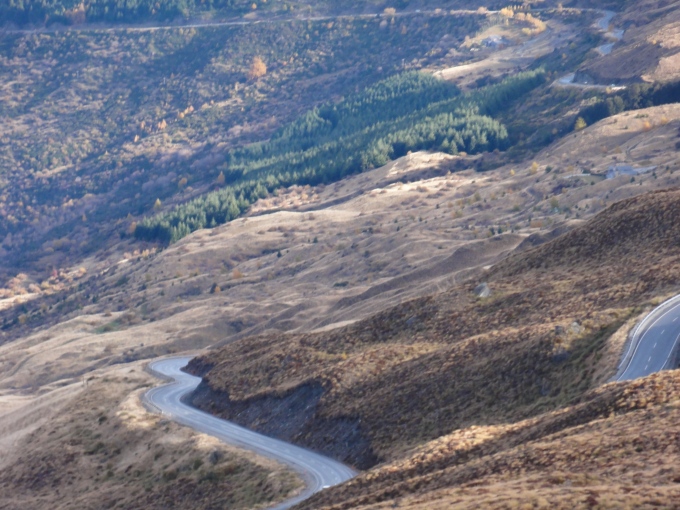
And the story:
It was once said that a desperate man has everything to lose.
The man I was chasing was desperate, but I, on the other hand, was more desperate to catch him.
He’d left a trail of dead people from one end of the island to the other.
The team had put in a lot of effort to locate him, and now his capture was imminent. We were following the car he was in, from a discrete distance, and, at the appropriate time, we would catch up, pull him over, and make the arrest.
There was nowhere for him to go.
The road led to a dead-end, and the only way off the mountain was back down the road were now on. Which was why I was somewhat surprised when we discovered where he was.
Where was he going?
“Damn,” I heard Alan mutter. He was driving, being careful not to get too close, but not far enough away to lose sight of him.
“What?”
“I think he’s made us.”
“How?”
“Dumb bad luck, I’m guessing. Or he expected we’d follow him up the mountain. He’s just sped up.”
“How far away?”
“A half-mile. We should see him higher up when we turn the next corner.”
It took an eternity to get there, and when we did, Alan was right, only he was further on than we thought.”
“Step on it. Let’s catch him up before he gets to the top.”
Easy to say, not so easy to do. The road was treacherous, and in places just gravel, and there were no guard rails to stop a three thousand footfall down the mountainside.
Good thing then I had the foresight to have three agents on the hill for just such a scenario.
Ten minutes later, we were in sight of the car, still moving quickly, but we were going slightly faster. We’d catch up just short of the summit car park.
Or so we thought.
Coming quickly around another corner we almost slammed into the car we’d been chasing.
“What the hell…” Aland muttered.
I was out of the car, and over to see if he was in it, but I knew that it was only a slender possibility. The car was empty, and no indication where he went.
Certainly not up the road. It was relatively straightforward for the next mile, at which we would have reached the summit. Up the mountainside from here, or down.
I looked up. Nothing.
Alan yelled out, “He’s not going down, not that I can see, but if he did, there’s hardly a foothold and that’s a long fall.”
Then where did he go?
Then a man looking very much like our quarry came out from behind a rock embedded just a short distance up the hill.
“Sorry,” he said quite calmly. “Had to go if you know what I mean.”
I’d lost him.
It was as simple as that.
I had been led a merry chase up the hill, and all the time he was getting away in a different direction.
I’d fallen for the oldest trick in the book, letting my desperation blind me to the disguise that anyone else would see through in an instant.
It was a lonely sight, looking down that road, knowing that I had to go all that way down again, only this time, without having to throw caution to the wind.
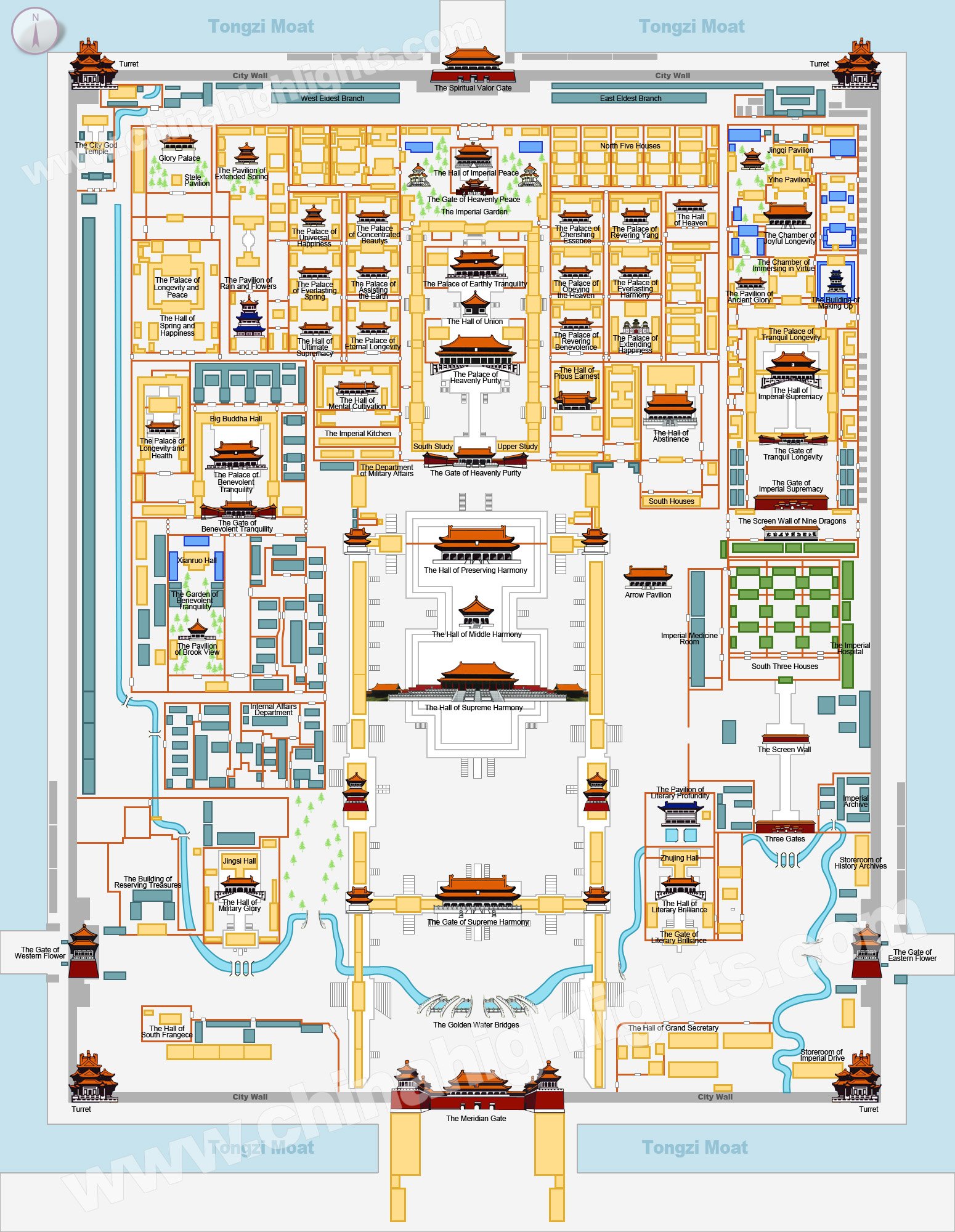
Now we’re walking to the Forbidden City, and it seems like we’re walking for miles and we’re practically exhausted before we get started on the main tour. I’m not sure if we received a map of the city, but one is certainly needed so that you can navigate the many features, buildings, and walkways.
There are tour groups everywhere in the large courtyard outside the gate, most likely getting a lecture on the last of the Chinese emperors about that time Sun Yat-Sen proclaimed the new China around 1912. We were no exception, and it was an interesting way to spend the time waiting to get in. It was a tale of intrigue, interwoven with a 3-year-old emperor, and a scheming concubine who becomes the Emperor’s favorite, enough to bear him a son and successor.
Bribery and corruption at its best.
But its history runs something like this:
The Forbidden City is was once the imperial and state residence of the Emperor of China, as well as the center of government, from the Ming Dynasty to the Qing Dynasty, or 1420 to 1924.
It was built from 1406 to 1420 when the Yongle Emperor moved the capital from Nanking to Beijing and consists of about 980 buildings, and 8,886 bays of rooms (not the 9,999 as prescribed in myth) and covers 180 acres. Over the 14 years, a million workers used whole logs of wood from the jungles of southwestern China, marble from quarries near Beijing, specially made golden bricks from Suzhou
Since 1925 it has been a museum and is the largest number of preserved wooden structures in the world.
The city is surrounded by a wall 7.9 meters high, and a moat that is 6 meters deep and 52 meters wide. A tower sits at each of the four corners. Each side has a gate, the north is called the Gate of Divine Might, the south is called the Meridian gate. East and west are called East Glorious Gate and West Glorious Gate respectively.
But, back in the courtyard, we are ready to go in and follow the tour guide who has switched from her amplified microphone to a whisper device we all wear in our ears. She talks and we listen.
We all make it through and regroup on the other side. This is where the fun begins because we are about to meet a large percentage of the 80,000, they let for the day.
It seems to me they have all arrived at the same time, although by the time we get to the entrance gate, it is very well organized, bags are scanned, people are scanned, and you’re in.
After crossing one of the seven Golden Water bridges, you begin to get some idea of the size and scope of the City, and in the distance, the first of the buildings, The Gate of Supreme Harmony. On a hot day, that could be a long and thirsty walk.
From there it is one pagoda after another with buildings that surround the edge of the whole Forbidden City, as does the moat.
By the time we get to the second courtyard, it was time to have ice cream as a refresher. Others head up to another exhibit, and it’s just too many stairs for us.
After this, it’s a walkthrough another courtyard, heading up and down some more stairs, we go and see the museum, with priceless relics from past emperors.
There are areas like the outer courtyard, the inner courtyard, yet another courtyard, and the gardens where the concubines walked and spent their leisure time. It is not far from the emperor’s wives living quarters, though there’s precious little left of the furniture, other than a settee and two rather priceless so-called Ming dynasty vases.
We get into the bad habit of calling all of the vases Ming dynasties. Above is one of the inner courtyards there were living quarters, and that tree is over 300 years old.
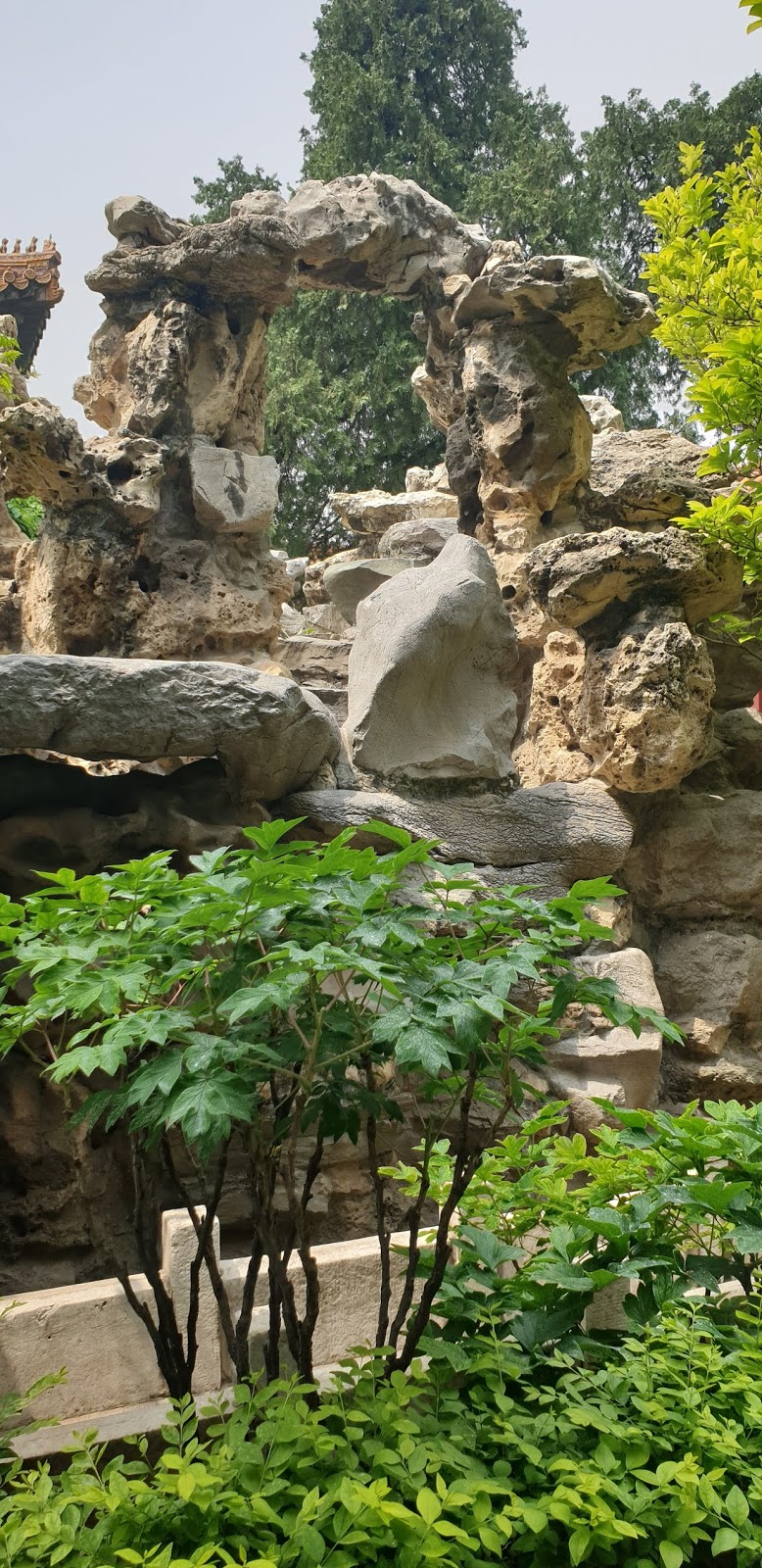
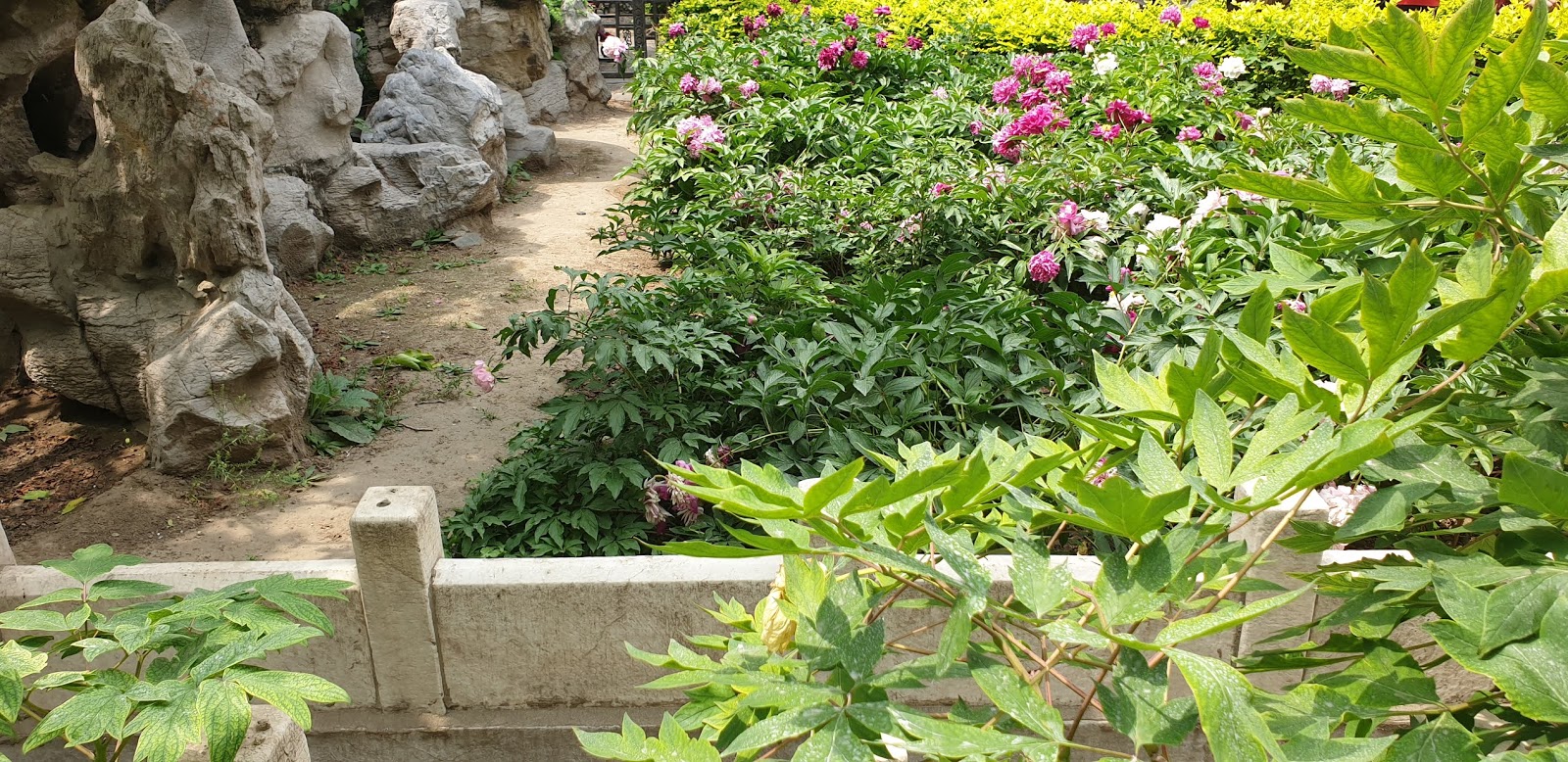
Out through some more alleyways and through an entrance that led to the area where the concubines lived, very spacious, bright, and filled with trees, plants, and walkways through rocky outcrops.
The whole area was made up of living quarters and waterways, rocks and paths, all very neatly set out, and it looked to be a very good place to live.
This is an example of the living quarters, overlooking the gardens
And there were several pagodas
From there its a quick exit out the northern entrance, and another longish walk to our bus, which arrives at the meeting point shortly after we do.
That done, the Beijing tour guide has completed her section of our China experience, and we’re ready to move onto the next.
In the distance he could hear the dinner bell ringing and roused himself. Feeling the dampness of the pillow, and fearing the ravages of pent up emotion, he considered not going down but thought it best not to upset Mrs. Mac, especially after he said he would be dining.
In the event, he wished he had reneged, especially when he discovered he was not the only guest staying at the hotel.
Whilst he’d been reminiscing, another guest, a young lady, had arrived. He’d heard her and Mrs. Mac coming up the stairs, and then shown to a room on the same floor, perhaps at the other end of the passage.
Henry caught his first glimpse of her when she appeared at the door to the dining room, waiting for Mrs. Mac to show her to a table.
She was about mid-twenties, slim, long brown hair, and the grace and elegance of a woman associated with countless fashion magazines. She was, he thought, stunningly beautiful with not a hair out of place, and make-up flawlessly applied. Her clothes were black, simple, elegant, and expensive, the sort an heiress or wife of a millionaire might condescend to wear to a lesser occasion than dinner.
Then there was her expression; cold, forbidding, almost frightening in its intensity. And her eyes, piercingly blue and yet laced with pain. Dracula’s daughter was his immediate description of her.
All in all, he considered, the only thing they had in common was, like him, she seemed totally out of place.
Mrs. Mac came out of the kitchen, wiping her hands on her apron. She was, she informed him earlier, chef, waitress, hotelier, barmaid, and cleaner all rolled into one. Coming up to the new arrival she said, “Ah, Miss Andrews, I’m glad you decided to have dinner. Would you like to sit with Mr. Henshaw, or would you like to have a table of your own?”
Henry could feel her icy stare as she sized up his appeal as a dining companion, making the hair on the back on his neck stand up. He purposely didn’t look back. In his estimation, his appeal rating was minus six. Out of a thousand!
“If Mr. Henshaw doesn’t mind….” She looked at him, leaving the query in mid-air.
He didn’t mind and said so. Perhaps he’d underestimated his rating.
“Good.” Mrs. Mac promptly ushered her over. Henry stood, made sure she was seated properly and sat.
“Thank you. You are most kind.” The way she said it suggested snobbish overtones.
“I try to be when I can.” It was supposed to nullify her sarcastic tone but made him sound a little silly, and when she gave him another of her icy glares, he regretted it.
Mrs. Mac quickly intervened, asking, “Would you care for the soup?”
They did, and, after writing the order on her pad, she gave them each a look, imperceptibly shook her head, and returned to the kitchen.
Before Michelle spoke to him again, she had another quick look at him, trying to fathom who and what he might be. There was something about him.
His eyes, they mirrored the same sadness she felt, and, yes, there was something else, that it looked like he had been crying? There was a tinge of redness.
Perhaps, she thought, he was here for the same reason she was.
No. That wasn’t possible.
Then she said, without thinking, “Do you have any particular reason for coming here?” Seconds later she realized she’s spoken it out loud, had hadn’t meant to actually ask, it just came out.
It took him by surprise, obviously not the first question he was expecting her to ask of him.
“No, other than it is as far from civilization, and home, as I could get.”
At least we agree on that, she thought.
It was obvious he was running away from something as well.
Given the isolation of the village and lack of geographic hospitality, it was, from her point of view, ideal. All she had to do was avoid him, and that wouldn’t be difficult.
After getting through this evening first.
“Yes,” she agreed. “It is that.”
A few seconds passed, and she thought she could feel his eyes on her and wasn’t going to look up.
Until he asked, “What’s your reason?”
Slight abrupt in manner, perhaps as a result of her question, and the manner in which she asked it.
She looked up. “Rest. And have some time to myself.”
She hoped he would notice the emphasis she had placed on the word ‘herself’ and take due note. No doubt, she thought, she had completely different ideas of what constituted a holiday than he, not that she had actually said she was here for a holiday.
Mrs. Mac arrived at a fortuitous moment to save them from further conversation.
Over the entree, she wondered if she had made a mistake coming to the hotel. Of course, there had been no possible way she could know than anyone else might have booked the same hotel, but realized it was foolish to think she might end up in it by herself.
Was that what she was expecting?
Not a mistake then, but an unfortunate set of circumstances, which could be overcome by being sensible.
Yet, there he was, and it made her curious, not that he was a man, by himself, in the middle of nowhere, hiding like she was, but for very different reasons.
On discreet observance whilst they ate, she gained the impression his air of light-heartedness was forced and he had no sense of humor.
This feeling was engendered by his looks, unruly dark hair, and permanent frown. And then there was his abysmal taste in clothes on a tall, lanky frame. They were quality but totally unsuited to the wearer.
Rebellion was written all over him.
The only other thought crossing her mind, and rather incongruously, was he could do with a decent feed. In that respect, she knew now from the mountain of food in front of her, he had come to the right place.
“Mr. Henshaw?”
He looked up. “Henshaw is too formal. Henry sounds much better,” he said, with a slight hint of gruffness.
“Then my name is Michelle.”
Mrs. Mac came in to take their order for the only main course, gather up the entree dishes, then return to the kitchen.
“Staying long?” she asked.
“About three weeks. Yourself?”
“About the same.”
The conversation dried up.
Neither looked at the other, rather at the walls, out the window, towards the kitchen, anywhere. It was, she thought, almost unbearably awkward.
Mrs. Mac returned with a large tray with dishes on it, setting it down on the table next to theirs.
“Not as good as the usual cook,” she said, serving up the dinner expertly, “but it comes a good second, even if I do say so myself. Care for some wine?”
Henry looked at Michelle. “What do you think?”
“I’m used to my dining companions making the decision.”
You would, he thought. He couldn’t help but notice the cutting edge of her tone. Then, to Mrs. Mac, he named a particular White Burgundy he liked and she bustled off.
“I hope you like it,” he said, acknowledging her previous comment with a smile that had nothing to do with humor.
“Yes, so do I.”
Both made a start on the main course, a concoction of chicken and vegetables that were delicious, Henry thought, when compared to the bland food he received at home and sometimes aboard my ship.
It was five minutes before Mrs. Mac returned with the bottle and two glasses. After opening it and pouring the drinks, she left them alone again.
Henry resumed the conversation. “How did you arrive? I came by train.”
“By car.”
“Did you drive yourself?”
And he thought, a few seconds later, that was a silly question, otherwise she would not be alone, and certainly not sitting at this table. With him.
“After a fashion.”
He could see that she was formulating a retort in her mind, then changed it, instead, smiling for the first time, and it served to lighten the atmosphere.
And in doing so, it showed him she had another more pleasant side despite the fact she was trying not to look happy.
“My father reckons I’m just another of ‘those’ women drivers,” she added.
“Whatever for?”
“The first and only time he came with me I had an accident. I ran up the back of another car. Of course, it didn’t matter to him the other driver was driving like a startled rabbit.”
“It doesn’t help,” he agreed.
“Do you drive?”
“Mostly people up the wall.” His attempt at humor failed. “Actually,” he added quickly, “I’ve got a very old Morris that manages to get me where I’m going.”
The apple pie and cream for dessert came and went and the rapport between them improved as the wine disappeared and the coffee came. Both had found, after getting to know each other better, their first impressions were not necessarily correct.
“Enjoy the food?” Mrs. Mac asked, suddenly reappearing.
“Beautifully cooked and delicious to eat,” Michelle said, and Henry endorsed her remarks.
“Ah, it does my heart good to hear such genuine compliments,” she said, smiling. She collected the last of the dishes and disappeared yet again.
“What do you do for a living,” Michelle asked in an off-hand manner.
He had a feeling she was not particularly interested and it was just making conversation.
“I’m a purser.”
“A what?”
“A purser. I work on a ship doing the paperwork, that sort of thing.”
“I see.”
“And you?”
“I was a model.”
“Was?”
“Until I had an accident, a rather bad one.”
“Oh, I’m sorry.”
So that explained the odd feeling he had about her.
As the evening had worn on, he began to think there might be something wrong, seriously wrong with her because she didn’t look too well. Even the carefully applied makeup, from close up, didn’t hide the very pale, and tired look, or the sunken, dark ringed eyes.
“I try not to think about it, but it doesn’t necessarily work. I’ve come here for peace and quiet, away from doctors and parents.”
“Then you will not have to worry about me annoying you. I’m one of those fall-asleep-reading-a-book types.”
Perhaps it would be like ships passing in the night and then smiled to himself about the analogy.
Dinner now over, they separated.
Henry went back to the lounge to read a few pages of his book before going to bed, and Michelle went up to her room to retire for the night.
But try as he might, he was unable to read, his mind dwelling on the unusual, yet the compellingly mysterious person he would be sharing the hotel with.
Overlaying that original blurred image of her standing in the doorway was another of her haunting expressions that had, he finally conceded, taken his breath away, and a look that had sent more than one tingle down his spine.
She may not have thought much of him, but she had certainly made an impression on him.
John Pennington’s life is in the doldrums. Looking for new opportunities, prevaricating about getting married, the only joy on the horizon was an upcoming visit to his grandmother in Sorrento, Italy.
Suddenly he is left at the check-in counter with a message on his phone telling him the marriage is off, and the relationship is over.
If only he hadn’t promised a friend he would do a favor for him in Rome.
At the first stop, Geneva, he has a chance encounter with Zoe, an intriguing woman who captures his imagination from the moment she boards the Savoire, and his life ventures into uncharted territory in more ways than one.
That ‘favor’ for his friend suddenly becomes a life-changing event, and when Zoe, the woman who he knows is too good to be true, reappears, danger and death follow.
Shot at, lied to, seduced, and drawn into a world where nothing is what it seems, John is dragged into an adrenaline-charged undertaking, where he may have been wiser to stay with the ‘devil you know’ rather than opt for the ‘devil you don’t’.
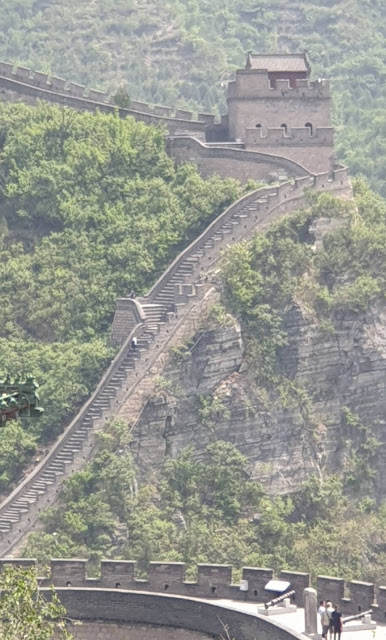
This is in a very scenic area and on the first impression; it is absolutely stunning in concept and in viewing.
As for the idea of walking on it, well, that first view of the mountain climb when getting off the bus, my first question was where the elevator is? Sorry, there is none. It’s walk on up or stay down the bottom.
Walk it is. As far as you feel you are able. There are quite a few who don’t make it to the top. I didn’t. I only made it to the point where the steps narrowed.
But as for the logistics, there’s the gradual incline to the starting point, and what will be the end meeting place. From there, it’s a few steps up to the guard station no 7, and a few more to get up to the start of the main climb. The top of the wall is guard station no 12.
Ok, those first few steps are a good indication of what it’s was going to be like and it’s more the awkwardness of the uneven heights of the steps that’s the killer, some as high as about 15 inches. This photo paints an illusion, that it’s easy. It’s not.
If you make it to the first stage, then it augers well you will get about 100 steps before you both start feeling it in your legs, particularly the knees, and then suffering from the height if you have a problem with heights as the air is thinner. And if you have a thing with heights, never look down.
This was from where we stopped, about a third of the way up. The one below, from almost at the bottom. One we’re looking almost down on the buildings, the other, on the same level.
It requires rest before you come down, and that’s when you start to feel it in the knees, our tour guide called it jelly legs, but it’s more in the knees down. Descending should be slow, and it can be more difficult negotiating the odd height steps, and particularly those high ones. You definitely need to hang onto the rail, even try going backward.
And, no, that rail hasn’t been there as long as the wall.
While you are waiting for the guide to return to the meeting place at the appointed time, there should be time to have some jasmine tea. Highly refreshing after the climb.
“Sunday in New York” is ultimately a story about trust, and what happens when a marriage is stretched to its limits.
When Harry Steele attends a lunch with his manager, Barclay, to discuss a promotion that any junior executive would accept in a heartbeat, it is the fact his wife, Alison, who previously professed her reservations about Barclay, also agreed to attend, that casts a small element of doubt in his mind.
From that moment, his life, in the company, in deciding what to do, his marriage, his very life, spirals out of control.
There is no one big factor that can prove Harry’s worst fears, that his marriage is over, just a number of small, interconnecting events, when piled on top of each other, points to a cataclysmic end to everything he had believed in.
Trust is lost firstly in his best friend and mentor, Andy, who only hints of impending disaster, Sasha, a woman whom he saved, and who appears to have motives of her own, and then in his wife, Alison, as he discovered piece by piece damning evidence she is about to leave him for another man.
Can we trust what we see with our eyes or trust what we hear?
Haven’t we all jumped to conclusions at least once in our lives?
Can Alison, a woman whose self-belief and confidence is about to be put to the ultimate test, find a way of proving their relationship is as strong as it has ever been?
It was in darkness. I was sure I had left several lights on, especially over the door so I could see to unlock it.
I looked up and saw the globe was broken.
Instant alert.
I went to the first hiding spot for the gun, and it wasn’t there. I went to the backup and it wasn’t there either. Someone had found my carefully hidden stash of weapons and removed them.
Who?
There were four hiding spots and all were empty. Someone had removed the weapons. That could only mean one possibility.
I had a visitor, not necessarily here for a social call.
But, of course, being the well-trained agent I’d once been and not one to be caught unawares, I crossed over to my neighbor and relieved him of a weapon that, if found, would require a lot of explaining.
Suitably armed, it was time to return the surprise.
There were three entrances to the villa, the front door, the back door, and a rather strange escape hatch. One of the more interesting attractions of the villa I’d rented was its heritage. It was built in the late 1700s, by a man who was, by all accounts, a thief. It had a hidden underground room which had been in the past a vault but was now a wine cellar, and it had an escape hatch by which the man could come and go undetected, particularly if there was a mob outside the door baying for his blood.
It now gave me the means to enter the villa without my visitors being alerted, unless, of course, they were near the vicinity of the doorway inside the villa, but that possibility was unlikely. It was not where anyone could anticipate or expect a doorway to be.
The secret entrance was at the rear of the villa behind a large copse, two camouflaged wooden doors built into the ground. I move aside some of the branches that covered them and lifted one side. After I’d discovered the doors and rusty hinges, I’d oiled and cleaned them, and cleared the passageway of cobwebs and fallen rocks. It had a mildew smell, but nothing would get rid of that. I’d left torches at either end so I could see.
I closed the door after me, and went quietly down the steps, enveloped in darkness till I switched on the torch. I traversed the short passage which turned ninety degrees about halfway to the door at the other end. I carried the key to this door on the keyring, found it and opened the door. It too had been oiled and swung open soundlessly.
I stepped in the darkness and closed the door.
I was on the lower level under the kitchen, now the wine cellar, the ‘door’ doubling as a set of shelves which had very little on them, less to fall and alert anyone in the villa.
Silence, an eerie silence.
I took the steps up to the kitchen, stopping when my head was level with the floor, checking to see if anyone was waiting. There wasn’t. It seemed to me to be an unlikely spot for an ambush.
I’d already considered the possibility of someone coming after me, especially because it had been Bespalov I’d killed, and I was sure he had friends, all equally as mad as he was. Equally, I’d also considered it nigh on impossible for anyone to find out it was me who killed him because the only people who knew that were Prendergast, Alisha, a few others in the Department, and Susan.
That raised the question of who told them where I was.
If I was the man I used to be, my first suspect would be Susan. The departure this morning, and now this was too coincidental. But I was not that man.
Or was I?
I reached the start of the passageway that led from the kitchen to the front door and peered into the semi-darkness. My eyes had got used to the dark, and it was no longer an inky void. Fragments of light leaked in around the door from outside and through the edge of the window curtains where they didn’t fit properly. A bone of contention upstairs in the morning, when first light shone and invariably woke me up hours before I wanted to.
Still nothing.
I took a moment to consider how I would approach the visitor’s job. I would get a plan of the villa in my head, all entrances, where a target could be led to or attacked where there would be no escape.
Coming in the front door. If I was not expecting anything, I’d just open the door and walk-in. One shot would be all that was required.
Contract complete.
I sidled quietly up the passage staying close to the wall, edging closer to the front door. There was an alcove where the shooter could be waiting. It was an ideal spot to wait.
Crunch.
I stepped on some nutshells.
Not my nutshells.
I felt it before I heard it. The bullet with my name on it.
And how the shooter missed, from point-blank range, and hit me in the arm, I had no idea. I fired off two shots before a second shot from the shooter went wide and hit the door with a loud thwack.
I saw a red dot wavering as it honed in on me and I fell to the floor, stretching out, looking up where the origin of the light was coming and pulled the trigger three times, evenly spaced, and a second later I heard the sound of a body falling down the stairs and stopping at the bottom, not very far from me.
Two assassins.
I’d not expected that.
The assassin by the door was dead, a lucky shot on my part. The second was still breathing.
I checked the body for any weapons and found a second gun and two knives. Armed to the teeth!
I pulled off the balaclava; a man, early thirties, definitely Italian. I was expecting a Russian.
I slapped his face, waking him up. Blood was leaking from several slashes on his face when his head had hit the stairs on the way down. The awkward angle of his arms and legs told me there were broken bones, probably a lot worse internally. He was not long for this earth.
“Who employed you?”
He looked at me with dead eyes, a pursed mouth, perhaps a smile. “Not today my friend. You have made a very bad enemy.” He coughed and blood poured out of his mouth. “There will be more …”
Friends of Bespalov, no doubt.
I would have to leave. Two unexplainable bodies, I’d have a hard time explaining my way out of this mess. I dragged the two bodies into the lounge, clearing the passageway just in case someone had heard anything.
Just in case anyone was outside at the time, I sat in the dark, at the foot of the stairs, and tried to breathe normally. I was trying not to connect dots that led back to Susan, but the coincidence was worrying me.
A half-hour passed and I hadn’t moved. Deep in thought, I’d forgotten about being shot, unaware that blood was running down my arm and dripping onto the floor.
Until I heard a knock on my front door.
Two thoughts, it was either the police, alerted by the neighbors, or it was the second wave, though why would they be knocking on the door?
I stood, and immediately felt a stabbing pain in my arm. I took out a handkerchief and turned it into a makeshift tourniquet, then wrapped a kitchen towel around the wound.
If it was the police, this was going to be a difficult situation. Holding the gun behind my back, I opened the door a fraction and looked out.
No police, just Maria. I hoped she was not part of the next ‘wave’.
“You left your phone behind on the table. I thought you might be looking for it.” She held it out in front of her.
When I didn’t open the door any further, she looked at me quizzically, and then asked, “Is anything wrong?”
I was going to thank her for returning the phone, but I heard her breathe in sharply, and add, breathlessly, “You’re bleeding.”
I looked at my arm and realized it was visible through the door, and not only that, the towel was soaked in blood.
“You need to go away now.”
Should I tell her the truth? It was probably too late, and if she was any sort of law-abiding citizen she would go straight to the police.
She showed no signs of leaving, just an unnerving curiosity. “What happened?”
I ran through several explanations, but none seemed plausible. I went with the truth. “My past caught up with me.”
“You need someone to fix that before you pass out from blood loss. It doesn’t look good.”
“I can fix it. You need to leave. It is not safe to be here with me.”
The pain in my arm was not getting any better, and the blood was starting to run down my arm again as the tourniquet loosened. She was right, I needed it fixed sooner rather than later.
I opened the door and let her in. It was a mistake, a huge mistake, and I would have to deal with the consequences. Once inside, she turned on the light and saw the pool of blood just inside the door and the trail leading to the lounge. She followed the trail and turned into the lounge, turned on the light, and no doubt saw the two dead men.
I expected her to scream. She didn’t.
She gave me a good hard look, perhaps trying to see if I was dangerous. Killing people wasn’t something you looked the other way about. She would have to go to the police.
“What happened here?”
“I came home from the cafe and two men were waiting for me. I used to work for the Government, but no longer. I suspect these men were here to repay a debt. I was lucky.”
“Not so much, looking at your arm.”
She came closer and inspected it.
“Sit down.”
She found another towel and wrapped it around the wound, retightening the tourniquet to stem the bleeding.
“Do you have medical supplies?”
I nodded. “Upstairs.” I had a medical kit, and on the road, I usually made my own running repairs. Another old habit I hadn’t quite shaken off yet.
She went upstairs, rummaged, and then came back. I wondered briefly what she would think of the unmade bed though I was not sure why it might interest her.
She helped me remove my shirt, and then cleaned the wound. Fortunately, she didn’t have to remove a bullet. It was a clean wound but it would require stitches.
When she’d finished she said, “Your friend said one day this might happen.”
No prizes for guessing who that friend was, and it didn’t please me that she had involved Maria.
“Alisha?”
“She didn’t tell me her name, but I think she cares a lot about you. She said trouble has a way of finding you, gave me a phone and said to call her if something like this happened.”
“That was wrong of her to do that.”
“Perhaps, perhaps not. Will you call her?”
“Yes. I can’t stay here now. You should go now. Hopefully, by the time I leave in the morning, no one will ever know what happened here, especially you.”
Located at the bottom of Lake Taupo, in New Zealand, staying here would make more sense if you were here for the fishing, and, well, the skiing or the hiking, or just a relaxing half hour in the thermal pools.
I saw a sign somewhere that said that Taurangi was New Zealand’s premier fishing spot. I might have got the wrong, but it seems to me they’re right. On the other side of town, heading towards Taupo, there’s a lodge that puts up fly fishermen, and where you can see a number of them in an adjacent river trying their luck.
It’s what I would be doing if I had the patience.
But Taurangi is a rather central place to stay, located at the southernmost point of the lake. From there it is not far from the snowfields of Whakapapa and Turoa. Equally, at different times of the year, those ski fields become walking or hiking tracks, and the opportunity to look into a dormant volcano, Ruapehu.
It is basically surrounded by hills and mountains on three sides and a lake on the other. Most mornings, and certainly everyone is different, there is a remarkable sunrise, particularly from where we were staying on the lake, where it could be cloudy, clear, or just cold and refreshing, with a kaleidoscope of colors from the rising sun.
I don’t think I’ve been there to see two days the same.
However, Taurangi, on most days we’ve visited, is even more desolate than Taupo, both on the main street and the central mall. The same couldn’t be said for the precinct where New World, the local supermarket, a Z petrol station can be found. There it is somewhat more lively. The fact there’s a few more shops and a restaurant might help traffic flow.
There is also a mini golf course, and in the middle of winter, it is a bleak place to be, especially in the threatening rain, and the wind. It had also seen better days and in parts, in need of a spruce up, but it’s winter, and there are no crowds, so I guess it will wait till the Spring.
In the mall, there’s the expected bank, newsagent, gift shop and post office combined, and a number of other gift shops/galleries. But the best place is the café which I’ve never seen empty and has an extended range of pies pastries and cakes, along with the fast food staples of chips and chicken. Oh, and you can also get a decent cup of coffee there.
There are two other coffee shops but we found this one the first time we came, we were given a warm welcome and assistance, and have never thought to go anywhere else, despite two known change of owners.
But despite all these reasons why someone might want to stay there, we don’t.
We have a timeshare, and there’s a timeshare in Pukaki called Oreti Village. That’s where we stay.
The story below was the one that was supposed to be published under T, but the month got away from me and I was not able to get most of what I wanted to do done.
After all, it was the A to Z as well as NaNoWriMo for April, and the notion I could write 26 short stories and complete a 50,000 word novel at the same time…
What was I thinking?
Anyway, I had the bones of the story written, I just needed time to finish it. So, here it is, as will for the next few days, stories for U, V, W, X, Y and Z.
…
The email I received said:
“Go to Newark airport, go to the United booking desk and give them your name. Take proof of identity. Pack for five days, light.”
It was going to be, supposedly, a magical mystery tour. I read in a travel magazine, that a company offered five day inclusive trips to anywhere. You do not get the destination, just what to take. Then, just be prepared for anything.
I paid the money and waited, until last evening when the email came.
I was ready.
When I presented my credentials as requested, I found myself going to Venice, Italy, a place I had never been before.
When I looked it up, it said it took about 10 hours to get there with one stop in between. Enough time to read up on the many places to go and see, though according to the instructions, everything had been arranged in advance.
I could also take the time to brush up my schoolboy Italian.
When I got off the plane at Marco Polo airport, in Venice, it was mid-morning, but an hour or so was lost going through immigration and customs. A water taxi was waiting to take me to a hotel where I would receive further instructions. I was hoping it would on or overlooking the Grand Canal.
At the airport I wondered if there was going to be anyone else on this trip, or whether I would be doing it alone. I’d read sometimes likeminded people were put together for a shared experience.
We had to agree and then fill out an extensive profile so they could appropriately match people. Sometimes, people joined at different times along the way, you just never knew what was going to happen.
That random unpredictability was just what I needed having just gone through a breakup after a long period of peacefulness and stability, and frankly, I would not have chosen this type of tour if I had not.
It was a pleasant half hour or so winding our way through the canals, having paid the driver extra to take long route. I’d not been in Venice before, but I had read about it, and while some of the negative comments were true, it didn’t diminish the place in my eyes.
And the hotel, on its own island overlooking the main canal was stylish and elegant, and my room exactly where I’d hoped it would be. I think I spent the next hour just looking out at the city, and the boats going by, like a freeway or turnpike, a never-ending stream of traffic.
A knock on the door interrupted what might have been described as a reverie, by one of the concierge staff delivering an envelope with my name on it.
Perhaps more instructions.
“Tomorrow will be a free day in Venice. See attached suggested itinerary for ideas on what to do. Then, the following day you will be travelling from Venice to Florence by train departing Santa Maria Novella at 10:20 am.”
I looked at the list of suggested places to visit and a day would not be enough, but I could always come back. I’d always assumed this trip would give me some idea of what was on offer, and that if it was great, I could always come back.
A second reading of the instructions picked up something I’d almost missed. A dining party in the hotel where others like myself, with similar arrangements to mine might attend. It was underlined that it was not mandatory to attend, only if you wanted to.
The only provisor was that you do not talk about where you were going, only about yourselves, an opportunity to meet others and not dine alone. It was an interesting idea. All we had to do was give our name and the time of the booking.
I would think about it.
I arrived at the entrance to the restaurant at five minutes to eight, after a long deliberation on the merits of whether I wanted to see the other travellers.
At first, I thought what the point would be if you couldn’t talk about where you were going, but, after more thought, I wondered what it was that motivated those people who had also opted for a leap into the unknown.
These were not adventure holidays as such, just someone else planning the itinerary so you didn’t have to.
I gave the maitre’d my name and he escorted me to a table set for ten, of which four people were already seated. Were they expecting ten? Would anyone not turn up?
We exchanged greetings and I sat. Two men, two women, sitting together. My first thought, two couples, but I would not make any assumptions.
One of the women spoke first, “My name is Marina Delosa. I assume you are another intrepid traveller?”
“Ben Davis. I’m not so sure about the intrepid part, just lazy, I think, because I’m not very good at arranging my own travel.”
“I think you might say that applies to all of us,” she said.
The others introduced themselves as Angela and Harry Benson, and David Wilson.
“We were quite pleased they chose to start our tour in Italy. I have always wanted to visit Venice, so the travel Gods must be smiling on us,” Harry said.
“I must say I was surprised. I guess it’s one of the benefits of this type of travel, not knowing where you’re going to end up. I think my secret wish was to come here, too, or at least Italy. I think I have a relative or two that came from here.”
“That might be said for all of us,” Marina said. “One part Italian, one part Irish, and not quite sure what the other parts are.”
Another intrepid adventurer arrived at the table, another woman. She was older than the rest of us, but I would not think by more than ten years. She had the same look of trepidation I had felt before coming. And, at a guess, recently divorced, or separated.
“Anne Lebroski,” she said, leaving a seat between her and I. It was an interesting move. I had deliberately not tried to distance myself.
Only six of a possible ten arrived, and it turned out to be a very good evening. Whilst all of us had that battle within not to talk about where we were going, it seemed to force the issue of talking more about where we had been previously, and what we did with our lives.
And as quickly as it had begun it was over and everyone kept the conversation going until the elevator dropped us off, each to a different floor, as if we were deliberately being kept apart. Of course, it was simply my overactive imagination conjuring up different scenarios, perhaps in an effort to make a simple holiday seem more exciting
Suddenly, once back in my room, a great tiredness came over me and I barely made it into bed. Would we all run into each other the next morning over breakfast? It was a thought that kept me awake for all of a few minutes before slipping into an uneasy sleep.
When I woke up, I was confused and disorientated.
In those initial few seconds, and through the blurry eyes of just having woken, what I saw was unfamiliar.
I was definitely not in my room at home.
It took a few more seconds, in fact, almost a minute, before I realised that I was not at home. It was a hotel room, and quite unusual, light seeping through the thick curtains that covered what had to be a window.
Was in morning, afternoon, or evening? It had to be morning.
And, what was I doing in a hotel room?
When some of the fog had cleared away, I slipped out from under the sheet, and crossed over to the desk on the other side of the room. I pulled the curtain aside slightly and more light came in, splashing across the desk. On it was a piece of paper, a receipt, with the name Hilton Molino Stucky, Venice on it.
What was I doing in Venice?
I pulled the curtains further aside and looked out the window. It overlooked a body of water, and right then, a very large cruise liner was passing by. A very, very large cruise ship.
Then, behind me I heard a noise and turned.
There was someone else in the bed, a head appeared from under the sheet and looked over at me. A woman, messy blonde hair and a familiar face.
I didn’t remember coming to Venice or travelling with anyone. I was sorely tempted to say, “Who are you?” but stifled it. Instead, I asked, in what was a croaky voice, “What happened last night?”
The woman looked surprised. “You don’t remember?”
“To be honest, I’m having a hard time remembering where I am, let alone what I was doing?”
“Well, for starters, you were drinking copious quantities of champagne, which you well know you should not because of what it does to you.”
OK, that had a semblance of truth about it, not that I remember drinking champagne, but what it does to me. Exactly what was happening now. Last time, well, I couldn’t remember, but it wasn’t good.
Still, I didn’t know who this woman was, but I had enough sense to play along. The taste in my mouth reminded me of drinking too much wine, which was what I used to do.
“This much is true. When…” There I stopped, realising how it might sound.
Another look, not of surprise, but disdain perhaps?
“You don’t remember my arriving last night. Nor, I’m willing to bet, inviting me here. You rang two days ago, said you just arrived in Venice, and knowing I was on assignment in Rome, called me, asking if I wanted to come and see you, stay a day or two.”
It was not something I would have done, but for the simple reason I didn’t know anyone in Rome to call. But, oddly, she looked familiar. “Marina?” I said, almost under my breath.
The smile returned. “You do remember.”
“Barely, along with dinner the other night, with some other people. Tourists?”
“Yes. Two days ago, you said you’d asked some travel agents to pick your destination, and it ended up in Venice, along with several others. We’re supposed to be going to Florence this morning, but I was hesitant waking you in case you weren’t feeling well.”
Well, that part was true. I wasn’t. And that reference to Florence, it seemed likely. There was another piece of paper on the desk, an itinerary which said I was travelling to Florence by train. I looked at the clock beside the bed.
6:17 am.
I looked at the itinerary, and the train was at 11 am.
The itinerary had two names on it. Ben and Marina Davis. I knew I was Ben, but I didn’t remember anything about having a wife, or friend, named Marina. More of the fog had lifted in my brain, and every instinct was telling me to play along. I don’t know why that message popped into my head at that exact moment, but it did.
“We’ve got five hours before the train leaves. I suspect it might be a good idea to start getting ready. I’ll call down for coffee, and, bearing in mind I’ve lost all sense of orientation and not exactly sure of everything going around me, as you say I should not be drinking wine in copious quantities, I’ll toss you the phone so you can order whatever you want. Sorry, but for the moment, I’ve forgotten everything.”
Let her counter that, or also play along. Her expression told me she was thinking about what I said, but then shrugged. “You don’t remember asking me, do you?”
“I do remember something, and it involves you because you are very familiar to me, so don’t be too upset. I am glad you’re here, because I was simply dreading travelling in Italy by myself, and you are almost a native. There, I knew there was a perfectly good reason why you’re here.”
She didn’t look quite so sure. “I’ll be in the bathroom,” she said. “Coffee will be fine. I think I had too much to drink last night too.”
After she disappeared into the bathroom and closed the door, odd, I thought, for a woman who had slept in the same bed as I, I called down for coffee and croissants. By that time, I was feeling better, and the queasy stomach was subsiding.
Twenty minutes later there was a knock on the door.
Room service.
“Ben.”
I did remember the person outside the door, dressed as the room service waiter. “Alan.”
“They took the bait?”
“Obviously. Too much booze…”
“Slipped you a mickey. Be careful. These two don’t play by the rules. Luigi is downstairs pacing like a cat ready to pounce. Thin short guy in a cheap black suit, pink shirt and grey tie.” Alan shook his head. “No dress sense whatsoever.”
“I don’t remember much.”
“Nothing happened, don’t worry. Had eyes on you the whole time like we promised. Now, you’ve a train to catch. Just be careful.”
He brought the tray in and put it on the desk.
Marina chose that moment to open the door.
“Room service,” I said. “Coffee for two. There’s a croissant too if you want one.”
“Sir,” Alan muttered, and headed for the door, remembering at the last second to produce a form for me to sign.
Then he was gone.
Fog cleared, everything came back in a rush. She was still standing in the doorway, the only think between her and modest, a large white towel wrapped around her. Beautiful but deadly, Alan had said.
Investigation of crimes don’t always go according to plan, nor does the perpetrator get either found or punished.
That was particularly true in my case. The murderer was very careful in not leaving any evidence behind, to the extent that the police could not rules out whether it was a male or a female.
At one stage the police thought I had murdered my own wife though how I could be on a train at the time of the murder was beyond me. I had witnesses and a cast-iron alibi.
The officer in charge was Detective Inspector Gabrielle Walters. She came to me on the day after the murder seeking answers to the usual questions when was the last time you saw your wife, did you argue, the neighbors reckon there were heated discussions the day before.
Routine was the word she used.
Her Sargeant was a surly piece of work whose intention was to get answers or, more likely, a confession by any or all means possible. I could sense the raging violence within him. Fortunately, common sense prevailed.
Over the course of the next few weeks, once I’d been cleared of committing the crime, Gabrielle made a point of keeping me informed of the progress.
After three months the updates were more sporadic, and when, for lack of progress, it became a cold case, communication ceased.
But it was not the last I saw of Gabrielle.
The shock of finding Vanessa was more devastating than the fact she was now gone, and those images lived on in the same nightmare that came to visit me every night when I closed my eyes.
For months I was barely functioning, to the extent I had all but lost my job, and quite a few friends, particularly those who were more attached to Vanessa rather than me.
They didn’t understand how it could affect me so much, and since it had not happened to them, my tart replies of ‘you wouldn’t understand’ were met with equally short retorts. Some questioned my sanity, even, for a time, so did I.
No one, it seemed, could understand what it was like, no one except Gabrielle.
She was by her own admission, damaged goods, having been the victim of a similar incident, a boyfriend who turned out to be a very bad boy. Her story varied only in she had been made to witness his execution. Her nightmare, in reliving that moment in time, was how she was still alive and, to this day, had no idea why she’d been spared.
It was a story she told me one night, some months after the investigation had been scaled down. I was still looking for the bottom of a bottle and an emotional mess. Perhaps it struck a resonance with her; she’d been there and managed to come out the other side.
What happened become our secret, a once-only night together that meant a great deal to me, and by mutual agreement, it was not spoken of again. It was as if she knew exactly what was required to set me on the path to recovery.
And it had.
Since then we saw each about once a month in a cafe. I had been surprised to hear from her again shortly after that eventful night when she called to set it up, ostensibly for her to provide me with any updates on the case, but perhaps we had, after that unspoken night, formed a closer bond than either of us wanted to admit.
We generally talked for hours over wine, then dinner and coffee. It took a while for me to realize that all she had was her work, personal relationships were nigh on impossible in a job that left little or no spare time for anything else.
She’d always said that if I had any questions or problems about the case, or if there was anything that might come to me that might be relevant, even after all this time, all I had to do was call her.
I wondered if this text message was in that category. I was certain it would interest the police and I had no doubt they could trace the message’s origin, but there was that tiny degree of doubt, whether or not I could trust her to tell me what the message meant.
I reached for the phone then put it back down again. I’d think about it and decide tomorrow.