Writing a book in 365 days – 287

Day 287

Writing exercise

The race was over before it began

If something is too good to be true, then it generally is.  Those words bounced around in my head only moments after the winner of the award had been announced.

And it wasn’t me.  I had worked hard, done everything that was asked of me, and yet at the eleventh hour, I had been usurped

Of course, I had only myself to blame.

Some other words that rattled around in what could probably now be called an empty space in my head, because no sane person would have believed that McGurk was a worthy recipient, were that good guys come last.

They did.

I have been too trusting.

I wanted to believe that McGurk honestly wanted to help me win, but all the time he was getting the information needed to win the award for himself.

After all, the prize was worth a million pounds.

And he was never going to stay long enough to show them anything for the money.  The proposal was slick, the pitch was slick, and the man himself was slick personified.

However, one item I did know about him was that he had done this before.  A number of times, and after each success, he disappeared with the money and wasn’t seen again.

It was exactly what he would do this time if we let him.

Everyone was also oblivious to the deception.  He was far too affable, far too obliging, far too kind.  And too accommodating.  He was everybody’s friend.

Except mine.

Jason McMaster, the head of the selection committee, came over to offer his commiserations.

“Sorry, old boy,” he began, “but it was a close call, 4 to 5.  You put in a brilliant prospectus, but the numbers didn’t quite add up.”

I noticed far too late that someone had slipped in a revised budget, and it had the look of a grade six student’s horrible attempt to balance a small budget.

I had tried to fix it, but the committee decided the submissions would be as is, where is.  I knew McGurk had a hand in getting those papers, and I was sure it was someone on the selection team who helped him; without proof, I was not going to change the result.

At least one of the members dared to tell me what had happened and not let me be shocked on the night.

Evelyn had worked as hard as I had, and it seemed to me he had not approached her.  Perhaps she would have seen him for what he was.  More than once, she told me to be wary.

Like I said, it was on me.

McGurk was in his element, the centre of attention, soaking in the adulation as the man who had beaten the sure thing.

Some people didn’t like me, not many, because what they mistook for determination was really the desire to be fair and equitable.

His acceptance speech was the sort to be expected, praising the competition, acknowledging the help I’d given him, and stating that he was going to make a lot of people’s futures much brighter.

I was not sure who those people were, because no one in this county would.

After shaking the selection committee’s hands and thanking them all, he wandered over to see me.

He was brave or stupid, I wasn’t sure which, but then he didn’t know what I knew.

“You do realise the race was over before it began.”

He was all smiles and shaking my hand for the cameras.

I was all smiles for a different reason.

“Not at first, but I did get a sense of it towards the end.”

“You didn’t seem to be all that well-liked.”

No.  I got that.  Alfred Knopper, next door neighbour and staunch enemy when I won the council election over him, was on the committee.

I should have tried harder to win him over.

“Happens in small towns.  You can’t please everyone all of the time.  You will discover that “

“I’m sure I won’t.  I understand the brief.”

I smiled.  “I hope you do.”

I could see Evelyn coming over, and so could he.  Her face was set, and I could feel the heat from where I was standing.  Seeing her approach, he quickly excused himself.

Her eyes followed him as he retreated.

“Snake.”

“He’s the one they deserve.”

“No one deserves a creature like that.”

I shrugged.  “Well, like him or lump him, he’s all they’ve got.”

Until he cashed the check.

A week is a long time in politics, or so I was told the first time I ran for council.

I didn’t want to, but a lot of people said that it was time for a change.

I rode the crest of that wave of change for three terms, after which those same people voted for another change.  It didn’t bother me. I had tried to be fair and equitable, but not everybody’s definition of those words was the same.

I tried to please all of the people all of the time and failed miserably.

We lived in a different world from the one I thought I knew.

It was time to move on, and the plans Evelyn and I had made a few months before, plan B, were in motion.  The children had moved on.  We had sold the house, where I had lived my whole life and my father before me.

All I was waiting for was…

The phone rang, its shrill insistence penetrating the fog of sleep, and only years of training forced me to answer it.

“Yes.”

“He’s gone.”  Jason McMaster sounded panicked.

“Who has gone?”

“McGurk.  Office cleaned out, residence as clean as the day he walked into it.”

McMaster had been very generous in giving him the house rent-free until he was settled.

“The funding.”

Silence.  Then, it’s not in the corporate account.”

Of course not.

“It was transferred to a Cayman Islands bank.”

“You called them?”

“Transferred to a JN Corporation, a shell company.  It’s going to take an army of forensic accountants to find it, and McGurk, if that’s his real name.”

It wasn’t, but I wasn’t going to tell him that.

“Why are you telling me?”

“The selection committee asked me to ask you to come back and maintain continuity while we sort this mess out.”

“Too late.  I’m off on holiday this morning.  Time to take a break from everything.”

“Then, in a few weeks, when you get back.  We’ll talk.”

“Can’t.  Not coming back.  Not getting the award settled a few things for me, and the main one, our future.  Twelve months in a cottage in Tuscany and then, well, who knows.  Have a nice life, Jason.”

I hung up.

Evelyn rolled over. “McGurk?”

“Not at the office for his first day.”

“Jason?”

“Nearly hysterical.  He went to the house, and there’s no sign he had ever been there.”

“McGurk wasn’t.  He’s been dead since the day after he was born, but Michael Oliphant, that’s a different story.”

“That his real name?”

“So Viktor told me.  Took three days, but he broke him.  They all break eventually.”

“And the money.”

“It’ll be in Geneva by the time we get there.  Now, come back to bed.”

©  Charles Heath  2025

Writing a book in 365 days – 286

Day 286

Writing a novel is not a sprint but a marathon

Navigating the Darkness: Sprinting Through Your Marathon Novel

E.L. Doctorow, a titan of American literature, once famously described the writing process as akin to “driving a car at night – you can only see as far as the headlight go.” This beautifully encapsulates the inherent uncertainty, the step-by-step progression, and the reliance on instinct that comes with crafting a narrative.

Then there’s the other, equally valid, piece of advice: writing a book isn’t a sprint, it’s a marathon. This speaks to the endurance, the discipline, and the long-haul commitment required to bring a sprawling story from conception to completion.

On the surface, these two nuggets of wisdom feel contradictory. How can you sprint through a marathon? How can you navigate the darkness with pinpoint precision if you’re also settling in for a long, grueling race?

The truth is, they aren’t contradictions at all. They are two essential facets of successful authorship, and the key to achieving the best of both worlds lies in understanding how they can and should work together.

Embrace the Headlight: The Power of the Present

Doctorow’s metaphor is a powerful reminder to ground ourselves in the immediate. When you’re staring at a blank page or a daunting plot point, the sheer magnitude of the “marathon” can be paralyzing. This is where the headlight comes in.

  • Focus on the Next Scene: Don’t worry about how you’re going to end the book. Just focus on writing the next scene, the next chapter, the next conversation. What needs to happen right now to move the story forward?
  • Trust Your Intuition: The headlight illuminates the path immediately ahead. This is where your creative impulse, your gut feeling about character motivation, or your instinct for dialogue takes over. Allow yourself to explore without needing to see the entire roadmap.
  • Embrace the Unknown: Sometimes, the best stories emerge from the unexpected detours revealed by the headlight. Don’t be afraid to go where the light takes you, even if it wasn’t part of your original plan. This is how discovery happens.

Pace Yourself for the Long Haul: The Marathon Mindset

While the headlight keeps you moving forward, the marathon mindset provides the structure and resilience to keep going. Without it, you’ll burn out before you even hit the halfway point.

  • Establish a Routine: Whether it’s a daily word count, a dedicated writing time, or a weekly goal, consistency is your marathon fuel. It’s about showing up, even when the inspiration feels dim.
  • Break Down the Giant Task: The marathon is made up of many miles. Similarly, your book is made up of chapters, plot arcs, and character development. Break down the larger goal into smaller, manageable chunks. This makes the journey less daunting.
  • Cultivate Patience and Persistence: There will be days, weeks, even months where the writing feels like wading through molasses. This is normal. Understanding that this is part of the marathon allows you to persevere through the tough patches without losing sight of the finish line.
  • The Long Game of Revision: The marathon isn’t over when you type “The End.” The real work of refining, shaping, and polishing is a crucial part of the longer journey. Trust that the initial draft, guided by the headlight, will be the raw material for a more polished creation.

Achieving the Best of Both Worlds: The Dynamic Duo

The magic happens when you stop seeing these as opposing forces and start integrating them.

  1. Start with the Headlight, Build with the Marathon: Begin by focusing on the immediate scene, letting your creativity flow. As you complete sections, start to see the broader strokes, the emerging patterns that define your marathon.
  2. Use the Marathon Structure to Guide the Headlight: Have a general outline or a compelling premise? This “marathon vision” can act as your distant parklights, giving direction to your immediate headlight-led explorations.
  3. Allow for Detours, But Keep Moving: The headlight might reveal an exciting side road, but the marathon’s awareness of the destination ensures you don’t get lost indefinitely. You can explore, but always with a sense of returning to the main path.
  4. Celebrate Small Victories (Headlight Moments) on the Long Journey (Marathon): Finishing a chapter is a milestone in the marathon. A particularly brilliant piece of dialogue is a shining moment in the headlight’s beam. Acknowledge and appreciate both.

In essence, writing a book is about learning to be both a navigator of the immediate journey and a seasoned long-distance runner. You need the courage to step into the darkness, guided by the light you have, and the wisdom to understand that this is a race that requires stamina, strategy, and unwavering dedication. By embracing the power of the present while respecting the demands of the long haul, you can indeed achieve the best of both worlds, and bring your story magnificently to life.

Searching for locations: From Zhengzhou to Suzhou by train, and the Snowy Sea Hotel, Suzhou, China

For the first time on this trip, we encounter problems with Chinese officialdom at the railway station, though we were warned that this might occur.

We had a major problem with the security staff when they pulled everyone over with aerosols and confiscated them. We lost styling mousse, others lost hair spray, and the men, their shaving cream.  But, to her credit, the tour guide did warn us they were stricter here, but her suggestion to be angry they were taking our stuff was probably not the right thing to do.

As with previous train bookings, the Chinese method of placing people in seats didn’t quite manage to keep couples traveling together, together on the train.  It was an odd peculiarity which few of the passengers understood, nor did they conform, swapping seat allocations.

This train ride did not seem the same as the last two and I don’t think we had the same type of high-speed train type that we had for the last two.  The carriages were different, there was only one toilet per carriage, and I don’t think we were going as fast.

But aside from that, we had 753 kilometers to travel with six stops before ours, two of which were very large cities, and then our stop, about four and a half hours later.  With two minutes this time, to get the baggage off the team managed it in 40 seconds, a new record.

After slight disorientation getting off the train, we locate our guide, easily found by looking for the Trip-A-Deal flag.  From there it’s a matter of getting into our respective groups and finding the bus.

As usual, the trip to the hotel was a long one, but we were traveling through a much brighter, and well lit, city.

As for our guide, we have him from now until the end of the tour.  There are no more train rides, we will be taking the bus from city to city until we reach Shanghai.  Good thing then that the bus is brand new, with that new car smell.  Only issue, no USB charging point.

The Snowy Sea hotel.  

It is finally a joy to get a room that is nothing short of great.  It has a bathroom and thus privacy.

Everyone had to go find a supermarket to purchase replacements for the confiscated items.  Luckily there was a huge supermarket just up from the hotel that had everything but the kitchen sink.

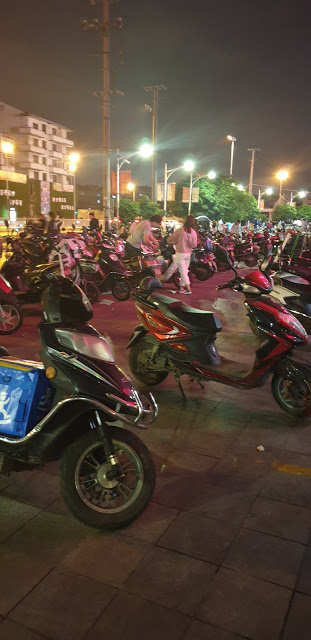
But, unlike where we live, the carpark is more of a scooter park!

It is also a small microcosm of Chinese life for the new more capitalistic oriented Chinese.

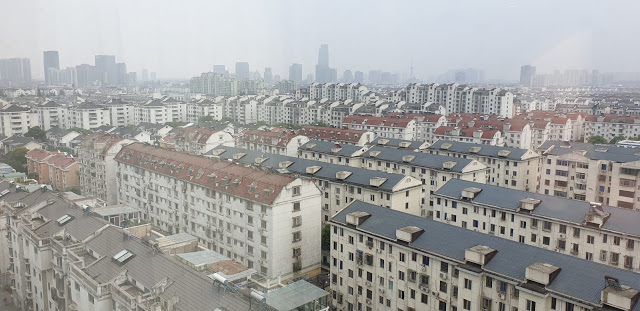
The next morning we get some idea of the scope of high-density living, though here, the buildings are not 30 stories tall, but still just as impressive.

These look like the medium density houses, but to the right of these are much larger buildings

The remarkable thing about this is those buildings stretch as far as the eye can see.

Writing a book in 365 days – 286

Day 286

Writing a novel is not a sprint but a marathon

Navigating the Darkness: Sprinting Through Your Marathon Novel

E.L. Doctorow, a titan of American literature, once famously described the writing process as akin to “driving a car at night – you can only see as far as the headlight go.” This beautifully encapsulates the inherent uncertainty, the step-by-step progression, and the reliance on instinct that comes with crafting a narrative.

Then there’s the other, equally valid, piece of advice: writing a book isn’t a sprint, it’s a marathon. This speaks to the endurance, the discipline, and the long-haul commitment required to bring a sprawling story from conception to completion.

On the surface, these two nuggets of wisdom feel contradictory. How can you sprint through a marathon? How can you navigate the darkness with pinpoint precision if you’re also settling in for a long, grueling race?

The truth is, they aren’t contradictions at all. They are two essential facets of successful authorship, and the key to achieving the best of both worlds lies in understanding how they can and should work together.

Embrace the Headlight: The Power of the Present

Doctorow’s metaphor is a powerful reminder to ground ourselves in the immediate. When you’re staring at a blank page or a daunting plot point, the sheer magnitude of the “marathon” can be paralyzing. This is where the headlight comes in.

  • Focus on the Next Scene: Don’t worry about how you’re going to end the book. Just focus on writing the next scene, the next chapter, the next conversation. What needs to happen right now to move the story forward?
  • Trust Your Intuition: The headlight illuminates the path immediately ahead. This is where your creative impulse, your gut feeling about character motivation, or your instinct for dialogue takes over. Allow yourself to explore without needing to see the entire roadmap.
  • Embrace the Unknown: Sometimes, the best stories emerge from the unexpected detours revealed by the headlight. Don’t be afraid to go where the light takes you, even if it wasn’t part of your original plan. This is how discovery happens.

Pace Yourself for the Long Haul: The Marathon Mindset

While the headlight keeps you moving forward, the marathon mindset provides the structure and resilience to keep going. Without it, you’ll burn out before you even hit the halfway point.

  • Establish a Routine: Whether it’s a daily word count, a dedicated writing time, or a weekly goal, consistency is your marathon fuel. It’s about showing up, even when the inspiration feels dim.
  • Break Down the Giant Task: The marathon is made up of many miles. Similarly, your book is made up of chapters, plot arcs, and character development. Break down the larger goal into smaller, manageable chunks. This makes the journey less daunting.
  • Cultivate Patience and Persistence: There will be days, weeks, even months where the writing feels like wading through molasses. This is normal. Understanding that this is part of the marathon allows you to persevere through the tough patches without losing sight of the finish line.
  • The Long Game of Revision: The marathon isn’t over when you type “The End.” The real work of refining, shaping, and polishing is a crucial part of the longer journey. Trust that the initial draft, guided by the headlight, will be the raw material for a more polished creation.

Achieving the Best of Both Worlds: The Dynamic Duo

The magic happens when you stop seeing these as opposing forces and start integrating them.

  1. Start with the Headlight, Build with the Marathon: Begin by focusing on the immediate scene, letting your creativity flow. As you complete sections, start to see the broader strokes, the emerging patterns that define your marathon.
  2. Use the Marathon Structure to Guide the Headlight: Have a general outline or a compelling premise? This “marathon vision” can act as your distant parklights, giving direction to your immediate headlight-led explorations.
  3. Allow for Detours, But Keep Moving: The headlight might reveal an exciting side road, but the marathon’s awareness of the destination ensures you don’t get lost indefinitely. You can explore, but always with a sense of returning to the main path.
  4. Celebrate Small Victories (Headlight Moments) on the Long Journey (Marathon): Finishing a chapter is a milestone in the marathon. A particularly brilliant piece of dialogue is a shining moment in the headlight’s beam. Acknowledge and appreciate both.

In essence, writing a book is about learning to be both a navigator of the immediate journey and a seasoned long-distance runner. You need the courage to step into the darkness, guided by the light you have, and the wisdom to understand that this is a race that requires stamina, strategy, and unwavering dedication. By embracing the power of the present while respecting the demands of the long haul, you can indeed achieve the best of both worlds, and bring your story magnificently to life.

Writing a book in 365 days – 284/285

Days 284 and 285

Writing exercise – The world is upside down; climate change has made our home uninhabitable

We had all seen it coming, and to a certain extent, pretended it wasn’t happening.

Until we could ignore it no longer.

Perhaps we could have kept our collective heads in the sand, but Mother Nature wasn’t going to wait that long.

We woke up one morning to snow.

Three months early, just as Fall began.  Perhaps the fact that the trees had been losing their leaves far earlier than usual was a sign.

There were others, but it had happened before, a few years back, and it had sparked the usual warnings from scientists, debunking of climate change, politicians’ umming and erring, but in the end, nothing changed

We did the same this time.  Been there, done that, nothing to see here.  The government, such as it was, laughed it off.

As they did with most things that concerned the people, unless they were among the President’s private circle.

At first the snow turned the surroundings into a winter wonderland, usually here in mid-November, an interlude before the main event: Christmas.

It was barely into September, and it was a long way to the festive season.

It snowed every night for the next two weeks.  All night, virtually at blizzard level, and so badly that it was difficult and then impossible to keep the roads clear.  Except for the essential roads.

The houses were snowed in, then abandoned.

Whole areas were shut down and people evacuated.

I went up to the lookout once, and all I could see was white, except for a small area where the shopping centre was located

The whole was gone.  Our house would be next.

Beth was holding a light blue sheet of paper in her hand, a hand that was shaking.

I knew what it was.

“We got one.”  She held it up.

“Lou got his yesterday.”  Lou was across the street.  He’s lived there all his life, as did his parents before him.

We all knew this was the end.  Any more snow and our town would disappear.

It was the same in any direction you could go.

She had the TV on.  There was only one channel, reporting the weather and emergency information 24 hours a day.  She never turned it off.

“They’re not ignoring it now.  They keep playing the President saying it’s nothing and would go away in a few days.  Now he won’t talk to anyone.”

No surprise.  The last crisis, the pandemic, had been met with a similar response.

There were over a million deaths at that time; this had been exceeded in just two weeks.  If it didn’t go away, the total was going to be horrific.

“We’re not going to be leaving any time soon.  The police had shut the road for everything other than official vehicles.”  The trains stopped at midnight; the last one snowed in at our station.

“What’s going to happen to us?”

“Last I heard, we’re going to the missile complex.”

It was a ubiquitous small town, with a big secret.  We made up part of the air defence system in place to prevent invaders.  And the threat of being wiped off the face of the planet if anything went wrong.

Freda hated the idea of nesting with nuclear bombs.  So did I.

“Do we have a choice?”

“If you want to live.”

“So, in your opinion, it’s not going to stop.”

“No.”

I’d asked old man Bowen, ex-weatherman on channel 6 news, old meteorologist for Nasa, whose wife read tarot cards.

An expert.

“It’s part of a phenomenon that has happened in the past.  Two more years, if we’re lucky.”

“And you know this…oh.  the crazy old fool down the street.  Seriously, Monte?”

There were things wanted to believe, believable things, things that some people just didn’t want to hear.

Fundamentally, a good person, when she had first met the Bowens, she took an instant dislike to them.  He was abrupt and she was aloof, but that was just defence.

I smiled.  “As much as you hate them, so far, everything he’d said had come true.  As for the next, well, that was going to be the killer.”

“Or as the government says, we just have to wait it out a little longer.”

“While all the top officials, including our fearless leader, swan off to a country with a warmer climate.”

All the rich people were gone.

The president tried to sneak out by the back secret entrance that no one was supposed to know about.  Except for one old press hack.

She didn’t answer.  We agreed to disagree on certain matters, because not to would be letting politics destroy something good.

She glared at me.  “Don’t say it.  I’ve already had seventeen phone calls.  It’s easy to lay blame, not so easy to prove it.”

Yes.  He could do no wrong.  And it was going to kill her.

But I wasn’t going to be drawn in this time.  Just saying what I was thinking would get me arrested, and Beth would turn me in, husband or not.

“Then I guess God has a lot to answer for.”

That did it.  The president and then God, sometimes the two fused, according to the president, speaking candidly about his ‘friends’, telling the reporter, or rather the stooge paid to preen his ego, that who was he to dispute they believed he was the almighty himself.”

It had been impossible not to burst out laughing.

The truck came to pick us up, one small bag allowed.  Beth was going to come, but remembered that she had a small job to do and would come later.

She was warned that she had 24 hours.  After that, no one knew what was going to happen.

It was more like they did, but to tell us mere mortals might have set off a chain reaction of dissent.

The last I saw of her, she was waving.  I don’t think she expected me to leave.

We collected all the people on the street and headed to the silo.  There were two other trucks.  There was an officer in the truck who said there were rooms for 200 people.  It was once a mass point for soldiers in case of an attempted invasion.

I found it amusing that anyone would come to put two for the purpose of invading it.

So did the others.

There were five trucks.  The last of the townsfolk.  All outlying areas had been evacuated earlier.

About a dozen had chosen not to come or had something else to do, like Beth.

And after the sun went down and Beth or any of the others deigned not to come, it was the worst-case scenario.  The silo boss sent a team out to find them.

Then the snow started.

The search party came back in half an hour.  The cold was too intense.

That was what was going to happen.

After the snow, the earth was going to freeze.

It came and it didn’t go.

Everything froze unless protected.

Four months passed before the cold lifted to a point where we could go back outside.

By that time, we needed food, and I was charged with finding it, and took six volunteers.

We found food, and we found something else.

A place where those who believed that nothing was going to happen had frozen to death, dying as a result of their beliefs.

It was a terrible loss of life that could have been easily saved.

It was predicted that there would be a thaw, Mother Nature’s planet-wide reset.

It was hoped we had all learned a lesson.

©  Charles Heath  2025

Searching for locations: From Zhengzhou to Suzhou by train, and the Snowy Sea Hotel, Suzhou, China

For the first time on this trip, we encounter problems with Chinese officialdom at the railway station, though we were warned that this might occur.

We had a major problem with the security staff when they pulled everyone over with aerosols and confiscated them. We lost styling mousse, others lost hair spray, and the men, their shaving cream.  But, to her credit, the tour guide did warn us they were stricter here, but her suggestion to be angry they were taking our stuff was probably not the right thing to do.

As with previous train bookings, the Chinese method of placing people in seats didn’t quite manage to keep couples traveling together, together on the train.  It was an odd peculiarity which few of the passengers understood, nor did they conform, swapping seat allocations.

This train ride did not seem the same as the last two and I don’t think we had the same type of high-speed train type that we had for the last two.  The carriages were different, there was only one toilet per carriage, and I don’t think we were going as fast.

But aside from that, we had 753 kilometers to travel with six stops before ours, two of which were very large cities, and then our stop, about four and a half hours later.  With two minutes this time, to get the baggage off the team managed it in 40 seconds, a new record.

After slight disorientation getting off the train, we locate our guide, easily found by looking for the Trip-A-Deal flag.  From there it’s a matter of getting into our respective groups and finding the bus.

As usual, the trip to the hotel was a long one, but we were traveling through a much brighter, and well lit, city.

As for our guide, we have him from now until the end of the tour.  There are no more train rides, we will be taking the bus from city to city until we reach Shanghai.  Good thing then that the bus is brand new, with that new car smell.  Only issue, no USB charging point.

The Snowy Sea hotel.  

It is finally a joy to get a room that is nothing short of great.  It has a bathroom and thus privacy.

Everyone had to go find a supermarket to purchase replacements for the confiscated items.  Luckily there was a huge supermarket just up from the hotel that had everything but the kitchen sink.

But, unlike where we live, the carpark is more of a scooter park!

It is also a small microcosm of Chinese life for the new more capitalistic oriented Chinese.

The next morning we get some idea of the scope of high-density living, though here, the buildings are not 30 stories tall, but still just as impressive.

These look like the medium density houses, but to the right of these are much larger buildings

The remarkable thing about this is those buildings stretch as far as the eye can see.

Writing a book in 365 days – 284/285

Days 284 and 285

Writing exercise – The world is upside down; climate change has made our home uninhabitable

We had all seen it coming, and to a certain extent, pretended it wasn’t happening.

Until we could ignore it no longer.

Perhaps we could have kept our collective heads in the sand, but Mother Nature wasn’t going to wait that long.

We woke up one morning to snow.

Three months early, just as Fall began.  Perhaps the fact that the trees had been losing their leaves far earlier than usual was a sign.

There were others, but it had happened before, a few years back, and it had sparked the usual warnings from scientists, debunking of climate change, politicians’ umming and erring, but in the end, nothing changed

We did the same this time.  Been there, done that, nothing to see here.  The government, such as it was, laughed it off.

As they did with most things that concerned the people, unless they were among the President’s private circle.

At first the snow turned the surroundings into a winter wonderland, usually here in mid-November, an interlude before the main event: Christmas.

It was barely into September, and it was a long way to the festive season.

It snowed every night for the next two weeks.  All night, virtually at blizzard level, and so badly that it was difficult and then impossible to keep the roads clear.  Except for the essential roads.

The houses were snowed in, then abandoned.

Whole areas were shut down and people evacuated.

I went up to the lookout once, and all I could see was white, except for a small area where the shopping centre was located

The whole was gone.  Our house would be next.

Beth was holding a light blue sheet of paper in her hand, a hand that was shaking.

I knew what it was.

“We got one.”  She held it up.

“Lou got his yesterday.”  Lou was across the street.  He’s lived there all his life, as did his parents before him.

We all knew this was the end.  Any more snow and our town would disappear.

It was the same in any direction you could go.

She had the TV on.  There was only one channel, reporting the weather and emergency information 24 hours a day.  She never turned it off.

“They’re not ignoring it now.  They keep playing the President saying it’s nothing and would go away in a few days.  Now he won’t talk to anyone.”

No surprise.  The last crisis, the pandemic, had been met with a similar response.

There were over a million deaths at that time; this had been exceeded in just two weeks.  If it didn’t go away, the total was going to be horrific.

“We’re not going to be leaving any time soon.  The police had shut the road for everything other than official vehicles.”  The trains stopped at midnight; the last one snowed in at our station.

“What’s going to happen to us?”

“Last I heard, we’re going to the missile complex.”

It was a ubiquitous small town, with a big secret.  We made up part of the air defence system in place to prevent invaders.  And the threat of being wiped off the face of the planet if anything went wrong.

Freda hated the idea of nesting with nuclear bombs.  So did I.

“Do we have a choice?”

“If you want to live.”

“So, in your opinion, it’s not going to stop.”

“No.”

I’d asked old man Bowen, ex-weatherman on channel 6 news, old meteorologist for Nasa, whose wife read tarot cards.

An expert.

“It’s part of a phenomenon that has happened in the past.  Two more years, if we’re lucky.”

“And you know this…oh.  the crazy old fool down the street.  Seriously, Monte?”

There were things wanted to believe, believable things, things that some people just didn’t want to hear.

Fundamentally, a good person, when she had first met the Bowens, she took an instant dislike to them.  He was abrupt and she was aloof, but that was just defence.

I smiled.  “As much as you hate them, so far, everything he’d said had come true.  As for the next, well, that was going to be the killer.”

“Or as the government says, we just have to wait it out a little longer.”

“While all the top officials, including our fearless leader, swan off to a country with a warmer climate.”

All the rich people were gone.

The president tried to sneak out by the back secret entrance that no one was supposed to know about.  Except for one old press hack.

She didn’t answer.  We agreed to disagree on certain matters, because not to would be letting politics destroy something good.

She glared at me.  “Don’t say it.  I’ve already had seventeen phone calls.  It’s easy to lay blame, not so easy to prove it.”

Yes.  He could do no wrong.  And it was going to kill her.

But I wasn’t going to be drawn in this time.  Just saying what I was thinking would get me arrested, and Beth would turn me in, husband or not.

“Then I guess God has a lot to answer for.”

That did it.  The president and then God, sometimes the two fused, according to the president, speaking candidly about his ‘friends’, telling the reporter, or rather the stooge paid to preen his ego, that who was he to dispute they believed he was the almighty himself.”

It had been impossible not to burst out laughing.

The truck came to pick us up, one small bag allowed.  Beth was going to come, but remembered that she had a small job to do and would come later.

She was warned that she had 24 hours.  After that, no one knew what was going to happen.

It was more like they did, but to tell us mere mortals might have set off a chain reaction of dissent.

The last I saw of her, she was waving.  I don’t think she expected me to leave.

We collected all the people on the street and headed to the silo.  There were two other trucks.  There was an officer in the truck who said there were rooms for 200 people.  It was once a mass point for soldiers in case of an attempted invasion.

I found it amusing that anyone would come to put two for the purpose of invading it.

So did the others.

There were five trucks.  The last of the townsfolk.  All outlying areas had been evacuated earlier.

About a dozen had chosen not to come or had something else to do, like Beth.

And after the sun went down and Beth or any of the others deigned not to come, it was the worst-case scenario.  The silo boss sent a team out to find them.

Then the snow started.

The search party came back in half an hour.  The cold was too intense.

That was what was going to happen.

After the snow, the earth was going to freeze.

It came and it didn’t go.

Everything froze unless protected.

Four months passed before the cold lifted to a point where we could go back outside.

By that time, we needed food, and I was charged with finding it, and took six volunteers.

We found food, and we found something else.

A place where those who believed that nothing was going to happen had frozen to death, dying as a result of their beliefs.

It was a terrible loss of life that could have been easily saved.

It was predicted that there would be a thaw, Mother Nature’s planet-wide reset.

It was hoped we had all learned a lesson.

©  Charles Heath  2025

Writing a book in 365 days – My Story 43

More about my story

From Scribbles to a Cohesive Story: How to Tackle the Second Draft Like a Pro

“The time has come. All that scribbling, writing of chapters as they come to you, are roughly assembled, and the endless notes filed in order. You have the detailed synopsis; it’s time to write the second draft, the one that makes sense of quite often what is a disjointed and plothole‑laden manuscript. What’s the plan of action?”

If those words are echoing in your head, congratulations—you’ve crossed the most dreaded threshold for any writer: the moment when the raw material finally sits in front of you, begging for order, logic, and polish. The first draft is often a glorious, chaotic outpouring of imagination. The second draft, however, is where the real craft emerges. Below is a step‑by‑step plan to transform those scattered notes and chapter fragments into a tight, believable narrative that keeps readers turning pages.


1. Pause, Breathe, and Re‑Read (Without Editing)

Before you lift a pen—or tap a key—spend 30–60 minutes simply reading what you’ve already produced.

Why?What to Look For
Big‑picture feelDoes the story’s tone stay consistent?
Narrative momentumAre there sections that drag or rush?
Emotional arcsDo the characters’ journeys feel earned?

Resist the urge to fix anything now. This “cold read” gives you a fresh mental map of where the story stands, and it surfaces the most glaring gaps that you’ll need to address later.


2. Re‑Validate Your Synopsis

Your synopsis is the blueprint; the second draft is the construction crew.

  1. Compare Chapter by Chapter – Align each chapter with the corresponding synopsis point. Tick off what matches, note what deviates.
  2. Identify Missing Beats – Any plot point in the synopsis that has no chapter yet? Flag it.
  3. Spot Redundancies – Sometimes you’ll discover two scenes serving the same purpose; consolidate them.

If your synopsis feels dated after the first draft, revise it now. A solid, up‑to‑date outline is the safety net that prevents you from falling into new plot holes.


3. Map the Structural Skeleton

Visual aids are lifesavers. Choose a method that resonates with you—index cards, a spreadsheet, a mind‑map tool (e.g., Scrivener, Milanote, or even a whiteboard). Populate it with:

  • Scene headings (location, time, POV)
  • Purpose (what does this scene accomplish? Conflict, revelation, transition?)
  • Key beats (the inciting incident, midpoint twist, climax, resolution)

Seeing the entire story laid out reveals:

  • Pacing problems – clusters of low‑stakes scenes or long gaps between major events.
  • Plot holes – missing cause‑and‑effect links.
  • Character arcs – where growth stalls or accelerates too abruptly.

4. Diagnose the “Disjointed” Spots

Now that you have a macro view, zoom in on the trouble areas:

CategoryTypical SymptomsQuick Fixes
Plot GapsUnexplained changes in motivation, events that happen “out of nowhere.”Add a short catalyst scene, insert a character’s internal monologue, or create a flashback for context.
PlotholesContradictory facts (e.g., a character knows something they shouldn’t).Insert a logical bridge—perhaps a conversation, a document, or a memory reveal.
Character InconsistencySudden shifts in personality or skill set.Plant subtle foreshadowing earlier; give a brief “training” moment or a back‑story hint.
Pacing LullsToo many exposition‑heavy paragraphs.Break up with a moment of conflict, a dialogue beat, or a sensory detail that propels the scene forward.

Take each flagged spot and write a mini‑action plan: what needs to be added, moved, or cut, and why. Keep the plan short—one sentence per issue—so you can reference it quickly while you rewrite.


5. Set a Realistic Writing Schedule

Second drafts can feel endless, but a structured timetable keeps momentum alive.

Time BlockGoalExample
Daily 90‑minute sprintFinish a specific scene or page count.“Rewrite Chapter 4, focusing on tightening dialogue.”
Weekly review (30 min)Compare progress to the structural skeleton, adjust if needed.“Check if the midpoint twist lands with enough payoff.”
Bi‑weekly “big‑picture” dayRe‑read the draft up to the current point, ensuring continuity.“Read chapters 1‑6, note any new inconsistencies.”

Treat these blocks as appointments you cannot miss. Use a timer (Pomodoro technique works wonders) to stay disciplined.


6. Rewrite with Intent—One Layer at a Time

Trying to fix everything in one go leads to burnout. Adopt a layered approach:

  1. Structural Pass – Move, add, or delete entire scenes to align with your outline.
  2. Narrative Flow Pass – Smooth transitions, tighten pacing, ensure cause‑and‑effect chains are crystal clear.
  3. Character Consistency Pass – Verify motivations, voice, and growth arcs.
  4. Language Pass – Polish prose, eliminate passive voice, tighten dialogue, enrich descriptions.
  5. Proofreading Pass – Grammar, spelling, formatting.

Each pass focuses on a single type of improvement, making the workload manageable and the end result more cohesive.


7. Leverage Feedback—But Do It Strategically

Before you dive into the final polish, get targeted beta feedback. Instead of handing out the whole manuscript, send:

  • The synopsis + structural skeleton – to confirm the plot makes sense.
  • A few pivotal chapters – especially the opening, the midpoint, and the climax.
  • A character sheet – to verify arcs feel authentic.

Ask specific questions: “Does the protagonist’s decision in Chapter 8 feel justified?” or “Is the reveal at the end of Chapter 12 too abrupt?” Focused feedback saves you from generic, overwhelming commentary.


8. The Final Sweep: Consistency & Polish

When the structural and narrative issues are resolved, it’s time for the polish:

  • Read aloud – catches clunky dialogue and rhythm problems.
  • Run a “character name” search – ensures you haven’t inadvertently swapped names.
  • Check timeline continuity – use a simple spreadsheet to list dates, ages, and events.
  • Run style tools (Grammarly, ProWritingAid) – but trust your own ear first.

Once you’ve run through this checklist, you can consider the second draft complete.


9. Celebrate and Reset

Finishing a second draft is a milestone worth celebrating. Take a short break (a weekend, a hike, a binge‑watch session) before you embark on the third draft or start polishing for submission. A rested mind sees errors you missed while immersed in the manuscript.


TL;DR – The Action Plan in a Nutshell

  1. Read the whole draft (no editing).
  2. Cross‑check every chapter with the synopsis.
  3. Create a visual scene map.
  4. Identify and plan fixes for disjointed spots.
  5. Set a realistic writing schedule.
  6. Rewrite in layers (structure → flow → character → language → proof).
  7. Gather targeted beta feedback.
  8. Do a final consistency & polish sweep.
  9. Celebrate, then move on.

Final Thought

The second draft isn’t just a “clean‑up” phase; it’s where a writer’s critical eye meets the raw spark of imagination. By approaching it methodically—treating each problem as a solvable puzzle—you’ll turn a fragmented manuscript into a compelling, seamless story that readers can’t put down. So roll up your sleeves, follow the plan, and let the magic of revision reveal the masterpiece hidden within your notes. Happy drafting!

Searching for locations: The Henan Museum, Zhengzhou, Henan Province, China

The Henan Museum is one of the oldest museums in China.  In June 1927, General Feng Yuxiang proposed that a museum be built, and it was completed the next year.  In 1961, along with the move of the provincial capital, Henan Museum moved from Kaifeng to Zhengzhou.

It currently holds about 130,000 individual pieces, more of which are mostly cultural relics, bronze vessels of the Shang and Zhou Dynasties, and pottery and porcelain wares of the various dynasties.

Eventually, we arrive at the museum and get off the bus adjacent to a scooter track and despite the efforts of the guide, there’s no stopping them from nearly running us over.

We arrive to find the museum has been moved to a different and somewhat smaller building nearby as the existing, and rather distinctively designed, building is being renovated.

While we are waiting for the tickets to enter, we are given another view of industrial life in that there is nothing that resembles proper health and safety on worksites in this country, and the workers are basically standing on what looks to be a flimsy bamboo ladder with nothing to stop them from falling off.

The museum itself has exhibits dating back a few thousand years and consist of bronze and ceramic items.  One of the highlights was a tortoiseshell with reportedly the oldest know writing ever found.

Other than that it was a series of cooking utensils, a table, and ceramic pots, some in very good condition considering their age.


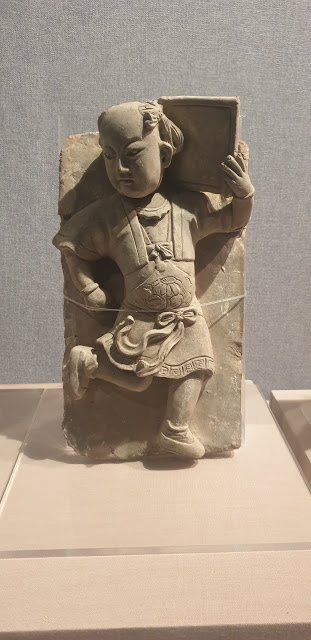
There were also small sculptures

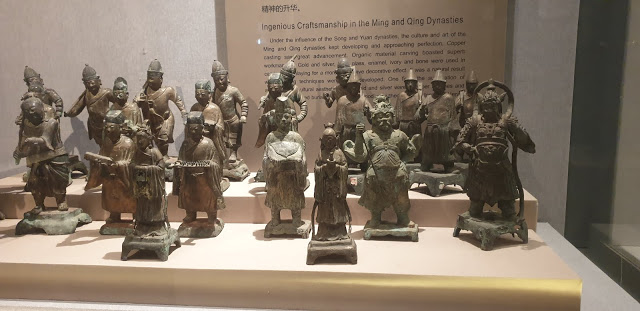
an array of small figures

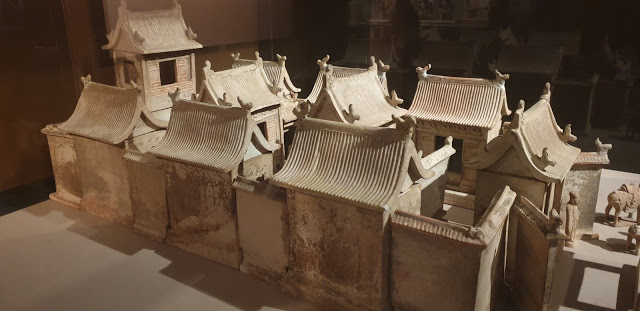
and a model of a settlement

20 minutes was long enough.

Writing a book in 365 days – My Story 43

More about my story

From Scribbles to a Cohesive Story: How to Tackle the Second Draft Like a Pro

“The time has come. All that scribbling, writing of chapters as they come to you, are roughly assembled, and the endless notes filed in order. You have the detailed synopsis; it’s time to write the second draft, the one that makes sense of quite often what is a disjointed and plothole‑laden manuscript. What’s the plan of action?”

If those words are echoing in your head, congratulations—you’ve crossed the most dreaded threshold for any writer: the moment when the raw material finally sits in front of you, begging for order, logic, and polish. The first draft is often a glorious, chaotic outpouring of imagination. The second draft, however, is where the real craft emerges. Below is a step‑by‑step plan to transform those scattered notes and chapter fragments into a tight, believable narrative that keeps readers turning pages.


1. Pause, Breathe, and Re‑Read (Without Editing)

Before you lift a pen—or tap a key—spend 30–60 minutes simply reading what you’ve already produced.

Why?What to Look For
Big‑picture feelDoes the story’s tone stay consistent?
Narrative momentumAre there sections that drag or rush?
Emotional arcsDo the characters’ journeys feel earned?

Resist the urge to fix anything now. This “cold read” gives you a fresh mental map of where the story stands, and it surfaces the most glaring gaps that you’ll need to address later.


2. Re‑Validate Your Synopsis

Your synopsis is the blueprint; the second draft is the construction crew.

  1. Compare Chapter by Chapter – Align each chapter with the corresponding synopsis point. Tick off what matches, note what deviates.
  2. Identify Missing Beats – Any plot point in the synopsis that has no chapter yet? Flag it.
  3. Spot Redundancies – Sometimes you’ll discover two scenes serving the same purpose; consolidate them.

If your synopsis feels dated after the first draft, revise it now. A solid, up‑to‑date outline is the safety net that prevents you from falling into new plot holes.


3. Map the Structural Skeleton

Visual aids are lifesavers. Choose a method that resonates with you—index cards, a spreadsheet, a mind‑map tool (e.g., Scrivener, Milanote, or even a whiteboard). Populate it with:

  • Scene headings (location, time, POV)
  • Purpose (what does this scene accomplish? Conflict, revelation, transition?)
  • Key beats (the inciting incident, midpoint twist, climax, resolution)

Seeing the entire story laid out reveals:

  • Pacing problems – clusters of low‑stakes scenes or long gaps between major events.
  • Plot holes – missing cause‑and‑effect links.
  • Character arcs – where growth stalls or accelerates too abruptly.

4. Diagnose the “Disjointed” Spots

Now that you have a macro view, zoom in on the trouble areas:

CategoryTypical SymptomsQuick Fixes
Plot GapsUnexplained changes in motivation, events that happen “out of nowhere.”Add a short catalyst scene, insert a character’s internal monologue, or create a flashback for context.
PlotholesContradictory facts (e.g., a character knows something they shouldn’t).Insert a logical bridge—perhaps a conversation, a document, or a memory reveal.
Character InconsistencySudden shifts in personality or skill set.Plant subtle foreshadowing earlier; give a brief “training” moment or a back‑story hint.
Pacing LullsToo many exposition‑heavy paragraphs.Break up with a moment of conflict, a dialogue beat, or a sensory detail that propels the scene forward.

Take each flagged spot and write a mini‑action plan: what needs to be added, moved, or cut, and why. Keep the plan short—one sentence per issue—so you can reference it quickly while you rewrite.


5. Set a Realistic Writing Schedule

Second drafts can feel endless, but a structured timetable keeps momentum alive.

Time BlockGoalExample
Daily 90‑minute sprintFinish a specific scene or page count.“Rewrite Chapter 4, focusing on tightening dialogue.”
Weekly review (30 min)Compare progress to the structural skeleton, adjust if needed.“Check if the midpoint twist lands with enough payoff.”
Bi‑weekly “big‑picture” dayRe‑read the draft up to the current point, ensuring continuity.“Read chapters 1‑6, note any new inconsistencies.”

Treat these blocks as appointments you cannot miss. Use a timer (Pomodoro technique works wonders) to stay disciplined.


6. Rewrite with Intent—One Layer at a Time

Trying to fix everything in one go leads to burnout. Adopt a layered approach:

  1. Structural Pass – Move, add, or delete entire scenes to align with your outline.
  2. Narrative Flow Pass – Smooth transitions, tighten pacing, ensure cause‑and‑effect chains are crystal clear.
  3. Character Consistency Pass – Verify motivations, voice, and growth arcs.
  4. Language Pass – Polish prose, eliminate passive voice, tighten dialogue, enrich descriptions.
  5. Proofreading Pass – Grammar, spelling, formatting.

Each pass focuses on a single type of improvement, making the workload manageable and the end result more cohesive.


7. Leverage Feedback—But Do It Strategically

Before you dive into the final polish, get targeted beta feedback. Instead of handing out the whole manuscript, send:

  • The synopsis + structural skeleton – to confirm the plot makes sense.
  • A few pivotal chapters – especially the opening, the midpoint, and the climax.
  • A character sheet – to verify arcs feel authentic.

Ask specific questions: “Does the protagonist’s decision in Chapter 8 feel justified?” or “Is the reveal at the end of Chapter 12 too abrupt?” Focused feedback saves you from generic, overwhelming commentary.


8. The Final Sweep: Consistency & Polish

When the structural and narrative issues are resolved, it’s time for the polish:

  • Read aloud – catches clunky dialogue and rhythm problems.
  • Run a “character name” search – ensures you haven’t inadvertently swapped names.
  • Check timeline continuity – use a simple spreadsheet to list dates, ages, and events.
  • Run style tools (Grammarly, ProWritingAid) – but trust your own ear first.

Once you’ve run through this checklist, you can consider the second draft complete.


9. Celebrate and Reset

Finishing a second draft is a milestone worth celebrating. Take a short break (a weekend, a hike, a binge‑watch session) before you embark on the third draft or start polishing for submission. A rested mind sees errors you missed while immersed in the manuscript.


TL;DR – The Action Plan in a Nutshell

  1. Read the whole draft (no editing).
  2. Cross‑check every chapter with the synopsis.
  3. Create a visual scene map.
  4. Identify and plan fixes for disjointed spots.
  5. Set a realistic writing schedule.
  6. Rewrite in layers (structure → flow → character → language → proof).
  7. Gather targeted beta feedback.
  8. Do a final consistency & polish sweep.
  9. Celebrate, then move on.

Final Thought

The second draft isn’t just a “clean‑up” phase; it’s where a writer’s critical eye meets the raw spark of imagination. By approaching it methodically—treating each problem as a solvable puzzle—you’ll turn a fragmented manuscript into a compelling, seamless story that readers can’t put down. So roll up your sleeves, follow the plan, and let the magic of revision reveal the masterpiece hidden within your notes. Happy drafting!