In a word: Keep

Yes, this is an easy one.

I want to keep the car.  Especially if it’s a Lamborghini and it didn’t cost $500,000.

This form of the word simply means to hang on to something, or up the proper definition, to have or retain possession of

Paring it with other words is where it gets complicated.

For instance,

Keepings off, make sure that the ball doesn’t get into someone else’s possession.

Keep it to yourself, yes, here’s your chance to become the harbinger of secrets and not tell anyone else.  Not unless a lot of money is involved, or a Lamborghini.

You guessed it, the car is the running joke on this post.

How about, keep a low profile, been there tried that, it’s a lot harder than you think.

What about keeping your cards close to your chest, yes, this had both a literal and figurative meaning which makes it sort of unique.

That might follow the second definition, to continue, or cause to continue a particular state.

Another way of using keep is by delaying or stopping someone from doing something or getting somewhere; ie, I was kept waiting at the doctor’s surgery because he was late.

There are any number of examples of using the word keep in tandem with other words

One that specifically doesn’t relate to all the former examples, is simply the word keep.

What is it?

Usually the strongest part of the castle, and the last to fall in an attack.

At least, that was the theory.

In a word: Dear

Yes, it’s that simple word that we use to call someone affectionately.

Or sometimes, with a little accent on the word; yes, dear and no, dear.

In other words, it’s a person regarded with deep affection.

It can also mean expensive, by saying, that’s a bit dear, isn’t it, when we’re really saying it’s way overpriced.

I can’t remember how many times I’ve said something is ‘too dear’ to the children.

Grannies tend to use the expression, ‘be a dear and…’, to get you do do something for them.

Friends, sometimes tongue in cheek, will say, ‘oh dear, I’ve upset you’, when that was exactly what they meant to do.  Friends you say?  Yes, friends indeed.

And then we always start a letter (always?  Who writes letters any more?) with

Dear John (oops, not one of THOSE letters)

Dear Sir/Madam

Of course, instead of swearing, you could simply say ‘Oh dear, you’ve let us down again!’.

And when you lose your job, which is happening a lot at the moment, it is said it would cost you dear, though sometimes it would be more appropriate to use the adverb, dearly.

It is not to be confused with the word deer which is an animal, the males of which have antlers.

There are a number of different types of deer, such as reindeer and elk.  In Canada, they are called caribou.

In Robin Hood’s day, killing deer brought you very harsh punishment.

And one of my favourite meats is venison, meat from a deer, which are farmed in New Zealand along with sheep.

Searching for locations: Murano, Italy

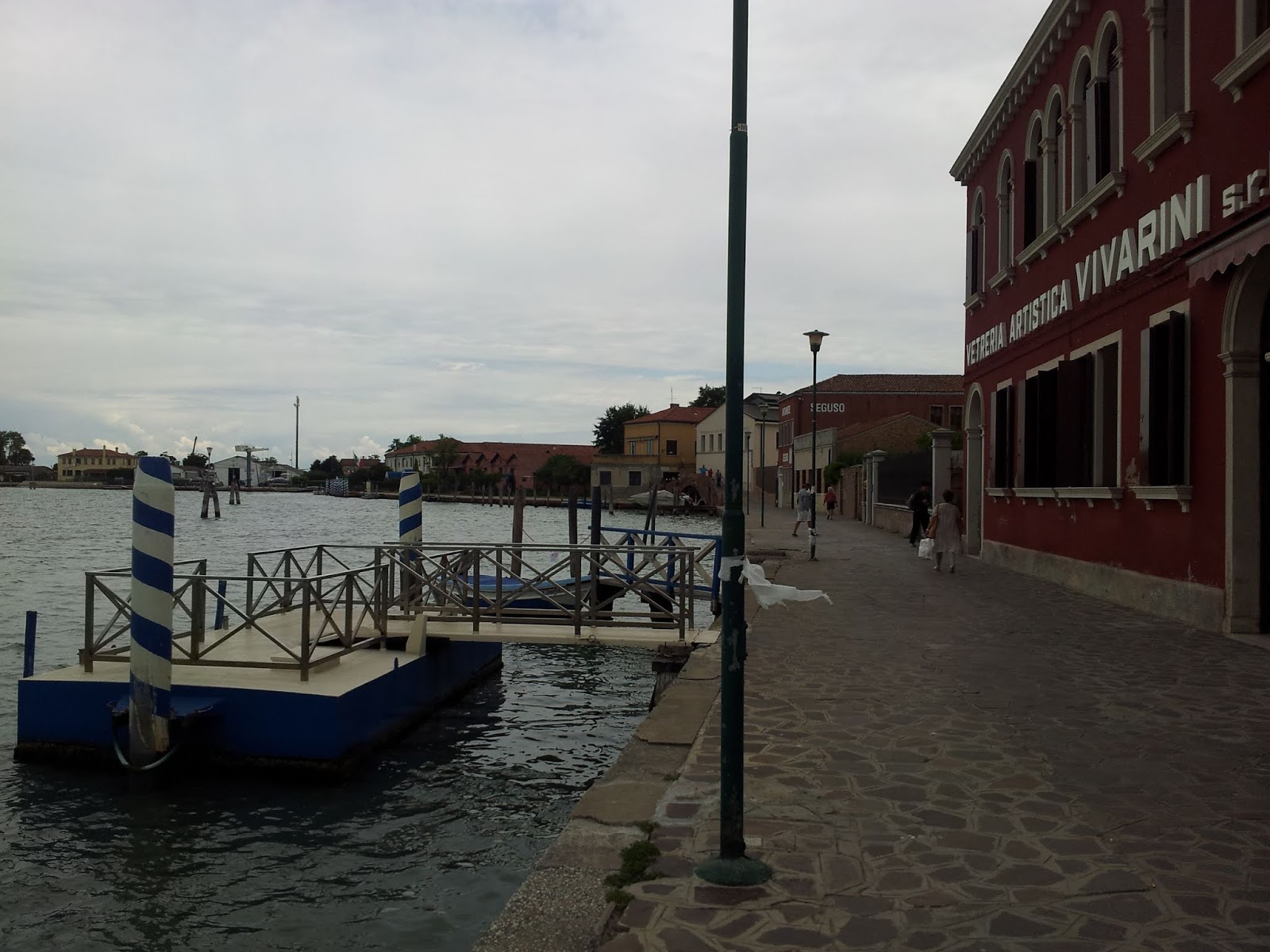
The first time we visited Venice, there was not enough time left to visit the glass-blowing factories on Murano.  We saved this for the next visit, and now more comfortable with taking the Vaporetto, boarded at San Marco for the short journey.

The view looking towards the cemetery:

The view looking down what I think was the equivalent to the main street, or where several of the glass-blowing factories and display shops were located:

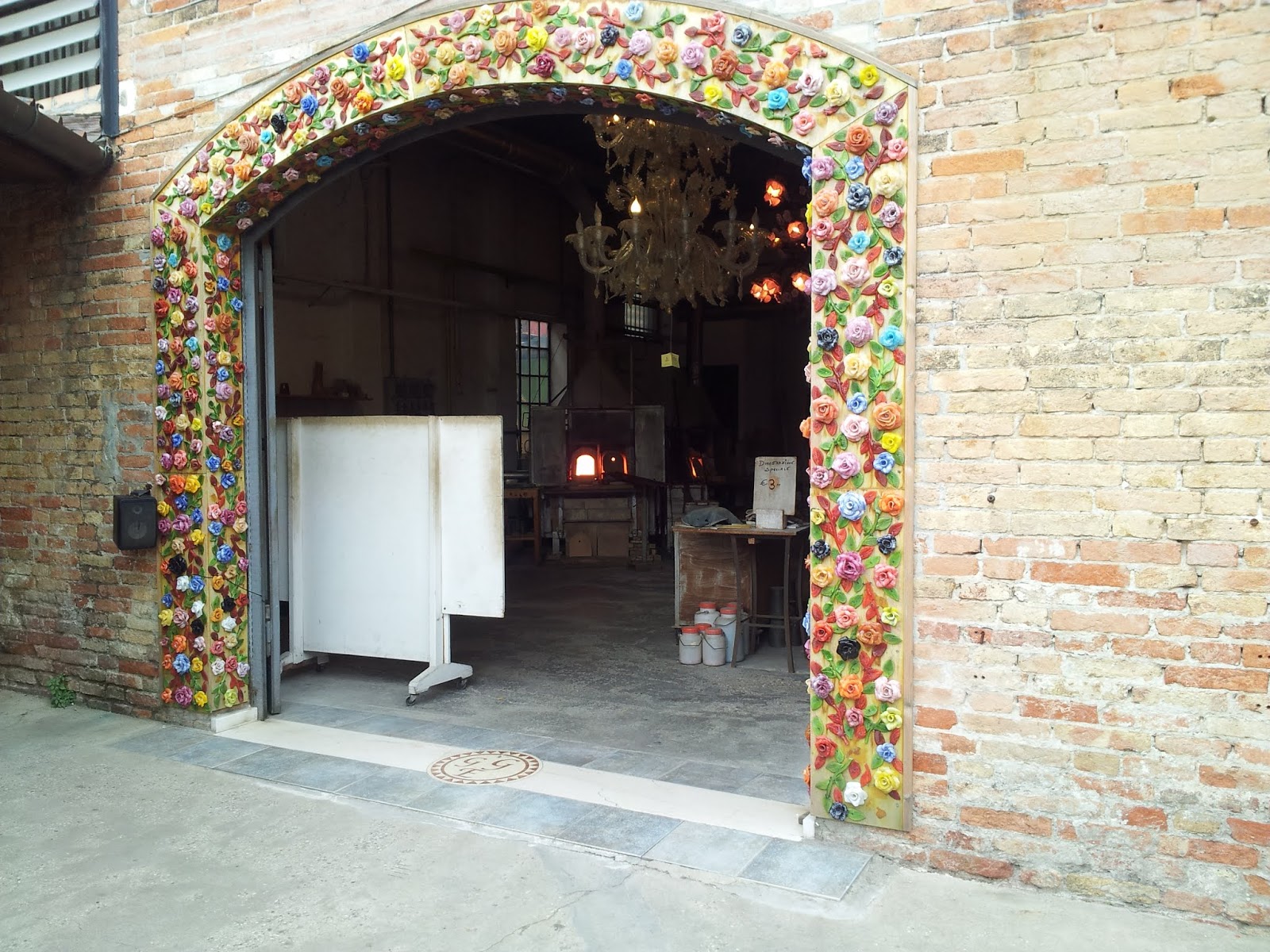
Looking towards a workshop, this one costs us each a Euro to go in and observe a demonstration of glass blowing, and it still surprises me that some people would not pay

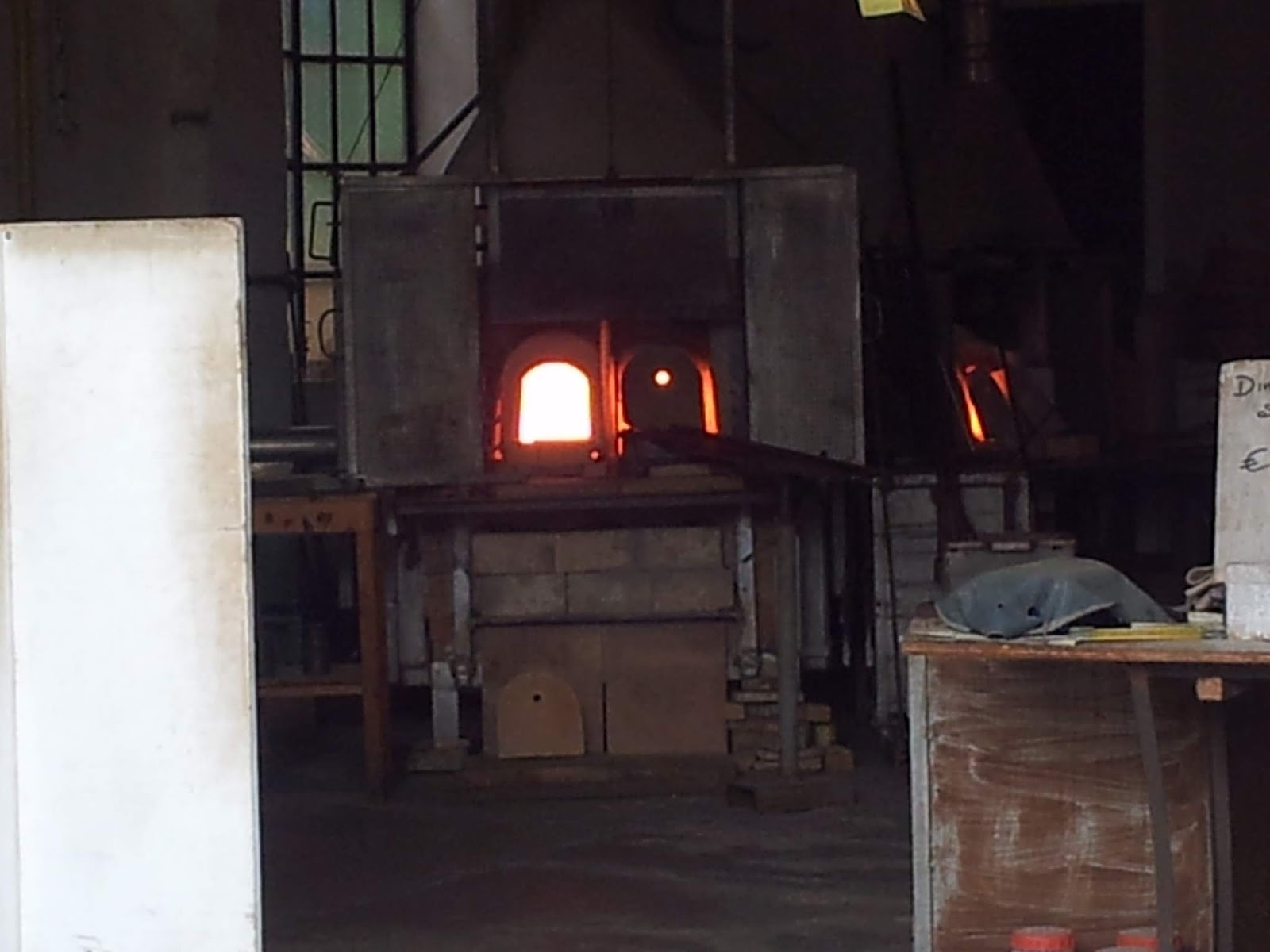
The oven where the glass is heated

And the finished product, the retail version of the horse that the glassblower created during the demonstration:

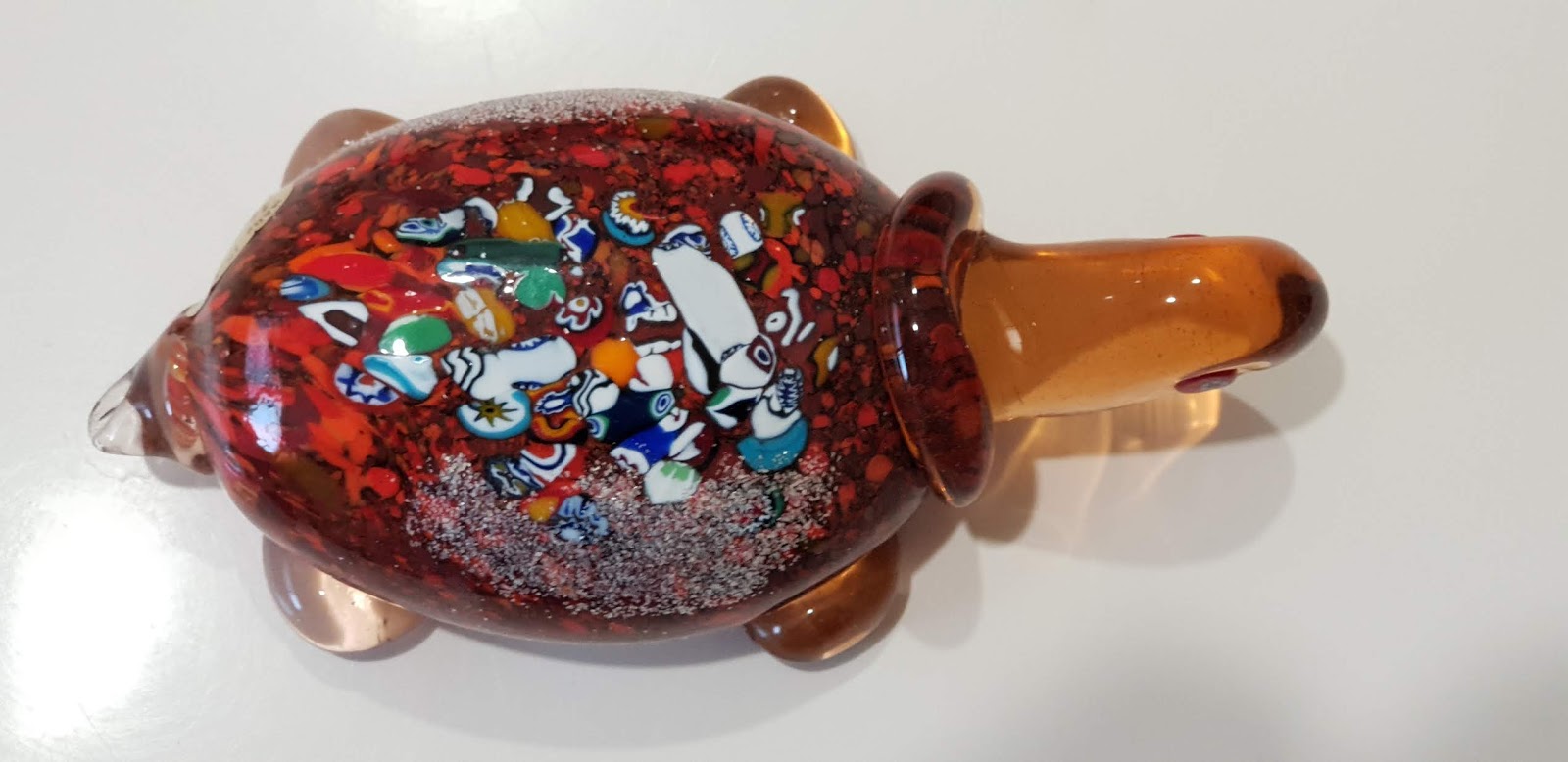
Then we bought some other glassware from the retail storefront, a candle holder

and a turtle.

In a word: Pause

Yes, when you are going at it like a bat out of hell, it might be an idea to take a pause and regroup.

That being a pause as an interruption to an activity.

In music, it’s a mark over a note.

Perhaps it’s a good idea to pause recording a TV show while the ads are on.  Networks don’t like it, but it makes the show make more sense without the distractions of advertisements, sometimes quite inane, or annoying.

What I just said, might give pause to my opposite number in this debate.

Have you been in a conversation, someone says something quite odd, and there’s a pregnant pause?

How did the word pregnant get into the conversation?  That, of course, usually means something significant will follow, but rarely does.  But it can also be a conversation killer where no one says anything.

Is that a wide eye in awe moment?  You did WHAT?

Then there is the word pours, sounds the same but is completely different.

In this case, the man pours water from the bucket on the plants.

Or my brother pours cold water on my plans.  Not literally, but figuratively, making me think twice about whether it would work or not.  Usually not.

Or a confession pours out of a man with a guilty conscience.  AKA sings like a bird.  Don’t you just love these quaint expressions?  It reminded me of a gangster film back in Humphrey Bogart’s day.

It never rains but it pours?  Another expression, when everything goes wrong.  A bit like home renovations really.

Really, it means to flow quickly and in large quantities, ie. rain pours down.

And if that isn’t bad enough, what about paws?

Sounds the same again, but, yes it’s what an animal has as feet, especially cats, dogs, and bears.

One use of it, out of context, of course, is ‘get your paws off me!’

And one rabbit paw might be good luck, but having two rabbit pows, I might win the lottery.

If only….


In a word: lesson

I went to school and learned a lesson. We often hope that our children learn from these lessons, but sometimes the lesson learned was not the one intended.

This could be called a useful piece of practical wisdom, and for me that was, don’t get into fights at the back of the schoolyard.

The former lesson can be, on one hand, a section of school work, from a larger continuous topic, or, part of a book, which can be an exercise.

Then there’s the study of the past and the hope that we can learn from the lessons of the past.

Sadly, in a lot of cases, we don’t and are therefore doomed to repeat the past, only with far more devastating consequences.

A lesson can also be a passage from the bible.

Or is it lessen, where we reduce the costs which means lessen means reduce, to make less.

I could lessen the load if I gave someone else some of the work.

Or if I stopped eating candy, I could lessen the chances of clotting arteries.

No, I don’t think I will, just have less.

The devil features prominently in a lot of sayings

For instance, I’ve heard someone mutter, “the devil you say…”

Or another, who was telling his friend, who, at the time was in a spot of bother, ‘You’re between the devil and the deep blue sea.”

Wrong.  We all know the sea is green, not blue.

But whatever the circumstances, the devil seems to pop up a lot.

For instance,

Better the devil you know than the devil you don’t.

It seems I’ve heard that somewhere before, or at least a part of it.  Hmmm.

Maybe you’ve “gone to the devil”.  Can that be paired with “going downhill at a rapid rate of knots”?

OK, it’s impossible to go downhill using the speed measure of knots, that only applies to boats, so who came up with that saying, a landlubber sailor?

Hang on, isn’t there a team called the New Jersey Devils?  Funny, I didn’t see if the players had horns or not, and they were using hockey sticks not tridents.

Maybe I misheard.

Neutral men are the devil’s allies, therefore there must be a lot of devils in Switzerland

The devil finds work for idle hands, oh yes, my grandmother used this often on me whenever she caught me doing nothing, or digging around in her magazine room … which was a lot

But my favorite,

When in hell, only the devil can show you the way out.

I’m still trying to find him!

Sayings: Before you can say Jack Robinson

Once upon a time, you could have told me Jack Robinson was a jack in the box, the name meant nothing to me.

Not until Phryne Fisher came along, a rather brilliant 1920s private detective series set in the back streets of Melbourne, as well as more salubrious houses of the rich and famous.
In this series, there is a policeman, a foil for her detective moments, and a love interest that is always just beyond her grasp, a man by the name of Inspector Jack Robinson.

How coincidental.

But…

As for the saying, before you can say Jack Robinson…

It has nothing to do with Phryne Fishers Inspector.

Instead,

There is one story of a politician, Jack Robinson, in the late eighteenth century who was accused of bribery on the floor of the house of commons in England. His accuser was another MP who was asked to name the culprit, and thereby coined the term, ‘I could name him as soon as I could say Jack Robinson’.

The second was a Jack Robinson, the hero of a story written in the nineteenth century who came home to find his intended wife married to another, and to assuage the pain of it was back to the sea, ‘afore you could say Jack Robinson’.

I’m sure there’s a ton of other saying that could be attached to the name, but these seem to be the accepted reason for the term ‘before you can say Jack Robinson’.

In a word: Wall

There’s nothing like ‘hitting the wall’.  It’s a rather quaint expression used when you have used up all your energy and there’s nothing left.  A lot of sportspeople are very familiar with this expression.

But it doesn’t have anything to do with hitting a real wall, you know the sort, made out of plaster, or bricks, or timber.  Some people hit the wall in this case too, and soon find out what it’s like to have a broken hand.

There’s wall street, you know the one, it has a bull in it, and it’s in New York, down that end of the city where the Twin Towers used to be.  It’s rumoured lots of ‘jiggery-pokery’ goes on there.

Try stonewalling, you know, give answers to questions that don’t answer the questions, or find something else to do and put off being questioned.  I’m not sure, however, that’s how Stonewall Jackson got his name.

We can climb the walls, metaphorically speaking, but it is something we don’t actually do when we’re bored.

And, I’m sure everyone has heard of the Great Wall of China.  Even those who travel in space have seen it, from a long, long way away.  I’ve tried walking along it, and up it, yes, parts of it go up the sides of mountains, and it’s challenging.  Maybe you should try it sometime.

Perhaps a few others, just to finish with, like

I got hit by a wall of water – yep, watch out for them tidal waves

There’s a wall between us, nope, not gonna talk to you

His stomach wall is failing, which means he’s in very bad shape, and

He couldn’t get through the wall of players, oh, well, maybe we’ll win the FA cup final next year!

Searching for locations: The Golden Mask Dynasty Show, Beijing, China

The Golden Mask Dynasty Show was located at the OCT Theatre in Beijing’s Happy Valley. 

The theatre was quite full and the seats we had were directly behind the VIP area; as our guide told us, we had the best seats in the house. 

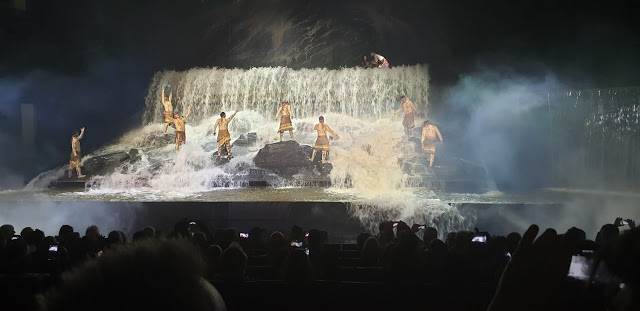
The play has 20 different dance scenes that depict war, royal banquets, and romance.  There are eight chapters and over 200 actors, and throughout the performance we were entertained by dancers, acrobats, costumes, lighting, and acoustics.

The story:

It is of romantic legend and historical memories, the Golden Mask Queen leads her army in defeating the invading Blue Mask King’s army, and afterwards the lands return to a leisurely pastoral life until the Queen forges a ‘mysterious tree’.  When the tree has grown, the Queen has a grand celebration, and releases the captured Blue soldiers, much to the admiration of the Blue Mask King.
This is followed by monstrous floods, and to save her people, and on the advice from the ‘mysterious tree’, the Queen sacrifices herself to save her people.  The Queen then turns into a golden sunbird flying in the sky blessing the people and that of the dynasty.

Billed as the best live show in China, described as a large scale dramatic musical, “The Golden Mask Dynasty” it lived up to its reputation and was thoroughly enjoyed by all.

It was not just singing dancing and acrobatics, it had a story and it was told so that language and cultural issues aside, it worked.  There was a narration of the story running beside the stage, but it was hard to divide attention between what was happening, and what was being related.

Then came the peacock dance, with live peacocks

And this was followed by a waterfall, well, I don’t think anyone in that audience could believe what they were seeing.

I know I was both astonished and in awe of the performance.

What a way to finish off our first day in Beijing.

Oh, sorry, that high was dented slightly when we had to go back to our room.

Searching for locations: The Yu Gardens, Shanghai, China

The Yu Gardens or Yuyuan Gardens

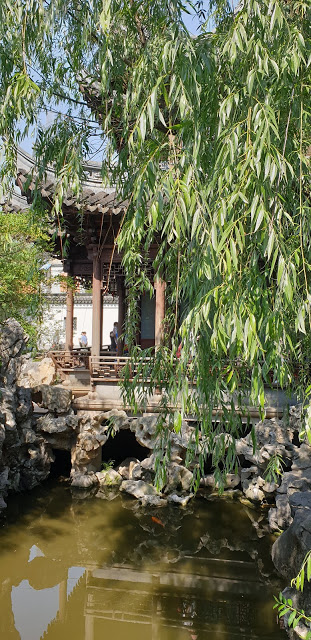
The Yu Gardens (or Yuyuan Gardens) are located at No. 137, Anren Street, Huangpu District, very close to the Old City God Temple, in the northeast of the Old City of Shanghai at Huangpu.

Yu Garden was first built in 1559 during the Ming Dynasty by Pan Yunduan and finished approximately 1577, created specifically as a private garden of the Pan family for Pan Yunduan’s parents to enjoy in their old age.

Yu Garden occupies an area of 5 acres, and is divided into six general areas:

  -Sansui Hall which includes the Grand Rockery was originally used to entertain guests,

  -Wanhua Chamber is a delicate building surrounded by derious cloisters,

  -Dianchun Hall, built in 1820, includes Treasury Hall and the Hall of Harmony,

  -Huijing Hall which includes Jade Water Corridor.

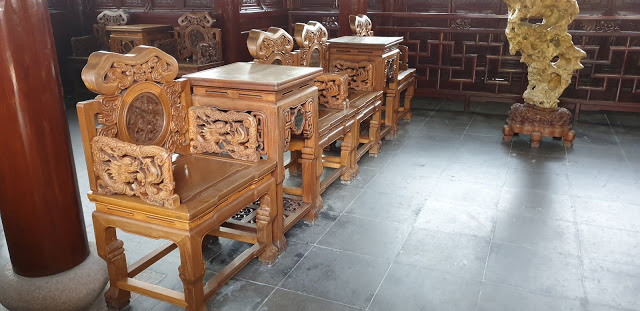
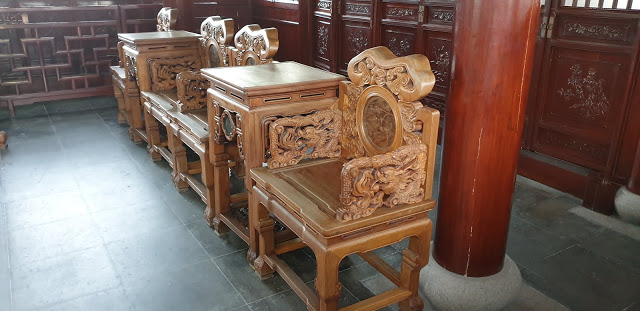
  -Yuhua Hall which is furnished with rosewood pieces from the Ming Dynasty, and,

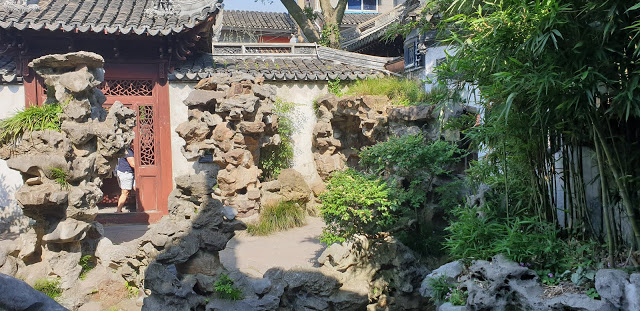
  -The Inner Garden with rockeries, ponds, pavilions, and towers; first laid out in 1709.  As the quietest part of Yu Gardens, it includes the Hall of Serenity and the Acting and Singing Stage.

The Mid-Lake Pavilion Teahouse, within the gardens, is the oldest teahouse in Shanghai.

A centerpiece of the gardens is the Exquisite Jade Rock, a 5-ton boulder that was originally meant for the Huizong Emperor (Northern Song Dynasty from 1100-1126 AD) but was salvaged from the Huangpu River after the boat carrying it had sunk.

These gardens house a lot of buildings that seemed to be a perfect blend of the old and the new, and if it was up to me, I’d keep the old.  Both the building and the gardens they are set in are like an oasis in the middle of an industrial complex, and perhaps impractical for the number of people living in Shanghai.

All of the ponds had a lot of fish in them

It was a pleasant afternoon, for both a stroll through the gardens

In and out of the rockery on narrow pathways

And to look inside the buildings that were sparsely furnished

There was even an area set aside for entertainment.