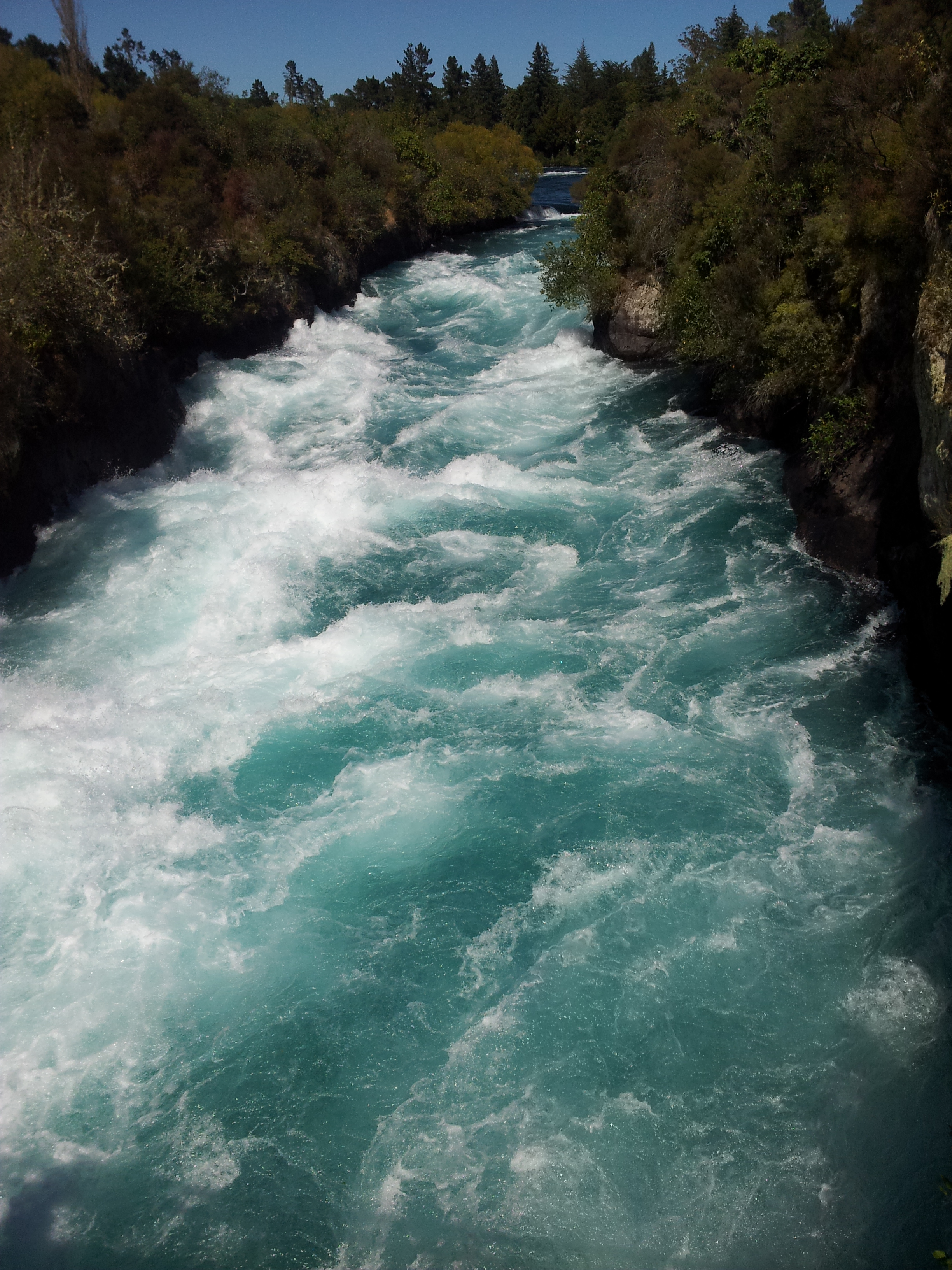
In a word: Blue

Of course we all know this word is a colour, or color depending on where you live.

You know, blue sky, deep blue sea, blonde hair blue eyes.  Very descriptive.

But it can also mean you are down in the dumps, a rather strange, for some, expression that means you are sad or unhappy.

For others to have a blue means to have a fight with someone

And oddly, and I know this from first hand experience, that a red haired person will be called bluey, or less pleasing either carrot top or blood nut.  I used to ignore those people who used those expressions, except for my father in law.

You can do something until you are blue in the face, which means do it without result until exhaustion, another way of saying your wasting your time.

And if something comes out of the blue, it usually means its entirely unexpected.  For me, that’s always a bill I wasn’t expecting, for someone else an inheritance.

And in some parts of the world, blue is used as a synonym for conservative political party, for insistence, the Liberal party in Australia, and the Democrats in the United States

Blue should not be confused with the word blew, which is the past tense of blow, which is wind causing an air current, or blowing air through pursed lips.

That doesn’t mean that if something blew up it was just a giant air mass exploding because it can’t.  If a bomb blew up it means it detonated.

And if that sounds complicated:

What if something blew my mind?  Does that mean my head exploded?  No, it just means its incomprehensible, whether good or bad.

Or

What if I blew a fortune on a three legged horse?  We all throw good money after bad, but you can easily lose a fortune, or blew it.

Its the same thing with opportunities, for instance, he had a chance and he blew it.  Yes, obviously something better came along, not, or he just ignored a sterling opportunity.

Searching for locations: Kaikoura, New Zealand, and, of course, the whales

I’m sure a lot of people have considered the prospect of whale watching.  I’m not sure how the subject came up on one of our visits to New Zealand, but I suspect it was one one of those tourist activity leaflets you find in the foyer of motels, hotels, and guesthouses.

Needless to say, it was only a short detour to go to Kaikoura and check out the prospect.

Yes, the ocean at the time seemed manageable.  My wife has a bad time with sea sickness, but she was prepared to make the trip, after some necessary preparations.  Seasickness tablets and special bands to wear on her wrist were recommended and used.

The boat was large and had two decks, and mostly enclosed.  There were a lot of people on board, and we sat inside for the beginning of the voyage.  The sea wasn’t rough, but there was about a meter and a half swell, easily managed by the boat while it was moving.

It took about a half hour or so to reach the spot where the boat stopped and a member of the crew used a listening device to see if there were any whales.

That led to the first wave of sickness.

We stopped for about ten minutes, and the boat moved up and down on the waves.  It was enough to start the queasy stomachs of a number of passengers.  Myself, it was a matter of going out on deck and taking in the sea air.  Fortunately, I don’t get seasick.

Another longish journey to the next prospective site settled a number of the queasy stomachs, but when we stopped again, the swell had increased, along with the boat’s motion.  Seasick bags were made available for the few that had succumbed.

By the time we reached the site where there was a whale, over half the passengers had been sick, and I was hoping they had enough seasick bags, and then enough bin space for them.

The whale, of course, put on a show for us, and those that could went out on deck to get their photos.

DSCN1026.JPG
DSCN1028.JPG
DSCN1029.JPG

By the end of the voyage, nearly everyone on board was sick, and I was helping to hand out seasick bags.

Despite the anti sickness preparations, my wife had also succumbed.  When we returned and she was asked if the device had worked, she said no.

But perhaps it had because within half an hour we were at a cafe eating lunch, fish and chips of course.

This activity has been crossed off the bucket list, and there’s no more whale watching in our traveling future.  Nor, it seems, will we be going of ocean liners.

Perhaps a cruise down the Rhine might be on the cards.  I don’t think that river, wide as it is in places, will ever have any sort of swell.

Searching for locations: The Kingston Flyer, Kingston, New Zealand

The Kingston Flyer was a vintage train that ran about 14km to Fairlight from Kingston, at the southern end of Lake Wakatipu, and back.

This tourist service was suspended in December 2012 because of locomotive issues.

However, before that, we managed to go on one of the tours, and it was a memorable trip.  Trying to drink a cup of tea from the restaurant car was very difficult, given how much the carriages moved around on the tracks.

The original Kingston Flyer ran between Kingston, Gore, Invercargill, and sometimes Dunedin, from the 1890s through to 1957.

There are two steam locomotives used for the Kingston Flyer service, the AB778 starting service in 1925, and the AB795 which started service in 1927.

The AB class locomotive was a 4-6-2 Pacific steam locomotive with a Vanderbilt tender, of which 141 were built between 1915 and 1927 some of which by New Zealand Railways Addington Workshops.

No 235 is the builder’s number for the AB778

There were seven wooden bodied passenger carriages, three passenger coaches, one passenger/refreshments carriage and two car/vans.  The is also a Birdcage gallery coach.  Each of the rolling stock was built between 1900 and 1923.  They were built at either of Addington, Petone, or Hillside.

I suspect the 2 on the side means second class

The passenger coach we traveled in was very comfortable.

This is one of the guard’s vans, and for transporting cargo.

The Kingston Railway Station

and cafe.

A poster sign advertising the Kingston Flyer

The running times for the tourist services, when it was running.

Short Story Writing – Don’t try this at home! – Part 6

This is not a treatise, but a tongue in cheek, discussion on how to write short stories.   Suffice to say this is not the definitive way of doing it, just mine.  It works for me – it might not work for you.

Now, there’s this thing called continuity, but it covers a whole range of writing sins, most of which I eventually get caught out.  Films sometimes miss a few items, like back in the roman days, there are plane trails in the sky, in a 1920’s period piece, there’s a mobile phone sitting on a desk.

Like one minute the hero has a gun, and the next he’s fighting for his life with a knife, and, hey presto, there’s that gun again.  The error might not be that big but you can’t pull out a weapon you don’t have or wasn’t there in the first place.

Similarly, the hero pulls out a mobile phone, but there’s only one problem, it’s 1980, and there are no mobile phones.  Our problem might be that we are so used to doing and using certain things that we might forget, for a minute or two, that were not available in the past.

Then there’s places like hotels and restaurants, both of which change hands and close and reopen with a different owner like someone changes their socks.  There’s no substitute for checking, on the internet of course, whether a Hilton Hotel was in 6th Avenue, New York, in 1920.

The answer is no.  The first Hilton Hotel was in Waco in 1927.  The New York Hilton opened in 1963.

The same goes for the fashion of the day.

I’m no fashion guru, but I have to rely on Google once again to fill in the gaps.

And my all-time favourite, getting the right make and model of car.

Oh, and just for good measure, back in the old days they used acoustic couplers to attach to phones via a serial port to dial-up not a server, but a BBS, Bulletin Board Service, at a rate of 300 baud, or a little while later, 1,200 baud.

There was no internet in general use.  If you wanted to call the office when out, use a telephone box.  Or carrier pigeon.

And the use of language, there’s a lot of stuff relevant today that was not used back then, and there was a lot of stuff back then that isn’t tolerated now.  Some of it might be hard to get your head around. 

It isn’t for me, because I can remember the 1970s and 1980s, but I’m not too sure about allowing some of what happened then to creep into my work.

So, you get the picture.  Try to use the past as the past, or leave it in the past.

Unless it’s a book about time travel, then all bets are off.

In a word: Page

We as authors always like to see two little words in every review, page turner.

Alas, sometimes they’re not, but usually this applied to non fiction simple because they’re reference books. Then another two words apply: boat anchor.

The good stuff is usually over the page.

Page in this instance refers to a leaf in a book, which generally has many pages.

Then the is a page boy, not what you’d find lurking around these days but were more common in days past, but refers to a boy in training to become a knight, or an errand boy for a nobleman.

These days a page boy opens doors and runs messages in a hotel.

Another variation is being paged over the P.A. system, always a major cause of embarrassment because you and everyone else thinks your in trouble.

Of course, before there were mobile phones, there were pagers, and sometimes in the deathly silence of the classroom, it went off. Definitely not advisable to have one on you if you are trying to sneak up on someone. Same goes for the modern equivalent, the mobile phone.

For the person who uses a word processor, you are familiar with pages, and having the software generate page numbers, of course, not for the title page, and a different numbering for other pages like an index, before the story starts.

Complicated? Sometimes.

And many years ago a boss of mine often used to say I needed to turn over a new page, and it did make much sense to me. That might have been because I was young and stupid. But, later on I realised what he was really saying was that I needed to turn over a new leaf.

Kind of strange, but then a lot saying are.

And did I?

Eventually.

And just to end on a high note, Paige is also the name of a girl, I think, and one I’ve decided to use in a story.

Searching for locations: Oreti Village – No two sunrises are the same – 2

Oreti Village, Pukawa Bay, North Island, New Zeland

On the southern tip of Lake Taupo

Our first morning there, a Saturday.  Winter.  Cold.  And a beautiful sunrise.

20180812_073230

This was taken from the balcony, overlooking the lake.

The sun is just creeping up over the horizon

20180812_073241

It gradually gets lighter, and then the sun breaks free of the low cloud

It lights up the balcony

20180811_074651

And the trees just beyond, a cascade of colorful ferns.

20180811_074622

It looks like it’s going to be a fine day, our first for this trip, and we will be heading to the mountains to see snow, for the first time for two of our granddaughters.

Short Story Writing – Don’t try this at home! – Part 5

This is not a treatise, but a tongue in cheek, discussion on how to write short stories.   Suffice to say this is not the definitive way of doing it, just mine.  It works for me – it might not work for you.

Now we have the where and the who.  What’s the story going to be about?

I find inspiration in the most unlikely places.

Shopping malls are great, there is so many things going on, so many different types of people, there’s often enough to fill a journal.

Driving on the roads, you get to see some of the most amazing stunt driving, and it’s not even being filmed, it’s just playing out before your very eyes.

Waiting in hospitals, waiting for doctors, accountants, dentists, friends, hanging around coffee shops, cafes, bistros, restaurants, hotels, the list is endless.

But often a reliable source, the media and newspapers in particular, and a frequent go to, and the more obscure the headline the better.  Then it’s simply a matter of letting your imagination run free, like:

Four deaths, four mysteries, all homeless.

This poses a few interesting scenarios, such as, were they homeless or were they made to look like they are homeless.  If they are genuinely homeless how did they die?  Are they connected in any way?

The point is, far from the original story that simply covers four seemingly random deaths, a writer can spin this into a thriller very easily.

It could follow a similar headline in another country where three headlines could be found, say, in London, where a man is found dead in an abandoned building, a week after he died, with no obvious signs of how he died.

A woman is killed in what seems, from the outset, an accident involving two cars, but the kicker is after three days, the driver of the second vehicle just simply disappears.

A man is reported missing after not reporting for work when he was supposed to return from a vacation in Germany.

And the third death, where an obscure piece says a man was found at the bottom of a mountain, presumed to have fallen in a climbing accident.

It’s all in the joining of the imaginary, yet possibly quite real, dots.

You could be on a train, and two people are acting oddly, note I didn’t say suspiciously, when going to or from work.

When on a holiday, you notice that a fellow hotel guest is in the same place at the same time every day but acting like he or she is waiting for someone or something.  Then suddenly they’re not there.

But I’m not suggesting for a minute you should start investigating.

Just let the imagination work it’s tricks.

And, before you know it, you’re on that rollercoaster ride.

Maybe there’ll be less confusion tomorrow.

In a word: Under

Under by itself is a rather boring word, you know, under the moon, under the sea, under the influence, which is not hard to be if you’ve been hypnotised or after a few drinks.

Under is anything beneath something else.

But lts add it to some other words like,

Under rated, which means it is better that what others give it credit.

Under wear, what you would wear underneath your clothes.

Under study, the person who takes over a lead role when the lead is incapacitated. And how many understudys are guilty of harming the lead, in order to get a big break?

And not get away with it?

Under stood, an agreement that might or might not be in writing that something will happen, that is, it is understood that I will be the next president.

Or not. Who on earth would really want to be president of anything.

So in the spirit of trying to cionfuse everyone all of the time, I have a conundrum in thr form of a question, whar is the difference between under and underneath.

To me there is none, you can be under the sea or underneath the sea, or under the table or underneath the table, but then there’s another, you can be under the influence but not underneath the influence, though technically you could, if you wanted to used confusing English.

And, just to add to the confusion further, I can say that the submarine sailed under the sea, underneath the sea, but, in actual fact, it doesnt.

What is under the sea is the sand, or sea bed, and a submarine does not plow its way through the sand, does it.

What we really should be saying is that a submarine moves through water.

Just saying…

Searchings for locations: Oreti Village – no two sunrises are the same (1)

Oreti village, Pukawa Bay, North Island, New Zealand

On the southern tip of Lake Taupo

Our first morning there, a Saturday.  Winter.  Cold.  And a beautiful sunrise.

20180812_073230

This was taken from the balcony, overlooking the lake.

The sun is just creeping up over the horizon

20180812_073241

It gradually gets lighter, and then the sun breaks free of the low cloud

It lights up the balcony

20180811_074651

And the trees just beyond, a cascade of colorful ferns.

20180811_074622

It looks like its going to be a fine day, our first for this trip, and we will be heading to the mountains to see snow, for the first time for two of our granddaughters.

In a word: Flower

It’s what we expect to see when we walk past the front of some houses but instead sometimes see lawn, rocks, or a disaster.

They are what makes the difference between a delightful street and an ugly one, and by that I mean flowers.

By definition though, it means the state or period in which the plant’s flowers have developed and opened/

Just beware the man who turns up with a bunch of flowers that look vaguely familiar to those that grow in your neighbour’s gardens.

They are also in abundance in horticultural gardens, and in florist shops.

My favourites are roses.

And just a word of warning, look out for triffids.  If you read John Wyndham science fiction you’ll know what I mean.

Another mean for the word is to reach the optimum stage of development, though the word bloom could also be used to describe the same thing.

There is another similar-sounding word, flour, but this is the stuff used to make bread, scones, and puddings.

By definition, it is the result of grinding wheat or other grains to a powder.

If something is said to be floury, then it means it is bland.