In Beijing Hutongs are formed by lines of traditional courtyard residences, called siheyuan. Neighborhoods were formed by joining many hutongs together. These siheyuan are the traditional residences, usually occupied by a single or extended family, signifying wealth, and prosperity.
Over 500 of these still exist.Many of these hutongs have been demolished, but recently they have become protected places as a means of preserving some Chinese cultural history. They were first established in the Yuan Dynasty (1279-1368)Many of these Hutongs had their main buildings and gates built facing south, and lanes connecting them to other hutongs also ran north to south.
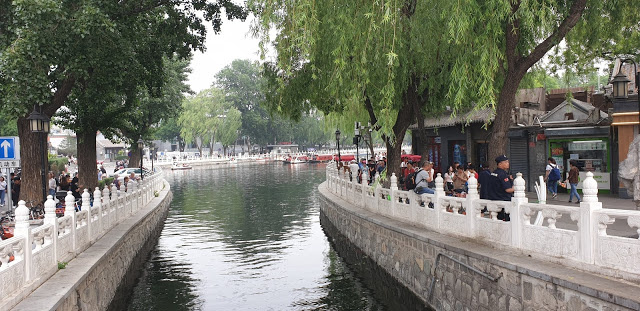
Many hutongs, some several hundred years old, in the vicinity of the Bell Tower and Drum Tower and Shichahai Lake are preserved and abound with tourists, many of which tour the quarter in pedicabs.
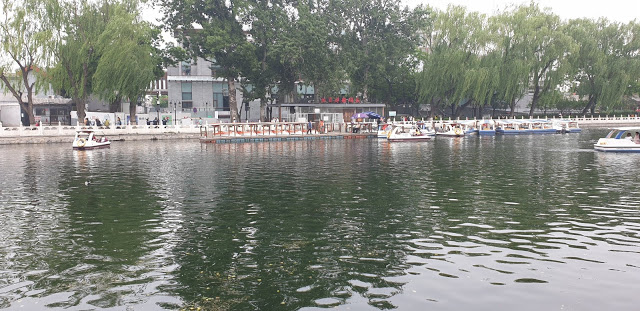
The optional tour also includes a visit to Shichahai, a historic scenic area consisting of three lakes (Qianhai, meaning Front Sea; Houhai, meaning Back Sea and Xihai, meaning West Sea), surrounding places of historic interest and scenic beauty and remnants of old-style local residences, Hutong and Courtyard.
First, we had a short walk through the more modern part of the Hutong area and given some free time for shopping, but we prefer just to meander by the canal.
There is a lake, and if we had the time, there were boats you could take.
With some time to spare, we take a quick walk down one of the alleyways where on the ground level are small shops, and above, living quarters.
Then we go to the bell and drum towers before walking through some more alleys was to where the rickshaws were waiting. The Bell tower
And the Drum tower. Both still working today.
The rickshaw ride took us through some more back streets where it was clear renovations were being made so that the area could apply for world heritage listing. Seeing inside some of the houses shows that they may look dumpy outside but that’s not the case inside.
The rickshaw ride ends outside the house where dinner will be served, and is a not so typical hose but does have all the elements of how the Chinese live, the boy’s room, the girl’s room, the parent’s room, the living area, and the North-south feng shui.
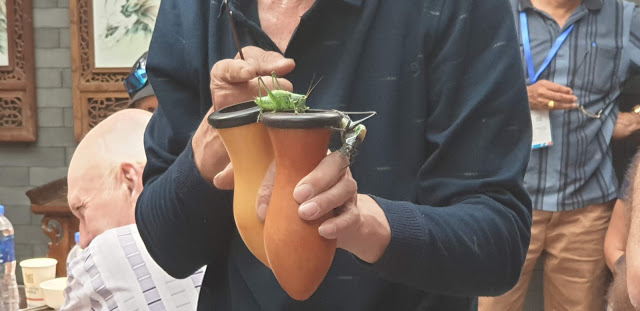
Shortly after we arrive, the cricket man, apparently someone quite famous in Beijing arrives and tells us all about crickets and then grasshoppers, then about cricket racing. He is animated and clearly enjoys entertaining us westerners.
I’m sorry but the cricket stuff just didn’t interest me. Or the grasshoppers.
As for dinner, it was finally a treat to eat what the typical Chinese family eats, and everything was delicious, and the endless beer was a nice touch.
And the last surprise, the food was cooked by a man.
Instead of making a grand entrance, arriving in style and being greeted by important dignitaries, we are slinking in via an airplane, late at night. It’s hardly the entrance I’d envisaged. At 9:56 the plane touches down on the runway. Outside the plane, it is dark and gloomy and from what I could see, it had been raining. That could, of course, simply be condensation.
Once on the ground, everyone was frantically gathering together everything from seat pockets and sending pillows and blankets to the floor. A few were turning their mobile phones back on, and checking for a signal, and, perhaps, looking for messages sent to them during the last 12 hours. Or perhaps they were just suffering from mobile phone deprivation.
It took 10 minutes for the plane to arrive at the gate. That’s when everyone moves into overdrive, unbuckling belts, some before the seatbelt sign goes off, and are first out of their seats and into the overhead lockers. Most are not taking care that their luggage may have moved, but fortunately, no bags fall out onto someone’s head. The flight had been relatively turbulent free.
When as many people and bags have squeezed into that impossibly small aisle space, we wait for the door to open, and then the privileged few business and first-class passengers to depart before we can begin to leave. As we are somewhere near the middle of the plane, our wait will not be as long as it usually is. This time we avoided being at the back of the plane. Perhaps that privilege awaits us on the return trip.
Once off the plane, it is a matter of following the signs, some of which are not as clear as they could be. It’s why it took another 30 odd minutes to get through immigration, but that was not necessarily without a few hiccups along the way. We got sidetracked at the fingerprint machines, which seemed to have a problem if your fingers were not straight, not in the center of the glass, and then if it was generally cranky, which ours were, continue to tell you to try again, and again, and again, and again…That took 10 to 15 minutes before we joined an incredibly long queue of other arrivals,
A glance at the time, and suddenly it’s nearly an hour from the moment we left the plane.
And…
That’s when we got to the immigration officer, and it became apparent we were going to have to do the fingerprints yet again. Fortunately this time, it didn’t take as long. Once that done, we collected our bags, cleared customs by putting our bags through a huge x-ray machine, and it was off to find our tour guide.
We found several tour guides with their trip-a-deal flags waiting for us to come out of the arrivals hall. It wasn’t a difficult process in the end. We were in the blue group. Other people we had met on the plane were in the red group or the yellow group. The tour guide found, or as it turned out she found us, it was simply a matter of waiting for the rest of the group, of which there were eventually 28.Gathered together we were told we would be taking the bags to one place and then ourselves to the bus in another. A glance in the direction of the bus park, there were a lot of busses.
Here’s a thought, imagine being told your bus is the white one with blue writing on the side.
Yes, yours is, and 25 others because all of the tourist coaches are the same. An early reminder, so that you do not get lost, or, God forbid, get on the wrong bus, for the three days in Beijing, is to get the last five numbers of the bus registration plate and commit them to memory. It’s important. Failing that, the guide’s name is in the front passenger window.
Also, don’t be alarmed if your baggage goes in one direction, and you go in another. In a rather peculiar set up the bags are taken to the hotel by what the guide called the baggage porter. It is an opportunity to see how baggage handlers treat your luggage; much better than the airlines it appears.
That said, if you’re staying at the Beijing Friendship Hotel, be prepared for a long drive from the airport. It took us nearly an hour, and bear in mind that it was very late on a Sunday night.
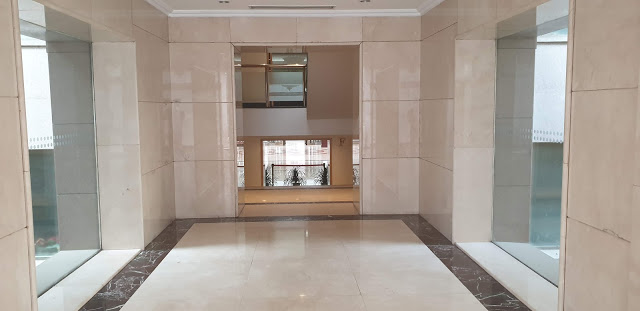
Climbing out of the bus after what seemed a convoluted drive through a park with buildings, we arrive at the building that will be our hotel for the next three days. From the outside, it looks quite good, and once inside the foyer, that first impression is good. Lots of space, marble, and glass. If you are not already exhausted by the time you arrive, the next task is to get your room key, find your bags, get to your room, and try to get to be ready the next morning at a reasonable hour.
Sorry, that boat has sailed.
We were lucky, we were told, that our plane arrived on time, and we still arrived at the hotel at 12:52. Imagine if the incoming plane is late.
This was taken the following morning. It didn’t look half as bland late at night.
This is the back entrance to Building No 4 but is quite representative of the whole foyer, made completely of marble and glass. It all looked very impressive under the artificial lights, but not so much in the cold hard light of early morning.
This the foyer of the floor our room was on. Marble with interesting carpet designs. Those first impressions of it being a plush hotel were slowly dissipating as we got nearer and nearer to the room. From the elevator, it was a long, long walk.
So…Did I tell you about the bathroom in our room?
The shower and the toilet both share the same space with no divide and the shower curtain doesn’t reach to the floor. Water pressure is phenomenal. Having a shower floods the whole shower plus toilet area so when you go to the toilet you’re basically underwater.
Don’t leave your book or magazine on the floor or it will end up a watery mess.
And the water pressure is so hard that it could cut you in half. Only a small turn of the tap is required to get that tingling sensation going.
The other day when visiting a friend I was asked if I would like some camomile tea. I said it was something I had tried once and didn’t like, which prompted the comment ‘you don’t seem to like very much’.
It was not a comment made in malice, we have known each other a long time, but I didn’t realize it until then that our individual tastes had changed over time, more particularly in my case.
I used to drink tea with milk and three, sometimes more, sugars once, drink the archetypal Australian beer like Fosters Lager and Carlton Draught, but in recent years found I could no longer drink it and had switched to European beers such as Peroni or Heineken.
It got me thinking about how our likes and dislikes change over time, sometimes through a bad experience (as is the case with a type of alcohol – mine is tequila), sometimes for other reasons, like for dietary or health reasons (one is having diabetes).
My steak preference has changed from medium to medium-rare to rare, I no longer have tea with milk and sugar, and drastically cut down on chocolate.
Another phenomenon I have noticed particularly in my and my wife’s case is how our tastes have changed together, so I’m assuming that is from familiarity.
In the case of friends, you do not necessarily see them all that often, so it would be possible for them to change and you do not know about it, and no doubt eventually prompt a comment.
There is also the case of external influences on each of us that bring changes, such as those who have children and those who do not, those who travel to particular places and those who travel to different places, even having a different job can affect our lives.
This is why, over time, our friends come and go, going off in different directions for one or many reasons.
I guess that’s why the saying ‘change is not always for the better’ came into being, but, there again, for some the exact opposite might be true.
This was going to be about my usual taxi run, picking up one or other of the grandchildren from either school, or the railway station, to take them home, a benefit their parents have with grandparents with nothing better to do.
I say that tongue in cheek because I usually have something else to do, but it is a pleasurable experience for both of us because it means we get to spend some time with our grandchildren while they are young, and before they discover that world out there that we ‘oldies’ would know nothing about.
I have no doubt there are times when they think we have passed our use-by date. It’s the bane of all old people sooner or later unless they forge a close relationship with them in those early years.
I like to think we have, but you can never tell.
We’d like to be able to give them an independent ear, people who will listen to them and not judge, not in the way parents would. I remember myself saying that my parents would never understand the problems we had, that it was nothing like that when they were our age.
It’s the same now. The mantra never changes, but the generation has shifted, and I guess to a certain extent they are right. We didn’t have computers, mobile phones, or the endless supply of cash to go out with our friends to the mall, to the movies, to parties, sleepovers. We just didn’t have the money period, even if those activities existed in our time.
There wasn’t television, computer games, we had to find our own amusement, in the street, with other kids, using our imagination. We had to socially mix, talk to other kids, and there wasn’t the level of marriage breakups, broken homes, and distressed kids, not in our day. Divorce was a dirty word, spoken in hushed tones.
Now it seems homes with a mother and a father living together, or still talking to each other civilly, is a miracle rather than the norm. What the hell went wrong in 50 years? It seems to me that in the last 25 years we have presided over a world that has fallen to pieces, and, failing to recognize the looming disaster, we just sat by and watched it unfold.
And just how I managed to get so melancholy while waiting for a child at the railway station, I’ll never know. Perhaps it was the observance of several kids bullying another, perhaps it was because I sat in a locked car partially fearful about that trouble spilling over.
I know when I was a child my parents instilled in me a respect for others, even if I didn’t agree with them, or, god forbid, I didn’t like them. Like now, I get along with anyone and everyone because it was how we were taught.
Then.
What happened since then?
Did we forget slowly over time the virtue of tolerance and respect?
Fortunately, the train and my granddaughter have arrived, so I can cease with the rant. The children hassling each other had to run to the train and what might have been an unpleasant scene dissipated without violence.
She gets in the car after I unlock the doors and it’s the start of a fifteen-minute discussion about her day at school. It, too, is very different from my day, but, in its way, still the same battlefield between students and teachers.
If she did not walk through the door when she did then Jack would have walked away.
From the policewoman’s perspective:
She crossed the street from the corner instead of remaining on the same side of the street as she did every other night. When she reached the other sidewalk, she was about 20 yards from the nearest window of the store.
As she crossed, she got a better view of the three people in the store and noticed the woman, or girl, was acting oddly as if she had something in her hand, and, from time to time looked down beside her.
A yard or two from the window she stopped, took a deep breath, and then moved slowly, getting a better view of the scene with each step.
Then she saw the gun in the girl’s hand, and the two men, the shopkeeper and a customer facing her, hands up.
It was a convenience store robbery in progress.
She reached for her radio, but it wasn’t there. She was off duty. Instead, she withdrew, and called the station on her mobile phone, and reported the robbery. The officer at the end of the phone said a car would be there in five minutes.
In five minutes there could be dead bodies.
She had to do something, and reached into her bag and pulled out a gun. Not her service weapon, but one she carried in case of personal danger.
Guns are dangerous weapons in the hands of professional and amateur alike. You would expect a professional who has trained to use a gun to not have a problem but consider what might happen in exceptional circumstances.
People freeze under pressure. Alternately, some shoot first and ask questions later.
We have an edgy and frightened girl with a loaded gun, one bullet or thirteen in a magazine, it doesn’t matter. It only takes one bullet to kill someone.
Then there’s the trigger pressure, light or heavy, the recoil after the shot and whether it causes the bullet to go into or above the intended target, especially if the person has never used a gun.
The policewoman, with training, will need two hands to take the shot, but in getting into the shop she will need one to open the door, and then be briefly distracted before using that hand to steady the other.
It will take a lifetime, even if it is only a few seconds.
Actions have consequences:
The policewoman crouched below the window shelf line so the girl wouldn’t see her, and made it to the door before straightening. She was in dark clothes so the chances were the girl would not see her against the dark street backdrop.
Her hand was on the door handle about to push it inwards when she could feel in being yanked hard from the other side, and the momentum and surprise of it caused her to lose balance and crash into the man who was trying to get out.
What the hell…
A second or two later both were on the floor in a tangled mess, her gun hand caught underneath her, and a glance in the direction of the girl with the gun told her the situation had gone from bad to worse.
The girl had swung the gun around and aimed it at her and squeezed the trigger twice.
The two bangs in the small room were almost deafening and definitely disorientating.
Behind her, the glass door disintegrated when the bullet hit it.
Neither she nor the man beside her had been hit.
Yet.
She felt a kick in the back and the tickling of glass then broke free as the man she’d run into rolled out of the way.
Quickly on her feet, she saw the girl had gone, and wasted precious seconds getting up off the floor, then out the door to find she had disappeared.
She could hear a siren in the distance. They’d find her.
If the policewoman had not picked that precise moment to enter the shop, maybe the man would have got away.
Maybe.
If he’d been aware of the fact he was allowed to leave.
He was lucky not to be shot.
Yet there were two shots, and we know at least one of them broke the door’s glass panel.
Over the last few weeks, I’ve been lamenting the loss of many things that once existed, once upon a time.
All children have memories of their childhood, but some dissipate over time and become forgotten, almost to the pointwhere it is as if they never existed.
Like my grandmother’s house in the country, bulldozed to widen a main highway. I have a lot of difficulty remembering it even though we had spent many Christmas holidays there.
Other, more insignificant items just simply disappeared into the mists of time, as the manufacturers were slowly bought out by overseas companies and in their desire for globalisation, parochial items made for what seems, to them, to be too small for their economies of scale were no longer made.
No thought is ever given to the consumer. Nor does it matter that the item, made in this country for a hundred years, is especially attuned to the tastes of the people of this country, and therefore has a continuous core market.
Of course, as a child over 60 years ago, most of these items were confectionary. Names of brands such as Hoadleys and Rowntree have long since disappeared. Products like licorice squares, polly waffles, toscas and Crispins have gone too.
Some products like Kit Kats still exist but are made by new manufacturers like Nestle the change no longer taste anything like they used to.
But what started this lament for the old days was triggered by seeing an old, old favourite called Life Savers, which came in fruit flavours, peppermint, and musk. My all-time favourite was musk and walking through the supermarket I saw the words Life Savers on a box almost hidden on the bottom shelf and lo and behold they had musk.
The packaging had changed, and the manufacturer had changed, but that timeless confectionery had reappeared. Given its shelf location, I don’t think it will be for long.
Now, if only they could bring back Toscas, and Tarax soft drinks in small bottles. Raspberry and cola were my all time favourites.
As part of a day tour by Very Tuscany Tours, we came to this quiet corner of Tuscany to have a look at an Italian winery, especially the Sangiovese grapes, and the Chianti produced here.
And what better way to sample the wine than to have a long leisurely lunch with matched wines. A very, very long lunch.
But first, a wander through the gardens to hone the appetite:
And a photo I recognize from many taken of the same building:
Then a tour of the wine cellar:
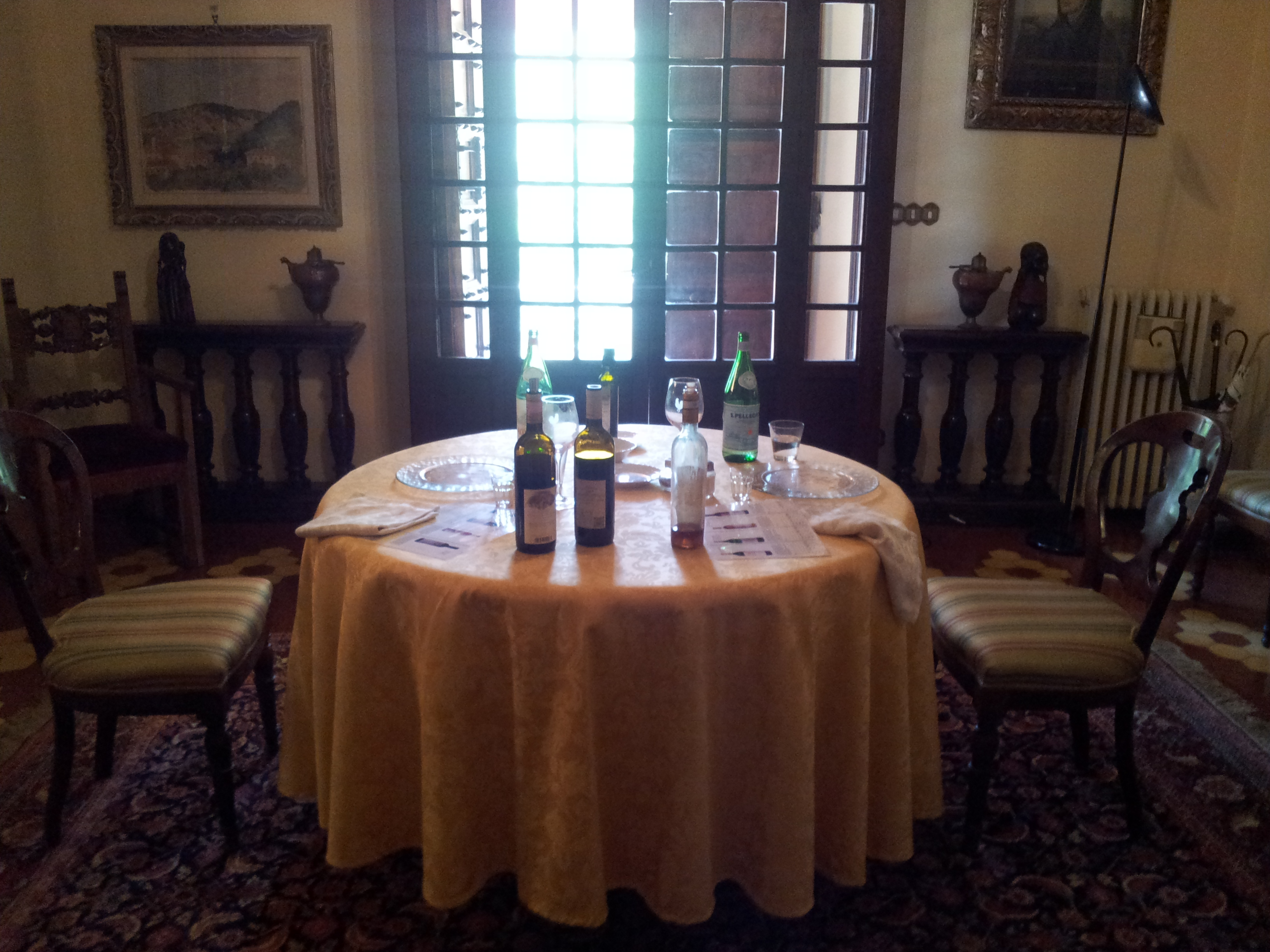
Then on to the most incredible and exquisite lunch and wine we have had. It was the highlight of our stay in Tuscany. Of course, we had our own private dining room:
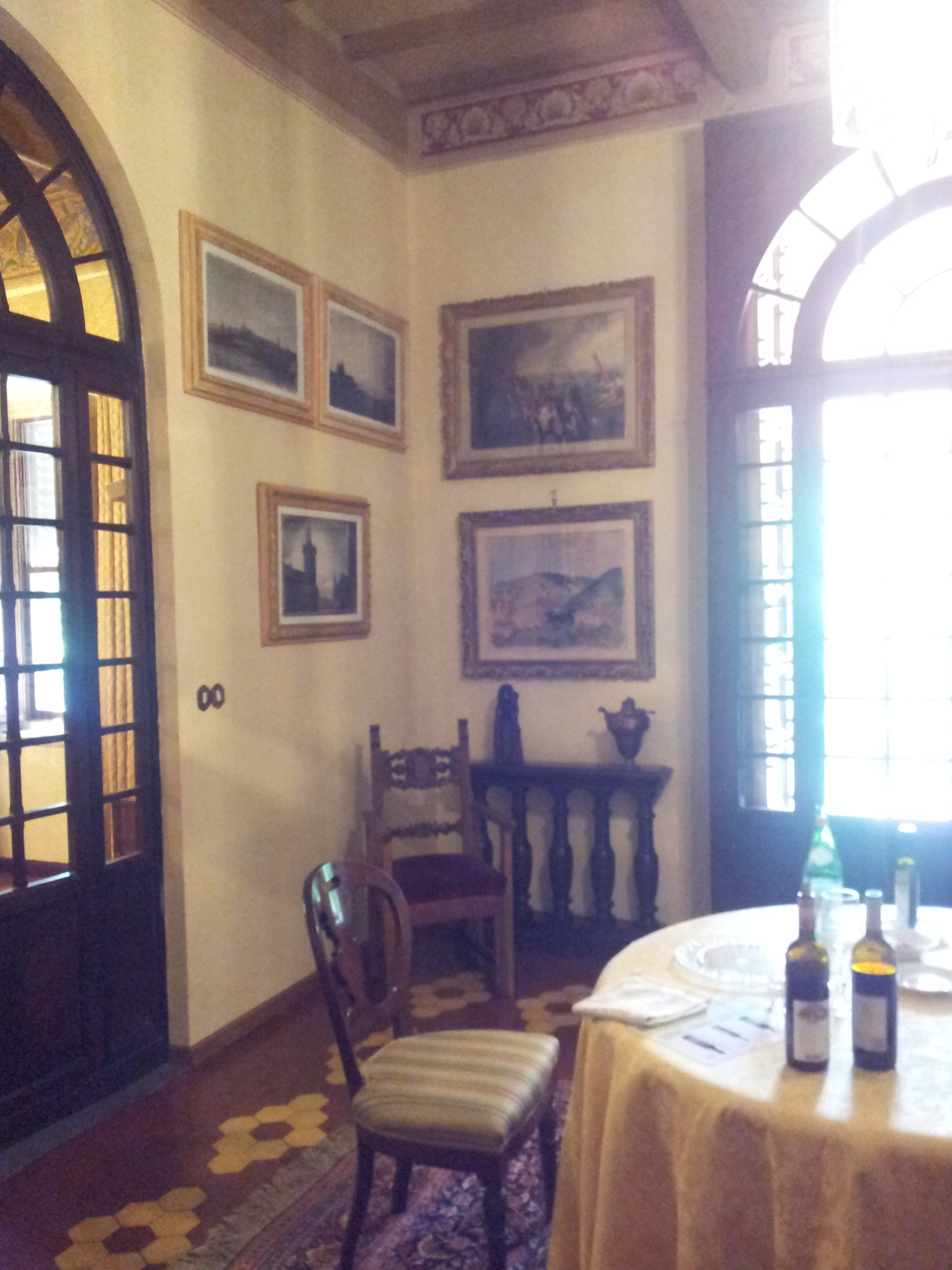
And time to study the paintings and prints on the walls while we finished with coffee and a dessert wine.
And of course, more wine, just so we could remember the occasion.
A fine day, on this trip a rarity, we decided to take the train to Windsor and see the castle.
This is a real castle, and still in one piece, unlike a lot of castles.
Were we hoping to see the Queen, no, it was highly unlikely.
But there were a lot of planes flying overhead into Heathrow. The wind must have been blowing the wrong day, and I’m sure, with one passing over every few minutes, it must annoy the Queen if she was looking for peace and quiet.
Good thing then, when it was built, it was an ideal spot, and not under the landing path. I guess it was hard to predict what would happen 500 years in the future!
I’m not sure if this was the front gate or back gate, but I was wary of any stray arrows coming out of those slits either side of the entrance.
You just never know!
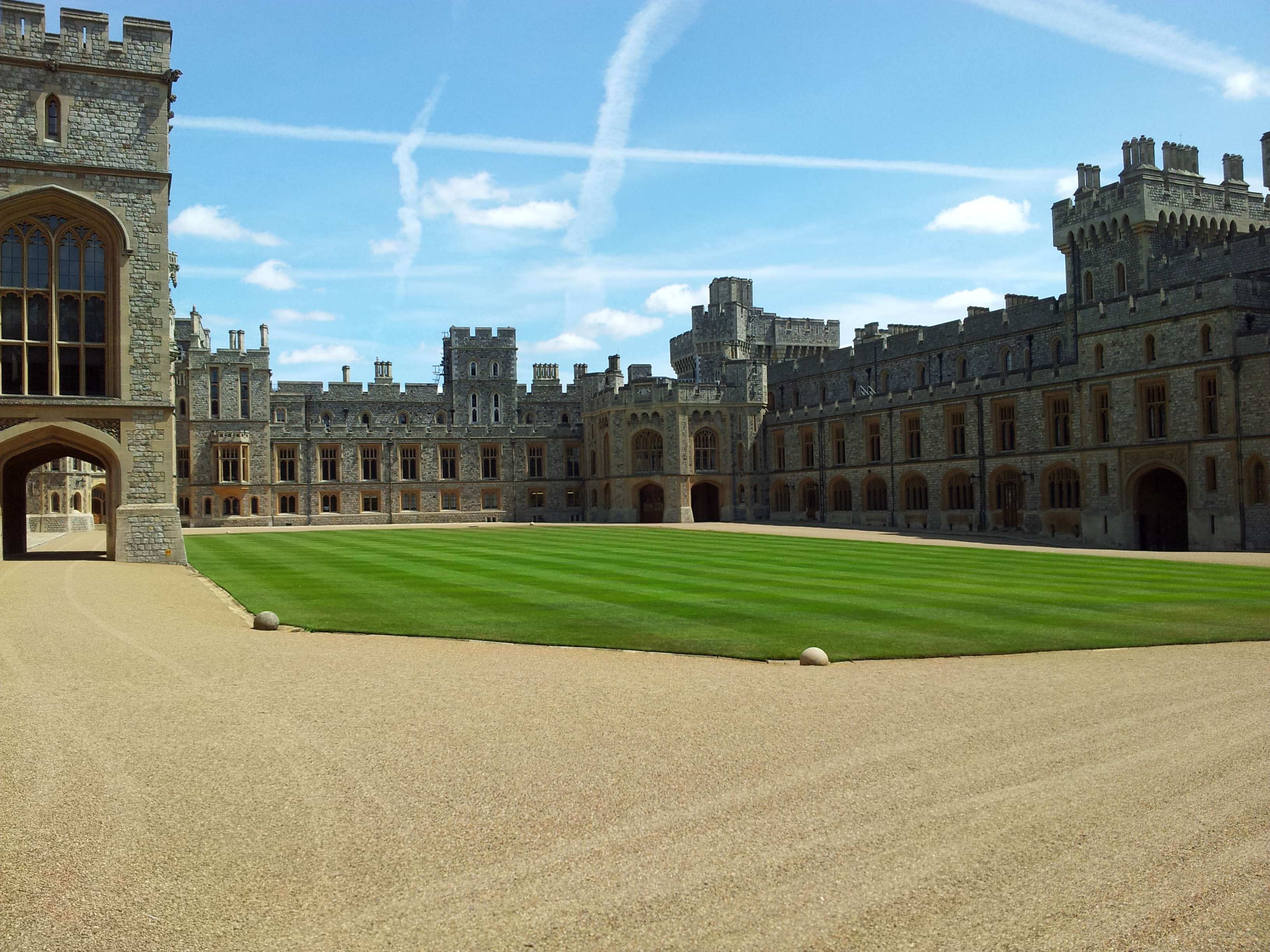
An excellent lawn for croquet. This, I think, is the doorway, on the left, where dignitaries arrive by car. The private apartments are across the back.
The visitor’s apartments. Not sure who that is on the horse.
St George’s Chapel. It’s a magnificent church for a private castle. It’s been very busy the last few months with Royal weddings.
The Round Tower, or the Keep. It is the castle’s centerpiece. Below it is the gardens.
Those stairs are not for the faint-hearted, nor the Queen I suspect. But I think quite a few royal children and their friends have been up and down them a few times.
Why did we name the planets after mythological gods?
I did a little digging and found that the Romans named the five closest planets to the sun after their most important gods, this one, named after the god of the sea, which to the Romans was Poseidon, but in translation, Neptune, and matbe because it was ‘blue’.
Of course, we all know about King Neptune.
We also know about Poseidon, which was the fictional ship that got hit by a tidal wave, and was turned into a blockbuster movie.
But in terms of science fiction, which is not what I write, but I seem to spend a lot of time watching, it strikes me that seeing the moon, we could assume that the moon could be a stopping off point on a trip to the pouter planets.
I’m always surprised at the ingenuity of ‘Sci Fi’ writers in how they can turn what is scientifically impossible to live on but not necessarily impossible to get there (after a long sleep), into a place where we can destroy with equal rapaciousness as our own planet.
If I was going to write something, perhaps it would be about turning the planet into a holiday resort, staffed by robots…
Uh oh, that’s reminiscent of another ‘Sci Fi’ series. I’ll let you guess what it is.
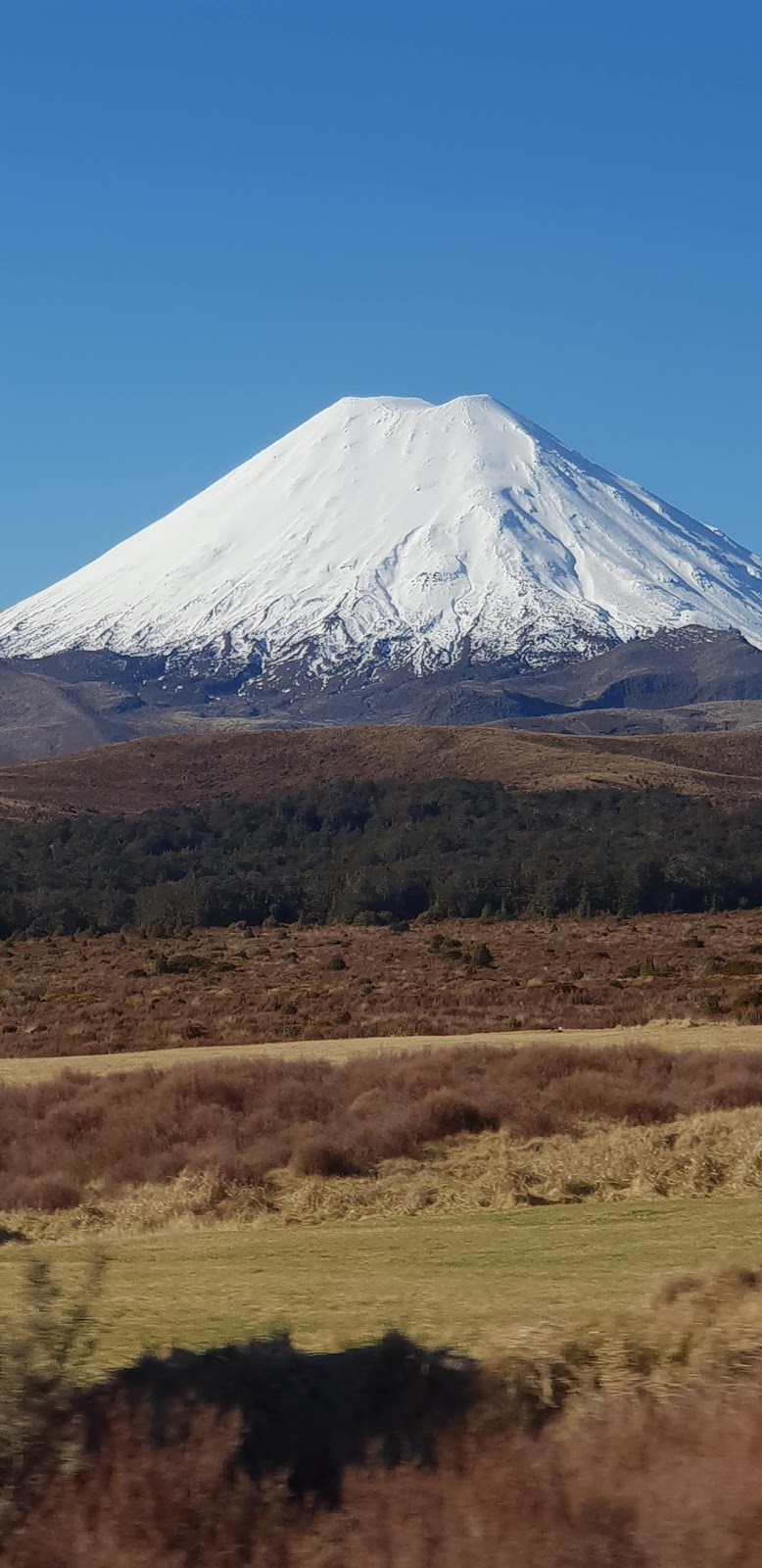
Mount Ngauruhoe is apparently still an active volcano, has been for 2,500 years or so, and last erupted on 19th February 1975, and reportedly has erupted around 70 times since 1839.
The mountain is usually climbed from the western side, from the Mangatepopo track.
This photo was taken in summer from the Chateau Tongariro carpark.
In late autumn, on one of our many visits to the area, the mountain was covered with a light sprinkling of snow and ice.
On our most recent visit, this year, in winter, it was fully covered in snow.












 Thrills, Spills, and just a dash of Romance