I have seen this television program once or twice, where a television personality digs into their past and sometimes they discover they had famous, or sometimes infamous, relatives.
I don’t think I would be so lucky, or unlucky as the case may be.
But, to be honest I haven’t really been interested in digging into the past.
On the other hand, my older brother has a keen interest in genealogy in general, borne from a desire to find out more about our family tree.
And he has gone back to the 1600s, for the relatives who came out from England, and no, they have no transported convicts, or at least he’s not saying.
Genealogy is a rather fascinating subject, and, I’ve discovered, is taught in university as a degree. My brother has one now.
What I didn’t realize is that I’ve been playing with it for years because in writing what might be called sagas you need to create your own set of mythical families, and then trace to forebears back in time.
I have one novel I’m writing that has required a family tree, and recently another for a story that required starting with a character who participated in the Eureka Stockade. We had to create parents, a migration from England to Australia, and then construct a family tree through to today so we could write a story from the perspective of a fourth-generation girl at school doing a school project.
If that sounds complicated, believe me, it is. But from my granddaughter who came up with the idea, she is very excited about it.
Much better than sitting in front of a computer playing games or a tv watching cartoons.
But once again I digress…
I have found a lot of genealogy stuff that my mother had been working on, and I’m taking it to my brother, and at the same time, l will get the latest installment on our family.
So far I’ve learned that I come from a combination of British relatives on both my mother and father’s side, the most recent my father’s mother who was born in England, and German from my mother’s side, her surname being Auhl.
No doubt, and with a great deal of irony, my relatives probably fought against each other in two world wars.
I’m sure more will be revealed on Wednesday.
But, the more I learn the more I feel inclined to create a fictionalized history with my family members as characters in the story. At the moment a biographical account of the family would be reasonably boring since as yet no one notorious had been discovered.
Tag: Non Fiction
In a word: Mark
A teacher will mark a test in order to give the student a mark out of 100. Yes, to mark a test means to ascertain right and wrong answers and score it accordingly, and getting a mark out of 100 could determine a great many different outcomes at school.
Whereas a mark on your clothes could mean you’ve been playing with fire, rolled in the mud or if much older having a salacious affair with an unexplainable lipstick mark on your collar.
A mark is someone that a con man believes will be easily deceived.
A mark is a catch in certain types of football.
You can have an identifying mark on some item of property.
it’s literally the x marks the spot for someone who cannot write, i.e. make your mark
There can be a mark on a rope that indicates the depth of water.
And many, many more…
But not to be confused with marque, which could be the make or model of a particular type of car
Or marc with is the refuse of grapes after being pressed
In a word: Not
You will not go outside, you will not go to the movies.
The word not, when used by your parents when you are a child is the key in the lock keeping you from having fun.
It is the very definition of everything negative, and much harsher than just a plain no.
That you will ‘not…’ has been the gateway for many an exploit or adventure, because anything you have done contrary to the ‘not’ is all that much sweeter.
Until you get into trouble, but, then, isn’t that how you learn life’s lessons?
But if you are a programmer like me, not takes on a whole new meaning in a language like,
‘If not like …. then’
meaning in layman’s terms if something isn’t like a specific value then do something else.
Hang on, isn’t that a bit like reality?
This is not to be confused with the work Knot which is,
A blemish in a piece of wood
The speed of a ship, winds, and sometimes a plane
But basically,
Something you tie to keep your shoes on, or around your finger to remind you to tie your shoes before getting on the 36-knot high-speed ferry made of knotty wood.
It is also something you find in tangled hair and is very painful trying to remove it.
It is also an unpleasant tightness in body muscles and you need a masseuse to get rid of them.
Searching for locations: The Paris Opera House, Paris, France
This was one of the more interesting experiences for the grandchildren as they were, as all young girls are, interested in ballet.
We thoroughly enjoyed our visit which included some time watching ballet practice.
I could not convince anyone to take the elevator back down to the ground floor as it was suspected we might be ‘attacked’ by the ‘phantom’. Certainly, the elevator was very old and I think at the time it was being repaired.

Part of the Grand Staircase in Palais Garnier Opera de Paris
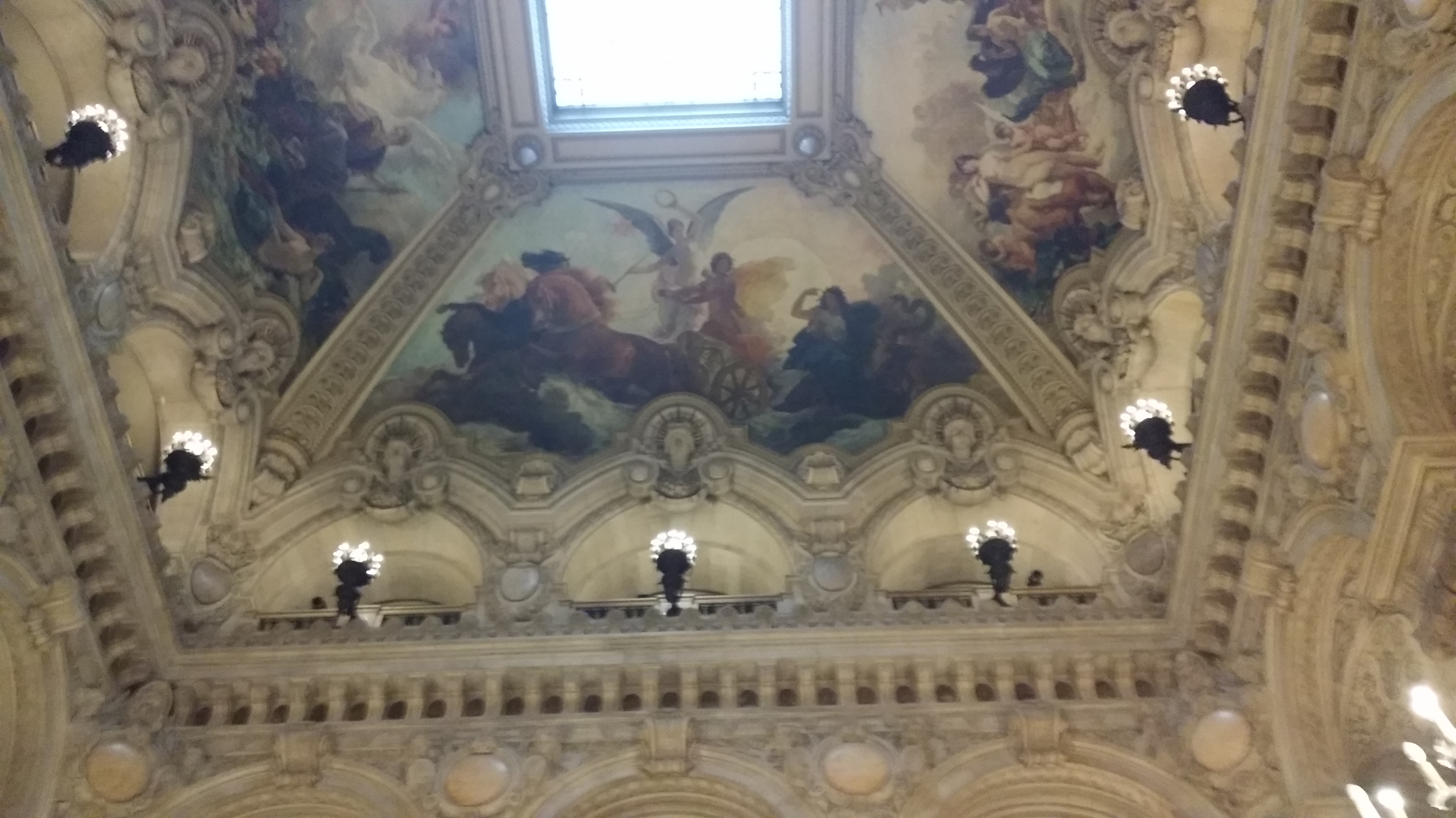
The ceiling above the main staircase. The ceiling above the staircase was painted by Isidore Pils to depict The Triumph of Apollo, The Enchantment of Music Deploying its Charms, Minerva Fighting Brutality Watched by the Gods of Olympus, and The City of Paris Receiving the Plan of the New Opéra.

The ceiling of Chagall at the Palais Garnier
On 23 September 1964, the new ceiling of the Opéra Garnier was inaugurated with great pomp. It was painted by Marc Chagall at the request of André Malraux

Amphitheatre and Orchestra Pit entrance

Interior, and doorways to boxes
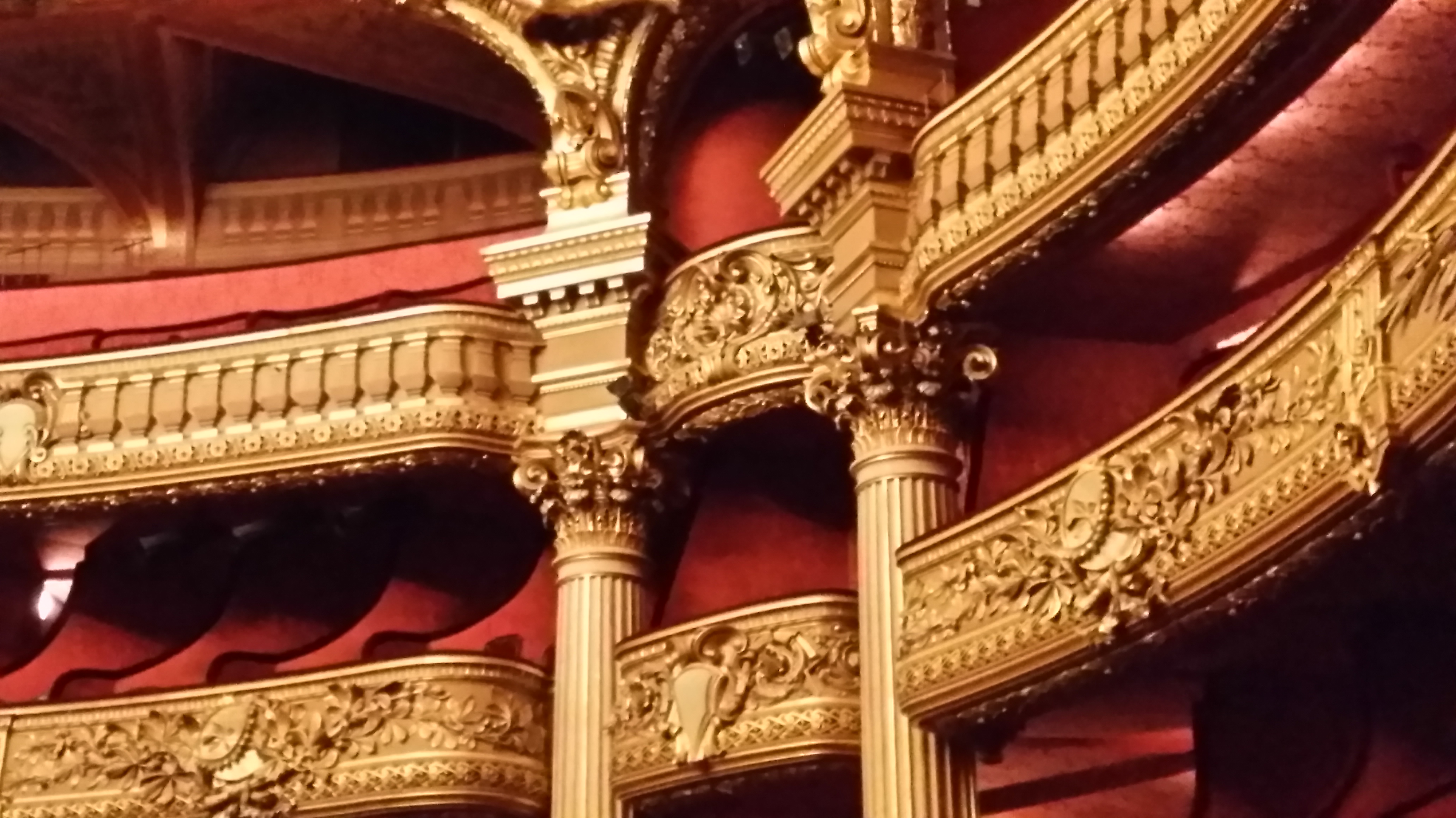
Box seats in the auditorium

Ornate ceilings and columns

Seating inside the auditorium
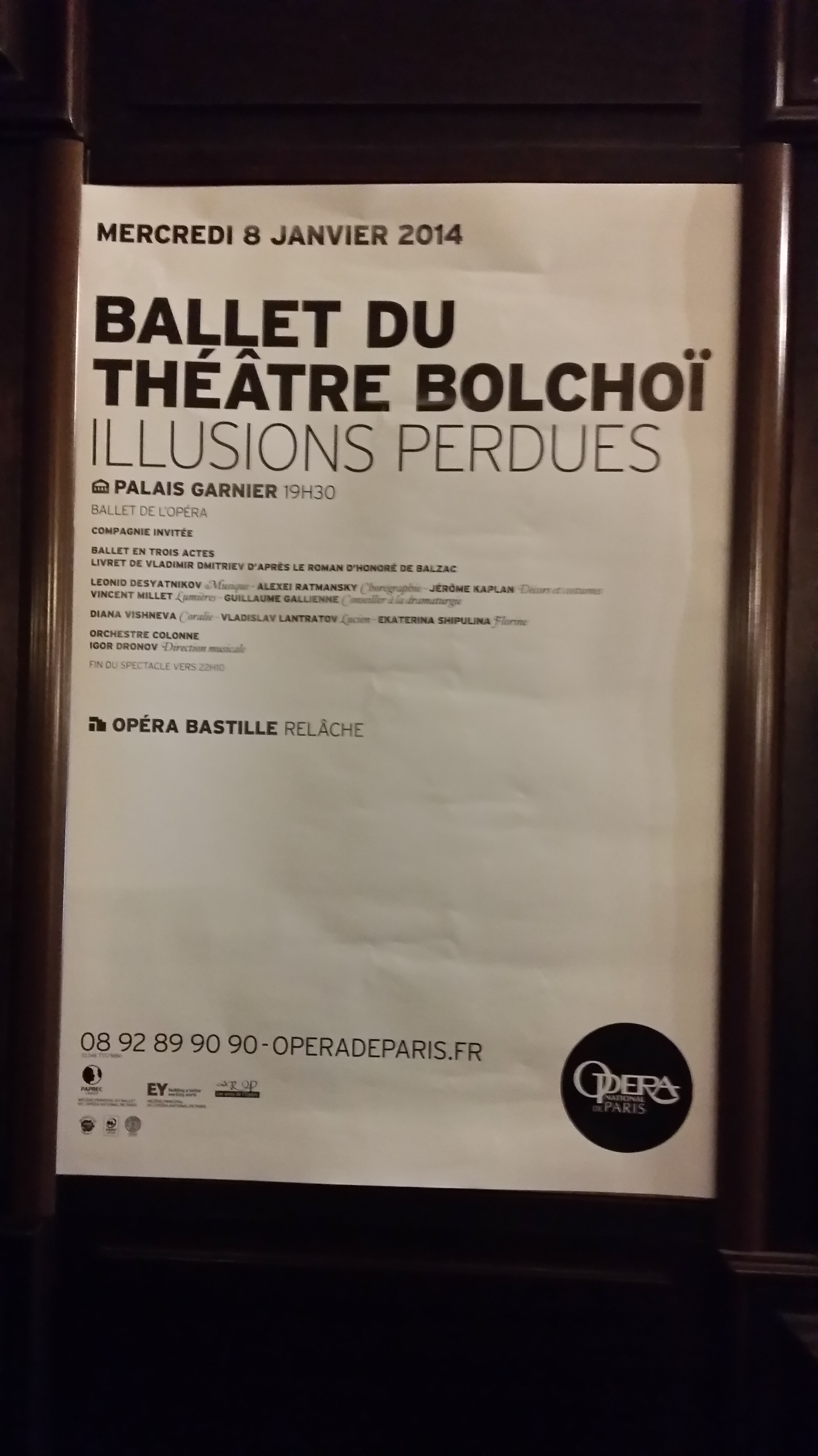
The day we were leaving Paris, was the first night of the Bolshoi Ballet. My two granddaughters were greatly disappointed at missing out on the opportunity of a lifetime, to see the Bolshoi Ballet at the Paris Opera House.

But we did get to see the principals practicing.
The power of words
They can destroy relationships
They can tear apart friendships
They can start wars
We are sometimes at a loss for words
Sometimes we can’t find the words
And then there those horrible things called crosswords.
There are antonyms and synonyms
Sometimes we use words we don’t know the meaning of because of their similarity with others we do
Then there one or more words that make other words as in anagrams
There are substitute words, words we use around children like fudge instead of, well you get what I mean
There’s no doubt we would be lost without words
Words are to be chosen carefully and thoughtfully
They need to be delivered in an appropriate manner, not in haste, and not in anger
We need to believe in what we’re saying before others will believe it
We need to learn how to express our feelings
We should take advantage of learning English (or any other native language) when at school
We need to start reading as soon as we can and keep up reading as we get older. One should never underestimate the power reading and writing gives us no matter who we are.
Always have a dictionary by your side. It is the most valuable book you can own.
And always remember the power of speech can at times move mountains
Does our education define us?
It’s 2am here, and I’m feeling philosophical, instead of being sleepy and going to bed.
It’s probably the problem most writers have when they’re working on a novel, a short story, or a blog post, or something else.
The other day a thought ran through my mind, whether or not my first school was still standing and if so, would it remember me?
Probably not. I went there in 1958, I think when I was five. I stayed there till I finished Grade six and then moved onto secondary school.
In those days, we could stay at secondary school till Form four and then, if we were 15 or over, we could leave. I went to a technical school, i.e. one that taught a trade, rather than going to a High School which was for the more academically minded and who would go on to University.
But in my day, you had to have rich parents to get into a University, and we were decidedly poor. It was a technical trade for me, and become a builder was to be my lot in life.
I wasn’t very good and sheet metal, the precursor to plumbing, or machine ship practice the forerunner to being a mechanic, or technical drawing, the forerunner to being a draughtsman
I could have just as easily been a farmer or gardener, it too was on the curriculum.
Where is this going?
Oh, yes. My old primary school. Yes, it’s still there, and it still looks like the gothic nightmare it used to. Gothic or not, I guess those years in that school were good, and I don’t seem to have any bad memories, except,. of course, of the teachers, but that’s only natural.
secondary school, that was a nightmare, so different, and much like going to university, with different classes, different teachers, different rooms, and a lot of other kids who were older, larger, meaner, and made the navigation of early teens an annabilus horribilis four times over.
So the question did my education define me?
No. I was a builder for a while, but my aspirations led me towards office work, the sort where you start at the bottom and languish there till you’re noticed.
Failing that, you work for a relative, then get headhunted, watch that opportunity slip away, and become an IT teacher that leads to computer programming.
But, as they say, always have a backup plan.
Yep! Writing. Been doing it since I was fifteen.
Now, those years I was at school have provided me with a diverse collection of people who have become characters in my stories, and I’m still waiting for the know on the door from the process server to tell me one of them finally recognized him or herself and didn’t like my impression of them.
Hasn’t happened yet.
The devil features prominently in a lot of sayings
For instance, I’ve heard someone mutter, “the devil you say…”
Or another, who was telling his friend, who, at the time was in a spot of bother, ‘You’re between the devil and the deep blue sea.”
Wrong. We all know the sea is green, not blue.
But whatever the circumstances, the devil seems to pop up a lot.
For instance,
Better the devil you know than the devil you don’t.
It seems I’ve heard that somewhere before, or at least a part of it. Hmmm.
Maybe you’ve “gone to the devil”. Can that be paired with “going downhill at a rapid rate of knots”?
OK, it’s impossible to go downhill using the speed measure of knots, that only applies to boats, so who came up with that saying, a landlubber sailor?
Hang on, isn’t there a team called the New Jersey Devils? Funny, I didn’t see if the players had horns or not, and they were using hockey sticks not tridents.
Maybe I misheard.
Neutral men are the devil’s allies, must be a lot of devils in Switzerland
The devil finds work for idle hands, oh yes, my grandmother used this often on me whenever she caught me doing nothing … which was a lot
But my favorite,
When in hell, only the devil can show you the way out.
I’m still trying to find him!
In a word: Hair
You comb it every day, or brush it, it can be tangled, fine, smooth and silky or shiny.
It can fall out, you can have none, it can be red, brown, black, blonde, white, and a million shades in between.
Yes, it’s hair.
It can be pesky stuff, especially from animals who tend to moult and leave it everywhere. We have a cat and well know the foibles of hair loss.
You can get it cut, get it coloured, trimmed, permed by a hairdresser in a salon, where lots of subjects are discussed, and even movies have been made around salons.
I haven’t been within a hairsbreadth of either living or dying, but I’m sure someone has. That hairsbreadth is not very wide, and I’d rather have bullets, arrows or fists missing by that margin.
You can be in another’s hair, that is, being a pest.
There’s the hair of the dog, supposedly a hangover cure.
And, going to scary places will make your hair stand on end.
This is not to be confused with the word heir which means something completely different, namely it described the legatee or inheritor of the family fortune.
Or not. Ages ago, only sons were seen as heirs, and that was even more prevalent among royal families. It also applied to heirs when it came to titles, and the family wealth and property, which went to the eldest son.
It makes a good plotline for many a murder mystery.
Also, let’s be clear, there is also an heiress and an heirloom.
Then there is another, hare, which is a cousin of the rabbit and considered a pest.
I’m not quite sure how someone came up with the descriptor harebrained, which has nothing to do with the hare.
It could mean to run quickly and usually in a careless manner.
Searching for locations: The Kingston Flyer, Kingston, New Zealand
The Kingston Flyer was a vintage train that ran about 14km to Fairlight from Kingston, at the southern end of Lake Wakatipu, and back.
This tourist service was suspended in December 2012 because of locomotive issues.
However, before that, we managed to go on one of the tours, and it was a memorable trip. Trying to drink a cup of tea from the restaurant car was very difficult, given how much the carriages moved around on the tracks.
The original Kingston Flyer ran between Kingston, Gore, Invercargill, and sometimes Dunedin, from the 1890s through to 1957.
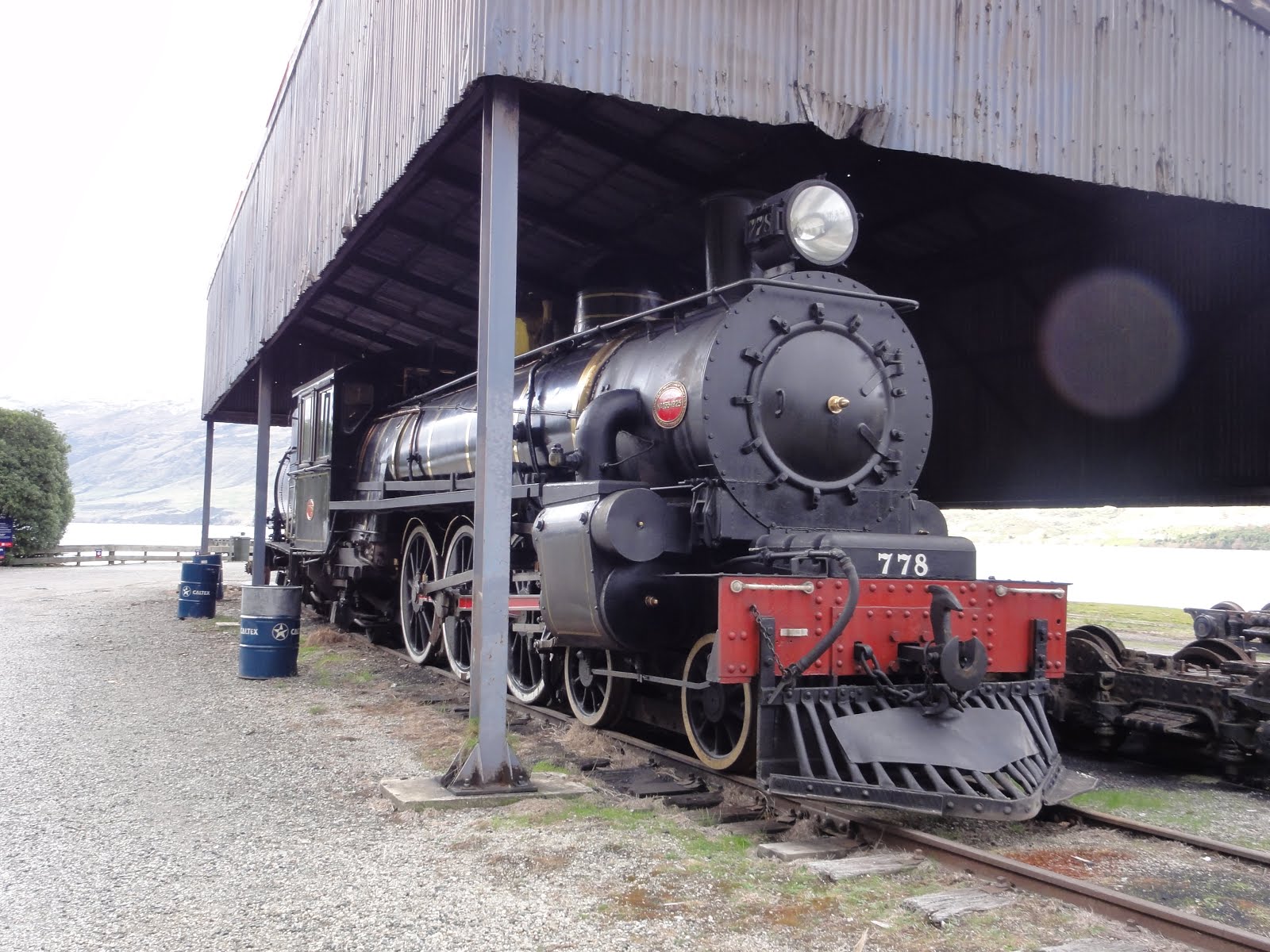
There are two steam locomotives used for the Kingston Flyer service, the AB778 starting service in 1925, and the AB795 which started service in 1927.

The AB class locomotive was a 4-6-2 Pacific steam locomotive with a Vanderbilt tender, of which 141 were built between 1915 and 1927 some of which by New Zealand Railways Addington Workshops.
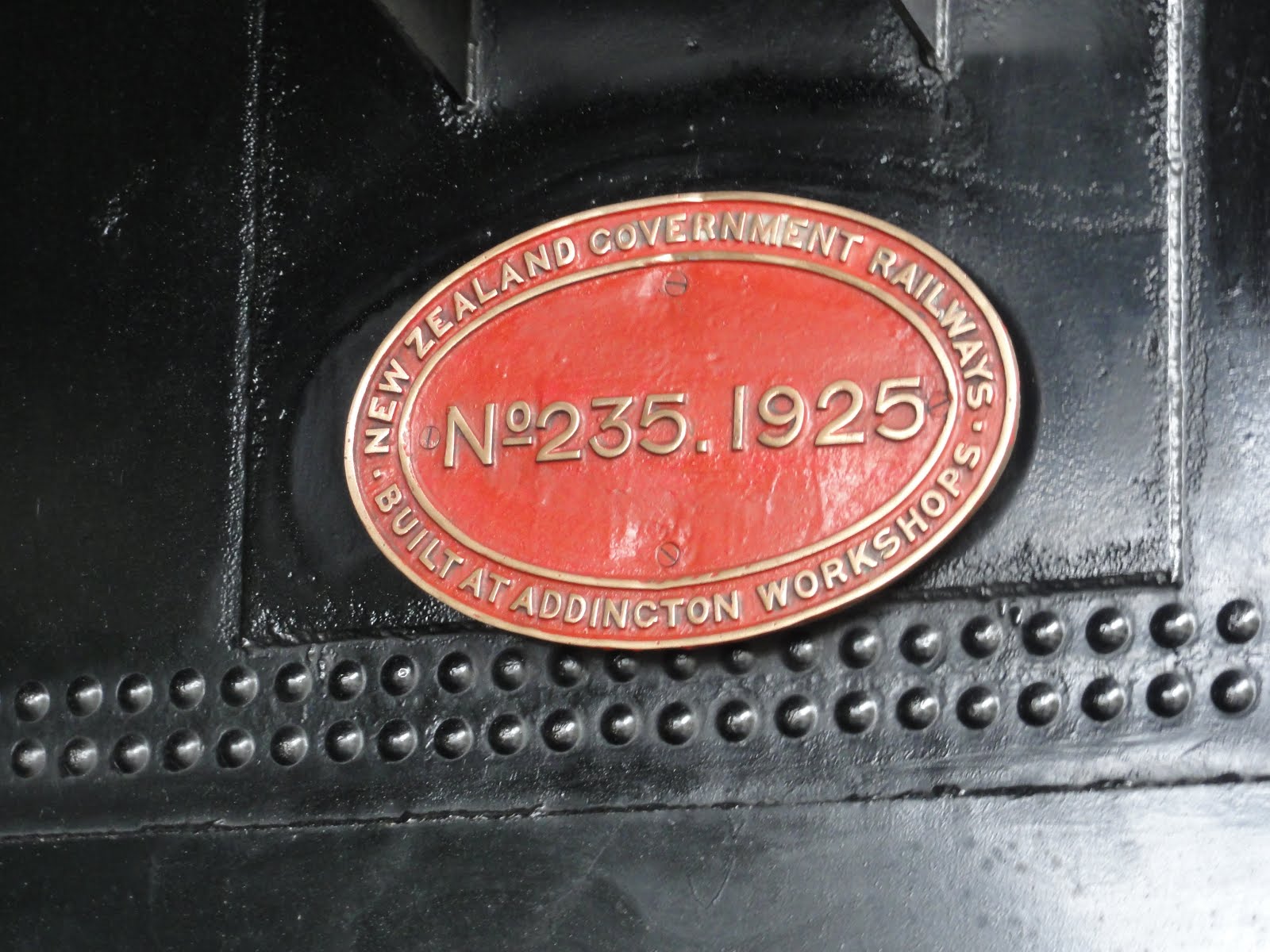
No 235 is the builder’s number for the AB778

There were seven wooden bodied passenger carriages, three passenger coaches, one passenger/refreshments carriage and two car/vans. The is also a Birdcage gallery coach. Each of the rolling stock was built between 1900 and 1923. They were built at either of Addington, Petone, or Hillside.
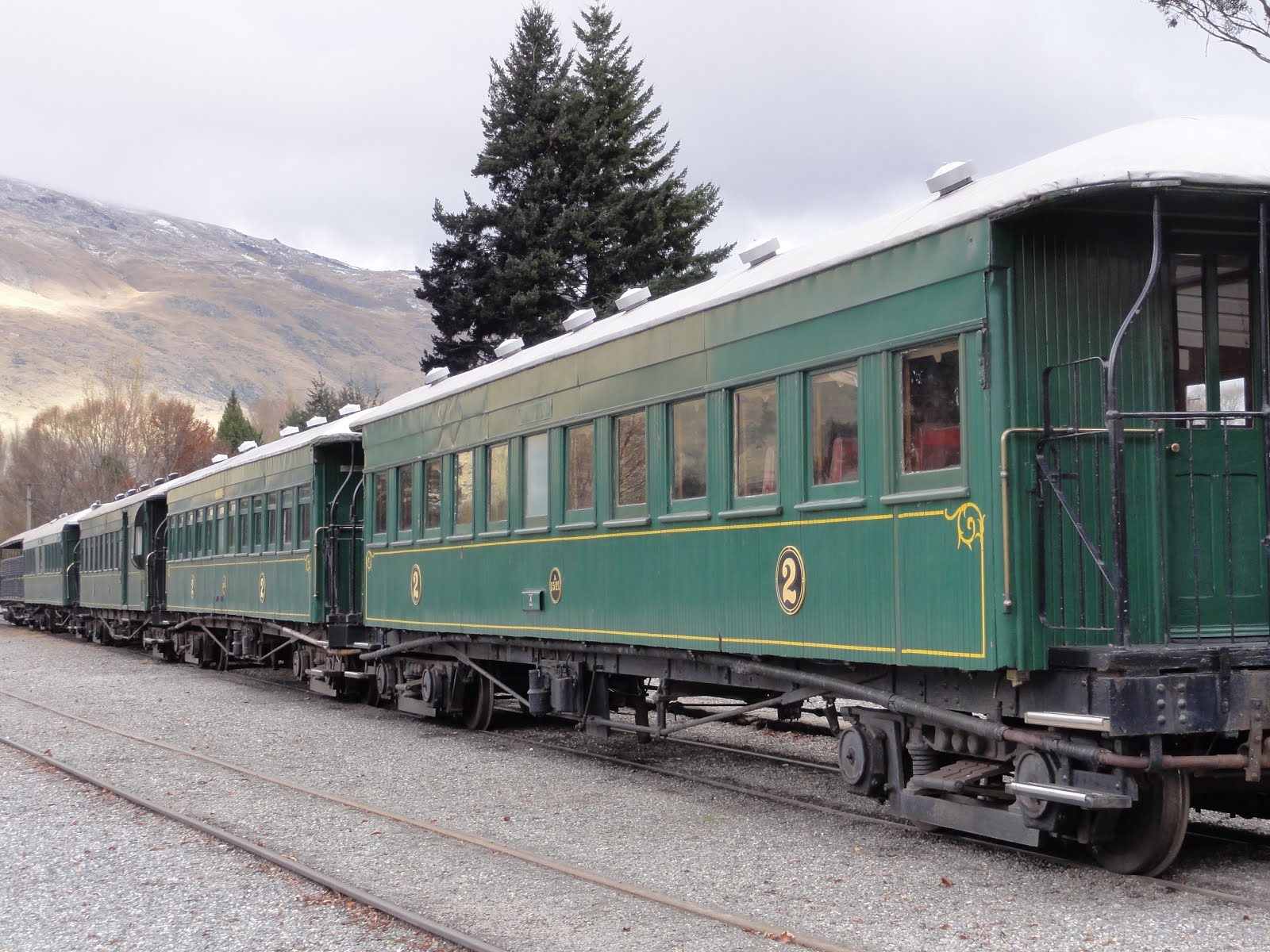
I suspect the 2 on the side means second class

The passenger coach we traveled in was very comfortable.

This is one of the guard’s vans, and for transporting cargo.

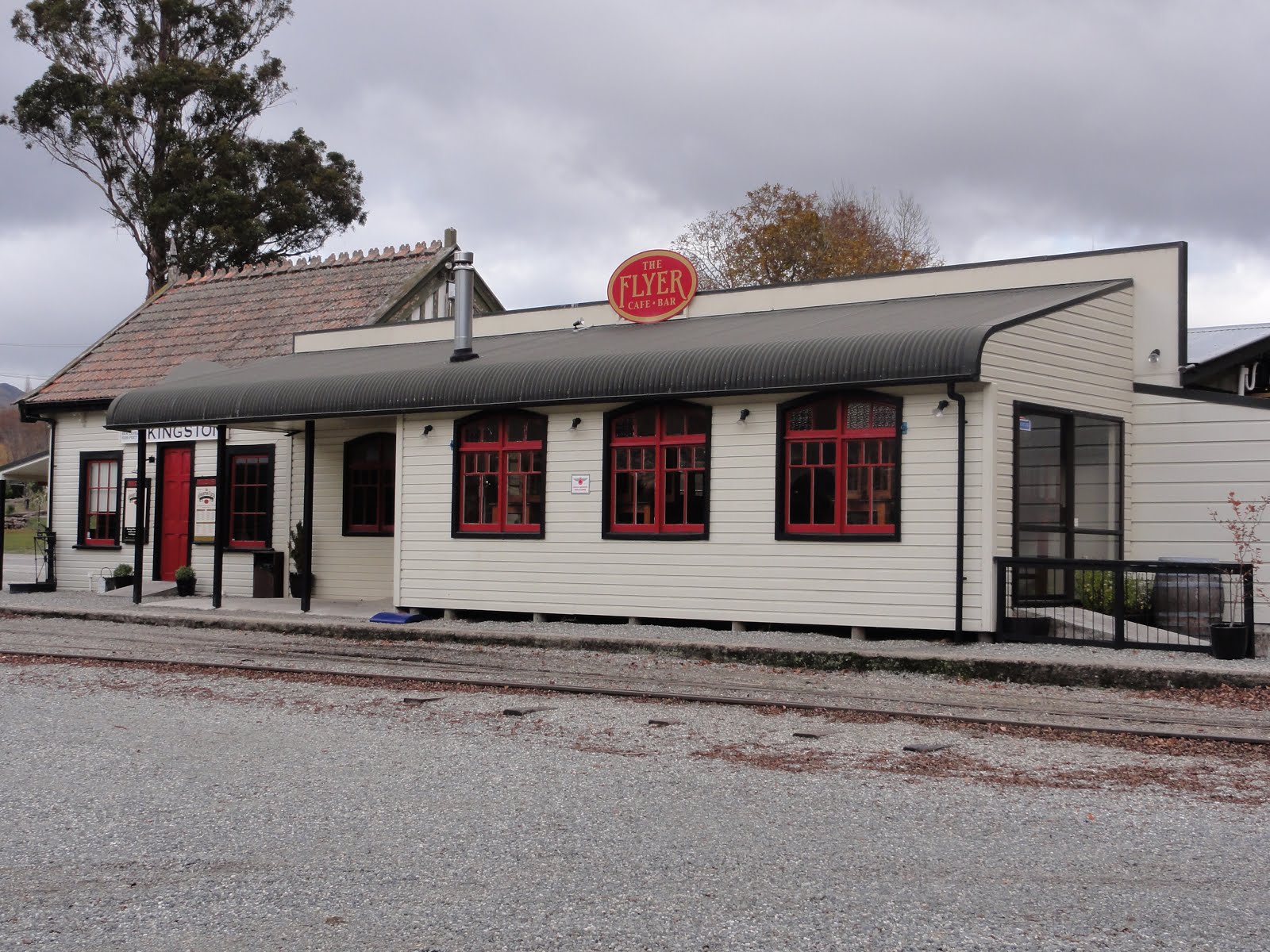
The Kingston Railway Station

and cafe.
A poster sign advertising the Kingston Flyer

The running times for the tourist services, when it was running.

In a word: Steal
You know how it goes, somebody breaks into your house and they steal the family jewels, which means, they’ve taken something that’s not theirs.
Baseballers will be well familiar with the term steal a base because that sneaky second base runner is trying to get to third, before the pitcher fires in a curveball.
But then there’s that same thief trying to rob you is stealing his way downstairs.
You come across a bargain, that is the seller doesn’t quite know what they’ve got and assumed it’s junk, that’s a steal.
On stage, one actor can steal the limelight from another. if a film, an actor with a lesser part, can, if their good enough, steal the scene.
And if you’re lucky enough, you might steal a kiss, or just get slapped.
Then there’s the government, using a certain event to change the laws, and it might just steal your liberty.
This is not to be confused with the word steel, which means something else entirely, like a very malleable metal that’s low in carbon.
Or like most of our heroes, they have nerves of steel, or if they are like us, they need to steel themselves with a suitable fortification, rum is my choice.
But for me, I like the phrase, he had a steely look on his face and it was hard to tell if that was good or bad.

