In Beijing, Hutongs are formed by lines of traditional courtyard residences, called siheyuan. Neighbourhoods were formed by joining many hutongs together. These siheyuan are the traditional residences, usually occupied by a single or extended family, signifying wealth, and prosperity.
Over 500 of these still exist. Many of these hutongs have been demolished, but recently they have become protected places as a means of preserving some Chinese cultural history. They were first established in the Yuan Dynasty (1279-1368)Many of these Hutongs had their main buildings and gates built facing south, and lanes connecting them to other hutongs also ran north to south.
Many hutongs, some several hundred years old, in the vicinity of the Bell Tower and Drum Tower and Shichahai Lake are preserved and abound with tourists, many of which tour the quarter in pedicabs.
The optional tour also includes a visit to Shichahai, a historic scenic area consisting of three lakes (Qianhai, meaning Front Sea; Houhai, meaning Back Sea and Xihai, meaning West Sea), surrounding places of historic interest and scenic beauty and remnants of old-style local residences, Hutong and Courtyard.
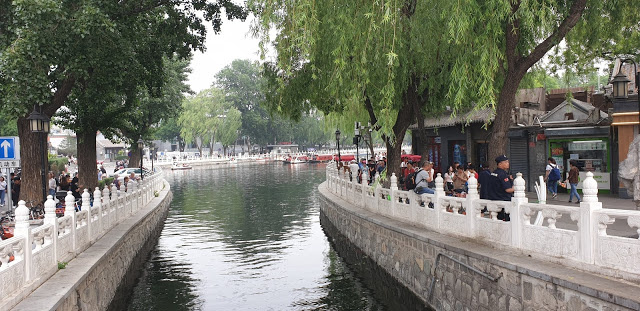
First, we had a short walk through the more modern part of the Hutong area and given some free time for shopping, but we prefer just to meander by the canal.
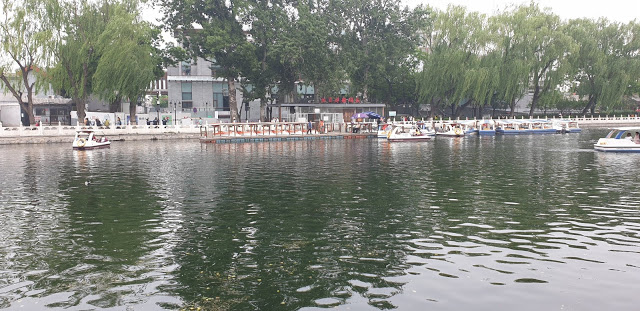
There is a lake, and if we had the time, there were boats you could take.
With some time to spare, we take a quick walk down one of the alleyways where on the ground level are small shops, and above, living quarters.
Then we go to the bell and drum towers before walking through some more alleys was to where the rickshaws were waiting. The Bell tower
And the Drum tower. Both still working today.
The rickshaw ride took us through some more back streets where it was clear renovations were being made so that the area could apply for world heritage listing. Seeing inside some of the houses shows that they may look dumpy outside but that’s not the case inside.
The rickshaw ride ends outside the house where dinner will be served, and is a not so typical hose but does have all the elements of how the Chinese live, the boy’s room, the girl’s room, the parent’s room, the living area, and the North-south feng shui.
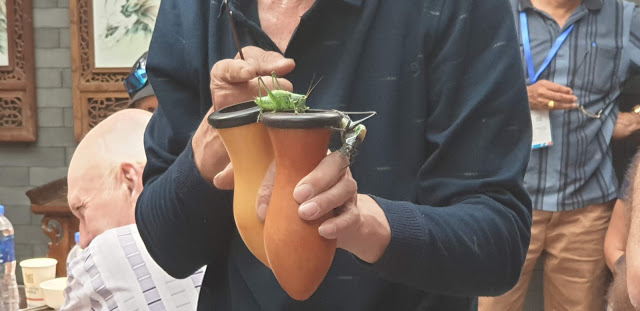
Shortly after we arrive, the cricket man, apparently someone quite famous in Beijing arrives and tells us all about crickets and then grasshoppers, then about cricket racing. He is animated and clearly enjoys entertaining us westerners.
I’m sorry but the cricket stuff just didn’t interest me. Or the grasshoppers.
As for dinner, it was finally a treat to eat what the typical Chinese family eats, and everything was delicious, and the endless beer was a nice touch.
And the last surprise, the food was cooked by a man.
In Beijing, Hutongs are formed by lines of traditional courtyard residences, called siheyuan. Neighbourhoods were formed by joining many hutongs together. These siheyuan are the traditional residences, usually occupied by a single or extended family, signifying wealth, and prosperity.
Over 500 of these still exist. Many of these hutongs have been demolished, but recently they have become protected places as a means of preserving some Chinese cultural history. They were first established in the Yuan Dynasty (1279-1368)Many of these Hutongs had their main buildings and gates built facing south, and lanes connecting them to other hutongs also ran north to south.
Many hutongs, some several hundred years old, in the vicinity of the Bell Tower and Drum Tower and Shichahai Lake are preserved and abound with tourists, many of which tour the quarter in pedicabs.
The optional tour also includes a visit to Shichahai, a historic scenic area consisting of three lakes (Qianhai, meaning Front Sea; Houhai, meaning Back Sea and Xihai, meaning West Sea), surrounding places of historic interest and scenic beauty and remnants of old-style local residences, Hutong and Courtyard.
First, we had a short walk through the more modern part of the Hutong area and given some free time for shopping, but we prefer just to meander by the canal.
There is a lake, and if we had the time, there were boats you could take.
With some time to spare, we take a quick walk down one of the alleyways where on the ground level are small shops, and above, living quarters.
Then we go to the bell and drum towers before walking through some more alleys was to where the rickshaws were waiting. The Bell tower
And the Drum tower. Both still working today.
The rickshaw ride took us through some more back streets where it was clear renovations were being made so that the area could apply for world heritage listing. Seeing inside some of the houses shows that they may look dumpy outside but that’s not the case inside.
The rickshaw ride ends outside the house where dinner will be served, and is a not so typical hose but does have all the elements of how the Chinese live, the boy’s room, the girl’s room, the parent’s room, the living area, and the North-south feng shui.
Shortly after we arrive, the cricket man, apparently someone quite famous in Beijing arrives and tells us all about crickets and then grasshoppers, then about cricket racing. He is animated and clearly enjoys entertaining us westerners.
I’m sorry but the cricket stuff just didn’t interest me. Or the grasshoppers.
As for dinner, it was finally a treat to eat what the typical Chinese family eats, and everything was delicious, and the endless beer was a nice touch.
And the last surprise, the food was cooked by a man.
Instead of making a grand entrance, arriving in style and being greeted by important dignitaries, we are slinking in via an airplane, late at night. It’s hardly the entrance I’d envisaged. At 9:56 the plane touches down on the runway. Outside the plane, it is dark and gloomy and from what I could see, it had been raining. That could, of course, simply be condensation.
Once on the ground, everyone was frantically gathering together everything from seat pockets and sending pillows and blankets to the floor. A few were turning their mobile phones back on, and checking for a signal, and, perhaps, looking for messages sent to them during the last 12 hours. Or perhaps they were just suffering from mobile phone deprivation.
It took 10 minutes for the plane to arrive at the gate. That’s when everyone moves into overdrive, unbuckling belts, some before the seatbelt sign goes off, and are first out of their seats and into the overhead lockers. Most are not taking care that their luggage may have moved, but fortunately, no bags fall out onto someone’s head. The flight had been relatively turbulent free.
When as many people and bags have squeezed into that impossibly small aisle space, we wait for the door to open, and then the privileged few business and first-class passengers to depart before we can begin to leave. As we are somewhere near the middle of the plane, our wait will not be as long as it usually is. This time we avoided being at the back of the plane. Perhaps that privilege awaits us on the return trip.
Once off the plane, it is a matter of following the signs, some of which are not as clear as they could be. It’s why it took another 30 odd minutes to get through immigration, but that was not necessarily without a few hiccups along the way. We got sidetracked at the fingerprint machines, which seemed to have a problem if your fingers were not straight, not in the center of the glass, and then if it was generally cranky, which ours were, continue to tell you to try again, and again, and again, and again…That took 10 to 15 minutes before we joined an incredibly long queue of other arrivals,
A glance at the time, and suddenly it’s nearly an hour from the moment we left the plane.
And…
That’s when we got to the immigration officer, and it became apparent we were going to have to do the fingerprints yet again. Fortunately this time, it didn’t take as long. Once that done, we collected our bags, cleared customs by putting our bags through a huge x-ray machine, and it was off to find our tour guide.
We found several tour guides with their trip-a-deal flags waiting for us to come out of the arrivals hall. It wasn’t a difficult process in the end. We were in the blue group. Other people we had met on the plane were in the red group or the yellow group. The tour guide found, or as it turned out she found us, it was simply a matter of waiting for the rest of the group, of which there were eventually 28.Gathered together we were told we would be taking the bags to one place and then ourselves to the bus in another. A glance in the direction of the bus park, there were a lot of busses.
Here’s a thought, imagine being told your bus is the white one with blue writing on the side.
Yes, yours is, and 25 others because all of the tourist coaches are the same. An early reminder, so that you do not get lost, or, God forbid, get on the wrong bus, for the three days in Beijing, is to get the last five numbers of the bus registration plate and commit them to memory. It’s important. Failing that, the guide’s name is in the front passenger window.
Also, don’t be alarmed if your baggage goes in one direction, and you go in another. In a rather peculiar set up the bags are taken to the hotel by what the guide called the baggage porter. It is an opportunity to see how baggage handlers treat your luggage; much better than the airlines it appears.
That said, if you’re staying at the Beijing Friendship Hotel, be prepared for a long drive from the airport. It took us nearly an hour, and bear in mind that it was very late on a Sunday night.
Climbing out of the bus after what seemed a convoluted drive through a park with buildings, we arrive at the building that will be our hotel for the next three days. From the outside, it looks quite good, and once inside the foyer, that first impression is good. Lots of space, marble, and glass. If you are not already exhausted by the time you arrive, the next task is to get your room key, find your bags, get to your room, and try to get to be ready the next morning at a reasonable hour.
Sorry, that boat has sailed.
We were lucky, we were told, that our plane arrived on time, and we still arrived at the hotel at 12:52. Imagine if the incoming plane is late.
This was taken the following morning. It didn’t look half as bland late at night.
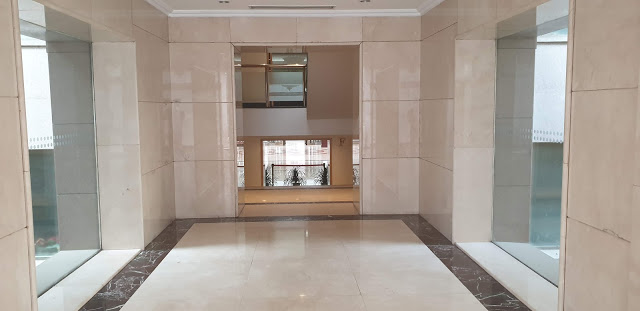
This is the back entrance to Building No 4 but is quite representative of the whole foyer, made completely of marble and glass. It all looked very impressive under the artificial lights, but not so much in the cold hard light of early morning.
This the foyer of the floor our room was on. Marble with interesting carpet designs. Those first impressions of it being a plush hotel were slowly dissipating as we got nearer and nearer to the room. From the elevator, it was a long, long walk.
So…Did I tell you about the bathroom in our room?
The shower and the toilet both share the same space with no divide and the shower curtain doesn’t reach to the floor. Water pressure is phenomenal. Having a shower floods the whole shower plus toilet area so when you go to the toilet you’re basically underwater.
Don’t leave your book or magazine on the floor or it will end up a watery mess.
And the water pressure is so hard that it could cut you in half. Only a small turn of the tap is required to get that tingling sensation going.
Instead of making a grand entrance, arriving in style and being greeted by important dignitaries, we are slinking in via an airplane, late at night. It’s hardly the entrance I’d envisaged. At 9:56 the plane touches down on the runway. Outside the plane, it is dark and gloomy and from what I could see, it had been raining. That could, of course, simply be condensation.
Once on the ground, everyone was frantically gathering together everything from seat pockets and sending pillows and blankets to the floor. A few were turning their mobile phones back on, and checking for a signal, and, perhaps, looking for messages sent to them during the last 12 hours. Or perhaps they were just suffering from mobile phone deprivation.
It took 10 minutes for the plane to arrive at the gate. That’s when everyone moves into overdrive, unbuckling belts, some before the seatbelt sign goes off, and are first out of their seats and into the overhead lockers. Most are not taking care that their luggage may have moved, but fortunately, no bags fall out onto someone’s head. The flight had been relatively turbulent free.
When as many people and bags have squeezed into that impossibly small aisle space, we wait for the door to open, and then the privileged few business and first-class passengers to depart before we can begin to leave. As we are somewhere near the middle of the plane, our wait will not be as long as it usually is. This time we avoided being at the back of the plane. Perhaps that privilege awaits us on the return trip.
Once off the plane, it is a matter of following the signs, some of which are not as clear as they could be. It’s why it took another 30 odd minutes to get through immigration, but that was not necessarily without a few hiccups along the way. We got sidetracked at the fingerprint machines, which seemed to have a problem if your fingers were not straight, not in the center of the glass, and then if it was generally cranky, which ours were, continue to tell you to try again, and again, and again, and again…That took 10 to 15 minutes before we joined an incredibly long queue of other arrivals,
A glance at the time, and suddenly it’s nearly an hour from the moment we left the plane.
And…
That’s when we got to the immigration officer, and it became apparent we were going to have to do the fingerprints yet again. Fortunately this time, it didn’t take as long. Once that done, we collected our bags, cleared customs by putting our bags through a huge x-ray machine, and it was off to find our tour guide.
We found several tour guides with their trip-a-deal flags waiting for us to come out of the arrivals hall. It wasn’t a difficult process in the end. We were in the blue group. Other people we had met on the plane were in the red group or the yellow group. The tour guide found, or as it turned out she found us, it was simply a matter of waiting for the rest of the group, of which there were eventually 28.Gathered together we were told we would be taking the bags to one place and then ourselves to the bus in another. A glance in the direction of the bus park, there were a lot of busses.
Here’s a thought, imagine being told your bus is the white one with blue writing on the side.
Yes, yours is, and 25 others because all of the tourist coaches are the same. An early reminder, so that you do not get lost, or, God forbid, get on the wrong bus, for the three days in Beijing, is to get the last five numbers of the bus registration plate and commit them to memory. It’s important. Failing that, the guide’s name is in the front passenger window.
Also, don’t be alarmed if your baggage goes in one direction, and you go in another. In a rather peculiar set up the bags are taken to the hotel by what the guide called the baggage porter. It is an opportunity to see how baggage handlers treat your luggage; much better than the airlines it appears.
That said, if you’re staying at the Beijing Friendship Hotel, be prepared for a long drive from the airport. It took us nearly an hour, and bear in mind that it was very late on a Sunday night.
Climbing out of the bus after what seemed a convoluted drive through a park with buildings, we arrive at the building that will be our hotel for the next three days. From the outside, it looks quite good, and once inside the foyer, that first impression is good. Lots of space, marble, and glass. If you are not already exhausted by the time you arrive, the next task is to get your room key, find your bags, get to your room, and try to get to be ready the next morning at a reasonable hour.
Sorry, that boat has sailed.
We were lucky, we were told, that our plane arrived on time, and we still arrived at the hotel at 12:52. Imagine if the incoming plane is late.
This was taken the following morning. It didn’t look half as bland late at night.
This is the back entrance to Building No 4 but is quite representative of the whole foyer, made completely of marble and glass. It all looked very impressive under the artificial lights, but not so much in the cold hard light of early morning.
This the foyer of the floor our room was on. Marble with interesting carpet designs. Those first impressions of it being a plush hotel were slowly dissipating as we got nearer and nearer to the room. From the elevator, it was a long, long walk.
So…Did I tell you about the bathroom in our room?
The shower and the toilet both share the same space with no divide and the shower curtain doesn’t reach to the floor. Water pressure is phenomenal. Having a shower floods the whole shower plus toilet area so when you go to the toilet you’re basically underwater.
Don’t leave your book or magazine on the floor or it will end up a watery mess.
And the water pressure is so hard that it could cut you in half. Only a small turn of the tap is required to get that tingling sensation going.
As part of a day tour by Very Tuscany Tours, we came to this quiet corner of Tuscany to have a look at an Italian winery, especially the Sangiovese grapes, and the Chianti produced here.
And what better way to sample the wine than to have a long leisurely lunch with matched wines. A very, very long lunch.
But first, a wander through the gardens to hone the appetite:
And a photo I recognize from many taken of the same building:
Then a tour of the wine cellar:
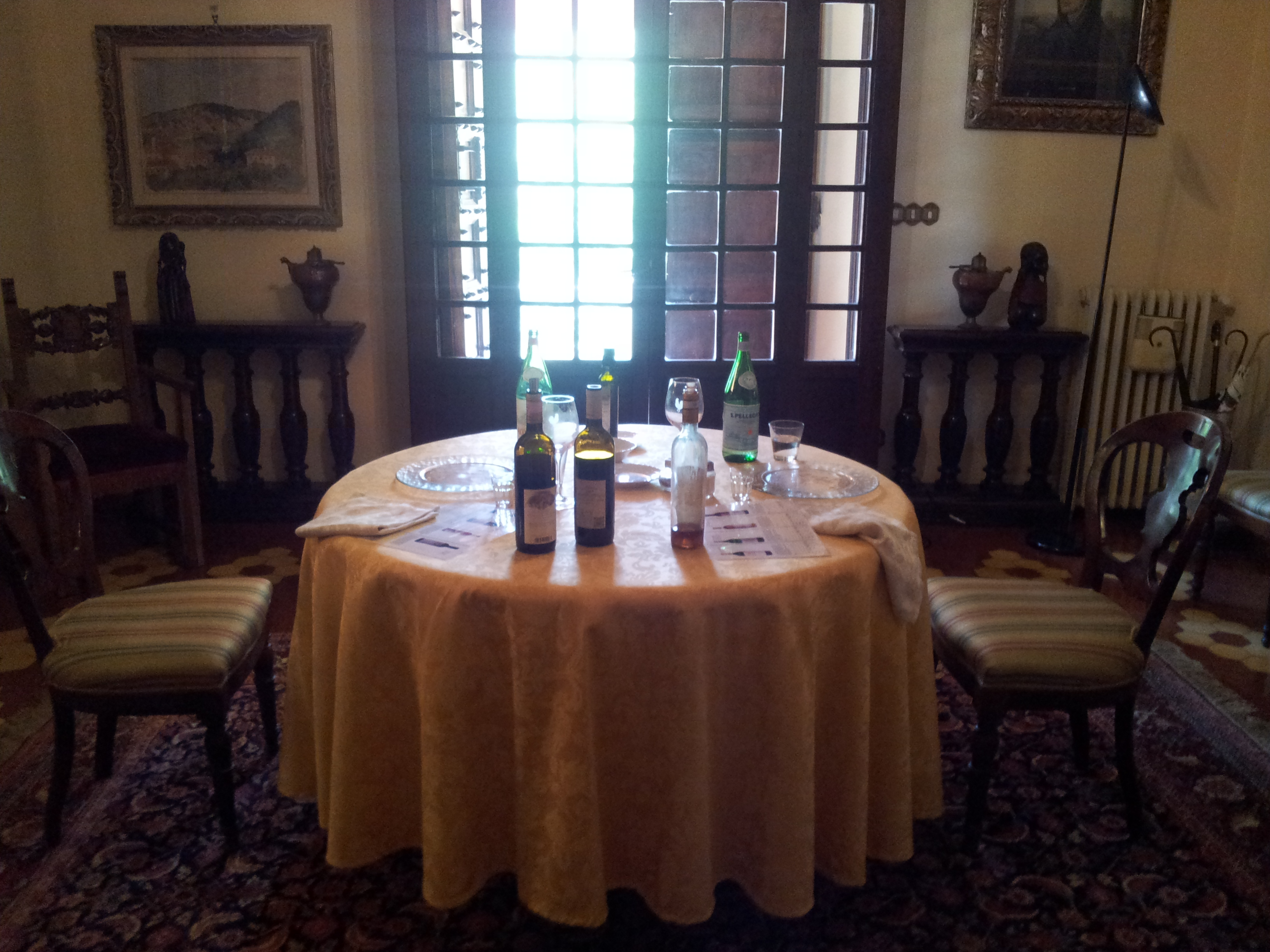
Then on to the most incredible and exquisite lunch and wine we have had. It was the highlight of our stay in Tuscany. Of course, we had our own private dining room:
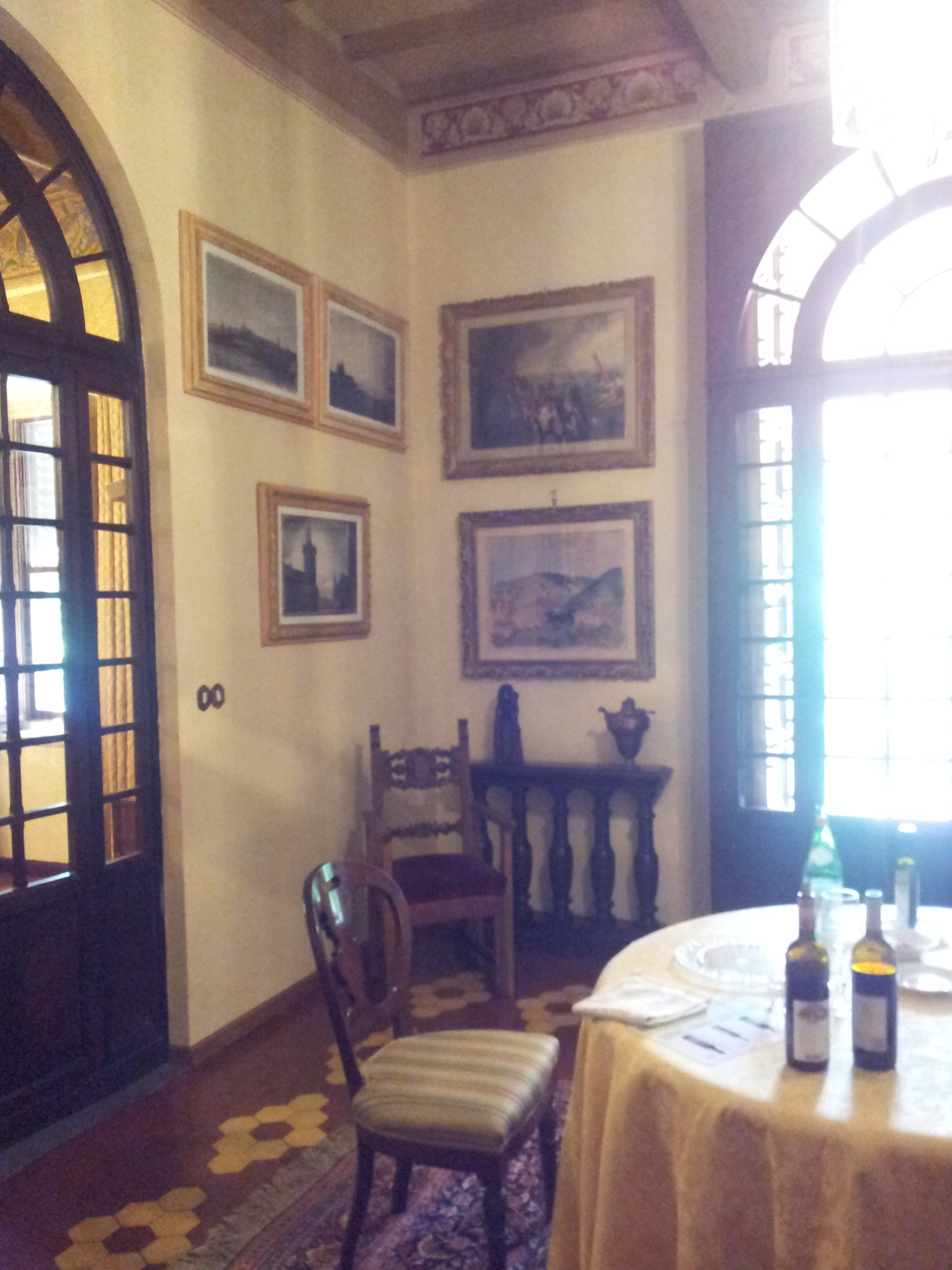
And time to study the paintings and prints on the walls while we finished with coffee and a dessert wine.
And of course, more wine, just so we could remember the occasion.
As part of a day tour by Very Tuscany Tours, we came to this quiet corner of Tuscany to have a look at an Italian winery, especially the Sangiovese grapes, and the Chianti produced here.
And what better way to sample the wine than to have a long leisurely lunch with matched wines. A very, very long lunch.
But first, a wander through the gardens to hone the appetite:
And a photo I recognize from many taken of the same building:
Then a tour of the wine cellar:
Then on to the most incredible and exquisite lunch and wine we have had. It was the highlight of our stay in Tuscany. Of course, we had our own private dining room:
And time to study the paintings and prints on the walls while we finished with coffee and a dessert wine.
And of course, more wine, just so we could remember the occasion.
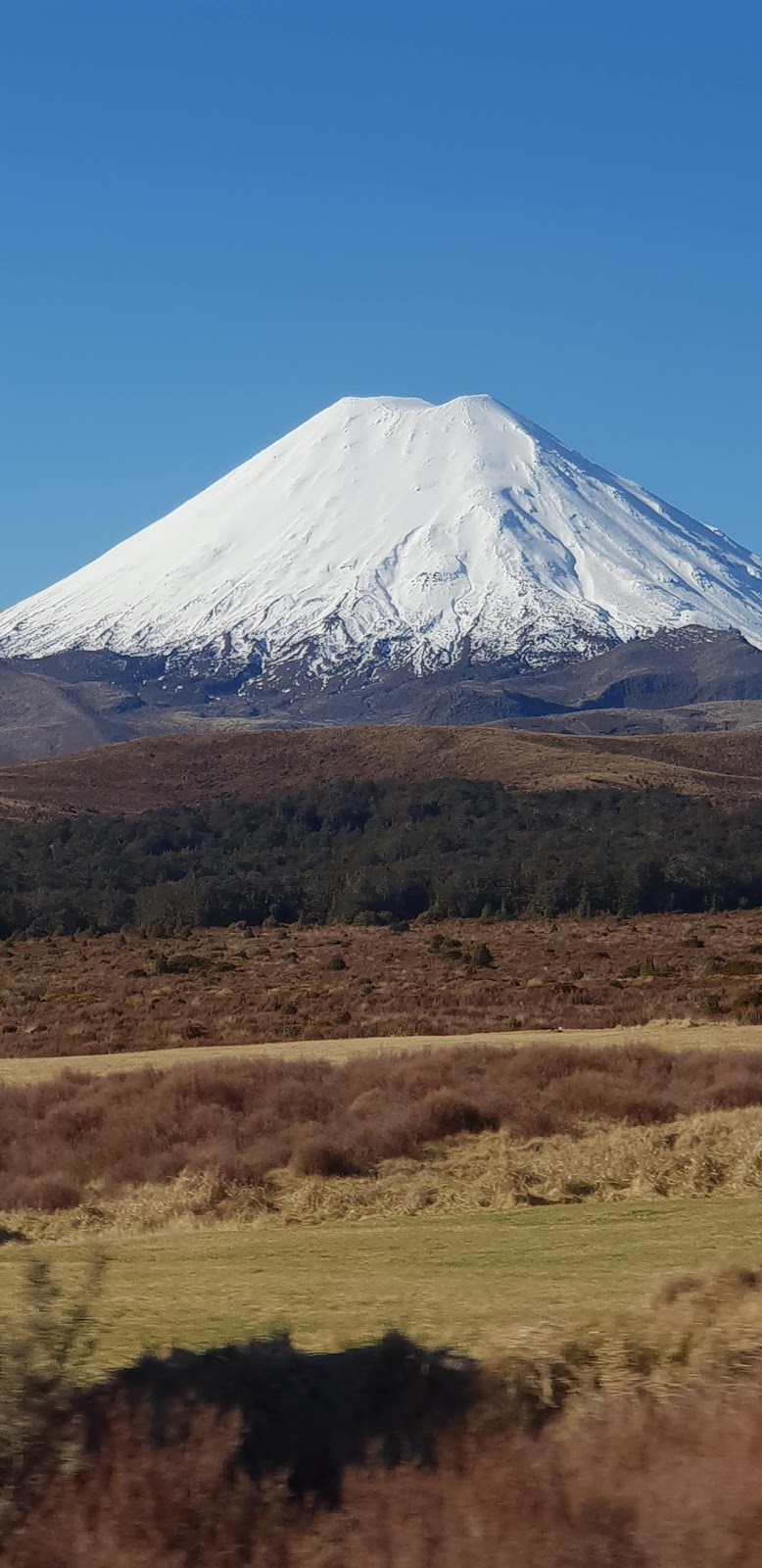
Mount Ngauruhoe is apparently still an active volcano, has been for 2,500 years or so, and last erupted on 19th February 1975, and reportedly has erupted around 70 times since 1839.
The mountain is usually climbed from the western side, from the Mangatepopo track.
This photo was taken in summer from the Chateau Tongariro carpark.
In late autumn, on one of our many visits to the area, the mountain was covered with a light sprinkling of snow and ice.
On our most recent visit, this year, in winter, it was fully covered in snow.
Mount Ngauruhoe is apparently still an active volcano, has been for 2,500 years or so, and last erupted on 19th February 1975, and reportedly has erupted around 70 times since 1839.
The mountain is usually climbed from the western side, from the Mangatepopo track.
This photo was taken in summer from the Chateau Tongariro carpark.
In late autumn, on one of our many visits to the area, the mountain was covered with a light sprinkling of snow and ice.
On our most recent visit, this year, in winter, it was fully covered in snow.
And when I woke up, I realised that I had just had a very bad dream. Or don’t they call bad dreams nightmares?
Can you diagnose yourself as having depression?
Of course, if you were to tell someone else, in one of this very serious tones, “I think I have depression” they will ask you what you’ve got to be depressed about.
It’s a good question. My first answer would be, “why did the doctor put my on anti depressants?” You know the stuff they give you, some derivative of serapax,
Then, if you tell anyone you’re on that stuff, they turn around and tell you just how bad it is and get off it right now.
That’s all very well, but you tell them you still have depression, and so the argument goes on.
But…
These days, they use low doses of anti depressants to manage pain, and in my case back pain. The first pill they gave me was lyrica, which slowly took my memory away so that I couldn’t remember what anyone had said earlier in the day.
I thought I had early onset Alzheimer’s, or worse, dementia.
So I got off that, got the pain back, and moved to anti depressants. Now I’m seeing things.
That might help with the imagination for writing stories sometimes, but telling people you see the patterns on tiles moving is not a good start to any conversation.
Back to depression, though. It might be caused by being locked down and not being able to go anywhere, but that has never bothered me because I hate going out.
It might be a result of my childhood coming back to haunt me, and, believe me, you would not want the childhood I had, but it’s a maybe. A lot of old people find their past creeping up on them, and what happened 60 years ago seems more relevant than what happened 60 minutes ago.
You might think you’re badly done by, that everyone else is responsible for the mess you made of your life, if it is indeed a mess, but no, that isn’t true. My life is exactly what it’s meant to be, though how I got here remains the biggest of mysteries.
It’s why I’m writing the autobiography of a very ordinary nobody.
OK, that might be a hint, thinking I’m a nobody. After all, when I go out I always feel like I’m invisible.
A friend of mine tells me he always cries when there’s a sad part of a film on, and that’s his determination of depression.
I do too, but I don’t think it’s that.
After all, I did psychology and should understand the nuances of the human psyche, what makes us happy, what makes us sad, what makes us us.
So, rightly or wrongly I’ve stopped taking the anti depressants.
If suddenly my blog suddenly stops, you’ll know I’ve made the wrong decision.
Oreti village, Pukawa Bay, North Island, New Zealand
On the southern tip of Lake Taupo
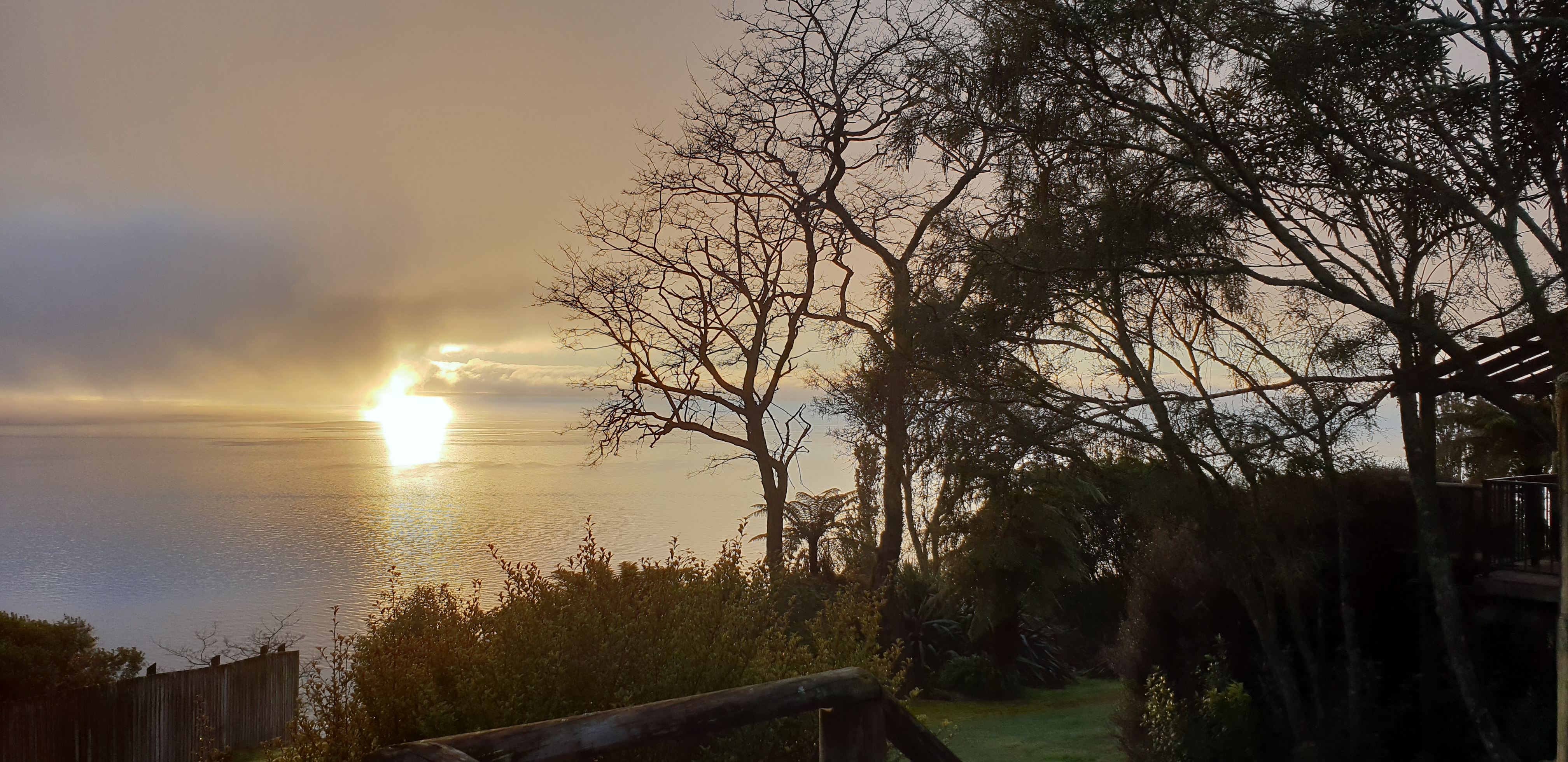
Our first morning there, a Saturday. Winter. Cold. And a beautiful sunrise.
This was taken from the balcony, overlooking the lake.
The sun is just creeping up over the horizon
It gradually gets lighter, and then the sun breaks free of the low cloud
It lights up the balcony
And the trees just beyond, a cascade of colorful ferns.
It looks like its going to be a fine day, our first for this trip, and we will be heading to the mountains to see snow, for the first time for two of our granddaughters.











 Thrills, Spills, and just a dash of Romance