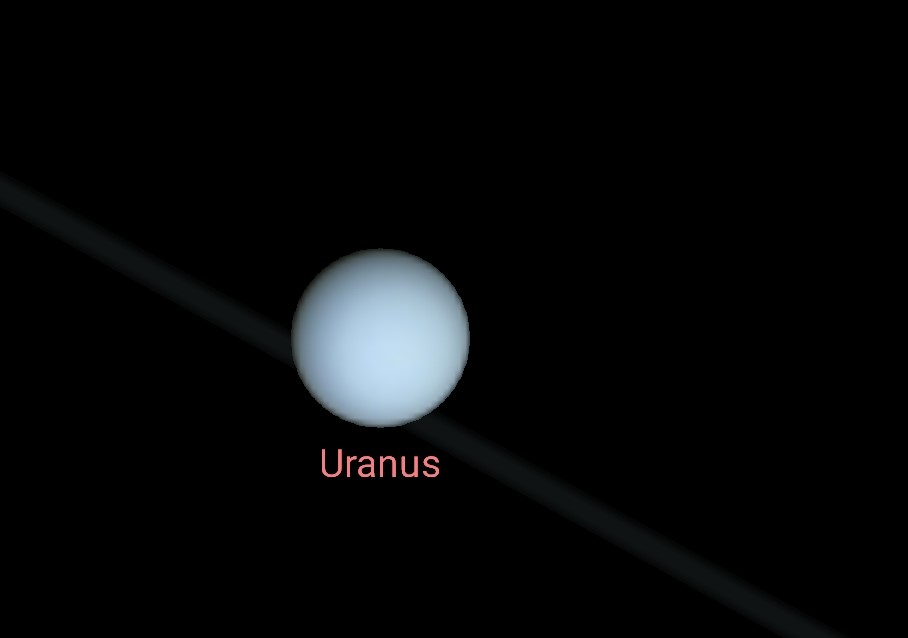
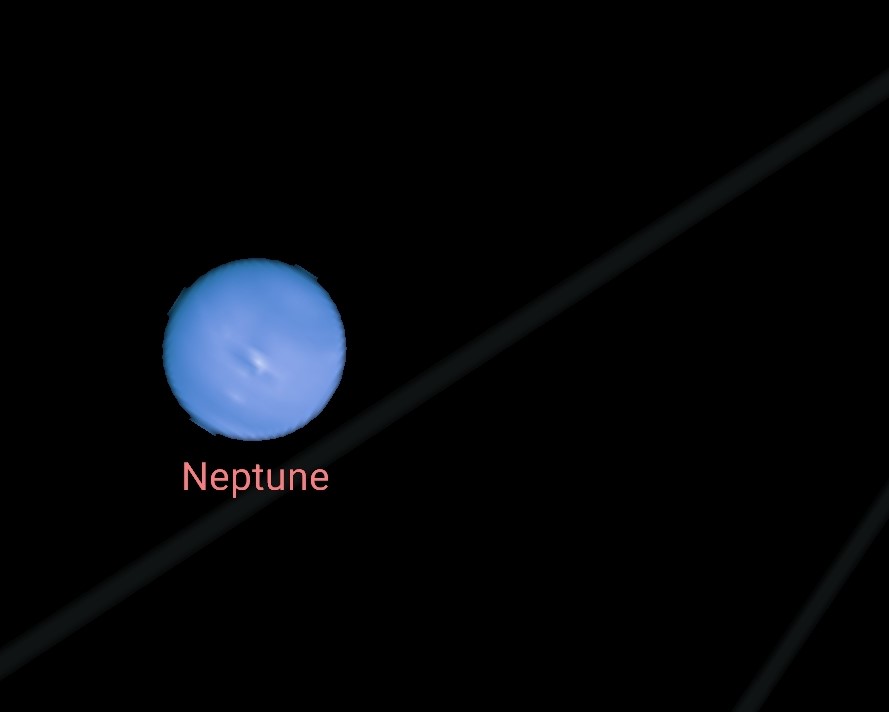
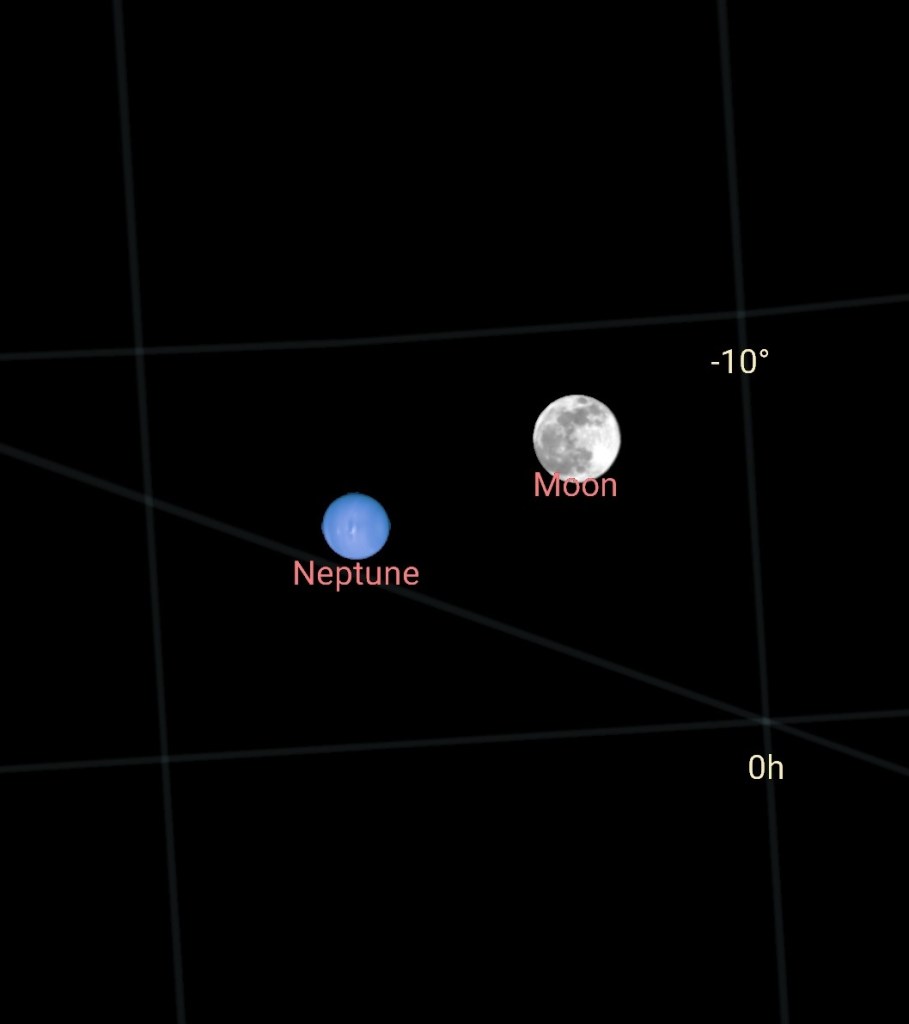
Another night of stargazing…

And this is what I found:
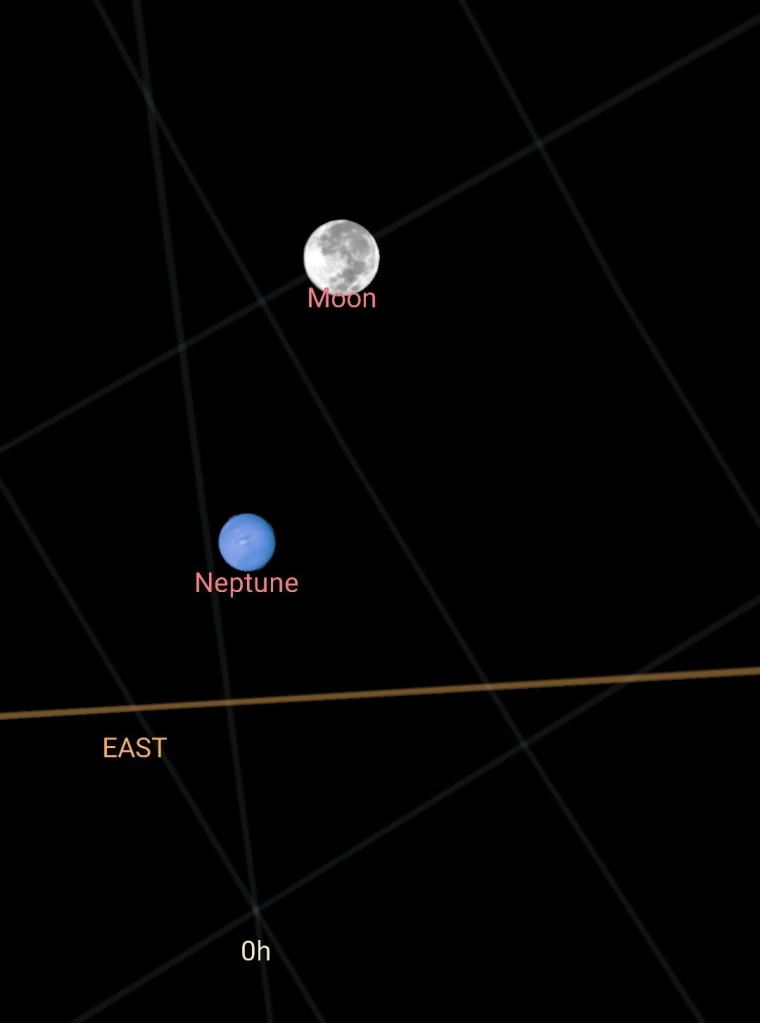
Neptune.

It got me thinking.

Why did we name the planets after mythological gods?

I did a little digging and found that the Romans named the five closest planets to the sun after their most important gods, this one, named after the god of the sea, which to the Romans was Poseidon, but in translation, Neptune, and matbe because it was ‘blue’.

Of course, we all know about King Neptune.

We also know about Poseidon, which was the fictional ship that got hit by a tidal wave, and was turned into a blockbuster movie.

But in terms of science fiction, which is not what I write, but I seem to spend a lot of time watching, it strikes me that seeing the moon, we could assume that the moon could be a stopping off point on a trip to the pouter planets.

I’m always surprised at the ingenuity of ‘Sci Fi’ writers in how they can turn what is scientifically impossible to live on but not necessarily impossible to get there (after a long sleep), into a place where we can destroy with equal rapaciousness as our own planet.

If I was going to write something, perhaps it would be about turning the planet into a holiday resort, staffed by robots…

Uh oh, that’s reminiscent of another ‘Sci Fi’ series. I’ll let you guess what it is.
It’s not like you can pull over to the side of the road…

In space, it’s a little difficult to just suddenly stop.

But, given several hundred thousand kilometers, anything is possible.

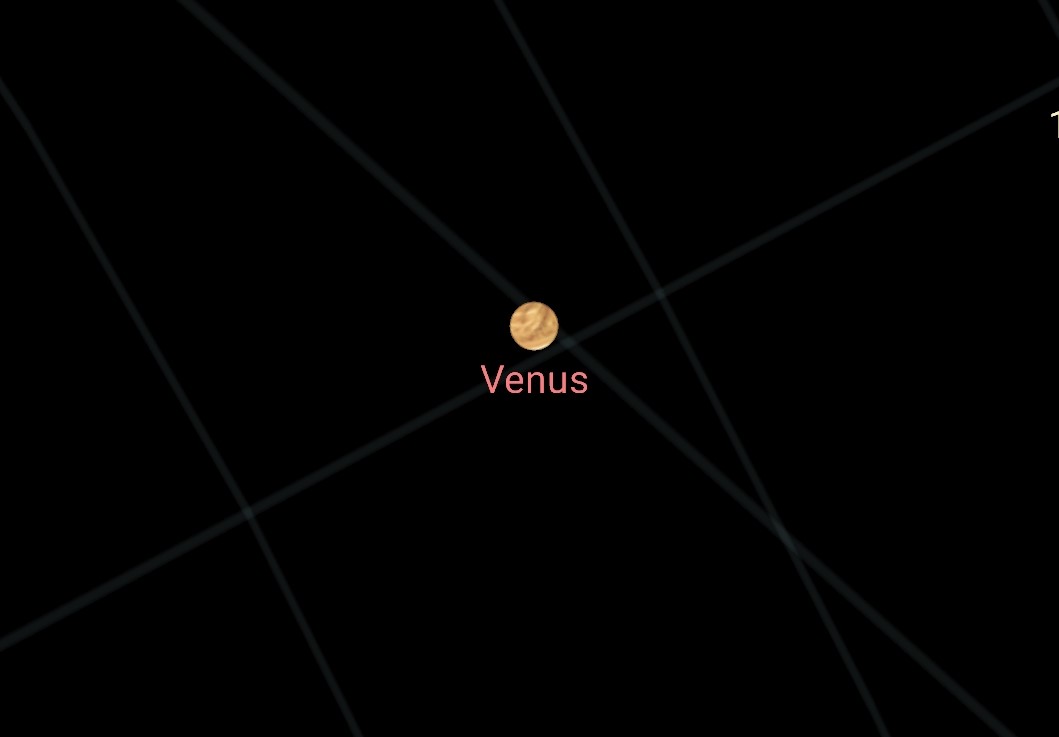
Especially when there’s a request to divert to Venus.

You can’t always tell when the ship drops out of cruise to what could be considered a dead stop, not that a dead stop is necessarily achievable.

I was down in the mess hall when the call came from the officer of the deck for me to return. I was half way through a half decent cup of coffee, and had just had the donut delivered.

Both now had to be sacrificed.

I looked out the window into the inky blackness of space and it was difficult to say if we were in idle mode. There was, however, another ship just off the port bow, a old cargo ship that had seen better days, and we both looked like we were drifting together.

I suspect that meant we were keeping station, much the same as we would if we were visiting a planet.

I took the elevator and arrived on the bridge where the captain was in earnest conversation with the chief engineer and chief scientist.

He looked up when he saw me approach.

“Ah, number one, there’s a team waiting down on the transport deck. The Aloysius 5 has some vital equipment on board for repairs at the mining colony on Venus, and we’ve been diverted to pick them up and them there post haste.”

“Out of commission?”

“A temporary issue with the drive. We’re sending an engineering team over to help with the repairs and will pick them up on the way back. They should arrive on the deck the same time you will.”

“Yes, sir.”

Should be simple, I thought. Take one of the shuttle craft over, load up, drop the engineers, get back, head for Venus, about 5 hours from out current position. Much the same as a pleasant drive in the country.

And I needed more shuttle time.

In the elevator I was joined by one of the security staff, a gung ho type lieutenant named Andrews. A man always looking for trouble, the sort who would shoot first and ask questions later.

Maybe it was not going to be a pleasant outing after all.

© Charles Heath 2020

Let’s pause a minute, in space, to get it right

Out there, in space, it’s not like being on the highway, going from one side of the country to the other.

That, effectively, is only a few thousand miles, or kilometers as we measure distance in this country.

But late at night, and astrophysics, or astrology, or whatever the science of space is called, is not a subject to take up, particularly when you’re tired.

The other night I was tired, and confused, and hence got all my numbers muddled up. The thing is, when numbers go up to billions, with all them zeros, it could be confusing for everyone.

Or maybe it was just me.

But, the first constant is the speed of light. That’s approximately 1,079,251,200 km per hour, Pretty fast, eh.

But, as I’m told, nothing can go faster than the speed of light.

So, in this story, it’s a given.

Space ship speeds, in this story, are measured as SSPD’s.

SSPD 1,000 is the speed of light. This new spaceship will not go that fast. It is capable of SSPD 5, but even then, it’s not recommended. So, we are, from the beginning, are going to accept that it will go SSPD 4. Trials got it to 4.5, but that was when the design engineers were aboard and could fix any problems.

So how fast are the SSPD increments?

SSPD 1 is 1,079,251 km per hour. SSPD 2 is double that. That’s the fastest cruising speed the current ships can travel.

This new ship goes twice as fast so at SSPD 4 it can cruise at 4,317,004 km per hour.

Now, where I got everything wrong, is the distance of the planets from earth, and the time it would take to get there.

Mars: about 56 million km when in line between the earth and the sun, but has a min of 54.5 million km

Venus: between 38 million and 261 million km

Mercury: averaging about 77 million km to a max of 222 million km

Jupiter: from a min of 588 million to a max of 968 million km

Saturn: from a min of 1.3 billion to 1.7 billion km

Uranus: from a min of 2.57 billion to 3.15 billion km

Neptune: from a min of 4.3 billion to 4.7 billion km

Since in the story we are stopping at Mars briefly, the time it might take, given the position of mars at the time (about 60 million km), could take us about 14 hours.

As for the ultimate destination, Neptune, at 4.5 billion km approximately, it is going to take 1,042 hours, or 43.5 days.

Hopefully this time I have some semblance of credible measurements and times.

Now you can go back and read the amended text of the previous episode, corrected for distance, speed, and time.

It is here:

https://bit.ly/33HDMek

© Charles Heath 2020

Back on the spaceship…

We’re moving slowly out of the space dock, heading into clear space.

We can see the people inside the wings of the dock, lining the passages watching the big ship depart. In olden days, on earth, when a ship left port, people on the dock would remain connected to the passengers by streamers, until the ship started to move away.

It was impossible to do that in space.

But, it was a notable day, the first of it’s type, heading out into the unknown, or, later, if the shakedown worked out.

The Captain had decided despite the success of the trials, that he wanted to have one more trial, this time putting the crew through their paces.

I looked sideways, one eye still on the screen, now showing three possible midrange destinations, at the Captain, also looking at the screen.

Uranus was about 2.8 billion kilometers.

Neptune, where our orders were to go, was 4.5 billion kilometers.

I had done the rough calculations on time to destination, in round numbers, basing the speed of light, what we regarded as SSPD 1,000. That was in km’s about 1.8 billion kilometers an hour, give or take.

Our first ships were under SSPD 1, and the series before this ship had a maximum of SSPD 1.25, which in understandable numbers was about 1,349,063 km per hour. Our ship was capable of SSPD 5.

So, given that our previous fastest ship could move at a maximum of SSPD 1.25, the time it would take to the first destination at SSPD 2 (no one ever travelled at maximum) was a little over 86 days, and to Neptune about 139 days.

In this ship if we were to hit SSPD 4.5, the same time frames would be 24 days and just over 38.5 days.

“Put in the co-ordinates for Neptune and once we’re clear of the dock and given clearance, lets start her out slowly on SSPD 2.

The helmsman put in the co-ordinates and set the speed. “Co-ordinates and speed set, awaiting clearance.”

“Very good. Best have a seat Number One, just in case.”

“Yes, sir.” I took a last glance at the screen, now only showing Neptune on the long range scanner, and sat.

“Adventurer, you’re cleared for departure.” The voice of the dock master came over the speakers.

No need for further orders, the helmsman pushed the button on his screen, and there was a slight lurch, and we were under way.

Next stop Neptune.

© Charles Heath 2020

Back to that starship…

And, getting out of the elevator, this time no erratic behaviour but still not filling me with confidence, I step onto the bridge.

The forward screen has changed.

It seems we are going to Neptune via the moon.

The Captain is on the bridge, obviously coming out of his day room on the news that the Chief Engineer had fixed everything.

“Ah, number one, we’ve hung around here long enough.”

He walked back to his chair and sat.

I decided to remain behind the navigator. I could see that the co-ordinated had been entered for Neptune, so the moon was not going to be a stop off.

The Chief engineer’s voice came over the tannoy. “Ready when you are, Captain.”

I forgot, for a moment, that the Chief and the Captain had served before, and someone had mentioned the fact the Captain had asked for him to be assigned to this ship.

“Mr Jacobs, take us out, slowly, and try not to bump into anything this time.”

In a rather rather sheepish tone, Mr Jacobs said, “Taking the ship out carefully, sir.”

It was hard to tell if the ship was moving, but the tell tale sign was the movement of the objects on screen. And the fact I could see through the side windows as we moved forwards, leaving the dock superstructure behind.

Also on the screen I could see the movements of other vessels, several freighters waiting to leave, and one coming in, but standing off until we departed.

Then, suddenly, we were in clear space.

Jacobs turned to the Captain, expecting the next order.

“Let’s take it easy. Level one, when your ready.”

Jacobs was ready, even eager to get this ship under way. It had performed faultlessly in trials, now we were going to put it through it’s paces.

“Level one, as you wish.”

He pushed the button, there was a moment when nothing happened, then with just the slightest movement inside the bridge, we were under way.

Next stop, Neptune.

© Charles Heath 2020

Another night of stargazing…

And this is what I found:

Neptune.

It got me thinking.

Why did we name the planets after mythological gods?

I did a little digging and found that the Romans named the five closest planets to the sun after their most important gods, this one, named after the god of the sea, which to the Romans was Poseidon, but in translation, Neptune, and matbe because it was ‘blue’.

Of course, we all know about King Neptune.

We also know about Poseidon, which was the fictional ship that got hit by a tidal wave, and was turned into a blockbuster movie.

But in terms of science fiction, which is not what I write, but I seem to spend a lot of time watching, it strikes me that seeing the moon, we could assume that the moon could be a stopping off point on a trip to the pouter planets.

I’m always surprised at the ingenuity of ‘Sci Fi’ writers in how they can turn what is scientifically impossible to live on but not necessarily impossible to get there (after a long sleep), into a place where we can destroy with equal rapaciousness as our own planet.

If I was going to write something, perhaps it would be about turning the planet into a holiday resort, staffed by robots…

Uh oh, that’s reminiscent of another ‘Sci Fi’ series. I’ll let you guess what it is.