Searching for locations: Coffs Harbour, NSW, Australia

We have stayed in two different types of accommodation in Coffs Harbour, New South Wales, Australia, as a timeshare owner who can trade their week for a week anywhere in the world.

Both are resorts, but different sorts of resorts.  The first was a typical RCI resort, where everything is laid back and relaxing, with all the amenities one can expect from a resort.

The other, this one, the Wyndham in Coffs Harbour, is very different, and you notice it when you walk in the front door.  You are virtually assaulted by hard-nosed timeshare sales staff who really don’t take no for an answer, and then when you finally escape, ring you every day to make an appointment.

I left the phone off the hook.

Aside from that, the place is excellent, the accommodation very good, and the situation one of the best with what could be called a private beach.  There are also a number of bushwalks that cater to old people like me.

As you can see, lakes and greenery, and even a putting green.

20161030_141653

And in places, they try very hard to hide the ugly multi-story buildings in amongst the trees

20161030_141706

It is only a short walk to the ‘private beach’ and it is sufficiently long enough for a morning walk before breakfast.  You could even try to catch some fish for breakfast, though I’m not sure if anyone actually caught anything

20161030_142237

Or you can just stare out to sea

20161030_142225

And, back in the room, this is the view we had from our verandah

20161030_134910 - Copy

If only something made sense…

It seems rather fortuitous that we have a holiday at the end of the year.

I mean, who sat around a table however many years ago and decided that holidays like Christmas should be at the end of the year.  And who decided one half of the world could freeze to death on their holidays, and the other half burn?

At the end of a long year at that, you know, 52 weeks, 12 months, 365 days, where even when some of us get a weekend off once in a blue moon, it still seems like we’re working 7 days a week, 52 weeks a year.

So, who decided a week would have seven days, a year would have 12 months, and while we’re at it, who decided to give each month a different name?  And who named names?

Was it Father Time.  As children, we all learn about father time, or has political correctness stepped in and we now call ‘father time’, ‘person time’.

Anyway…

Who do we blame for this mess, we have to blame someone.  It’s not our fault.  If it were up to me I’d have Christmas in September when there’s more temperate weather in both halves of the world.

And who decided that Christmas should be attached to Winter and not Summer?

It’s like the whole mess was designed by a group of academics majoring in philosophy sitting in a back room and fed Coca Cola and Pizzas until they came up with an answer, which was probably to send it all to a parliamentary committee made up from candidates from Bellevue Asylum.

The same people, by the way, who are responsible for coordinating traffic lights.

And then there’s that other mystery I’ve never quite understood.

If you work for the FBI your first name suddenly becomes ‘Agent’.  Everyone gets that name change whether you like it or not.

Which is much the same as all Russians once upon a time calling each other ‘comrade’.  Beats the hell, I suppose, out of remembering peoples first names, especially in Russia where, to us, they’re unpronounceable.

Sorry.

You can tell it’s getting close to Chrismas.

I’ve become a gibbering idiot.

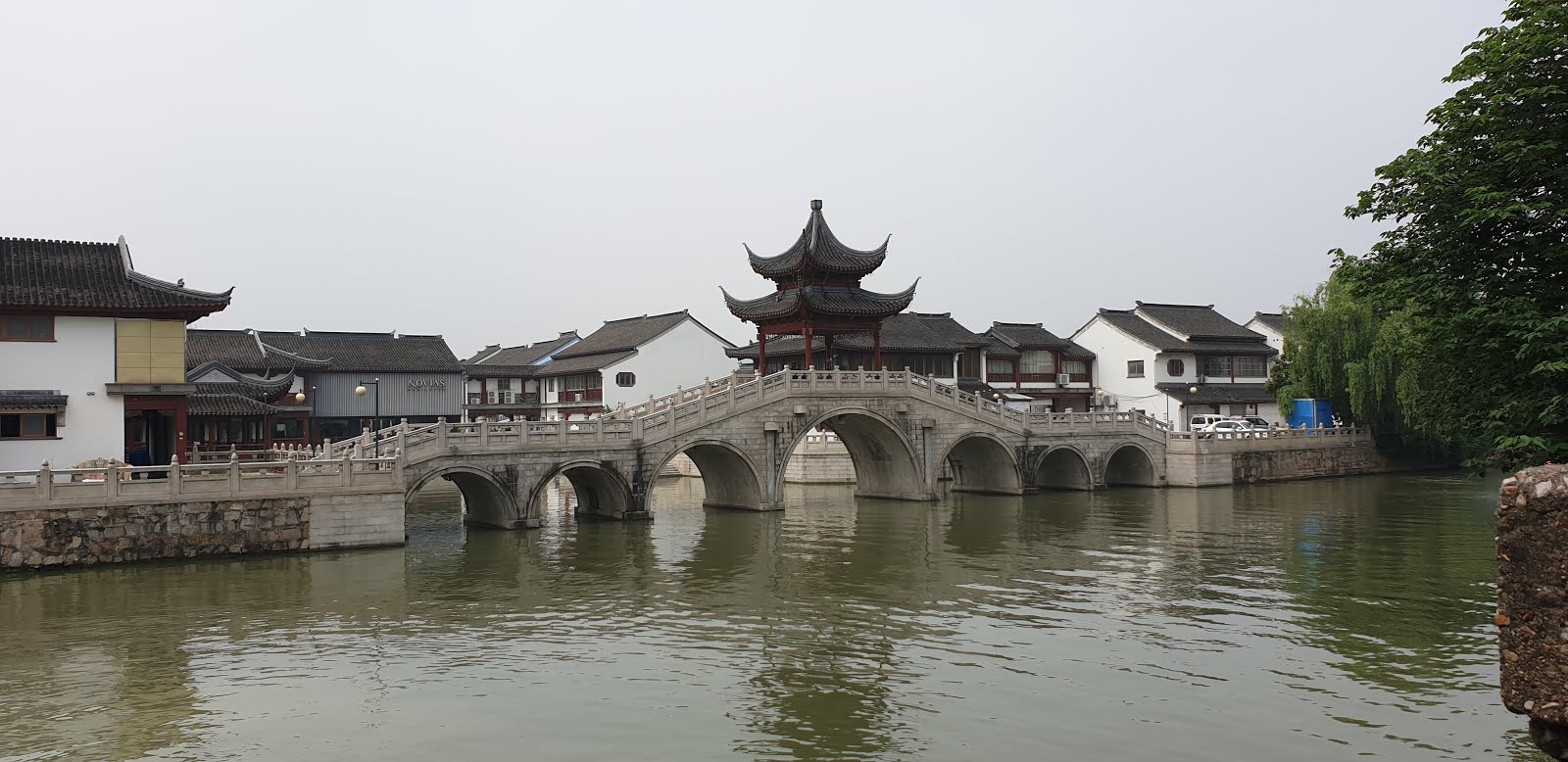
Searching for locations: The canals of Suzhou, China

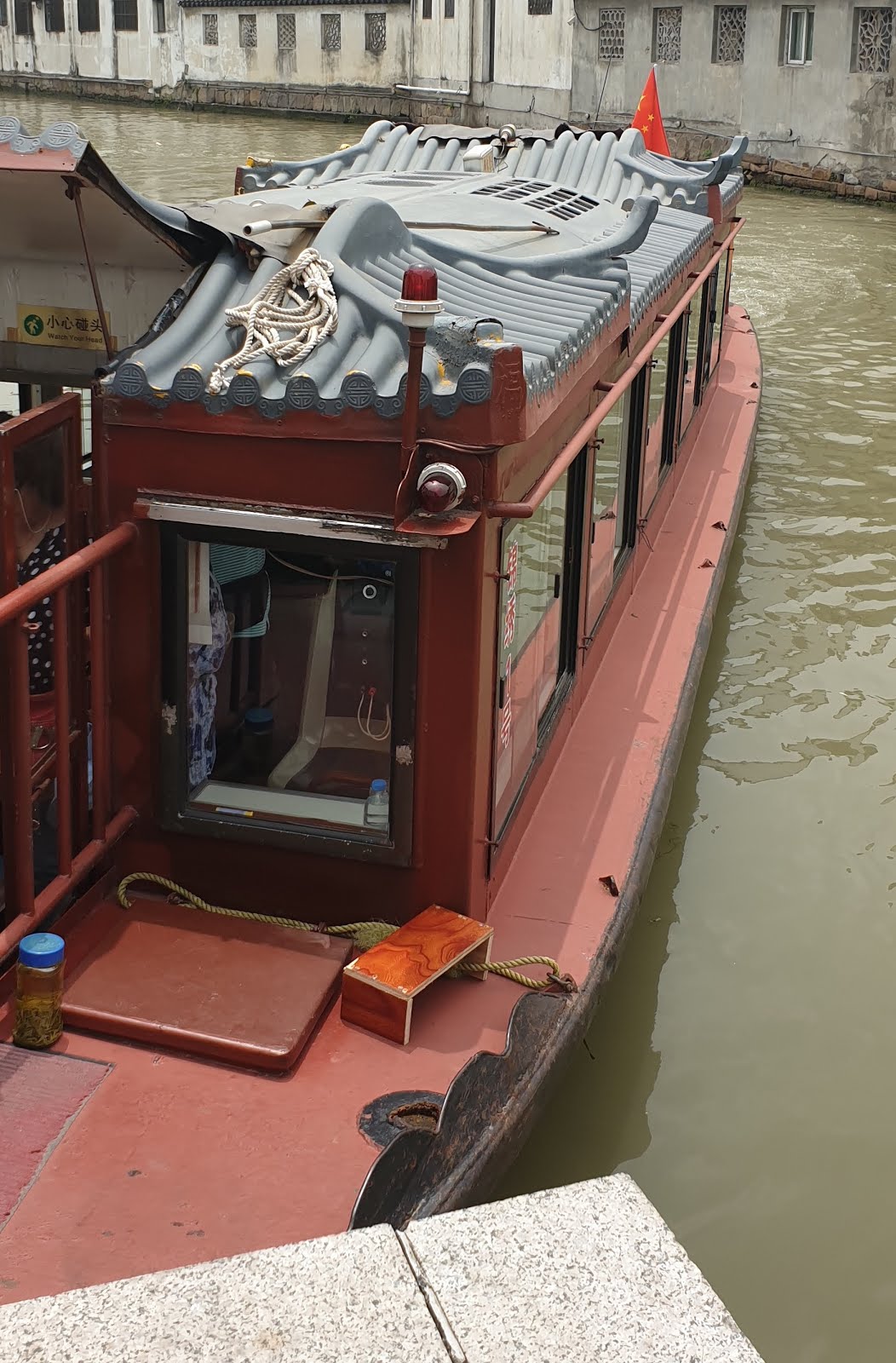
This morning is a boat ride that will take us along a small portion of the main canal, and we head through a number of back streets, to a landing where there are a number of boats all vying with each other to get us passengers on boats.

But…

These boats don’t have a wharf to tie up to and then put out a stable gangplank.  No.  They just more into a concrete step and you take your life in your hands getting on.  One wrong step and you’re in the canal.  And not a very clean one at that.

That’s if another boat doesn’t come along and bumps you, knocking you off balance.  We managed not to lose anyone in boarding the vessel.

This is where we get on the boat

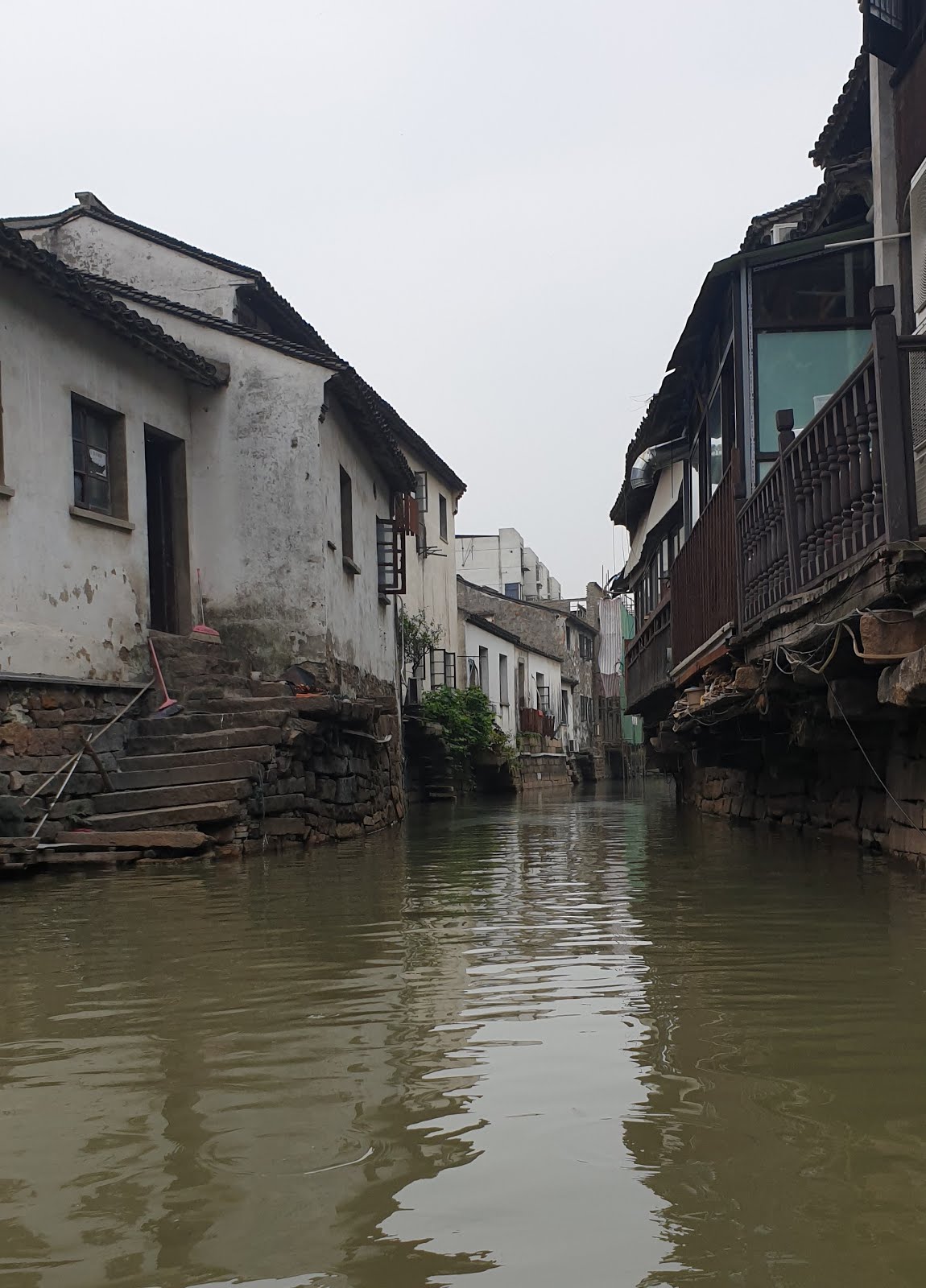
We go along what appears to be downstream towards another larger canal, past tree-lined streets until the canal narrows and we’re looking at the backs of houses, which look very dilapidated.

And the canals?  Well, it’s not quite like it is in Venice

Though some parts of the canal look better than others

What doesn’t bear thinking about is the electrical wiring which is a nightmarish spider web of cables going off in all directions.  How anyone could troubleshoot problems is beyond me.

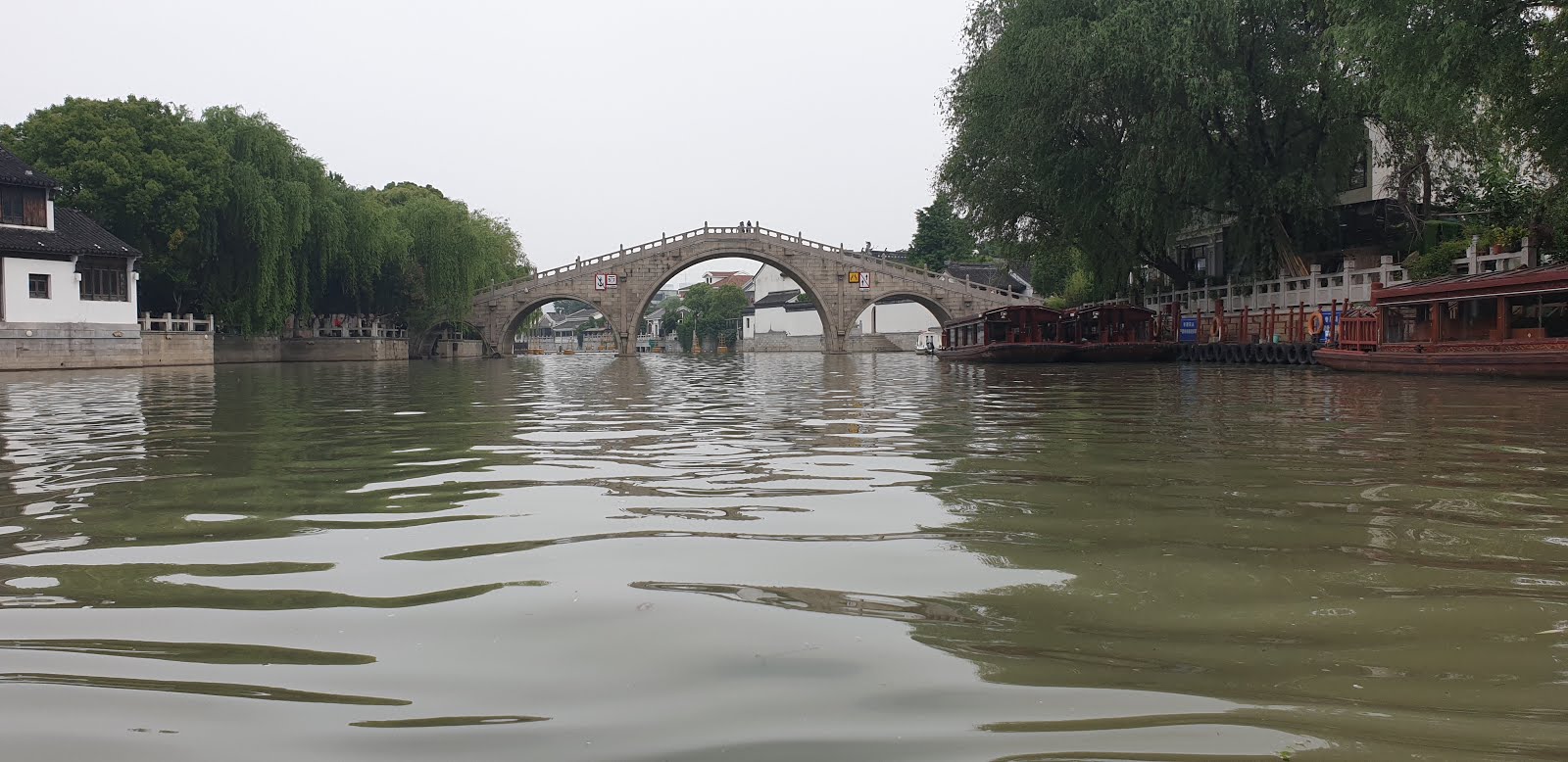
We pass under a number of bridges, and then, about 30 minutes after leaving, we reach a larger canal and do a 180-degree turn, and head back to a drop off point the will enable us to walk through a typical everyday Chinese market for food and the other items.

This drop off point is much the same as the starting point, a concrete step which is as hazardous as the first.  At least we don’t have to compete with other boats for the landing spot.

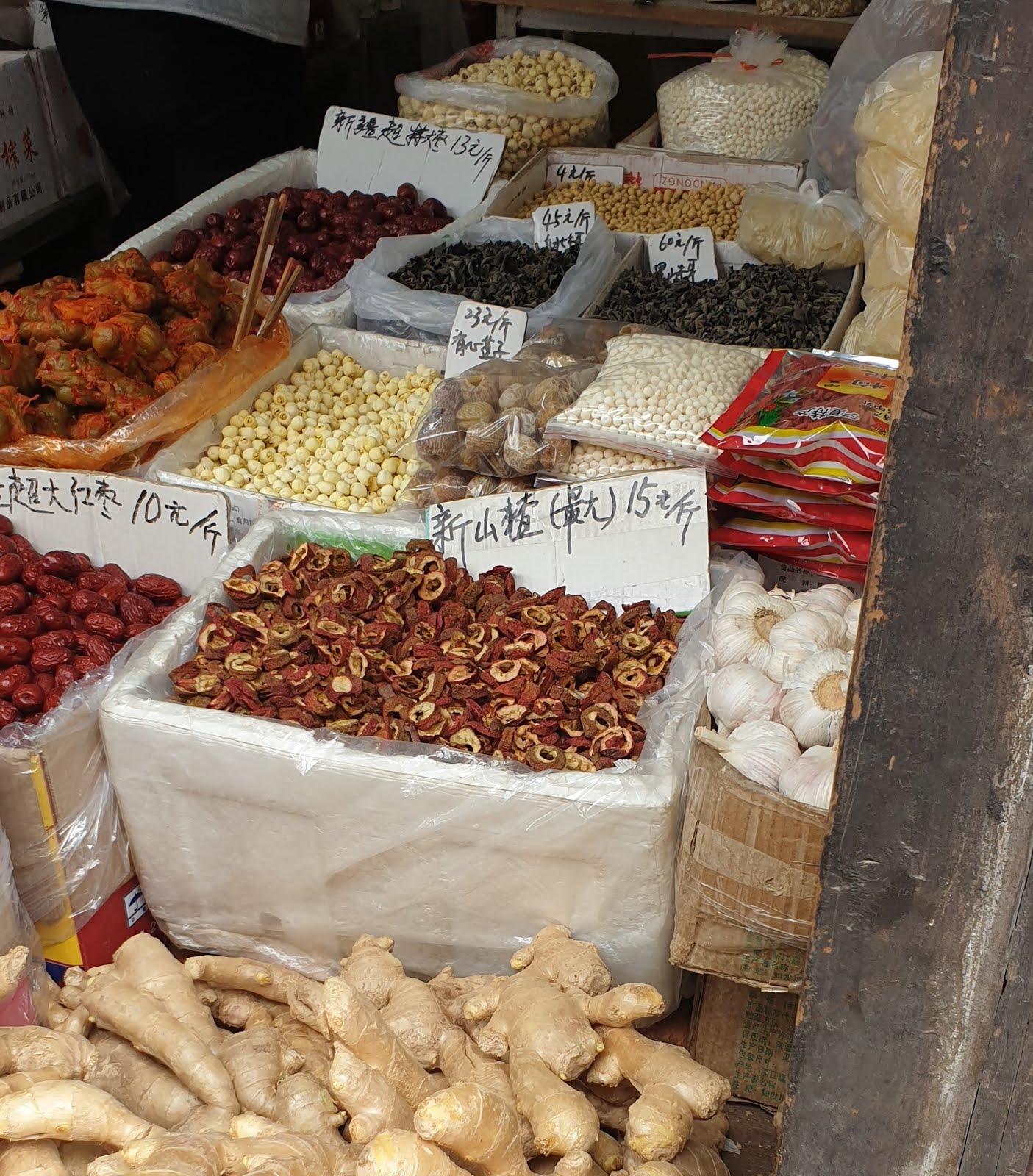
We take a leisurely stroll down a small section of Pingjiang Road with small shops on either side, selling all manner of goods

but my interest is in the food and the prices, which at times seem quite expensive for so-called local people, so maybe because the tourists go down this street every day, the prices have been inflated accordingly.

I find it rather disappointing.

We walk to the bridge, go under to the other side crossing the canal and find the coffee shop which is also the meeting place.

So…

When is a coffee shop not a coffee shop, when it takes an eternity to make a cup of coffee, we waited 25 minutes?

We also ordered beef black pepper rice and it took 20 minutes before it arrived, but it was well worth the wait.  Strands of perfectly cooked beef with onion, carrot, and capsicum, with a very peppery and spicy sauce, with a side of boiled rice.

A pizza was ordered too but it did not arrive at all before we left.

There are so many things I haven’t done

Does it really matter, you ask?

Perhaps not, but now seems to be an appropriate time, past the age of 67, to take stock.

We have achieved a lot in the last 15 or so years once the children had grown up and could look after themselves.

Unlike a lot of more modern couples who are doing the traveling in their 20’s and 30’s then having children, we chose to do it the other way around.

To me, it seemed easier to deal with teenagers when we were in our 40’s rather than our 60’s.  With the benefit of hindsight, I can truthfully say we were right.

We were older and wiser when we traveled and more aware of the dangers around us, sometimes overlooked or ignored by a youthful devil may care attitude.

But, in saying that ….

No, I don’t think I’ll be getting to see Mt Kilimanjaro, observing the wild animals in the Serengeti, climbing Mt Everest, or seeing the ancient pyramids.

Which is a sad state of affairs given the world has changed so much in recent years and has pretty much ruled out going to a lot of places, and in particular, the middle east, and because of COVID 19, just about everywhere else.

But, if it is ever possible before I die, I still want to go to the Greek Islands, and, Santorini is at the top of my travel bucket list.

We’ve been to London.  We’ve been to Paris and Euro Disney.  We’ve been to Rome and seen the ancient ruins.  We’ve been to Vienna, Schonbrunn Palace, and, particularly for us, a visit to Swarovski crystal world, near Innsbruck, we’ve been to Salzburg, and been on the Sound of Music tour.

We’ve been to Florence and loved it, we’ve been to Venice and loved that too, and we’ve spent a few days in the heart of Tuscany, and want to go back for longer, much longer.

In fact, that’s the second item on the travel bucket list.

We’ve also been to Singapore and Hong Kong, at first out of necessity as an airline stopover, but then we went back to see the city and tourist, and non-tourist attractions.

I will not forget staying at the Hong Kong Conrad hotel as a Diamond Hhonors member.  Oh, the memories.

We’ve also stayed on the French Riviera, in a timeshare apartment in Antibes where every morning when out back you had a view of the shimmering Mediterranean if the sun was out.

Nice, Cannes, Monte Carlo, the billionaire’s yachts in Antibes harbor, Monte Carlo and ‘that’ casino, taking the same drive along the coast as Grace Kelly did in To Catch a Thief, and feeling like James Bond arriving for a new adventure, minus the half-million-dollar sports car.

But, now, crashing back to earth with a very hard thump ….

Travel in the future is looking difficult for both of us, not only financially but from a health aspect.  We are both not as sprightly as we used to be.  Of course COVID is still lurking and despite the good news about a vaccine, it’s still a long long way away.

Yet given the restraints and if it is at all possible, aside from the Greek Islands and Tuscany, the next items on the list are:

Germany, visiting both Berlin, from a cold war aspect, the Brandenburg gate springs to mind, and Munich at the time of the Octoberfest.  As a beer drinker that is also high on the bucket list.

Scotland, more so since we’ve started watching Outlander, and besides being a beer drinker, I am also partial to a good Single Malt, the Whiskey trail.

Ireland, because my wife’s previous name was Murphy and at some point, in the long distant past some relatives emigrated to Australia, and she would like to visit the country of her forebears.

But with the current state of the world, our health issues, and that all-important requisite money, or the lack of it, perhaps it’s time to visit other parts of our own country.

Perhaps it’s time to do a culinary trip, particularly down south.  It’s practical and achievable and safe.

And it’s a big country.

Searching for locations: The Lingering Gardens, Suzhou, China

The Lingering Garden

These gardens are very tightly put together and are interspersed with buildings that you can go in and look at as distinct from just looking in from the outside.

There are lots of paths that wind around interspersed with rocks which may or may not be sculpted, and equally interspersed with trees, bushes, and small plants.  In the middle is a lake which usually has lotus plants in bloom, but they are not in season.

The gardens were built around a small lake that was filled with fish of all sizes and colours

The buildings were also a contrast for those built for the men

and those for the women

In the middle of the garden was a significant rock pillar

surrounded by certain areas of the garden that had smaller rock formations


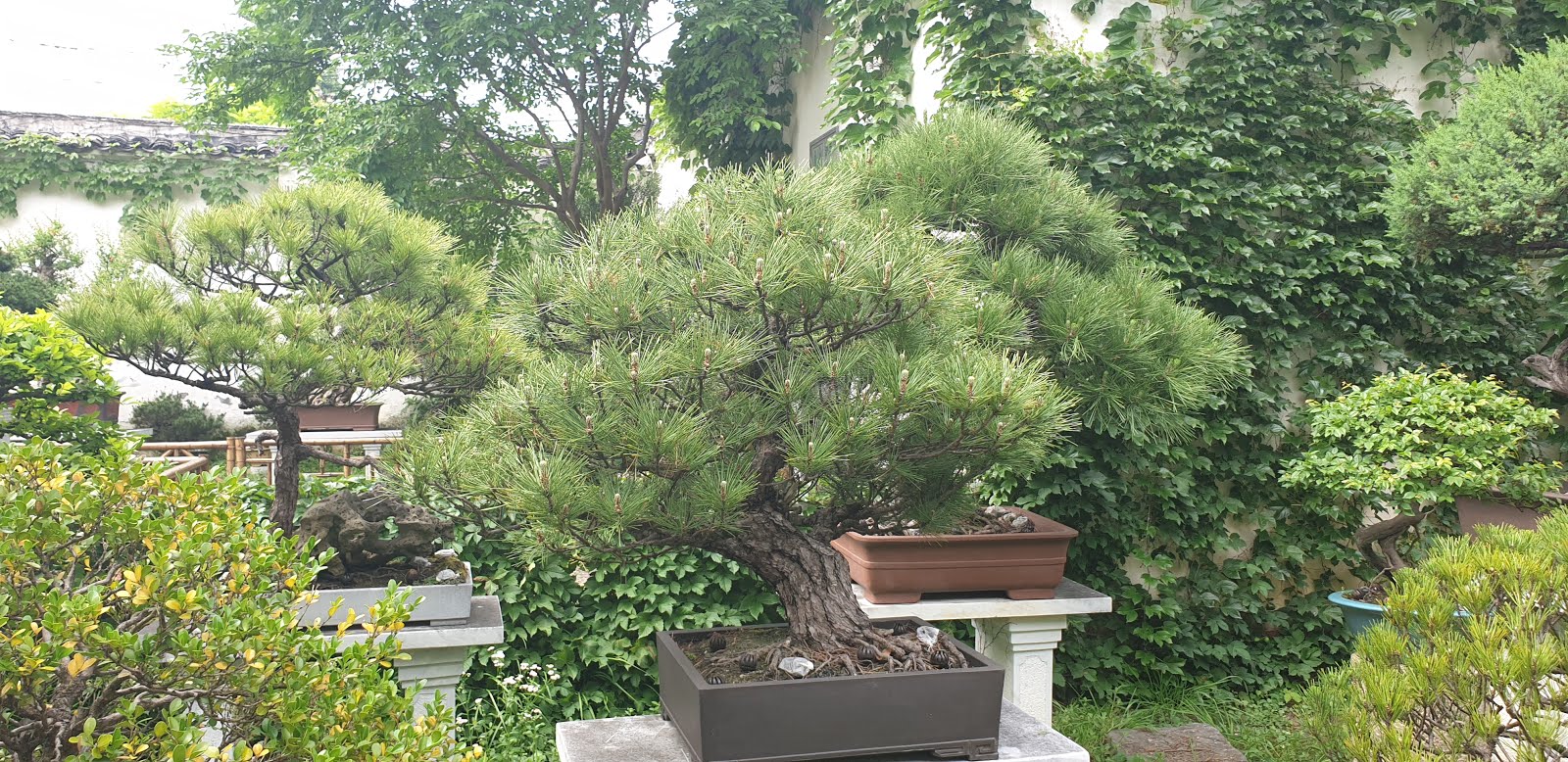
At the end of the garden is a large collection of bonsai trees, some of which are quite exquisite.

Searching for locations: Shanghai, China, by night.

When we arrive at the embarkation site we find at least 100 buses all lined up and parked, and literally thousands of Chinese and other Asians streaming through the turnstiles to get on another boat leaving earlier than ours.

Buses were just literally arriving one after the other stopping near where we were standing with a dozen or so other groups waiting patiently, and with people were everywhere it could only be described as organized chaos.

Someone obviously knew where everyone was supposed to go, and when it was our turn, we joined the queue.  There were a lot of people in front of us, and a lot more behind, so I had to wonder just how big the boat was.

We soon found out.

And it was amusing to watch people running, yes, they were actually running, to get to the third level, or found available seating.  Being around the first to board, we had no trouble finding a seat on the second level.

I was not quite sure what the name of the boat was, but it had 3 decks and VIP rooms and it was huge, with marble staircases, the sort you could make a grand entrance on.  The last such ornate marble staircase we had seen was in a hotel in Hong Kong, and that was some staircase.

But who has marble staircases in a boat?

We’re going out across the water as far as the Bund and then turn around and come back about 30 to 40 minutes.   By the time everyone was on board, there was no room left on the third level, no seats on the second level nor standing room at the end of the second level where the stairs up to the third level were.

No one wanted to pay the extra to go into the VIP lounge.

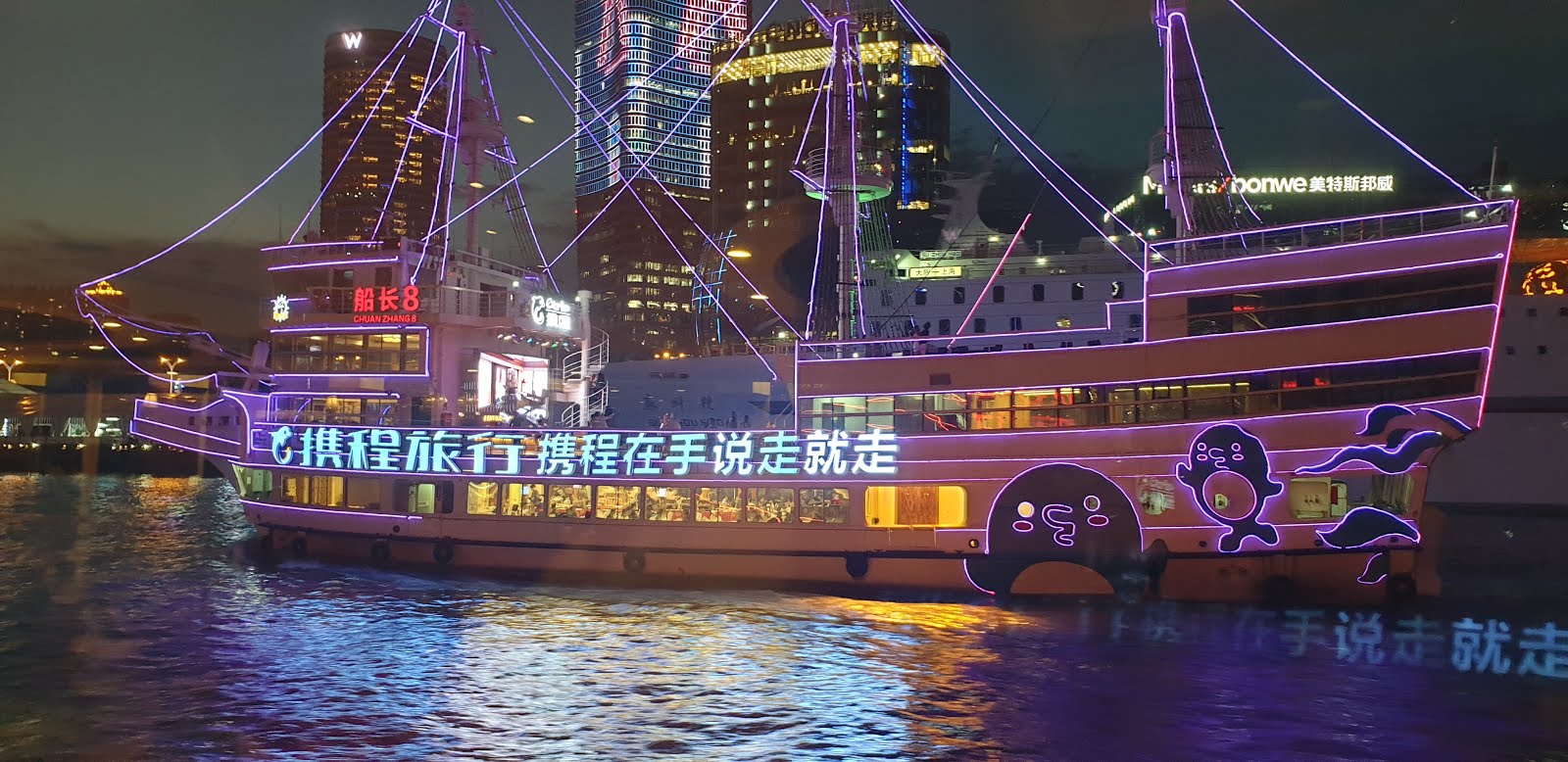
We were sitting by very large windows where it was warm enough watching the steady procession of the colored lights of other vessels, and outside the buildings.

It was quite spectacular, as were some of the other boats going out on the harbor.

All the buildings of the Bund were lit up

And along that part of the Bund was a number of old English style buildings made from sandstone, and very impressive to say the least.

On the other side of the harbour were the more modern buildings, including the communications tower, a rather impressive structure.

I had to go to the rear of the vessel to get a photo, a very difficult proposition given here was no space on the railing, not even on the stairs going up or down.  It was just luck I managed to get some photos between passengers heads.

And, another view of that communications tower:

There was no doubt this was one of the most colourful night-time boat tours I’ve ever been on.  Certainly, when we saw the same buildings the following day, they were not half as spectacular in daylight.

I never did get up to the third level to see what the view was like.

Searching for locations: The Great Wall of China, near Beijing, China

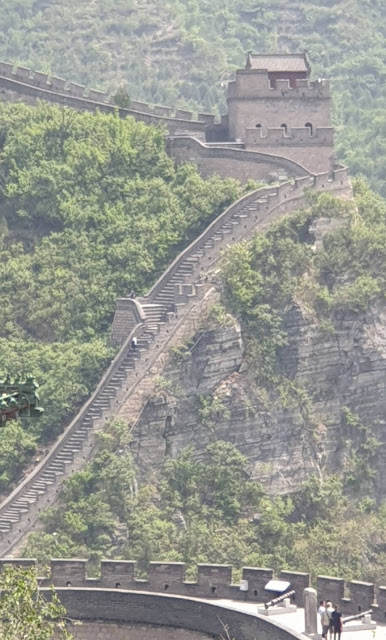
This is in a very scenic area and on the first impression; it is absolutely stunning in concept and in viewing.

As for the idea of walking on it, well, that first view of the mountain climb when getting off the bus, my first question was where the elevator is?  Sorry, there is none.  It’s walk on up or stay down the bottom.

Walk it is.  As far as you feel you are able.  There are quite a few who don’t make it to the top.  I didn’t.  I only made it to the point where the steps narrowed.

But as for the logistics, there’s the gradual incline to the starting point, and what will be the end meeting place.  From there, it’s a few steps up to the guard station no 7, and a few more to get up to the start of the main climb.  The top of the wall is guard station no 12.

Ok, those first few steps are a good indication of what it’s was going to be like and it’s more the awkwardness of the uneven heights of the steps that’s the killer, some as high as about 15 inches.  This photo paints an illusion, that it’s easy.  It’s not.
If you make it to the first stage, then it augers well you will get about 100 steps before you both start feeling it in your legs, particularly the knees, and then suffering from the height if you have a problem with heights as the air is thinner.  And if you have a thing with heights, never look down.

This was from where we stopped, about a third of the way up.  The one below, from almost at the bottom.  One we’re looking almost down on the buildings, the other, on the same level.

It requires rest before you come down, and that’s when you start to feel it in the knees, our tour guide called it jelly legs, but it’s more in the knees down.  Descending should be slow, and it can be more difficult negotiating the odd height steps, and particularly those high ones.  You definitely need to hang onto the rail, even try going backward.

And, no, that rail hasn’t been there as long as the wall.

While you are waiting for the guide to return to the meeting place at the appointed time, there should be time to have some jasmine tea.  Highly refreshing after the climb.

Searching for locations: The Kingston Flyer, Kingston, New Zealand

The Kingston Flyer was a vintage train that ran about 14km to Fairlight from Kingston, at the southern end of Lake Wakatipu, and back.

This tourist service was suspended in December 2012 because of locomotive issues.

However, before that, we managed to go on one of the tours, and it was a memorable trip.  Trying to drink a cup of tea from the restaurant car was very difficult, given how much the carriages moved around on the tracks.

The original Kingston Flyer ran between Kingston, Gore, Invercargill, and sometimes Dunedin, from the 1890s through to 1957.

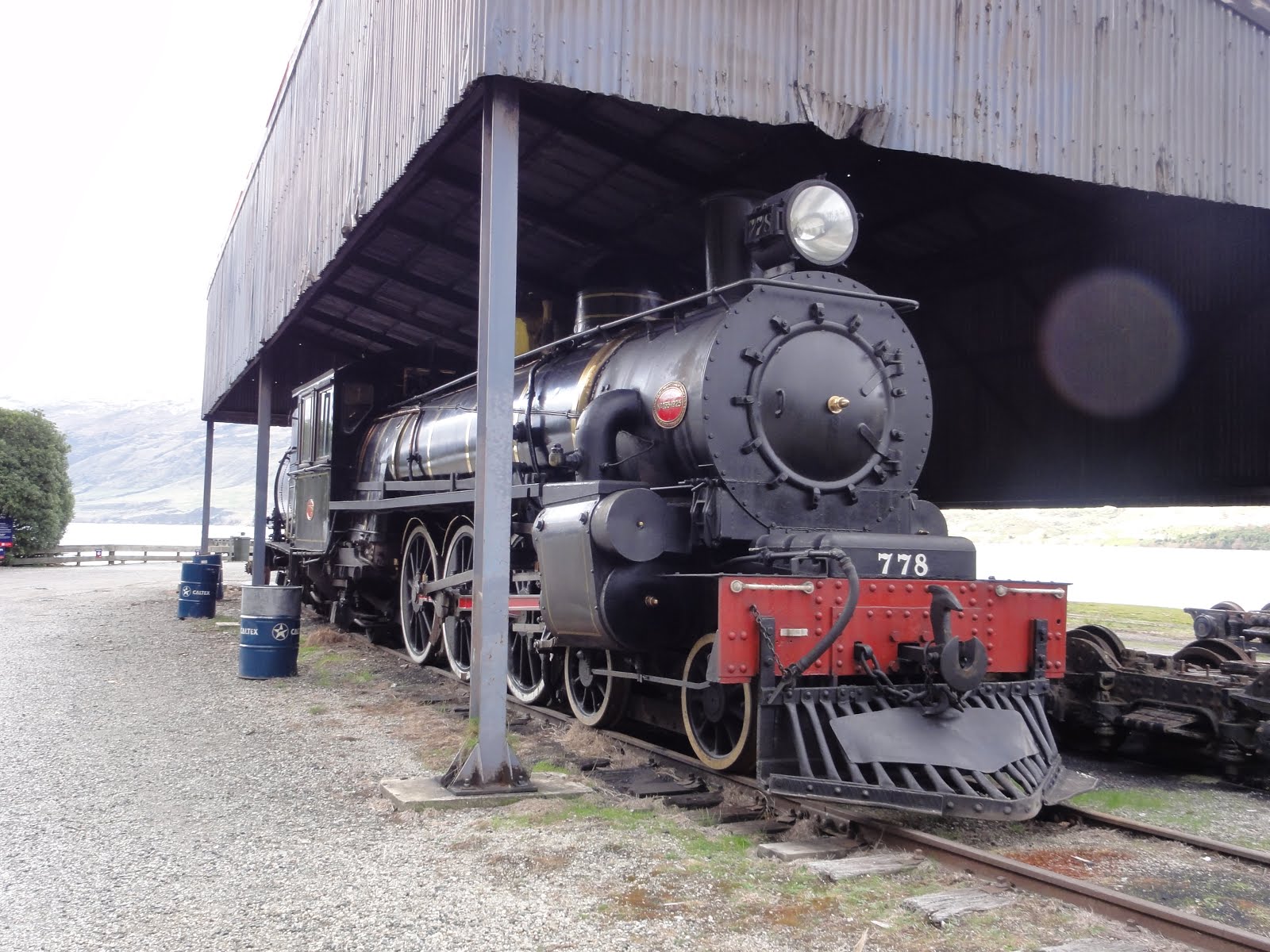
There are two steam locomotives used for the Kingston Flyer service, the AB778 starting service in 1925, and the AB795 which started service in 1927.

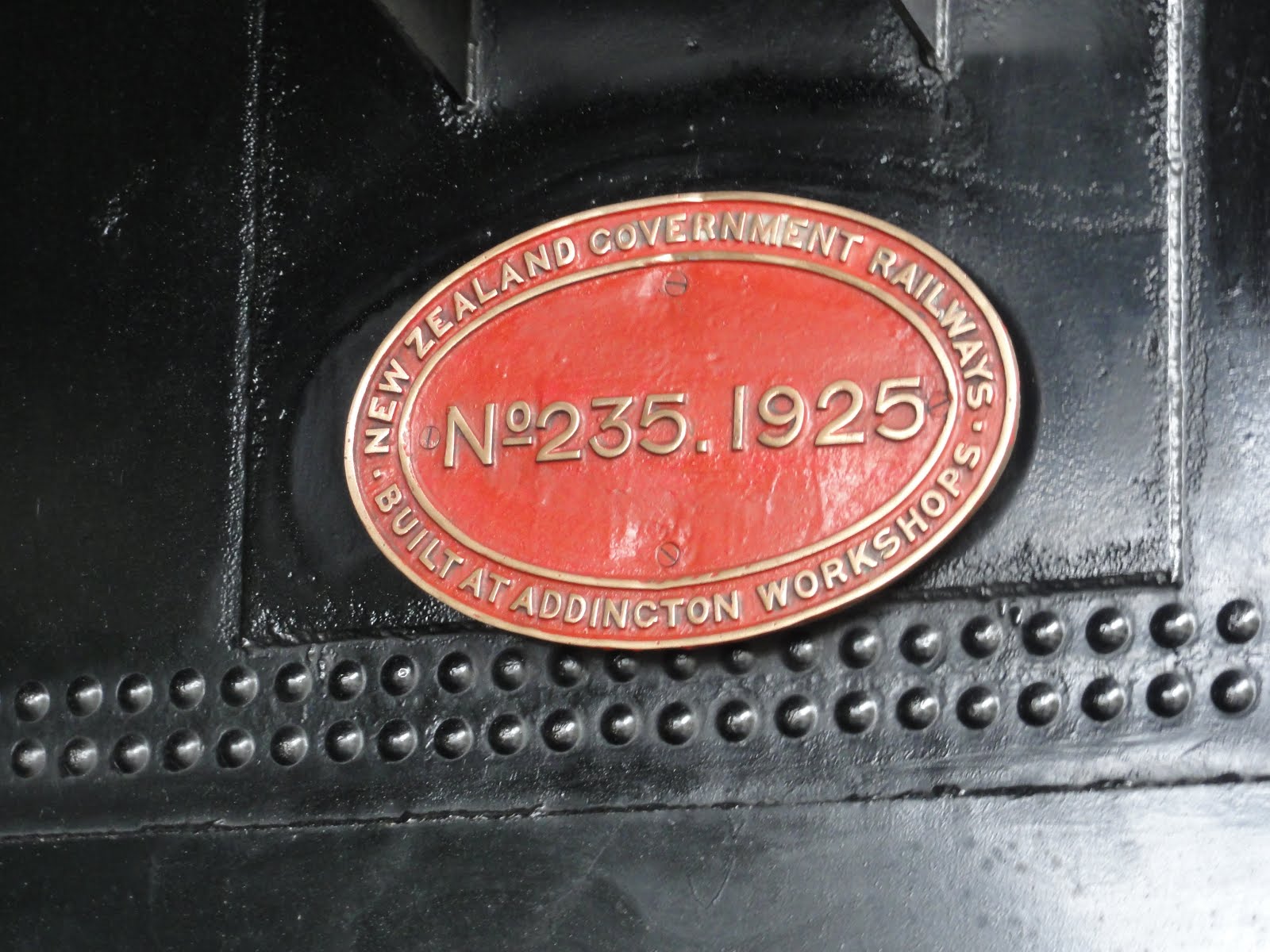
The AB class locomotive was a 4-6-2 Pacific steam locomotive with a Vanderbilt tender, of which 141 were built between 1915 and 1927 some of which by New Zealand Railways Addington Workshops.

No 235 is the builder’s number for the AB778

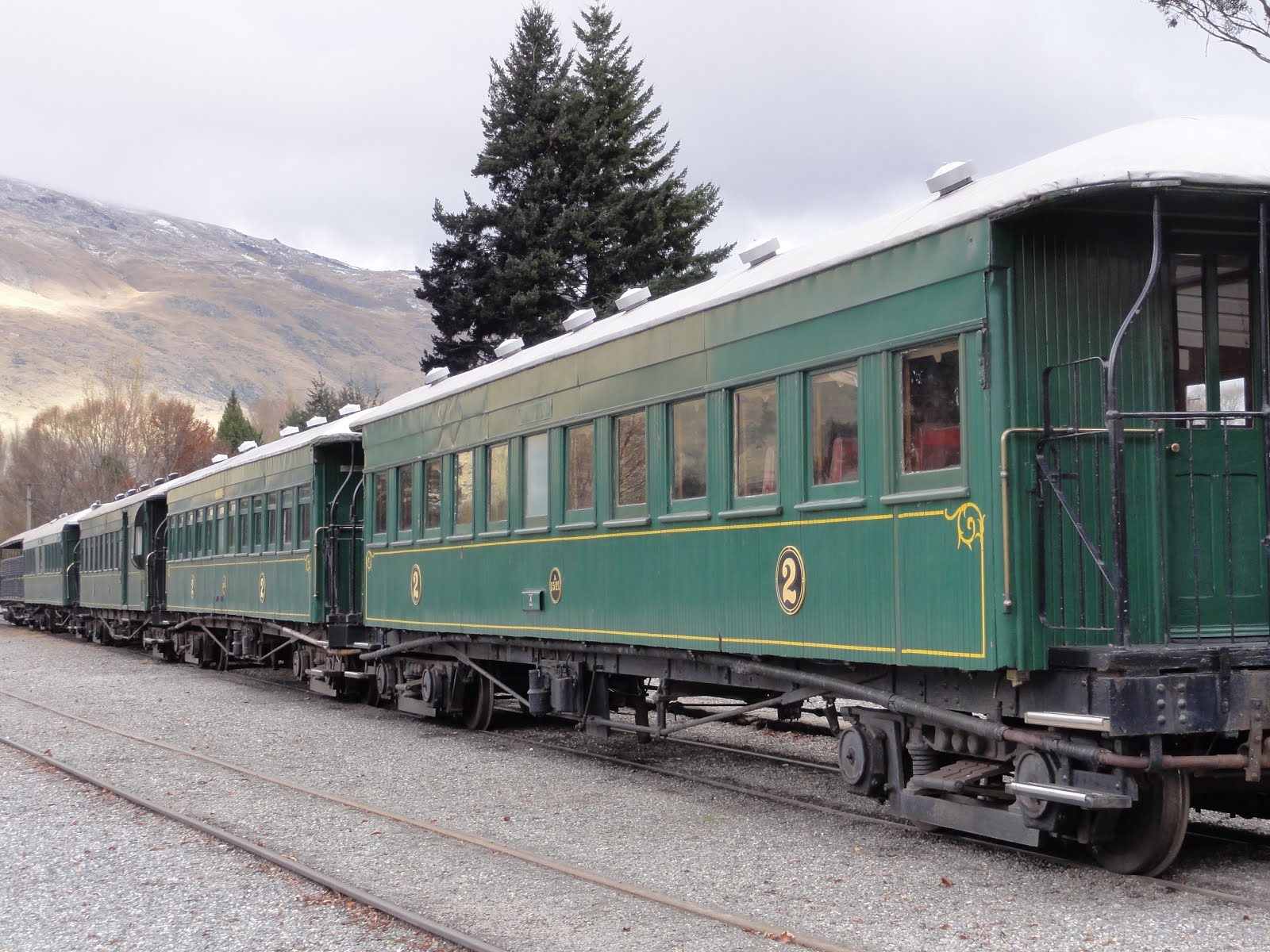
There were seven wooden bodied passenger carriages, three passenger coaches, one passenger/refreshments carriage and two car/vans.  The is also a Birdcage gallery coach.  Each of the rolling stock was built between 1900 and 1923.  They were built at either of Addington, Petone, or Hillside.

I suspect the 2 on the side means second class

The passenger coach we traveled in was very comfortable.

This is one of the guard’s vans, and for transporting cargo.

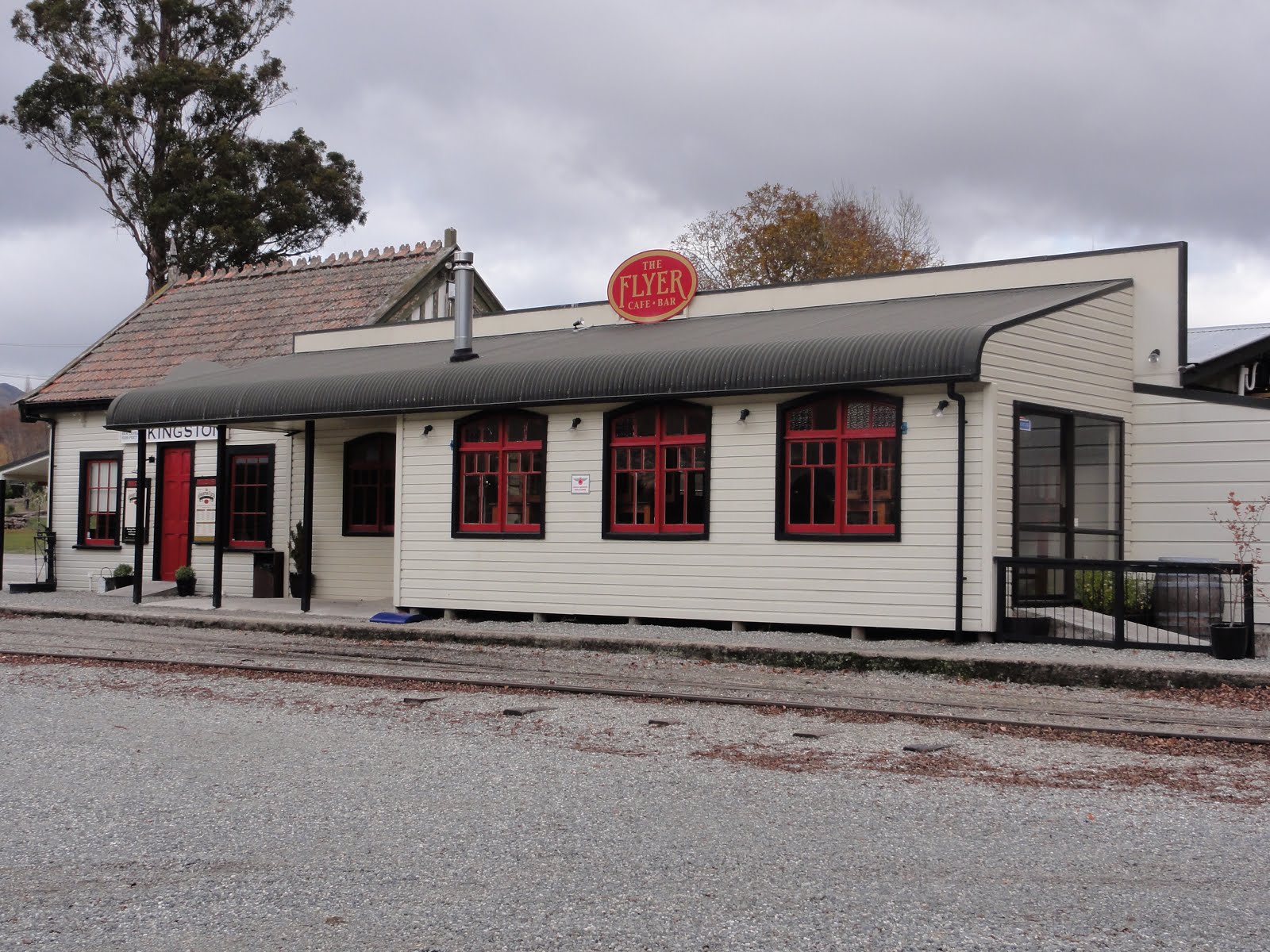
The Kingston Railway Station

and cafe.

A poster sign advertising the Kingston Flyer

The running times for the tourist services, when it was running.

In a word: Holiday

Some call time off from work whether it is for a day, a few days, and couple of weeks, or maybe longer, a holiday.

Or leave, leave of absence, annual leave, or long service leave.

Others may call it vacation.

It depends on what part of the world you live in.

But the end result is the same, you do not go to work, so you stay home and do all those things that have mounted up, you drive up, and for some reason it is always up, to the cabin, for a little hunting shooting a fishing, or you get on a planr or a ship and try to get as far away from home and work as possible.

That’s called going overseas. It seems if there is an ocean between w there you go and where you live, no one will be able to disturb you.

Sorry, I bet you didn’t leave that mobile phone or iPad home did you?

But, of course there are a few other obscure references to the word holiday.

For instance,

It can be a day set aside to commemorate an event or a person, a day when you are not expected to work, e.g. Memorial Day, Christmas Day, Good Friday. In Britain they used to be called Bank Holidays.

It can be a specified period that you may be excused from completing a task, or doing something such as getting a one year tax exemption, which maifh also be called a one year tax holiday.

Yes, now that is an obscure reference, particularly when no tax department would ever grant anyone an exemption of any sort.

Searching for locations: Driving in ice and snow, Canada

This morning started with a visit to the car rental place in Vancouver.  It reinforced the notion that you can be given the address and still not find the place.  It happened in Washington where it was hiding in the back of the main railway station, and it happened again in Vancouver when it was hidden inside a hotel.

We simply walked straight past it.  Pity there wasn’t a sign to let people know.

However…

We went in expecting a Grand Jeep Cherokee and walked out with a Ford Flex, suitable for three people and four large suitcases.  It actually seats 7, but forget the baggage, you’d be lucky to get two large suitcases in that configuration.

It is more than adequate for our requirements.

Things to note, it was delivered with just over a quarter of a tank of gas, and it had only done about 11,000 km, so it’s relatively new.  It’s reasonably spacious, and when the extra seats are folded down, there is plenty of baggage space.

So far, so good.

We finally leave the hotel at about half-past ten, and it is raining.  It is a simple task to get on Highway 1, the TransCanada Highway, initially, and then onto Highway 5, the Coquihalla Highway for the trip to Kamloops.

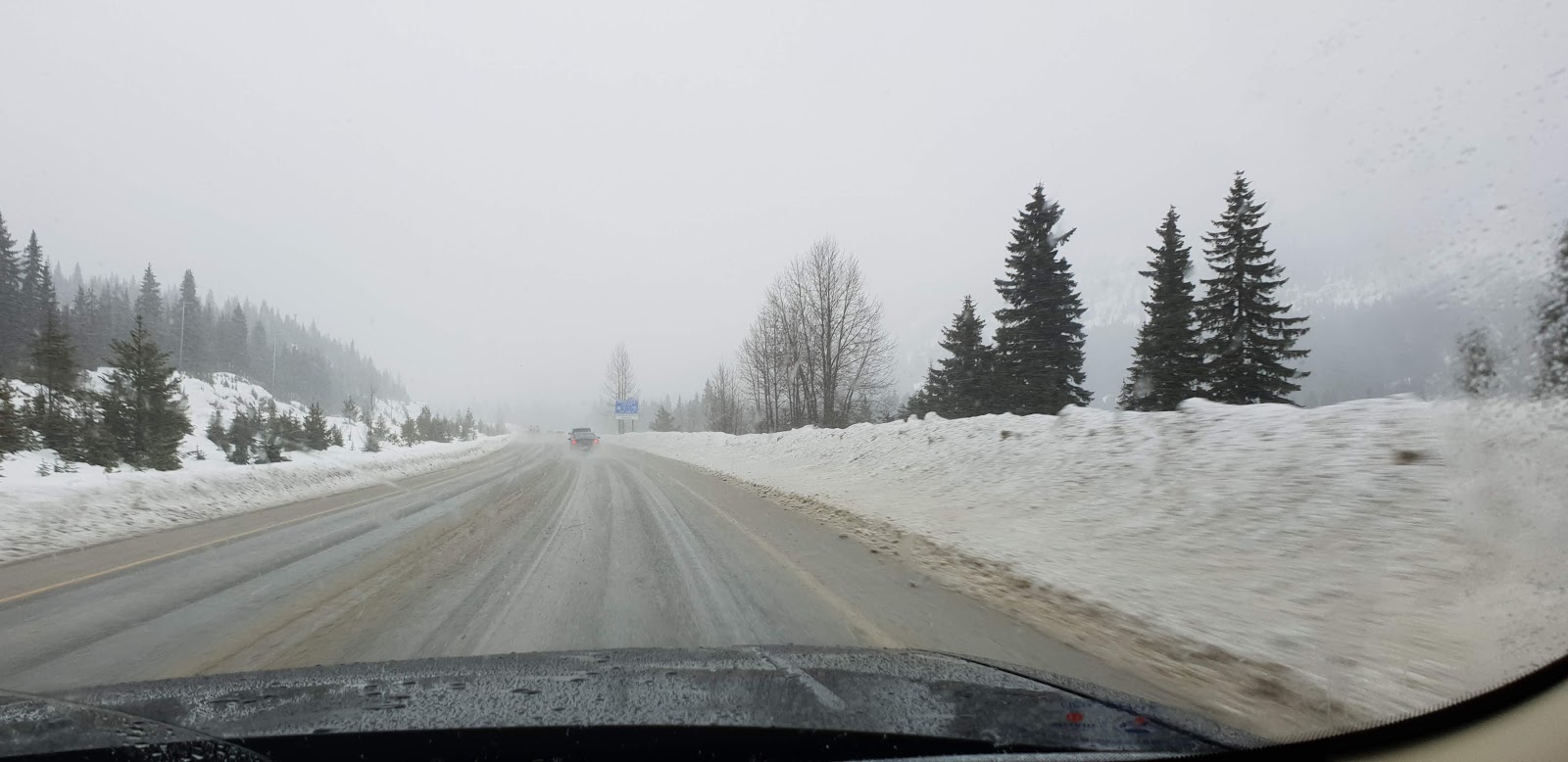
It rains all the way to the top of the mountain, progress hampered from time to time by water sprays from both vehicles and trucks.  The rain is relentless.  At the top of the mountain, the rain turns into snow and the road surface to slush.  It’s 0 degrees, but being the afternoon, I was not expecting it to turn to ice very quickly.

On the other side of the mountain, closer to Kamloops, there was sleet, then rain, then nothing, the last 100kms or so, in reasonably dry conditions.

Outside Kamloops, and in the town itself, there was evidence of snow recently cleared, and slushy roads.  Cars in various places were covered in snow, indicating the most recent falls had been the night before.

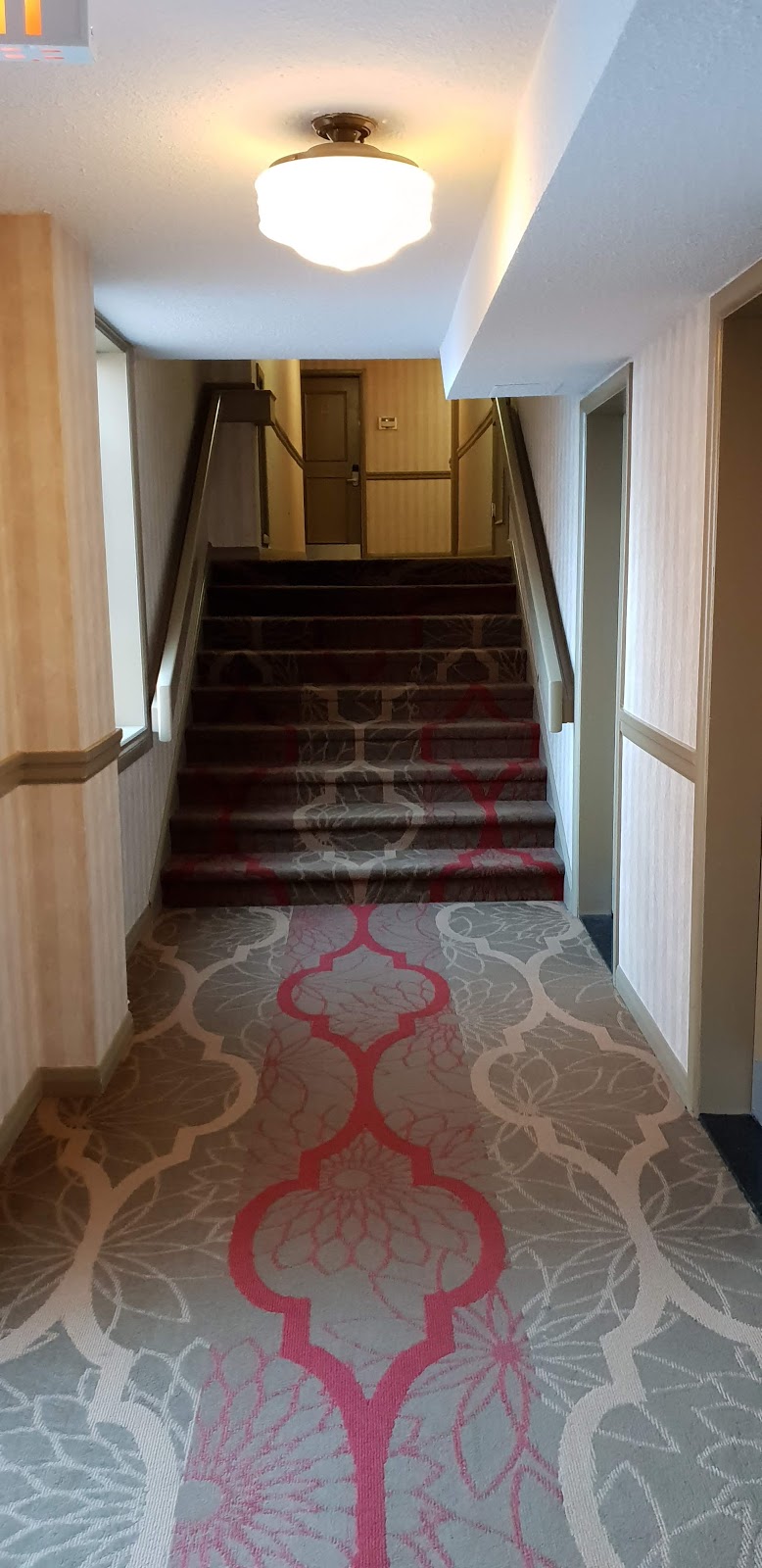
We’re staying at the Park Hotel, a heritage building, apparently built in the later 1920s.  In the style of the time, it is a little like a rabbit warren with passages turning off in a number of directions, and showing it is spread across a number of different buildings.

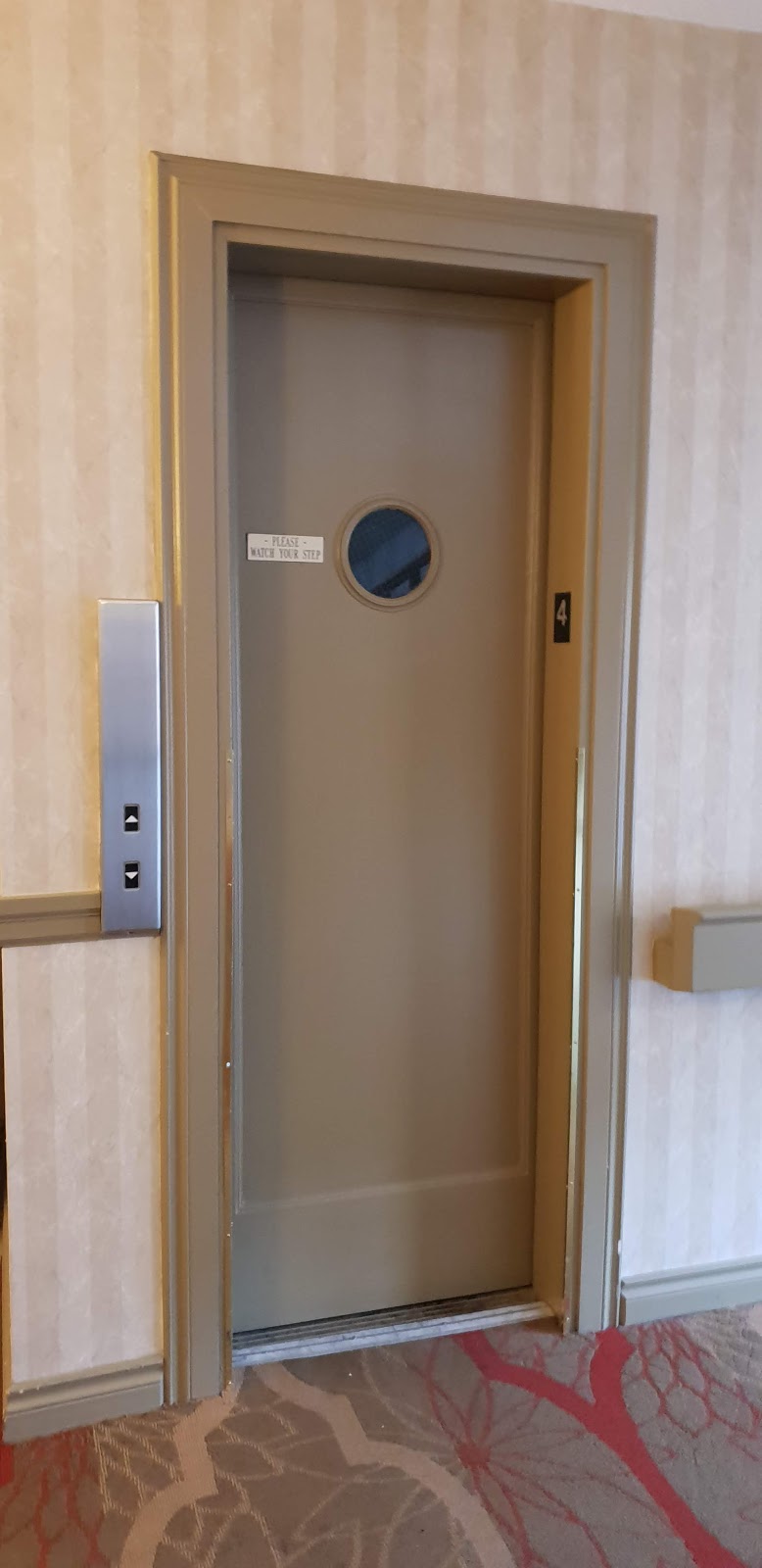
It has the original Otis elevator that can take a maximum of four passengers, and a sign on the wall that says “no horseplay inside the elevator” which is a rather interesting expression that only someone of my vintage would understand.  And, for those without a sense of humor, you definitely couldn’t fit a horse in it to play with.

The thing is, how do you find a balance between keeping the old world charm with modern-day expectations.  You can’t.  Some hotels try valiantly to get that balance.  Here, it is simply old world charm, which I guess we should be grateful for because sooner rather than later it’s going to disappear forever.

In my writer’s mind, given the importance of the railways, this was probably a thriving place for travelers, and once upon a time, there were a lot more hotels like this one.