Writing about writing a book – Day 20

It is a day of rest although writers are ready and able to work on any given day at any hour of the day or night when an idea or thought comes to them.

I’m trying not to think, but that’s not working.

I’ve been going over the reasons for writing the first draft of the book 30 odd years ago and it had something to do with the fact I was working with personal computers and local area networking when both were in their infancy, and I wanted to blend this knowledge into a story.

Of course, I’d always wanted to write thrillers, and this presented the opportunity to use computers as a basis for a worldwide conspiracy.  How easy it is these days to do just that, but back in those days, it was a lot of hard work.

I remember sitting in a meeting when the company I was working for at the time had just implemented a network and personal computer to replace the mainframe and dumb terminals, also looking to leverage the new technologies of spreadsheets and word-processing, effectively making accounts staff more productive, and removing typists and moving into the world of centralized word processing.  It was not a new idea with Wangwriter, but using PC’s was.

One of the departmental managers got up to give his take on the new technology, this about six months after implementation, and after a lot of teething troubles caused mainly by people who were vehemently resisting change, and his message was, it should not be called ‘networking’, but ‘not working’, in reference to the number of times the network went down.

But this is a digression.  Computers are only a part of the story.

The story also goes back to a time when there was a clear demarcation between the management levels.  Management offices were oasis’s whereas the staff worked in a stark desert-like environment.  When one came to work for such an organization, it was with the belief that you start at the bottom, and over time, you work your way up the ladder.  There was, very definitely, class distinction, and the various management levels never mixed, at work or socially, except within their own level.

There were Managers, Assistant Managers, and Manager’s Assistants, a typing pool, a secretary, that young, or old, lady who did so many jobs for their boss, that these days it would be considered demeaning.  They were dedicated to their jobs and irreplaceable.  There was no such person as a Personal Assistant.

Nor was such a thing as sexual harassment.  One company I worked in where one of the Assistant Managers was sexually abusing an office girl, her complaints didn’t get a prosecution as it would now, it just had him transferred to another branch.  Reprehensible, yes, and thankfully no longer a problem, except of course, in Fifty Shades of Grey which apparently condones such behavior.

There were department heads, General Managers, and Board Members.  The upper management level and participants were in a world of their own, one few could ever aspire to.  This is the world in which Transworld, my fictitious (but based on a very real) company lives.

I have to work on my company structure to make sure it is right.

Now I have two charts.  A timeline, for both Bill, and the story, and a hierarchy for the office management and staff.

This is beginning to be more complicated than I thought.


© Charles Heath 2016-2020
Memories of the conversations with my cat – 89

As some may be aware, but many not, Chester, my faithful writing assistant, mice catcher, and general pain in the neck, passed away some months ago.

Recently I was running a series based on his adventures, under the title of Past Conversations with my cat.

For those who have not had the chance to read about all of his exploits I will run the series again from Episode 1

These are the memories of our time together…

20160921_071506

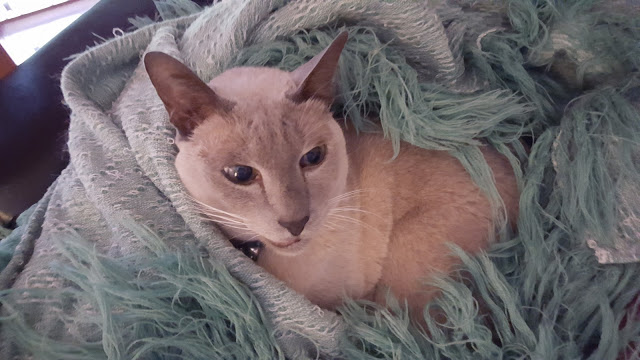
This is Chester.  We have been discussing the possibility of being stuck in the house for anything from 14 days to 10 months.

Yes, the Coronavirus is finally arriving in Australia, and though it is slow to catch on, we are being warned that it could get a lot worse, very quickly.

Chester has suggested we barricade the doors and windows.

Alas, I tell him, this is not the same as the American cowboys fending off an Indian attack.  No circling the wagons, and definitely no John Wayne to ride in and save the day.

Too many westerns on Fox.  I keep forgetting Chester has mastered the art of turning the TV on and changing channels on the Foxtel remote.

I also tell him that the virus is not only airborne, spread by those who cough or sneeze, but also by touch, like shaking hands, and hugging.

At that, Chester takes a good three, four steps back away from me.  So, he challenges me, what are the options.

Well, firstly cats may not get the virus.  Only one dog, as far as I know, had got it.  You, I tell him, do not need to worry.

As for the humans, well, we are in trouble if it comes.

We will be staying in, in some sort of forced quarantine, trying to avoid the rest of the world until it goes away,

So, he says, that means you have enough cat food and litter, the proper one?

I shake my head like he does when he’s annoyed.

Well, if it happens, I’m sure we’ll find out.  Besides, I add, you need to lose a kilo or two.

A photograph from the inspirational bin – 9

…

I remeber once being told that if you shoot for the moon, you’ll land in the clouds, if you shoot for the tree tops, you’ll finish up back where you started from.

It was a silly analogy, but I always remembered it when I looked up at the sky and saw clouds.

That was back in those hazy carefree days just after you were finished with school and you had your whole life in front of you. Your parents were there as the safety net, and were still proud of your scholastic achievements, and were not in too much of a hurry to hustle you out of the house.

But what happened when there’s a recession that came upon everyone without any warning.

Stocks plummeted, people lost their life’s savings, those with mortgages and loans suddenly finding that along with unemployment came no income, no ability to pay the bills, and therefore lost everything.

Although I never said it, I was thinking what good was an education when the whole world had gone to hell in a handbasket.

Two things I remember from back then, which in the context of disaster, wasn’t all that long ago. Firstly, my father making us children go camping from before we could walk, and with it, to survive with nothing but the clothes on our backs, and our wits.

It had happened to him, as a member of am expedition in Africa in his younger days, thinking that he might become the next great explorer, or archeologist, and finishing up getting lost, even though he asserted the other members had deliberately left him behind.

And secondly, that it was essential that we forge working relationships with any and all those who were like minded, such as those who wanted to be saved, not those who expected everyone else to so the work. It was obvious he had met a lot of those type of people too.

It served us well.

When nations began turning on each other, when essential resources like electricity and fuel stopped being distributed and rationed, when food suddenly became scarce, that’s when the real trouble started. My father said, at the outset, what would happen, and was glad our mother was not there to see it.

Then, when neighbours attacked neighbours once food became scarce, it was time to leave. The pity of it was, he died defending us, even after offering up some of the food we had stored away, but that had not appeased a hungry or angry mob.

His last words, “Go to where we said we would go, and remember everything I’ve taught you” were etched in my brain, and my brother and I did as he asked.

But, even knowing where we had to go, and how to get there, a plan of action made many years before, and trialled in recent years with success, nothing in the past could have prepared us for the journey.

It was, literally, time to shoot for the moon.

—

© Charles Heath 2021

In a word: Story

All of us writers know what this is, the sort of combination of words that all come together as a story.  A tale about anything whether it is true or just plain fiction.

A story can be long, or it can be short.  It could be a magazine or newspaper article, it could be what a child tells his or her mother or father when they get into trouble.

Come to think of it, I think that’s where I got an interest in writing stories because as a child I was always in trouble.

Of course, if you are telling certain types of stories,, then it’s bound to be a lie.  And made even worse if it is gossip!

That story might even be my interpretation of events, and as it happens, it’s possible no two stories are the same, especially if I and others had witnessed the same event.

This is not to be confused with the other version, storey, which is a single level in a building, one that might have thirty or more stories.

And, just to add to the confusion, living in Brisbane in Australia we have the Storey Bridge.

The cinema of my dreams – I never wanted to go to Africa – Episode 20

Our hero knows he’s in serious trouble.

The problem is, there are familiar faces and a question of who is a friend and who is foe made all the more difficult because of the enemy, if it was the enemy, simply because it didn’t look or sound or act like the enemy.

Now, it appears, his problems stem from another operation he participated in.

Lallo gave me a minute or two to read what amounted to two lines, that my co-operation was expected, and to be given.  It wasn’t exactly addressed to me personally, but a blanket authorization to interview anyone involved in that operation.

I handed the letter back, but not before I noticed it had been unfolded and refolded several times as if it had been used before.  Had Lallo already interrogated Treen, the only other survivor?

Lallo’s first question: “Do you know who was responsible for organising that operation?”

It was rather an odd question, asking a Sergeant who was assigned at the last minute.

“Look, at the time I was assigned to non-combat duties, not as an on-call commando.  I was a late replacement for the member of the team who had to withdraw due to an accident. I was simply ordered to join the team at the airfield.  Given the results, I’m hoping whoever it was that organized and authorized that operation got the bollicking they deserved.”

I had been annoyed at the time, but I’d got over it.  In keeping with a lot of the operations I’d been involved with; very few had a successful outcome, but usually with fewer casualties.

He gave me a sidelong glance, close to an admonishment.  “Just stick to the facts when answering questions.  The other survivor was Lieutenant Treen, correct?”

Not a happy man was the Lieutenant.  Not happy that the operation was changed at the last minute or the fact the odds had been stacked against us, and not happy I’d been flown in as a replacement what he regarded as his personal group.

“Yes.”

“Are you aware he requested an investigation into that operation?”

It came as no surprise.  On the flight over, he had expressed more than one concern about the lack of intelligence and what the real situation was like on the ground.

“No.”

“Were you aware that a week ago Lieutenant Treen was found dead in his quarters, from an apparent suicide?”

Treen if anything was a soldier’s soldier, and the last man to contemplate suicide for any reason.  Surviving, just, that botched operation would not be a catalyst for such an event for such a man.

“No.”

“Odd then, don’t you think, you are nearly sent to your death the day after?”

If that was the case, and one the face of it, it seemed so, that wasn’t the only oddity about this whole affair.  I remembered the date of the General’s letter, the one telling me to be co-operative. It was the day before Treen’s suicide.

I didn’t think it was a coincidence?

It was quite clear someone didn’t want the General or whoever Lallo was working for, to question the last two survivors.

The question now was: what did we know, or what they thought we knew that was so important, that silencing us was necessary.

And would ‘they’ try again?

…

© Charles Heath 2019-2022

Writing about writing a book – Day 20

It is a day of rest although writers are ready and able to work on any given day at any hour of the day or night when an idea or thought comes to them.

I’m trying not to think, but that’s not working.

I’ve been going over the reasons for writing the first draft of the book 30 odd years ago and it had something to do with the fact I was working with personal computers and local area networking when both were in their infancy, and I wanted to blend this knowledge into a story.

Of course, I’d always wanted to write thrillers, and this presented the opportunity to use computers as a basis for a worldwide conspiracy.  How easy it is these days to do just that, but back in those days, it was a lot of hard work.

I remember sitting in a meeting when the company I was working for at the time had just implemented a network and personal computer to replace the mainframe and dumb terminals, also looking to leverage the new technologies of spreadsheets and word-processing, effectively making accounts staff more productive, and removing typists and moving into the world of centralized word processing.  It was not a new idea with Wangwriter, but using PC’s was.

One of the departmental managers got up to give his take on the new technology, this about six months after implementation, and after a lot of teething troubles caused mainly by people who were vehemently resisting change, and his message was, it should not be called ‘networking’, but ‘not working’, in reference to the number of times the network went down.

But this is a digression.  Computers are only a part of the story.

The story also goes back to a time when there was a clear demarcation between the management levels.  Management offices were oasis’s whereas the staff worked in a stark desert-like environment.  When one came to work for such an organization, it was with the belief that you start at the bottom, and over time, you work your way up the ladder.  There was, very definitely, class distinction, and the various management levels never mixed, at work or socially, except within their own level.

There were Managers, Assistant Managers, and Manager’s Assistants, a typing pool, a secretary, that young, or old, lady who did so many jobs for their boss, that these days it would be considered demeaning.  They were dedicated to their jobs and irreplaceable.  There was no such person as a Personal Assistant.

Nor was such a thing as sexual harassment.  One company I worked in where one of the Assistant Managers was sexually abusing an office girl, her complaints didn’t get a prosecution as it would now, it just had him transferred to another branch.  Reprehensible, yes, and thankfully no longer a problem, except of course, in Fifty Shades of Grey which apparently condones such behavior.

There were department heads, General Managers, and Board Members.  The upper management level and participants were in a world of their own, one few could ever aspire to.  This is the world in which Transworld, my fictitious (but based on a very real) company lives.

I have to work on my company structure to make sure it is right.

Now I have two charts.  A timeline, for both Bill, and the story, and a hierarchy for the office management and staff.

This is beginning to be more complicated than I thought.


© Charles Heath 2016-2020

Memories of the conversations with my cat – 89

As some may be aware, but many not, Chester, my faithful writing assistant, mice catcher, and general pain in the neck, passed away some months ago.

Recently I was running a series based on his adventures, under the title of Past Conversations with my cat.

For those who have not had the chance to read about all of his exploits I will run the series again from Episode 1

These are the memories of our time together…

20160921_071506

This is Chester.  We have been discussing the possibility of being stuck in the house for anything from 14 days to 10 months.

Yes, the Coronavirus is finally arriving in Australia, and though it is slow to catch on, we are being warned that it could get a lot worse, very quickly.

Chester has suggested we barricade the doors and windows.

Alas, I tell him, this is not the same as the American cowboys fending off an Indian attack.  No circling the wagons, and definitely no John Wayne to ride in and save the day.

Too many westerns on Fox.  I keep forgetting Chester has mastered the art of turning the TV on and changing channels on the Foxtel remote.

I also tell him that the virus is not only airborne, spread by those who cough or sneeze, but also by touch, like shaking hands, and hugging.

At that, Chester takes a good three, four steps back away from me.  So, he challenges me, what are the options.

Well, firstly cats may not get the virus.  Only one dog, as far as I know, had got it.  You, I tell him, do not need to worry.

As for the humans, well, we are in trouble if it comes.

We will be staying in, in some sort of forced quarantine, trying to avoid the rest of the world until it goes away,

So, he says, that means you have enough cat food and litter, the proper one?

I shake my head like he does when he’s annoyed.

Well, if it happens, I’m sure we’ll find out.  Besides, I add, you need to lose a kilo or two.

I have to stop thinking…

Have you ever wondered what you might have been back in the 1700s, or the 1800s in England, or whatever country you reside.

I live in Australia, so I suspect I would be a convict or the descendant of a convict. Certainly in those past years, there is nothing to suggest that I would have been much else, based on the fact I used to be a tradesman, and later a computer programmer, only one of which existed back then.

In England I have often imagined what it would be like for the underclasses, and very definitely where I;pd finish up. A servant maybe, like a stable boy or footman, or an agricultural worker before the industrial resolution, or a coal miner after it. Poor people it seemed had no prospects.

In the 1900s, my time on earth, and before the computer era, I trained in a trade school, doing woodwork, machine shop practise, and sheet metal. There was also farming. For the select few there was Accounting and business studies, but to be a clerk you had to go to a different school.

My family couldn’t afford it.

When I left school, as soon as I could, and therefore without the benefit of a good education, my prospects for work didn’t amount to much, and among my first jobs was mail sorter, telegram delivery boy, a packer for a book wholesaler, an odd job boy in an abattoir, and later a clerk.

Perhaps then I formed an idea that one day I might be a writer. I certainly had a go, but never did anything with it. I guess, even then, I knew my limitations borne from what I perceived was my station in life.

What did I want to do though? It didn’t matter. People from our social strata couldn’t afford university fees so I was never going to get a tertiary education. That just about ruled out everything.

So what happpened to change all that?

Reading.

From as young as I could, I read. Not only stories about people who lived so very different lives to me, but reference books about everything. It gave me an understanding of what it might be like to be something else, then gave me the impetus to actually apply for what I would call ‘a real job’.

Whether I could do it or not was irrelevant. I just wanted the chance.

It took a wile but then someone gave me that chance. That door was prised open just a little, enugh for me to get a foot in.

I had several tenets to abide by, don’t speak unless your spoken to, respect your elders, and don’t say anything unless it’s relevant.

First job was mail boy under a very crotchety old man who thought I was a waste of space. I learned everything he knew, listened to everything he said, and did everything I was told, better than everyone else.

I moved up to shipping clerk, creating manifests for ships cargo. It was the golden age just before computers, the days of the mainframes that had the computing power of an IBM XT.

They fascinated me.

My next job was for a new company, working for a mining and shipping company, as a distribution clerk maintaining a shipping timetable. That led to a role in communications, the days of telexes and internal couriers and memos, and memorandums for board meetings.

It wasn’t heady stuff, but I was in management, learned communications, and understood accounting.

When I left there, I became a computer programmers. It was dumb luck, my brother in law was an insurance salesman, created listings of investment outcomes using insurance products, and his individualised reports used to take in a week or so, restricting the number of clients he had.

This was the days of the first Apples, and IBM’s. I had a small personal computer, and told him I could create a program to work out his calculations in seconds not days, and he gave me the opportunity.

The rest is history.

So, it makes me wonder had I been back in those 1700s and 1800s, whether or not I may have started small, and made something of myself. A lord of the manor I would not be, but perhaps something more comfortable than a coal miner maybe.

I guess I’ll never know.

The cinema of my dreams – I never wanted to go to Africa – Episode 19

Our hero knows he’s in serious trouble.

The problem is, there are familiar faces and a question of who is a friend and who is foe made all the more difficult because of the enemy, if it was the enemy, simply because it didn’t look or sound or act like the enemy.

Now, it appears, his problems stem from another operation he participated in.

…

It didn’t take much effort to come to the only viable explanation of why a buried operation had been brought back to life.

Colonel Bamfield.

And it didn’t take much more effort to realise that operation had been one of his, not that any of us knew that at the time, but for whatever reason, it had gone badly and now he was looking for answers.

Answers to what though?

It was a simple extraction; two operatives had their cover blown and were in hiding.  A seven-man team in two choppers, get in, collect them, and get out.  Seven men were overkill, but they were important operatives with vital intelligence.

I was a last minute addition to the team, replacing one of the sergeants who had been injured in an accident.  It was a tight-knit team and I was not made to feel welcome.  It was the usual fate of outsiders and it didn’t bother me.

It was their leader that did.  Lieutenant Treen.  But that came later, all it was, at first, was a sense of unease with his informal manner of command, and somewhat edgy disposition.

When I landed at the airfield, I was met by the other Sergeant, Mason, and taken to the briefing, which had been delayed until my arrival.  Treen was there, pacing up and down like a caged tiger.  It was apparent there were still some details still being worked on.  Being so close to wheels up, I was not surprised at the tension among the group.

A Captain, a man named Worsefell, conducted the briefing, and it was patchy.  Not the worst I’d been to, but it appeared the situation on the ground had changed considerably in the last 12 hours, necessitating a change in plans.

 The operative had managed to get cover in an old abandoned building.  That was fine until a group of enemy soldiers arrived and set up camp in the field not 100 yards from their position.  Now, it was not possible to leave without being seen, day or night.

We now had to either distract or remove the enemy soldiers, an enemy we had no numbers or how heavily armed they were because our source on the ground had gone quiet.  To me, it was possible the source had been captured, and if that was the case, it was also possible the enemy knew we were coming.  But according to the Captain, this particular source had gone quiet before, in similar circumstances, so my suggestion was ignored.

Instead, the consensus was to go in and make an assessment on the ground.  It meant we had to land further away, and have a long journey by foot with all the problems that might involve, and then return.  That was the plan.  The Captain had left it in Treen’s hands.

And Treen was not one to back away from a fight, not even when it was clear to everyone in that room, with or without the necessary intelligence, that the odds were stacked against success.

I looked at Lallo who was waiting for an answer.  “I guess the brass didn’t know what to do with me, sir.”

My use of the word sir was noted.

“Be that as it may, I have a few questions about that operation.”

“I’m afraid it’s classified, and I’m under oath not to speak about it.”

Lallo took out a piece of folded paper from the inside pocket of his uniform jacket unfolded it and passed it to me.

From the very General who had ordered my silence.

…

© Charles Heath 2019-2022

Writing about writing a book – Day 19

I’m still working on the sequence of flashbacks for the story, filling out the back story to how Bill became associated with a man called Colonel Davenport.

It is important to remember that while Davenport may have begun with good intentions, it was not difficult to go slowly mad given the conditions.  This character, Davenport, runs a multitude of operations within the war zone, turning a huge profit and setting up a business for when the war ended.

Bill meets his Davenport’s cronies and then the man himself.  Life is not what it seems, and working for him is not a guarantee of safety, so Bill not only has to watch out for the enemy but also those with whom he also works.


Part 3 – In the Service of Davenport

Davenport and punishment

Busted mission, the first threat to Davenport

Manilow’s death – and how he got there

More on Manilow, the night before his death

Taken to rendezvous with Davenport’s boss

Identify Davenport by ‘sniveling morons’

Sniper – killing Ellen’s father – set up

Sniper – Killing Ellen’s father, execution

Planes and death


Bill gets to meet an interesting cast of characters, not the least of which is Davenport’s right-hand men, and a very unlucky lad who was supposed to see through his tour in the command station far from the war zone, and who is connected to a person close to him.

He was also unwittingly involved in a murder, one set up by Davenport, and one designed to keep his silence.


Part 4 – The Lead up to Capture, and in a POW camp

The object that Davenport is seeking

After R & R revoked, retrieved by Davenport for the last mission

Capture by Cho’s forces, delivered by Davenport’s men

In the POW Camp, and the arrival of Cho

Day of Rescue from Cho

Ellen and Jacobson after rescue in the hospital


Bill’s safety may have been assured had he simply toed the line, but, while on a secret mission with Davenport’s men, he sees an opportunity to take some evidence of Davenport’s activities, as an act of self-preservation.

Of course, he doesn’t reckon with the ruthlessness of Davenport and ends up in a camp where Bill is handed over to the chief interrogator, a friend of Davenport’s.  There is no doubt what Cho’s mission is.

But, like all seemingly simple plans, it doesn’t go the way Davenport wants, Bill does not talk, and is eventually rescued.


Part 5 – Post Rescue and Transworld

Employment at Transworld, then first interrogation via Collins

In hospital immediately after being shot

Davenport in my hospital room, post being shot

Recognize Jorgenson


Davenport discovers Bill was rescued, and that is has lost his memory of all the time in his service, so just in case Bill does, one day, remember, he will be there to get the answers, and the missing information.

It is almost a story within a story, and maybe one day will be published as such.

At least now I have some idea of how to work the much larger story into the flashbacks, as a prelude to what happens to Bill once he realizes who is behind everything that is happening at Transworld.


© Charles Heath 2015-2020