Inspiration, Maybe – Volume Two

50 photographs, 50 stories, of which there is one of the 50 below.

They all start with –

A picture paints … well, as many words as you like.  For instance:

And, the story:

Have you ever watched your hopes and dreams simply just fly away?

Everything I thought I wanted and needed had just left in an aeroplane, and although I said I was not going to, i came to the airport to see the plane leave.  Not the person on it, that would have been far too difficult and emotional, but perhaps it was symbolic, the end of one life and the start of another.

But no matter what I thought or felt, we had both come to the right decision.  She needed the opportunity to spread her wings.  It was probably not the best idea for her to apply for the job without telling me, but I understood her reasons.

She was in a rut.  Though her job was a very good one, it was not as demanding as she had expected, particularly after the last promotion, but with it came resentment from others on her level, that she, the youngest of the group would get the position.

It was something that had been weighing down of her for the last three months, and if noticed it, the late nights, the moodiness, sometimes a flash of temper.  I knew she had one, no one could have such red hair and not, but she had always kept it in check.

And, then there was us, together, and after seven years, it felt like we were going nowhere.  Perhaps that was down to my lack of ambition, and though she never said it, lack of sophistication.  It hadn’t been an issue, well, not until her last promotion, and the fact she had to entertain more, and frankly I felt like an embarrassment to her.

So, there it was, three days ago, the beginning of the weekend, and we had planned to go away for a few days and take stock.  We both acknowledged we needed to talk, but it never seemed the right time.

It was then she said she had quit her job and found a new one.  Starting the following Monday.

Ok, that took me by surprise, not so much that it something I sort of guessed might happen, but that she would just blurt it out.

I think that right then, at that moment, I could feel her frustration with everything around her.

What surprised her was my reaction.  None.

I simply asked where who, and when.

A world-class newspaper, in New York, and she had to be there in a week.

A week.

It was all the time I had left with her.

I remember I just shrugged and asked if the planned weekend away was off.

She stood on the other side of the kitchen counter, hands around a cup of coffee she had just poured, and that one thing I remembered was the lone tear that ran down her cheek.

Is that all you want to know?

I did, yes, but we had lost that intimacy we used to have when she would have told me what was happening, and we would have brainstormed solutions. I might be a cabinet maker but I still had a brain, was what I overheard her tell a friend once.

There’s not much to ask, I said.  You’ve been desperately unhappy and haven’t been able to hide it all that well, you have been under a lot of pressure trying to deal with a group of troglodytes, and you’ve been leaning on Bentley’s shoulder instead of mine, and I get it, he’s got more experience in that place,  and the politics that go with it, and is still an ally.

Her immediate superior and instrumental in her getting the position, but unlike some men in his position he had not taken advantage of a situation like some men would.  And even if she had made a move, which I doubted, that was not the sort of woman she was, he would have politely declined.

One of the very few happily married men in that organisation, so I heard.

So, she said, you’re not just a pretty face.

Par for the course for a cabinet maker whose university degree is in psychology.  It doesn’t take rocket science to see what was happening to you.  I just didn’t think it was my place to jump in unless you asked me, and when you didn’t, well, that told me everything I needed to know.

Yes, our relationship had a use by date, and it was in the next few days.

I was thinking, she said, that you might come with me,  you can make cabinets anywhere.

I could, but I think the real problem wasn’t just the job.  It was everything around her and going with her, that would just be a constant reminder of what had been holding her back. I didn’t want that for her and said so.

Then the only question left was, what do we do now?

Go shopping for suitcases.  Bags to pack, and places to go.

Getting on the roller coaster is easy.  On the beginning, it’s a slow easy ride, followed by the slow climb to the top.  It’s much like some relationships, they start out easy, they require a little work to get to the next level, follows by the adrenaline rush when it all comes together.

What most people forget is that what comes down must go back up, and life is pretty much a roller coaster with highs and lows.

Our roller coaster had just come or of the final turn and we were braking so that it stops at the station.

There was no question of going with her to New York.  Yes, I promised I’d come over and visit her, but that was a promise with crossed fingers behind my back.  After a few months in t the new job the last thing shed want was a reminder of what she left behind.  New friends new life.

We packed her bags, three out everything she didn’t want, a free trips to the op shop with stiff she knew others would like to have, and basically, by the time she was ready to go, there was nothing left of her in the apartment, or anywhere.

Her friends would be seeing her off at the airport, and that’s when I told her I was not coming, that moment the taxi arrived to take her away forever.  I remember standing there, watching the taxi go.  It was going to be, and was, as hard as it was to watch the plane leave.

So, there I was, finally staring at the blank sky, around me a dozen other plane spotters, a rather motley crew of plane enthusiasts.

Already that morning there’s been 6 different types of plane depart, and I could hear another winding up its engines for take-off.

People coming, people going.

Maybe I would go to New York in a couple of months, not to see her, but just see what the attraction was.  Or maybe I would drop in, just to see how she was.

As one of my friends told me when I gave him the news, the future is never written in stone, and it’s about time you broadened your horizons.

Perhaps it was.


© Charles Heath 2020-2021

Coming soon.  Find the above story and 49 others like it in:

Short Story Writing – Don’t try this at home! – Part 6

This is not a treatise, but a tongue in cheek, discussion on how to write short stories.   Suffice to say this is not the definitive way of doing it, just mine.  It works for me – it might not work for you.

Now, there’s this thing called continuity, but it covers a whole range of writing sins, most of which I eventually get caught out.  Films sometimes miss a few items, like back in the roman days, there are plane trails in the sky, in a 1920’s period piece, there’s a mobile phone sitting on a desk.

Like one minute the hero has a gun, and the next he’s fighting for his life with a knife, and, hey presto, there’s that gun again.  The error might not be that big but you can’t pull out a weapon you don’t have or wasn’t there in the first place.

Similarly, the hero pulls out a mobile phone, but there’s only one problem, it’s 1980, and there are no mobile phones.  Our problem might be that we are so used to doing and using certain things that we might forget, for a minute or two, that were not available in the past.

Then there’s places like hotels and restaurants, both of which change hands and close and reopen with a different owner like someone changes their socks.  There’s no substitute for checking, on the internet of course, whether a Hilton Hotel was in 6th Avenue, New York, in 1920.

The answer is no.  The first Hilton Hotel was in Waco in 1927.  The New York Hilton opened in 1963.

The same goes for the fashion of the day.

I’m no fashion guru, but I have to rely on Google once again to fill in the gaps.

And my all-time favourite, getting the right make and model of car.

Oh, and just for good measure, back in the old days they used acoustic couplers to attach to phones via a serial port to dial-up not a server, but a BBS, Bulletin Board Service, at a rate of 300 baud, or a little while later, 1,200 baud.

There was no internet in general use.  If you wanted to call the office when out, use a telephone box.  Or carrier pigeon.

And the use of language, there’s a lot of stuff relevant today that was not used back then, and there was a lot of stuff back then that isn’t tolerated now.  Some of it might be hard to get your head around. 

It isn’t for me, because I can remember the 1970s and 1980s, but I’m not too sure about allowing some of what happened then to creep into my work.

So, you get the picture.  Try to use the past as the past, or leave it in the past.

Unless it’s a book about time travel, then all bets are off.

An excerpt from “Echoes from the Past”

Available on Amazon Kindle here:  https://amzn.to/2CYKxu4

With my attention elsewhere, I walked into a man who was hurrying in the opposite direction.  He was a big man with a scar running down the left side of his face from eye socket to mouth, and who was also wearing a black shirt with a red tie.

That was all I remembered as my heart almost stopped.

He apologized as he stepped to one side, the same way I stepped, as I also muttered an apology.

I kept my eyes down.  He was not the sort of man I wanted to recognize later in a lineup.  I stepped to the other side and so did he.  It was one of those situations.  Finally getting out of sync, he kept going in his direction, and I towards the bus, which was now pulling away from the curb.

Getting my breath back, I just stood riveted to the spot watching it join the traffic.  I looked back over my shoulder, but the man I’d run into had gone.  I shrugged and looked at my watch.  It would be a few minutes before the next bus arrived.

Wait, or walk?  I could also go by subway, but it was a long walk to the station.  What the hell, I needed the exercise.

At the first intersection, the ‘Walk’ sign had just flashed to ‘Don’t Walk’.  I thought I’d save a few minutes by not waiting for the next green light.  As I stepped onto the road, I heard the screeching of tires.

A yellow car stopped inches from me.

It was a high powered sports car, perhaps a Lamborghini.  I knew what they looked like because Marcus Bartleby owned one, as did every other junior executive in the city with a rich father.

Everyone stopped to look at me, then the car.  It was that sort of car.  I could see the driver through the windscreen shaking his fist, and I could see he was yelling too, but I couldn’t hear him.  I stepped back onto the sidewalk, and he drove on.  The moment had passed and everyone went back to their business.

My heart rate hadn’t come down from the last encounter.   Now it was approaching cardiac arrest, so I took a few minutes and several sets of lights to regain composure.

At the next intersection, I waited for the green light, and then a few seconds more, just to be sure.  I was no longer in a hurry.

At the next, I heard what sounded like a gunshot.  A few people looked around, worried expressions on their faces, but when it happened again, I saw it was an old car backfiring.  I also saw another yellow car, much the same as the one before, stopped on the side of the road.  I thought nothing of it, other than it was the second yellow car I’d seen.

At the next intersection, I realized I was subconsciously heading towards Harry’s new bar.   It was somewhere on 6th Avenue, so I continued walking in what I thought was the right direction.

I don’t know why I looked behind me at the next intersection, but I did.  There was another yellow car on the side of the road, not far from me.  It, too, looked the same as the original Lamborghini, and I was starting to think it was not a coincidence.

Moments after crossing the road, I heard the roar of a sports car engine and saw the yellow car accelerate past me.  As it passed by, I saw there were two people in it, and the blurry image of the passenger; a large man with a red tie.

Now my imagination was playing tricks.

It could not be the same man.  He was going in a different direction.

In the few minutes I’d been standing on the pavement, it had started to snow; early for this time of year, and marking the start of what could be a long cold winter.  I shuddered, and it was not necessarily because of the temperature.

I looked up and saw a neon light advertising a bar, coincidentally the one Harry had ‘found’ and, looking once in the direction of the departing yellow car, I decided to go in.  I would have a few drinks and then leave by the back door if it had one.

Just in case.

© Charles Heath 2015-2020

newechocover5rs

In a word: Happy

“I’m happy to be being here.”

Yes, I actually heard that answer given in a television interview, and thought, at the time, it was a quaint expression.

But in reality, this was a person for whom English was a second language, and that was, quite literally, their translation from their language to English.

Suffice to say, that person was not happy when lost the event she was participating in.

But that particular memory was triggered by another event.

Someone asked me how happy I was.

Happy is another of those words like good, thrown around like a rag doll, used without consequence, or regard for its true meaning.

“After everything that’s happened, you should be the happiest man alive!”

I’m happy.

I should be, to them.

A real friend might also say, “Are you sure, you don’t look happy.”

I hesitate but say, “Sure.  I woke up with a headache,” or some other lame reason.

But, in reality, I’m not ‘happy’.  Convention says that we should be happy if everything is going well.  In my case, it is, to a certain extent, but it is what’s happening within that’s the problem.  We say it because people expect it.

I find there is no use complaining because no one will listen, and definitely, no one likes serial complainers.

True.

But somewhere in all those complaints will be the truth, the one item that is bugging us.

It is a case of whether we are prepared to listen.  Really listen.

And not necessarily take people at their word.


The cinema of my dreams – I always wanted to write a war story – Episode 43

For a story that was conceived during those long boring hours flying in a steel cocoon, striving to keep away the thoughts that the plane and everyone in it could just simply disappear as planes have in the past, it has come a long way.

Whilst I have always had a fascination with what happened during the second world war, not the battles or fighting, but in the more obscure events that took place, I decided to pen my own little sidebar to what was a long and bitter war.

And, so, it continues…

——

Mayer fought the urge to panic, and then consider giving himself up.  He remembered what the Standartenfuhrer said, and knew that it was not an option.

He slid back into the forest, then far enough back, stood, and ran, the thick snow not only hampering his speed but also covering the sound of his flight. 

He stopped and listened for the sound of the following soldiers, but all he could hear was the sound of a locomotive and his breathing.  His heart was pounding, not used to such exercise or fear.

The soldiers must have stopped where the running person had fallen, and then on the verge of the tree line when the Standartenfuhrer had been shot.

He kneeled down and struggled to catch his breath.  He had the bad the Standartenfuhrer had thrust upon him as they got out of the car, and hoped it had a map, but it was too dark to look now.

From earlier, he remembered the other side of the railway tracks had trees too, and the road that led to the border, the village, if there was one, and the railway station.  There would also be a small shunting area, freight sheds, or something else to hide in, maybe even a signal tower.

Somewhere warm, and with some light, so he could plan his next move.  He was not sure what the Standartenfuhrer Had planned, but it certainly could not be by car the whole way, and they would not make the rendezvous by walking.

The plan had to include going by train.

Brenner pass was along the main track from Austria to the south of Italy, and from an earlier look at a map, the train would go through F, Verona, Bologna, to Florence where he would find the next guide.

Details of that guide hopefully were in the bag, a bag that he would have to hide or lose if he was captured because it would give away the escape route and resistance members who helped those fleeing Germany.

If he had the time or could think straight.  The cold was making that very difficult.  And there was the shock of losing the Standartenfuhrer.

It took five minutes to regain a certain amount of calm and be able to think. 

First, he had to get back to the tree line and see where he was, in proximity to the village, and the railway tracks.

That took about ten minutes carefully picking his way through the trees.  There was no path, it was dark, and he kept hitting low branches and getting covered in snow. There was enough down the back of his neck to make him very uncomfortable.

When he reached the tree line he looked back from where he had been, about a kilometer, and he could see the torches of the soldiers milling around where he and the Standartenfuhrer had been.  The train was still there, the locomotive’s light blazing in front, lighting a short distance of the track in front of it, almost blindingly bright. 

He was not sure why it was waiting on the track.

Looking the other way, there were two sets of tracks, a wide clear area, then another track with several flat cars and a guards van sitting in darkness, all of which were covered in snow.  They were not being used, so the van might provide some shelter.

He just had to get over there, about 100 meters distant.  The problem was there were lights, not very bright, at regular distances, but short enough that a man might present a shadowy outline if anyone was looking.

If he stayed low and run fast, it might just work.

A train whistle in the distance, coming from Italy caused him to shrink back into the cover of the trees.  Another train was coming.  It was oddly busy at a very late hour.

The locomotive also had a bright light that lit up the edge of the tree line, so he had to go further back to get away from it, and wait until the train passed.  It had a lot of flat cars with tanks and troop carriers on it, going back to Germany.  There were no soldiers so perhaps the equipment was needed elsewhere, maybe that final push to England he kept hearing about.

Once that train passed, the one that had been waiting finally restarted its journey south and slowly rumbled past him.  It was almost like a passenger train with no priority had had to wait until essential war trains passed.

When that train had gone, the surrounding area descended into a quiet, also silent field.  The snow had begun to fall heavier, which would be advantageous, and after several long looks in both directions, he ran, crossing the tracks, the empty space, and then to the guard van where he hid between it and the freight car until he caught his breath.

And see if anyone had seen him, expecting whistles and shouting coming from up the track.

Another look showed that only two torches remained back where there had been frenetic activity.  He hoped they considered they had caught the people they were looking for.

He went down the side of the guard’s van to the door, climbed the ladder, and tried the door.  It was unlocked.  There was no reason why it would be locked.

He went in and shut the door, and immediately it was warmer, and certainly dryer.  IT was impossibly dark inside, so he felt around in the bag and found a torch.  Someone had been clever enough to add a torch, some first aid equipment.  The papers included a map.

He checked the cabin for windows and found the shutters were closed, so he didn’t have to stifle the torches light.  A further check showed a bed at the end of the cabin, with a blanket, musty but dry.

There was a stove, a kettle with water, and a tin of tea leaves.  He wasn’t going to start a fire, so no tea.  There was no food, so the hunger would have to remain for a while longer.  The water tasted alright, but he could melt some snow if he needed more.

A place to stay, at least until daybreak when it would be wise to get into the forest on the roadside, and head towards the village, or perhaps wait for a train and see if he could hide on it for the trip south.

First, he needed some rest.

——-

© Charles Heath 2020-2022

A photograph from the inspirational bin – 1

We think of tropical Queensland having pristine white beaches and azure sparkling seas.

Not necessarily so.

This used to be a mangrove swamp.

Perhaps this is what happens when you mess with the natural environment, you’re left with something that’s not very nice.

There’s no beach, no sand, and sometimes not a very pleasant odor.

We can imagine what this might have looked like before man turned up to urbanize the area. In the background, there is an inlet and on either side lush vegetation.

It must have looked very inviting once upon a time. Now the shoreline is completely built on, the vegetation that was once there completely cleared, and the inlet leads to a marina.

Perhaps the story here might be about greedy destructive property developers who care not for anything but profits.  But in their quest to destroy, there is always someone else aiding and abetting, someone in government.

But what if there was an even darker secret hiding just below the surface, and about to be uncovered.  How far would someone go to preserve that secret?


I always wanted to see the planets – Episode 1

I’d been on the starship for almost three hours when…

The captain was coming up from the earth station by transport, not wanting to trust the transporters, and I’d just finished the orientation of the ship by the second officer, and had arrived on the bridge to see various crew members hunched over their consoles.

The captain had told me, before stepping onto the transport, that we would be leaving the dock shortly after he arrived.

Nothing I’d seen so far had led me to believe it would be going anywhere, anytime soon.

Nevertheless, the crew briefing had run smoothly, the second officer assigned to correlate the complaints/problems list, and everyone else had taken their assigned positions. 

I was waiting for the captain, standing beside the ‘chair’, ready to hand over.  In any other situation, we would be off to an illustrious start.

Until the dulcet tones of the Chief Engineer rang through the bridge, uttering those fateful words, “the warp coil has had a catastrophic failure”.

This was at odds with another statement he had made earlier when I was in Engineering, and given I was told the Chief Engineer was prone to hyperbole; his statement ‘they just don’t make warp coils like they used to’ hadn’t exactly filled me with confidence, but I had been expecting we would be ready to depart.

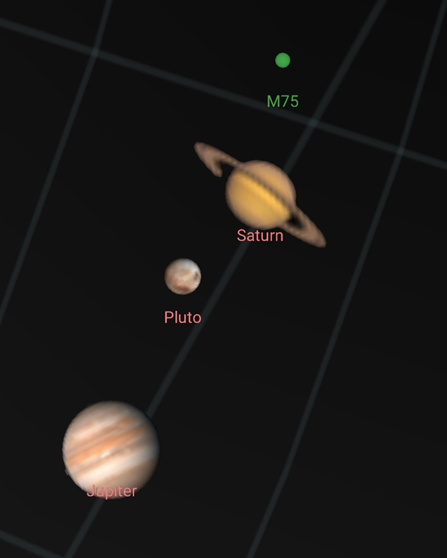
I had been looking at the screen, an overlay of the window that looked out over space, or at this moment, the space dock, where there was a representation of the planets that were ‘out there’.

I had been curious about M75, but the helmsman, a rather taciturn chap who seemed to resent the fact he was assigned to this ship, just shrugged and said, “it’s something, somewhere, but not of much interest,” then went back to his console.

If this was Star Trek, we’d be ejecting the warp coil by now, but in the space dock, that didn’t seem to me to be a viable option.

“How long before we can get this bucket of bolts moving,” I ask the Chief.

“I’m going as fast as I can.”

Yes, words ripped right out of the script of a Star Trek episode, I thought. A sad case of life imitating art.

A strange whistling sound emanated from the speakers, then the whoosh of the elevator just before the doors opened. OK, new ship, squeaky doors, another item to be put on the ‘look at’ list after the shakedown cruise.

The Captain had arrived.

“Why are dock workers still on the ship, Number One.”

For a moment there, I thought I was talking to John Luc Picard.

“Faulty warp coil. You know how it goes, save a billion by outsourcing to the cheapest supplier.”

The captain didn’t appreciate my sardonic humour, or my apparent disdain in outsourcing what we had once built ourselves.

He gave me a frown, a slight shake of his head, then said, “I’ll be in my quarters. Let me know when we’re about to leave.”

He didn’t wait for acknowledgement and disappeared through another squeaky door. More repairs.

The Chief’s voice then came over the speaker. “I can give you impulse speed, warp speed will take a little longer.”

“Doesn’t that refer to miracles over the impossible,” I ask.

“Perhaps.  But in the meantime, I need a specific spanner and the replicators are down. So, now we have to fix them first, before moving on. Might take a while.”

I look around the crew, seeing their expectant faces drop with disappointment.

Outer space was going to have to wait a little longer.

© Charles Heath 2021

The cinema of my dreams – I always wanted to go on a treasure hunt – Episode 51

Here’s the thing…

Every time I close my eyes, I see something different.

I’d like to think the cinema of my dreams is playing a double feature but it’s a bit like a comedy cartoon night on Fox.

But these dreams are nothing to laugh about.

Once again there’s a new installment of an old feature, and we’re back on the treasure hunt.

—-

We took her car.  It wasn’t a limousine of the sort I’d seen the other Cossatino’s driving around in, but a shabby old compact that had seen better days.  Perhaps it was selected for its camouflage qualities, it fitted in with a lot of other old cars that the general population drove.

No one in this town could afford any better.  Not unless you were a Cossatino or a Benderby.  Alex, for instance, had been given a Porsche on his 18th birthday.  By comparison, I was given a new, but second hand, bicycle.

She had parked in a back street some distance from the hotel, and the several times I checked, we were not being followed.  She had noticed me looking over my shoulder a few times but hadn’t commented.  Not until we had driven several miles.

“Alex has one of his mates following me,” I said by way of an explanation.  “Alex seems to think I might lead them to the treasure, which is about as daft as it can get.”

“He’s clutching at straws.  His old man had found out what he’s doing, not that he has told him he knows, and he’s going out of his way to distract Alex.  Old man Benderby doesn’t think there is any treasure.”

“How do you know what the old man is doing?”

“Talks to my father.  They might be sworn enemies, but that doesn’t mean they don’t talk.  It amuses them to see Alex and Vince go head to head.  It’s a waste of time trying to impress their respective fathers.”

“What about you?”

“I’m not trying to impress anyone.  At the right time, I’m packing my bags and going back to Italy to live with the other branch of the family, the ones who are not interested in being master criminals.  I just want to soak up the Tuscan sun and drink wine.”

“I’m sure your father would have something to say about that.”

“He has, but I’m not interested in using my ‘wiles’ as he calls them to get men to spill their secrets.  I’ve seen what it’s done to my mother and my sisters.  I’m not a criminal.”

Not now perhaps.  But back in school, she used every asset to get what she wanted.  It won over Alex, and a few others, particularly those who did her schoolwork for her.  She had nearly every boy at school dangling on a puppet string.

I was lucky she never gave me a second look.

“Well, I’m sure you made a lot of boys happy.”

A sidelong glance told me that wasn’t the wisest of statements to make.  Despite the fact it was true, I guess it was a time she’d rather forget.

I changed the subject.  “So when you went away, I’m thinking you went over to Italy?”

“For a while.  My father thought I was getting a little too close to Alex and sent me to what he thought would be purgatory.  I loved it.  Pity I had to come back.”

We’d reached a small area behind a row of shrubs that shielded us from being seen from the mall.  Something else I’d noticed, it was a cloudy night, and off and on the moon would disappear behind a bank of scudding clouds, and then just before we arrived, the moon had completely disappeared.

When we got out of the car, the darkness closed in around us, and it took a minute or so for my eyes to adjust.  The black clothes almost made us invisible.

I watched her as she wrapped her hair up into a bun and secure it with a band.  Dragged back off her forehead, it made her look older.  It also accentuated the fact she had carefully applied makeup, an odd thing to do when about to go running around in a very dirty place.

The parking spot was a long way from where Boggs and I had last gained entry, so did she have a different entry point.

“Ready?” she asked.

“As ever.”

She took off at a quick pace and I found myself almost jogging to keep up.  She was very fit.  I was not.  We cut across another carpark, one of several surrounding the mall, this one giving some cover because originally there had been landscaping.  It was now overgrown and out of control, and we could move through it and no one could see us.

Not that there was anyone else there.

We came out of the garden, crossed a road, and into an inset where there was a door.

The rusting sign on the door said that the outside should be kept clear as it was a fire exit.

The lock, from what I could see, looked reasonably clean, unlike patches of rust on the door itself, and around the edges of the lock.

“I presume you have a key?”

She pulled a keyring out of her pocket with several keys on it, selected one, and inserted it in the lock.

Nothing.

She tried the next key.  Same result.  She tried the last key.

It turned, and the door swung open.  For a door that showed the rust it did, it moved easily and silently.

She stood to one side as I passed through, then she followed me in, closing the door behind us.  A sign on the back said the door was not to be used, except for fire emergencies, and was alarmed.  No power, no alarm.

“Don’t suppose I should ask where you got the key?”

“Best not.”  She handed me a small torch and turned hers on.  I followed suit.  There was not a lot of light in front of us.  It was, however, quite dark.

“Follow me,” she said, and we set off down a long narrow passage.

—-

© Charles Heath 2020-2021

“The Things We Do For Love” – Coming soon

Is love the metaphorical equivalent to ‘walking the plank’; a dive into uncharted waters?

For Henry the only romance he was interested in was a life at sea, and when away from it, he strived to find sanctuary from his family and perhaps life itself.  It takes him to a small village by the sea, s place he never expected to find another just like him, Michelle, whom he soon discovers is as mysterious as she is beautiful.

Henry had long since given up the notion of finding romance, and Michelle couldn’t get involved for reasons she could never explain, but in the end both acknowledge that something happened the moment they first met.  

Plans were made, plans were revised, and hopes were shattered.

A chance encounter causes Michelle’s past to catch up with her, and whatever hope she had of having a normal life with Henry, or anyone else, is gone.  To keep him alive she has to destroy her blossoming relationship, an act that breaks her heart and shatters his.

But can love conquer all?

It takes a few words of encouragement from an unlikely source to send Henry and his friend Radly on an odyssey into the darkest corners of the red light district in a race against time to find and rescue the woman he finally realizes is the love of his life.

The cover, at the moment, looks like this:

lovecoverfinal1

“Trouble in Store” – Short stories my way: Adding a catalyst

Just when there’s enough complication in the story, we could leave it there with the current three protagonists and see what happens.

But I like mayhem.

So rather than another customer, it’s time to add a complication; an off duty policeman, or more to the point, policewoman.  A beat cop, if they still exist.

Her back story in a sentence or so:

It had been another long day at the office for Officer Margaret O’Donnell, or, out in the streets, coping with people who either didn’t know or didn’t care about the law.

People who couldn’t cross the road where there were crossings and lights to protect them, silly girls shoplifting on a dare, and boys who thought they were men and could walk on water.

The one they scraped of the road would never get to grow up, and his mother, well, she was not doing another call on a family to give them the bad news.

That was her day.  So far.

What is she doing near the shop?  She lives around the corner.  Perhaps she knows the reputation of the shopkeeper or perhaps not.  It’s not relevant, then, as it is a place she avoids.

Now, she may not have the option.  She sees the shop is still open, past the usual closing time.

Let’s continue:

She came around the corner into the street where she lived and saw the lights were on in the corner store.

She looked at her watch and saw it was ten minutes to midnight.  Long past closing time.  She looked through the window but from the other side of the road and could only see three heads and little else.

Damn, she thought, I’m going to have to check it out.  There were rumors, and she hoped they were not true.

Meanwhile, back in the shop how are the others faring?

The shopkeeper is in an invidious position, he can’t supply the kids with the drugs and get them out, not in front of the customer.

The fact the girl has a gun makes the situation almost impossible.  What would happen if he suggests the customer leave?  Without him, the situation would be simpler.

Alphonse had only a few moments to sum up the situation, and the sum of those deliberations was the remove the only problem, the customer.

He could still salvage this:

The shopkeeper changed his expression to one more placatory, and said quietly to the girl, ‘Look, this is not this chap’s problem.’  He nodded in the direction of the customer.  ‘I’m sure he’d rather not be here, and you would glad of one less distraction.’

He could see she was wavering, she was not holding the gun so steadily, and the longer this dragged on, the more nervous and unpredictable she would become.

And in the longer game, the customer would sing his praises no matter what happened after he left.

The girl looked at Jack.  The shopkeeper was right.  If he wasn’t here this could be over.  But there was another problem.  It didn’t look like Simmo was in any shape to get away.  In fact, this was looking more like a suicide mission.

She waved the gun in his direction.  ‘Get out now, before I change my mind.’

As the gun turned to the shopkeeper, Jack wasn’t going to wait to be asked twice and started sidling towards the door.

What happens next?


And the story for this section, with a few minor changes:


It had been another long day at the office for Officer Margaret O’Donnell, or, out in the streets, coping with people who either didn’t know or didn’t care about the law.

People who couldn’t cross the road where there were crossings and lights to protect them, silly girls shoplifting on a dare, and boys who thought they were men and could walk on water.

The one they scraped of the road would never get to grow up, and his mother, well, she was not doing another call on a family to give them the bad news.

That was her day.  So far.  For now, she was glad to be getting home, putting her feet up, and forgetting about everything until the next morning when it would start all over again.

Coming around that last corner, the home stretch she called it, she was directly opposite the corner shop, usually closed at this hour of the night.  It was not.  The lights were still on.

She looked at her watch and saw it was ten minutes to midnight, and long past closing time.  She looked through the window but from the other side of the road and could only see three heads and little else.

Damn, she thought, I’m going to have to check it out.  There were rumors, and she hoped they were not true.


The shopkeeper changed his expression to one more placatory, and said quietly to the girl, ‘Look, this is not this chap’s problem.’  He nodded in the direction of the customer.  ‘I’m sure he’d rather not be here, and you would glad of one less distraction.’

He could see she was wavering, she was not holding the gun so steadily, and the longer this dragged on, the more nervous and unpredictable she would become.

And in the longer game, the customer would sing his praises no matter what happened after he left.

The girl looked at Jack.  The shopkeeper was right.  If he wasn’t here this could be over.  But there was another problem.  It didn’t look like Simmo was in any shape to get away.  In fact, this was looking more like a suicide mission.

She waved the gun in his direction.  ‘Get out now, before I change my mind.’

As the gun turned to the shopkeeper, Jack wasn’t going to wait to be asked twice and started sidling towards the door.


Next:  Actions have consequences


© Charles Heath 2016-2020