In a word: Leg

Aside from the fact it is one of those necessary items to walk with, and the fact we can have two or four for most humans and animals, there are a few other uses for the word ‘leg’.

Like…

‘You haven’t got a leg to stand on’, doesn’t necessarily mean you have no legs, but that you are in a precarious position.

“the table had ornate legs’, yes, even non-living objects can have legs, like tables and chairs.

“It was the fifth leg of the race’, meaning it can be a stage of a race.

“He was legless’, meaning that he was too drunk to stand up.  Some might think being legless is a badge of honour, but I suspect those people have been drinking a long time and the alcohol has destroyed most of their brain cells.

“leg it!’, meaning get the hell out of here before you’re caught.

Then, finally, ‘he’s on his last legs’, meaning that he’s exhausted, or about to die.

I’m sure there’s more but that’ll do for now.

I have to use my legs to get some exercise, of which the first leg is to the tripod to check if its legs are stable, and the second leg is to come back to the table and replace one of the legs which is broken.  Then I’ll leg it to the pub where hopefully I won’t become legless.

Hmm…

The cinema of my dreams – I always wanted to write a war story – Episode 19

For a story that was conceived during those long boring hours flying in a steel cocoon, striving to keep away the thoughts that the plane and everyone in it could just simply disappear as planes have in the past, it has come a long way.

Whilst I have always had a fascination in what happened during the second world war, not the battles or fighting, but in the more obscure events that took place, I decided to pen my own little sidebar to what was a long and bitter war.

And, so, it continues…


Marina drove the truck slowly and carefully, without the benefit of headlights on a night that have become very dark when cloud cover moved in.  A good night to be out on foot, but not in a few tons of metal.

It seemed to take longer to go back to the old factory, if that was what it was, or it may have just been my imagination.  Certainly, it was rather tense in the cabin.

I wondered if what Chiara had said about not trusting me had made Marina have second thoughts of taking me back.  From where we were, I would have no idea where it was, and if she dropped me off, I could not find it again.

And that fear came true a few minutes later when she pulled off to the side of the road, near some trees, and stopped, turning off the engine.

The silence crept over us like a fog.

Such was the atmosphere I found myself whispering, “What’s wrong.”

“Lights.  Appearing briefly and disappearing.  Like someone is following us.”

She sat still for about five minutes, looking intently at the rear vision mirrors, and at times turning around to stare of the small window at the back of the cabin.

I did too, but I couldn’t see anything, nor had I, but I hadn’t thought to look in the rear vision mirrors because I thought we were safe.  How wrong I was, to assume that.  If there was one lesson I should learn from what I was doing, was that I should know what’s going on around me and that at no time could I ever believe I’m safe.  The moment I did and let my guard down, I would be dead.  I’d been told that in London, and in a relaxed moment, I’d forgotten it.  How many others had done the same and died?

A shake of her head, she got out of the truck, and quietly closed the door.  I did likewise and joined her at the rear.

“What’s happening?”

“I’m going to check back over the road, see if there’s anyone following us.  There have been too many instances of lights for it to be coincidental.”

“Since we left the church?”  In thinking that, it meant that either Chiara or Enrico may have inadvertently, or deliberately, told someone about the meeting.

I hope it’s just my imagination, but it was shortly after we left I saw the first light.”

“Could be a local farmer stumbling around at night.”

“It could, but no one is that silly to be caught out after dark.  There was a curfew, and most of us like to believe there still is.”

She looked back down the road, but all I could see was inky blackness.  The moon was still hidden by dark clouds above, and it looked like there was going to be rain.

“I’ll come with you.”

“You’d be better off staying here.  The last thing I need is a soldier stomping around in the dark.”

Thanks for the compliment, I thought.  “Then I’ll have to be quiet, and try not to stomp.”

Even in the darkness I could feel rather than see the scowl on her face.

“As you wish, but don’t get in my way, and don’t make me shoot you.”


Short and wiry, she was built for stealth and speed, unlike the bulky soldier I was.  Not that I was overfed and fat, but I was still a larger target than she was.  I could just see her outline in front of me, and she was moving very quietly.

I was trying very hard to emulate her.

Then I saw it.  A light going on briefly, then off, definitely in the direction we had just come from.

She had stopped and I nearly ran into her.

“You were right,” I said quietly.

“I was hoping I wouldn’t be.”

So had I.  The last thing we needed was trouble, trouble that would have to be eliminated.  She couldn’t have anyone else knowing about their hiding places, and meeting points.

A few minutes further along, we both heard a strange sound at the same time.

A wheel scraping against a fender?  There was no engine noise.  It became louder, then we saw what it was.  Someone riding a bicycle.  Close to the edge of the road so as to remain hidden from view because of the turns in the road, which would account for seeing the light at odd times.  At the front, there was a light that was taped to show only a thin slit of light.

I saw her look around, then take hold of a long branch that had recently fallen off one of the trees, pared it down, and then waited.  I could see what she was going to do.

When the bike came alongside, moving slowly because it was up a hill, and the rider was labouring hard, she poked the stick through the spokes of the front wheel, the rider just seeing her at the last moment, and not being able to avoid her.

The result was predictable, the rider went flying over the handlebars and crashed into the hard ground with a thud and a loud grunt.  

My role was to jump on the rider so he, or she, couldn’t escape.  Marina was right behind me and jammed a dirty rag in the persons mouth as I held them very tightly under me.

“Now what?”

This was not going to work for very long as the person under me was beginning to kick and thrash about.  In a few seconds, the gag would be spat out and the silence would be shattered.

I heard the gun before I saw it, a whooshing sound near my ear just before it hit the head of the captive, and suddenly there was no more movement or sound.

“A moment’s silence.”

We rolled the figure over, and looked at the face, just visible in the near darkness.  We had just been blessed with a shard of moonlight for a few seconds.

A man.

“You know him?” she asked.

Another look, just as the clouds shut off the light, and I thought so.

“One of the soldiers from the castle.  How would he know we were meeting at the church?”

“He might not.  Nor might he be following us, but just unlucky.”

“How so?”

“Chiara sometimes entertains men from the castle.  Part of our eyes and ears.  She was not part of the resistance when Fernando was in charge so they would just use her like any other enemy soldier would.”

“So this was a mistake.  If he doesn’t return, then they’ll get the wrong idea.”

“Unfortunately.  He has to be dealt with.”

“Killed?”

“No time to get squeamish on me.  He’s an enemy soldier.”

An enemy I preferred to be some distance away from before shooting to kill.  Up close and personal makes it so much harder.

“Come on.  Grab his shoulders.  There’s a gully over there, so we can make it look like he ran into a tree, tipped off the bike and hit his head on a rock.”

“Or a gun.”

“A few hits with a rock will fix that.  I’m sure there’s no one up there that can do autopsies on bodies.”

No, there wasn’t.  I just hoped I was not going to be the one that had to hit him.


Ten minutes later it was done.

We carried him to the gully, and at a suitable place laid the body as if it had landed off the bike and onto the rocks, where Marina picked up a large one and hit him several times with a lot of force the last making a sickening sound, and the blow that killed him.

I went back and collected the bicycle and staged it to meet the crash criteria, and then left.

For all intents and purposes, he had died falling off his bike after wandering off the road in the dark.

Both of us hoped it would not cause Chiara any trouble.

And, it was the first person I’d seen killed up close, and I doubted, in the coming days it would be the last.  It was not a sight I was going to forget in a hurry.

© Charles Heath 2019
Things to do when it’s raining outside

It’s one of those grey, dark, wet mornings where you can inadvertently sleep in because the bedroom remains dark for an extra two hours.

That could be a problem if you have a day job, like most of us.

But, today is Friday, and it’s just what I need.  The news is telling us that six months worth of rain just fell in one hour.  That’s a lot of rain, but it isn’t going to break the drought.

But that’s not a topic that can make a story work.  I need something poetic, dramatic, or a catalyst.

Time to mull over the latest storyline, marshal my thoughts, write the prose in my head.

OK, that not working for me.

The rain is getting heavier, and is splashing outside; the steady waterfall of overflow from the gutters is taking away my concentration.


Rain, rain, go away …


I have two different visions.

A cold, grey day in London (is there any other sort of day?) waiting for a train, and seeing the woman of your dreams go past, standing in the doorway, and in that fraction of a second your eyes meet, a connection is made.

I suspect it has fuelled many a song such as ‘The Look of Love’.

The second is on a desolate section of coastline as for north as you can go in Scotland (yes, I am a glutton for punishment), and she is standing on the cliff top gazing out to sea, hair blowing in the wind.  Silent, strong, resolute.


Rain gone.

Notes hastily scribbled in a notebook for later reference.

Time to go out and check if the garden has derived any benefit at all.

The cinema of my dreams – I always wanted to write a war story – Episode 18

For a story that was conceived during those long boring hours flying in a steel cocoon, striving to keep away the thoughts that the plane and everyone in it could just simply disappear as planes have in the past, it has come a long way.

Whilst I have always had a fascination in what happened during the second world war, not the battles or fighting, but in the more obscure events that took place, I decided to pen my own little sidebar to what was a long and bitter war.

And, so, it continues…


It was clear, however, that Marina was familiar with the man and very annoyed with the woman.

When I took a longer look at the man, I realised he was not a man at all, but a boy in his teens, blessed by the fact he looked older than he was.  My guess, about 16.  I was surprised he had not been conscripted into the war, there seemed very few young men in the area.

Marina went straight over to him and snatched the elderly rifle he was holding away from him, the glared at Chiara

“Are you stark staring mad.  Enrico is not supposed to be out in the open, hell, it’s been a battle to keep him hidden away.  What will his parents think when they discover he’s here?”

“Pleased,” Enrico said.  “My father said it’s about time I did something to rid of the Germans, of the English too for that matter.  None of you has any right to be here.”

Fervently spoken, and to the wrong person, it would earn him a bullet to the back of the head.  But I agreed with him.

“All well and good,” Marina said to him, “but now there’s no easy way of doing that.  We must be careful, and you must stay put with your parents.  What we’re doing isn’t a game, you are neither trained or equipped to take anyone on, except perhaps rabbits.”

Back at Chiara.  “Take him home, and never bring him back here.  You don’t want to be the one who has to tell his mother if he gets killed.  Now, both of you go now, before I shoot both of you myself.”

“This is not the end of the matter,” Enrico said.

“And when you’ve taken him back, come back here.  We need to talk.”

Chiara said nothing, just nodded sullenly.  I think she believed the less said the better and did as she was asked, nodding her head in his direction, and adding a few choice phrases in Italian to him that I couldn’t understand.  It also just occurred to me that she had not asked Chiara the questions about the two men from the castle.  I guess that would have to wait until the safety of Enrico was settled, and she returned.

“Make sure they’re safe,” she said to Carlo, and he disappeared, leaving us alone.

“I thought all of the young men had been taken away by the Italian Army.”

“Not all.  We managed to hide a few away, but as you can see, despite our best efforts, they don’t seem to appreciate the trouble they could get into.  We used to have about a hundred young men from 14 through to 20 at the start of the war.  Two have found their way back, casualties of war, the rest, we may never see them again.  Enrico just doesn’t see the trouble he could get into.”

“It’s called youthful enthusiasm.  In the first world war, joining up, or going to war, was a lark.  It was a little less so this time because most of the parents knew from firsthand experience what it was like and tried to shield them.  And if you didn’t join up, questions were asked, and quite often jail, except for some who landed cushy jobs away from the fighting.”

“You were not so lucky?”

“No, I was one of those mad buggers who thought joining up to fight would be an adventure.  That quickly faded when the enemy started shooting at me.”

“And now you’re here, and a spy to boot.  That’s what they’ll hang on you if you get caught.”

“Then I shall try very hard not to get caught.  Again.”


Chiara came back about an hour later.  It seemed to me it was a lot safer to move around at night with the blackout, and I doubted Thompson would spare any men from the castle to check up on the local farmers.

And while I was at the castle, I didn’t hear anything raised about the local resistance, which I thought odd at the time, but now I knew why.  Most of them had joined him.  Better that than be hunted down and killed.

Chiara still looked sullen.  A closer look showed she was not very old herself, barely out of her twenties, and surprising that the Italian army, or Thomson for that matter, had not rounded her up for ‘duties’ at the castle.

There were a number of the local women working up at the castle, but they were mostly staff, or more likely forced labour, though I had thought we, when I believed it to be a British outpost, would be fairer to the locals than either the Germans or their own Italian military.  It’s odd how you tend to look at certain situations because of who you are, and the fact you would not do similar things at home.  The Germans, however, we would always treat differently, because they were the enemy, and because we expected the worst from them.  At that moment, though, wouldn’t the Germans think the same of us if the positions were reversed?

Best not to think about that.  My view of the war and the people in it was clouded enough.

Chiara, however, clearly thought the worst of me, and of those in the castle, and certainly didn’t think I was as neutral as I appeared.  A gun always in hand, I was sure she would shoot me again with the least provocation.

We sat, both Chiara and Marina with their weapons on the table in front of them.  I wasn’t trusted enough to be given a weapon.

Marina’s first question was directed at Chiara, “I’m told there were two men from the castle following Sam, and that he told you about them.”

“He did.  We did not see them.  We didn’t take the path, because, as you know, it’s not safe.”

It was a reasonable answer.  If the men at the castle were unfamiliar with the area, as I’m sure they would be, because they hadn’t been there for very long, and I doubt Thompson would want to advertise the nationality of those at the castle unless he had to, they would stick to the clearly-marked roads and paths.

I had on my way to the castle, from a different direction.  It didn’t explain why I had not been met by the leader of the resistance as arranged, but that was now explained, both by the former leader trying to kill me in a roadside explosion, and then what I learned at the castle in the last few days.

“Even so, there’s not that much distance between the two, and it is possible to shadow them.”

“I keep well away from them.  Perhaps Leonardo saw them.  He doesn’t have to worry about what they might do because they use him to supply food.  Maybe he knows more.”

“Perhaps I shall ask him next time I see him.  We need to know who from the castle is about and when so that we don’t get caught.”

“I’ll remember next time.  Is that all?”

“Yes.”

Chiara picked up her gun, gave me an extra-long sullen stare.  “I don’t trust this one, Marina.  You 

need to be careful.”

“I will.”

We waited a few minutes until after she had departed, and then Marina said, “We should be going too.  This place is a little eerie at night.  There are far too many ghosts for my liking.”

I shuddered, then followed her out.


© Charles Heath 2019

In a word: Tap

There is nothing worse than, when lying in bed unable to get to sleep, you hear every noise in the house and out, but none worse than a dripping tap.

Its often not because someone forgot to turn the tap off, but a washer is on its last legs.

There are taps for the fallen brave, but aside from the fact that is the name of a piece of music, I think it’s also the title of a film.  But taps itself is a bugle call at dusk, and also played at military funerals.

Then there’s that income stream that you can tap into, other than your next door neighbours power supply.

But what would be far more interesting than to tap into a phone line and listen in?  Despite the fact that eavesdroppers never hear anything good about themselves, you could learn something you didn’t want to know.

Then we can go back to the 1930s and a series of films that starred one of my favourite actors Fred Astaire, who was, of course, a tap dancer, along with Ginger Rogers.

In fact, my middle granddaughter is quite a good tap dancer.

And, lastly, was that a tap on the door, or a tap in the window?

The cinema of my dreams – I always wanted to write a war story – Episode 17

For a story that was conceived during those long boring hours flying in a steel cocoon, striving to keep away the thoughts that the plane and everyone in it could just simply disappear as planes have in the past, it has come a long way.

Whilst I have always had a fascination in what happened during the second world war, not the battles or fighting, but in the more obscure events that took place, I decided to pen my own little sidebar to what was a long and bitter war.

And, so, it continues…


Jack was the first to realise that Marina was coming back, hearing her outside long before I did.  He stood up and looked in the direction of where he expected to see her.

A minute later she appeared, looking and sounding out of breath, as if she had been in a hurry? 

Chased, or had some urgent news?

“Is everything OK?” I asked, waiting till she came in and shut the door behind her.

The building we were in used to be a factory or a repair shop.  The strange smell I’d picked up a few hours ago was that of machine oil.

“We need to have a chat with the two who picked you up.”

“Where are they now?”

“I’ve organised to meet them at another facility we have.  Not everyone comes here.  It’s why we are still here.  Francesco nor any of the resistance he took with him were aware of this location.

I considered myself lucky to be among the few.

“Is there a reason why I need to be there?”

“Yes.  But it’ll wait until we get there.  Let’s go.”

She had barely got in the door, nor caught her breath.  It was just enough time to collect a spare clip of ammunition for a gun she had on her, but I couldn’t see.

I followed her out into the darkness, not realising it was night, for the first time since I’d arrived, and once outside, realised that it was an underground bunker rather than a building on an allotment, so it couldn’t be easily seen from any direction.  It was surrounded by trees and bushes, looking as though they had not been tended properly for some time.

It was as much as I could see, close by because it was a moonless night.

We went up some stairs and came out in a clump of bushes, and walked several yards where there was a disguised walkway zig-zagging through the bushes.  It, too, would be hard to see from a distance.  When we came out the other side, I could just barely see a car parked under a tree, looking rather worse for wear, and I thought it had been abandoned there. 

When Marina told me to get in, I realised it was, like everything else, well disguised.

The surrounding area was that of forest and farms.  It was hard to imagine that this part of the world was in the grip of a world war, and not too far away, there was the castle, and further north, the Germans and what was left of the Italian military forces dug in for a last-ditch effort.  The tide was turning, but ever so slowly.

It was hard to imagine just how dangerous it was for those defectors to try and get through without being shot.

And, just for good measure, Marina said, there were quite a few soldiers, disguised as ordinary workers who had infiltrated the villages, and surrounding farms, and reporting back what they saw and heard.

We were, in going about in the vehicle, attracting unwanted attention, but it was why we were doing this at night, she said, perhaps gleaning from my expression the fact I was worried about getting caught.

“The people at the castle tend not to go out at night for fear of being picked off.  I’m surprised you didn’t learn this when you were there.”

“I suspect the suspended any activities from the moment I arrived.  One of the prisoners told me that all movements of people had stopped, and they were waiting to be shipped out.  Obviously, they thought I might discover what was going on.  They definitely stopped me from going below the main floor.”

“I was told you have some knowledge of the castle layout?”

“Some.  We have old plans back in London, but I suspect those would be out of date now and since the German occupation.  The only time I got to look downstairs was when I tried to escape and found an old below ground exit, then when they locked me in a cell, and then when I was set free.  It matched much of what I remember seeing on the plans.  But, I suspect there’s more because I didn’t get to see the holding cells with the other prisoners.”

“Perhaps Carlo can help you with that.”

“We spoke about it.  I think he’s going to pay them a visit and exact revenge.”

“I told him we have to wait for some reinforcements.”

“No word from London?”

“Not yet.”

We stopped and parked the car between a church and what was left of what might have been a rectory, set aside from some other buildings that looked like part of a village.  It was not that dark that I couldn’t see that several of the buildings had been bombed, minus roofs, and one had the front section reduced to rubble.  No attempt had been made to clean it up.

“German tanks,” Marina said.  “An early landing party of your army parachuted in about a kilometre behind the church.  The local commander mobilised his forces and chased them into those buildings, which, at the time, housed four families.  They were given the option to surrender.  They didn’t, so the commander gave the order to raze the buildings to the ground, with them in there.  Along with the four innocent families.  No one survived.”

“The church?”

“The commander thought it would be bad luck to destroy the house of God.  The soldiers should have hidden in there.  They shot the priest anyway.”

It seemed odd to me that any sort of group would parachute into this part of Italy for any reason, castle withstanding.  There was, as far as I knew, nothing of interest or importance here.  Perhaps I’d ask when I made it back to London.  If I made it back.

I followed her through the rubble and in through a side entrance to the church.  Inside it was dark, and Marina was using her torchlight sparingly in case someone was watching.  From what I could see, the inside of the church was untouched, but everything was covered in dust from disuse.

“No one thought to send another priest?” I asked.

“No.  When they heard what happened to the last one, they decided to wait until the war was over.  Besides, with everything that’s happened, the people around here believe God has abandoned them.”

Perhaps he had.  I know that I wasn’t all that religious to begin with, but a lot of people I knew had lost their faith in a God that allowed such tragedies to happen.

We passed through a door at the back of the church, behind the nave, and into what looked like the vestment room.  To one side was another door, and then steps down.  The church had a cellar.

At the bottom of the stairs, there was a large storage area lit by a portable lantern.

Carlo was standing to one side, his weapon ready to use.

Opposite him were a man and a woman, the woman I’d seen before, she was the one who shot me with the tranquilizer.  The man, I’d not seen him before.


© Charles Heath 2019

You learn something new every day (2)

I got a call this morning from my brother who has been delving into the places we have lived over the years, including those before we were born.

My recollection, hazy at best, is that my father’s parents lived in Camberwell, a suburb of Melbourne, and the boys, those that survived the war, lived there too. He had three brothers, I think, and a sister. From what I’ve read, his older brother was a sensible chap and the peacemaker between him and his parents.

Later one of his brothers went to Sydney, his sister lived among orchards out Ringwood way, and another, much later, moved to Queensland. We very rarely, if ever, saw them, and the last time I did with most in one place, was after my Grandmother died. I do remember Dora, the site, visiting us once, and being young at the time, she seemed a very forbidding woman.

But, this is about where they lived.

My father, presumably before and immediately after the war, was at home, and my mother at her home in Pakenham. There her father ran a service station and motor mechanic shop and was well known. Their house, at the time, was built over the road, just a short walk from home to work. The place, the first time I saw it, was a mechanic’s dream, with old cars and car parts outside and inside garages, and a woodworking shop with every tool imaginable.

Once the place had very elegant gardens, but by the time I got to stay there, in the 1960s, it was all overgrown, and the house was in disrepair. My mother’s brother lived there with my grandmother, and he was a fearsome, huge man who said little. All I knew about him was that a) he was the one who found his father after he had killed himself, b) he liked fishing and went to a place called Corinella, and c) he was a mechanic like his father.

So, at some point in 1948, my father must have up and left, perhaps after an argument with his parents, and moved to Keiwa House, Bogong, where the Snowy River Hydro-Electric Scheme was being built, as a projectionist, bringing films to the workers in Town Halls.

As I’ve said, my mother stayed in a boarding house for ladies during the week and went home on weekends. I have the first letter that my father wrote to her which references the fact he went calling on her, and she was not there. We’ll never know what she thought, but there’s a second letter, after she wrote back, so a friendship was struck. He told her, almost in minute detail, what he was doing, and presumably, she told him about hers.

A year later, they married.

Now it gets interesting. We both thought that their first house, after getting married was in Carrum. It wasn’t. In the pile of letters were references to the family staying in a rented flat in Camberwell.

Sometime after that, there is a contract for a war service loan in relation to a property in Carrum, which turns out to be the first house they lived in, where my brother, born in 1950) lived, and where I lived after I was born in 1953. I have interesting if vague memories of this house, and of the people who lived behind us because we could climb through the fence into their property. We knew them during, and after living in Carrum.

Now, today, some interesting new facts came to light about the Carrum house. We always assumed we owned it, but it seems that we didn’t. A copy of the title for that property never had the name Heath on it, so did we rent it? More information is required, and we need to dig deeper. Let’s hope there are no skeletons there.

And something else came out of a discussion with the daughter of my mother’s sister, that it was believed my mother’s parents bought them a house in Chelsea, but my father, apparently, refused to live in it and sold it.

OK, I never claimed that my father was the sort that might have accepted charity, so perhaps in a moment of madness, he lost the plot. The question is, what happened to the money?

The cinema of my dreams – I always wanted to write a war story – Episode 16

For a story that was conceived during those long boring hours flying in a steel cocoon, striving to keep away the thoughts that the plane and everyone in it could just simply disappear as planes have in the past, it has come a long way.

Whilst I have always had a fascination in what happened during the second world war, not the battles or fighting, but in the more obscure events that took place, I decided to pen my own little sidebar to what was a long and bitter war.

And, so, it continues…


The message I sent to Forster, in London, was short and to the point,

‘Castle in hands of Germans led by Thompson, others, and a further 12 soldiers parachuted in.  Defectors, our original soldiers? and villagers held captive in dungeons.  Resistance limited to five plus self.  Available resources cannot retake castle and will have difficulty in intercepting incoming package.  Suggestions?’

Marina read it and added her name before it was sent.  Now, all we could do was wait for a reply, though I was not sure what Forster would make of my request for suggestions.  I was supposed to make decisions in the field, but that was when we had a full complement of resistance fighters.  What I’d discovered was the worst-case scenario, and everyone in London was hoping that would not be the case.

I wondered what happened to the two men who had been following me, hoping I would lead them to what were now the remaining resistance members.

“Did you see the two men from the castle that had been following me?  I told the two who had captured me, a man and a woman, though the man emphatically denied he worked for the resistance, about them before the woman shot me with a tranquilizer gun.”

Martina looked puzzled.  It was obvious the two hadn’t mentioned anything about my situation to her.

“That did not come up in the debriefing.  The man is, in fact, a farmer, Leonardo, who doesn’t advertise his involvement, and only works with us if we need him.  Chiara tends to shoot first and ask questions later.  You were lucky her gun wasn’t loaded with bullets.  What is this story of yours, then?”

“One of the guards released me from my cell, and then set me free with the intention of following, not too close, to see if I led them to you.  I was hiding from them when they passed by, shortly before you people turned up.  They would have had to see them if they came from the village.”

The implications of what I just said only dawned on me after I said it.

“That might mean…” I said.

She put her hand up, not wanting me to continue.

“It doesn’t necessarily mean anything, but I will have to talk to them.  If anything, they would have avoided them or ignored them.  We don’t use that track from the village to the castle for the simple reason we might run into any of them.  Whether they were originally our allies, or not, we never trusted them.”

“Did they bring me here?”

“No.  We have a separate meeting point for intercepts like yourself and the defectors.  Then, if we think it’s safe to do so, we bring them here.  Only three of us know about this place, and two of us are here now.”

“The third?”

“You’ll meet him later when he brings some food and wine.  His name is Carlo.  He used to be a gardener at the castle, and his mother was the cook.  The Germans killed her the first time they were here, and now he hates Germans.”

Good for us, very bad for anyone at the castle, particularly if they are German.

“Pity we didn’t know about that earlier so we could organise a trap for them  We could do with two fewer adversaries, and quite possibly we might get some information out of them.  They might be still in the village.”

She stood, and put on her coat, and put a gun in the coat pocket where she could easily reach it.  “I’m going to have a word with Chiara, and warn Carlo that you’re here.  He’s a little trigger happy too.  Nothing much is going to happen until we hear back from the Colonel.  I suggest you get some rest, we have a few long days ahead.”

Carlo was a surprise.  Six foot ten, over 250 pounds, and carrying a sten gun over his shoulder, not a man to become an enemy of.  He came into the room without warning, and it was clear he was expecting to see me, and equally that I might be the enemy.

It was clear that he knew how to use the weapon, and had it ready in case he had to use it.

“You this Anderson character?”

He was more English than Italian, but could certainly pass for an Italian.

“I am.”

“From up yon castle?”

“Escaped?”

“How?”

“The lower level, where there are a few storerooms turned into cells.  The passage ran alongside the outer wall to a room that had a door to the outside.  Not one you’d easily pick.”

“Neat the communications room?”

“Probably above there.”

“You know the castle?”

“A little.  I used to be an archaeologist before this war came along, and had been to the castle before the war.  I’m familiar with the above-ground parts, but not so much below.  You were, I was told, a gardener?”

“Once.”

“Then you’d know your way around?”

“Possibly.  Why?”

“Because at some point we’re going to have to retake the place, and it would be good to have someone who knows their way around.  At least, better than I do.”

“Taking prisoners?”

“No.    We will be assuming anyone there whose not a prisoner is hostile.”

“Good.  Count me in.”

He dropped a basket he’d brought with him on the table in the corner.  “Dinner.”  Marina will be back shortly.

“You’re not staying?”

“Guard duty.  So you can eat in peace.”

With that, he was gone.  A large man, but a very quiet one.  I didn’t hear him arrive, and it was very nearly the same when he left.  A useful man in a fight indeed.


© Charles Heath 2019

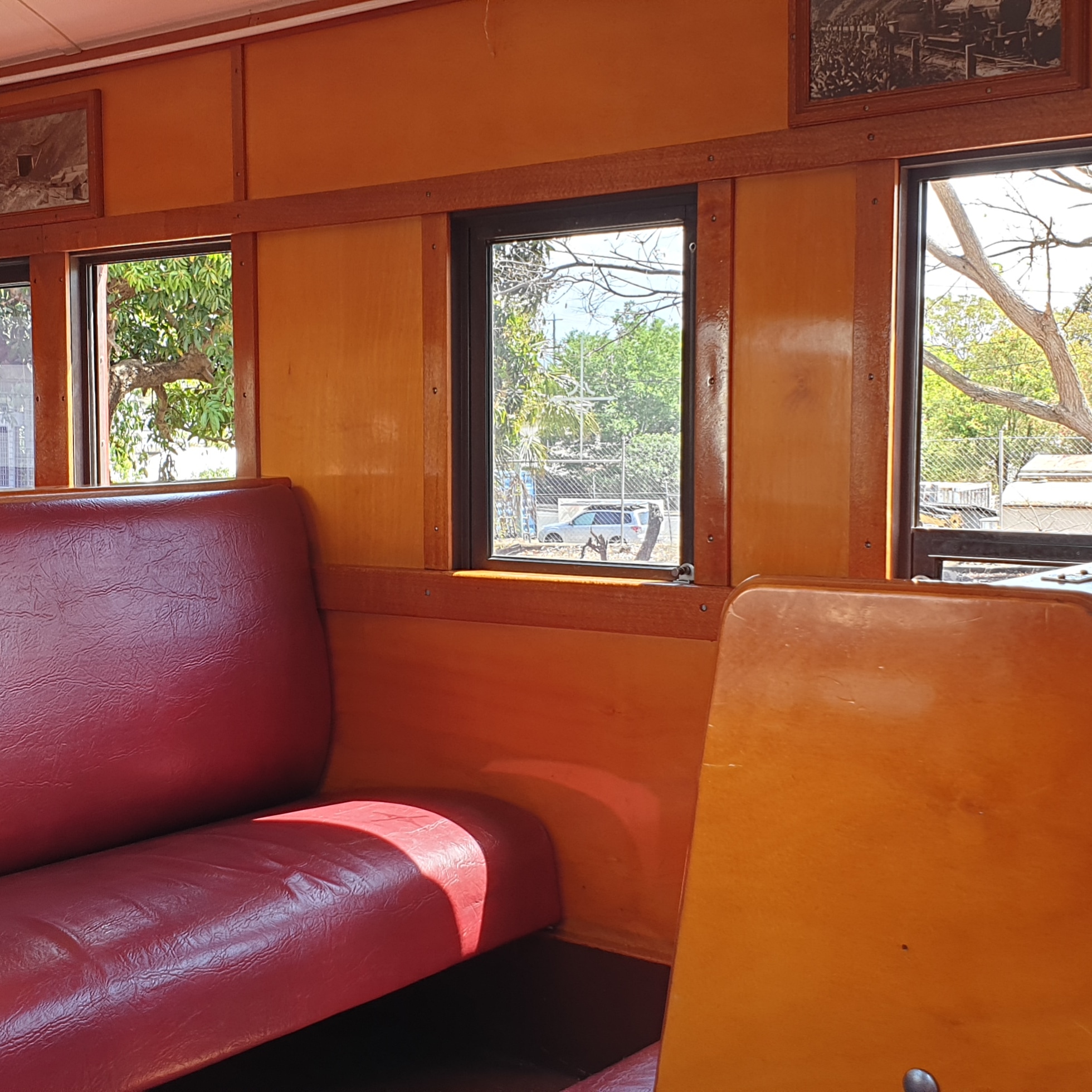
A photograph from the inspirational bin – 10

It was a relic from the past, put back together by a dedicated group of volunteers who had not wanted the last vestiges of the past to disappear.

Train enthusiasts, the called themselves.

They’d put together a steam locomotive, five carriages, a restaurant car, and the conductor’s car. The original train might have been twice to three times as long, but these days, the tourist market rarely filled the train.

I was one of a group who made it their mission to visit and rate every vintage train, not only in this country, but all over the world. It was a sad state of affairs when I first began, with locomotives and carriages dropping out of the system due to lack of funds, but more disheartening, the lack of government assistance in keeping it’s heritage alive.

It seemed money was short, and there were better things to spend it on, like two brand new 737-800 jets just to ferry the prime minister and government officials around. Just think of what that quarter of a billion dollars could have bought in heritage.

But it is what it is.

What I had before me was one of the most recent restorations to check out, and on first glance, it was remarkable just how lifelike and true to age it was.

Of course, I was of an age that could remember the old railway carriages, what were called red rattlers because of the ill fitting windows that went up and down, allow fresh air, or in days gone by, smoke from the locomotive hauling the train. I had not travelled during the last glorious years of steam, but the carriages had lived on briefly before the advent of the sterile aluminum tin cans with uncomfortably hard seats.

These carriages were built for comfort, and my first experience had been a five hour trip from Melbourne to Wangaratta, in Victoria, on my way to Mt Buffalo Chalet, a guesthouse owned by the Railways.

That too had been a remarkable old chalet style guest house with a room and all the dining included. I always left after the week having put on weight. Breakfast, morning tea, lunch, afternoon tea, and dinner, every day, and high tea on Sunday.

But this carriage, the polished wood that had shellac rather than varnish, highlighting the timber’s grain, the leather seats with generous padding, the curved ceilings with hanging lights, windows the could be opened and closed, allowing fresh air to circulate.

There was also a carriage with the passageway, and five or six separate compartments, each sitting six passengers. I remembered these well, having quite often ridden in one to work for some years when the country trains still ran.

It was always remarkable how a sight or a scent could trigger such memories.

For this carriage on this train, it used to ply the Gympie to Brooloo branch line from about 1915 onwards.

That was the history. It only went as far as Amamoor these days, it was still long enough to capture the sensation of riding the rails back in what is always referred to as the good old days, even if they were not.

Now for the ride….

© Charles Heath 2021

Searching for locations: Kaikoura, New Zealand, and, of course, the whales

I’m sure a lot of people have considered the prospect of whale watching.  I’m not sure how the subject came up on one of our visits to New Zealand, but I suspect it was one one of those tourist activity leaflets you find in the foyer of motels, hotels, and guesthouses.

Needless to say, it was only a short detour to go to Kaikoura and check out the prospect.

Yes, the ocean at the time seemed manageable.  My wife has a bad time with sea sickness, but she was prepared to make the trip, after some necessary preparations.  Seasickness tablets and special bands to wear on her wrist were recommended and used.

The boat was large and had two decks, and mostly enclosed.  There were a lot of people on board, and we sat inside for the beginning of the voyage.  The sea wasn’t rough, but there was about a meter and a half swell, easily managed by the boat while it was moving.

It took about a half hour or so to reach the spot where the boat stopped and a member of the crew used a listening device to see if there were any whales.

That led to the first wave of sickness.

We stopped for about ten minutes, and the boat moved up and down on the waves.  It was enough to start the queasy stomachs of a number of passengers.  Myself, it was a matter of going out on deck and taking in the sea air.  Fortunately, I don’t get seasick.

Another longish journey to the next prospective site settled a number of the queasy stomachs, but when we stopped again, the swell had increased, along with the boat’s motion.  Seasick bags were made available for the few that had succumbed.

By the time we reached the site where there was a whale, over half the passengers had been sick, and I was hoping they had enough seasick bags, and then enough bin space for them.

The whale, of course, put on a show for us, and those that could went out on deck to get their photos.

DSCN1026.JPG
DSCN1028.JPG
DSCN1029.JPG

By the end of the voyage, nearly everyone on board was sick, and I was helping to hand out seasick bags.

Despite the anti sickness preparations, my wife had also succumbed.  When we returned and she was asked if the device had worked, she said no.

But perhaps it had because within half an hour we were at a cafe eating lunch, fish and chips of course.

This activity has been crossed off the bucket list, and there’s no more whale watching in our traveling future.  Nor, it seems, will we be going of ocean liners.

Perhaps a cruise down the Rhine might be on the cards.  I don’t think that river, wide as it is in places, will ever have any sort of swell.