An excerpt from “Betrayal” – a work in progress

It could have been anywhere in the world, she thought, but it wasn’t.  It was in a city where if anything were to go wrong…

She sighed and came away from the window and looked around the room.  It was quite large and expensively furnished.  It was one of several she had been visiting in the last three months.

Quite elegant too, as the hotel had its origins dating back to before the revolution in 1917.  At least, currently, there would not be a team of KGB agents somewhere in the basement monitoring everything that happened in the room.

There was no such thing as the KGB anymore, though there was an FSB, but such organisations were of no interest to her.

She was here to meet with Vladimir.

She smiled to herself when she thought of him, such an interesting man whose command of English was as good as her command of Russian, though she had not told him of that ability.

All he knew of her was that she was American, worked in the Embassy as a clerk, nothing important, whose life both at work and at home was boring.  Not that she had blurted that out the first tie she met, or even the second.

That first time, at a function in the Embassy, was a chance meeting, a catching of his eye as he looked around the room, looking, as he had told her later, for someone who might not be as boring as the function itself.

It was a celebration, honouring one of the Embassy officials on his service in Moscow, and the fact he was returning home after 10 years.  She had been there once, and still hadn’t met all the staff.

They had talked, Vladimir knew a great deal about England, having been stationed there for a year or two, and had politely asked questions about where she lived, her family, and of course what her role was, all questions she fended off with an air of disinterested interest.

It fascinated him, as she knew it would, a sort of mental sparring as one would do with swords if this was a fencing match.

They had said they might or might not meet again when the party was over, but she suspected there would be another opportunity.  She knew the signs of a man who was interested in her, and Vladimir was interested.

The second time came in the form of an invitation to an art gallery, and a viewing of the works of a prominent Russian artist, an invitation she politely declined.  After all, invitations issued to Embassy staff held all sorts of connotations, or so she was told by the Security officer when she told him.

Then, it went quiet for a month.  There was a party at the American embassy and along with several other staff members, she was invited.  She had not expected to meet Vladimir, but it was a pleasant surprise when she saw him, on the other side of the room, talking to several military men.

A pleasant afternoon ensued.

And it was no surprise that they kept running into each other at the various events on the diplomatic schedule.

By the fifth meeting, they were like old friends.  She had broached the subject of being involved in a plutonic relationship with him with the head of security at the embassy.  Normally for a member of her rank, it would not be allowed, but in this instance it was.

She did not work in any sensitive areas, and, as the security officer had said, she might just happen upon something that might be useful.  In that regard, she was to keep her eyes and ears open and file a report each time she met him.

After that discussion, she got the impression her superiors considered Vladimir more than just a casual visitor on the diplomatic circuit.  She also formed the impression that he might consider her an ‘asset’, a word that had been used at the meeting with security and the ambassador.

It was where the word ‘spy’ popped into her head and sent a tingle down her spine.  She was not a spy, but the thought of it, well, it would be fascinating to see what happened.

A Russian friend.  That’s what she would call him.

And over time, that relationship blossomed, until, after a visit to the ballet, late and snowing, he invited her to his apartment not far from the ballet venue.  It was like treading on thin ice, but after champagne and an introduction to caviar, she felt like a giddy schoolgirl.

Even so, she had made him promise that he remain on his best behaviour.  It could have been very easy to fall under the spell of a perfect evening, but he promised, showed her to a separate bedroom, and after a brief kiss, their first, she did not see him until the next morning.

So, it began.

It was an interesting report she filed after that encounter, one where she had expected to be reprimanded.

She wasn’t.

It wasn’t until six weeks had passed when he asked her if she would like to take a trip to the country.  It would involve staying in a hotel, that they would have separate rooms.  When she reported the invitation, no objection was raised, only a caution; keep her wits about her.

Perhaps, she had thought, they were looking forward to a more extensive report.  After all, her reports on the places, and the people, and the conversations she overheard, were no doubt entertaining reading for some.

But this visit was where the nature of the relationship changed, and it was one that she did not immediately report.  She had realised at some point before the weekend away, that she had feelings for him, and it was not that he was pushing her in that direction or manipulating her in any way.

It was just one of those moments where, after a grand dinner, a lot of champagne, and delightful company, things happen.  Standing at the door to her room, a lingering kiss, not intentional on her part, and it just happened.

And for not one moment did she believe she had been compromised, but for some reason she had not reported that subtle change in the relationship to the powers that be, and so far, no one had any inkling.

She took off her coat and placed it carefully of the back of one of the ornate chairs in the room.  She stopped for a moment to look at a framed photograph on the wall, one representing Red Square.

Then, after a minute or two, she went to the mini bar and took out the bottle of champagne that had been left there for them, a treat arranged by Vladimir for each encounter.

There were two champagne flutes set aside on the bar, next to a bowl of fruit.  She picked up the apple and thought how Eve must have felt in the garden of Eden, and the temptation.

Later perhaps, after…

She smiled at the thought and put the apple back.

A glance at her watch told her it was time for his arrival.  It was if anything, the one trait she didn’t like, and that was his punctuality.  A glance at the clock on the room wall was a minute slow.

The doorbell to the room rang, right on the appointed time.

She put the bottle down and walked over to the door.

A smile on her face, she opened the door.

It was not Vladimir.  It was her worst nightmare.

© Charles Heath 2020

Those moments of depression are seeping into my writing

Nothing I write makes any sense, it doesn’t fit, it doesn’t progress the story, they are just words on a piece of paper.  Perhaps it’s those moments of despair that are holding me back, those thoughts that begin to swirl in your head when the dream you had in your head becomes very different from what happens in reality.

And this is the problem, there are so many people out there that say, ‘dare to dream’, or ‘today its a dream tomorrow it is reality’.

Is it?

For some, those with the state of mind, the drive, and the confidence to pull it off, it might be, but for the rest of us, and that’s a lot of people trying to head down that same path f success, it’s a lot harder.

And you can bet those seminar or conference speakers have pocked the thousands of dollars they got for the gig, and have moved on to the next group of … well, let’s not give them a name.

I wish I could stand up in front of 200 budding authors and tell them, in the same bright breezy manner that they are on the way to success, just follow the ten proven steps, but I can’t.  I know how hard that road is.

Like starting a farm, you don’t just walk onto the land, say you’re going to be a farmer, and magically everything happens.  It doesn’t.  It’s bloody hard work, and a lot of it, with heartbreak, and setbacks, and sometimes even a disaster.

It’s the same with writing.

You don’t sit at the typewriter, in front of a notebook, or computer screen, and it all just comes together.  It doesn’t.

For some, it might, but for the rest of us, it’s a long hard road, just to get some form of recognition.  And even then, like in the movies, fame can be fleeting, gone in the blink of an eye.

You have to produce, trying to produce creates pressure, pressure creates depression, and well. you get the picture, it’s a bit like the cycle of life.

OK, whinge over.

Time to get back to work.


Does every writer suffer from this dilemma?

If I get a headache I can take paracetamol

If I have a sore back I can take ipBrufen.

If I can’t put words on paper … what is there I can take?

It affects us all at some point, but it’s not necessarily that old demon writer’s block.

What is writer’s block anyway?  Is it some existential disease that doesn’t really exist, yet something we can blame where we can’t write?

So, it’s down to looking for reasons, and logically looking at what is the underlying cause of the problem.  We should be asking ourselves questions, like

Are we constantly distracted from writing?

Plan or no plan, subconsciously it doesn’t feel right, that the next scene, plotline or character interaction does follow, is contrived, is just plain wrong?

Usually, for me, it only takes two questions and the answer pops up.

I’ve written myself into the proverbial corner, and there’s no logical way to go forward.

What does that mean?

Well, that is covered by a third possible outcome from answering the questions.

I have to go back and do some major re-writes of earlier work, make sure there are the appropriate hooks and maybe even change the direction, even if just a little.

That, in itself, in the back of your mind, knowing what has to be done, and putting off the inevitable, is another reason why this project isn’t moving forward.

Two aspirin can’t solve this.

Nothing can.

Perhaps we should rename writer’s block to writer’s dilemma.

A photograph from the inspirational bin – 16

I thought since it is Winter here, we could do with a breath of fresh air and colour that comes with the change if season

Living in Queensland, Winter never quite seems to be as cold as it is in the southern states, which are closer to Antarctica.

We have had a relatively mild winter this year and I didn’t have to light the fire once, though we did use the reverse cycle sir conditioning.

But, from now the temperature will be rising as well as the humidity and will hang around until April next year.

Normally this would mean that a large proportion of the population would be planning their summer holidays, but with Covid restrictions, we may not be allowed to leave our state, or only visit states that have no or few cases like us, and definitely no overseas travel.

For people who like to travel, this is a bitter pill to swallow, and especially so for all those retirees who have worked all their lives, and decided to wait until retirement to see their own country and the world at large.

To me, the adage ‘don’t put off until tomorrow what you can do today’ seemed appropriate and we decided once the kids were old enough, we would travel far and wide while we could.  It was a wise decision because neither of us are as agile as we used to be.

Seems we were the lucky ones.

Now we are content to see our own country which no doubt will be able to manage Covid to the extent that life might return to a form if normal sooner rather that later.

And if it doesn’t, then I have enough to amuse myself at home. I’m sure we are all familiar with the expression ‘spring cleaning’. We have decided to clean house, and do some renovating.

And it’s a surprise when cleaning out those cupboards, drawers, and boxes, the stuff you’ve accumulated over many, many years. Last I heard, we were taking about getting a large skip, so I suspect this culling is going to be savage.

But, just to be clear, no books will be thrown out!

It’s cold out there

But…

It is, but it isn’t.  Oddly enough after two weeks in temperatures ranging from -21 to 7 degrees Fahrenheit, I think I’m finally used to it.

My early morning walk after leaving the hotel is both for exercise and exploring.

Looking for locations, observing people, watching and learning what it’s like to live, work, and hang out in a city like New York.

It’s so much more interesting than where I come from.  There it would be impossible to spin a story in such a small city.  You need to be able to hide in plain sight among millions of people over a very large area that encompasses Manhattan, Brooklyn, Queens, and everything else in-between and beyond.

I was looking at going to a Walmart in Secaucus, about three and a half miles from my hotel in Manhattan.  Three and a half miles.  In my city that’s way beyond the limits of the city and in the outer suburbs.

Here I can spin a tale that could live within the confines of 35th street, 85th street, 2nd Avenue and 10th Avenue, and have so much material, I could probably write a trilogy.

Pity is, I won’t be here long enough to gather enough background.

Still, it’s like being in literary seventh heaven.

I’ve written one book based in New York, I’m sure another is currently writing itself in my head and will be on paper over the next year.

Then, maybe I’ll be back.

Sometimes it’s better to say that an expressed opinion is your own

It’s always a good thing to get that across especially if you work for an organization that could misinterpret what that opinion is, or generally have an opposing opinion.  Of course, by saying your opinions are your own, you’re covering yourself from becoming unemployed, but is this a futile act?

Perhaps its better to not say anything because everything you say and do eventually find its way to those you want most not to hear about it, perhaps one of the big negatives of the internet and social media.

And…

It seems odd to me that you can’t have an opinion of your own, even if it is contrary to that of the organization you work for, and especially if their opinion has changed over time.  An opposing opinion, not delivered in a derogatory manner, would have the expectation of sparking healthy debate, but it doesn’t always end up like that.

I’m sure there are others out there that will disagree, and use the overused word, loyalty’.   Perhaps their mantra will be ‘keep your opinions to yourself’.

This, too, often crops up in personal relationships, and adds weight to the statement, ‘you can pick your friends but not your relatives’.

I’m told I have an opinion on everything, a statement delivered in a manner that suggests sarcasm.  Whether it’s true or not, isn’t the essence of free speech, working within the parameters of not inciting hate, bigotry, racism, or sexism, a fundamental right of anyone in a democracy?

Seems not.

There’s always someone out there, higher up the food chain, with an opinion of their own, obviously the right one, and who will not hesitate to silence yours.  But, isn’t it strange that in order to silence you, they have to use leverage, like your job, to get theirs across.

Well, my opinions are in my writing, and whether or not you agree with them or not, I’m sure you will let me know.  In a robust but respectful manner.

Unlike some, my door is always open.

It’s been an interesting day

Today we have been delving into the past in a way that makes history interesting.

Also, it’s another way to get young children to take an interest in the past, seeing that is often very difficult to part them from their ipads, smartphones and computer games.

It is part of a weekend devoted to history.

First up is a ride on an old steam train, the engine dating back to the 1950s, as are some of the carriages. Now, for someone like me who is only two years younger, it doesn’t seem that old, but to them, it’s a relic.

And for the youngest of our granddaughters who tells me that this will be her first ride on a train, any train, it’s going to be vastly different from her next ride on a train.

I don’t think it went faster than about 30, whether that’s miles an hour or kilometres, so we had time to take in the bushland, the river crossings and the smell of the coal-generated smoke.

And the biggest treat was for them to climb up into the engine cabin to see who drives it, and how it all works.

I try to tell them this is a far cry from the 300kph bullet trains in China that we recently travelled on. This ride was rattly, noisy, and we were barely able to sit still, whereas on the bullet trains you hardly knew you were moving and was so smooth and silent you didn’t know you were moving until you looked out the window.

Tomorrow we’re going to a historical township, built out of digging for gold in the area. It will be of significance to the elder granddaughter as she is working on a project on Eureka, where there was a watershed between the miners and the authorities.

History, in my opinion, cannot be taught entirely by books, there must be visual and active participation in simulated events for them to get a better understanding. That, and then writing about it in the way historical fiction often brings moments in history alive.

We are all looking forward to tomorrow!

I always wanted to see the planets – Episode 9

What’s the worst that could happen?

Captains invariably hated the word ‘problem’. I did too, because it conjured up so many different scenarios, each more scarier than the last, and maginified exponentially because we were in space.

We took a closer look, and it was the sort of damage if it was back on Earth, one would associate with weapons fire, lasers to be exact.

Yes, in the 24th century we had ray guns, handheld, and ship bound.

The only problem was, only the cruise class vessels, like the one I was now on, were allowed to have them, and using them, well, the paperwork alone could keep a complement of 20 working day and night for a month.

Test them, yes, less paperwork, use them, no. There had never been a reason to.

But someone had, and on a freighter, which only meant one possibility, that whatever the freighter had been carrying, had been worth violating a thousand regulations and rules.

And bring their ship and selves out into the light.

It was, of course, Space Command’s worst nightmare realised, that the ideal of space exploration as a united effort by everyone, had a member who had decided against unity.

Unless, of course, the improbably had happened, there was life outside our solar system, and we were dealing with a new planet, or people.

Except I would not expect them to use something as conventional as a laser.

Myrtle had put us very close to the damaged area and taken a number of photographs, and the engineer had analysed the damaged area.

Then, cleared to enter the freighter, she took us up to the cargo doors and waited as we watched them open.

It was the same time the engineer’s hand held computer started beeping.

And a warning light on the console in front of Myrtle started flashing, accompanied by a warning klaxon.

Another vessel had just entered our proximity zone.

© Charles Heath 2021

A photograph from the inspirational bin – 10

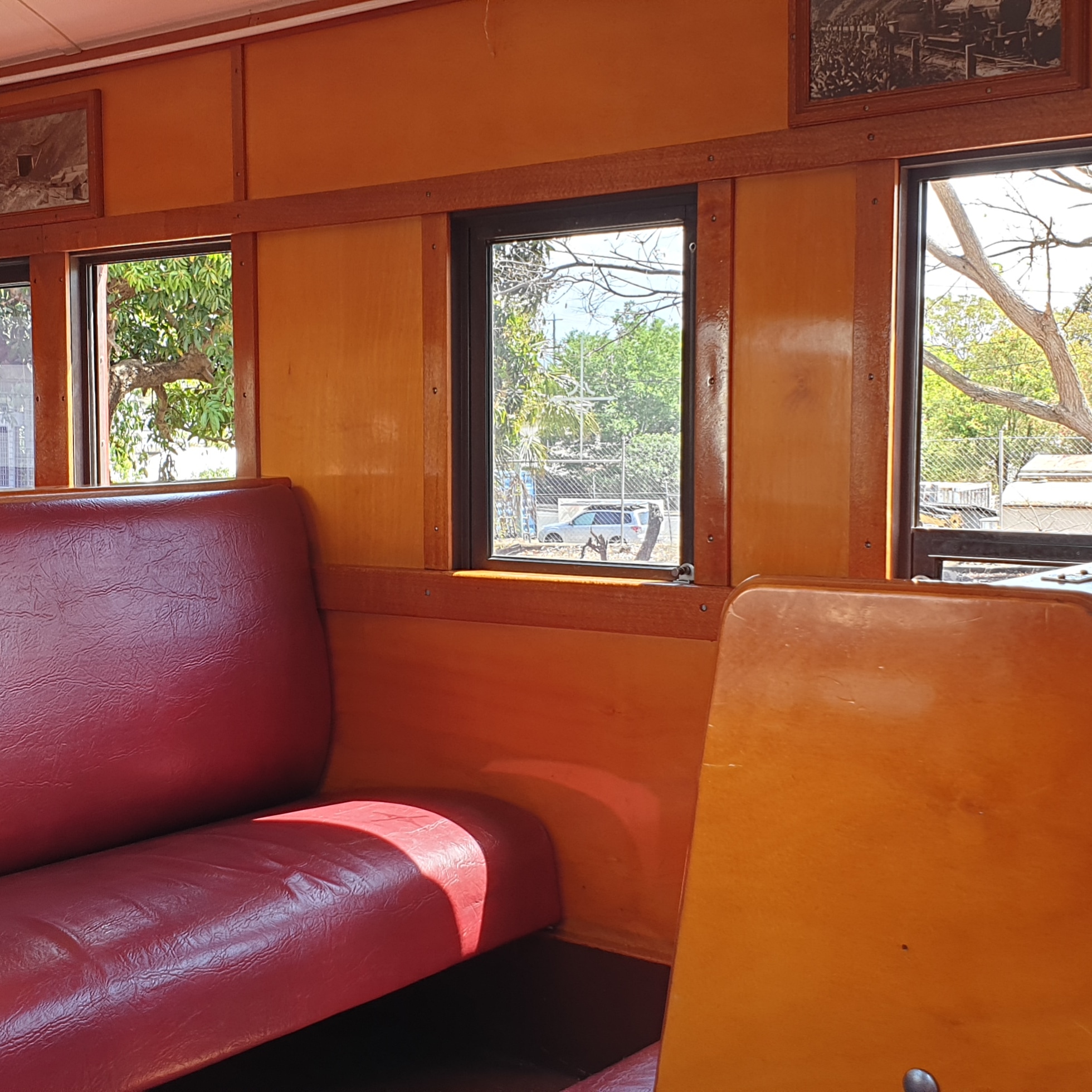
It was a relic from the past, put back together by a dedicated group of volunteers who had not wanted the last vestiges of the past to disappear.

Train enthusiasts, the called themselves.

They’d put together a steam locomotive, five carriages, a restaurant car, and the conductor’s car. The original train might have been twice to three times as long, but these days, the tourist market rarely filled the train.

I was one of a group who made it their mission to visit and rate every vintage train, not only in this country, but all over the world. It was a sad state of affairs when I first began, with locomotives and carriages dropping out of the system due to lack of funds, but more disheartening, the lack of government assistance in keeping it’s heritage alive.

It seemed money was short, and there were better things to spend it on, like two brand new 737-800 jets just to ferry the prime minister and government officials around. Just think of what that quarter of a billion dollars could have bought in heritage.

But it is what it is.

What I had before me was one of the most recent restorations to check out, and on first glance, it was remarkable just how lifelike and true to age it was.

Of course, I was of an age that could remember the old railway carriages, what were called red rattlers because of the ill fitting windows that went up and down, allow fresh air, or in days gone by, smoke from the locomotive hauling the train. I had not travelled during the last glorious years of steam, but the carriages had lived on briefly before the advent of the sterile aluminum tin cans with uncomfortably hard seats.

These carriages were built for comfort, and my first experience had been a five hour trip from Melbourne to Wangaratta, in Victoria, on my way to Mt Buffalo Chalet, a guesthouse owned by the Railways.

That too had been a remarkable old chalet style guest house with a room and all the dining included. I always left after the week having put on weight. Breakfast, morning tea, lunch, afternoon tea, and dinner, every day, and high tea on Sunday.

But this carriage, the polished wood that had shellac rather than varnish, highlighting the timber’s grain, the leather seats with generous padding, the curved ceilings with hanging lights, windows the could be opened and closed, allowing fresh air to circulate.

There was also a carriage with the passageway, and five or six separate compartments, each sitting six passengers. I remembered these well, having quite often ridden in one to work for some years when the country trains still ran.

It was always remarkable how a sight or a scent could trigger such memories.

For this carriage on this train, it used to ply the Gympie to Brooloo branch line from about 1915 onwards.

That was the history. It only went as far as Amamoor these days, it was still long enough to capture the sensation of riding the rails back in what is always referred to as the good old days, even if they were not.

Now for the ride….

© Charles Heath 2021

A photograph from the inspirational bin – 9

I remeber once being told that if you shoot for the moon, you’ll land in the clouds, if you shoot for the tree tops, you’ll finish up back where you started from.

It was a silly analogy, but I always remembered it when I looked up at the sky and saw clouds.

That was back in those hazy carefree days just after you were finished with school and you had your whole life in front of you. Your parents were there as the safety net, and were still proud of your scholastic achievements, and were not in too much of a hurry to hustle you out of the house.

But what happened when there’s a recession that came upon everyone without any warning.

Stocks plummeted, people lost their life’s savings, those with mortgages and loans suddenly finding that along with unemployment came no income, no ability to pay the bills, and therefore lost everything.

Although I never said it, I was thinking what good was an education when the whole world had gone to hell in a handbasket.

Two things I remember from back then, which in the context of disaster, wasn’t all that long ago. Firstly, my father making us children go camping from before we could walk, and with it, to survive with nothing but the clothes on our backs, and our wits.

It had happened to him, as a member of am expedition in Africa in his younger days, thinking that he might become the next great explorer, or archeologist, and finishing up getting lost, even though he asserted the other members had deliberately left him behind.

And secondly, that it was essential that we forge working relationships with any and all those who were like minded, such as those who wanted to be saved, not those who expected everyone else to so the work. It was obvious he had met a lot of those type of people too.

It served us well.

When nations began turning on each other, when essential resources like electricity and fuel stopped being distributed and rationed, when food suddenly became scarce, that’s when the real trouble started. My father said, at the outset, what would happen, and was glad our mother was not there to see it.

Then, when neighbours attacked neighbours once food became scarce, it was time to leave. The pity of it was, he died defending us, even after offering up some of the food we had stored away, but that had not appeased a hungry or angry mob.

His last words, “Go to where we said we would go, and remember everything I’ve taught you” were etched in my brain, and my brother and I did as he asked.

But, even knowing where we had to go, and how to get there, a plan of action made many years before, and trialled in recent years with success, nothing in the past could have prepared us for the journey.

It was, literally, time to shoot for the moon.

© Charles Heath 2021