There are some things troubleshooters can’t easily troubleshoot, and not one of the methods of solving the problem is shooting the problem.
Being an egregious member of the media might warrant such action, but foreign nationals are not immune from prosecution diplomatic immunity or not.
Our runaway prince in hiding could only do so if he remains with a personal body guard, a member of the Royal Guard, Cherise.
She keeps him safe and out of trouble, but this time, the mess is too big to handle using the usual methods. She allows the two to have their moment in the restaurant, and then it is off to a safe house
There will be no going home because if the media can find him at a restaurant, then home is no longer safe. The principality had a consulate and a private residence for the king on state visits.
There, Ruth will have to decide if this is the life she wants. Notoriety, no such thing as privacy, hounded by the media, and no secret left hidden.
In Beijing Hutongs are formed by lines of traditional courtyard residences, called siheyuan. Neighborhoods were formed by joining many hutongs together. These siheyuan are the traditional residences, usually occupied by a single or extended family, signifying wealth, and prosperity.
Over 500 of these still exist.Many of these hutongs have been demolished, but recently they have become protected places as a means of preserving some Chinese cultural history. They were first established in the Yuan Dynasty (1279-1368)Many of these Hutongs had their main buildings and gates built facing south, and lanes connecting them to other hutongs also ran north to south.
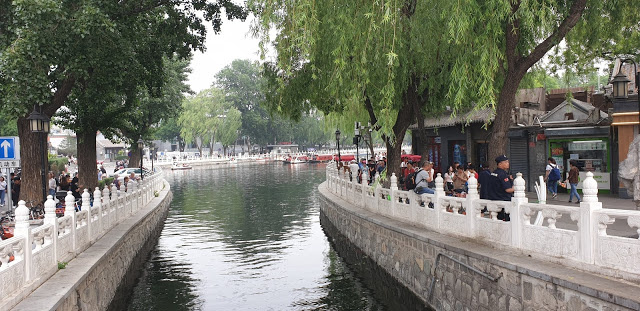
Many hutongs, some several hundred years old, in the vicinity of the Bell Tower and Drum Tower and Shichahai Lake are preserved and abound with tourists, many of which tour the quarter in pedicabs.
The optional tour also includes a visit to Shichahai, a historic scenic area consisting of three lakes (Qianhai, meaning Front Sea; Houhai, meaning Back Sea and Xihai, meaning West Sea), surrounding places of historic interest and scenic beauty and remnants of old-style local residences, Hutong and Courtyard.
First, we had a short walk through the more modern part of the Hutong area and given some free time for shopping, but we prefer just to meander by the canal.
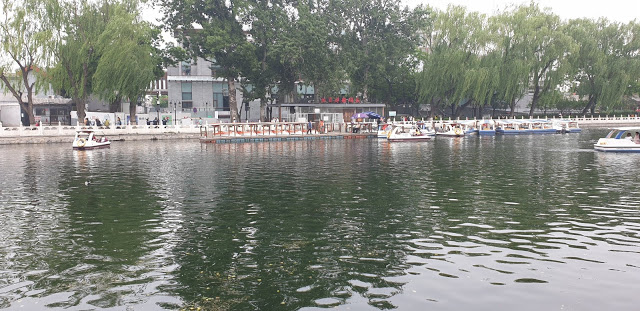
There is a lake, and if we had the time, there were boats you could take.
With some time to spare, we take a quick walk down one of the alleyways where on the ground level are small shops, and above, living quarters.
Then we go to the bell and drum towers before walking through some more alleys was to where the rickshaws were waiting. The Bell tower
And the Drum tower. Both still working today.
The rickshaw ride took us through some more back streets where it was clear renovations were being made so that the area could apply for world heritage listing. Seeing inside some of the houses shows that they may look dumpy outside but that’s not the case inside.
The rickshaw ride ends outside the house where dinner will be served, and is a not so typical hose but does have all the elements of how the Chinese live, the boy’s room, the girl’s room, the parent’s room, the living area, and the North-south feng shui.
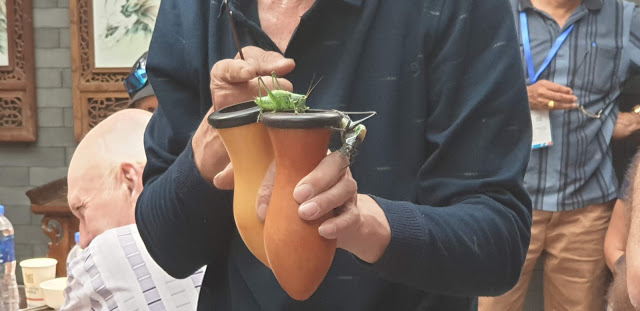
Shortly after we arrive, the cricket man, apparently someone quite famous in Beijing arrives and tells us all about crickets and then grasshoppers, then about cricket racing. He is animated and clearly enjoys entertaining us westerners.
I’m sorry but the cricket stuff just didn’t interest me. Or the grasshoppers.
As for dinner, it was finally a treat to eat what the typical Chinese family eats, and everything was delicious, and the endless beer was a nice touch.
And the last surprise, the food was cooked by a man.
A “manual of style and usage” is a reference guide that provides rules and guidelines for writing and editing, covering aspects like grammar, punctuation, capitalization, spelling, and formatting, aiming for consistency and clarity.
Style guides, also known as manuals of style and usage, are essential tools for ensuring consistency and clarity in writing and design, particularly across various industries and disciplines. They provide standardized rules for grammar, punctuation, formatting, citation, and other aspects of writing, helping writers and editors maintain a consistent style and tone.
I can think of two: The Elements of Style and Style Manual for Authors, Editors, and Printers (Australia).
I have recently stumbled upon The Chicago Manual of Style, 16th Edition, which is a style guide for American English published since 1906 by the University of Chicago Press
Why are style guides important?
Consistency: Style guides ensure that all documents within a specific organization, industry, or publication adhere to a consistent style, making them easier to read and understand.
Clarity: By following established rules, style guides help writers avoid ambiguity and ensure that their message is clear and concise.
Professionalism: Adhering to a style guide demonstrates professionalism and attention to detail, enhancing the credibility of the written work.
Standardization: Style guides provide a framework for writing and design, making it easier for different people to work together on the same project.
Facilitating Communication: They help ensure that all content produced by an organization or industry is consistent in its style, tone, and format, making it easier for the audience to understand the message.
…
Most of the above has been derived from the internet.
C is for — “Can you please just listen?”. Someone who doesn’t like to be told
…
There were four of us in the room, aside from the technical team, who were monitoring all the phones in the house.
Josephine, my daughter, the headstrong, ‘I can handle anything, Dad’, type, two members of the FBI, a man and a woman team who specialised in kidnapped children, and myself.
How did we get here?
It was a combination of things, not just one element. It was never going to be as simple as that.
Josephine would say that had I told her before the event what I thought, it would not have happened.
That, of course, discounted the fact I tried, on several occasions, culminating in the last time she spoke to me when I said, as my last parting shot, ‘Can you please just listen to what I have to say.’
She would not. No one was going to tell her how to live her life or how to bring up her daughter.
No one.
Fair enough.
Again, with the benefit of hindsight, I could have done more, but her parting shot that it was a bit rich for someone who hadn’t spent any time with his children to be telling them what to do, I figured she was, perhaps, right.
But, for all intents and purposes, it was now water under the bridge. An elegant and apt expression that was not going to assuage the pain.
I looked at the phone that brought in the first message, the message that arrived at 6 pm precisely on a Monday evening.
Distorted to try and hide the caller’s identity, but I knew who it was.
Danny Trevino. Smooth, handsome, beguiling, sophisticated, and too good to be true. He had swept Angelica off her feet.
I met him once and saw right through him. I didn’t like him and he knew it. That amiable smile turned into something else, and I knew then we were in trouble.
I tried to warn Angelina. She was not interested. There was too much of her mother’s obstinance in her, and sadly, we had never bonded. Again, there was too little contact when it mattered.
I tried to warn Josephine. Well, you know how that went. When she called, and I came, the best she could say was, ‘I’m sure you’re going to say I told you so, so get it over with’.
And, now we were here.
Waiting.
The great thing about being me is that people would look at me and then keep going.
I was the sort of person who other people didn’t give a second look. Ordinary, unassuming, invisible.
I learned that when I was younger, I was treated as if I were invisible. Then, I met a man who taught me that invisibility was an asset.
Just think, no matter where you go, no one will ever notice, and he was right. No matter where I went, anywhere on the world, no one bothered.
Except Monique, who, for a French woman, defied all the tropes and was equally invisible. We met in a Parisian bar, both trying to get a drink, and the bartenders simply ignored us.
It was the perfect match. We travelled together, here, there and everywhere, until one night after telling me she had a friend to see, girls turf, she said, she came back with a rather nasty bullet hole.
Three years we’d been together before I discovered she was an assassin. And three months before I became one too.
Three children and thirty years later, Monique had died in an accident trying to escape a fast closing net of police, and I retired the next day.
Monique’s mother had raised our children, and by the time I’d retired, they’d all moved on. Was I selfish? Yes. Do I regret what I did? Sometimes, like now.
Could I do something about the current situation?
Pierre was Monique’s brother and the only one of her family who knew what she did. As a consultant to any police force who needed him, in his downtime, he was one of these people who looked for missing persons.
He didn’t do it for the money. Rather, the clients would pay the so-called reward to a relevant charity.
I had called him a few weeks back when I realised that Angelina’s romantic attachment to Danny was getting serious, but disturbingly, his influence over her was the controlling kind and not in a good way.
It was good to see him again when I picked him and his team up from the airport. That and the cloak-and-dagger stuff that went with it.
So, for the last four weeks, they had embarked on round-the-clock surveillance, everywhere he went, everyone he saw, everyone.
I had a portfolio of photos of Danny and Angelique together, and Pierre wanted to kill him. He could, if he wanted to, but later. Danny was not the driving force in this kidnapping. Someone else was, and he was still working on that when Danny pulled a surprise manoeuvre.
Pierre’s cover was blown, and she was taken. All he said was that Danny was too stupid to organise something as sophisticated as this, and, what was more unsettling, it was someone who knew who I was or had been.
The ransom was going to be big. And there was no way Angelique would be returned alive.
The phone rang, and everyone jumped.
My cell phone vibrated in my hand five seconds later and flashed a message: “Got him.”
When I told Pierre we were about to get a call from the kidnappers, he said the usual tactic was to have a person from their team outside reporting on who was there and sometimes pick up conversations inside.
He was right.
Agent Laraby, the male, as he looked at Josephine, said, “Ready. As we discussed.”
She nodded.
He pushed the answer button. In the background, we could hear Michael Jackson’s ‘Billie Jean’ playing. It was one of my favourites.
It was also a clue. The kidnapper was enjoying playing games.
“10 million dollars, you know the drill. Within 24 hours, I will call with the delivery address. 24 hours, or she dies.”
The phone went dead.
Of course, the kidnapper knew they would be tracing the call. The kidnapper also knew the FBI were there, and more importantly, I was there. The only surprise was how little they’d asked for.
Josephine looked like she had been hit by a bus. “That’s ridiculous. I haven’t ten dollars to my name, let alone ten million.”
Agent Laraby looked at me.
“I suppose I’d better go and make some phone calls.”
“We don’t pay ransoms, Mr Jones.”
“With what you have, are you going to be able to rescue her before 24 hours are up?”
“We are following several positive leads.”
“Then, just in case, I’d like to have options available to us.”
Josephine looked over at me. “Where are you going to get ten million from?”
It surprised me that she had taken so long to ask the question. None of the children had known what their parents did, and all had been told we were not the richest people in the neighbourhood. Telling them we had money would only have made them self-indulgent and lazy.
It didn’t quite work as we expected.
“I have friends.”
She shook her head. “You’ve got nothing. Why are you here anyway?”
“You called me.”
“Well, it’s too late. We ain’t got any money, and she’s going to die. Somehow, this is all your fault. Go. And don’t come back. Ever.”
He had dropped off the kids. filled up the tank and finished his coffee before deciding where he was headed.
…
Ever wondered what it would be like to just do something out of the ordinary?
At what point did you realise just how much of a rut your life had fallen into?
These questions were foremost in Geoff’s mind as he sat at the bar of the diner on the edge of town, a place where he came every morning after dropping the children off at school.
Every morning except school and gazetted holidays. Without fail. Rain, hail or shine. In sickness and in health.
He sighed. When did it all go kaput? Life, marriage, work, everything.
Sybil refilled the cup with fresh coffee. “Another day, another million dollars?” Geoff had sat in that same chair every school day for the last three years, ordered the same coffee and cake, and said the same opening line and second response.
It was like talking to a robot.
“Yep. As if.”
And sipped the coffee, then said, “Excellent brew, Sybil.”
To which she replied, with the same amond of disdain, “It’s made by a machine, Geoff, it’s always going to be the same.” And moved on to the next customer, Dave, the truck driver. He needed three cups of coffee before the delivery run.
Geoff sipped the coffee, looked over the rim of the cup, and watched Hank, the short order chef throwing a burger, bacon, two eggs and tomato on the grill and watching it sizzle. Someone had ordered an overload of cholesterol.
He looked around the diner and saw the man sitting in a booth in the corner. Driving all night, he’d stopped off to refresh before continuing on his way to somewhere else, anywhere but here. Sybil was refilling his cup with the freshly brewed coffee.
Always keeping busy.
Another car pulled into the car park. A man and a woman. Smiling, happy. Of course, they were not staying here. They were moving on, going to somewhere else. Not in a rut.
Geoff knew life was a matter of choices. He made a bad choice. He thought it was the right choice, but in the end, it destroyed everything. He thought he was doing the right thing and allowed himself to be convinced it was.
In the end, the prosecutor’s case failed on a technicality, and the man he testified against was acquitted and vowed he would kill him. it was how he finished up in Grey’s Well, Montana, in the middle of nowhere, in a dead-end boring job, with a continually complaining wife and two very unhappy children.
All he had to do was get in the car and drive. North, south, east, or west, it didn’t matter. Anywhere but here. Away from the nagging and whinging. Away from the boredom of a job he hated. Even death would be better than this.
All it would take was to get off the stool, turn around, walk out the door, get in the car, and drive.
It was the same thought, every morning, after finishing that second refill.
He slid off the stool.
He turned around.
He started walking towards the door.
One step, two steps.
He stopped. To the left, there was the smiling man. To the right, there was the smiling woman. He had not seen them enter the diner and move towards where he was sitting. how could he, he had his back to the door.
He went to say hello but instead felt the knife penetrate the skin on his right side and suddenly feel very tired, and the two visitors helped him back onto his stool.
By the time he was sitting, they were leaving, and Sybil was coming back.
“Are you alright, Geoff?” She was shaking his shoulder.
He couldn’t hear her, or the sound of the car that had recently arrived speed off.
Geoff slid off the stool and was dead before he hit the floor. That was different.
In Beijing Hutongs are formed by lines of traditional courtyard residences, called siheyuan. Neighborhoods were formed by joining many hutongs together. These siheyuan are the traditional residences, usually occupied by a single or extended family, signifying wealth, and prosperity.
Over 500 of these still exist.Many of these hutongs have been demolished, but recently they have become protected places as a means of preserving some Chinese cultural history. They were first established in the Yuan Dynasty (1279-1368)Many of these Hutongs had their main buildings and gates built facing south, and lanes connecting them to other hutongs also ran north to south.
Many hutongs, some several hundred years old, in the vicinity of the Bell Tower and Drum Tower and Shichahai Lake are preserved and abound with tourists, many of which tour the quarter in pedicabs.
The optional tour also includes a visit to Shichahai, a historic scenic area consisting of three lakes (Qianhai, meaning Front Sea; Houhai, meaning Back Sea and Xihai, meaning West Sea), surrounding places of historic interest and scenic beauty and remnants of old-style local residences, Hutong and Courtyard.
First, we had a short walk through the more modern part of the Hutong area and given some free time for shopping, but we prefer just to meander by the canal.
There is a lake, and if we had the time, there were boats you could take.
With some time to spare, we take a quick walk down one of the alleyways where on the ground level are small shops, and above, living quarters.
Then we go to the bell and drum towers before walking through some more alleys was to where the rickshaws were waiting. The Bell tower
And the Drum tower. Both still working today.
The rickshaw ride took us through some more back streets where it was clear renovations were being made so that the area could apply for world heritage listing. Seeing inside some of the houses shows that they may look dumpy outside but that’s not the case inside.
The rickshaw ride ends outside the house where dinner will be served, and is a not so typical hose but does have all the elements of how the Chinese live, the boy’s room, the girl’s room, the parent’s room, the living area, and the North-south feng shui.
Shortly after we arrive, the cricket man, apparently someone quite famous in Beijing arrives and tells us all about crickets and then grasshoppers, then about cricket racing. He is animated and clearly enjoys entertaining us westerners.
I’m sorry but the cricket stuff just didn’t interest me. Or the grasshoppers.
As for dinner, it was finally a treat to eat what the typical Chinese family eats, and everything was delicious, and the endless beer was a nice touch.
And the last surprise, the food was cooked by a man.
Where does he come from? Of course, it’s a little principality in Europe where there is scope for so many and now so few.
It’s in the mountains, home to a family and a group of people who had been exiled because of certain beliefs, long since forgotten, bordering one side with Germany and the other France.
Interestingly, indeed, when taking into account world wars and neutrality and its history, it had some fascinating tales which no one has ever been able to verify and never will
What they are will have to wait until you read the story. But is it incidental to the tale? Yes, but in a way no one could ever imagine.
Oh, and just yo make things interesting. There are two, the other, sharing a border with Italy and Switzerland with a history that is far more sinister and equally as unverifiable.
He had dropped off the kids. filled up the tank and finished his coffee before deciding where he was headed.
…
Ever wondered what it would be like to just do something out of the ordinary?
At what point did you realise just how much of a rut your life had fallen into?
These questions were foremost in Geoff’s mind as he sat at the bar of the diner on the edge of town, a place where he came every morning after dropping the children off at school.
Every morning except school and gazetted holidays. Without fail. Rain, hail or shine. In sickness and in health.
He sighed. When did it all go kaput? Life, marriage, work, everything.
Sybil refilled the cup with fresh coffee. “Another day, another million dollars?” Geoff had sat in that same chair every school day for the last three years, ordered the same coffee and cake, and said the same opening line and second response.
It was like talking to a robot.
“Yep. As if.”
And sipped the coffee, then said, “Excellent brew, Sybil.”
To which she replied, with the same amond of disdain, “It’s made by a machine, Geoff, it’s always going to be the same.” And moved on to the next customer, Dave, the truck driver. He needed three cups of coffee before the delivery run.
Geoff sipped the coffee, looked over the rim of the cup, and watched Hank, the short order chef throwing a burger, bacon, two eggs and tomato on the grill and watching it sizzle. Someone had ordered an overload of cholesterol.
He looked around the diner and saw the man sitting in a booth in the corner. Driving all night, he’d stopped off to refresh before continuing on his way to somewhere else, anywhere but here. Sybil was refilling his cup with the freshly brewed coffee.
Always keeping busy.
Another car pulled into the car park. A man and a woman. Smiling, happy. Of course, they were not staying here. They were moving on, going to somewhere else. Not in a rut.
Geoff knew life was a matter of choices. He made a bad choice. He thought it was the right choice, but in the end, it destroyed everything. He thought he was doing the right thing and allowed himself to be convinced it was.
In the end, the prosecutor’s case failed on a technicality, and the man he testified against was acquitted and vowed he would kill him. it was how he finished up in Grey’s Well, Montana, in the middle of nowhere, in a dead-end boring job, with a continually complaining wife and two very unhappy children.
All he had to do was get in the car and drive. North, south, east, or west, it didn’t matter. Anywhere but here. Away from the nagging and whinging. Away from the boredom of a job he hated. Even death would be better than this.
All it would take was to get off the stool, turn around, walk out the door, get in the car, and drive.
It was the same thought, every morning, after finishing that second refill.
He slid off the stool.
He turned around.
He started walking towards the door.
One step, two steps.
He stopped. To the left, there was the smiling man. To the right, there was the smiling woman. He had not seen them enter the diner and move towards where he was sitting. how could he, he had his back to the door.
He went to say hello but instead felt the knife penetrate the skin on his right side and suddenly feel very tired, and the two visitors helped him back onto his stool.
By the time he was sitting, they were leaving, and Sybil was coming back.
“Are you alright, Geoff?” She was shaking his shoulder.
He couldn’t hear her, or the sound of the car that had recently arrived speed off.
Geoff slid off the stool and was dead before he hit the floor. That was different.
B is for — Behind the green door. A game show with a difference
…
It was the anniversary of my mother’s death and a day when my father usually just remained in bed and refused to get up.
He had never quite coped with it, and now, quite a few years later, he was still struggling. The pity of it was my birthday was the same as the day she died, and I guess it was why for years he had not celebrated it
However, this year was different. I was looking forward to turning 30, a milestone and something of an achievement in our community, considering what we had all endured.
But it was what it was. We were alive, reasonably well, and looking forward to the time when we could once again go outside, though no one really knew what that meant.
We had photographs of how the planet looked before the cataclysmic seismic events of 2031. Overnight, volcanoes erupted, and huge fissures appeared. And poisonous gas filled the air. It happened so suddenly and so quick that most of the planet’s population died.
So much smoke and dark particles got into the atmosphere it drowned out the sun, and after that, it didn’t take long for everything that wasn’t killed by the sulphuric acid to die from lack of light.
Fortunately, my family was one of the lucky groups that were given a ticket to the huge underground facility built for just such an event, one of thousands all over the world, a completely self-contained microcosm of human life.
Waiting for the air to be clear and for life to reappear. We had been waiting 400 years.
That was as much as we knew or cared to. We all had other things to worry about, like getting through the day with the cheerful disposition my mother brought to everyone who knew her, and in her stead, by me. Everyone had said how much I was like her, and that perhaps didn’t help my father’s disposition.
It was also the day I was being brought into my father’s circle of friends. I mean, I knew them already and frequently met them when we all got together as a group of families. But this, he had said, was something different, and I would have to swear on a bible, of all things, that I would keep it a secret, a secret that I would take to the grave.
It had me intrigued. There were no secrets among the people. Everyone basically knew everyone else’s business, not hard in a place that only houses 25,000 people, roughly the size of a small town.
This group, he said, had people from all of the work groups, like medical, sanitation, engineering, communications, and community services. There were about 50 in all, and now that I was a detective, I was going to be confirmed as the newest member of the team, adding a new field and expertise.
It was a team I didn’t know until he first told me, but being formally introduced to all of them was going to be exciting. These people, I discovered were basically the ones who made our community work.
It also meant my father wouldn’t be wallowing in self-pity today. He would have better things to do.
I was surprised to discover the meeting place was a gymnasium. It was reasonably large and looked rather old and worn out. A new one had been built not far away, but people still preferred to use this one. The reason I discovered later was that there was no surveillance.
Yes, that was just one of the things about our existence that was a nuisance. It was everywhere and you had to be on your best behaviour at all times.
The other 48 members had already arrived, and my father and I were the last two. I had to sit up at the main table until the others voted to formalise my addition to the team.
My father rang a bell, and silence took over from the low roar of my simultaneous conversations.
“Welcome, fellow members of the brains trust. For the edification for what I hope will be our newest member,” A glance in my direction followed by 39 other sets of eyes, “we are a group of experts in our fields and when there a problem the brains trust will come together and brain storm a solution.”
“Our main business today is to formalise the inclusion of my son, Michael, as a member. He will bring the expertise of a Detective and the use of his skills as one to help us find resolutions to future problems. If anyone has an objection, make it known now.”
We waited for a minute of so, then he continued, “As there are no objections, it is now time for the oath.”
He motioned me to stand as he took a musty looking volume off the table where he was standing. I’d seen it before but never took much interest in it. Now I knew it was a bible, one hardly of any use because religion, though not banned, was frowned upon
Equally, neither of my parents was interested or showed any interest.
He held the book in his hand and asked me to put my right hand on it. I did.
“Do you swear to work with and help in every way possible as a member of the brain’s trust.”
“I will.”
“Do you swear never to tell anyone else, no matter what relationship you have with them?”
What sort of a secret society was this?
“I do.”
“Do you swear that no matter what duress you are under, you will never tell anyone what you have observed, heard, or performed for the group?”
OK, now it was getting a little scary. Being a detective, I knew the rules by heart, and if this group was doing anything illegal, I was going to have to break the oath I made to become a detective.
What was more important?
“I will.”
“Then welcome to the brain’s trust.”
He shook my hand, and then everyone of the others did likewise. It was like swearing an oath to each one of them.
That was the business out of the way. Now, it was time to celebrate, and the wives and daughters had made food and set it out for all to partake.
There was one woman there who was different from the rest. When I asked one of the other girls who she was, she said her name was Elsie and a friend of another of the girls.
She also said she was new to the community, having come with her mother from one of the other communities nearby.
I was curious. My father had been at me to find a nice girl and settle down but having been to school with and known most of the girls of my age since we were young children, I had not been able to form a rapport with any particular one.
There was only one reason why a woman came from another community, and that was to marry one of our men. There were rules around marriage, and everyone had to be careful whom they married.
Not that I was thinking about that right then, but it did occur to me that she would be automatically eligible.
I picked a moment when she was alone and went over. She saw me coming and I thought she might disappear, but she didn’t.
“Hello,” I said in a slightly breaking voice, nerves almost getting the better of me, “my name is Michael.”
She held out her hand, and I took it in mine.
“Hello, Michael. My name is Elsie.”
“I have not seen you around.”
“I have only just arrived here with my mother. She is ill at the moment, and I’m staying with my prospective stepfather’s relative.”
“How do you like this community?”
“It is exactly the same as the one I came from, just different people and different rules, but more or less the same. Have you lived here all your life?”
“Yes.”
She took her hand back, but not in a way that made me think she didn’t like me.
“What do you do?”
“Science, mostly geology. I study rocks. Lately, it’s been monitoring seismic activity. All numbers and lines, boring stuff. What do you do?” Then she smiled, and it was transformational.
“Of course, silly me, you’re a detective. What do you detect?”
“Not a lot because I’m only new, but one day, murders or missing persons. We didn’t have many murders or deaths, but we do have minor crimes. Boring stuff, actually.”
“Well, I’m sure we’ll see each other again. I must go now.”
I saw a man at the door looking sternly at her, perhaps for talking to me. She walked quickly but not hastily towards him, and then they left.
My father appeared at my side. “Interesting, young woman. Do you know who she is?
“Someone from another community. I believed her mother had come to marry one of us.”
He frowned and shook his head.
“That man at the door was a relative of the prospective groom,” I said.
“Then I suggest you keep your distance from them. They’re trouble.”
That sounded ominous. There were not many people my father didn’t like, so there was going to be a problem if, in the unlikely event, we met again.
For the next month or two, I worked on improving my skills as a detective and kept an eye out for Elsie. When I didn’t see her again. I put my missing person skills to good use and tried to track her down.
I learned very quickly that what I thought was good work was nothing of the sort. I told myself that I was not going to be much of a detective if I couldn’t find someone who was not even missing.
It never occurred to me that she might be hiding or keeping away from the general public for private reasons. Whatever it was, I gave up trying because I assumed if she wanted to see me again, she would come and find me.
Then suddenly, she reappeared, at my favourite cafe and was ordering a takeout coffee. I joined the queue behind, then touched her on the shoulder. She both jumped and squealed but was genuinely surprised to see me again.
“Did you go back to your community? I have been keeping an eye out for you,” I said
She hesitated, what I might have called confused, then said, “Yes, I had to go back. Mother married and stayed here. Now I’m back for good. I didn’t get your last name, so I couldn’t find you.”
Although pleasant, I sensed something reticent in her manner. Twice, she had been looking around but trying not to. As if someone was watching her.
“Are you alright?”
She smiled, but there was no warmth in it. “A relative is somewhere near here. I’m just waiting for him. So that I can find you again, can you give me your last name?”
I gave it to her along with my address, which she carefully folded and put in her bag.
Then she caught sight of the person she was looking for. “Got to go. Sorry. We will talk again, I promise.” And then she was gone.
Cloak and dagger were words I read in a book that I’d found in a suspect’s residence, a book from a long time ago, one that was banned and shouldn’t exist.
Instead of submitting it as evidence, evidence I knew would disappear, and to be told I should not speak of it again, I kept it. It also told me there must be a cache of such volumes somewhere in the facility and added it to my secret mission list.
I didn’t tell my father, knowing it would set him off on another rant, that we were kept in the dark, that we were being manipulated by an unseen group of pf murderous people who didn’t care about us. The death of my mother by them had turned him into a bitter old man.
But the courtship, if you could call it that, with a woman named Elsie Myers, was every bit of a cloak and dagger operation. We would both sneak away to various locations we knew of that rarely saw other people. At first, we talked about my community and about her community, how much she didn’t like ours and wished she could go home.
It wasn’t long before I realised that her community was the same one my mother came from. Did she know this? I knew she couldn’t be related to my mother because she’d know the rules about inter-community relationships. And if there was, the recording of any relationships would be investigated.
But, whether or not I was supposed to know this, I decided not to speak of it. She didn’t seem to want to be forthcoming.
Whatever it was we were doing, it proceeded to the point where I took her home to meet my father. He was now in the twilight of his years and thinking about Rule 71, the one that decreed that everyone turning 65, took a last trip to the community headquarters, spent a week being debriefed ready for the next person to take over their job, and they move into the next phase of their life.
In other words, put bluntly, you reach 65, and you die. It was an arbitrary age, the beginning of the end, and that age where everything went wrong. The thing is, in 400 years, medicine had not improved to the point where we could sustainably live past 65 and be useful
We were told it had something to do with having to live under a mountain, the lack of fresh air and sunshine, and the processing of our food.
Besides, I got it. Who would want to live longer than that?
My father had got a reminder of his human frailty that morning in a card from the administration advising him that he was due for a check-up.
It was a bad choice to pick the same day to introduce Elsie. It wasn’t until we were outside the door that I remembered what he had said about her all those months ago.
I unlocked the door and ushered her in. Once, we didn’t have to lock the doors, but there had been a growing discontent between the haves and have-nots. He was in his favourite chair, reading the newspaper.
“Dad, this is Elsie.”
Rather than him becoming the polite host, he simply glared at me and said, “I told you what thought ages ago. Take heed or don’t, I don’t care.”
Thus began a long-running and strained relationship between the two of us, and perhaps I should have heeded his advice from the beginning. It never improved from that day.
When I should have considered what was behind his attitude I didn’t and on top of the indifference he had for everything since mother had died, I decided to strike my own path, neither participating with the brains trust, and continuing to be disappointed with my workplace, not realizing that it might have had something to do with Elsie.
It wasn’t until sometime after I married her and I was complaining about yet another missed opportunity that one of the other detectives intimated that I should wonder how it was a woman like Elsie had deigned to marry someone so inferior to her station.
She had never mentioned anything about her station, but it was about the time when I started to get better cases, and we moved into better accommodation, and then, she had apparently got a promotion, more and important work.
Perhaps that might never have mattered. I had not seen her out and about with another man, not behaving in the manner I would have expected. I knew she was a flirt as at some of the parties we were invited to, I saw her being friendly with her fellow workers, but I put that down to her manner.
And while I might have dwelled on it longer than I should, it soon became equally apparent that the new cases I was being allocated were leading me down a dark path whether intentionally designed to distract me from questioning her behaviour, or whether I was meant to discover there was a whole other side to our community that no one else could see.
Had Elsie facilitated that, or was I just imagining it?
Whatever the reason, my life took a very different path, for a period a very intense relationship with Elsie as if we only had a very short time left together, I had uncovered a series of missing persons and subsequent deaths that were linked, something I could not report because there was a possible link between them and my father and other members of the brains trust.
Then my father’s time was up, and I took him to the judiciary, trying to make up for those years since I chose Elsie over him, only for him to cryptically tell me that things happened for a reason, and I would soon learn what that reason was. He was not bitter, not anymore, and was glad to move on.
Then, in one stultifying moment, Elsie was gone. I had, on occasion, followed her out and about, seeing who she met, who she was more friendly with, and finding out who they were. It was interesting that they were all top-level scientists and the sort of men she should have married.
And then, it was one of them that killed her in a jealous rage. It was not the story they told me, a bunch of shadowy men in black calling, explaining, and then leaving with the ominous threat that I should accept the findings of the investigation and get on with my life. A CCTV video gave me the real answer much later, but it didn’t make me feel any better.
In the end, I got to my retirement date, rather satisfied in the end that I had done my job to the best of my ability, I had met and lived with the woman I believed I was meant to be with and that I was probably the only one of the 25,000 inhabitants in our community who knew what had happened over the last 400 years that got us to the point where we were now.
If I did, it would be a jumble of words that might not make any sense. But, for the purposes of this exercise, I shall try…
…
I’m guessing that the point of this is that conversations have to sound natural, and often the words running around in my head sound fine but it’s when you read them out aloud that’s when it sounds wrong.
More than once, I’ve read out a sentence I’ve written and cringed. “Who talks like that?”
More than once, someone has said to me, “Did you just hear what you said?” and of course, we don’t listen to what we say, especially when we are angry and just spitting out words.
Kids make you see red, and once I did actually hear what I said, and if the neighbours had they would no doubt call the police. My eldest son had made me so angry I think I threatened to kill him in several different ways.
Not long after I read an article that said parents frequently threatened their kids with death or worse, and it was the reason why the just laughed at them. As if we were going to kill them.
But it did strike a chord about the sort of conversations my characters would have, and when I read over some of the stuff that I’d written, how much it sounded like me. In fact, one of my relatives was beta-reading a story I’d written, and she said how much it was like me to the point where she could see me as the character.
IT made me think twice every time I write conversations, and now I deliberately listen to other people and pick up on their speech patterns, words used, and manner of speaking to get a better feel for what is needed.
Of course, I’m not perfect, but it’s fun trying to assume different identities and imagine how they would react in any given situation, and particularly what they might say.




 Thrills, Spills, and just a dash of Romance