I’m thinking about hiding … in plain sight!

All in all, this is just the place I was looking for to write into a story.  A perfect blend of fact and fiction could make this into something else, or just plain hiding in plain sight.

If you are not skiing, not hiking, not horseriding, and have come for the fishing, this is the place to be.

Except…

There is something about a summer resort town in the middle of winter.

Or maybe it’s like this all the time.  After all, I have been here in Spring and Autumn and it was just as deserted on the main street.

And not just deserted it is almost like a ghost town, and I suspect the few people that are here are the few hapless tourists wandering about wondering where everyone else is.

It’s about 2 pm and we are heading for the local Coffee club for lunch and coffee.  It might be past lunch but I don’t think that’s the reason why there are so few customers

There is just no one here.

Perhaps it’s probably a different story on weekends when the city people come down for the snow and are passing through.

But, essentially, Taupo is a holiday town, and if you take a closer look, all you will see is cafe’s, dining establishments and motels.  A quick tour of the shopping center shows more shops are closed or vacant than there are open.

It’s not surprising that a lot of businesses cannot survive, because to stay in business, you need a steady stream of customers all year round, not just in Summer.

Unlike their winter counterparts, the ski resorts who seem to have a different working model, take as much as you can while you can, they only have to operate a few months of the year, use non-permanent seasonal workers, and can adjust if there’s no snow.

An indication of just how much custom there is in Taupo in winter is trying to organize horse riding.  Admittedly it is rather cold for both humans and horses, but not every day is a loss.  We sought out the local Taupo horse riding establishment and found it closed for Winter.  Understandable perhaps, but the more telling point was the fact it had a big sign up “Business for Sale”

To me, after visiting the town for the fourth time, there’s no reason to go back again.  I don’t fish, there is precious little to do there in winter, and I prefer to stay closer to the snowfields in winter, or even summer when there is more than just skiing.
Back to them ‘old days’ again

I started out by saying I didn’t want to be a lone voice in the wilderness.

Apparently I am, still.

Well, that might be a little harsh in the circumstances, but the monkey on my shoulder is telling me I should start writing something that someone might want to read.

I guess the trials and tribulations of a writer who basically is a lone voice in the wilderness is as boring as everyday life.

I mean, who wants to read about someone’s miserable, or, on rare occasions, good, day.

Yet, if I was to pick up any book written in the 18th and 19th century, all it seems to be about is everyday life, but what makes it interesting is the fact we never lived it, nor realized how hard it was for some, and how good it could be for others.

Best not to be born poor.

So, I was wondering, in 200 years time when someone sits down to read about the vicissitudes of my life, will it be interesting to know what it was like back in the ‘old days’ that is really today for me?

Interesting how a change in time frame makes something interesting, and ‘classic’ literature.

But one difference between then and now is the fact we, today, can write about science fiction, spies and all manner of events that come out of recent inventions.  Odd too, that people are still the same, those that tell the truth, those that are pure of heart, those who are as evil as the devil himself.

Some things never change.

Just the when, where, and how.

Reasearch, the bane of the writer’s existence

So I’m incorporating a plotline that is centered around a snow theme, and of course, we are going to New Zealand just so our granddaughters can see snow for the first time.

It’s what you call mixing business with pleasure.

Ok, forget the pleasure…

You would think it is a relatively simple thing to get to the snow.

Of course, there are a few necessities like skis, boots, poles, and warm dry clothing, but that can all be bought or rented when you get there, or if you are an enthusiast, you already have the gear.

So, you get in the car, set the navigator, and off you go.  Till you get within 20 k of the ski field, it’s all plain sailing, everyone is excited, and mentally preparing.

Then it all starts to go sideways.

Those last few kilometers to the top are going to be arduous particularly if it’s been snowing and the roads are icy, but the weather is fine with blue skies and no recent snow falls.  Were expecting a slow drive and a parking spot.  The road is open.

But…

So late in the morning, a sign at the bottom of the mountain warms all the car parks at the ski field are full, but we venture on anyway.

And for some odd reason, we picked the very day everyone in New Zealand also wanted to go up to the ski fields so parking, even near the Chateau Tongariro was gone and there were endless cars looking for parking spots and traffic wardens had their hands full trying to keep traffic moving

So, for us and everyone else, everything stops at Chateau Tongariro, and from there the only vehicles allowed up are buses.  It’s about 10:30 and we are advised the only way we were getting to see snow was to take a bus

Now, there are two types of busses.  You can go up on a local bus, from Whakapapa Village that costs $20 a person which in the context of the cost of skiing not very much, but if you’re not, it’s quite expensive.

The second, one we were advised to use, operates from a place called National Park, about 9 km away, a snow shuttle that costs $6 each.  The trouble is by the time we were ready to go there, to catch a shuttle, there were no more shuttles.

The granddaughters are disappointed, and I have a new plotline for my intrepid adventurer to get tangled up in.

Oh, well, there’s always tomorrow.

I’ve always wanted to be in a disaster movie

But not one where the plane crashes.

It seems almost inevitable when traveling anywhere on a plane that something can and will go wrong.  Not necessarily with the plane, but that happens too, but rarely, if ever, have I been on an overseas flight that has not left or arrived late for any one of a multitude of reasons.

The last was just one in a long line of many…

It is not always a problem with the aircraft that causes delays.  Whilst often it is a case of technical difficulties, but this time it wasn’t.

We are missing a passenger.

Yep, on a plane that carries 301 passengers, we were missing the one.  And because they have not made the boarding cutoff, their baggage has to be offloaded.  Since there are 300 other bags to sort through, it will take time.

Scheduled departure time 8:45, an announcement about the offloading at 8:35, it’s now 8:50.  Ok, now we’re closing the front door.  Let’s see what happens now.

8:52, the captain says we’re sorted, but…

Oh, the dreaded we’ve missed our slot and now have wait for the next.  Last time that happened, in France, we waited an hour.  This is Brisbane, not so large an airport so it may not be a long wait.

9:01, we’re pushing back.  Finally a slot.

But…

There are five other planes in front of us, so it’s all adding up to a delayed arrival.  9:15 and still taxiing.

9:30, 45 minutes late we finally take off.  Let’s see how this affects our arrival time.  The flight time is advised to be 2 hours and 25 minutes.  This means if the flying time is correct, we should be landing in Auckland at 13:55 pm, local time.  New Zealand is, by the way, two hours ahead of Brisbane.

11:45, (or 13:45 local time) we commence our descent.  Landed at 14:10 local time.

It could have been worse.

What am I saying, we have now to negotiate immigration and baggage.

The braking effect

Express trains have always fascinated me.  In our country, Australia, express trains really don’t go all that fast.

So…

When I was last in Europe we decided to get the Eurostar, from London, through the Chunnel, to Paris Disneyland.  My granddaughters came along for the ride.  I’m sure it was not for the train ride, just Disneyland.

But…

Again I digress …

What I really want to talk about is the metaphorical express train.

I’m on it now, ticket in hand, waiting for it to arrive at my station.

And…

The metaphorical train is hurtling along at about 250 kph and, every now and then it feels like the train begins to slow down as if coming into a station.  Sometimes it seems like nothing is happening except for some outside friction noise and little else.

Yet, I’m not really on that train, but going somewhere else.

Like heading towards the bottom of an abyss.

It’s called rock bottom.

I’m told once you hit rock bottom the only way is up.

The question is, who do you know that has fallen into the abyss and come back to tell you about it?

Put into layman’s terms, being stuck on the express train to nowhere, or hurtling down the abyss, is like having a severe episode of depression.  There are different types, some worse than others.

Actually hitting the ground is roughly the equivalent of looking for a way out that eases the pain, and that, for some people, is a quite drastic answer.

But the sign that the free fall is braking, like the express train slowing down, is a sign that you have realized what the problem is, and taking steps to resolve these issues.  It’s not something you can do on your own, and surprisingly, there are a lot of people, some quite concerned, who are there for you.

You only have to ask.  Sometimes all you have to do is accept their help.

Writers, like any other professional people, are the same as everyone else, but with one rather interesting difference.  It is a profession where a lot of the time you are on your own, alone with your thoughts, your characters, your fantasy world, which sometimes so frighteningly drifts into your reality.  You can become absorbed in your own world to the exclusion of all else.

What you need to so, as often as possible, is simply to step out into the light.

Some of us will make a fortune, most of us will make an adequate living, and live the ‘dream’ of doing the one job they always wanted to, and some will not.

I’m not rich, I’m not one who gets an adequate income, yet.

But I will get out of this abyss.

I can feel the braking effect.

My eldest granddaughter, who is 14, tells me the fantasy story I’m writing for her, where she is a princess, is going to be great.

The free fall has stopped.  I step out into the sunshine.

All it needed was a little praise.

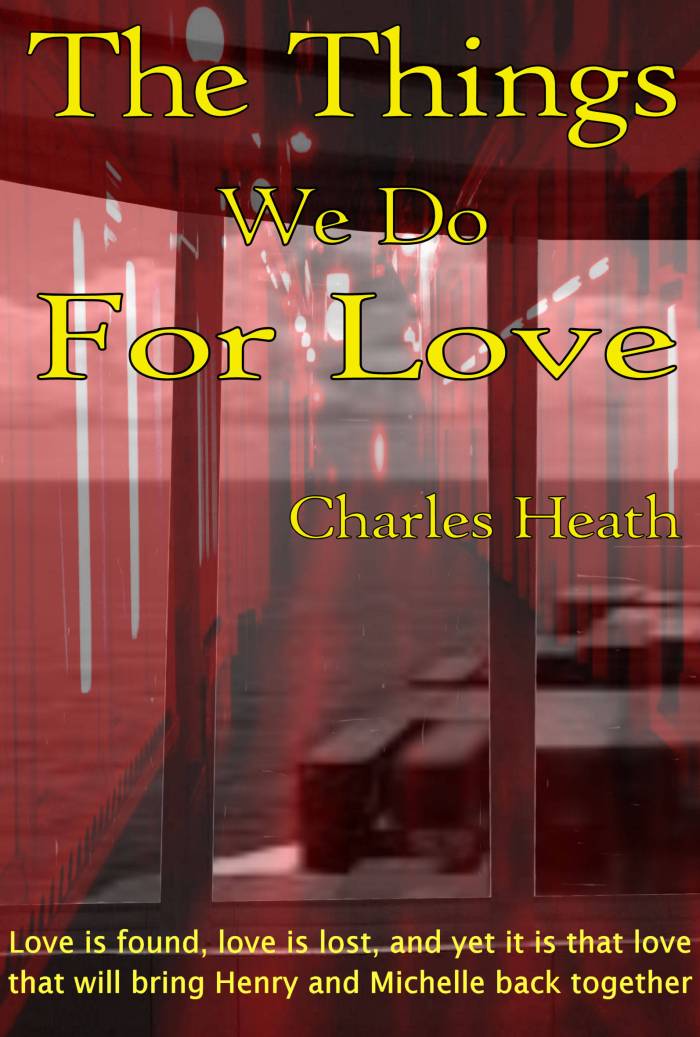
“The Things We Do For Love” – Coming soon

Like Sunday in New York, this is another attempt at writing a romance novel.  I’m one of those deluded fools who believe in happy endings.

I guess that was a ‘spoiler’!

This is the description I’m currently working with.


Is love the metaphorical equivalent to ‘walking the plank’; a dive into uncharted waters.

For Henry the only romance he was interested in was a life at sea, and when away from it, he strived to find sanctuary from his family and perhaps life itself.  Tonbright, a small village by the sea, is one such a place, but he never expected to find another, Michelle, whom he soon discovers is as mysterious as she is beautiful.

Henry had long since given up the notion of finding romance, and Michelle couldn’t get involved for reasons she could never explain, but in the end both acknowledge that something had happened.  Plans were made, plans were revised, and hopes were shattered.

A chance encounter causes Michelle’s past to catch up with her, and whatever hope she had of having a normal life with Henry, or anyone else, is gone.  To keep him alive she has to destroy her blossoming relationship, an act that breaks her heart and shatters his.

But can love conquer all?

It takes a few words of encouragement from an unlikely source to send Henry and his friend Radly on an odyssey into the darkest corners of the red light district in a race against time to find and rescue the woman he finally realizes is the love of his life.


The cover, at the moment, looks like this:

lovecoverfinal1


On renovations and editing

There are a lot of words in the English language that can strike fear into the hearts of even the bravest of men and women.

Two are renovations and editing.

We are currently deep in the first and it’s running something like this:

Firstly, we are updating the ensuite, and this has been relatively painless.

Secondly, we are fixing up the outside of the house.  The intention was to put in a retaining wall and build a stone garden with succulents.

Ah, the best-laid plans!

This led to, let’s render the walls, get rid of the unsightly bricks.

Fine.

But before that, we need to repaint the roof an appropriate colour to match the walls.

Fine.

Got the roof done, got the walls rendered.

Now we need a carport.  Fine.

Back to the garden, and so on, and so forth.  Much is still to be done.

It’s like editing, a chore that I’m beginning to like less and less because it’s taking on the dimensions of a renovation.

It isn’t a matter of correcting spelling mistakes, sentence structure errors, or badly place punctuation.

It’sd a matter of weeding out the superfluous text, cutting and more cutting, taking out anything that does not propel the story to a logical and unexpected end, let alone having to rewrite at the beginning because of an afterthought later on.

Starting to sound like the garden, rendering, roof scenario?

It’s harder editing than writing.

So many words, so much brilliance, ending up on the cutting room floor.

Perhaps it’s time to go back to the renovations.  They seem more fun than editing.

No?


What we say and what we do are two very different things

I was watching a TV program and the words ‘double standards’ kept being thrown about with little attention being paid to what it really means.

Like statistics, words can be used in any manner to support or debunk what someone else will call a fact.

Fact, of course, is another word that’s thrown around like a football.

But double standards, what does it really mean?

“a rule or principle which is unfairly applied in different ways to different people or groups”

Put simply, if you own a cat, and I hate cats, I’m likely to say to you I like cats because of who you are and what I might want from you.

It has far more reaching consequences in reality because some of us might profess they regard everyone as being equal ‘in the eyes of the Lord’ but have a very different private view.

Personally, I believe everyone should be treated equally.  The problem is, a great many people around me do not, and it seems that I am slowly becoming a minority in my own country.

How do we rectify this?

I don’t think we can.  Politicians are now running scared in their own constituencies because of the increasing multicultural population, and cannot be seen to favor one group or another.

Until lobby groups come into play, campaign funding to the politician is discussed, and very subtly, votes are bought.

Does your political representative work on the basis of double standards?

Maybe it’s time to find out before it’s too late, and you too will be living in shanty huts on a reservation.

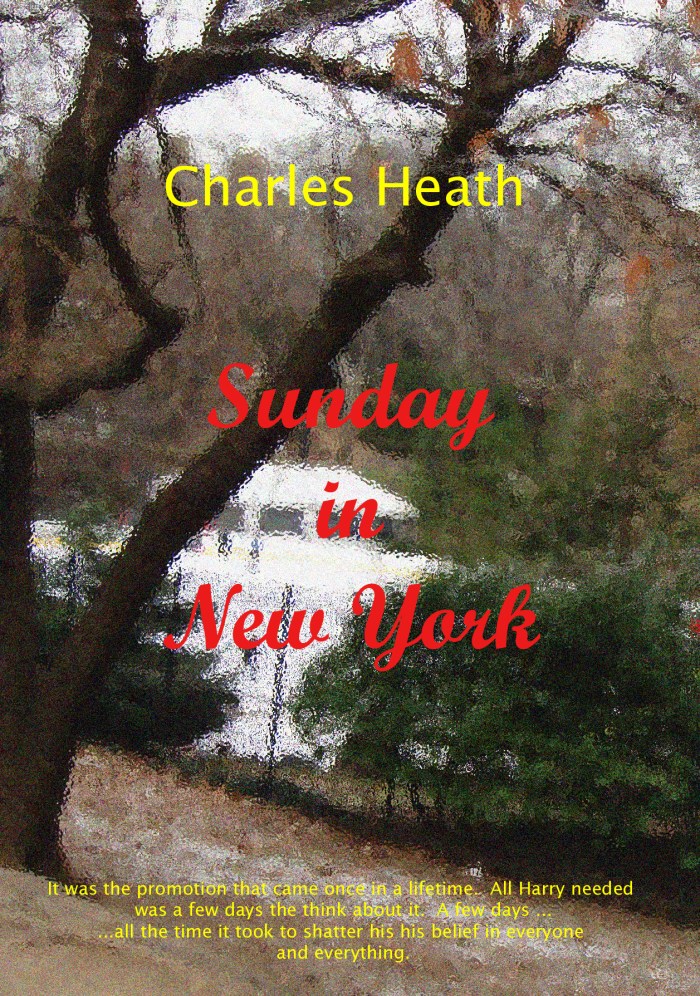
“Sunday in New York”, it’s a bumpy road to love

“Sunday in New York” is ultimately a story about trust, and what happens when a marriage is stretched to its limits.

When Harry Steele attends a lunch with his manager, Barclay, to discuss a promotion that any junior executive would accept in a heartbeat, it is the fact his wife, Alison, who previously professed her reservations about Barclay, also agreed to attend, that casts a small element of doubt in his mind.

From that moment, his life, in the company, in deciding what to do, his marriage, his very life, spirals out of control.

There is no one big factor that can prove Harry’s worst fears, that his marriage is over, just a number of small, interconnecting events, when piled on top of each other, points to a cataclysmic end to everything he had believed in.

Trust is lost firstly in his best friend and mentor, Andy, who only hints of impending disaster, Sasha, a woman whom he saved, and who appears to have motives of her own, and then in his wife, Alison, as he discovered piece by piece damning evidence she is about to leave him for another man.

Can we trust what we see with our eyes or trust what we hear?

Haven’t we all jumped to conclusions at least once in our lives?

Can Alison, a woman whose self-belief and confidence is about to be put to the ultimate test, find a way of proving their relationship is as strong as it has ever been?

As they say in the classics, read on!

Purchase:

http://tinyurl.com/Amazon-SundayInNewYork

Sunday In New York

“The Devil You Don’t”, a thriller

John Pennington’s life is in the doldrums.  Looking for new opportunities, prevaricating about getting married, the only joy on the horizon was an upcoming visit to his grandmother in Sorrento, Italy.

Suddenly he is left at the check-in counter with a message on his phone telling him the marriage is off, and the relationship is over.

If only he hadn’t promised a friend he would do a favor for him in Rome.

At the first stop, Geneva, he has a chance encounter with Zoe, an intriguing woman who captures his imagination from the moment she boards the Savoire, and his life ventures into uncharted territory in more ways than one.

That ‘favor’ for his friend suddenly becomes a life-changing event, and when Zoe, the woman who he knows is too good to be true, reappears, danger and death follows.

Shot at, lied to, seduced, and drawn into a world where nothing is what it seems, John is dragged into an adrenaline-charged undertaking, where he may have been wiser to stay with the ‘devil you know’ rather than opt for the ‘devil you don’t’.

Purchase:

http://tinyurl.com/Amazon-TheDevilYouDont

newdevilcvr3