“The Kingston Flyer” – Researching can be fun

These days it’s getting harder and harder to find ghosts of the past.

It’s surprising when you read how many steam locomotives existed in the days of steam, and how few remain, and even then, if those that remain, how many actually still work.

It makes writing historical fiction all that much harder.

Some years ago I had an idea I might write a story that involved a steam train, and, since we travelled to New Zealand almost once a year, decided it was time to pay the train a visit.  That year, the train was still running, and it was an experience.

Try drinking a cup of team, on the train, without spilling it.  We couldn’t but it was not the train that was the problem, it was the tracks it ran on.

Now, although I read somewhere it might make a comeback, the last visit we made, the trains were firmly ensconced in their shed, and not looking remotely like moving.

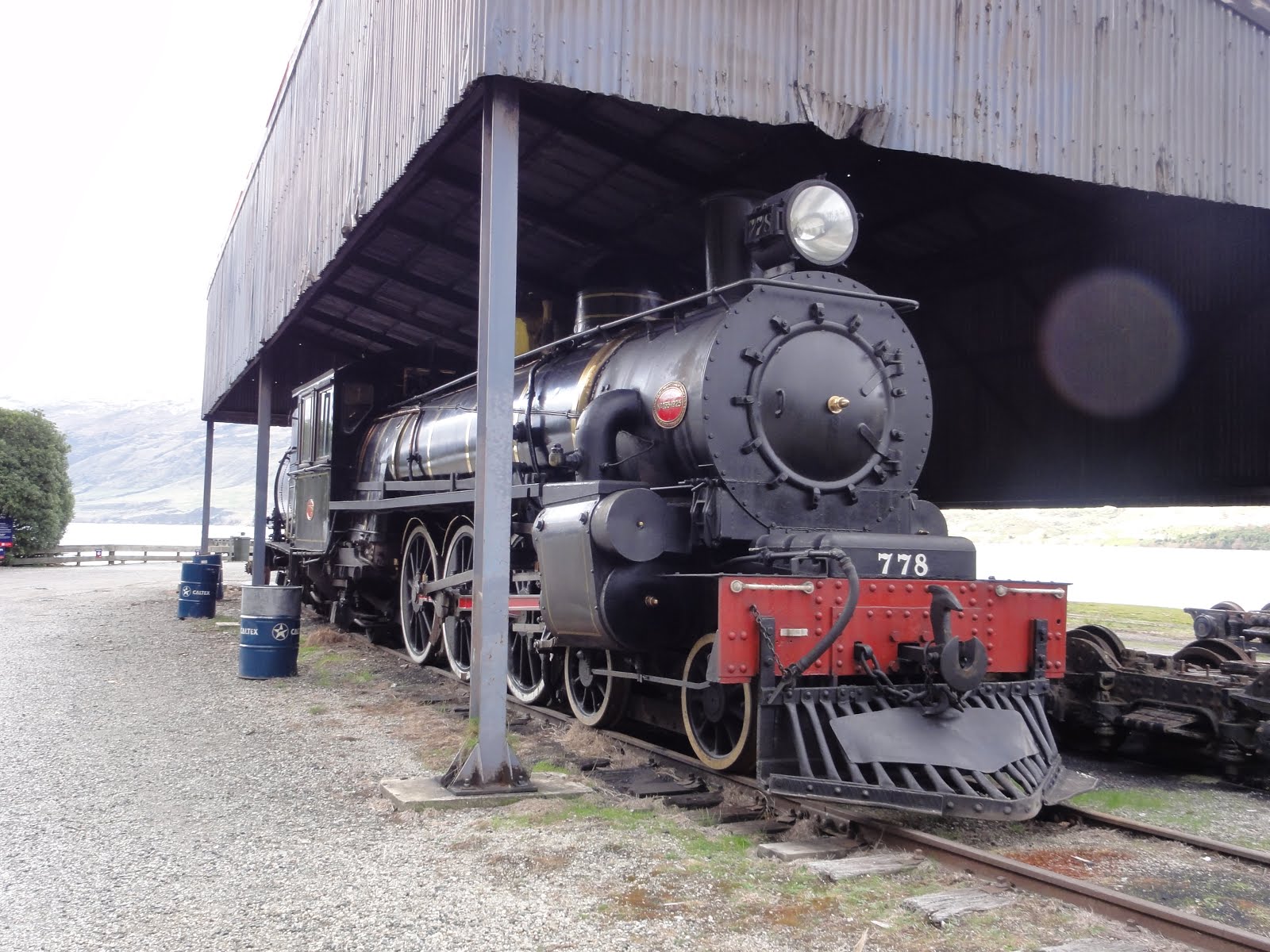
These photos are from the last time we visited.

The Kingston Flyer was a vintage train that ran about 14km to Fairlight from Kingston, at the southern end of Lake Wakatipu, and back.

This tourist service was suspended in December 2012 because of locomotive issues.

However, before that, we managed to go on one of the tours, and it was a memorable trip.  Trying to drink a cup of tea from the restaurant car was very difficult, given how much the carriages moved around on the tracks.

The original Kingston Flyer ran between Kingston, Gore, Invercargill, and sometimes Dunedin, from the 1890s through to 1957.

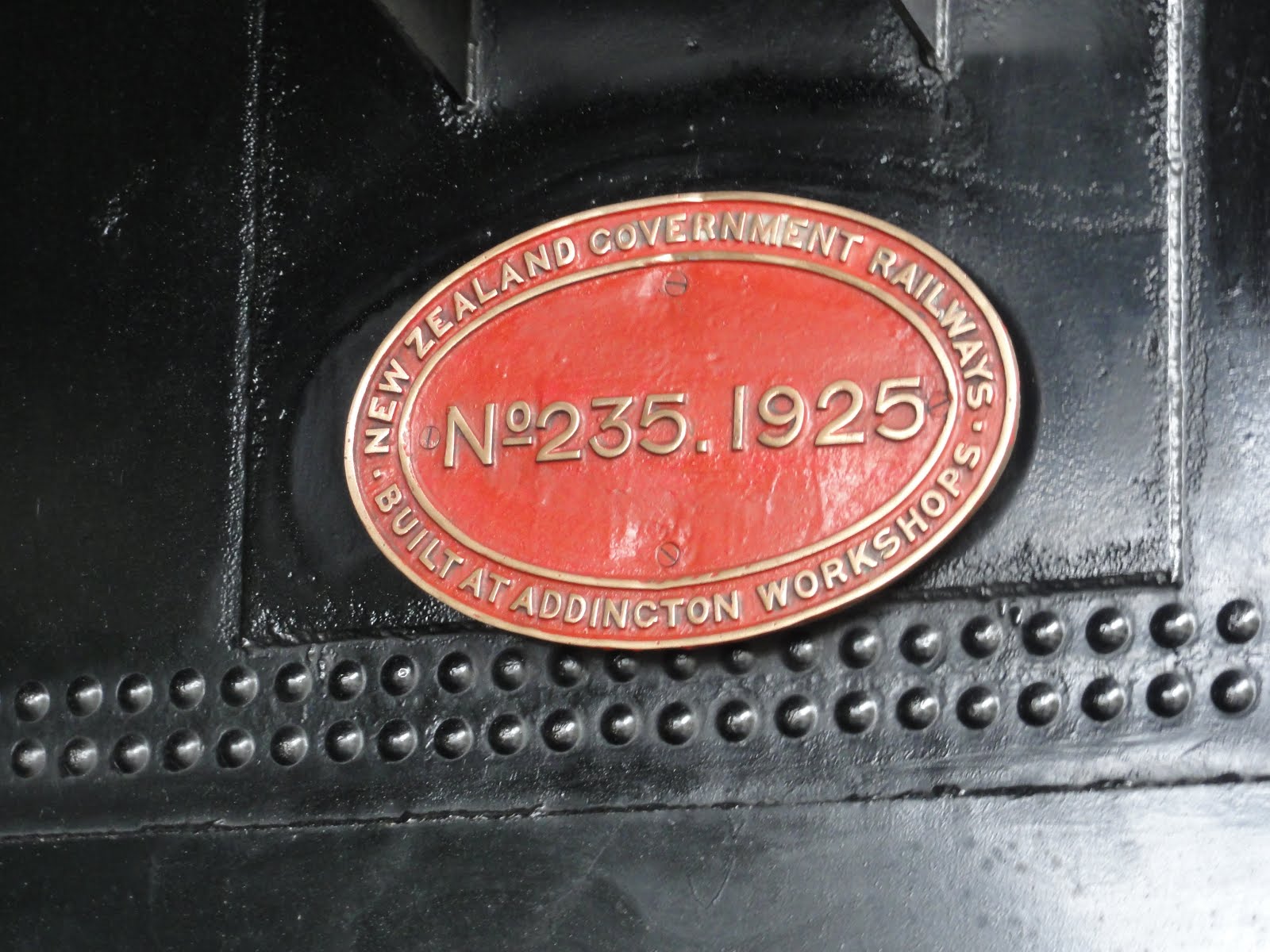
There are two steam locomotives used for the Kingston Flyer service, the AB778 starting service in 1925, and the AB795 which started service in 1927.

The AB class locomotive was a 4-6-2 Pacific steam locomotive with a Vanderbilt tender, of which 141 were built between 1915 and 1927 some of which by New Zealand Railways Addington Workshops.

No 235 is the builder’s number for the AB778

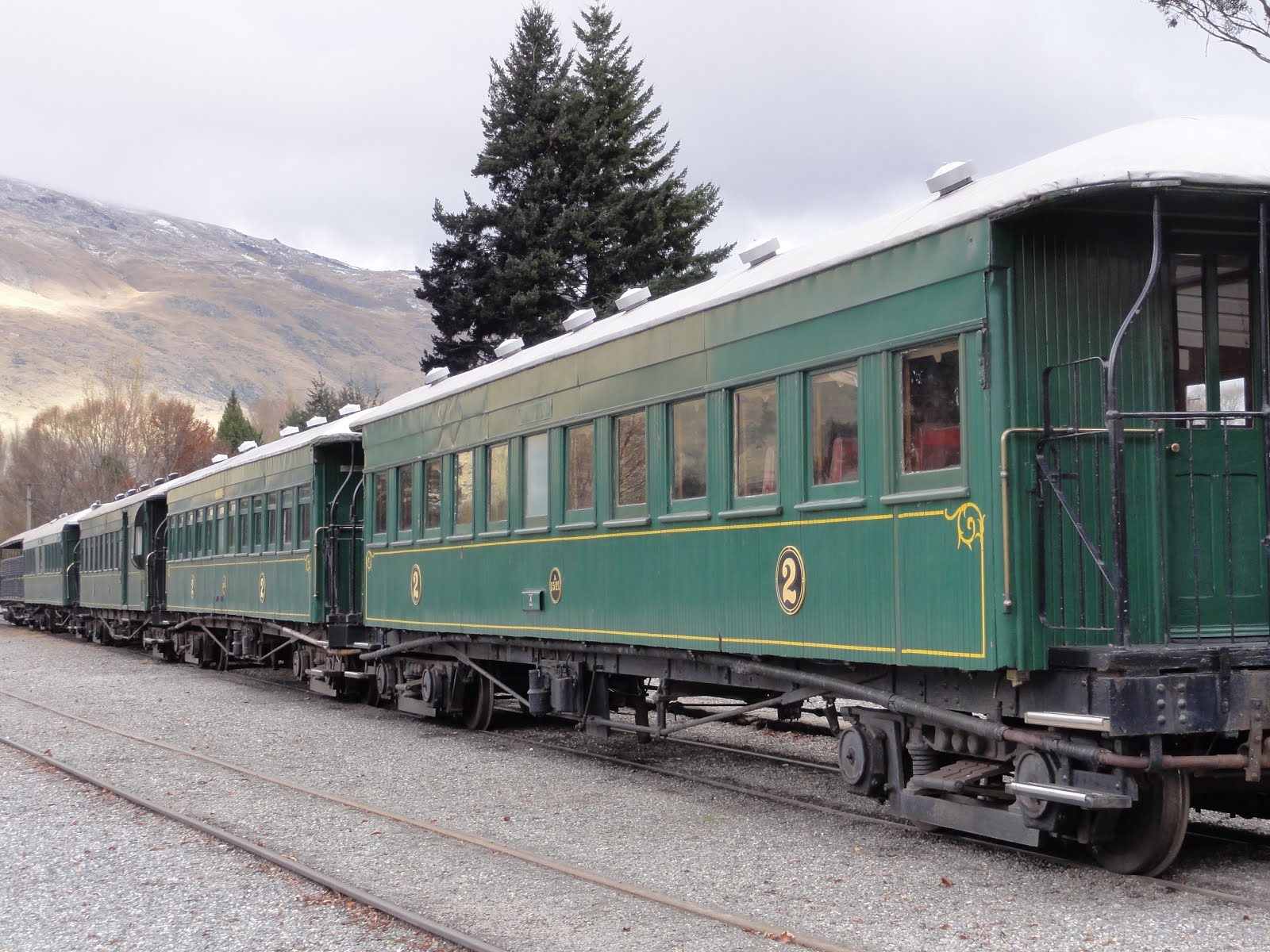
There were seven wooden bodied passenger carriages, three passenger coaches, one passenger/refreshments carriage and two car/vans.  The is also a Birdcage gallery coach.  Each of the rolling stock was built between 1900 and 1923.  They were built at either of Addington, Petone, or Hillside.

I suspect the 2 on the side means second class

The passenger coach we traveled in was very comfortable.

This is one of the guard’s vans, and for transporting cargo.

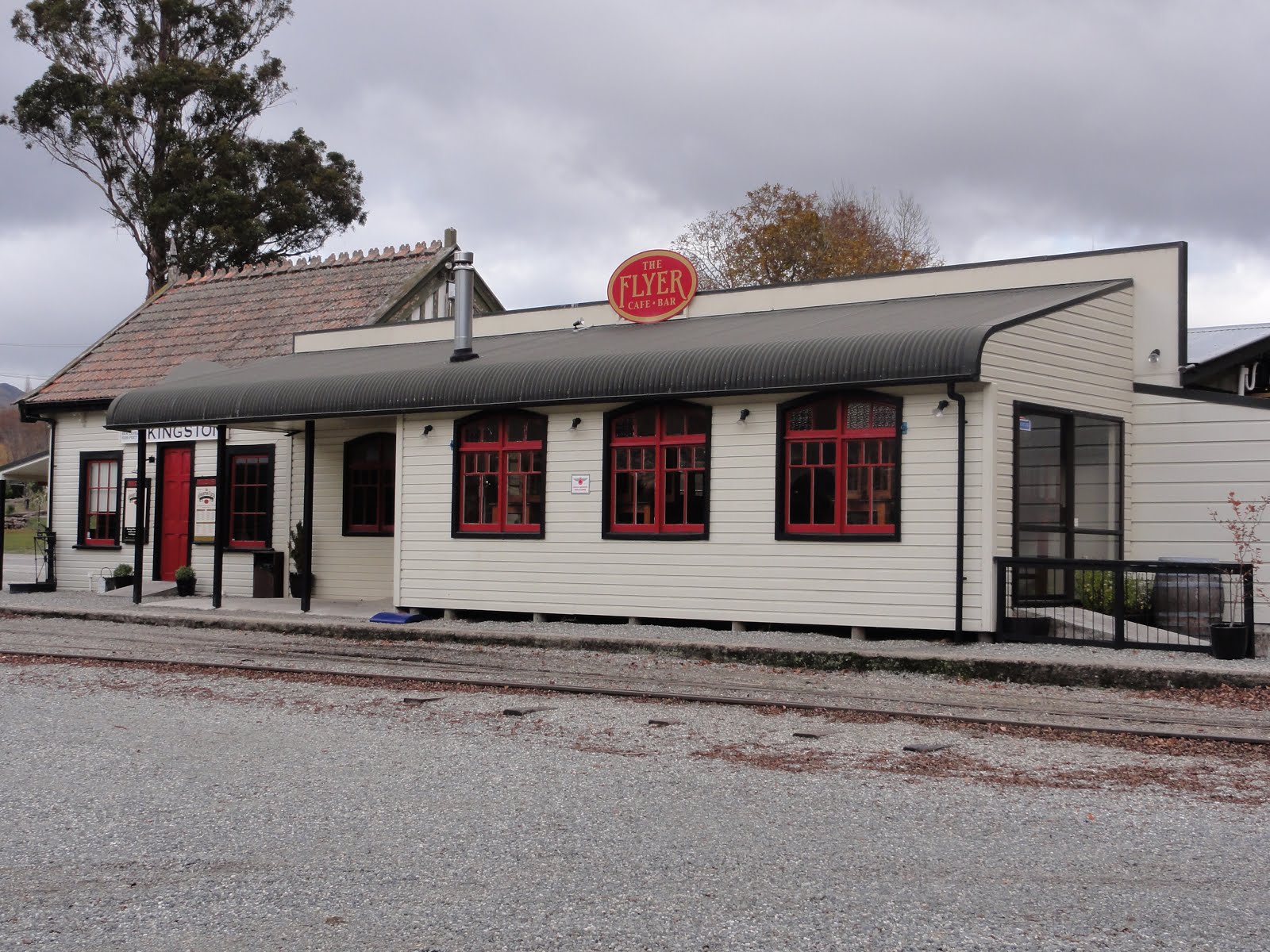
The Kingston Railway Station

and cafe.

Conversations with my cat – 50

20160902_123201

This is Chester.  He knows it’s time to visit the vet.

And we have the same problem every month.  Any other time he would be in one of three places, at the back door, watching the birds on the fence, in his basket contemplating whether to check out the mice situation or sitting at the front door hoping some kind person will take him away and give him a better life.

But, come vet day, he’s nowhere to be seen.  Or heard.  I suspect he hears the sound of the pet carrier.  Certainly, the moment he sees it, if he is anywhere near, he runs.

Odd that, because he has one of those bell neckbands that alerts us, and the birds, if we ever let him out.  Today, in fact now that I think about it, it is not to be heard.

Has he managed to figure out a way to walk without it making a sound?

So, it’s time to mount a search.  WE have to be going if we’re going to make the appointment on time.

He has six favourite hiding spots, one in a cupboard in the spare bedroom.  It took a while to discover this one, and the discovery he could open the sliding door with his paw.  What was hard to understand; he could close it too.

Today, he’s not there.

Under and one of three beds, all very low, and very hard for us to get down to see.  And dark, needing a torch.  Woe betide us if it is in the middle, just beyond our reach.

No, not hiding under the beds, but we do find one of his toy mice, destroyed.

Nor is he hiding under the lounge room table, a new spot since we put an overflowing table cloth on it, making it look like a tent.

Almost at the end of my tether, I hear a bell.

There he is, sitting on the end of the bed, a grin if it could be called that on his face.

Where have you been, we have to get going or we’ll be late, he says.

Yes, and all I have to do is get you in the carrier.

Oh.

He realizes his fatal mistake and tries to run.

One day he’s going to make this easier for me.

A matter of life and … what’s worse than death – Episode 18

For a story that was conceived during those long boring hours flying in a steel cocoon, striving to keep away the thoughts that the plane and everyone in it could just simply disappear as planes have in the past, it has come a long way.

Whilst I have always had a fascination in what happened during the second world war, not the battles or fighting, but in the more obscure events that took place, I decided to pen my own little sidebar to what was a long and bitter war.

And, so, it continues…


It was clear, however, that Marina was familiar with the man and very annoyed with the woman.

When I took a longer look at the man, I realised he was not a man at all, but a boy in his teens, blessed by the fact he looked older than he was.  My guess, about 16.  I was surprised he had not been conscripted into the war, there seemed very few young men in the area.

Marina went straight over to him and snatched the elderly rifle he was holding away from him, the glared at Chiara

“Are you stark staring mad.  Enrico is not supposed to be out in the open, hell, it’s been a battle to keep him hidden away.  What will his parents think when they discover he’s here?”

“Pleased,” Enrico said.  “My father said it’s about time I did something to rid of the Germans, of the English too for that matter.  None of you has any right to be here.”

Fervently spoken, and to the wrong person, it would earn him a bullet to the back of the head.  But I agreed with him.

“All well and good,” Marina said to him, “but now there’s no easy way of doing that.  We must be careful, and you must stay put with your parents.  What we’re doing isn’t a game, you are neither trained or equipped to take anyone on, except perhaps rabbits.”

Back at Chiara.  “Take him home, and never bring him back here.  You don’t want to be the one who has to tell his mother if he gets killed.  Now, both of you go now, before I shoot both of you myself.”

“This is not the end of the matter,” Enrico said.

“And when you’ve taken him back, come back here.  We need to talk.”

Chiara said nothing, just nodded sullenly.  I think she believed the less said the better and did as she was asked, nodding her head in his direction, and adding a few choice phrases in Italian to him that I couldn’t understand.  It also just occurred to me that she had not asked Chiara the questions about the two men from the castle.  I guess that would have to wait until the safety of Enrico was settled, and she returned.

“Make sure they’re safe,” she said to Carlo, and he disappeared, leaving us alone.

“I thought all of the young men had been taken away by the Italian Army.”

“Not all.  We managed to hide a few away, but as you can see, despite our best efforts, they don’t seem to appreciate the trouble they could get into.  We used to have about a hundred young men from 14 through to 20 at the start of the war.  Two have found their way back, casualties of war, the rest, we may never see them again.  Enrico just doesn’t see the trouble he could get into.”

“It’s called youthful enthusiasm.  In the first world war, joining up, or going to war, was a lark.  It was a little less so this time because most of the parents knew from firsthand experience what it was like and tried to shield them.  And if you didn’t join up, questions were asked, and quite often jail, except for some who landed cushy jobs away from the fighting.”

“You were not so lucky?”

“No, I was one of those mad buggers who thought joining up to fight would be an adventure.  That quickly faded when the enemy started shooting at me.”

“And now you’re here, and a spy to boot.  That’s what they’ll hang on you if you get caught.”

“Then I shall try very hard not to get caught.  Again.”


Chiara came back about an hour later.  It seemed to me it was a lot safer to move around at night with the blackout, and I doubted Thompson would spare any men from the castle to check up on the local farmers.

And while I was at the castle, I didn’t hear anything raised about the local resistance, which I thought odd at the time, but now I knew why.  Most of them had joined him.  Better that than be hunted down and killed.

Chiara still looked sullen.  A closer look showed she was not very old herself, barely out of her twenties, and surprising that the Italian army, or Thomson for that matter, had not rounded her up for ‘duties’ at the castle.

There were a number of the local women working up at the castle, but they were mostly staff, or more likely forced labour, though I had thought we, when I believed it to be a British outpost, would be fairer to the locals than either the Germans or their own Italian military.  It’s odd how you tend to look at certain situations because of who you are, and the fact you would not do similar things at home.  The Germans, however, we would always treat differently, because they were the enemy, and because we expected the worst from them.  At that moment, though, wouldn’t the Germans think the same of us if the positions were reversed?

Best not to think about that.  My view of the war and the people in it was clouded enough.

Chiara, however, clearly thought the worst of me, and of those in the castle, and certainly didn’t think I was as neutral as I appeared.  A gun always in hand, I was sure she would shoot me again with the least provocation.

We sat, both Chiara and Marina with their weapons on the table in front of them.  I wasn’t trusted enough to be given a weapon.

Marina’s first question was directed at Chiara, “I’m told there were two men from the castle following Sam, and that he told you about them.”

“He did.  We did not see them.  We didn’t take the path, because, as you know, it’s not safe.”

It was a reasonable answer.  If the men at the castle were unfamiliar with the area, as I’m sure they would be, because they hadn’t been there for very long, and I doubt Thompson would want to advertise the nationality of those at the castle unless he had to, they would stick to the clearly-marked roads and paths.

I had on my way to the castle, from a different direction.  It didn’t explain why I had not been met by the leader of the resistance as arranged, but that was now explained, both by the former leader trying to kill me in a roadside explosion, and then what I learned at the castle in the last few days.

“Even so, there’s not that much distance between the two, and it is possible to shadow them.”

“I keep well away from them.  Perhaps Leonardo saw them.  He doesn’t have to worry about what they might do because they use him to supply food.  Maybe he knows more.”

“Perhaps I shall ask him next time I see him.  We need to know who from the castle is about and when so that we don’t get caught.”

“I’ll remember next time.  Is that all?”

“Yes.”

Chiara picked up her gun, gave me an extra-long sullen stare.  “I don’t trust this one, Marina.  You 

need to be careful.”

“I will.”

We waited a few minutes until after she had departed, and then Marina said, “We should be going too.  This place is a little eerie at night.  There are far too many ghosts for my liking.”

I shuddered, then followed her out.


© Charles Heath 2019
“One Last Look”, nothing is what it seems

A single event can have enormous consequences.

A single event driven by fate, after Ben told his wife Charlotte he would be late home one night, he left early, and by chance discovers his wife having dinner in their favourite restaurant with another man.

A single event where it could be said Ben was in the wrong place at the wrong time.

Who was this man?  Why was she having dinner with him?

A simple truth to explain the single event was all Ben required.  Instead, Charlotte told him a lie.

A single event that forces Ben to question everything he thought he knew about his wife, and the people who are around her.

After a near-death experience and forced retirement into a world he is unfamiliar with, Ben finds himself once again drawn back into that life of lies, violence, and intrigue.

From London to a small village in Tuscany, little by little Ben discovers who the woman he married is, and the real reason why fate had brought them together.

http://amzn.to/2CqUBcz

onelastlookcoverfinal2

Questions

These are what can dumfound the strongest man, and terrify the most resolute woman.

Simple sentences of words placed in a particular order that designed to elicit a response.

Of course, no one tells you that your life may depend upon the answer you give.

So, when a man is asked a simple question like, ‘do I look good in this dress’, there are so many wrong answers that no matter what he says, the marriage, relationship, romance is over.

Similarly, that simple question, ‘how do you feel’, can be like opening the floodgates, or met with stony silence, or, more than likely, met with a dismissive ‘I feel good’.

There are questions asked in examination papers, the sort that is based on the year’s work, or what was supposedly covered in study groups.  As children, these questions hold varying amounts of terror, if you have failed to study.

There are questions asked at job interviews, and sometimes these don’t quite make any sense. For instance, ‘If you were in a store serving a customer and a man came in brandishing a gun, what would you do.’  I’m not sure what answer they are looking for.

Then there is that terrifying question you hoped would never be asked, ‘what do think your weaknesses are?’  I was fine with strengths, that’s easy, but weaknesses, that’s where the job application ended.

There is one other that has a simple answer but it often met with silence, a witticism, but rarely the truth.  Asking a woman, ‘what is your age?’

That’s a romance killer right there.  Right up there with, ‘where were you on the night of the 14th between the hours of 6pm and 12 pm.  You can hardly say you were in bed with your best friends wife, can you?

Can you see the bare bones of a mystery coming on?

20 questions for each suspect and witness, if any, then plot the crime from these testimonies.

I need a few days away from my current book and it seems a good idea for a short story.

I think I might call it ‘motive, means and opportunity, the story of a wrongly convicted man’.

In a word: High or is it hie

When the boss says jump, the question is usually ‘how high’.

Not that it’s possible for many of us with a challenging centre of gravity to get much elevation.

High generally means height, how far something rises above ground level, is above our heads.

That plane flies very high in the sky.

Then there’s another meaning, increased intensity, such as a high temperature, a high fever, but my favourite is, a high dudgeon.

I’m still to get a definition on what a dudgeon is.

We have secondary schools here that we call high schools. Make of that what you will

And in the idiomatic world, flying high means we are very happy, and when were left high and dry then not so much. Unless it related to a ship, in which case a lot of people would be unhappy.

We can use high just about everywhere, high hopes, high ceilings, feelings that run high, a high chair for toddlers of course, high speed which may cause s crash and land you in a high security prison.

This is not to be confused with just plain hi which is a universal greeting.

But there is another, hie, which has a more obscure meaning, to hasten or go quickly.

The first case of PI Walthenson – “A Case of Working With the Jones Brothers”

This case has everything, red herrings, jealous brothers, femme fatales, and at the heart of it all, greed.

Coming soon!

PIWalthJones1

I’ve been thinking…

And probably it is a matter of being better off not thinking, but

I’m sitting here and writing a piece for a novel about one of my characters, and all of a sudden I stop, right in the middle of where he’s about to get violently murdered if he lets his guard down.

Why have I stopped right there?

A strange through goes through my mind.

Did he remember to have breakfast, did he make the bed and tidy up after he got up?  Did he have to arrange to have his clothes cleaned, or were they cleaned for him?

Does he have a maid and a butler and a cook to do all those things?

The problem is, we don’t know what happened before he finished up in that precarious position.

We may know that he was taught to fight by a sen master, a swordsman, though I’m not sure if there is a requirement for fencing, to drive defensively, to kill people in more ways than you’ve had different dinners.

We may know that he was in a similar fight the day before, and his energy has been depleted and may be running on painkilling drugs.  Of course, if that’s the case, and knowing the side effect of some of those drugs, he may be impaired, and slower in reaction time, which might mean premature death.

But we don’t know if he ate anything, whether he slept well, or not at all (though sometimes it rates a mention more often than not as an afterthought or an excuse), whether he has any distracting thoughts, like what the hell am I doing here?

Everyday things which all of us, and I’m sure even the most successful of spies, have to deal with.

Just a thought.

Back to the fight, yes he wins, got a couple of slashed and there’s a copious amount of blood on his shirt.

Let’s not worry about whose going to clean up the mess, or do the washing.

A few running repairs with needle and thread, including the requisite grimaces in pain, someone else will clean the shirt, and yes, there’s always a cupboard full of clean clothes to change into.

Moving on…

All I wanted was a cup of coffee

How can something so simple become so complicated and complex?

In New York, it seemed impossible to get exactly what you would like.  The coffee there is driven by what the machine interprets you want, aside from the language constraints due to the fact that English (or American) comes in a zillion different flavours.

So, what do I like (you notice I don’t say ‘want’)

A double shot Latte with two sugars and half a shot of vanilla.  That’s in a large cup.

As we all know coffee can come in a regular, large, or extra-large cup, but, hang on, these cup sizes sometimes have names, and you need to know what these names are.

My efforts of pointing to the cup size in New York often had horrendous consequences, when the cup piles were close together.  Sometimes it was a double shot in a regular, and a single shot in an extra-large cup.

One even had the name benti, or bento, or something like that.

Being old and decrepit, my memory for cup sizes isn’t all that great, so using a name in one shop that doesn’t have that size, well, you get it.

It seems not only coffee makers in New York have a problem producing consistent coffee.

Perhaps, then that’s half the charm of drinking it, the fact that no cup is ever the same.

And, when an outlet gets it right, finally, they go and change the coffee bean supplier, and all of a sudden, it’s bitter, or it’s lighter, as coffee shops try to reduce their costs and maximise profits.

Six dollars is a lot of money for a cup of coffee unless of course, you have to feed that addiction in which case, you’ll have a cup at whatever the cost.

I need coffee right now, so its off te the cupboard to see what’s available.

Maccona instant, which is not bad

A Nespresso long black – ok, don’t get me started with Nespresso because they have numbers from 1 to 12, possibly more, recognising strengths, and I usually have a double shot using a 10 and a 12.

And, yes, they fool around with the type of beans they use because there seem to be inconsistencies in potency from time to time.

Then there’s coffee bags, much the same as tea bags, which produces and interestingly flavoured brew which I’m still trying to figure out.  It tastes like coffee, but there’s something else there, like … paper?

I opt for an instant.

Yes, I needed a coffee after writing this.

“The Things We Do For Love” – Coming soon

Is love the metaphorical equivalent to ‘walking the plank’; a dive into uncharted waters?

For Henry the only romance he was interested in was a life at sea, and when away from it, he strived to find sanctuary from his family and perhaps life itself.  It takes him to a small village by the sea, s place he never expected to find another just like him, Michelle, whom he soon discovers is as mysterious as she is beautiful.

Henry had long since given up the notion of finding romance, and Michelle couldn’t get involved for reasons she could never explain, but in the end both acknowledge that something happened the moment they first met.  

Plans were made, plans were revised, and hopes were shattered.

A chance encounter causes Michelle’s past to catch up with her, and whatever hope she had of having a normal life with Henry, or anyone else, is gone.  To keep him alive she has to destroy her blossoming relationship, an act that breaks her heart and shatters his.

But can love conquer all?

It takes a few words of encouragement from an unlikely source to send Henry and his friend Radly on an odyssey into the darkest corners of the red light district in a race against time to find and rescue the woman he finally realizes is the love of his life.

The cover, at the moment, looks like this:

lovecoverfinal1