Writing about writing a book – Day 21

I’m back to writing Bill’s backstory, and how he got mixed up in the war, and a few other details which will play out later on.

This will be some of it, in his own words:


I think I volunteered for active duty in Vietnam.

It was either that, or I had been volunteered by my prospective father in law.  I was serving under his command in an Army Camp for some time, and unbeknownst to me for a time, I had been dating his daughter.

The daughter of a General.  It was like that old adage, ‘marrying the bosses daughter’.  Only this boss was the bastard of all bastards.  When he found out, my life became hell.  He told me, as a Corporal, I was far beneath his expectations of the right man for his daughter.  He thought she would be better off with a Colonel.

Then I got my orders.  I was to join the latest batch of nashos on their way to the latest theatre of war.  But before that, Ellen, a woman with a mind of her own, and sometimes daring enough to defy her father, said we should get married, and I being the young fool I did, in a registry office, the day before I left for the war.

I promised to be faithful, as all newly married men did, and that I would come back to her.  We had all heard the stories coming out of South East Asia, where the war was not going so well, for us, or the Americans, and that this was a last-ditch effort.

When we landed, we were greeted by the men leaving.  They were glad to be going home.  And some of the stories, I chose not to believe them.  Nothing could be as bad as they painted it.

Could it?


I’d been trained for war.  I could handle a weapon, several actually, and or I could if I had to kill the enemy.  After all, it was my job.  I was defending Queen and country.

I was a regular soldier, not a nasho.  Not one of the mostly terrified boys who’d hardly reached anything approaching manhood, some all gung-ho, others frightened out of their minds.  As a regular soldier, this was where I was supposed to be.

But being sent to a war to fight, and having to fight, I soon discovered were two very different things.  On the training ground, even training with live ammunition, being shot at, mortared, and chased through the jungles of North Queensland, it was not the same, on the ground in Saigon.

It was relentlessly hot, steamy, raining, and fine.  Or dry and dusty.  But in any of the conditions, it was uncomfortable being hot all the time.  During the day, and during the night.

Then we were sent out to join various units.  Mine was north, where, I wasn’t quite sure, where the motley remains of the group were bolstered by us, new people.  Morale was not good, as we arrived in the torrential rain in an air transport that had seen better days, and notable for two events, the fact we were shot at several times and taking out the first casualty before we arrived, and the near-crash landing when we did.

I soon learned the value of the statement, ‘any landing you walk away from is a good one’.


Yes, seems like a good start to a bad end.  More on this tomorrow while I’m in the mood.


© Charles Heath 2016-2018

In a word: Dry

We all know what this means, without moisture, in other words not wet.

It could also mean dull factually, as in reading some non-fiction books, and quite often those prescribed as mandatory reading at school.

You could also have a dry sense of humour, where you have to be on your game to understand, or get, the humour.

It could also describe boredom by saying that it’s like watching paint dry.

For those who like a bit of a tipple, the last place you want to go is a dry bar, where no alcohol is served.

Perhaps this should be mandatory for weddings and funerals, places where feelings often run very high and do not need the stimulus of half a dozen double Scotches.

And speaking of alcohol and cider in particular, you can have it sweet, dry, or draft. Many people prefer dry, sometimes the drier the better, especially wine, and oddly martinis.

Aside from whether they are shaken or stirred.

But the most fascinating version of dry is dry cleaning. Just how can you ‘dry’ clean clothes?

Would that be what they call an oxymoron?

Was it just another surveillance job – Episode 25

I’m back home and this story has been sitting on a back burner for a few months, waiting for some more to be written.

The trouble is, there are also other stories to write, and I’m not very good at prioritizing.

But, here we are, a few minutes opened up and it didn’t take long to get back into the groove.

Chasing leads, maybe


Jan hailed a taxi and had it drop us off a block from her building.  It was agreed that we would not just arrive out the front and trust to luck that everything would be fine.

I had a feeling that Nobbin would have come to the same conclusion I had, that it was possible the USB might be in the neighbor’s flat.  I’m sure Josephine hadn’t thought of that possibility.  Severin had, but I suspect he might not know of the cat.

Nor would Nobbin.

We did a circuit of the building before going in.  There were no suspicious cars, nr anyone lurking in the shadows.  If we had surveillance, it was really good, or there was none.  I preferred to think the latter option was right.  After all, neither Nobbin nor Severin knew exactly where I was.

Jan unlicked the front door and we went into the brightly lit foyer.

During the day there was a concierge sitting at the desk.  At night, it was empty.  The building manager couldn’t afford 24-hour security, beyond the bright lights, and camera in each quadrant recording the comings and goings of residents.  I’m not sure how Josephine got in, but I would have like to have the time to go through the old footage to check on O’Connell in the past, and Josephine, if she came through the front door, recently.

I glanced at the monitor, at present on screen saver mode, then followed Jan to the elevator lobby.

She pressed the button to go up, and the doors to the left-hand elevator opened.  We stepped in, she pressed the floor button, the doors closed, and we slowly went up.

It hesitated at the floor, jerked up about an inch or two, then a click signified it was level and the doors opened.

I could see her door from the elevator.  As we got closer, I could see it was open, ajar by about half an inch.  There was no tell-tale strip of light behind the opening so it could mean someone was in her flat searching by torchlight, or there was no one there.

After a minute waiting to see if there was a moving light somewhere in the flat, it remained dark.

Standing behind me, I could see she had pulled a gun out of her handbag and had it in one hand ready to use.  She could have used it any time since we first met, but she hadn’t.  

I pushed the door open slowly, and thankfully it didn’t make a creaking sound.  Wide enough to walk in, I took a few tentative steps into the first room.  There was little light, and my eyes took a while to adjust to the darkness.  

I could feel her going past me, further into the room, and with the gun raised and in two hands to steady the shot.  She took more steps, slowly towards the passage leading to her bedroom, I assumed, as it was a reverse copy of that next door, O’Connell’s.

There was no one in this part of the flat, and she had disappeared up the corridor and into her room.  Nothing there either.

“Clear,” she called out.

I stepped back to close and lock the door.  At the same time, she switched on the main room light and for a second it was almost blinding.

When my sight cleared, I could see the signs of a search, furniture tipped over, books dragged from the shelves, other items tossed on the floor, one of which was a vase, now broken into a number of pieces.

“Looks like they were in a hurry,” she said.

“Or frustrated.”  I could see clear marks of an item that had been thrown against the wall and dented the plasterwork.  The broken shards of the ornament were on the ground beneath the indentation.

I heard her sigh when she saw the broken pieces.

“Not the best way to treat a genuine Wedgewood antique.”

She disappeared into the bedroom again, and I could hear her calling the cat, Tibbles.  Interesting name for a cat.

I didn’t hear it answer back.  It was probably traumatized after the breaking and the smashing of crockery.

I had a quick look in places I thought the cat might hide, but it was not in any of them.  And, oddly enough, no traces of cat hair.  Usually, cats left fur wherever they lay down.  At least one cat I knew did that.  

She came back empty-handed. 

“I think it’s done a runner,” she said.  “He’s not in the usual place he hides, nor under the bed, or under the covers, as he sometimes does, usually when I’m trying to sleep.”

“Well, it was a good idea.  We might have to search outside.  The cat was allowed to go outside?”

“He’d escape, yes, but no.  O’Connell thought if he got out, he’d get run over.  It’s a reasonably busy road outside.”

“Better out there than in here, though.  Open windows?”

She did a quick check, but none were open.

“Did O’Connell ever come in here?”

“Once or twice, but he only dropped in if he was going away to ask if I would look after the cat, or when he came back.  Never further than the front door.”

“Knowing who is was, now, do you think he might have come in and hidden the USB in here?”

“He might, but there isn’t anywhere I could think he could put it.”

“But that doesn’t mean he didn’t.”

Both of us heard the scratching sound at the front door, not the sort made by a cat trying to get in, but by someone using a tool to unlock the door.

Someone was trying to break in.

© Charles Heath 2019-2020

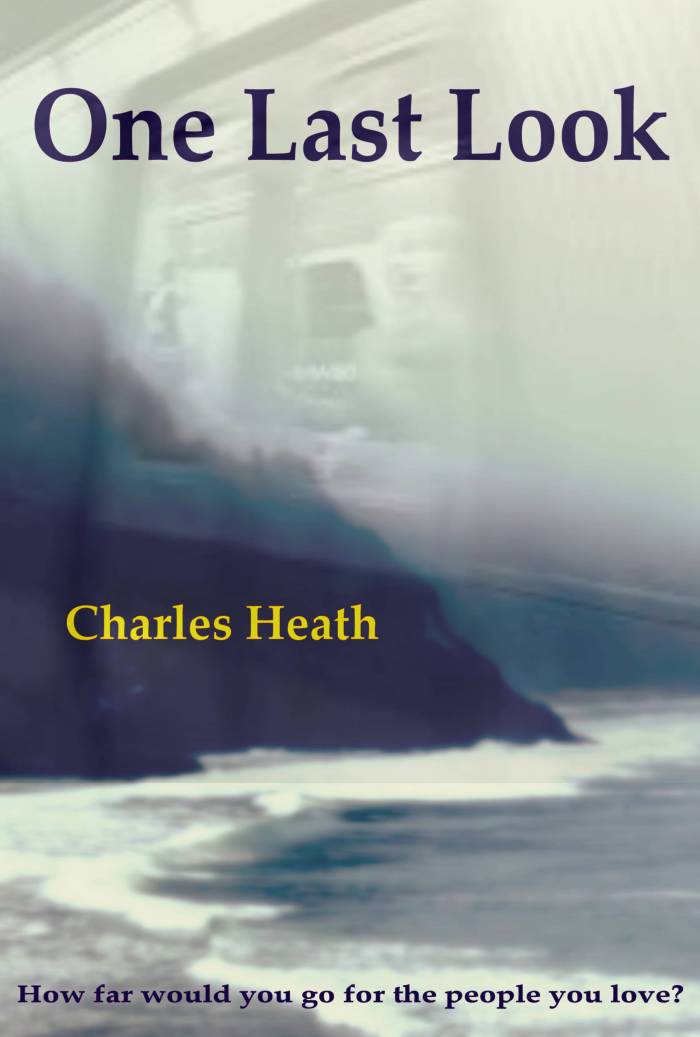
“One Last Look”, nothing is what it seems

A single event can have enormous consequences.

A single event driven by fate, after Ben told his wife Charlotte he would be late home one night, he left early, and by chance discovers his wife having dinner in their favourite restaurant with another man.

A single event where it could be said Ben was in the wrong place at the wrong time.

Who was this man?  Why was she having dinner with him?

A simple truth to explain the single event was all Ben required.  Instead, Charlotte told him a lie.

A single event that forces Ben to question everything he thought he knew about his wife, and the people who are around her.

After a near-death experience and forced retirement into a world he is unfamiliar with, Ben finds himself once again drawn back into that life of lies, violence, and intrigue.

From London to a small village in Tuscany, little by little Ben discovers who the woman he married is, and the real reason why fate had brought them together.

http://amzn.to/2CqUBcz

onelastlookcoverfinal2

Searching for locations: Hotels can be a mine of information for a story

Hotels can be one of the major letdowns of a holiday.

They can also be extensive fodder for writing material.  For the main stories I write, hotel stays feature prominently, and so each experience, no matter how insignificant, is another paragraph in my book of experiences.

So…

If you are going to use a travel agent to pick a hotel for you, make sure you check as much as you can before you see them, because no matter how it is described, seeing it, in reality, is always completely different than the pictures in a brochure and sometimes on the Internet.  It requires research and a good look at TripAdvisor.

Or word of mouth by someone you know and trust who have stayed there.

Take, for instance, staying in a five-star hotel, the usual stomping ground of the rich and famous.  It is always interesting to see how the less privileged fare.  Where hotel staff is supposed to treat each guest equally, it’s not always the case.  Certainly, if you’re flashing money around, the staff will be happy to take it, though you may not necessarily get what you’re expecting.

We were once lucky enough to be in the highest hotel loyalty level and this gave us a number of privileges; at times working in our favor, but even then not always.

Privilege can sometimes count for nothing.  It often depends on the humor of the front desk clerk, or the guest services manager, and woe betide you if you get the receptionist from hell.

Been there, done that, more than once.

Then there is the room.

There is such a wide variety of rooms available, even if the hotel site or brochure has representative pictures, the odds are you can still get a room that is nothing like you’re expecting or were promised.

Believe me, there are rooms with a view, overlooking pigeon coops or air-conditioning vents.  And if you’re lucky, at Niagara Falls, it might be that six inches of window space that allows a very limited view of the falls.

Still, why should I complain, you can see the Falls … can you not?

A bone of contention often can be the location of the hotel and sometimes parking facilities, not the least of which is the cost of Valet parking; given the extortion some hotels charge, it’s better to just forget a car.

It is nothing like the movies, you just do not drive up to the front entrance, get out, hand the keys to the concierge, and expect everything else to happen by magic.

It doesn’t.

One time we waited for over an hour for our luggage to be delivered, and that was after three phone calls to the concierge desk.

Sometimes you can be reasonably near transport, yes, if you could walk the distance (which feels like the length of a marathon) to the nearest bus or tram stop.

The problem is we both have trouble with knees and ankles and walking distances are difficult at the best of times, and for us, it is a long, long way when you can’t walk and that’s when the hotel starts to feel like a prison.  Taxis may be cheap but when you have to use them three or four times a day it all adds up.

Also, be wary when a hotel says it is close to public transport.  While that may be true in London, anywhere else and especially in Europe, you could find yourself in the middle of nowhere.

It’s when you discover your travel agent didn’t exactly lie but it is why that weekly rate was so cheap.  In the end, the sum of the taxi fares and the accommodation turns out to be dearer than if you stayed at the Savoy.

So, those front line experiences are fodder for the travel blogger, and people who are also known as road warriors, the true frequent flyers.

There is a very large gulf between five stars and three and sometimes three can be very generous.  And of course, l now have a list of hotels l would never stay in again, the names of which might surprise you.


The January update…

So, where am I in the greater scheme of things?

Still scribbling frantically.  January is usually the time of the year we go jetting off to somewhere exotic, or, rather, somewhere very cold because here it is usually 36 degrees centigrade plus 100 percent humidity, day after day after day.

Well, this is me, stuck in the endless heat, slowly melting away.

And writing.

I have had a few great ideas springing out of the void, while I’m trying very hard not to think about how hot it is, or how recalcitrant Chester can be when he is hot.  What I don’t get is that in winter he will sit on top of the fire where it is about 2000 degrees and yet in 34-degree heat, he complains.

But enough about the cat…

With one of my stories, back in WW2, I’ve finally got to the back story of the man on the run from the Reich, a rocket scientist seeking a better life.  He is heading for the castle in southern Italy, not knowing that there’s a bunch of Nazi’s waiting for him to send him back home.

Of course, there is a hero, but he’s with the resistance and doesn’t know who the high-value target is that he’s supposed to save.

Where it is now, the scientist is stuck at Brenner Pass in the forest freezing and waiting for the Germans to find him.  Or not.

It’s still a work in progress, but the last episode is here:  http://bit.ly/2R6Dgiu

On another front, there is the Treasure story, one that I’ve been meaning to write ever since I read Stevenson’s Treasure Island.  My characters are not quite as colorful, but…

Our intrepid searchers are now up to the part where they’re trying to work out which part of the Florida coastline matches their map, and that’s no mean feat.

Especially when there are others, two groups in fact, who are also trying to find it.

This will all play out over the next few episodes but for the latest:

http://bit.ly/2RiseIa

Yes, there are two other stories, but I’ll let you know about them later.


Conversations with my cat – 81

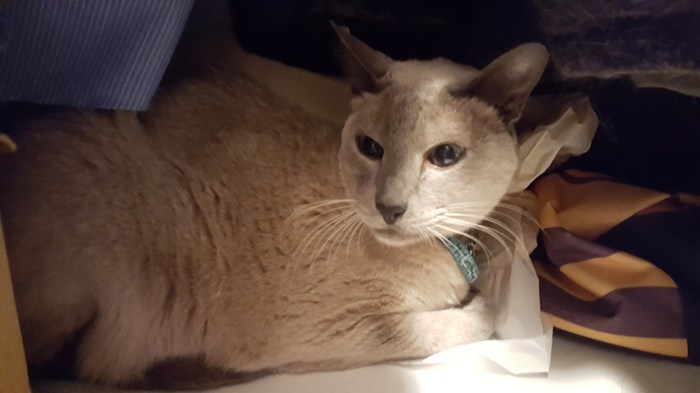
20160903_163902

This is Chester.  Today we’re looking at the tennis.

Well, I’m looking at the tennis, and he’s pontificating over the climate change crisis.

I’m not sure if he actually knows what climate change is all about because I seem to be missing the point.

Down here where fires are raging in various parts of the country, it seems that everyone wants to jump on the climate change bandwagon, looking for something or someone to blame.

Yes, the Prine Minister has copped his fair share, because it seems he doesn’t quite agree there is such a thing, but that seems to be the mantra of any conservative political party because at their heart is the promise to benefit industry rather than what’s best for the people.

This seems to be Chester’s view too but slightly amended to include the cats.

If only cats could vote!

That thought, of course, scares the living daylights out of me, because as you know we belong to cats, not the other way around.

Would we all become slaves?

“Aren’t you already?  It seems to me nothing will change.”

So how did this conversation veer off the path of tennis, to climate change, to voting, to slaves?

This is like being at a party with too much alcohol flowing.

Come to think of it, there is a half bottle of scotch missing, and Chester has been acting strange lately…


In a word: Bore, or is that boar

I’ve had the ubiquitous pleasure of being called one, and that is, a bore.

Probably because I spend so much time telling people about the joys and woes of being a writer.

You can be a tedious bore, cooking could be a bore, and then you could bore someone to death, and then you will bore the responsibility of, yes, doing just that.

Would it be murder or manslaughter?

But, of course, there are other meanings of the word, such as, on my farm I have a bore.

No, we’re not talking about the farmhand, but where artesian water is brought to the surface, in what would otherwise be very arid land.

Or, could be the size of a drill hole, and in a specific instance the measurement of the circular space that piston goes up and down.  And if you increase the size of the bore, the more powerful the engine.

Or it could refer to the size of a gun barrel, for all of you who are crime fiction writers.

But, let’s not after all of that, confuse it with another interpretation of the word, boar, which is basically a male pig.

It could also just as easily describe certain men.

Then there is another interpretation, boor, which is an extremely rude person, or a peasant, a country bumpkin or a yokel.

I’ve only seen the latter in old American movies.

There is one more, rather obscure interpretation, and that is boer, which is a Dutch South African, who at the turn of the last century found themselves embroiled in a war with the British.

Short story writing, don’t try this at home! (3)

This is not meant to be a treatise on short story writing.  Far be it for me to advise anyone on the subject.  I prefer to say how it is that I do it so you can learn all of the pitfalls in one go.

My main characters are quite often me.

Not the real me, because I’m boring.  No, those characters are what I would like to be, that imaginary superhuman that can do everything.

Until, of course, reality sets in, and the bullets start flying.  In reality, we should be looking to run or at the very least get under cover, not walk into a hail of bullets, with a huge grin, staring down the enemy.

Hang on, that never happens except in superman comics.

What’s really needed here is a little vulnerability, a little humility and a lot of understanding, qualities at times I don’t have.

So, in order to create a more believable character, I start dragging traits from others I’ve met, or know, or really don’t want to know.  In a writer’s environment, there are a plethora of people out there that you can draw on for inspiration.

Like a piano player in a restaurant.  It was not so much the playing was bad, it was the way he managed to draw people into his orbit and keep them there.  The man has charisma, but sadly no talent for the instrument.

Like an aunt I met only twice in a lifetime, and who left a lasting impression.  Severe, angry looking, speaking a language I didn’t understand, even though it was English.  It was where I learned we came from England, and she was the closest thing I came to as an example of nineteenth-century prim and proper.  And, no, she didn’t have a sense of humour or time for silly little boys.

Like one of my bosses, a man of indeterminate age, but it had to be over 100, or so it seemed to my sixteen-year-old brain, who spoke and dressed impeccably, and yes, he did once say that I would be the death of him.

I can only hope I wasn’t.

Like a Captain of a ship I once met, a man who didn’t seem to have time for the minions, and a man who reeked authority and respect.  I’ve always wanted to be like him, but unfortunately, it was not in the genes.

Those are only a few, there are thousands of others over the years, a built-in library, if you will, of characters waiting to be taken off the shelf and used where necessary or appropriate.  We all have one of these banks.

You just have to know when to use them.

What happens after the action-packed start – Part 35

Our hero knows he’s in serious trouble.

The problem is, there are familiar faces and a question of who is a friend and who is foe made all the more difficult because of the enemy, if it was the enemy, simply because it didn’t look or sound or act like the enemy.

Now, it appears, his problems stem from another operation he participated in, and because of it, he has now been roped into what might be called a suicide mission.


04:00 in Africa was an interesting time of the morning, especially after a few hours of intense rain during the night.  I could see what the Colonel meant if it had been raining because outside the barracks it was very wet.

Whilst the others appeared to get some sleep, in a much better environment than the back of an aircraft, I lay awake, at first waiting for the sound of the aircraft leaving, and then listening to the rain that started an hour or so later, followed by the sounds that came afterward.  It was never silent, and there was always that suspicion of being attacked when you’re at your most vulnerable.  I had a weapon ready, just in case.

Outside the cloud cover had gone and it looked like it would be a fine day.

When I did the headcount, I noticed Mobley was missing as agreed, and by the time we had assembled, the cars had arrived.  We would be driving ourselves in a convoy behind Monroe and the Colonel, who was no longer dressed in army fatigues, along with Jacobi and one of his guards.

For the trip, we had been supplied with the western notion of jungle wear, safari suits, that identified us not only garrulous visitors, but typical tourists hardly prepared for what was to come.  It made a good cover for a group of ‘fools’ making a documentary.  

All we had to do was get to the location for the exchange of the hostages reportedly between Aba, a town in the Democratic Republic of the Congo, and somewhere on the outskirts of the Park.  It was going to be an easy drive from Uganda to Aba, then the situation might change.

I was going to be in the rear vehicle, with Leslie Davies.  The more I thought about her being assigned to this mission, it seemed she was here solely for her ability to fly anything with wings.  It was the part that was missed on her resume, perhaps for a reason, but whatever that reason was, it would become clear eventually.


We left at 04:05.  Monroe had a slight problem starting her car.

Other than exchanging a few words before getting on the plane and then getting off the plane, Davies and I had not spoken.  After half an hour of driving in silence, I decided to break the ice.

“What did you do to get nominated for this mission?”

A glance sideways gave me no indication of her thoughts, or what look was hidden behind the aviator sunglasses.  I hadn’t seen her smile, or talk to any of the other team members other than a few brief words with Monroe, likely because she was the only other female.

Even then, I didn’t get the impression they were going to be best friends.

“Best you don’t know.”

Her reply came about three minutes after I’d asked, and at a point where I assumed she was going to ignore me.

“Let’s say I’m curious.”

“Curiosity killed the cat.”

“I’m not a cat.”

Another two minutes of silence, then, “Disobeyed a direct order.”

Not as bad as killing your immediate superior because you didn’t like him.  And I could sympathize.  Some orders were utterly ridiculous.

“Not a bad thing.”

“Not what the court-martial thought.”

I noticed she didn’t use sir.  I could live with that.

“You volunteer?”

“In a manner of speaking.  You?”

She raised her glasses slightly and gave me a sideways glance.

“In a manner of speaking.  Been here before, not that it was for very long, and in a different part of the country, but the powers that be deemed my experience adequate for the mission.”

“I take it the mission isn’t to take pictures of animals?”

It might.  Just not the animals you’re expecting.”


It was our lucky day.  At the Vurra customs post we were met by a Ugandan official who had been forewarned of our arrival, and whom I expect was well compensated for his work, and after going through a half-hour of paperwork, we were taken to the Congo counterpart with whom Jacobi weaved his magic.

I say lucky because the border crossing was often closed, either because of the weather, the road conditions, or the fact neither country was talking to the other, though it was more to do with the Congo villagers and their dispute over lands that stretched into Uganda.

We arrived with a number of trucks, to join a long line waiting to cross, and included were several United Nations vehicles.

Everyone seemed to take the delays and administrative diligence in their stride.

We were moving again, behind several tracks, almost an hour and a half after arriving.  All of the crates of equipment had been opened and inspected, as had our packs, and the raft of documents Monroe had been supplied.  She had a satellite phone at the ready in case we needed to make any calls, though I was not sure what Bamfield would have been able to do.

But, after a few tense moments, everyone lost interest in the documentary crew and moved onto the next vehicle.

Jacobi said it was the easiest crossing he’d made.

About a half-hour, after we had driven on our way, then my radio crackled, and Mobley reported in.  He had just crossed over and was behind us, and a number of trucks.

I got a strange look from Davies.

“Insurance,” was all I said.  “Which no one else needs to know about.”

The road was not exactly in the best of condition in places and having four-wheel drives was a help.  The lie of the land was quite flat, and we passed a lot of small villages and curious looks from the villagers.  Some parts of the road were quite bad, and we had to drive very slowly, especially where it was damp, but for the most part, it was reasonably dry and the roads were navigable.

Other times, Jacobi said, after the rains, those same roads were impossible to drive on and would often see villagers out trying to help the truck drivers keep moving.

I had expected to run into a number of soldiers, but for the first few hours after leaving the border, there wasn’t a lot to see other than flat land, villages, and people on the side of the road, along with the occasional vehicle, belying the fact it was a major road between the border and a town called Aba, a distance that was measured at about 170 kilometers.

Anywhere else in the world it would have taken about an hour and a half, but here, it was early afternoon and finally on a stretch of reasonable road into Aba.  A refuel and we’d be on our way quickly.  The first of the kidnappers appointed times was 16:00 hours and I was hoping the roads would get us there by that time.


© Charles Heath 2019-2020