Writing about writing a book – Day 28

So after that rather undramatic ‘off with the fairies’ moment, it’s time to come back to earth.  Holiday or not, there’s always something that can go wrong.

Even when you’ve been told to take some vacation days, and reluctantly stayed home.  The notion that vacation meant going away somewhere doesn’t enter Bill’s mind.

Perhaps he’s like a lot of workaholics, using their job as an excuse to forget about life outside work.

Maybe he was hoping something would go wrong.  Maybe he had considered manufacturing a problem so that he would have to go back.

Maybe not, but that was the sort of employee he was, not one that could willingly take a day away, just in case.

Like now.


I’d almost managed to doze off again when the phone rang.

I jumped to its equally shrill sound cutting through the silence.  It had to be a wrong number because no one at work would call me, and I didn’t have many friends, so I let it ring out.  As far as I could remember, it was only the third time it had rung since I’d moved in, four years ago.

Blissful silence.  I looked at the bedside clock.  7 am.  Who called anyone at that hour?

It rang again.

Ignore it, I thought.  If it was anyone, it would be someone from the office.  I’d told them all not to call me, not unless the building was burning down and they were all trapped in it.

And even then, I’d have to think about it.

Burying my head under the pillow didn’t shut out the insistent ringing, compelling me to answer.  Almost reluctantly I rolled back, pulled the telephone out from under the bed, and lifted the receiver to my ear.

“Bill?”

It was Carl Benton, my immediate superior; an insipid, loathsome, irritating little man, the last person I would want to speak to.  He’d insisted I take this leave, that the office could survive without me, adding in his most condescending manner that I needed the break.

I slammed the receiver down in anger.  It was a forlorn gesture.  Seconds later, it rang again.

“I seem to remember you were the one to tell me to go on holiday, that I needed a holiday.  I’m off the roster.  It can’t be that important.  Call someone else.”  I wasn’t going to give him the opportunity to speak.  Not this morning.  I was not in the mood to listen to that squeaky, falsetto voice of his, one that always turned into a whine when he didn’t get his way.

And hung up again.

Not that it would do any good.  I knew that even if I was in Tibet, he would still call.  Then I realized it was too early for him to be in the office, and if he was, he would have been dragged out of bed and put in a position where if he didn’t produce results, they might realize just how incompetent he was.

At last, my holiday had some meaning and smiled to myself.  I’d make the bastard sweat.

He left it a few minutes before he rang again.  And I let it ring out.  I could see the expression on his face, bewilderment, changing slowly into suffused anger.  How dare I ignore him!

Another five minutes, then the phone began its shrill insistence again.  Before it rang again, I’d moved it from the floor to the bed.  I counted the rings, to ten, and then picked up the receiver.

“Bill?  Don’t hang up.”  Almost pleading.

“Why?  You said I should go, away from work, away from the phones, away to recharge my batteries, I believe you said.”

“That was Friday.  This is Monday. You’re needed.  Richardson has been found shot dead by his desk.  All hell has broken loose!”  Benton rarely used adjectives, so I assumed when he said all hell had broken loose, it meant something had happened he couldn’t fix.  His flowery language and telegram style had momentarily distracted my attention from Richardson’s fate.

Harold Richardson was an accountant, rather stuffy, but good at his job.  I’d spoken to him probably twice in as many years, and he didn’t strike me as the sort who would kill himself.  So why did I think that?  Benton had only said he was shot.

Benton’s voice went up an octave, a sure sign he was going into meltdown.  “It’s a circus down here.  Jennifer is missing, Giles is not in yet, the network is down, and that bunch of nincompoops you call support staff are running around the office like headless chooks.”

It all came out in a nonstop sentence, followed by a gasp for air.  It gave me time to sift the facts.  Jennifer, my sometime assistant, and responsible for data entry and accounts maintenance, was not there, which in itself was unusual, because she kept longer hours than me, Peter Giles, my youthful assistant, just out of university and still being beaten into shape was not in, and that was usual, so it could only mean one thing.

The network was down.


© Charles Heath 2016-2020


Writing about writing a book – Day 28

So after that rather undramatic ‘off with the fairies’ moment, it’s time to come back to earth.  Holiday or not, there’s always something that can go wrong.

Even when you’ve been told to take some vacation days, and reluctantly stayed home.  The notion that vacation meant going away somewhere doesn’t enter Bill’s mind.

Perhaps he’s like a lot of workaholics, using their job as an excuse to forget about life outside work.

Maybe he was hoping something would go wrong.  Maybe he had considered manufacturing a problem so that he would have to go back.

Maybe not, but that was the sort of employee he was, not one that could willingly take a day away, just in case.

Like now.


I’d almost managed to doze off again when the phone rang.

I jumped to its equally shrill sound cutting through the silence.  It had to be a wrong number because no one at work would call me, and I didn’t have many friends, so I let it ring out.  As far as I could remember, it was only the third time it had rung since I’d moved in, four years ago.

Blissful silence.  I looked at the bedside clock.  7 am.  Who called anyone at that hour?

It rang again.

Ignore it, I thought.  If it was anyone, it would be someone from the office.  I’d told them all not to call me, not unless the building was burning down and they were all trapped in it.

And even then, I’d have to think about it.

Burying my head under the pillow didn’t shut out the insistent ringing, compelling me to answer.  Almost reluctantly I rolled back, pulled the telephone out from under the bed, and lifted the receiver to my ear.

“Bill?”

It was Carl Benton, my immediate superior; an insipid, loathsome, irritating little man, the last person I would want to speak to.  He’d insisted I take this leave, that the office could survive without me, adding in his most condescending manner that I needed the break.

I slammed the receiver down in anger.  It was a forlorn gesture.  Seconds later, it rang again.

“I seem to remember you were the one to tell me to go on holiday, that I needed a holiday.  I’m off the roster.  It can’t be that important.  Call someone else.”  I wasn’t going to give him the opportunity to speak.  Not this morning.  I was not in the mood to listen to that squeaky, falsetto voice of his, one that always turned into a whine when he didn’t get his way.

And hung up again.

Not that it would do any good.  I knew that even if I was in Tibet, he would still call.  Then I realized it was too early for him to be in the office, and if he was, he would have been dragged out of bed and put in a position where if he didn’t produce results, they might realize just how incompetent he was.

At last, my holiday had some meaning and smiled to myself.  I’d make the bastard sweat.

He left it a few minutes before he rang again.  And I let it ring out.  I could see the expression on his face, bewilderment, changing slowly into suffused anger.  How dare I ignore him!

Another five minutes, then the phone began its shrill insistence again.  Before it rang again, I’d moved it from the floor to the bed.  I counted the rings, to ten, and then picked up the receiver.

“Bill?  Don’t hang up.”  Almost pleading.

“Why?  You said I should go, away from work, away from the phones, away to recharge my batteries, I believe you said.”

“That was Friday.  This is Monday. You’re needed.  Richardson has been found shot dead by his desk.  All hell has broken loose!”  Benton rarely used adjectives, so I assumed when he said all hell had broken loose, it meant something had happened he couldn’t fix.  His flowery language and telegram style had momentarily distracted my attention from Richardson’s fate.

Harold Richardson was an accountant, rather stuffy, but good at his job.  I’d spoken to him probably twice in as many years, and he didn’t strike me as the sort who would kill himself.  So why did I think that?  Benton had only said he was shot.

Benton’s voice went up an octave, a sure sign he was going into meltdown.  “It’s a circus down here.  Jennifer is missing, Giles is not in yet, the network is down, and that bunch of nincompoops you call support staff are running around the office like headless chooks.”

It all came out in a nonstop sentence, followed by a gasp for air.  It gave me time to sift the facts.  Jennifer, my sometime assistant, and responsible for data entry and accounts maintenance, was not there, which in itself was unusual, because she kept longer hours than me, Peter Giles, my youthful assistant, just out of university and still being beaten into shape was not in, and that was usual, so it could only mean one thing.

The network was down.


© Charles Heath 2016-2020


Writing about writing a book – Day 27

Well, it’s been a monumental process to get to the point where I think I can start writing Chapter One.

This, of course, might not be the first chapter, it might finish up somewhere else.

If there was a plan, then this would be chapter one.  In fact, right now, I’m going to sit down and do a plan with as much as I know about where the book is heading.

One, about Bill and his introduction to the reader

Two, a phone call to interrupt the dream

Three, having to go into work – there’s a disaster going on, and he’s the only one who can fix it.

Well, not necessarily others, but this is the nineteen seventies/eighties, and women were still not looked upon or considered as being able to hold the same position as Bill – we’ve certainly come a long way in forty years.

And that, of course, is anther stream in the book, proving that woman, and one in particular is clever and given the recognition she deserves.

I’ve also got to remember that there is no internet, and there are no mobile phones and a lot of other stuff that is now regarded as commonplace and taken for granted.

We had telephone boxes, telephones on desks that connected to a switchboard, dumb terminals connected to mainframes, modems that were bulky and very very slow, and comms ran very differently to those today, and networking was a variety of technologies that mostly don’t exist anymore, like ethernet and token ring, and software like 3Com and Novell.

I know I’m going to forget sometimes because it’s going to be hard not to have the MC pull out his cellphone and call on the spot.

Anyway, here’s the first attempt…


A cool breeze blew briskly across meadows of tall grass, giving the impression of the ocean in a storm.  High above, clouds scudded across the sky, occasionally allowing the sun to shine through to bathe the ground in the sunshine, intensifying the richness of the greens and browns.

It was spring.  Trees were displaying new growth, and flowers were starting to show the promise of summery delight.  An occasional light shower of rain added to the delightful aromas, particularly where the grass had recently been mowed.

I was there, too, with my grandmother, the woman who had, for the most part, brought me up at her country residence.  But, as I got older, the dream changed and sometimes there were storm clouds on the horizon, or I was caught in the rain, alone and frightened, or lost in the woods in the dark.

There were other visions like these from my childhood, now a million years away somewhere in a distant past that was hard to remember or say where and when they belonged.  It was a pity some were now based on images stolen from the start of a movie seen on TV late at night as I was trying to get to sleep.  Or that the psychiatrist had said there was some trauma from my early childhood, trying to work its way out.

Like every other morning, these images came to me as I was hovering somewhere between conscious and unconscious, just before the alarm went off.  Then it did, filling the room with a shrill noise that would have woken the dead.

I cursed, and then dragged myself over to the other side of the bed where I’d put the alarm clock, and hit it, killing the shrill sound.  I’d put it there so I would have to wake up to turn it off.  And, worse, I’d forgotten to turn it off the night before because it was, technically, the first day of my holiday.

Not that I really wanted one because since Ellen left, my life consisted of work, work, and more work.  It kept my mind off being alone, and in an empty apartment except for the books, a bed, a table, and two chairs, a desk, and a well-worn lounge chair.  I’d been there for years and still hadn’t bought any new furniture or anything else for that matter.

And the last holiday I’d gone on had been organized by Ellen fifteen years ago in Italy after our two daughters had finished school and graduated almost top of their class.  We’d been happier then, but happiness was fleeting for me, and soon after the rot had set in, and it was the beginning of the end.

I remembered it only too clearly, coming home, opening a letter addressed to her, and finding proof of what I think I’d known all along.  She was having an affair, had been for quite some time.

It should not have been a surprise given what I had put her through over the years, since my discharge from the Army, and the nightmares active service had fueled, but it was and sent me spiraling to a new low.

But that was five years ago.  I came out of the fog a year after that.  Ellen was gone, the girls came to see me from time to time, and all I had left were memories.

I rolled over and tried to go back to sleep.  I was on holiday.  No work, no pressure, nothing.  I could go back to my grandmother’s house and visit.  I had been promising myself I’d do that soon, even if it was now a country hotel.  From the advertising it had not changed one bit, the house and grounds intact.

Or I could throw a dart at a map and get on the next plane there, though knowing my ability with a dart, it would be in the middle of the ocean.

I could do almost anything I wanted.


It’s not much, just a taste.  But it’s enough for now.  I’ve made a start.  Now, all I have to do is come up with the next 100,000 words or so.


© Charles Heath 2016-2020

Writing about writing a book – Day 26

On the surface, the relationship between Bill and Barry is an odd one.  I’ve thought about it, and at the moment, there’s some aspects that need to be written to provide background for what follows later.

I think I would like to make Barry one of those people who were built for soldiering, and not for civilian life, and it has to be said, he is a bit of a sloth once he becomes a civilian.

And, yet, under all of that, he’d be the first one in line to help his friends.

I just have to strike that balance so that I don’t make him too unsociable.

So, a little more about them, and Barry in particular.

A groan emanated from the table, and Barry moved his head slightly.

I shifted the drink in front of him, and then a hand went out and moved it back.  He lifted his head to look at me, and then lowered it again.

“I thought it was you.” A croak.

“Mate.  Not looking too good this afternoon?”

He groaned again, and then struggled to sit up, trying to smooth his hair back into place, and failing.  He rubbed his face and realized he had a week’s stubble, giving him the look of a deranged sanatorium inmate.

“Someone’s gotta try and get me off the gut rot Ogilvy calls booze.”  He nodded in Ogilvy’s direction, but typically, Ogilvy ignored him.

“You don’t have to drink it.”

“That’s what I keep telling myself.  Only it doesn’t work.”

“Perhaps you should try harder.”

He looked me over, looking for the changes since the last time he saw me, about four months ago.

“Where you been?”

“Hospital.”

“Not surprising.  Work too hard, no fun.”  He looked at the drink on the table, took it in his hand, then holding it up to the light.  Perhaps he thought it was the magic elixir that would fix him.

“Someone shot at me.  I nearly didn’t make it.  One thing it did, though.  Brought back all those memories I’d shut away.  Now I know why I did.”

“Shot at you?  Why?”

“I don’t know.  You should see the other guy.  He’s dead.”

“What other guy?”  He put the drink down, untouched.  He was beginning to look a little more alert.

I had not expected it would make much of a difference telling him about my problems, but it had.

“Take it from the top.”  Then, over towards Ogilvy, “Bring me some coffee.  Black.”

I started, a little hesitantly, not quite sure how much or little I should say.

Ogilvy came over with coffee for him and my orange juice.  He glared at me, then Barry.

“Your account is a little overdue,” Ogilvy said, standing over him.

“It’ll get paid.”

By little, I assumed it was more than Ogilvy was willing to stand.  He was kind, but kindness had its limits.

I pulled out two hundred dollar notes and gave them to him.  “Will this settle it?”

“I don’t want your money.  You should throw him in a detox center.  That would make more sense.”

“It’s only money.  If he wants to drink himself to death, who am I to argue?”

Ogilvy shrugged and took the money.  As he turned to leave, Barry said, “And take the scotch back.  I’ve had enough.”

He looked at Barry with surprise, no, I think it was more shock, but did as he was asked.  Out of the corner of my eye, I saw Ogilvy drink the scotch himself, and another for good measure.

I picked up the story where Aitchison and I were shot in the street and related what I knew from there.  He asked only two questions, who was Jennifer, and what had happened to Ellen.  He’d absorbed the rest, and judging by his reaction, probably not understood any of it.

“You have a friend?  Does Ellen know about this friend?”

“Ellen and I are divorced.  Don’t you remember me telling you several years ago?”

“Has it been that long?”

He’d been like this off and on over the last twenty years.  It had been getting worse in the last few years, his health failing, and, at times, his memory.  I watched him pick up the coffee cup, his hand shaking so badly, he needed to hold it was two.  It took a minute or so before he could drink it, and then, his face was of a child, taking medicine.

He looked over towards the bar.  “More coffee.”  He set the cup down carefully, and then looked back at me.

“What can I do?”

“I need someone to watch my back.  I have the odd feeling I’ve got myself into a situation.  The people I work for, well, I can’t put my finger on it, but they’re probably doing something they shouldn’t.  I have some evidence, and I think they know I’ve got it, and they’ve attacked me, like I said, at least once since I got out of the hospital.”

“You want me to get this Kowalski character and beat it out of him?

I smiled at the thought.  I had no doubt if I asked him, he would do exactly that.

“Not yet.  We have to get a better case against them first.”

“So, just watch your back?”

“For the moment.  And for Jennifer.”

“But you are not sure about her.  I get the impression you think she might be involved in more ways than one.”

“Did I give that impression?”  I had no idea he would pick up on my doubts.  But he was right.  I did.

“Yes.  But it doesn’t matter.  If she is we’ll find out soon enough.”

In the space of five minutes and the arrival of the second cup of coffee, to be followed by a third, his whole manner had changed.  There was still the pained look from the hangover, but the eyes were brighter, and he had a purpose.

“Then you’re in?”

“Might as well.  It’ll be better than the last bodyguard gig I had.  Had to thump the little turd.  Smart arse needed it.”

To be honest, I didn’t expect Barry to take up the challenge.  Perhaps I’d become used to seeing him down and out, and not expecting anything else.  It was the look in his eyes that changed my opinion.  The same look I’d seen all those years ago, in the jungle.

It was another good sign when he asked for an hour to clean up so he could become inconspicuous.  I told him he could take over my place, gave him the key, gave him some money, and then told him where he could find me in an hour.

It was exactly what I needed.  The Barry of old.

© Charles Heath 2016-2021

Let your imagination run free

20200217_130345

Whilst in reality these steps go down to a very narrow space of the beach, and scattered rocks in the shallow water, so much more could be inspired by this photograph.

20200217_130205

Further out that day, divers were out exploring about 100 yards offshore.

But, to me, it what you don’t see that gives it its fascination.

We could be anywhere along a 1,000-mile shoreline, one side a small village lazily gets through the day, on the other, a deserted and overgrown picnic spot that no one ever comes to anymore since the bypass road was built.

But it is not any of those.  it’s in Mornington, Victoria, Australia, the pier that is not far from a small park, and that day, very, very busy.

20200217_130235

It simply goes to show that sometimes a photograph can provide enough information to inspire a story.

Writing about writing a book – Day 25

We’ve been given the introduction to who Barry McDougall is, or the man otherwise known as ‘Brainless’, and after three days of trying to get it straight, this is the first rough draft of his start in the story.

Barry, whose daring selfless deeds earned him the nickname Brainless because that was the only way to describe the motivation behind them, was one of the regular soldiers, and, for a long time, had been my only true friend.  His was a reputation both friends and foes alike considered awesome.  He’d been in Vietnam, and later just turned up at Davenport’s camp, reporting for duty.

Davenport was more surprised than I was at his arrival, but obviously, after checking his credentials, he was impressed because he let him stay.  And it would be true to say, if he had not, I would not be here now.

So Barry was just the sort of person I needed to help me.

That was the good news.

The bad news was Barry, at the best of times, either on one of his ‘benders’ using drugs or alcohol, whatever was easier to get at the time, lost to everyone, or locked up in a mental institution, having admitted himself.  He had no interest in participating in life, hadn’t worked in years, and often said, in moments when he was at his lowest, that he did not care if he lived or died.  It had not always been that way, but his demons had all but taken him over, and despite the help, I tried to give him, nothing could shake him out of this lethargy.  He said once he envied me that I could not remember the dark days, and, now those memories had returned, I knew what he meant.

For a long time, I could not understand why he didn’t try harder to help himself, and I guess he humored me by accepting the jobs I’d found him, and the help I offered.  I owed him a great deal, but that was probably the one honorable thing about him, he never expected, nor wanted, anything in return.

He tried to make a go of being a police officer and lasted several years before he resigned over an incident that didn’t reach the papers.  There was, he said, no place for heroics in modern society.  I hadn’t got to the bottom of it, but I heard he shot some thieves at a time when the police were trying to promote a pacifist image.

He tried a few other occupations with an equal lack of success, so now he survived on whatever money I gave him.  He lived on the street, and when he was not there, I knew he could be found in a bar, in one of the more seedier parts of the city, a ubiquitous underground bar called Jackson’s, named after a man who had a salubrious reputation that hovered between load shark and saint, and who was reputed to be buried under the storeroom floor.  The present owner, or what I assumed to be the owner, was a large, gruff, ex-prizefighter, who had the proverbial heart of gold, most of the time, and who took my money and looked after Barry without making it look like he was.

I’d called the bartender in advance, and he said he was in his usual spot, and that it was at the start of the next cycle, having just discharged himself from the hospital after a bout of pneumonia.  It was, he said, getting worse, and taking longer to recover.

It was probably only a matter of time before it took him, so perhaps this time I would have to try harder to convince him to give up his nomadic lifestyle.

When I walked in, the aroma of spilled beer, stale sweat, and vomit, mingled with the industrial-strength carbolic cleaner almost took my breath away.  In the corner, two construction workers were sitting, quietly smoking and drinking large glasses of beer.  In the other, Barry was being held up by the table, an untouched double scotch sitting in front of him.  Sitting at the bar was a woman of indeterminate age, badly made up, and thin to the point of emaciation.  I was not sure what she was drinking, or what it was she was smoking, but I could smell it from the front doorway.

The bartender, Ogilvy, no first name given, was pretending to polish glasses, standing at the end of the bar, looking at the television, playing some daytime soap.  He didn’t look over when I came in, but I knew he didn’t miss anything.  I saw him flick a glance at Barry, and then shake his head.  I think he cared as much about Barry as I did, but could recognize the sadness within him.  As much as Ogilvy said, which wasn’t much, he too had seen service in Vietnam, and it had affected him too.

I ordered an orange juice, caught the glances from the construction workers, and a steely look from the woman then went over to Barry’s table and sat down.  Despite the loud scraping noise when I moved the chair, or the creaking as I sat in it, Barry didn’t move.

Whilst the bar had that seedy aroma, Barry was showing the signs of having spent time on the street.  It was one of the disadvantages of having no permanent residence and though there was a shower at the bar which Ogilvy let Barry use from time to time, he obviously hadn’t for a few days.

Getting all of this background in shape is hard work, and having toiled long and hard, tomorrow I’ll have a go at getting Barry back.

© Charles Heath 2016-2021

Searching for locations: Driving in ice and snow, Canada

This morning started with a visit to the car rental place in Vancouver.  It reinforced the notion that you can be given the address and still not find the place.  It happened in Washington where it was hiding in the back of the main railway station, and it happened again in Vancouver when it was hidden inside a hotel.

We simply walked straight past it.  Pity there wasn’t a sign to let people know.

However…

We went in expecting a Grand Jeep Cherokee and walked out with a Ford Flex, suitable for three people and four large suitcases.  It actually seats 7, but forget the baggage, you’d be lucky to get two large suitcases in that configuration.

It is more than adequate for our requirements.

Things to note, it was delivered with just over a quarter of a tank of gas, and it had only done about 11,000 km, so it’s relatively new.  It’s reasonably spacious, and when the extra seats are folded down, there is plenty of baggage space.

So far, so good.

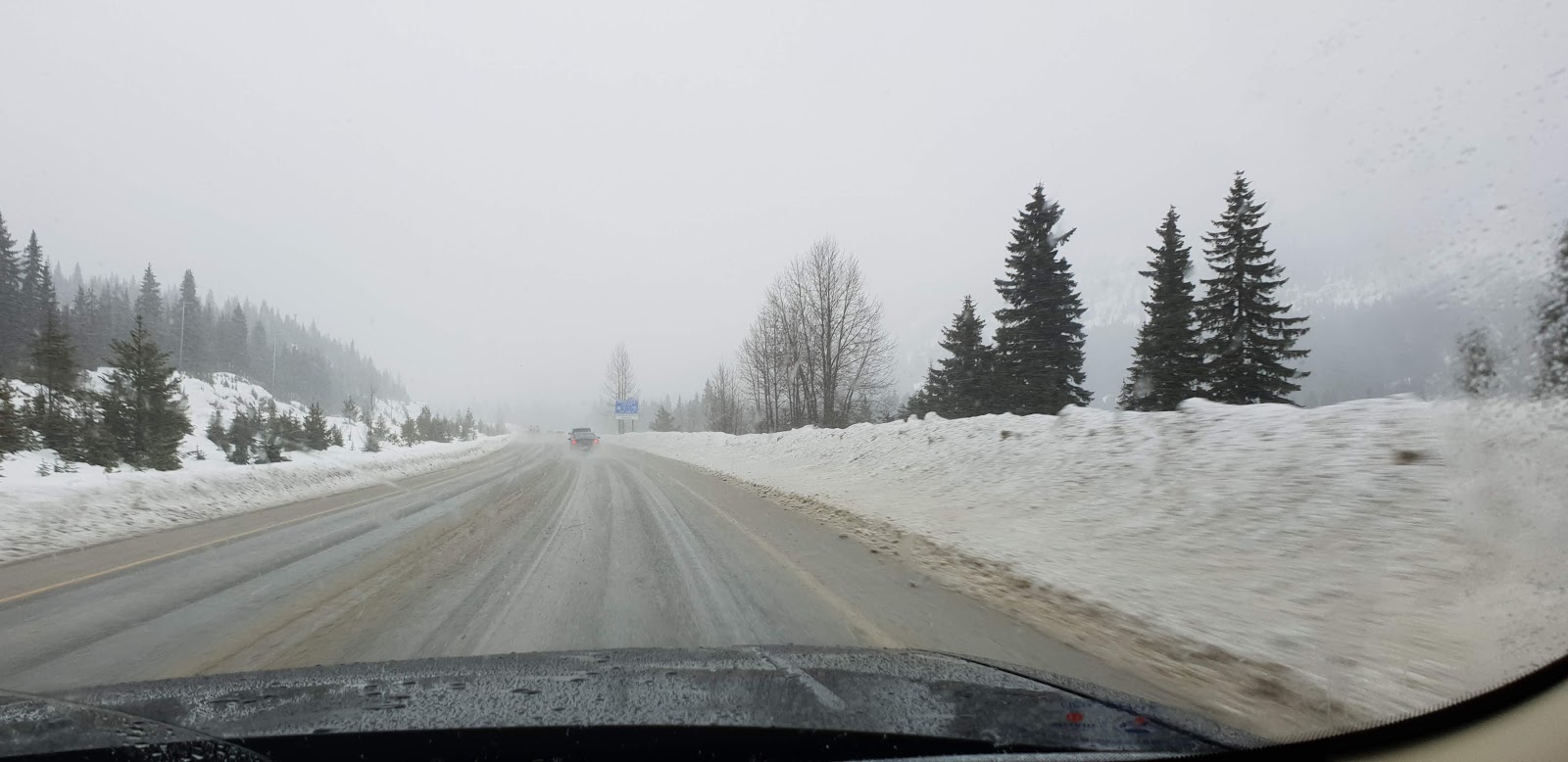
We finally leave the hotel at about half-past ten, and it is raining.  It is a simple task to get on Highway 1, the TransCanada Highway, initially, and then onto Highway 5, the Coquihalla Highway for the trip to Kamloops.

It rains all the way to the top of the mountain, progress hampered from time to time by water sprays from both vehicles and trucks.  The rain is relentless.  At the top of the mountain, the rain turns into snow and the road surface to slush.  It’s 0 degrees, but being the afternoon, I was not expecting it to turn to ice very quickly.

On the other side of the mountain, closer to Kamloops, there was sleet, then rain, then nothing, the last 100kms or so, in reasonably dry conditions.

Outside Kamloops, and in the town itself, there was evidence of snow recently cleared, and slushy roads.  Cars in various places were covered in snow, indicating the most recent falls had been the night before.

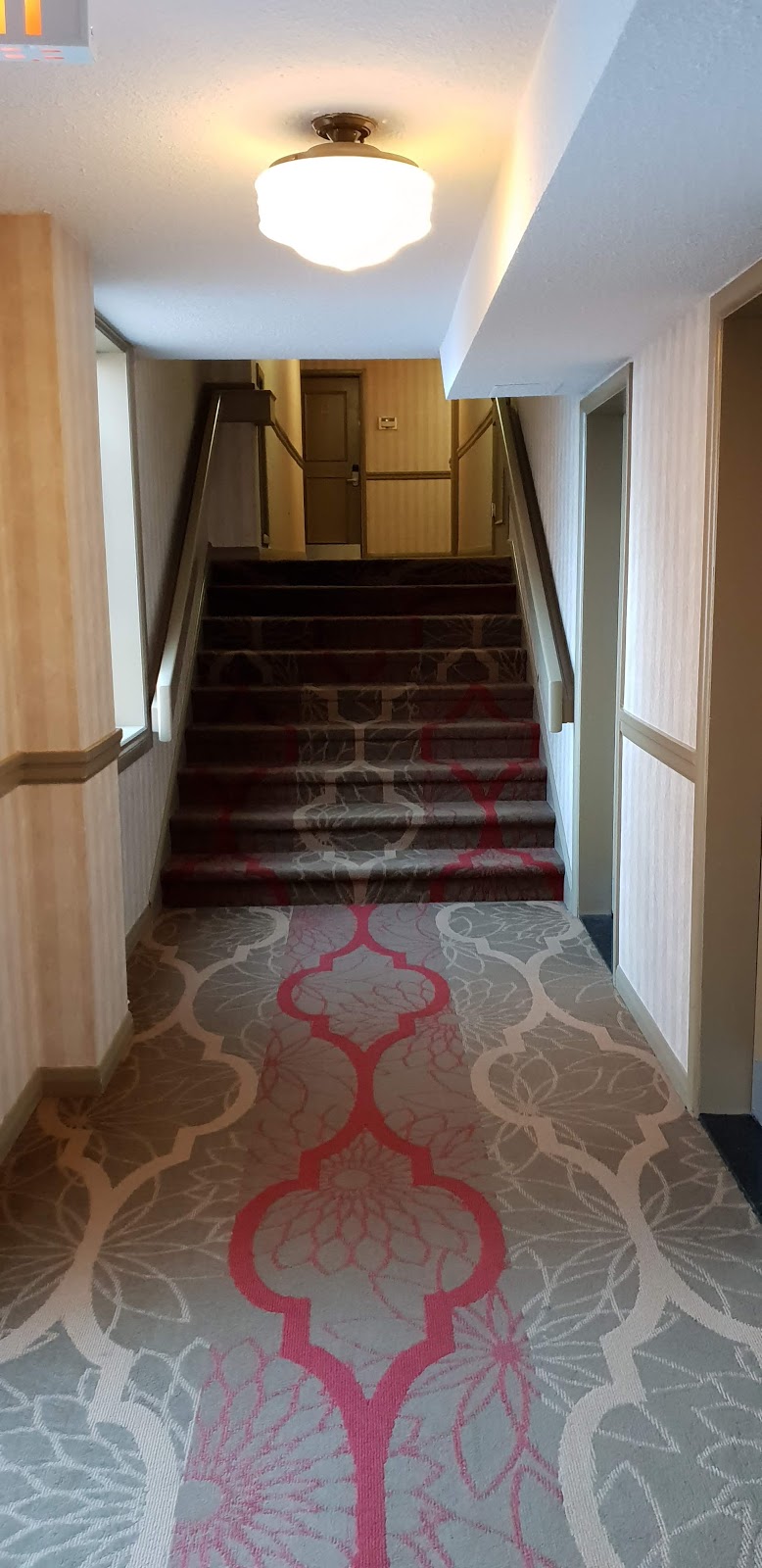
We’re staying at the Park Hotel, a heritage building, apparently built in the later 1920s.  In the style of the time, it is a little like a rabbit warren with passages turning off in a number of directions, and showing it is spread across a number of different buildings.

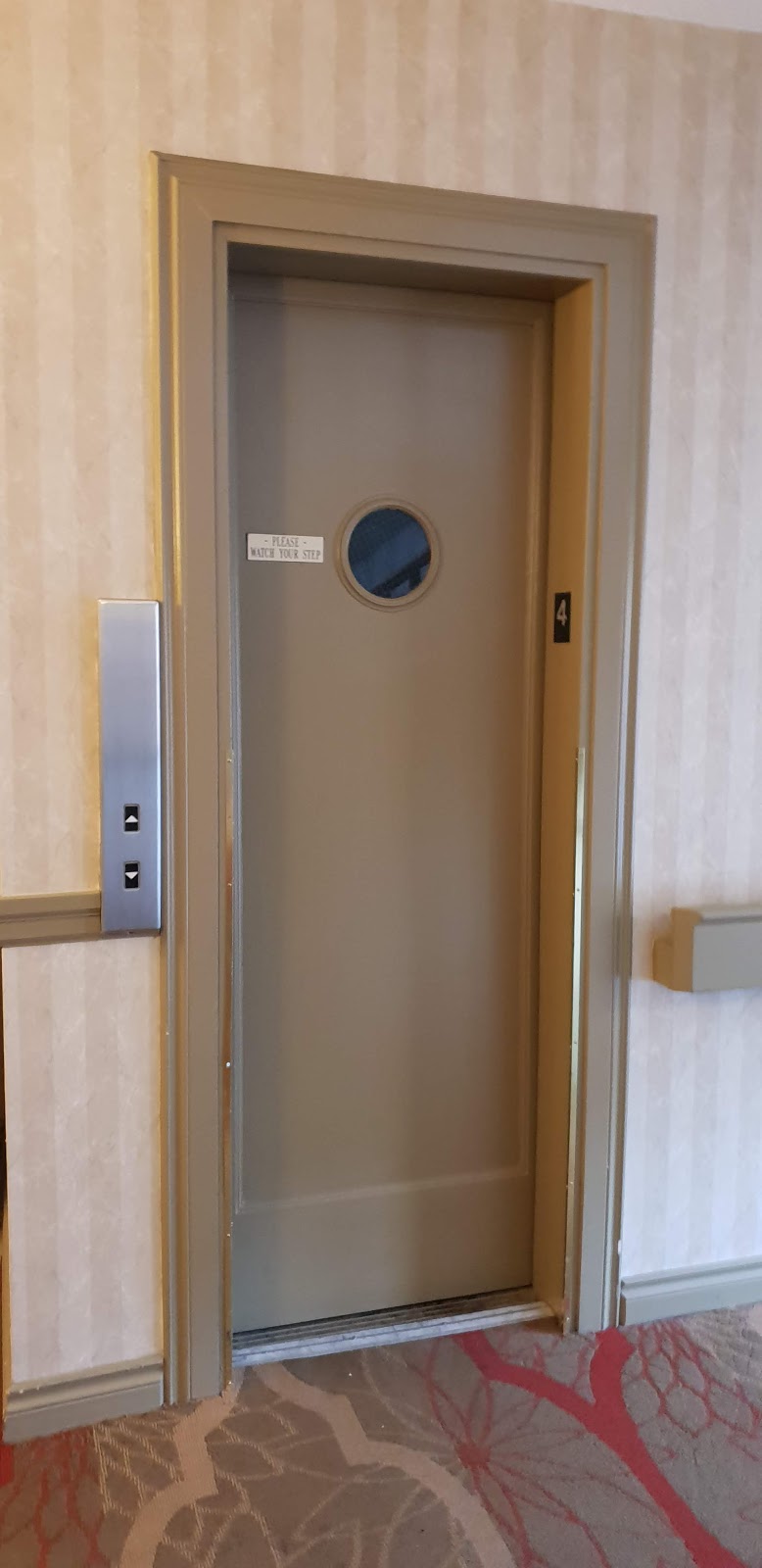
It has the original Otis elevator that can take a maximum of four passengers, and a sign on the wall that says “no horseplay inside the elevator” which is a rather interesting expression that only someone of my vintage would understand.  And, for those without a sense of humor, you definitely couldn’t fit a horse in it to play with.

The thing is, how do you find a balance between keeping the old world charm with modern-day expectations.  You can’t.  Some hotels try valiantly to get that balance.  Here, it is simply old world charm, which I guess we should be grateful for because sooner rather than later it’s going to disappear forever.

In my writer’s mind, given the importance of the railways, this was probably a thriving place for travelers, and once upon a time, there were a lot more hotels like this one.

Writing about writing a book – Day 24

Time to put the team back together, well, sort of.

We’ve been given the introduction to who Barry McDougall is, or the man otherwise known as ‘Brainless’, and after three days of trying to get it straight, this is the first rough draft of his start in the story.

Barry, whose daring selfless deeds earned him the nickname Brainless because that was the only way to describe the motivation behind them, was one of the regular soldiers, and, for a long time, had been my only true friend.  His was a reputation both friends and foes alike considered awesome.  He’d been in Vietnam, and later just turned up at Davenport’s camp, reporting for duty.

Davenport was more surprised than I was at his arrival, but obviously, after checking his credentials, was impressed because he let him stay.  And it would be true to say, if he had not, I would not be here now.

So Barry was just the sort of person I needed to help me.

That was the good news.

The bad news was Barry, at the best of times, either on one of his ‘benders’ using drugs or alcohol, whatever was easier to get at the time, lost to everyone, or locked up in a mental institution, having admitted himself.  He had no interest in participating in life, hadn’t worked in years, and often said, in moments when he was at his lowest, that he did not care if he lived or died.  It had not always been that way, but his demons had all but taken him over, and despite the help, I tried to give him, nothing could shake him out of this lethargy.  He said once he envied me that I could not remember the dark days, and, now those memories had returned, I knew what he meant.

For a long time, I could not understand why he didn’t try harder to help himself, and I guess he humored me by accepting the jobs I’d found him, and the help I offered.  I owed him a great deal, but that was probably the one honorable thing about him, he never expected, nor wanted, anything in return.

He tried to make a go of being a police officer and lasted several years before he resigned over an incident that didn’t reach the papers.  There was, he said, no place for heroics in modern society.  I hadn’t got to the bottom of it, but I heard he shot some thieves at a time when the police were trying to promote a pacifist image.

He tried a few other occupations with an equal lack of success, so now he survived on whatever money I gave him.  He lived on the street, and when he was not there, I knew he could be found in a bar, in one of the more seedier parts of the city, a ubiquitous underground bar called Jackson’s, named after a man who had a salubrious reputation that hovered between load shark and saint, and who was reputed to be buried under the storeroom floor.  The present owner, or what I assumed to be the owner, was a large, gruff, ex-prizefighter, who had the proverbial heart of gold, most of the time, and who took my money and looked after Barry without making it look like he was.

I’d called the bartender in advance, and he said he was in his usual spot, and that it was at the start of the next cycle, having just discharged himself from the hospital after a bout of pneumonia.  It was, he said, getting worse, and taking longer to recover.

It was probably only a matter of time before it took him, so perhaps this time I would have to try harder to convince him to give up his nomadic lifestyle.

When I walked in, the aroma of spilled beer, stale sweat, and vomit, mingled with the industrial-strength carbolic cleaner almost took my breath away.  In the corner, two construction workers were sitting, quietly smoking and drinking large glasses of beer.  In the other, Barry was being held up by the table, an untouched double scotch sitting in front of him.  Sitting at the bar was a woman of indeterminate age, badly made up, and thin to the point of emaciation.  I was not sure what she was drinking, or what it was she was smoking, but I could smell it from the front doorway.

The bartender, Ogilvy, no first name given, was pretending to polish glasses, standing at the end of the bar, looking at the television, playing some daytime soap.  He didn’t look over when I came in, but I knew he didn’t miss anything.  I saw him flick a glance at Barry, and then shake his head.  I think he cared as much about Barry as I did, but could recognize the sadness within him.  As much as Ogilvy said, which wasn’t much, he too had seen service in Vietnam, and it had affected him too.

I ordered an orange juice, caught the glances from the construction workers, and a steely look from the woman then went over to Barry’s table and sat down.  Despite the loud scraping noise when I moved the chair, or the creaking as I sat in it, Barry didn’t move.

Whilst the bar had that seedy aroma, Barry was showing the signs of having spent the time on the street.  It was one of the disadvantages of having no permanent residence and though there was a shower at the bar which Ogilvy let Barry use from time to time, he obviously hadn’t for a few days.

A groan emanated from the table, and Barry moved his head slightly.

I shifted the drink in front of him, and then a hand went out and moved it back.  He lifted his head to look at me, and then lowered it again.

“I thought it was you.”

© Charles Heath 2016-2021

That helicopter story that kept me awake – Episode 40

Our hero knows he’s in serious trouble.

The problem is, there are familiar faces and a question of who is a friend and who is foe made all the more difficult because of the enemy, if it was the enemy, simply because it didn’t look or sound or act like the enemy.

Now, it appears, his problems stem from another operation he participated in, and because of it, he has now been roped into what might be called a suicide mission.


I left the others out the front of the hut in Barnes charge, except for Williamson who stayed inside, feigning illness.  If everything went according to plan, a sketchy plan at best, Monroe would slip the diamonds to Williamson, and then melt back into the bush, heading back towards the fork in the road heading to the airstrip.  She would then report on what troops were between us and our objective.

I signaled for Davies to join me.

The commander and the man who’d reported to him earlier strode across the compound to a smaller building that might pass as a jail.  There was a guard out the front who jumped up and snapped to attention when the commander came up the steps.

“Open the door.”

The guard fumbled with a ring of keys, found the one for the door, and unlocked it.

The commander looked at me.  “You may speak to them for five minutes.”

“Alone.  You have my word we’ll not try anything.”

He nodded at the guard.  “Bottom of the steps.  Don’t let them out of your sight.”  To me, he pointed to another building about 50 yards away, “I’ll be there, don’t keep me waiting.”

We waited for him to come down the steps and start striding to his office, then went up the stairs, and I knocked on the door.  “My name is James, and I’m here with Davies to take you home.  We’re coming in.”

I opened the door slowly pulling it towards me, and the odor that came out of the room was that of people who had not been allowed to wash for several days, if not longer.  Once the door was fully open and the interior lit, I could see two stretchers and two men sitting up, struggling with the light in their eyes.

At least they were able to sit up.

Our information was they had been captive now for about seven months, and, looking at them, they didn’t seem to appear to badly off.  They showed signs of weight loss, and pallid skin, but not to the point of being maltreated or starved.

“Who did you say you were?”  The man on the left was about 50ish, grey thinning hair, and I suspect once a lot bulkier than he was now.  There was an air of brashness about him, but that would have been beaten out of him long ago.  Now he was just a shell of his former self.

“Sgt James, and Lieutenant Davies.  Part of the rescue team sent to bring you home.  A Colonel Bamfield sent us.”

“You took your time.”

Th either man spoke.  Younger, a military type, perhaps the other man’s bodyguard.  He had a few scars, so I expect he had offered some resistance and paid for it with the butt of a gun or two.

“We tried once, but it failed.  There were not the people who had been holding you at the time though, were they?”

“No.  If that was an attempt, they were the people who came to ‘rescue’ us, only it was a means for them to use us for ransom.  It’s taken them a while to find the right people.  Bamfield you say?  Who is he?”

“Runs the military’s operations that the military doesn’t want to acknowledge.  We’re here, but we’re not here if you know what I mean.”

The older man shook his head.  “It doesn’t matter.  What happens now?”

“I go and have another chat with the commander.  We exchange gifts, and we leave.”

“You do realize that’s not going to happen,” the military type said with a degree of despondency.

“How so?”

“There are about 50 men here, possibly more, all armed, and all waiting for you to arrive.  I expect they’ll take the ransom and then kill all of us.”

“Yes, I had thought that might be the case.  But, don’t worry.  We have a few tricks up our sleeve.  So, gather your belongings, if you have any, and wait for us to come back and get you.”

“Are you going to drive out of here?”  The military man spoke again.

“A short distance, yes.  There’s an airstrip not far from here, so all we have to do is get there, and we’re halfway home.”

“There’ll be government troops there.  It’s used for people coming in to visit the national park and they provide local security.  Boroko knows the Captain in charge there, and they have an arrangement.  He’ll know what your options are, and you’ll just be walking into a trap.”

That had always been a possibility, but Bamfield wouldn’t send us there unless there was a chance we could use it for our escape.  But, what the man was saying was just another wrinkle in a plan that had lots of wrinkles.

“Provided you get a mile from this place before being attacked.”

“All very interesting points,” I said.  “But, like I said, pack your stuff and let me worry about the details.  Feel free to take in some fresh air while we’re gone.  It won’t be long.”

“I’ll stay,” Davies said.

“OK.”

I took a last look at the two, both now struggling to their feet.  They might not be in as good a condition as the commander had said.  As long as they could cover about half a mile at best, everything would be fine.

I walked slowly back to the hut where Williamson had just emerged, and I went over to him.

He handed me a package that hardly made a dent in my pocket.  It was probably the reason why diamonds were used, small, and easily transportable.  Gold bars would have been a different, and far more difficult, proposition.

From there, I walked more briskly to the commander’s hut and as I approached he came out.

“Everything in order?”

“It is.”

I pulled the package out of my pocket and handed it to him.  “You can check the contents while I wait here.”

A smile, like a cat who swallowed the canary.  A nod to a soldier standing behind me, I could hear the weapon being trained on me.

“I guess this is where…”

A second later the soldier crumpled to the ground, a bloody mess where his head had just been.  A second raised his gun and suffered the same result.

“Call off your dogs’ commander.  I’m sure we both don’t want to see people die needlessly.”

Two hands for a signal to lower weapons.

“Your missing people.”

“Out there, strategically placed.  Excellent marksmen too.  At the moment they’re showing restraint.  It’s up to you how long that lasts.”

He motioned to the guard at the prisoner’s hut to take them to the cars, “Join them, Sargeant James, I’ll be along when I’ve checked the diamonds.”

By the time the two men had joined the rest of the team at the cars, the commander had come out of his office and was walking towards us.

“Three cars, we’ll keep the other.  I assume you’re heading towards the airstrip.”

“It’s one of our options.  I hear the government had a platoon of soldiers there under the command of a Captain.  You might want to warn him we’re coming.  You might also want to warn whoever you have in the field between here and there we’re coming.”

“I can’t guarantee your safety once you leave the compound.  If there is anyone out there, it will not be my men.  We have an agreement remember.”

“Good.”  

While we were talking the others had got themselves into the cars and started the engines.  Time was of the essence.

We walked down to the barrier, and once again he ordered his guards to remove it.

Once they had the cars drove past and then the last car stopped just the other side, waiting for me.

“I wish you good luck, Sargeant James.”

“Let’s hope the atmospherics don’t interfere with my call to my people.  I’d hate to see this place destroyed because of a misunderstanding.”

I hadn’t seen Jacobi since just after we arrived, and he had headed straight to the commander’s hut.  No doubt they had a lot to talk about.

I got in the car, and we drove off.

I was half expecting a hail of bullets, but all I could see was the two guards replacing the barrier and the commander standing behind it, arms crossed, still looking like the cat who swallowed the canary.


© Charles Heath 2020

Going once, going twice… – a short story

It was the small town that we had visited once, some years ago, that had enticed me back.

Those had been happier times, times when the stench of money hadn’t overtaken sensibility, and who we really were.

Not that I had changed all that much, except for the upper west side apartment, and posh car to go with it, but what had disappointed me was the change in Liz, the woman I thought once as the love of my life.

Without the trappings of wealth, she was the kindest, most thoughtful and generous person I knew, but that had changed when I became the recipient of an inheritance that beggared belief.  We both made a promise from the outset that it would not change us, but unfortunately, it did.

And that was probably the main reason why I was standing outside an old fixer-upper house on several acres overlooking the ocean.

I’d asked Liz to come, but she was having a weekend away in Las Vegas with her new friends, or as one of the ladies rather salaciously said, a what happens in Vegas stays in Vegas kind of weekend.

Charmaine had told me about the house, one that she had admired for a long time, but didn’t have the means to buy it.

Charmaine was a painter, a rather good one, and both Liz and I had met her on a weekend away upstate, and I’d bought one of her landscapes to hang in our new apartment.  Liz hated it, but I think that had more to do with the painter than the painting, and that was because Charmaine had flirted with me, and that, I had observed over time, was how she was with everyone.

She called it her sales technique.  After all, it had worked on me.

I listened to the auctioneer go through the rules of the action and then move on to a physical description of the property.  I’d been to several viewings and got a good idea of what was needed if I was to buy it.  It had good foundations and had suffered from a lack of TLC.  It was how the auctioneer summed up.

When he called for the first bid, I felt a hand slip into mine, and a glance sideways showed it to be Charmaine.  I had asked her along for support but she had something else to do, but it appeared now, she hadn’t.

“So,” she whispered next to my ear, “you were serious about this place?”

I had been dithering, not being able to make my mind up, but Liz, in the end, made the decision for me.  I’d overheard a snippet of conversation with one of her new friends, and, to be honest, I’d been surprised.

“Perhaps it was time to find a hideaway.”

“Things that bad?”

I shrugged.  “Maybe I’m writing too much into it.  At any rate, I needed an excuse to get out of town, and being here was as good as any.”

The first bid came in at 450,000.   I knew the reserved was about 700,000, and I was prepared to 850,000.  But I was hoping to spend less than that because the renovations would be about 250,000.

“We could go and have a picnic.  It’ll certainly cost less than buying this place.”

“I’m here now.”

Holding hands was just one of Charmaine’s ‘things’, and I had never written anything into what might have been called a relationship of sorts.  We were not lovers, and the conversation had never been steered in that direction, but I did find myself gravitated towards her when Liz was off doing her thing with her friends.  To be honest, I just liked the idea of a picnic and watching Charmaine paint her landscapes.

I raised the bid to 500,000.  Another from the previous bidder, 550,000.  Another at 600,000.  It seems there were three bidders for the property.  The other sixteen people attending were observers, probably locals interested in how this would help their property value.

I went 625,000 when the auctioneer changed the increment after a lack of bidding.  It was countered, moving to 650,000.  Another at 657,000, and then the first bidder went to 700,000, the reserve.

“You do realize the other bidders are friends of the owner and are there to push the price up?” Charmaine whispered in my ear.

I’d heard of it happening, but I’d not suspected it until she mentioned it.

“Going once, going twice at 700,000.”  The auctioneer looked at me.  “I’ll accept 10,000 increments.”

I nodded.  710,000.  It quickly moved to 800,000, after I bid 790,000.

The auctioneer looked at me expectantly.  “810,000, sir?”

That was more than I wanted to spend though an elbow in the ribs was the clincher, and when I declined, there was an air of disappointment.

“Going once, going twice, all done at 800,000?”  A look around the crowd confirmed we were all done, and the gavel came down.

“Looks like we’re going on a picnic,” she said.  “I’d expect a call in an hour or so.”

Two things happened that weekend, both of which surprised me.  The first, Charmaine was right, I did get a call, and finished up with a hideaway in the country, overlooking the ocean.  The second, Liz didn’t come back from Las Vegas.  She had apparently found someone new, someone more exciting, or so she said.

I guess I was disappointed but not overly concerned.  She had changed and I had not and if the truth be told, we were drifting apart.  We parted amicably, sold the apartment, and moved on, each in a different direction.

I had a new residence, and renovations to take my mind off the break-up, and when I told Charmaine, she was just said she didn’t believe we were that perfect match.  And in the light of my new status, I could now ask her to come and stay in the spare bedroom, a lot better, I said, than the one person tent she had been using, an offer she readily accepted.

Until, a year later, it became something more than that.

© Charles Heath 2020-2021