When doing stuff used to be fun…?

The difference between what you want to do and what really happens can be as wide as the Rio Grande River

Not that I’ve tried to cross it, but you get my drift.

Shopping, any sort of shopping, can be a nightmare.  Certainly, when you decide to go shopping always leave enough time for the vagaries of serving staff and fellow customers.

And then there’s Murphy’s law

Like, for instance, you’re in a hurry to get to a lunch appointment and need money.  The ATM is broken or refilling, and inside the bank the queue is long and there’s only one teller serving

Of course, its lunchtime!

Or you’ve decided to get a pre-theater dinner and drink, and get to the restaurant early, order, and then have to wait and wait and, well you know how it is.

Of course, there’s always late staff, missing cooks, still out chasing the chickens in the backroom…

Or you draw a number and sit down to wait only to discover that somehow your number got lost in the system.  Or worse, you go to the doctor for an appointment, sit down, and get forgotten until the lights go off, and the staff are leaving.

When you ask, oh, he had to go home for an emergency.

No doubt late for golf.

It’s happened to me, more than once.

But the worst thing that can happen to you.  Going clothes shopping with your partner, sit down near the counter knowing she will eventually come back for you.

Only…

You get a phone call three hours later from her asking where you are.

One day…

There’s this affliction going about

It’s not new, it’s been around for a while.

Everyone seems to be talking to themselves and I think it has something to do with smoking, perhaps a side effect.

You know how it is, you are walking along the sidewalk and someone near you starts talking.  You turn around thinking they are talking to you, but they are not.

And then they take a puff of a cigarette.

It’s not an uncommon assumption to think they are going mad.

But the thing is, if you take a closer look you notice they have a Bluetooth device in their ear and they are really talking to someone out there in cyberspace.

Or for the uninitiated, they’re talking on their mobile phone.

Not that many years ago, men in white suits would be collecting these people and taking them to an asylum typically called Bellevue.  It was the stuff of 1950’s horror films.  You really didn’t want to be caught talking to yourself.

It, of course, has a number of symptoms, this condition we’ll call cybersickness.

Like, for instance, wandering aimlessly.  Or bumping into people.  Or walking in front of cars on the street.  Or falling off the edges of sidewalks, which can result in very, very bad injuries.

You could be forgiven for thinking these people are hearing voices in their heads telling them what to do.

But, as a worst-case scenario, we could say we have just created a viable excuse for these people.

I suppose it’s better than locking them up because, at the end of the day, our jails would be full to overflowing.
One thing is for certain, I think a lot of them are already living in their own world, oblivious to everyone and everything about them.
Now, as for using phones in cars, just don’t get me started.

Where is that glamorous life of an Author?

I’m currently sitting in my car waiting to pick the grandchildren up from school wondering where that dream of the glamorous life of an author went.

Can it be said that any author leads a glamorous life, except for maybe J K Rowling, James Patterson, and a handful of others?

That dream is of course only a dream.  I did not start this writing caper to become rich and famous or live a glamorous life.  I started It, and it continues in the same vein, that I have a lot of stories in my head that I want to get on paper.

If anyone else wants to read them, then that’s a bonus.  If I happen to make enough money, rather than live high on the hog, an expression my father often used to describe the rich, I would happily invest in programs that get young people reading more.

It also strikes me that it would be difficult to write a literary novel in the vein of Jane Austen or the Bronte sisters, to name a few because modern-day life has no real meaning like it did then.

Instant news, instant communications, and the rest of the country, as well as the world, do close, we can go anywhere, and communicate instantly.  In the days of classic literature, the protagonist’s exchange of letters, and the arduous traveling to another part of the same country would be enough to generate a chapter, or the visit itself could generate several.

But those tales of life were always about people of means, not the ordinary people.  Stories that have the minutiae of daily life do not appeal.  No one wants to read about their lives, they want to be transported to another world where there is no such inanity like cooking, cleaning, washing, and picking up children.

I’m using this time to write another episode or chapter, or, in this case, a blog post.

As any parent will tell you, it is the calm before the storm.

Nostalgia

Ever hear someone say it was better in the old days?

I have.

I’ve been guilty of saying it myself.

But, was it?

When I was a child there was no such thing as personal computers and calculators.  Everything came out of books, and maths had to be done in your head.

Holidays were about joining up with other neighbourhood children and making your own entertainment.  I remember for a long time, as a child, we didn’t have television.

It was down to the meadows near the creek to pick blackberries, swim in the water, or raiding new housing estates for offcuts to build a cubby house.

Not like today with television, video players, movies-on-demand, personal computers, game boys, and a plethora of other entertainment choices.

Were we better off back in the old days?

We were in the sun with no idea that sunburn led to cancer and death.  Sunscreen was unheard of, so in that regard maybe not.

In the old days, the only telephones were in the house and were expensive to use.  You could have a coloured phone so long as it was black and made of bakelite.

It was a long time before we had plastic coloured phones or even wall phones.  Those were also the days of telephone boxes, the only way they make a call when away from home.

Now every man and his dog has a mobile phone/computer while on the move.  I know, the dogs keep crashing into me on the street.

And then I also remember my father saying it’s not like the old days, so I had to wonder what he meant.

Perhaps it is an oft-used but less understood lament for a time when we remember we were happy and carefree, those days before mortgages, children, maxed out credit cards, and the children’s mobile phone bills.

Past conversations with my cat – 72

20160921_071506

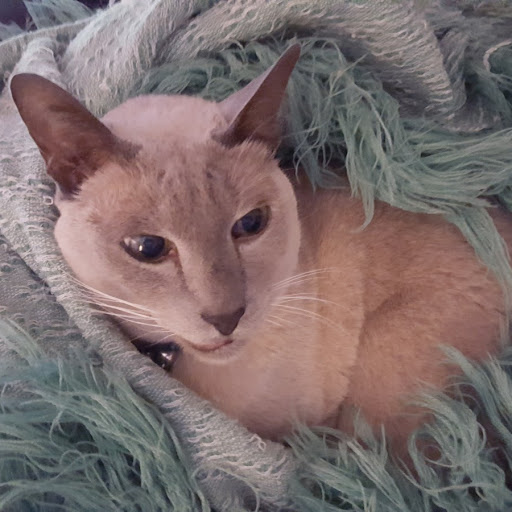
This is Chester.  He’s finally got a starring role in one of my stories.

The thing is, I tried to keep it quiet so he wouldn’t get delusions, but it failed.

I made the mistake of leaving the page with the ‘cat’ part on the screen.  The screen saver should have kicked in, but I think a well-placed paw brought it back to life.

So, the next morning, I come down and see him sitting on the desk, waiting.

It can either be good news or bad news.

“I see you’ve finally written a cat into the plot.”

“It was only a matter of time.  I think you made your case a week ago by sitting on the keyboard until I agreed.  Now, you’re in.”

“Yes.  I see.  Who’s idea was it to call the cat Herman?  I mean to say, really, Herman?”

“I thought it was a great name for a cat.”

“What type of cat is it?”

“I don’t know.  A cat’s a cat isn’t it?”

“Why not a Tonkinese, like me?”

“Alright, I’ll change it.”

“You made him jumpy, skittish even.  I’m not like that.”

“It’s not you in the story.”

“So you’ve found another cat, who is it.  It won’t last long when I get to them.”

Maybe it’s easier to write him out of the story.  I don’t think I can take this criticism.


Past conversations with my cat – 71

This is Chester.

When I come down to the writing room he’s sitting on the table next to the keyboard.

I take this gesture to mean that he’s not trying to be confrontational.

He’d be sitting on the keyboard if that was his intention.

Or, perhaps he’s trying to lull me into a false sense of security.

I try to read his expression, forgetting that cats down have expressions, just a single look.

Contempt.

I sit down and we’re now eye to eye. Could it be that he is doesn’t like the idea of looking up at me? Might that almost suggest that I am the master and he is the cat?

Perhaps I’m just tired and writing too much into it. Maybe he just saw a mouse and wanted to get an overview of where it might have gone.

Plenty of hiding places in this office. Chester knows some off them himself because there are times when I can’t find him.

Then he deigns to speak. “I think it’s time you cleaned this room up.”

It seems it’s a universal request from everyone, grandchildren included.

“Sorry. Not sorry. I’m going for the grumpy grandfather’s study children are forbidden to enter look. Piles of books, shelves overloaded with more books, messy tables, and papers scattered everywhere. And nowhere to sit because seats are places to pile more stuff.”

He looks around.

“Done a good job of it then. How do you find anything?”

“I found you.”

“I wasn’t hiding.”

“Oh, I thought you were.”

I’m sure there was that imperceptible shake of the head in disdain, before he jumps down and leaves.

Dodged a bullet there. I was sure he was going to complain about his food … again!

That light at the end of the tunnel

It’s a long-standing joke that the light at the end of the tunnel is the headlight of an express train coming right at you.
Metaphorically speaking this is quite often true if you are a pessimist, but since I’ve converted to being an optimist, a bit like changing religions, l think I’ve seen the ‘light’.
It’s a lot like coming up from the bottom of a deep pool, breaking the surface, and taking that first long gulp of air.
Along with that elated feeling that you’re not going to drown.
What’s this got to do with anything, you ask.
Perhaps nothing.
As an allegory, it represents to me as a time when l finally get over a period of self-doubt, where a series of events started to make me question why l want to be a writer.
I mean why put yourself through rejections, sometimes scathing criticism, snd the have the people whom you thought were your friends suddenly start questions your choices after initially wholeheartedly supporting you.
Are we only a success or supportable if we are earning a sufficient wage?
Is this why so many people don’t give up their day job, and then find themselves plying this ‘other trade’ during the dark hours of the night, only to find themselves being criticized for other but no less subjective reasons.
It seems like a no-win situation but these are the times when your mettle is tested severely.
But in the end, it is worth it when the book is finished and it is published, even if it is only on Amazon, not that publishing on Amazon is any less important that if it was with a mainstream publisher.
You can sit back and say with pride l did that.
And that metaphorical light, you ask.
When you make a sale.

And what was the inspiration behind the story “[Any title you’ve written]”

As accomplished as we can be at putting words on paper, what is it that makes it so difficult to sit in a chair with a camera on you, and saying words rather than writing them?

Er and um seem to crop up a lot in verbal speech.

OK, it was a simple question; “What motivates you to write?”

Damn.

My brain just turned to mush, and the words come out sounding like a drunken sailor after a night out on the town.

The written answer to the question is simple; “The idea that someone will read what I have written, and quite possibly enjoy it; that is motivation enough.”

It highlights the difficulties of the novice author.

Not only are there the constant demands of creating a ‘brand’ and building a ‘following’, there is also the need to market oneself, and the interview is one of the more effective ways of doing this.

If only I can settle the nerves.

I mean, really, it is only my granddaughter who is conducting the interview, and the questions are relatively simple.

The trouble is, I’ve never had to do it before, well, perhaps in an interview for a job, but that is less daunting.  That usually sticks to a predefined format.

Here the narrative can go in any direction.  There are set questions, but the interviewer, in her inimitable manner, can sometimes slide a question in out of left field.

For instance, “Your character Zoe the assassin, is she based on someone you know, or an amalgam of other characters you’ve read about or seen in movies?”

That was an interesting question, and one that has several answers, but the one most relevant was; “It was the secret alter ego of one of the women I used to work with.  I asked her one day if she wasn’t doing what she was, what she would like to do.  It fascinated me that other people had a desire to be something more exotic in an alter ego.”

Of course, the next question was about what I wanted to be in an alter ego.

Maybe I’ll tell you next time.

In a word: Drink

Everyone loves a drink, and that interesting expression, ‘what’s your poison’ often resonates at a bar when among friends.

The thing is, we are supposed to know what our friends drink, me, for instance, I like beer, preferably in a bottle and not local mass-produced brew if I can avoid it.

But, some like white wine, no preference to type, some like cocktails like a Manhattan, or a Long Island Iced Tea, very dangerous if made correctly which quite often it isn’t, or champagne, the real thing not just leftover wine carbonated and given a name like ‘sparkling …’ something.

Every now and then we need to have more than one drink, and that desire is fuelled by our emotions.  A celebration, it’s two or three, just enough to allow the euphoria to seep in.  A tragedy of any sort means more than a few, usually prefixed with a statement like, ‘I need to get hammered’, but not literally.

Perhaps that’s why it’s called drowning our sorrows.

Of course, there are other meanings for the word ‘drink’ and often poets, and romance novelists will refer to a phrase such as ‘drink in…’ where it may refer to a loving gaze or a look of adulation.  You could also, at a stretch, drink in the sight of a magnificent landscape.

Then, at the end of that drinking session, good or bad, where you may have had the opportunity to drink in looks or locations, you might, if you didn’t play your cards right, get thrown in the drink.

Not in the glass, that’s a bit small, but it means a much larger body of water such as a pool, a lake, or the ocean.

And lastly, but probably not the only context for the word ‘drink’, it could be said you were ‘driven to drink’, and I don’t mean by another drinker to the hotel, bar, restaurant or party.

Driven to drink means you blame someone else for your recently acquired desire to drink as much as you can so that it blots out something or someone.

I’m officially blaming my dog for my drinking problem.  He drove me to drink.

And that’s all I have to say about it.

Pour me another drink, will you?

Yet another story bubbles to the surface…

I write about spies, washed out, worn out or thrown out.

It’s another idea, and another lot of scribbling to go in the ‘when I’m at a loss for a new story’ book.

The first sentence of a novel is always the hardest. Like I guess many others, I sit and ponder what I’m going to write, whether it will be relevant, whether it will pull the reader into my world, and cause them to read on.

And that’s the objective, to capture the reader’s imagination and want to see what’s going to happen next.

The problem is, we have to set the scene.

Or do we?

Do we need to cover the who, what, where, and when criteria in that first sentence? Can we just start with the edge of the seat suspense, like,


The first bullet hit the concrete wall about six inches above my head with a resounding thwack that scared the living daylights out of me. The second, sent on its way within a fraction of a second of the first found its mark, the edge of my shoulder, slicing through the material, and creasing skin and flesh. There was blood and then panic.

Milliseconds later my brain registered the near-miss and sent the instruction: get down you idiot.

I hit the ground just as another bullet slammed into the concrete where my head had just been.


It can use some more work, fewer commas, perhaps shorter, sharper sentences to convey the urgency and danger.

Perhaps we could paint a picture of the main character.

He tentatively has the name of Jackson Galworthy. He has always aspired to be a ‘secret agent’ or ‘spy’ and but through luck more than anything else, he was given his opportunity. The problem is he failed his first test and failure means washing out of the program.

What had ‘they’ said? When the shit hits the fan, you need to be calm, cool and collected. He’d been anything but.

Maybe we’ll flesh the character out as we go along.

OK, I just had another thought for an opening,


Light snow was still falling, past the stage where each flake dissolved as it hit the ground, and now starting to gather in white patches.

It was cold, very cold, and even with the three layers I still shivered.

What surprised me was the silence, but, of course, it was a graveyard beside an ancient church, and everyone who had attended the funeral service had left.

It was a short service for the few that came and a shorter burial. No one seemed keen to hang around, not with the evening darkness and the snow setting in.

I stood, not far from the filled grave looking at it, but not looking at it. Was I expecting it’s occupant to rise again? Was I expecting forgiveness? I certainly didn’t deserve it.

The truth is, I was responsible for this person’s death, making a mistake a more seasoned professional might not, and the reason why I was shown the door. I had been given very simple instructions; protect this man at all costs.

It was going to be a simple extraction, go in, get the target, and get out before anyone noticed.

A pity then I was the only one who got that memo.


Any thoughts?