In a word: Land


And, yes, the simple description for this word is that area of the earth that isn’t covered by water.

It could also describe that little patch that my house is built on, and is generally covered by the expression, house and land as a package.

After all, a piece of land is not much used to you unless there’s a dwelling on it, or, on rare occasions, under it.  Does that mean then that land in this instance only as what you can see?

OK, now it’s getting confusing.

What if I wanted to live off the land.  A small patch will not do, in this case, is need a large area, perhaps thousands if hectares.

It is said that the Australian aborigines have lived off the land for thousands of years, with a nomadic lifestyle.

No small patch of land for them.

Now, what if I come down out of the sky. Oddly enough this means I have to land, even if I come back to earth over later.  It’s still a landing.

Now it’s getting interesting.

So what if you wanted to refer to where you live?  That would be your homeland or motherland, and it describes a country.

So it’s my patch, my country, any area where there isn’t water.  What about describing a country, say the land of the long white cloud, or the land of the rising sun?

And just to add to the confusion

I can land a fish

Make land, after being all at sea, and,

Best of all, land that much desired job.

Wow.

I’m beginning to think it’s another one of those ‘four-letter words’

Knowledge can be dangerous… – A short story

It was, perhaps, the saddest week of my life.

It started with a phone call, then a visit by two police officers.  It was about my parents, but the news could not be imparted over the phone, only in person.  That statement alone told me it was very bad news, so I assumed the worst.

The two police officers, standing at the front door, grim expressions on their faces, completed the picture.  The news, my parents were dead, killed in a freak car accident.

At first, it didn’t sink in.  They were on their way back from another of their extensive holidays, one of many since my father had retired.  I’d seen them probably six months out of the last five years, and the only reason they were returning this time was that my mother needed an operation.

They hadn’t told me why, not that they ever told me very much any time since the day I’d been born, but that was who they were.  I thought them eccentric, being older when I’d come along, and others thought them, well, eccentric.

And being an only child, they packed me off to boarding school, then university, and then found me a job in London, and set me up so that I would only see them weekends if they were home.

I had once wondered if they ever cared about me, keeping me at arm’s length, but my mother some time ago had taken me aside and explained why.  It was my father’s family tradition.  The only part I’d missed was a nanny.

It most likely explained why I didn’t feel their passing as much as I should.

A week later, after a strange funeral where a great many people I’d never met before, and oddly who knew about me, I found myself sitting in the sunroom, a glass of scotch in one hand, and an envelope with my name on it, in the other.

The solicitor, a man I’d never met before, had given it to me at the funeral.   We had, as far as I knew an elderly fellow, one of my father’s old school friends, as the family solicitor, but he hadn’t shown at the funeral and wasn’t at home when I called in on my way home.

It was all very odd.

I refilled the glass and took another look at the envelope.  It was not new, in fact, it had the yellow tinge of age, with discoloration where the flap was.  The writing was almost a scrawl, but identifiable as my father’s handwriting, perhaps an early version as it was now definitely an illegible scrawl.

I’d compared it with the note he’d left me before they had embarked on their last adventure, everything I had to do while caretaking their house.  The last paragraph was the most interesting, instructing me to be present when the cleaning lady came, he’d all but accused her of stealing the candlesticks.

To be honest, I hadn’t realized there were candlesticks to steal, but there they were, on the mantlepiece over the fire in the dining room.  The whole house was almost like being in an adventure park, stairs going up to an array of rooms, mostly no longer used, and staircase to the attic, and then another going down to the cellar.  The attic was locked and had been for as long as I could remember, and the cellar was dank and draughty.

Much like the whole house, but not surprising, it was over 200 years old.

And perhaps it was now mine.  The solicitor, a man by the name of Sir Percival Algernon Bridgewater, had intimated that it might be the last will and testament and had asked me to tell him if it was.  I was surprised that Sir Percival didn’t have the document in question.

And equally. so that the man I knew as his solicitor, Lawerence Wellingham, didn’t have a copy of my father’s last will and testament either.

I finished the drink, picked up the envelope, and opened it.

It contained two sheets of paper, the will, and a letter.  A very short letter.

“If you are reading this I have died before my time.  You will need to find Albert Stritching, and ask him to help you find the murderer.”

Even the tenor of that letter didn’t faze me as it should have, because at this point nothing would surprise me.  In fact, as I  unfolded the document that proclaimed it was the will, I was ready for it to say that whole of his estate and belongings were to be left to some charity, and I would get an annual stipend of a thousand pounds.

In fact, it didn’t.  The whole of his estate was left to my mother should she outlive him, or in the event of her prior decease, to me.

I had to put all of those surprises on hold to answer a knock on the door.

Lawerence Wellingham.

I stood too e side, let him pass, closed the door, and followed him into the front room, the one my mother called the ‘drawing room’ though I never knew why.

He sat in one of the large, comfortable lounge chairs.  I sat in the other.

I showed him the will.  I kept the other back, not knowing what to make of it.

“No surprise there,” Wellingham said.

“Did you have any idea what my father used to do, beyond being, as he put it, a freelance diplomat?”

I thought it a rather odd description but it was better than one he once proffered, ‘I do odd jobs for the government’.

“I didn’t ask.  Knowledge can be dangerous, particularly when associated with your father.  Most of us preferred not to know, but one thing I can tell you.  If anyone tries to tell you what happened to your parents was not an accident, ignore them.  Go live your life, and keep those memories you have of them in the past, and don’t look back.  They were good people, Ken, remember them as such.”

We reminisced for the next hour, making a dent in the scotch, one of my father’s favorite, and he left.

Alone again, the thoughts went back to the second note from my father.  That’s when the house phone rang.

Before I could answer it, a voice said, “My name is Stritching.  Your father might have mentioned me?  We need to talk.”

—-

© Charles Heath 2020-2021

In a word: Land


And, yes, the simple description for this word is that area of the earth that isn’t covered by water.

It could also describe that little patch that my house is built on, and is generally covered by the expression, house and land as a package.

After all, a piece of land is not much used to you unless there’s a dwelling on it, or, on rare occasions, under it.  Does that mean then that land in this instance only as what you can see?

OK, now it’s getting confusing.

What if I wanted to live off the land.  A small patch will not do, in this case, is need a large area, perhaps thousands if hectares.

It is said that the Australian aborigines have lived off the land for thousands of years, with a nomadic lifestyle.

No small patch of land for them.

Now, what if I come down out of the sky. Oddly enough this means I have to land, even if I come back to earth over later.  It’s still a landing.

Now it’s getting interesting.

So what if you wanted to refer to where you live?  That would be your homeland or motherland, and it describes a country.

So it’s my patch, my country, any area where there isn’t water.  What about describing a country, say the land of the long white cloud, or the land of the rising sun?

And just to add to the confusion

I can land a fish

Make land, after being all at sea, and,

Best of all, land that much desired job.

Wow.

I’m beginning to think it’s another one of those ‘four-letter words’

How could that possibly happen… – A short story

I had hoped by the time I was promoted to assistant manager it might mean something other than long hours and an increase in pay.

It didn’t.

But unlike others who had taken the job, and eventually become jaded and left, I stayed. Something I realized that others seemed to either ignore or just didn’t understand, this was a company that rewarded loyalty.

It was why there were quite a few who had served 30 years or more. They might not reach the top job, but they certainly well looked after.

I had a long way to go, having been there only 8 years, and according to some, on a fast track. I was not sure how I would describe this so-called ‘fast track’ other than being in the right place at the right time and making a judicial selection.

When it was my turn to be promoted, I had a choice of a plum department, or one most of my contemporaries had passed over. At the time, the words of my previous manager sprang to mind, that being a manager for the most sought after department or the least sought after, came with exactly the same privileges.

And, he was right. I took the least sought after, much to their disdain and disapproval. One year on, that disapproval had turned almost to envy; that was when the Assistant Managers were granted a new privilege, tea, and lunch in the executive dining room.

“So, what’s it like?” John asked, when our group met on a Friday night, this the first after the privilege was granted.

He had been one of the three, including me, who had the opportunity to take the role. Both he and Alistair had both declined, prepared to wait for a more prestigious department. It hadn’t happened to them yet.

“The same as the staff dining room, only smaller. Except, I guess, the waitstaff and butler. They come and serve you when you have to go to them in the staff room. They’re the same staff, by the way, except for the butler.”

I could see the awe, or was it envy, in their eyes. “but it’s not that great. The Assistant Managers all sit at one end of the table, and we’re not part of the main group, so no sharing of information I’m afraid. And the meals are the same, just served on fancier crockery.”

“Then nothing to write home about?” Will was one of those who they also thought to be on a ‘fast track’. I was still trying to see how my ‘fast track’ was actually that fast.

“Put it this way, the extra pay doesn’t offset the long hours because you get overtime, I don’t, so on a good week, you’d all be earning more than me. Without responsibility, if anything goes wrong. I think that’s why Assistant Managers were created, to take the blame when anything goes wrong.”

That had been the hardest pill to swallow. Until I got the role, I hadn’t realized what it really involved. Nor had the others, and it was not something we could whinge about. My first-day introductory speech from Tomkins, my Manager, was all about taking responsibility, and how I was there to make his life easier. It was a speech he made a few times because he’d been Manager for the last 16 years, much the same as the others, and promotion if ever, would come when they died.

And Manager’s rarely died, because of their Assistant Managers.

“How old is Tomkins now?” Bert, a relative newcomer to our group, asked. He was still in the ‘in awe’ phase.

“About the same as Father Time,” I said. “But the reality is, no one knows, except perhaps for the personnel manager.” O looked over at Wally, the Personnel Department’s Assistant Manager. “Any chance of you telling us?”

“No. You know I can’t.”

“But you know?” I asked.

“Of course, but you know the rules. That’s confidential information. Not like what you are the custodian of, information everyone needs.”

Which, of course, was true. Communication and Secretarial Services had no secrets, except for twice a year when the company Bord of Directors met, and we were responsible for all the documents used at their meetings. Then, and only then, was I privy to all the secrets, including promotions. And be asked ‘What’s happening?’.

“Just be content to know that he’s as old as the hills, as most of them. It seems to me that one of the pre-requisites for managership is that you have been employed here for 30 years.”

Not all, though, I’d noticed, but there wasn’t one under the age of fifty.

And so it would go, the Friday night lament, those ‘in’ the executive, and those who were not quite there yet.
It seemed prophetic, in a sense, that we had been talking about Mangers and their ages. By a quirk of fate, some weeks before, that I learned of Tomkins’s currents state of health via a call on his office phone. At the time he was out, where, he had not told me, but by his the I believed it was something serious, so serious he didn’t want me, or anyone else, to know about it.

That phone call was from his wife, Eleanor, whom I’d met on a number of occasions when she came to take him home from work. I liked her, and couldn’t help but notice she was his exact opposite, Tomkins, silent and at times morose, and Eleanor, the life of the party. I could imagine her being a handful in her younger days, and it was a stark reminder of that old saying ‘opposites attract’.

She was concerned and asked me if he had returned from the specialist. I simply said he had but was elsewhere, and promised to get him to call her when he returned. Then I made a quick call around to see where he was and found that he was in Personnel. I left an innocuous message on his desk, and then let my imagination run wild.

At least for a day or so, the time it took for me to realize that it was probably nothing, the lethargy he’d been showing, gone.

I’d put it out of my mind until my cell phone rang, and it was from the Personnel Manager. On a Sunday, no less. In the few seconds before I answered it, I’d made the assumption that Tomkins’s secretive visits to the specialist meant he needed time off for a routine operation.

Greetings over, O’Reilly, the Personnel Manager, cut straight to the chase, “For your personal information, and not to be repeated, Tomkins will be out of action for about two months, and as that is longer than the standard period, you will become Acting Manager. We’ll talk more about this Tuesday morning.” Monday was a holiday.

All Assistant Managers knew the rules. Any absence of a manager for longer than a month, promotion to Acting Manager. Anything less, you sat in the office, but no change in title. There was one more rule, that in the event of the death of a manager, the assistant manager was immediately promoted to Manager. This had only happened once before. 70 years ago. If a manager retired, then the position of Manager was thrown open to anyone in the organization.

It was an intriguing moment in time.

Tuesday came, and as usual, I went into the office, with only one thought in mind, let the staff in the department know what was happening, of course, the moment I was given the approval to do so by Personnel.

Not a minute after I sat down, the phone rang. I picked it up, gave my name and greeting. It was met with a rather excitable voice of the Assistant Manager, Personnel, “I just got word from on high, you’ve been promoted to manager. How could that possibly happen…”

Then a moment later, as realization set in, “Unless…”

—-

© Charles Heath 2020-2021

In a word: Ghost

Have you seen one?  I haven’t.  Yet.

I’ve stayed in a few places where ghosts were purported to be roaming the passages at night, but apparently not the night I was staying.

And that’s something else that I have a problem with, why is it ghosts only come out at night, or is that just the perception I have hot from reading up on the subject.

Maybe my view of ghosts is somewhat stilted, after all, I think my first introduction to ghosts was watching The Centerville Ghost, a movie I saw on t.v. when I was very young.

You have to admit Hollywood’s perception of ghosts is quite interesting.


But…

Do you think they are real?  Do I think they are real?

I think I would have to be presented with some fairly solid evidence they exist, but perhaps not to the point of meeting one.

There are, it seems countless examples of ethereal forces, you know, wind blowing where there’s no wind or draught outside, room temperatures dropping for no apparent reason, knocking, rattling of chains, strange noises like low moaning.


And yet…

There are hotels you can stay in such as the Chelsea Hotel in New York, where it’s possible to run into Sid Vicious.

Sorry, not staying there any time soon.

Then there’s the Hollywood Roosevelt Hotel in Los Angeles where it’s possible to run into Marylin Monroe, who lived in room 229.

That could be an interesting encounter.

Another is the Westin St Francis in San Francisco where the actress Virginia Rappe died while attending a party held in Fatty Arbuckle’s room, Arbuckle’s room, who was later accused of assaulting and murdering her, and whose career tanked after the incident.

Her ghost is seen moving about the hotel tearing her hair out.  It seems all of the spectral activity occurs on the 12th floor.


Good to know if I decide to stay there.  I wonder if they have a 13th floor?

Perhaps in too old to be running the gamut of paranormal experiences, the old heart is not as strong as it used to be.

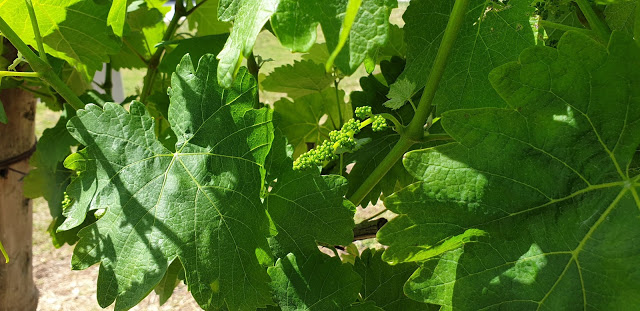
Searching for locations: O’Reilly’s Vineyard, Canungra, Queensland, Australia

O’Reilly’s Canungra Valley Vineyards located on Lamington National Park Road, Canungra, Queensland, is a 15-acre vineyard with the 163-year-old historic homestead ‘Killowen’ set up with dining rooms and long verandahs, and extensive grounds that are next to the Canungra creek where it is possible to find Platypus and turtles while partaking in a picnic.

There are about 6,000 vines of the (white) Semillon, Verdelho and (red) Chambourcin, Shiraz and Petit Vedot varieties.

We visited there in December when the vines were just starting to produce fruit. 

That fruit is usually harvested in February and then turned into wine.
The setting for picnics is, on a warm Summer’s day is idyllic, where you can wade in the creek, or go looking for a platypus.  We did not see one there the day we visited but did spend some time sitting beside the creek.

In a word: Ghost

Have you seen one?  I haven’t.  Yet.

I’ve stayed in a few places where ghosts were purported to be roaming the passages at night, but apparently not the night I was staying.

And that’s something else that I have a problem with, why is it ghosts only come out at night, or is that just the perception I have hot from reading up on the subject.

Maybe my view of ghosts is somewhat stilted, after all, I think my first introduction to ghosts was watching The Centerville Ghost, a movie I saw on t.v. when I was very young.

You have to admit Hollywood’s perception of ghosts is quite interesting.


But…

Do you think they are real?  Do I think they are real?

I think I would have to be presented with some fairly solid evidence they exist, but perhaps not to the point of meeting one.

There are, it seems countless examples of ethereal forces, you know, wind blowing where there’s no wind or draught outside, room temperatures dropping for no apparent reason, knocking, rattling of chains, strange noises like low moaning.


And yet…

There are hotels you can stay in such as the Chelsea Hotel in New York, where it’s possible to run into Sid Vicious.

Sorry, not staying there any time soon.

Then there’s the Hollywood Roosevelt Hotel in Los Angeles where it’s possible to run into Marylin Monroe, who lived in room 229.

That could be an interesting encounter.

Another is the Westin St Francis in San Francisco where the actress Virginia Rappe died while attending a party held in Fatty Arbuckle’s room, Arbuckle’s room, who was later accused of assaulting and murdering her, and whose career tanked after the incident.

Her ghost is seen moving about the hotel tearing her hair out.  It seems all of the spectral activity occurs on the 12th floor.


Good to know if I decide to stay there.  I wonder if they have a 13th floor?

Perhaps in too old to be running the gamut of paranormal experiences, the old heart is not as strong as it used to be.

Surely there’s a better way… – a short story

Surely there’s a better way…

When you have secrets, sometimes it’s very hard to hide them from others.

It was something Henry had to do since the day he could speak. The fact that his parents had been murdered because of their profession, something his grandfather told him was akin to ‘working for the government’. The fact that he was from a very wealthy and influential family. The fact he was heir to a fortune. The fact he was anything other than just another boy, who grew up to be just another man.

His whole life, to this point, had been ‘managed’ so that no one, other than a selected few chosen by his grandfather, knew who he was, or what he represented. And more to the point, he had been told to just live his life like any other of his age.

Yes, he went to a private school, but it wasn’t an exclusive one, yes he went to university, but he had got into Oxford on his own merit, and, yes, he was smart, smart enough to create his own business, and make a handsome income from it. And no, he never drew upon the stipend he had been granted by his parents will, so it just gathered dust in the bank.

Henry was an only child, and to a certain extent, introverted. It was a shyness that his grandfather knew existed in his son, Henry’s father. It could be an asset or it could be a liability. With Henry’s father, it had been an asset, a means by which many had misunderstood him. It might even serve him well for the next phase of his life.

Today, Henry was meeting his grandfather at Speaker’s Corner at Hyde Park, and an unusual meeting place because in the past it had always been at his grandfather’s club. At his grandfather’s request, he had undertaken a three-year program, one that his father had, and his father before him, and a pre-requisite for a profession that would be explained to him.

And it was all because Henry said he was bored. The business he’d built could run without him, his attempts at relationships with various girls and women hadn’t quite achieved what he was looking for, even though he had no idea what he was looking for, and, quite frankly, he told his grandfather, he needed something more exciting.

It was, he’d been told, the way of the MacCallisters. Ever since the British tried to put down the Scots.

Henry was listening to a rather animated man preaching the word of the Lord, but he was not sure what Lord that was. Anything he quoted from the bible resembled nothing he had read and remembered. Perhaps the man was on drugs.

Two or three people stopped, listened for a minute or two, shook their heads, some even laughed, and moved on.

“It’s the last bastion of freedom of speech, though I can say this man is not about to gather an army of insurrectionists any time soon. Let’s walk.”

His grandfather was getting old, and walking was getting more and more difficult. More scotch was needed, he had told Henry, to ward of the evils of arthritis. And, he added, ‘I should have had a less devil may care attitude when he was younger.’

It was a slow amble to the serpentine, which, being a bright sunny day, if not a little chilly, was alive with people.

He waited until his grandfather spoke. One lesson he had learned, speak when you’re spoken to, and if you’ve got nothing to say, best to remain silent.

“I have found a job you might like to have a go at. Nothing difficult, mind you, but a perhaps, at times, hard work. I think you’d be good at it.”

“Is that meant to be a hint, and I have to guess?”

“I think you’re smart enough to know what it might be yourself, young Henry.”

I think I did too. Everything I’d been doing over the last three years led me to believe I’d been training to walk in my father’s footsteps. It was with the Army, and I had imagined my father had been a soldier, though I’d never seen him in a uniform. But my Grandfather had said he worked for the government, so I wondered if that might be some sort of policeman, or some sort of internal agent, like MI6. It had not been boring, and the exercises had been ‘interesting’, but no one had said what the end result of this training might be; in fact no one had said who they were.

“Something hush, hush as the saying goes.”

We had gone about fifty yards and reached a cross path. As we did, a youngish woman dressed in leather appeared and walked towards us.

“I’d like you to meet a friend of mine, Henry. Her name is Marion, though I suggest you don’t call her that.”

She smiled. “Call me Mary. There’s only one person in the whole world that would dare call me that, and he’s standing here. Your grandfather has spoken a lot about you.”

Henry’s first impression; she had been to the training school he had. He could see it in her manner, and in the way she scanned the area, even though it didn’t look like she was. He’d been doing it himself, and he had seen her earlier. What made her stand out, she didn’t have a bag like all the other women.

“I hope it was good, not bad.”

“You have no bad traits?”

“Everyone had bad traits. You’ll just have to get to know me if you want to know what they are.”

“Well,” my grandfather said, “enough chit chat. Mary has a task, and she needs a little help. I thought you might want to join her.”

“Doing what?”

“She’ll explain it on the way. When it’s done, come and see me.” With that, a hug from Mary, and a handshake from his grandson, he turned and walked back the way they had come earlier.
“So,” Henry asked, “What’s the job?”

“I have to pick up a computer.”

“That doesn’t sound like something you would need help with.” In fact, if he was right in his assessment of her, he was the last person she needed, if at all. She looked to him as if she could handle anything.

“It’s one of those just in case situations.”

They walked a circuitous route back to Park Lane and crossed both roads, up Deanery Street, left where Tilney Street veered off, and then a short distance to Deanery Mews. Henry noted this was an area with a lot of expensive real estate, and scattered Embassies. If he was not mistaken, the Dorchester Hotel wasn’t far away.

Walking down the mews seemed to Henry to be walking into a trap. When he looked back towards Deanery Street he thought he saw two men position themselves, not quick enough to prevent him from getting a glimpse of them.

“You do realize that getting back out of here could be a problem.”

“It’s why I asked for help. Just in case.”

No visible sign of fear, or of what the consequences might be if this went south. Perhaps his grandfather had considered this a test. But what sort of test?

They reached the end, and, just around the corner, a van was parked with what Henry assumed was the driver, standing by the open driver’s door, smoking a cigarette.

Mary stopped about ten feet away from him. “Have you got the package?”

He reached inside the car and lifted up a computer case. There didn’t necessarily have to be a computer in it. I looked up and around. It was a good place for a meeting. No witnesses. But there were CCTV cameras. I wondered if they were working.

The man tossed the bag back in the car. “Have you got the money?”

She held up her phone. “Just need the bank account details.”

“OK. Just step over here and let’s get this done.”

She moved closer, and in a flash, he had grabbed her, holding her by the neck with a gun to her head. The two men Henry thought he’d seen at the top of the mews were now within sight, and both had guns trained on him. A trap, indeed.

“What do you want?” Henry asked.

“Tell your boss the price just doubled. Two million. You’ve got five minutes.”

I shook my head, not to clear the cobwebs, but to calm down and think rationally.

Talk first. “Surely there’s a better way to do this. You don’t need to hold a gun to her head.”

I held my hands out just to show I wasn’t a threat.

“No, probably not.” He released his grip and lowered the gun.

A very, very bad mistake.

—-

© Charles Heath 2020-2021

In a word: Brevity

Now, brevity is something that I have not been able to fully wrap my head around.

The dictionary explains Brevity as

‘concise and exact use of words in writing and speech’

So…

I remember working with a writer a long time ago who explained certain authors styles, and for James A Michener of Hawaii fame, he said Michener wrote sentences instead of words, paragraphs instead of sentences, pages instead of paragraphs and chapters instead of pages.

It was a little harsh considering I’d just read the book and had liked it, despite its length and the time it took.

But some time later I realized he was not criticizing Michener, but trying to tell me, in his, what I came to discover, interesting way, that I should strive to write more compactly.

I then came across a book by Brian Callison which was exactly that, the concise version, a story that fitted into about 200 pages.

That too was a good book and it took me a day to read it, and by his use of that economy of words, it read quickly.

Of course, I have tried over the years to emulate both styles, and to a certain degree, failing, because I think I have created my own style which is somewhere in between.

Still, when editing, it is always in the back of my mind that I should be

Using words instead of sentences

Using sentences instead of paragraphs

Using paragraphs instead of pages, and

Using pages instead of chapters.

The chapters, he said, with an air of amusement, will always take care of themselves.


Surely there’s a better way… – a short story

Surely there’s a better way…

When you have secrets, sometimes it’s very hard to hide them from others.

It was something Henry had to do since the day he could speak. The fact that his parents had been murdered because of their profession, something his grandfather told him was akin to ‘working for the government’. The fact that he was from a very wealthy and influential family. The fact he was heir to a fortune. The fact he was anything other than just another boy, who grew up to be just another man.

His whole life, to this point, had been ‘managed’ so that no one, other than a selected few chosen by his grandfather, knew who he was, or what he represented. And more to the point, he had been told to just live his life like any other of his age.

Yes, he went to a private school, but it wasn’t an exclusive one, yes he went to university, but he had got into Oxford on his own merit, and, yes, he was smart, smart enough to create his own business, and make a handsome income from it. And no, he never drew upon the stipend he had been granted by his parents will, so it just gathered dust in the bank.

Henry was an only child, and to a certain extent, introverted. It was a shyness that his grandfather knew existed in his son, Henry’s father. It could be an asset or it could be a liability. With Henry’s father, it had been an asset, a means by which many had misunderstood him. It might even serve him well for the next phase of his life.

Today, Henry was meeting his grandfather at Speaker’s Corner at Hyde Park, and an unusual meeting place because in the past it had always been at his grandfather’s club. At his grandfather’s request, he had undertaken a three-year program, one that his father had, and his father before him, and a pre-requisite for a profession that would be explained to him.

And it was all because Henry said he was bored. The business he’d built could run without him, his attempts at relationships with various girls and women hadn’t quite achieved what he was looking for, even though he had no idea what he was looking for, and, quite frankly, he told his grandfather, he needed something more exciting.

It was, he’d been told, the way of the MacCallisters. Ever since the British tried to put down the Scots.

Henry was listening to a rather animated man preaching the word of the Lord, but he was not sure what Lord that was. Anything he quoted from the bible resembled nothing he had read and remembered. Perhaps the man was on drugs.

Two or three people stopped, listened for a minute or two, shook their heads, some even laughed, and moved on.

“It’s the last bastion of freedom of speech, though I can say this man is not about to gather an army of insurrectionists any time soon. Let’s walk.”

His grandfather was getting old, and walking was getting more and more difficult. More scotch was needed, he had told Henry, to ward of the evils of arthritis. And, he added, ‘I should have had a less devil may care attitude when he was younger.’

It was a slow amble to the serpentine, which, being a bright sunny day, if not a little chilly, was alive with people.

He waited until his grandfather spoke. One lesson he had learned, speak when you’re spoken to, and if you’ve got nothing to say, best to remain silent.

“I have found a job you might like to have a go at. Nothing difficult, mind you, but a perhaps, at times, hard work. I think you’d be good at it.”

“Is that meant to be a hint, and I have to guess?”

“I think you’re smart enough to know what it might be yourself, young Henry.”

I think I did too. Everything I’d been doing over the last three years led me to believe I’d been training to walk in my father’s footsteps. It was with the Army, and I had imagined my father had been a soldier, though I’d never seen him in a uniform. But my Grandfather had said he worked for the government, so I wondered if that might be some sort of policeman, or some sort of internal agent, like MI6. It had not been boring, and the exercises had been ‘interesting’, but no one had said what the end result of this training might be; in fact no one had said who they were.

“Something hush, hush as the saying goes.”

We had gone about fifty yards and reached a cross path. As we did, a youngish woman dressed in leather appeared and walked towards us.

“I’d like you to meet a friend of mine, Henry. Her name is Marion, though I suggest you don’t call her that.”

She smiled. “Call me Mary. There’s only one person in the whole world that would dare call me that, and he’s standing here. Your grandfather has spoken a lot about you.”

Henry’s first impression; she had been to the training school he had. He could see it in her manner, and in the way she scanned the area, even though it didn’t look like she was. He’d been doing it himself, and he had seen her earlier. What made her stand out, she didn’t have a bag like all the other women.

“I hope it was good, not bad.”

“You have no bad traits?”

“Everyone had bad traits. You’ll just have to get to know me if you want to know what they are.”

“Well,” my grandfather said, “enough chit chat. Mary has a task, and she needs a little help. I thought you might want to join her.”

“Doing what?”

“She’ll explain it on the way. When it’s done, come and see me.” With that, a hug from Mary, and a handshake from his grandson, he turned and walked back the way they had come earlier.
“So,” Henry asked, “What’s the job?”

“I have to pick up a computer.”

“That doesn’t sound like something you would need help with.” In fact, if he was right in his assessment of her, he was the last person she needed, if at all. She looked to him as if she could handle anything.

“It’s one of those just in case situations.”

They walked a circuitous route back to Park Lane and crossed both roads, up Deanery Street, left where Tilney Street veered off, and then a short distance to Deanery Mews. Henry noted this was an area with a lot of expensive real estate, and scattered Embassies. If he was not mistaken, the Dorchester Hotel wasn’t far away.

Walking down the mews seemed to Henry to be walking into a trap. When he looked back towards Deanery Street he thought he saw two men position themselves, not quick enough to prevent him from getting a glimpse of them.

“You do realize that getting back out of here could be a problem.”

“It’s why I asked for help. Just in case.”

No visible sign of fear, or of what the consequences might be if this went south. Perhaps his grandfather had considered this a test. But what sort of test?

They reached the end, and, just around the corner, a van was parked with what Henry assumed was the driver, standing by the open driver’s door, smoking a cigarette.

Mary stopped about ten feet away from him. “Have you got the package?”

He reached inside the car and lifted up a computer case. There didn’t necessarily have to be a computer in it. I looked up and around. It was a good place for a meeting. No witnesses. But there were CCTV cameras. I wondered if they were working.

The man tossed the bag back in the car. “Have you got the money?”

She held up her phone. “Just need the bank account details.”

“OK. Just step over here and let’s get this done.”

She moved closer, and in a flash, he had grabbed her, holding her by the neck with a gun to her head. The two men Henry thought he’d seen at the top of the mews were now within sight, and both had guns trained on him. A trap, indeed.

“What do you want?” Henry asked.

“Tell your boss the price just doubled. Two million. You’ve got five minutes.”

I shook my head, not to clear the cobwebs, but to calm down and think rationally.

Talk first. “Surely there’s a better way to do this. You don’t need to hold a gun to her head.”

I held my hands out just to show I wasn’t a threat.

“No, probably not.” He released his grip and lowered the gun.

A very, very bad mistake.

—-

© Charles Heath 2020-2021