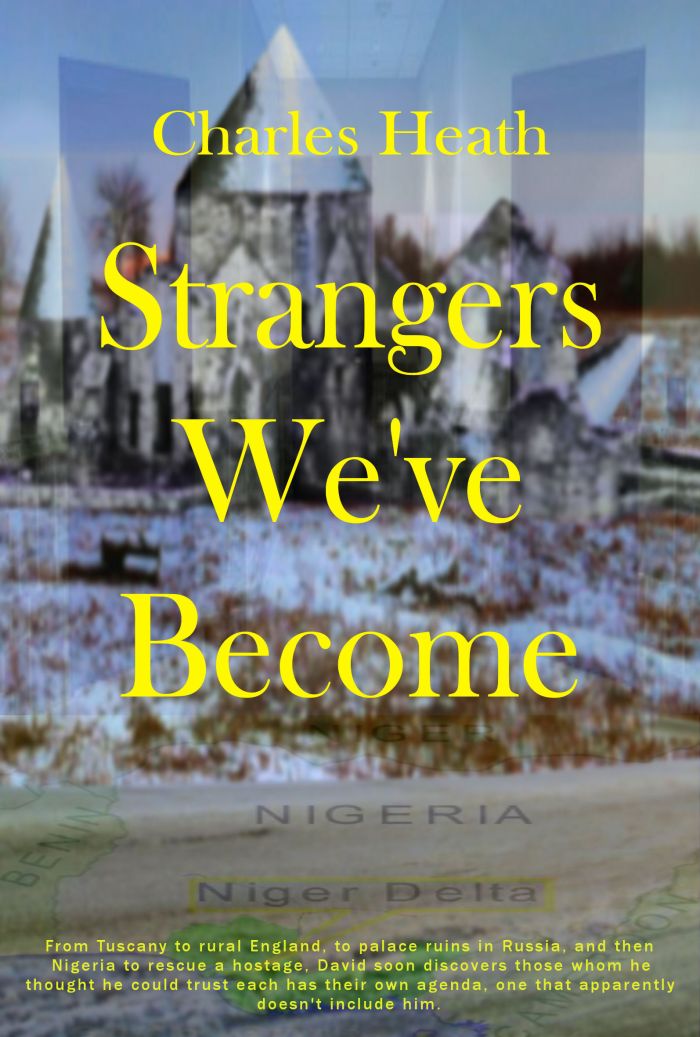
An excerpt from “Strangers We’ve Become” – Coming Soon

I wandered back to my villa.

It was in darkness.  I was sure I had left several lights on, especially over the door so I could see to unlock it.

I looked up and saw the globe was broken.

Instant alert.

I went to the first hiding spot for the gun, and it wasn’t there.  I went to the backup and it wasn’t there either.  Someone had found my carefully hidden stash of weapons and removed them.

Who?

There were four hiding spots and all were empty.  Someone had removed the weapons.  That could only mean one possibility.

I had a visitor, not necessarily here for a social call.

But, of course, being the well-trained agent I’d once been and not one to be caught unawares, I crossed over to my neighbor and relieved him of a weapon that, if found, would require a lot of explaining.

Suitably armed, it was time to return the surprise.

There were three entrances to the villa, the front door, the back door, and a rather strange escape hatch.  One of the more interesting attractions of the villa I’d rented was its heritage.  It was built in the late 1700s, by a man who was, by all accounts, a thief.  It had a hidden underground room which had been in the past a vault but was now a wine cellar, and it had an escape hatch by which the man could come and go undetected, particularly if there was a mob outside the door baying for his blood.

It now gave me the means to enter the villa without my visitors being alerted, unless, of course, they were near the vicinity of the doorway inside the villa, but that possibility was unlikely.  It was not where anyone could anticipate or expect a doorway to be.

The secret entrance was at the rear of the villa behind a large copse, two camouflaged wooden doors built into the ground.  I move aside some of the branches that covered them and lifted one side.  After I’d discovered the doors and rusty hinges, I’d oiled and cleaned them, and cleared the passageway of cobwebs and fallen rocks.  It had a mildew smell, but nothing would get rid of that.  I’d left torches at either end so I could see.

I closed the door after me, and went quietly down the steps, enveloped in darkness till I switched on the torch.  I traversed the short passage which turned ninety degrees about halfway to the door at the other end.  I carried the key to this door on the keyring, found it and opened the door.  It too had been oiled and swung open soundlessly.

I stepped in the darkness and closed the door.

I was on the lower level under the kitchen, now the wine cellar, the ‘door’ doubling as a set of shelves which had very little on them, less to fall and alert anyone in the villa.

Silence, an eerie silence.

I took the steps up to the kitchen, stopping when my head was level with the floor, checking to see if anyone was waiting.  There wasn’t.  It seemed to me to be an unlikely spot for an ambush.

I’d already considered the possibility of someone coming after me, especially because it had been Bespalov I’d killed, and I was sure he had friends, all equally as mad as he was.  Equally, I’d also considered it nigh on impossible for anyone to find out it was me who killed him because the only people who knew that were Prendergast, Alisha, a few others in the Department, and Susan.

That raised the question of who told them where I was.

If I was the man I used to be, my first suspect would be Susan.  The departure this morning, and now this was too coincidental.  But I was not that man.

Or was I?

I reached the start of the passageway that led from the kitchen to the front door and peered into the semi-darkness.  My eyes had got used to the dark, and it was no longer an inky void.  Fragments of light leaked in around the door from outside and through the edge of the window curtains where they didn’t fit properly.  A bone of contention upstairs in the morning, when first light shone and invariably woke me up hours before I wanted to.

Still nothing.

I took a moment to consider how I would approach the visitor’s job.  I would get a plan of the villa in my head, all entrances, where a target could be led to or attacked where there would be no escape.

Coming in the front door.  If I was not expecting anything, I’d just open the door and walk-in.  One shot would be all that was required.

Contract complete.

I sidled quietly up the passage staying close to the wall, edging closer to the front door.  There was an alcove where the shooter could be waiting.  It was an ideal spot to wait.

Crunch.

I stepped on some nutshells.

Not my nutshells.

I felt it before I heard it.  The bullet with my name on it.

And how the shooter missed, from point-blank range, and hit me in the arm, I had no idea.  I fired off two shots before a second shot from the shooter went wide and hit the door with a loud thwack.

I saw a red dot wavering as it honed in on me and I fell to the floor, stretching out, looking up where the origin of the light was coming and pulled the trigger three times, evenly spaced, and a second later I heard the sound of a body falling down the stairs and stopping at the bottom, not very far from me.

Two assassins.

I’d not expected that.

The assassin by the door was dead, a lucky shot on my part.  The second was still breathing.

I checked the body for any weapons and found a second gun and two knives.  Armed to the teeth!

I pulled off the balaclava; a man, early thirties, definitely Italian.  I was expecting a Russian.

I slapped his face, waking him up.  Blood was leaking from several slashes on his face when his head had hit the stairs on the way down.  The awkward angle of his arms and legs told me there were broken bones, probably a lot worse internally.  He was not long for this earth.

“Who employed you?”

He looked at me with dead eyes, a pursed mouth, perhaps a smile.  “Not today my friend.  You have made a very bad enemy.”  He coughed and blood poured out of his mouth.  “There will be more …”

Friends of Bespalov, no doubt.

I would have to leave.  Two unexplainable bodies, I’d have a hard time explaining my way out of this mess.  I dragged the two bodies into the lounge, clearing the passageway just in case someone had heard anything.

Just in case anyone was outside at the time, I sat in the dark, at the foot of the stairs, and tried to breathe normally.  I was trying not to connect dots that led back to Susan, but the coincidence was worrying me.

A half-hour passed and I hadn’t moved.  Deep in thought, I’d forgotten about being shot, unaware that blood was running down my arm and dripping onto the floor.

Until I heard a knock on my front door.

Two thoughts, it was either the police, alerted by the neighbors, or it was the second wave, though why would they be knocking on the door?

I stood, and immediately felt a stabbing pain in my arm.  I took out a handkerchief and turned it into a makeshift tourniquet, then wrapped a kitchen towel around the wound.

If it was the police, this was going to be a difficult situation.  Holding the gun behind my back, I opened the door a fraction and looked out.

No police, just Maria.  I hoped she was not part of the next ‘wave’.

“You left your phone behind on the table.  I thought you might be looking for it.”  She held it out in front of her.

When I didn’t open the door any further, she looked at me quizzically, and then asked, “Is anything wrong?”

I was going to thank her for returning the phone, but I heard her breathe in sharply, and add, breathlessly, “You’re bleeding.”

I looked at my arm and realized it was visible through the door, and not only that, the towel was soaked in blood.

“You need to go away now.”

Should I tell her the truth?  It was probably too late, and if she was any sort of law-abiding citizen she would go straight to the police.

She showed no signs of leaving, just an unnerving curiosity.  “What happened?”

I ran through several explanations, but none seemed plausible.  I went with the truth.  “My past caught up with me.”

“You need someone to fix that before you pass out from blood loss.  It doesn’t look good.”

“I can fix it.  You need to leave.  It is not safe to be here with me.”

The pain in my arm was not getting any better, and the blood was starting to run down my arm again as the tourniquet loosened.  She was right, I needed it fixed sooner rather than later.

I opened the door and let her in.  It was a mistake, a huge mistake, and I would have to deal with the consequences.  Once inside, she turned on the light and saw the pool of blood just inside the door and the trail leading to the lounge.  She followed the trail and turned into the lounge, turned on the light, and no doubt saw the two dead men.

I expected her to scream.  She didn’t.

She gave me a good hard look, perhaps trying to see if I was dangerous.  Killing people wasn’t something you looked the other way about.  She would have to go to the police.

“What happened here?”

“I came home from the cafe and two men were waiting for me.  I used to work for the Government, but no longer.  I suspect these men were here to repay a debt.  I was lucky.”

“Not so much, looking at your arm.”

She came closer and inspected it.

“Sit down.”

She found another towel and wrapped it around the wound, retightening the tourniquet to stem the bleeding.

“Do you have medical supplies?”

I nodded.  “Upstairs.”  I had a medical kit, and on the road, I usually made my own running repairs.  Another old habit I hadn’t quite shaken off yet.

She went upstairs, rummaged, and then came back.  I wondered briefly what she would think of the unmade bed though I was not sure why it might interest her.

She helped me remove my shirt, and then cleaned the wound.  Fortunately, she didn’t have to remove a bullet.  It was a clean wound but it would require stitches.

When she’d finished she said, “Your friend said one day this might happen.”

No prizes for guessing who that friend was, and it didn’t please me that she had involved Maria.

“Alisha?”

“She didn’t tell me her name, but I think she cares a lot about you.  She said trouble has a way of finding you, gave me a phone and said to call her if something like this happened.”

“That was wrong of her to do that.”

“Perhaps, perhaps not.  Will you call her?”

“Yes.  I can’t stay here now.  You should go now.  Hopefully, by the time I leave in the morning, no one will ever know what happened here, especially you.”

She smiled.  “As you say, I was never here.”

© Charles Heath 2018-2022

strangerscover9

It all started in Venice – Episode 1

When you least expect it

I was minding my own business, as the saying goes.

Having made my mark on the world, I had retired from a world that I hardly recognized as what had once been.

Pandemics, political games, countries on the brink of disaster, and what could be called a world gone mad seemed to be the new normal, though it was hard to say what the old normal was.

So, I let all flow on past me, like water under the bridge, much the same that I was now standing on, overlooking the Grand Canal in Venice, the second to last whistle-stop on what had been a long respite from the real world.

I’d also been lamenting the death of the only woman I’d ever loved and for a long time the only thing that made sense.

She was with me always, in life and in death, reminding me that she would not want me to simply give up on life.  Sometimes those words fell on deaf ears, but today was a good day.

She had always loved Venice and we always came for the Carnival, but this was the first year I’d missed it.  It would not be the same without her.

After a while I moved on, over the bridge, heading back to the apartment, one of several in the major cities we traveled to often, Paris, London, Istanbul, and Vienna to name a few.

I stopped at a Cafe, one we often did when Violetta was alive, and the owner served me himself.  It was, coincidentally, where Violetta and I first met, a story in itself

Then it was back home.

There were certain instincts I had, acquired when I lived in another world, and one was telling me something was not right.

I looked up and down the street but everything seemed normal.  It was part of the city where cars were permitted, though I chose not to have one.

I shrugged.  Perhaps my instincts were wrong, after all, it had been a long time since I’d needed them.

As I approached the front door to the building, I could see a man come from the opposite side of the street, heading towards the same doorway.  He’d timed it to arrive at the same time.

Normally it wouldn’t bother me, but he did not look like a resident or a visitor.

“Mr. Wallace?”

As I went to put the key in the lock, he called out, his timing not quite getting him to the front door.  Perhaps that was because I’d quickened my pace.

I was going to ignore him, but something told me not to.  He seemed familiar.

I turned, just as he reached me.

“Mr. Wallace?”

“Who wants to Know?”

“Alfie Simkins.  Who I work for is irrelevant, but we need to have a short discussion.”

OK, the irrelevant reference told me everything I needed to know.  It was my past, coming back to haunt me.

“About what?”

“Nothing I would care to utter in the street.”

I gave him one of those long hard stares, the one known to unnerve even the hardest of opponents, but he didn’t flinch.

I knew his sort, and he was the last person I wanted to talk to.  But just to make sure he was who he was intimating he was…

“Who sent you?”

“Rodby.”

And there it was.  That blast from the past, a name I had hoped I’d never hear again.

I opened the door and he followed me in, then up the elevator to the third floor.  At the time I could not afford the top floor, but it was comfortable enough, even if the view was somewhat limited.

He’d barely made it through the door before I asked, “I need some proof…”

“That I’m not an assassin, he said you’d require it.  Two words, Alan McWhirter.”

There was a name I hadn’t heard in a long time, almost twenty years, my original name, lost after becoming so many different people.  There had been times when I hardly knew who I was myself.

Now it was only a matter of what Rodby wanted, usually the impossible.

“How is he?  He must be about a hundred years old by now.”  He was close to that when I first met him, oh so long ago.

“Still comes into the office every day, still sharp as a tack as they say.”

The man would never die or lose his marbles.

“So, what’s this about?”

“A recording a surveillance team made and which they thought held no significance.”

“But Rodby did.”

“One of the analysts, you might remember her, Wendy Tucker, thought it might be relevant so she raised a flag.”

I did remember her, and by now she would be as old as I was and probably the only surviving member of the old team.  But my memories of her were for other reasons.

“Yes, and I’m surprised she’s still there.”

“She heard your name, and another, but perhaps I should play the recording and then comment on it.”

He put his phone on the bench and played it.

A male voice accented, eastern European I thought, spoke first.  “I’m told you knew a man named Egan Watts.”

“There’s a name I never expected to hear again.”  A female voice and one I thought I recognized.

“Then you did know him?”

“Briefly, and not all that well.  He and I went to an industry function once after we met in rather unusual circumstances, but whatever it was, it didn’t last long.  He put work before anything else, so we parted.”

“Amicably?”

“Yes.  For a while after we crossed paths, had dinner, you know.”

It had been a time when I’d been in recovery and retraining and had time for such a relationship.  Nothing permanent, but just fun.  She hadn’t been looking for anything permanent either.

“So you would know him now?”

“God no.  It’s been a long time, and last I heard, he was married and traveling the world.”

“His wife died.  Now he’s in Venice.  We’d like you to pick up where you left off.”

“It doesn’t work that way,” she said.  “Chances are he’s moved on and forgotten all about me.”

“Be that as it may, this isn’t a request.  We ask you to do, or there will be consequences.”

Silence, perhaps a moment to reflect on exactly what those consequences might be, then, “What for?”

“That’s none of your concern.  All you are required to do is rekindle your relationship.  How you do it is your business, but you better go and pack for a long stay.”

Juliet Ambrose. 

I remembered the voice, and the distinctiveness of its soft Irish accent, almost mesmerizing.

She had been one of the doctors supervising my recovery and she seemed to be out of sorts, so I’d asked her out to dinner, and talk if she wanted to.  She didn’t, but one thing led to another…

That’s where Alfie stopped the recording.

“Good to know then,” I said, ” it’s time to leave Venice and move on.”  The expression on Alfie’s face told me that was not what was going to happen.  “Or…”

“The man in the conversation is Larry Pomisor, a key figure in the Waterville organization.”

That said, it all came back to me in a flood.  An assignment that specifically targeted Larry’s brother Andre, and how spectacularly it failed.  Andre had been killed, which was the mission objective, but so had his wife and children, which was not, and Larry had sworn to find his killer.

Apparently, he now had.

“Then if he regards me as the perpetrator, then you and Rodby both know Larry is going to honor a promise he made.  Surely this is all Rodby needs to put him behind bars.”  I knew Rodby could not have Larry ‘removed’ like he could once.

“It’s not that straightforward.  If we were to go in with what we know, it would burn our source, so for the time being Rodby wants you to play along, find out what he intends to do, and we’ll swoop in and round them all up.”

The man had enthusiasm, I’ll give him that, but no idea what might happen if it all went wrong; that there will be a lot of pain and suffering involved.  Larry was not a man to miss hitting the first time.

“All good intentions I’m sure, but both of you seem to forget I don’t work for him, or the government, anymore.”

“He never rescinded your file.  As far as anyone knows you’re still on the active list.  It’s just for a short time until we make all the connections.  Clearly, while the girl is courting you nothing is going to happen, and we’ll have eyes on all the major players.  All he’s asking is for you to play a role.”

It seemed to me my whole life had been one long screenplay.  And it was never that simple.

“If I say no?”

“Then I’m sure he’ll arrive on your doorstep and personally ask you to return the favor”

Yes, I’d expected that.  He may have agreed very reluctantly to my retirement, but it had always come with a caveat.

“Just this once then.”  There would be no getting around it.

“Of course.  I assume that we have permission to install eyes and ears here?”

An inconvenience, but necessary.  I nodded.  “But I am considering going to Paris, and then to New York.  She might ask to come with me.”

“Wouldn’t you simply stay put and make them come to you?  Besides, why would you take anyone actively assisting in a plan to kill you anywhere?”

Good point.  “Perhaps we’ll see what happens,  I have to get back home sometime.”

“Then give us the addresses and we’ll take care of the rest.  Oh, and the plane.  Just in case.”

I shook my head.  I guess I could say goodbye to privacy for the next few weeks.

© Charles Heath 2022

Where does time go?

When has time gone?  I mean, just yesterday it felt like the start of a new year, and all those projects I had lined up are still on paper, somewhere.

Has anyone else over 65 got the feeling time is speeding up rather than slowing down?  It sounds weird doesn’t it, that as you slow down as old age approaches, time goes faster, and those things you wanted to get done seem further and further away.

When you’re young it always seems like you will have all the time in the world, and that seems to play out over the first forty or fifty years, putting this off, putting that off, while all the little details of life take more and more of your time.

And there’s that one huge thing that hangs over your head, the fact that you might never get to that time when you said you would have time for it.  People are dying younger again, of stress, bad habits and overexercising.

I’ll never be guilty of the last once.  It’ll probably be bad habits, something we are all guilty of.

That’s also a reason why I don’t have New Year’s resolution, and I try not to make plans for anything too far ahead.

It’s also the reason why we decided to travel and do all those things people say they’re going to do when they retire, only to discover they can’t for one reason or another, or they just simply died.

Stopping work after being so wrapped up in it, can kill you, and it’s not beyond the realms of possibility that you can quite literally die of boredom.

It’s why I write.  Keeps the mind active, gives me something to do, and believe me when I’m writing I’m never bored, and is a perfect fit between bouts of being a grandfather, a taxi service, and doing everything else that needs a not-so-handy handyman.

Time flying is the same reason why my granddaughters have grown so much because it seems like it was only yesterday they were babies, and now the eldest is 16.  When did she get so grown up?

Oh, well, back to childminding duties.  It’s the school holidays and tomorrow we’re off the travel down ‘the coast’ what most ubiquitously call the Gold Coast, or otherwise known as Surfer’s Paradise.  It’s glitzy, has a dark side, and always looks shiny until the sun goes down.  We go there during the day.  Tomorrow will be the first time in over a year.

If we can get the kids off their computers and smartphones.

In a word: Second

It would be very interesting if duelling was still allowed.  There are a few people I’d like to stand toe to toe with, take ten paces, then test my ability to shoot with an old style flint duelling pistol.

What’s this got to do with anything?

It’s where our word of the day comes in.  If I lose my nerve, or I know my opposite number is a better shot, my second would have to stand in my place.

It’s,  if anything, an older use of the word.

Of course, it mainly means, on one hand, coming second in a race or a competition, not exactly the place you really want to be, simply because no one really remembers who came second.

It plays host to a plethora of statements using second as part of the saying, such as,

Second rate, second hand, even if it had more than one owner, second best.

But then there’s a few more that mean something else like a second look, mainly because you didn’t trust your eyes, second nature, it’s been drilled into you (a rather painful idiom if it truly was) and second sight, though this might not necessarily be a verifiable attribute.

And, of lesser note, I’m not necessarily sure I’m second to none.

On the other hand, and pardon the pun using this definition, it also describes a length of time, very short in fact, and it takes 60 of them to make a minute.

Hang on, it’ll only take a second.  Yes, we often use the word in vain.  I doubt there is any one of us who could do anything useful in a second.

I’m trying to write a period piece

Televison is a great recorder of the past, and most channels, and especially cable tv have great libraries of films that go back more than a hundred years.

And, whilst it’s possible that modern day films and television series can try to recapture the past, the English as an exception being very good at it, often it is impossible to capture it correctly.

But, if you have a film shot in the moment, then you have a visual record of what life, and what was once part of our world before you in all it’s dated glory. The pity of it is that, then, we never appreciated it.

After all, in those particular times, who had the time to figuratively stop and smell the roses. Back then as life was going on, we were all tied up with just trying to get through each day.

Years later, often on reflection, we try to remember the old days, and, maybe, remember some of what it was like, but the chances are that change came far too rapidly, and often too radical, that it erases what we thought we knew existed before.

My grandmothers house is a case in point. In it’s place is a multi lane super highway, and there’s nothing left to remind us, or anyone of it, just some old sepia photographs.

I was reminded of how volatile history really is when watching an old documentary, in black and white, and how the city I grew up in used to look.

Then, even though it seemed large to me then, it was a smaller city, with suburbs that stretched about ten or so miles in every direction, and the outer suburbs were where people moved to get a larger block, and countrified atmosphere.

Now, those outer suburbs are no longer spacious properties, the acreage subdivided and the old owners now much richer for a decision made with profit not being the motivator, and the current suburban sprawl is now out to forty or fifty miles.

The reason for the distance is no longer the thought of open spaces and cleaner air, the reason for moving now is that land further out is cheaper, and can make buying that first house more affordable.

This is where I tip my hat to the writers of historical fiction. I myself am writing a story based in the 1970s, and its difficult to find what is and isn’t time specific.

If only I had a dollar for every time I went to write the character pulling out his or her mobile phone.

What I’ve found is the necessity to research, and this has amounted to finding old films, documentaries of the day, and a more fascinating source of information, the newspapers of the day.

The latter especially has provoked a lot of memories and a lot of stuff I thought I’d forgotten, some of it by choice, but others that were poignant.

Yes, and don’t get me started on the distractions.

If only I’d started this project earlier…

Using Hollywood as a source of inspiration

I’m not one for writing Western, I’ll leave the honours for that to Louis L’Amore, whose acquaintance I made when I saw How The West Was Won on the big screen, and then read the book.

That led to reading a few more by Zane Grey, but it was not in the reading of the stories but in the visual splendour of the west depicted in these films that made the actors almost secondary.

But my interest in watching Westerns had been fuelled by the fact my parents watched them on TV, though back in those days, they were in black and white, and starred John Wayne, Gary Cooper, Alan Ladd and, later on, Clint Eastwood among a great many others.

But the mainstay of my interest in the archetypal Western centred on John Wayne whose movies may have almost the same plot line, just a substitution of actors and locations.

Often it was not so much that John Wayne was in it, but the actors he surrounded himself with, like Dean Martin, Ricky Nelson, Walter Brennan, and Robert Mitcham, all of whom made the experience all the better.

Films like The Sons of Katie Elder, True Grit, Rio Bravo, and El Dorado.

Who can forget the vast open spaces, the dry dusty stresses lines with wooden buildings and endless walkways that substituted for footpaths?  Bars in hotels, rooms overlooking the street, havens for sharpshooters, when bad guys outnumber the good guys, and typically the Sherrif who always faced insurmountable odds.

Or the attacks staged by Indians who were routinely killed, in fact, there was not one film I saw where they ended up winning any battle. Only in recent years did they get a more sympathetic role, one film that comes to mind is Soldier Blue, which may have painted them as savages, but a possible reason why they ended up so.

But for those without Indians, there were plenty of others whose intentions were anything but for the good of the settlers.

A lot of films ended in a classic gunfight.  High Noon, 3:10 to Yuma are two, where the story led to gun fights between good and bad in unlikely places like El Dorado or Rio Bravo.

There are countless others I could name, like Shane, or became to be called, the spaghetti westerns with Clint Eastwood, or last but not least, The Magnificent Seven, or Once Upon a time in the west.

All have contributed to a picture in my mind of how the American West was, fearsome men, beleaguered sheriffs, people with good intentions, and those driven by greed and power. All of this plays out in the harshest of conditions where life and death could be determined by a wrong word or a stray bullet.

And let’s not forget the role of the guns, Colt, Winchester, and Remington.  And Smith and Wesson, and the gunslingers of the day. Some were good, but most according to the film world were bad.

So, against the lifelong interest of watching and reading about the archetypal view of the old West, shall I attempt to put pen to paper. Thank God it will be a work of fiction because I don’t think there are many who knew what it was really like.

‘Sunday in New York’ – A beta reader’s view

I’m not a fan of romance novels but …

There was something about this one that resonated with me.

This is a novel about a world generally ruled by perception, and how people perceive what they see, what they are told, and what they want to believe.

I’ve been guilty of it myself as I’m sure we all have at one time or another.

For the main characters Harry and Alison there are other issues driving their relationship.

For Alison, it is a loss of self-worth through losing her job and from losing her mother and, in a sense, her sister.

For Harry, it is the fact he has a beautiful and desirable wife, and his belief she is the object of other men’s desires, and one in particular, his immediate superior.

Between observation, the less than honest motives of his friends, a lot of jumping to conclusions based on very little fact, and you have the basis of one very interesting story.

When it all comes to a head, Alison finds herself in a desperate situation, she realises only the truth will save their marriage.

But is it all the truth?

What would we do in similar circumstances?

Rarely does a book have me so enthralled that I could not put it down until I knew the result. They might be considered two people who should have known better, but as is often the case, they had to get past what they both thought was the truth.

And the moral of this story, if it could be said there is one, nothing is ever what it seems.

Available on Amazon here: amzn.to/2H7ALs8

Memories of the conversations with my cat – 44

As some may be aware, but many not, Chester, my faithful writing assistant, mice catcher, and general pain in the neck, passed away some months ago.

Recently I was running a series based on his adventures, under the title of Past Conversations with my cat.

For those who have not had the chance to read about all of his exploits I will run the series again from Episode 1

These are the memories of our time together…

20160902_123157

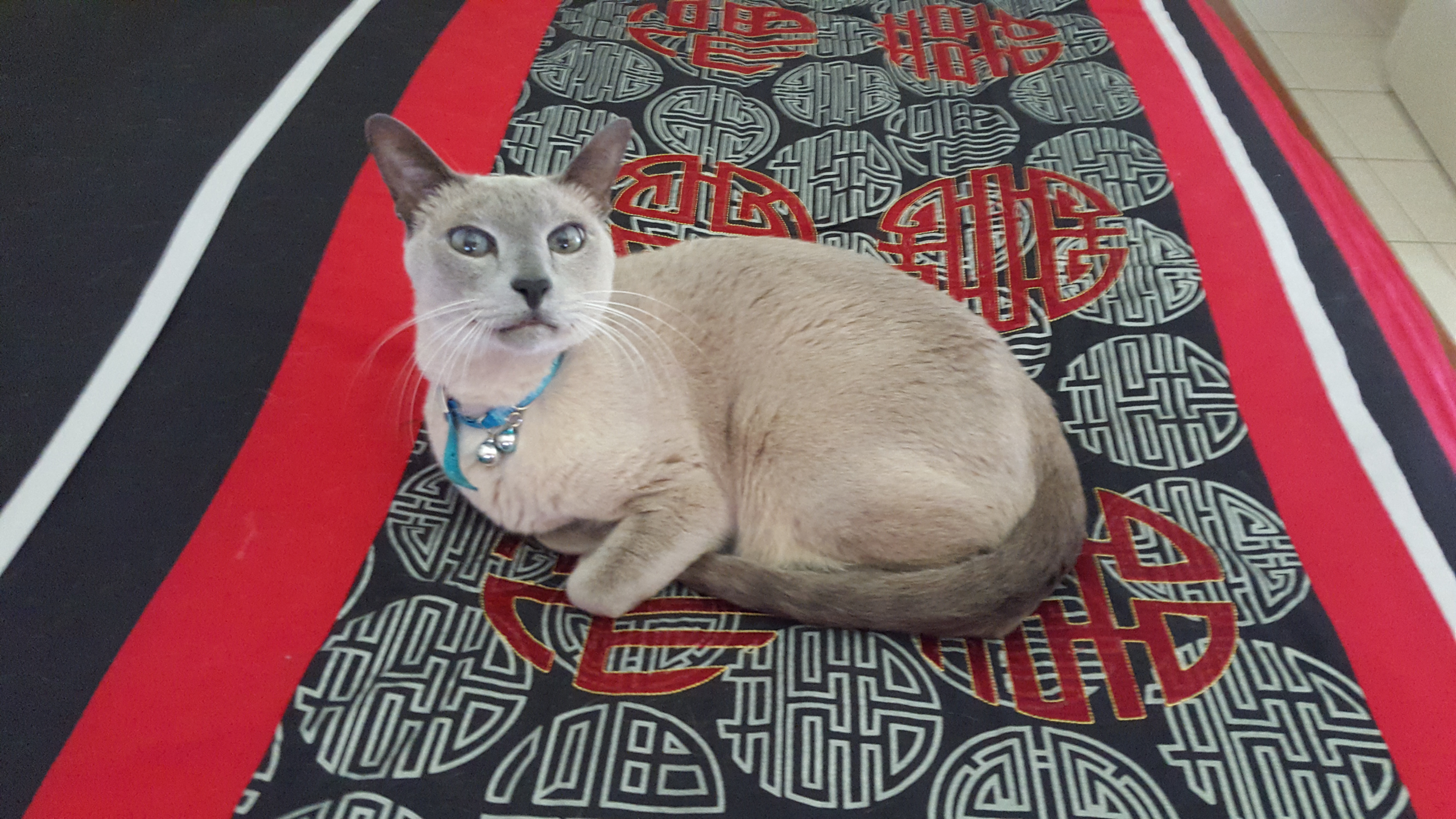
This is Chester.  I’ve just dropped the bombshell we’re thinking of getting a dog.

So, the first response from him:  Well, the last dog didn’t turn out so well, did it?

We didn’t tell him what happened to the dog, but maybe he’s psychic.

Or is that psycho?

Anyway, the last dog we had moved to my son’s place when he moved, and shortly after, broke his hip and had to be put down.

So I say, that dog moved when my son left.  I don’t have any more sons living in, so that won’t be a problem.

It’s going to be a mistake.

Oh, how?

You know they all start out like soft furry balls, like cat’s I’ll admit, but then they grow up, and up, and up, and up.  And eat you out of house and home.  Not like us lovable cats, we stay small furry balls, and don’t eat all that much.

No, you’re just fussy, and it’s like hell on earth getting you to eat.

Then stop buying the cheap stuff.

Cheap?  Cheap?  That last lot of food cost an arm and a leg.  At least with a dog, it will eat anything, including scraps from the table.

He gives me that condescending look reserved for people who think they own or know cats.

As you wish, my Lord.

Then he walks off, head in the air and tail swishing in annoyance.

An excerpt from “Betrayal” – a work in progress

It could have been anywhere in the world, she thought, but it wasn’t.  It was in a city where if anything were to go wrong…

She sighed and came away from the window and looked around the room.  It was quite large and expensively furnished.  It was one of several she had been visiting in the last three months.

Quite elegant too, as the hotel had its origins dating back to before the revolution in 1917.  At least, currently, there would not be a team of KGB agents somewhere in the basement monitoring everything that happened in the room.

There was no such thing as the KGB anymore, though there was an FSB, but such organisations were of no interest to her.

She was here to meet with Vladimir.

She smiled to herself when she thought of him, such an interesting man whose command of English was as good as her command of Russian, though she had not told him of that ability.

All her knew of her was that she was American, worked in the Embassy as a clerk, nothing important, who life both at work and at home was boring.  Not that she had blurted that out the first tie she met, or even the second.

That first time, at a function in the Embassy, was a chance meeting, a catching of his eye as he looked around the room, looking, as he had told her later, for someone who might not be as boring as the function itself.

It was a celebration, honouring one of the Embassy officials on his service in Moscow, and the fact he was returning home after 10 years.  She had been there one, and still hadn’t met all the staff.

They had talked, Vladimir knew a great deal about England, having been stationed there for a year or two, and had politely asked questions about where she lived, her family, and of course what her role was, all questions she fended off with an air of disinterested interest.

It fascinated him, as she knew it would, a sort of mental sparring as one would do with swords, if this was a fencing match.

They had said they might or might not meet again when the party was over, but she suspected there would be another opportunity.  She knew the signs of a man who was interested in her, and Vladimir was interested.

The second time came in the form of an invitation to an art gallery, and a viewing of the works of a prominent Russian artist, an invitation she politely declined.  After all, invitations issued to Embassy staff held all sorts of connotations, or so she was told by the Security officer when she told him.

Then, it went quiet for a month.  There was a party at the American embassy and along with several other staff members, she was invited.  She had not expected to meet Vladimir, but it was a pleasant surprise when she saw him, on the other side of the room, talking to several military men.

A pleasant afternoon ensued.

And it was no surprise that they kept running into each other at the various events on the diplomatic schedule.

By the fifth meeting, they were like old friends.  She had broached the subject of being involved in a plutonic relationship with him with the head of security at the embassy.  Normally for a member of her rank it would not be allowed, but in this instance it was.

She did not work in any sensitive areas, and, as the security officer had said, she might just happen upon something that might be useful.  In that regard, she was to keep her eyes and ears open, and file a report each time she met him.

After that discussion she got the impression her superiors considered Vladimir more than just a casual visitor on the diplomatic circuit.  She also formed the impression the he might consider her an ‘asset’, a word that had been used at the meeting with security and the ambassador.

It was where the word ‘spy’ popped into her head and sent a tingle down her spine.  She was not a spy, but the thought of it, well, it would be fascinating to see what happened.

A Russian friend.  That’s what she would call him.

And over time, that relationship blossomed, until, after a visit to the ballet, late and snowing, he invited her to his apartment not far from the ballet venue.  It was like treading on thin ice, but after champagne and an introduction to caviar, she felt like a giddy schoolgirl.

Even so, she had made him promise that he remain on his best behaviour.  It could have been very easy to fall under the spell of a perfect evening, but he promised, showed her to a separate bedroom, and after a brief kiss, their first, she did not see him until the next morning.

So, it began.

It was an interesting report she filed after that encounter, one where she had expected to be reprimanded.

She wasn’t.

It wasn’t until six weeks had passed when he asked her if she would like to take a trip to the country.  It would involve staying in a hotel, that they would have separate rooms.  When she reported the invitation, no objection was raised, only a caution; keep her wits about her.

Perhaps, she had thought, they were looking forward to a more extensive report.  After all, her reports on the places, and the people, and the conversations she overheard, were no doubt entertaining reading for some.

But this visit was where the nature of the relationship changed, and it was one that she did not immediately report.  She had realised at some point before the weekend away, that she had feelings for him, and it was not that he was pushing her in that direction or manipulating her in any way.

It was just one of those moments where, after a grand dinner, a lot of champagne, and delightful company, things happen.  Standing at the door to her room, a lingering kiss, not intentional on her part, and it just happened.

And for not one moment did she believe she had been compromised, but for some reason she had not reported that subtle change in the relationship to the powers that be, and so far, no one had any inkling.

She took off her coat and placed it carefully of the back of one of the ornate chairs in the room.  She stopped for a moment to look at a framed photograph on the wall, one representing Red Square.

Then, after a minute or two, she went to the mini bar and took out the bottle of champagne that had been left there for them, a treat arranged by Vladimir for each encounter.

There were two champagne flutes set aside on the bar, next to a bowl of fruit.  She picked up the apple and thought how Eve must have felt in the garden of Eden, and the temptation.

Later perhaps, after…

She smiled at the thought and put the apple back.

A glance at her watch told her it was time for his arrival.  It was if anything, the one trait she didn’t like, and that was his punctuality.  A glance at the clock on the room wall was a minute slow.

The doorbell to the room rang, right on the appointed time.

She put the bottle down and walked over to the door.

A smile on her face, she opened the door.

It was not Vladimir.  It was her worst nightmare.

© Charles Heath 2020

Searching for locations: New York to Vancouver

The flight from Newark via Air Canada to Vancouver is about 5:30pm so we are slated to be picked up by the limousine at about 2:30.

We have to be out of our room by 11am so we decided the day before that on our last day in New York we’d go to the Times Square red lobster. It gives us about three hours to get there, eat, and get back.

It’s always fun packing bags the day you leave, so most of the hard work was done earlier. This time it’s particularly a trial because we have so much stuff to fit into a small space, and weight considerations are always paramount because of the 23kg limit.

Outside is has gone from minus four to minus two in the two hours before we leave the hotel at 11:30, but that’s not so much of a problem because we have a long walk from 56th street to 41st street to warm us up.

At least today it’s not as cold, as it has been previously.

At Red Lobster it’s not difficult to make a decision on what to have, the mix-and-match special, with Lobster alfredo, filet mignon, and parrot island coconut shrimp, with Walt’s special, though what that will remain a surprise until it is served.

To drink, it was the Blue moon beer, wheat type.

For appetizers, we had scones that are supposedly bread but to me are dipped in garlic butter and baked like a scone. Australian style. They are absolutely delicious.

There is an expression a one-drink screamer and we’ve got one, but the truth is the drinks are very lethal. Pure alcohol and ice with a touch of soda.

The meals at this Red Lobster are definitely better than those we had in Vancouver, except for the pasta with lobster I had which was little more than a tasteless congealed mess after it reached the table. This did not detract from the deliciously cooked and served seafood that accompanied it.

All in all, after such a great lunch and the thought of having to walk ten blocks the decision was unanimous to get a cab which took us back to the hotel by a rather interesting, if not exactly the most direct, route. I think the driver guessed we were tourists.

We are picked up at the hotel by a driver in a large Toyota which had enough space for 3 passengers and all our bags. The driver was chatty and being foreign, preferred soccer to the other traditional American sport. Don’t ask me how the conversation turned to sports, but we may have mentioned we went to the ice hockey.

At Newark airport, all I have room for is a glass of burned beer, whatever that means, though it has an odd taste, and a Samuel Adams 76 special which was rather tasty.

Today we are flying in a Boeing 787-9 Dreamliner with a maximum of 298 passengers in three classes.

It looks very new even though it is about 6 months old. It has seating of 3 x 3 x 3, and we are in row 19, just behind the premium economy cabin, and the closest to the front of the plane of all the Air Canada flights.

Engine startup is loud at the lower revolutions with the vibration going through the airframe. Like all planes, the flaps being extended, it is very noisy. All of the vibrations go away when the engines are up to speed. On take off the engines at max are not as noisy as other planes and are relatively quiet. It will be interesting to see what the landing is like.

In-flight when not experiencing turbulence the ride is very smooth and reasonably quiet which is better than the other planes with seeming continuous engine whining and the flow of air past the fuselage.

The seats are comfortable but still just a little small and the middle passenger can be tightly squeezed in if the two on either side are larger than normal. The seats fully recline but the seatback is not completely in your face, and bearable when you recline your own seat.

There are several seats by the toilets that would be terrible on a long-distance flight because the passenger inevitably comes very close to the seat when entering and leaving. As for the toilets, they are larger than any of the other aeroplanes, and so too, coincidentally, are the windows.

The plane also makes the same amount of noise when it lands so I’m failing to see what’s so good about it. I’ve also been in an Airbus A350 and those planes are nothing to write home about either.

I suspect the only advantage of having planes is for airlines. Fewer costs and more sardined passengers.

It’s something else I can write off my bucket list.

When we arrive back in Vancouver it’s the same reasonably simple process to get through immigration.

Outside our driver is waiting and this time we have an Escalade picking us up. A very large SUV that fits us all and our luggage.

But…

We were lucky because we were supposed to be picked up in a sedan and the baggage would not have fitted which would have involved one of us taking a cab with the extra luggage.

He was in the neighbourhood and picked up the call. His advice, called the service and request a bigger car and pay the difference. We did. It was going to cost another 20 dollars.

As for the hotel, what is it with hotels and late-night arrivals? We get in, the check-in was smooth, we get to the room. Very large with a separate bedroom. But only a sofa bed.

It was not a desirable option, not before 24 hours in relatively squashed plane seats, so it necessitated a change of rooms to one a bit smaller, but a corner room with a reasonable view, and two proper beds.

Late night, need rest, but we have free breakfast so there will be no tarrying the next morning. We have to be down by 9am being Sunday.

Besides, we have a mission. There is a toys-are-us nearby and it does have the toy we want. All we need to find is a cab.