Searching for locations: San Gimignano, Italy

We have visited this town on a hill, famous for its fourteen towers, twice.  The first time we stayed in a hotel overlooking the main piazza, and the second time, for a day visit, and return to a little restaurant tucked away off the main piazza for its home cooking.

No cars are allowed inside the town and parking is provided outside the town walls.  You can drive up to the hotel to deliver your baggage, but the car must return to the carpark overnight.

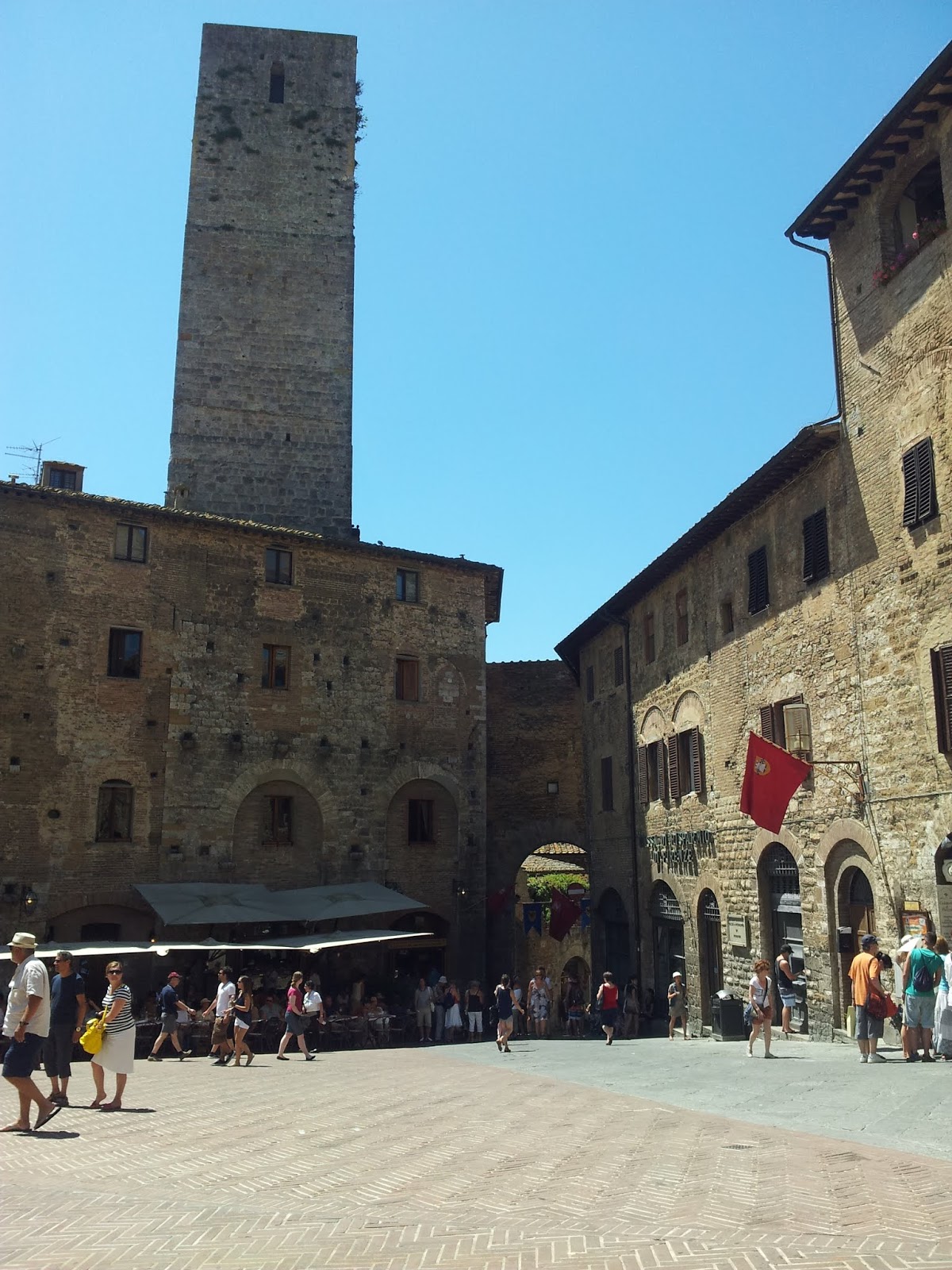
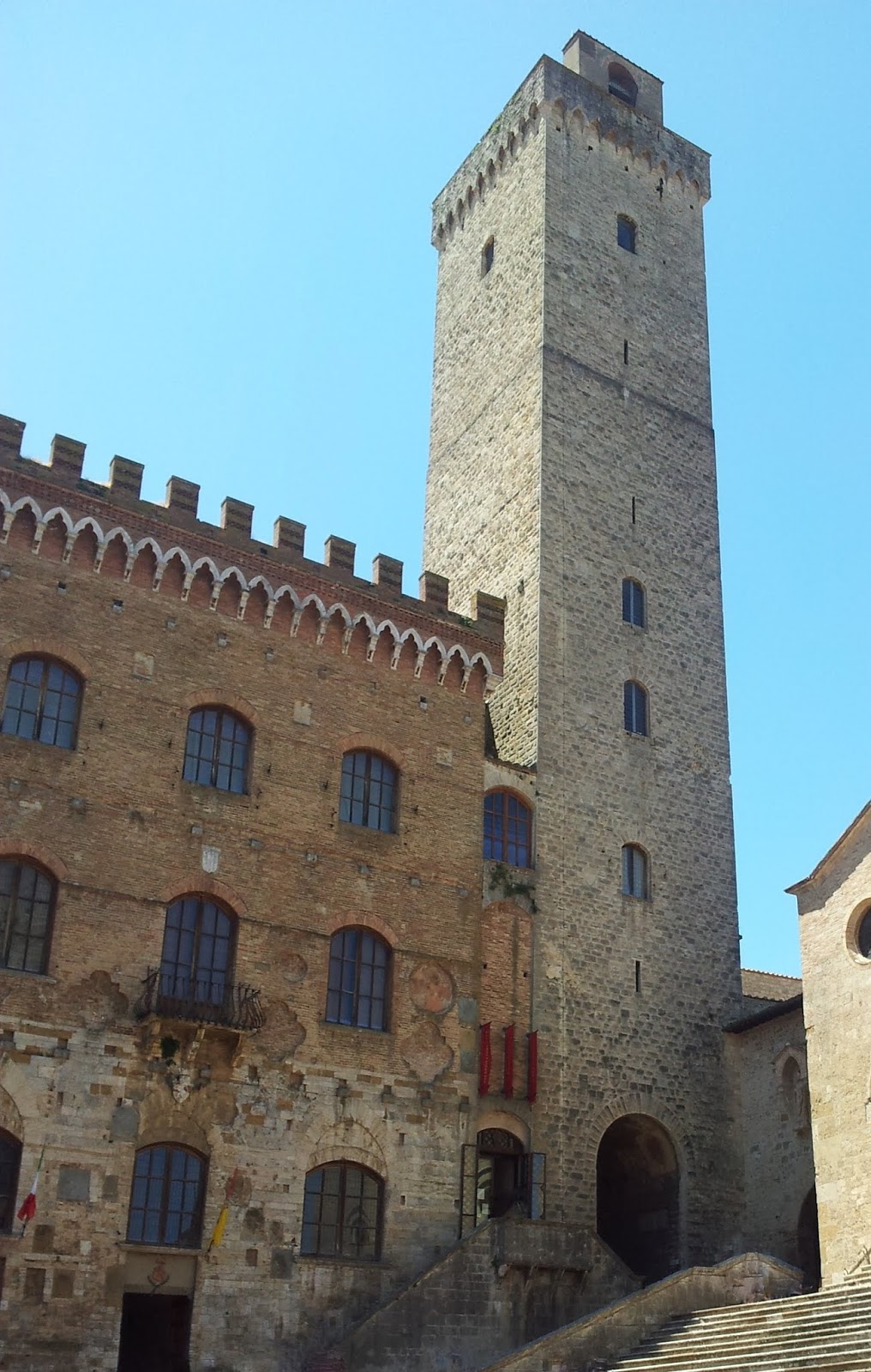
This is one of the fourteen towers

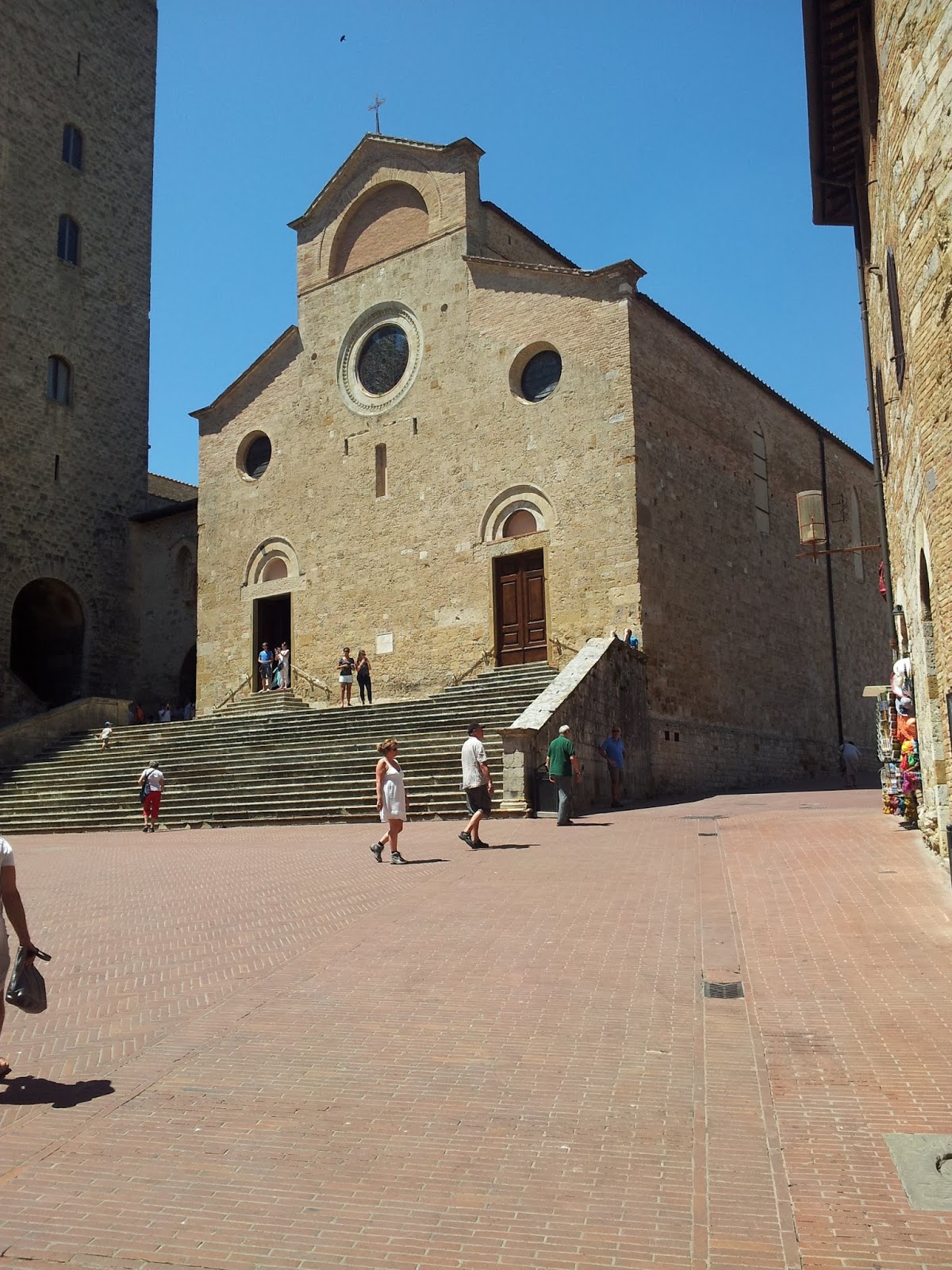
I didn’t attempt to climb to the tower, which you can do in some of them, just getting up the church steps was enough for me.  Inside the building was, if I remember correctly, a museum.

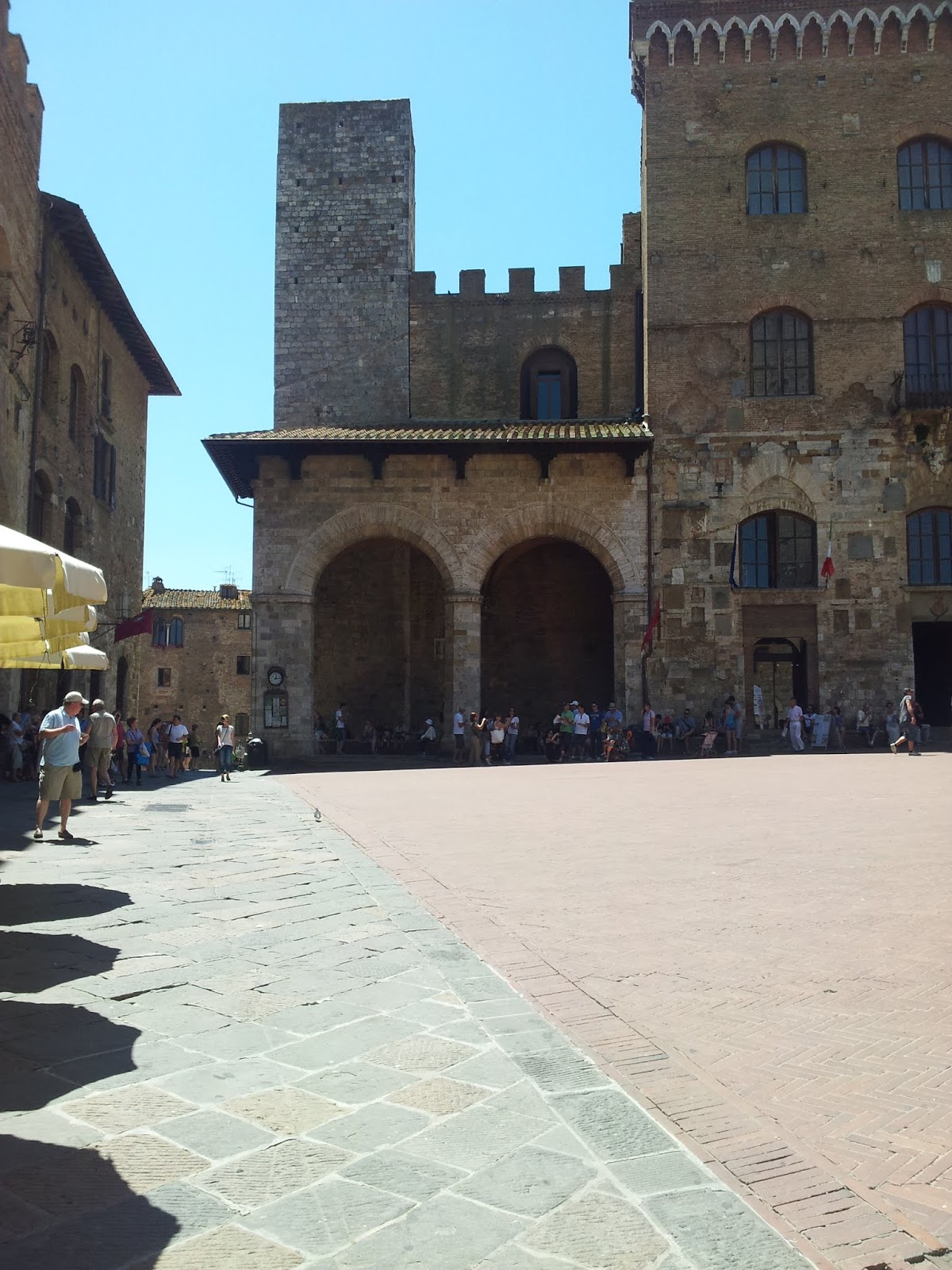
Looking up the piazza towards some battlements, and when you reach the top and turn left, there is a small restaurant on the right-hand side of the laneway that had the best wild boar pasta.

Another of the fourteen towers, and through the arch, down a lane to the gated fence that surrounds the town.  The fortifications are quite formidable and there are several places along the fence where you can stand and look down the hill at the oncoming enemy (if there was one).

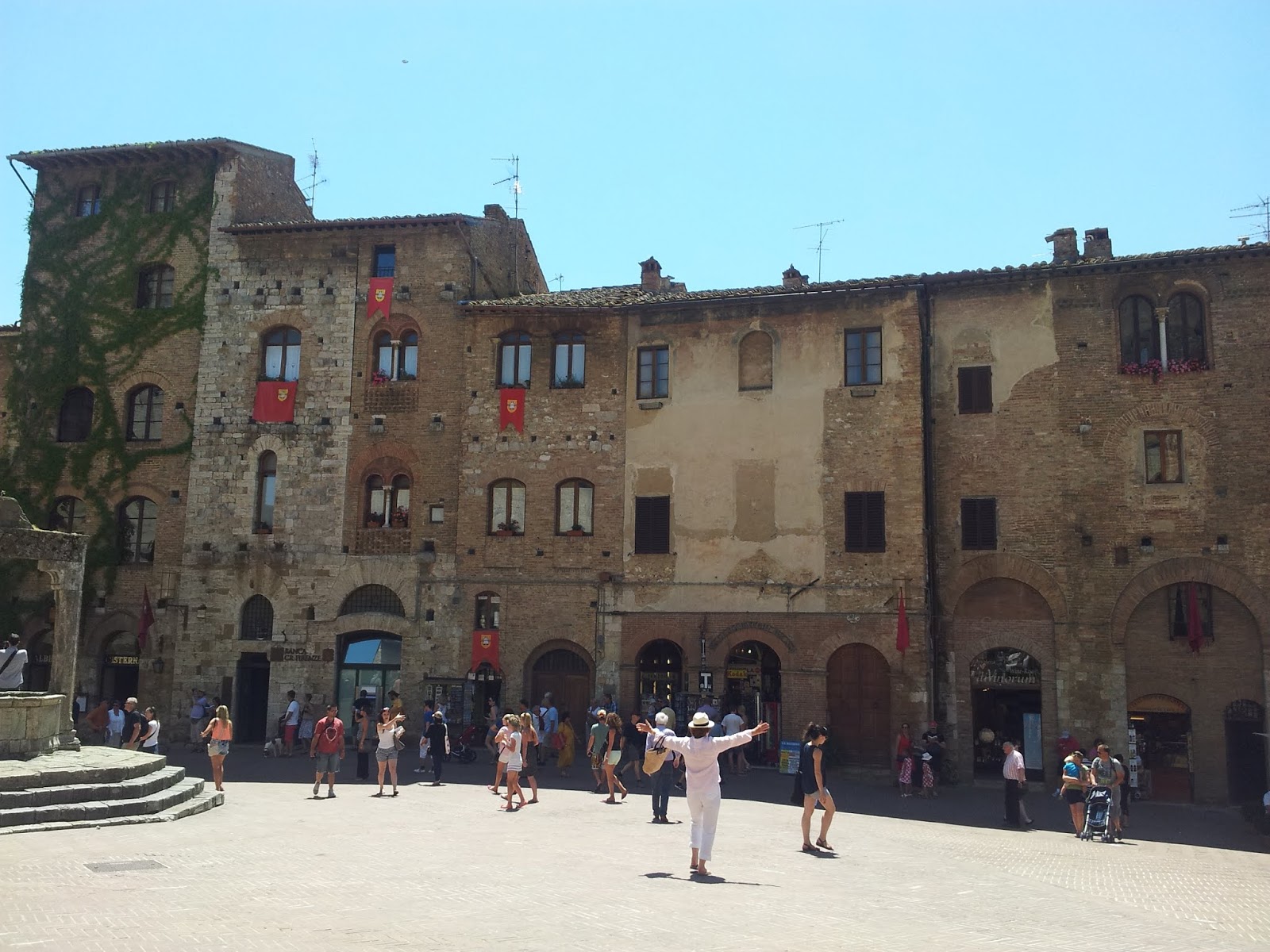
Part of the main piazza which is quite large, and on the right, the wishing well where my wish for a cooler day was not granted.

Officially, the Piazza della Cisterna is the most beautiful square of the town, San Gimignano.  The well was built in 1273 and enlarged in 1346 by Podestà Guccio dei Malavolti.

And not to be outdone by any other the other old towns, there is an old church, one of several.  It is the Collegiate Church or the Duomo di San Gimignano, a monument of Romanesque architecture built around 1000 and enlarged over time.

Next door is the Museum of Sacred Art.

And I guess it’s rather odd to see television aerials on top of houses that are quite literally about a thousand years old.  I wonder what they did back then for entertainment?

Searching for locations: Venice, Italy (Again)

We have visited Venice twice, in 2006 and not so long ago.

Not much had changed from visit to visit.

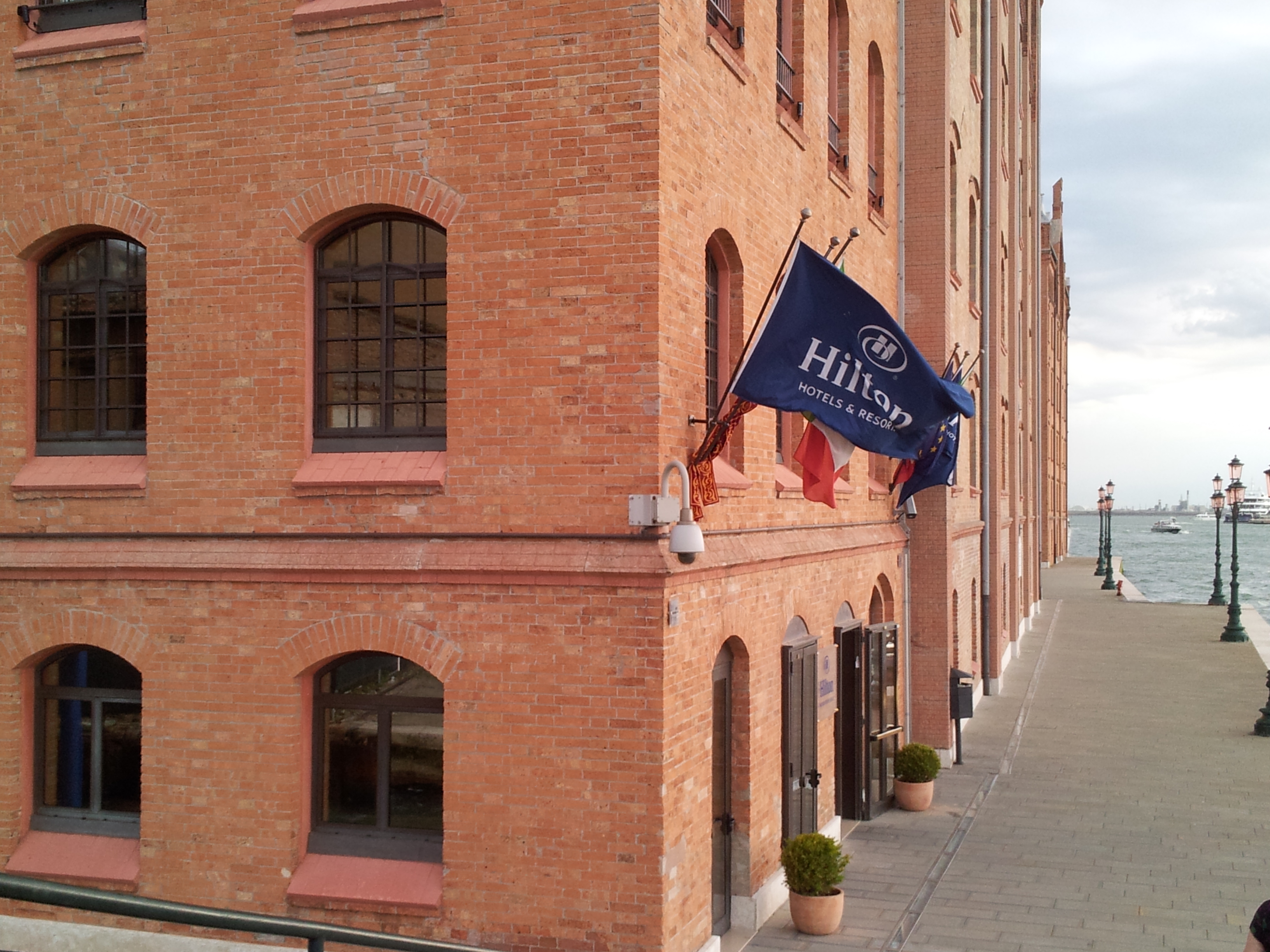
Instead of staying in a hotel selected by a travel agent, the Savoia and Jolanda on the waterfront of Riva Degli Schiavoni, because I’m a Hilton Honors member, more recently we stayed at the Hilton Molino Stucky.  It was located on an island, Giudecca, and had its own transport from the hotel to St Mark’s Square for a very reasonable one-off charge for the stay.

hiltonmolinostuckey2

On our first visit, we traveled from Florence to Venice.  We were advised to take a water taxi to the hotel, not only the most direct route but to see some of Venice from the water.  The only drawback, you have to negotiate a price with the driver.

We were not very good negotiators, and it cost 60 Euros.

But, despite the cost, it was worth every Euro because the taxi driver took us by the scenic route, directly from the Station to the doorstep of our hotel.  For a first time in Venice, and you want to see it from the water, a water taxi is the best option.

2013-06-25 17.09.16

The first time we stayed at the Savoia and Jolanda Hotel, which was at the time quite old, and the room we had, on the ground floor, was comfortable enough, but being November, they had just stopped using the air conditioning, it was still quite warm and at times uncomfortable.

There were better rooms, but this was beyond the knowledge of the travel agent, and one of the reasons we stopped using agents to book hotels.

The most recent visit we had driven down from Salzburg to Venice airport where we had to return the hire car.  From there we were intending to take a private water taxi from the airport to the hotel, for an estimated 120 Euros.

We saved our money and took the ACTV public waterbus, from the airport to the hotel, with one stop.  It took a little over an hour and was equally as scenic.

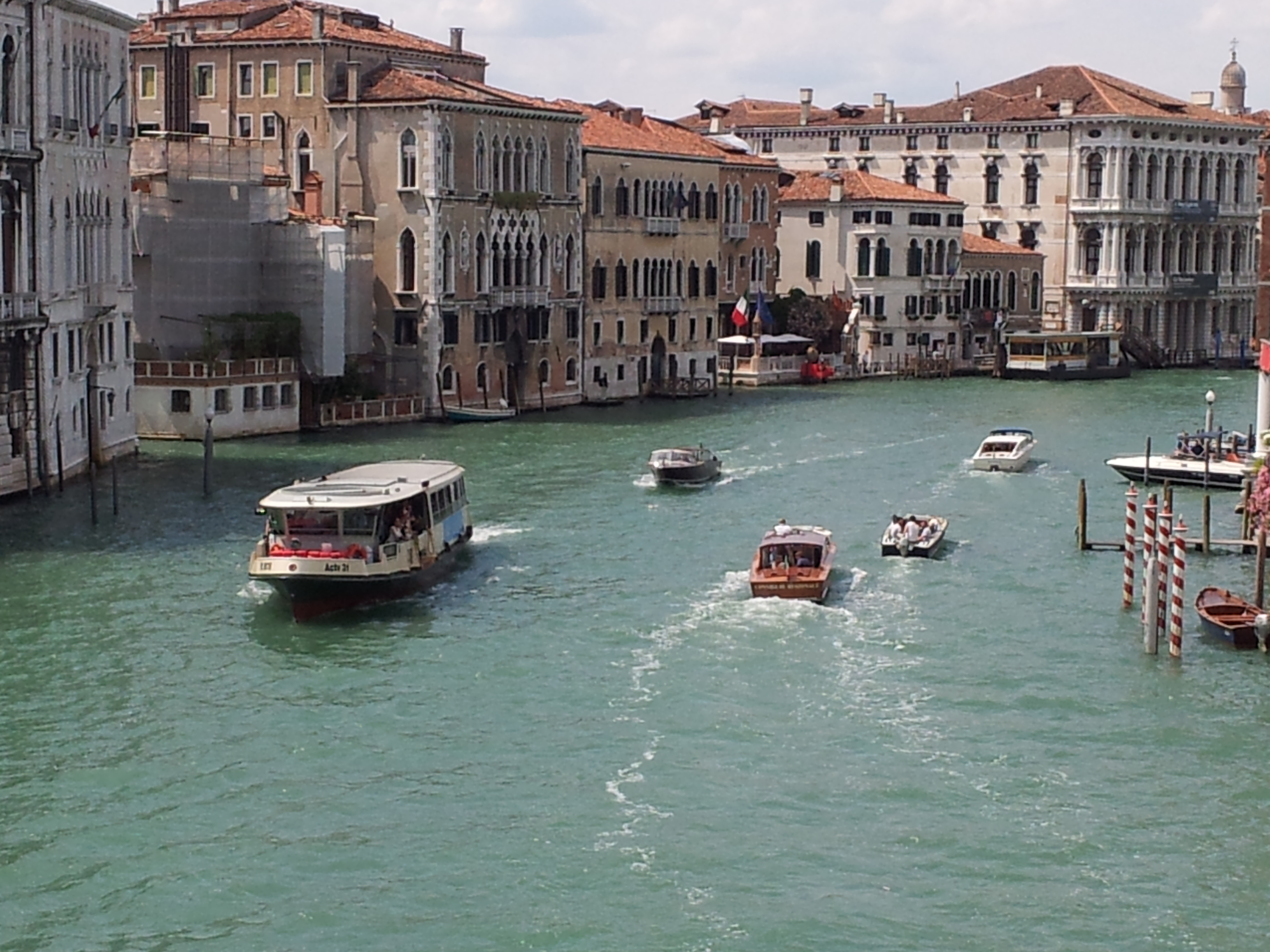
venicecanals1

Our room in the Hilton was on one of the upper levels, floor four, and had a view of the canal, the large passenger ships coming and going, as well as a remarkable view of Venice itself as far up the canal to St Marks Square in one direction, and the port for the passenger ships in the other.

20130627_081601

We got to see three or four very large passenger ships come and go, along with a lot of other craft.  I hadn’t realized how busy the waterways, and the Grand Canal, were.

20130627_174408

Each evening after a day’s exploring we would end up in the Executive Lounge, and then one of the many restaurants, usually Il Molino for breakfast, and the Rialto Lobby Bar and Lounge for dinner.  After that, it was a stroll down the waterfront taking in the night air, and perhaps to walk off the delicious dinner.

Searching for Locations: Venice, Italy

Venice is definitely a city to explore.  It has an incredible number of canals and walkways, and each time we would start our exploration at St Marks square when it’s not underwater

Everyone I have spoken to about exploring Venice has told me how easy it is to get lost.  It has not happened to me, but with the infinite number of ways you can go, I guess it is possible.

We started our exploration of Venice in St Marks square, where, on one side there was the Museo di Palazzo Ducale and, next door, the Basilica di San Marco.  Early morning and/or at high tide, water can be seen bubbling up from under the square, partially flooding it.  I have seen this happen several times.  Each morning as we walked from the hotel (the time we stayed in the Savoia and Jolanda) we passed the Bridge of Sighs.

Around the other three sides of the square are archways and shops.  We have bought both confectionary and souvenirs from some of these stores, albeit relatively expensive.  Prices are cheaper in stores that are away from the square and we found some of these when we walked from St Marks square to the Railway station, through many walkways, and crossing many bridges, and passing through a number of small piazzas.

That day, after the trek, we caught the waterbus back to San Marco, and then went on the tour of the Museo di Palazzo Du which included the dungeons and the Bridge of Sighs from the inside.  It took a few hours, longer than I’d anticipated because there was so much to see.

The next day, we caught the waterbus from San Marco to the Ponte di Rialto bridge.  Just upstream from the wharf there was a very large passenger ship, and I noticed there were a number of passengers from the ship on the waterbus, one of whom spoke to us about visiting Venice.  I didn’t realize we looked like professional tourists who knew where we were going.

After a pleasant conversation, and taking in the views up and down the Grand Canal, we disembarked and headed for the bridge, looking at the shops, mostly selling upmarket and expensive gifts, and eventually crossing to the other side where there was a lot of small market type stalls selling souvenirs as well as clothes, and most importantly, it being a hot day, cold Limonata.  This was my first taste of Limonata and I was hooked.

Continuing on from there was a wide street at the end and a number of restaurants where we had lunch.  We had a map of Venice and I was going to plot a course back to the hotel, taking what would be a large circular route that would come out at the Accademia Bridge, and further on to the Terminal Fusina Venezia where there was another church to explore, the Santa Maria del Rosario.

This is a photo of the Hilton Hotel from the other side of the canal.

It was useful knowledge for the second time we visited Venice because the waterbus from the Hilton hotel made its first stop, before San Marco, there.  We also discovered on that second visit a number of restaurants on the way from the terminal and church to the Accademia Bridge.

This is looking back towards San Marco from the Accademia Bridge:

And this, looking towards the docks:

Items to note:

Restaurants off the beaten track were much cheaper and the food a lot different to that in the middle of the tourist areas.

There are a lot of churches, big and small, tucked away in interesting spots where there are small piazza’s.  You can look in all of them, though some asked for a small fee.

Souvenirs, coffee, and confectionary are very expensive in St Marks square.

“Strangers We’ve Become” – Countdown to publishing in ??? Days

Here’s the thing…

It was down to the day before publishing.

Years of hard work were about to see the light of day…

Then the sky fell in.

Well, it wasn’t quite that dramatic but it came a close second.

My editor had been away and had forgotten to send an email to say that there were some last-minute changes that she wanted considered.

That email finally turned up in our inboxes the day before the book was about to be published.

Now I have a fortnight to read through the suggestions and then write the necessary changes, some of which have a more serious impact than just a localised rewrite.

The publication date is now moved back a month to a date in the first week of April, hopefully not April Fools Day.

I’ll let you know when the countdown restarts.

Searching for locations: Rome, Italy

We visited Rome in August

It was hot.

It was verrrry hot.

We flew into Rome’s Leonardo da Vinci-Fiumicino airport after a rather bumpy flight from London.  Unlike most other airports the plane parked at a satellite terminal and after we disembarked we had to catch a train to the main terminal.

The most notable memory of this airport was my daughter’s discovery of a salami shop.

We had booked a transfer to take us to the hotel the Roma Corso Trieste Mercure in Via Gradisca from the airport.  It was a white air-conditioned van and so far we had avoided the heat.

One of the rooms had faulty air conditioning an absolute must as the rooms were very hot without it and necessitated a room change which was done quickly and efficiently.

The hotel was in the suburbs and without a car we were dependent on public transport.  According to the reception staff, there was a bus stop nearby, and a longer walk to the tram or light railway.  The bus seemed to be the best option as it would take us to the central terminal near the railway station, where all tour buses also operated from, and particularly the open-top buses that went to all the major tourist attractions.

That first day basically was given over to travelling, arriving by plane and settling into the hotel, thus we didn’t get to feel the force of the heat.  That came the next day.

After a walk around the hotel precinct to get our bearings and see what shops and restaurants were available, on returning to the hotel we were faced with limited choices of room service or to go out for dinner.

My daughter and l go for a long walk up Via Nomentana to find several shops and a restaurant.  We went into the restaurant and sat down.   We waited for 10 minutes and got no service nor did anyone come and ask us if we wanted to order food so instead we left somewhat disappointed and go next door to what seemed to be the Italian version of a delicatessen and ordered sandwiches and beer.   I bought a half dozen cans of Moretti beer two of which I drank on the way home.

It was still very hot even at eight at night and the sandwiches are delicious.  It just might be by that time we were starving and anything would have tasted great.

The next morning we are up and ready to chance the weather and some history.  Breakfast at the hotel is limited but very good.

We were going to use public transport and I’d studied up on the Internet.

Travelling on the bus required pre-purchase of tickets which could be bought in certain shops and locally when exploring the area near the hotel, l found a tobacconist.

Next, we needed to understand how to use the tickets. There was no one on the bus who could help so when l tried to scan the tickets and it failed, l gave up.  We had the same issue each day and in the end, the tickets never got used.

The trip to central Rome by bus took about 15 minutes.  In the morning it was reasonably cool and showed us a little of suburban Rome.  We also saw the trams but we would not be able to use them because our hotel not on a direct route.

That first full day we decided to go and see the Vatican.

Not understanding buses and which one we needed to get to the Vatican, we took a taxi.

Wow.  It was the metaphorical equivalent of driving over the edge of a cliff with a daredevil.  It was quite literally terrifying.

Or maybe we just didn’t know that this was probably the way people drove in Rome.

Shaken but delivered in one piece we found ourselves in the square opposite St Peters Basilica.

The square is impressive, with the statues atop a circular colonnaded walkway.  The church is incredible and took a few hours to take in and to top off the day we did a tour of the Vatican museum which took the rest of the afternoon.

Then it was back to the delicatessen for more sandwiches and beer, and an interesting discussion with several elderly Italian ladies, of which I did not understand one word.

On the second full day we decided to use one of the open-top bus tours and eventually decided on the hop-on hop-off tour simply because the bus was at the central transport terminal for trains and buses and it was getting hotter.

Our first stop was the Colosseum.  There were other monuments nearby, such as the Arch of Constantine, but as the heat factor increased we joined the queue to go into the Colosseum and gladly welcomed the shade once we got inside.

The queue was long and the wait equally so, but it was worth the wait.  It would be more interesting if they could restore part of it to its former glory so we could get a sense of the place as it once was.  But alas that may never happen, but even so, it is still magnificent as a ruin.

Outside in the heat, it was off to the ruins which were a longish walk from the Colosseum, taking Via Sacra, not far from the Arch of Constantine.  This day in the walkway there were a number of illegal vendors, selling knockoff goods such as handbags and watches, and who, at the first sight of the police, packed up their wares in a blanket and ran.

Included in these ruins were The Roman Forum, or just a few columns remaining, the Palatine Hill, Imperial Fori, including the Forum of Augustus, the Forum of Caesar, and more specifically the Forum of Trajan.  It was, unfortunately very hot and dusty in the ruins the day we visited.

We walked all the way to the Foro Romano and the Septimus Severo Arch at the other end of the ruins, past the Temple of Caesar.  I found it very difficult to picture what it was like when the buildings were intact, so I bought a guide to the ruins which showed the buildings as ruins and an overlay of how they would have looked.  The buildings, then, would be as amazing as the Colosseum, and it would have been interesting to have lived back then, though perhaps not as a Christian.

I lost count of the number of bottles of water we bought, but the word ‘frizzante’ was ringing in my ears by the end of the day.  Fortunately, the water did not cost a lot to buy.

At the end of the day, we caught the hop on hop off the bus at the Colosseum and decided not to get off and see any more monuments but observe them from the bus.  The only one I remember seeing was Circo Massimo.  Perhaps if we’d known it was going to be twice as hot on the bus, yes, there was no air-conditioning; we may have chosen another form of transport to get back to the hotel.

On the third and last day in Rome, we decided to go to the Trevi Fountain, see the pantheon and walk up the Spanish Steps.  We spent most of the morning in the cool of a café watching the tourists at the fountain.  By the time we reached the top of the Spanish Steps, we were finished.
Searching for Locations: The Eiffel Tower, Paris, France

Sorry, reminiscing again…

It was a cold but far from a miserable day.  We were taking our grandchildren on a tour of the most interesting sites in Paris, the first of which was the Eiffel Tower.

We took the overground train, which had double-decker carriages, a first for the girls, to get to the tower.

We took the underground, or Metro, back, and they were fascinated with the fact the train carriages ran on road tires.

Because it was so cold, and windy, the tower was only open to the second level. It was a disappointment to us, but the girls were content to stay on the second level.

There they had the French version of chips.

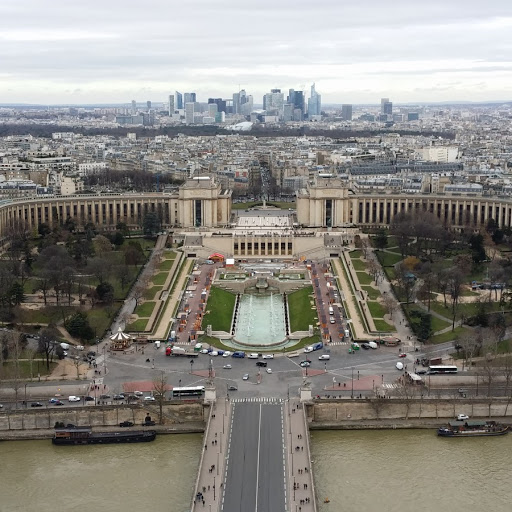
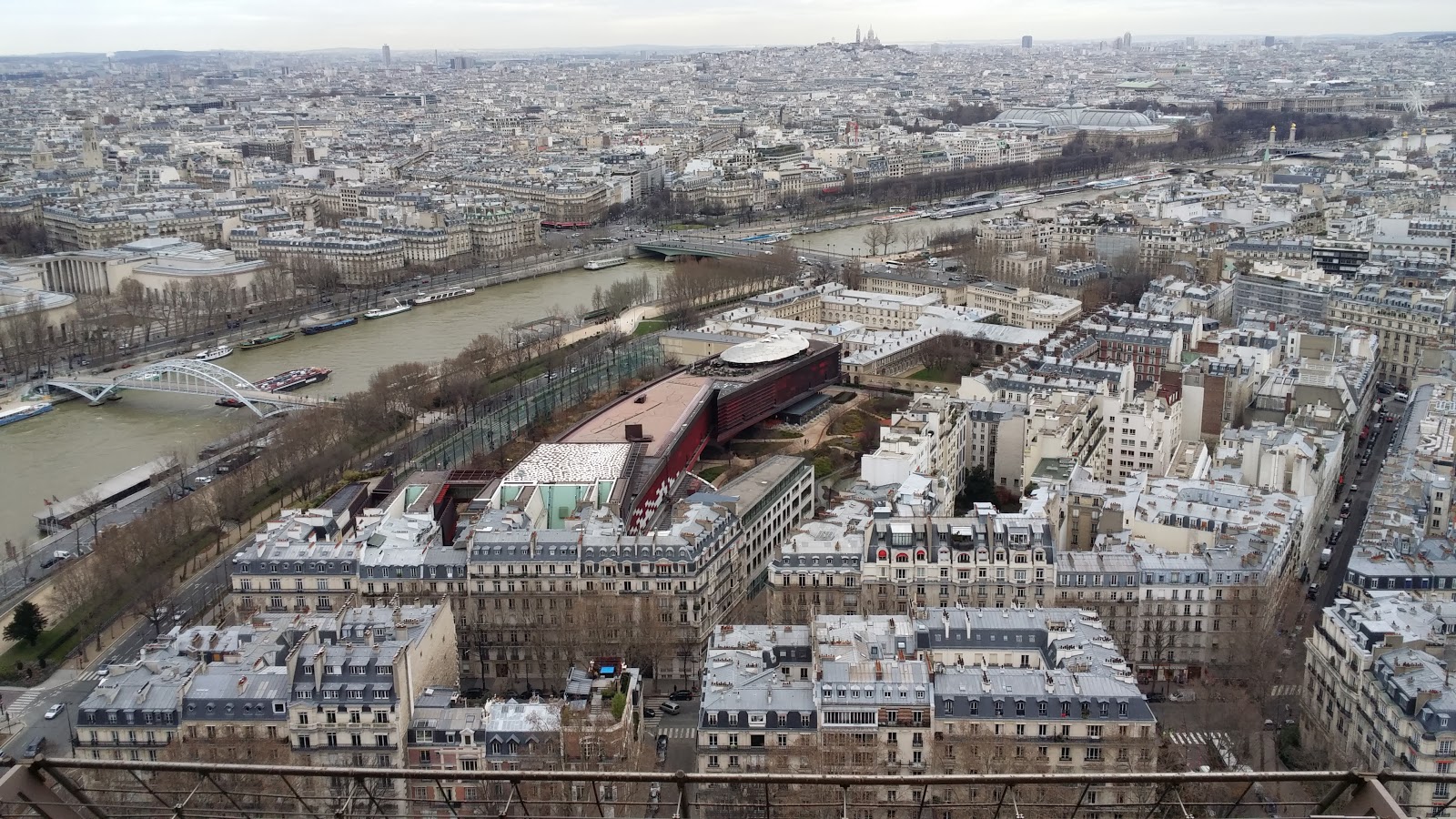
It was a dull day, but the views were magnificent.

20140107_132225

A view of the Seine

20140107_132859

20140107_132208

Sacre Coeur church at Montmartre in the distance.

Another view along the river Seine

Overlooking the tightly packed apartment buildings

Looking along the opposite end of the river Seine

Plots ripped from newspaper headlines – 2

What if … (2)

So, today’s seeming straightforward news event that didn’t make the front page, nor the next three,  
is about the death of a man and a woman who had just begun dating, their bodies being found in an ordinary suburban house.

The police received a call regarding their welfare and upon visiting the house, found the man and woman lying side by side on the floor, deceased.

The police were not treating the deaths as suspicious.

So …

What if …

The first thing that leaps off the page is the fact the police are not treating the deaths as suspicious.

That’s exactly the moment that investigators should be looking at the situation a little more closely because, in our scenario, the scene has a staged look about it, and on the surface, it appears to be a simple case of a dual drug overdose.

Firstly, the friends of the two were not aware they were ‘doing drugs’ and if they were, lying on the floor at home was the last place it would happen.

No drugs were found in the house, and the sniffer dogs could find no trace of any except on the bodies.

Secondly, in the upstairs office, a laptop computer was missing, only the cable and mouse were still sitting on the table.  Curiously both their cell phones were missing, but nothing else.  Between them, they had about 500 pounds, which meant, if there was foul play, the perpetrator had very specific items to take.

Nothing else was disturbed.

Thirdly, a quick examination of the bodies showed the woman had bruising to her neck, a sign that someone had held her in a choke hold perhaps, but the coroner would have a closer look.

Fourthly, a simple check on the names comes back with an access denied flag on the male.

That, as far as Detective Chief Inspector Barnes was concerned, was enough to change the investigation from death by misadventure, to a suspicious, possible murder.

“Strangers We’ve Become” – Countdown to publishing in 12 Days

A hard slog

Surveillance wasn’t easy.  Some thought it was a doddle, just sitting around waiting for something to happen, and, in the meantime, filling up on takeaway and endless coffee.

Some thought it boring because in all likelihood little happened over a long time.

Quite often the funding ran out long before a result was available.

David had nothing else to do, so it was his only option, other than finding a way to annoy the new security.

He found premises near the Featherington London residence, then when the place was least populated, planted listening devices in various places, some to be found, others not.

He tracked the limousine, now driven by the head of security to see where it was going promptly every morning, with the mistress of the house.

Located other premises to be watched, a result no doubt of being able to go through documents at the main residence.

Got an accurate guide to how many men were in the security team, where they went and what times they performed basic duties.

And watched Susan as she slept in her room, making him feel almost like a stalker.

But it didn’t take long for several revelations to surface, the first, Susan had a new relative that he had known of before, but only by sight, and second, someone he thought he could trust was not what he appeared to be.

Time to throw the cat among the pigeons.

Writing about writing a book – Day 13 supplemental

I was going to say ‘Captain’s log supplemental’ and add a stardate, but the analogy might get lost because not everyone is a Star Trekker.

Needless to say, there’s always more to say about an event, especially when the mind is casting about for ideas to add or enhance a story.

It comes down to, does art imitate life, or does life imitate art?  It’s an interesting question because, in this instance, art will be imitating, to a certain extent, life.

Perhaps what is lost in the telling is the inability of newly divorced people in working out where the boundaries are, whether or not they are entitled to know about the other person’s private life, and how that will make them feel.

I’m guessing when a marriage breaks down, there’s always a cause, and while the word amicable gets bandied around a lot, it’s said, but quite often not meant.

Does mummy have a boyfriend?

Does daddy have a girlfriend?

What generally happens is the children are the only ones who know what’s really happening to each of the parents, because they get transported between the two, as neither parent would want to be seen stopping the other from seeing them/

Of course, where the children are grown up and leading their own lives, the situation should be a lot easier.

But, where does this fit in with the story I hear you asking.


Marriages fall apart for many reasons.  In the story, Bill acknowledges that it is largely his fault, and one suspects it’s probably an undiagnosed case of PTSD that back in the sixties and seventies was not really understood.

It led to both he and Ellen leading individual but separate lives whilst keeping up appearances for the sake of their children.  There’s no doubting who brought them up, Ellen, and who had the greater influence over them, although, for the sake of this story, both couldn’t wait to leave home and live somewhere else.

They do, and together.  They are not married and do not have children.  They were not the cause of the breakup, and fortunately, neither of the girls blame one or the other parent.

But that doesn’t mean, over the years, that either parent hasn’t tried to use them to glean information about the other.  It is how Bill discovered, some time ago, that Ellen had ‘a special friend’.

Yet, neither of the daughters have seen him, and not surprisingly, he had made sure that Bill has never seen him.  It’s for a particular reason, one that will become obvious later in the story.  It is, I think, a rather clever twist.

Also, Ellen is not a bad person and certainly wasn’t bad to Bill, perhaps more long-suffering.  She did stay with him for a long time, mainly for the children, but also because she genuinely cared for Bill.

And Bill had not had another woman friend, not until he discovers his feelings towards Jennifer and even then, he keeps that to himself, even when he really doesn’t have to.

Sigh.

Time to return to my fictional world.

I’m writing a detective story…

But the devil is in the detail.

OK, so I’ve seen a lot of detective shows on TV, from America and from Britain.

The British version of detectives is somewhat easier since they call their detectives, Detective Constable, Detective, Sargent, Detective Inspector and Detective Chief Inspector. Easy enough to remember, along with coroners and forensic teams.

The Americans, well they like to do things the hard way, with just Detective, but with grades. Then they have Medical Examiners, and Crime Scene Investigators.

Pity then that I opted for the American version, with a crime committed at the Queens Botanical Gardens car park.

But as we all know, it’s not the what and where, it’s the who, and the zany cast of characters that have to be sifted through, questioned, eliminated, until the guilty party is caught. In the meantime, people will lie, secrets will be uncovered, and red herrings will abound.

My first notion when this was an idea buzzing around in my head, it was going to be an innocent man banged up by circumstantial evidence, and then has to get someone on the outside to prove his innocence.

I’m guessing every felon in jail will swear on a stack of bibles that he or she didn’t do it, but what if it is true? A detective can proceed in the collection of evidence, witness statements, corroboration of facts, and still come to the wrong conclusion, only, at the time, and based on the evidence, it didn’t seem like it.

I’m guessing that’s why the justice system is the way it is, for the protection of the innocent, but, quite often, the law seems to protect the guilty and lock up the innocent. This is just a little tale that is designed to make people think.

What if they were wrong?

Sounds like a good title too