That helicopter story that kept me awake – Episode 47

Our hero knows he’s in serious trouble.

The problem is, there are familiar faces and a question of who is a friend and who is foe made all the more difficult because of the enemy, if it was the enemy, simply because it didn’t look or sound or act like the enemy.

Now, it appears, his problems stem from another operation he participated in, and because of it, he has now been roped into what might be called a suicide mission.

At least the helicopter pilot hadn’t hit the fuel tanks or any of the control wires.

Because of the holes in the fuselage, we couldn’t fly any higher than between two and five thousand feet or go as fast as Davies would like, but the plane settled into a routine and got us where we wanted to go.

Just a few miles from the base, fuel almost exhausted, we got a fighter escort.

At first, I thought the base commander thought we were an unidentified flying object, mainly because something else had been hit, our communications. We couldn’t tell the base we were coming, and they only had the Colonel’s transmission of an approximate arrival time, much earlier than the actual time we were supposed to arrive.

On the ground, we were met with fire trucks, and a military escort, with weapons that could take out a mouse at one thousand yards. Just in case we were terrorists, I suppose.

We were parked in a bay away from the main terminal area and had to wait for a half-hour before we were met by Lallo. Monroe’s comment, that he was probably finishing his lunch which would be more important than meeting us, had kept us waiting.

The two abductees were the first to leave the aircraft, then Shurl’s body was removed after the doctor certified he was dead.

Then the rest of us were allowed to leave the aircraft. A bus was waiting, and everyone bar Monroe and I had boarded and been taken away. Under guard. Perhaps their service had not mitigated their prison sentences. I didn’t ask Lallo why; I’d probably not get the truth anyway.

“Good job,” he said, after watching the bus depart. “Pity, it wasn’t done right the first time.”

A compliment followed by disparagement.

“Next time you can do the job yourself,” Monroe said. “And until you’ve been in the field and actually got shot at, you’d do well to keep that trap of yours shut.”

“May I …”

“…remind me you’re my superior officer? No. I’m sure that status won’t last much longer. I’m applying for a transfer.”

He looked at me. “What about you?”

“Nothing to say, except I don’t blame her. Now, since all you’ve done is prove to me you’re an idiot, I’ll take my leave.”

In the distance I could see a large American car, the sort that proliferated in the 1950s and 1960s before petrol prices were a problem, cutting across the runway at speed. Was it the owner of the DC3 coming to see the damage?

No. When it got closer I could see Bamfield, cigar in mouth, beaming. I suppose no one felt they had the authority to tell him not to.

The car stopped behind Lallo’s jeep and Bamfield got out, then leaned against the driver’s side door and looked at us over the roof.

“James, Monroe. Still alive I see. Pity about the plane; I know the chap who owns it. He’s going to be pissed when he sees the cannon holes. What happened?”

“Bad guys,” Monroe said.

“Of course. Get in, I’ll give you a ride back to the terminal. We can talk on the way.”

Neither of us moved. If Monroe wasn’t going to suffer fools gladly, neither was I.

“Well…”

“I’d rather walk,” I said.

“We’d rather walk, sir.” With a heavy emphasis on the ‘sir’.

“Look, you did a great job, minimal losses, and we got two assets back. Everyone is happy. But, we have a small problem down in South America…”

© Charles Heath 2020-2021

That helicopter story that kept me awake – Episode 47

Our hero knows he’s in serious trouble.

The problem is, there are familiar faces and a question of who is a friend and who is foe made all the more difficult because of the enemy, if it was the enemy, simply because it didn’t look or sound or act like the enemy.

Now, it appears, his problems stem from another operation he participated in, and because of it, he has now been roped into what might be called a suicide mission.

At least the helicopter pilot hadn’t hit the fuel tanks or any of the control wires.

Because of the holes in the fuselage, we couldn’t fly any higher than between two and five thousand feet or go as fast as Davies would like, but the plane settled into a routine and got us where we wanted to go.

Just a few miles from the base, fuel almost exhausted, we got a fighter escort.

At first, I thought the base commander thought we were an unidentified flying object, mainly because something else had been hit, our communications. We couldn’t tell the base we were coming, and they only had the Colonel’s transmission of an approximate arrival time, much earlier than the actual time we were supposed to arrive.

On the ground, we were met with fire trucks, and a military escort, with weapons that could take out a mouse at one thousand yards. Just in case we were terrorists, I suppose.

We were parked in a bay away from the main terminal area and had to wait for a half-hour before we were met by Lallo. Monroe’s comment, that he was probably finishing his lunch which would be more important than meeting us, had kept us waiting.

The two abductees were the first to leave the aircraft, then Shurl’s body was removed after the doctor certified he was dead.

Then the rest of us were allowed to leave the aircraft. A bus was waiting, and everyone bar Monroe and I had boarded and been taken away. Under guard. Perhaps their service had not mitigated their prison sentences. I didn’t ask Lallo why; I’d probably not get the truth anyway.

“Good job,” he said, after watching the bus depart. “Pity, it wasn’t done right the first time.”

A compliment followed by disparagement.

“Next time you can do the job yourself,” Monroe said. “And until you’ve been in the field and actually got shot at, you’d do well to keep that trap of yours shut.”

“May I …”

“…remind me you’re my superior officer? No. I’m sure that status won’t last much longer. I’m applying for a transfer.”

He looked at me. “What about you?”

“Nothing to say, except I don’t blame her. Now, since all you’ve done is prove to me you’re an idiot, I’ll take my leave.”

In the distance I could see a large American car, the sort that proliferated in the 1950s and 1960s before petrol prices were a problem, cutting across the runway at speed. Was it the owner of the DC3 coming to see the damage?

No. When it got closer I could see Bamfield, cigar in mouth, beaming. I suppose no one felt they had the authority to tell him not to.

The car stopped behind Lallo’s jeep and Bamfield got out, then leaned against the driver’s side door and looked at us over the roof.

“James, Monroe. Still alive I see. Pity about the plane; I know the chap who owns it. He’s going to be pissed when he sees the cannon holes. What happened?”

“Bad guys,” Monroe said.

“Of course. Get in, I’ll give you a ride back to the terminal. We can talk on the way.”

Neither of us moved. If Monroe wasn’t going to suffer fools gladly, neither was I.

“Well…”

“I’d rather walk,” I said.

“We’d rather walk, sir.” With a heavy emphasis on the ‘sir’.

“Look, you did a great job, minimal losses, and we got two assets back. Everyone is happy. But, we have a small problem down in South America…”

© Charles Heath 2020-2021

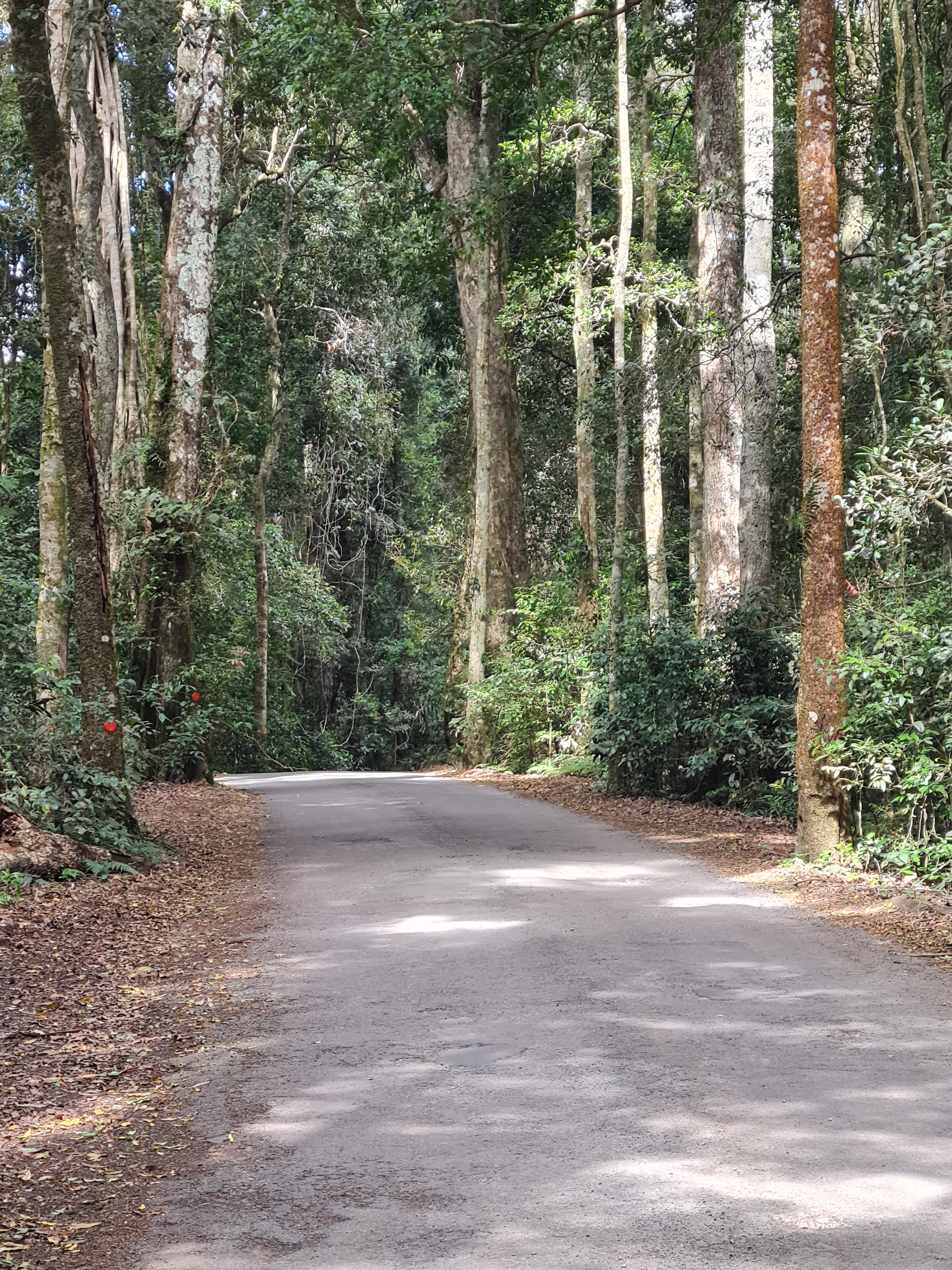
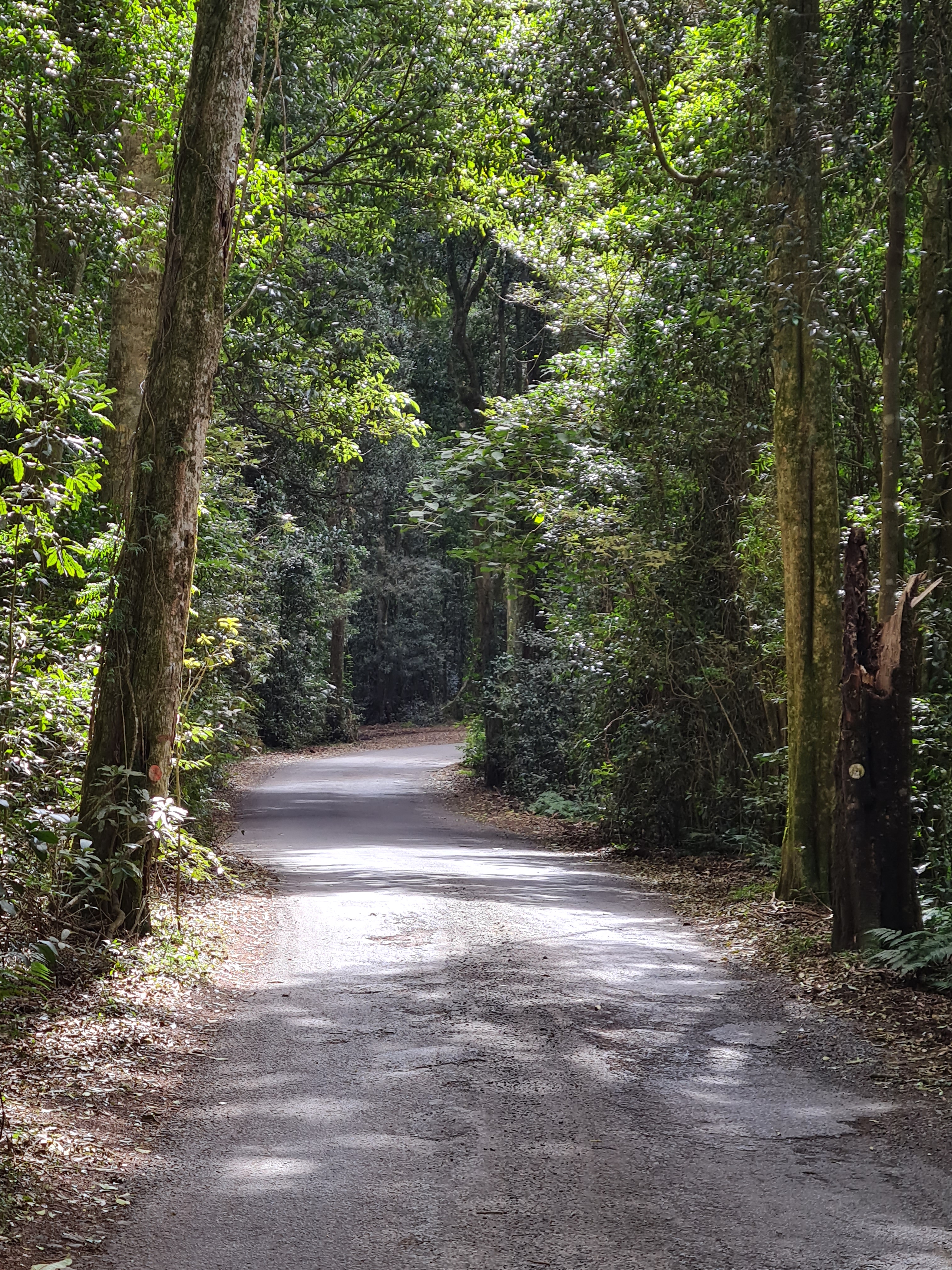
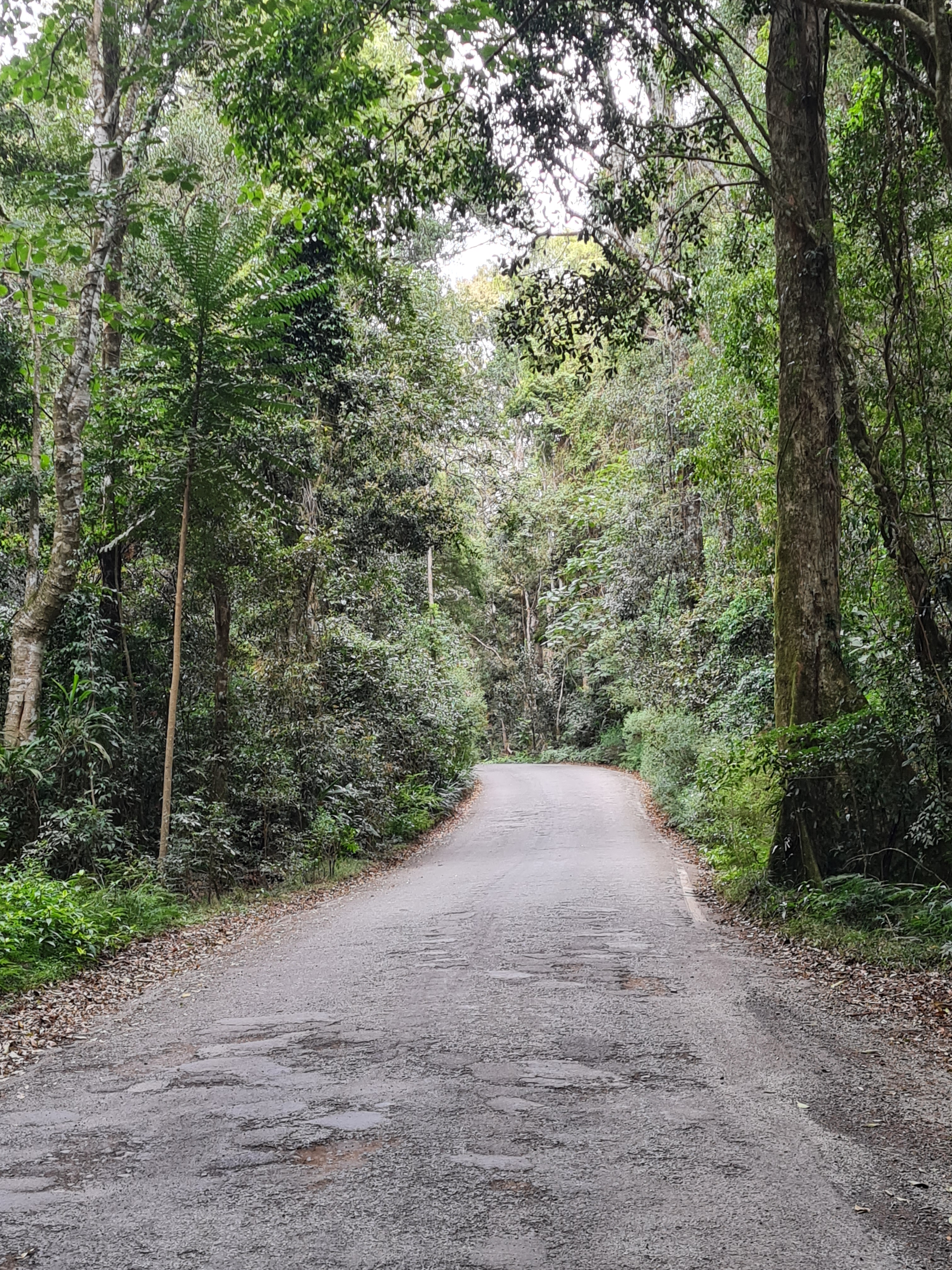
Searching for locations: A long, narrow, winding road to the top of a hill

Or in other words, going up the mountain to O’Reilly’s Rainforest Retreat.

The road, from the turn off the Greenlee cottages, Is narrow, winding, and not one you can go faster than 40kph. Buses and trucks are restricted to 20kph, but as you get further into the mountains, it’s difficult to see how they can get along the road at all.

It’s difficult enough in a mid-size SUV.

At times the road is so narrow that you wonder how trucks and buses could get between the trees, because the close you get to the guest house, the narrower the road. And, at times, the car has to scrape by the overhanging branches, especially when having to make way for oncoming traffic.

The road in places is definitely not wide enough for two cars, but there are a lot of points where you can pull off to the side to let them pass.

It is tarred, but being in the middle of a dense tropical forest, it’s pitted and rutted, and very uneven. There is not one moment where can relax, or tale your eyes off the road, as some of us do, to take in the surrounding scenery.

But, whilst most of it looks the same, it’s certainly not boring, and every now and then you break out of the darkness into a clearing. And, sometimes a house.

Yes, people do live on the side of a mountain, and, just to be clear, their view, every morning, from the back verandah must be spectacular

At the end of the three quarters of an hour drive we emerge onto a mountain top, and what is O’Reilly’s guest house, though after a more investigative look around, the guests stay in motel like rooms. Those were the rooms we could see, but apparently there are villas that are part of the rainforest, but we did not get to see them.

That would be where I would stay, if I was going to stay up here.

There is an old wooden structure, but if this is the original guest house, it doesn’t look like people stay there any more.

But, it’s not the accommodation the people come here for, it’s the endless bush walks. Of course, there’s other stuff there, but I suspect for most people, it’s more about communing with nature, discovering the wildlife, and taking in the fresh country air.

Oh, and a plane, like one that had crashed nearby, with an interesting story to go with it.

We went into the souvenir story and whilst the prices are higher than I expected, there’s a wide variety of items that are worthy of being a reminder of the place.

We also went into the cafe, a large cavernous space that was a reminder of the chalet style building in alpine areas, made completely of wood. I was expecting it to be older than it was, but certainly, it was more atmospheric than the modern cafes. The food, though expensive, was good, and the coffee excellent.

It was a pity that we could not do more walking that day, but it was a pleasant interlude, and a place I would go back to.

Searching for locations: A long, narrow, winding road to the top of a hill

Or in other words, going up the mountain to O’Reilly’s Rainforest Retreat.

The road, from the turn off the Greenlee cottages, Is narrow, winding, and not one you can go faster than 40kph. Buses and trucks are restricted to 20kph, but as you get further into the mountains, it’s difficult to see how they can get along the road at all.

It’s difficult enough in a mid-size SUV.

At times the road is so narrow that you wonder how trucks and buses could get between the trees, because the close you get to the guest house, the narrower the road. And, at times, the car has to scrape by the overhanging branches, especially when having to make way for oncoming traffic.

The road in places is definitely not wide enough for two cars, but there are a lot of points where you can pull off to the side to let them pass.

It is tarred, but being in the middle of a dense tropical forest, it’s pitted and rutted, and very uneven. There is not one moment where can relax, or tale your eyes off the road, as some of us do, to take in the surrounding scenery.

But, whilst most of it looks the same, it’s certainly not boring, and every now and then you break out of the darkness into a clearing. And, sometimes a house.

Yes, people do live on the side of a mountain, and, just to be clear, their view, every morning, from the back verandah must be spectacular

At the end of the three quarters of an hour drive we emerge onto a mountain top, and what is O’Reilly’s guest house, though after a more investigative look around, the guests stay in motel like rooms. Those were the rooms we could see, but apparently there are villas that are part of the rainforest, but we did not get to see them.

That would be where I would stay, if I was going to stay up here.

There is an old wooden structure, but if this is the original guest house, it doesn’t look like people stay there any more.

But, it’s not the accommodation the people come here for, it’s the endless bush walks. Of course, there’s other stuff there, but I suspect for most people, it’s more about communing with nature, discovering the wildlife, and taking in the fresh country air.

Oh, and a plane, like one that had crashed nearby, with an interesting story to go with it.

We went into the souvenir story and whilst the prices are higher than I expected, there’s a wide variety of items that are worthy of being a reminder of the place.

We also went into the cafe, a large cavernous space that was a reminder of the chalet style building in alpine areas, made completely of wood. I was expecting it to be older than it was, but certainly, it was more atmospheric than the modern cafes. The food, though expensive, was good, and the coffee excellent.

It was a pity that we could not do more walking that day, but it was a pleasant interlude, and a place I would go back to.

An excerpt from “Echoes from the Past”

Available on Amazon Kindle here:  https://amzn.to/2CYKxu4

With my attention elsewhere, I walked into a man who was hurrying in the opposite direction.  He was a big man with a scar running down the left side of his face from eye socket to mouth, and who was also wearing a black shirt with a red tie.

That was all I remembered as my heart almost stopped.

He apologized as he stepped to one side, the same way I stepped, as I also muttered an apology.

I kept my eyes down.  He was not the sort of man I wanted to recognize later in a lineup.  I stepped to the other side and so did he.  It was one of those situations.  Finally getting out of sync, he kept going in his direction, and I towards the bus, which was now pulling away from the curb.

Getting my breath back, I just stood riveted to the spot watching it join the traffic.  I looked back over my shoulder, but the man I’d run into had gone.  I shrugged and looked at my watch.  It would be a few minutes before the next bus arrived.

Wait, or walk?  I could also go by subway, but it was a long walk to the station.  What the hell, I needed the exercise.

At the first intersection, the ‘Walk’ sign had just flashed to ‘Don’t Walk’.  I thought I’d save a few minutes by not waiting for the next green light.  As I stepped onto the road, I heard the screeching of tires.

A yellow car stopped inches from me.

It was a high powered sports car, perhaps a Lamborghini.  I knew what they looked like because Marcus Bartleby owned one, as did every other junior executive in the city with a rich father.

Everyone stopped to look at me, then the car.  It was that sort of car.  I could see the driver through the windscreen shaking his fist, and I could see he was yelling too, but I couldn’t hear him.  I stepped back onto the sidewalk, and he drove on.  The moment had passed and everyone went back to their business.

My heart rate hadn’t come down from the last encounter.   Now it was approaching cardiac arrest, so I took a few minutes and several sets of lights to regain composure.

At the next intersection, I waited for the green light, and then a few seconds more, just to be sure.  I was no longer in a hurry.

At the next, I heard what sounded like a gunshot.  A few people looked around, worried expressions on their faces, but when it happened again, I saw it was an old car backfiring.  I also saw another yellow car, much the same as the one before, stopped on the side of the road.  I thought nothing of it, other than it was the second yellow car I’d seen.

At the next intersection, I realized I was subconsciously heading towards Harry’s new bar.   It was somewhere on 6th Avenue, so I continued walking in what I thought was the right direction.

I don’t know why I looked behind me at the next intersection, but I did.  There was another yellow car on the side of the road, not far from me.  It, too, looked the same as the original Lamborghini, and I was starting to think it was not a coincidence.

Moments after crossing the road, I heard the roar of a sports car engine and saw the yellow car accelerate past me.  As it passed by, I saw there were two people in it, and the blurry image of the passenger; a large man with a red tie.

Now my imagination was playing tricks.

It could not be the same man.  He was going in a different direction.

In the few minutes I’d been standing on the pavement, it had started to snow; early for this time of year, and marking the start of what could be a long cold winter.  I shuddered, and it was not necessarily because of the temperature.

I looked up and saw a neon light advertising a bar, coincidentally the one Harry had ‘found’ and, looking once in the direction of the departing yellow car, I decided to go in.  I would have a few drinks and then leave by the back door if it had one.

Just in case.

© Charles Heath 2015-2020

newechocover5rs

Inspiration, maybe – Volume 1

50 photographs, 50 stories, of which there is one of the 50 below.

They all start with –

A picture paints … well, as many words as you like.  For instance:

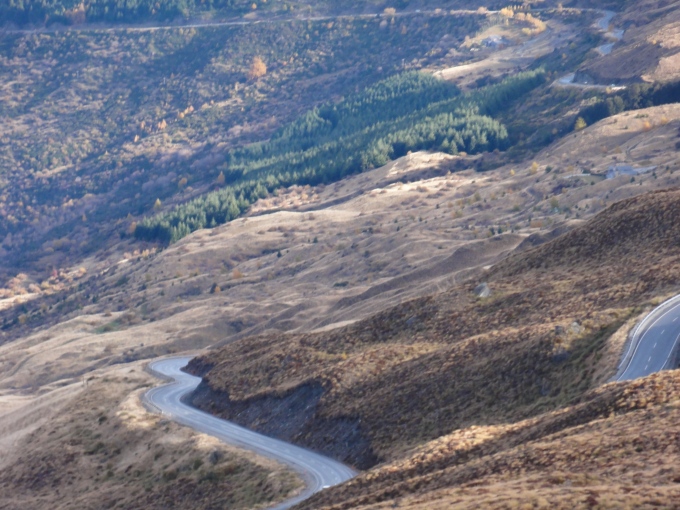
lookingdownfromcoronetpeak

And the story:

It was once said that a desperate man has everything to lose.

The man I was chasing was desperate, but I, on the other hand, was more desperate to catch him.

He’d left a trail of dead people from one end of the island to the other.

The team had put in a lot of effort to locate him, and now his capture was imminent.  We were following the car he was in, from a discrete distance, and, at the appropriate time, we would catch up, pull him over, and make the arrest.

There was nowhere for him to go.

The road led to a dead-end, and the only way off the mountain was back down the road were now on.  Which was why I was somewhat surprised when we discovered where he was.

Where was he going?

“Damn,” I heard Alan mutter.  He was driving, being careful not to get too close, but not far enough away to lose sight of him.

“What?”

“I think he’s made us.”

“How?”

“Dumb bad luck, I’m guessing.  Or he expected we’d follow him up the mountain.  He’s just sped up.”

“How far away?”

“A half-mile.  We should see him higher up when we turn the next corner.”

It took an eternity to get there, and when we did, Alan was right, only he was further on than we thought.”

“Step on it.  Let’s catch him up before he gets to the top.”

Easy to say, not so easy to do.  The road was treacherous, and in places just gravel, and there were no guard rails to stop a three thousand footfall down the mountainside.

Good thing then I had the foresight to have three agents on the hill for just such a scenario.

Ten minutes later, we were in sight of the car, still moving quickly, but we were going slightly faster.  We’d catch up just short of the summit car park.

Or so we thought.

Coming quickly around another corner we almost slammed into the car we’d been chasing.

“What the hell…” Aland muttered.

I was out of the car, and over to see if he was in it, but I knew that it was only a slender possibility.  The car was empty, and no indication where he went.

Certainly not up the road.  It was relatively straightforward for the next mile, at which we would have reached the summit.  Up the mountainside from here, or down.

I looked up.  Nothing.

Alan yelled out, “He’s not going down, not that I can see, but if he did, there’s hardly a foothold and that’s a long fall.”

Then where did he go?

Then a man looking very much like our quarry came out from behind a rock embedded just a short distance up the hill.

“Sorry,” he said quite calmly.  “Had to go if you know what I mean.”

I’d lost him.

It was as simple as that.

I had been led a merry chase up the hill, and all the time he was getting away in a different direction.

I’d fallen for the oldest trick in the book, letting my desperation blind me to the disguise that anyone else would see through in an instant.

It was a lonely sight, looking down that road, knowing that I had to go all that way down again, only this time, without having to throw caution to the wind.

“Maybe next time,” Alan said.

“We’ll get him.  It’s just a matter of time.”

© Charles Heath 2019-2021

Find this and other stories in “Inspiration, maybe”  available soon.

InspirationMaybe1v1

The first case of PI Walthenson – “A Case of Working With the Jones Brothers”

This case has everything, red herrings, jealous brothers, femme fatales, and at the heart of it all, greed.

See below for an excerpt from the book…

Coming soon!

PIWalthJones1

An excerpt from the book:

When Harry took the time to consider his position, a rather uncomfortable position at that, he concluded that he was somehow involved in another case that meant very little to him.

Not that it wasn’t important in some way he was yet to determine, it was just that his curiosity had got the better of him, and it had led to this: sitting in a chair, securely bound, waiting for someone one of his captors had called Doug.

It was not the name that worried him so much, it was the evil laugh that had come after the name was spoken.

Doug what? Doug the ‘destroyer’, Doug the ‘dangerous’, Doug the ‘deadly’; there was any number of sinister connotations, and perhaps that was the point of the laugh, to make it more frightening than it was.

But there was no doubt about one thing in his mind right then: he’d made a mistake. A very big. and costly, mistake. Just how big the cost, no doubt he would soon find out.

His mother, and his grandmother, the wisest person he had ever known, had once told him never to eavesdrop.

At the time he couldn’t help himself and instead of minding his own business, listening to a one-sided conversation which ended with a time and a place. The very nature of the person receiving the call was, at the very least, sinister, and, because of the cryptic conversation, there appeared to be, or at least to Harry, criminal activity involved.

For several days he had wrestled with the thought of whether he should go. Stay on the fringe, keep out of sight, observe and report to the police if it was a crime. Instead, he had willingly gone down the rabbit hole.

Now, sitting in an uncomfortable chair, several heat lamps hanging over his head, he was perspiring, and if perspiration could be used as a measure of fear, then Harry’s fear was at the highest level.

Another runnel of sweat rolled into his left eye, and, having his hands tied, literally, it made it impossible to clear it. The burning sensation momentarily took his mind off his predicament. He cursed and then shook his head trying to prevent a re-occurrence. It was to no avail.

Let the stinging sensation be a reminder of what was right and what was wrong.

It was obvious that it was the right place and the right time, but in considering his current perilous situation, it definitely was the wrong place to be, at the worst possible time.

It was meant to be his escape, an escape from the generations of lawyers, what were to Harry, dry, dusty men who had been in business since George Washington said to the first Walthenson to step foot on American soil, ‘Why don’t you become a lawyer?” when asked what he could do for the great man.

Or so it was handed down as lore, though Harry didn’t think Washington meant it literally, the Walthenson’s, then as now, were not shy of taking advice.

Except, of course, when it came to Harry.

He was, Harry’s father was prone to saying, the exception to every rule. Harry guessed his father was referring to the fact his son wanted to be a Private Detective rather than a dry, dusty lawyer. Just the clothes were enough to turn Harry off the profession.

So, with a little of the money Harry inherited from one of his aunts, he leased an office in Gramercy Park and had it renovated to look like the Sam Spade detective agency, you know the one, Spade and Archer, and The Maltese Falcon.

There’s a movie and a book by Dashiell Hammett if you’re interested.

So, there it was, painted on the opaque glass inset of the front door, ‘Harold Walthenson, Private Detective’.

There was enough money to hire an assistant, and it took a week before the right person came along, or, more to the point, didn’t just see his business plan as something sinister. Ellen, a tall cool woman in a long black dress, or so the words of a song in his head told him, fitted in perfectly.

She’d seen the movie, but she said with a grin, Harry was no Humphrey Bogart.

Of course not, he said, he didn’t smoke.

Three months on the job, and it had been a few calls, no ‘real’ cases, nothing but missing animals, and other miscellaneous items. What he really wanted was a missing person. Or perhaps a beguiling, sophisticated woman who was as deadly as she was charming, looking for an errant husband, perhaps one that she had already ‘dispatched’.

Or for a tall, dark and handsome foreigner who spoke in riddles and in heavily accented English, a spy, or perhaps an assassin, in town to take out the mayor. The man was such an imbecile Harry had considered doing it himself.

Now, in a back room of a disused warehouse, that wishful thinking might be just about to come to a very abrupt end, with none of the romanticized trappings of the business befalling him. No beguiling women, no sinister criminals, no stupid policemen.

Just a nasty little man whose only concern was how quickly or how slowly Harry’s end was going to be.

© Charles Heath 2019

“Call me!” – a short story

You know what it’s like on Monday morning, especially if it’s very cold and the double glazing is failing miserably to keep the cold out.

It was warm under three blankets thick sheets and a doona, and I didn’t want to get up.

It doesn’t help if in the last few months, the dream job you once had turned into a drudge, and there was any number of reasons to stay home rather than go into the office. Once, that was trying to find an excuse to stay home because you’d rather go to work.

That was a long time ago or felt like it.

My cell phone vibrated; an incoming message, or more likely a reminder. I reached out into the icy wasteland that was the distance from under the covers to my phone on the bedside table. It was very cold out there, and for a moment I regretted that impulse to check.

It was a reminder; I had a meeting at HR with the manager. I had thought I might be eligible for redundancy since the company was in the throes of a cost-cutting exercise. Once I might have been apprehensive, but now, given my recent change in department and responsibility, I was kind of hoping now that it was.

I felt a hand on my shoulder. “Time to get up sleepy head. You have a meeting to go to, not one to be late.”

It felt strange to wake up with someone else in the bed. My luck in that department hadn’t been all that hood lately, but something changed, and at the usual Friday night after-work drinks at the pub, I ran into one of the PA’s I’d seen around, one who was curious to meet me as much as I was to meet her.

One thing had led to another and when I asked her if she wanted to drop in on the way home, she did.

“I’d prefer not to. I can think of better things to do.”

“So, could I but that’s not the point. Five more minutes, then I’m pushing you out.”

She snuggled into my back, and I could feel the warmth of her body, and having the exact opposite effect than she intended. But she was right. It was important, and I had to go. But, in the meantime, it was four more minutes and counting.

When you get a call from the head of HR it usually means one of two things, a promotion, or those two dreaded words, ‘you’re fired’, though not usually said with the same dramatic effect.

This year had already been calamitous enough getting sidelined from Mergers and Acquisitions because I’d been usurped. That was the word I was going with, but it was to a certain extent, my fault. I took my eye off the ball and allowed someone else to make their case.

Of course, it helped that the person was connected to all the right people in the company, and, with the change in Chairman, it was also a matter of removing some of the people who were appointed by the previous incumbent.

I and four of my equivalent managers had been usurped and moved to places where they would have less impact. I had finished up in sales and marketing, and to be quite honest, it was such a step-down, I had already decided to leave when the opportunity presented itself.

My assistant manager, who had already put in his resignation, was working out his final two weeks. I told him to take leave until the contract expired, but he was more dedicated than that. He had got in before me and was sitting at his desk a cup of coffee in his hand and another on the desk.

“How many days?”

“Six and counting. What about you? You should be out canvassing. There are at least three other places I know would be waiting to hear from you.”

“It’s still in the consideration phase.”

“You’re likely to get the chop anyway, with this thing you have with Sharkey.”

Sharkey was the HR manager.

You know something I don’t?” I picked up the coffee, removed the lid, and took in the aroma.
“They’re downsizing. Broadham had decided to go on a cost-cutting exercise, and instead of the suggested efficiencies we put up last year, they’re going with people. I don’t think he quite gets it.”

“You mean my replacement doesn’t know anything about efficiency. He makes a good yes man though, telling Broadham exactly what he wants to hear.”

Broadham, the new Chairman, never did understand that people appointed to important positions needed to have the relevant qualifications and experience. My replacement had neither. That was when the employees loyal to the previous Chairman had started leaving.

We had called it death, whilst Broadham had called it natural attrition. He didn’t quite understand that so far, over 300 years of experience had left, and as much again was in the process of leaving.

“Are you going to tell Sharky you’re leaving?”

“I’ll wait and see what he has to say. I think he knows the ship is sinking.”

There wasn’t much I didn’t know about the current state of the company, and with the departures, I knew it was only a matter of time. Sharky was a good man, but he couldn’t stem the tide.

He also knew the vagaries of profits and share prices, and we had been watching the share price, and the market itself. It was teetering, and in the last few months, parcels of shares were being unloaded, not a lot at one time, but a steady trickle.

That told me that Broadham and his cronies were cashing in while the going was good, and quite possibly were about to steer the ship onto the rocks. The question was who was buying, and that, after some hard research I found to be certain board members. Why, I suspected, was to increase their holdings and leverage, but I don’t think they quite realized that there would be nothing left but worthless stock certificates.

It was evidence, when I finally left, that I would pass on to the relevant authorities.

In the meantime, I had a meeting to go to.

“Best of luck,” my assistant muttered as I passed his desk.

“If I don’t return, I will have been escorted from the building. If that happens, call me.”

It had happened before. When people were sacked, they were escorted to their office, allowed to pack their belongings, and were then escorted to the front door. It would be an ignominious end to an illustrious career, or so I’d been told by the girl who was no doubt still asleep in my bed.

She had heard the whispers.

The walk to the lift, the traversing of the four floors to the executive level, and then to the outer office where Sharkey’s PA sat took all of three minutes. I had hoped it would be longer.

“He’s waiting for you,” she said, “go on in.”

I knocked on the door, then went in, closing it behind me. “Now, sir, what on earth could you want to see me about?


© Charles Heath 2021

“Long time, no see…” – short story


You can pick your friends but you can’t pick your relatives.

So sayeth my sister, who for years refused to acknowledge I was her brother.

The point is, as I was trying to tell Nancy, the woman who had agreed to marry me, “my family has long been ashamed of me because I refused to become a doctor.”

“That’s no excuse, in fact, that’s the most ridiculous thing I’ve ever heard.”

To most people, it would. I agreed with her. But then, her family had not had a forebear who stood shoulder to shoulder with George Washington at the Siege of Yorktown.

It was a statement my mother had often pulled out of nowhere at dinner parties, and sometimes in general conversation, just to impress. I thought of trotting out as another example of ridiculous statements, but thought better of it.

It was a situation I had not bargained for, and probably why it took so long to find someone to share the rest of my life with.

Perhaps I hadn’t quite thought through what would happen once I asked the question, and it was a yes.

It was not as if Nancy and I hadn’t taken the long road with our relationship. She had been burned a few times, and I always had my family in the back of my mind as the biggest obstacle.

In fact, I always had considered it insurmountable, and because of that, rarely made a commitment. But Nancy was different. She was very forgiving and had the sort of temperament saints were blessed with.

Her family sounded like very reasonable people who lived upstate out of Yonkers on a farm she simply said had been in the family forever.

She didn’t have big city aspirations, was not impressed by wealth, travel, large houses, or a resume a mile long with achievements. It was everything I didn’t have and didn’t want, and my job as storeman and fork life driver was one where I could go to work and leave it there.

Nancy, on the other hand, was a checkout clerk at a large supermarket, with no aspirations to be a boss or run the place. She had a run-in with a tractor early on in life and could manage a lot of the farming basics.

Her parents sent her to the big city to learn a different trade, but she just wasn’t interested. She was a country girl and would never change.

We met when she was attending the same pre-wedding party that I was, both with different partners at the time, and both of whom were more party animals than we were.

A week later we ran into each other in the same bar, and it grew from there, and after a rather interesting six months or so, we had ended up making the ultimate commitment.

“I guess, now, we have to tell our parents,” she said, stating what was to her, the obvious.

Such a simple statement with so many connotations. I had deliberately steered the conversation away from all of them, and so, at this point in time, she knew I had parents, grandparents, and three other siblings. And that they lived on the other side of the country.

Asked why I had moved so far away, I told her that I’d failed to meet their expectations and preferred to be as far away as possible. My brothers more than made up for my failings, so it was not necessary I stay there.

It was only recently I’d told her those expectations were of me following the family tradition into medicine. It was when I told her my father was a pre-eminent thoracic heart surgeon, my brothers top of whatever field they’d chosen, and my sister, a well-regarded general practitioner.

When she asked in what way I’d failed, I said it was not in the education because like all Foresdale’s, we were always top of the class, and as much as I tried to fail, the teachers knew better.

I just refused to go to University. Instead, I tried to disappear, but my father had the best private detective at his disposal. It took a very long, loud, screaming match to sever that tie, get disinherited, and leave to make my own way in the world.

Perhaps, I said, it would be best to just say I was an orphan.

That, of course, to Nancy, was not an option. She came from practical people who always found a solution to any problem, and they had had a few really difficult ones over the years.

But, for the first time, there was a look of perplexment on her face. Maybe she was thinking that she should have asked more probing questions about my family before agreeing to be my wife.

“I think I can safely say that your parents will be more approachable than mine. Those expectations on me will also fall on you.”

And having said it aloud, it sounded so much more like a threat. The problem was, I knew what there were like, living in that rarefied air where the upper classes lived.

I might be a forklift driving storeman, but I was still a Foresdale, and my match had to be commensurate to the family values.

“Then we’re just going to have to go visit them and lower those expectations. I’m not afraid of them.”

No, I expect she was not. I’d seen her deal with all types of miscreants at the checkout counter, rich and poor alike. She had the sort of gumption I always had wanted but was too much of a coward to confront the problem.

Perhaps now, it would be the perfect opportunity.

“We should go next week. I’ve got some vacation days owing, and I’m sure the boss will let you go if you tell him the reason.”

Practical as ever. Confront the beast and get it over with.

“Sure. I’ll talk to the boss, arrange the tickers, and let someone know we’re coming. But I will not be staying at the house. That way if it gets too intense, we can leave.”

I saw her shrug. I’m not sure she agreed that was a good idea, but I didn’t want to see them corner her the way they had a habit of doing when any of us children brought anyone home. I did once, and never again.

“It will be fine.”

Famous last words.

I had the phone number of my sister Erica, stored on my phone, not that I’d ever intended to call her. It was there because she had called me, I had made the mistake of giving it to her when I left because she asked me for it.

I hadn’t spoken to her since I left home all those years ago, nearly ten by my reckoning, and perhaps it was a testament to my father that not one of them had called, or even reached out.

Being cut off literally meant that. But it was not something that irked me. I was glad not to see them. I could easily keep up with them in the newspapers and magazines, such was their visibility.

I was surprised Nancy hadn’t made the association.

I don’t know how long it was that I stared at that number, finger hovering over the green button. My first concern was whether I’d remain civil, or how long it would take before I disconnected the call.

Then, courage summoned, I pressed the button.

An anticlimax might occur if there was no answer, or the number had been disconnected, but such was not the case. It rang.

Almost for the full number of rings before a familiar voice answered. “Good morning, this is Erica speaking.”

If only I’d learned to answer a phone properly like that.

“It’s Perry.” Damn, I hated that name, and once I left home, I adopted my middle name, James.

“Now that’s a blast from the past. Never expected to hear from you again.”

“Believe me, if I had my way, you wouldn’t, but there’s a person who insists she meets the family. I tried to talk her out of it, but she’s a force to be reckoned with.”

“Good for her. I always knew you’d meet a sensible girl who wouldn’t put up with your nonsense. I’m assuming you asked her to marry you?”

“I’m beginning to wonder if I should have just outright lied and said I was an orphan.”

“Yes, and how would that have worked when we finally ran you to ground. Besides, your father has known where you’ve been hiding all along. You are still a Foresdale, and that will never change.”

“Even when I’ve been ex-communicated from the family.”

“That’s only your assumption. Everyone here might have expected you to change your minds somewhat earlier, but we never doubted you would return. Now, just who is this Nancy, and who does she belong to?”

© Charles Heath 2021

“Uncanny good luck shines upon me…” – a short story


I never did take advice very seriously.  Especially when they were issued by old man Taggard, a man of some mystery that we all, adults and children alike wanted to know about.

Everyone in the street knew him as he had lived in the almost derelict mansion at the end of the cul-de-sac forever, way longer than anyone else in the neighborhood had.  In fact, it was rumored he had owned all the land around and sold it off bit by bit over time, the reason why there were so many houses of varying age in the estate.

Ours was one of the older houses, a few doors up from it.  We were close enough to observe Taggard’s habit, like sitting gon the porch on an old swing chair in the afternoons, to the late-night wanderings in the street.  Some said he was accompanied by the ghost of his long-dead wife, which led to stories being told of the house he lived in being haunted.

As children, we had been brought up on a diet of TV shows such as ‘The Munsters’ and ‘The Addams Family’, and had invented our own make-believe show called ‘The Taggard Mansion’, the house with ghosts, and the neighborhood center for strange goings-on.

And as children were wont to do, we had to ‘investigate’.

There was a ‘gang’ even though we didn’t refer to it as such, about seven of us who lived in nearby houses, and all of whom had very active imaginations.  We also met in the cubby house out the back of our house to plan forays to find out whether the rumors were true.  The thing is we never got very far as he seemed to know when we were sneaking in and scared us off, so for years, the rumors remained just that, rumors.

But as grown-ups, and by that I mean, middle teens, our plans became bolder and more sophisticated, based on a whole new breed of TV shows, where the seemingly impossible was no longer that.  And Andy Boswell, my older brother’s best friend, his father was a private detective, or so he told us, and he had managed to ‘secure’ some of his father’s tools of the trade; a camera on the end of a wire that could connect to a cell phone, a listening device that could hear through walls, and in-ear communicators.  We could now, if we were close enough, see under doors, and hear if anyone was in.  We could all keep in touch, though I couldn’t see how this would help.

But a plan was formulated.  All seven of us had a role to play.  My brother Ron and Delilah, his girlfriend, were taking point, whatever that meant, Andy and I were going to take point, while Jack, Jill, and Kim were going to run distraction.  The theory was, they’d make enough noise to keep the old man occupied chasing them.  No one had been inside the house, ever.  Andy and I were going to be the first.

Andy had drawn up a plan and it was up on the wall.  He had charted the house, and had a very accurate picture of the house’s footprint, where doors and windows were, likely entrance points, including a hatchway down into what he assumed was a basement, though he preferred to call it the dungeon, and a layout of the grounds.  Apparently under the undergrowth were paths and gardens, even a large fountain that once graced the grounds of the three-story mansion made of sandstone, and built sometime during the middle of the 1800s.

Andy had done some research, mostly from old newspapers, and also discovered that the old man had once been married, they had a half dozen children, three of whom had died, the others scattered around the world.  It explained why no one ever visited the place.

The distraction team would be going in through the front gate, easy enough because it had come off its hinges and just needed a shove to open.  The old man usually emerged from the house via the driveway, or what was once a drive that cars could enter one side of the property, stop under a huge canopy, and emerge onto the road further along.  But it’s overgrown stare, the width of the pathway was now about six feet.  The fact it was once an amazing feature was the roadside lights, now all but disappearing behind the undergrowth.

Andy had found a photograph in the paper of it, and it had looked magnificent, as had the gardens, the overhanging canopy, and all the lights.  To think such magnificence was now lost.  And having seen it for what it once was, it was not hard to imagine any number of scenarios, my favorite, rescuing a damsel in distress from the tower.  Yes, it even had a tower, two, in fact, at each end of the house.  My brother always said I had an overactive imagination.

Andy and I would be going in by the less used car exit, and heading for the left side of the building where Andy said was several floor-to-ceiling windows that looked to him like French doors.  Of course, none of us knew what French doors were, and my brother cut Andy short when he tried to explain.

Failing that, there was a door at the rear that seemed to be open, and we’d try that next.  We would get into position, advise the distraction team, and the operation would be a go.  The only debate was what time of the day were we going to do it.  My brother preferred late in the afternoon.  Andy said it was better at dawn, or soon after if we were looking for maximum confusion of the target.

Dawn, confusion, tactics, target, Andy was in his element.  He was going to be a spy when he grew up.  My brother said he would never grow up, but then, my brother said I was a dreamer and would never amount to anything.  We ignored his advice, well, we pretty much ignored everything he said.

We were going in at dawn.

At 5 a.m. on Saturday morning, we gathered at the cubby house ready for action.  We all took a communicator and put it in our ears, and then had fun saying stupid stuff, and hearing it through the earpieces.  It was weird but added an exciting element to the adventure.  I know my heart was beating faster in anticipation.  Andy was pretending to be cool and failing.  I suspected my brother and Delilah had other plans when we left them alone in the cubby house.  The distraction team was ready to go.

Shortly after the sun came up, it was cool and the air still.  It was going to be a hot day, and that first hour, everything was almost perfect.  It seemed a waste to do anything but let the early morning serenity settle over us.  Not today.  Andy and I went to our position, slowly feeling our way through the bushes, taking bearings from the light poles, and every now and then seeing the guttering and what looked to be a concrete path.  Beyond that was once a garden, and I tried, more than once, to imagine what it was like.

In my ear I could hear the others in the distraction team setting up at the start of the driveway, ready to go.  We reached our position, about twenty feet from the so-called French windows, the view into the house blocked by curtains, but beyond that, what we could see was darkness inside the house.  Taking in the whole side of the house, there were no lights on behind any of the windows.  If we didn’t know better, we could have assumed the house was empty.

I heard Andy say, “Ready.  Start making noise.”

A minute later we could both hear the distraction team in the distance and through the communicators.  It took two minutes before we heard the old man, yelling, “What the hell do you think you’re doing?”  Their job done, getting him out of the house, all they had to do was retreat.

Time for Andy and I to go.

Working on the basis that no one else was at the house, and the fact we had no evidence there was, we were not overly worried about making a stealthy approach.  I could hear in my earpiece, the gasping of those in the distraction team having just made it outside the gate, and to tell us the old man had stopped at the gate.  I doubt he had been running, but his yelling was just as effective.

That had stopped, and a sort of silence fell over the area.

We were now at the French doors, and Andy produced another tool that he’d forgotten to tell us about, a lock pick.  The fact it didn’t take long to unlock the door told me he was either very talented, or the lock was old and presented no problems.  Either way, he opened the door and ushered me in.

I brushed the curtains aside for him to follow, then moved in as he followed, closing the door behind him.

I’d taken five steps before I heard a woman’s voice say.  “Uncanny good luck shines upon me.  My knights in shining armor.  You’ve come to rescue me, no?”

© Charles Heath 2020-2021