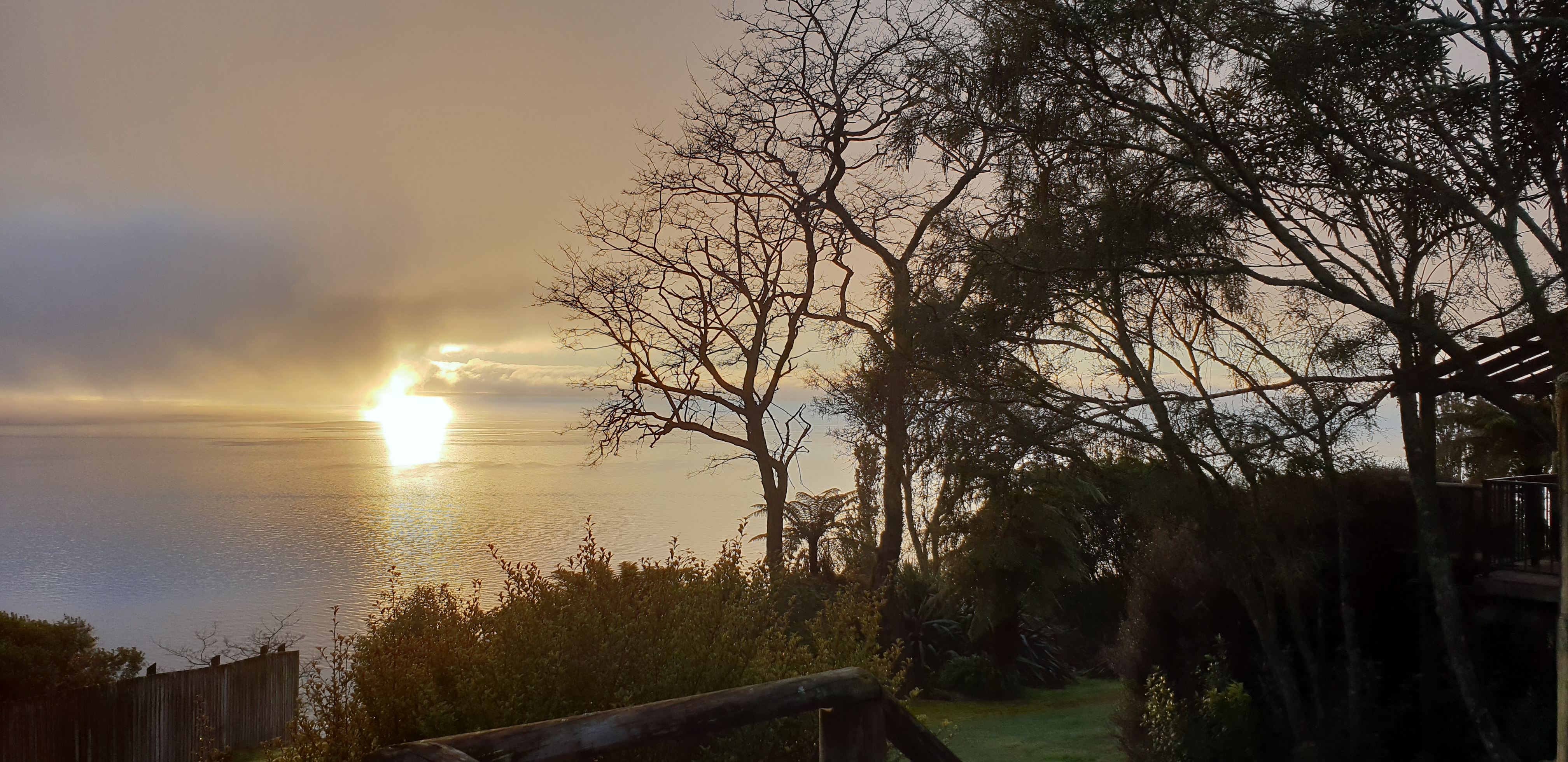
If I can’t put words on paper … what is there I can take?
It affects us all at some point, but it’s not necessarily that old demon writer’s block.
What is writer’s block anyway? Is it some existential disease that doesn’t really exist, yet something we can blame where we can’t write?
So, it’s down to looking for reasons, and logically looking at what is the underlying cause of the problem. We should be asking ourselves questions, like
Are we constantly distracted from writing?
Plan or no plan, subconsciously it doesn’t feel right, that the next scene, plotline or character interaction does follow, is contrived, is just plain wrong?
Usually, for me, it only takes two questions and the answer pops up.
I’ve written myself into the proverbial corner, and there’s no logical way to go forward.
What does that mean?
Well, that is covered by a third possible outcome from answering the questions.
I have to go back and do some major re-writes of earlier work, make sure there are the appropriate hooks and maybe even change the direction, even if just a little.
That, in itself, in the back of your mind, knowing what has to be done, and putting off the inevitable, is another reason why this project isn’t moving forward.
Two aspirin can’t solve this.
Nothing can.
Perhaps we should rename writer’s block to writer’s dilemma.
Instead of making a grand entrance, arriving in style and being greeted by important dignitaries, we are slinking in via an airplane, late at night. It’s hardly the entrance I’d envisaged. At 9:56 the plane touches down on the runway. Outside the plane, it is dark and gloomy and from what I could see, it had been raining. That could, of course, simply be condensation.
Once on the ground, everyone was frantically gathering together everything from seat pockets and sending pillows and blankets to the floor. A few were turning their mobile phones back on, and checking for a signal, and, perhaps, looking for messages sent to them during the last 12 hours. Or perhaps they were just suffering from mobile phone deprivation.
It took 10 minutes for the plane to arrive at the gate. That’s when everyone moves into overdrive, unbuckling belts, some before the seatbelt sign goes off, and are first out of their seats and into the overhead lockers. Most are not taking care that their luggage may have moved, but fortunately, no bags fall out onto someone’s head. The flight had been relatively turbulent free.
When as many people and bags have squeezed into that impossibly small aisle space, we wait for the door to open, and then the privileged few business and first-class passengers to depart before we can begin to leave. As we are somewhere near the middle of the plane, our wait will not be as long as it usually is. This time we avoided being at the back of the plane. Perhaps that privilege awaits us on the return trip.
Once off the plane, it is a matter of following the signs, some of which are not as clear as they could be. It’s why it took another 30 odd minutes to get through immigration, but that was not necessarily without a few hiccups along the way. We got sidetracked at the fingerprint machines, which seemed to have a problem if your fingers were not straight, not in the center of the glass, and then if it was generally cranky, which ours were, continue to tell you to try again, and again, and again, and again…That took 10 to 15 minutes before we joined an incredibly long queue of other arrivals,
A glance at the time, and suddenly it’s nearly an hour from the moment we left the plane.
And…
That’s when we got to the immigration officer, and it became apparent we were going to have to do the fingerprints yet again. Fortunately this time, it didn’t take as long. Once that done, we collected our bags, cleared customs by putting our bags through a huge x-ray machine, and it was off to find our tour guide.
We found several tour guides with their trip-a-deal flags waiting for us to come out of the arrivals hall. It wasn’t a difficult process in the end. We were in the blue group. Other people we had met on the plane were in the red group or the yellow group. The tour guide found, or as it turned out she found us, it was simply a matter of waiting for the rest of the group, of which there were eventually 28.Gathered together we were told we would be taking the bags to one place and then ourselves to the bus in another. A glance in the direction of the bus park, there were a lot of busses.
Here’s a thought, imagine being told your bus is the white one with blue writing on the side.
Yes, yours is, and 25 others because all of the tourist coaches are the same. An early reminder, so that you do not get lost, or, God forbid, get on the wrong bus, for the three days in Beijing, is to get the last five numbers of the bus registration plate and commit them to memory. It’s important. Failing that, the guide’s name is in the front passenger window.
Also, don’t be alarmed if your baggage goes in one direction, and you go in another. In a rather peculiar set up the bags are taken to the hotel by what the guide called the baggage porter. It is an opportunity to see how baggage handlers treat your luggage; much better than the airlines it appears.
That said, if you’re staying at the Beijing Friendship Hotel, be prepared for a long drive from the airport. It took us nearly an hour, and bear in mind that it was very late on a Sunday night.
Climbing out of the bus after what seemed a convoluted drive through a park with buildings, we arrive at the building that will be our hotel for the next three days. From the outside, it looks quite good, and once inside the foyer, that first impression is good. Lots of space, marble, and glass. If you are not already exhausted by the time you arrive, the next task is to get your room key, find your bags, get to your room, and try to get to be ready the next morning at a reasonable hour.
Sorry, that boat has sailed.
We were lucky, we were told, that our plane arrived on time, and we still arrived at the hotel at 12:52. Imagine if the incoming plane is late.
This was taken the following morning. It didn’t look half as bland late at night.
This is the back entrance to Building No 4 but is quite representative of the whole foyer, made completely of marble and glass. It all looked very impressive under the artificial lights, but not so much in the cold hard light of early morning.
This the foyer of the floor our room was on. Marble with interesting carpet designs. Those first impressions of it being a plush hotel were slowly dissipating as we got nearer and nearer to the room. From the elevator, it was a long, long walk.
So…Did I tell you about the bathroom in our room?
The shower and the toilet both share the same space with no divide and the shower curtain doesn’t reach to the floor. Water pressure is phenomenal. Having a shower floods the whole shower plus toilet area so when you go to the toilet you’re basically underwater.
Don’t leave your book or magazine on the floor or it will end up a watery mess.
And the water pressure is so hard that it could cut you in half. Only a small turn of the tap is required to get that tingling sensation going.
I thought since it is Winter here, we could do with a breath of fresh air and colour that comes with the change if season
Living in Queensland, Winter never quite seems to be as cold as it is in the southern states, which are closer to Antarctica.
We have had a relatively mild winter this year and I didn’t have to light the fire once, though we did use the reverse cycle sir conditioning.
But, from now the temperature will be rising as well as the humidity and will hang around until April next year.
Normally this would mean that a large proportion of the population would be planning their summer holidays, but with Covid restrictions, we may not be allowed to leave our state, or only visit states that have no or few cases like us, and definitely no overseas travel.
For people who like to travel, this is a bitter pill to swallow, and especially so for all those retirees who have worked all their lives, and decided to wait until retirement to see their own country and the world at large.
To me, the adage ‘don’t put off until tomorrow what you can do today’ seemed appropriate and we decided once the kids were old enough, we would travel far and wide while we could. It was a wise decision because neither of us are as agile as we used to be.
Seems we were the lucky ones.
Now we are content to see our own country which no doubt will be able to manage Covid to the extent that life might return to a form if normal sooner rather that later.
And if it doesn’t, then I have enough to amuse myself at home. I’m sure we are all familiar with the expression ‘spring cleaning’. We have decided to clean house, and do some renovating.
And it’s a surprise when cleaning out those cupboards, drawers, and boxes, the stuff you’ve accumulated over many, many years. Last I heard, we were taking about getting a large skip, so I suspect this culling is going to be savage.
But, just to be clear, no books will be thrown out!
It’s always a good thing to get that across especially if you work for an organization that could misinterpret what that opinion is, or generally have an opposing opinion. Of course, by saying your opinions are your own, you’re covering yourself from becoming unemployed, but is this a futile act?
Perhaps its better to not say anything because everything you say and do eventually find its way to those you want most not to hear about it, perhaps one of the big negatives of the internet and social media.
And…
It seems odd to me that you can’t have an opinion of your own, even if it is contrary to that of the organization you work for, and especially if their opinion has changed over time. An opposing opinion, not delivered in a derogatory manner, would have the expectation of sparking healthy debate, but it doesn’t always end up like that.
I’m sure there are others out there that will disagree, and use the overused word, loyalty’. Perhaps their mantra will be ‘keep your opinions to yourself’.
This, too, often crops up in personal relationships, and adds weight to the statement, ‘you can pick your friends but not your relatives’.
I’m told I have an opinion on everything, a statement delivered in a manner that suggests sarcasm. Whether it’s true or not, isn’t the essence of free speech, working within the parameters of not inciting hate, bigotry, racism, or sexism, a fundamental right of anyone in a democracy?
Seems not.
There’s always someone out there, higher up the food chain, with an opinion of their own, obviously the right one, and who will not hesitate to silence yours. But, isn’t it strange that in order to silence you, they have to use leverage, like your job, to get theirs across.
Well, my opinions are in my writing, and whether or not you agree with them or not, I’m sure you will let me know. In a robust but respectful manner.
As soon as I stepped off the shuttle in the cargo bay, the third officer was waiting for me.
“The captain asked me to escort you up to his day room.”
Unusual. The captain could have just called me on the private communicator if there was a need for secrecy, if that was what this was.
“Any reason why he would send you?”
“Didn’t want you getting lost, sir.”
I knew I should not have admitted to him that I had got a little confused finding my way around, but that was because the dockyard people had blocked off several passageways.
“No. I guess not.”
The Third was a man of little humour, and particularly didn’t think any of my jokes were funny. On station, he was all serious and unamused.
Now, he had his serious face on, and I thought it best not to ask what to expect.
He took a different route to the bridge than what I would have taken, a much shorter and more direct route. It was obvious he had studied the plans of the ship and knew it backwards. I on the other hand, was not that prepared, but it meant I would have to.
He went as far as the door to the day room, and left me there. I didn’t need to announce myself, the doors just opened, whisper quiet, showing me the room I could expect one day when I got my own ship.
Or at the very least, I could dream.
The doors closed behind me, and I walked forward into the room proper, and first saw the captain sitting at his desk, and then a figure standing beside and back a step, behind him.
There was a weapon in his hand, but it was by his side.
And something else I noticed, the figure looked just like the three I’d seen on the other ship.
The captain saw me looking at him.
“This is the captain from the vessel that just arrived as those assailants on the cargo ship were ‘rescued’.
He, or she, looked human under the clothes and helmet, but could be almost anything.
“Does he…”
“Speak our language, yes, and a lot of others. And he would like our help.”
Like everyone who was in that artificially silent environment that was the flight deck of a shuttle, unexpected sounds caused unexpected results.
The Engineer cursed.
The Pilot, Myrtle, hesitated for a moment, as if not quite sure what to do, highlighting the fact she had not been in such a situation before, but quickly recovered, and brought up the incoming object on screen.
Note to self: amend the training program to allow for random objects to come out of nowhere.
We all looked at the object. Myrtle should have been taking us into the freighter, but had got overawed by the not easily identifiable ship approaching.
“Our ship will take care of the problem,” I said. “Take us into the freighter.”
As if surprised that she should be asked to do so, she realised it was not her job to be staring at the screen, and muttered, “Oh, yes,” before resuming our passage.
Another note to self: Proper command structures and language should be used at all times.
A minute or so later we were in the cargo bay and the cargo doors were closing. Once closed and the atmosphere adjusted, the deck would become a hive of activity.
There was still a static picture of the craft on the screen, and it was one I’d seen before, an old vessel that dated back over a hundred years. I’d seen it in a space museum on the moon.
I was tempted to ask the Captain what was happening, but knew that to interrupt would not be worth the reprimand.
The engineer had seen one before too. “You don’t see those craft very often, if at all. Or this far out in space. They only had a limited trave distance, didn’t they?”
“Unless someone had been tinkering.” Several had been built as exploration ships, but the majority were freighters, used to build the outer colonies on the nearest planets.
A new drive would enable it to travel to the outer rim of our galaxy, but not much further if there were no readily available fuel supplies. Those that were available were tightly regulated by space command.
Cargo doors closed, deck pressurised, suddenly the whole deck was alive with people and machinery, our people meeting with the freighter crew and arranging for the cargo for Venus to be loaded. Myrtle was to stay with the shuttle, monitoring the loading.
I went down the ramp and was greeted by the first officer of the freighter, a chap I’d once served with, Jacko Miles. Jacko loved being in space, but no longer interested in the machinations of Space Command. The simple life of a freighter first officer was all he desired.
Except his face, right now, had the visual lines of worry.
“What happened?” We were past the usual introductions, and general bonhomie.
“Stopped, boarded, and a crate removed.”
“What was in the crate?”
“No one is saying, but whatever it was, it must have been important to attack us for it.”
My private communicator vibrated in my pocket. The captain was calling, and didn’t want anyone else listening in.
“Just give me a moment,” I said taking the communicator out of my pocket and answering the call. “Yes sir?”
“We have a problem.”
And in that moment, I had to agree with him. Jacko now had his hands in the air, and behind him were two people with handheld weapons trained on him, and me.
This was going to be about my usual taxi run, picking up one or other of the grandchildren from either school, or the railway station, to take them home, a benefit their parents have with grandparents with nothing better to do.
I say that tongue in cheek because I usually have something else to do, but it is a pleasurable experience for both of us because it means we get to spend some time with our grandchildren while they are young, and before they discover that world out there that we ‘oldies’ would know nothing about.
I have no doubt there are times when they think we have passed our use-by date. It’s the bane of all old people sooner or later unless they forge a close relationship with them in those early years.
I like to think we have, but you can never tell.
We’d like to be able to give them an independent ear, people who will listen to them and not judge, not in the way parents would. I remember myself saying that my parents would never understand the problems we had, that it was nothing like that when they were our age.
It’s the same now. The mantra never changes, but the generation has shifted, and I guess to a certain extent they are right. We didn’t have computers, mobile phones, or the endless supply of cash to go out with our friends to the mall, to the movies, to parties, sleepovers. We just didn’t have the money period, even if those activities existed in our time.
There wasn’t television, computer games, we had to find our own amusement, in the street, with other kids, using our imagination. We had to socially mix, talk to other kids, and there wasn’t the level of marriage breakups, broken homes, and distressed kids, not in our day. Divorce was a dirty word, spoken in hushed tones.
Now it seems homes with a mother and a father living together, or still talking to each other civilly, is a miracle rather than the norm. What the hell went wrong in 50 years? It seems to me that in the last 25 years we have presided over a world that has fallen to pieces, and, failing to recognize the looming disaster, we just sat by and watched it unfold.
And just how I managed to get so melancholy while waiting for a child at the railway station, I’ll never know. Perhaps it was the observance of several kids bullying another, perhaps it was because I sat in a locked car partially fearful about that trouble spilling over.
I know when I was a child my parents instilled in me a respect for others, even if I didn’t agree with them, or, god forbid, I didn’t like them. Like now, I get along with anyone and everyone because it was how we were taught.
Then.
What happened since then?
Did we forget slowly over time the virtue of tolerance and respect?
Fortunately, the train and my granddaughter have arrived, so I can cease with the rant. The children hassling each other had to run to the train and what might have been an unpleasant scene dissipated without violence.
She gets in the car after I unlock the doors and it’s the start of a fifteen-minute discussion about her day at school. It, too, is very different from my day, but, in its way, still the same battlefield between students and teachers.
Today we have been delving into the past in a way that makes history interesting.
Also, it’s another way to get young children to take an interest in the past, seeing that is often very difficult to part them from their ipads, smartphones and computer games.
It is part of a weekend devoted to history.
First up is a ride on an old steam train, the engine dating back to the 1950s, as are some of the carriages. Now, for someone like me who is only two years younger, it doesn’t seem that old, but to them, it’s a relic.
And for the youngest of our granddaughters who tells me that this will be her first ride on a train, any train, it’s going to be vastly different from her next ride on a train.
I don’t think it went faster than about 30, whether that’s miles an hour or kilometres, so we had time to take in the bushland, the river crossings and the smell of the coal-generated smoke.
And the biggest treat was for them to climb up into the engine cabin to see who drives it, and how it all works.
I try to tell them this is a far cry from the 300kph bullet trains in China that we recently travelled on. This ride was rattly, noisy, and we were barely able to sit still, whereas on the bullet trains you hardly knew you were moving and was so smooth and silent you didn’t know you were moving until you looked out the window.
Tomorrow we’re going to a historical township, built out of digging for gold in the area. It will be of significance to the elder granddaughter as she is working on a project on Eureka, where there was a watershed between the miners and the authorities.
History, in my opinion, cannot be taught entirely by books, there must be visual and active participation in simulated events for them to get a better understanding. That, and then writing about it in the way historical fiction often brings moments in history alive.
Captains invariably hated the word ‘problem’. I did too, because it conjured up so many different scenarios, each more scarier than the last, and maginified exponentially because we were in space.
We took a closer look, and it was the sort of damage if it was back on Earth, one would associate with weapons fire, lasers to be exact.
Yes, in the 24th century we had ray guns, handheld, and ship bound.
The only problem was, only the cruise class vessels, like the one I was now on, were allowed to have them, and using them, well, the paperwork alone could keep a complement of 20 working day and night for a month.
Test them, yes, less paperwork, use them, no. There had never been a reason to.
But someone had, and on a freighter, which only meant one possibility, that whatever the freighter had been carrying, had been worth violating a thousand regulations and rules.
And bring their ship and selves out into the light.
It was, of course, Space Command’s worst nightmare realised, that the ideal of space exploration as a united effort by everyone, had a member who had decided against unity.
Unless, of course, the improbably had happened, there was life outside our solar system, and we were dealing with a new planet, or people.
Except I would not expect them to use something as conventional as a laser.
Myrtle had put us very close to the damaged area and taken a number of photographs, and the engineer had analysed the damaged area.
Then, cleared to enter the freighter, she took us up to the cargo doors and waited as we watched them open.
It was the same time the engineer’s hand held computer started beeping.
And a warning light on the console in front of Myrtle started flashing, accompanied by a warning klaxon.
Another vessel had just entered our proximity zone.
It was a relic from the past, put back together by a dedicated group of volunteers who had not wanted the last vestiges of the past to disappear.
Train enthusiasts, the called themselves.
They’d put together a steam locomotive, five carriages, a restaurant car, and the conductor’s car. The original train might have been twice to three times as long, but these days, the tourist market rarely filled the train.
I was one of a group who made it their mission to visit and rate every vintage train, not only in this country, but all over the world. It was a sad state of affairs when I first began, with locomotives and carriages dropping out of the system due to lack of funds, but more disheartening, the lack of government assistance in keeping it’s heritage alive.
It seemed money was short, and there were better things to spend it on, like two brand new 737-800 jets just to ferry the prime minister and government officials around. Just think of what that quarter of a billion dollars could have bought in heritage.
But it is what it is.
What I had before me was one of the most recent restorations to check out, and on first glance, it was remarkable just how lifelike and true to age it was.
Of course, I was of an age that could remember the old railway carriages, what were called red rattlers because of the ill fitting windows that went up and down, allow fresh air, or in days gone by, smoke from the locomotive hauling the train. I had not travelled during the last glorious years of steam, but the carriages had lived on briefly before the advent of the sterile aluminum tin cans with uncomfortably hard seats.
These carriages were built for comfort, and my first experience had been a five hour trip from Melbourne to Wangaratta, in Victoria, on my way to Mt Buffalo Chalet, a guesthouse owned by the Railways.
That too had been a remarkable old chalet style guest house with a room and all the dining included. I always left after the week having put on weight. Breakfast, morning tea, lunch, afternoon tea, and dinner, every day, and high tea on Sunday.
But this carriage, the polished wood that had shellac rather than varnish, highlighting the timber’s grain, the leather seats with generous padding, the curved ceilings with hanging lights, windows the could be opened and closed, allowing fresh air to circulate.
There was also a carriage with the passageway, and five or six separate compartments, each sitting six passengers. I remembered these well, having quite often ridden in one to work for some years when the country trains still ran.
It was always remarkable how a sight or a scent could trigger such memories.
For this carriage on this train, it used to ply the Gympie to Brooloo branch line from about 1915 onwards.
That was the history. It only went as far as Amamoor these days, it was still long enough to capture the sensation of riding the rails back in what is always referred to as the good old days, even if they were not.