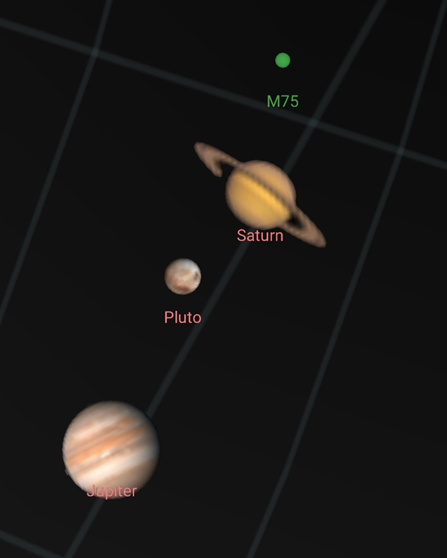
I always wanted to see the planets – Episode 5

We managed to get out of the space dock without a scratch…

We’re moving slowly beyond the space dock, heading through clear space.

We had seen people inside the wings of the dock, lining the passage windows watching the big ship depart. In olden days, on earth, when a ship left port, people on the dock would remain connected to the passengers by streamers, until the ship started to move away.

It was impossible to do that in space.

But, it was a notable day, the first of its type, heading out into the known, and, later, the unknown if the shakedown worked out.

The captain had decided despite the success of the trials, that he wanted to have one more trial, this time putting the crew through their paces.

I looked sideways, one eye still on the screen, now showing three possible midrange destinations, and on the Captain, also looking at the screen.
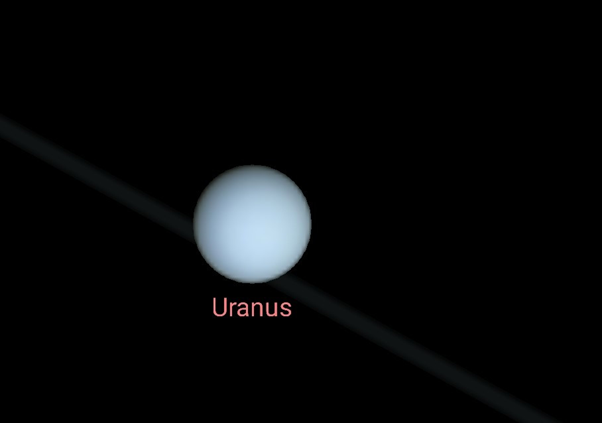
Uranus was about 2.8 billion kilometres.
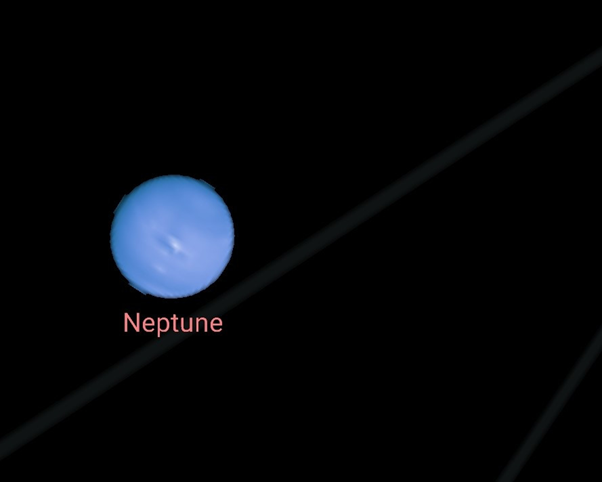
Neptune, where our orders were to go, was 4.5 billion kilometres.

I had done the rough calculations on time to destination, in round numbers, basing the speed of light, what we regarded as SSPD 1,000. That was in km’s about 1.8 billion kilometres an hour, give or take.

Our first ships were under SSPD 1, and the series before this ship had a maximum of SSPD 1.25, which in understandable numbers was about 1,349,063 km per hour. Our ship was capable of SSPD 5.

So, given that our previous fastest ship could move at a maximum of SSPD 1.25, the time it would take to the first destination at SSPD 2 (no one ever travelled at maximum) was a little over 86 days, and to Neptune about 139 days.

In this ship if we were to hit SSPD 4.5, the same time frames would be 24 days and just over 38.5 days.

“Check the co-ordinates for Neptune and once we’re clear of the dock and given clearance, let’s start her out slowly on SSPD 2.

The helmsman checked the co-ordinates and set the speed. “Co-ordinates and speed set, awaiting clearance.”

“Very good. Best have a seat Number One, just in case.”

“Yes, sir.” I took a last glance at the screen, now only showing Neptune on the long-range scanner, and sat.

“Adventurer, you’re cleared for departure.” The voice of the dock master came over the speakers.

No need for further orders, the helmsman pushed the button below his screen, there was a slight lurch, and we were under way.

Next stop Neptune.

© Charles Heath 2021

I always wanted to see the planets – Episode 4

After having to take another leap of faith…

And, getting out of the elevator, this time no erratic behaviour but still not filling me with confidence, I step onto the bridge.

The forward screen has changed.

It seems we are going to Neptune via the moon, or we were going to be passing by on our way to someplace else.

The Captain was on the bridge, obviously coming out of his day room on the news that the Chief Engineer had fixed everything.

“Ah, number one, we’ve hung around here long enough.”

He walked back to his chair and sat.

I decided to remain behind the navigator. I could see that the co-ordinates to our destination had been entered and it was Neptune, so the moon was not going to be a stop off.

The Chief engineer’s voice came over the speaker. “Ready when you are, Captain.”

I forgot, for a moment, that the Chief and the Captain had served before, and someone had mentioned the fact the captain had asked for him to be assigned to this ship.

“Mr Jacobs, take us out, slowly, and try not to bump into anything this time.”

Mr Jacobs was the second officer.

In a rather sheepish tone, Mr Jacobs said, “Taking the ship out carefully, sir.”

It was hard to tell if the ship was moving, but the tell tale sign was the movement of the objects on screen. And the fact I could see through the side windows as we moved forwards, leaving the dock superstructure behind.

Also, on the screen I could see the movements of other vessels, several freighters waiting to leave, and one coming in, but standing off until we departed.

Then, suddenly, we were in clear space.

Jacobs turned to the captain, expecting the next order.

“Let’s take it easy. Level one, when you’re ready.”

Jacobs was ready, even eager to get this ship under way. It had performed faultlessly in trials, now we were going to put it through it’s paces.

“Level one, as you wish.”

He pushed the button, there was a moment when nothing happened, then with just the slightest movement inside the bridge, we were under way.

Next stop, Neptune.

© Charles Heath 2021

I always wanted to see the planets – Episode 2

Back on the bridge of that rickety starship

The only things moving on this upcoming voyage out into the unknown, is the planets on our screen.

When we were last on the bridge, the chief engineer, yes, we still have them in the 24th century, was telling us it was a no go.

When you’re standing on a ship that cost more money than you can imagine, then double that unimaginable amount, and realise it would normally build two other smaller ships, then you can be assured that someone very high up in the chain of command, sitting in an office somewhere safe back on the planet, who may or may not be wishing they were in your place, would be anything but happy.

I was lucky that I didn’t meet that someone during the recruitment process, only later on an inspection of the ship just before the handover from the builder to Space Command.

This was not the first, but the first of a new class. Bigger, better, faster, more suitable to space travel than those that came before.

And, having several junior officers with a passion for history, one of them came up with a simile for our predicament. When new cars were created, way back in the 20th century, the first of the series always had teething problems. That’s why you wouldn’t buy the first of a series.

We didn’t have that luxury, but here’s the thing, it was based on an earlier model with a few new enhancements. It was one of those enhancements that was the problem.

A few minutes after the captain went to his quarters, his voice came over the speaker system. “Number One?”

Ok, I have a name, but trying to get the captain to use it might be difficult, what with regulations, and his rather stiff manner, each of which might get in the way.

“Sir?”

“Go down to engineering and get a report on progress.”

I could do that over the internal comms. What was going on? Belay that thought, I was not going to question an order.

“Yes sir.”

I glanced in the direction of the second officer, and he nodded, getting out of his seat. He would take charge of the bridge, even though we were going nowhere.

He walked over to my position, and I headed for the lift.

Automatic doors. It was not an innovation, but when I came aboard a week ago, they were not working properly, so using the lift to me was a leap of faith.

A few seconds later and what might have been from the top to the bottom in a skyscraper, the lift slowed, then stopped. The doors didn’t open.

Don’t panic. Just wait and breathe. There you go. The doors opened…

…onto utter chaos!

© Charles Heath 2021

I always wanted to see the planets – Episode One

I’d been on the starship for almost three hours when…

The captain was coming up from the earth station by transport, not wanting to trust the transporters, and I’d just finished the orientation of the ship by the second officer, and had arrived on the bridge to see various crew members hunched over their consoles.

The captain had told me, before stepping onto the transport, that we would be leaving the dock shortly after he arrived.

Nothing I’d seen so far had led me to believe it would be going anywhere, anytime soon.

Nevertheless, the crew briefing had run smoothly, the second officer assigned to correlate the complaints/problems list, and everyone else had taken their assigned positions. 

I was waiting for the captain, standing beside the ‘chair’, ready to hand over.  In any other situation, we would be off to an illustrious start.

Until the dulcet tones of the Chief Engineer rang through the bridge, uttering those fateful words, “the warp coil has had a catastrophic failure”.

This was at odds with another statement he had made earlier when I was in Engineering, and given I was told the Chief Engineer was prone to hyperbole; his statement ‘they just don’t make warp coils like they used to’ hadn’t exactly filled me with confidence, but I had been expecting we would be ready to depart.

I had been looking at the screen, an overlay of the window that looked out over space, or at this moment, the space dock, where there was a representation of the planets that were ‘out there’.

I had been curious about M75, but the helmsman, a rather taciturn chap who seemed to resent the fact he was assigned to this ship, just shrugged and said, “it’s something, somewhere, but not of much interest,” then went back to his console.

If this was Star Trek, we’d be ejecting the warp coil by now, but in the space dock, that didn’t seem to me to be a viable option.

“How long before we can get this bucket of bolts moving,” I ask the Chief.

“I’m going as fast as I can.”

Yes, words ripped right out of the script of a Star Trek episode, I thought. A sad case of life imitating art.

A strange whistling sound emanated from the speakers, then the whoosh of the elevator just before the doors opened. OK, new ship, squeaky doors, another item to be put on the ‘look at’ list after the shakedown cruise.

The Captain had arrived.

“Why are dock workers still on the ship, Number One.”

For a moment there, I thought I was talking to John Luc Picard.

“Faulty warp coil. You know how it goes, save a billion by outsourcing to the cheapest supplier.”

The captain didn’t appreciate my sardonic humour, or my apparent disdain in outsourcing what we had once built ourselves.

He gave me a frown, a slight shake of his head, then said, “I’ll be in my quarters. Let me know when we’re about to leave.”

He didn’t wait for acknowledgement and disappeared through another squeaky door. More repairs.

The Chief’s voice then came over the speaker. “I can give you impulse speed, warp speed will take a little longer.”

“Doesn’t that refer to miracles over the impossible,” I ask.

“Perhaps.  But in the meantime, I need a specific spanner and the replicators are down. So, now we have to fix them first, before moving on. Might take a while.”

I look around the crew, seeing their expectant faces drop with disappointment.

Outer space was going to have to wait a little longer.

© Charles Heath 2021